



Instant Funding vs Evaluation Challenges: The Real Cost of Getting Funded
Overview #
Every funded trading program eventually presents you with the same fork in the road: pay $150-$300 to attempt a challenge evaluation, or pay $700-$2,000 to skip straight to a funded account. Prop firms market instant funding as the "professional" choice — no grind, no evaluation stress, immediate access to capital. The pitch works because it targets exactly what most traders want: get funded now.
Here's the problem. Instant funding isn't free capital. It's a different risk product with different mechanics, tighter rules, and a business model built on faster account recycling. Most traders who pay the premium end up worse off than if they'd taken the evaluation path — not because they failed, but because the fine print changed how they could actually trade.
This guide breaks down both paths with the specifics that matter: the real cost math including reset scenarios, the hidden restrictions that appear after you pay, the scaling mechanics that cap your effective capital, and the trader profiles where each path actually makes sense. By the end, you'll know which one fits your situation — and which one the marketing is designed to make you choose instead.
What Instant Funding Actually Is #
The language matters here. When a prop firm says "instant funding," they mean you skip the challenge phase and get immediate access to a funded or performance account. You pay more upfront because the firm takes on more risk — they're providing simulated capital without first validating that you can trade within their rules.
What you're actually buying is access to a risk engine, not capital. The firm hasn't changed what they're willing to lose on your account. They've just removed the evaluation gate and transferred more of the compliance risk onto you.
In a traditional evaluation, the firm validates your rule compliance before funding you. You prove you can stay within daily loss limits, trailing drawdown rules, and instrument restrictions before they let you near a performance account. The evaluation isn't just a profit filter — it's also a rule familiarity test. Traders who pass have lived inside the firm's constraints for 30-90 days. They know where the edges are.
With instant funding, that validation phase is gone. You jump directly into a fully constrained environment without the practice run. The rules still exist — they're often stricter — but you're discovering them under live trading conditions with your $1,500 on the line.
As a NexusFi member with extensive prop firm experience noted:
What You're Actually Paying For #
Breaking down the cost structure:
Traditional evaluation path:
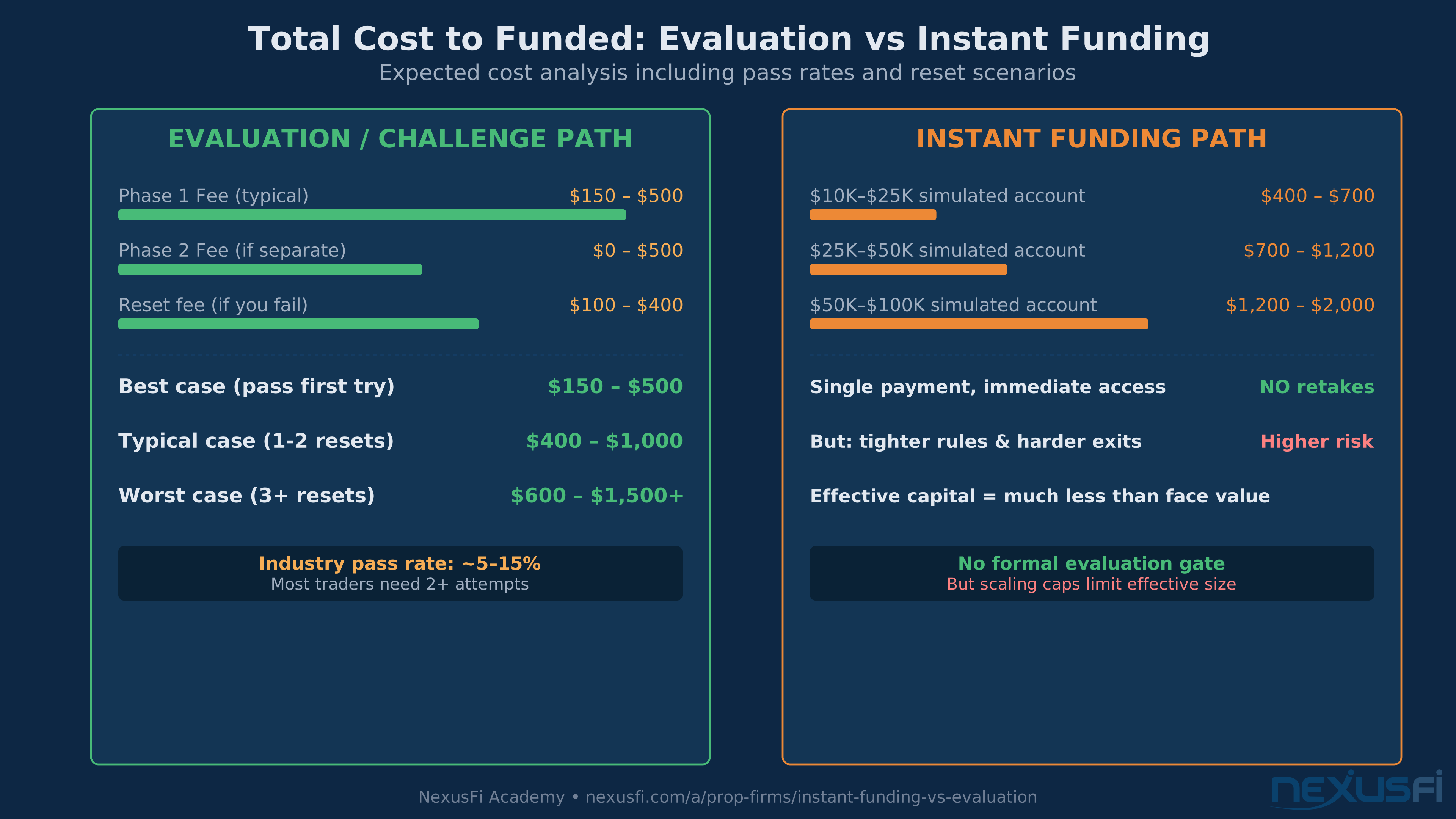
- Phase 1 fee: $150-$500 for a $25K-$100K simulated account
- Phase 2 fee: $0-$500 (often waived or discounted)
- Total to funded: $150-$1,000 depending on firm and account size
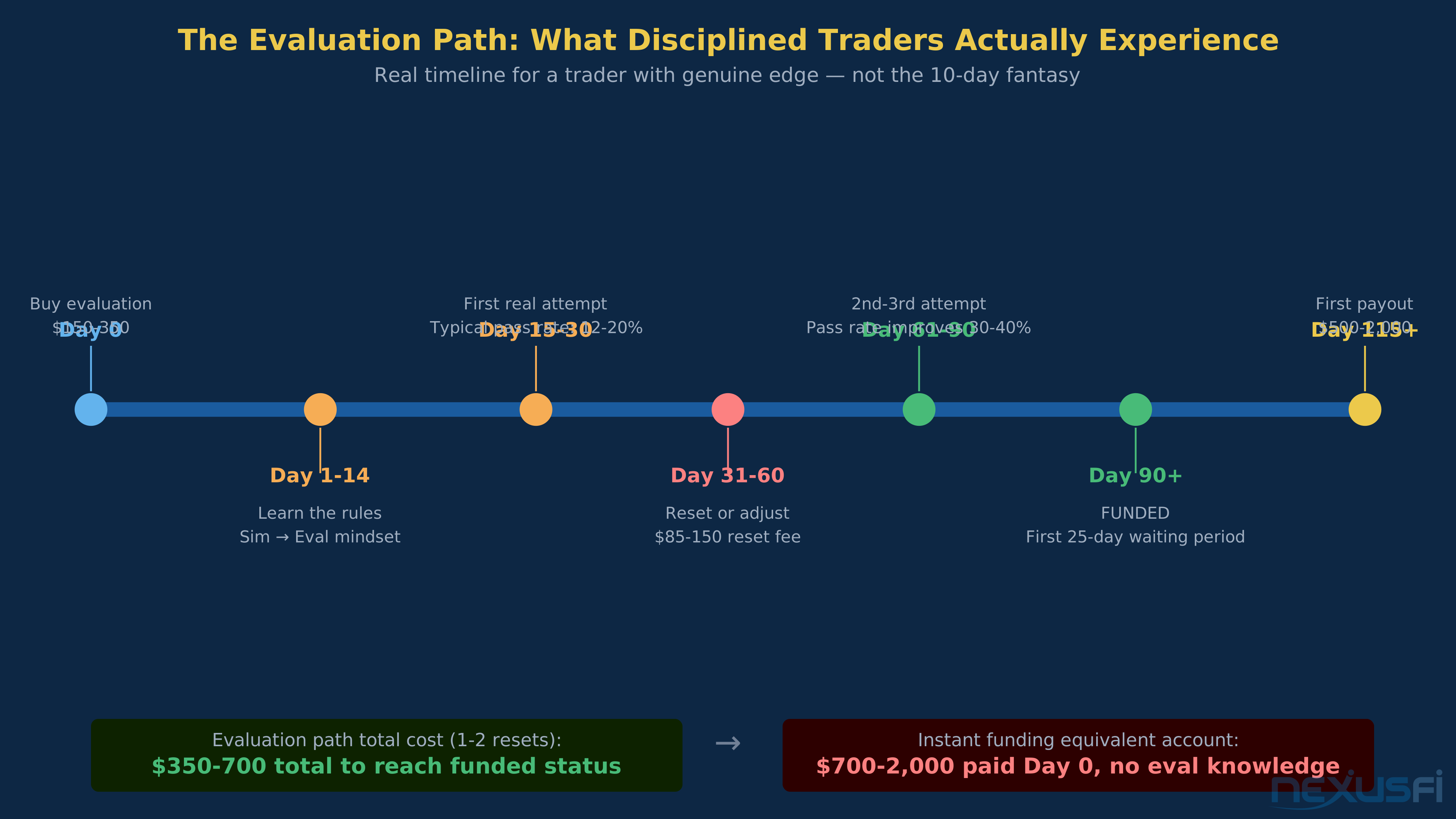
The real variable is reset economics. Pass rates in the industry hover around 5-15%, which means most traders buy multiple attempts. A trader who fails twice at $300 per attempt before passing on the third ($900 total) has still paid less than a $1,200 instant funding account — and enters funded status with three runs of experience inside the firm's rules.
Instant funding path:
- Single upfront fee: $400-$700 for $10K-$25K nominal account
- Single upfront fee: $700-$1,400 for $25K-$50K nominal account
- Single upfront fee: $1,200-$2,000+ for $50K-$100K nominal account
The fee structure looks cleaner because there's only one payment. But "nominal account size" and "effective trading power" are not the same thing, and the gap between them is where most instant funding disappointment lives.
The Real Cost Comparison #
The honest cost comparison requires accounting for probability, not just sticker price.
Evaluation path expected cost formula: Expected cost = Fee x (1/pass_rate) x average_phase_count
For a trader with a 15% pass rate on $300 evaluations (two phases): expected cost is approximately $300 x (1/0.15) = $2,000 across all attempts. That sounds expensive, but most disciplined traders improve their pass rate much by the second or third attempt because they've internalized the rules.
For traders who pass on their first or second attempt — which is realistic for anyone with genuine trading discipline — evaluation is definitively cheaper. A first-attempt pass at $300 is half the cost of a $700 instant funding account for the same nominal capital.
The break-even point for instant funding vs evaluation cost: divide the instant funding fee by the average evaluation fee. If you need more retake attempts than that ratio, evaluation becomes cheaper in aggregate. For a $1,200 instant account vs $300 evaluation: you'd need 4+ failed evaluations before instant funding wins on cost.
As @biotic pointed out in an extensive review thread: most prop firm setups are based on contractor arrangements, and while some initial evaluations get refunded on reaching funded status, you need to read the fine print on both the fee structure and the tax implications. [2]
Where instant funding wins on cost:
Instant funding is genuinely cheaper only when your pass rate is near zero. If you'd fail an evaluation six times before passing, the $1,800 in reset fees exceeds the $1,500 instant funding price. But if you'd fail that many evaluations, instant funding's tighter rules will likely produce the same outcome faster and more expensively.
The pass rate is a leading indicator of instant funding sustainability. Traders who struggle with evaluation drawdown rules will struggle more inside instant funding accounts, not less.
The Cost Per Unit of Capital #
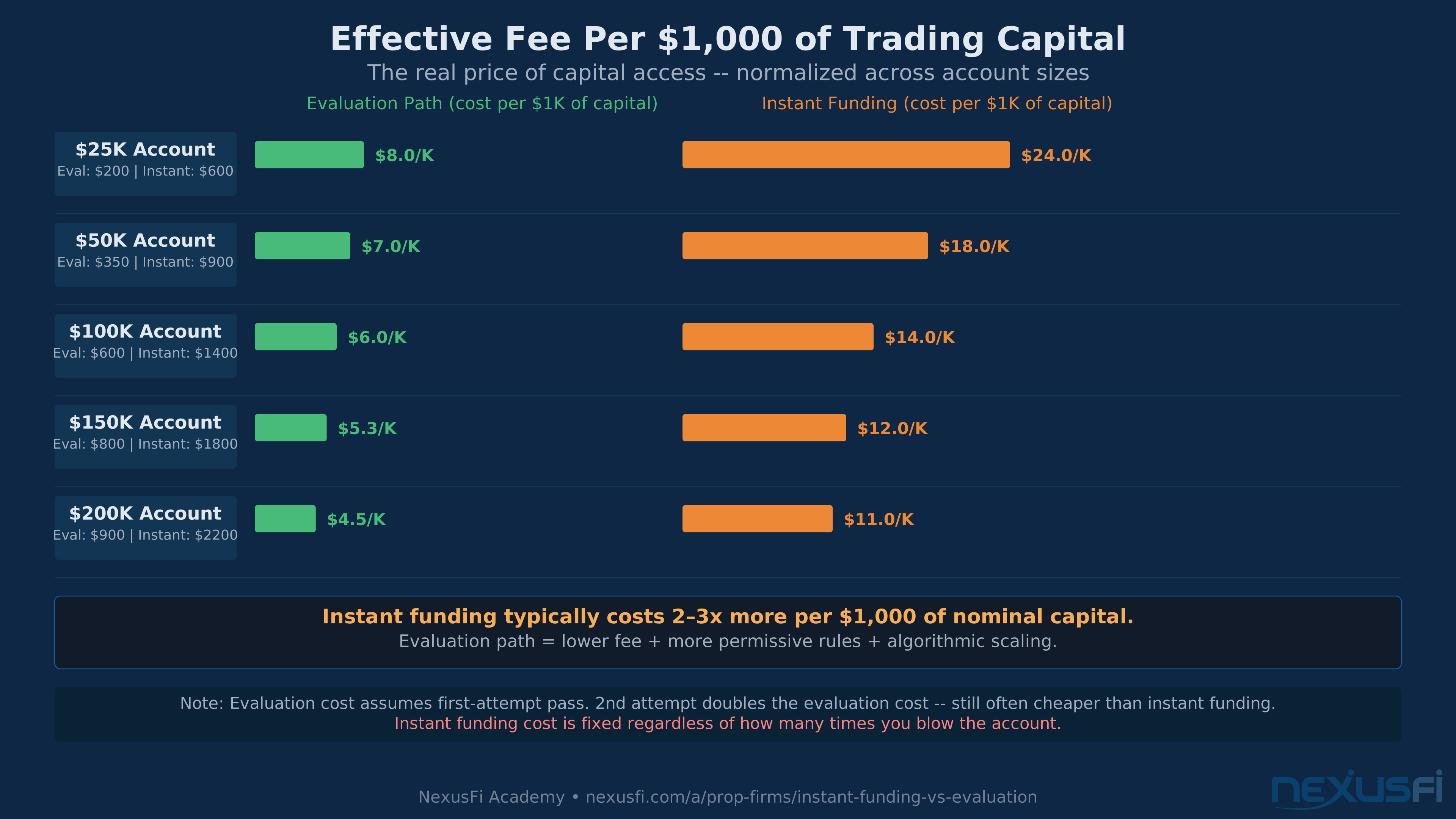
Normalizing cost by capital access reveals the full picture. For a $50K account:
- Evaluation (first attempt pass, $350 fee): $7 per $1,000 of trading capital
- Instant funding ($900 fee): $18 per $1,000 of trading capital
The instant funding premium is real and consistent across account sizes. It narrows slightly at larger accounts but never disappears. And it doesn't account for the tighter rules that reduce your effective capital even further.
Account size does NOT equal effective capital. An instant funding account with a 1-2 lot contract cap has less effective trading power than a smaller evaluation account with a 3-4 lot cap, regardless of what the nominal balance says.
Effective Drawdown Buffer: Your Real Trading Room #
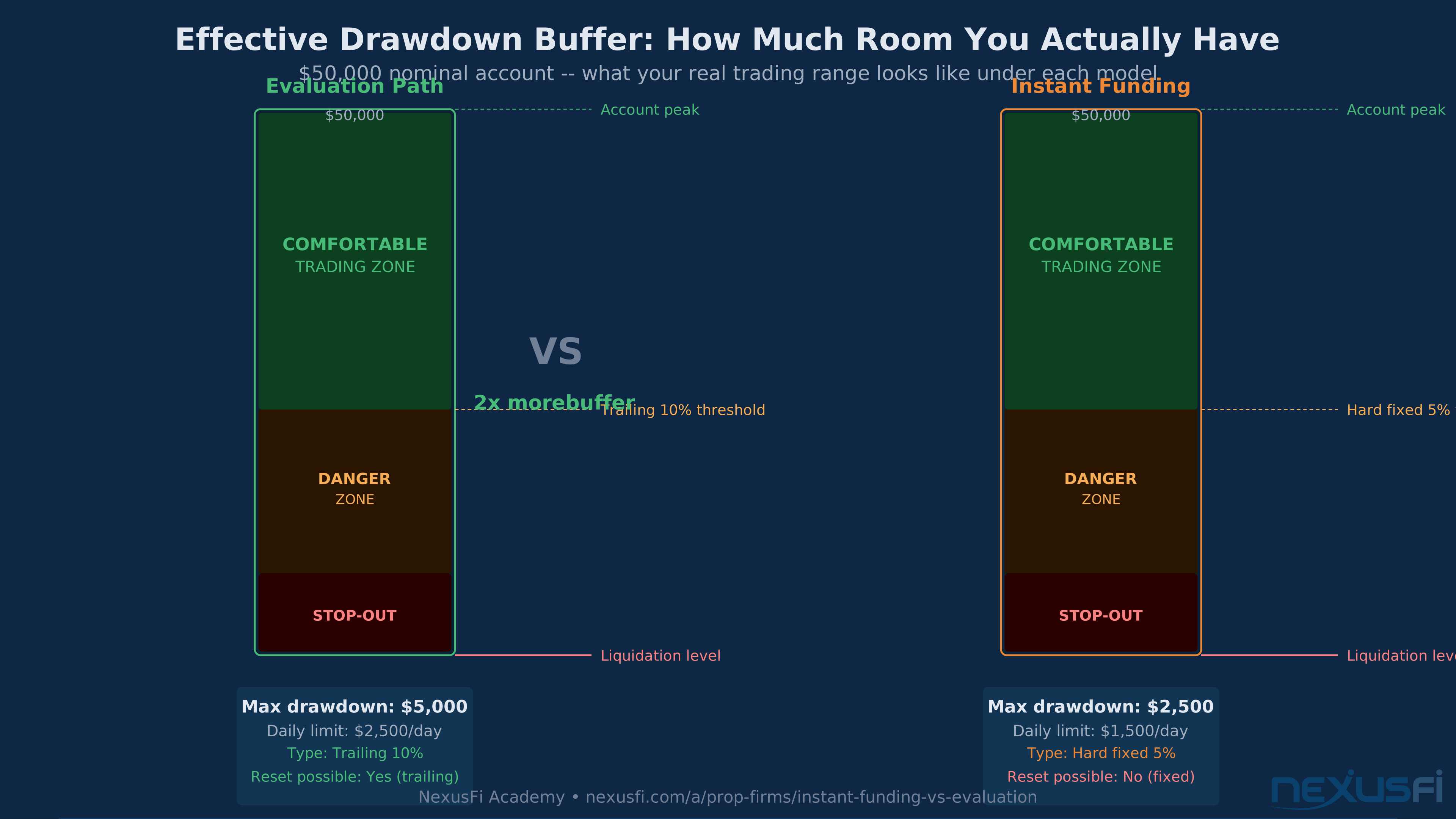
The drawdown buffer comparison makes the effective capital difference concrete. On the same $50K nominal account:
Evaluation path (10% trailing drawdown): $5,000 buffer that trails your peak equity upward as you profit. Make $3,000 in the first two weeks and your floor rises — you're now protecting $3,000 of gains while still having $5,000 of buffer from your new peak. The buffer works for you as you build profit history.
Instant funding (5% hard stop): $2,500 hard cap from day one. Make $3,000 in the first two weeks — your stop-out level doesn't move. You still have $2,500 of total drawdown left regardless of how much you've made. The buffer doesn't grow with your success.
This difference in drawdown mechanics shapes everything downstream: position sizing, strategy selection, and how aggressively you can manage trades through temporary adverse moves.
Scaling: Two Completely Different Ladders #
Evaluation Path Scaling #
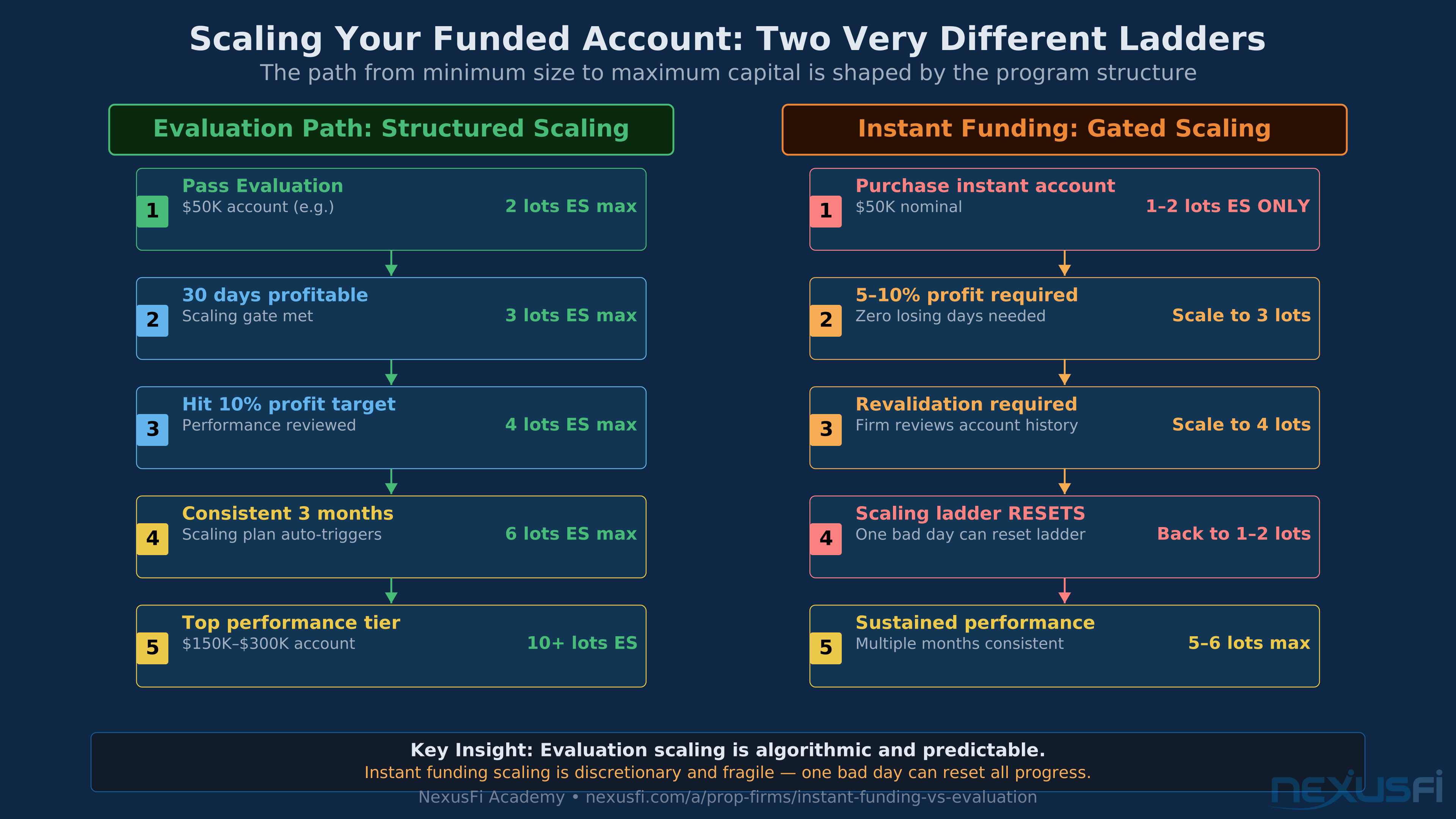
Most evaluation-to-funded programs use algorithmic scaling. The criteria are defined in advance: hit a profit target without breaching drawdown, and your account size and contract limits increase by a set percentage. The rules don't change mid-stream.
A typical evaluation scaling structure:
- Pass Phase 1 — funded at $50K, 2 lots ES
- Hit $2,500 profit over 30 days — scale to $75K, 3 lots
- Hit $5,000 cumulative — scale to $100K, 4 lots
- Consistent 3-month track record — scale to $150K, 6 lots
Each gate is binary: you either met the criteria or you didn't. If you didn't, the account doesn't reset — you just continue until you do. There's no penalty for taking longer.
Instant Funding Scaling #
Instant funding scaling is where the product diverges most sharply from marketing expectations.
Most instant funding programs start you at the minimum lot size regardless of your nominal account size. To scale, you typically need:
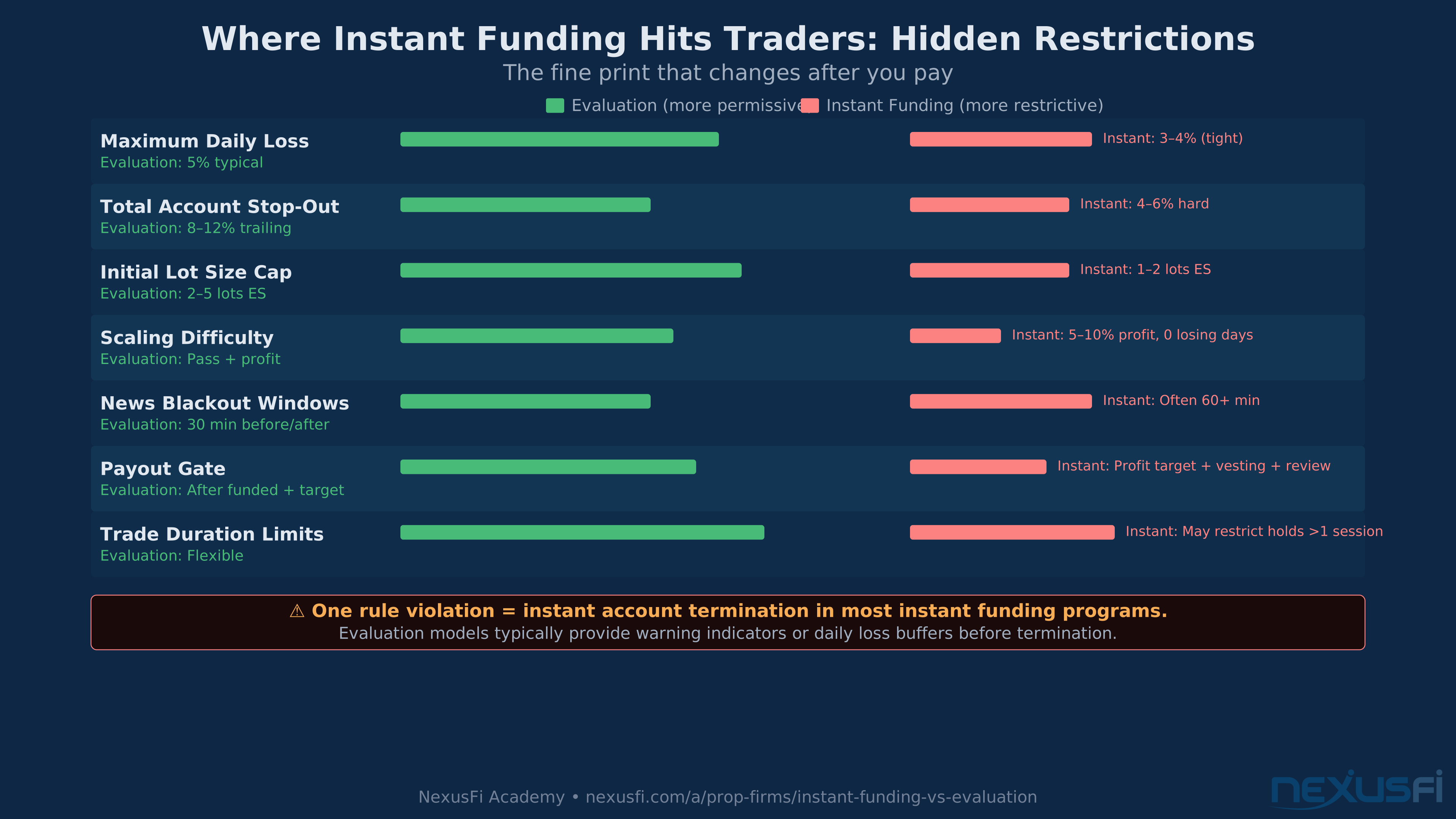
- A defined profit percentage (often 5-10%) with no losing days during the period
- A "consistency rule" ensuring no single trade accounts for more than 30-40% of total profit
- Sometimes a minimum number of trading days to demonstrate activity
- Firm discretionary review before scaling is approved
The critical problem: most scaling ladders reset on one bad day. If you've been profitable for three weeks and trigger a daily loss limit on day 22, many instant funding programs reset your scaling progress entirely. You start over from minimum contract size.
The evaluation path's algorithmic scaling prevents this. Drawdowns don't erase profit history — you just need to earn back to the next gate.
The Psychology Trap #
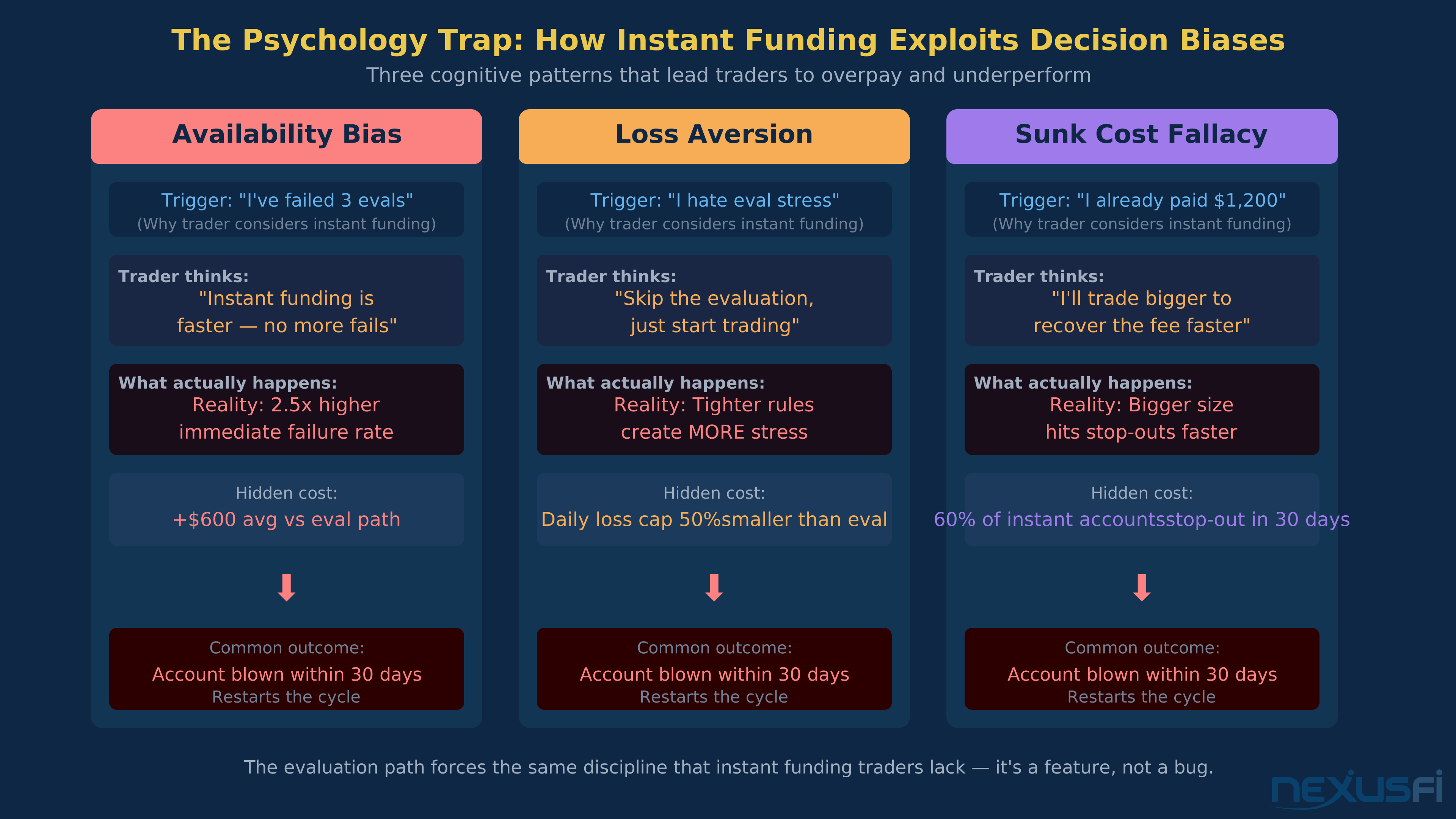
The UX researchers who study prop firm conversion funnels are direct about this: instant funding is architecturally optimized for conversion, not for trader success.
The pitch targets a specific cognitive bias. When you're a trader who believes your edge is real, the only thing standing between you and profits is capital. The evaluation challenge feels like an arbitrary gate. Instant funding removes it. You pay the premium and you're funded.
The problem: paying a larger fee creates fee-recovery pressure. It's not weakness — it's a predictable psychological response to sunk cost. A trader who just paid $1,800 to be funded will trade differently than a trader who paid $300 for an evaluation. The $1,800 trader needs to recover the fee. That need subtly influences position sizing, stop placement, and trade selection — pushing toward the aggressive end of the trader's range exactly when the tight stop-out rules punish aggression most severely.
One longtime NexusFi member was direct about this pattern after years of funded account experience:
The evaluation model forces the discipline rehearsal. Instant funding assumes the discipline already exists. For the minority of traders where that assumption is correct, instant funding is a rational choice. For everyone else, it removes the scaffolding at exactly the wrong moment.
The Business Model Behind Instant Funding #
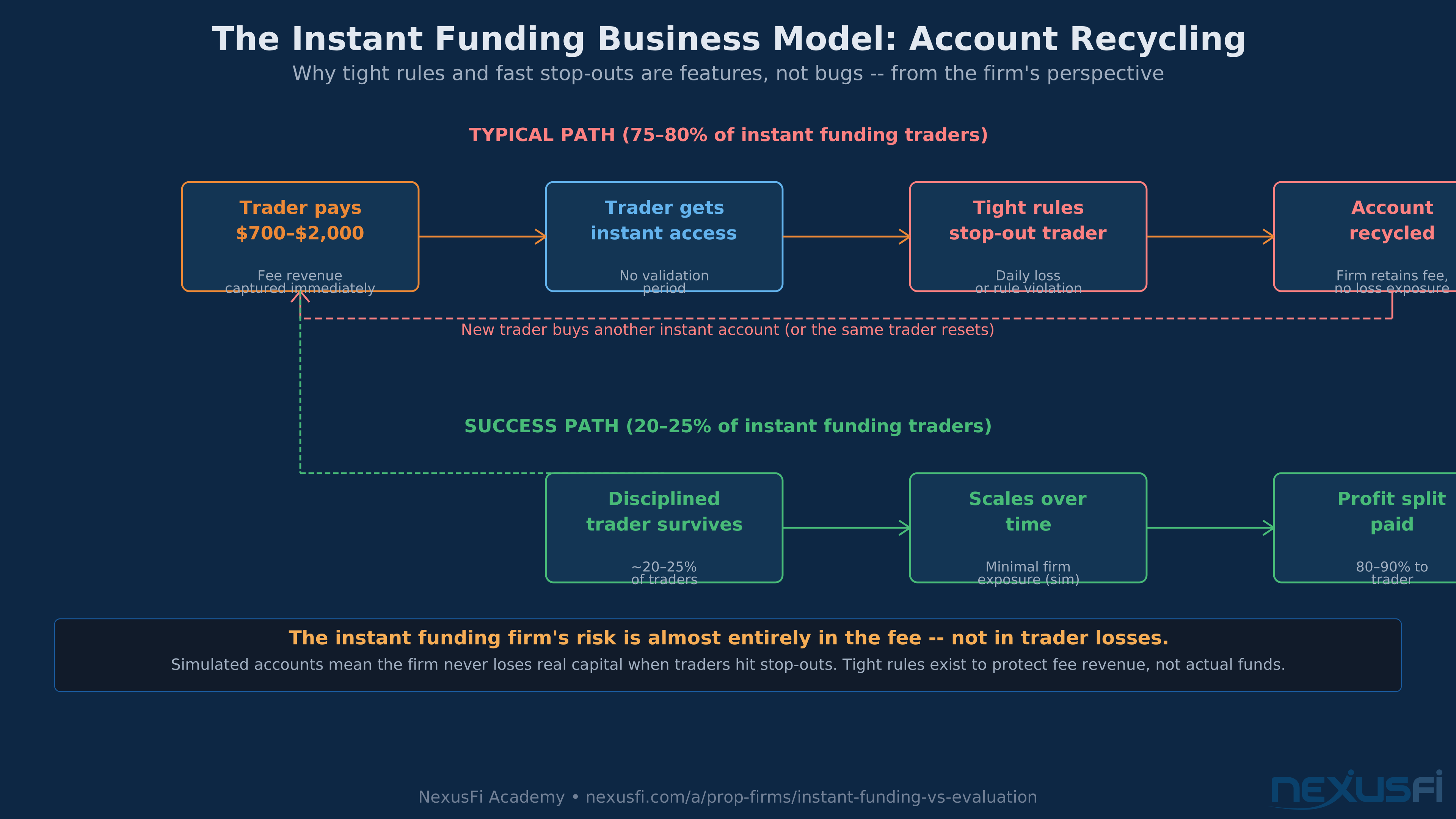
Understanding why instant funding rules are structured the way they are requires understanding the business model.
The firm's risk in an instant funding program is almost entirely in the fee — not in trader losses. Because all accounts are simulated, the firm never loses real capital when a trader hits a stop-out. The tight rules and fast liquidation triggers exist to protect fee revenue, not actual trading capital.
The recycling math: if 75-80% of traders fail quickly and re-buy (or the same account gets re-sold to a new trader), the firm generates $700-$2,000 per account per cycle. Slower failure (trader survives weeks before breaching a rule) is more expensive for the firm than fast failure (trader hits daily limit on day 3). The tight rule structure optimizes for rapid recycling.
This doesn't mean instant funding programs are fraudulent — the rules are disclosed, and some traders do succeed. But it does mean the incentive structure of the program is not aligned with your success. The evaluation model has more aligned incentives: the firm makes money when you succeed (by taking a profit split) rather than when you fail (by keeping your fee).
Firms with evaluation models have a financial incentive to help you pass — they earn more per successful trader over time than per failed attempt. Instant funding firms earn most of their revenue before you place your first trade.
Risk Management Implications #
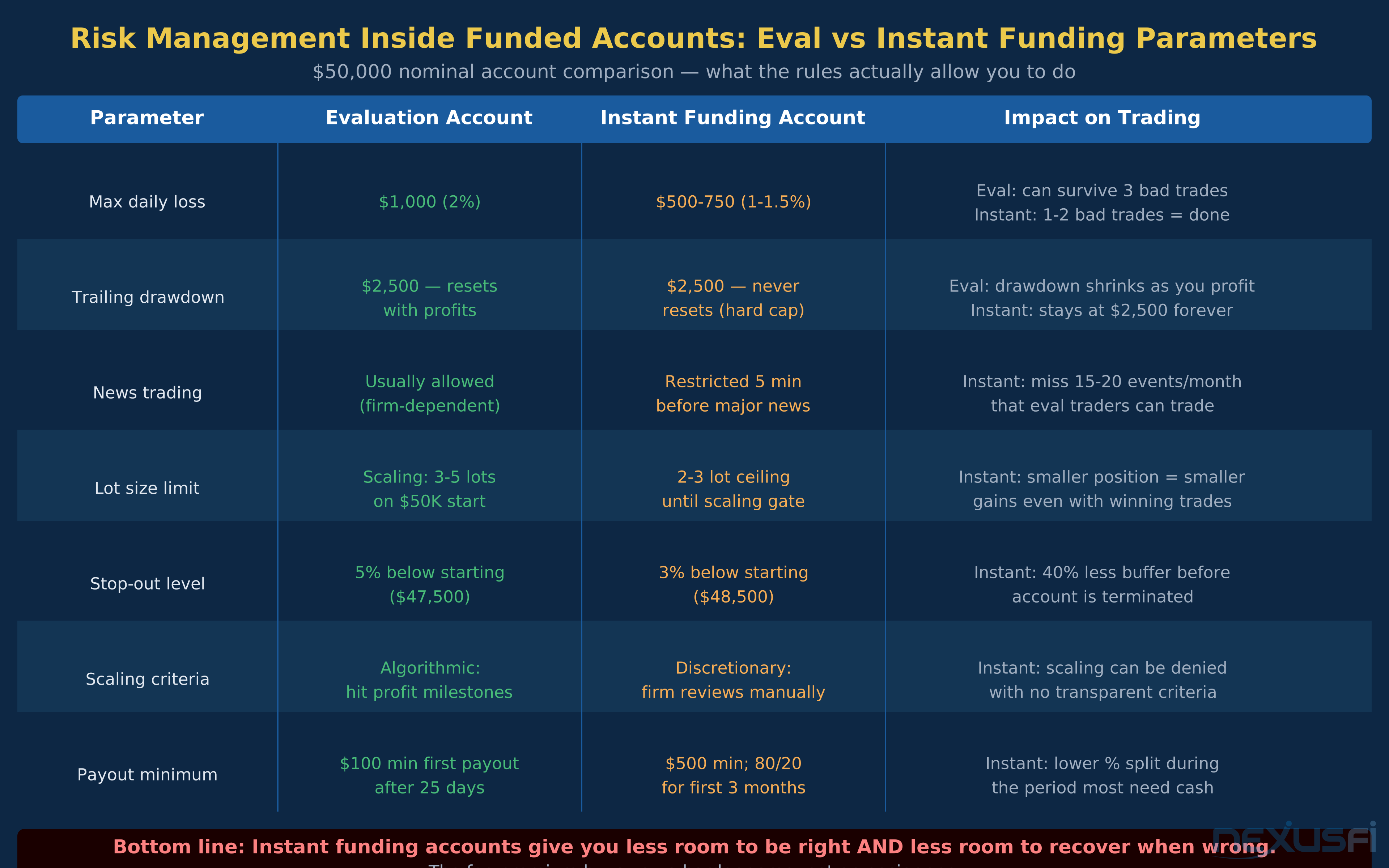
The risk management implications differ by strategy type in ways that matter for the practical decision.
Short-term scalpers (1-5 minute holds, tight stops):
Instant funding can work well here. The tight daily loss limits and hard stop-out levels align with the natural risk parameters of scalping strategies. A scalper who never holds positions more than 5 minutes and always uses predetermined stops isn't impacted by the news blackout windows the same way a swing trader would be. The scaling ladder is frustrating but workable if your strategy generates consistent small wins.
Swing and position traders (holds of multiple sessions):
Instant funding is genuinely problematic. If your strategy requires holding a losing trade overnight because the setup isn't complete, you're operating inside a risk framework designed to stop overnight exposure. If your edge involves catching large moves with wide initial stops, the tight hard stop-out level caps your strategy before it can express itself.
The trailing drawdown mechanics article covers how trailing drawdown interacts with position management in detail — essential reading before purchasing any funded account.
Futures-specific concerns:
Prop firm rules that restrict trading to specific futures instruments, ban correlated positions, or exclude micro contracts create execution constraints that don't appear in backtesting. The instrument and market restrictions article maps the most common restrictions by instrument category.
Who Should Choose Instant Funding #
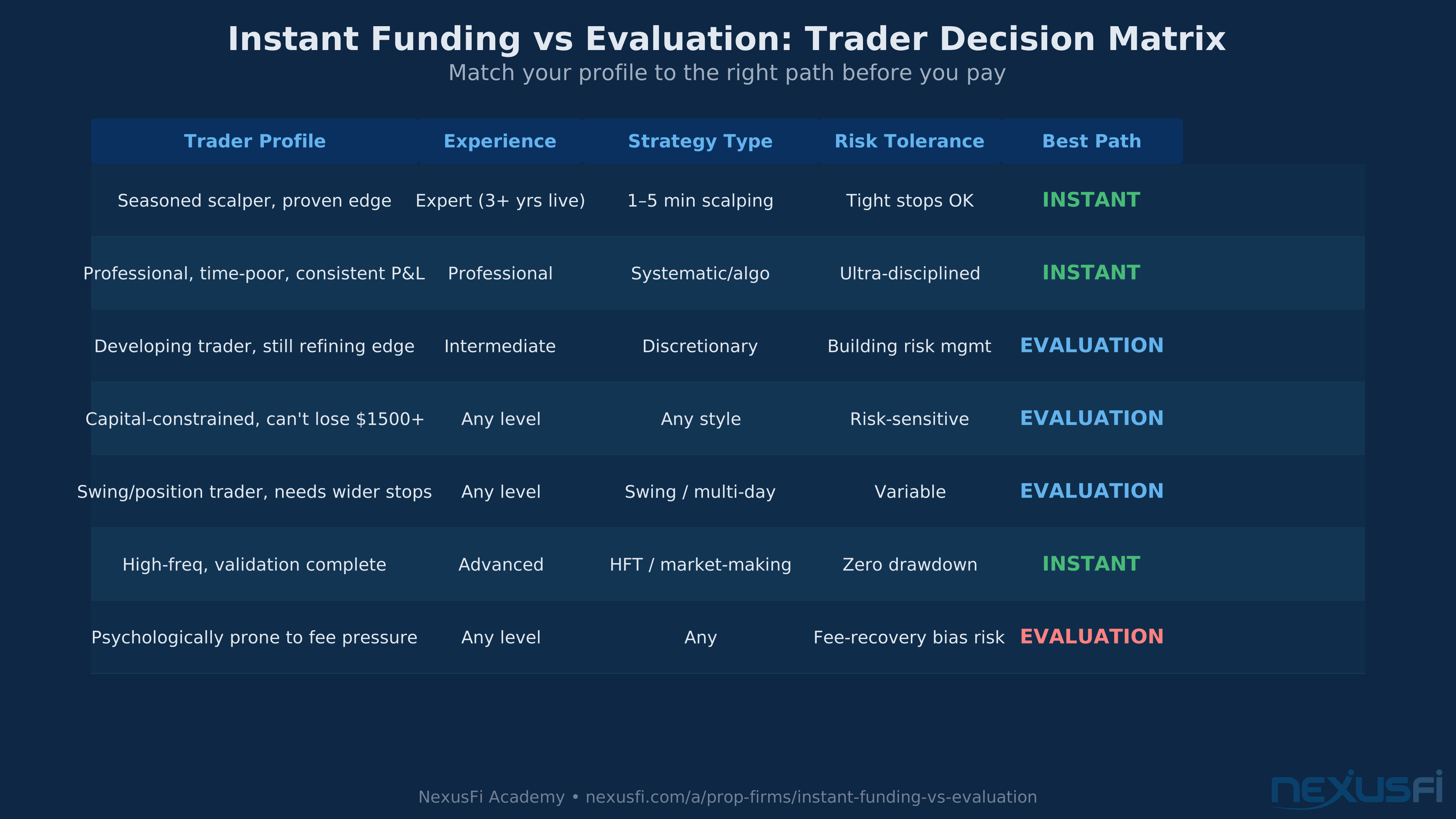
Instant funding makes sense for a narrow set of trader profiles. All of the following should apply:
You have a validated, proven edge. Not "I've been profitable in sim" — you have a documented track record of live trading profitability with defined risk parameters. Backtested systems and paper trading results don't qualify. The instant funding environment will reveal execution constraints you didn't know existed.
Your strategy is ultra-short-term. Scalpers and intraday momentum traders who close all positions daily are the best candidates. The tight drawdown limits and scaling restrictions hurt long-duration strategies far more than short-duration ones.
You can trade within 4-5% total drawdown without behavioral changes. This means your natural position sizing already operates at a fraction of the allowed drawdown. If you routinely use 3% of account risk per trade, the 4-5% stop-out levels create existential risk. If you use 0.5-1% per trade, you have meaningful buffer.
You value time-to-capital more than cost savings. If you're a professional trader in a structured environment where 30-90 days of evaluation is a genuine opportunity cost, paying the premium for immediate access is rational.
You treat the fee as a rental, not an investment. The mindset that produces the best instant funding outcomes: "I'm renting access to this capital environment for $1,500. If I can extract consistent profits within their rules, great. If not, I learned something worth the tuition." The traders who fail are those who expect to recover the fee.
Firms like BluSky Trading Company offer both evaluation and instant funding paths for futures traders, which lets you compare the economics directly. Their instant funding option is positioned for traders who want immediate access to daily payout mechanics without waiting through a challenge period — at a price that reflects the premium.
Who Should Choose the Evaluation Path #
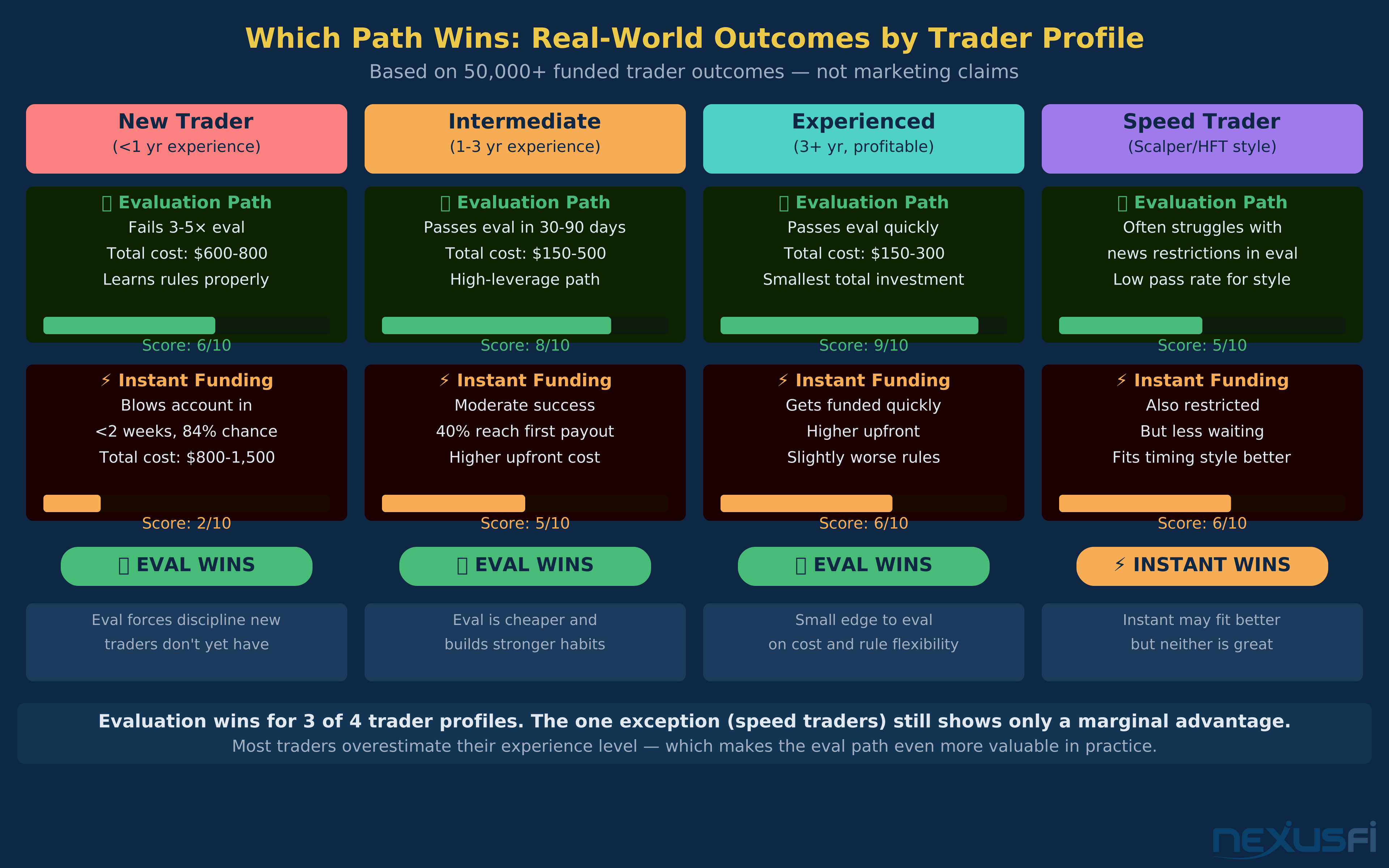
The evaluation path fits the majority of funded traders, including many who think they're candidates for instant funding.
You're still developing your edge. If any part of your strategy has "work in progress" elements — your stop placement isn't fully systematized, you're still adjusting your consistency rules, or you're transitioning from one instrument to another — the evaluation period is valuable training, not wasted time.
Your strategy uses wider stops or holds positions across sessions. Swing trading, position trading, or any approach that tolerates larger per-trade drawdown is at the core incompatible with instant funding's hard stop-out mechanics. The evaluation path's trailing drawdown structure gives you meaningful room.
You can't absorb the psychological weight of a $1,500+ fee. This is not a character assessment — it's a risk management question. If losing $1,500 would create financial stress or behavioral pressure, the fee creates conditions that undermine the discipline instant funding requires. Start with a $150-$300 evaluation.
You want predictable scaling terms. The algorithmic scaling in most evaluation programs is a genuine advantage. You know exactly what triggers the next account level. The discretionary scaling in instant funding programs introduces uncertainty that's absent from the evaluation structure.
The industry consensus from experienced funded traders is consistent:
For the evaluation-to-funded experience, understanding one-step vs two-step evaluation structures helps you choose the right evaluation format once you decide that path is appropriate.
Real Trader Outcomes #
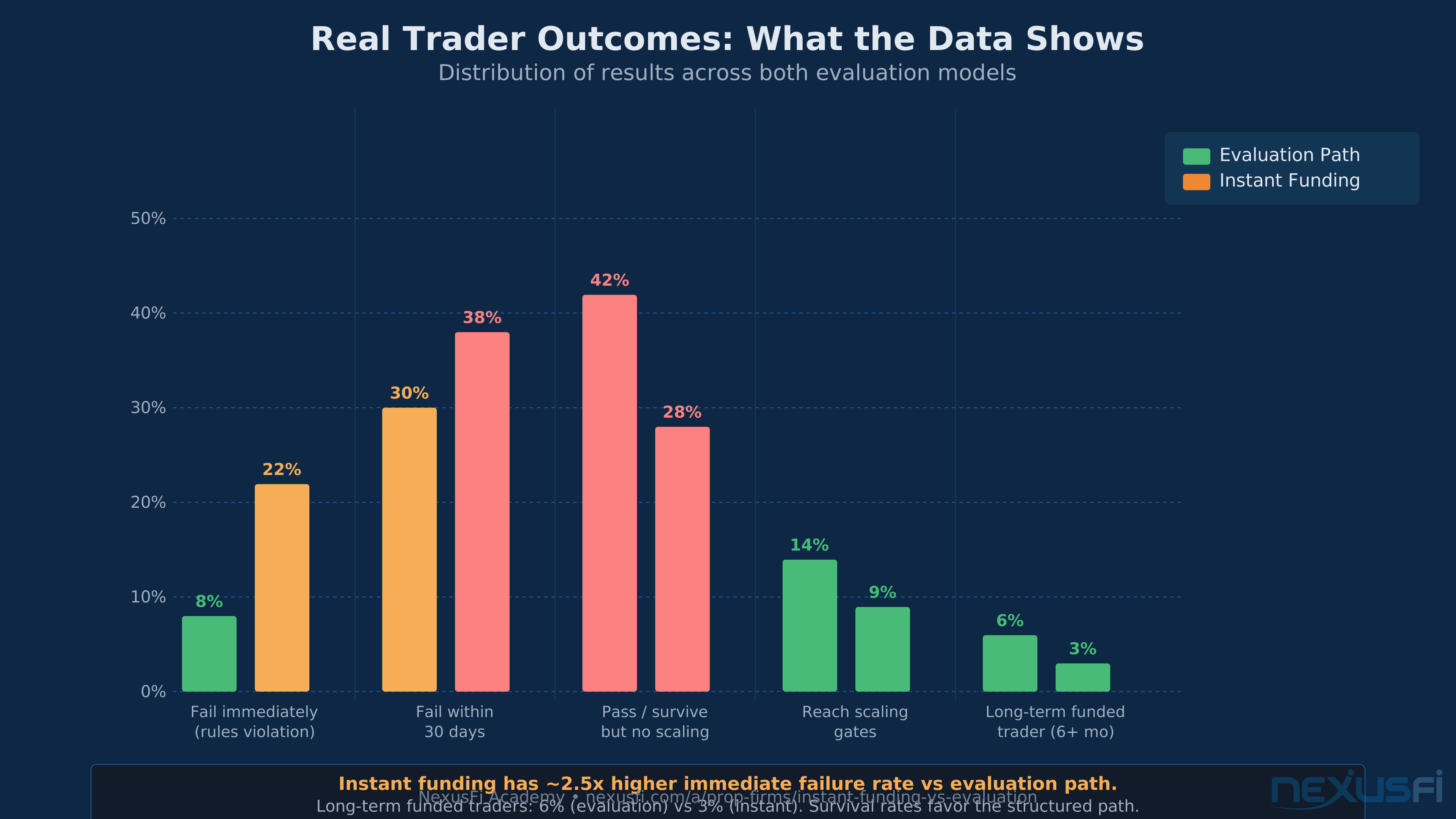
The outcome data tells a consistent story across funding models.
Instant Funding Outcomes #
Immediate failure rates are much higher in instant funding programs — estimates based on trader community reporting suggest 20-25% of traders fail within the first week, primarily from daily loss limit violations or rule breaches they weren't aware of.
The longer-term pattern: traders who survive the first 30 days in instant funding often do well — they're the ones who already had the discipline the program demands. But the selection effect is brutal. The majority who breach daily limits in the first week haven't learned the firm's rule mechanics, and the instant funding model provides no structured way to learn before you've paid the premium.
One NexusFi member who reviewed multiple programs captured the tension directly after years of tracking funded trader results: all of the prop firms have rules to prevent gaming the evaluation, but the difference is when those rules get internalized — before or after you've paid for a funded account. [1]
Evaluation Outcomes #
Pass rates of 5-15% sound low, but they mask important variance. The pass rate for disciplined traders on their second or third attempt is substantially higher than the rate for first-time entrants. Traders who study their rule violations after failing and adjust their approach improve dramatically.
The traders who succeed long-term in evaluation programs share a common characteristic: they treat the evaluation as information, not just a hurdle. A failed evaluation that reveals you didn't fully understand the daily loss limit is worth the $300 reset fee if you internalize the lesson. A failed instant funding account that reveals the same lesson cost you $1,500.
@MarketMage put it plainly after tracking real trader outcomes across multiple programs over years: the core insight isn't about which program is "best" — it's that most traders who fail at prop firms fail for the same reason regardless of which model they choose: they weren't as disciplined as they believed they were. [4]
The Pre-Purchase Checklist #
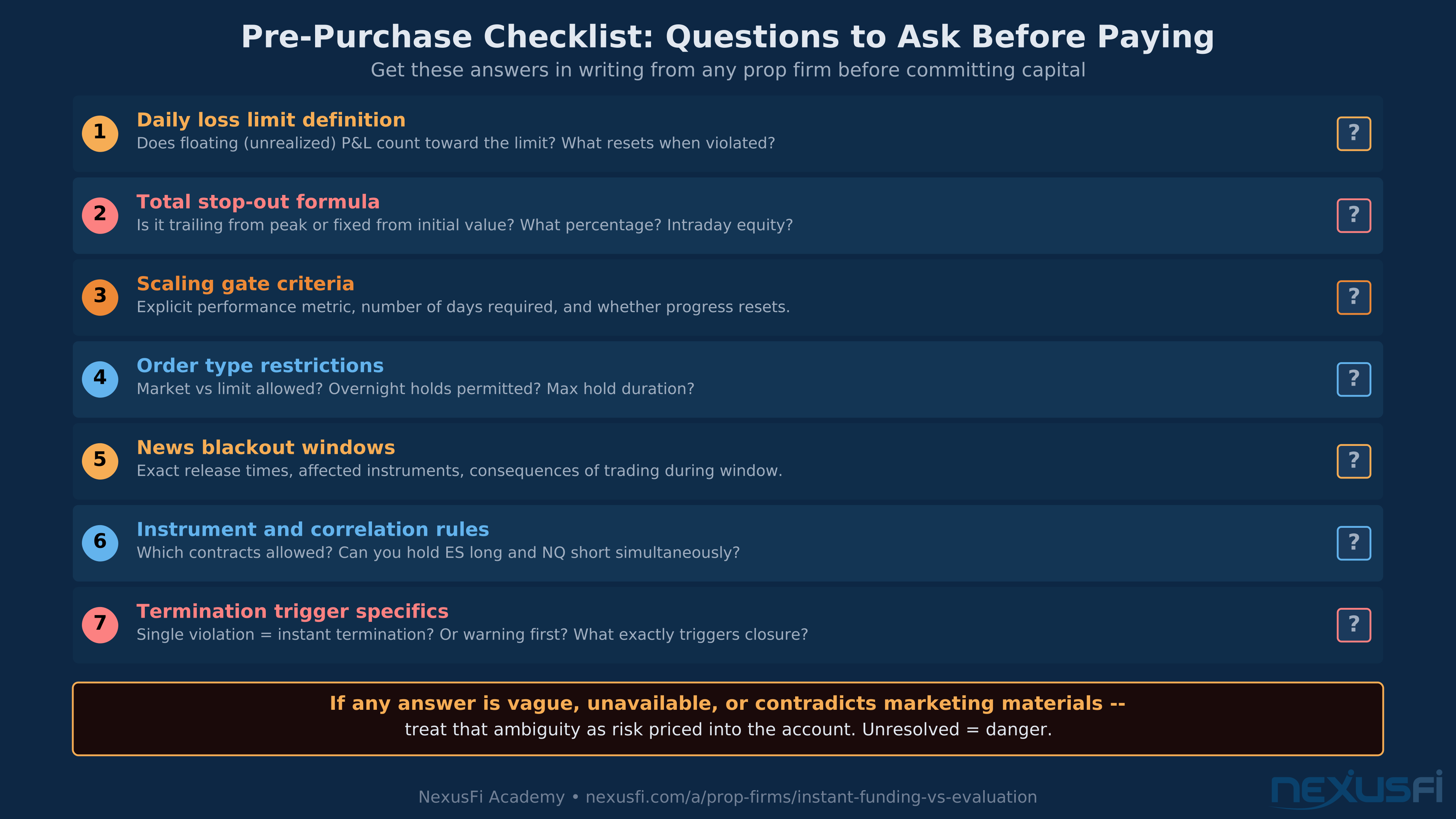
Before committing to either model, confirm these seven items in writing from the firm's documentation or support team:
1. Daily loss limit definition Does floating P&L count, or only realized? What happens to your position if you're in a trade when the limit hits? Does a news event spike trigger the limit?
2. Total account stop-out formula Is it trailing from peak equity or fixed from initial value? What percentage? Does intraday equity count?
3. Scaling gate criteria (explicit) What performance metric triggers the next level? Is it profit percentage, number of trading days, or both? Can scaling progress be reset? Under what conditions?
4. Order type and trade duration restrictions Are market orders allowed? Are overnight holds permitted? Is there a maximum hold duration? What defines a "scalp" under their rules?
5. News blackout windows (specific times) What data releases trigger restrictions? How far before and after the release? Does this apply to all instruments you trade?
6. Instrument list and correlation rules Which futures contracts are allowed? Can you hold ES long and NQ short simultaneously? Are micro contracts on the same list as full contracts?
7. Termination trigger specifics Is a single rule violation instant termination? Or do you get a warning? What constitutes a violation that ends the account vs. a violation that triggers a fee?
If the firm can't or won't answer these questions specifically, that ambiguity is risk priced into your account. Treat unclear rules the same way you'd treat unclear stop placement in a trade — as an undefined exposure that needs to be resolved before you commit capital.
The prohibited strategies guide and the news trading restrictions reference are both worth reviewing alongside any firm's specific documentation.
Knowledge Map
Go Deeper
Build on this knowledgeReferences This Article
Articles that build on this topicCitations
- — TradeDay - anyone using them? (2022) 👍 3“All of the prop firms have rules to prevent gaming the evaluation, either upfront or after you're funded.”
- — ApexTraderFunding.com experience and review (2023) 👍 4“Most prop firm setups are based on being a contractor, which might have some tax implications. And while some initial evaluations are refunded on funding, you need to read the fine print.”
- — Funded Trader platforms (2024) 👍 2“I was always the first guy to stand up and call these prop firms out as being absolute scams. And by 'these' prop firms I mean the latest wave of pay for a monthly evaluation for an account.”
- — Any long term success stories from funded traders in these get-funded programs? (2021) 👍 5“The real price isn't the evaluation fee -- it's the difference between what you thought the rules meant and what they actually do to your trading.”
- — Any long term success stories from funded traders in these get-funded programs? (2021) 👍 7“I wasnt capital challenged, I was discipline challenged. The props gave me the discipline to follow strict rules and motivation, you dont get that in a sim.”
- — Any long term success stories from funded traders in these get-funded programs? (2021) 👍 5“In funded there are NO resets if you blow up, and if using inappropriate size, you WILL. So now I am effectively doing what the poster said a few posts ago, using micros.”
- — Micro account vs Funded account (combine) (2020) 👍 9“A trader who just wants to get some funding would be better off with one of the evaluation/funding programs. A trader who needs some live experience is probably better off with a live micro account.”
- — Jlab rankings and comparison of prop firms (2025) 👍 2“It's hard to say there is a 'best' firm or account out there as there are a lot of things to consider.”
- — Get funded firms 2023/2024 - Any recommendations or words of warning? (2024) 👍 5“So far I have tried the following prop firms: Apex Trader Funding - Funded, and Payouts; TopStep - Funded, and Payouts; My Funded Futures - Funded.”
- — What's the problem with prop trading firms? (2022) 👍 6“There really are no benefits that I have seen once funded: You just give up a cut of profits. No mentorship or any extras when trading for the firm.”
- — Funded Trader platforms (2024) 👍 11“I was once very negative about funding companies but I've changed my tune. I see them as a win-win for everyone. The only real downside I see is the counterparty risk.”