



Patience in Trading: Why Waiting Is the Hardest Skill and How to Build It Into Your System
Overview #
Every trader knows patience matters. Most traders can't do it. The gap between knowing and doing costs more money than bad analysis ever will — not in one spectacular blowup, but in the slow bleed of mediocre entries, clipped winners, and forced trades that erode expectancy trade by trade.
Patience in futures trading isn't sitting on your hands and hoping for the best. It's the operational skill of recognizing when your edge is available and refusing to act when it isn't. The market pays you to do the difficult things that others are unwilling or unable to do — and waiting is one of those difficult things. [1]
This matters to your P&L in concrete terms. Impatient entries mean worse fills — entering 1-2 ticks early on ES doesn't sound like much, but across 200 trades a month that's $2,500 to $5,000 in unnecessary slippage on a single contract. Impatient exits compress your winners — that 15-tick winner you clipped at 6 ticks doesn't just cost you 9 ticks, it destroys the asymmetry your entire strategy depends on. And forced trades in choppy conditions aren't just break-even propositions — they're negative-expectancy trades that fund the accounts of more patient participants.
The research is clear: patience isn't a personality trait you either have or you don't. It's a system design problem with specific, implementable solutions. This article breaks down exactly how impatience shows up in futures trading, why your brain fights you on it, and what structural changes actually fix it.
Recognition: How Impatience Shows Up in Your Trading #
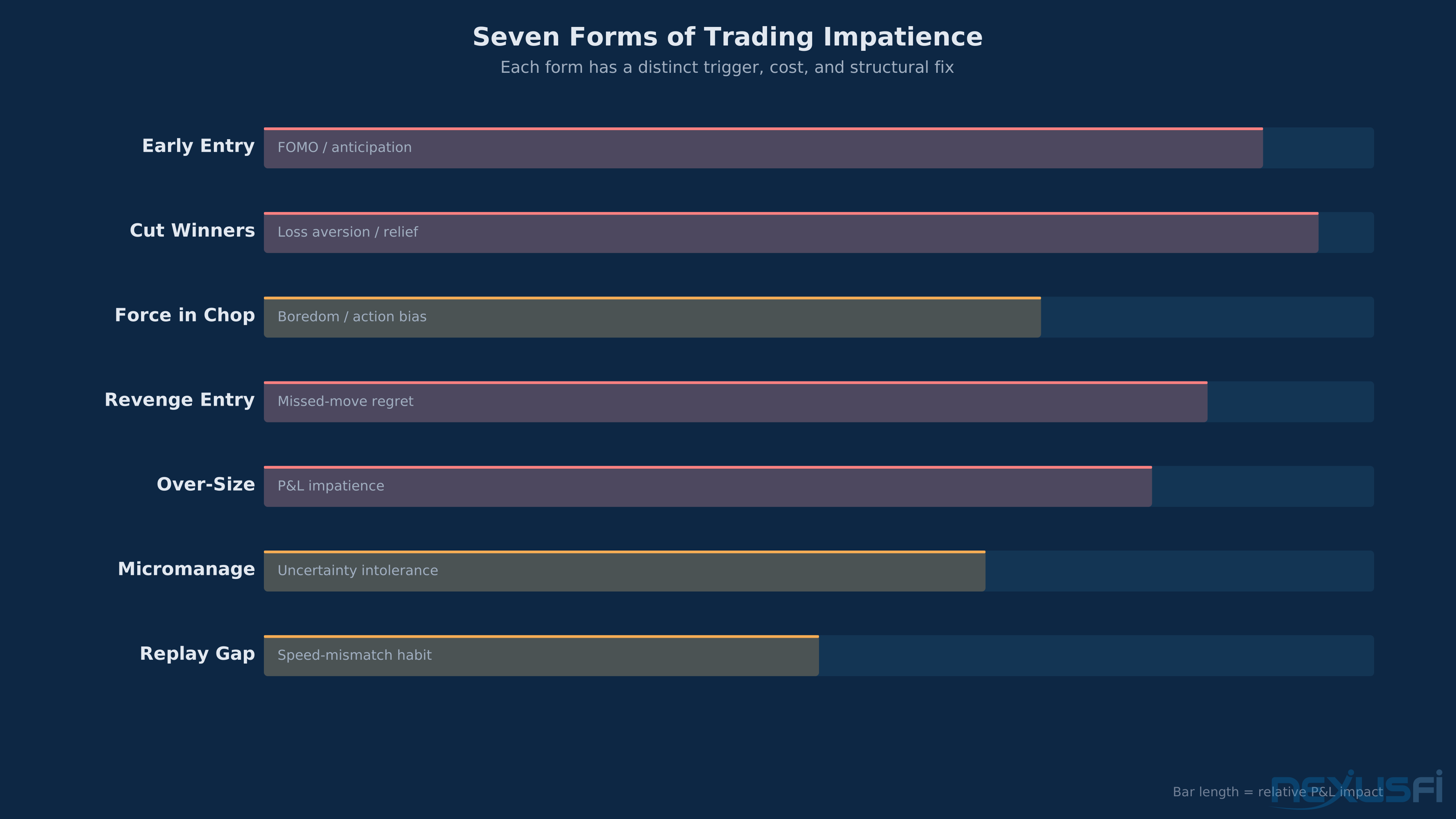
Impatience doesn't announce itself. It wears disguises — "I'm being aggressive" or "I need to capitalize on this move" or "the market is telling me something." Recognizing the pattern is the first step to fixing it. Here are the specific forms it takes in futures trading.
Entering Before Confirmation
The setup is almost there. Price is approaching your level. The order flow looks like it might be shifting. So you pull the trigger — not because your entry criteria are met, but because you're afraid the move will happen without you. This is anticipation masquerading as analysis. The telltale sign: you enter, then immediately start looking for confirmation that you were right, rather than having seen confirmation before you entered.
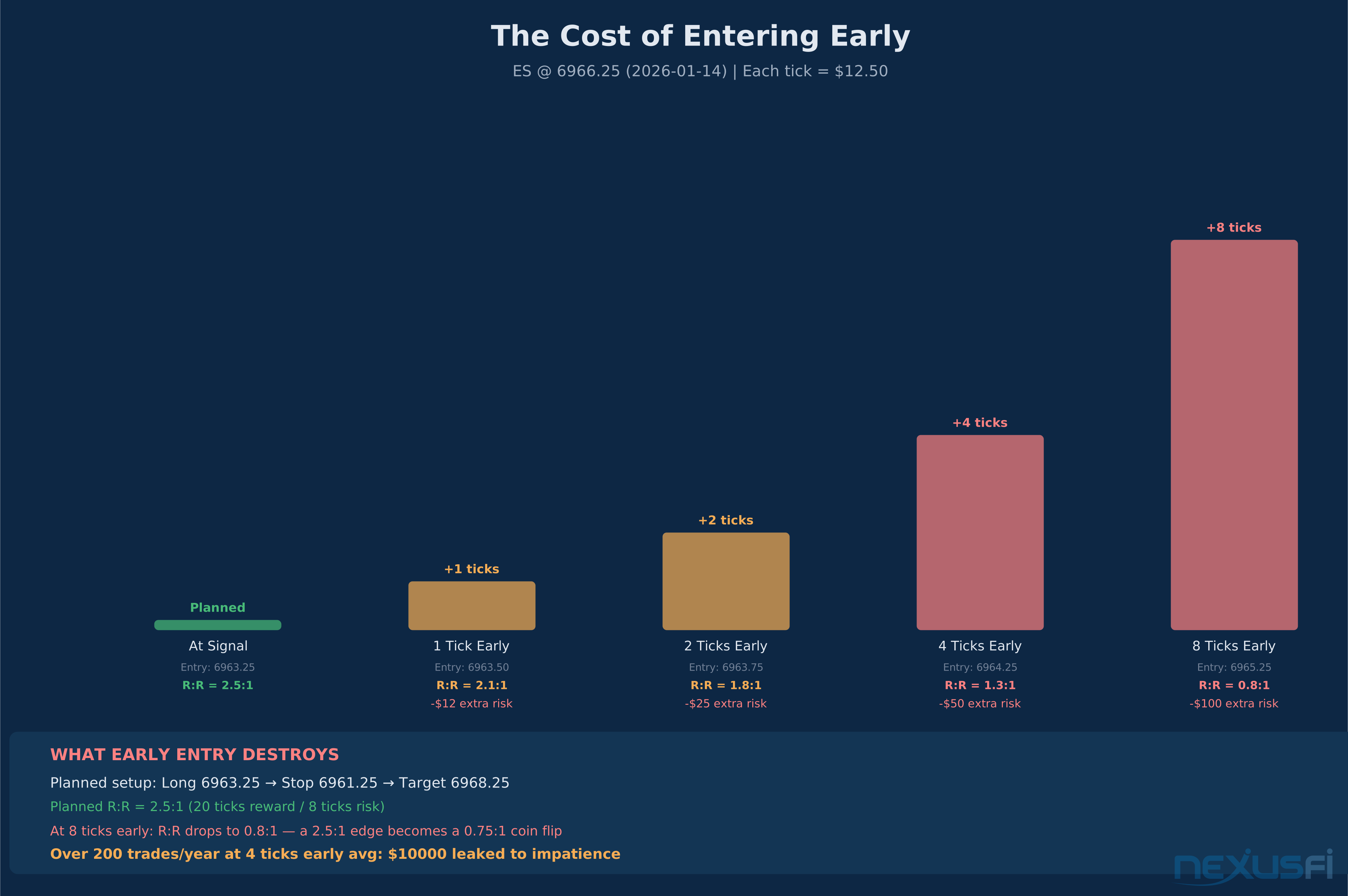 alt="Bar chart showing R:R degradation from entering 1-8 ticks early on ES futures with real IQFeed prices" loading="lazy" width="800" height="450">
The Replay-to-Real-Time Disconnect
[2] In replay, you get fast feedback. In real time, you wait — and that waiting creates a vacuum your impatience rushes to fill. If your setups look clean in replay but fall apart live, this disconnect is likely the cause.
Cutting Winners at the First Pullback
As @tigertrader observes, "most new traders — and even a lot of traders who have been trading for a while — are uncomfortable being in the market. They are in an overwhelming hurry to get out winning trades, so that they can take their small profit and 'relax.'" [3] The market itself reinforces this behavior because it's always backing and filling. You have money in a trade, it pulls back, your profit disappears — so your brain learns to grab what's available now. [4]
[5] This asymmetry — impatient with winners, patient with losers — is the exact opposite of profitable trading. Human nature maximizes the chance of gain, not the size of gain. Those are very different objectives, and only one of them makes money over time.
Forcing Trades in Choppy Markets
The market is rotating in a 4-point range on ES. There's no trend, no breakout, no meaningful setup. But you're at the screen, you're alert, and doing nothing feels wrong. So you start finding patterns in the noise — "that looks like a double bottom" or "this could be a breakout." It isn't. You're manufacturing conviction because inactivity feels like a problem rather than a strategy.
Revenge Entries After Missed Moves
You watched the perfect setup develop. You hesitated, it left without you, and now price is 20 ticks away from your ideal entry. The rational move is to wait for the next setup. The impatient move is to chase this one at a terrible price, or force the same thesis on a lower-quality signal.
Over-Sizing to "Make the Day"
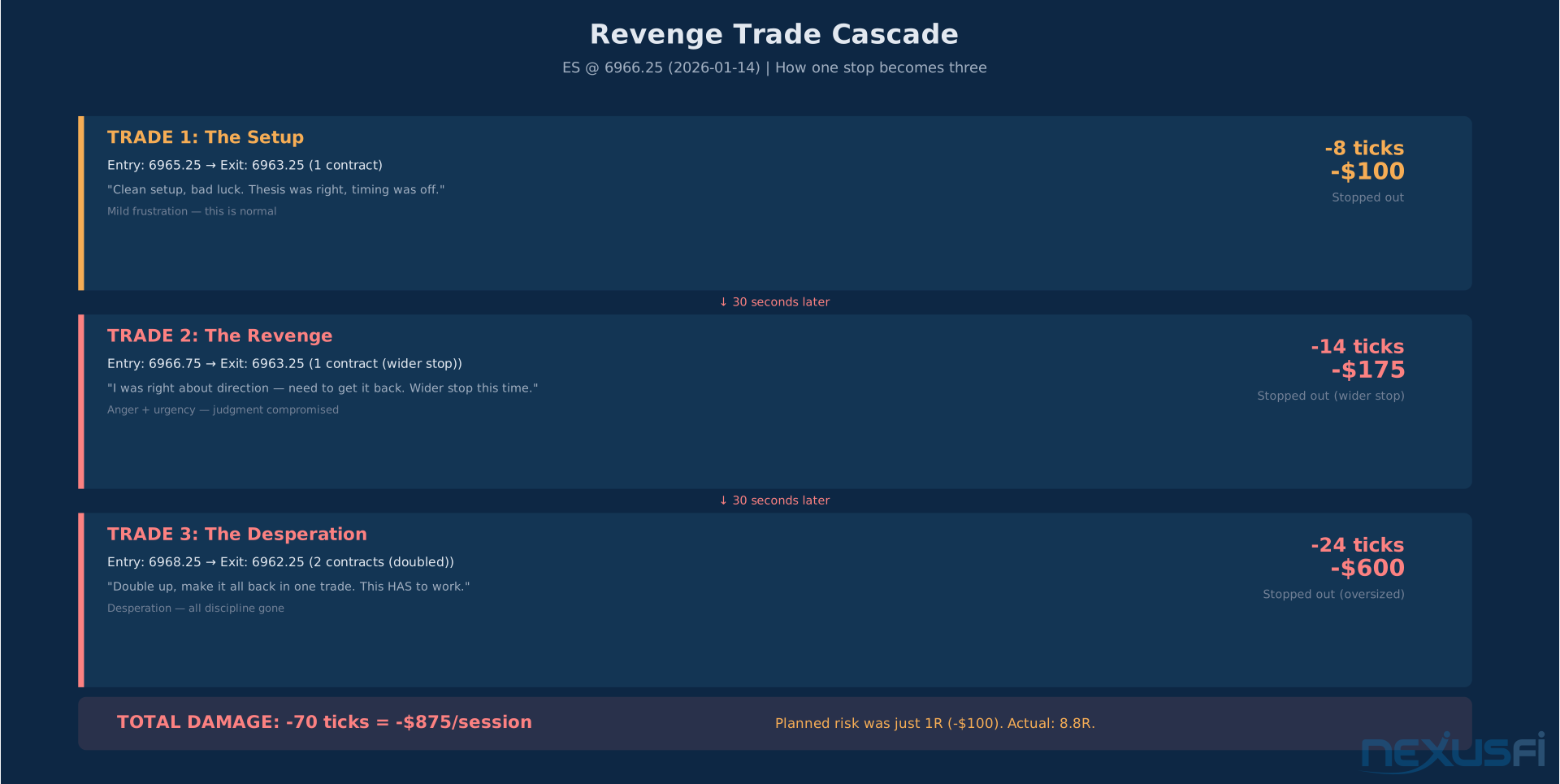
It's 2:30 PM EST. You're down $200 on the session. Your playbook says one more setup at normal size. Your impatience says double the size on the next trade to get back to flat before the close. This isn't risk management — it's impatience with the day's outcome driving a position-sizing decision that your trading plan never authorized.
Micromanaging Live Positions
You entered with a plan: stop below the prior swing low, target at the Value Area High. But 3 minutes in, price dips 2 ticks and you tighten your stop. It bounces back, you trail it up. It dips again, you panic and flatten. Twenty minutes later, price is at your original target. The trade was right. Your interference killed it. This is impatience with uncertainty — the inability to tolerate the normal noise of a trade working itself out.
Understanding: Why Your Brain Fights Patience #
Impatience isn't a character flaw. It's a predictable response to specific neurological and psychological pressures that futures trading amplifies. Understanding the mechanisms doesn't eliminate them, but it makes the structural solutions feel less arbitrary and more necessary.
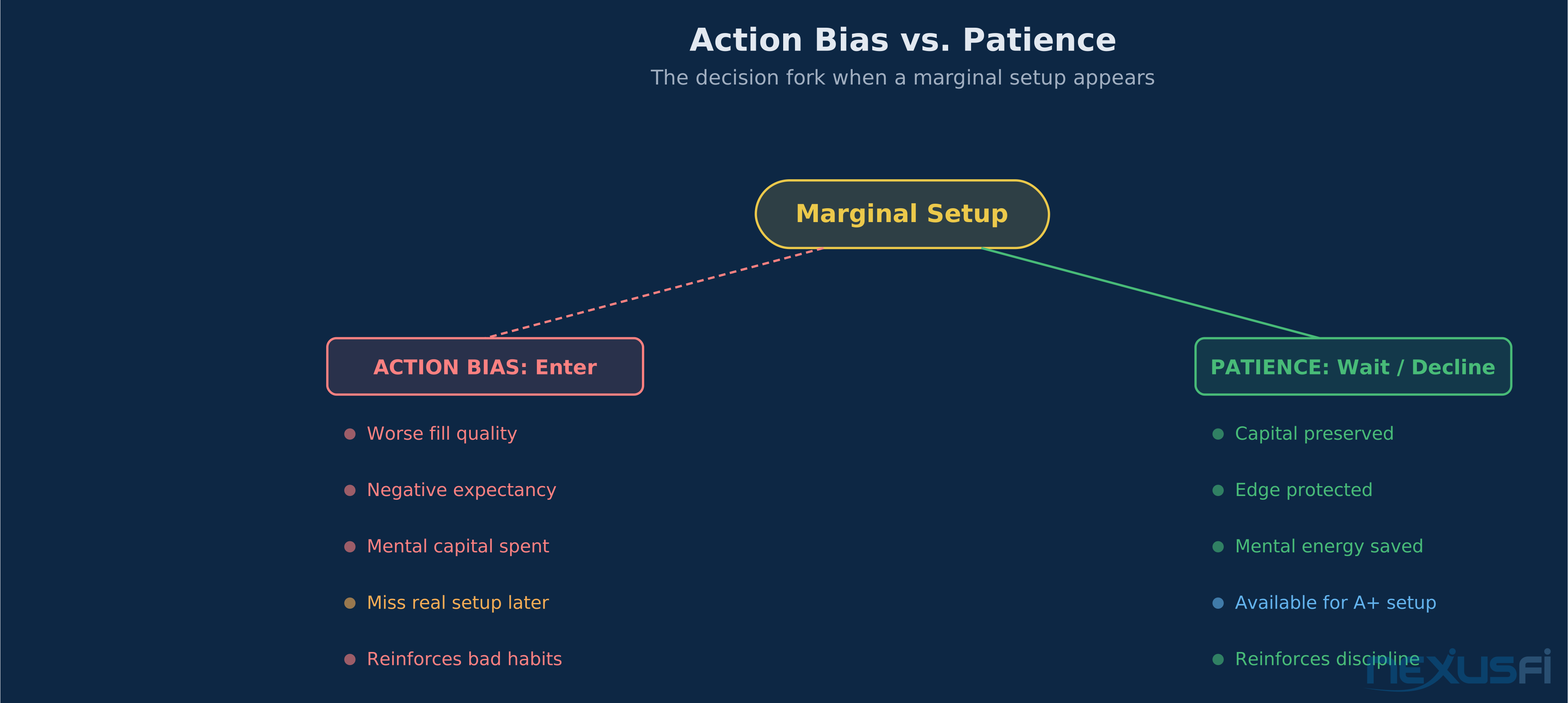 alt="Decision fork diagram comparing action bias outcomes versus patience outcomes for a marginal trading setup" loading="lazy" width="800" height="450">
Action Bias Under Uncertainty
Research in behavioral economics consistently shows that humans prefer action over inaction when outcomes are uncertain — even when inaction is statistically the better choice. In a well-known soccer penalty kick study, goalkeepers who stayed in the center saved more shots than those who dove left or right, yet goalkeepers dove 94% of the time. The parallel to trading is direct: doing nothing during a choppy session feels like failing. Taking a marginal trade feels like trying. But "trying" with negative expectancy is just donating money to the market.
Hyperbolic Discounting
Your brain heavily discounts future rewards relative to immediate ones. A guaranteed $50 now feels more valuable than a probable $200 later — even when the math favors waiting. In trading terms, this drives premature profit-taking (the bird in the hand), premature entries (the need for immediate engagement), and the inability to sit through flat periods. The delay between signal and payoff feels disproportionately long because your brain warps the time-reward curve.
The Market's Reinforcement Loop
[4] Every time you clip a winner and the market reverses, your brain logs a "win" — reinforcing the very behavior that destroys long-term profitability.
Cognitive Load and Session Fatigue
Self-control is a depletable resource. Research on ego depletion shows that the capacity for disciplined decision-making degrades with use — and a futures trading session is an extended exercise in high-stakes decision-making under uncertainty. Patience is hardest when you need it most: after a string of losses, late in the session, during volatile conditions when every tick feels urgent. The first trade of the day often follows your plan perfectly. By trade seven, discipline is eroding and impatience fills the gap.
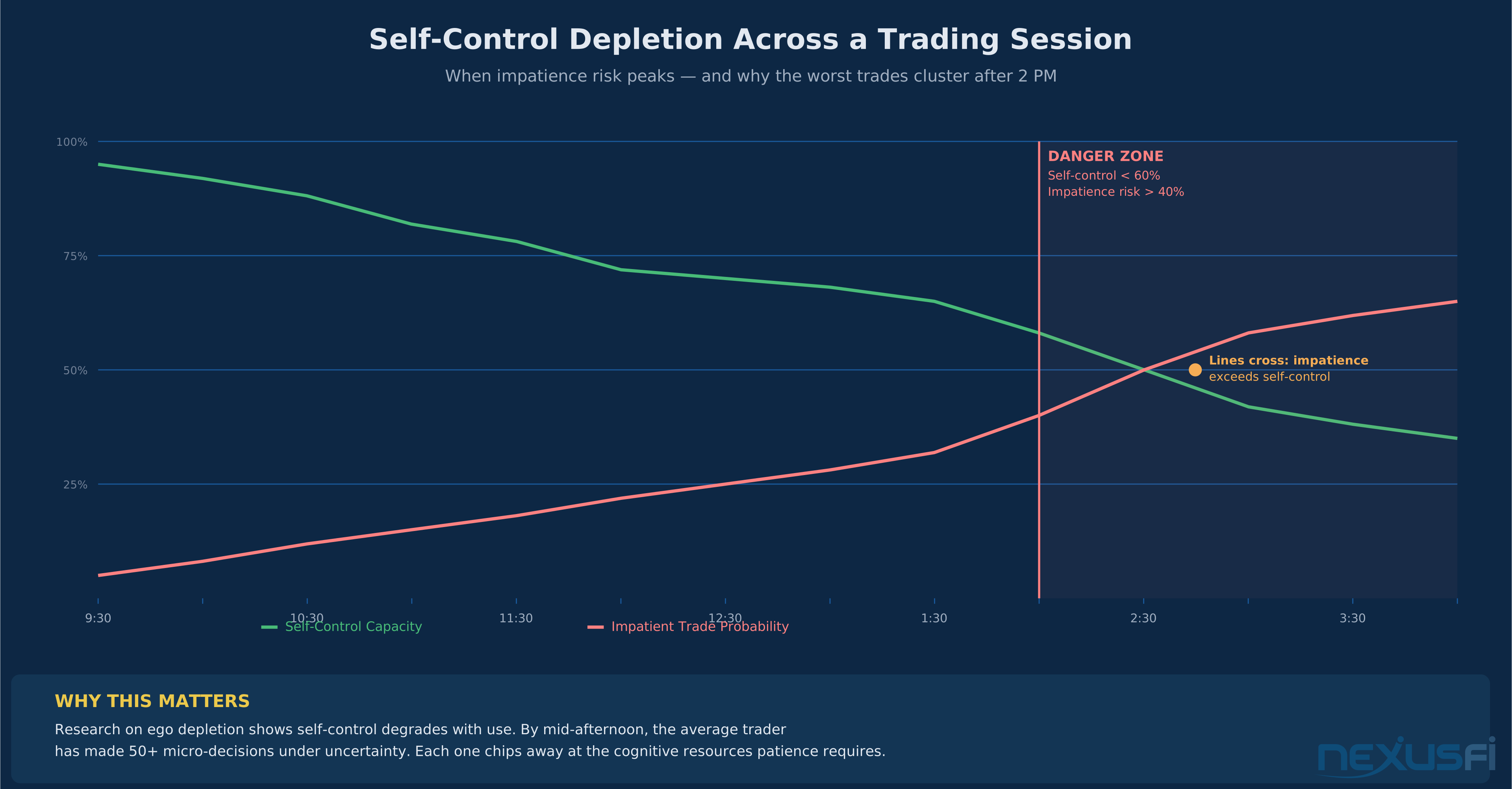 alt="Line chart showing self-control depletion and impatience risk crossing over during a trading session with danger zone after 2 PM" loading="lazy" width="800" height="450">
Intermittent Reinforcement
This is the most insidious mechanism. Intermittent reinforcement — random, unpredictable rewards — creates the strongest behavioral conditioning known to psychology. It's the mechanism behind slot machines and social media scrolling. In choppy markets, forced trades sometimes work. You enter on a marginal signal, price moves your way, you take a small profit. Your brain logs "trading in chop can work." It doesn't properly weight the seven forced trades that lost. Each random win strengthens the compulsion to keep sampling, to keep pressing, to keep trading when there's nothing to trade.
Loss Aversion Warping Time Perception
Prospect theory shows that losses hurt roughly twice as much as equivalent gains feel good. In a live trade, every adverse tick produces disproportionate psychological pain — pain your brain wants to end immediately. The result: cutting winners too early to "lock in" the gain before it evaporates, and holding losers too long because realizing the loss makes the pain concrete. Both are forms of impatience — impatience with uncertainty on winners, impatience with accepting failure on losers.
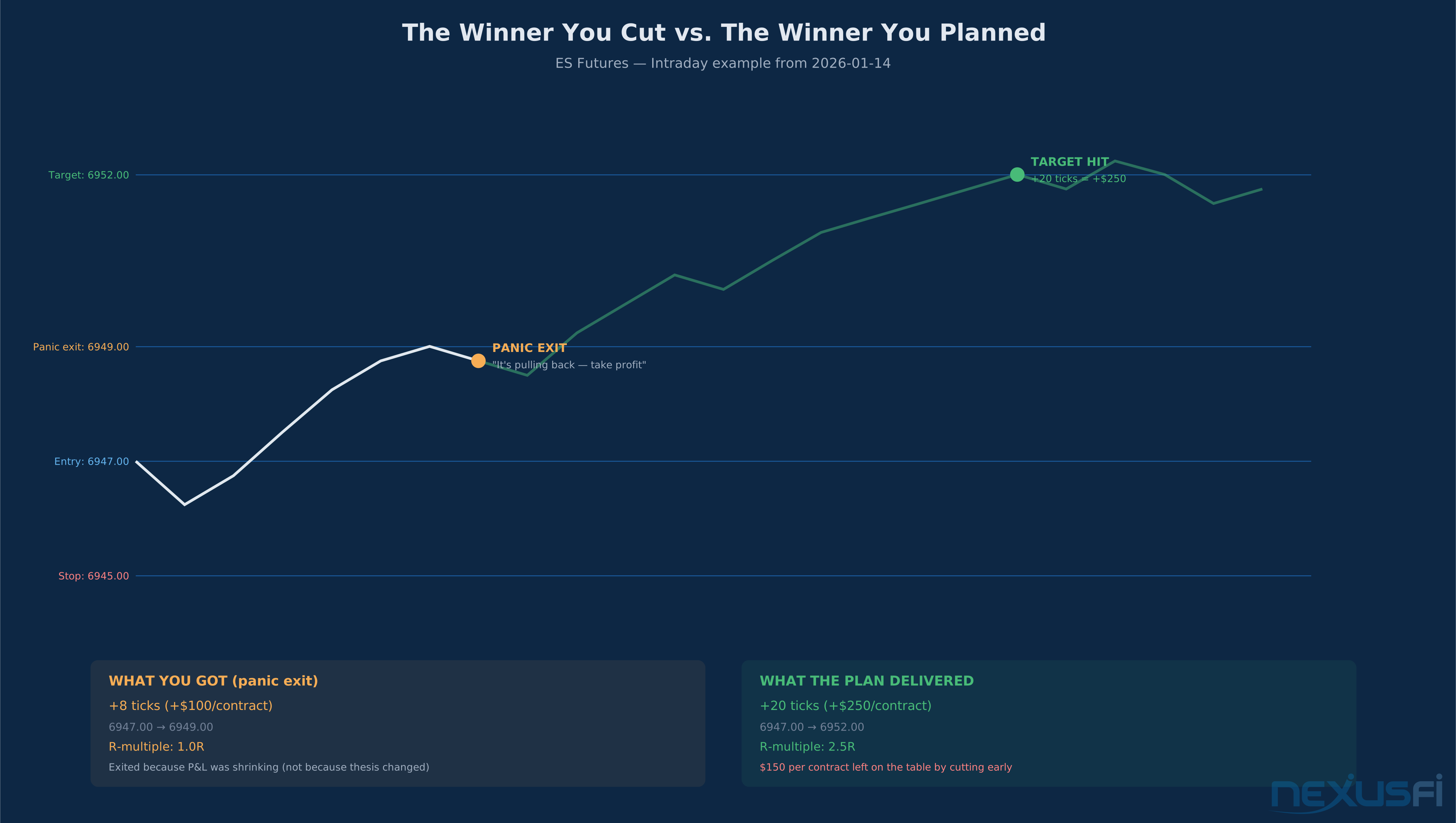 alt="ES intraday price chart showing premature panic exit at 1R vs planned target at 2.5R with real IQFeed prices" loading="lazy" width="800" height="450">
Techniques: Building Patience Into Your System #
The critical insight from experienced traders: patience is a system design problem, not a willpower problem.
[6] Strategy, discipline, and patience form a reinforcing triangle — strengthen any side and the others follow.
Patience is not a personality trait — it is a system design problem. Every technique in this section replaces willpower with structure. You do not need more discipline. You need fewer decisions where discipline is required.
Don't rely on willpower. Build structures that make the patient choice the default choice.
alt="The Three-Wait Framework diagram showing setup, confirmation, and management patience checkpoints" loading="lazy" width="800" height="450">
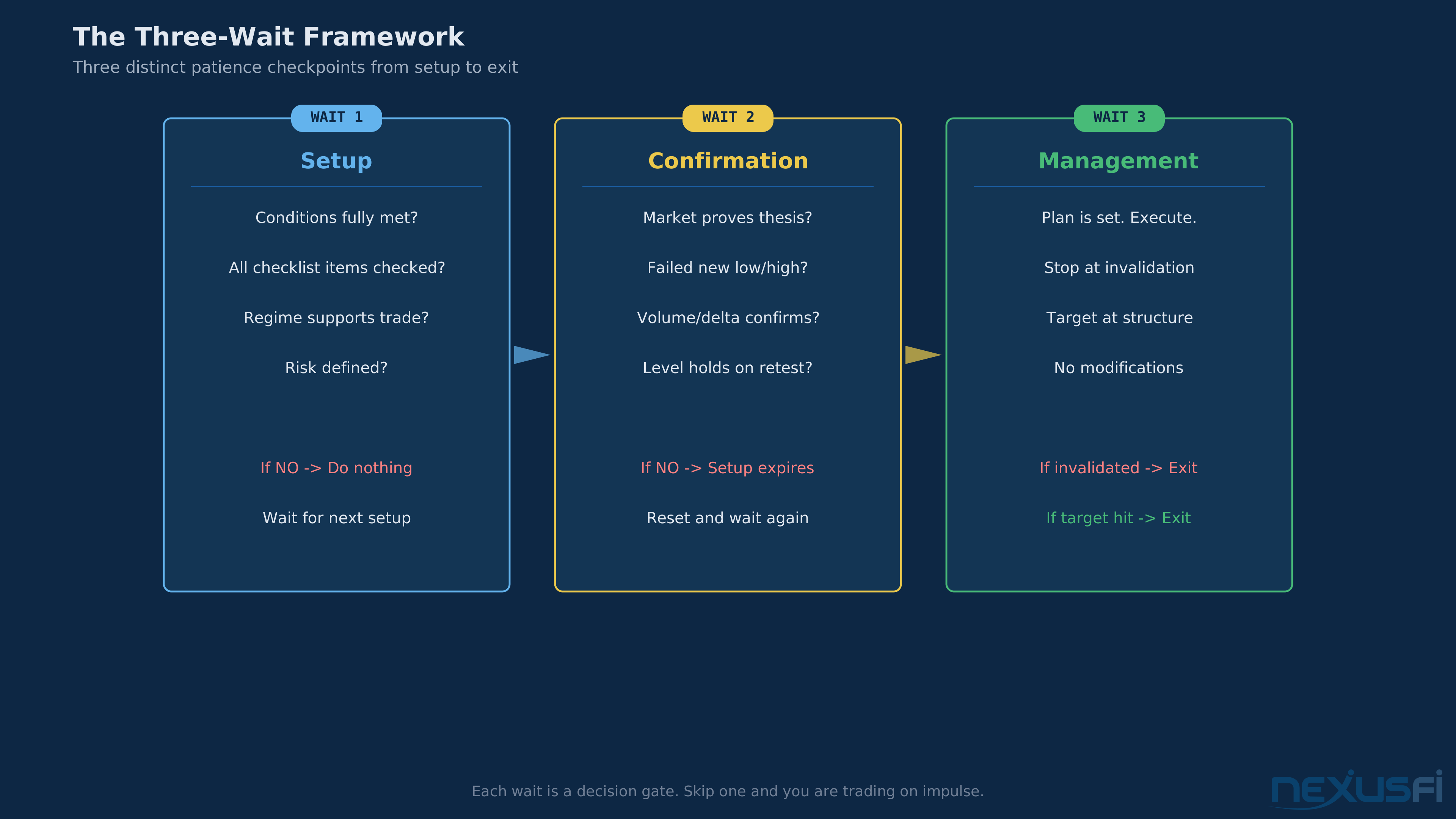
The Three-Wait Framework
Structure your patience around three distinct decision points:
Wait 1 — Setup: Your conditions must be fully met before you even consider entry. Not "almost there," not "close enough." If your playbook says "pullback to VWAP with delta divergence," then a pullback without the divergence is not your trade. Write your entry criteria on a physical checklist. If any box is unchecked, the answer is no.
Wait 2 — Confirmation: After the setup forms, wait for the market to prove acceptance or rejection. This might be a failed new low, a volume surge at your level, or a specific candlestick pattern. The confirmation step separates patient traders who enter after evidence from impatient traders who enter on anticipation.
Wait 3 — Management: Once in the trade, your job shifts from decision-making to plan execution. The entry criteria and exit logic were set before the trade. Now let the trade develop according to that plan. Every urge to tighten a stop, move a target, or flatten early should be tested against one question: "Is my invalidation level hit?" If no, do nothing.
Session Trade Caps
Set a hard maximum number of trades per session before the session begins. For most discretionary traders, 3-5 trades per RTH session is appropriate.
[7] When you know you only get 4 trades today, you become extremely selective about which setups deserve your capital. The scarcity enforces patience naturally.
The Tick-Count Pause
After your setup and confirmation conditions are met, impose a brief mandatory delay before submitting the order. For high-volatility contracts like ES and NQ, a 3-tick continuation count works — wait for 3 consecutive ticks in your intended direction after your signal. For slower instruments like ZB or ZC, use a time-based delay of 15-30 seconds. The pause forces a micro-audit: "Are conditions still valid? Has anything changed? Am I entering for the right reasons?"
Cooldown Protocols After Losses
[8] The structure matters more than the specifics. After any loss exceeding 1% of account equity (or two consecutive stops), enforce a mandatory 10-30 minute break. Not "I'll take a break if I feel tilted" — that gives your impaired judgment the final say. Make it automatic.
Volatility Filter Gates
Most impatient trades happen during low-volatility chop when the market isn't offering real setups but you're at the screen looking for them. Build a volatility gate: compute the 5-minute ATR at the start of each hour. If it falls below a threshold you've calibrated for your instrument (for ES, roughly 1.5 points on a 5-minute ATR), you're in "observation only" mode. No new entries until volatility returns. This removes the hardest patience challenge — sitting through dead markets — by making inaction the rule rather than the exception.
Minimum Hold Rules
If cutting winners early is your pattern, impose a minimum hold time before any exit is permitted (aside from your hard stop). Start conservative — 5 minutes for scalp timeframes, 15-30 minutes for swing entries. During that hold period, the only permitted exit is your predefined stop loss. This forces you to experience the normal noise of a winning trade without acting on it, gradually building tolerance for the uncertainty that patience requires.
alt="Drawdown circuit breaker levels from 0.5R daily to 3R weekly with corresponding risk reduction actions" loading="lazy" width="800" height="450">
Drawdown Circuit Breakers
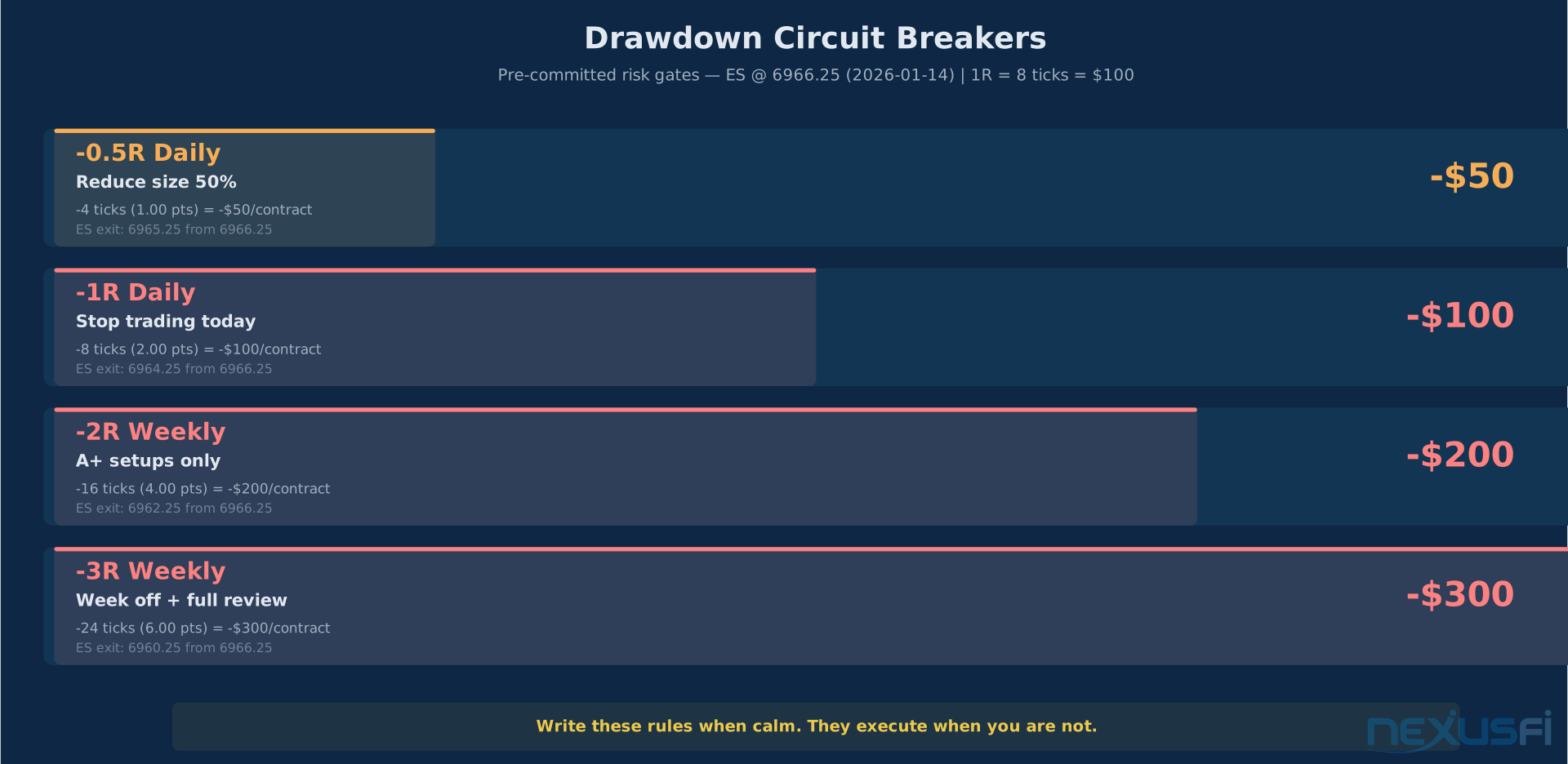
Pre-commit to a de-risking protocol that activates automatically during drawdowns. Down 0.5R on the day: reduce position size by 50%. Down 1R on the day: stop trading for the session. Down 2R on the week: tighten your setup quality threshold, trade only A+ setups. Down 3R on the week: take the rest of the week off and review your journal. These aren't signs of weakness. They're the same kind of risk controls professional trading desks use. The key is pre-commitment — you write these rules when you're calm and thinking clearly. They execute when you're not.
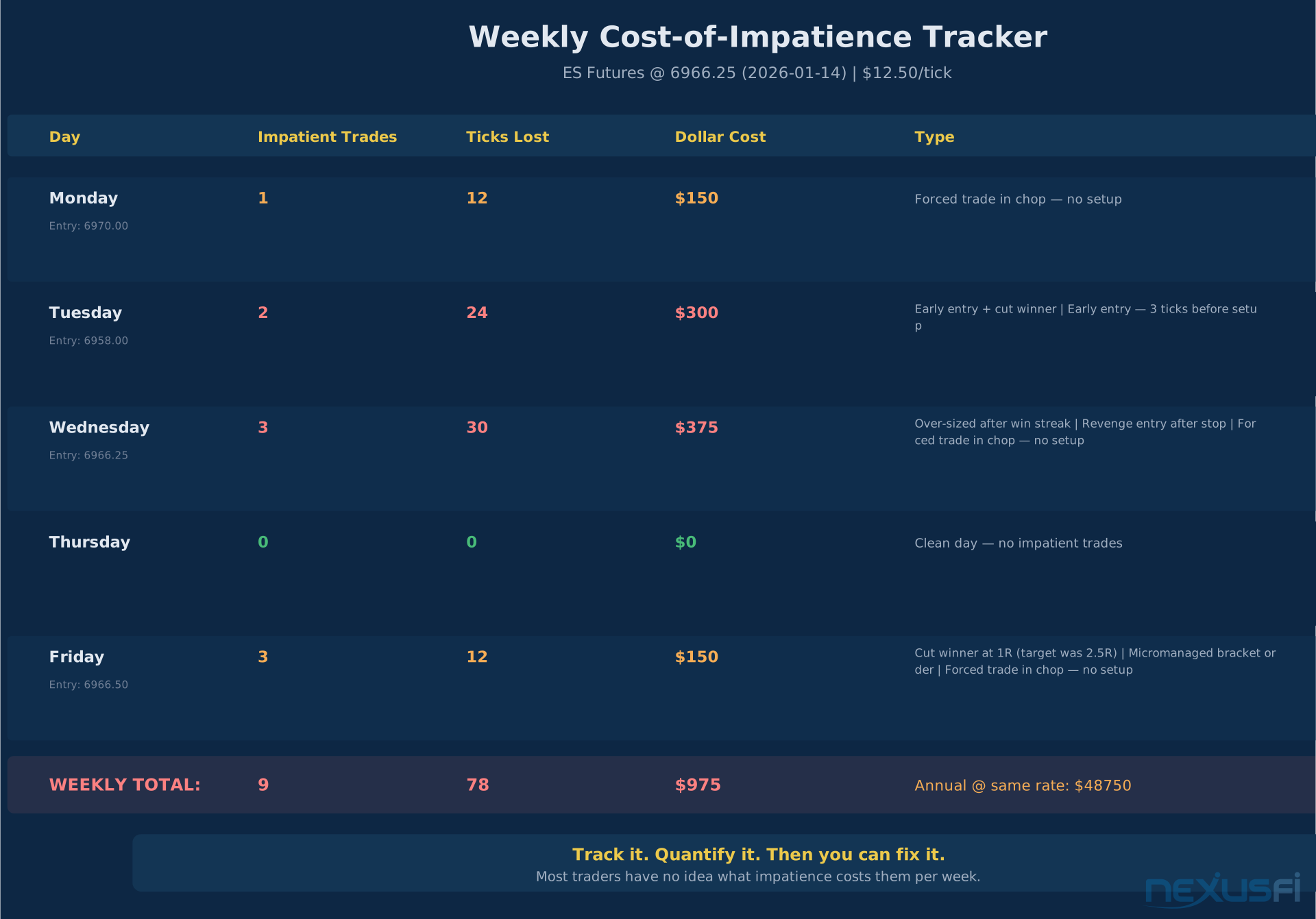 alt="Sample weekly cost-of-impatience tracker showing seven trades with $1,140 in avoidable costs on a single ES contract" loading="lazy" width="800" height="450">
Cost-of-Impatience Tracking
The most powerful patience tool is data on what impatience actually costs you. For every trade you exit early or enter early, track what would have happened had you followed your original plan. Columns: Trade ID, Actual Entry vs. Plan Entry (tick difference), Actual Exit vs. Plan Exit (tick difference), Dollar Impact. After 30-50 trades, the cumulative number is usually sobering enough to change behavior. Most traders find that impatience costs them 20-40% of their potential profits — not from bad analysis, but from bad timing and premature action.
Practice Framework: Building the Patience Habit #
Patience isn't built through motivational self-talk. It's built through repetition, measurement, and progressive exposure — the same way any skill develops.
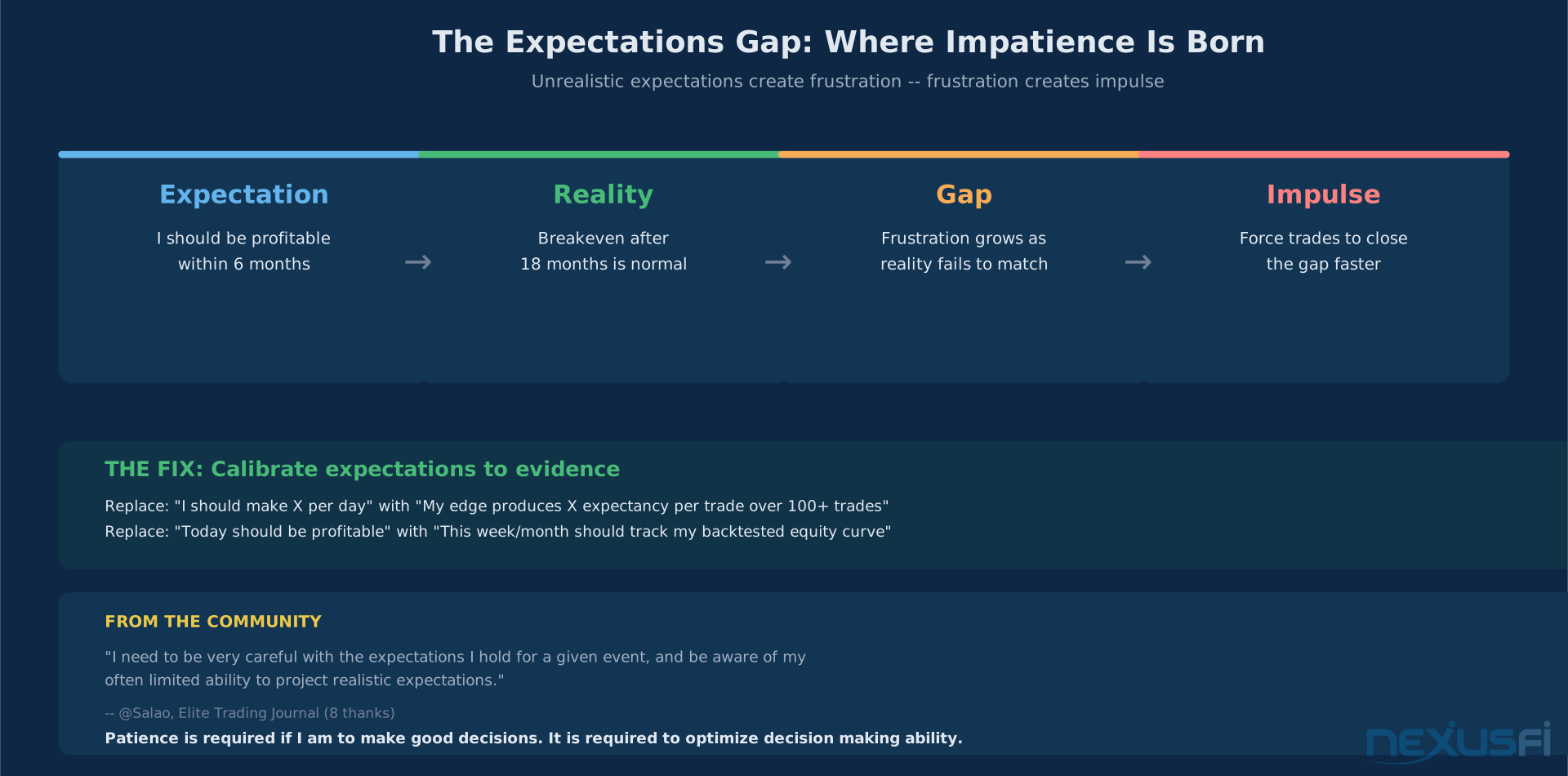
alt="Four-stage diagram showing how unrealistic expectations create frustration that drives impulsive trading" loading="lazy" width="800" height="450">
As @Salao discovered in his trading journal, the root of impatience is often an expectations problem, not a willpower problem. When your expectations match reality, patience becomes the natural default rather than a forced discipline. [10]
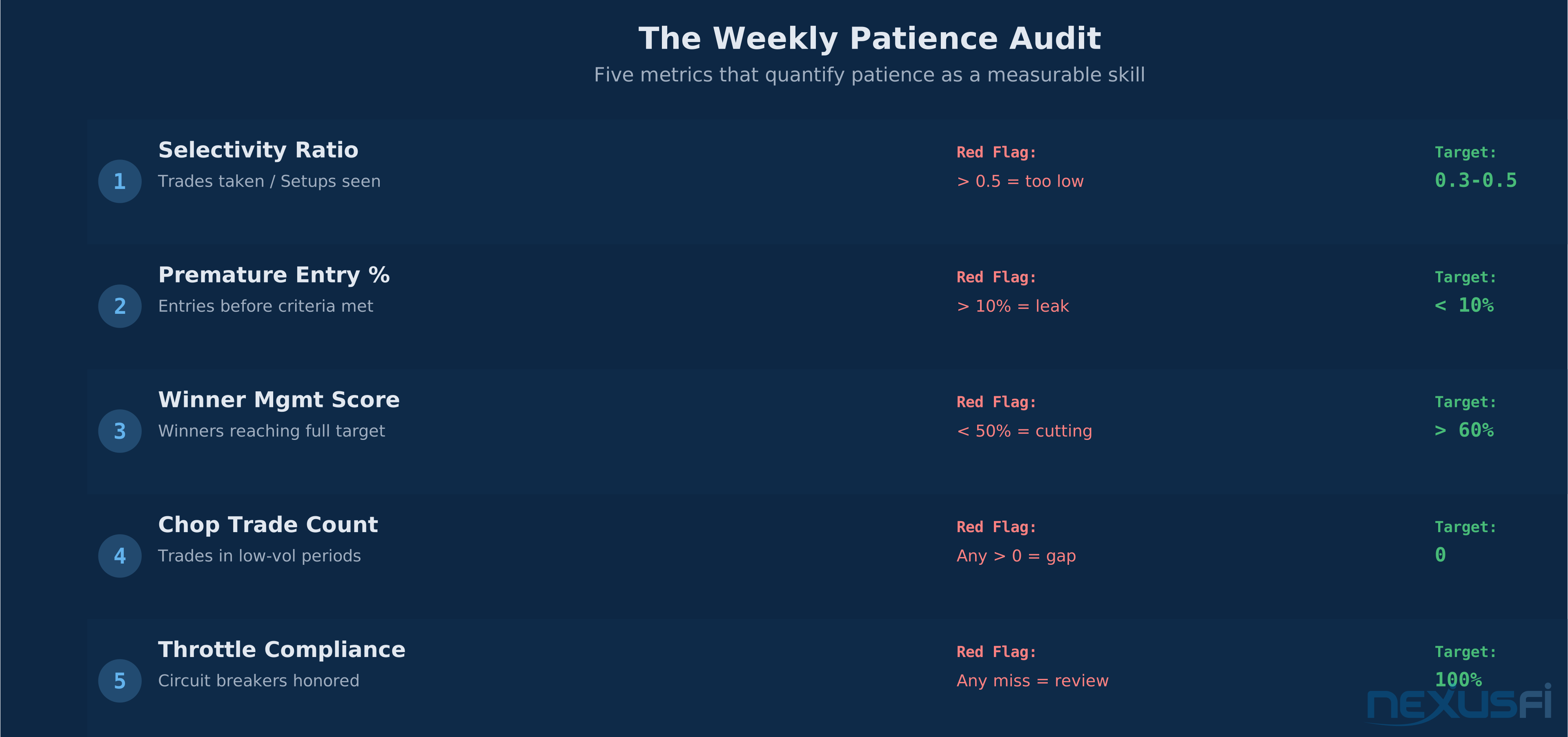 alt="Five weekly patience audit metrics: selectivity ratio, premature entry rate, winner management, chop trades, throttle compliance" loading="lazy" width="800" height="450">
Pre-Session: Set Patience Intentions (2 Minutes)
Before each session, write three things:
- Today's trade cap: Maximum number of trades allowed
- Today's patience rule: One specific patience behavior to focus on (e.g., "No entry before confirmation step completes" or "No exit before minimum hold time")
- Today's observation price: A level where, if reached, you will observe for 5 minutes before acting
This takes 2 minutes and converts patience from an abstract goal into a specific, measurable behavior.
Post-Trade: Impatience Audit (1 Minute Per Trade)
After each trade, answer four questions:
- Did I wait for full setup completion before entering? (Yes/No)
- Did I use my confirmation step? (Yes/No)
- Did I follow my exit plan without modification? (Yes/No)
- Was this trade on my pre-session plan, or was it improvised? (Planned/Improvised)
Track the ratio of patient to impatient decisions. The goal isn't perfection — it's awareness and progressive improvement.
Weekly: Cost-of-Impatience Review (15 Minutes)
Every weekend, review your impatience log. Calculate three numbers:
- Slippage cost: Ticks lost from early entries versus planned entries
- Compression cost: Ticks left on the table from early exits versus planned targets
- Forced trade cost: Net P&L from trades that weren't on your pre-session plan
Convert to dollars. This number is what impatience costs you per week. When you see $300 or $500 a week in avoidable costs, the motivation to build patience becomes concrete and personal rather than abstract and aspirational.
Progressive Hold-Time Stretching
If cutting winners is your primary pattern, use progressive exposure. Week 1: hold every winner for at least your current average hold time. Week 2: add 20% to the minimum hold. Week 3: add another 20%. The goal is to gradually expand your tolerance for being in a winning trade, the same way exposure therapy works for anxiety. You'll give back some winners during this process. That's the cost of training. Track the net impact over 4-6 weeks — for most traders, the increased average winner more than compensates.
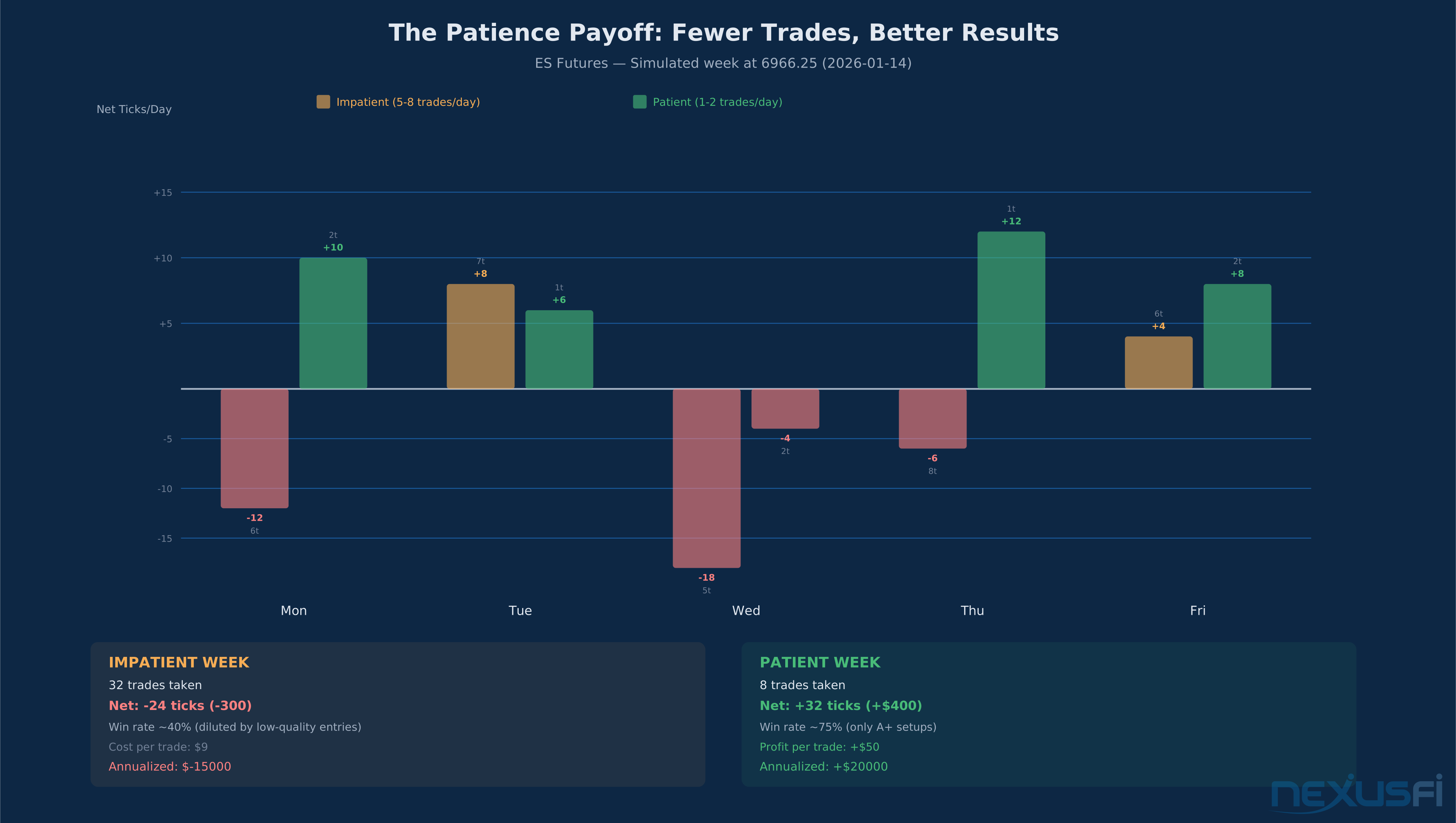
alt="Side-by-side comparison of impatient vs patient trading weeks showing net ticks and annualized P&L with real ES data" loading="lazy" width="800" height="450">
Replay Practice at 1x Speed
If you use market replay for practice, run it at 1x speed for at least one session per week. This eliminates the replay-to-real-time gap that drives so much live-trading impatience. [2] Yes, it's boring. That's the point. Practice being bored while waiting for your setup. Practice the physical sensation of doing nothing while the market moves without you. The discomfort you feel in replay at 1x speed is exactly the discomfort that drives impatient decisions live.
When Patience Doesn't Work #
Patience is powerful, but it's not universally beneficial. There are situations where the patience framework needs adjustment or where the real problem lies elsewhere.
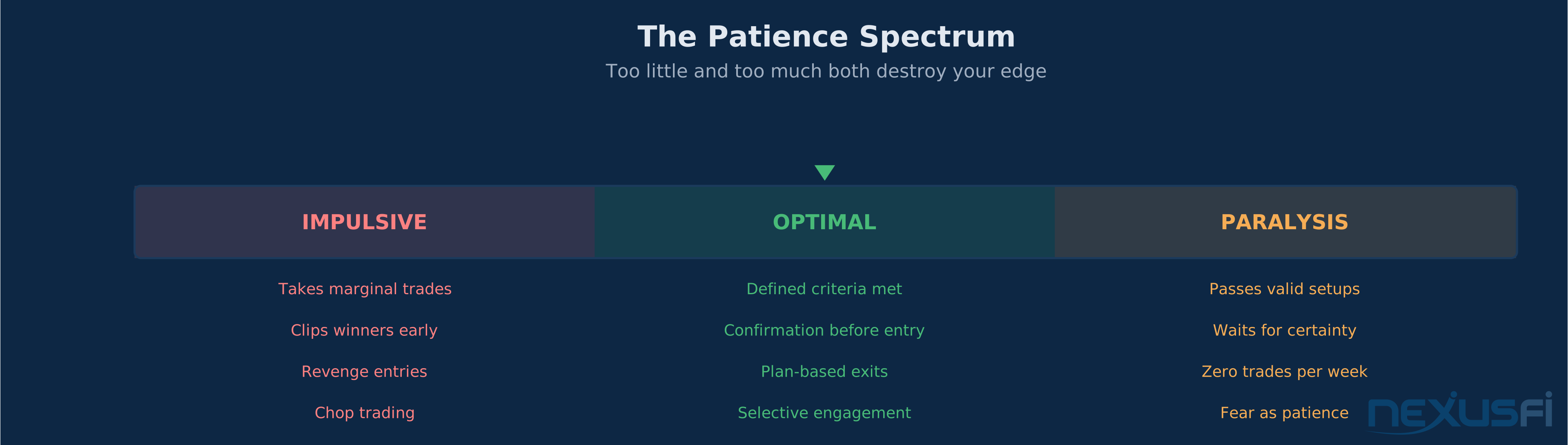
alt="Patience spectrum showing impulsive zone, optimal patience zone, and analysis paralysis zone with descriptions of each" loading="lazy" width="800" height="450">
When Patience Becomes Paralysis
Some traders overcorrect. They become so focused on waiting for the perfect setup that they never trade at all. If your trade frequency drops below what your backtesting shows is necessary for your strategy's expectancy to express itself, you've crossed from patience into avoidance. The diagnostic: if you're passing on setups that meet all your criteria because they "don't feel right," you're not being patient — you're being afraid. Patience waits for defined conditions. Fear waits for certainty that will never arrive.
When the Regime Demands Speed
Patience during a trend day looks different than patience during balance. On a strong trend day where your analysis says long, waiting for the perfect pullback might mean missing the entire move. The Three-Wait Framework should be calibrated to the regime: in strong trends, confirmation might be a 1-bar hold of a level rather than a 5-bar acceptance pattern. The goal is to match your patience to the market's tempo, not to impose a rigid time delay regardless of conditions.
When Impatience Masks a Strategy Problem
If you're consistently impatient, the problem might not be psychological — it might be that your strategy produces setups too infrequently or generates too much ambiguity. A strategy that gives you one clear setup per week when you're at the screen every day is a recipe for impatient improvisation. Before treating impatience as a mindset problem, verify that your strategy generates enough opportunities to keep you engaged within the bounds of your patience capacity.
Individual Differences Are Real
Research on delayed gratification shows meaningful variation between individuals. Some traders will naturally find patience easier; others will need more structural support. The trader with low natural patience who builds strong structural guardrails (trade caps, cooldowns, volatility filters) can outperform the naturally patient trader who relies on willpower alone. Design your system for the trader you actually are, not the one you wish you were.
When to Seek Professional Help
If impatience persists despite implementing structural solutions and tracking data — if you find yourself repeatedly overriding your own rules, consistently ignoring cooldown timers, or unable to resist the urge to trade during restricted periods — the issue may run deeper than trading technique. Performance psychology coaching or cognitive behavioral therapy has helped many traders who find that system design alone isn't sufficient. This isn't weakness. It's recognizing that some problems need specialized tools.
[1] If you can't get to that calm neutral, the techniques above will help. If you try them for months and still can't, a professional can help you understand why.
Knowledge Map
Prerequisites
Understand these firstGo Deeper
Build on this knowledgeReferences This Article
Articles that build on this topicCitations
- — Trade Journal (2014) 👍 17“Patience to wait, courage to act. Six words to trading excellence. Patience comes from: Clarity, Confidence, Capability.”
- — The PandaWarrior Chronicles (2013) 👍 14“Our impatience as day traders comes from the disconnect between testing ideas and then applying the resulting trade plan in real time.”
- — Trading the SLA/AMT Intraday (2015) 👍 7“The next time nothing happens. So the trader trades anyway because after all he's been sitting there for so long.”
- — Did revenge trade today, lost big... (2011) 👍 6“The most difficult task is to do nothing, just sitting and watching. Only accept the best opportunities for trading.”
- — Dear Ruby (2013) 👍 12“Implement a rule that if you violate your trading rules twice, you're cut off for the day.”
- — PATs - Price Action Trading (2014) 👍 21“I would rather take one good trade setup, win or lose, than 5 half baked on the fly trade attempts.”
- — The PandaWarrior Chronicles (2012) 👍 12“The market is far more generous than I have realized. It only asks two things in exchange for its gifts -- patience and discipline.”
- — Finally Turning the Corner (2020) 👍 7“Get a broker that allows you to set a max daily risk and after reaching that limit you will be locked out until the next trading day.”
- — Having the discipline to wait for price setup to present itself (2012) 👍 13“Learn to be inactive. You must be inactive when there is no reason not to be. But you must always be alert and ready to act.”
- — Salao's Journal (2021) 👍 8“Patience is required if I am to make good decisions. It is required to optimize decision making ability.”