



Tick in Futures Trading: The Minimum Price Increment That Drives Every Decision
Overview #
A tick is the minimum price increment a futures contract can move. That's the textbook definition, and it's correct, but it barely scratches the surface. Every profit target, every stop loss, every spread cost, every order flow signal — all of it reduces to ticks. Think in ticks, not dollars. Traders who internalize this distinction make better sizing decisions, faster execution calls, and more precise risk management.
The term shows up everywhere in trading: tick charts, tick data, tick size, tick value. Each usage connects back to the same core concept — the smallest discrete price movement the exchange allows.
Key Concepts #
Tick Size is the minimum price increment set by the exchange for each contract. On ES (E-mini S&P 500), that's 0.25 index points. On CL (Crude Oil), it's $0.01 per barrel. The exchange defines this — traders can't trade between ticks.
Tick Value is the dollar amount your P&L changes when price moves one tick. This is the number that actually matters for your account. Tick value = tick size x contract multiplier.
Tick Data refers to the record of every individual trade execution — price, size, timestamp, and aggressor side. This is the raw material for order flow analysis and tape reading.
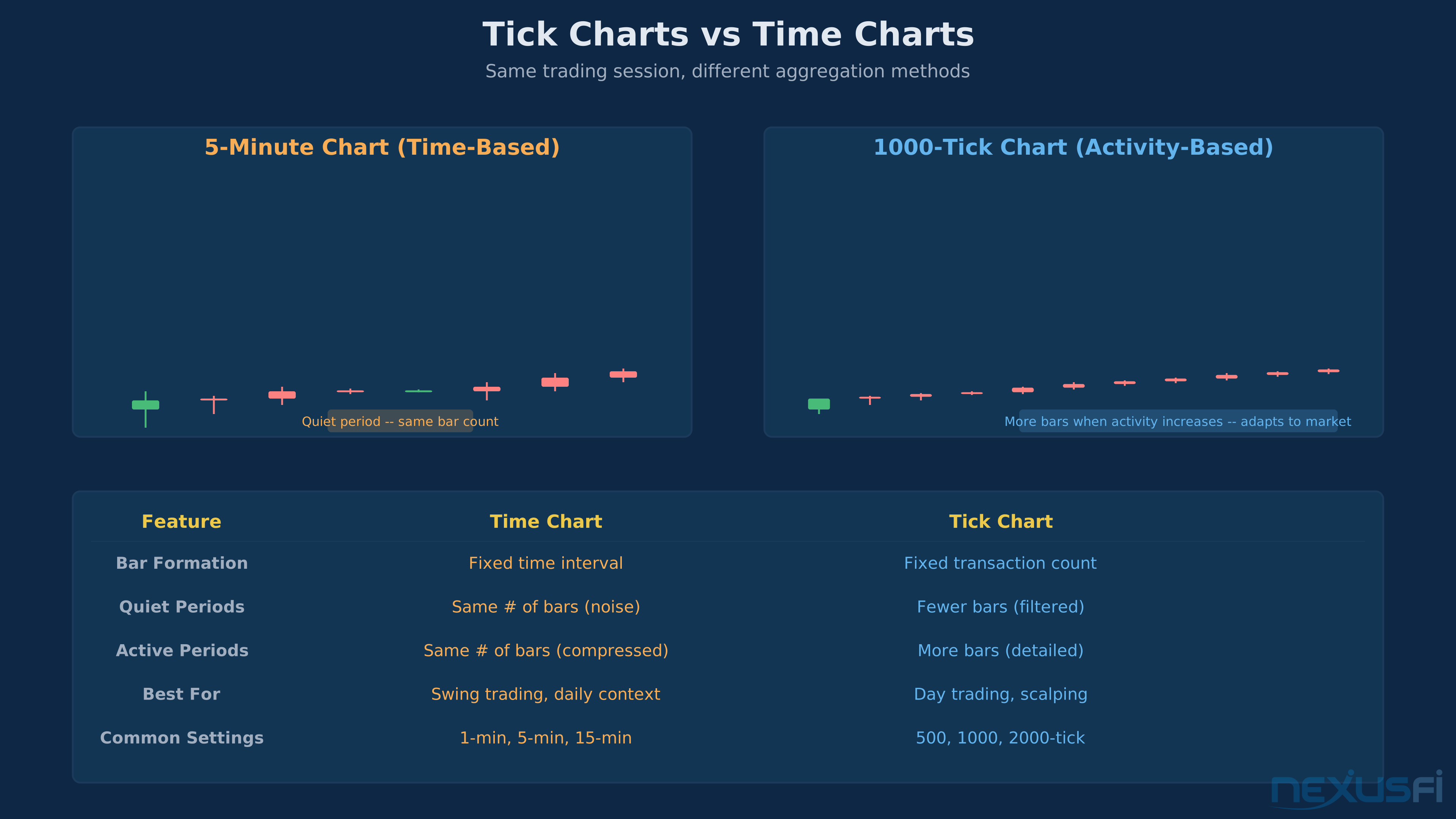
Tick Chart is a chart type where each bar forms after a fixed number of transactions rather than a fixed time interval. A 1000-tick chart creates a new bar every 1,000 trades.
Tick Size and Tick Value #
The distinction between tick size and tick value trips up newer traders constantly. Tick size tells you the price increment. Tick value tells you what that increment costs.
Here's the formula:
Tick Value = Tick Size x Contract Multiplier
Major Futures Contract Specifications #
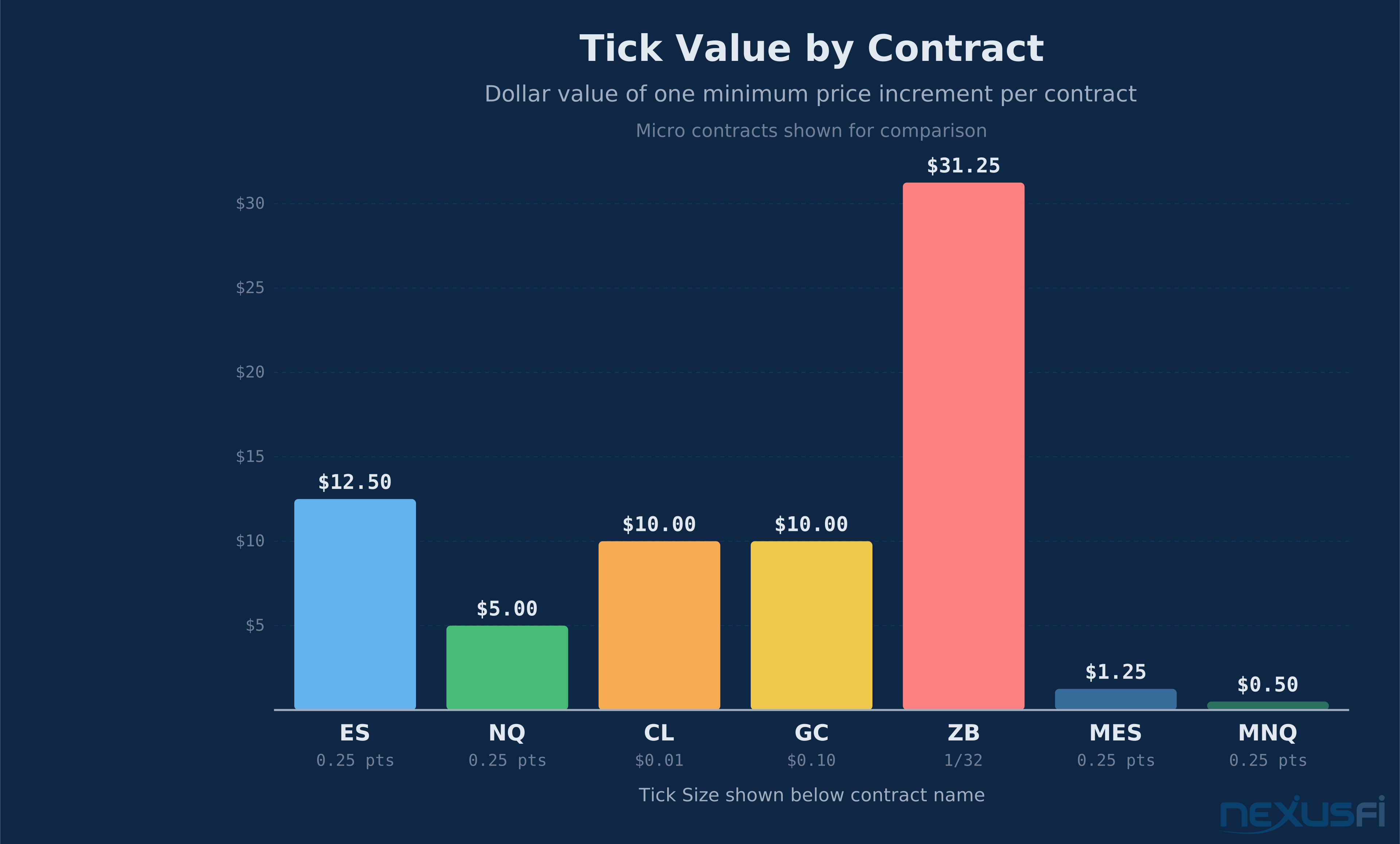
| Contract | Description | Tick Size | Tick Value | Multiplier |
|---|---|---|---|---|
| ES | E-mini S&P 500 | 0.25 points | $12.50 | $50/point |
| NQ | E-mini Nasdaq-100 | 0.25 points | $5.00 | $20/point |
| CL | Crude Oil (WTI) | $0.01/barrel | $10.00 | 1,000 barrels |
| GC | Gold | $0.10/oz | $10.00 | 100 troy oz |
| ZB | 30-Year T-Bond | 1/32 point | $31.25 | $1,000/point |
| ZN | 10-Year T-Note | 1/2 of 1/32 | $15.625 | $1,000/point |
| ZF | 5-Year T-Note | 1/4 of 1/32 | $7.8125 | $1,000/point |
| MES | Micro E-mini S&P | 0.25 points | $1.25 | $5/point |
| MNQ | Micro E-mini Nasdaq | 0.25 points | $0.50 | $2/point |
| YM | E-mini Dow | 1.0 point | $5.00 | $5/point |
Notice something: ES and NQ both have a 0.25-point tick size, but ES is worth $12.50 per tick while NQ is only $5.00. Same tick size, completely different risk per contract. That's the multiplier at work.
As @Fat Tails explained on NexusFi when breaking down tick math: "The tick value can be calculated as tick value = tick size multiplier. For CL you will get: tick value = $0.01 1,000 = $10.00" — straightforward arithmetic that every trader should have memorized for their instruments.
Micro contracts (MES, MNQ) share the same tick size as their full-size counterparts but at 1/10th the tick value. Same price ladder, same chart patterns, dramatically less capital at risk.
The Tick on the Price Ladder #
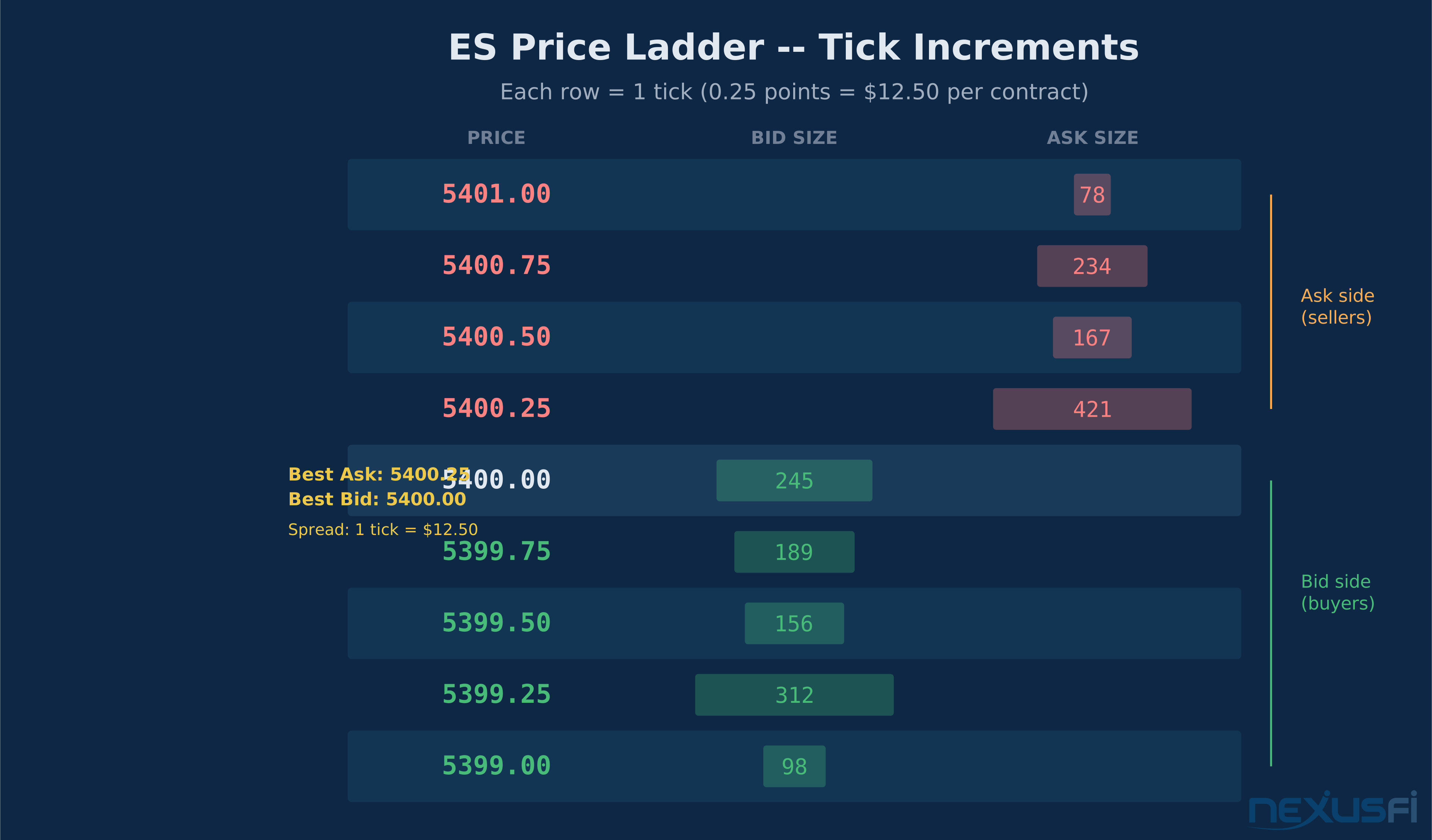
Pull up a DOM (Depth of Market) on ES and you'll see prices stacked in 0.25 increments: 5400.00, 5400.25, 5400.50, 5400.75, 5401.00. No prices exist between those levels. Every bid, every ask, every fill occurs at one of those tick levels.
The bid-ask spread in liquid contracts is almost always 1 tick. On ES during regular trading hours, the spread sits at 1 tick ($12.50) basically all day. That spread is your minimum round-turn cost before commissions.
When you see a 1-point move on ES, that's 4 ticks — $50 per contract. When you see a 1-point move on CL, that's 100 ticks — $1,000 per contract. Different universe entirely.
Treasury Fractional Ticks #
Treasury futures use fractional tick sizes that look nothing like the clean decimals of equity index or commodity contracts. If you're coming from ES or CL, treasury pricing will feel like learning a second language — but mastering it opens up some of the most liquid markets in the world.
All treasury futures are priced in fractions of 1/32nd of a point, where one point equals $1,000. The differences between contracts come down to how fine the exchange slices each 32nd.
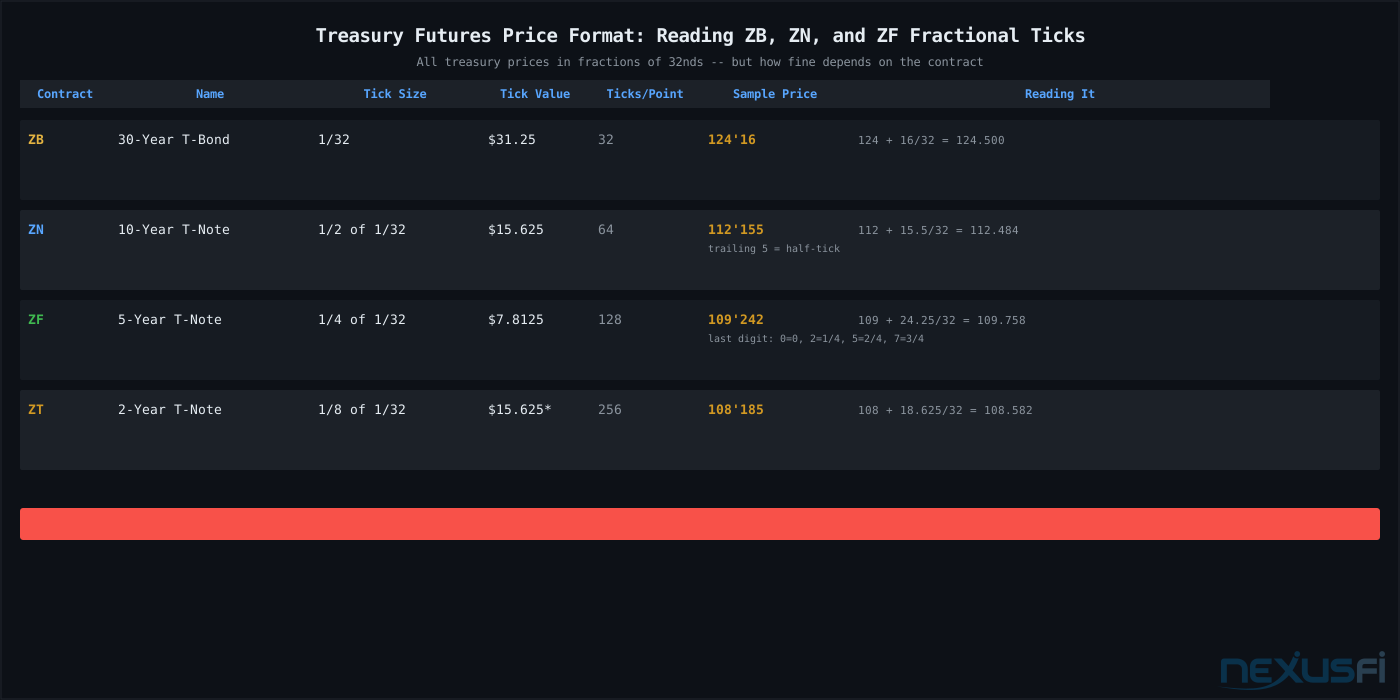
ZB (30-Year T-Bond): ticks in full 1/32nds. One tick = 1/32 x $1,000 = $31.25. A price displayed as 124'16 means 124 and 16/32nds. There are 32 ticks per point. Simple enough.
ZN (10-Year T-Note): ticks in half-32nds (1/2 of 1/32 = 1/64 of a point). One tick = $15.625. A price of 112'155 means 112 and 15.5/32nds. That trailing 5 represents the half-tick — so 112'150 is 112-15/32 and 112'155 is 112-15.5/32. There are 64 ticks per point.
ZF (5-Year T-Note): ticks in quarter-32nds (1/4 of 1/32 = 1/128 of a point). One tick = $7.8125. Price displays use the last digit to show which quarter: 0 = 0/4, 2 = 1/4, 5 = 2/4, 7 = 3/4. So 109'242 means 109 and 24.25/32nds. A full point move on ZF covers 128 ticks.
As @Fadi explained on NexusFi: "ZB -> 10/320... ZN -> 5/320... these follow the same logic except they have a different tick size." The 320ths notation works because 1/32 = 10/320, 1/64 = 5/320, and 1/128 = 2.5/320 — different granularities of the same base fraction.
The two-year note (ZT) slices even finer than ZF, at a tick value of $15.625 per tick thanks to its $200,000 face value ($2,000/point multiplier).
Why This Matters for Risk #
The practical consequence: a 1-point move is a very different animal across treasury products. On ZB, 1 point = 32 ticks = $1,000. On ZN, 1 point = 64 ticks = $1,000. On ZF, 1 point = 128 ticks = $1,000. The dollar amount per point is identical, but the number of ticks differs dramatically. A "20-tick stop" on ZB risks $625. The same "20-tick stop" on ZF risks only $156.25. Know your instrument.
The display format catches people too. If you see ZN at 112'155 and try to read it like a decimal number, you'll miscalculate everything. The apostrophe separates the handle from the 32nds fraction, and the trailing digits indicate sub-32nd precision. Pull up a treasury DOM side-by-side with an ES DOM and the difference in price formatting is immediately obvious.
The Bid-Ask Spread in Ticks #
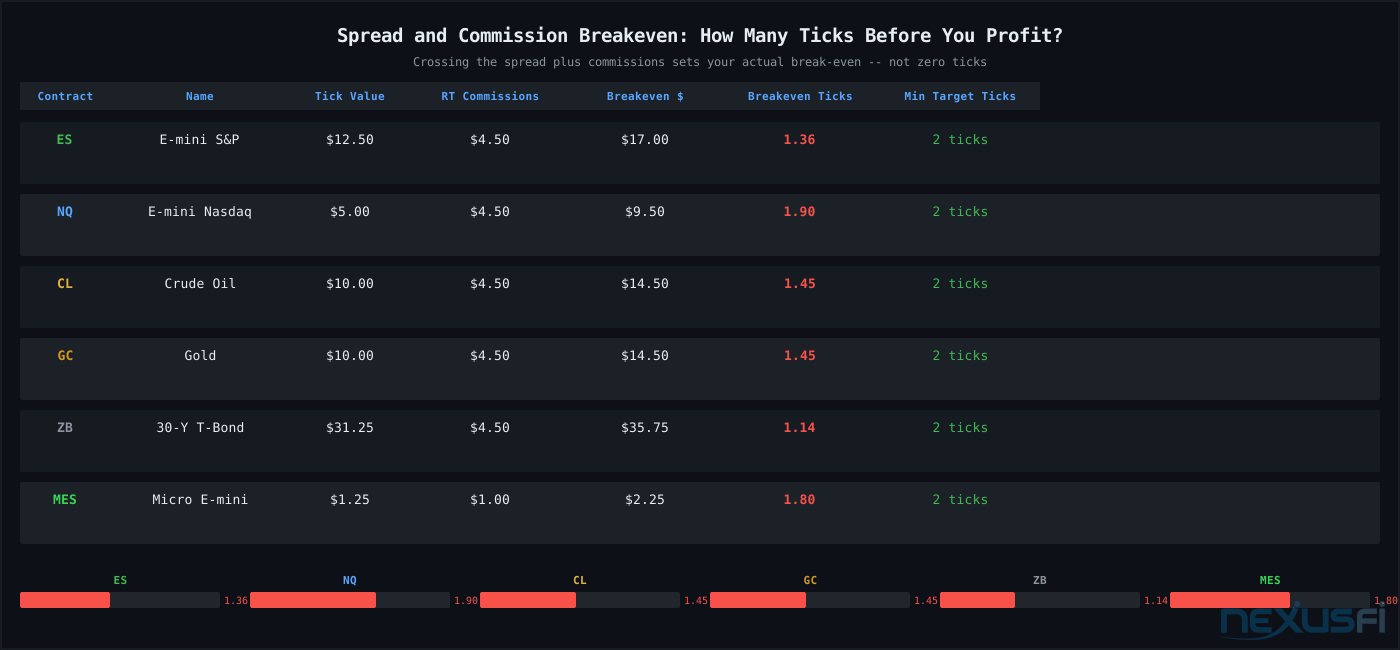
Every time you cross the spread to get filled, you're paying the spread cost in ticks. On ES, that's $12.50 per round turn. On CL, it's $10.00. On NQ, it's $5.00.
Slippage adds tick-denominated costs on top of the spread. A market order during a volatile moment might get filled 2-3 ticks worse than expected. On ES, 3 ticks of slippage = $37.50 additional cost per contract. On CL, 3 ticks = $30. These numbers determine whether a strategy is viable or whether you're just donating to the market.
Scalping viability depends directly on tick value. To profit after commissions and the spread, a scalper needs to capture enough ticks to exceed costs. With ES at $12.50/tick, a 2-tick scalp nets $25 minus commissions (~$4-5 round turn) = roughly $20 profit. With NQ at $5.00/tick, a 2-tick scalp nets $10 minus commissions = roughly $5 profit. The math works much harder on NQ scalps.
Tick Charts vs Time Charts #
Time-based charts (1-minute, 5-minute) create a new bar at fixed intervals regardless of market activity. During the overnight session, a 5-minute ES chart still prints one bar every 5 minutes even if only 50 contracts traded. During the open, that same 5-minute bar might contain 50,000 contracts. The visual weight of each bar is identical, but the information content is wildly different.
Tick charts solve this by creating bars based on transaction count instead of elapsed time. A 1000-tick chart prints a new bar after every 1,000 trades. During slow periods, bars form slowly — sometimes one bar over several minutes. During fast periods, bars stack up rapidly — potentially one every few seconds.
The result: tick charts naturally adapt to market rhythm. They compress dead time and expand active time. As @worldwary described on NexusFi, tick charts provide "a perspective on price action that naturally conforms with the rhythm of the trading session."
Practical Tick Chart Settings #
Common settings by instrument:
- ES: 500, 1000, 2000-tick charts
- NQ: 1000, 2000, 4000-tick (higher average volume)
- CL: 233, 500, 1000-tick
the information shifts. Each bar represents roughly equal participation, making volume-based analysis more consistent.
Different market conditions favor different chart types.
The key advantage for day traders: tick charts reveal micro-structure that time charts compress away. Higher lows forming on a 1000-tick ES chart might not be visible on a 5-minute chart because the 5-minute bar absorbed all that action into a single candle.
Tick Data and Order Flow Analysis #
"Tick data" in the order flow context means the record of every trade execution: price, volume, timestamp, and critically, whether the trade was buyer-initiated (hitting the ask) or seller-initiated (hitting the bid). This aggressor-side information is the foundation of modern order flow trading.
Delta #
Delta measures the difference between buying volume and selling volume at each price level. Positive delta means aggressive buyers are dominating. Negative delta means aggressive sellers. A cluster of positive delta at a support level suggests institutional buying.
Cumulative Delta (CVD) #
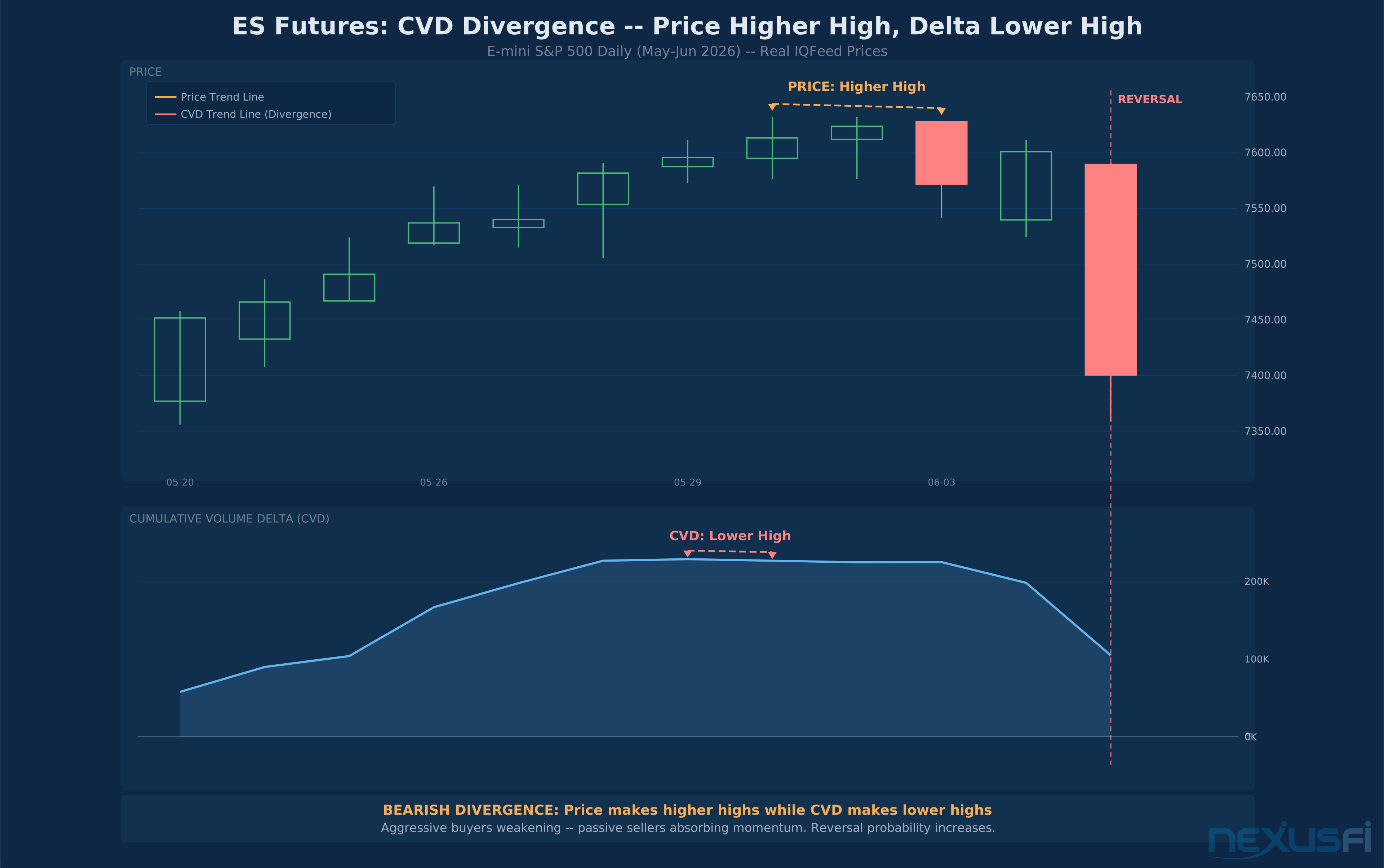
Cumulative delta is the running total of delta throughout the session. Divergences between price and CVD signal potential reversals — price making new highs while CVD makes lower highs suggests buyers are losing conviction even as price rises.
CVD Divergence in Practice #
Here's what a classic CVD divergence looks like on ES. Price pushes to a new session high at 5420.00 around 11:15 AM. The tape looks bullish — green prints, price advancing. But pull up your CVD indicator and you see a different story: CVD peaked at the prior high (5415.75 at 10:40 AM) and is printing a lower high right now, even as price makes a higher high.
What's happening underneath: at the 10:40 push, aggressive buyers drove price up with heavy ask-side volume — CVD surged. At the 11:15 push, price went higher, but the aggressive buying volume was thinner. Passive sellers (limit orders) were absorbing the buying without aggressive sell-side participation. CVD can't make a new high because the net aggressive buying has weakened.
That mismatch is the signal. Price says higher, but the underlying order flow says exhaustion.
The research on CVD divergences consistently shows they work best as confirmation tools rather than standalone signals. A CVD divergence at a known resistance level, combined with absorption prints on the tape, builds a stronger case than either signal alone.
Context matters — on strong trend days, CVD divergences can produce false signals because momentum overwhelms the divergence signal.
Absorption #
Absorption — large volume at a price level without price movement. Price repeatedly tests 5400.00 on ES, thousands of contracts trade at that level, but price doesn't break. A large limit order is absorbing all the selling pressure. This is one of the most reliable order flow signals and it's only visible through tick-level data.
Sweep Orders #
Rapid successive trades climbing through multiple price levels in milliseconds. A 500-lot order sweeping from 5400.00 through 5400.75 in under a second signals aggressive institutional entry. These patterns show up clearly on the tape but are invisible on standard candlestick charts.
Reading the Tape #
The Time & Sales window shows every trade as it happens — price, size, timestamp, and whether it hit the bid or the ask. Green prints (at the ask) represent aggressive buying. Red prints (at the bid) represent aggressive selling.
What tape readers look for:
Speed changes: When the tape accelerates from 50 prints per second to 500, something is happening. Increasing speed at a key level often precedes a breakout or breakdown.
Size anomalies: On ES, prints of 100+ contracts are noteworthy. On NQ, 50+ contracts get attention. Clusters of large prints at a single price level indicate institutional interest.
Divergence between price and aggression: Price rising on mostly red (sell-side) prints means passive buyers are absorbing selling but not pushing higher aggressively. The move may stall.
Confirmation: Price breaking above resistance with heavy green prints and expanding positive delta confirms the breakout. Price breaking above resistance on thin prints with flat or negative delta warns of a trap.
A Sweep-to-Absorption Scenario at a Key Level #
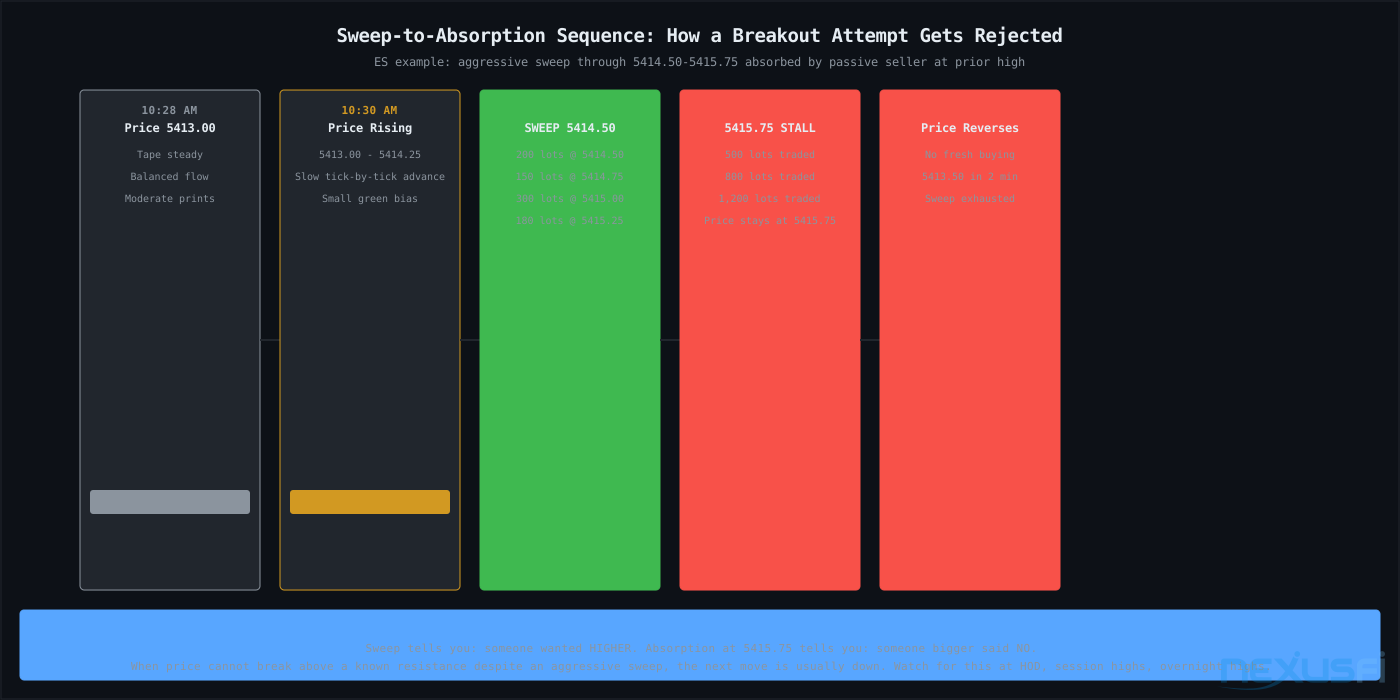
Here's how sweep and absorption signals sequence together in a live trade. ES is sitting at 5412.00 during the 10:30 AM window. The prior session high was 5415.75 — a level the market has tested once already today and rejected.
Price inches up: 5413.00, 5413.25, 5413.50. The tape is steady — moderate-sized prints, balanced red and green, nothing unusual. Then at 5414.50, the tape accelerates. You see a cluster of large green prints: 200 lots at 5414.50, 150 at 5414.75, 300 at 5415.00, 180 at 5415.25. That's a sweep — an aggressive buyer chewing through multiple levels of resting offers in seconds. Price jumps from 5414.50 to 5415.75 in under 3 seconds.
Now watch what happens at 5415.75. The sweep stalls. You see 500 lots, 800 lots, then over 1,200 contracts trade at 5415.75 — but price doesn't move to 5416.00. The tape is mixed: heavy green prints hitting the ask at 5416.00, but the offers keep refreshing. Every block of buying gets absorbed by a resting seller who is reloading their limit order.
As @Jigsaw Trading explained in the "Tape is my shape" thread: "The total number of contracts in sell market orders is larger than that of buy market orders. Price however, is no longer moving down. This is absorption on the bid." The same principle works on the offer side — here at 5415.75-5416.00, a large seller is absorbing the sweep. The aggressive buyer has exhausted their capital pushing through those levels, and now a passive seller is soaking up everything thrown at them.
What happens next: the absorption wins. Without fresh aggressive buying, price rolls back from 5415.75 to 5413.50 over the next two minutes. The sweep told you someone wanted higher — the absorption at the prior high told you someone bigger disagreed. As @Orion described in their thesis on tape reading, when "large orders" come in at a key level and price still doesn't break, "that is how reversals usually happen."
Quick Tick Math #
Every tick trader needs mental math shortcuts that work at speed. You can't pull out a calculator when the market is moving. Here are the formulas worth memorizing.
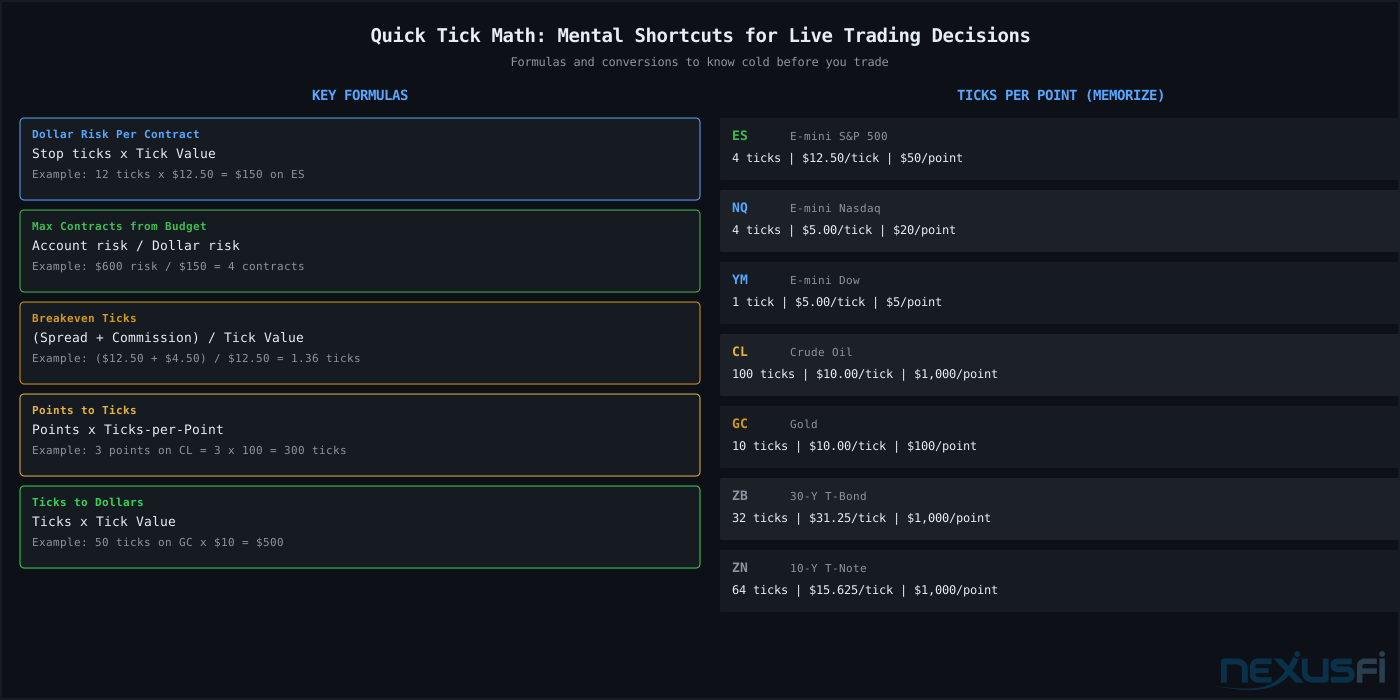
Dollar risk per contract: Stop distance in ticks x tick value. A 12-tick stop on ES = 12 x $12.50 = $150.
Contracts from risk budget: Account risk / dollar risk per contract. Risking $600 with a 12-tick ES stop = $600 / $150 = 4 contracts max.
Breakeven ticks after costs: (Spread + commissions) / tick value. On ES with $4.50 RT commissions: ($12.50 + $4.50) / $12.50 = 1.36 ticks. You need nearly 2 ticks of favorable movement just to break even. For a full breakdown of all futures trading costs, understanding how commissions, exchange fees, and data fees stack up is essential.
Points-to-ticks conversion: Memorize ticks per point for your instruments. ES = 4, NQ = 4, CL = 100, GC = 10, ZB = 32, ZN = 64, ZF = 128. A 3-point move on CL = 300 ticks = $3,000. A 3-point move on ES = 12 ticks = $150. Same "3-point move," twenty times the P&L difference.
Tick value comparison shortcut: ES is $12.50, NQ is $5.00, CL is $10.00, GC is $10.00. For relative sizing: 1 ES contract carries the same tick risk as 2.5 NQ contracts or 1.25 CL contracts. When switching instruments mid-session, these ratios keep your risk exposure consistent without recalculating from scratch.
Tick-Based Risk Management #
Thinking in ticks rather than dollars makes position sizing instrument-agnostic and precise.
The math:
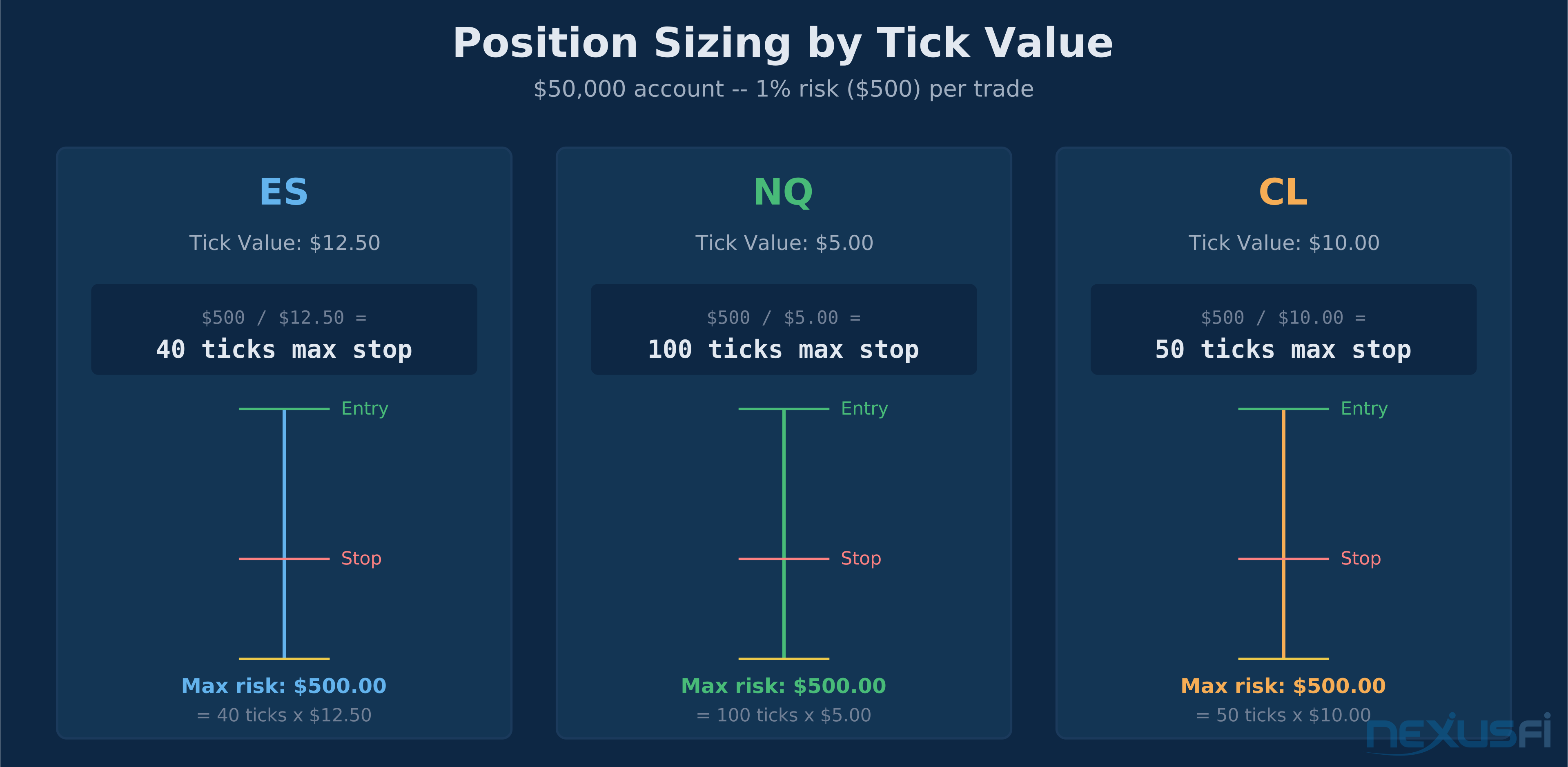
Maximum ticks = Account risk / Tick value
For a $50,000 account risking 1% ($500) per trade:
- ES: $500 / $12.50 = 40-tick max stop (10 points)
- NQ: $500 / $5.00 = 100-tick max stop (25 points)
- CL: $500 / $10.00 = 50-tick max stop ($0.50)
- GC: $500 / $10.00 = 50-tick max stop ($5.00)
- ZB: $500 / $31.25 = 16-tick max stop (16/32nds = 0.5 point)
- ZN: $500 / $15.625 = 32-tick max stop (16/32nds = 0.5 point)
- ZF: $500 / $7.8125 = 64-tick max stop (16/32nds = 0.5 point)
Set stops in ticks based on market structure — support and resistance levels, swing lows, ATR multiples — then verify the dollar risk fits your sizing rules. If 8 ticks below the swing low on ES is the logical stop, that's $100 per contract. You could trade 5 contracts within your $500 risk budget.
Adjust for volatility. On a high-ATR day, your 8-tick stop on ES might get clipped by noise. Widen to 12 ticks ($150) and reduce to 3 contracts to stay within the $500 budget. The tick framework makes these adjustments mechanical rather than emotional.
Conclusion #
Every futures trading decision ultimately reduces to ticks. Your profit target is X ticks. Your stop is Y ticks. The spread costs you Z ticks. Order flow shows aggressive buying or selling measured in ticks of delta. Your charts — if you're using tick charts — aggregate transactions into tick-counted bars.
Internalizing tick size and tick value for your instruments isn't optional. It's the foundation that determines whether your risk management is precise or sloppy, whether your scalping targets are realistic or fantasy, and whether you can read the tape or just stare at numbers scrolling by.
The formula is simple. The application runs deep.
Knowledge Map
Go Deeper
Build on this knowledgeReferences This Article
Articles that build on this topicCitations
- — Minimum tick movement vs 1 contract value (2011) 👍 3“The tick value can be calculated as tick value = tick size * multiplier”
- — MultiCharts, MultiCharts, MultiCharts... (2011) 👍 2“CL is $10.00 a tick, and 100 ticks in a point, so $1000. ES is $12.50 a tick, and 4 ticks in a point, so $50”
- — ZT and ZF questions please ...... (2020) 👍 2“ZT -- The minimum price fluctuation is one-eighth of 1/32nd, so priced in 1/256ths”
- — Tick chart orientation (2011) 👍 4“a perspective on price action that naturally conforms with the rhythm of the trading session”
- — Best volume indicator when using Tick Charts in NinjaTrader (2012) 👍 7“Volume information on tick charts has an entirely different meaning”
- — The S&P Chronicles - An Amalgamation of Wyckoff, VSA and Price Action (2017) 👍 3“Low volatile days via the tick chart are more or less impossible to trade, and high volatile days its best to use a tick chart”
- — ZN, ZF and ZT trade P/L question...... (2015) 👍 3“ZB -> 10/320... ZN -> 5/320... these follow the same logic except they have a different tick size”
- — CLASSIC DELTA DIVERGENCE (2010) 👍 5“New high, but negative cumulative delta... Delta Divergences can take many forms, but ultimately they show only one thing: the convictions of traders choices do NOT match price”
- — Volume Ladder for NT (Gomi) (2009) 👍 5“Beware of Delta Divergence for predicting reversals. They work on rotational days”
- — Tape is my shape (tape reading, time and sales) (2012) 👍 10“The total number of contracts in sell market orders is larger than that of buy market orders. Price however, is no longer moving down. This is absorption on the bid”
- — My Thesis on Tape Reading (2013) 👍 26“large orders come in at a key level and price still doesnt break, that is how reversals usually happen”
- — E-mini S&P 500 Futures Contract Specs
- — Crude Oil (WTI) Futures Contract Specs
- — 10-Year Treasury Note Futures Contract Specs