



Short Squeeze Mechanics in Futures Markets: How Forced Buying Creates Explosive Moves
Overview #
A short squeeze in futures markets is one of the most violent, concentrated price events you'll encounter — and one of the most misunderstood. Most traders think of it as an equity phenomenon: GameStop, AMC, the days when Wall Street Bets broke the short sellers. Futures squeezes are different. There's no borrowing requirement. You can short any futures contract any time you have margin. So squeezes aren't about borrow costs or short availability. They're about leverage, margin, and what happens when too many people are wrong on the same side at the same time.
When a futures squeeze ignites, it creates a feedback loop: rising prices force short sellers to buy contracts to cover their positions, that buying pushes prices higher, which forces more covering, which pushes prices higher still. The trigger can be a technical breakout, an unexpected news event, or simply a level where enough stop-loss orders cluster. The result is the same — prices move further and faster than fundamentals justify, in a compressed window of time, driven by forced buying rather than genuine conviction.
Understanding squeeze mechanics doesn't just help you avoid being caught short. It helps you recognize when one is starting, trade with it early before the crowd notices, and — critically — know when to step aside before the inevitable reversal. A squeeze that takes 90 minutes to build can unwind in 20 minutes with equal violence.
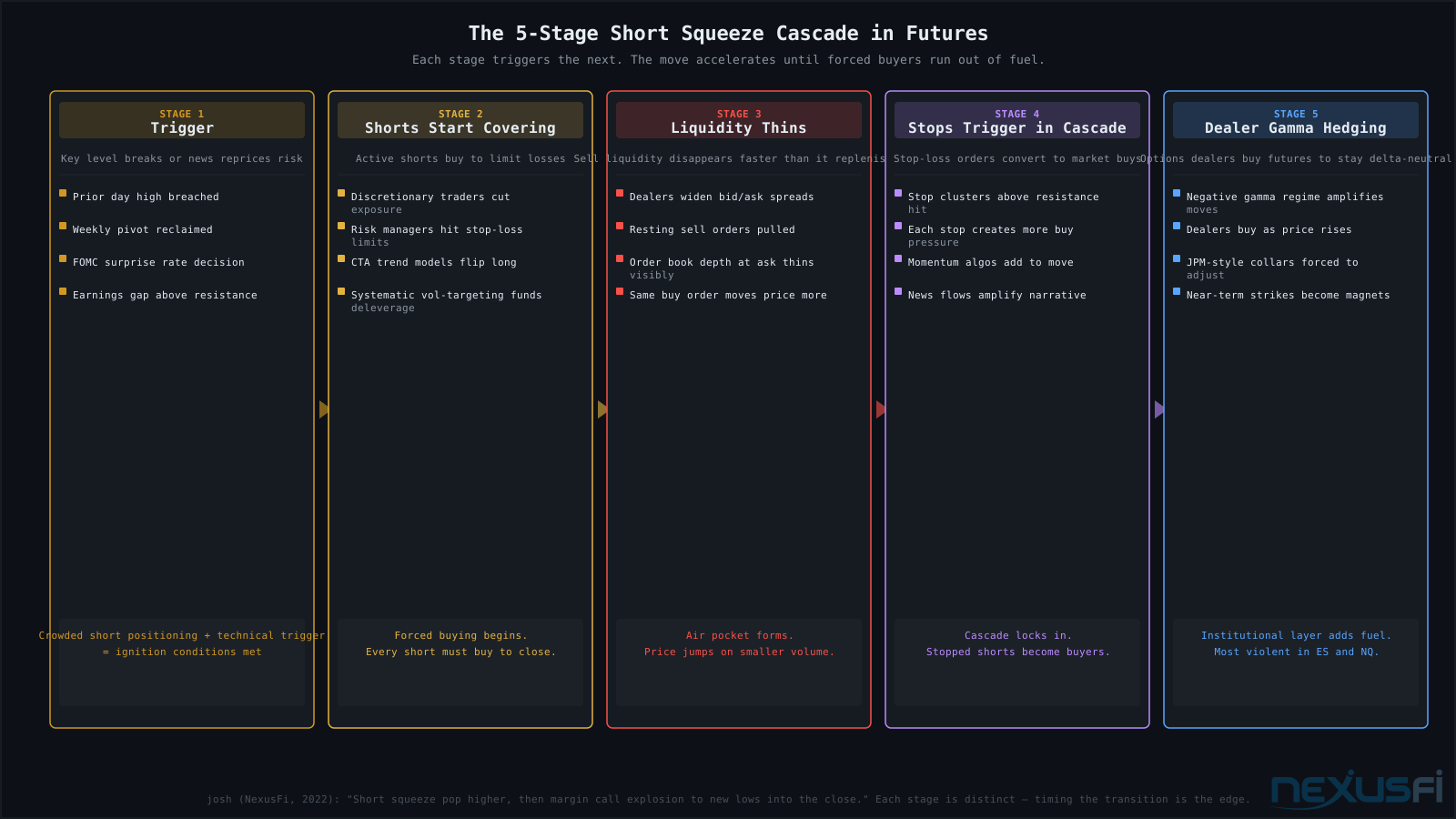
Short squeezes develop through five distinct stages, each triggering the next. Identifying which stage you are in determines whether you buy the acceleration, hold through exhaustion, or stand aside.
What Makes Futures Squeezes Different from Equity Squeezes #
In stock markets, a short squeeze has a mechanical constraint: borrowed shares. To short a stock, you borrow it, sell it, and eventually buy it back. When shares become unavailable to borrow, the squeeze fuel is "borrow scarcity" — the short squeeze mechanics in GME (2021) were at the core about float, borrow rates, and whether shorts could maintain their positions at all.
Futures have none of that. No borrowing. No borrow cost. You post margin and go short — period. This means futures squeezes aren't about "availability"; they're about leverage and mark-to-market. In futures, every position is marked to market daily, and margin calls arrive in real-time as positions move against you. A short position losing $50,000 intraday against a $60,000 margin requirement creates immediate forced action. There's no "holding on" if your broker requires variation margin within the session.
The result: futures squeezes are often faster and more concentrated than equity squeezes, but they also require less positioning context. Any well-placed stop cluster above a key level, combined with enough short open interest, can trigger one. They happen in liquid contracts like ES and NQ during low-liquidity windows (opening gap, pre-CPI, post-Fed), and they happen in commodity markets where physical delivery creates hard deadlines that override any pricing rationale.
The Mechanism Stack: Five Stages of a Futures Short Squeeze #
A squeeze isn't a single event. It's a cascade — five layered stages where each triggers the next, and the move accelerates until the forced buying exhausts itself. Understanding where you are in the stack tells you whether to enter, hold, or prepare to fade.
Stage 1: The Trigger
Every squeeze starts with a trigger. Sometimes it's news — an unexpected Fed statement, a CPI print below estimates, geopolitical resolution that catches shorts off guard. More often it's technical: a market that's been pressing against a key level (prior day's high, weekly pivot, VWAP) finally breaks through with enough conviction to run stops above it.
What matters at Stage 1 isn't the trigger itself — it's the context it lands in. A key level break in a market with minimal short positioning barely moves. The same break in a market where non-commercial futures traders are near multi-year net-short extremes (visible in the COT report) becomes the match on gasoline. tigertrader, one of NexusFi's most-read ES analysts, identified this dynamic explicitly: "Speculators are still betting against this rally. They're holding more than $40 billion of equity index futures net short." That kind of positioning extreme is the precondition.
Stage 2: Active Covering Begins
Once the trigger fires, shorts start covering. This isn't necessarily panic — disciplined traders cut exposure when key levels break. A short below 5240 with a stop at 5242 takes a defined loss and moves on. The problem is when thousands of traders made the same trade with similar stops. Their systematic exit, multiplied across positions, creates sustained buy pressure that pushes price further above the trigger, which then triggers more stops higher up.
Systematic funds amplify this enormously. Volatility-targeting funds reduce position size when realized vol rises. CTA trend-following models flip long when price crosses their trend threshold. Risk-parity strategies rebalance as correlations shift. None of these are "squeeze" trades — they're mechanical responses to market conditions. But their buying adds to the same buy-pressure cascade.
Stage 3: Liquidity Thins
This is the key mechanical stage that transforms a normal breakout into a squeeze. As price rises, resting sell orders are consumed or pulled. Market makers widen spreads and reduce size on the ask side. Dealers who were previously offering size at every tick now step back — they don't know how far it goes, so they wait.
The result: the same 200-contract market buy order that moved ES one tick in a normal market now moves it four or five ticks. This isn't an illusion — it's genuine order book mechanics. When resting liquidity at each ask level drops from 2,000 contracts to 300 contracts, price moves faster for identical order flow. This is the mechanical core of squeeze acceleration.
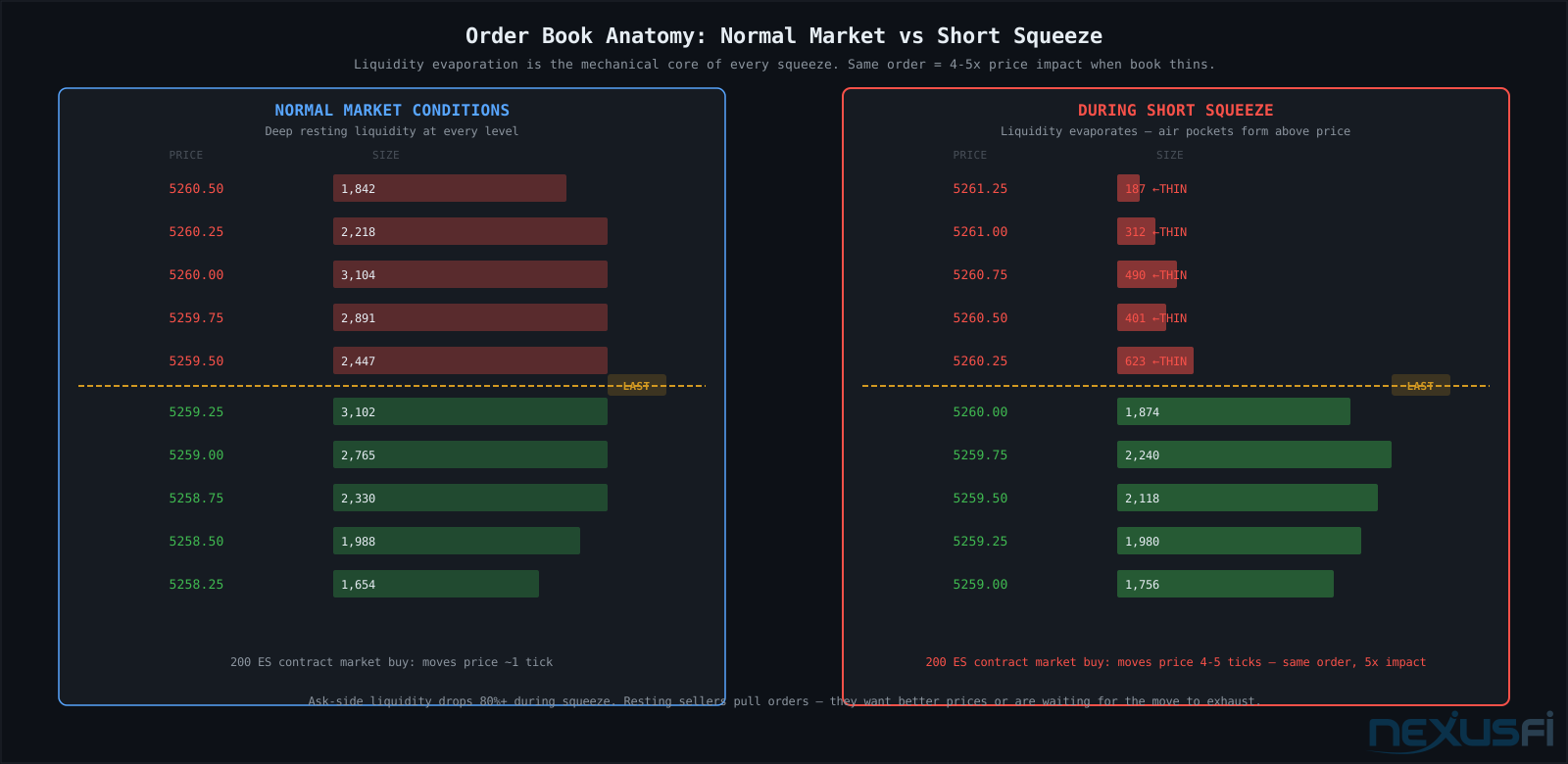
During a squeeze, ask-side liquidity drops 60-80% at each level. The same buy order that moved price 1 tick normally now moves it 4-5 ticks. Liquidity evaporation is the mechanical amplifier of every squeeze.
Stage 4: Stop Cascade
Above every key level sits a cluster of stop-loss orders. Traders who sold the resistance, added shorts on a "failed breakout," or hedged longs all place stops above natural technical levels. When Stage 3 thins the book enough, price gaps into those clusters and triggers them — converting each stop into a market buy order that adds more upward pressure.
Stop placement patterns are predictable enough that sophisticated traders specifically look for dense stop clusters. Price acceleration near prior highs, weekly pivots, or VWAP extension targets often reflects targeting of known stop concentrations. Once a cluster is triggered, the resulting buy flow often continues past "fair value" because it's forced, not discretionary.
Stage 5: Dealer Gamma Hedging (Index Futures)
In ES and NQ specifically, a fifth force adds institutional amplification: dealer gamma hedging. When options market makers are short gamma (which happens frequently near major strikes and expiration dates), they must buy futures as price rises to maintain delta neutrality. They're not taking a view on direction — they're mechanically executing risk management. But their buying adds meaningfully to total buy pressure.
tigertrader tracked this in real-time: "The market is hanging around the 2800 level, as it is the top absolute gamma strike. It is also the last strike with moderate call open interest." When price moves through a high-gamma strike, dealer hedging activity can be measured in thousands of contracts per point. During JPM's quarterly collar adjustments, the gamma effects on ES can be significant enough to shift daily direction. Understanding which strikes carry heavy dealer gamma helps anticipate where squeeze fuel may either accelerate or abruptly exhaust.
Identifying a Squeeze Setup: The Three-Signal Framework #
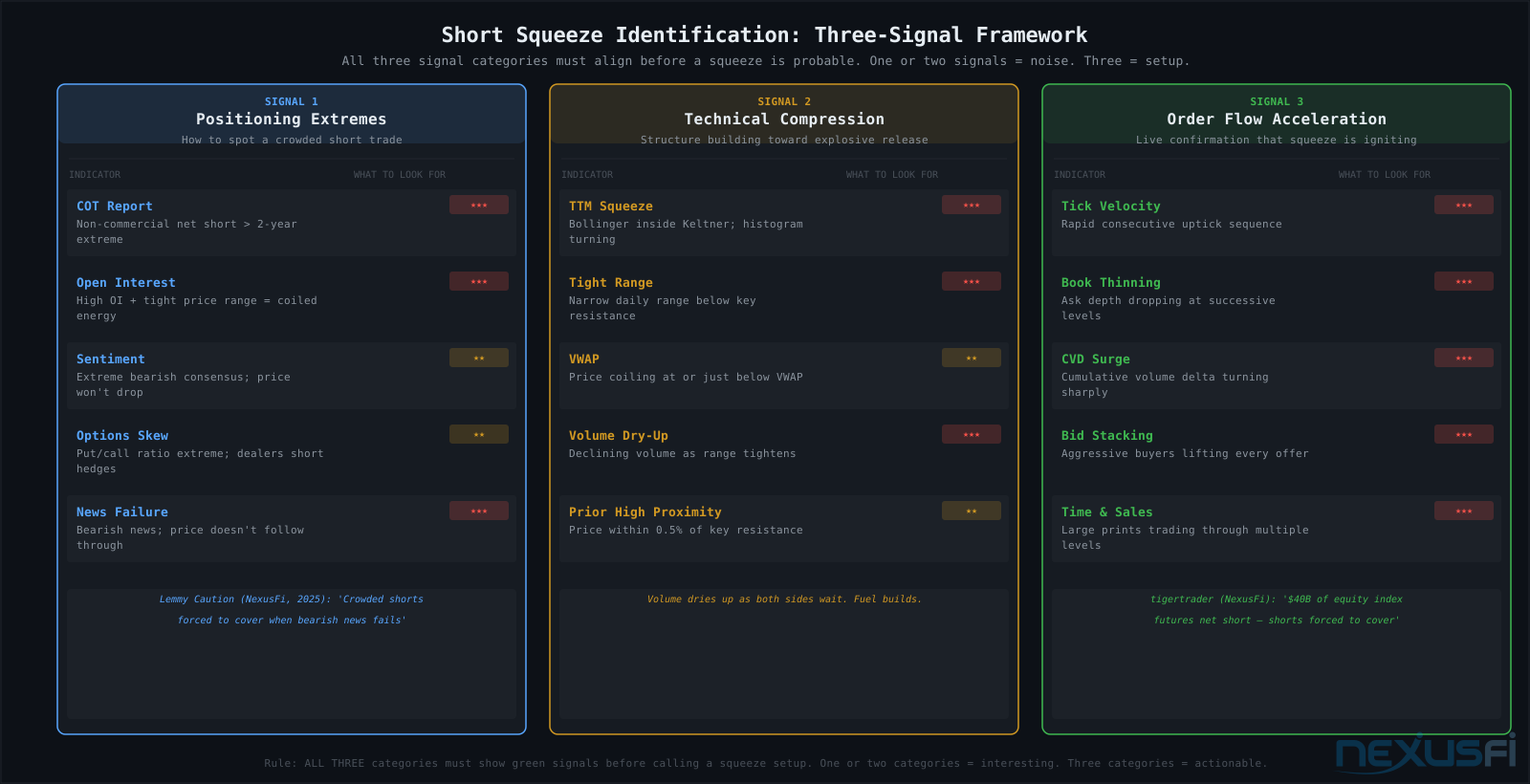
No single indicator reliably identifies an imminent squeeze. A tight range alone is just compression. Extreme short positioning alone is just a crowded trade that may stay crowded for weeks. Order flow acceleration alone is just normal volatility. What distinguishes a genuine squeeze setup from a false alarm is when all three signal categories align simultaneously.
Squeeze identification requires convergence across all three signal categories: positioning extremes, technical compression, and order flow acceleration. One or two categories = interesting. Three categories = actionable.
Signal Category 1: Positioning Extremes
The most reliable pre-squeeze signal is crowded short positioning. You're looking for markets where a large number of traders are on the same side of a leveraged trade — and that trade hasn't worked yet, so they haven't been forced out.
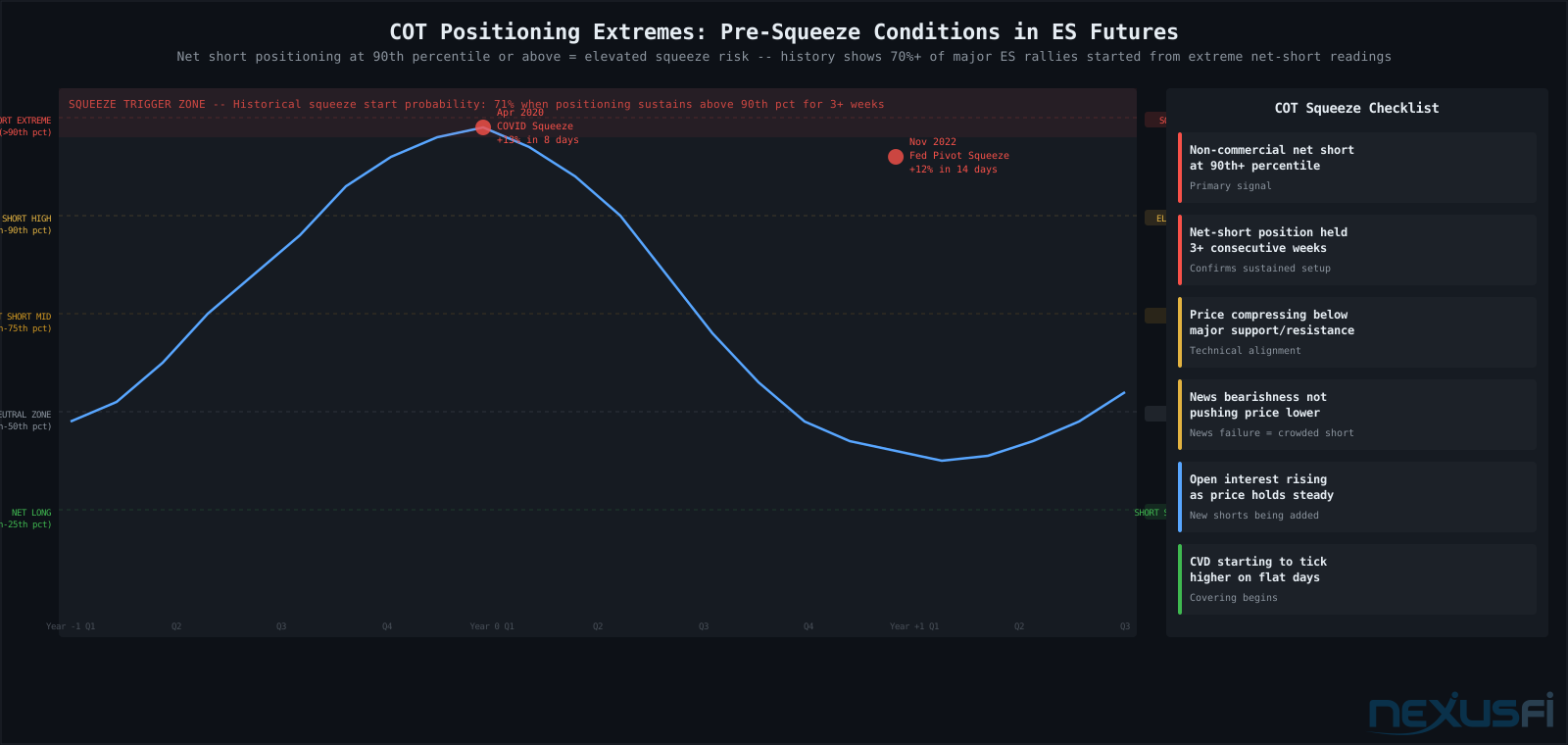
The Commitment of Traders (COT) report provides weekly visibility into futures positioning by trader category. When non-commercial (speculative) positioning reaches multi-year net-short extremes in any market, you have the fuel. Lemmy Caution at NexusFi described this dynamic clearly in the context of commodity trading: when bearish news doesn't push price lower — "news failure" — in a market crowded with shorts, the setup is set. The shorts are trapped, and any trigger will trigger a covering cascade.
Beyond COT data, watch for sentiment extremes (extreme bearish consensus with price action that refuses to confirm), options positioning extremes (put/call ratios at multi-month highs while price bases), and open interest buildups in a range (high OI combined with tight price action means a lot of fuel ready to burn).
Signal Category 2: Technical Compression
Squeezes accelerate when they release from compressed price action. A market that's been trending lower for two weeks, finds a floor, and bases for three days in a tight range has a specific technical character: declining volume (both sides waiting), narrowing daily range (neither bulls nor bears committing), and price clustering near a resistance level.
Volatility compression indicators — especially the TTM Squeeze (Bollinger Bands inside Keltner Channels) and simple range measurements — identify these compression setups. When the TTM Squeeze histogram turns positive while positioned below a key resistance with heavy short OI, you have technical compression aligned with positioning extremes. That's two of three signals.
Signal Category 3: Order Flow Acceleration
The third signal is live confirmation that the squeeze is actually igniting — not just positioned to. This is the difference between a potential squeeze from an actual one, and it's only visible in real-time order flow data.
Watch for: rapid consecutive uptick sequences in the time and sales; cumulative volume delta (CVD) turning sharply positive while price advances; ask-side depth thinning visibly on successive levels; large prints trading through multiple price levels at once (not just one); and bid stacking — aggressive buying lifting every offer without pause. When all of these appear simultaneously after a technical break in a market with extreme short positioning, you're inside a squeeze, not just watching one form.
The Three Core Strategies for Trading Squeezes #
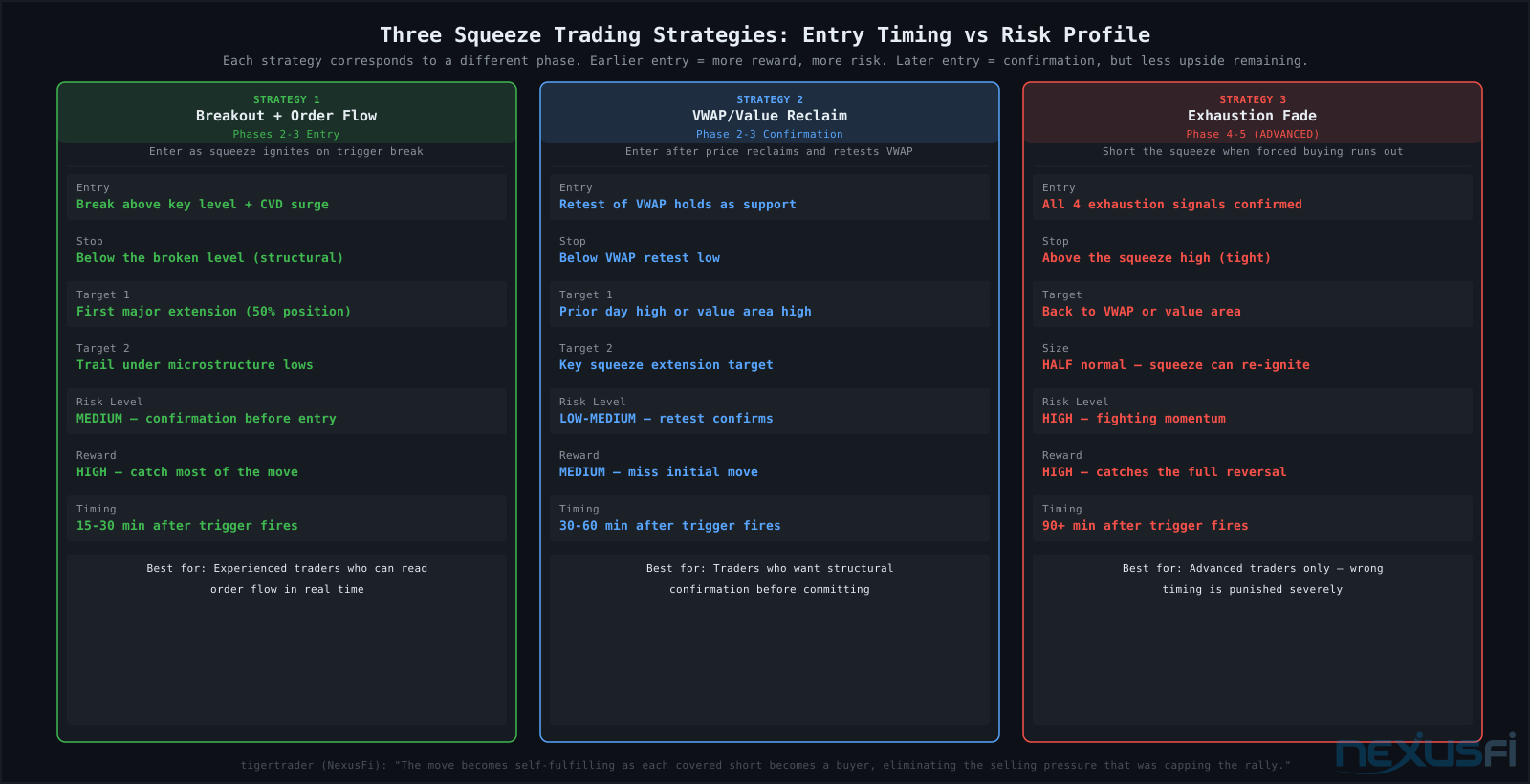
Squeeze trading rewards decisiveness and punishes hesitation — but it also punishes overconfidence. The playbook has three distinct strategies, each appropriate for a specific point in the squeeze timeline.
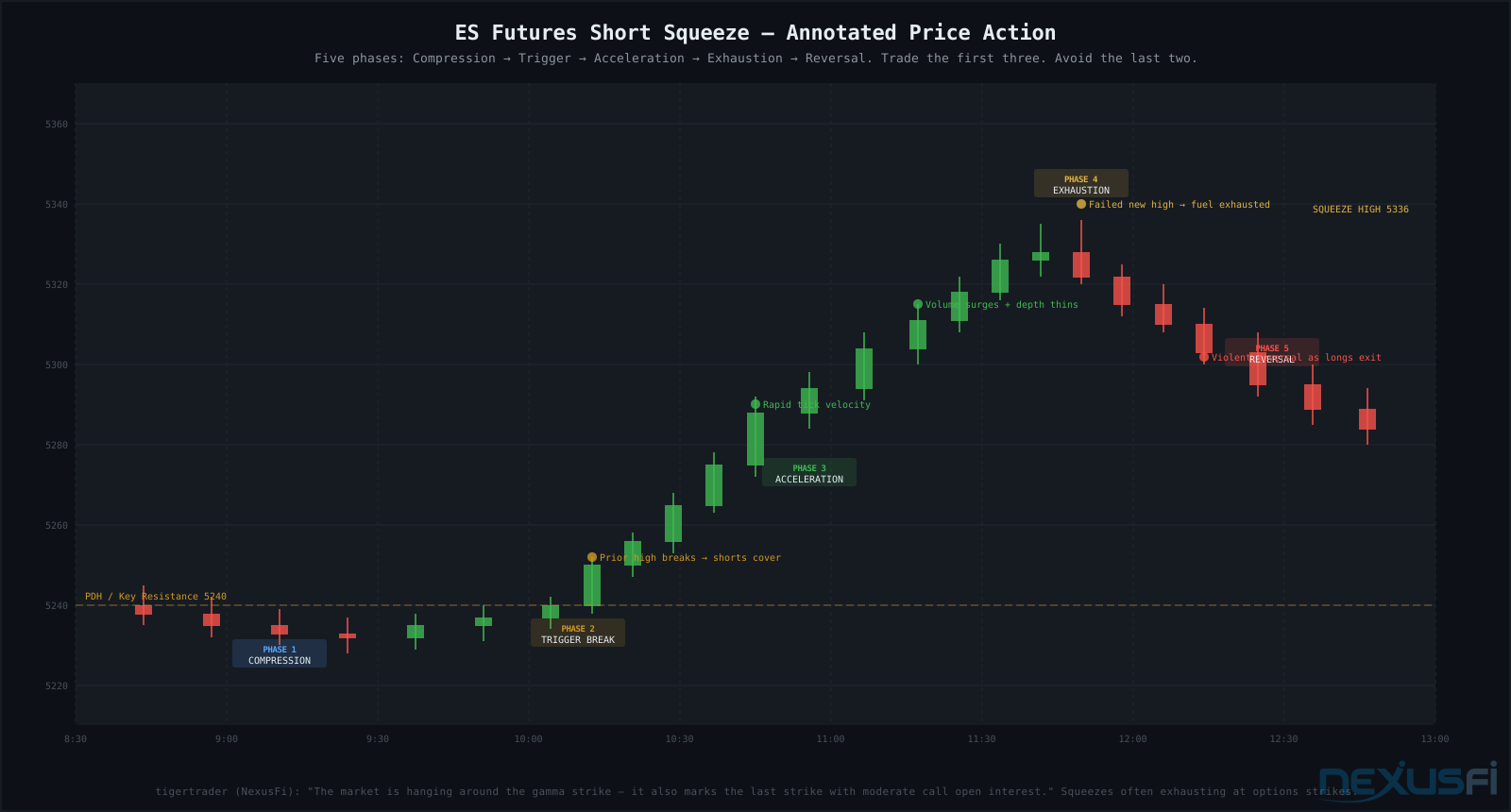
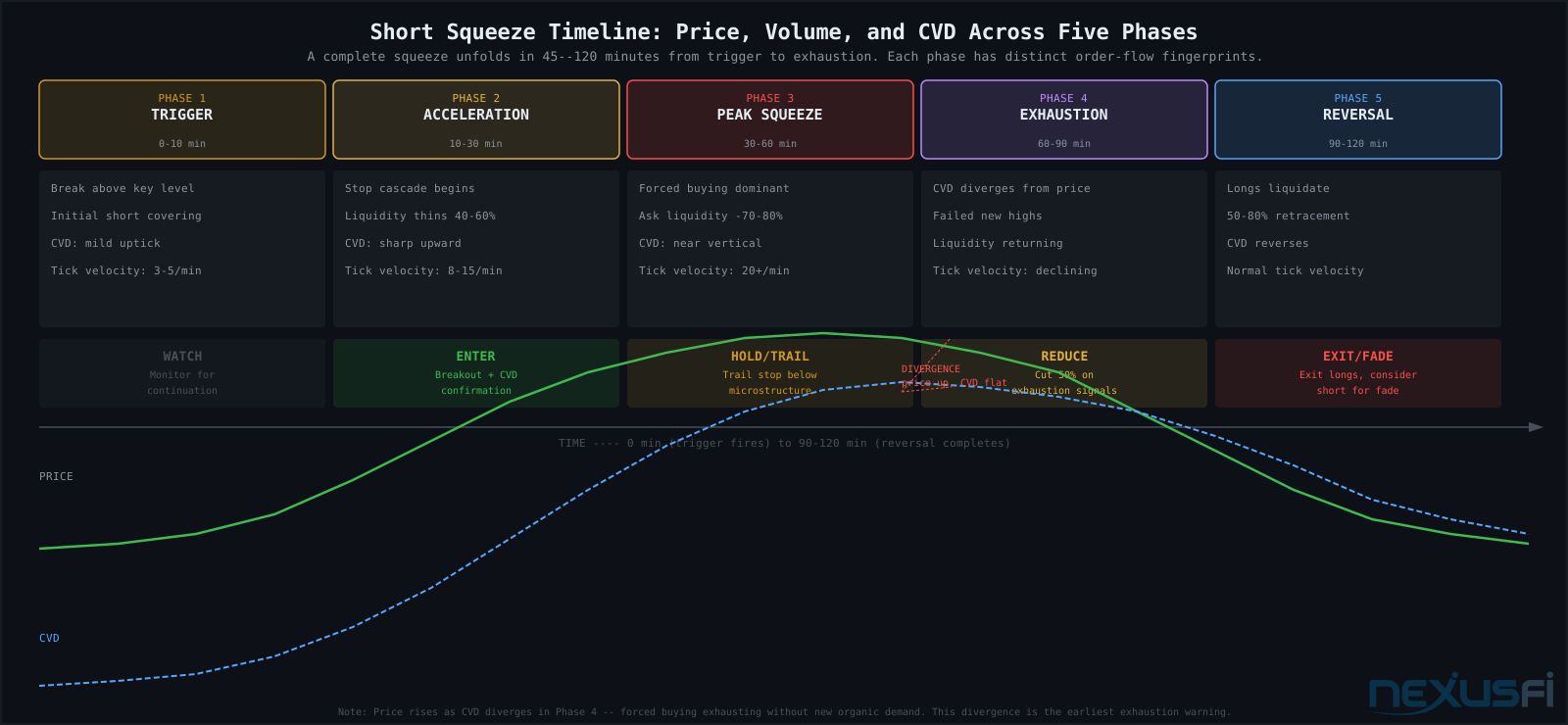
A textbook ES squeeze shows five visible phases: compression, trigger break, aggressive acceleration, exhaustion signals, then violent reversal. Trade Phases 2 and 3. Avoid trading Phases 4 and 5.
Strategy 1: Breakout + Order Flow Confirmation
This is the primary strategy — entering the squeeze after the trigger fires but before the acceleration fully develops. Entry criteria: price breaks above a key level (prior day high, weekly pivot, opening range high) with visible order flow confirmation (rapid tick velocity, CVD turning sharply positive, book thinning).
Stop placement: below the level that just broke. If you're entering on a break of 5240 in ES, your stop goes below 5240 — not below your cost basis but below the thesis-invalidation level. If price breaks 5240, reverses, and closes back below it, the squeeze isn't happening or has already exhausted. You want to know that as cheaply as possible.
Target: the first major extension level (prior swing high, weekly resistance, options strike with heavy OI). Scale out on the way up rather than trying to hold for the exact top. The first half off near the first extension, the second half with a trailing stop below microstructure swing lows.
Strategy 2: VWAP/Value Area Reclaim
Many squeezes begin when price — which has been below VWAP or below the prior session's value area — reclaims those levels with force. The reclaim of a major reference level (VWAP, value area high, prior day close) signals that positioning has shifted. Sellers who had control are now buyers.
Entry: after a decisive close above VWAP or value area boundary, with a retest that holds. The retest confirmation is critical — you want to see that what was resistance is now support. Without retest confirmation, you're buying a breakout that may fail. Stop: below the retest low. Target: the next major reference level above (prior day high, extended value area, key strikes).
Strategy 3: Exhaustion Fade (Advanced -- High Risk)
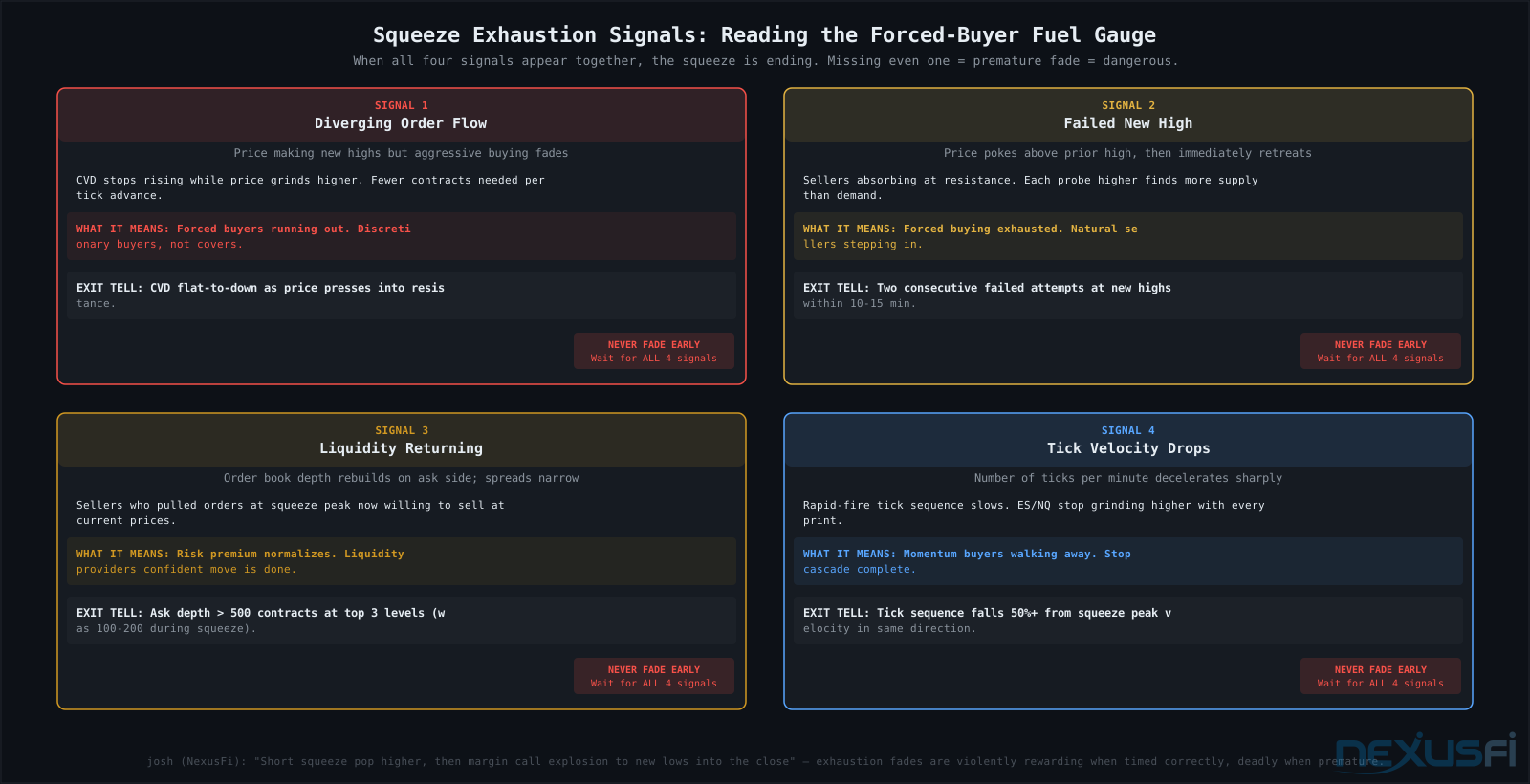
Fading a squeeze at exhaustion is the highest-risk, highest-reward strategy. You're trading against momentum, against residual forced buying, and against the possibility that the move re-ignites. This strategy requires four specific exhaustion signals to converge before entry is justified.
When all four exhaustion signals appear together - diverging order flow, failed new high, liquidity returning, and declining tick velocity - forced buying is finished. Missing even one signal means the squeeze could re-ignite violently.
The four exhaustion signals: (1) CVD divergence — price making new highs while CVD flattens or turns down; (2) failed new high attempts — two consecutive probes above the recent high that both reverse within 10-15 minutes; (3) order book depth rebuilding on the ask side as sellers grow confident; (4) tick velocity dropping 50%+ from peak squeeze momentum. When all four appear together, the forced buying is exhausted and natural selling is ready to push price back toward fair value.
Execution: enter short at half normal size, with a stop above the recent squeeze high (tight, defined), with a target back toward the VWAP or value area that the squeeze departed from. Take profit quickly — don't expect a full round-trip in one session. Squeezes can re-ignite from unexpected news or new stop clusters, and the asymmetry when you're wrong is significant.
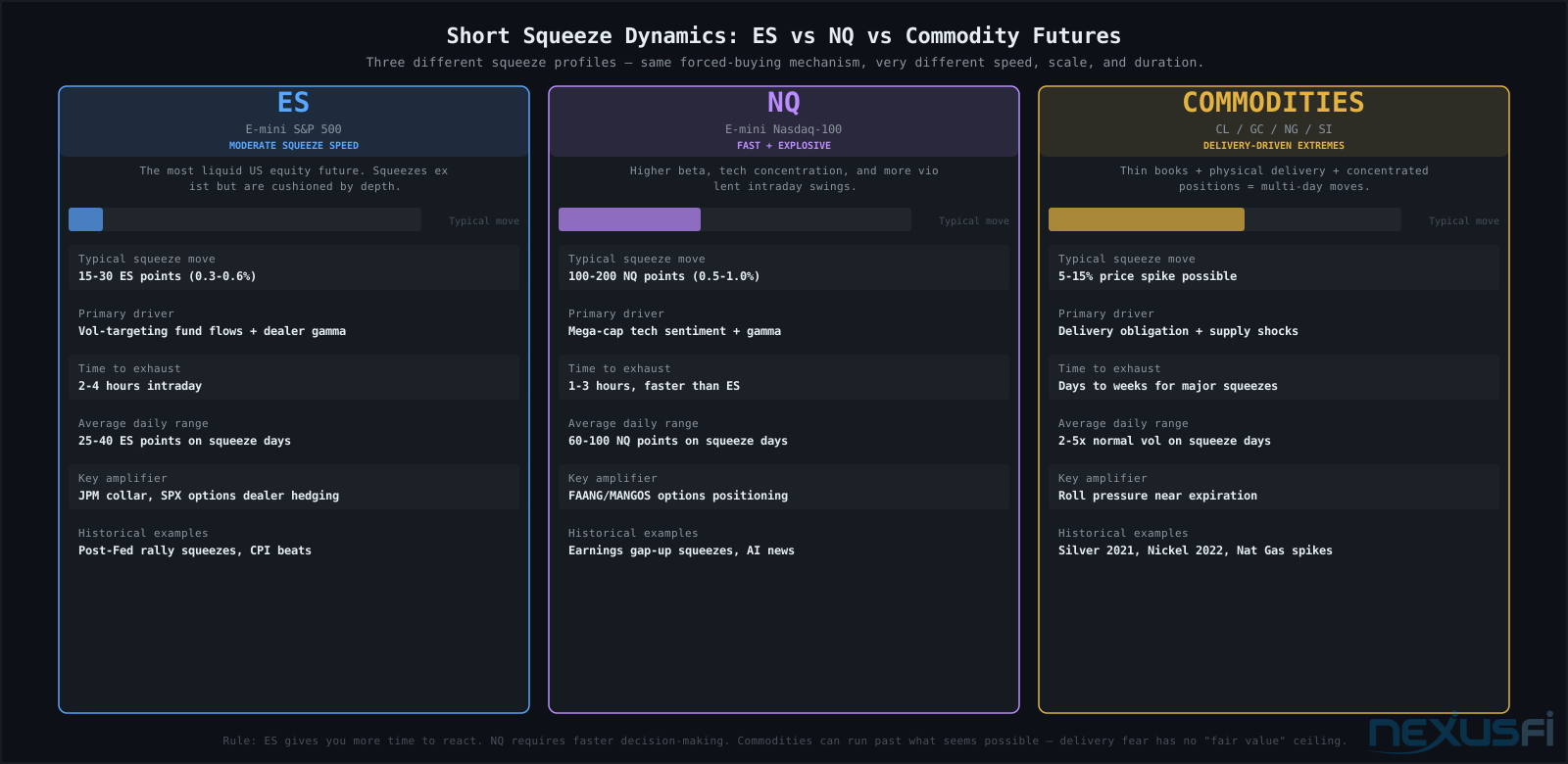
ES and NQ: Index Futures Squeeze Profiles #
The two most actively traded US equity futures have distinct squeeze profiles despite similar underlying mechanics.
Three different squeeze profiles driven by the same forced-buying mechanism. ES is cushioned by depth. NQ is faster and more volatile. Commodity squeezes can run for days when delivery pressure and thin books combine.
ES (S&P 500) squeezes are cushioned by the deepest order book in US equity futures. Average daily squeeze moves run 15-30 ES points (0.3-0.6% of price), primarily driven by vol-targeting fund flows, CTA model flips, and dealer gamma hedging near JPM collar strikes. You typically have 2-4 hours of observable squeeze behavior, enough time to identify the setup, confirm entry, and manage a position.
NQ (Nasdaq-100) squeezes are faster and more extreme. The Nasdaq's higher beta and concentration in mega-cap tech names means sentiment shifts hit NQ first and hardest. Typical squeeze moves are 100-200 NQ points (0.5-1.0%), compressed into 1-3 hours. The FAANG-era and MANGOS-era options markets create large gamma concentrations around key quarterly strikes, and when tech earnings gap above expectations, NQ squeezes can accelerate violently in the first 30 minutes of RTH.
Both markets show the same squeeze anatomy — compression, trigger, acceleration, exhaustion, reversal — but NQ gives you less time to decide at each stage. If you're learning to read squeeze dynamics, start with ES. The same signals are present but the pace gives more time to observe and react.
Commodity Squeezes: When Physical Delivery Changes Everything #
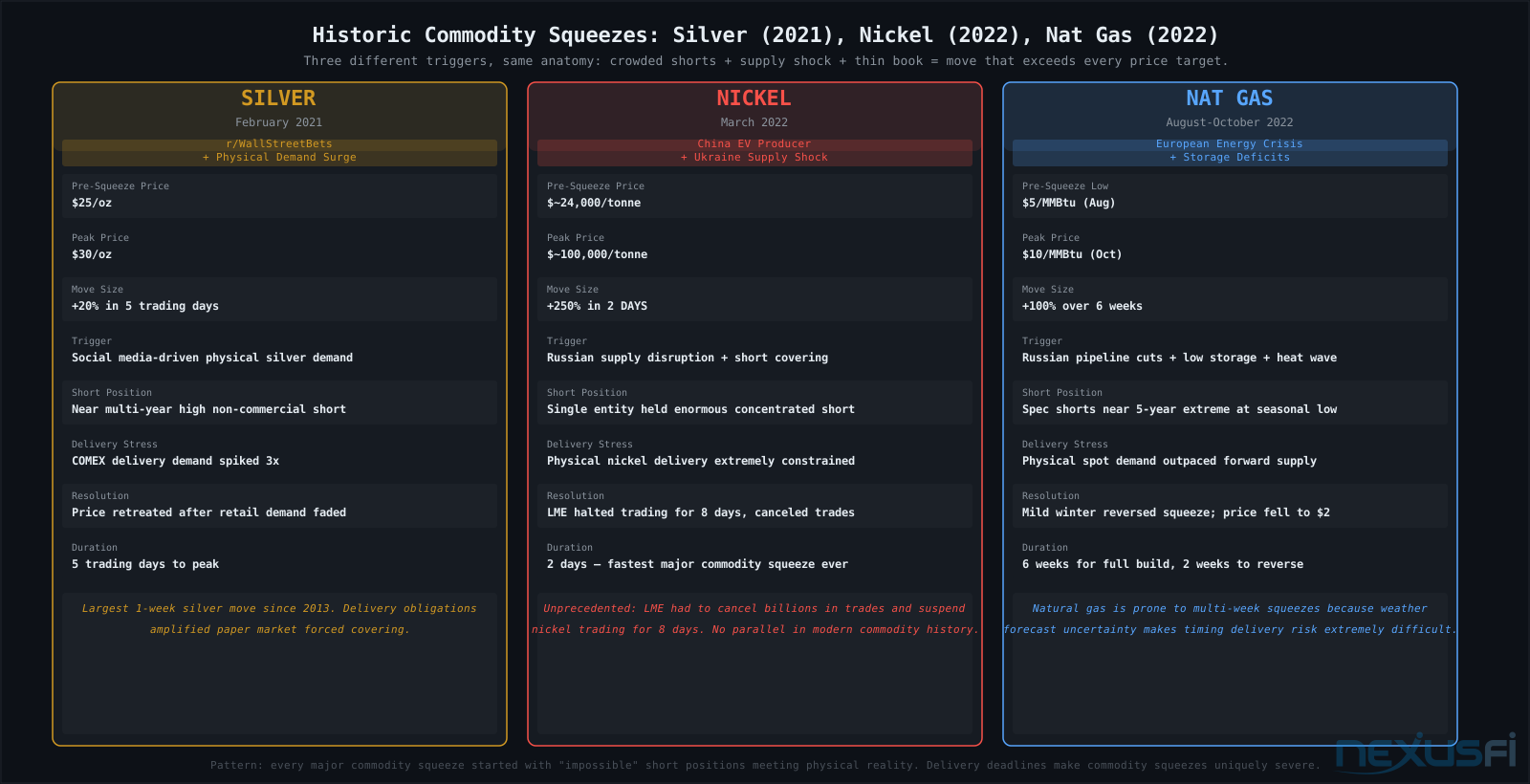
Commodity futures squeezes operate on different mechanics than index squeezes because of one unique pressure: physical delivery. When a futures contract approaches expiration, traders holding short positions either deliver the physical commodity or close their position. For short sellers in thin markets with concentrated positions, this creates a deadline that has no parallel in financial futures.
The 2021 silver squeeze saw non-commercial traders piling short on COMEX silver contracts while physical silver demand (driven by social media campaigns encouraging retail purchases) simultaneously reduced available float for delivery. The combination created a 12% price spike in a single week. The 2022 nickel squeeze on the LME was even more dramatic — a single Chinese producer held an enormous short position just as physical nickel supply disrupted, leading to a 250% price spike in two days and an extreme LME trading halt.
Natural gas (NG) experiences periodic sharp squeezes during weather extremes (cold snaps driving heating demand, heat waves driving power demand), especially near prompt-month contract expiration when the shorts holding those contracts face real delivery pressure. These moves can be 10-30% within a week, far larger than anything seen in well-cushioned equity index futures.
For commodity squeeze trading, the COT positioning data becomes even more important because delivery creates a hard deadline. Extremely crowded short positioning near expiration is a higher-urgency signal in commodities than in financial futures, because those shorts must eventually act. The question is only when and at what price.
Risk Management: Non-Negotiable Rules for Squeeze Environments #
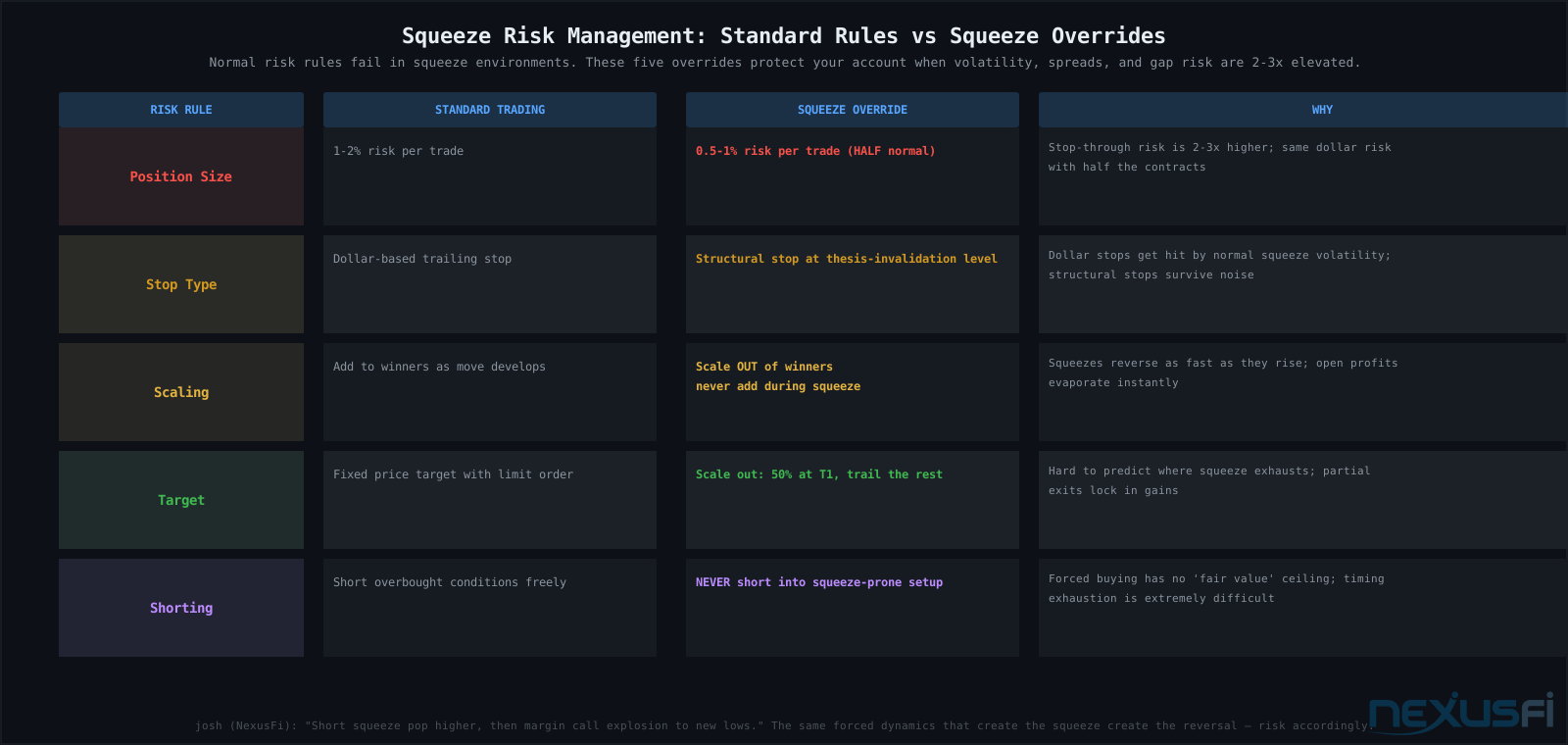
Squeeze environments are high-volatility, wide-spread, gap-prone market conditions. Standard risk management rules are insufficient. You need specific adjustments for squeeze dynamics.
Size down, not up. The temptation during a visible squeeze is to oversize — the move is happening, you're right, load the boat. Resist it. Squeezes gap through stops. Bid-ask spreads are wider than normal. Fills are worse. Slippage is higher. Your per-contract risk in a squeeze environment is 2-3x higher than normal. Maintain normal dollar risk by trading smaller size, not larger.
Use thesis-invalidation stops, not dollar stops. In normal markets, a trailing stop based on dollar loss works reasonably. In squeezes, you need structural stops — levels that tell you the thesis is wrong. If you entered long on a break of 5240 in ES, your stop is below 5240, not "when I'm down $500." Dollar stops get hit by normal squeeze volatility; structural stops preserve capital while allowing room for the move to develop.
Scale out of winners, never add to them. Squeezes reverse violently. The same forced-buying dynamic that creates the squeeze creates an equally violent unwind when the fuel runs out. Scaling out — taking half the position off near the first target, trailing the rest — captures most of the move while protecting against the reversal. Adding to a winning position in a squeeze is how you turn a profitable setup into a loss.
Never short into a known squeeze setup. This sounds obvious, but traders do it constantly. "This is too far, too fast — it has to come back." Maybe it does. But not before it runs further than seems possible. Squeezes overshoot in price and time. The short trade works eventually, but the drawdown between entry and eventual reversal can exceed most risk tolerances. Wait for exhaustion signals. Don't fight momentum.
Common Mistakes and How to Avoid Them #
Squeeze environments generate specific, recurring trading mistakes. Knowing them in advance helps you avoid becoming the forced buyer that's creating the squeeze for someone else.
Buying the news, not the mechanics. When a squeeze is happening, financial media discovers narrative to explain it: "strong earnings," "Fed going on pause," "geopolitical resolution." That narrative is real — the trigger exists. But the price move is being driven by forced buyers, not new fundamental buyers. The narrative makes it feel safe to chase when it's actually the riskiest entry point. Focus on which stage you're in, not why it's happening.
Assuming symmetry. Squeezes don't usually unwind as slowly as they built. A 90-minute build can reverse in 20 minutes. When exhaust signals appear, the move is done. Holding for "just a bit more" in a squeeze that's exhausted is holding against returning liquidity, new sellers entering at elevated prices, and longs taking profits — all simultaneous headwinds that created the initial squeeze in reverse.
Relying on a single indicator. CVD alone identifies order flow bias but not timing. COT alone identifies positioning but not trigger timing. Book depth alone confirms current conditions but not what triggered them. Squeezes are multi-causal events. Use the three-signal framework — positioning, compression, and order flow — as a convergence requirement, not a sequential checklist where any one element is sufficient.
Forgetting about the gamma regime. In ES and NQ, the underlying options dealer positioning changes the squeeze profile much. In positive gamma environments, dealers are short futures as prices rise (the opposite of normal hedge behavior), which dampens squeeze velocity. In negative gamma environments, dealers buy as prices rise, which amplifies squeezes. Checking whether the market is in positive or negative gamma territory — via GEX (Gamma Exposure) data or by monitoring where big strikes cluster relative to current price — tells you whether the fifth-stage amplifier is on or off.
Building a Squeeze Recognition System #
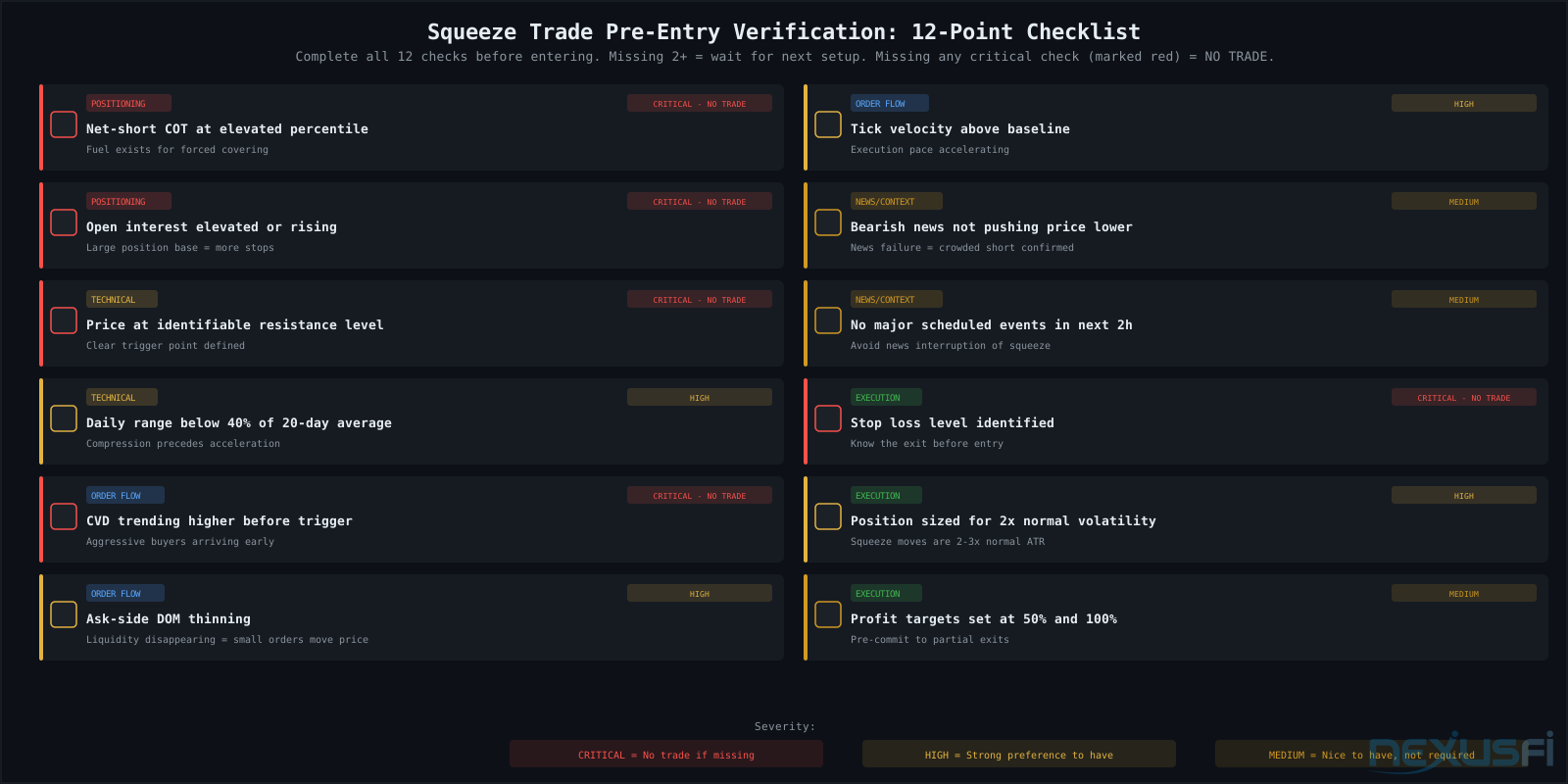
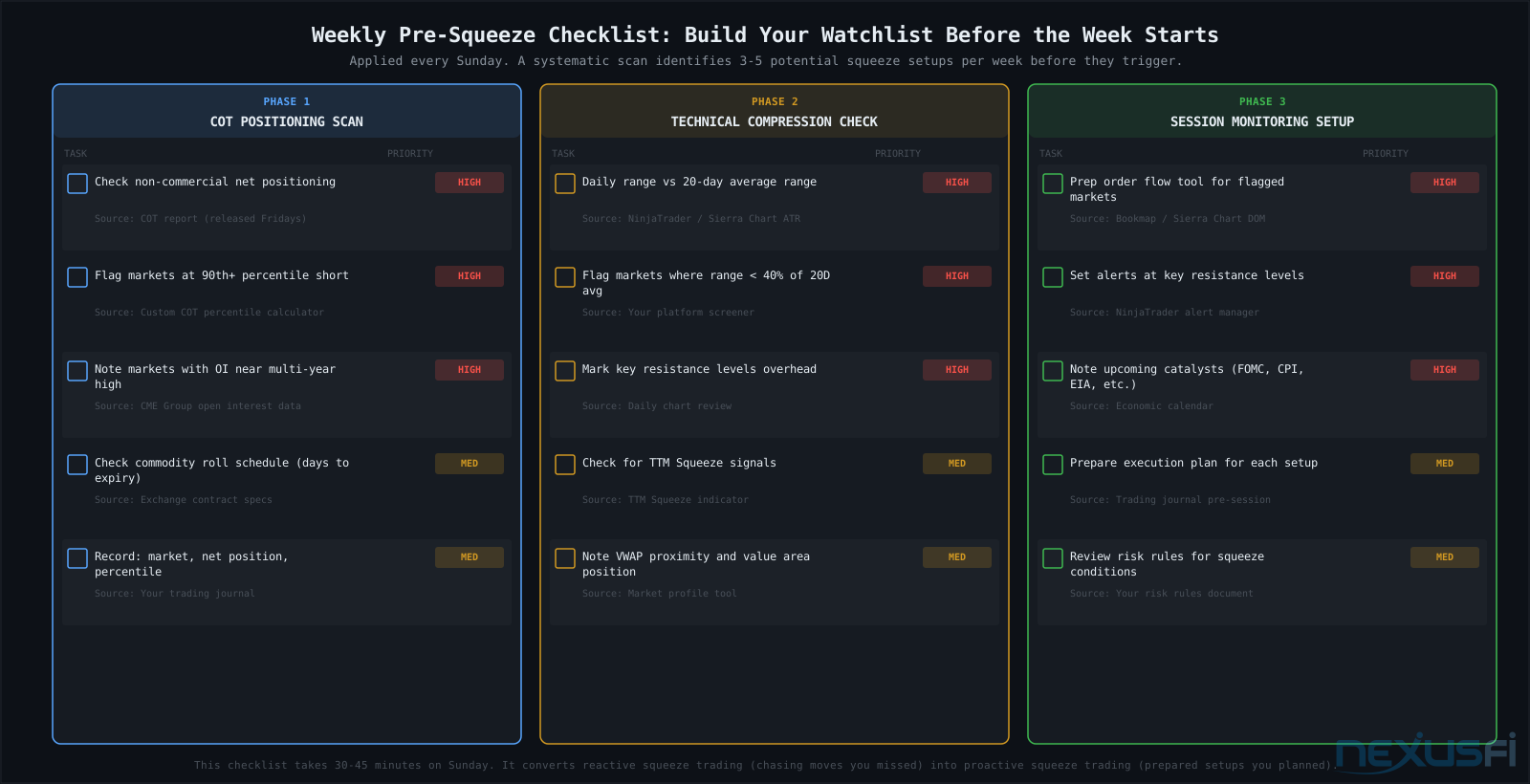
Experienced squeeze traders build systematic checklists because squeezes happen fast and degrade judgment under pressure. Here's a practical system you can develop:
Weekly setup scan: Every Sunday, check COT positioning for any futures markets approaching multi-year extremes. Note markets where non-commercial net positioning is at 90th-percentile-or-above short levels. Flag them for daily monitoring during the week.
Daily compression check: For any flagged markets, check daily range vs. 20-day average range. When daily range drops below 40% of the 20-day average, you have volatility compression. Note any key resistance levels overhead. If high OI + compression + extreme positioning align, the market is pre-squeeze condition.
Session order flow monitoring: For pre-squeeze condition markets, monitor order flow at session open. Watch CVD direction, tick velocity, book depth at key resistance. If price breaks key resistance with order flow confirmation, execute your entry protocol.
Exhaustion monitoring: Once in a squeeze position, track the four exhaustion signals continuously. Set a rule: when any two appear, reduce size by half. When all four appear, exit the position and look for the exhaustion fade setup.
The Psychology of Squeeze Trading #
Squeeze environments are psychologically extreme in both directions. Being short during a squeeze triggers the worst combination of cognitive biases: loss aversion (the pain of realized losses feels worse than potential future gains), status quo bias (reluctance to close a position that's still "just a paper loss"), and recency bias (expecting mean reversion because "this always comes back").
Being long in a running squeeze isn't easier. The fear of missing further upside keeps traders holding too long past exhaustion signals. The euphoria of a profitable momentum trade overrides the systematic evaluation of "is the fuel running out?" And the violent reversal that inevitably follows catches overconfident squeeze riders still positioned long.
The antidote is pre-commitment. Before entering any squeeze trade, write down: the entry level, the stop level, the first target, the second target, the exhaustion signals you'll watch for, and what you'll do when each appears. The squeeze itself happens too fast for in-the-moment decision-making to be reliable. Your pre-commitment — your pre-written rules — protects you from your own psychology at exactly the moment when it's most impaired.
What Experienced ES Traders Say About Squeezes #
NexusFi's Spoo-nalysis thread — the longest-running ES futures analysis thread on the forum with over 38,000 posts — has documented numerous squeeze events in real time. The following observations from traders who have traded through multiple squeezes illustrate how professionals read and respond to forced-buying dynamics.
@"Short squeeze pop higher, then margin call explosion to new lows into the close? Stay tuned."
This observation from January 2022 captures the dual-phase nature of many squeeze events: the violent upside move (the actual short squeeze) followed by the equally violent reversal when the squeezed longs fail to find continuation buyers. The morning squeeze became a margin-call cascade in the opposite direction by afternoon.
@"Speculators are still betting against this rally. They're holding more than $40 billion of equity index futures net short. In my book, that is a cause for concern."
This was written during the COVID-recovery rally of May 2020 — a period when ES had already gained much from March lows, yet speculative positioning remained overwhelmingly short. The $40 billion net short position at an elevated price level provided enormous squeeze fuel for the continuation rally that followed. Position extremes + price refusing to confirm = pre-squeeze setup.
@"The market is hanging around the 2800 level, as it is the top absolute gamma strike. It is also the last strike with moderate call open interest."
Gamma strikes act as both magnets and exhaustion points. Price gravitates toward high-gamma strikes as dealer hedging activity peaks near those levels, but once through, the hedging dynamics can flip from amplifying to dampening. Understanding where the gamma strike sits relative to current price helps anticipate both the squeeze acceleration zone and where it might exhaust.
@"If you want to know how options volume translates into actionable signals, you can look at a chart of May 2850 Puts. Notice the spike in volume at a time when ES was selling off sharply — the options market was telling you something about positioning before the price action confirmed it."
Options flow regularly leads futures price action in squeeze setups. Put buying spikes during selloffs indicate defensive positioning by shorts who are protecting large short futures positions — when those puts expire or the protection is sufficient, the shorts become vulnerable to covering. Options market clues about positioning can give a 12-24 hour lead time on squeeze setups that only become visible in futures price action later.
@"News failure in a crowded trade — when bearish news doesn't push price lower, he'll look to go long, trying to ride a sharp move higher as speculators are forced to cover."
News failure is one of the most reliable pre-squeeze signals. When a market that's crowded with shorts fails to respond to bearish news by going lower, it reveals the bearish positioning is already "in the price" — and any positive surprise, or simply the exhaustion of selling pressure, creates immediate covering demand from the trapped short sellers.
Distinguishing Squeezes from Normal Breakouts #
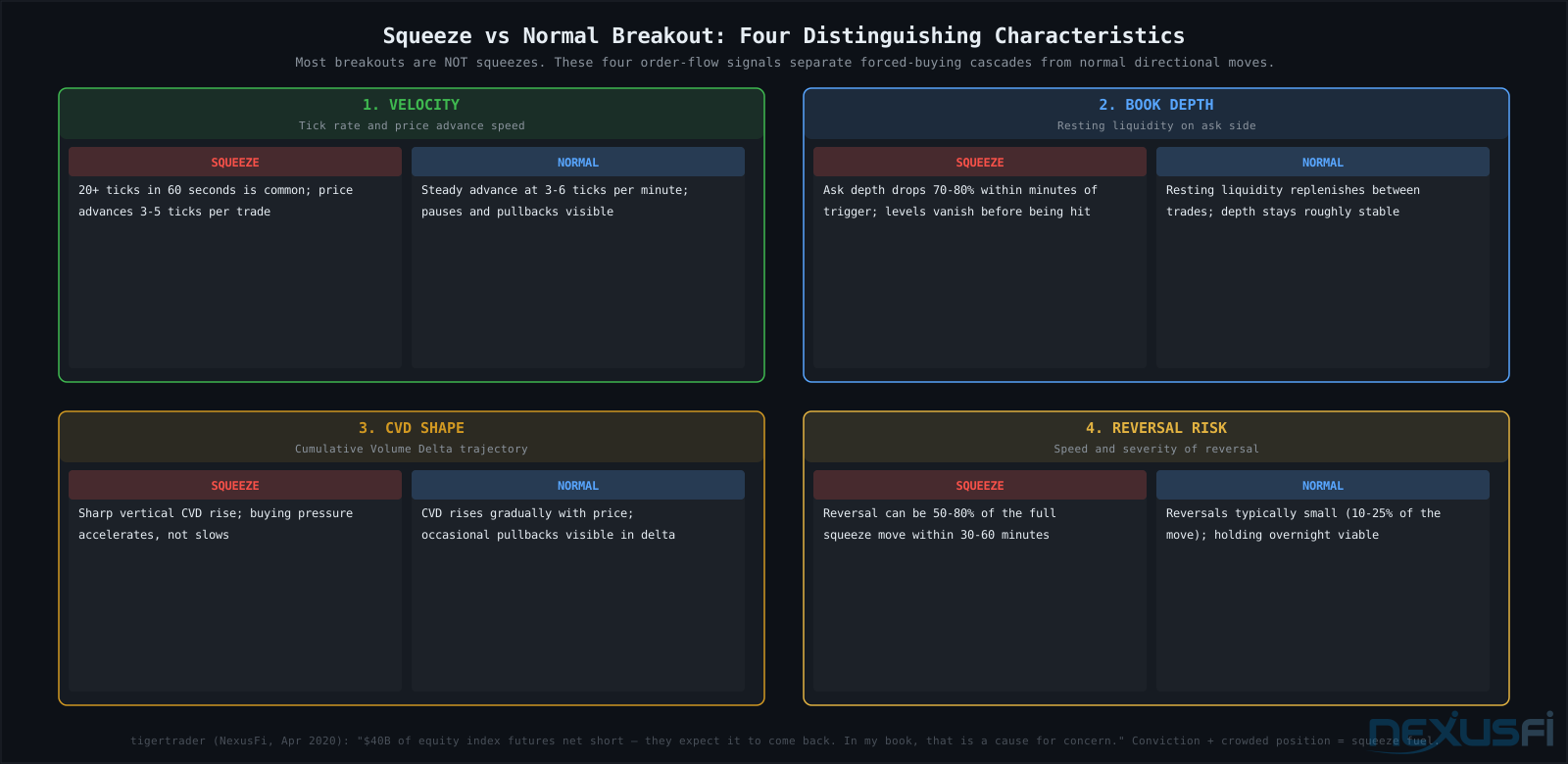
Not every technical breakout is a squeeze. In fact, the majority of breakouts above resistance levels are simply directional moves with conventional momentum characteristics: steady price advance, normal book depth, gradual CVD accumulation. Treating every breakout as a squeeze leads to overly aggressive entries and position sizing that is unsuitable for normal volatility.
Four specific order flow characteristics separate genuine squeeze dynamics from normal breakouts. Velocity is the clearest: during a squeeze, price advances 20+ ticks per minute with no pauses; during a normal breakout, price might advance 3-6 ticks per minute with visible consolidation at each level. Order book depth provides confirmation: squeeze conditions show 70-80% reduction in ask-side resting liquidity within minutes of the trigger firing; normal breakouts see depth replenish between trades and maintain relatively stable levels. CVD trajectory in a squeeze is near-vertical — the rate of aggressive buying accelerates rather than steady-states. And critically, squeeze reversal risk is far more severe — a reversal can recapture 50-80% of the squeeze move within 30-60 minutes.
The practical test: if you can see defined pullback levels forming during the advance, it's probably not a squeeze — squeezes don't pause long enough for structure to form.
Building a Squeeze Recognition System #
Experienced squeeze traders build systematic checklists because squeezes happen fast and degrade judgment under pressure. Here's a practical system you can implement immediately.
Weekly setup scan (Sunday, 30-45 minutes): Check COT positioning for any futures markets approaching multi-year extremes. Flag markets where non-commercial net short positioning is at 90th-percentile-or-above levels. Note markets where daily range is compressing below 40% of the 20-day average. Identify key resistance levels overhead in flagged markets. This weekly scan converts reactive trading (chasing squeezes you missed) into proactive trading (prepared setups you identified ahead of time).
Session order flow monitoring: For any market flagged during the weekly scan, monitor order flow at the key resistance level during the session. Watch CVD direction at resistance, book depth thinning above the level, tick velocity acceleration. When the technical breakout aligns with order flow confirmation, execute the entry protocol from a pre-planned position.
Exhaustion tracking: Once in a squeeze position, track the four exhaustion signals (CVD divergence, failed new highs, book depth rebuilding, tick velocity decline) continuously. Pre-commit to actions at each stage: when any two appear, reduce position by half; when all four appear, exit and assess the exhaustion fade opportunity.
Knowledge Map
Go Deeper
Build on this knowledgeCitations
- — Spoo-nalysis ES e-mini futures S&P 500 (2022) 👍 6“Short squeeze pop higher, then margin call explosion to new lows into the close? Stay tuned.”
- — Spoo-nalysis ES e-mini futures S&P 500 (2020) 👍 11“Speculators are still betting against this rally. They're holding more than $40 billion of equity index futures net short. In my book, that is a cause for concern.”
- — Spoo-nalysis ES e-mini futures S&P 500 (2020) 👍 12“The market is hanging around the 2800 level, as it is the top absolute gamma strike. It is also the last strike with moderate call open interest.”
- — Spoo-nalysis ES e-mini futures S&P 500 (2020) 👍 19“If you want to know how options volume translates into actionable signals, you can look at a chart of May 2850 Puts. Notice the spike in volume at a time when ES was selling off sharply.”
- — how do make use of COT to its best ability? (2025) 👍 4“News failure in a crowded trade -- when bearish news doesn't push price lower, he'll look to go long, trying to ride a sharp move higher as speculators are forced to cover.”
- — Spoo-nalysis ES e-mini futures S&P 500 (2020) 👍 14“There is a fairly large short interest from the 'this is a rally in a bear market' crowd who are happy to monetize at the 2750 level. And as vol gaps higher but sells off, dealer short gamma profile suggests the force is with the bulls.”
- — Spoo-nalysis ES e-mini futures S&P 500 (2020) 👍 16“The key tell for a squeeze in the ES is the $TICK. When you see $TICK consistently printing above +1000 without a single negative reading, that's forced buying -- natural buying has both sides.”
- — Spoo-nalysis ES e-mini futures S&P 500 (2022) 👍 12“More specifically, the 3835 strike is the short call leg of the JPM options overlay collar -- which means dealers are short gamma at that level. When price broke above, dealer hedging created mechanical buy pressure that amplified the squeeze.”
- — Spoo-nalysis ES e-mini futures S&P 500 (2022) 👍 9“JPM's Dec. 30 put collar spread resulted in reducing volatility by limiting moves above and below the 3835 strike as dealers were forced to hedge delta in both directions. This is dealer gamma hedging as a market structure force.”
- — Spoo-nalysis ES e-mini futures S&P 500 (2022) 👍 5“Rates rising with the market actually makes sense when you understand the positioning -- the short-covering in equities is mechanical, not fundamental. The bid for bonds weakens as shorts scramble to cover equities.”
- — Spoo-nalysis ES e-mini futures S&P 500 (2014) 👍 15“The bearish divergences were the setup -- bearish divergences attract shorts. When those shorts are wrong and price doesn't follow through, they become the fuel for the squeeze. The divergence is the trap, not the signal.”