



Auction Theory in Futures Trading: The Framework Behind Every Market Structure Decision
Overview #
Every market structure concept you've encountered — value area, balance days, failed auctions, single prints, responsive participants — traces back to one underlying framework: auction theory. It's not a strategy or an indicator. It's the explanation for why markets move the way they do.
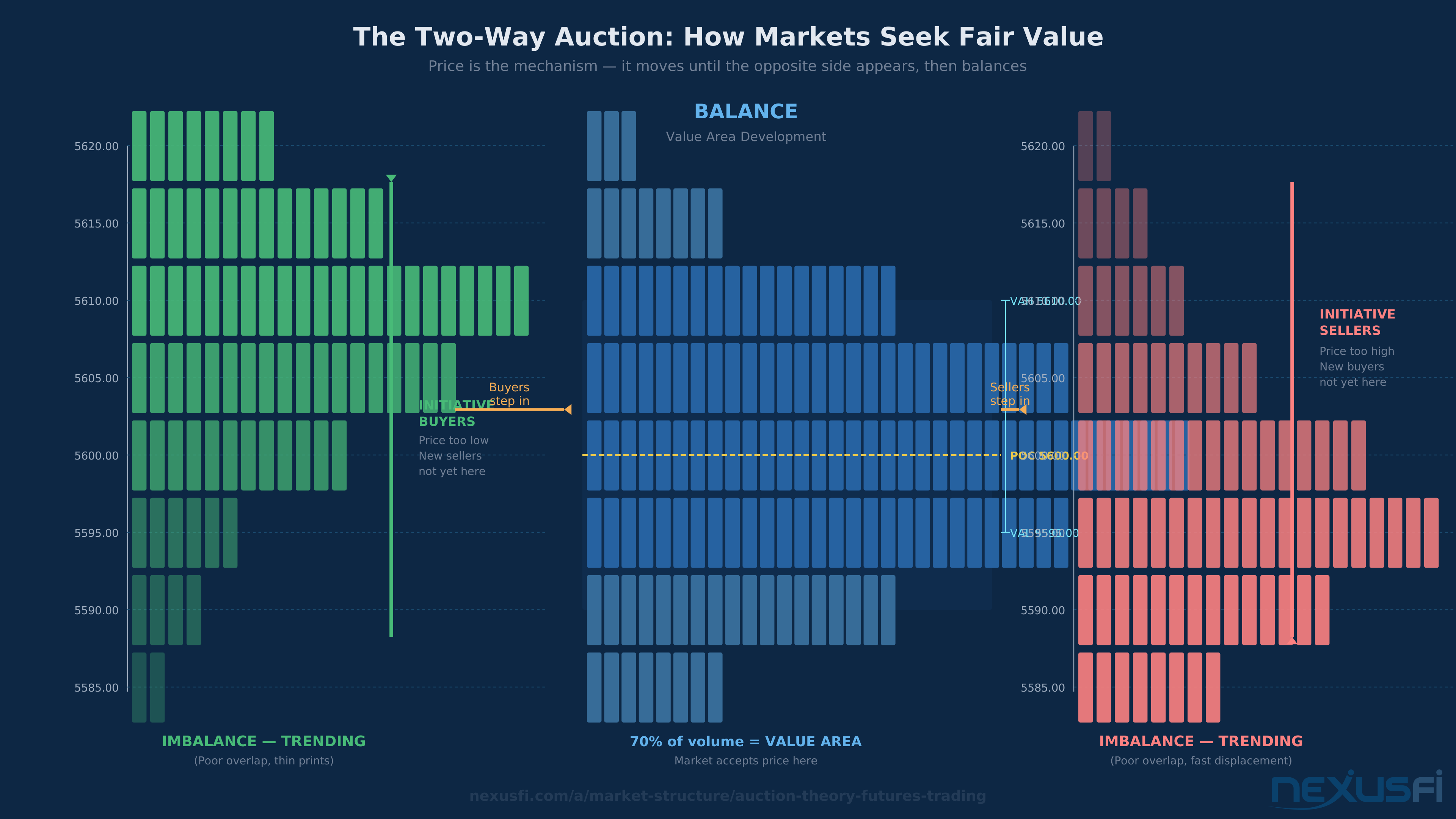
The core premise is simple. A futures market is a continuous two-way auction. Buyers and sellers are constantly bidding and offering. Price is the mechanism the auction uses to find the level where the most trade can occur — the point where buyers and sellers agree there's value. When price moves away from that level, it's searching for new participants. When it finds them, it stabilizes and builds value. When it can't find them, it reverses.
Understanding this framework changes how you read a chart. You stop asking "where will price go?" and start asking "is the market building value here or rejecting this level?" Those are answerable questions. The first one usually isn't.
This article covers auction theory from mechanism through application — including a pre-session framework, two distinct trading playbooks (balance and imbalance), a failed auction setup guide, and a real-time decision checklist.
Auction theory replaces unanswerable questions ("where is price going?") with answerable ones ("is the market building value here or rejecting this level?"). The developing profile answers in real time.
[IMAGE:auction_theory_mechanism.svg:The Two-Way Auction Mechanism: Price seeks fair value — when buyers exhaust sellers, the market balances and builds value (the foundation of all market structure analysis)]
The Two-Way Auction: How Markets Actually Work #
Think about what happens when ES opens at 5600. Some participants think 5600 is cheap. They buy. This drives price higher. At 5610, participants who were on the sideline decide the move looks extended. They sell. Price consolidates. The auction has found a temporary equilibrium.
That dynamic plays out thousands of times per session at every timeframe. The market is always testing the conviction of the last participant. When it moves higher, it's asking: "Will new sellers appear here?" If they don't, it moves higher still until it finds them. When it can't find them quickly, you get a trending move with thin trading behind it — the market racing through price levels to find the next accepted zone.
There are two types of participants in this auction:
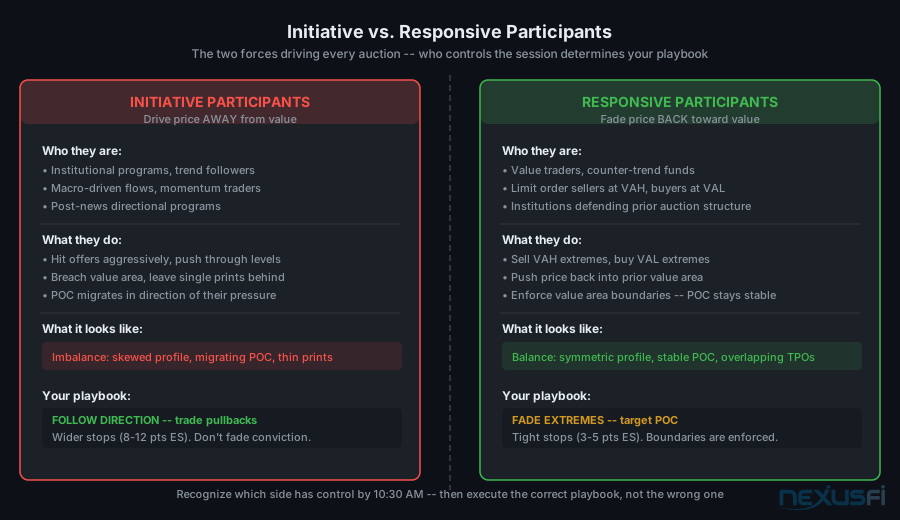
Initiative (aggressive) participants drive price away from value. They're making directional bets — institutional programs, trend followers, momentum traders. When a large buyer hits offers at the ask and pushes price up through several levels, that's initiative activity. Initiative participants create imbalance.
Responsive participants fade price away from value. They're value traders who believe price has moved too far from fair value and will return. When a natural seller steps in at the upper end of the value area and fades a push higher, that's responsive activity. Responsive participants create balance.
The battle between these two groups determines whether any given session trends or rotates. When initiative participants overwhelm responsive ones, you get trending moves with thin prints and poor overlap. When responsive participants win, price oscillates back and forth within a defined range. Recognizing which side has control is the foundation of auction-based trading.
[IMAGE:auction_theory_participants.svg:Initiative vs. Responsive Participants — initiative creates imbalance through directional pushing, responsive creates balance by fading extremes. Who controls the session determines your playbook.]
Value Area and Point of Control: Your Structural Reference Points #
Market Profile formalized auction theory into measurable reference levels. The three most important are the Value Area, the Point of Control, and the extremes.
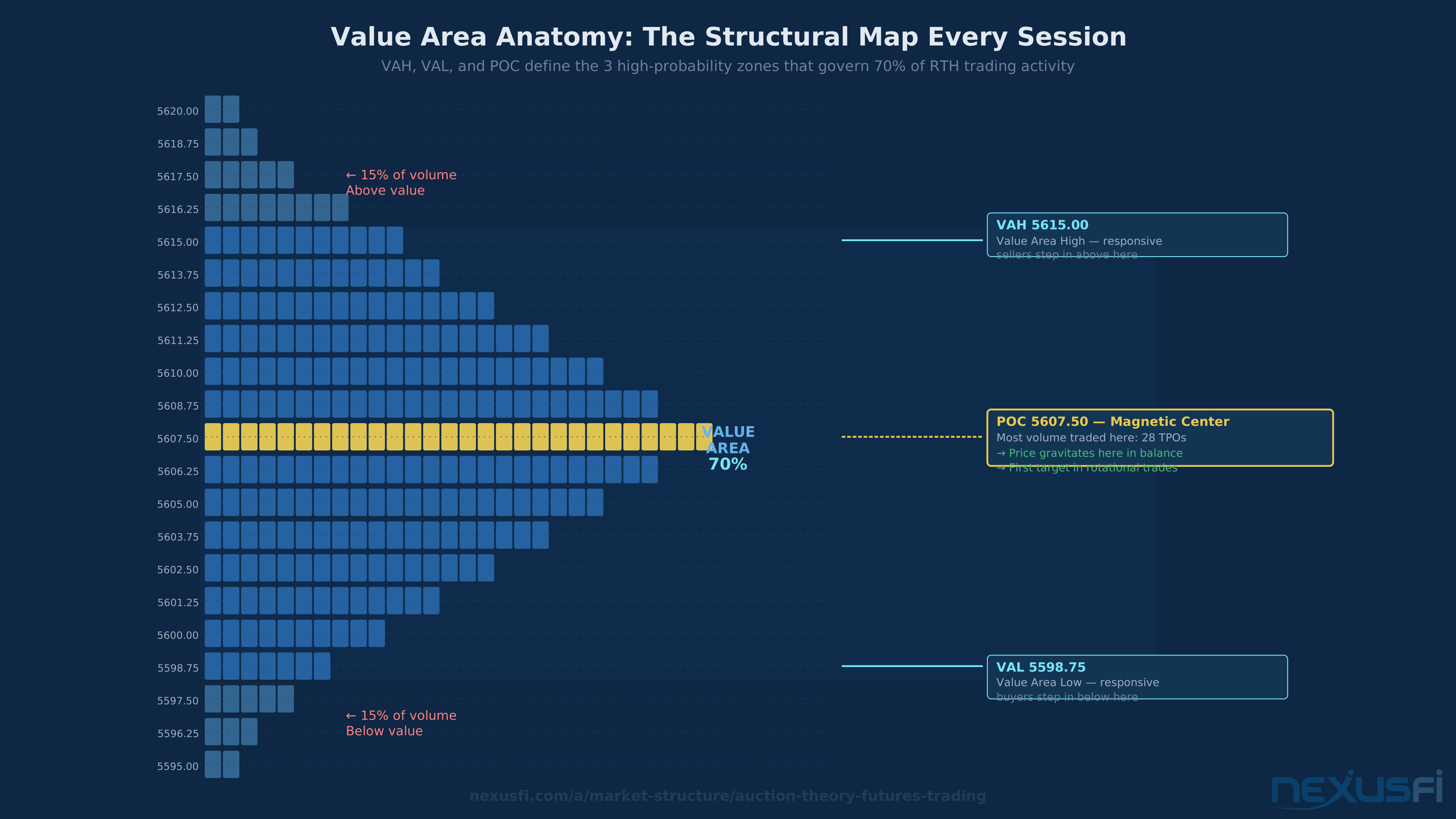
The Value Area (VA) is the price range containing 70% of the session's volume. The 70% figure comes from the bell curve distribution of price acceptance — in a balanced session, volume clusters near the mean and thins at the extremes.
The Value Area High (VAH) and Value Area Low (VAL) are the boundaries of that 70% zone. They represent the transition point between responsive and initiative activity. Inside the value area, responsive participants dominate — price is "fair" and both sides are willing to trade. Outside the value area, the market is testing whether initiative participants will push further or whether responsive participants will drive price back.
The Point of Control (POC) is the price level with the most trading activity in the session. It represents maximum acceptance — more participants agreed to trade here than anywhere else. In balanced conditions, the POC acts as a gravitational center. Price tends to revisit it when rotations occur.
Most traders track the previous day's value area as a reference for the current session. Where today's opening price falls relative to yesterday's VAH, VAL, and POC sets the context for how the day is likely to develop.
Opening inside yesterday's value area suggests the market views yesterday's range as fair value — the day is more likely to develop in balance. Opening outside yesterday's value area signals a directional statement. The 80% rule: if price opens outside the prior value area and cannot re-enter within the first 60-90 minutes, there's approximately an 80% historical probability that the new direction persists through the session.
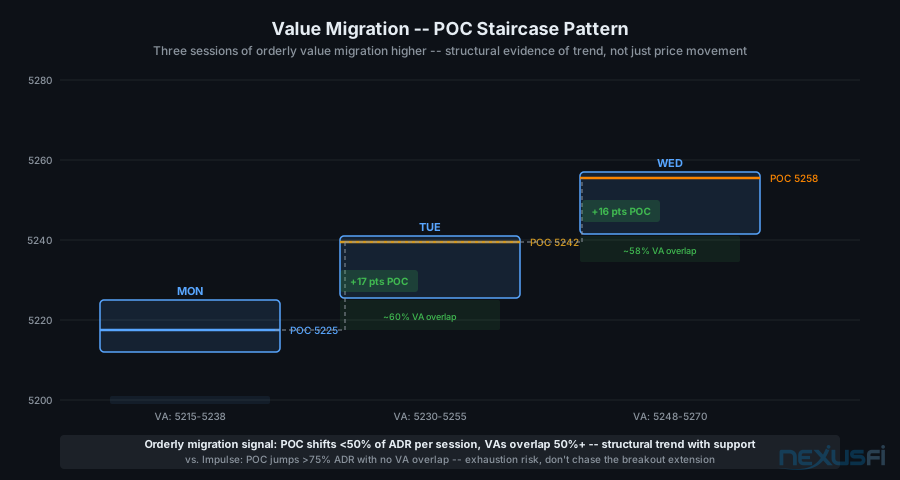
[IMAGE:auction_theory_value_migration.svg:Value Migration — POC Staircase Pattern. Orderly migration (17 pts/session, 60% VA overlap) = structural trend evidence. Impulse jump (>75% ADR, no VA overlap) = exhaustion risk. Use migration rate to distinguish sustainable trends from spikes.]
[IMAGE:auction_theory_value_area.svg:Value Area Anatomy: VAH 5615.00, VAL 5598.75, POC 5607.50 — the three structural zones governing 70% of session trading activity and the primary targets in rotational trades]
Balance vs. Imbalance: The Market's Two Operating Modes #
The single most important concept in auction theory for day traders is the distinction between balance and imbalance. Get this right before placing a trade and you'll be in the correct playbook. Get it wrong and you'll be fading trends or chasing rotations all session.
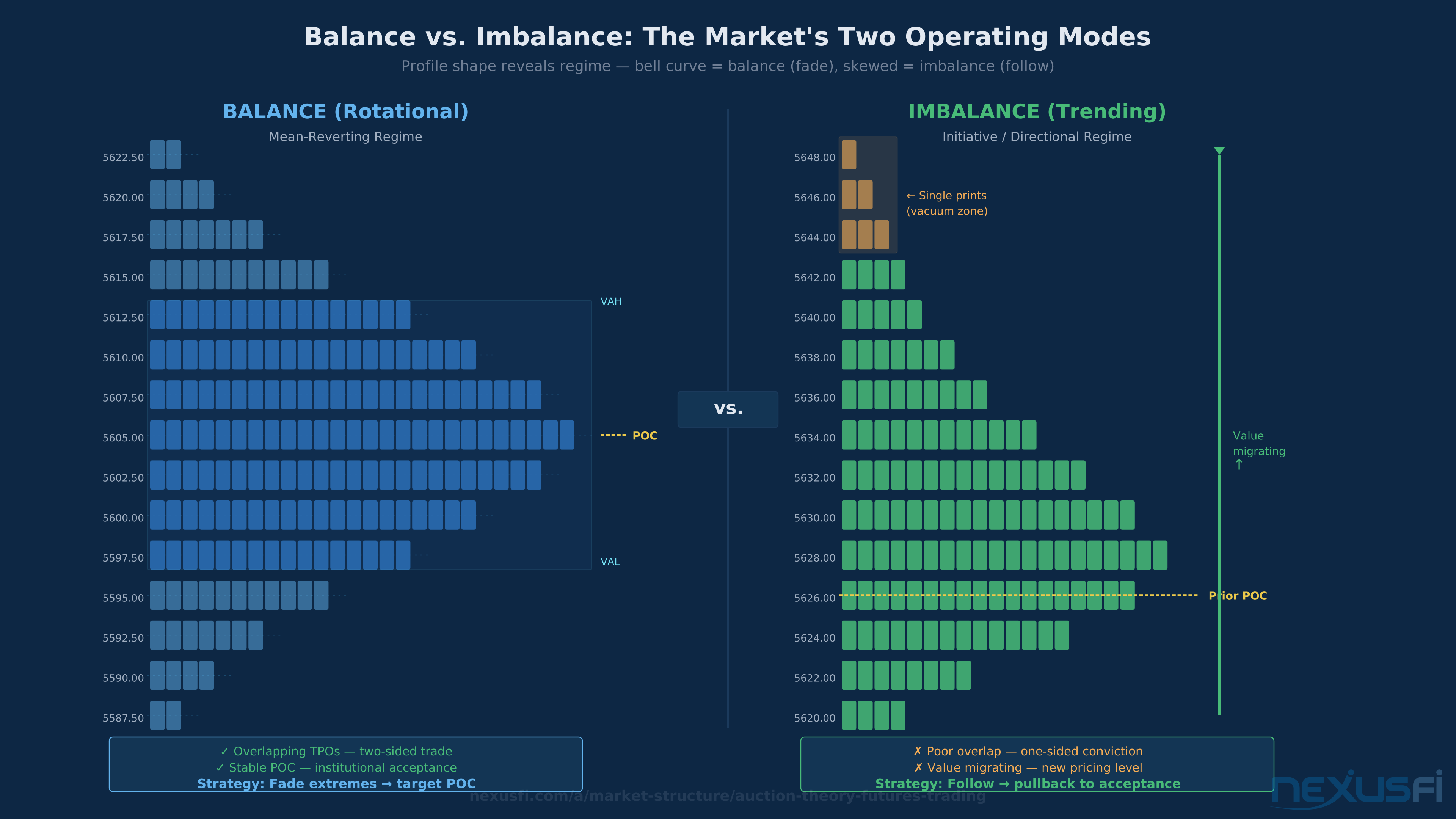
Balance is the state of equilibrium. Supply and demand are roughly matched. In a balanced market:
- Overlapping TPO periods -- multiple time slots trading at the same price levels
- A symmetric profile -- bell-curve shaped volume distribution
- Failed breakout attempts -- price probes the range edges but returns to value
- POC that stays relatively stable -- the mean doesn't drift much
Balance markets favor responsive trading strategies. The extremes of the value area are high-probability fade zones. The POC is the natural target. Risk is well-defined because boundaries are enforced by responsive participants who keep stepping in at the edges.
Imbalance is the state of directional conviction. One side has overwhelmed the other. In an imbalanced market:
- Poor overlap between TPO periods -- price moves faster than participants trade
- Skewed, asymmetric profiles -- volume concentrated at one end, thin at the other
- Single prints -- price levels where only one TPO period traded, no acceptance
- POC that drifts steadily in the direction of the move
Imbalance markets require a completely different approach. Fading moves against institutional momentum leads to fast losses. The correct strategy is to trade pullbacks into prior acceptance areas, using the direction of value migration as your compass.
Important nuance: imbalance doesn't mean the market moves in a straight line without pullbacks. Trending days have natural retracements — often deep ones. The key is whether those retracements are finding acceptance at prior value (normal pullback in a trend) or whether price is re-entering and accepting the prior range (regime change back to balance). The TPO structure tells you which is happening. Single prints filling in on a pullback are a warning sign that the trend may be losing conviction.
[IMAGE:auction_theory_balance_imbalance.svg:Balance Profile (symmetric bell, stable POC, overlapping TPOs — fade playbook) vs. Imbalance Profile (skewed distribution, migrating POC, single prints — follow playbook). Profile shape determines strategy.]
Price Acceptance vs. Rejection: Reading Market Response #
Auction theory defines price levels differently than traditional technical analysis. A level isn't "support" or "resistance" — it's either accepted or rejected. That distinction changes how you trade it.
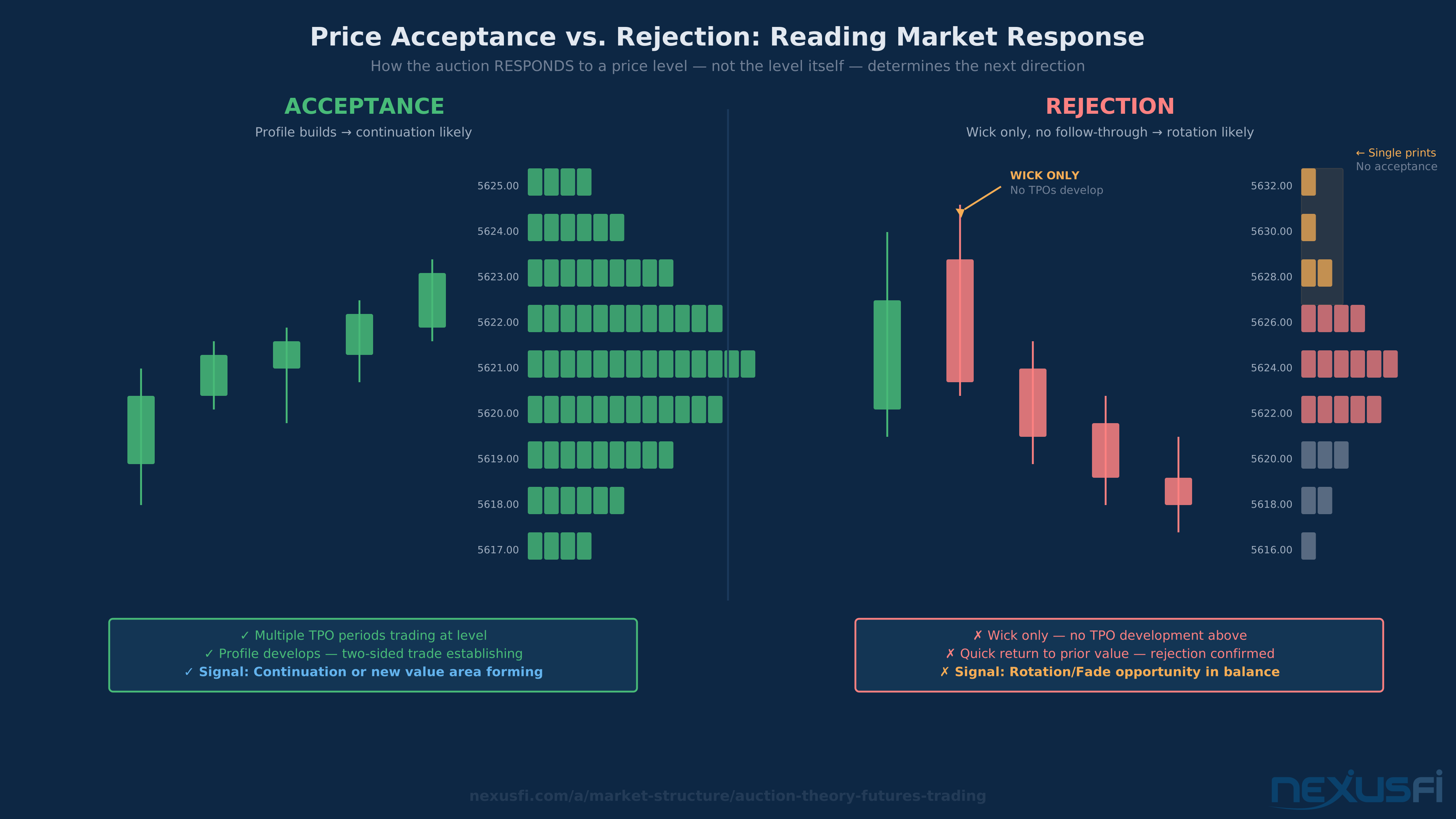
Price acceptance occurs when multiple TPO periods trade at or near the same price. The market is saying: "Both buyers and sellers are comfortable transacting here." Acceptance signals that the current price has become part of the value area. When price accepts a breakout level, that level becomes the new base of the structure — not a target to fade back to.
Signs of acceptance: multiple successive bars or TPO periods at the same price zone, volume building (not thin spike-and-retreat action), profile developing depth at the level, and pullbacks getting smaller as the market digests the move.
Price rejection occurs when the market tags a level and immediately retreats. Only one or two TPO periods traded there. No real profile developed. The market "tested" the level, found insufficient conviction to continue, and returned to prior value. Rejection signals are the foundation of responsive trading setups.
Signs of rejection: long wicks or tails, quick return to the value area after the tag, volume dropping sharply at the extreme, and only 1-2 TPOs at the level.
The critical ES/NQ nuance: wicks alone can mislead you in highly liquid markets. Large programs and algorithms routinely push price through levels to collect stops or test order book depth. Require the profile to NOT develop before committing to a fade. If price pushes to a new high on a wick but then two more TPO periods trade just below that high, you may be watching acceptance form — not rejection.
[IMAGE:auction_theory_acceptance_rejection.svg:Acceptance (profile builds with 5+ overlapping TPOs, continuation likely) vs. Rejection (wick only, 1-2 thin TPOs, immediate return to value — fade setup). In ES/NQ, require profile failure, not just a wick.]
Trending vs. Balancing Day Classification #
Day type classification is where auction theory becomes operationally useful. Identifying the session type early — by 10:00-10:30 AM — determines which of two at the core different trading approaches you use all day.
Trending Days
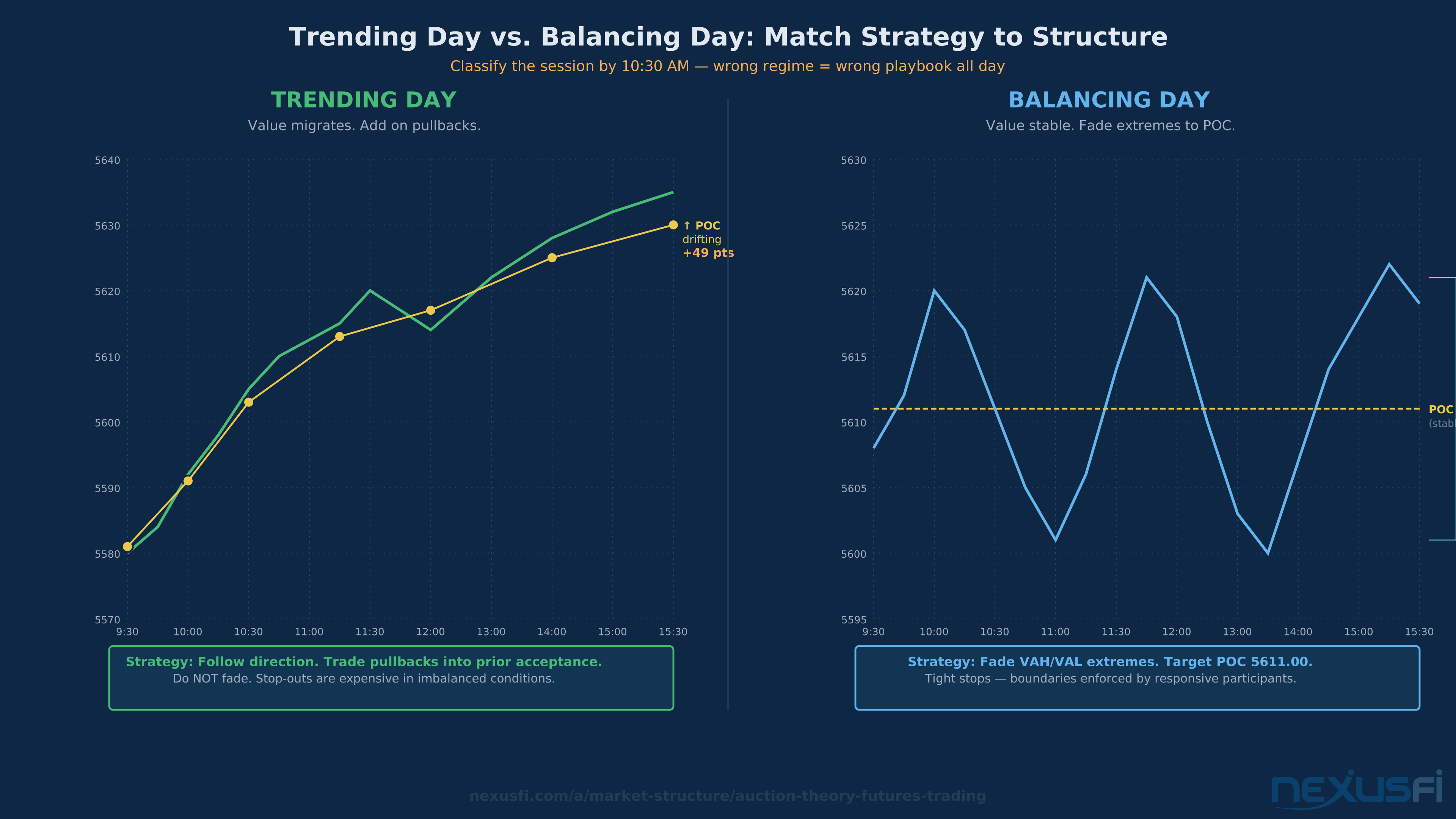
On a trending day, initiative participants have established directional control. Value migrates steadily in one direction as institutional programs, macro-driven flows, or event-driven momentum push the auction higher or lower. The POC drifts with the price, and attempts by responsive participants to fade the move are overwhelmed.
Characteristics: price opens outside prior value area and maintains that position; initial balance is breached early and extends; profile develops in a skewed, directional shape; pullbacks are shallow — they don't reach prior POC before reversing. The gap rule applies: if an opening gap fails to fill within 60-90 minutes, the direction likely persists.
Trading approach: hold and add on pullbacks. Don't fade moves. Widen stops to accommodate normal trending pullbacks — this is where traders using balance-regime stops (3-5 pts) get repeatedly stopped out on trending days.
Balancing Days
On a balancing day, responsive participants are winning. Every push toward the range extremes is met with enough opposing flow to push price back toward value. The value area expands symmetrically and the POC stays relatively stable.
Characteristics: price opens inside prior value area and stays there; initial balance is relatively wide compared to recent sessions; failed breakout attempts at both upper and lower range edges; high volume near the center of the session range.
Trading approach: fade the extremes, target the POC. Setup: wait for price to probe the value area boundary, see rejection behavior (thin prints, wick, volume dropping), then fade toward the POC as first target and opposite boundary as extended target. Stops can be tight because the boundaries are structurally enforced.
The most common misclassification happens after a major news event. CPI prints hot, price gaps up 15 points at the open, and traders who see the profile developing inside the gap assume a balancing day. Then the profile breaks one way or another. After large news events, wait at least 30 minutes before making a firm classification.
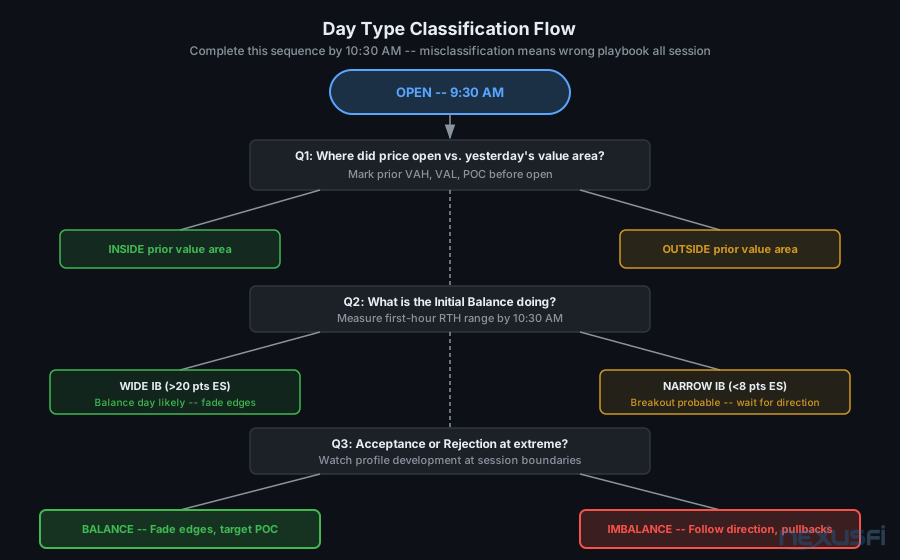
[IMAGE:auction_theory_classification_flow.svg:Day Type Classification — three questions by 10:30 AM route to balance or imbalance playbook. Q1: open vs prior VA. Q2: IB width. Q3: acceptance or rejection at extreme.]
[IMAGE:auction_theory_trending_balancing.svg:Trending day (POC drifts +49 pts — follow momentum, pullbacks only) vs. Balancing day (POC stable at 5611.00 ±2 pts — fade VAH/VAL extremes). Classify by 10:30 AM or you'll trade the wrong playbook all session.]
The Failed Auction: Highest-Probability Reversal Setup #
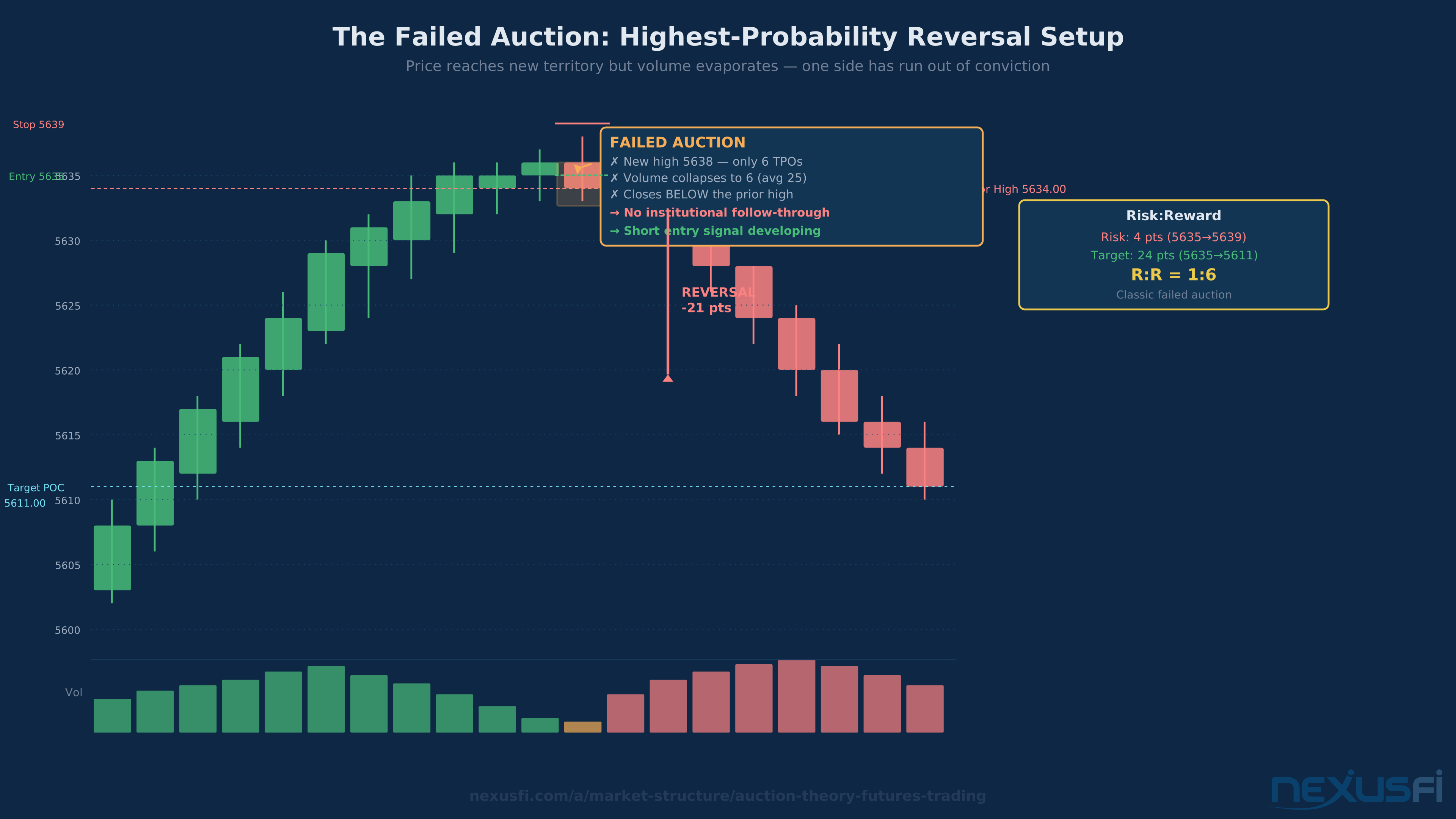
The failed auction occurs when price reaches a new level — often a prior session high or low — but the auction fails to find participants willing to continue in that direction.
The mechanical sequence:
- Price pushes to a new high or low (initiating an auction at that level)
- Volume at the new extreme is thin -- far below average session volume
- TPO periods at the extreme are minimal (1-2, sometimes just a wick)
- Price cannot develop profile above (or below) the prior extreme
- Price closes back below (or above) the level on the same bar or shortly after
- Reversal begins as responsive participants enter aggressively
The psychology: initiative participants who pushed price to the new level have exhausted their position. Responsive traders who had limit orders just beyond the prior extreme now have clear evidence that the advance has stopped. They enter aggressively. The thin volume at the extreme means there's no one left to absorb their pressure. Price collapses back through single-print vacuum zones, accelerating until it reaches the next area of developed, accepted volume.
Failed auctions are especially powerful when they occur at prior session highs or lows, at the 2+ standard deviation VWAP band, after a trending move with declining volume on the final push, or in the last hour of RTH when directional conviction fades.
Risk management on failed auction setups is unusually clean. Stop goes just beyond the failed extreme (4-5 points in ES/NQ for a clear wick rejection). Target is back to the prior POC or VAL, wherever meaningful volume last existed. The result is typically a 1:4 to 1:8 risk/reward ratio — tight stop, large move potential, because price races back through the single-print vacuum zone.
Failed auction stops are unusually tight because the structural void leaves a clear invalidation: just beyond the extreme where volume collapsed. Target is the prior POC where real acceptance lived — that gap in between is near-empty and price races through it.
[IMAGE:auction_theory_failed_auction.svg:Failed Auction at ES 5638.00 — volume collapses to 6 contracts vs. 25 average, price closes below prior high. Entry 5635, stop 5639 (4 pts), target POC 5611 (24 pts). R:R = 1:6. Classic failed auction setup.]
Practical Application Framework #
Auction theory is only useful if you can act on it in real time. Here's a structured framework that turns the theoretical concepts into a daily workflow.
Pre-Session: Build the Auction Map (3 minutes)
Before the session opens, mark three things: prior day's Value Area (VAH, VAL, POC), prior day's range extremes (high and low — failed auction alerts fire at these), and any naked VPOCs from previous sessions that price has never returned to.
First 30-60 Minutes: Classify the Session
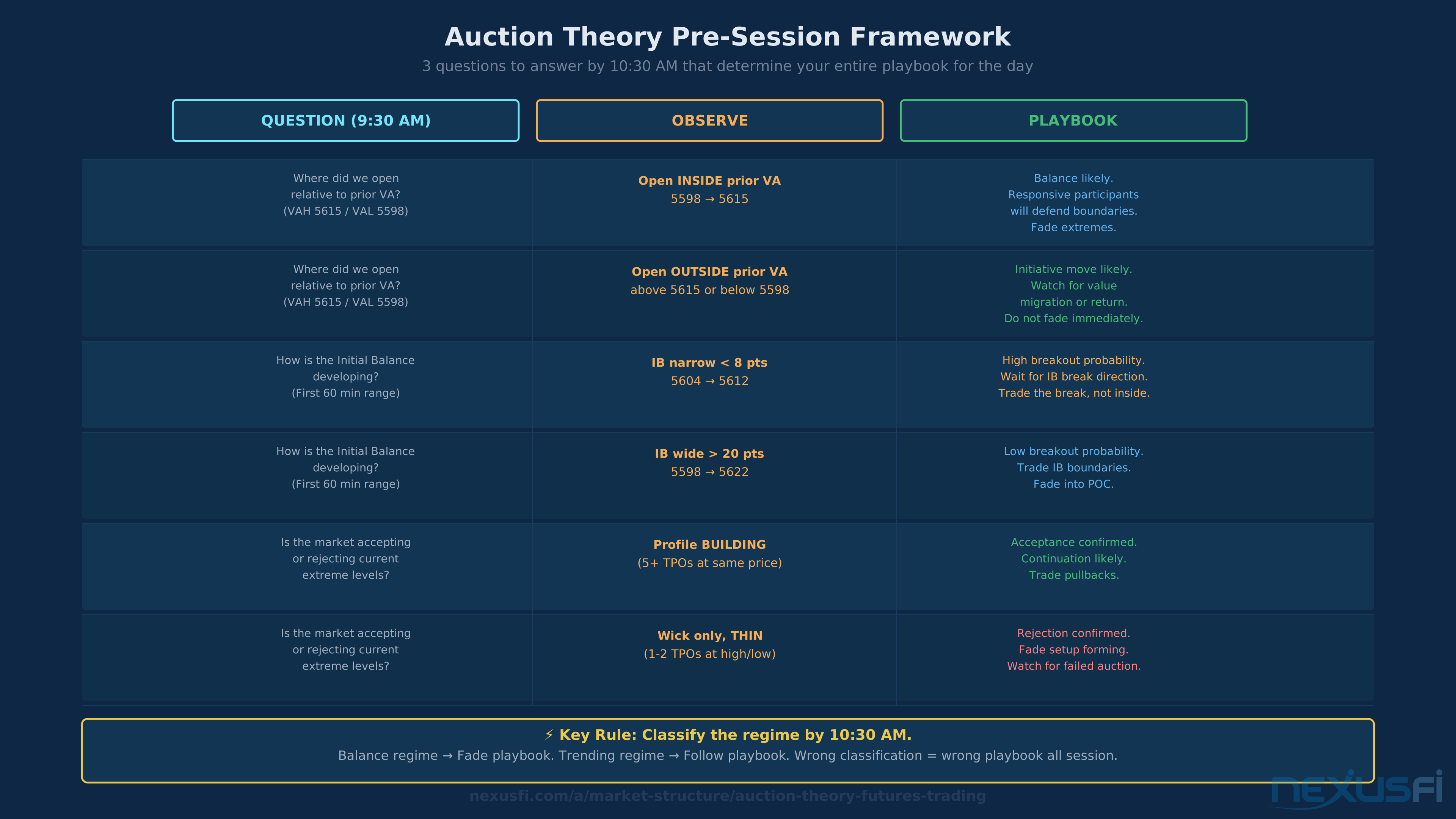
Question 1 — Where did price open vs. yesterday's value area?
- Open inside VA → Balance playbook is your default
- Open outside VA → Watch for initiative continuation or value return
Question 2 — What is the Initial Balance doing?
- IB narrow (<8 pts ES) → High breakout probability. Wait for direction, trade the break.
- IB wide (>20 pts ES) → Balance day likely. Trade boundaries, target POC.
Question 3 — Is value accepting or rejecting the current extreme?
- Profile building at level → Acceptance. Trade pullbacks in direction of acceptance.
- Wick only, no profile → Rejection. Fade setup forming.
Execution Playbooks
Balance Playbook: Fade VAH or VAL when rejection behavior confirms (thin prints, wick, volume dropping). Entry after 1-2 TPO periods confirm the level isn't accepting. Stop just outside the rejection extreme (3-5 pts). Target POC (primary), opposite VA boundary (extended).
Imbalance/Trending Playbook: Pullback into prior acceptance zone (prior POC, VA boundary, VWAP) where acceptance resumes. Stop below pullback invalidation (where value migration would fail). Target prior swing extreme or next value extension area.
[IMAGE:auction_theory_framework.svg:Pre-session auction framework: 3 questions by 10:30 AM classify the session and route to the correct playbook — wrong classification = wrong playbook all session]
Risk Management Aligned to Auction Theory #
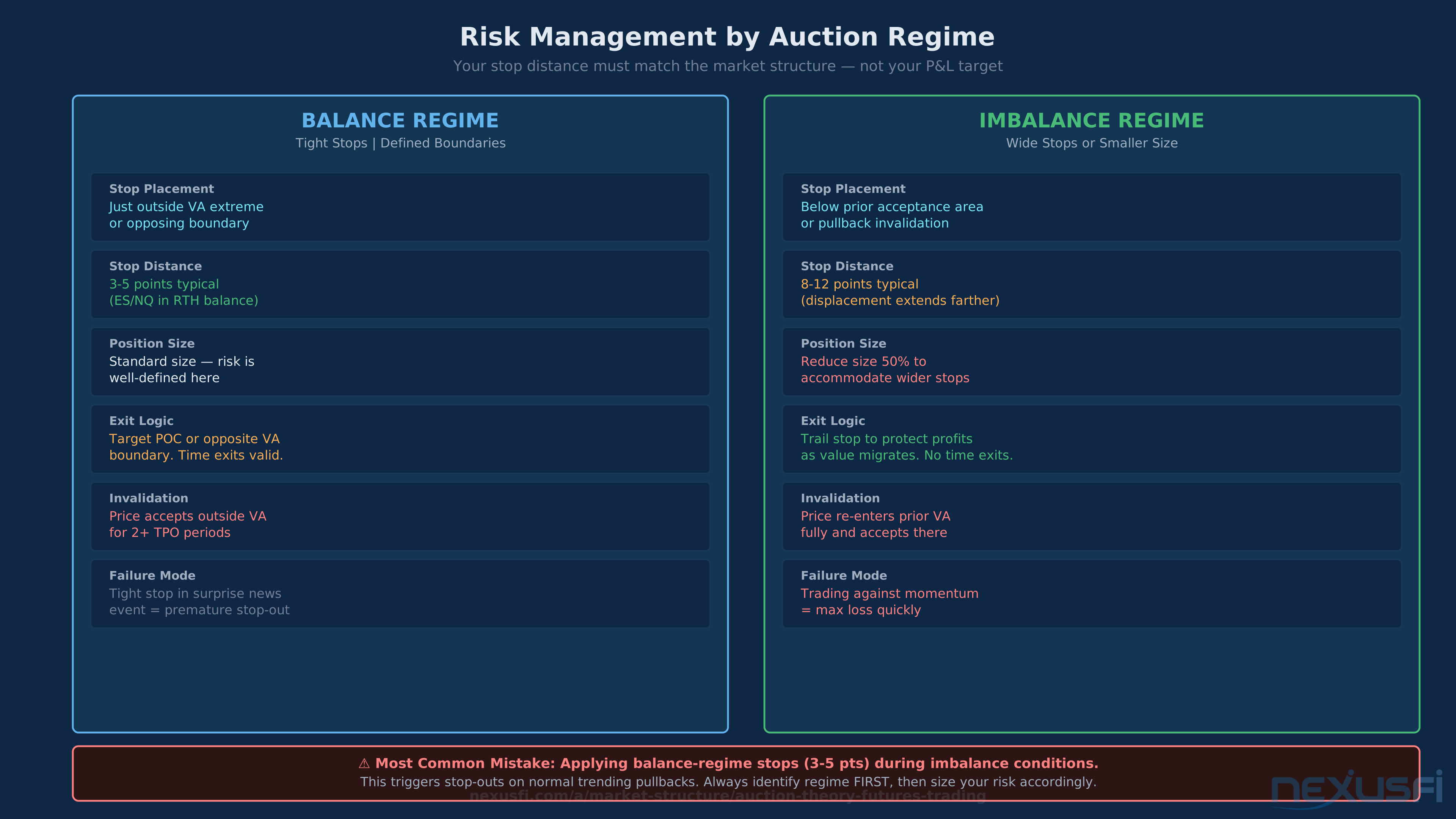
The most common mistake applying auction theory is using the wrong stop distance for the wrong regime. Balance and imbalance stops are at the core different.
In balance conditions, the market enforces boundaries. Stops can be placed just outside the value area extremes — 3-5 points in ES for a VA extreme fade. If price accepts beyond your stop, the balance thesis is wrong and you should be out.
In imbalance conditions, the market makes large moves through thin areas. A trending pullback in ES can easily retrace 8-12 points before the trend resumes. Applying balance-regime stops (3-5 points) to trending conditions leads to repeated stop-outs on normal retracements. Adjust to wider stops (8-12+ points) or reduce position size to maintain the same dollar risk.
Auction theory also defines natural exit logic. In balance, time exits are valid — if price reaches the mid-point and stalls for multiple TPO periods without moving toward your target, the trade isn't working. In imbalance, time exits are dangerous — trending moves can consolidate for an hour before resuming, and exiting on time pressure means leaving profits on the table.
The conviction check before any entry: "Is this move attracting new aggressive participants, or is it just running stops through thin liquidity?" Stop-hunting moves through single-print areas are common in ES and NQ. If you see a sharp price move with declining volume, it's stop-running, not genuine auction finding new value.
[IMAGE:auction_theory_risk_management.svg:Balance regime (3-5 pt stops, tight — boundaries enforced) vs. Imbalance regime (8-12 pt stops or 50% smaller size). Applying balance stops in imbalance conditions triggers consistent stop-outs on normal trending retracements.]
The Intraday Decision Checklist #
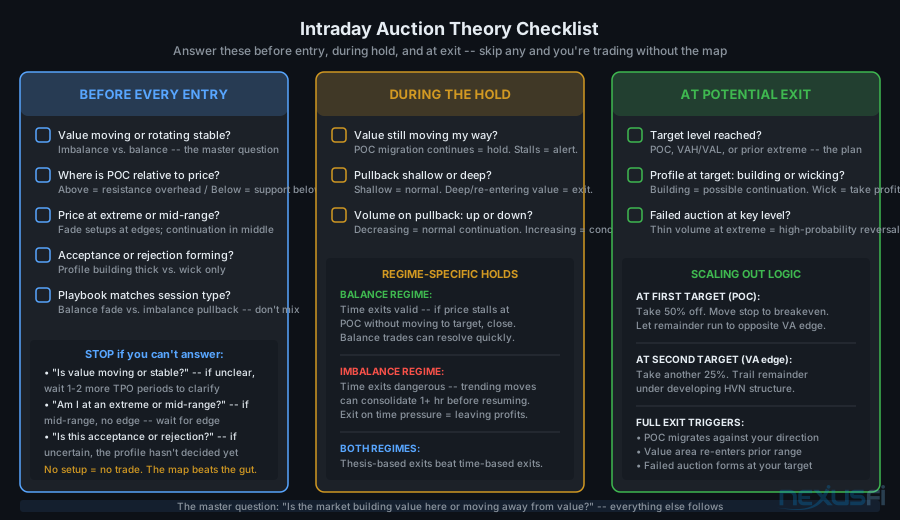
At each decision point during the session — before entries, during holds, and at potential exits — answer these questions:
Before Every Entry:
- Is value moving (imbalance) or rotating around a stable center (balance)?
- Where is the current POC relative to price? Above, below, or near it?
- Is price at an extreme (VAH/VAL) or in the middle of the value area?
- Is the market building profile here (acceptance) or just tagging the level (rejection)?
- Is today's session type consistent with the playbook I'm about to execute?
During the Hold:
- Is value still moving in my direction, or has it stalled/reversed?
- Is the pullback shallow (trend intact) or deep/re-entering value (regime change)?
- Did volume increase on the pullback (concerning) or decrease (normal continuation)?
At Potential Exits:
- Has the target level (POC, VAH/VAL, prior extreme) been reached?
- Is price building profile at the target (potential continuation) or wicking (exit signal)?
- Has a failed auction setup appeared at a key level suggesting reversal?
The most important question in the checklist is also the simplest: "Is the market building value here or moving away from value?" Everything else flows from the answer.
[IMAGE:auction_theory_checklist.svg:Intraday Decision Checklist — before entry, during hold, at exit. Five pre-entry questions, three hold questions, three exit questions. The master question across all phases: is the market building value here or moving away from value?]
Where Auction Theory Fails #
No framework works in every condition. Auction theory has specific environments where it breaks down:
After major news events (FOMC, CPI, NFP), prior value area levels become unreliable. The auction that created them is no longer relevant — a new auction begins with new information. Wait 30+ minutes post-event before anchoring trades to pre-event structure.
Major news events: CPI, FOMC, NFP, and geopolitical shocks can override the auction structure. The profile from the pre-news session becomes basically irrelevant — a new auction begins with new information. Don't apply yesterday's VA levels to a post-FOMC session as if they still matter.
Thin markets: Overnight sessions, pre-market gaps, and holiday trading have distorted volume profiles. A "value area" in overnight Globex trading may represent a fraction of RTH volume and shouldn't be treated with the same structural weight.
HFT interference: High-frequency firms regularly push price through thin areas to trigger stops or test order book depth, creating false rejection signals. Volume profiles retain predictive value in centralized futures markets when combined with multi-level order flow analysis:
The deepest failure mode: overfitting levels. Auction theory provides a framework, not a system. Traders who mechanically look for "prior POC plus 2 ticks = buy" without understanding why the levels matter are just support/resistance traders with different vocabulary. The framework works when you understand why — levels represent areas of prior acceptance, which creates memory in the auction, which influences how the current auction responds to revisiting those areas.
Integrating Auction Theory with Other Tools #
Auction theory provides structural context (where are we in the auction?). Order flow tools provide real-time confirmation (is the auction behaving as the structure suggests?). Structure without order flow is a map without speed. Order flow without structure is speed without a map.
Auction theory is most powerful when combined with tools that provide confirmation or context.
Cumulative Volume Delta (CVD) tells you which side is more aggressive at any price level. When price tests the VAH and CVD shows negative delta, you have confirmation of the rejection. When CVD shows positive delta at that same level, be cautious — buyers may be absorbing and accepting.
VWAP provides a session-based fair value reference. In balance conditions, price oscillates around VWAP. In trending conditions, price sustains above or below VWAP. When VWAP aligns with the POC, the level is doubly significant.
Footprint Charts show bid/ask volume at every price level inside each bar — the most granular way to confirm acceptance or rejection in real time. Profile developing with balanced volume at a breakout level signals acceptance. Only sell-side aggressive prints at a high signals rejection confirmation even before the wick forms completely.
Depth of Market (DOM) shows resting limit orders that will absorb moves. Large limit order walls just outside the value area extremes are why responsive participants are structurally effective — they're defending those levels with significant size.
The integration principle: auction theory provides structural context (where are we in the auction?), and order flow tools provide real-time confirmation (is the auction actually behaving as the structure suggests?). Structure alone without order flow is like reading a map without knowing your speed. Order flow without structure is like knowing your speed without the map. For more on how these frameworks overlap, see Market Profile (TPO Charts) and Initial Balance.
Knowledge Map
Go Deeper
Build on this knowledgeCitations
- — Trading Futures with Context (2013) 👍 17“Thinking in terms of auction logic and rotations. The market is a two way auction with different time frame participants. The market will rotate to find Balance.”
- — Spoo-nalysis ES e-mini futures S&P 500 (2012) 👍 14“Value Area Shifts. I keep an eye on the migration of value and how price reacts to it. During a rotational day, the value area should be shifting.”
- — Trading Lessons from TopstepTrader's John Hoagland (HOAG) (2014) 👍 12“The market is always seeking the area (value) where buyers and sellers can facilitate trade. Longs or new shorts will view the price as too expensive and the auction higher will end.”
- — Volume Profile and Footprint discussion (2012) 👍 118“There are two primary categories for a day's range within the profile or recent profiles -- balance and imbalance. Balance means the market is trading primarily within a recent range.”
- — Volume profile resources for day trading (2025)“A breakout above VAH with volume suggests a new auction higher. Between 4400-4450 (value area) the market is building balanced structure.”
- — Trading Futures with Context (2014) 👍 13“70% (more or less) = rotational / balance days. 30% = trending days. If it moves, it moves to find Balance again.”
- — Daytrading ES & NQ (2023) 👍 19“We have to think in aspects of game theory. Who is involved? What is their position? Where are they vulnerable? Each timeframe is either Moving or Balancing.”
- — Markets and Market Logic (original Market Profile research) (1985)
- — Trading Futures with Context (2014) 👍 18“Attached there is a 6-part study guide to MARKET PROFILE from CBOT, hope could be of some help for traders using this method as Context.”