



SEC vs. CFTC: The Regulatory Divide That Shapes Every Futures Trade You Make
Two federal agencies, one financial system, and rules that differ in ways that directly hit your account
Overview #
Most futures traders know the CFTC exists. Fewer understand exactly where the CFTC's authority ends and the SEC's begins — and almost no one thinks about the practical consequences of that line until something goes wrong with their account, their taxes, or a trade they didn't realize was regulated differently than everything else they hold.
Here's what the divide actually means: futures are CFTC territory, stocks and bonds are SEC territory, and there's a narrow band of products — security futures, certain swaps, some derivatives — where both agencies claim jurisdiction and traders end up navigating two sets of rules simultaneously. The division isn't academic. It determines whether your account funds are protected by segregation rules or SIPC insurance, how your gains get taxed, what margin your broker can legally charge, and which regulator handles it if you get defrauded.
Understanding the SEC/CFTC split doesn't require a law degree. It requires understanding why the rules are set up the way they are, what products fall under which regime, and what that means for the practical decisions you make every trading day.
This article covers the origins of the divide, who controls what, the products that fall in between, and the four areas where regulatory classification changes the mechanics of your trading in ways that matter to your P&L.
Historical Origins: How Two Agencies Came to Govern Adjacent Markets #
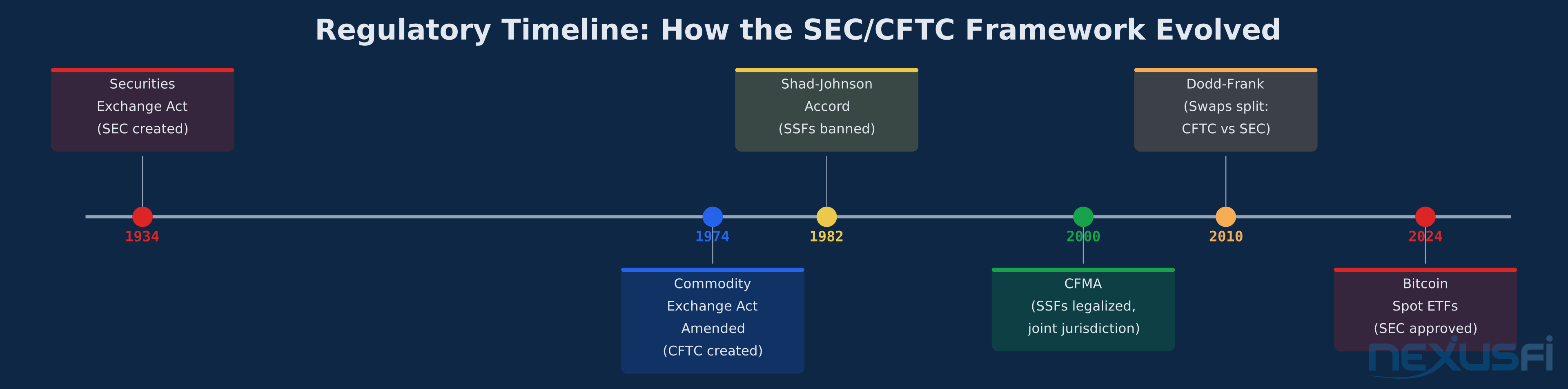
The SEC came first. The Securities Exchange Act of 1934 created it in the wake of the 1929 crash to regulate equity and bond markets — stocks, bonds, and the firms that traded them. For four decades, the SEC was the primary financial regulator in the United States.
The CFTC arrived forty years later. Congress amended the Commodity Exchange Act in 1974 to create an independent federal regulator for futures markets, pulling oversight away from the Department of Agriculture which had been watching over agricultural commodity trading since 1936. The CFTC launched in 1975 and took over regulation of futures contracts on commodities — at that point, primarily agricultural products, then expanding to financial futures as those markets developed in the late 1970s and 1980s.
The two agencies operated on parallel tracks for years. The SEC governed securities. The CFTC governed futures. The products were distinct enough that jurisdictional overlap wasn't a major issue. Stock index futures in the early 1980s created the first friction — an S&P 500 futures contract was obviously connected to the stock market the SEC regulated, but it was clearly a futures product. The agencies worked out a framework called the Shad-Johnson Accord in 1982 that drew a clear line: the CFTC would regulate stock index futures, and as a concession to the SEC, single-stock futures and narrow-based stock index futures would be banned entirely.
The Shad-Johnson ban on single-stock futures held for 18 years, until the Commodity Futures Modernization Act of 2000 (CFMA) lifted it. The CFMA was also the legislative moment that formalized joint SEC/CFTC jurisdiction over a specific category of products — "security futures" — and created the dual-regulatory framework that still governs those contracts today.
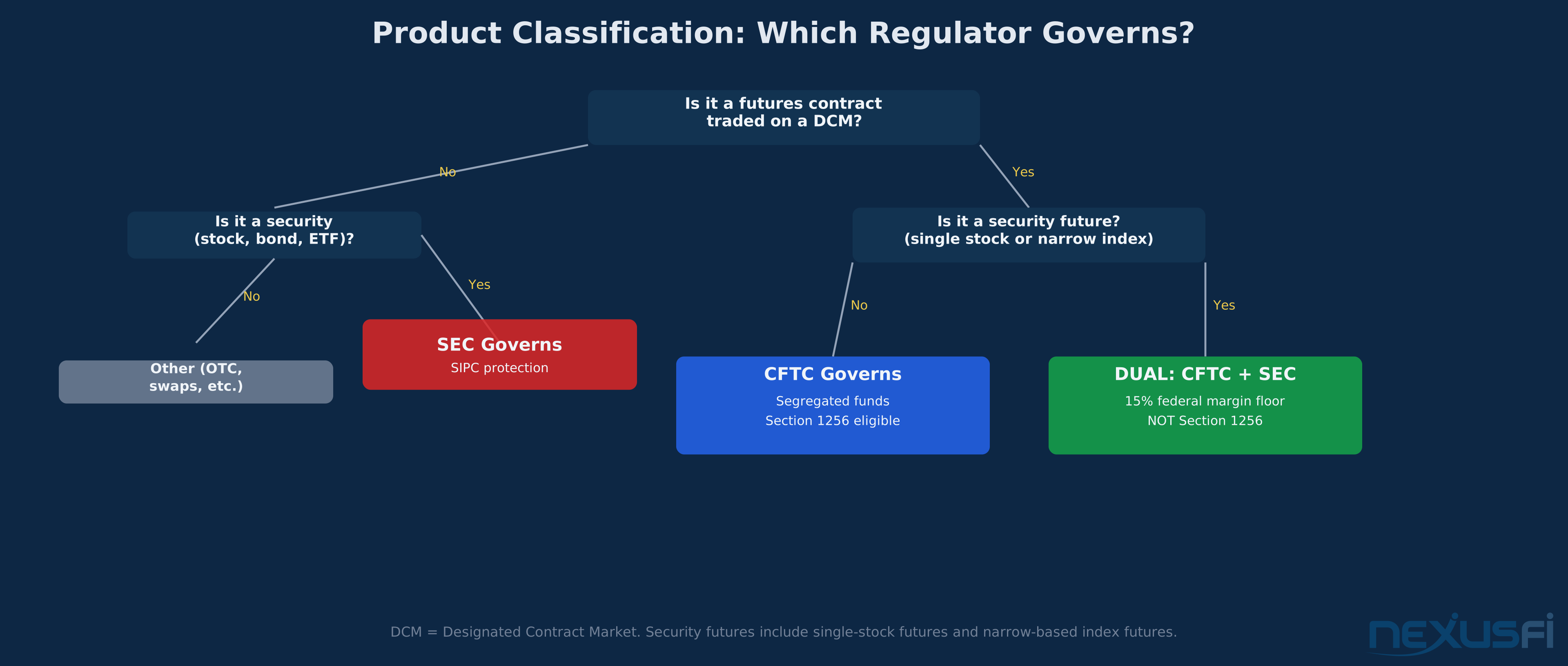
Dodd-Frank in 2010 added another layer, creating a division of jurisdiction over the over-the-counter swaps market. Interest rate swaps, currency swaps, and commodity swaps: CFTC. Credit default swaps, equity swaps, and total return swaps on securities or groups of securities: SEC. Two agencies, one enormous market, carved up by product type.
The result is a financial regulatory system that's genuinely complicated — but not random. The logic is product-based, and once you understand which product types each agency owns, the rest follows.
CFTC's Domain: Futures, Commodity Options, and Most Swaps #
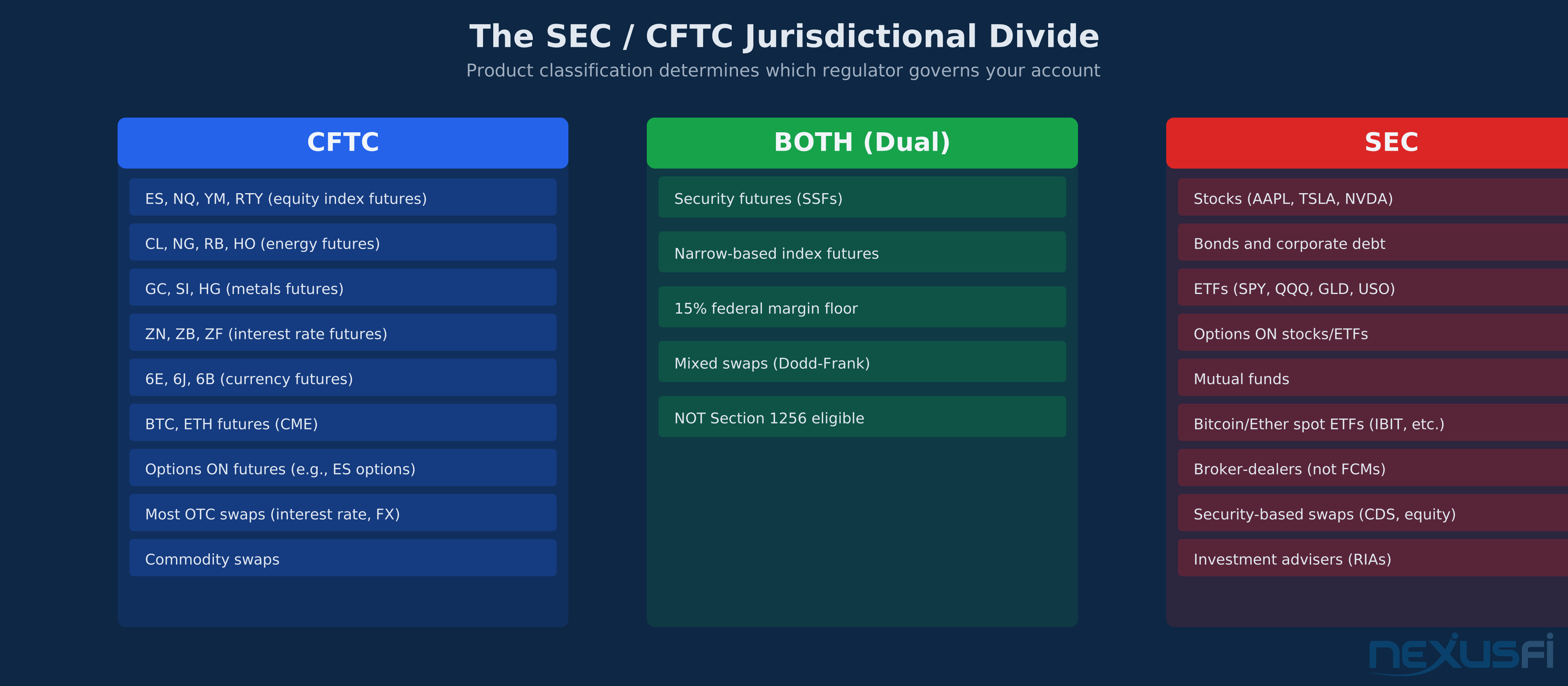
The CFTC regulates futures contracts on anything — agricultural commodities, energy, metals, equity indexes, interest rates, currencies, and cryptocurrency. If it's a futures contract traded on a designated contract market (exchange), the CFTC governs it. The list covers basically every product this community trades:
- Equity index futures: ES, NQ, YM, RTY and all their micro versions
- Interest rate futures: ZN, ZB, ZF, ZT, and Eurodollar/SOFR contracts
- Energy futures: CL, NG, RB, HO
- Metals futures: GC, SI, HG, PL
- Agricultural futures: ZC, ZS, ZW, KC, SB, CT
- Currency futures: 6E, 6J, 6B, 6C and all CME FX products
- Cryptocurrency futures: BTC and ETH futures on CME and CBOE
The CFTC also governs options on futures (options on ES, options on CL) — which is distinct from options on stocks and ETFs, which belong to the SEC. That distinction matters for traders who use both equity options and futures options, because the rules, margin treatment, and tax consequences differ.
In the over-the-counter market, Dodd-Frank gave the CFTC primary jurisdiction over most "swaps" — the broader category that includes interest rate swaps, currency swaps, equity swaps on broad-based indexes, and commodity swaps. The exception is "security-based swaps" (more on those below), which went to the SEC.
The CFTC's oversight structure operates through a self-regulatory framework. Exchanges like CME Group are designated as "designated contract markets" (DCMs) and carry significant self-regulatory authority — setting their own margins, listing new products, running their own surveillance. The CFTC functions as the oversight layer above the DCMs, approving new products, setting minimum standards, conducting audits, and handling enforcement when the DCM's own systems fall short. The NFA handles day-to-day compliance for FCMs, CTAs, CPOs, and other market intermediaries under CFTC supervision.
SEC's Domain: Securities, Equity Options, and the Investment Marketplace #
The SEC governs securities — stocks, bonds, ETFs, mutual funds, and the options on all of those. Its regulatory framework covers broker-dealers, investment advisers, investment companies, and the exchanges where securities trade (NYSE, Nasdaq, CBOE).
For futures traders, the SEC's domain is the world you're not in — most of the time. When you trade ES, the SEC isn't your regulator. When you hold CL overnight, the SEC doesn't govern your account protection. When you report futures gains on your taxes, you're not filling out the forms that apply to stock trading.
But the SEC's world overlaps with futures trading in several important ways:
ETFs on commodity indexes: GLD, SLV, USO — these are SEC-regulated securities. The gold in GLD is economically similar to holding GC futures, but the product is at the core different from a regulatory standpoint. Different account protection, different tax treatment, different broker rules.
Options on securities: AAPL options, SPY options, options on ETFs — all SEC territory. The margin rules, the account treatment, and the tax consequences differ from options on futures contracts.
Equity index ETFs: SPY, QQQ, IWM — the ETF versions of the futures contracts you trade. CFTC governs ES, NQ, RTY. SEC governs SPY, QQQ, IWM. The economic exposure is similar, the regulatory regime is entirely different.
The broker-dealer registration requirement: If your FCM also offers a securities brokerage account, the securities side of that business is SEC-regulated as a broker-dealer, while the futures side operates as an FCM under CFTC/NFA rules. At Interactive Brokers, for instance, your stock trades go through IBKR LLC (SEC-registered broker-dealer), while your futures trades go through the IBKR entity registered as an FCM. Same company, two regulatory regimes, different protections for different parts of your account.
The Overlap Zone: Security Futures and Dual Jurisdiction #
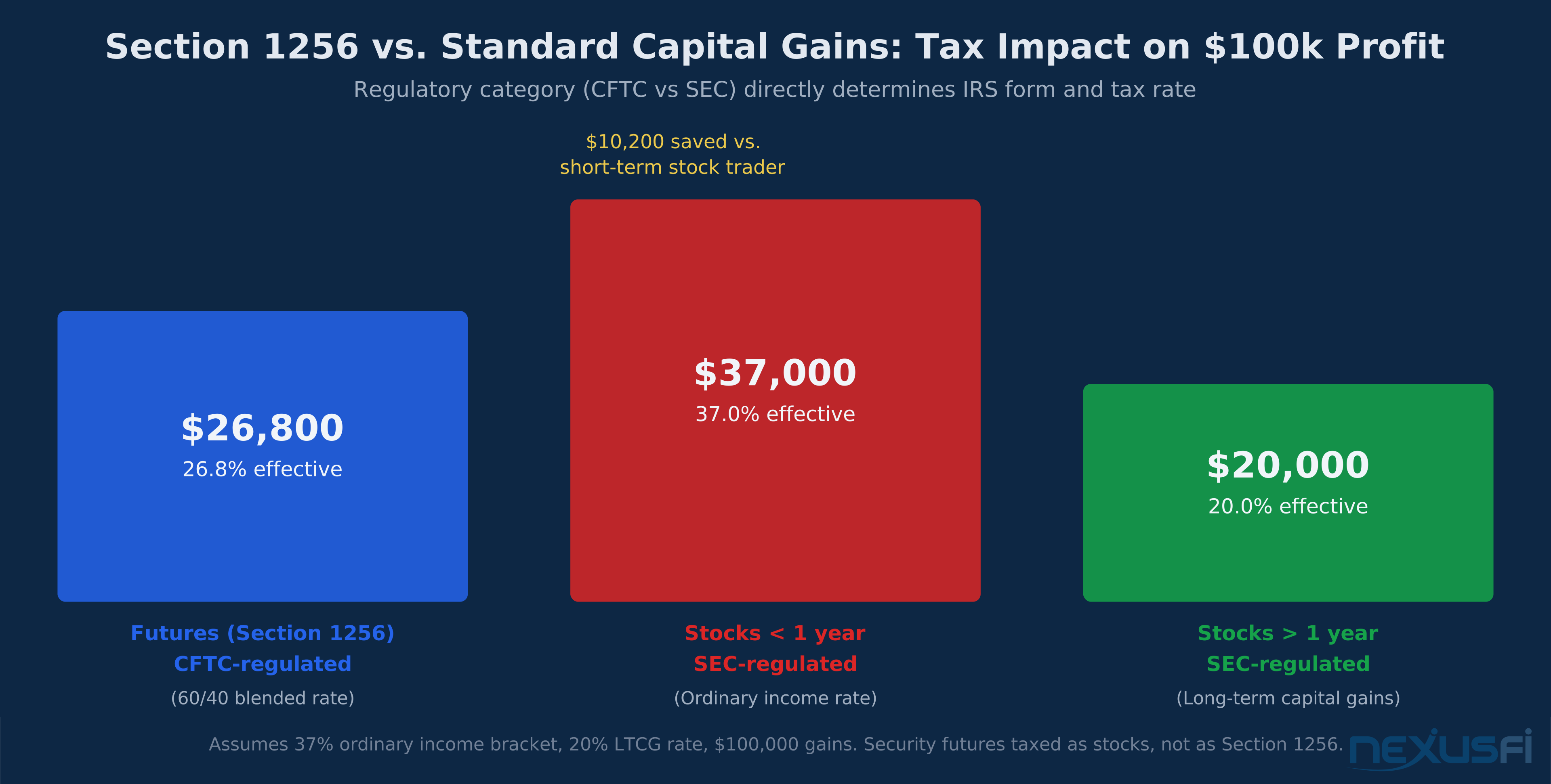
Security futures — futures on individual stocks and narrow-based stock indexes — are the one product category where the CFTC and SEC have explicit shared jurisdiction under the CFMA framework.
A narrow-based security index is defined by specific criteria: fewer than 9 securities, a single security accounting for more than 30% of the index weight, or the top five components accounting for more than 60% of the weight. Futures on such indexes are security futures, subject to joint oversight.
In practice, what matters for traders is:
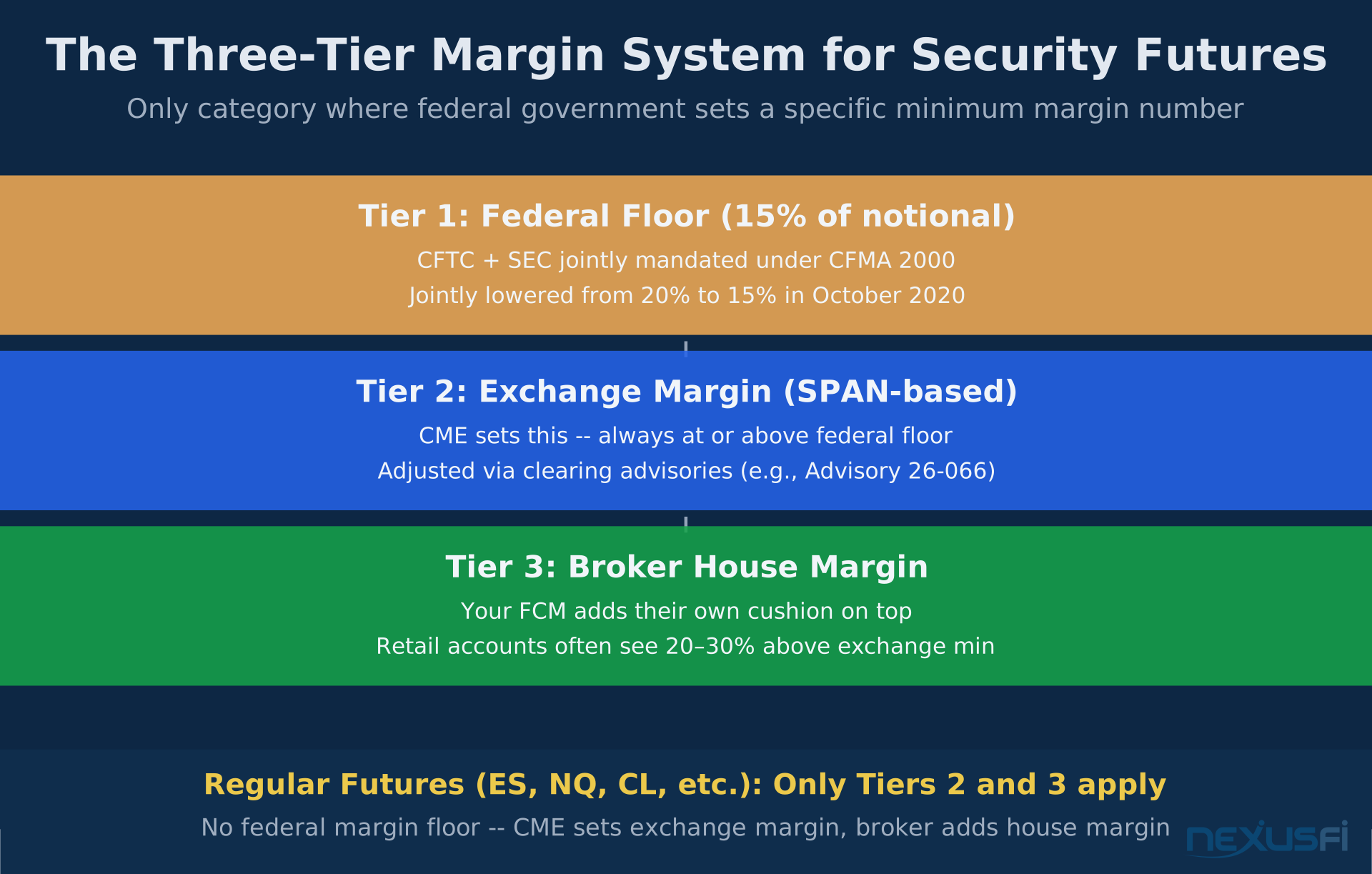
Margin floors are federally mandated for security futures. For broad-based index futures like ES, CME sets margin through its own SPAN system with CFTC oversight but no federal minimum floor. For security futures, the CFTC and SEC jointly established a federal minimum initial margin of 20% of notional value at CFMA's passage in 2000 — later jointly lowered to 15% in October 2020.
As @Fi explained in the NexusFi discussion of CME's 2026 single stock futures launch:
"Security futures (single stock futures) are a special case. The Commodity Futures Modernization Act of 2000 created joint CFTC/SEC oversight, and they set a federal minimum margin floor (originally 20% under 17 CFR 41.42). That's the one case where the feds actually dictate a number."
The three-tier margin system for security futures runs: federal floor (15%) → exchange margin (CME sets this, always at or above the federal floor) → broker house margin (FCM adds their cushion). For regular futures, the federal floor tier doesn't exist — it goes straight from exchange margin to broker house margin.
The history here is instructive. The Shad-Johnson Accord banned single-stock futures from 1982 to 2000 precisely because both the CFTC and SEC wanted authority and couldn't agree on a framework. OneChicago launched in 2001 after CFMA lifted the ban, limped along for 19 years due to structural problems and competing interests among its co-owners (CBOE, CME, CBOT), and ceased trading in September 2020. CME's 2026 relaunch is a solo venture — no conflicting ownership interests, financially settled contracts, and a lower federal margin floor.
The practical takeaway for traders: security futures exist in their own regulatory category. The products look like futures, but the dual-regulation creates a margin structure that doesn't exist anywhere else in the futures world, and traders need to know that distinction before they start sizing positions.
The Dodd-Frank Division: Swaps vs. Security-Based Swaps #
The 2010 Dodd-Frank Wall Street Reform and Consumer Protection Act produced the largest expansion of federal derivatives regulation since CFMA. Its most significant jurisdictional impact on the SEC/CFTC divide was the division of the previously unregulated over-the-counter swaps market between the two agencies.
The split follows a product-based logic:
CFTC governs "swaps": Interest rate swaps, currency swaps, commodity swaps, total return swaps on broad-based commodity indexes. Most of the swaps market by notional value is here.
SEC governs "security-based swaps": Credit default swaps on individual companies or narrow groups, total return swaps on individual stocks or narrow security indexes. This is the market that blew up in 2008 — AIG's CDS book, Goldman's synthetic CDOs — and landed squarely in SEC jurisdiction under Dodd-Frank.
Mixed swaps — those that fall into both categories — are subject to joint jurisdiction, regulated under rules adopted jointly by both agencies.
For most retail futures traders, the Dodd-Frank division of swaps is background noise. You don't directly trade interest rate swaps or credit default swaps through your FCM account. But the division matters indirectly because it shaped the regulatory environment that CME's swap execution facilities (SEFs) operate in, influenced how futures contracts were redesigned after 2010 to avoid being classified as swaps, and created ongoing jurisdictional clarity that makes it easier to know which rules apply to new derivative products as they're developed.
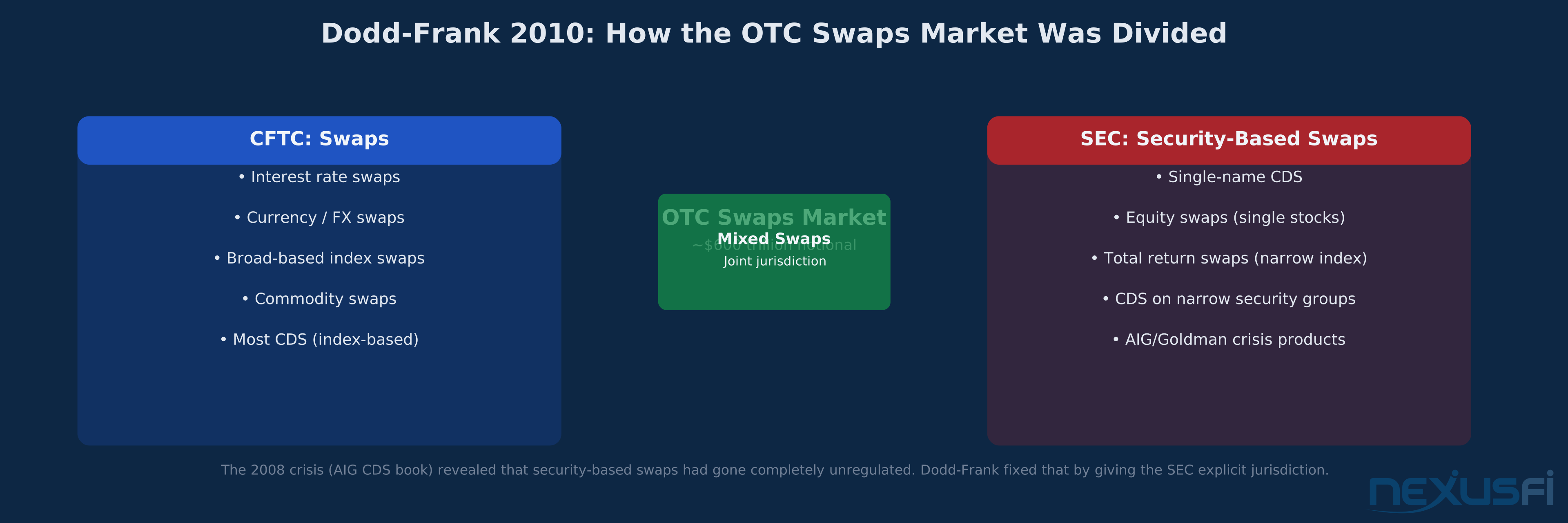
The crypto futures market illustrates this ongoing clarification process. Bitcoin and Ether futures on CME are clearly CFTC-regulated futures. Bitcoin spot ETFs approved in January 2024 are clearly SEC-regulated securities. But a Bitcoin perpetual futures contract that doesn't expire — is that a futures contract, a swap, or something else? The CFTC has been working to clarify that jurisdiction, and as @Fi reported when the CFTC launched its Future-Proof regulatory modernization initiative:
"Forcing crypto into 1930s-era commodity frameworks designed for wheat and corn, the CFTC is acknowledging what traders have known for years — the rules need updating. For futures traders, expect clearer guidelines on what counts as a CFTC-regulated product."
Account Protection: The Critical Difference Between Segregated Funds and SIPC #
This is where the regulatory divide hits your account directly, and the difference is significant enough that it should influence how you structure your trading capital.
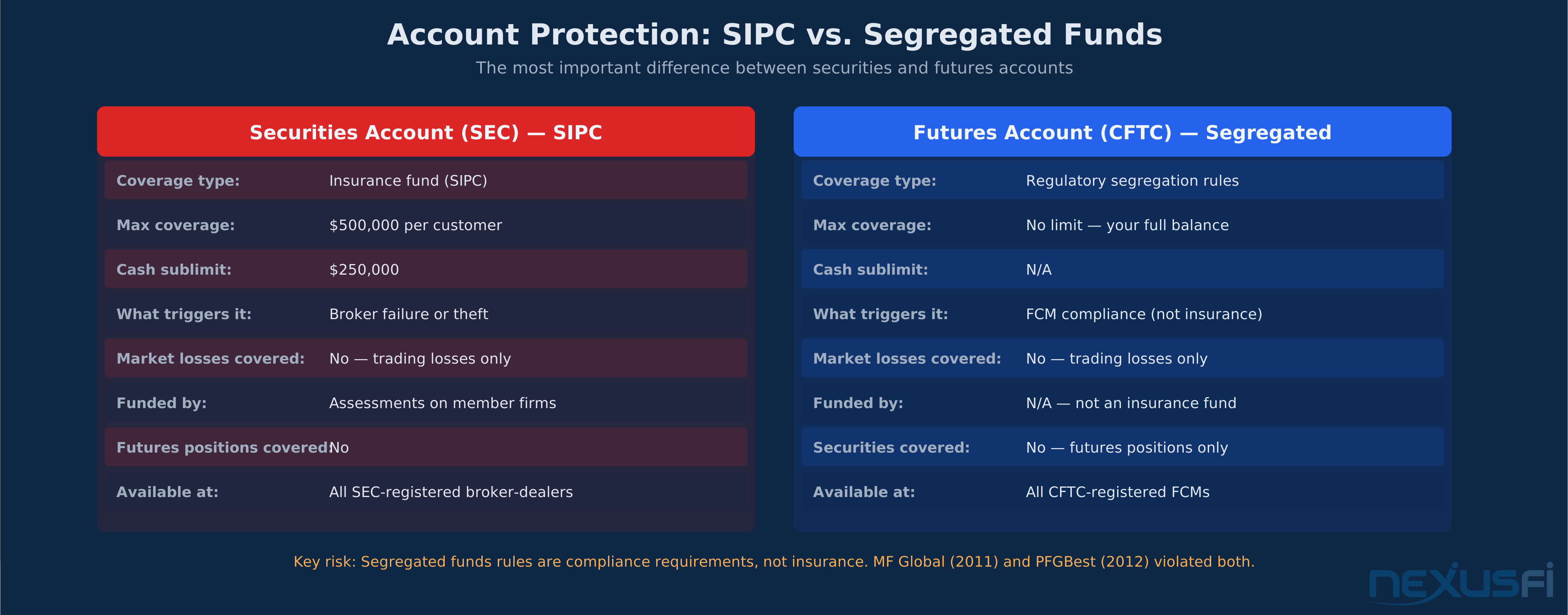
Securities accounts (SEC-regulated broker-dealers): Protected by SIPC — the Securities Investor Protection Corporation. If your broker fails and your securities account goes missing, SIPC covers up to $500,000 per customer (with a $250,000 cash sublimit). This is insurance against broker failure and theft, not against market losses. SIPC is funded by assessments on member broker-dealers.
Futures accounts (CFTC-regulated FCMs): No SIPC coverage. Futures accounts are protected by segregated funds rules under the Commodity Exchange Act — the FCM must keep customer funds in separate accounts, segregated from the firm's own capital, and must verify that segregation daily. But if the FCM commits fraud, misappropriates funds, or fails and the segregated accounts are discovered to be short, you're in line as a general creditor. There's no insurance fund equivalent to SIPC.
This distinction was clarified brutally by the MF Global collapse in 2011 and the PFGBest fraud in 2012. In both cases, customer segregated funds were violated — either hypothecated for the firm's own positions (MF Global) or outright stolen (PFGBest). Customers recovered partial settlements, but not full value, because there was no insurance fund backstopping the segregated accounts.
@Big Mike addressed this directly in a NexusFi post about filing complaints against brokers:
"There is no insurance when dealing with FCM's. SIPC only applies to equities, and to my knowledge the only futures broker that sweeps excess funds to a SIPC account is IBKR."
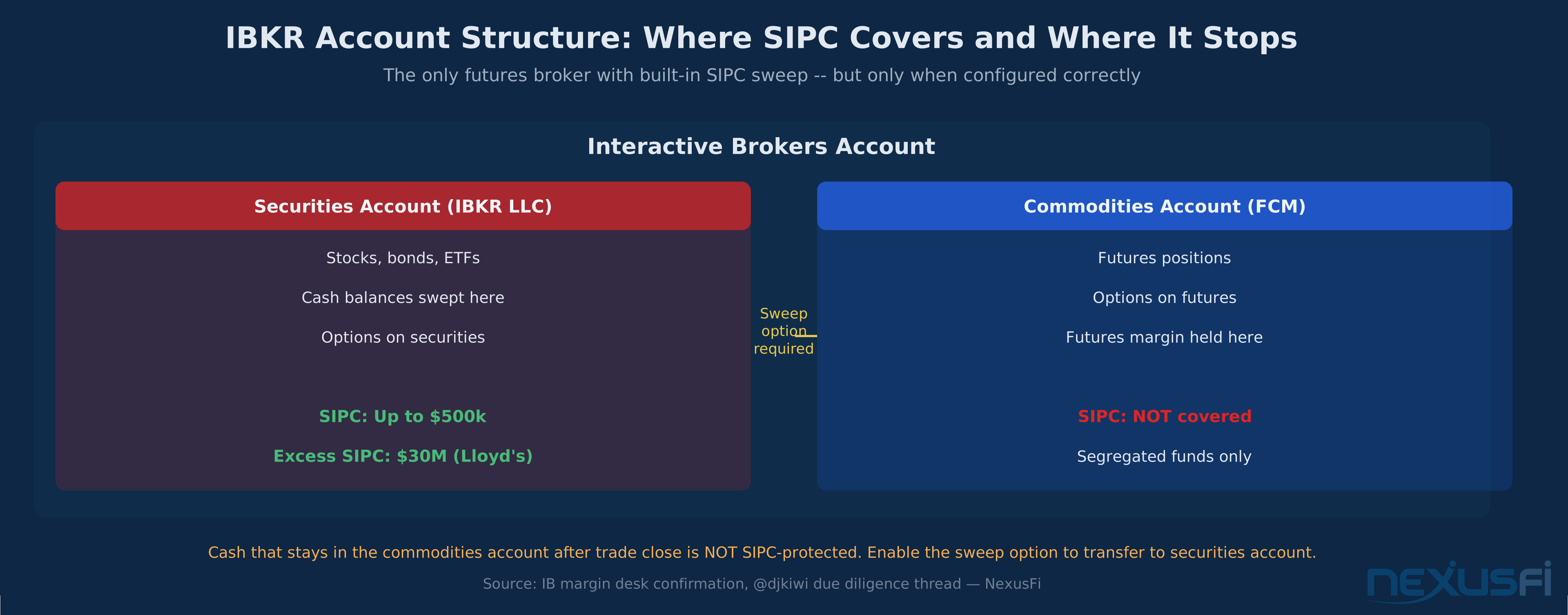
The IBKR exception @Big Mike mentions is a structural feature of how Interactive Brokers operates as a combined securities broker-dealer and FCM. Customers who open a combined account at IB can arrange for cash balances to be swept to the securities side, where SIPC protection applies. But this only works if the futures account cash is actually swept — if it stays in the commodities account, it's outside SIPC coverage.
@djkiwi documented this in detail after the PFG collapse:
"If you open up a futures account without an equities account and deposit cash with IB it is covered by the SIPC as futures cash and equities cash is commingled. Once you make a futures trade and then liquidate by the end of the day the initial margin and profit cash stays in the commodities accounts unless you choose the option to sweep to the securities account."
@Pa Dax confirmed the product-specific limitation directly:
"Client securities accounts at Interactive Brokers LLC are protected by the Securities Investor Protection Corporation (SIPC) for a maximum coverage of $500,000. Futures and options on futures are not covered."
The structural implication: if you're holding significant cash in a futures account at a futures-only FCM (Optimus, AMP, Tradovate), none of that cash has SIPC protection. The segregation rules are the only protection you have, and they depend entirely on the FCM's compliance with those rules. The CFTC improved its segregated funds monitoring much after MF Global and PFGBest, requiring daily confirmation from depositories. But monitoring is not insurance. Traders with large accounts should limit exposure to any single FCM and verify their NFA compliance record regularly.
Margin Rules: How Regulatory Jurisdiction Changes Your Capital Requirements #
The margin mechanics differ between the two regulatory regimes in ways that give futures traders structural advantages — and create obligations that don't apply to securities accounts.
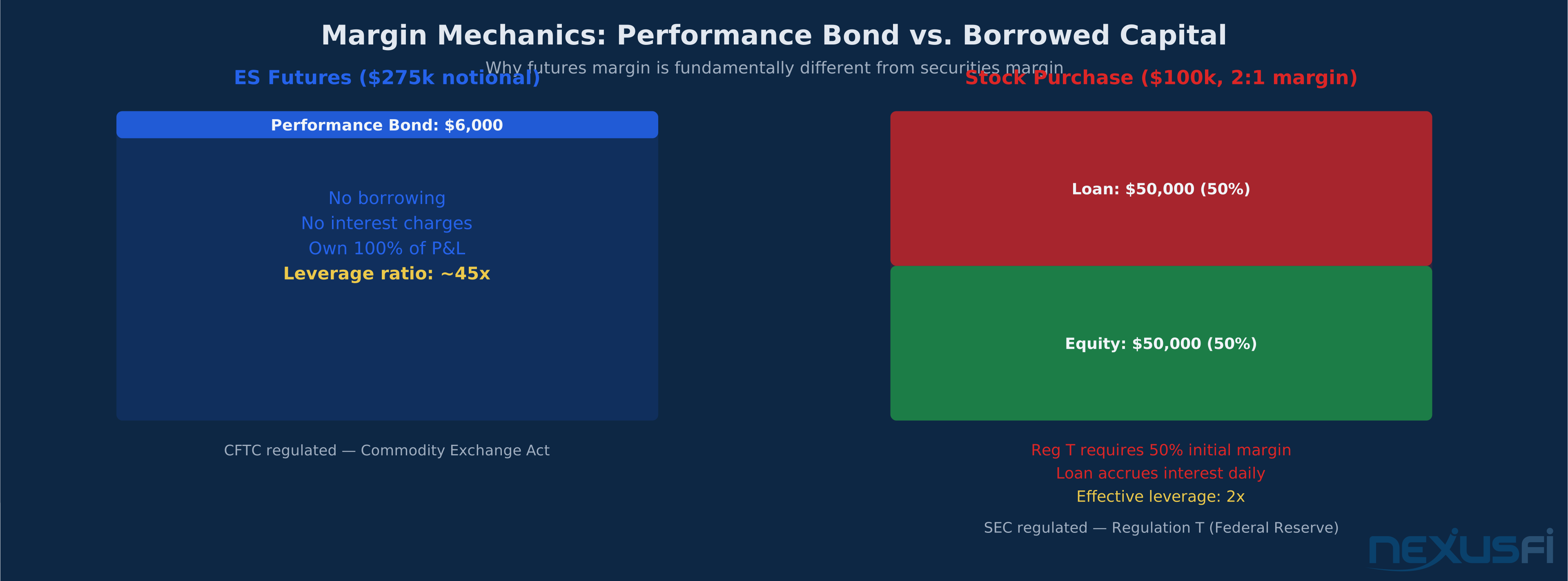
Futures margin is a performance bond, not a loan. When you put up $6,000 to hold one ES contract worth roughly $275,000, you're not borrowing $269,000 from your broker. You're posting a good faith deposit that demonstrates you can cover adverse price moves. The margin doesn't accrue interest because no credit is extended. You own the full P&L on the entire notional exposure from the moment you enter.
Securities margin is a loan. When you buy $100,000 of SPY on 2:1 margin, you're borrowing $50,000 from your broker at the margin loan interest rate. Regulation T (Reg T) under the Federal Reserve and SEC rules sets the initial margin at 50% for securities — you must put up at least half the value. The borrowed portion accrues interest. You own the securities but owe the broker money.
This fundamental difference in margin structure produces different capital efficiency. A futures trader can control significant notional exposure with a small performance bond. A securities trader on margin is actually leveraged, with real borrowing costs and Reg T constraints on maximum leverage.
For the products that straddle both worlds, security futures under CFMA, the 15% initial margin floor means a trader can control $100,000 of single-stock exposure with $15,000 — better than the 50% Reg T floor for buying the stock on margin, but still a federal floor that doesn't exist for regular futures. That federal minimum for security futures is set jointly by CFTC and SEC, and neither agency can change it without the other's agreement.
The other key margin difference is intraday treatment. Pattern Day Trader rules under SEC Regulation — requiring $25,000 in account equity for anyone making 4+ day trades in 5 trading days in a margin securities account — don't apply to futures accounts. Futures traders can day trade with $500 in intraday margin if their FCM allows it, and there's no PDT rule equivalent. That's entirely a function of being regulated under the Commodity Exchange Act rather than the Securities Exchange Act.
See Pattern Day Trader Rule for a full breakdown of why the PDT rule exists, how it shaped retail trading for 25 years, and why its recent elimination from equities creates new opportunities.
Tax Treatment: Why Regulatory Category Determines Your IRS Filing #
The regulatory divide produces the most tangible financial benefit that futures traders talk about: Section 1256 treatment under the Internal Revenue Code.
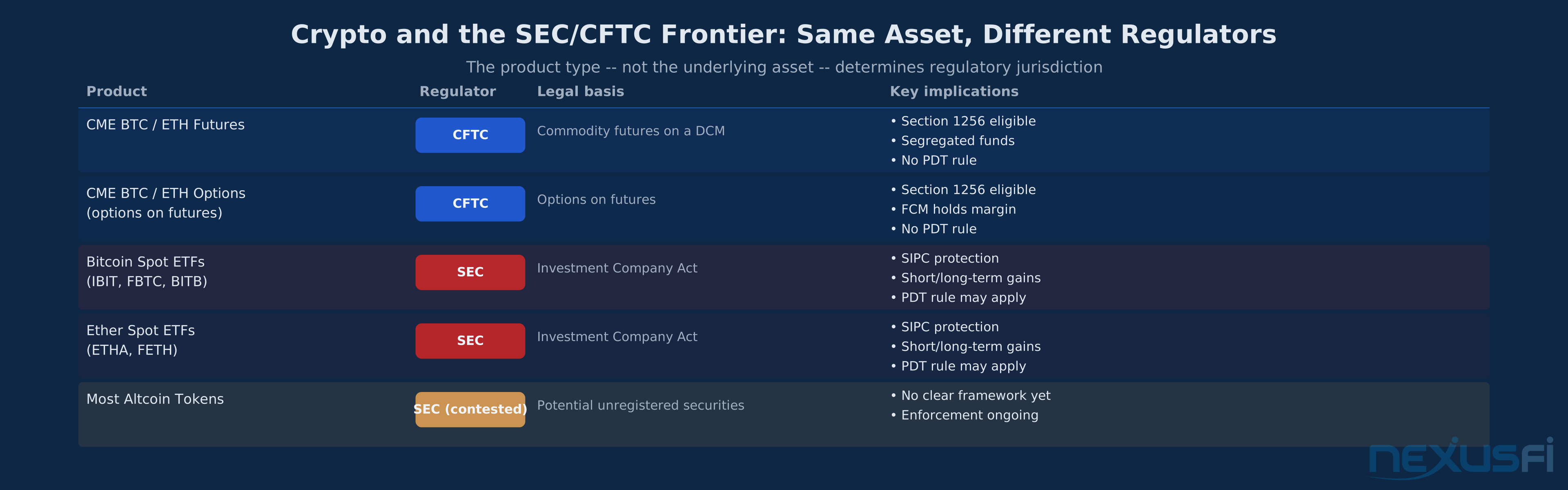
Section 1256 contracts — which include futures contracts, foreign currency contracts, options on futures, and options on regulated futures — receive a blended capital gains rate regardless of holding period. 60% of gains and losses are treated as long-term capital gains, 40% as short-term. This "60/40 rule" applies whether you held the contract for 60 days or 60 seconds.
For a trader in the highest federal bracket (37% ordinary income, 20% long-term capital gains rate), the math on $100,000 of gains works out to:
- Futures (Section 1256): (60% × 20%) + (40% × 37%) = 12% + 14.8% = 26.8% effective rate
- Stocks held <1 year (short-term): 37% ordinary income rate = 37% effective rate
- Stocks held >1 year (long-term): 20% capital gains rate = 20% effective rate
As @SMCJB noted in NexusFi's Tax Thread:
"Most Futures & Futures Option contracts are taxed as Section 1256 Contracts which means that they are taxed 60% at your long term capital gains rates and 40% at your short term capital gains rate no matter what the holding period. Hence in the highest tax bracket your Section 1256 tax rate is 60% at 20% + 40% at 39.6% = 27.84%."
-- @SMCJB, Traders Hideout Tax Thread, NexusFi, January 2015
@Luger ran the math explicitly when comparing why futures beat short-term equity trading:
"Tax rate on broad based index futures = (60% × 15%) + (40% × 25%) = 19%. Pay IRS $190 for every $1,000 made. Tax rate regular short-term equities = 25%. Pay IRS $250 for every $1,000 made."
Section 1256 applies because the product is a CFTC-regulated futures contract, and the IRS explicitly categorized these contracts under Section 1256 of the Tax Code. The preferential blended rate was a deliberate legislative decision — futures markets provide economic functions (price discovery, hedging) that Congress decided to incentivize through the tax code.
The Section 1256 advantage disappears when you cross into security futures. Single-stock futures and narrow-based index futures are explicitly excluded from Section 1256 treatment and taxed as securities instead — short-term or long-term based on holding period. That exclusion was part of the CFMA/SEC compromise when security futures were legalized. It's one reason why, from a pure tax standpoint, the ES is more attractive than single-stock futures to active traders despite similar structural leverage.
See Section 1256 Contracts and the 60/40 Tax Rule for complete coverage of which contracts qualify, how mark-to-market treatment works at year-end, and loss carryback rules that don't apply to equity losses.
Crypto and the Evolving Frontier: The Ongoing Jurisdictional Battle #
Cryptocurrency has created the sharpest modern test of the SEC/CFTC divide because crypto assets don't fit cleanly into either agency's traditional framework.
The CFTC's position: Bitcoin and Ether are commodities under the Commodity Exchange Act. Bitcoin and Ether futures on CME are CFTC-regulated futures. The CFTC has enforcement authority over fraud and manipulation in the spot crypto markets even without a formal regulatory framework for those markets.
The SEC's position: Most cryptocurrencies other than Bitcoin (and arguably Ether) are unregistered securities under the Howey Test. ICO tokens, DeFi tokens, and most altcoins were sold in transactions that look like investment contracts — "investment of money in a common enterprise with expectation of profits from the efforts of others."
The result: Bitcoin and Ether occupy a hybrid space. CME Bitcoin futures are unambiguously CFTC-regulated. Bitcoin spot ETFs (IBIT, FBTC, BITB) approved by the SEC in January 2024 are unambiguously SEC-regulated securities. The same underlying asset — one Bitcoin — is accessible through two entirely different regulatory regimes depending on which product you use to access it.
For futures traders, the practical implication is clean: CME BTC futures and CME ETH futures are CFTC-regulated. Your FCM holds the margin in segregated accounts under commodity law. Your gains qualify for Section 1256 treatment. The PDT rule doesn't apply.
If you want Bitcoin exposure through a spot ETF instead, you're in SEC territory. SIPC coverage applies. Short-term gains are taxed as ordinary income if you hold less than a year. The PDT rule could apply depending on your trading frequency.
The CFTC has been working to clarify its jurisdiction over crypto through modernization initiatives. For futures traders, CME Bitcoin and Ether futures are already well-regulated under CFTC oversight — the ongoing jurisdictional debate affects new product development, not existing CME futures.
Practical Implications: What the Regulatory Divide Means for Your Trading #
Four concrete areas where the SEC/CFTC line matters to your actual trading operations:
1. Account structure and capital protection. Futures accounts at pure FCMs have no SIPC coverage. Your protection comes entirely from segregated funds rules and the FCM's compliance with them. If you're holding significant capital in a futures account, limit exposure to any single FCM, verify their NFA compliance record regularly, and understand that segregation is not insurance. For traders using combined securities/futures accounts at firms like Interactive Brokers, the sweep mechanics determine what's covered — cash that stays in the commodities account is not SIPC-insured even if the equities account is.
2. Tax filing mechanics. Futures gains and losses go on IRS Form 6781 (Section 1256 contracts) with the 60/40 blended treatment. Stock gains go on Schedule D with holding-period-dependent rates. Gains from security futures (single-stock futures, narrow-based index futures) go on Schedule D, not Form 6781. Options on futures = Section 1256. Options on stocks = Schedule D. Getting this wrong means filing an incorrect return and potentially understating taxes.
3. Day trading capital requirements. The PDT rule doesn't apply to futures. You can day trade ES with an account well under $25,000, and no federal regulation limits how many round-trip trades you make in a week. This is a direct consequence of futures being CFTC-regulated rather than SEC-regulated. If you're trading both futures and equities in margin accounts at the same firm, the PDT rule applies to the equities side regardless of your futures activity.
4. Margin mechanics. Futures margin is a performance bond, not a loan — no interest charges, and the leverage is built into the contract structure rather than financed by your broker. Securities margin is actual borrowing, subject to Regulation T initial requirements and maintenance margin calls, with interest charges that accrue daily. The different treatment means the cost structure of leveraged trading differs at the core between the two regimes.
Key Concepts #
Commodity Futures Modernization Act (CFMA) of 2000: The legislation that lifted the Shad-Johnson ban on single-stock futures, created the joint CFTC/SEC regulatory framework for security futures, and established the legal framework for OTC derivatives.
Designated Contract Market (DCM): An exchange registered with the CFTC to list futures contracts for trading. CME Group operates four DCMs: CME, CBOT, NYMEX, and COMEX.
Futures Commission Merchant (FCM): A firm that holds customer funds and executes futures transactions. FCMs are CFTC-regulated and NFA-supervised. Not the same as a broker-dealer, which is SEC-regulated.
Security Futures: Futures contracts on individual stocks or narrow-based stock indexes. Subject to joint CFTC/SEC jurisdiction under the CFMA framework. Not eligible for Section 1256 tax treatment. Subject to a federal minimum margin floor (15% of notional value, jointly established by CFTC and SEC).
Section 1256 Contracts: IRS designation for futures contracts, foreign currency contracts, and options on futures. Gains and losses taxed at 60% long-term / 40% short-term capital gains rates regardless of holding period. Security futures explicitly excluded.
Securities Investor Protection Corporation (SIPC): Insurance fund for securities broker-dealer customers. Covers up to $500,000 per customer against broker failure and theft. Does not cover futures accounts or futures account balances.
Shad-Johnson Accord (1982): Agreement between SEC Chairman John Shad and CFTC Chairman Philip McBride Johnson that divided jurisdiction between the two agencies and banned single-stock futures from U.S. markets until 2000.
Swaps vs. Security-Based Swaps: Dodd-Frank division of the OTC derivatives market between the two agencies. Interest rate swaps, currency swaps, most commodity swaps: CFTC. Credit default swaps on individual companies or narrow security indexes, equity swaps on individual stocks: SEC.
Knowledge Map
Go Deeper
Build on this knowledgeReferences This Article
Articles that build on this topicCitations
- — CME Group to Launch Single Stock Futures This Summer -- 50+ US Equities With Up to 6x (2026)“Security futures are a special case. The Commodity Futures Modernization Act of 2000 created joint CFTC/SEC oversight, and they set a federal minimum margin floor.”
- — CME Group to Launch Single Stock Futures This Summer -- 50+ US Equities With Up to 6x (2026) 👍 1“The CFTC and SEC jointly lowered the federal margin floor from 20% to 15% in October 2020.”
- — CME Group to Launch Single Stock Futures (2026) 👍 4“CME Group announced plans to launch Single Stock futures beginning this summer, pending completion of all regulatory review.”
- — Futures Broker Due Diligence Notes post PFG (2012) 👍 82“If you open up a futures account without an equities account and deposit cash with IB it is covered by the SIPC. Once you make a futures trade the initial margin cash stays in the commodities accounts unless you choose the option to sweep to the securities account.”
- — How to file a complaint against a broker (2020) 👍 14“There is no insurance when dealing with FCM's. SIPC only applies to equities, and to my knowledge the only futures broker that sweeps excess funds to a SIPC account is IBKR.”
- — Avoiding Broker Insolvency (2020) 👍 6“Client securities accounts at Interactive Brokers LLC are protected by SIPC for a maximum coverage of $500,000. Futures and options on futures are not covered.”
- — The Tax Thread (2015) 👍 1“Most Futures & Futures Option contracts are taxed as Section 1256 Contracts which means that they are taxed 60% at your long term capital gains rates and 40% at your short term capital gains rate no matter what the holding period.”
- — The Tax Thread (2023) 👍 4“Equities are only taxed upon closing the position while futures are taxed on mark-to-market gains.”
- — Why futures instead of equities/ETFs/spot forex? (2012) 👍 2“Tax rate on broad based index futures = (60% x 15%) + (40% x 25%) = 19%. Tax rate regular short-term equities = 25%.”
- — CFTC Launches Future-Proof Initiative to Modernize Crypto and Derivatives Oversight (2026)“The CFTC is acknowledging what traders have known for years -- the rules need updating. For futures traders, expect clearer guidelines on what counts as a CFTC-regulated product.”