



ES (E-mini S&P 500) Futures Trading Strategies: The Complete Playbook
Overview #
The E-mini S&P 500 (ES) is the most liquid futures contract on earth. On a typical session, ES trades over $200 billion notional — more than most stock markets combined. That liquidity creates a structural reality: ES reflects the sum of every institutional, algorithmic, and retail participant's view on the S&P 500, which means no single edge lasts forever and regime-dependent strategy selection is not optional.
Every ES trader eventually discovers the same thing: the contract doesn't have one strategy. It has one framework. That framework — built around day type identification, VWAP context, volume profile structure, and session timing — governs which specific setups have edge at any given moment. Traders who run a single setup in all conditions find ES punishing. Traders who read regime first, then apply the right tool, find ES remarkably consistent.
This article maps that framework: how to classify the day type you're in, which strategies work in each type, how to use VWAP and volume profile as your navigation system, and how to size positions when volatility shifts. ES is a different animal from NQ — more forgiving on magnitude, more demanding on timing precision.
What Makes ES the Benchmark Contract #
ES is the institutional benchmark. Every large fund that hedges equity exposure — every options market maker managing delta — does it through ES. This means its price discovery is cleaner and its technical levels hold with higher reliability than any other equity index future.
Contract specifications: each ES tick is $12.50, moving in 0.25-point increments. Daily ATR runs from roughly $1,500 in low-volatility (VIX ~12) conditions to over $5,000 in crisis periods (VIX ~35+). The Micro E-mini S&P 500 (MES) is ES at 1/10th scale: same tick size, worth $1.25 per tick. MES is how traders with smaller accounts build skill in the same market with proportional dollar exposure.
Why ES over other equity index futures? Three reasons: liquidity (fills are cleaner than NQ, YM, or RTY at any size), information density (responds to every macro event in a measured and readable way), and stability (no single-stock event risk from one dominant holding). ES is the calmer, more broadly driven contract — which makes it more amenable to systematic strategy-building.
Day Type Identification: The Foundation of Everything #
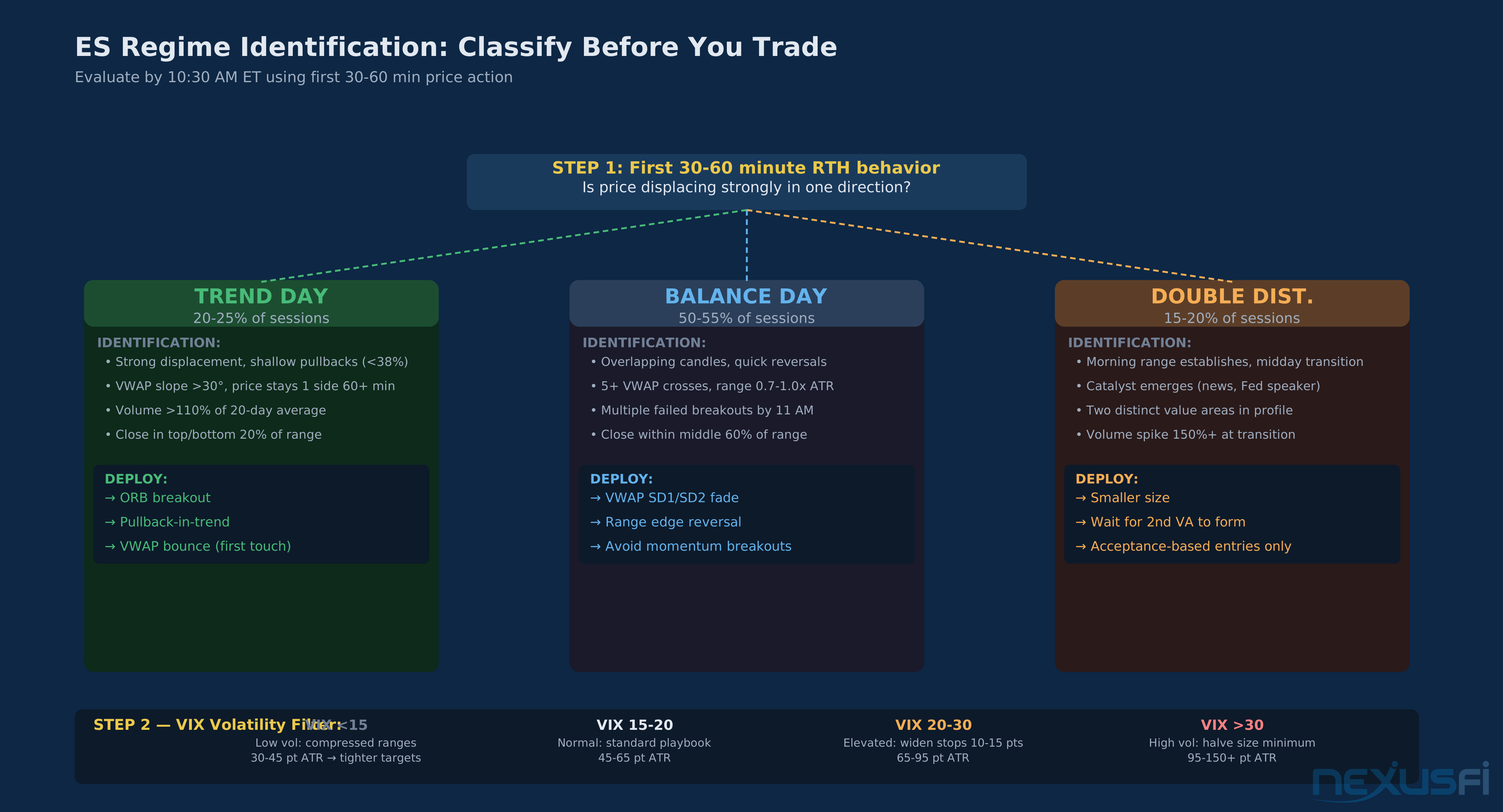
Before any ES setup is valid, you need to identify what kind of day you're in. Running an Opening Range Breakout on a balance day is as productive as running a range-fade on a trend day: both create structurally avoidable losses.
The full taxonomy: Range Day, Upside Trend Day, Downside Trend Day, Upside Breakout Day, Downside Breakout Day, False Upside Breakout Day, and False Downside Breakout Day. Seven types. The critical split: trend versus balance.
The statistics from @runner's market data research:
The OAIR/OAOR framework is the most reliable early-session day type indicator available. If ES opens inside yesterday's RTH range, you're in a balance-day context 80% of the time. If it opens outside, you're in a trend-day context 80% of the time. This reading happens in the first 30 seconds of RTH.
VWAP confirms over the next 30-60 minutes. On a trend day, price holds on one side of VWAP. On a balance day, it crosses VWAP repeatedly:
The day type checklist at the open:
- OAIR or OAOR? Is today's RTH open inside or outside yesterday's RTH range?
- Gap: Gap up, gap down, or flat vs. yesterday's close? Calculate gap as % of yesterday's ATR.
- VWAP relationship at 9:45 AM: Holding above or below VWAP, or already crossed twice?
- $TICK reading: 21EMA of $TICK staying directional or oscillating around zero?
- First 15-min range vs prior ATR: Over 40% of prior ATR in first 15 minutes? Trending conditions developing.
At 10:30 AM your hypothesis becomes a commitment. Don't reassign day type after 11:00 AM unless an extraordinary trigger changes the session character.
Core Strategy #1: VWAP Pullback on Trend Days #
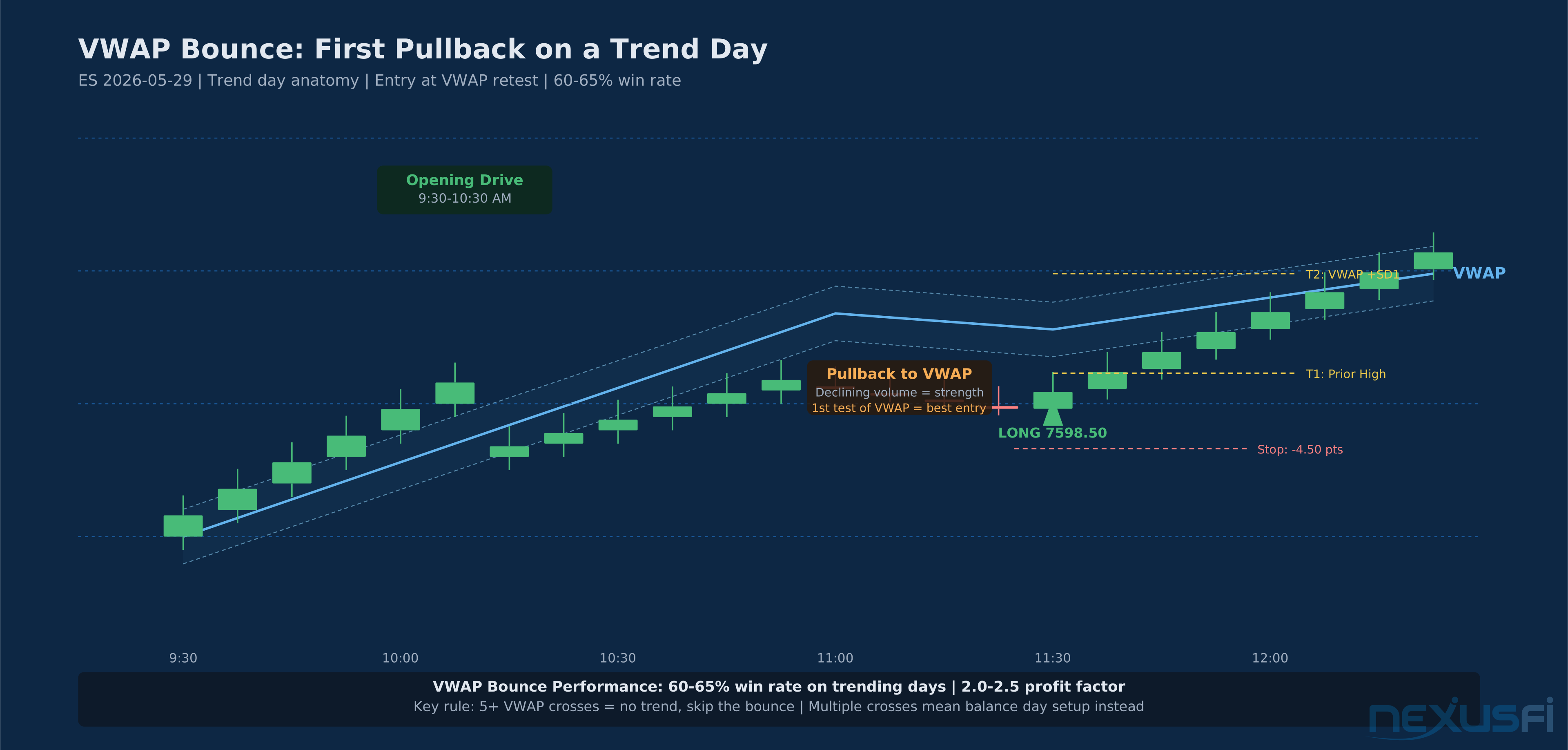
On trend days, VWAP is not a fade target — it's an entry point. In a balance environment, you fade VWAP extensions back toward the mean. In a trend, you buy VWAP pullbacks in the direction of the trend.
The logic: institutional buyers accumulate at fair value (VWAP) on trend days. They don't chase rallies — they wait for pullbacks to VWAP to add size. When retail sellers short the extension expecting a fade, institutional buyers absorb those sales at VWAP and continue pressing price. The pullback to VWAP isn't the reversal; it's the reload.
The VWAP pullback entry sequence on a bullish trend day:
- Confirm trend day: Price above VWAP since open. $TICK 21EMA positive. OAOR opening.
- Wait for first pullback to VWAP: First pullback to VWAP generates the highest win-rate entry of the session (60-65%).
- Entry: Buy at VWAP ± 2-3 ticks. Enter at the level, not after a bounce confirmation -- waiting for bounce means giving up half the risk/reward.
- Stop: 6-8 ticks below VWAP (a close below VWAP SD-1 invalidates the trend thesis).
- Target: Prior swing high, or 2x stop distance minimum. On strong trend days, trail the VWAP as price extends.
- Count pullbacks: First pullback: 60-65%. Second: ~55%. Third and fourth: below 45% -- skip without strong volume support.
The VWAP SD bands provide additional precision. @JonnyBoy's systematic ES framework:
SD-1 is secondary support on trend days; SD+1 is the breakout confirmation level. When price holds SD+1 on a pullback instead of returning all the way to VWAP, that signals stronger conviction and a tighter stop than the VWAP touch itself.
Core Strategy #2: Opening Range Breakout with Acceptance Filter #
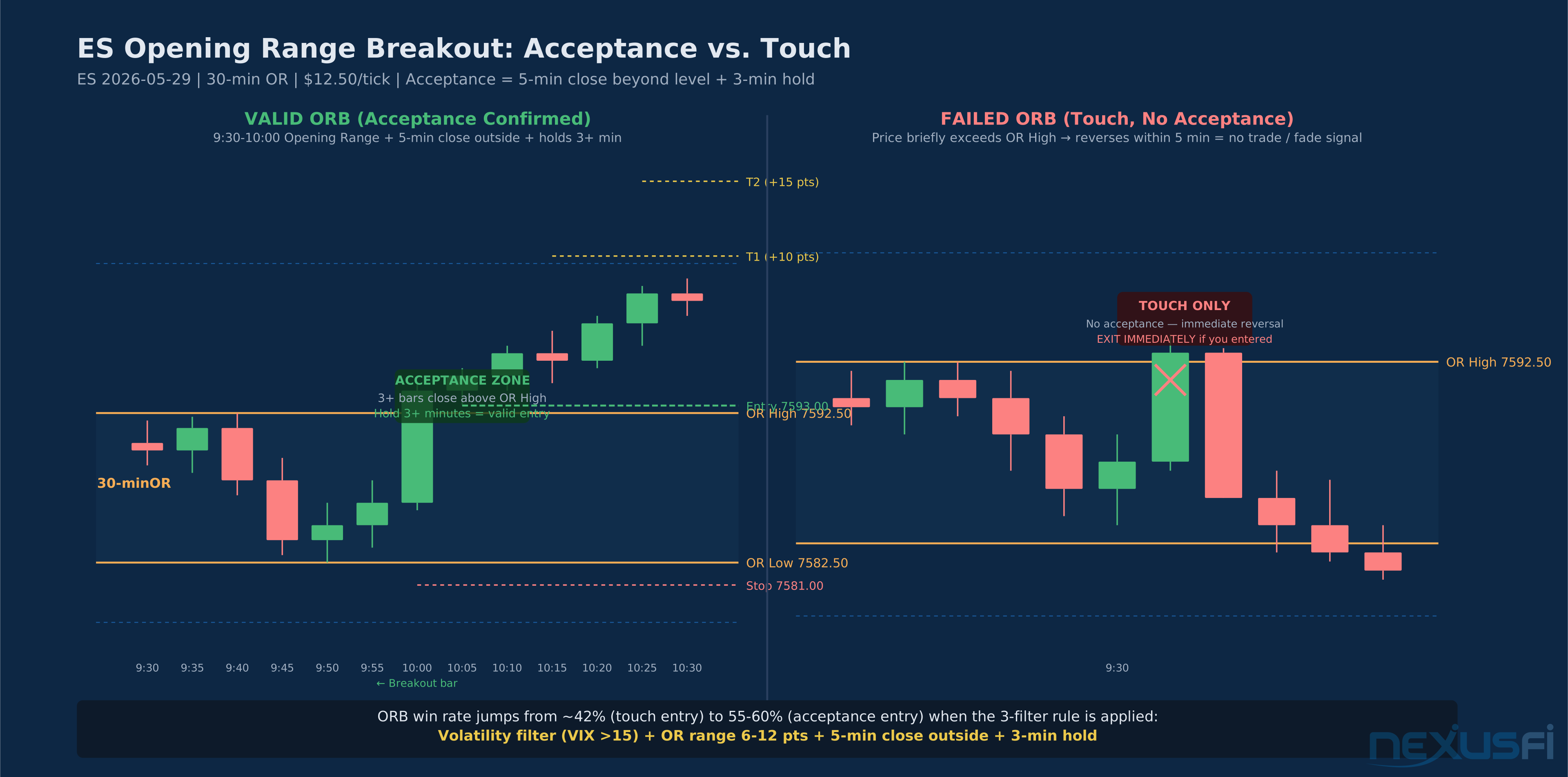
The ORB is one of the most documented ES strategies — and one of the most misapplied. Traders enter on a price touch of the ORH or ORL, collect false breakouts 40-50% of the time, and conclude it doesn't work. The acceptance filter is the fix.
The acceptance filter: don't enter on a touch of ORH/ORL. Wait for a 5-minute candle close above ORH (or below ORL), then a 3-minute hold without rejection back inside the range. This adds 8 minutes of patience but raises win rate from ~42% (touch entry) to 55-60%.
Large institutional order flow doesn't probe a level — it consumes it. A genuine ORH breakout closes 2-4 ticks above the high with volume expanding. A false breakout spikes above, closes back inside, and returns to VWAP. The acceptance filter mechanically separates these two scenarios.
ORB variants by day type:
- Trend day ORB: Price breaks ORH with strong $TICK (+800 to +1200) and holds above. Target: prior day high or 1.5x opening range size. Stop: 6-8 ticks inside the ORH.
- Breakout day ORB: Price consolidates near ORH for 30-60 minutes, then breaks with volume expansion. The prolonged consolidation signals accumulation at the boundary.
- False breakout fade (range day): On OAIR days, early ORH breach with weak volume and $TICK near zero sets up the fade -- short the failure back inside, target VWAP. Win rate ~58% on confirmed range days.
Core Strategy #3: Balance Day Range Fade #
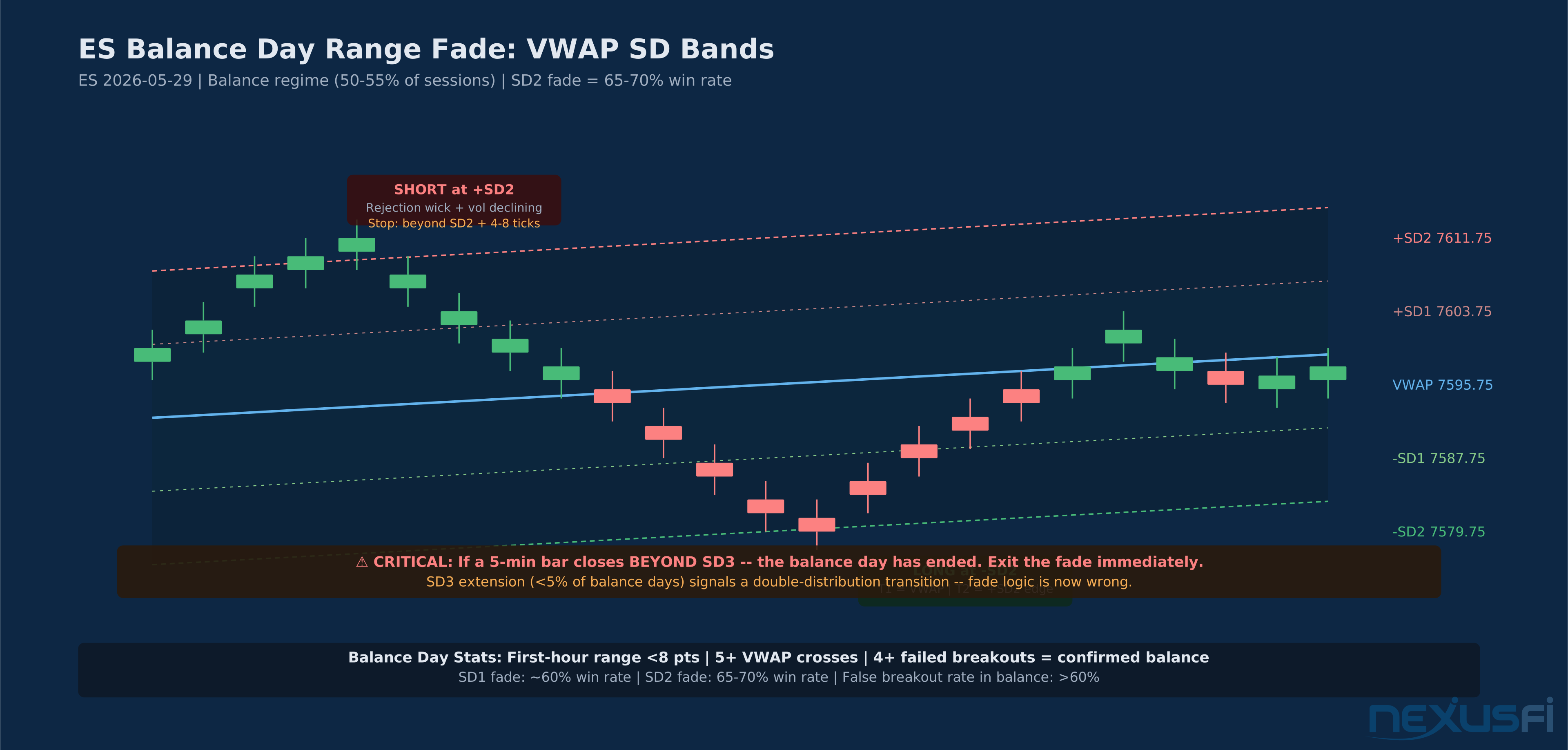
ES is in balance 50-55% of trading sessions. When you're not in a trend, the fade is the strategy. Price oscillates between VWAP SD bands, tagging one extreme and returning toward VWAP, then tagging the other side.
On a confirmed balance day:
- VWAP SD2 bands: Price tags +2SD or -2SD and reverses back toward VWAP with 65-70% probability. These are your primary fade entries -- the tag is the signal, not a bounce confirmation after the tag.
- SD1 as first target: Target VWAP or SD1 as your first exit. Extend to opposite SD2 only if the session range is developing unusually wide.
- Context required: A tag of SD2 on an OAIR day with $TICK oscillating around zero is a high-probability fade. A tag of SD2 on a breakout day with $TICK surging is a false fade -- you're shorting institutional buying at the VWAP extension, not a range extreme.
The volume profile adds precision. On a range day, the developing POC drifts toward the center of the developing range. The triple confluence — VWAP extension, SD2 tag, and large distance from POC — is the highest-probability fade setup in ES trading.
Volume Profile Context: The Pre-Session Map #
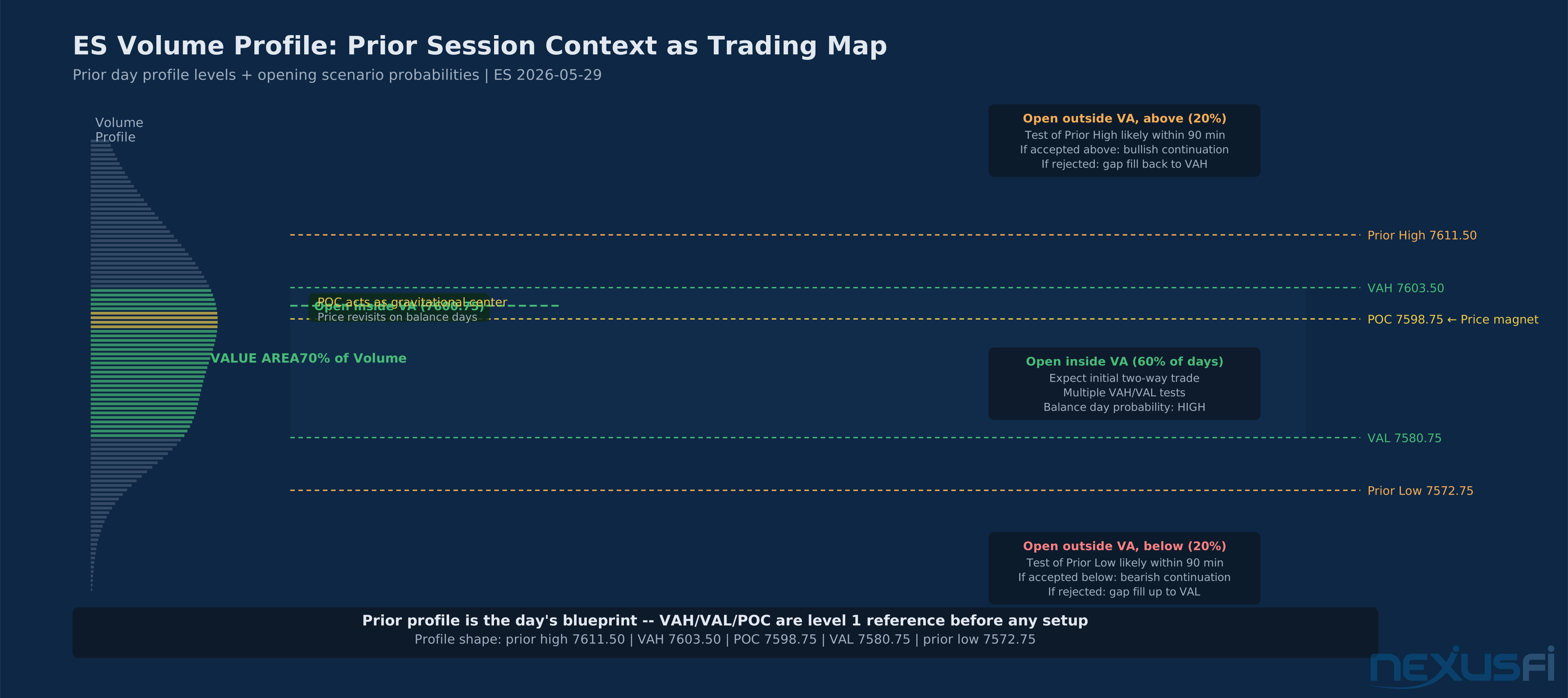
Volume Profile provides the structural map that contextualizes all ES intraday strategies. The three critical pre-session levels: prior day Value Area High (VAH), Value Area Low (VAL), and Point of Control (POC).
Opening scenario framework:
- Open inside prior VA (60% of sessions): Balance day probable. Strategy: range fade, VWAP-centric trades, SD2 fades.
- Open above prior VAH (~20%): New higher value being established. Trend day up probable. Strategy: ORB long, VWAP pullback long.
- Open below prior VAL (~20%): Trend day down probable. Strategy: ORB short, VWAP pullback short.
The POC is the session's gravitational center. Price returns to the prior session's POC 70-80% of the time within two trading days. When ES gaps much above or below the POC, that return is one of the most reliable intermediate-term trades available. Know where the prior session's POC is before the open.
The developing POC during RTH reveals accepted value. When price runs away from the developing POC, value is not being accepted at extended prices — reversion becomes increasingly likely. When price holds near the POC repeatedly, that level strengthens for the rest of the session.
The Two-Leg Pullback: Structural Entry Pattern #
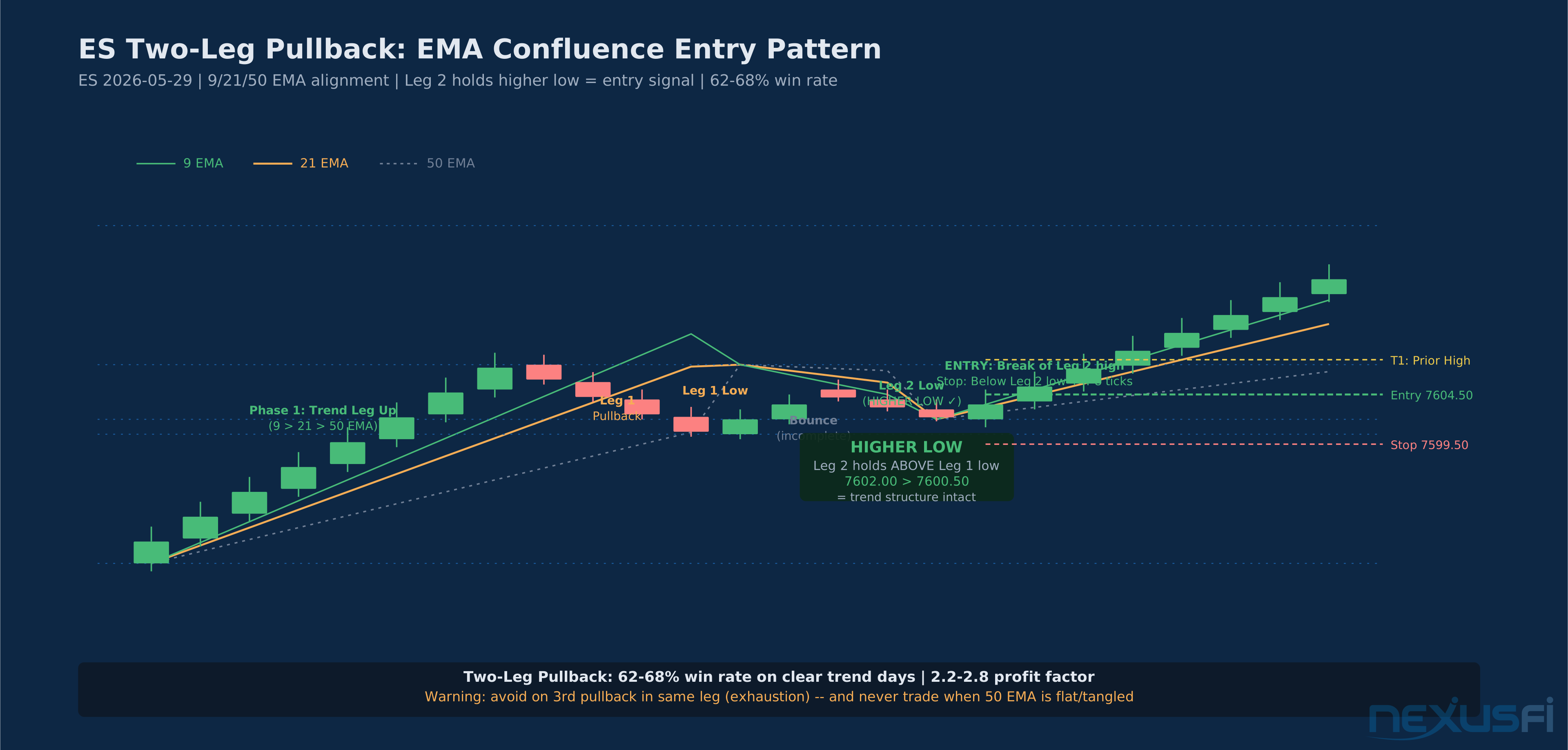
The two-leg pullback is the highest-edge entry pattern for ES trend day trading. Instead of entering on the first pullback — potentially premature when institutional selling is still working — you wait for the second leg to complete a structure that confirms the pullback is exhausted.
The pattern sequence:
- Trend day confirmed: price above VWAP, $TICK positive, OAOR opening.
- First leg up: ES rallies 8-12 points from the open.
- First pullback (Leg A down): ES sells back 5-8 points, making a swing low.
- Partial bounce: ES rallies partway but fails to make a new session high -- pullback not yet finished.
- Second pullback (Leg B down): ES sells again, ideally making a higher low than Leg A -- confirming demand is absorbing supply at progressively higher levels.
- Entry: Buy the second leg low at the higher low, or as price turns up with a volume confirmation bar.
- EMA confluence: Cleanest when the 9 or 20-period EMA aligns with the structural higher low. Two levels of confluence at the same point produce higher win rate than either alone.
A single-leg pullback might still have residual institutional selling. The second leg exhausts that supply and proves buyers are absorbing it at a higher level. The higher low structure is the market's own evidence that demand exceeds supply at that price level — the cleanest signal in trend day trading.
Win rate on two-leg pullbacks in confirmed trend days: 62-68%. Stop: below the second leg low. A breach below Leg A's low invalidates the entire higher-low structure. Risk is defined by the market's own structure, not an arbitrary tick count.
Overnight Gap Classification and RTH Strategy #
Every ES session begins with a gap decision. The gap — distance between yesterday's RTH close and today's RTH open — determines opening scenario probability. Getting this wrong is the most common first mistake of the trading day.
Gap classification:
- Small gap (under 0.3% / ~15-20 ES points): Fill probability 70-75%. Fade it: short into the gap direction with a 6-8 tick stop above overnight high. Target: prior RTH close.
- Medium gap (0.3-0.6% / 20-40 ES points): Fill probability 55-60%. Ambiguous -- use OAIR/OAOR to confirm. If opening inside prior VA, fade. If outside prior VA, don't fade.
- Large gap (over 0.6% / 40+ ES points): Fill probability drops to ~40%. A gap larger than the overnight range signals new-regime price discovery. Never fade mechanically -- wait for RTH acceptance or rejection of the gap level.
- News-driven gap: CPI miss, FOMC surprise, geopolitical event. No statistical fill probability applies. Wait for structural confirmation: VWAP relationship and $TICK context after RTH opens.
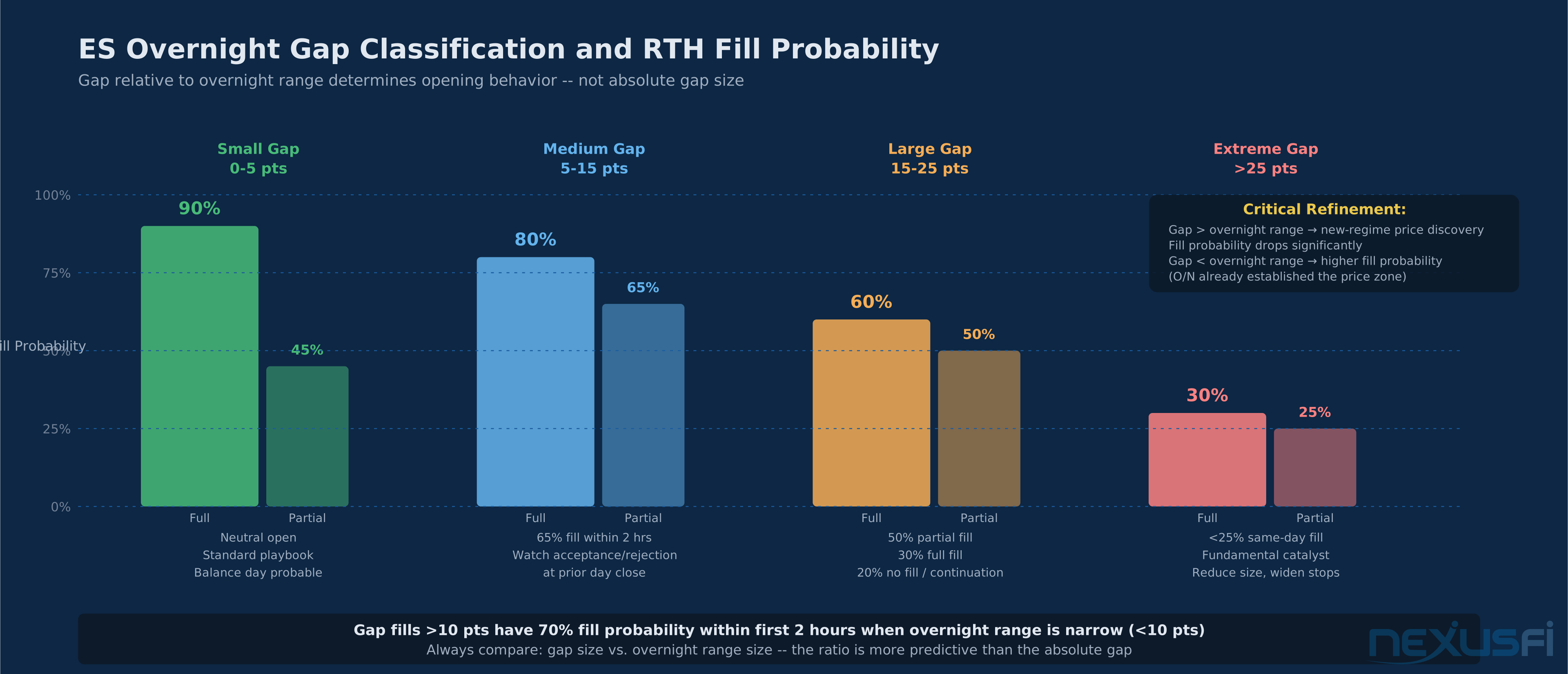
The small gap fill trade: ES gaps up, immediately sells back toward the prior close as overnight longs take profits. Enter short 2-3 ticks below the open, stop above overnight high, target the prior close or VAL. Fill happens within the first hour ~70% of the time on small gaps in confirmed range-day context.
Session Structure: When Volume Concentrates #
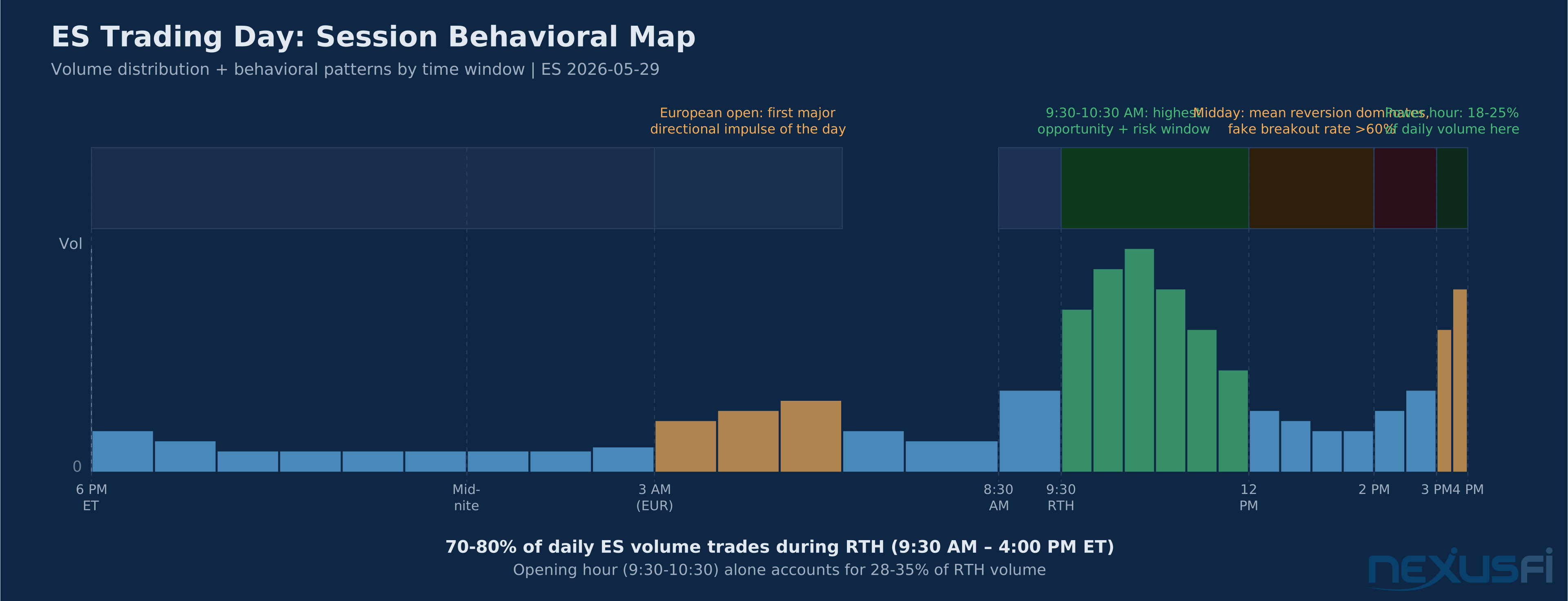
ES is an all-day market (Globex trades 23 hours) but meaningful price discovery concentrates in RTH. Volume clusters in specific windows — trading outside these windows produces degraded signal quality.
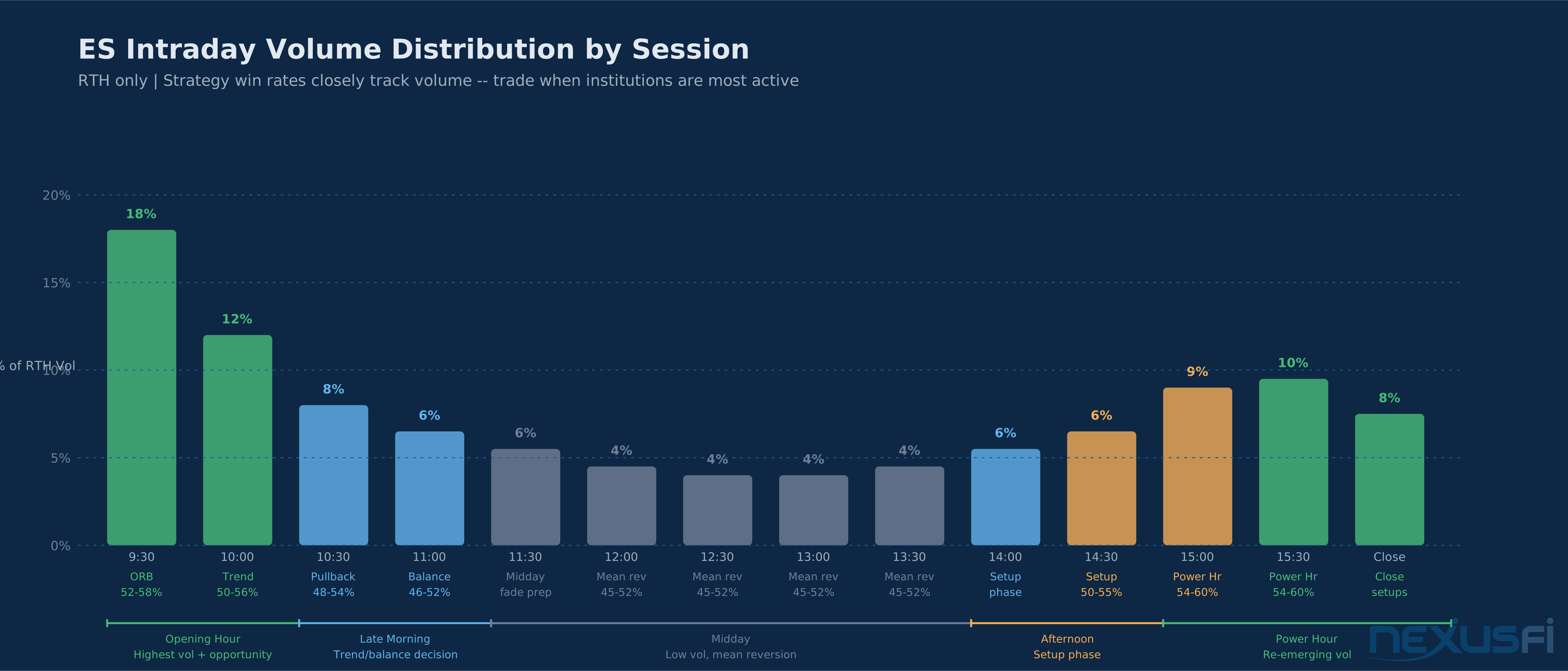
RTH open (9:30-10:00 AM): Highest average range window. 3-4x midday volume. Best setups: ORB on trend days, gap fade on range days, initial balance formation. Most volatile, highest opportunity, highest noise. Know your levels before this window opens.
Mid-morning (10:00 AM-12:00 PM): Second-best window. Economic data (CPI, PPI, jobs, PMI) and Fed speaker events concentrate here. Know the calendar — an unexpected 10:00 AM print resets whatever bias you established at the open. VWAP pullback and two-leg pullback setups are most executable during this window on trend days.
Lunch (12:00-1:30 PM): Volume drops to daily low. Most prone to false signals and low-conviction moves. Experienced ES traders reduce size dramatically or leave the screen entirely. If you must trade lunch, use MES and widen stops.
Afternoon (1:30-3:00 PM): Volume picks up as institutions prepare for end-of-day positioning. Federal Reserve speeches often land here. Watch for market structure additions on the right side of the day's developing range.
Power hour (3:00-4:00 PM): MOC orders, institutional rebalancing, and options gamma expiration concentrate here. ES often makes its session high or low in this window. The final 10 minutes (3:50-4:00) can produce rapid moves from passive fund rebalancing. Size down unless you have a specific thesis for holding through the close.
Position Sizing for ES: The ATR Framework #
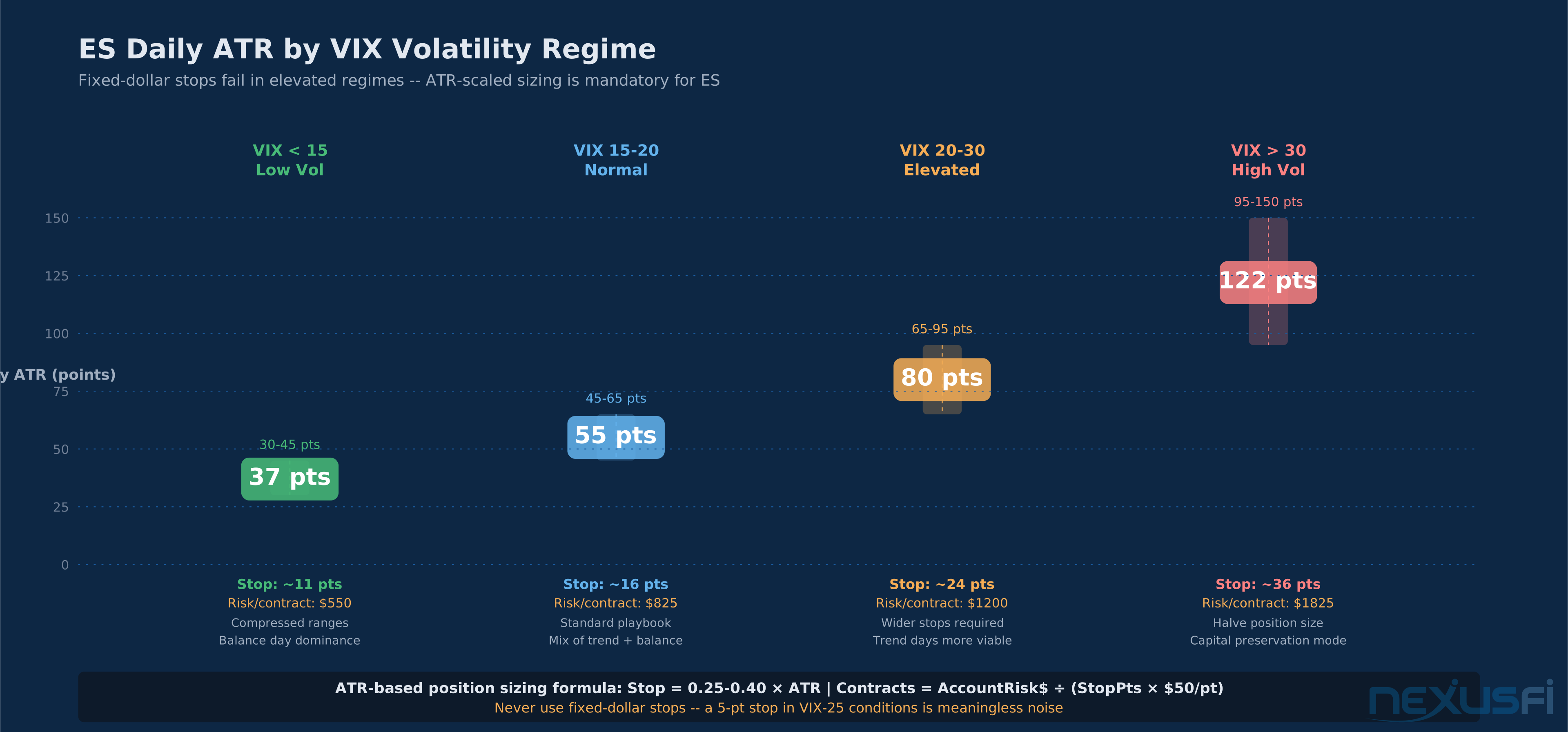
ES's daily range varies 5x between low and high volatility regimes. A fixed dollar-per-contract approach that works in VIX-12 conditions produces massive drawdowns in VIX-30 conditions. ATR-based position sizing keeps risk consistent across the full range.
Formula: Position Size = (Max Risk per Trade in $) ÷ (ATR-based Stop Distance in $)
Sizing by regime:
- Low volatility (VIX 10-15, ATR ~20-30 pts): Stop 6-8 ticks ($75-$100). Full ES position at 1-2% account risk.
- Normal (VIX 15-22, ATR ~30-50 pts): Stop 8-12 ticks ($100-$150). Reduce to 1 ES contract if account is under $50k.
- Elevated (VIX 22-30, ATR ~50-80 pts): Stop 12-20 ticks ($150-$250). Half-size or switch to MES.
- High volatility (VIX 30+, ATR 80+ pts): MES only until regime normalizes.
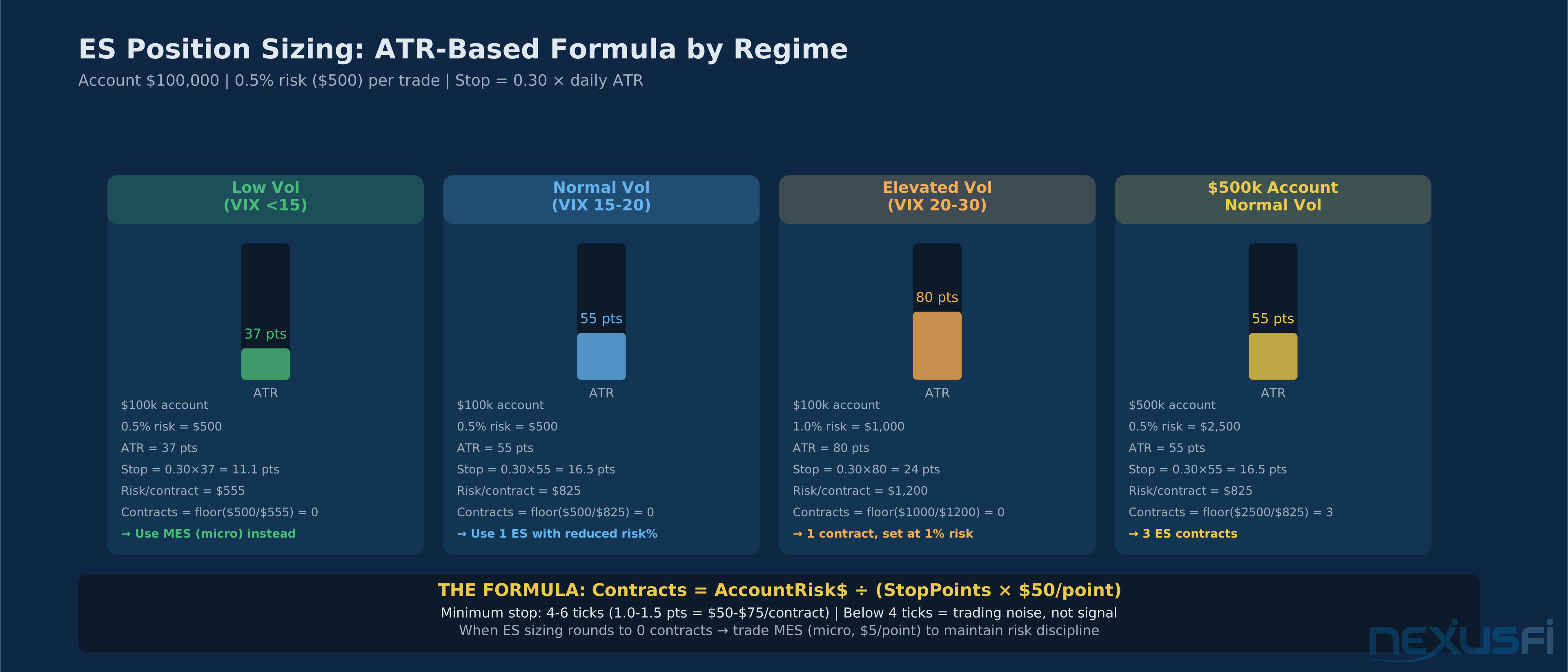
Per-trade risk rule: never risk more than 1-2% of account equity on a single ES trade. Daily loss limit: hard cap at 3x per-trade risk. After three stopped losses, session is over. ES can generate streaks of false signals in news-driven whipsaw or lunch-hour chop, and the daily loss limit protects against escalation.
Breakout Acceptance: Separating Real Breaks from Traps #
The breakout acceptance concept applies to all key ES levels — not just the ORH/ORL. Whether it's the prior day's VAH, a weekly high, a round number, or the overnight high, the same filter applies: a level is broken only when price closes beyond it and holds for 3 minutes without rejection.
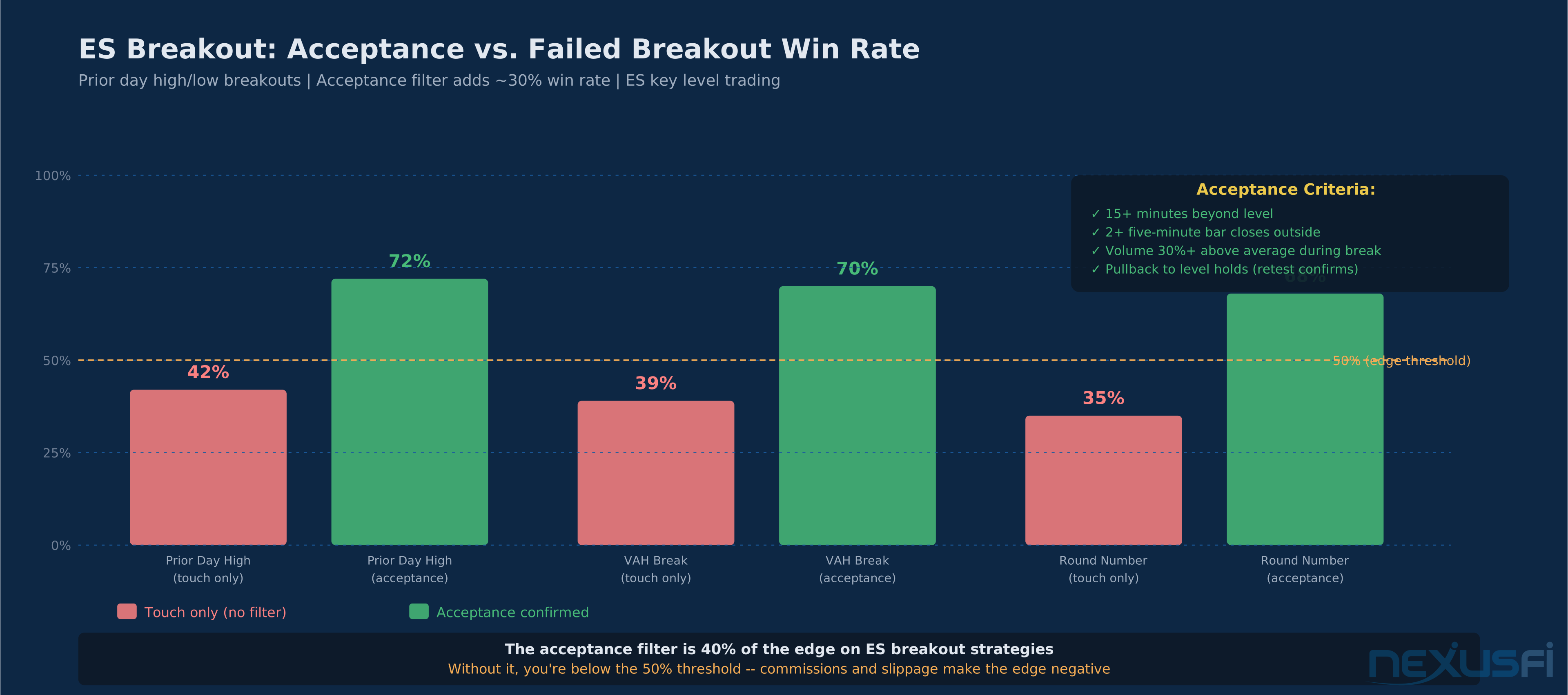
The breakout acceptance filter for key ES levels:
- Touch entry: Enter as price touches the level. Win rate ~42% on all key level touches (includes false probes and engineered liquidity sweeps).
- Close + hold entry: Wait for a 5-minute close beyond the level, then a 3-minute hold without reversal. Win rate 70-75%. The extra 8 minutes eliminates engineered touches designed to trigger stops.
- Fade the failed break: When price touches a key level and rejects back in less than 3 minutes, that failed break is a setup in the opposite direction. Short the failed ORH touch targeting VWAP; long the failed ORL touch targeting VWAP.
Strategy Selection Matrix: Regime × Session Time #
The regime-strategy framework synthesizes everything into one practical decision tool. Two coordinates: day type (trend vs balance) + session window. These determine which setup has positive expected value.
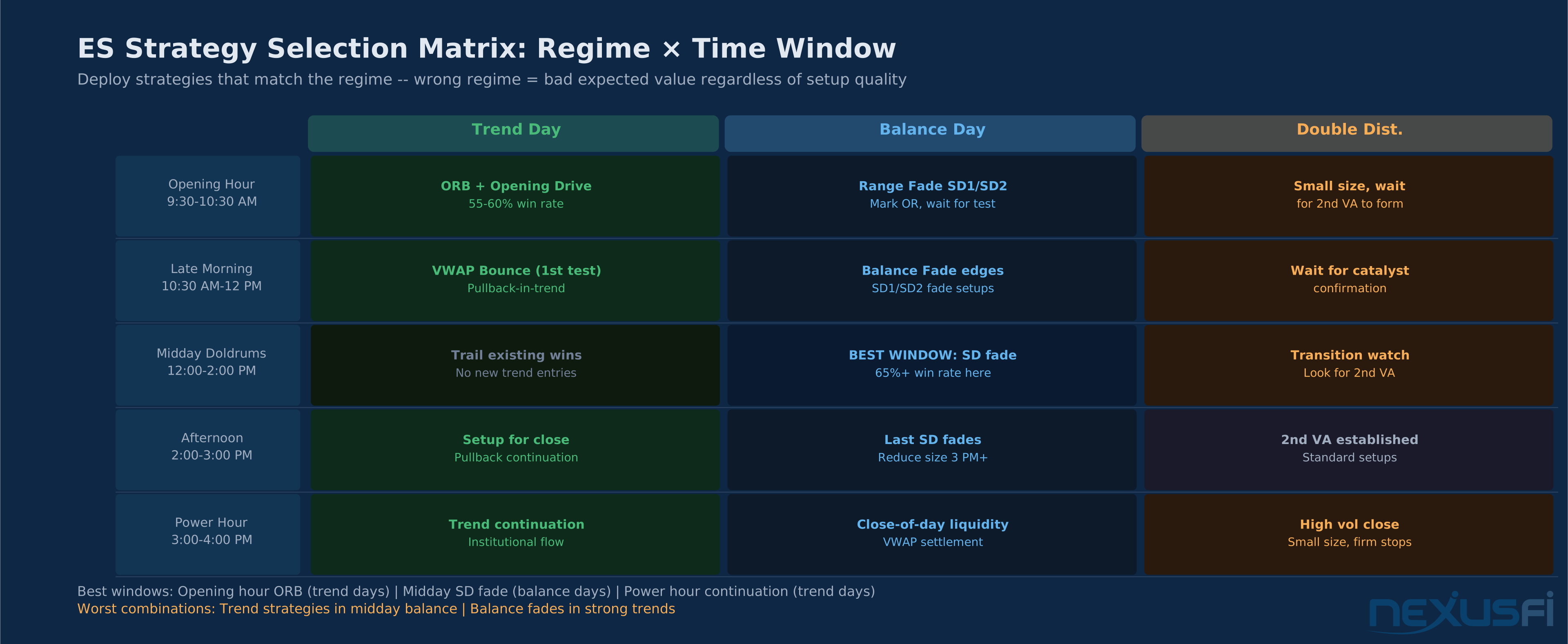
- Trend day, opening 30 min: ORB with acceptance filter. Highest win-rate trade of the week when all conditions align.
- Trend day, mid-morning: VWAP pullback (first, then second). Two-leg pullback if structure forms.
- Trend day, afternoon: Trail with VWAP; add on second pullback after first target hit. Power hour extension if trend intact.
- Balance day, opening 30 min: Gap fade (small gap), OR range boundary fade.
- Balance day, mid-morning: SD2 fade at VWAP extension. Target VWAP or SD1.
- Balance day, afternoon: Prior VAH/VAL tests; POC magnet trades.
- Lunch, any day type: Minimum size or no trading. The degraded signal quality doesn't justify full risk.
MES vs. ES: Choosing the Right Contract #
MES (Micro E-mini S&P 500) is 1/10th of ES: same tick size (0.25 points), worth $1.25 per tick instead of $12.50. Same order book, same fills, 10x smaller P&L.
Account-to-contract guide:
- Under $10,000: MES only. Intraday margin for one ES is too large a percentage of account to manage sizing properly.
- $10,000-$25,000: MES primary. One ES on highest-conviction setups in low-volatility conditions only.
- $25,000-$50,000: 1-2 ES in normal VIX. Switch to MES in elevated VIX (22+).
- $50,000+: Full ES with ATR-based contract count. VIX regime determines sizing.
Transition rule: use MES until you generate consistent profits across 20+ consecutive trading days. Not three days of large wins — twenty consistent days proving the discipline exists. MES also offers a structural advantage: partial exits. Exit 5 of 10 MES at the first target, hold remainder for extended target. ES's single-contract structure doesn't permit this granularity.
Pre-Session Preparation #
ES sessions don't forgive an unprepared opening 30 minutes. The highest-volume window of the day is the worst time to make first-principles decisions about levels, bias, or strategy.
The 20-minute pre-session checklist:
- Economic calendar: High-impact releases before 10:00 AM? Size at 50-75% normal if yes. Full size after data prints.
- Overnight analysis: Overnight range size and direction? Gap as % of yesterday's ATR -- fade territory or continuation signal?
- Level marking: Prior session VAH, VAL, POC. Globex high and low. Key round numbers. Mark these before touching anything else.
- OAIR/OAOR reading: Where does today's open land relative to yesterday's range? First day-type signal.
- Bias: Based on gap, overnight behavior, and calendar, what is the directional lean? No lean is valid -- means range-fade only until the session itself establishes direction.
Traders who skip this checklist find themselves reacting instead of executing. Preparation doesn't create edge — it prevents the most avoidable category of ES losses: wrong strategy for the regime in the first 30 minutes.
Knowledge Map
Prerequisites
Understand these firstCitations
- — Spoo-nalysis ES e-mini futures S&P 500 (2015) 👍 36“Range Day - The market will oscillate around an average price value with relatively low volatility through the day. Upside Trend Day - The market will open near its low price and build higher through the day, closing near its high. The market will tend to stay above its VWAP for most of the day.”
- — I have no "edge" - Should I throw in the towel? (2020) 👍 25“A trend day typically opens higher/lower above/below the VWAP accompanied by a strong/weak $TICK and good/bad breadth, and remains above/below the VWAP all day. A range day will see the market trade above and below the VWAP, often times with perfect symmetry, always returning to the VWAP.”
- — Trading Futures with Context (2014) 👍 13“70% (more or less) = rotational / balance days. 30% = trending days. OAIR = balance/rotational day 80%. OAOR = trending days 80%.”
- — Spoo-nalysis ES e-mini futures S&P 500 (2021) 👍 4“Buy at VWAP there 22 minutes into the session. What you CAN do is buy a strong market, on weakness, and get a fair enough price to manage the risk. That's very different from buying the break of the highs and sweating it out while the market struggles.”
- — Spoo-nalysis ES e-mini futures S&P 500 (2012) 👍 6“VWAP is the ultimate immediate gauge on order flow/market sentiment. You do not want to buy into the developing POC or VWAP when it's right there. You're better off waiting for it to break above and buying the pullback.”
- — VWAP for stock index futures trading? (2019) 👍 19“Trade 1 - an early pullback to VWAP generating a long pullback trade. Trade 2 - a long volume stop entry launch from VWAP SD-1. Trade 3 - a long pullback and launch from VWAP SD+1. Trade 4 - a long pullback and launch from VWAP SD+2.”
- — Day Trading the ES PATS style- 1 point at a time (2014) 👍 15“The first item in my trade plan is to try and identify if the day will likely be a range day or a trending day. Prior to using this indicator I would frequently get stuck in 'Trend' mode and biased accordingly.”
- — Spoo-nalysis ES e-mini futures S&P 500 (2014) 👍 9“Anyone who simply buys an 'abc' pullback, or buys the market off some arbitrary trendline or fib is usually unaware if price action is being driven by order flow or value and might as well be flipping a coin, because they have about a 50/50 chance of success.”
- — E-mini S&P 500 Futures Contract Specifications (2025)
- — Introduction to Futures: Understanding the Micro E-mini S&P 500 (2024)