



Order Flow Integration for Automated Futures Trading: DOM, Footprint, and Delta as Machine Inputs
Overview #
Order flow provides what price indicators cannot — real-time visibility into who is aggressive, where liquidity concentrates, and whether the market is absorbing initiative or capitulating to it. For automated futures systems, integrating order flow transforms raw price signals into context-aware decisions. This article covers the end-to-end process: the data types, feature engineering, strategy integration, execution considerations, and the failure modes that trip up most automated order flow systems. For broader system design, see Trading System Architecture.
The Order Flow Data Stack: L1, L2, L3, DOM, Footprint, and CVD #
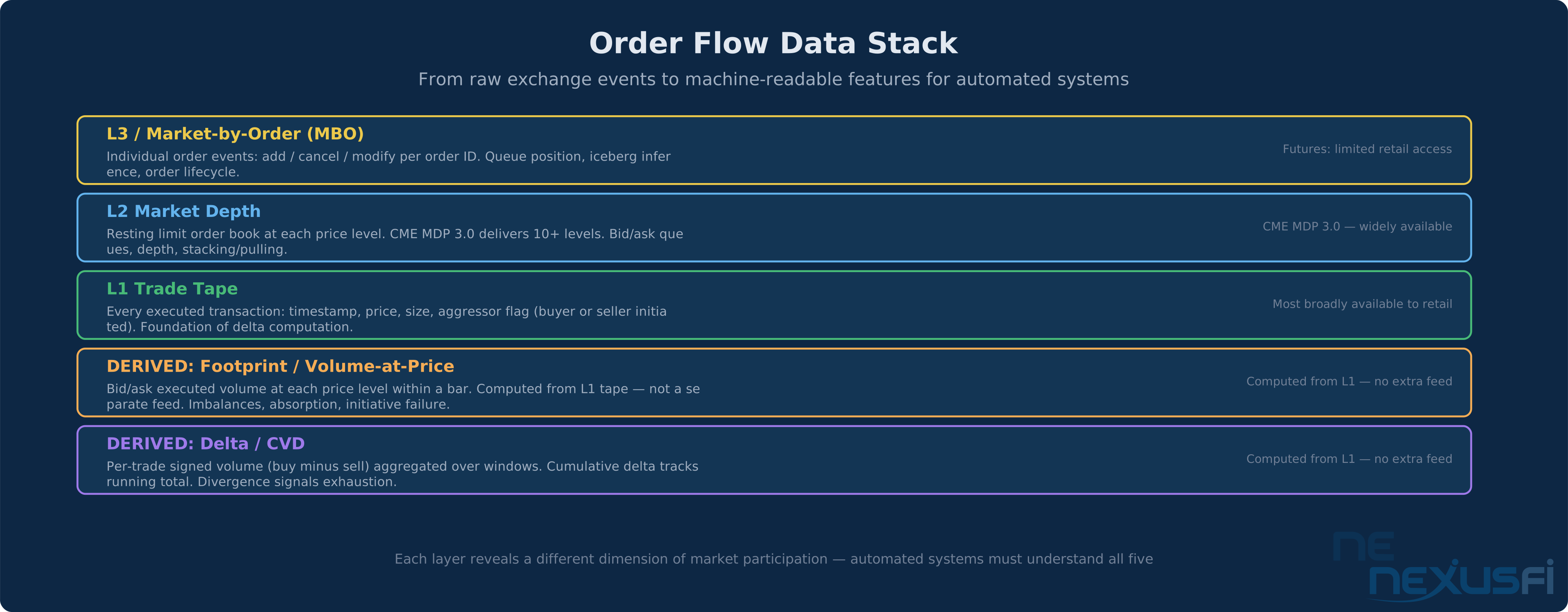
Order flow is not a single data stream. It is a stack of related but distinct feeds, each revealing a different layer of market behavior. Automated systems must understand what each layer contains, what it does not contain, and how much is realistically available in futures markets.
Level 1: The Trade Tape #
Level 1 data is the trade tape: every executed transaction with timestamp, price, and size. The critical variable is the aggressor flag — which side initiated the trade. A buy at the ask is aggressive buying; a sell at the bid is aggressive selling. This categorization is the raw material for delta computation. L1 data is the most widely available in futures and the foundation for most order flow analysis. Aggressor assignment can be ambiguous near the bid/ask spread when prices move mid-fill — systems must define an explicit assignment rule and apply it consistently.
Level 2: The Order Book #
Level 2 data is the limit order book — the resting queue of unfilled orders at each price level. CME's MDP 3.0 feed provides L2 data at 10 levels of depth for major contracts. L2 data shows intent, not execution. A large bid resting below the market may signal genuine support — or it may be a spoofed order canceled before price arrives. Automated systems measure book dynamics rather than static snapshots: how fast the queue grows or shrinks, whether liquidity is added passively or pulled aggressively, and whether book imbalance is shifting directionally.
Level 3 and Market-by-Order (MBO) Data #
Level 3 data provides individual order-level visibility: each add, cancel, modify, and fill event tagged to a specific order ID. CME's Market-by-Order (MBO) data provides this access for qualifying participants. At this level, systems can track queue position decay, observe iceberg order replenishment, and measure individual resting order lifecycles. For most retail automated traders, L3 data is not directly accessible through standard broker APIs. Systems should be designed around reliable L2 data as the baseline.
Depth of Market (DOM) as a Machine-Readable Structure #
For automated systems, DOM is not a display — it is a data structure. The machine equivalent is a sorted dictionary of price to resting quantity, updated on every book event. Systems reconstruct the book in memory, maintaining a live DOM representation that allows instant computation of imbalance, depth, and spread.
[7] DOM data update rates matter — research has documented that Rithmic feeds deliver thousands of depth updates per minute for actively traded contracts. Systems that queue rather than process these events in real time introduce internal latency that corrupts time-sensitive book features.
Footprint Charts: Volume-at-Price Decomposition #
The footprint chart decomposes volume bidirectionally: at each traded price level within a bar, it shows bid-side (aggressive selling) versus ask-side (aggressive buying) volume. For automated systems, footprint data is computed from the trade tape — aggressor-flagged prints accumulated by price level within a defined bar. This is deterministic and reproducible from L1 data. Key footprint signals for automation — imbalances, absorption, failed initiative — are all computations on this per-price volume structure.
Cumulative Delta (CVD) and Delta Divergence #
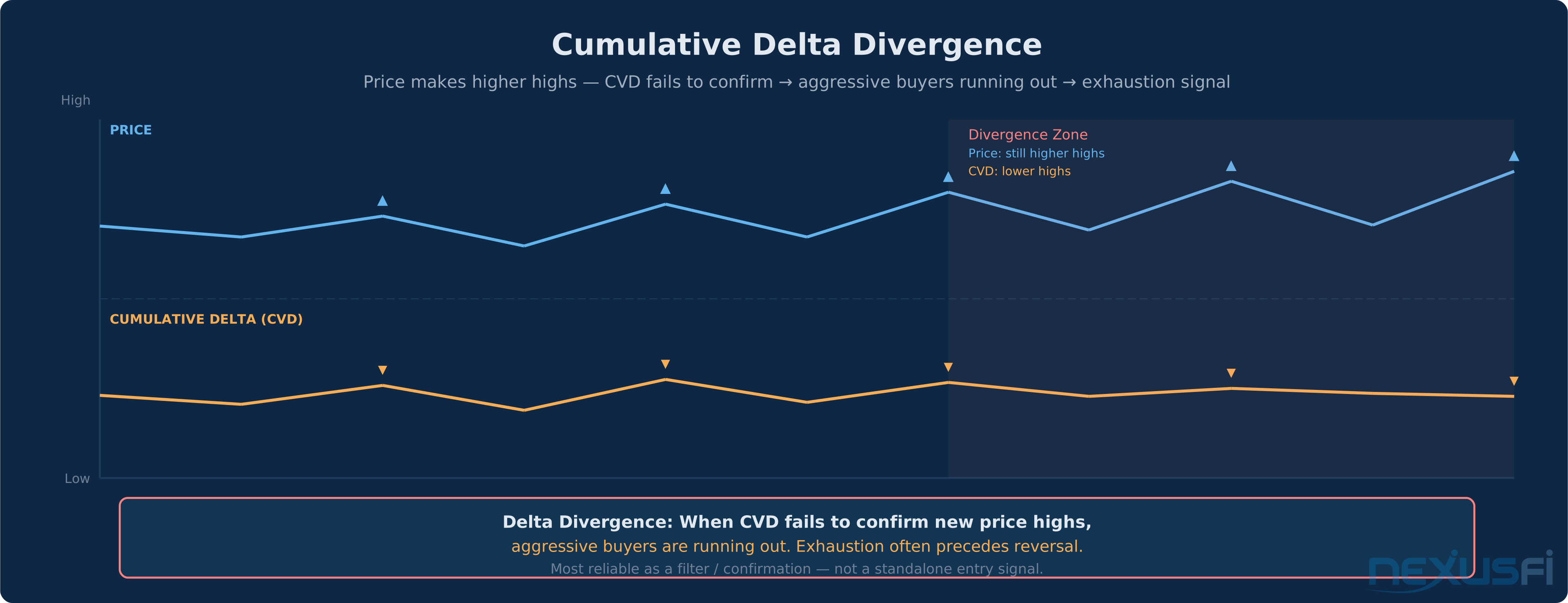
Cumulative delta (CVD) is the running sum of per-trade delta over a defined period. CVD is meaningful primarily through comparison with price. When price makes a new high but CVD fails to confirm — because buyers are less aggressive at that level — delta divergence signals weakening initiative. As @Big Mike noted when launching a dedicated CVD thread in 2011: members consistently find that CVD alone rarely constitutes a tradeable edge but functions powerfully as a regime filter and confirmation tool. [3]
Futures-Specific Microstructure That Shapes Signal Quality #
Order flow signals that work in one market fail in another because microstructure varies dramatically by instrument, session, and regime. Systems that ignore these differences find that features with excellent in-sample properties evaporate in live trading.
Tick Size and Signal Granularity #
Tick size determines minimum price increment and defines the resolution of all book and footprint data. ES (tick = 0.25 points) and NQ share similar microstructure granularity. CL (tick = $0.01/barrel) has very fine price resolution, producing a complex footprint with more per-level data. ZN trades in a completely different price space. Normalization anchored to a fixed number of ticks for ES must be rebuilt from scratch for CL or GC.
Session Structure and Liquidity Distribution #
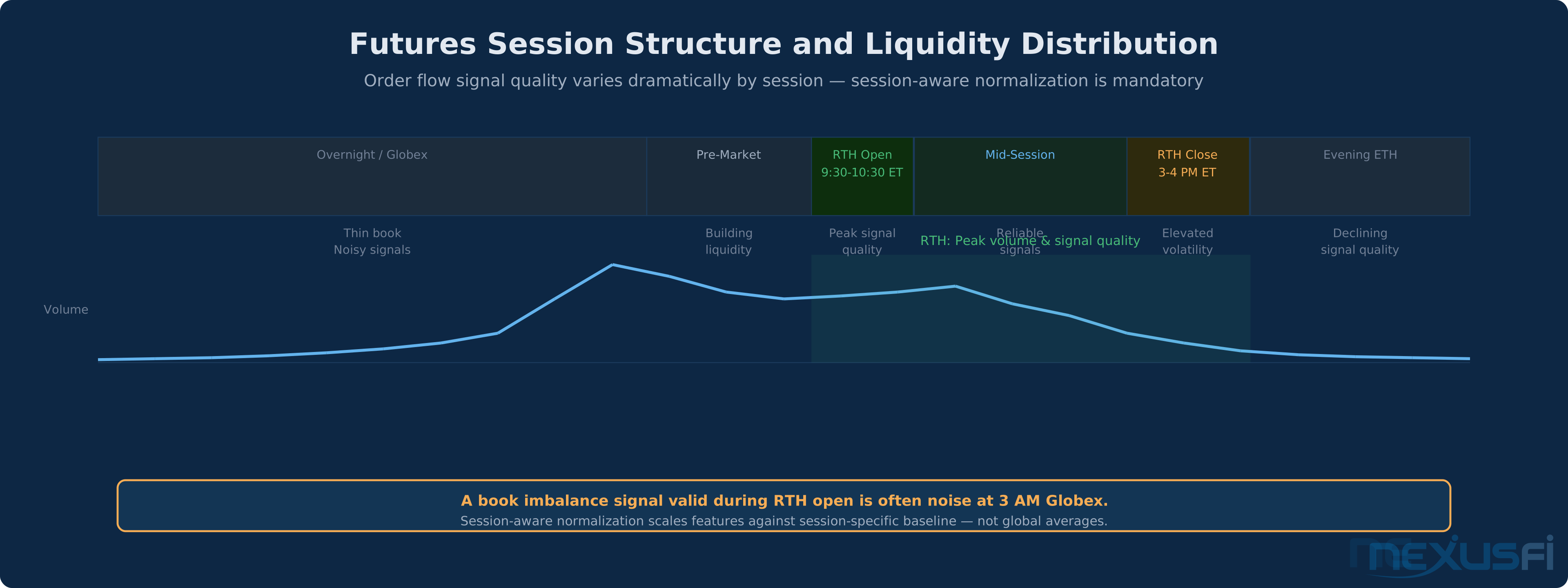
Futures trade nearly 24 hours on Globex, but liquidity concentrates during RTH (Regular Trading Hours — 9:30 AM--4:00 PM ET for equity index futures). ETH carries less volume, higher spreads, and more volatile book imbalances that are less predictive than identical metrics during RTH. Systems that don't account for this distribute signal capacity evenly across sessions they have no business trading.
A book imbalance feature predictive for 15-minute windows during RTH may be random noise during 3 AM Globex. Session-aware normalization — scaling features by session-specific baseline volatility and volume — is required for systems that operate continuously.
Contract Rollover and Liquidity Migration #
As contract expiration approaches, volume migrates from the front month to the next contract over several days. During this migration, book depth thins, spread widens, and order flow signals become unreliable. Systems must either pause order flow signal generation during roll periods or switch to the lead month early. ES typically rolls in the first week of the expiry month. See Automated Contract Roll Management for implementation details.
Instrument-Specific Behavioral Differences #
Order flow signal validity varies dramatically by instrument. ES and NQ are heavily traded by institutional participants using sophisticated algorithms that hide intent through iceberg orders and layered aggression. CL experiences sharper order flow events tied to EIA releases and geopolitical news. ZN is dominated by fixed income desks responding to Fed communication and macro data. A feature validated on ES will not transfer to CL without recalibration. Each instrument needs its own parameter set, its own volatility normalization, and often its own relevant feature family.
Feature Extraction: From Raw Events to Machine Inputs #
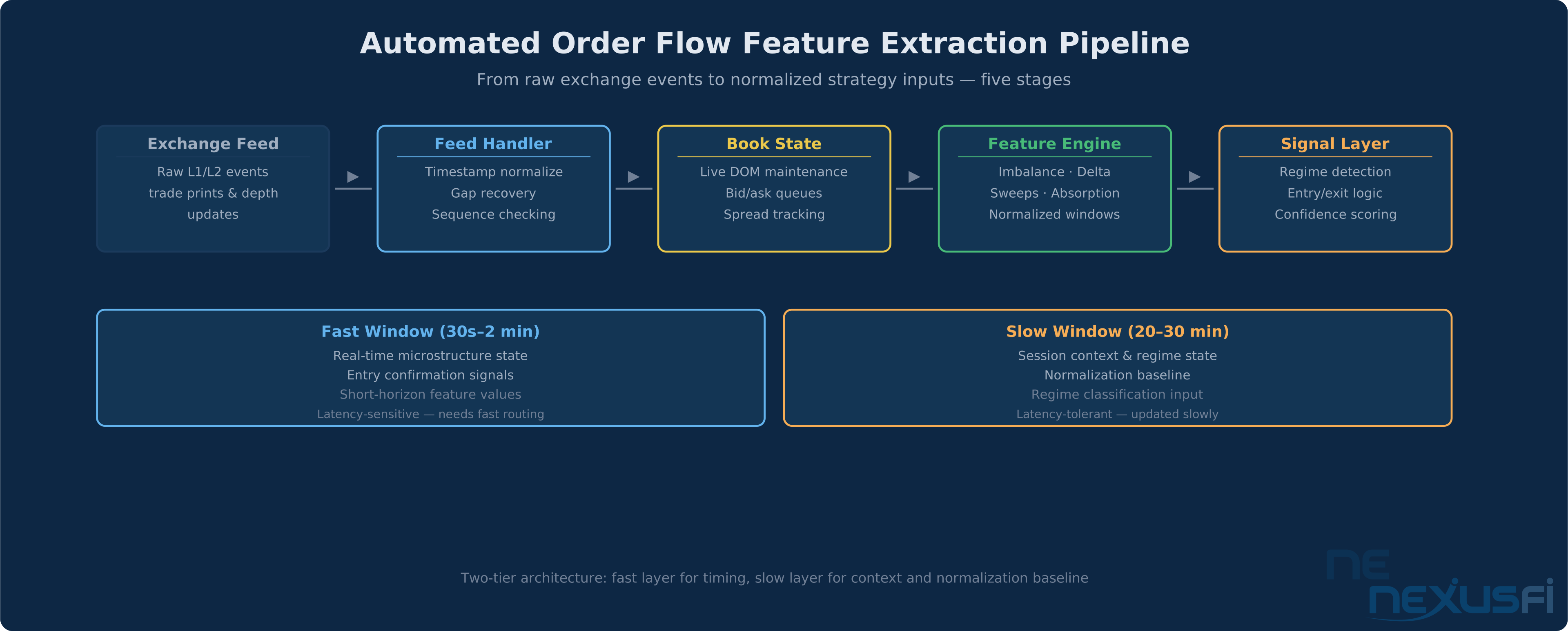
Raw order flow data is a stream of events: depth updates, trade prints, order adds and cancels. Automated strategy logic cannot consume raw events directly — it needs stable, normalized numerical features. The bridge between event streams and strategy inputs is feature engineering, and for order flow, this is where most automated systems succeed or fail.
Core Feature Families #
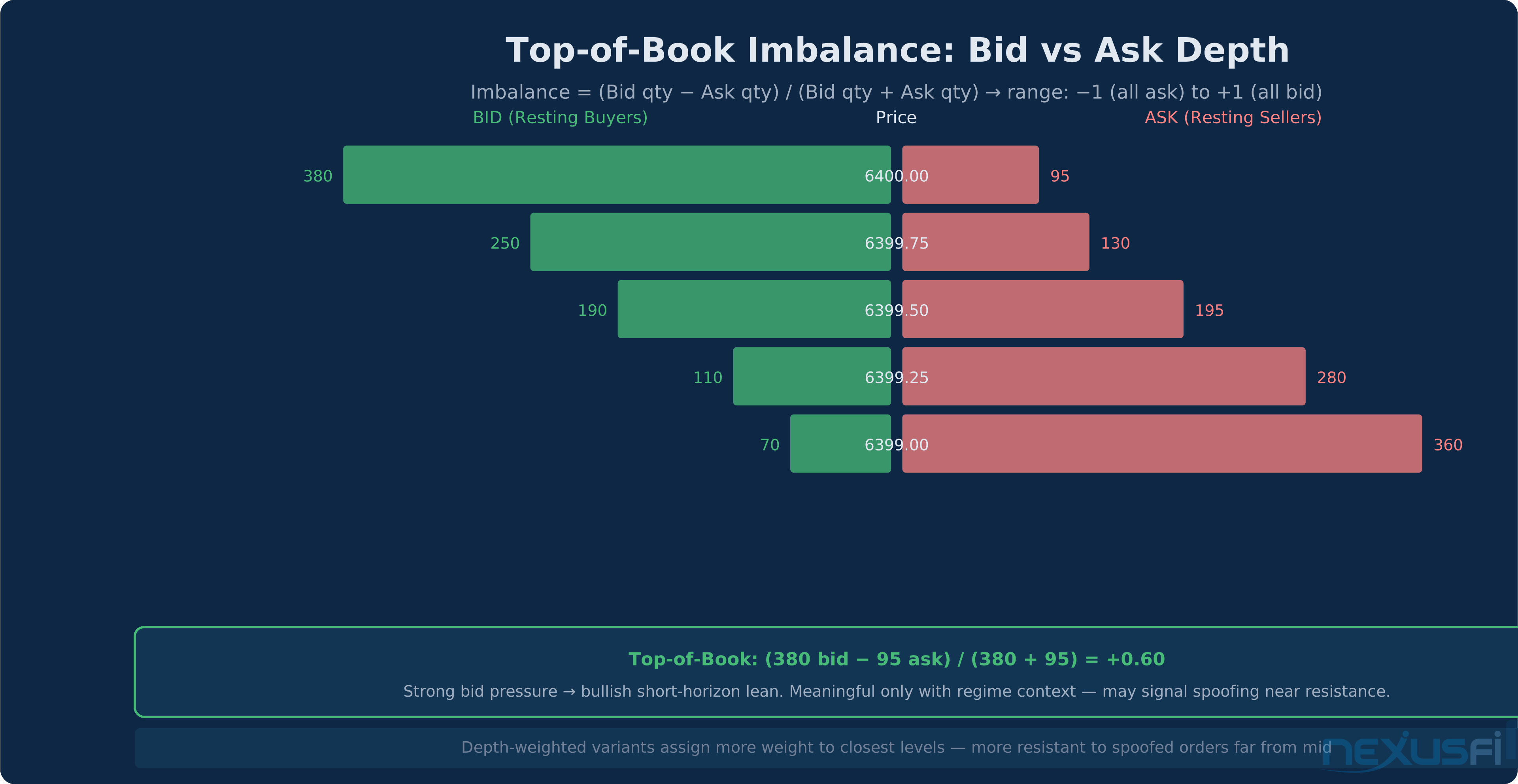
Book Imbalance Features measure the ratio of bid-side to ask-side depth. The simplest formulation is top-of-book imbalance: (bid_quantity - ask_quantity) / (bid_quantity + ask_quantity), producing a value between -1 (all ask) and +1 (all bid). More sophisticated variants weight by price distance from mid.
[4] Book imbalance has documented short-horizon predictive power in futures but degrades rapidly with prediction horizon and is strongly regime-dependent.
Delta and Cumulative Delta Features capture signed imbalance between aggressive buyers and sellers. The most signal-rich delta features for automation include: bar delta (signed volume for the most recent completed bar), delta velocity (rate of change of CVD over a rolling window), delta divergence (price direction vs delta direction over the same window), and delta high/low within a bar — revealing internal dynamics invisible to OHLC data.
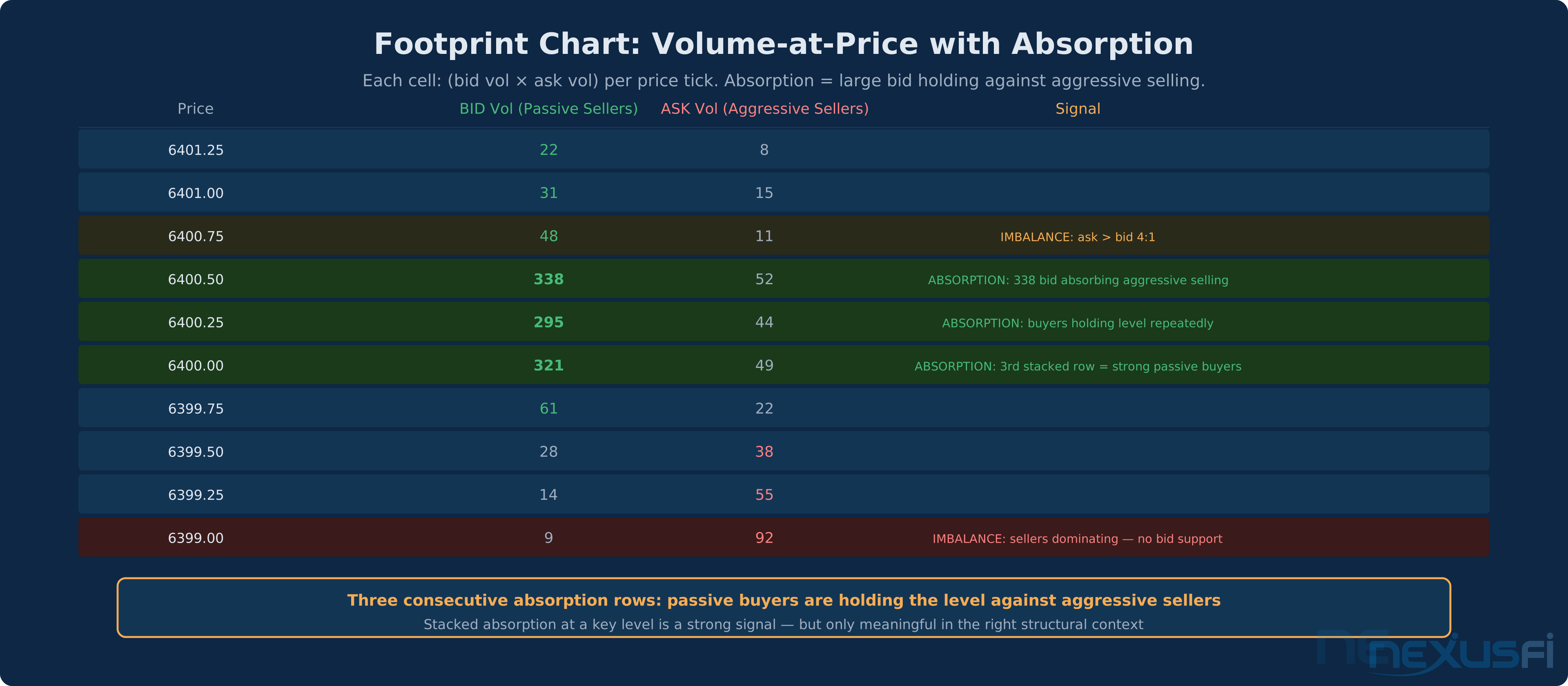
Footprint Imbalance Features extend delta to the price level. At each traded price, imbalance exists when one side much exceeds the other — typically using a ratio threshold (e.g., 3:1 or greater). Key derived features: stacked imbalances (multiple consecutive levels with imbalance in the same direction), absorption imbalances (large bid-side volume resisting aggressive selling), and failed initiative imbalances (where aggressor volume fails to sustain price beyond a key level).
Sweep Detection identifies market orders large enough to clear multiple price levels in a single execution event. A buy sweep leaves a trail of prints at sequentially higher prices in rapid succession. Sweeps reveal genuine urgency — a characteristic of institutional momentum.
Liquidity Stacking and Pulling Features track dynamic changes in the order book rather than static snapshots. Stacking is rapid addition of large quantities on one side. Pulling is rapid cancellation of resting orders — often signaling a spoofed level or a participant withdrawing ahead of an expected move. The rate and size of these changes, normalized by session-typical book change rates, form a predictive feature class distinct from static imbalance measures.
Normalization: Making Features Comparable Across Conditions #
Raw order flow values are not comparable across sessions, instruments, or regimes. A book imbalance of 500 contracts bid vs 200 contracts ask means something entirely different in a quiet overnight session versus a volatile RTH open. Without normalization, features appear to have signal during calm periods and become noisy during high-volatility conditions — precisely when the system most needs them to work.
Effective normalization strategies include: volume normalization (dividing raw quantities by rolling average volume for the instrument and session), volatility normalization (scaling depth features by ATR over a session-matched lookback), tick-distance normalization (expressing depth aggregations in ticks from mid rather than absolute price terms), and time-of-day normalization (measuring deviations from segment-specific baselines for open, mid-session, close, and overnight).
Windowing Choices and Their Consequences #
Order flow features can be computed over fixed time bars, fixed volume bars, or event-triggered windows. Fixed time bars create features that are thin during low-volume periods and dense during high-volume periods. For most automated order flow systems, a two-tier windowing approach works well: a fast rolling window (30 seconds to 2 minutes) captures real-time microstructure state, while a slower window (20--30 minutes) provides session context and baseline normalization. Features are computed at the fast scale and compared against the slow baseline to generate a normalized, time-consistent signal.
Feature engineering for order flow is where most automation projects fail. The raw events are available; converting them into stable, normalized signals that work across sessions and instruments is the hard part. If your features don't normalize by session and instrument context, they'll backtest beautifully and fail live.
State-Based Interpretation: Reading the Regime Behind the Signal #
Order flow features do not have constant meaning. A high delta reading in a trending market confirms momentum. The identical reading at a key resistance level signals potential exhaustion. Automated systems that apply features without regime context generate signals that are correct in some states and wrong in others — and cannot distinguish between them.
Structural Context #
Structural context answers: is the market in initiative territory (breaking outside prior value) or responsive territory (returning to value)? Is it above or below VWAP? Is it in a high-volume node (HVN, where resistance to movement is high) or a low-volume node (LVN, where price tends to move quickly)? This context changes which features are relevant and what their thresholds should be. At an LVN, a moderate book imbalance reading can trigger a valid breakout signal. At an HVN, the same reading should be discounted. Systems without this overlay treat all imbalance readings equally and systematically mis-signal at levels where structure overwhelms microstructure.
Microstructure State Classification #
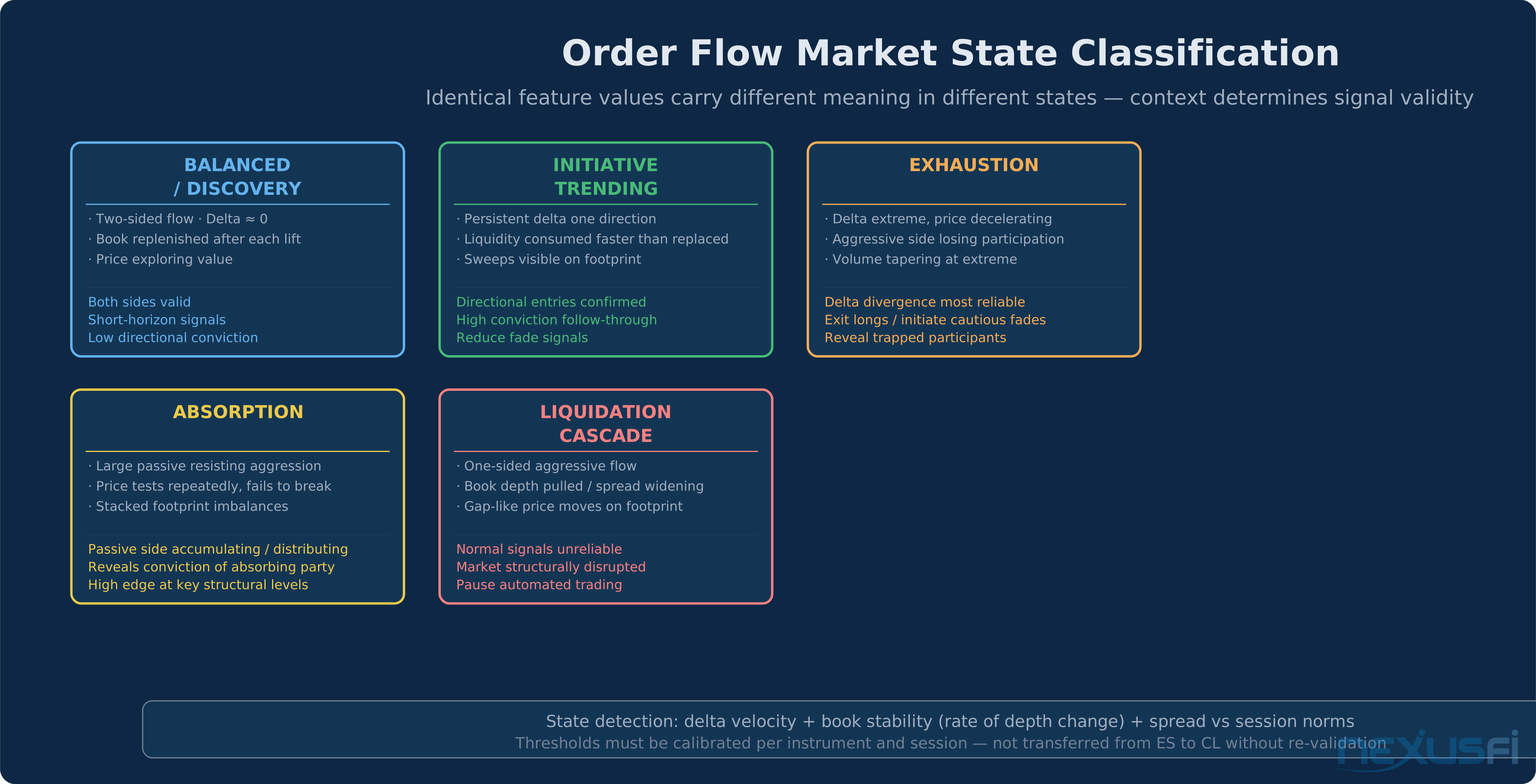
Beyond structural context, the microstructure itself cycles through identifiable states:
- Balanced/Discovery: Two-sided flow, tight imbalances, delta oscillating near zero, book replenishment after each lift. Price is in auction. Order flow signals here are short-horizon and bidirectional.
- Initiative Trending: Persistent delta in one direction, resting liquidity consumed faster than replenished, sweeps across multiple levels. Order flow confirmation adds conviction to directional entries.
- Exhaustion: Delta extreme but price momentum decelerating. Aggressive side running out of willing participation. Delta divergence signals are most reliable in this state.
- Absorption: Large passive liquidity resisting aggressive flow. Price tests a level repeatedly but fails through. The absorbing side is accumulating or distributing while the aggressive side telegraphs intent.
- Liquidation Cascade: One-sided aggressive flow, book depth pulled, spread widening. Normal order flow signals are unreliable — the market is structurally disrupted. Systems should scale down or halt signal generation.
State detection can be implemented through a combination of delta velocity, book stability metrics (rate of depth change), and spread width relative to session norms.
Integrating Order Flow Into Automated Strategy Logic #
Order flow features enter automated strategy logic in three primary roles: entry confirmation, regime filtering, and exit management. Each requires different feature types and different thresholds.
Entry Confirmation #
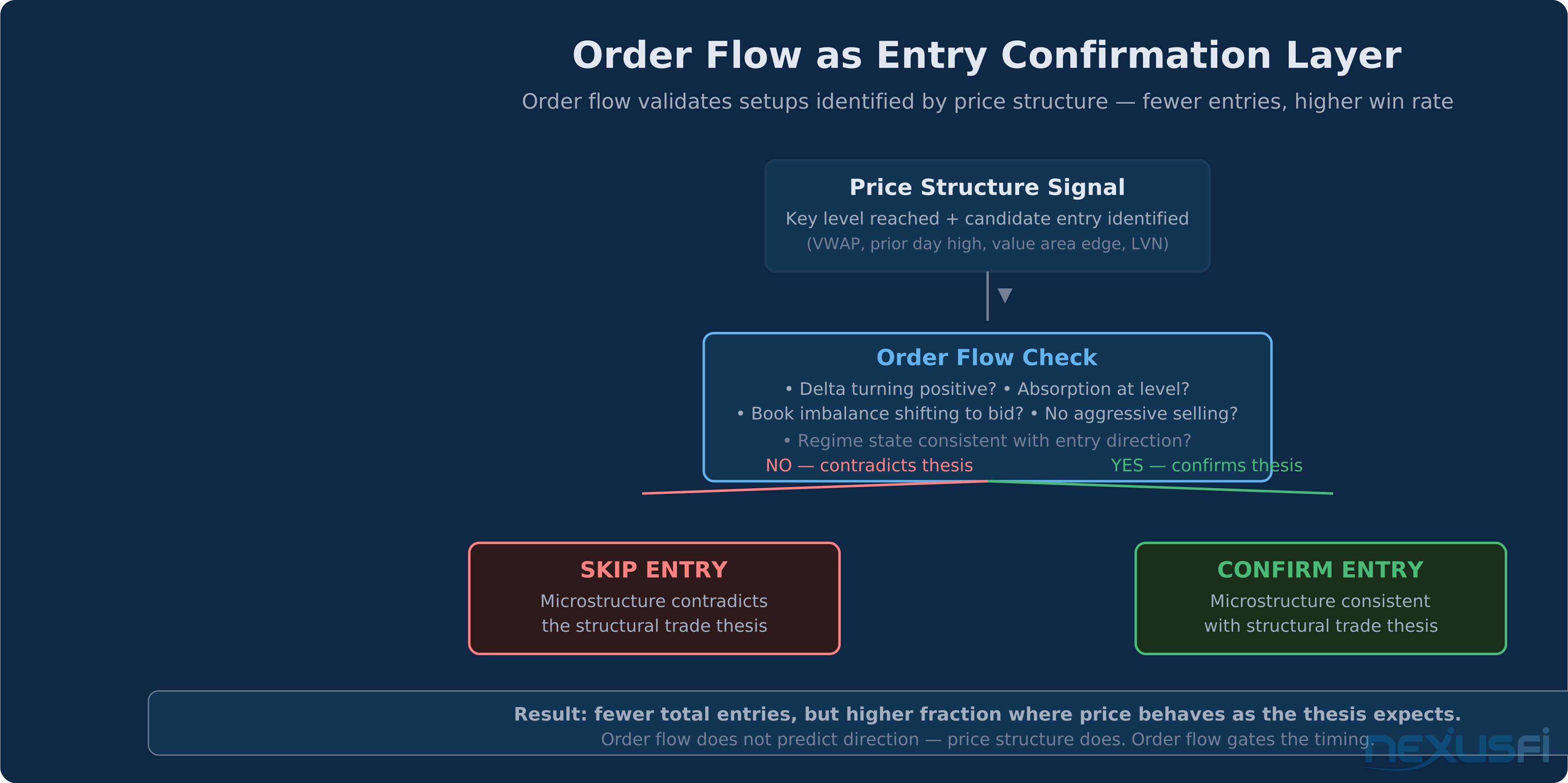
The most common entry confirmation use validates a setup already identified through price structure. Price has retraced to a key level (VWAP, prior day high, value area edge). The price-based system generates a candidate signal. Before sending the order, the system checks order flow: is there absorption evidence at the level? Is delta turning from negative to positive? Is book imbalance shifting toward buyers? If conditions align, the entry is confirmed. If they contradict — aggressive selling into the level, delta continuing to deteriorate — the entry is skipped.
This confirmation layer does not predict direction — the price structure does that. What order flow adds is a timing gate distinguishing setups where market behavior is consistent with the trade thesis from setups where microstructure contradicts it. The practical result is fewer entries but a higher fraction where the market does what the thesis expects.
Regime Filter #
A regime filter uses order flow features to classify market state and enable or disable strategy logic. A trend-following system built on bar-based signals might check whether delta trend and book imbalance are consistent with the signal direction. This application is less latency-sensitive than confirmation-based entry because regime classification uses longer windows (minutes rather than seconds) and outputs a slow-changing state variable. It is also more strong to data noise. See Regime Detection for Automated Trading Systems for the full framework.
Exit Management #
Order flow features can detect when conditions supporting a trade have changed. An ongoing long position built on a thesis of continued initiative buying becomes questionable when delta deteriorates, book imbalance shifts to the ask side, or a footprint pattern shows absorption resistance at a key overhead level. A system detecting these changes in real time can exit earlier than a fixed target or time-based exit — capturing most of the move while avoiding the reversal.
Execution and Fill Quality Considerations #
Order flow data drives both alpha generation (signal quality) and execution quality (fill cost). This entanglement is one of the distinctive challenges of automated order flow trading: the same data that tells you to buy is also the data that tells you how good your fill will be. See Automated Order Execution for the execution infrastructure layer.
Queue Position and Maker Execution #
In price-time priority markets like CME Globex, passive limit orders are filled in the order they were placed. Queue position determines fill probability: front-of-queue orders fill before later arrivals. Order flow data can inform queue management — when imbalance strongly favors the bid, the probability that a passive buy fills before price moves away increases, justifying a more aggressive queue entry. Systems that place passive orders without queue awareness systematically enter late, after the book imbalance has already been observed by faster participants, resulting in worse queue position and lower fill rates.
Adverse Selection Risk #
Adverse selection is the risk that when a passive limit order gets filled, it is because a better-informed participant took the other side. Order flow features can estimate adverse selection risk in real time: is the fill happening in context of deteriorating delta and book imbalance (high adverse selection risk) or in context of absorption (low adverse selection risk)?
Latency Budget and Signal Design Constraints #
The faster the order flow feature updates, the more latency-sensitive the resulting execution must be. Most retail automated systems lack co-location infrastructure to compete on sub-millisecond pipelines. Tick-sensitive features are architecturally inappropriate for retail automated systems unless paired with fast execution infrastructure.
[10] The practical remedy is features with longer effective horizons: 30-second rolling imbalances rather than instantaneous values — reducing latency requirements while retaining most signal content.
Robustness, Validation, and False Signals #
The history of order flow trading is full of patterns that look compelling on historical charts and fail in automation. The visual clarity of footprint patterns and the intuitive appeal of delta divergence make it easy to overfit — finding setups that work perfectly on historical data and fall apart live.
Why Visual Patterns Fail in Automation #
Human traders looking at footprint charts exercise contextual judgment that is impossible to replicate mechanically without extensive parameterization. When a trader says "that absorption pattern looked different from the failed one," they are integrating dozens of variables — market state, session, prior behavior, nearby levels — in a way that feels intuitive but is highly conditioned.
[5] Automated systems must encode that context explicitly in their feature engineering or accept a high false positive rate.
Overfitting to Footprint Patterns #
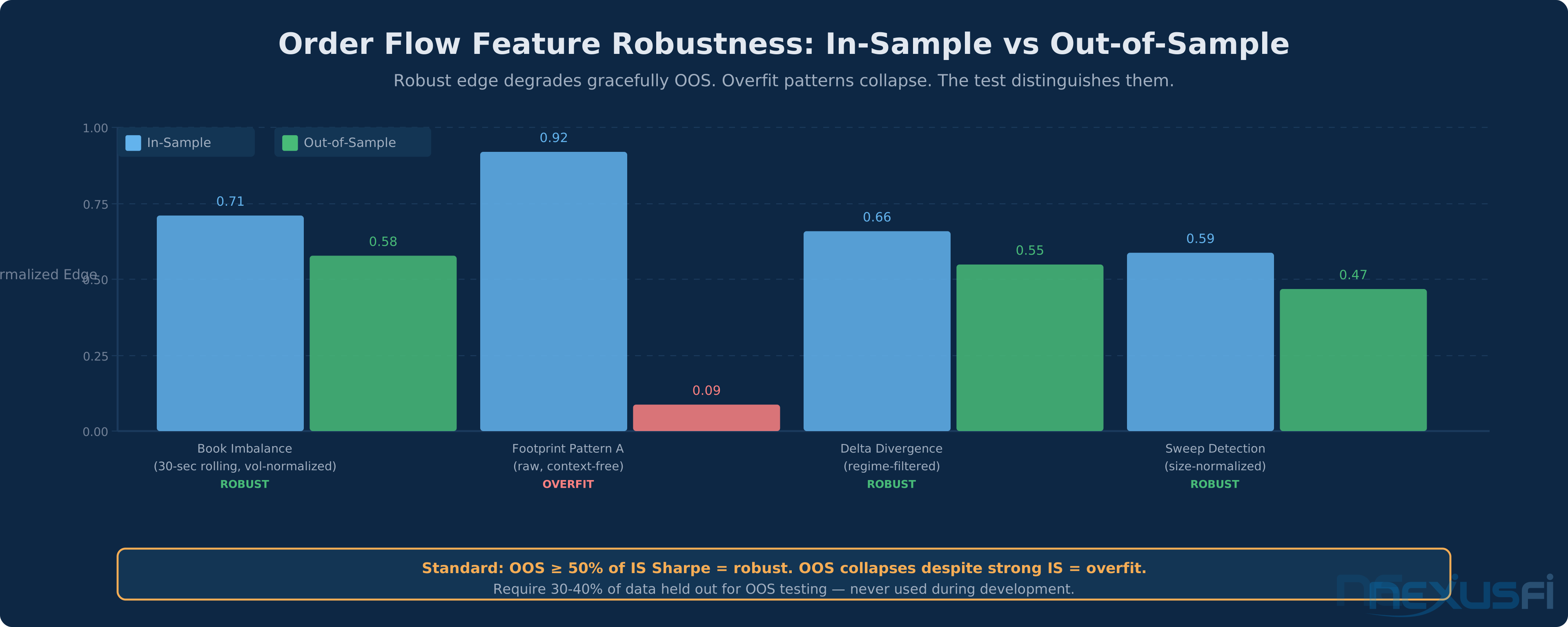
The overfitting danger in order flow automation is higher than in price-based automation because order flow data has more degrees of freedom. A price bar has 4 data points (OHLC); a footprint bar has hundreds. This richness creates opportunity to mine for patterns that fit historical data perfectly but have no predictive content. Protection requires aggressive out-of-sample testing: holding back 30--40% of data never used during development, testing on instruments and sessions not included in training, and requiring that features degrade gracefully under regime change rather than collapsing. See Overfitting and Curve-Fitting Detection for the full framework.
Spoofing and Fake Liquidity #
L2 data is naturally noisy because participants who place limit orders are not necessarily committed to trading at those prices. Spoofing creates false signals for book imbalance features. Simple book imbalance features looking at a single snapshot are most vulnerable. More strong formulations incorporate book change rate (how rapidly the apparent imbalance appears or disappears) and cross-validation with the trade tape: if large bid-side imbalance exists but no significant buying follows, the imbalance is likely fake.
Cross-Regime Robustness Testing #
Order flow features perform differently across volatility regimes, liquidity regimes, and market states. Systems should be tested across explicitly defined regime segments: low/medium/high VIX periods, trending/ranging environments, different times of day, and transition periods between them. The standard is graceful degradation: reduced signal in adverse regimes while remaining above the noise floor. Features with strongly positive signal in one regime and strongly negative in another require explicit regime detection before application.
Risk Management for Order-Flow Systems #
Automated order flow systems carry a class of risks distinct from bar-based systems, requiring controls specifically designed for microstructure-aware trading.
Adverse Selection Monitoring #
Live monitoring of fill quality — measuring average P&L trajectory in the ticks immediately following each fill — provides a real-time adverse selection indicator. When fills consistently move against the position before recovering (or not recovering), the system may be routing orders in a way that attracts adverse flow. This monitoring is distinct from overall P&L tracking: a system can be profitable in aggregate while systematically suffering adverse selection on a specific order type or session segment.
Data Quality Guards and Kill Switches #
Order flow systems depend on continuous, reliable data feeds. When feeds degrade — missing packets, timestamp anomalies, book depth collapse — the computed features become meaningless or actively misleading. Automated kill switches should monitor: depth update rates (if updates slow below session-typical threshold), bid/ask spread reasonableness (sudden spread widening signals book collapse), and fill confirmation latency. Any of these conditions should pause automated trading pending verification.
Position Limits and Order Rate Controls #
Microstructure-sensitive systems can generate signal bursts during rapidly changing order flow conditions — a system designed for one or two setups per hour can trigger dozens of signals during a fast-moving open if thresholds are repeatedly crossed by volatile book behavior. Position limits and order rate controls prevent signal bursts from translating into runaway exposure. Practical implementation: a maximum position per session, a maximum orders per rolling 5-minute window, and a pause-and-check condition that halts trading if session drawdown exceeds a defined threshold.
Three non-negotiable risk controls for automated order flow systems: a data quality kill switch that pauses trading when feed integrity degrades, a per-session order rate limit to prevent signal storm overtrading, and real-time adverse selection monitoring per order type. Without all three, a single data anomaly can generate dozens of wrong-direction orders before any human can intervene.
What Order Flow Cannot Tell You #
Order flow provides real-time information about market participation behavior. It does not provide information about underlying value, medium-term directional intent, or the macro factors that drive large price movements over hours and days.
A persistent misconception is that aggressive buying is bullish over the medium term. In fact, aggressive buying near a key resistance level where a large participant is distributing is the most reliable signal of imminent price decline. The aggressive buyer is providing exit liquidity for the distribution. CVD will spike upward; price will go down. The delta divergence that follows is only legible in hindsight if you understand the structural context that order flow features alone cannot capture.
The honest summary of order flow for automation: it makes good timing decisions better. It reduces false positives on setups that already have structural merit. It identifies when market behavior contradicts a trade thesis, enabling earlier exits. But it cannot manufacture edge where none exists in the price structure.
The most strong automated futures systems treat order flow as one layer in a multi-layered architecture: structural price context combined with session-specific regime classification and order flow confirmation. Each layer adds information the others lack. Order flow tells you what is happening now — with precision and immediacy that price-based indicators cannot match. What it cannot do is tell you why, or where the market is going from here.
Knowledge Map
Prerequisites
Understand these firstGo Deeper
Build on this knowledgeReferences This Article
Articles that build on this topicCitations
- — FootPrintV2 Chart for NT8 (2022) 👍 31“On the FootPrint chart I look at a few things. Delta: Do we have more aggressive buyers or sellers? Absorption: Even if the market is moving up, are sellers stepping in to absorb the buying pressure?”
- — Is Orderflow An Outdated Concept? (2020) 👍 3“You'll need to establish a slow Reference size level on each of these sides, in order to detect the Delta change in volumes. Maybe the ratio of the Slow to Fast would be 10:1 or as much as 20:1.”
- — Cumulative Delta Volume Trading (2011) 👍 38“I am no expert in CDV, but as I learn more about it I wanted to start a thread to discuss trade ideas. If you see me making mistakes in my analysis...”
- — Is anything better than order flow? (2022) 👍 3“Volume is 3 times average daily volume and the Asks on the order book are averaging 30% more than the Bids -- that's a meaningful imbalance signal at elevated volume.”
- — Has anyone tested the new order flow tools from Ninja? (2017) 👍 5“One trader's bullish imbalance is another trader's bearish absorption. I spent years using footprint. It worked, sometimes. But so does a moving average crossover.”
- — Bookmap vs Jigsaw Daytradr (2022) 👍 3“For a DOM you want level 2 data which shows the depth of market whether it is ten levels or more depending on the provider. Bookmap recommend Rithmic for their users.”
- — Would you share your Holy Grail? (2021) 👍 2“You need to have a decent DOM feed; and that means you need to use a 'premium' feed like Rithmic, or others; and then you need a theory which you can validate as concerns how Market Makers' DOM plays affect price movement.”
- — DOM & Math (2017) 👍 5“To get the raw data: You will need to make a call to the API to get the DOM snapshots. Then you need a theory about how Market Maker DOM placement affects price movement.”
- — Trading in a glass box (2014) 👍 2“I use the delta solely now to track orderflow. The footprint is up also. I learned quite a bit from Private Banker and Greenr, regarding these data sources.”
- — How I Day Trade and Micro Scalp the NASDAQ Futures (2022) 👍 2“Data is processed 20-25 milliseconds after its timestamped creation date, and then my queued data is processed -- demonstrating that internal queue latency matters for DOM-based systems.”