



Swing Trading Futures: The Complete Methodology
Subtitle: Multi-Day Setups, Overnight Risk, and the Decision Framework That Separates Disciplined Swing Traders from Everyone Else
Overview #
Swing trading futures sits in a distinct lane. You're not scalping ticks on a 1-minute chart, and you're not holding a macro thesis through a quarterly rebalance. You're capturing multi-day to multi-week moves — the kind of price movement that forms when the auction breaks out of balance or a trend finally gets going. Entry on Tuesday morning, target hit by Friday close, or stop taken out on Wednesday at 2 AM when oil gaps down on a supply report. That's the game.
What makes futures swing trading different from equity swing trading isn't just leverage — it's the structure. Futures trade nearly 24 hours. You're exposed to overnight gaps. You face contract expiration. You manage margin, not just capital. These aren't just inconveniences to work around; they're core features of the methodology. A swing trader who doesn't have explicit rules for overnight risk, contract rolls, and session-to-session structure hasn't actually built a methodology — they've just built a day-trading approach that sometimes sleeps.
As @Pariah Carey makes concrete: swing trading and day trading require different brokers, platforms, sizing, and mental frameworks — not the same game at different speeds. [1]
This article gives you that complete methodology: the decision framework, the specific setups, the risk rules, and the hard-won lessons on when swing trading futures stops working.
What Swing Trading Actually Means in Futures #
The holding period definition matters less than the exposure structure. A "swing trade" in futures means:
- You're holding through multiple sessions — the trade survives at least one open-to-close cycle
- You have an explicit overnight risk plan — stop placement, position size, and rules for major news events
- Your entry and invalidation are based on higher-timeframe structure — daily, 4H, or 1H chart signals, not 5-minute order flow
What it isn't: day trading with a late close, or position trading with a stop you never adjust. The timeframe ladder looks like this: daily or 4H for context → 1H for signal → 15m or 5m for execution trigger. You determine direction on the daily, find the setup on the 1H, and trigger the entry on the 15m or 5m.
Holding period typically runs from 2 sessions to 2 weeks. Beyond that, you're in position-trading territory where fundamental or macro drivers become primary. Inside 2 sessions, you're effectively day trading with a bad habit of not cutting by the close.
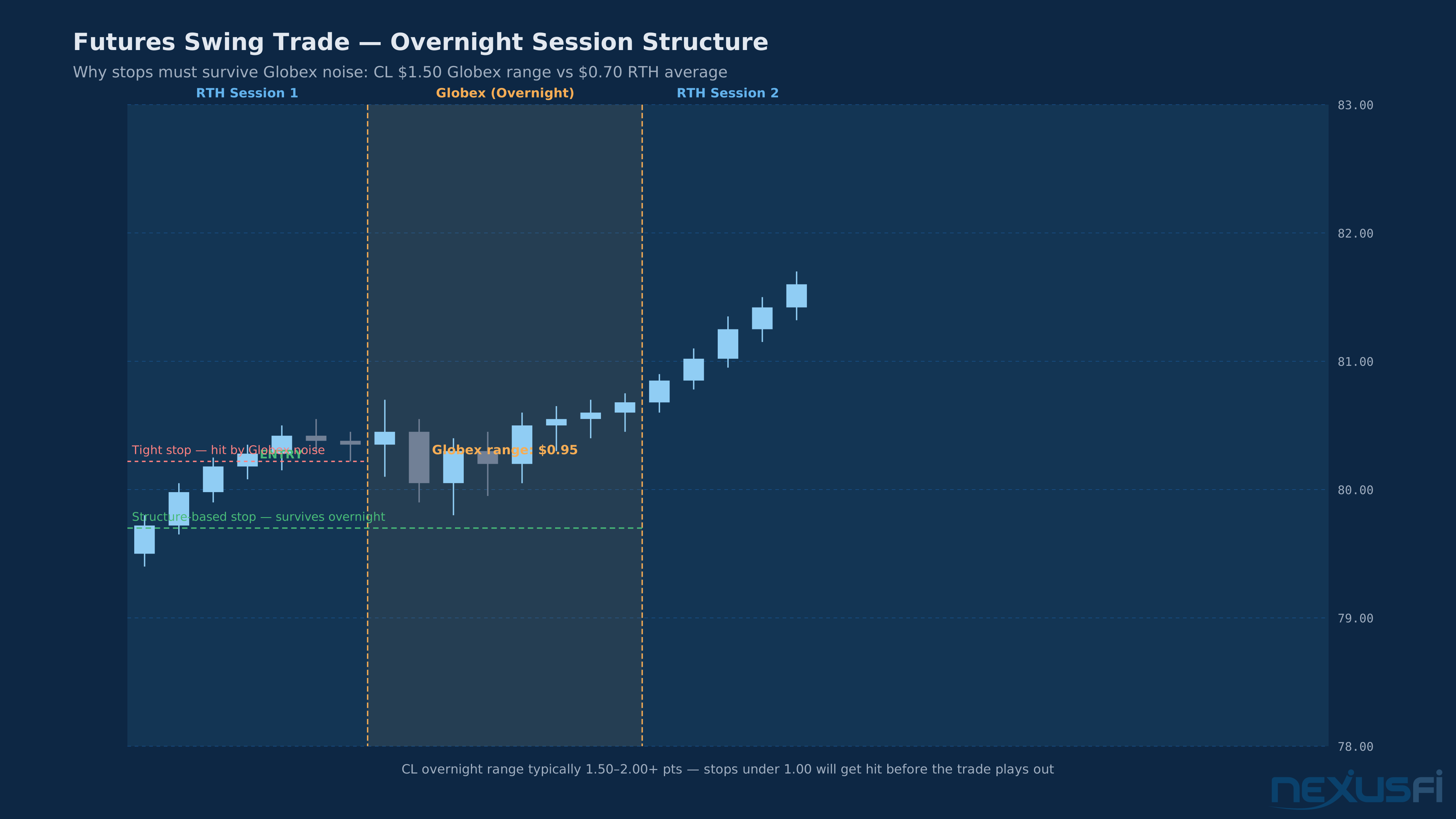
The timeframe ladder isn't aesthetic preference — it's functional. Your stop placement must survive overnight noise. A stop based on a 5-minute chart will get hit by Globex noise on instruments like CL or NQ before the trade idea has a chance to play out. Your stops need to be sized for the timeframe you're reading context on.
The Decision Framework #
Every swing trade in futures runs through the same sequence. Skip a step and you're not swing trading — you're just holding a bad trade longer than you should.
Step 1: Regime Filter — Does the current market support swing trading at all?
Step 2: Setup — What specific pattern signals the trade is ready?
Step 3: Entry Trigger — Where exactly do you get in?
Step 4: Invalidation — Where is price that proves you're wrong?
Step 5: Risk Model — How big, and how much is at risk?
Step 6: Trade Management — How do you handle the trade once it's live?
Step 7: Exit — How do you take profit or cut the loss?
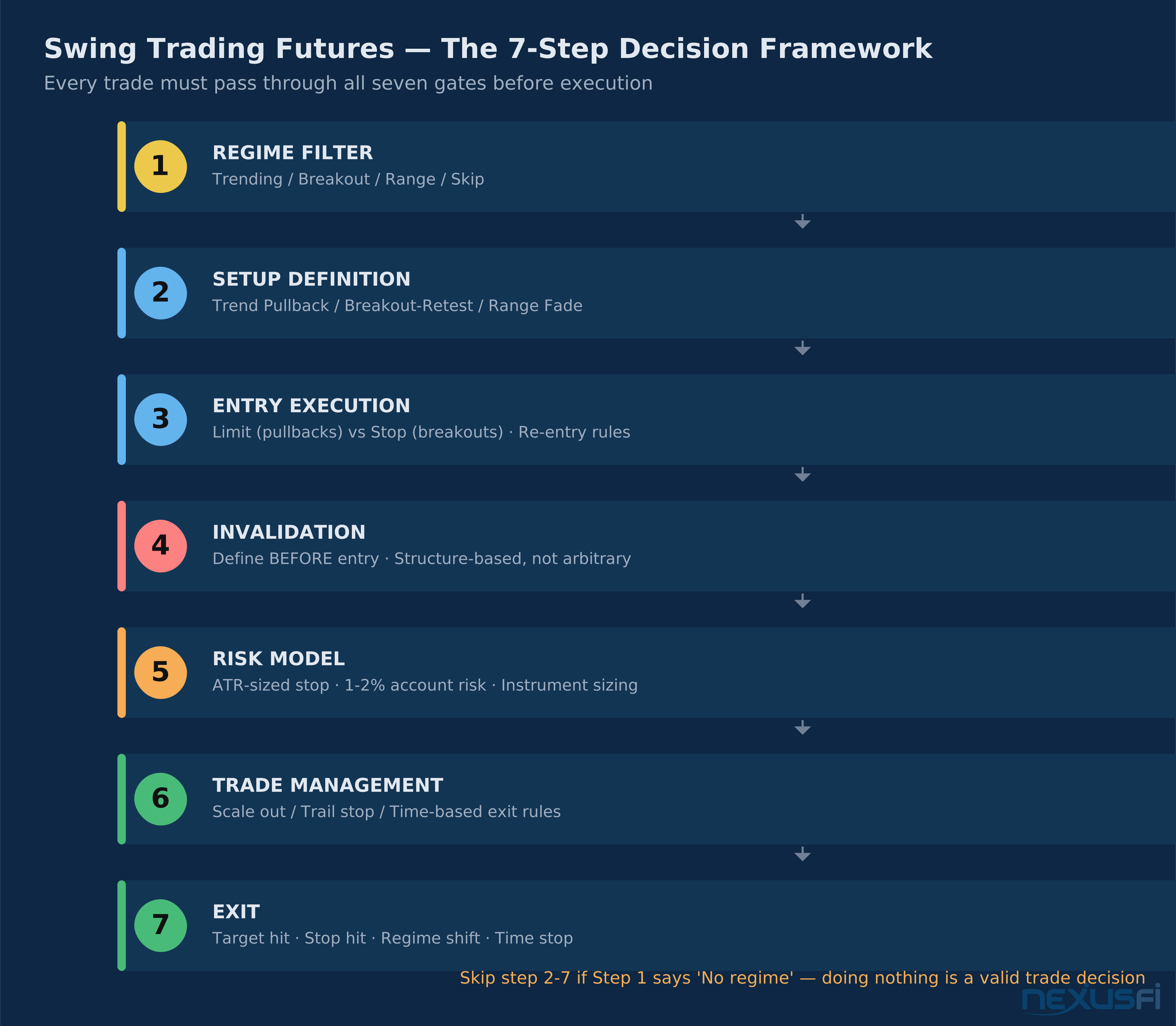
This isn't a checklist you work through once. It's a loop. Regime changes mid-trade. Setups fail. Management rules activate before the target is reached.
Step 1: Regime Filter #
You can't swing trade a randomly oscillating market. The regime filter is the first gate.
Trending regime: Higher highs and higher lows on the daily (uptrend), or lower highs and lower lows (downtrend). Pullback-continuation setups live here. Best swings target pullbacks into established 3-5+ session trends, not fresh breakouts.
Breakout regime: Daily range consolidation with expanding volume/volatility. Breakout/retest setups are valid here. The risk: more false signals than trending regimes.
Ranging/balanced regime: Both sides are responsive at the edges. Mean-reversion swings live here, but it's where most swing traders get chopped. Range swings require tight stops and readiness to flip direction — trend-continuation traders sit this one out.
Filter tools that work:
- Daily chart structure: Is the sequence of highs and lows clear and consistent?
- ATR (14-period) vs. recent ATR: Is volatility expanding (suggests breakout or trend) or compressing (suggests range)?
- Weekly open: Is price above or below last week's opening price? This gives the directional lean going into any week's swing setups.
Avoid swing trading during low-volatility compression phases. When ES daily ATR drops below 20 points and the market has churned inside a 40-point range for a week, there's no swing to capture — just noise. The trap is confusing "I have a setup" with "there's a move to capture." The regime filter kills the setup before it even starts.
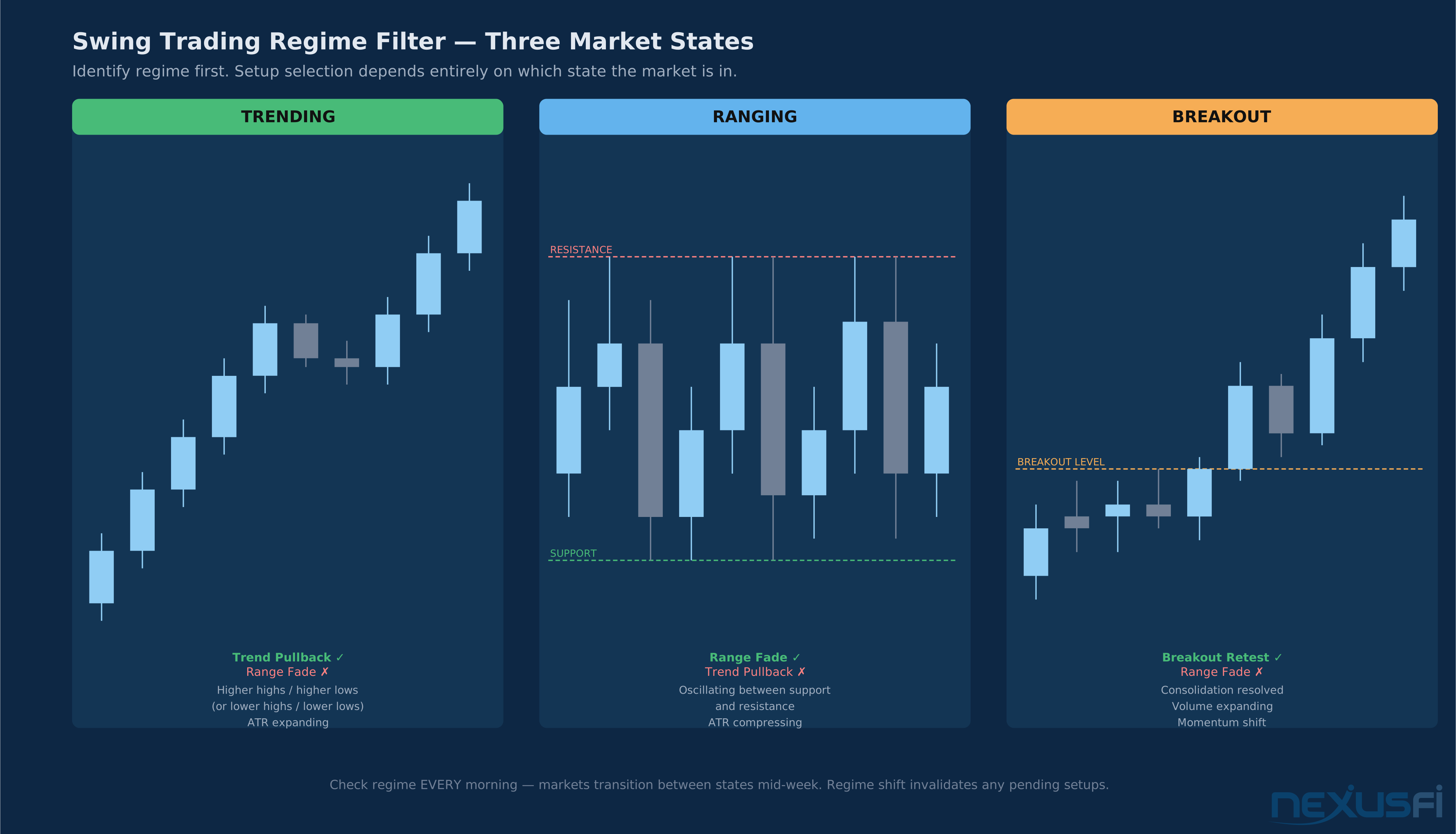
The regime check happens every morning, not just when you're setting up a trade. A trending regime can shift to balanced mid-week. The traders who miss this shift are the ones adding to losing positions because "my setup was valid yesterday."
Step 2: Setup Definition #
Three setups cover the vast majority of what works in futures swing trading. Complexity beyond these three usually signals a trader trying to explain away poor entries rather than describe a repeatable edge.
Setup 1: Trend Pullback (Highest Probability in Trending Regimes) #
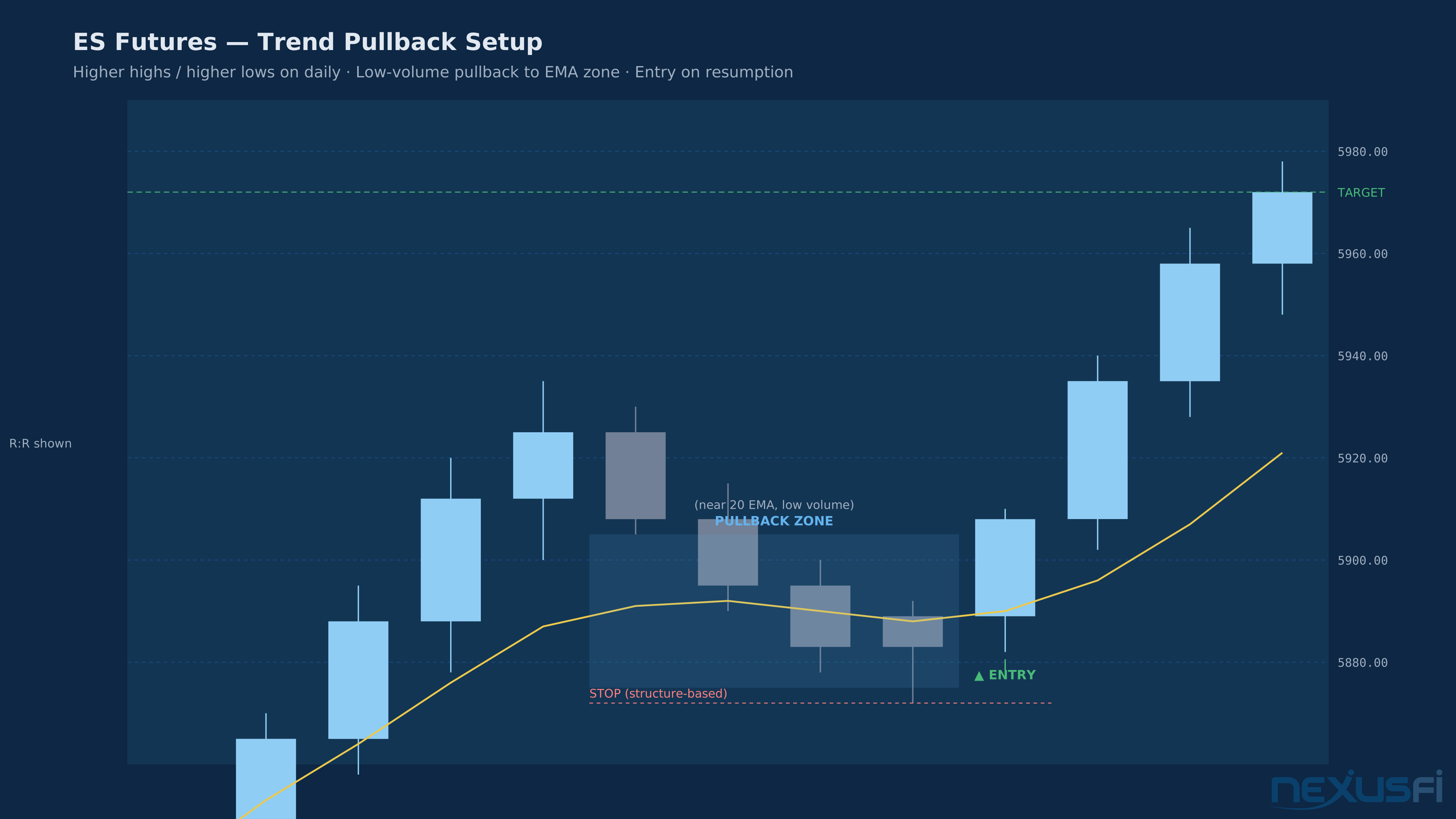
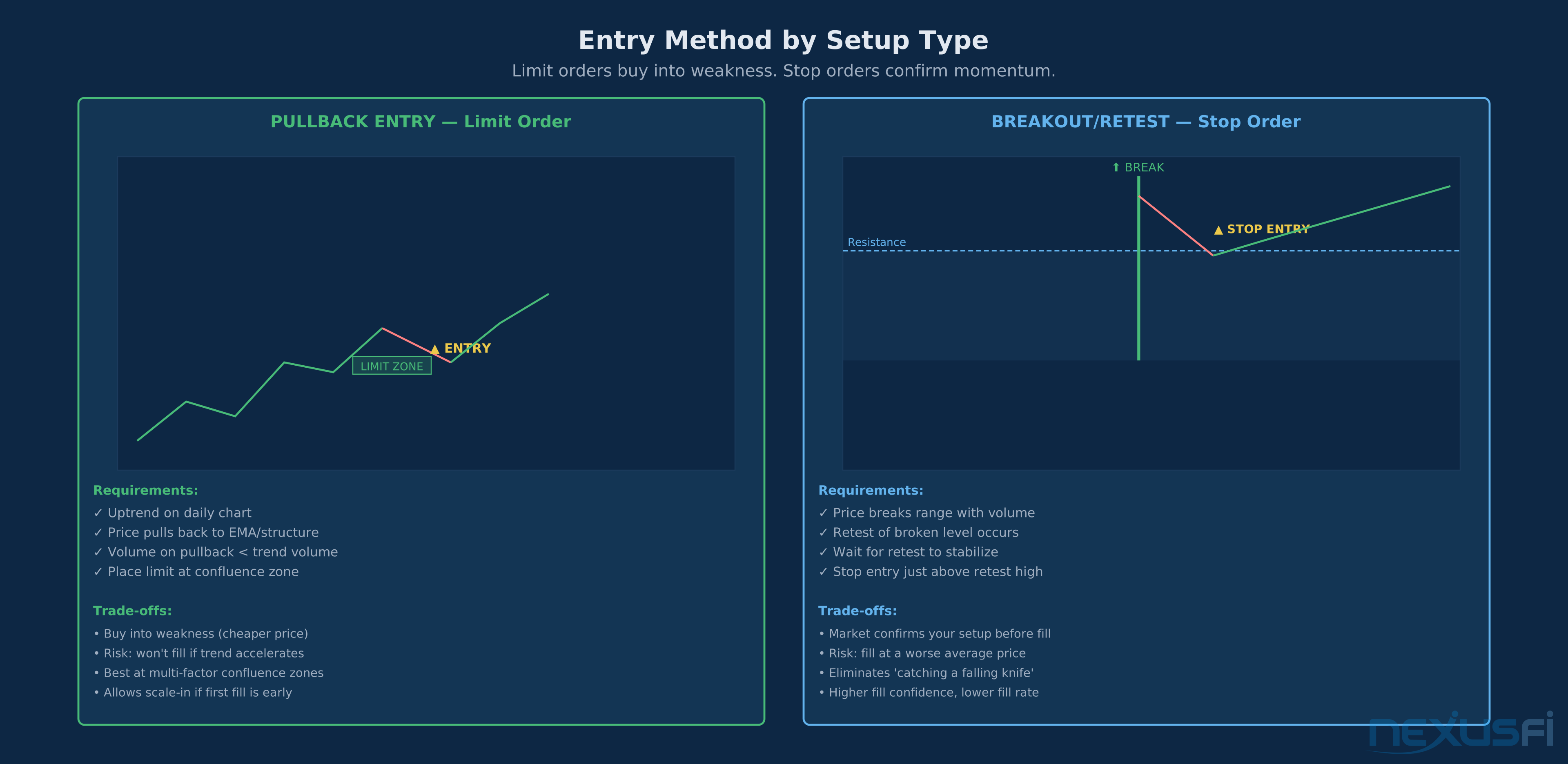
The most reliable swing setup in futures. Price is trending on the daily chart. Price pulls back to a key reference level. Volume on the pullback is lower than volume on the trend leg. You enter when the pullback stalls and trend resumption begins.
@Balanar — who ran one of NexusFi's most-followed trading journals for years — describes the setup with characteristic precision: "Trading the trend means waiting for pullback to enter into the direction of the trend. In ES we had a pullback with low volume. Low volume means pullback may be over and it is time to resume the downtrend." [2]
Where pullbacks terminate (in priority order):
- Prior swing high/low that has now flipped to support/resistance
- Major moving average (20 EMA or 50 EMA on the daily or 4H chart)
- VWAP anchored from prior significant swing point
- Fibonacci retracement zones (38.2%, 50%, 61.8% of the prior trend leg)
- Value area high/low from a composite volume profile
The highest-conviction pullback entries combine at least two of these reference levels in close proximity — a zone, not a line. If the prior swing high, the 50 EMA, and the 61.8% Fibonacci all cluster within 5-8 ES points, that's a much stronger entry zone than any single level.
@GruttePier documented specific pullback criteria that qualify a setup as "A+" quality: price must be above (for longs) or below (for shorts) the VWAP ETH, the opening range must have been established in the trade direction, and volume on the pullback must be lower than the trend leg (relative volume below average). [3] This is the kind of criteria specificity that separates a written playbook from a vague trading idea.
Setup 2: Breakout/Retest #
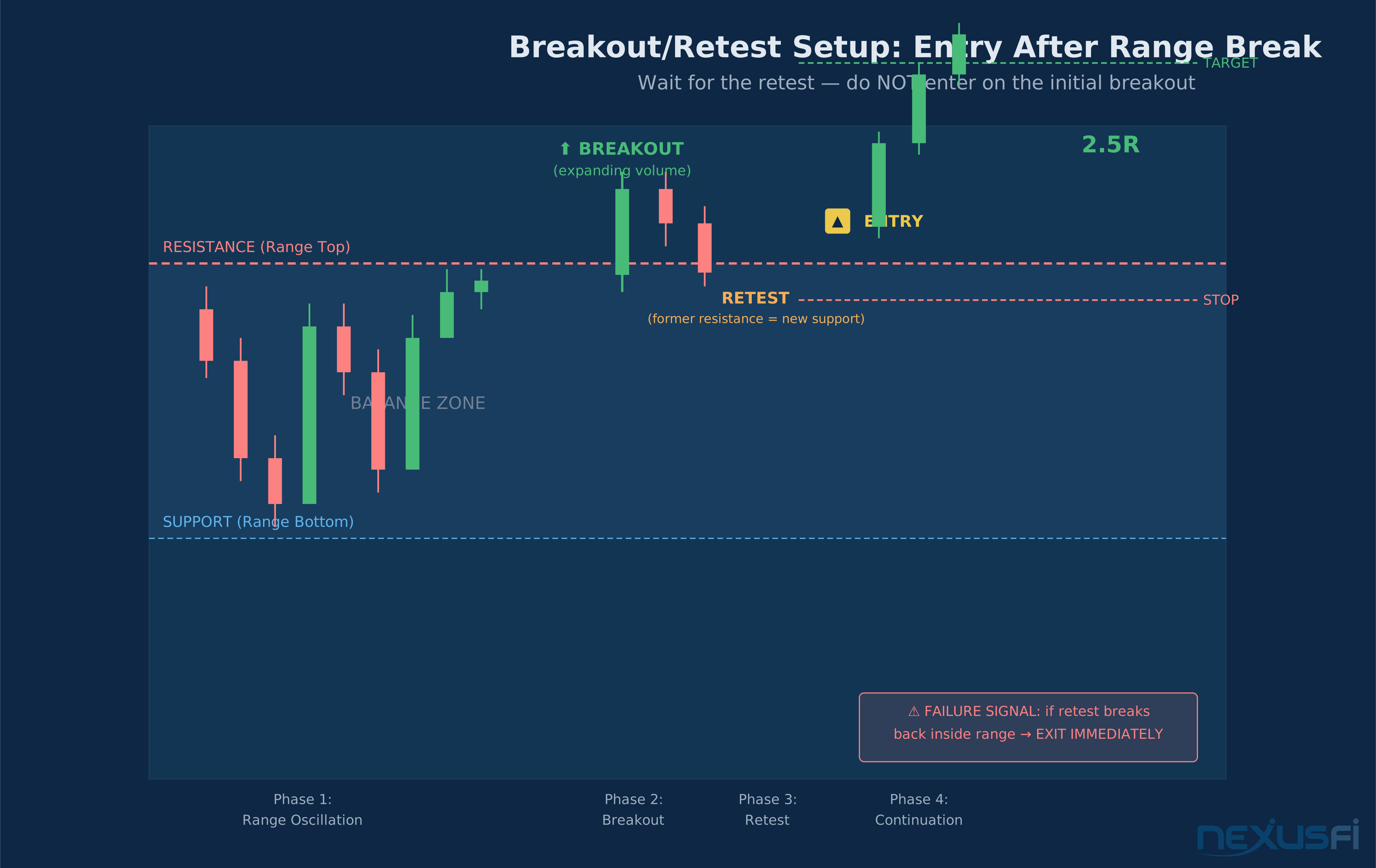
Price breaks through a well-defined range boundary or prior swing high/low with expanding volume. The setup is the subsequent retest of the breakout level — price returns to the broken level and holds.
The key: you do NOT enter on the initial breakout. You wait for the retest. Breakout trades without a retest sequence have far lower probability of success, especially in futures where stop-raids around significant levels are common.
Failure signal: If the retest fails to hold and price breaks back inside the prior range, exit immediately. Holding through a failed breakout is how breakout trades become large losses.
Setup 3: Range Fade (Mean Reversion) #
Price has been oscillating between well-defined support and resistance on the daily chart. You fade the edges when price reaches the extremes with volume exhaustion signals.
This setup requires the most discipline because it's tempting to fade every touch of the range boundaries. The filter: the fade is only valid when the range has been intact for at least 5-7 sessions and there's no macro trigger that would drive a breakout.
Range fades in trending regimes will destroy you. Buying the dip in a downtrend because "it looks oversold" is range-fade thinking applied to the wrong regime. The regime filter in Step 1 exists precisely to prevent this. A mean-reversion swing trade that begins at the bottom of a downtrending range is just a losing directional bet with extra steps.
Step 3: Entry Execution #
Close-based entry: You wait for the session's daily close to confirm the pullback setup before entering at the open of the next session. This eliminates intraday noise but often means entering at a worse price.
Trigger-based entry: On the execution timeframe (15m or 5m), you wait for a specific trigger — a momentum reversal bar, a volume spike in the direction of the trade, or a break of the most recent short-term swing high (for longs). This gives better entries but requires active monitoring.
Limit vs. stop orders: For pullback entries, use limit orders at the target zone — you're buying into weakness, not chasing strength. For breakout/retest entries, use a stop order placed just beyond the retest level, so the market comes to you when resumption begins.
Re-entry rules: If your first attempt is stopped out but the daily structure remains intact, one re-entry is often valid. The re-entry stop is tighter than the original — if the setup fails twice, it's not a setup anymore.
@shodson documented a clean execution formula: measured move (AB), pullback to C, entry at C + 25% of AB, stop at C - 25% of AB, targets at C + 50%, 75%, 100% of AB. Stops and targets derive from structure, not arbitrary ratios. [5]
Futures Mechanics: What Changes Everything #
Here's where equity swing traders get hurt when they move to futures. These mechanics aren't optional reading — they're the framework within which every swing trade lives.
Contract Specifications #
Know before swinging any futures contract:
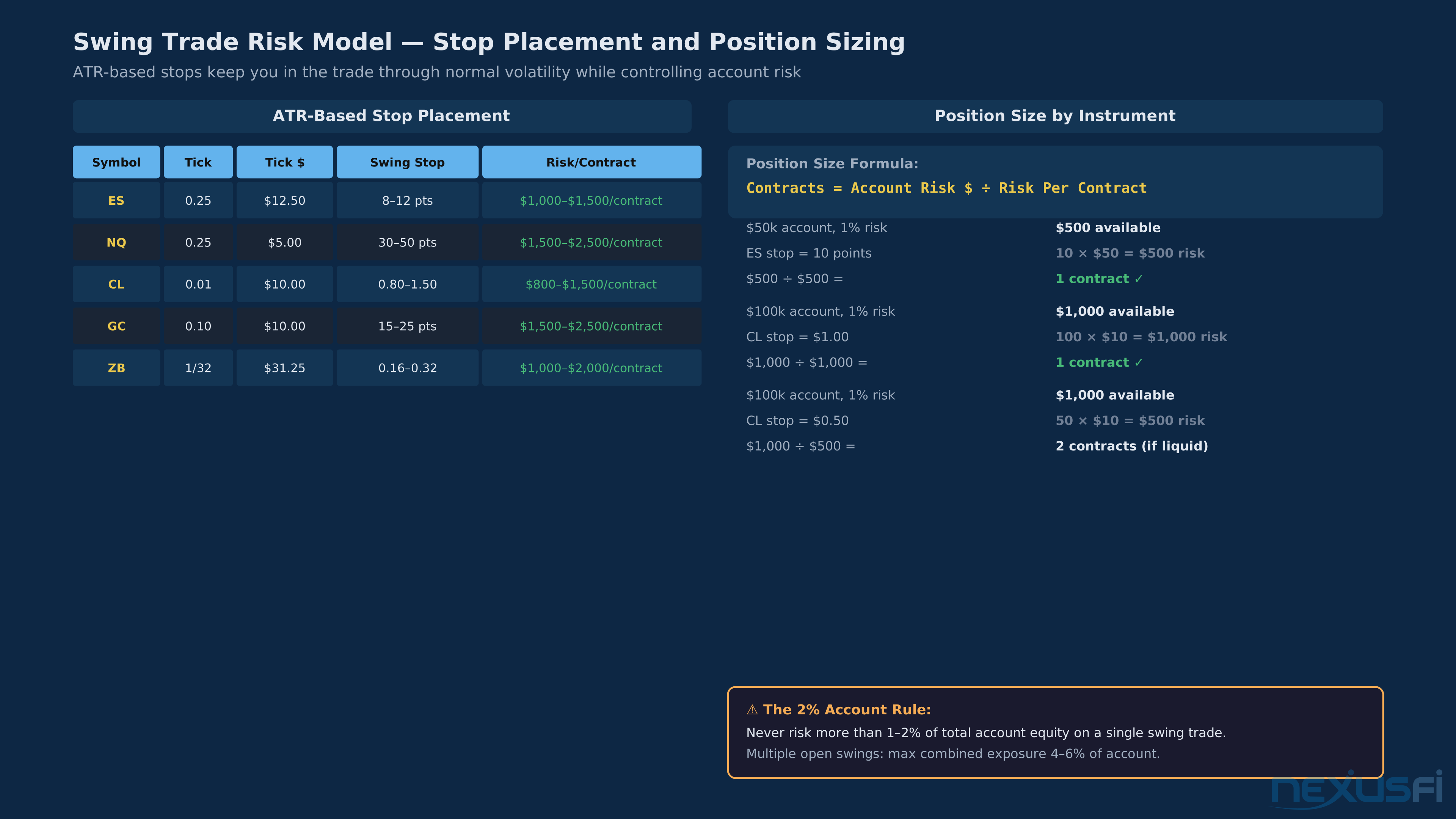
- Tick size and tick value: ES ticks at 0.25 = $12.50 each. CL ticks at 0.01 = $10.00 each. A 20-point ES stop = $1,000. A $1.00 CL stop = $1,000. These equivalencies drive position sizing.
- Margin requirements: Swing margin for ES is typically $6,000-$9,000 per contract depending on broker. This is not your risk per trade — it's the collateral required to hold the position overnight. Your actual risk is set by your stop placement.
- Front-month liquidity: Trade the front-month contract for maximum liquidity and tightest spreads. Switch to the new front-month approximately 1-2 weeks before expiration, when the next contract's volume overtakes the expiring month's volume.
Overnight Risk and Globex Sessions #
In futures, there's no gap risk in the equity sense — the market trades around the clock. What you face instead:
- Thin-session volatility: Between 9 PM and 2 AM ET, volume is a fraction of RTH volume. Large orders can move price much. A stop that looks "safe" in RTH might be inside a 2 AM spike range.
- News-event gaps: Economic releases (CPI, jobs reports, FOMC) can cause 50-100 point gaps in ES or $2-3 gaps in CL even within Globex hours. Your stop placement needs to account for this.
- Weekend gap risk: The only true gap risk in futures. Position sizing going into weekends should be reduced unless you're comfortable with gap-through risk on your stop.
The practical rule: your stop must survive the instrument's normal overnight range. ES Globex averages 15-25 points. A 10-point stop won't survive overnight regardless of directional conviction.
@djkiwi ran a dedicated swing trading journal and made the observation that futures are actually less risky than equities for overnight holds: "With futures your major gap event is really the weekend. So even though you may incur slippage overnight, at least you can get out of the trade if you wish. One thing I enjoy about futures is waking up in the morning and looking to see whether overnight I've been stopped out of a position or preferably my targets reached. This gives me much more control and much less risk over the trade than individual swing stock plays." [7]
Contract Roll Management #
Every futures contract expires. For equity index futures (ES, NQ, YM), roll happens quarterly — March, June, September, December. For energy (CL, NG), it's monthly. For currencies, quarterly. The practical rule:
Stop monitoring roll dates on your calendar. When you're in a swing trade that runs through a roll window, you have two options: close before the contract becomes illiquid (typically 7-10 days before expiration when volume migration starts) or roll your position to the new front month by simultaneously closing the expiring contract and opening the next.
Build the roll date into your trade plan before you enter, not when you're managing a losing position mid-move.
Step 5: Risk Model #
Position sizing for futures swing trades follows a simple rule: risk a fixed dollar amount per trade, set your stop on the chart, then calculate the appropriate number of contracts.
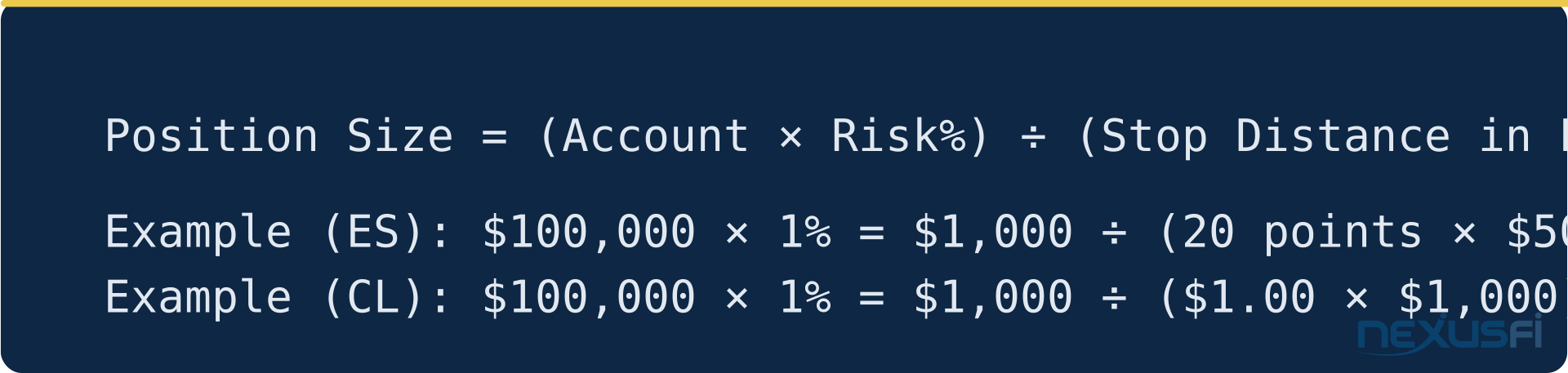
The formula:
Contracts = (Account × Risk%) ÷ (Stop Distance × Tick Value)Example: $100,000 account, 1% risk = $1,000 per trade. ES stop placed 20 points below entry = $1,000 (20 points × $50/point). Result: 1 contract.
@Pariah Carey's risk framework is instructive for its instrument-specific calibration: "For me personally, I think a good rule of thumb in the swing trading is to risk between $500-$1,000 a contract in each market. Depending on the market's volatility. The big three I mentioned [ES, GC, CL] are the most volatile so they get more risk." [1]
Stop placement rules:
- Structure-based first: Below the most recent swing low (for longs) or above the most recent swing high (for shorts) on the signal timeframe. This is the invalidation logic — if that level breaks, the setup is wrong.
- ATR confirmation: The stop distance should be at minimum 1.0× the 14-period ATR on the daily chart. If your structure-based stop is closer than 1× ATR, it won't survive overnight noise. Either accept a wider stop and reduce position size, or pass on the trade.
- Overnight buffer: Add 10-15% buffer beyond the technical stop for instruments with large overnight ranges (CL, NG, NQ). This is not about being right — it's about staying in a trade long enough to find out if you're right.
Max loss limits: Set a daily maximum loss that will cause you to stop trading for the day — typically 2× the normal risk per trade. If two full stops in one day have been taken, something is wrong with either the market or your execution. Stop. Review. Don't add a third trade to a bad day.
Step 6: Trade Management #
Once you're in, the hard part starts. Swing trades test your conviction every session. The overnight move against you, the news release that whipsaws the market, the day 3 chop that makes the trade look dead — these are the moments that define swing trading performance.
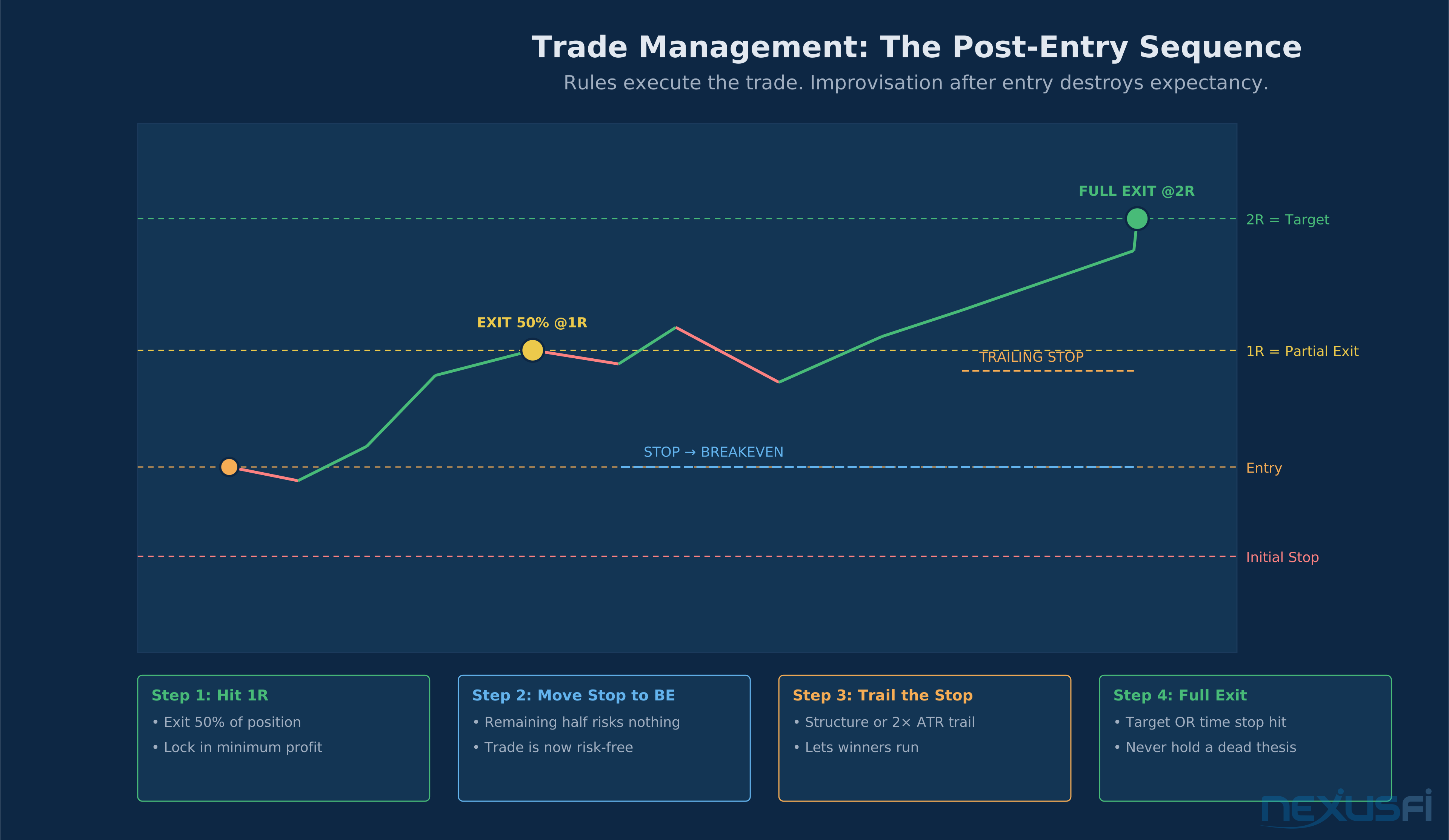
Trailing stops: Once the trade reaches 1.5R, trail the stop using either structure (below the most recent pullback low) or a 2× ATR trail from the current high. Both methods require an active rule — define which you're using before the trade opens.
Time stops: Define a maximum holding period before the trade. If ES hasn't moved in your direction after 5 sessions, the setup has likely failed — the anticipated trigger didn't materialize. Exiting on a time stop prevents "thesis drift" where you're holding a trade that no longer has a valid reason to exist.
Before major news events (FOMC, CPI, NFP): reduce to half size or exit before the announcement, then re-enter after the reaction settles. A CPI print can move ES 60-80 points in 30 seconds — no swing stop survives that cleanly. Write these rules before the trade opens, not while sitting in a drawdown at 2:00 PM on announcement day.
Swing trade management isn't about being right — it's about staying in the game long enough for the trade to develop. This means: stops wide enough to survive overnight noise, partial exits to lock in gains, time stops to kill thesis-dead trades, and explicit rules for news events. Every one of these rules should be written before you enter the trade, not improvised after it's live.
When Swing Trading Futures Fails #
This methodology works. It also fails — in predictable, identifiable ways.
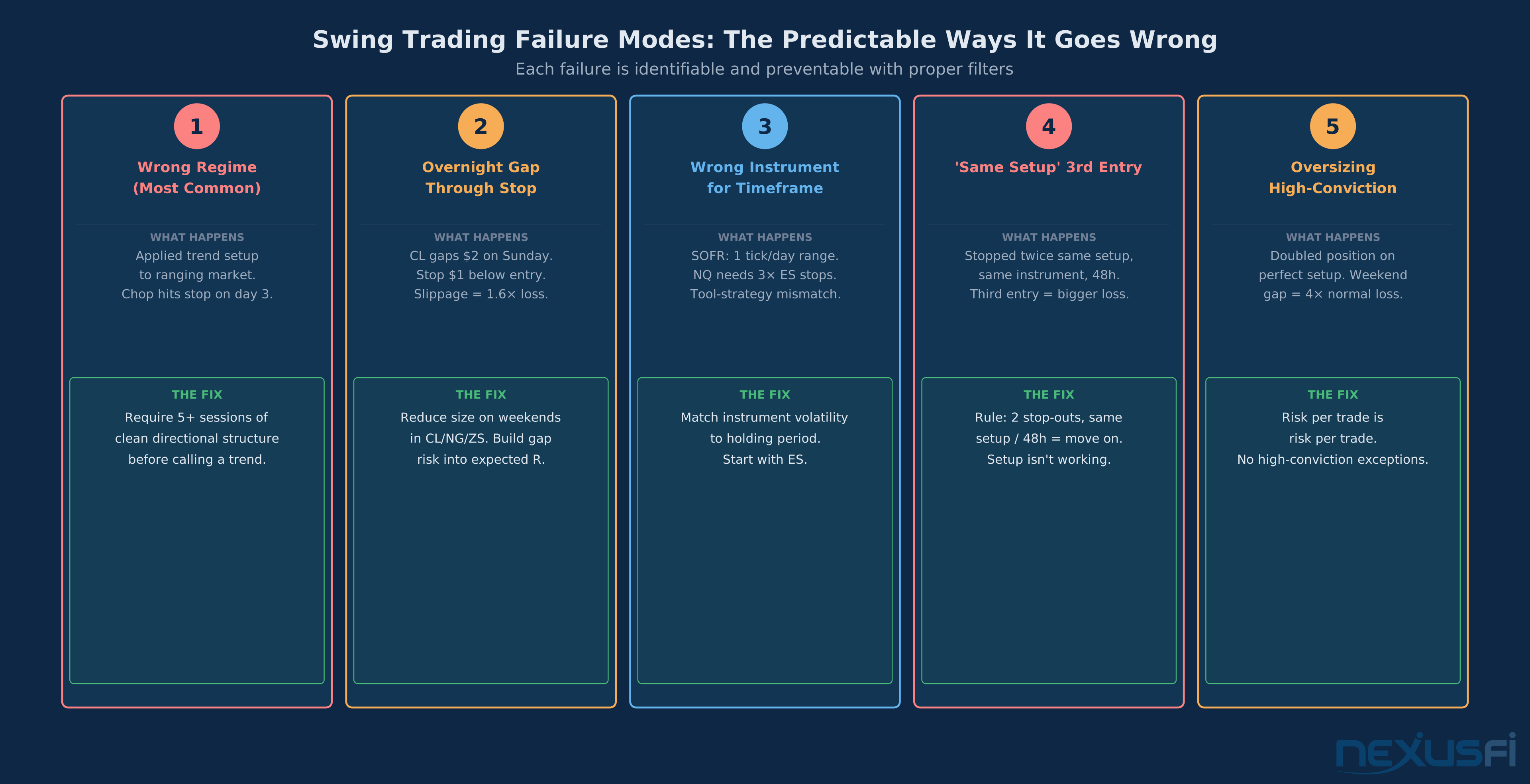
The fix: require a minimum of 5-7 consecutive sessions of directional structure before calling it a trend. One or two higher highs is not a trend — it's noise.
Overnight gap through stop: CL gaps down $2 on Sunday night when OPEC announces production changes. Your stop was $1 below entry. You get filled at $1.60 below your stop. The slippage alone turns what should be a $1,000 loss into a $1,600 loss.
The fix: reduce position size going into weekends in energy and agriculture futures. These markets are most exposed to gap-through risk. For equity index futures, weekend gap risk is lower but not zero.
Wrong instrument for swing timeframe: ES is a swing trader's instrument. SOFR futures are not — the daily ranges are often single ticks. NQ works, but its volatility means stops need to be much wider than ES. Getting the instrument-timeframe match wrong is like using the wrong tool — the methodology is correct but the execution fails.
The "this time it's different" hold: Two stop-outs on the same setup within 48 hours means the setup isn't working. Move on. The third attempt turns a learning experience into a real loss.
Over-leveraging on high-conviction setups: The temptation to size up when the setup looks perfect is exactly where the largest losses live. The market doesn't reward conviction. Risk per trade is risk per trade — full stop.
The margin mechanics of futures make over-leveraging lethal rather than merely painful. An equity trader who doubles their position size has a bad week. A futures swing trader who doubles position size and takes a weekend gap-through their stop can lose 4× their intended risk in a single event. Sizing discipline isn't conservative — it's survival.
Instrument Selection for Swing Trading #
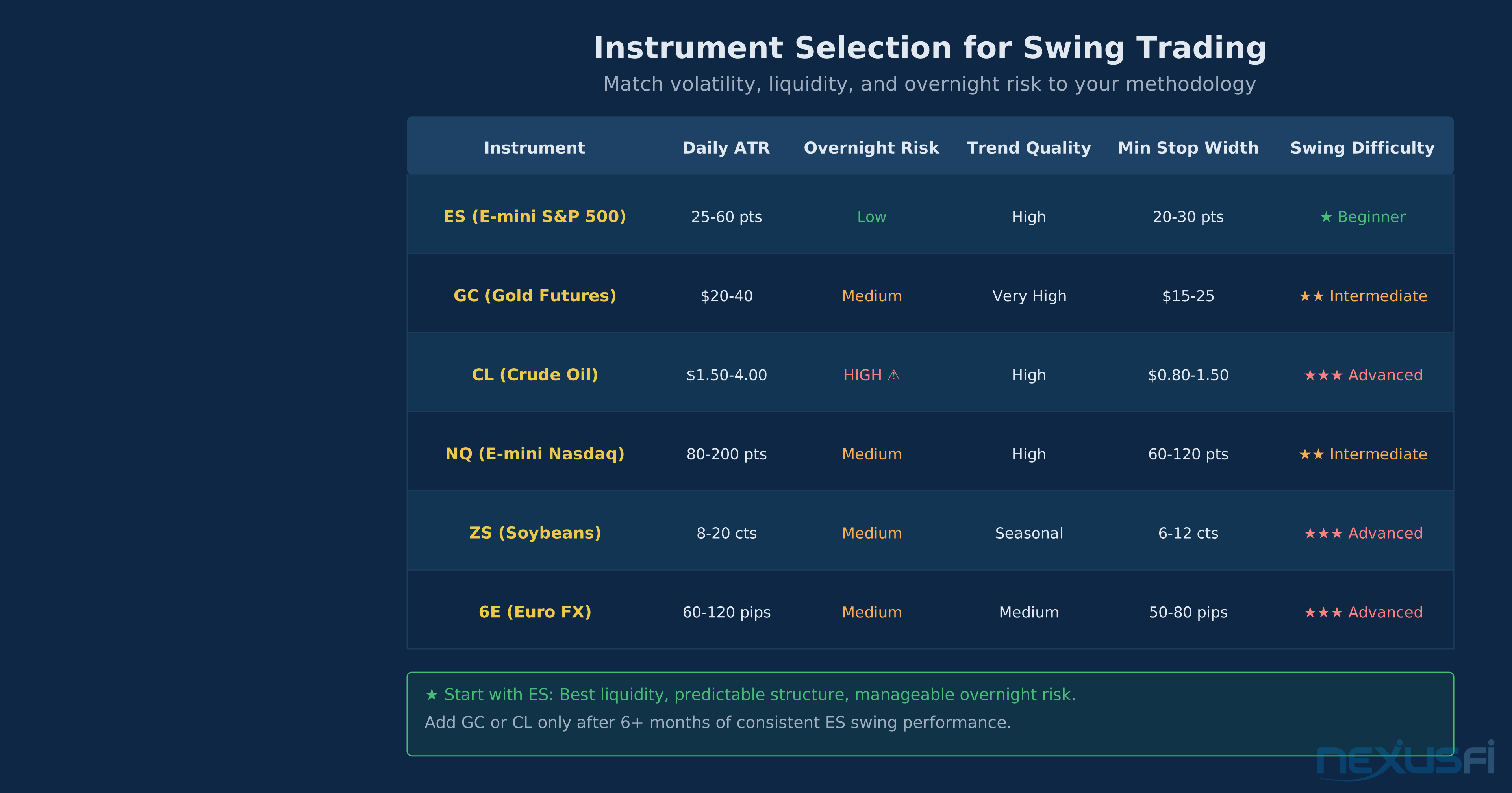
Not every futures contract suits swing trading. Best instruments by trader consensus:
- ES (E-mini S&P 500): Most liquid, predictable range, strong daily structure, well-covered macro context. Daily swings of 30-80 points are normal. Swing setups appear multiple times per week.
- GC (Gold): Strong trend tendencies, responds to macro themes (dollar, rates, risk sentiment), lower correlation to equity index. Good swing setups when CPI/FOMC cycle is active.
- CL (Crude Oil): Higher volatility than ES (daily ranges of 100-300+ ticks), strong trend tendencies, significant overnight risk from geopolitical/supply news. Better for experienced swing traders who understand the commodity fundamentals.
- NQ (E-mini Nasdaq-100): Higher volatility version of ES, stronger trends but wider stops required. Good for traders who want more movement per contract.
- ZS (Soybeans), ZC (Corn): Seasonal swing patterns are well-documented. Fundamental supply/demand data creates 2-3 week trend moves. Best for traders comfortable with commodity fundamentals.
Practical Application: Building a Swing Trading Routine #
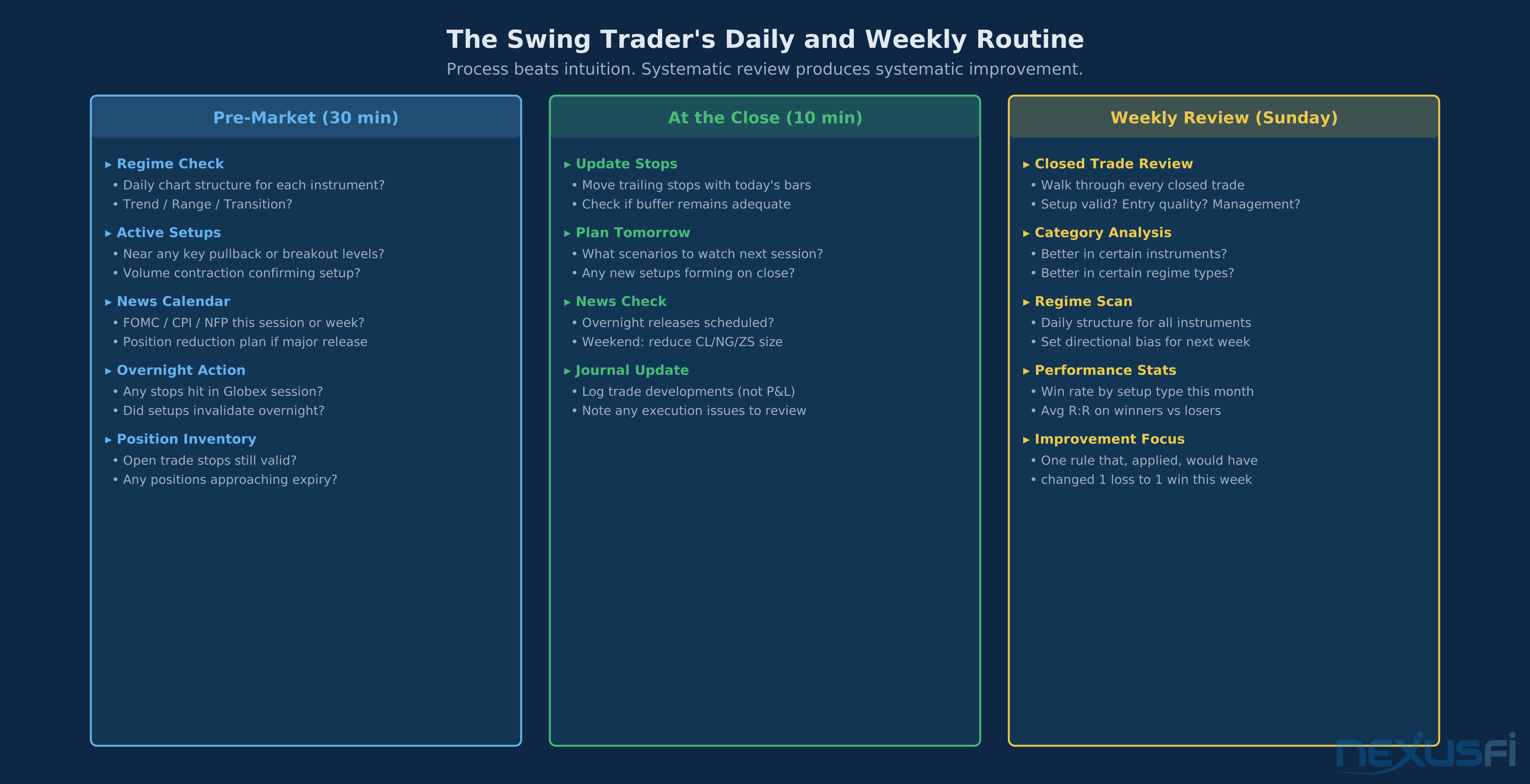
Pre-Market (30 minutes before RTH open) #
- Regime check: What is the daily chart structure for each instrument you trade? Trend, range, or transition?
- Active setups: Are any instruments near key pullback or breakout levels?
- News calendar: What macro releases are scheduled this session and this week? Note any events that require position reduction.
- Overnight action and inventory: How did Globex behave? Any active positions stopped or setups invalidated? Review open stops and expiry dates.
At the Close #
- Update stops: Trail stops based on today's action.
- Next-session plan: What scenarios emerge from today's close and structure?
- Journal update: Log developments on any open swing trades.
Weekly Review #
- Completed swing trade review: For any trades that closed this week, what was the setup, the entry quality, the management, and the result?
- Category analysis: Are you better in certain instruments, setups, or regimes? The data will tell you.
- Next week positioning: Directional bias from weekly structure, key levels to watch.
Knowledge Map
Go Deeper
Build on this knowledgeReferences This Article
Articles that build on this topicCitations
- — The Program (2023) 👍 7“I swing trade five instruments: CL, ES, GC, ZS, and 6E. In the ZS and 6E I risk from $500 to $625 per contract. In the others -- what you could call the Big Three -- I risk $1,000 a contract.”
- — Trading Futures with Context (2014) 👍 14“Trading the trend means waiting for pullback to enter into the direction of the trend. Low volume means pullback may be over and it is time to resume the downtrend.”
- — GruttePier trading journal to getting profitable (2018) 👍 14“A-plus setups require: price above (for longs) or below (for shorts) the VWAP ETH, the opening range established in the trade direction, and volume on the pullback lower than the trend leg.”
- — The PandaWarrior Chronicles (2013) 👍 7“What I do with CL once a trend line breaks is gauge the strength of the break, then watch the initial pullback. I prefer the trailing stop trade entries to the anticipatory limit entries.”
- — Find a pullback, programmatically (2019) 👍 10“Find the measured move (AB), wait for the pullback to C, entry at C + 25% of AB, stop at C - 25% of AB, targets at C + 50%, 75%, and 100% of AB.”
- — How does 24-hr. trading affect swing-trading e-mini contracts? (2011) 👍 2“A stop on anything less than a daily chart will take you out of a larger move pretty quickly. Certain instruments have very large swings over night that would take a tight trail stop out.”
- — Swing Trading Futures (2012) 👍 2“With futures your major gap event is really the weekend. So even though you may incur slippage overnight, at least you can get out of the trade if you wish.”
- — Spoo-nalysis ES e-mini futures S&P 500 (2015) 👍 26“Trend following approaches should be stopped during sideways markets; mean-reverting methodologies should not be used during momentum surges. One must first be able to recognize whether a market is mean reverting or trending.”
- — Catching Big Waves - a trader journal of surfing the markets (2011) 👍 44“For a swing trade there were two possible strong entry points. Entering in the zone of a pullback -- there is no specific place, and sometimes crude will spike up and not look back, but more often than not it will come back to at least one of these levels.”
- — Outside the Box and then some (2016) 👍 19“One of the keys to being successful in trend trading is to know when it is appropriate to use a trend trading tool box. In markets that move up and down there are variety of tools that work fairly well, but in sideways markets they completely break down and fail.”