



Price Action Trading for Futures: Reading the Market Without Indicators
Overview #
Price action trading strips away the noise. No oscillators, no lagging indicators, no colored lines crossing each other. Just price — what it's doing, where it's doing it, and what that tells you about the balance between buyers and sellers. For futures traders, that's the raw language of the auction.
Here's what price action actually is: reading the market's own behavior to make trading decisions. Every bar on your chart tells you four things — where the session opened, where it closed, how far buyers pushed it, and how far sellers pushed it. That's open, close, high, low. Everything else is derived from those four numbers.
This isn't about memorizing candlestick patterns from a textbook. It's about understanding what price behavior means at specific locations in the market's structure. A pin bar at a random price level is noise. A pin bar at yesterday's value area high after a three-day uptrend — that's information.
The Price Action Framework #
The framework rests on three pillars — and the order matters.
Context first, pattern second. This is the single most important principle in price action trading. A bullish engulfing bar means nothing unless you know where it occurred (at support? in the middle of nowhere?), what the higher timeframe is doing (trending up or down?), and what the session context suggests (inside day? gap open?).
Trend structure is the backbone. Before looking at any individual bar, you need to know the trend. Uptrend means higher highs and higher lows. Downtrend means lower highs and lower lows. Range means neither. The trend tells you which direction to trade. Trading against it requires much more evidence.
Levels are where the action happens. Key support and resistance zones, prior session highs/lows, value area edges, POC — these are the locations where price action signals carry weight. Away from key levels, most bar patterns are just noise in the auction process.
Trend Structure #
Trend identification is the foundation. Before anything else, answer one question: are we making higher highs and higher lows, or lower highs and lower lows?
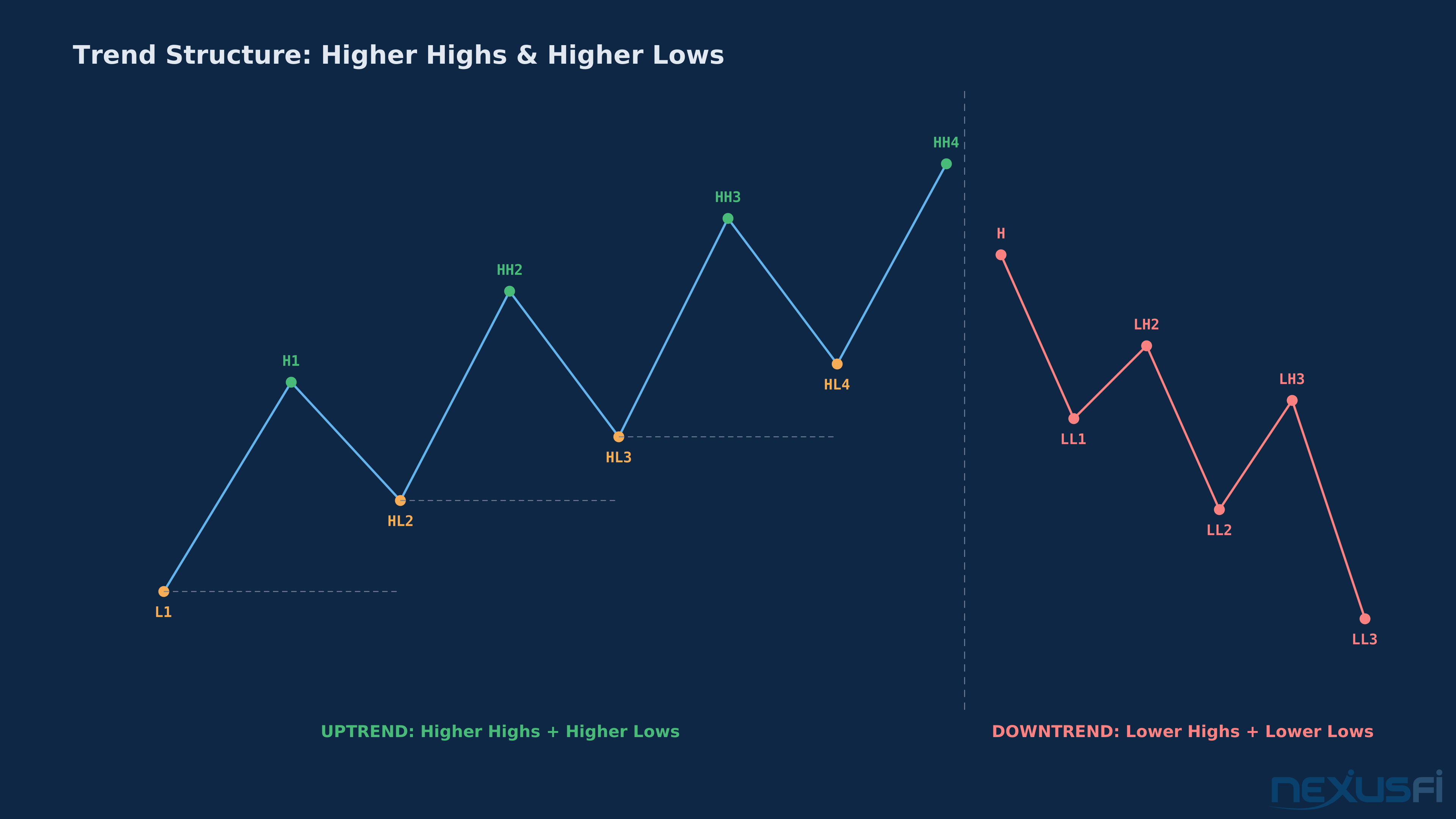
An uptrend is alive as long as each swing low stays above the prior swing low and each swing high exceeds the prior swing high. As [Big Mike explained on NexusFi] [7], trading higher highs and higher lows "makes logical sense" as the structural foundation — and false breakouts within that structure are your first warning sign of exhaustion.
The moment a swing low drops below the prior swing low, the uptrend is in question. That doesn't mean short everything — it means your with-trend long bias just weakened and you should demand stronger evidence before entering new longs.
How to identify swings in real-time. Use whatever timeframe matches your trading style. For ES day trading, 5-minute or 15-minute bars work. For CL, 3-minute or 800-tick charts. As @sharky [explained] [3], he uses a combination of weighted moving averages to identify the overall trend direction — but the core principle is the same: determine which direction has momentum, and don't fight it.
Swing failure = trend transition. When a swing high fails to exceed the prior high (lower high), that's your first clue the trend is weakening. When the subsequent swing low also breaks the prior low (lower low), the trend has flipped. This transition zone is where most traders get chopped — they're still buying in what they think is an uptrend, but the market has already shifted.
As @Feibel [noted] [5], simple pullbacks in a healthy trend "do not retrace deep into the previous swing/leg — roughly the 75-80% level and always hold key support areas." Complex pullbacks that retrace deeper and penetrate support levels are the market telling you the trend is getting messy.
Bar Patterns That Matter #
Four patterns carry real information in futures markets. Everything else is noise.
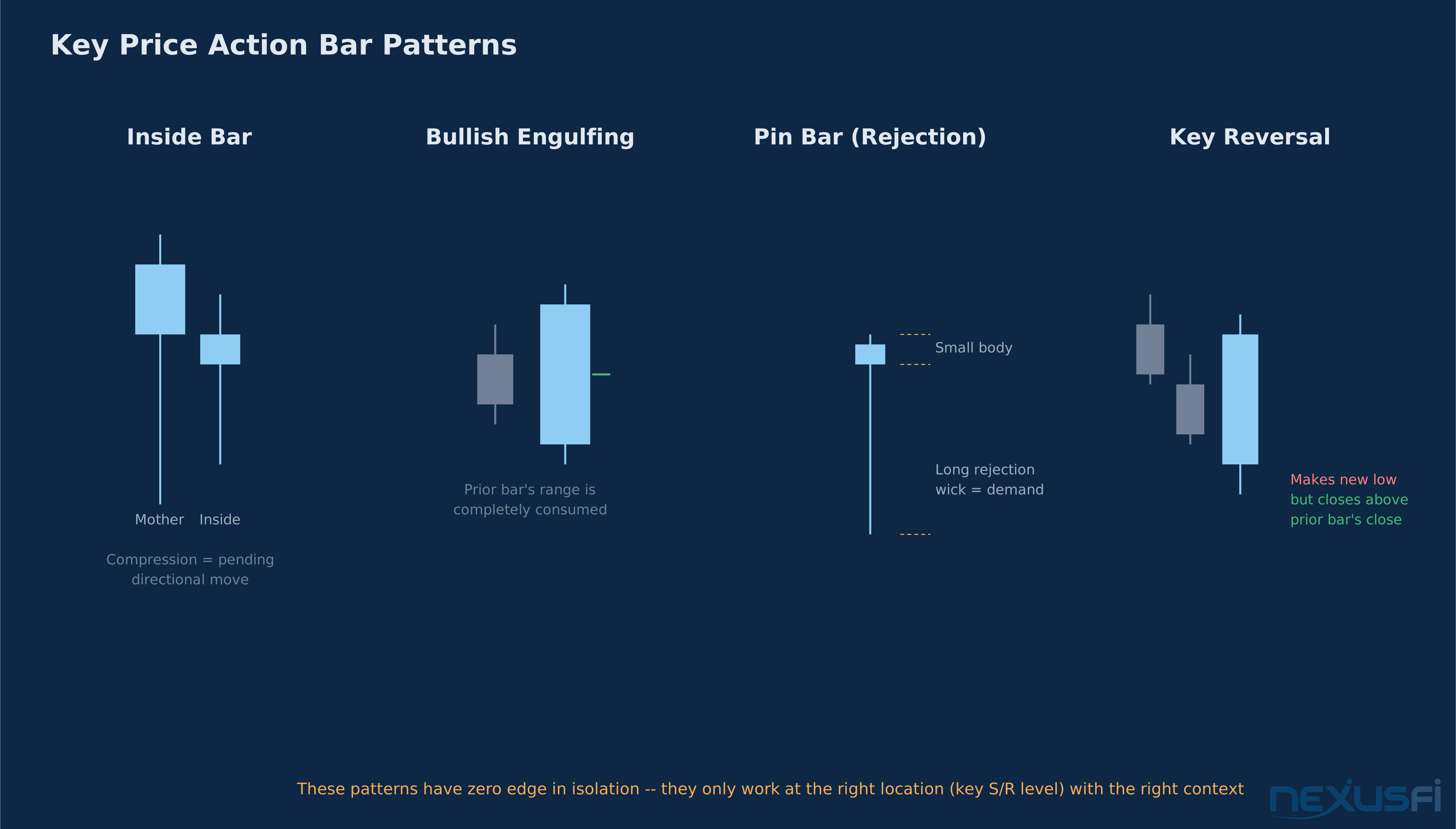
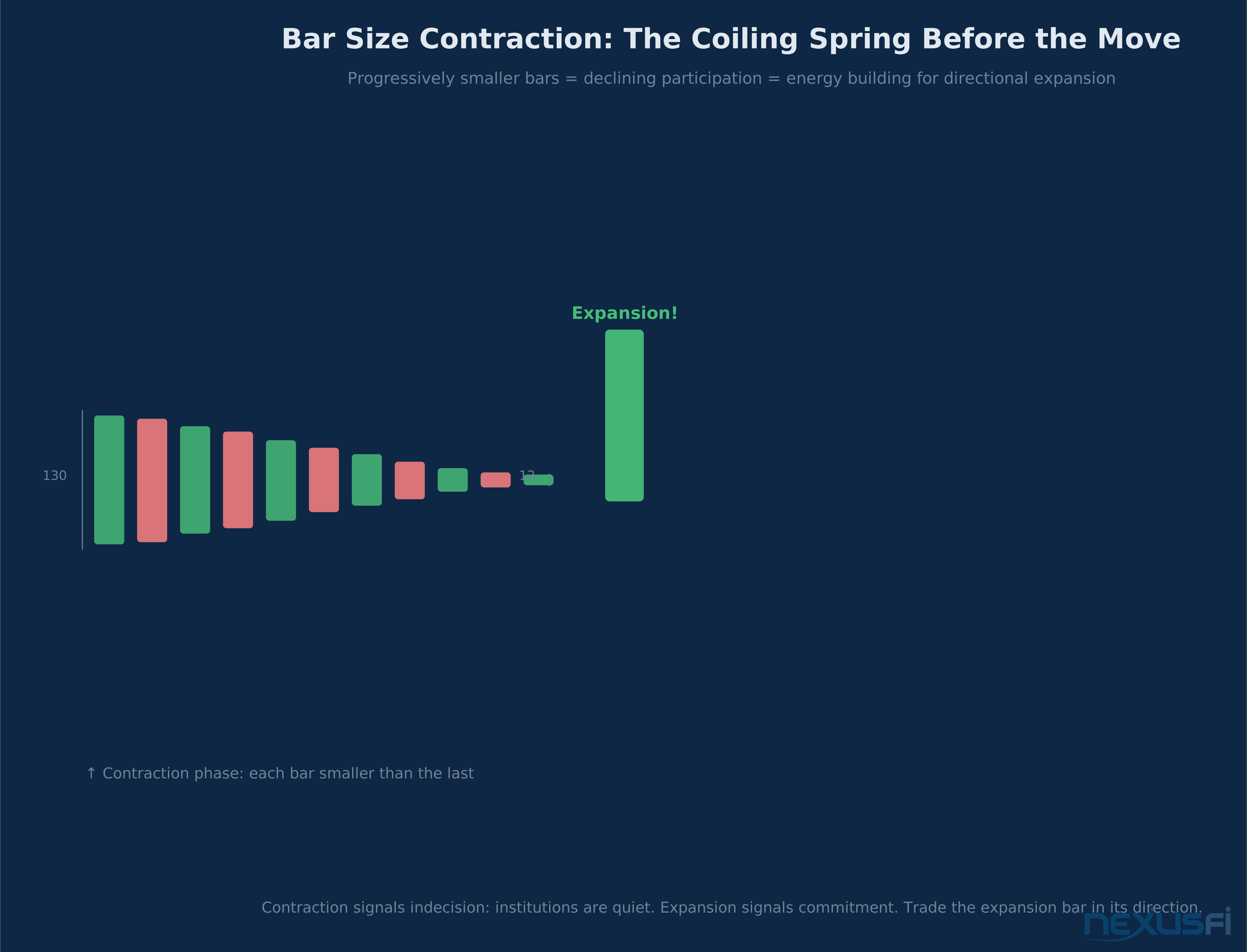
Inside Bar. The current bar's range is entirely contained within the prior bar's range. This is compression — the market is coiling, and a directional move is coming. The question is which direction. The prior trend and location give you the answer. An inside bar at support in an uptrend is a continuation setup. An inside bar at resistance after an extended move is a potential reversal.
Engulfing Bar. The current bar's range completely swallows the prior bar. This shows a shift in control. A bullish engulfing (large up bar consuming a small down bar) at a swing low is demand stepping in. @thatguy [narrowed his entries] [4] to three patterns: "Inside bars, engulfing bars, pivot reversals" — and critically, he doesn't trade them blindly: "I do not blindly enter on the patterns themselves, but only after I feel I see strength/weakness."
Pin Bar (Rejection Bar). A bar with a long wick and small body. The wick shows where price was rejected — the longer the wick relative to the body, the stronger the rejection. A bullish pin bar at support (long lower wick) tells you demand absorbed supply at that level.
Key Reversal. The bar makes a new extreme (new high or new low) but closes in the opposite direction, beyond the prior bar's close. As @Feibel [described] [6], reading the spread (range) and close position of bars reveals the underlying force — "it takes force to break support or resistance" and when a bar makes a new extreme on wide spread but closes weak, that level has been rejected.
The critical caveat. None of these patterns have a positive edge in isolation. Zero. Backtesting any single candlestick pattern across random entries produces results indistinguishable from random. Their value is entirely location-dependent — they're triggers, not signals.
The Context-First Decision Framework #
This is where price action trading lives or dies. Context isn't optional — it's the entire game.
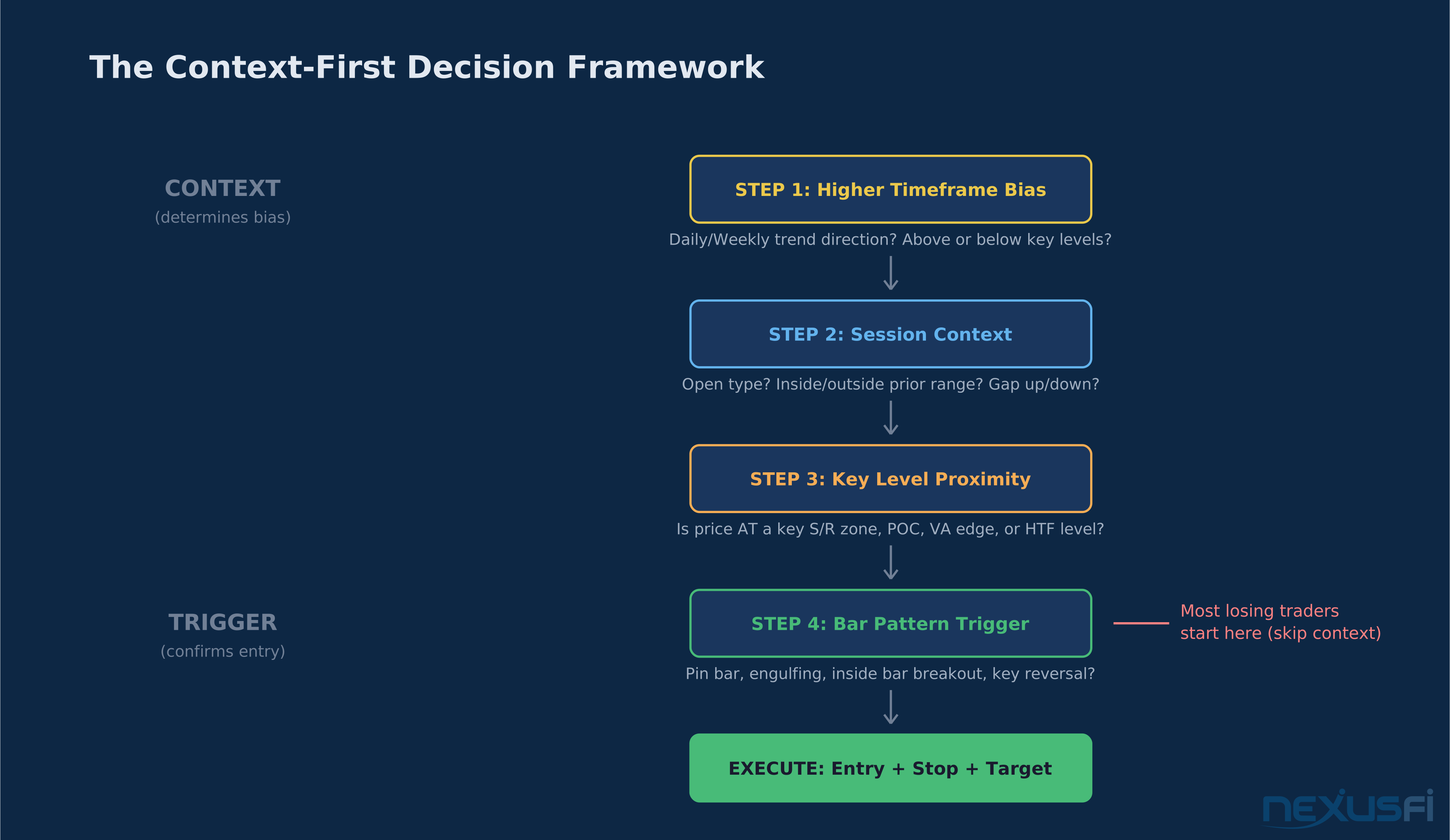
Step 1: Higher Timeframe Bias. What's the daily or weekly trend? Is price above or below key levels on the higher timeframe? As @Inletcap [demonstrated] [2], he evaluates three timeframes before the open: long-term trend direction (monthly VWAP, prior month's levels), intermediate-term trend (weekly VWAP, statistical overbought/oversold), and overnight action. He faded the open long because "center of gravity is above, we are statistically oversold per the weekly VWAP, trading in the balance area low."
Step 2: Session Context. How did we open relative to yesterday? Inside the prior range or outside? Gap up, gap down, or flat? The open type sets the tone for the first hour. An open-drive (price moves aggressively from the open with no pullback) tells you one-timeframe traders are in control. An open-test-drive (price tests one direction, reverses, then trends) gives you that with-trend entry after the test.
Step 3: Key Level Proximity. Is price near a level that matters? Prior day's high/low, value area high/low, naked POC, weekly level, monthly level. If price is in no-man's-land between key levels, there's no trade. Wait for it to reach a location where the auction participants have demonstrated interest.
Step 4: Bar Pattern Trigger. NOW you look for a bar pattern. And only now. A pin bar at the prior day's low after a with-trend pullback in a daily uptrend — that's a high-conviction long. The same pin bar in the middle of the range on a flat day? Skip it.
Setup 1: With-Trend Pullback #
The highest-probability price action setup. Period.
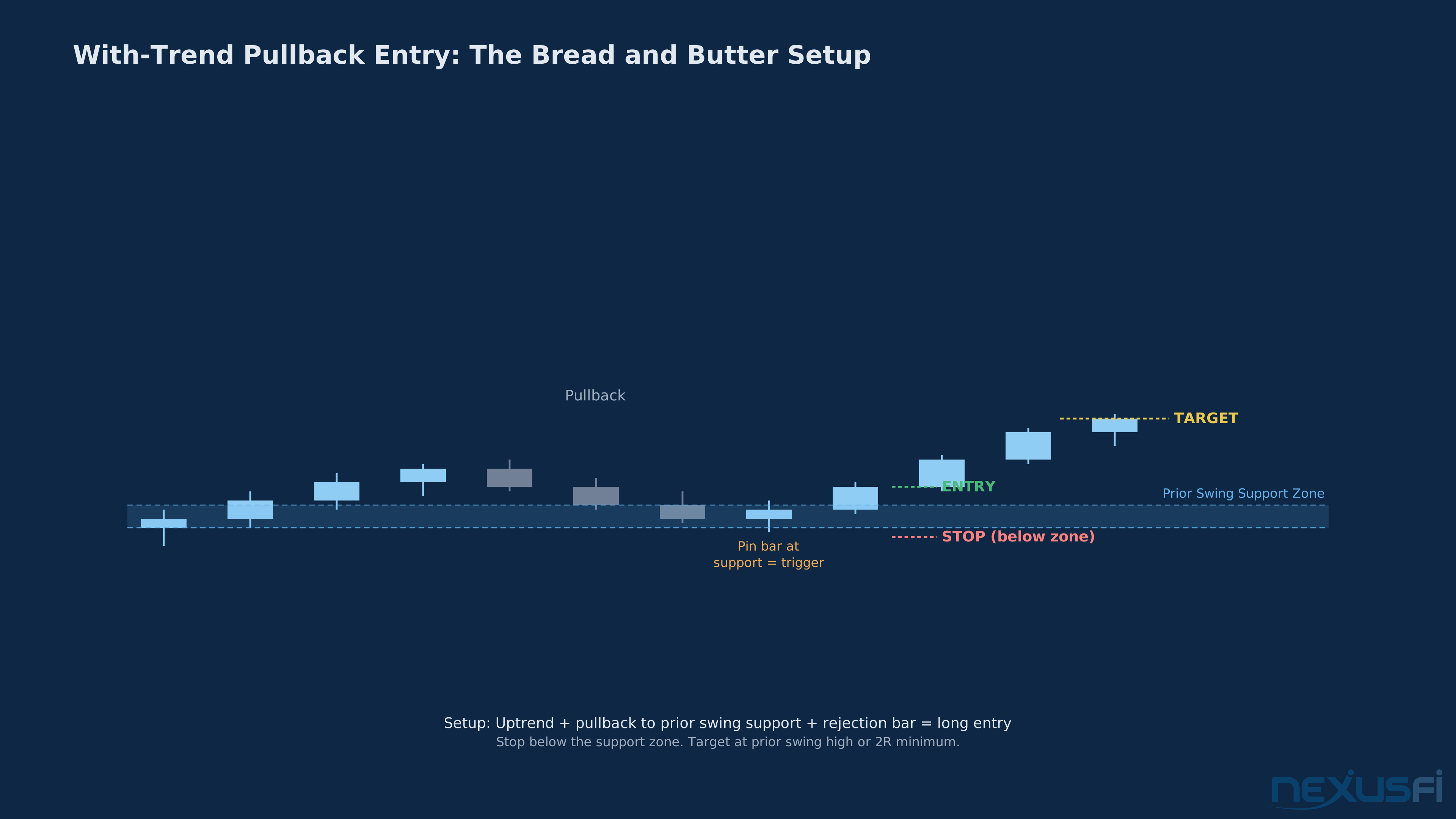
The logic. Trends persist. When price pulls back within a trend, it creates a temporary discount (in uptrends) or premium (in downtrends). Trading the pullback completion puts you on the right side of the dominant flow with a tight stop.
Entry rules:
- Confirmed trend on your trading timeframe (higher highs/higher lows or vice versa)
- Price pulls back to a key level: prior swing high (now support), value area edge, VWAP, or confluence zone
- A rejection bar forms at that level (pin bar, engulfing, or inside bar followed by continuation)
- Enter on the break of the rejection bar in the trend direction
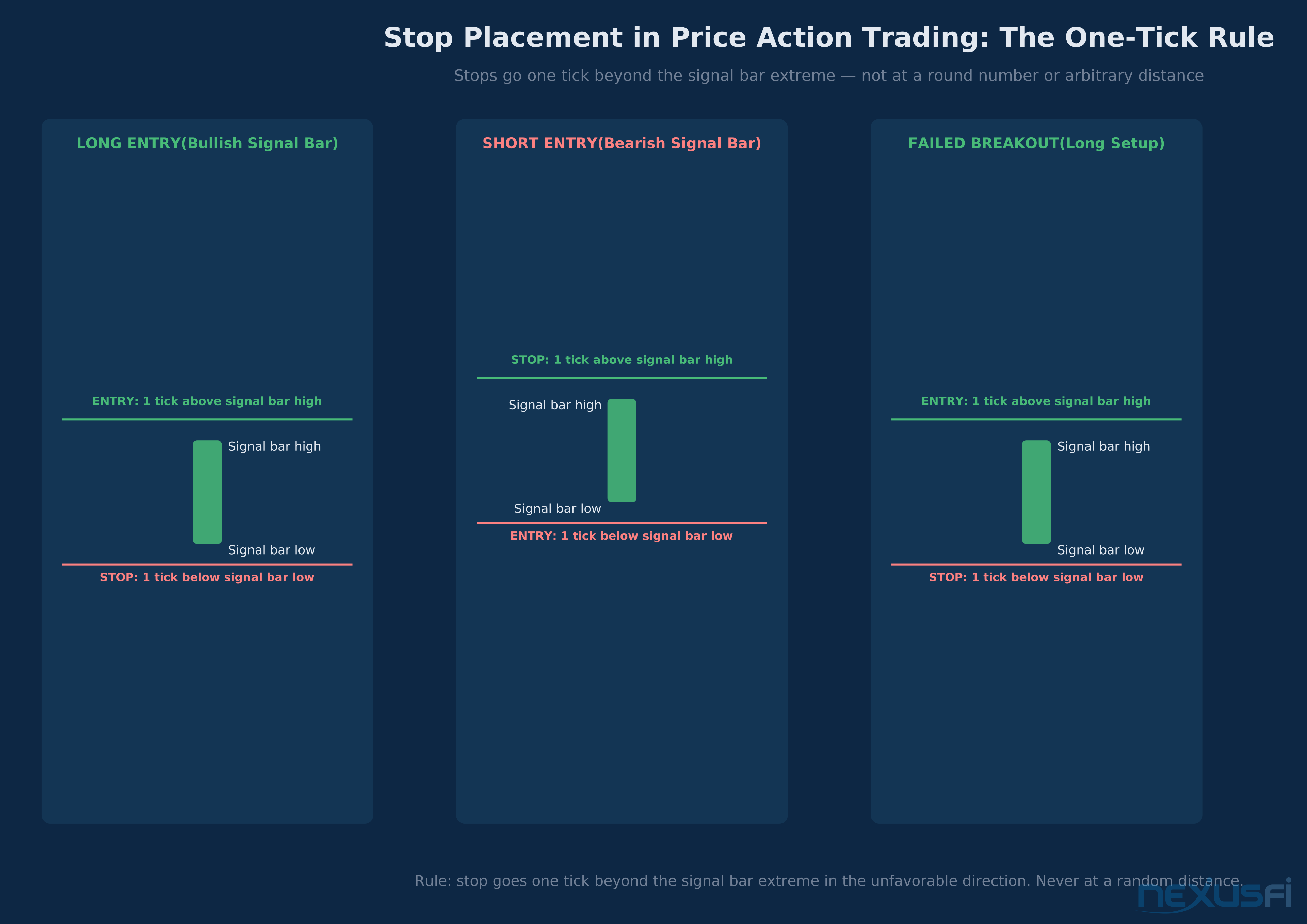
Stop placement: Below the rejection bar's wick (for longs) or below the support zone. In ES, that's typically 4-8 points depending on the timeframe.
Target: Prior swing high (1R target) or 2x the risk for a minimum reward. Scale out at 1R and trail the rest.
Invalidation: If the pullback breaks through the prior swing low (for longs), the trend structure is damaged. Exit immediately — don't hope.
As @runner [explained] [1]: "I don't look for any elaborate setups once price reaches my area. It takes me a decent amount of time to prepare the Road Map Levels, and what's the use of all the preparation if I'm going to look for 30 different confirmations before I enter the trade?" The preparation happens before the session. Execution should be almost automatic.
Setup 2: Failed Breakout Fade #
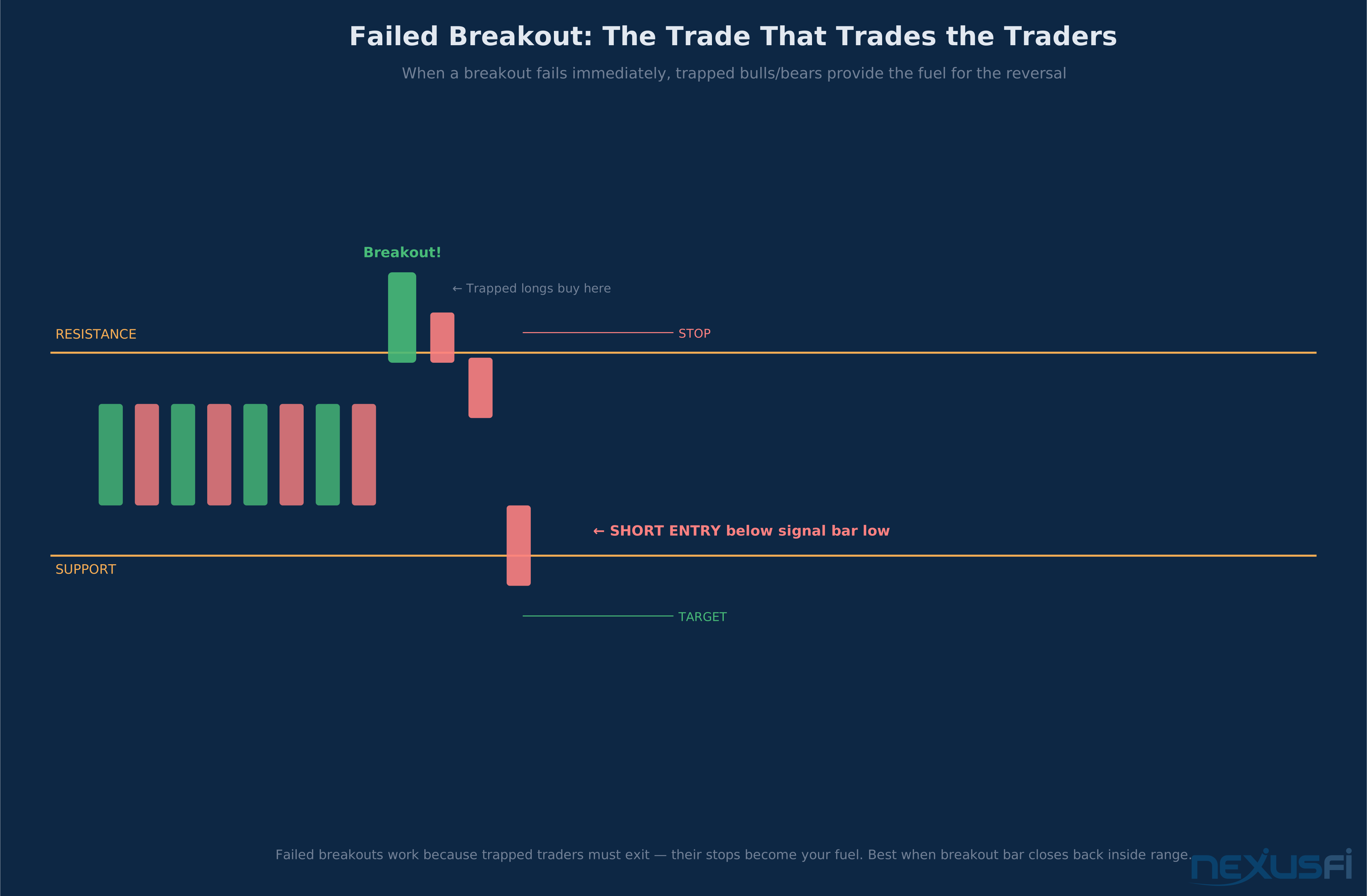
When a breakout fails, the trapped traders become fuel for the reversal.
The logic. A failed breakout traps traders on the wrong side. Their stop-outs add momentum to the reversal. This is why false breakouts at range extremes can produce some of the best trades of the session.
Entry rules:
- Price breaks above resistance (or below support) but fails to hold
- The breakout bar closes back inside the range — or the next bar reverses sharply
- Enter in the direction of the failure (short if the upside breakout fails)
- As Big Mike [detailed] [7], watch bar closes: "they both failed to close low. On a range bar, selling the LL breakdown, it should close low. If it doesn't you instantly get defensive about the position."
Stop placement: Beyond the false breakout extreme. If the breakout high was 5850.50 in ES, your stop is at 5851.00 — tight, because if price goes back through that level, the breakout wasn't false after all.
Target: The opposite side of the range, or at minimum 1.5R.
As @sstheo [observed] [8], after a large move day, "confusion equals range condition" and "any attempt to break out of the range may be met with selling or buying back to the midpoint. These false breakouts are very common." He identifies valid breakout points at 50% of the full range beyond the range boundary — a concrete threshold worth testing.
Setup 3: Key Level Reversal #
Trading the turn at a significant level with confluence confirmation.
Entry rules:
- Price reaches a key level with multiple confluence factors (prior day high + weekly resistance + round number)
- A key reversal bar forms — new extreme followed by a close beyond the prior bar's range in the opposite direction
- Volume confirmation helps: declining volume into the level suggests exhaustion
- Enter on the close of the reversal bar or on a break of the bar in the reversal direction
Stop placement: Beyond the extreme of the reversal bar. Tight stops are essential here — if the level doesn't hold immediately, it's not holding.
Target: The next key level in the reversal direction. For a short off daily resistance, target the POC or value area high from the prior session.
Invalidation: If the reversal bar's extreme is exceeded by more than a few ticks, the level has failed. Accept the loss.
This setup has a lower win rate than with-trend pullbacks (roughly 45-55% versus 55-65% based on community observation) but offers larger reward-to-risk ratios because you're catching turns at extremes.
When Price Action Fails #
Price action doesn't work in every condition. Recognizing when to sit out is as important as recognizing setups.
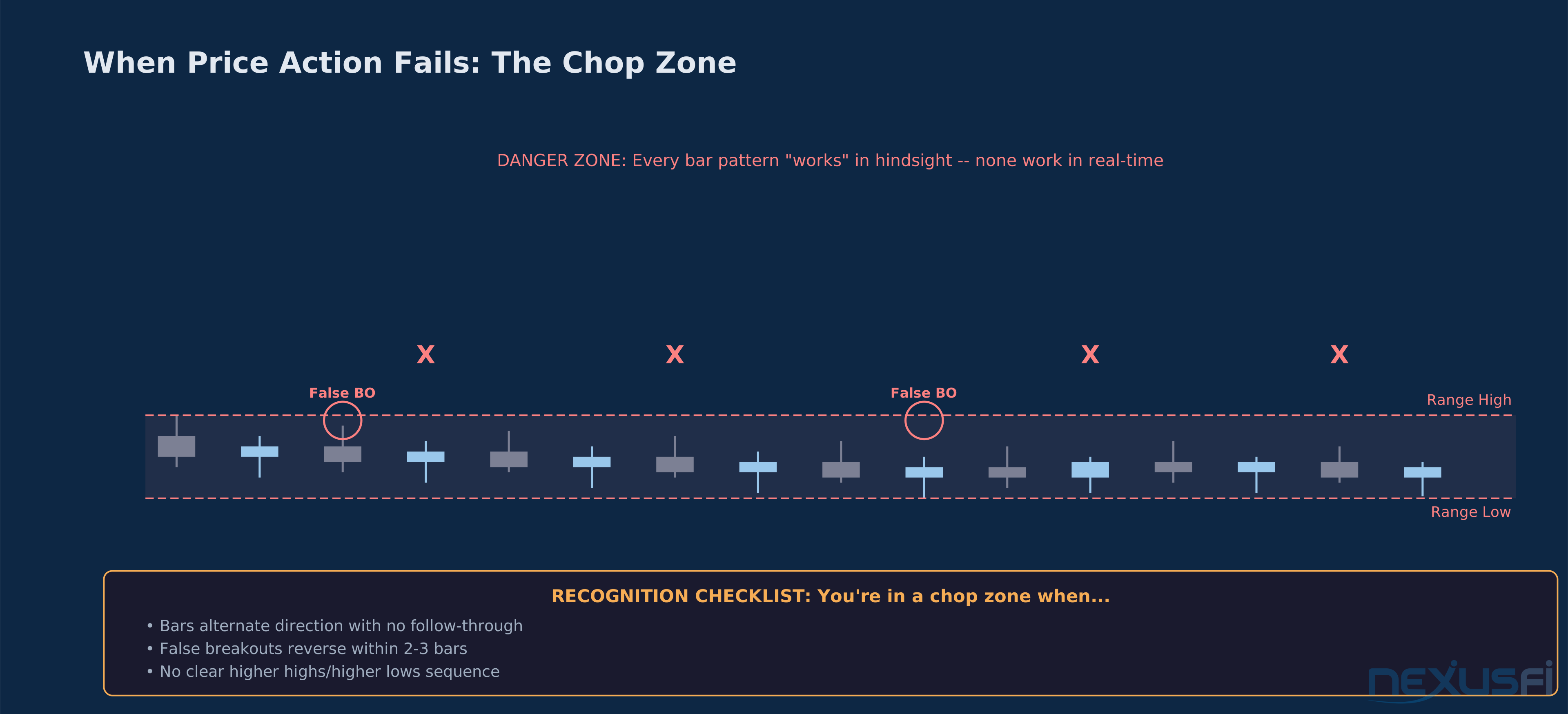
Narrow-range chop days. When the market trades in a tight range with no trend structure, every bar pattern that appears is a trap. Engulfing bars reverse immediately. Pin bars fail. Inside bars break out and reverse. If the range is less than 50% of the average daily range and it's been more than 90 minutes since the open, you're probably in chop. Step away.
News-driven volatility. FOMC, NFP, CPI — price action patterns are meaningless in the 5-10 minutes surrounding major news releases. The bars don't represent normal auction behavior. They represent algorithmic reactions to data that haven't been fully digested. Wait for the dust to settle and new structure to form.
Low-volume sessions. Holiday weeks, pre-holiday afternoons, summer Fridays. Thin markets produce exaggerated moves that look like valid signals but have no follow-through. A pin bar rejection in a thin market might be one institutional order, not genuine demand.
Discovery sessions. When ES is making all-time highs or multi-month lows, there's no prior support/resistance to reference. Price is in uncharted territory, and the usual "trade at key levels" framework breaks down because the levels don't exist. In discovery, momentum and order flow matter more than static price levels.
The damage of overtrading. Price action traders who can't sit still will find setups everywhere — because every chart has bars, and every bar has a pattern if you squint hard enough. The discipline isn't in finding entries. It's in rejecting the ones that don't meet all four steps of the framework.
Integration: Price Action and Volume #
Price action alone tells you what happened. Adding volume tells you who was behind it.
A bullish engulfing bar on 2x average volume at the value area low is a different animal than the same bar on below-average volume. The first one shows institutional demand. The second one might just be a short squeeze in thin conditions. For deep education on volume analysis, see Volume Profile Trading and Delta Analysis & CVD.
The best price action traders integrate bar reading with:
- Volume Profile — Know where the high-volume nodes and low-volume nodes sit. HVNs act as magnets, LVNs act as speed bumps. Price action at an HVN carries more weight because that's where the most participants have opinions.
- VWAP — Intraday, VWAP acts as a dynamic fair value line. Price action above VWAP with trend = strong. Price action below VWAP against trend = watch out.
- Market internals — For index futures (ES, NQ), check if the advance/decline line and $TICK confirm your price action read. A bullish setup with deteriorating internals is a lower-conviction trade.
- Session context — Where did we open relative to value? Inside value, price discovery is balanced. Outside value, there's an imbalance to resolve. The 80% Rule and initial balance add context to price action decisions.
Practical Application #
Pre-market preparation (15-20 minutes):
- Mark yesterday's high, low, close, POC, and value area boundaries on your chart
- Mark the overnight (Globex) high and low
- Identify the daily and weekly trend direction — are we making higher highs or lower highs?
- Note any multi-day support/resistance zones that price is approaching
- Check the economic calendar — if FOMC or NFP is on deck, adjust position size or sit out
This is your road map. As @runner [put it] [1]: "The chart I post late morning is my Road Map for the following day, and even though I could trade without it, I would feel a little lost without the preparation work."
During the session:
- Watch the open type. Open-drive? Don't fight it. Open-rejection-reverse? Look for the turn.
- Wait for price to reach your pre-marked levels. Don't chase.
- At your levels, apply the context-first framework: bias → context → level → trigger.
- If no setup appears by late morning, accept it's a chop day and reduce size or stop trading.
After the session (5 minutes):
- Did you follow the framework? Did you enter only at key levels with context?
- Were there setups you missed? What would have made you take them?
- Were there entries that failed? Was it the market or did you skip a step?
Price action trading is simple — but not easy. The concepts are straightforward. The execution requires discipline that most traders never develop. The framework above gives you the structure. The discipline is on you.
Knowledge Map
Prerequisites
Understand these firstReferences This Article
Articles that build on this topicCitations
- — Trading Futures with Context (2013) 👍 22“A question I have frequently asked on many PM is, "how do you enter the trade once price reaches your “Area of Support/Resistance", or what "setups" I look for.”
- — InletCap's Random Collections (2016) 👍 45“Continuation from post https://nexusfi.com/elite-trading-journals/39314-inletcap-s-random-collections-14.html#post591600 So, pre market analysis is done and all we know is what's happened in the past and a few key price levels.”
- — SHARKY'S Real World Trading Classroom (2010) 👍 37“there are several simple methods i use to find a trend one is by using a 55-55 wma,i also use a holt ma set at smoothe period 300 trend 200 these 2 give me the overall direction of the market if im wanting to go long i make sure the holt is under the...”
- — The Elusive Price Action: How to Trade (2010) 👍 9“Hindsight is 20/20, but here is how I would like to think I would have looked at this. I pretty much narrowed my entries down to three patterns: 1. Inside Bars 2. Engulfing Bars 3.”
- — The S&P Chronicles - An Amalgamation of Wyckoff, VSA and Price Action (2017) 👍 7“Appreciate the kind words and support, 1) - Via the swing high and closes, (when close together it provides a ''zone'') 2) - The first pullback is near the US open, I am not keen on taking trades within the first 30 minutes of trading (you may have n...”
- — The S&P Chronicles - An Amalgamation of Wyckoff, VSA and Price Action (2018) 👍 4“Appreciate the support, thank you: An excellent question: it's a nuance of structure that I like to use. When the market turns as it does to C, I am looking for a local level of resistance to trade against.”
- — The Elusive Price Action: How to Trade (2010) 👍 7“Good job David, I agree with your placement of the price action markers. I actually took almost every trade you listed, and a few later in the day you didn't mark up. It was a very good day.”
- — Making a Living with the Micros (2021) 👍 4“Yesterday was a big down day for sure. Often, big down days or big up days will be followed by confusion in the market. Confusion = Range Condition.”
- — Coding higher high and Higher Low (2020) 👍 8“Higher highs, lower highs, double tops, lower lows, higher lows and double bottoms are typically referring to a trend logic. The base indicator would be a zigzag indicator, which determines highs and lows according to set rules.”
- — Trading Futures with Context (2014) 👍 17“Exhaustion bar at the end of a trend. Maybe you remember this sentence. After a downmove of about 400 Ticks it is time to pull back. How can I identify a possible end? With an exhaustion bar.”
- — Price Action: Definition, Trading Strategies, and Examples (2024)
- — Technical Analysis Fundamentals: Reading Price Charts (2023)