



Support and Resistance Levels in Futures Trading
Overview #
Support and resistance are the foundation of every trading decision you'll ever make. Every setup, every entry, every stop-loss placement — it all comes back to understanding where buyers and sellers have concentrated their activity. Strip away the indicators, the oscillators, the moving averages — and what remains is price interacting with levels. That's the game.
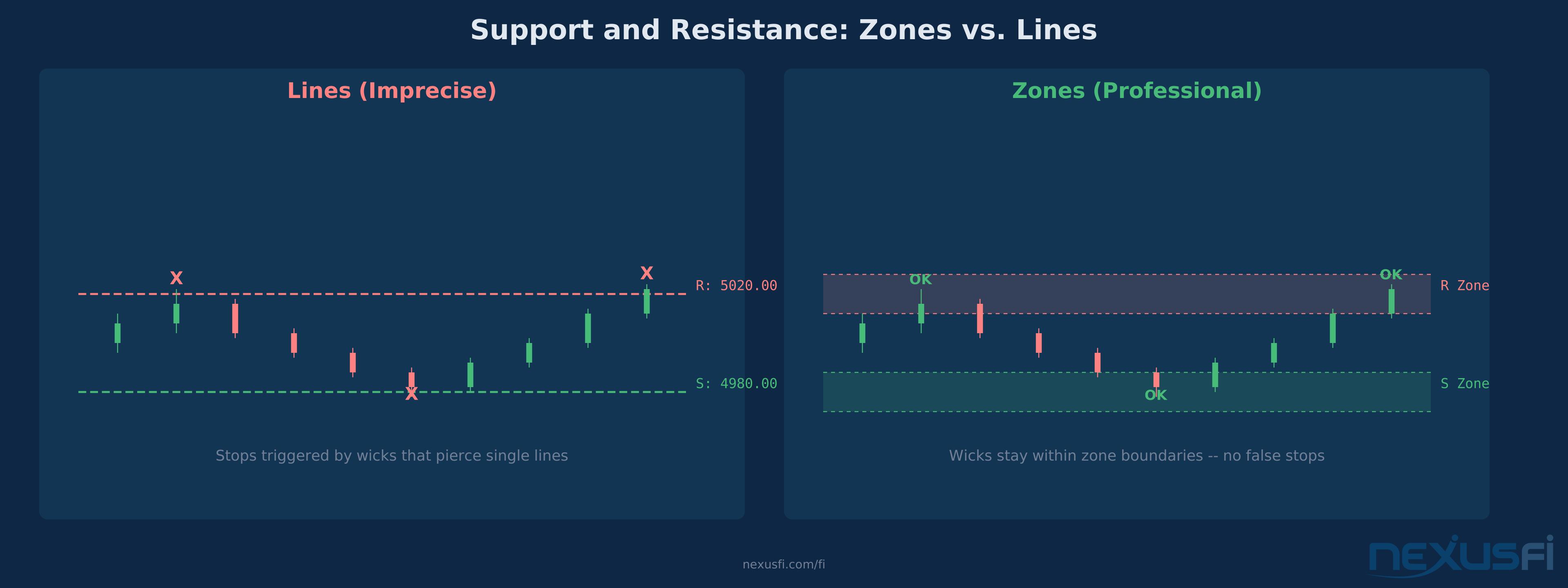
But here's the thing most traders get wrong: support and resistance aren't lines. They're zones. Zones where liquidity clusters, where institutional participants have placed their orders, and where price behavior shifts. A single horizontal line on your chart is a cartoon version of what's actually happening in the order book.
This article breaks down how support and resistance actually work in futures markets — how to identify them, why they matter, how volume confirms or invalidates them, and how to trade around them without getting chopped up.
What Support and Resistance Actually Are #
Support is a price zone where buying interest is strong enough to absorb selling pressure, causing price to bounce or stall. Resistance is the mirror — a zone where selling pressure overwhelms buyers. As @Jigsaw Trading [explained on NexusFi] [1], "the most visually appealing Support and Resistance are the ones that are most discussed on trading forums. These are the areas with the highest participation."
That last point is critical. S/R levels work partly because market participants agree they work. A level that thousands of traders are watching becomes self-reinforcing — orders cluster there, creating the very liquidity that makes the level hold.
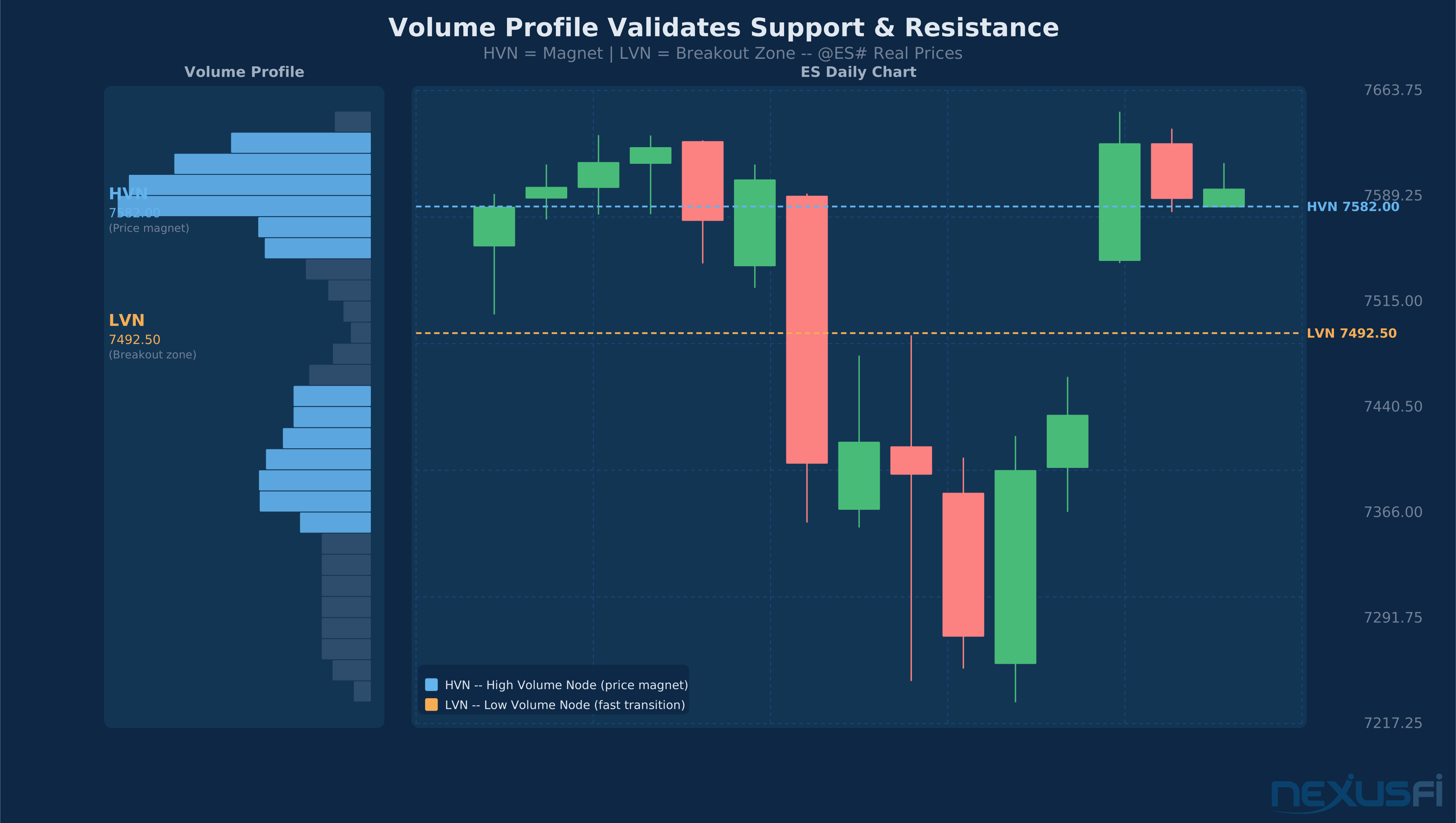
In futures markets specifically, S/R zones have an additional dimension that equity traders don't see: the volume profile. High-volume nodes (HVNs) on a volume profile show exactly where the most contracts have been exchanged — and those prices tend to act as magnets. As @Private Banker [noted] [4], utilizing multiple variables of volume in different ways provides the big picture context that pure price-action traders miss.
S/R as Zones, Not Lines #
Define every S/R level as a zone with measurable width. A common approach:
- Tick-based: For ES, a zone might span 2-4 points. For CL, 0.20-0.50.
- ATR-based: +/-0.25 to 0.75 of the Average True Range on your execution timeframe.
- Volume-profile-based: Use the width of the highest-concentration volume bins from your profile.
When you draw S/R as a zone instead of a hairline, two things happen: you stop getting faked out by ticks that "break" the level, and you start seeing how price behaves within the zone — acceptance, rejection, or sweep.
Types of Support and Resistance #
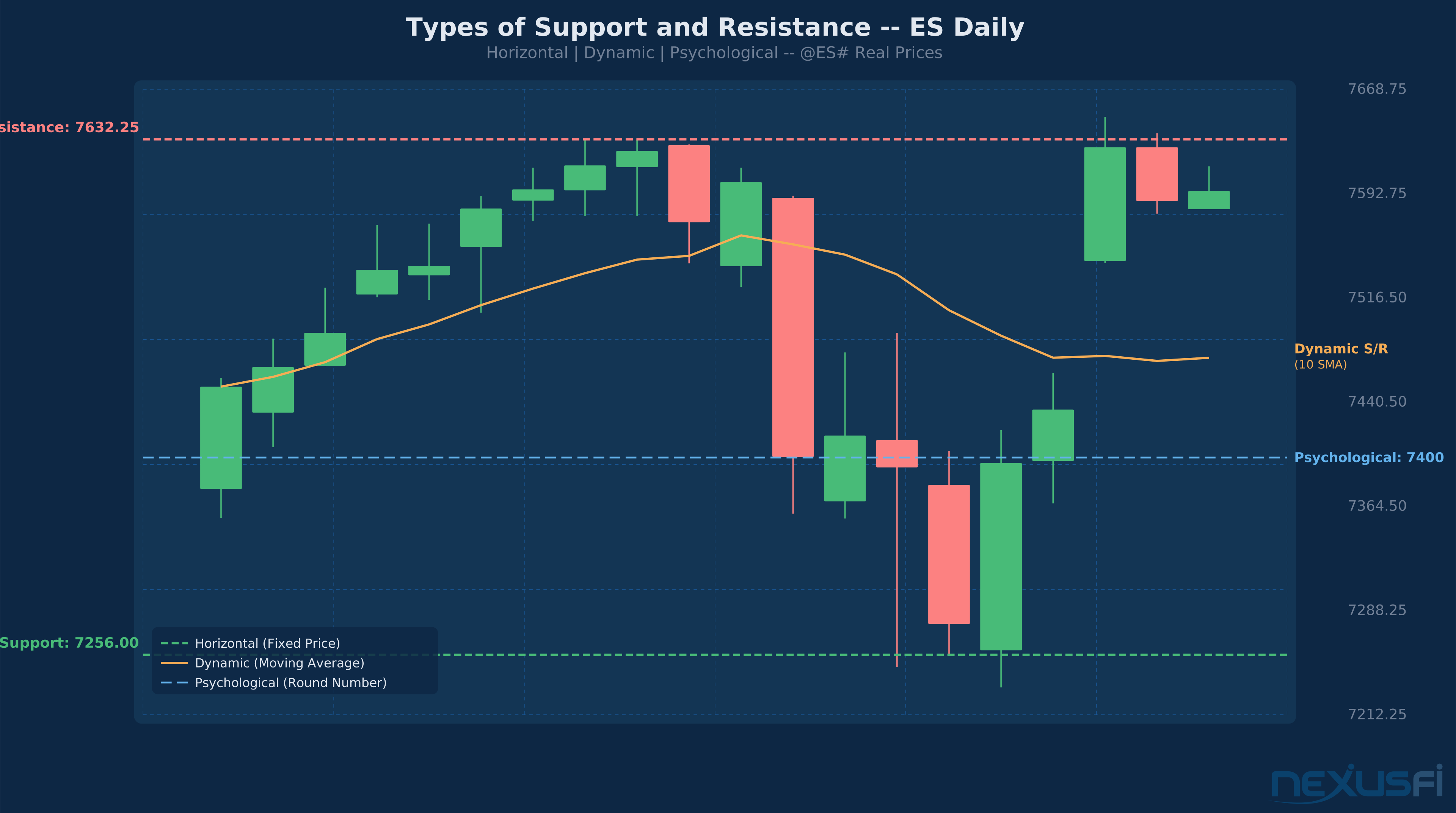
Horizontal (Static) Levels #
The most basic and most reliable form. Horizontal S/R comes from:
- Swing highs and lows — prior peaks and troughs where price reversed. Two or more touches at a similar price increase confidence.
- Prior session boundaries — yesterday's high, low, and close. The overnight high and low. Weekly range edges.
- Volume Profile HVNs — prices where the most volume traded. These represent "fair value" zones where both buyers and sellers agreed to transact.
- Pivot point formulas — Classic, Camarilla, and Woodie pivots generate pre-computed daily levels. Market-making desks place grid orders around these.
@Fat Tails [made an important distinction] [5] for futures specifically: "For futures there is no way of having a chart that fits all the needs." Absolute levels should use merged, non-adjusted contracts (showing rollover gaps) or the underlying cash index, because back-adjusted continuous contracts distort historical S/R.
Dynamic Levels #
Dynamic S/R moves with price:
- VWAP and Anchored VWAP — the volume-weighted average price is an institutional execution benchmark. Large firms measure execution quality against VWAP, making it a natural dynamic support/resistance line. Standard deviation bands around VWAP create additional zones.
- Moving Averages — the 20 EMA, 50 EMA, and 200 SMA are widely watched. The 200-day SMA on crude oil, for example, often acts as a rolling floor or ceiling during trending periods.
- Trendlines and Channels — diagonal S/R validated with 2+ swing-point touches on a higher timeframe. Less precise than horizontal levels, but valuable in trending markets.
As @Silvester17 [pointed out] [7], "when it comes to possible support/resistance levels, there're all kind of possibilities — like the traditional floor pivots, or other pivots." The key is not which type you use, but that you confirm with volume.
Psychological Levels #
Round numbers matter. ES at 5000. CL at $80.00. NQ at 20000. These levels attract order clustering because human psychology gravitates toward round figures. This isn't just anecdotal — Harris (1991) [12] demonstrated in his foundational study that price clustering on round fractions is pervasive across financial markets, increasing with price level and volatility. Schwartz, Van Ness & Van Ness later confirmed the same pattern specifically in S&P 500 futures, documenting significant order concentration at x.00 and x.50 price levels on ES contracts.
Psychological levels aren't arbitrary — options market makers often place strikes at round numbers, creating additional gamma exposure that pins price. If ES is approaching 5000.00, the options activity alone can create resistance or support even without any historical price action at that level.
Structural Levels (Order Blocks) #
Zones where large institutional orders have been filled. These show up as HVNs on volume profile and as areas of significant absorption on footprint charts. When a large fund fills a 5,000-lot order between 4850-4855 on ES, that zone becomes a structural support level — the fund has a vested interest in defending that position.
The Confluence Approach #
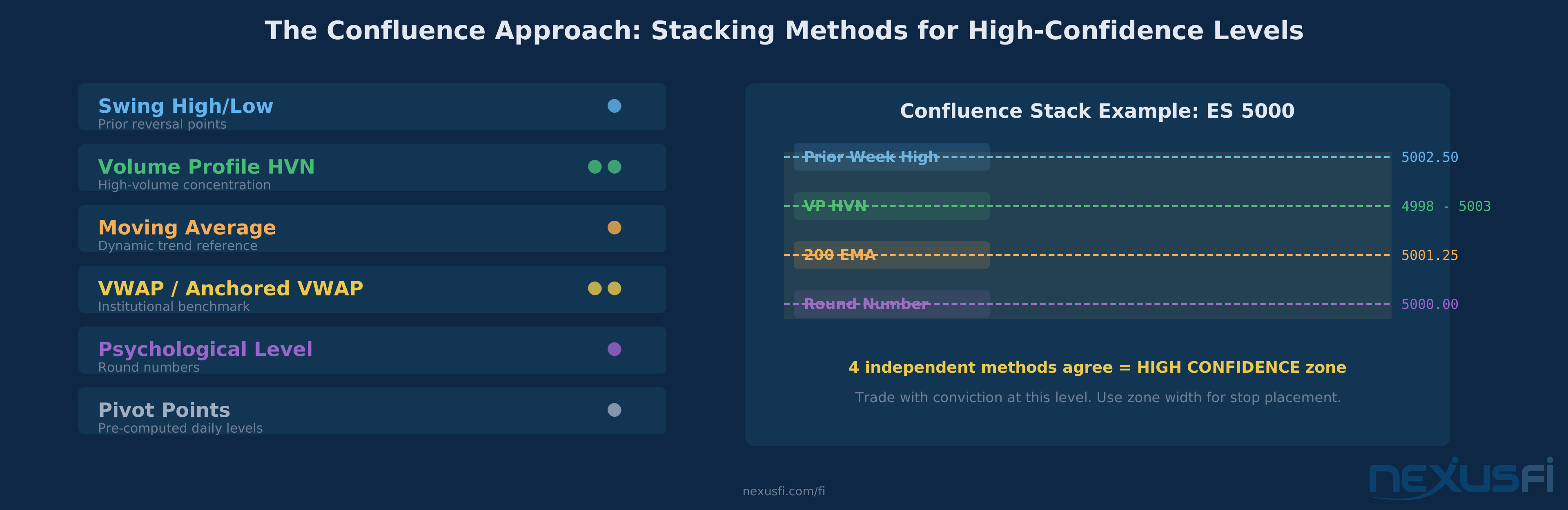
Don't rely on a single method. Require at least two independent methods to agree before treating a level as high-confidence. A swing low from last week that aligns with a volume profile HVN and sits near the 50 EMA? That's a high-confluence zone worth trading.
As @Jigsaw Trading [elaborated] [2], the real challenge isn't identifying levels — it's understanding what happens when price arrives at them. Order flow provides that context.
How Volume Validates or Invalidates S/R #
Volume is the decisive filter. Without volume analysis, you're guessing which levels will hold and which will fail. With it, you have evidence.
Volume Signals at S/R #
| Scenario | Volume Behavior | What It Means |
|---|---|---|
| Bounce with high volume | Volume spike + delta favoring the bounce direction | Institutional defense — level likely holds |
| Breakout on low volume | Break through S/R on thin participation | Probable false breakout — no conviction behind the move |
| HVN aligns with S/R | Heavy volume concentration at the price zone | True liquidity hub — price tends to gravitate back here |
| Declining volume on advance | Each push makes new highs on less volume | Exhaustion — the move is running on fumes |
As @PeakGrowth [explained] [8], "without order flow, you would try to find a pattern or something or just go buy it blindly. If you use order flow there are a few things you" can see — aggressive buyers absorbing sellers, passive limit orders stacking up, and delta divergences that reveal the real story.
The Volume Profile Connection #
Volume Profile is the most actionable tool for validating S/R levels. HVNs show where institutional capital has been committed. Low-volume nodes (LVNs) show "air pockets" where price travels fast because there's no vested interest to slow it down.
When a horizontal S/R level coincides with an HVN on the volume profile, that's the highest-confidence setup. The price action and the volume data are telling the same story.
@Xav1029 [shared an approach] [9] that moves beyond pure price action to identify S/R: "I realized I had been looking at price action alone to identify SR levels, and sometimes I would miss the breakout." Integrating volume changed the read entirely.
False Breakouts: Why They Happen and How to Filter Them #
False breakouts are among the costliest mistakes in futures trading. Price breaks through a well-defined S/R level, you enter the breakout, and price immediately reverses. Understanding why this happens turns a losing pattern into a profitable one.
Four Causes of False Breakouts #
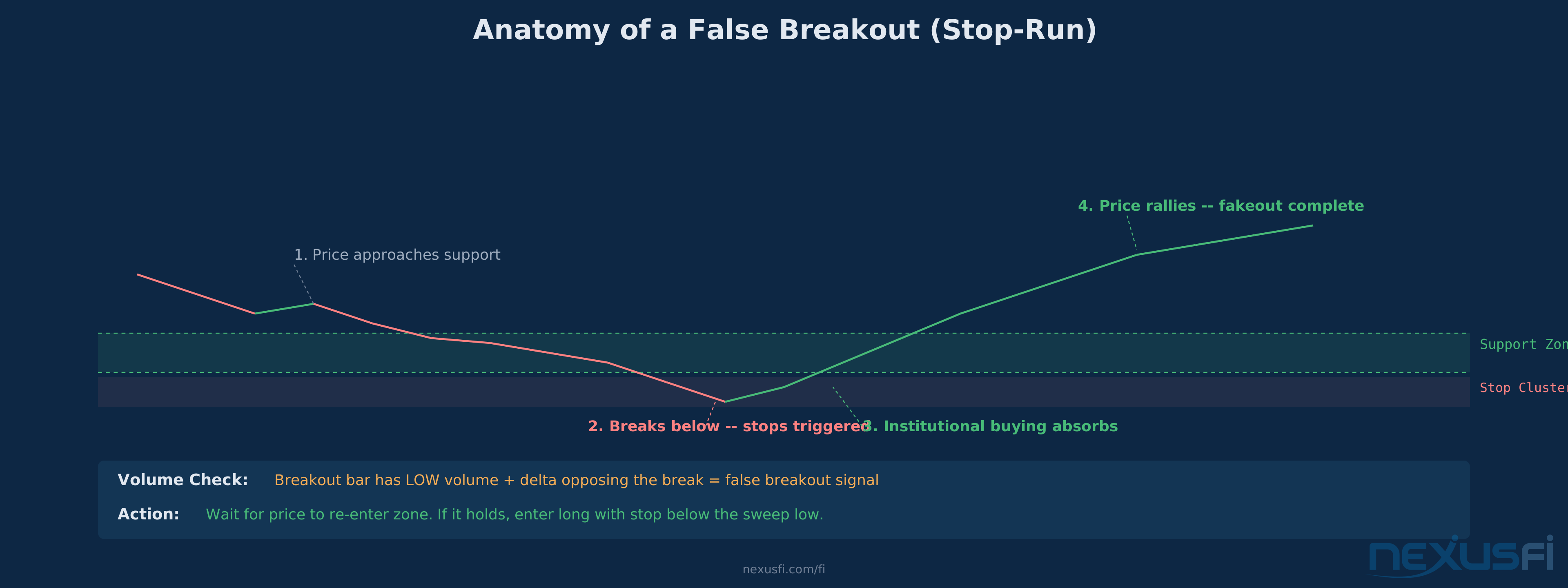
1. Stop-runs / Liquidity sweeps — This is the most common cause. Resting stop-loss orders cluster just beyond obvious S/R levels. Institutional participants (and algorithms) know exactly where those stops sit. A quick push through the level triggers the stops, provides liquidity for the institutional order, and then price reverses.
2. News-driven spikes — A one-off candle on a news release punches through S/R with massive volume but zero follow-through. The spike liquidates positions but doesn't represent a genuine shift in market structure.
3. Thin-liquidity sessions — S/R breaks during overnight or off-hours trading, when the order book is thin. A relatively small order can push price through a level that would hold easily during regular trading hours.
4. Algorithmic sniping — Small-scale price moves designed to trigger clustered retail stops. The telltale sign: volume delta is opposite to the price move.
Filtering False Breakouts #
The practical filter that professionals use combines three elements:
- Retest confirmation — After the break, price returns to the level. If it holds from the other side (former resistance becomes support, or vice versa), the break is real. This is the classic "role reversal" pattern.
- Volume threshold — A valid breakout should see volume on the breakout bar exceed the 20-bar average by at least 1.5x, with volume delta showing clear directional bias. Low volume on the break? Fade it.
- Higher-timeframe confirmation — A break on the 5-minute chart means nothing if the 30-minute or hourly chart shows no acceptance beyond the level. @Rrrracer [demonstrated this approach] [11] — looking for volume increasing at former support-turned-resistance to confirm the break, not just a price close beyond the line.
Role Reversal: When Support Becomes Resistance #
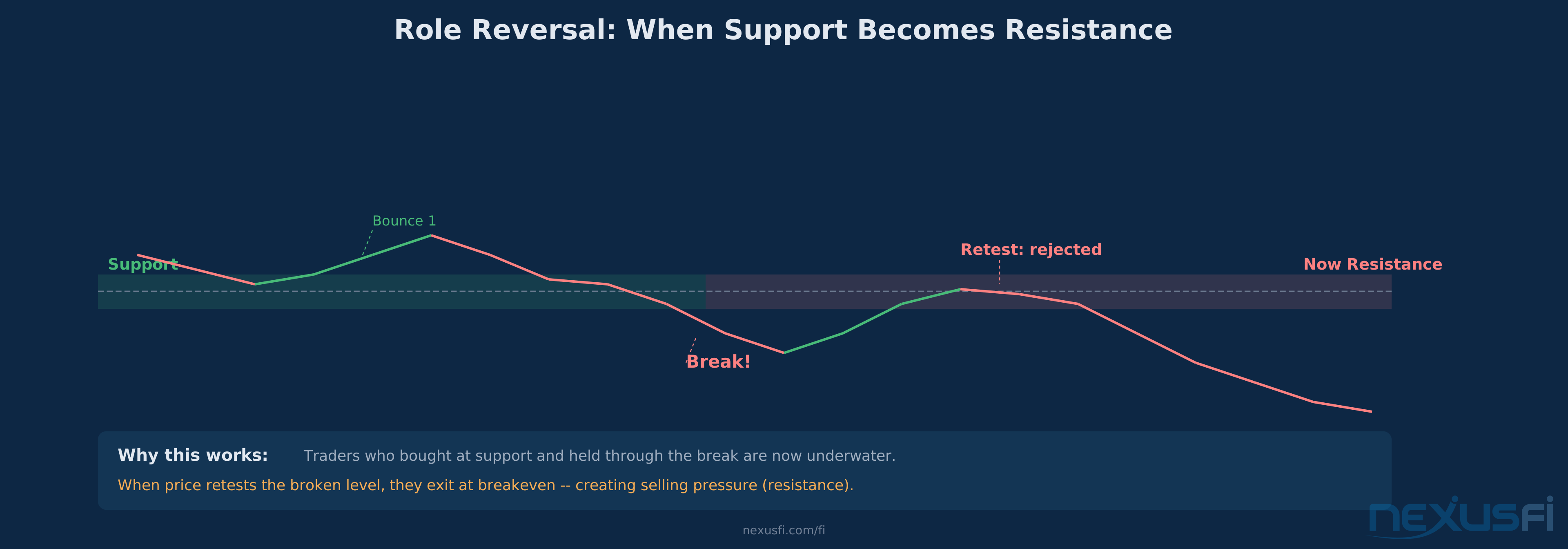
One of the most reliable patterns in all of technical analysis. When a support level breaks, it often becomes resistance on the next retest. When resistance breaks, it flips to support.
The logic: traders who bought at support and held through the break are now underwater. When price rallies back to the broken support, many of those traders exit at breakeven — creating selling pressure (resistance) at what was formerly support.
@DbPhoenix [put it in Wyckoff terms] [10]: "prepare yourself to short whatever retracement there may be to what had been support and may now be resistance." The retest of the broken level is where the trade lives.
This role-reversal principle applies to all types of S/R — horizontal swing points, VWAP, moving averages, and trendlines. The key is waiting for the retest rather than chasing the initial break.
How Institutional Traders Use S/R #
Understanding institutional behavior at S/R levels transforms how you interpret price action.
Liquidity Harvesting #
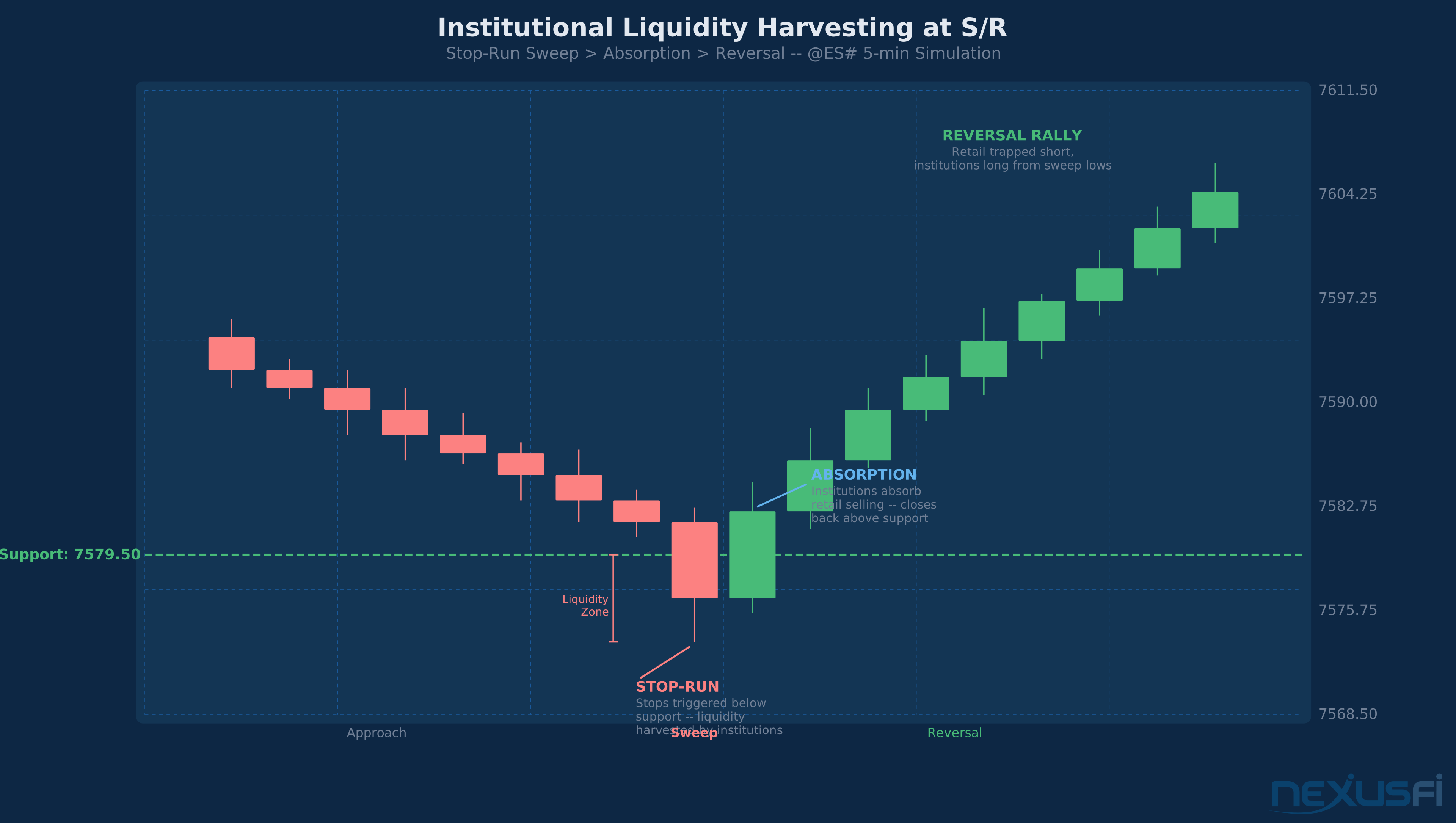
Large funds place iceberg and hidden orders just beyond well-known S/R levels. Bessembinder, Panayides & Venkataraman (2009) [13] found that hidden orders represent roughly 44% of order volume in electronic markets — the option to hide order size is especially valuable to patient institutional traders building positions at key levels. They know retail traders stack stops a few ticks past support or resistance. The institutional strategy: push price through the level just enough to trigger those stops, absorb the resulting liquidity to fill their own orders, then let price reverse.
This is why you see so many "false breakouts" in liquid markets like ES and NQ. The break isn't a failure of S/R analysis — it's S/R working exactly as institutional participants intend.
Passive Accumulation and Distribution #
Institutions add to positions at HVNs (volume profile support) where they can execute large orders without significant slippage. They distribute (sell) positions near LVNs where thinner liquidity means faster price movement away from their average entry.
Algorithmic Execution #
Smart-order-routers split parent orders across the nearest S/R levels to minimize market impact. A 10,000-lot ES order doesn't get filled at a single price — it gets spread across the zones where resting liquidity allows quiet execution.
Trading S/R: The Execution Framework #
Step 1: Identify High-Confluence Zones #
Before the session starts, mark your levels:
- Prior day high, low, close
- Overnight high and low
- Volume Profile HVNs and LVNs from recent sessions
- VWAP and prior-day VWAP
- Round numbers in play
- Any swing-based levels with 2+ touches
Require confluence. A level confirmed by two or more methods gets priority.
Step 2: Choose Your Trade Type #
Two setups at S/R zones:
Rejection (fade) trade — Price approaches S/R, shows absorption (volume delta opposing the move), forms a reversal candle, and you enter against the prior direction with a stop just beyond the zone.
Breakout trade — Price breaks through S/R with volume exceeding the 20-bar average by 1.5x+, delta confirms the direction, and you enter in the direction of the break with a stop back inside the zone.
Most traders should focus on rejection trades at strong levels. Breakout trading requires faster execution and stricter volume filters.
Step 3: Set Stops and Targets #
- Stop placement: 1-2 ticks beyond the opposite side of the S/R zone. For a long at support, stop just below the zone's lower boundary. Tight enough to maintain favorable risk/reward, wide enough to avoid getting stopped by normal volatility.
- Target: The next major S/R level or HVN. Use the distance between levels to evaluate the risk/reward ratio before entry. Minimum 1:2 risk/reward, prefer 1:3 or better.
- Trail: If price moves 10+ ticks in your favor, consider moving the stop to breakeven and trailing by a fixed distance or to the next intermediate level.
Step 4: Manage Using the Liquidity Map #
Think in terms of a "liquidity map" — the list of today's key levels ranked by confidence. As @Jigsaw Trading [noted] [3], "I have multiple levels to watch and I consider my long areas to be support. I do not need the price to be a prior swing low to call it support."
The liquidity map guides all decisions: where to enter, where to scale out, where to trail stops, and when to stand aside because price is stuck in an HVN with no clear directional bias.
S/R Across Multiple Timeframes #
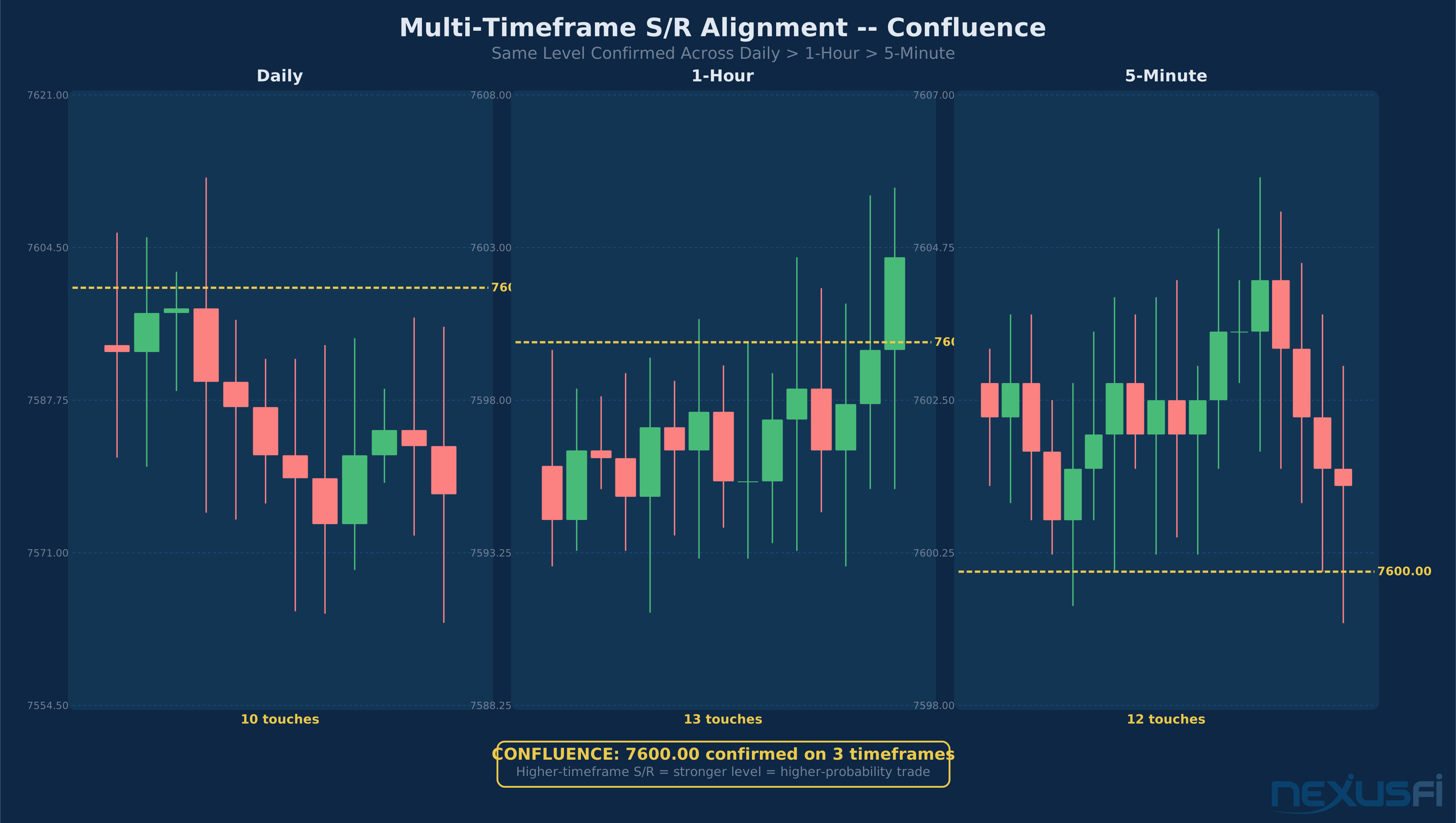
A level identified on a higher timeframe carries more weight than one on a lower timeframe. The hierarchy matters:
- Weekly/Monthly levels — These are the strongest. Prior week high/low, monthly open. When price reaches a weekly-level S/R zone, expect significant reactions.
- Daily levels — Prior day high, low, close, and significant swing points. These define the day's primary trading range.
- Intraday levels — Session pivots, opening range, VWAP. Useful for entry timing within the context set by higher timeframes.
@Fat Tails built a [multi-timeframe approach] [6] using Fibonacci cluster and confluence zones — detecting support and resistance lines across 10 different timeframes and computing a total of 540 lines to identify the strongest zones.
The rule: identify levels on your primary timeframe, verify on at least one higher timeframe. An intraday support level that aligns with a daily swing low and a weekly HVN is a high-probability trade location.
When S/R Fails #
No level holds forever. Understanding failure modes prevents the most common trading mistake: adding to a losing position at a "support" level that's already broken.
Signs a level is failing:
- Volume dries up on the bounce (defenders are leaving)
- Each retest gets shallower (buyers are weakening)
- Delta shifts against the expected direction
- Price spends extended time at the level without bouncing (acceptance, not rejection)
What to do:
- Reduce position size as the level gets tested more frequently
- If the level breaks with volume confirmation, respect the break — flip your bias
- Never average down at a level that's showing acceptance rather than rejection
Practical Quick-Reference #
| Element | Action |
|---|---|
| Before the session | Mark 5-8 key levels using confluence approach |
| At the level | Read volume: is the level being defended or surrendered? |
| Entry | Rejection: wait for reversal candle + delta confirmation. Breakout: wait for volume + close beyond zone |
| Stop | 1-2 ticks beyond the zone boundary |
| Target | Next major level on the liquidity map |
| Invalidation | Price accepts beyond the zone — exit, don't hope |
Knowledge Map
Prerequisites
Understand these firstGo Deeper
Build on this knowledgeReferences This Article
Articles that build on this topicCitations
- — Day Trading Support/Resistance Levels on the E-Mini S&P500 Futures (2012) 👍 70“The most commonly played areas to trade off also tend to be those that are the most visually appealing.”
- — Day Trading Support/Resistance Levels on the E-Mini S&P500 Futures (2012) 👍 41“If you put the above to one side and look at the price action surrounding Support & Resistance (still from a day traders perspective). There are still issues. http://i39.photobucket.com/albums/e156/tb9pdvs/SR1.”
- — Day Trading Support/Resistance Levels on the E-Mini S&P500 Futures (2012) 👍 16“Before I answer this, let me show you where I was pre-market yesterday & then look at yesterdays action. ============================= October 15th, 2012 Europe Up, Asia Up http://i39.photobucket.com/albums/e156/tb9pdvs/10-15-20128-22-21AM.”
- — Volume Profile and Footprint discussion (2012) 👍 36“As you know, I keep an eye on volume profiles as well. I utilize many variables of volume and use them in different ways.”
- — Support & Resistance Levels for Futures Prices (2013) 👍 5“nomadx: That is a good question. It really depends what you look for. For futures there is no way of having a chart that fits all the needs.”
- — Applying Fibonacci Cluster and Confluence Zones (2011) 👍 7“The statistical approach, which I use is semi-scientific only. The indicator detects 54 support and resistance lines in 10 different time frames, which is a total of 540 lines.”
- — The Scalper's Journey (2016) 👍 15“when it comes to possible support/resistance levels, there're all kind of possibilities. like the traditional floor pivots (or other pivots like jackson, wide, fib, camarilla, woodie etc).”
- — Is Support and Resistance Meaningless? (2015) 👍 2“Sort of, there is a bit more to that. For example, let's say you are looking at a support zone at lets say at 2000 on the ES. Without order flow, you would try to find a pattern or something or just go buy it blindly.”
- — A different look at Support and Resistance (2012) 👍 10“Lately I realized I had been looking at price action alone to identify SR levels, and sometimes I would miss the breakout, or more often than not, hit resistance that I did not realize would be there.”
- — Wyckoff In The Original (2013) 👍 16“Wyckoff and Auction Markets Traders who have a lot to buy or a lot to unload will avoid trying to catch the tops and bottoms and focus on "the middle", since "the middle" is by definition where most of the trading is going on.”
- — The S&P Chronicles - An Amalgamation of Wyckoff, VSA and Price Action (2018) 👍 7“Olgrim, my .02... Bar B had sizeable volume, but check out how narrow the spread was... there was a lot of selling in that bar which would have been a big clue that supply was present. Effort vs. reward...”