



Mean Reversion Trading for Futures
Overview #
Mean reversion is the single most traded behavior in futures markets
This isn't a single-indicator strategy. Mean reversion is a behavior
Here's the difference between profitable mean reversion and catching falling knives: regime awareness. Mean reversion works when markets are auctioning around stable value. It fails
This article gives you five concrete setups for ES, NQ, and CL
The Mean Reversion Framework #
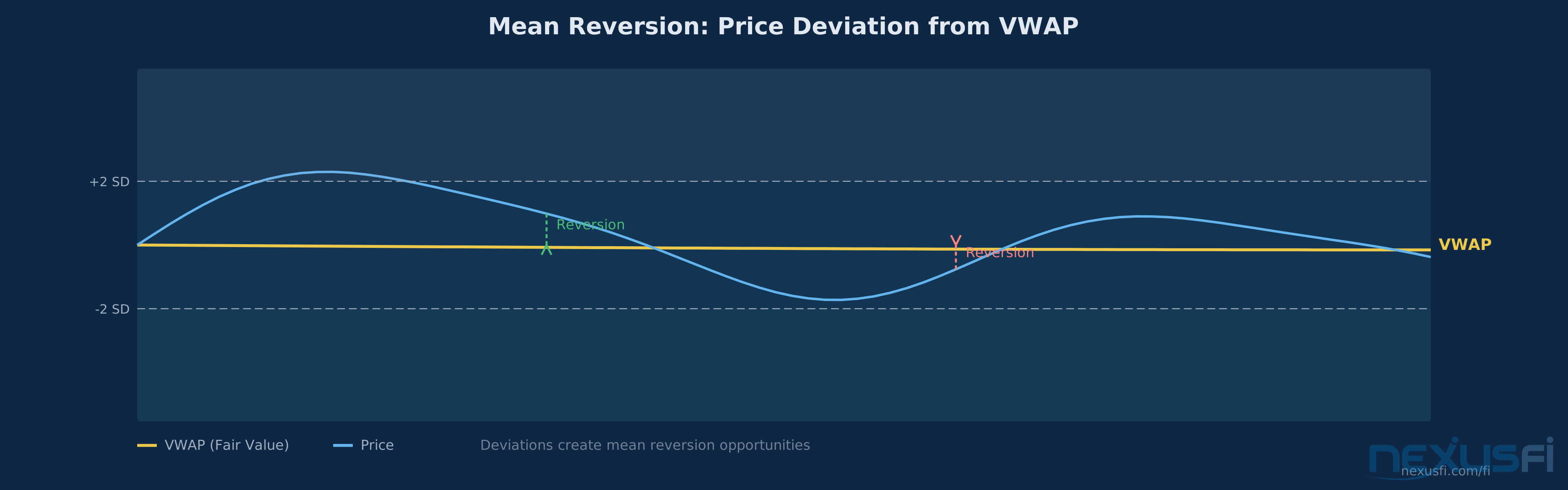
Mean reversion in futures rests on one principle: when price deviates from fair value, auction mechanics pull it back. Buyers step in below value. Sellers step in above it. This creates the oscillation pattern that mean reversion traders exploit.
But "fair value" isn't fixed. It depends on your reference:
The critical insight: the mean is only useful when the market oscillates around it. If the mean itself is migrating rapidly, you're not doing mean reversion
Three Flavors of Mean Reversion #
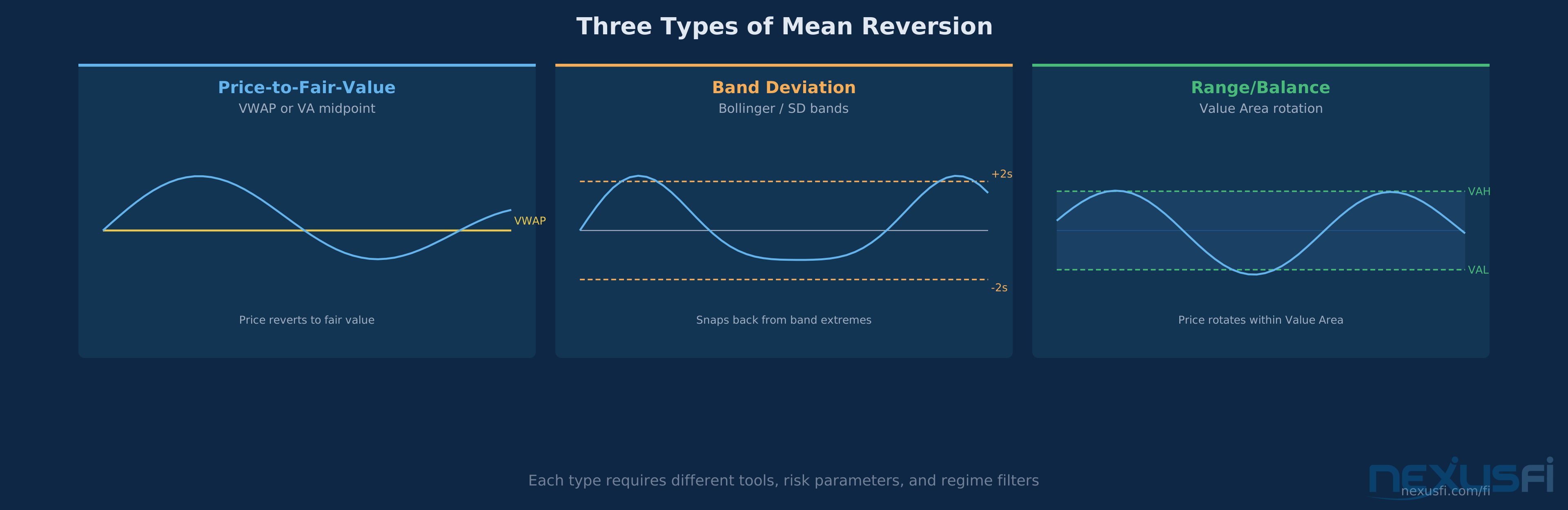
Not all mean reversion trades look the same. There are three distinct categories, and each calls for different tools and risk parameters.
1. Price-to-Fair-Value Reversion #
The classic setup: price deviates from a volume-anchored reference (VWAP or Value Area midpoint) and rotates back. This works best in balanced, auction-like sessions where auction market theory is doing its thing
2. Band Deviation Reversion #
Statistical reversion: price moves beyond a standard deviation threshold (typically 2 SD from VWAP or Bollinger midline) and snaps back. The deviation is measured in z-scores or ATR multiples
@JonnyBoy lays out precise rules: "Place a SELL STOP within the SELL ZONE
3. Range/Balance Mean Reversion #
When the market is in balance
Trade Setups #
Five concrete setups with specific entry, stop, target, and invalidation logic. Each is tied to a specific instrument and market condition.
Setup 1: ES VWAP Deviation Reversion (Balance Day) #
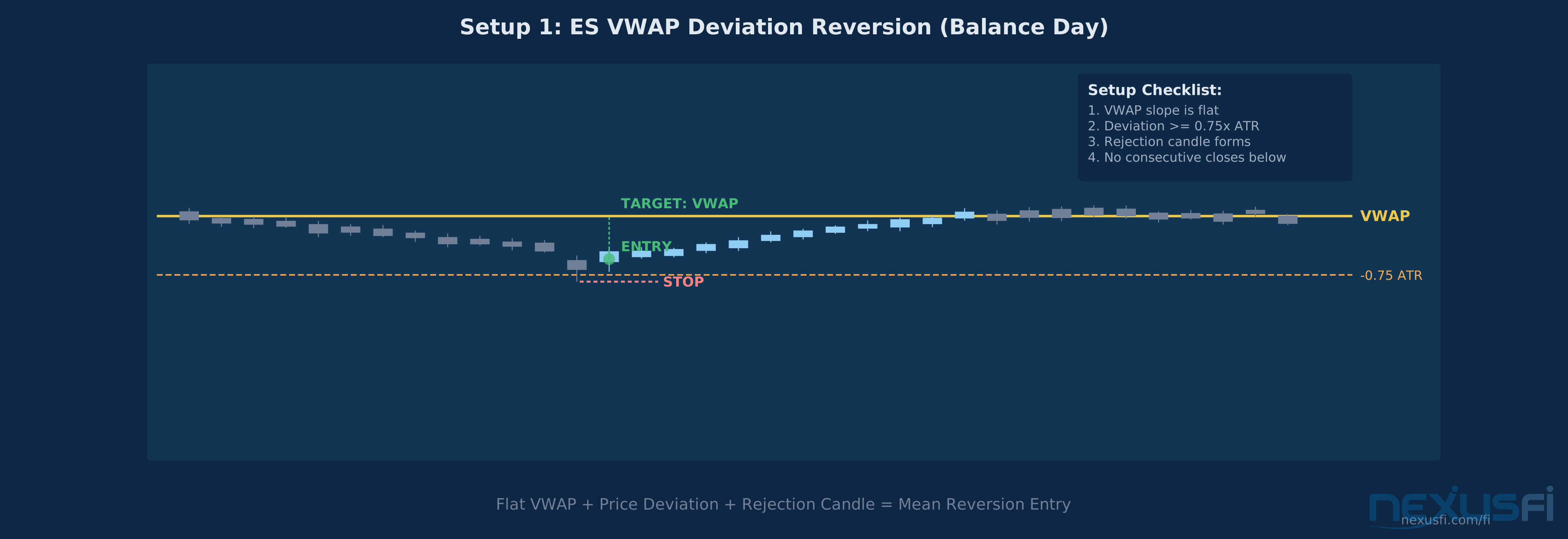
When to use: Balanced RTH session. VWAP slope is flat or nearly flat. No strong directional bias from overnight.
Entry (long): Price trades below RTH VWAP by at least 0.75x ATR(14, 5-min). A rejection candle forms on 1-min (wick below, close above the swing low). The next 5-min candle does NOT close further below VWAP.
Stop: 1-2 ticks beyond the swing low that created the deviation extreme. On ES, this typically means 4-8 ticks of risk depending on ATR.
Target: RTH VWAP. Take partial at VWAP, runner to VWAP + 0.25x ATR if momentum carries.
Invalidation: Multiple consecutive 5-min closes below VWAP with growing deviation. A new swing low that exceeds the original extreme. Time stop: if VWAP isn't retested within 6-12 five-minute bars, exit.
Failure mode: ES trends intraday and VWAP migrates. What looked like a deviation becomes the new normal. This is why the flat-VWAP filter is non-negotiable.
Setup 2: NQ Bollinger Midline Reversion (Elevated Volatility, No Trend) #
When to use: NQ volatility is elevated (ATR above its 20-day average) but no sustained directional drift. The BB midline slope is flat.
Entry (long): Price closes below the lower Bollinger Band (20-period, 2 SD) on the 5-min chart. The midline slope is flat or mildly positive. A rejection candle forms
Stop: Beyond the lower-band extreme candle low, or 0.75-1.0x ATR(14, 5-min) from entry.
Target: BB midline. Partial at midline, runner with a small overshoot buffer.
Invalidation: Band walk
Why NQ specifically: NQ has a tendency toward volatility regime shifts that create sharp deviations followed by equally sharp reversions. But when NQ trends, the bands walk hard
Setup 3: ES Value Area Rotation (VAH/VAL Rejection) #
When to use: Stable volume profile with a well-defined Value Area. Price has been rotating within or near the VA for the session.
Entry (short): Price trades above VAH. Forms a lower high on 5-min (fails to extend beyond VAH). Re-enters inside the Value Area with a 5-min close back below VAH.
Stop: 1-2 ticks above the rejection swing high outside the Value Area.
Target: Value Area midpoint (primary). Opposite boundary
Invalidation: Acceptance outside value
Setup 4: CL Session VWAP Reversion (Shock Filter) #
When to use: CL has deviated sharply from session VWAP but the impulse has paused. NOT immediately after a >2x ATR candle
Entry (long): CL trades below session VWAP by at least 1.0x ATR(14, 5-min). An impulse candle creates the extreme, then price consolidates for 2-3 bars (range contraction). Price closes back above the consolidation high.
Stop: Below the extreme low minus 1-2 ticks, or 1.2x ATR from entry. CL stops need to be wider than equity index futures due to the volatility profile.
Target: Session VWAP. Partial at VWAP, runner only if rotation is clean and not fighting inventory/EIA data.
Invalidation: Continued lower closes after the consolidation (trend continuation). Deviation increases again after the brief pause. New fundamental trigger drops (inventory report, geopolitical headline).
Why the shock filter matters: CL is driven by news, inventory data, and geopolitical events. Fading the first impulse candle after a shock is a recipe for disaster. The stabilization period filters out continuation moves from genuine overextension.
Setup 5: Mean Cross + Pullback (All Instruments) #
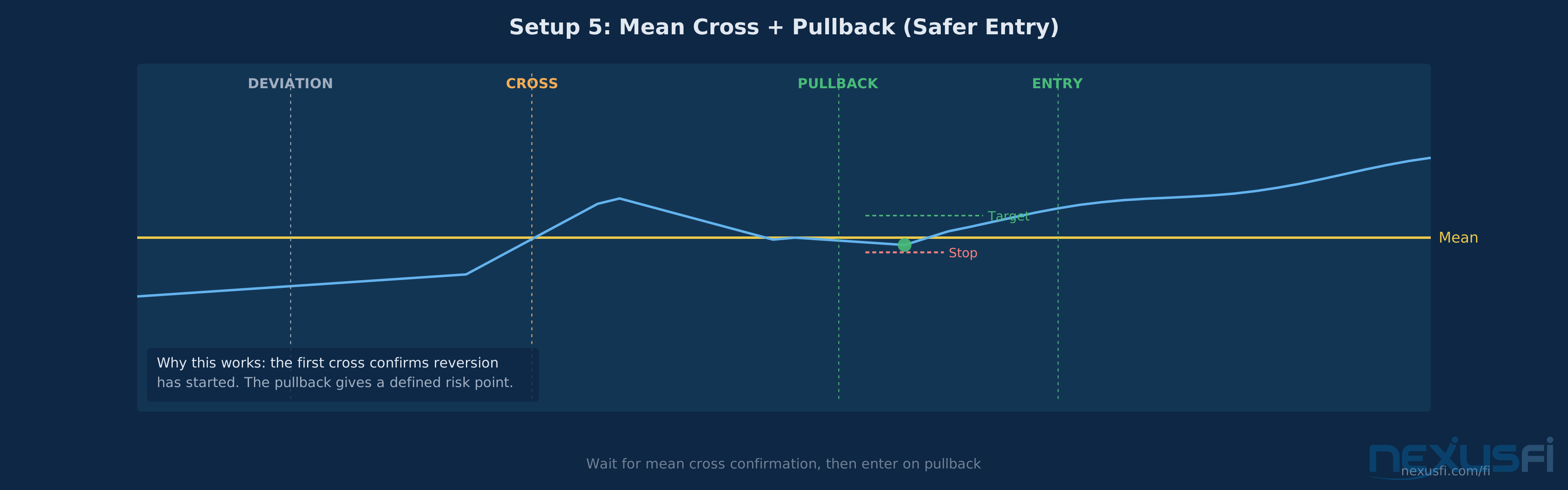
When to use: Any instrument when you want a safer mean reversion entry with better invalidation clarity. This trades the pullback AFTER the first mean-cross, not the extreme itself.
Entry (long): Price deviates below the mean anchor (VWAP, VA mid, BB midline). Price crosses back through the mean
Stop: 1-2 ticks below the pullback swing low. This is often tighter than fading the extreme directly, because you have a defined pivot.
Target: Previous deviation extreme (the move that created the original dislocation). Partial exits along the way if momentum fades.
Invalidation: Acceptance resumes on the wrong side of the mean after the pullback. Deviation expands beyond the prior extreme (new leg down).
How this helps: Fading at the extreme is high-reward but low-probability per attempt. The mean-cross pullback confirms that reversion has already started
Signal Priority: When Setups Conflict #
When multiple mean reversion signals fire simultaneously, use this decision hierarchy to avoid paralysis and conflicting entries:
- Regime filter first (override everything): Is the market in balance or trending? Check overnight range relative to prior Value Area, VWAP slope, and ATR vs. 20-day average. If the answer is "trending," no mean reversion setup fires — full stop. This overrides all signals below.
- Choose one anchor: If VWAP deviation and Value Area rotation trigger simultaneously, pick the anchor with the flattest reference. A flat VWAP with a developing Value Area → use VWAP. A well-established Value Area with a migrating VWAP → use VA. Never trade both anchors on the same instrument in the same session.
- Order flow confirmation gates the entry: The setup identifies the zone. Order flow (delta divergence, absorption on the DOM, CVD flattening) confirms the timing. Without flow confirmation, the setup is a watchlist item, not a trade.
- Invalidation kills the thesis: If price accepts outside the value reference (multiple closes beyond VWAP + ATR, or acceptance above VAH/below VAL), the mean reversion thesis is dead regardless of how many other signals still "look good." Exit or don't enter.
The one-trade-per-anchor rule: If your ES VWAP reversion gets stopped out, do not immediately re-enter a VA rotation trade on the same instrument. The stop-out is information — the market may be transitioning from balance to trend. Wait for the next session or a clear regime reset.
When Mean Reversion Fails #
This section isn't a disclaimer at the bottom of the page. These failure modes will blow your account if you don't internalize them.
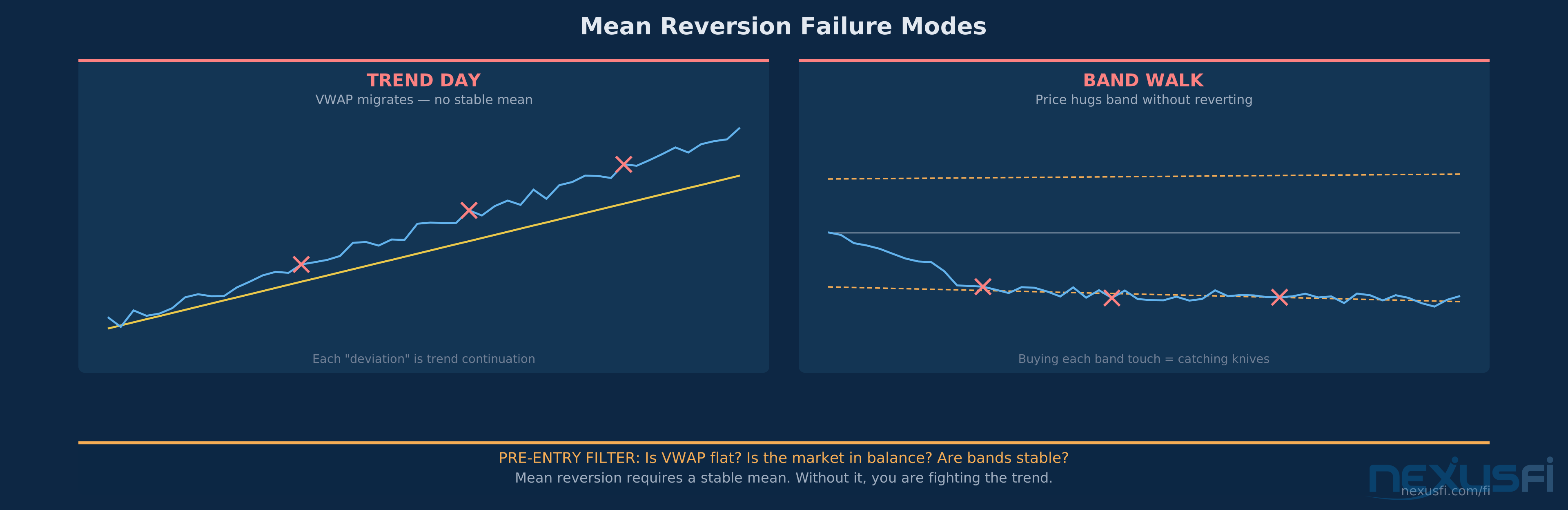
Regime shift
Volatility expansion
Trend-walking
Order flow persistence
Wrong anchor
Horizon mismatch
Execution slippage
Practical Application #
Pre-Market Checklist #
Before the RTH open, answer three questions:
- Is the market in balance or imbalance? Check the overnight range relative to the prior session's Value Area. If the overnight session accepted within the prior VA, balance is likely
- What's the volatility regime? Check current ATR vs. 20-day average ATR. Elevated volatility widens your stops and targets but also increases the probability of overextension. Compressed volatility narrows everything but may mean price doesn't deviate enough to trigger setups.
Execution Principles #
Limit entries over market entries. Mean reversion edges depend on getting a good entry price. Market orders during fast moves guarantee slippage at the worst possible time.
Scale out, don't all-or-nothing. Take partials at the mean. Keep a runner for the potential overshoot. This smooths your equity curve and reduces the psychological pressure of "was that the full move?"
One attempt per setup. If your mean reversion entry gets stopped out, don't immediately re-enter at a slightly worse price. The stop-out IS information
Daily loss limits are mandatory. Mean reversion during a regime shift produces clustered losses. Three failed reversion attempts in a row is your signal to stop trading this strategy for the session.
[5] The same applies to your strategy bias
Integration with Other Tools #
Mean reversion doesn't operate in isolation. Professional traders layer it with:
The point: no single indicator confirms mean reversion. You need deviation from a stable anchor + confirmation from at least one additional source + clear invalidation. Anything less is gambling with a narrative.
Knowledge Map
Prerequisites
Understand these firstGo Deeper
Build on this knowledgeReferences This Article
Articles that build on this topicCitations
- — Spoo-nalysis ES e-mini futures S&P 500 (2015) 👍 26“mean-reverting methodologies should not be used during momentum surges”
- — Using VWAP in your trading (2011) 👍 11“VWAP represents today value and markets test the borders of previously established value zones”
- — The Highest High-Probability-Trade (2011) 👍 54“A rally to the +2SD and a break to the -2SD falls under price exhaustion patterns”
- — VWAP for stock index futures trading? (2020) 👍 35“Place a SELL STOP within the SELL ZONE between +SD 0.5 and +SD 0.75”
- — Directional Bias (2013) 👍 18“That bias needs to be changed if not confirmed by price action”