



Prop Firm Account Resets and Retry Strategies: The Economics and Psychology of Coming Back After a Failed Evaluation
Overview #
Every trader who takes a prop firm evaluation will eventually fail one. That's not pessimism — it's math. Even disciplined, profitable traders blow evaluations. Industry data puts the pass rate at just 5-10%, with traders averaging 2-4 attempts and roughly 7% ever receiving a payout. The question isn't whether you'll fail. The question is what you do next.
Most traders handle failure badly. They either rage-reset within minutes, burning through capital on emotional impulse, or they quit entirely, convinced the game is rigged. Both responses are wrong. The traders who eventually get funded — and stay funded — treat failure as diagnostic information and make calculated decisions about when to reset, when to start fresh, and what to change between attempts.
This article breaks down the mechanics, economics, and psychology of prop firm account resets. If you've failed an evaluation and you're deciding what to do next, this is the framework.
What Account Resets Actually Are #
An account reset lets you restart your current evaluation after breaking a rule or hitting a drawdown limit. Instead of purchasing an entirely new challenge, you pay a reduced fee — typically 40-80% of the original evaluation cost — and get a clean slate with the same account size, rules, and profit targets.
Here's what resets preserve and what they don't:
What a reset gives you:
- Same account size and parameters
- Fresh drawdown limits (back to starting values)
- Fresh profit target (back to zero)
- Same evaluation rules and trading days
What a reset does NOT give you:
- Previous progress toward profit targets
- Previous trading days completed
- Any P&L from the failed attempt
- A different set of rules (you're restarting the same challenge)
Not every firm offers resets. Some require a full repurchase. Others offer conditional free resets — you get a free retry if you hit certain benchmarks (like following drawdown rules but missing the profit target). The policies vary much, and checking them before purchasing an evaluation is as important as checking the drawdown rules themselves.
Reset Fees vs Full Repurchase: The Math That Actually Matters #
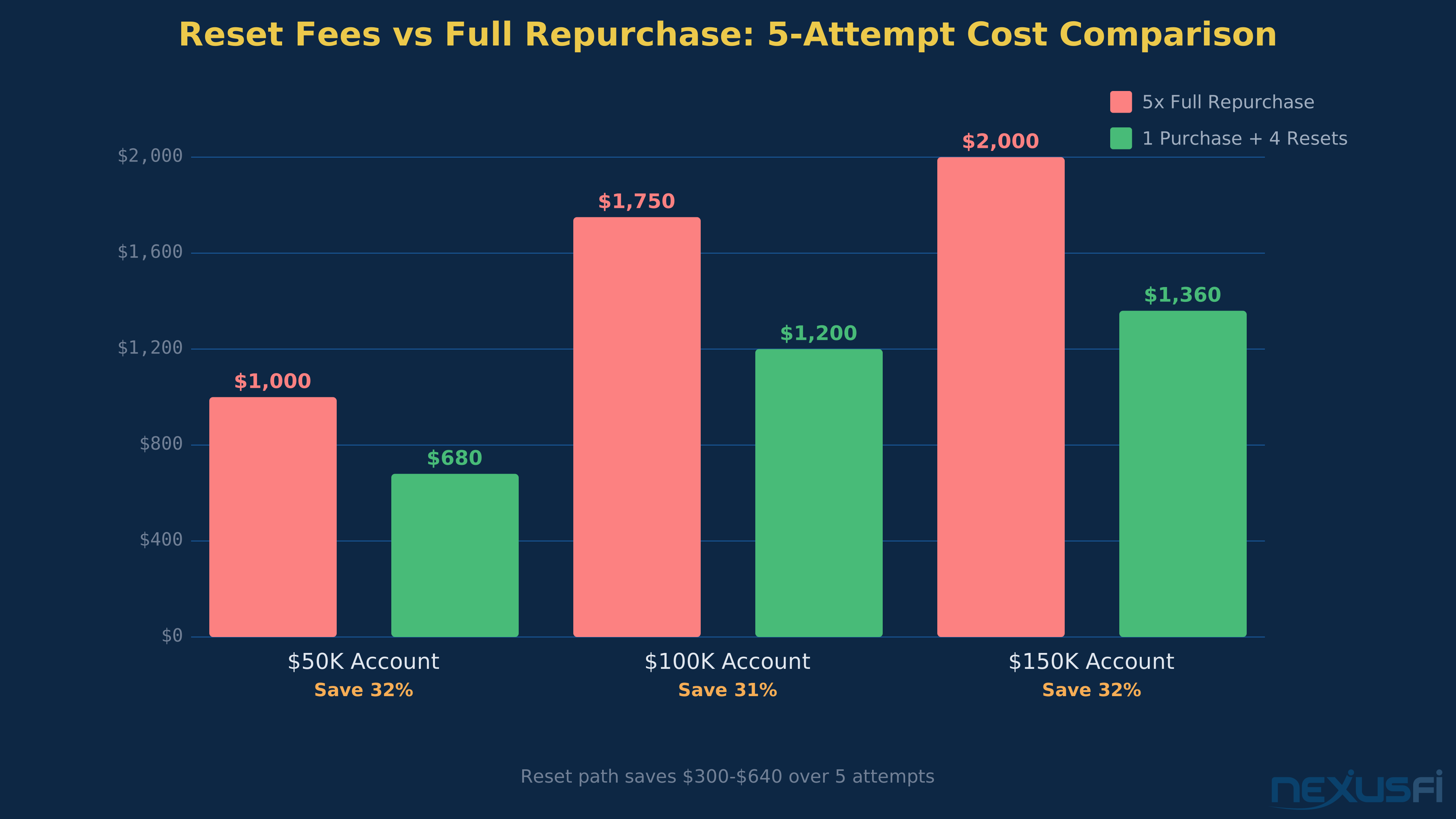
The economics of resets go deeper than "resets cost less." Here's a concrete comparison across common account sizes:
Typical pricing structure (representative, not firm-specific):
A $50,000 evaluation might cost $200 for the initial challenge. A reset might cost $100-$150. A $150,000 evaluation at $400 might have a $200-$280 reset fee. The savings per attempt look modest — $50 to $120 — but they compound fast when you're on attempt three, four, or five.
Let's run the real math. Say you're trading a $50K evaluation at $200 per challenge with a $120 reset fee:
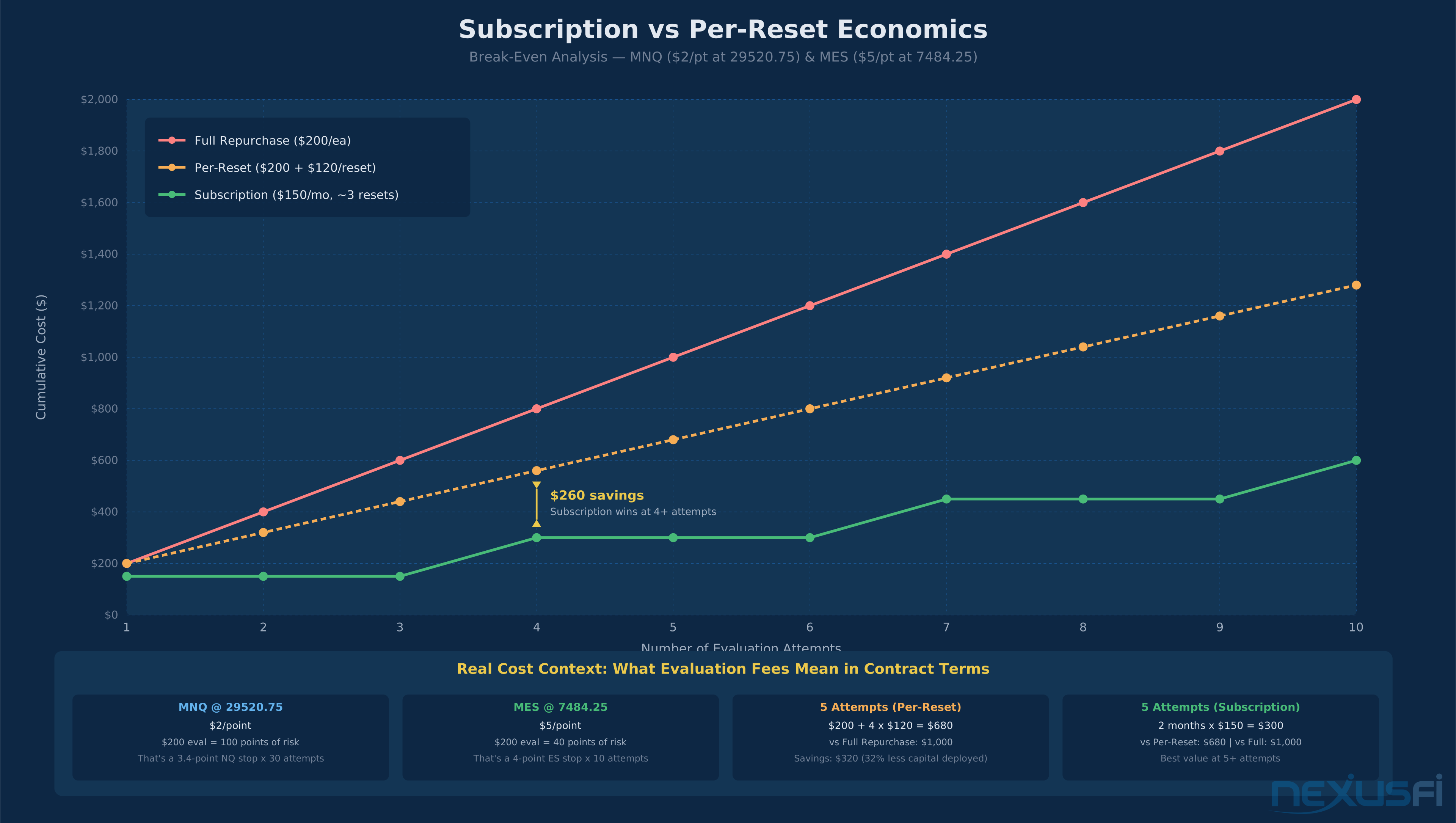
Full repurchase path: 5 attempts = 5 x $200 = $1,000 total cost Reset path: 1 purchase + 4 resets = $200 + (4 x $120) = $680 total cost Savings: $320, or 32% less capital deployed
That $320 matters. It's not just money — it's psychological runway. Every dollar you spend on evaluations without getting funded adds to the pressure you feel when you're actually trading. The cheaper each attempt is, the less performance anxiety you carry into the next one.
But here's where the math gets more interesting. Some firms offer promotional pricing — 30-50% off during sales events. If a $200 evaluation is running a 50% sale, you can buy a brand new challenge for $100, which is cheaper than the $120 reset fee. In that case, resetting is the wrong financial move. Always compare the reset fee against current promotional pricing before pulling the trigger.
Reset math in three lines: $50K eval at $200 with $120 resets — five attempts cost $1,000 full-price vs $680 with resets, saving 32%. But always check promotional pricing first — a 50% sale on a new challenge ($100) beats the reset fee ($120). The cheapest path changes.
The Four Types of Evaluation Failure #
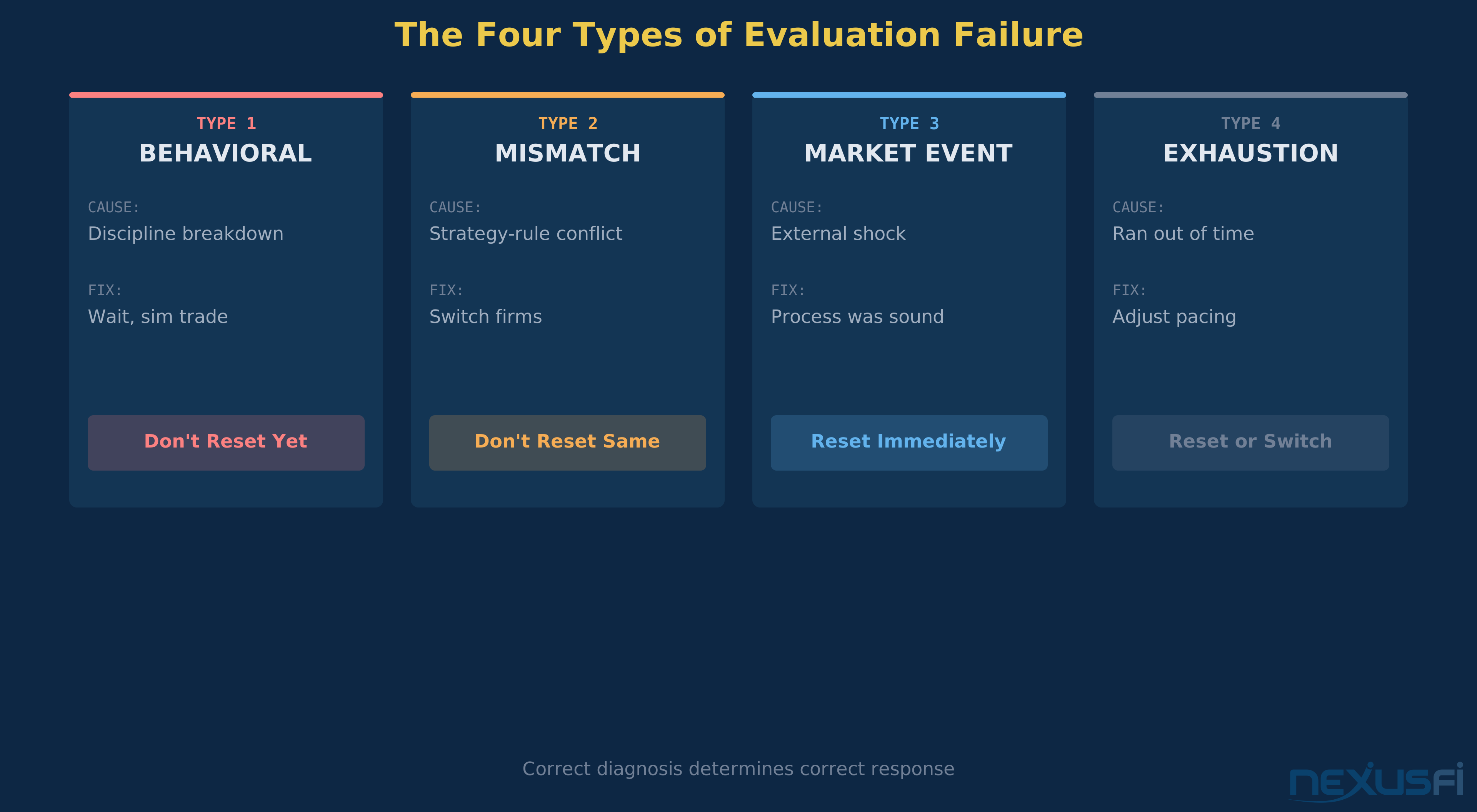
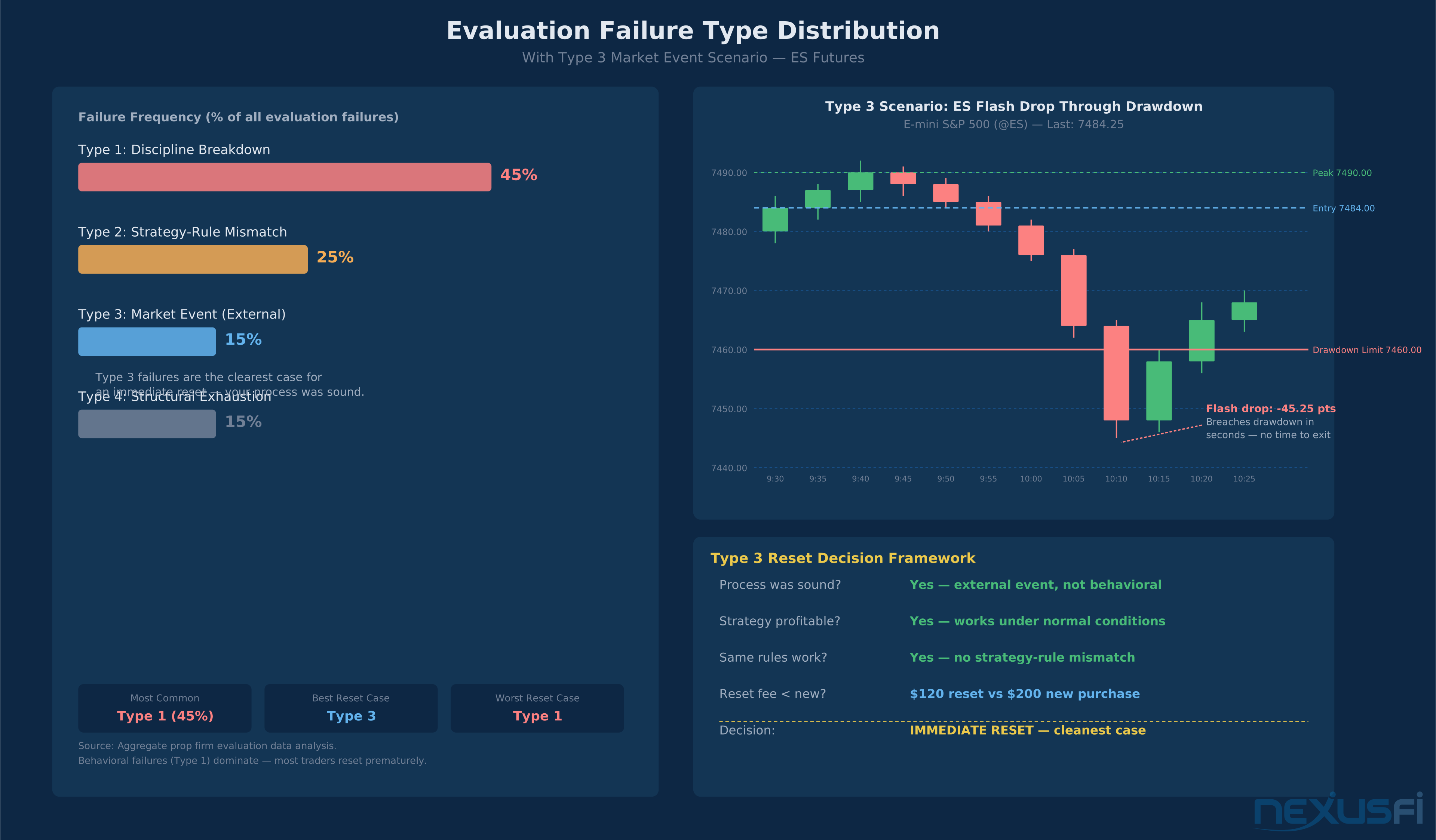
Not all failures are created equal. The type of failure you experienced determines whether a reset makes sense and what you need to change. Most prop firm content lumps all failures together. That's a mistake.
Type 1: Behavioral Failure — Discipline Breakdown #
You deviated from your plan. Revenge trading after an early loss, oversizing a position because you "felt confident," holding through a stop because "it'll come back." This is the most common failure mode, and it's the clearest signal that resetting immediately is the wrong move.
If your failure was behavioral, the reset won't fix the behavior. You'll carry the same patterns into the next attempt. As @BertV described after failing four consecutive Leeloo Express evaluations: each time he hit the profit target within two days, then gave it all back because he kept trading aggressively instead of stepping away. The pattern repeated identically across attempts.
The fix: Take at least 48-72 hours off. Journal the specific moments where discipline broke down. Sim trade for a minimum of 5 trading days following your exact plan. Only then consider resetting.
Type 2: Strategy-Rule Mismatch #
Your strategy is profitable, but it's incompatible with this firm's specific rules. The most common version: a trader whose natural profit distribution includes occasional outsized winning days hits a consistency rule violation. They didn't trade badly — they traded in a way the rule structure doesn't accommodate.
Another common mismatch: scalpers who need tight stops hitting daily loss limits because their strategy has frequent small losses that compound within a single session. The strategy works over time but violates the daily drawdown on bad days.
The fix: Don't reset at the same firm. Either find a firm whose rules match your strategy's characteristics, or modify your strategy specifically for the evaluation period. Both are valid — but pretending the mismatch doesn't exist and resetting into the same rules is burning money.
Type 3: Market Event Failure — External Shock #
A surprise news event, flash crash, or volatility spike hit your position through your stop and into the drawdown limit before you could react. Intraday trailing drawdowns are especially vulnerable to this — they lock at peak equity, meaning a strong morning session followed by a sharp reversal can breach the drawdown even if you'd have closed the day profitable.
This is the cleanest case for an immediate reset. Your process was sound. The market did something unusual. The same strategy in normal conditions would have been fine.
The fix: Reset immediately if the failure was clearly event-driven. But be honest with yourself — traders frequently attribute behavioral failures to "unusual market conditions" when the conditions were perfectly normal and the problem was their reaction to them.
Type 4: Structural Exhaustion — Running Out of Time #
You didn't breach drawdown. You didn't break any rules. You just ran out of trading days before hitting the profit target. This usually means one of two things: your strategy's natural pace doesn't match the evaluation timeline, or you traded too conservatively early and couldn't close the gap.
The fix: If pace is the issue, switch to a firm with more trading days or no time limit. If conservatism is the issue, plan your target progression — know what daily P&L you need to stay on track, and increase size modestly if you're behind schedule in the final third.
When to Reset vs. When to Start Fresh #
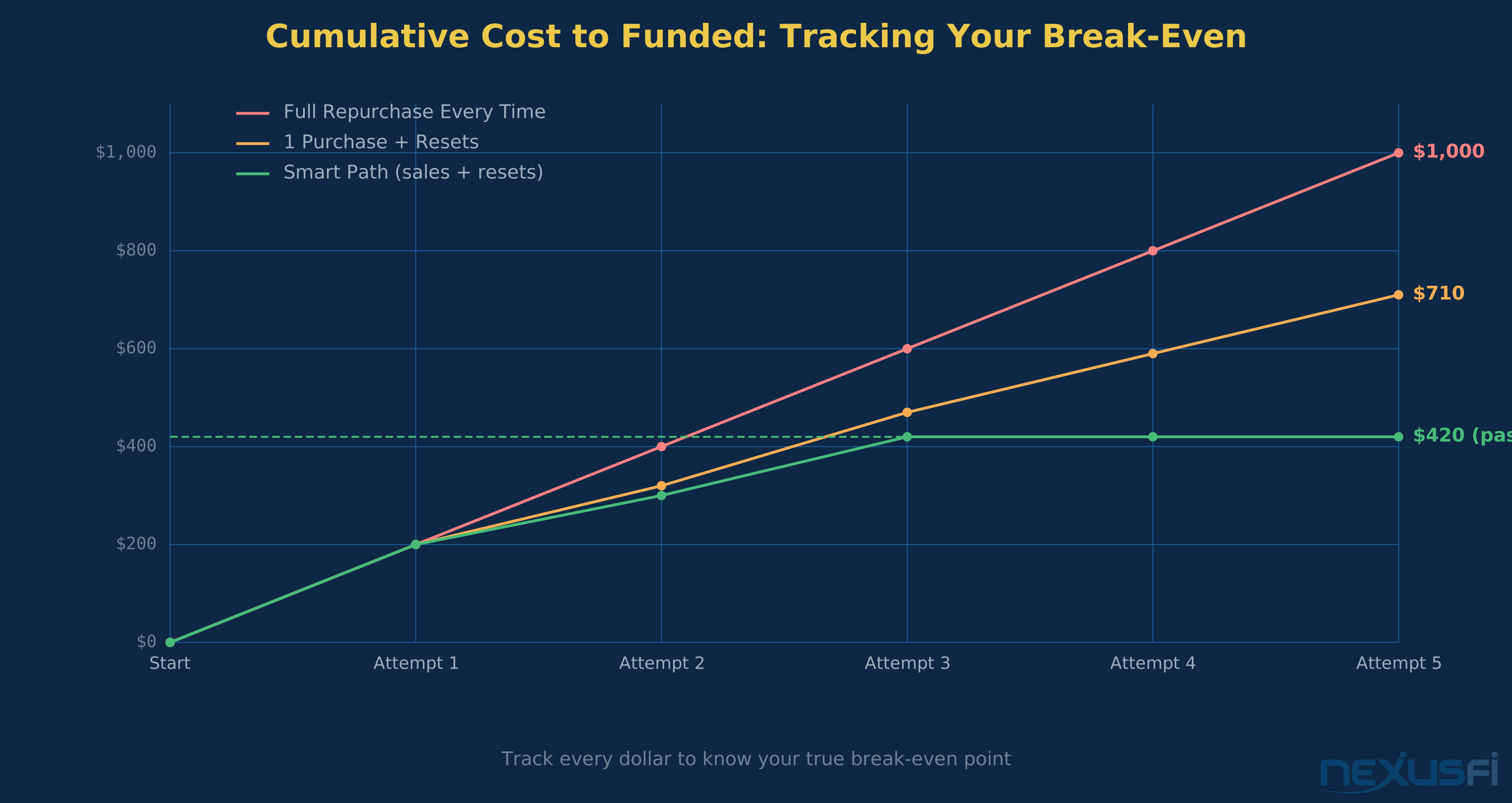
The decision framework is simpler than most traders make it:
Reset when:
- The failure was event-driven (Type 3) and your process was sound
- You're on your first or second attempt at this account size
- The reset fee is meaningfully cheaper than a new purchase
- You have a specific, identifiable adjustment to make
- You're confident in the strategy and just need another shot at execution
Start fresh (new purchase) when:
- A promotional sale makes new purchases cheaper than the reset
- You want to change account size (up or down)
- You've reset the same account more than twice already
- The failure was behavioral (Type 1) and you need a clean psychological break
- You're switching strategies since your last attempt
Switch firms entirely when:
- The failure was a strategy-rule mismatch (Type 2)
- You've failed three or more times with the same firm's rules
- The firm's drawdown structure repeatedly punishes your trading style
- You've identified a competitor with rules that better fit your approach
One critical nuance: resetting the same account three or more times is almost always the wrong move. If you've failed three times with identical rules and account parameters, something systemic is wrong — either with the strategy-rule fit or with your execution under pressure. Spending another $120 on the same setup expecting different results is the funded trading equivalent of doubling down on a losing position. As @wavingman points out, although prop firm rules have become increasingly forgiving, treating evaluations as a pure numbers game is a fallacy. Each attempt should represent genuine improvement, not just another roll of the dice.
Tracking the True Cost of Getting Funded #
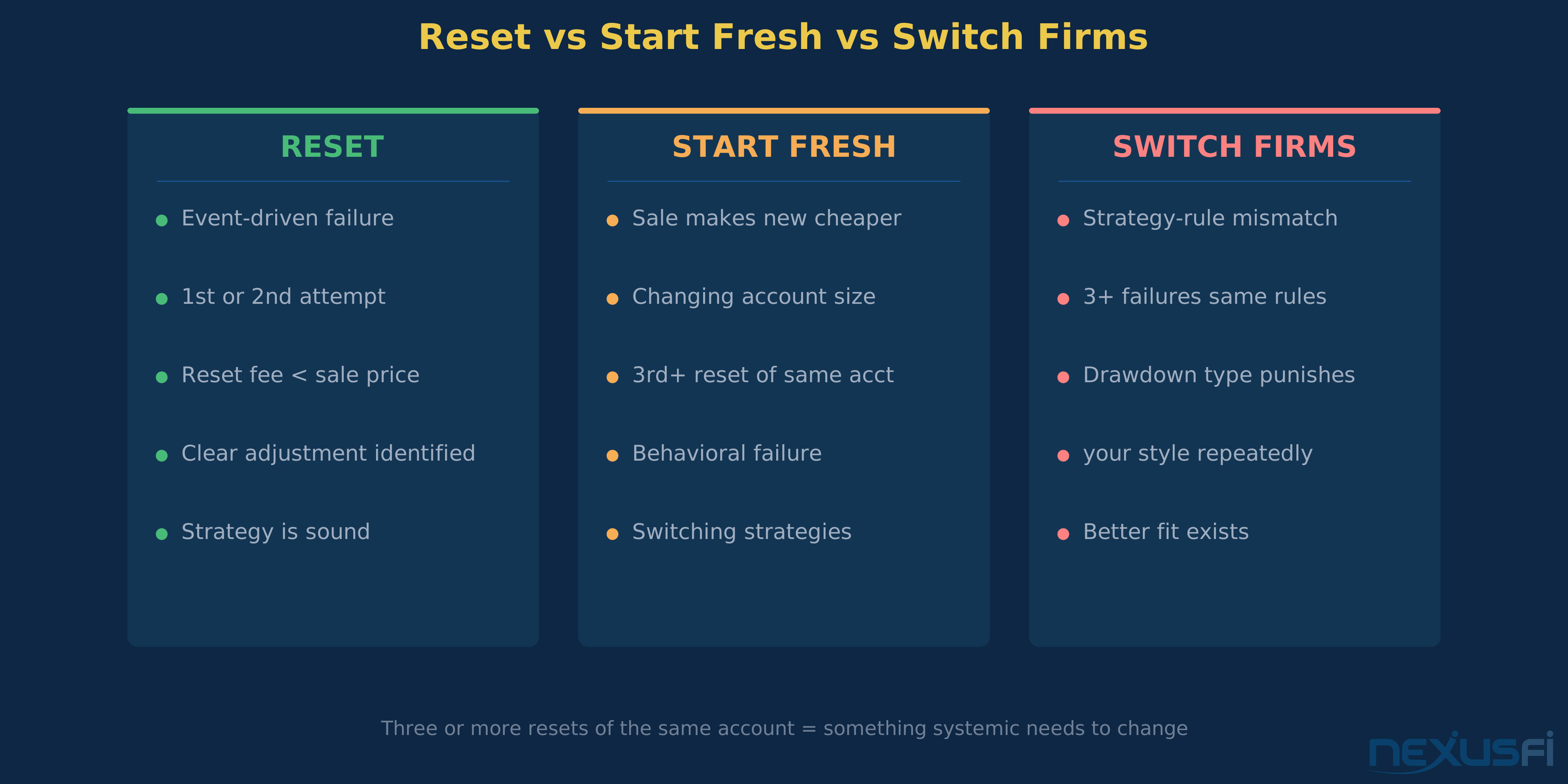
Most traders don't track their total evaluation spend. They should. Here's a simple framework:
Total Cost to Funded = Initial purchase + All resets + All repurchases + Data fees + Platform costs during evaluation period
A realistic example: Trader spends $200 on initial evaluation, fails, resets for $120, fails again, buys new during a sale for $150, fails, resets for $120, passes. Total: $590 in evaluation fees alone. Add $60/month for data across 4 months of attempts: $240. Grand total: $830 to get a $50K funded account.
That $830 isn't wasted if you're now funded and profitable. But it does establish your break-even point. You need to earn $830 in funded account payouts before you're actually net positive — the same drawdown recovery mathematics principle that applies to all trading from the entire prop firm endeavor. With a 90% profit split, that means generating roughly $920 in gross profits before your funded trading career has actually made money.
Track every dollar. Know your break-even. It changes how you think about each attempt.
Strategy Adjustments Between Attempts #
The gap between attempts is where most traders either improve or repeat. Here's what to do in that gap:
Diagnose Before You Prescribe #
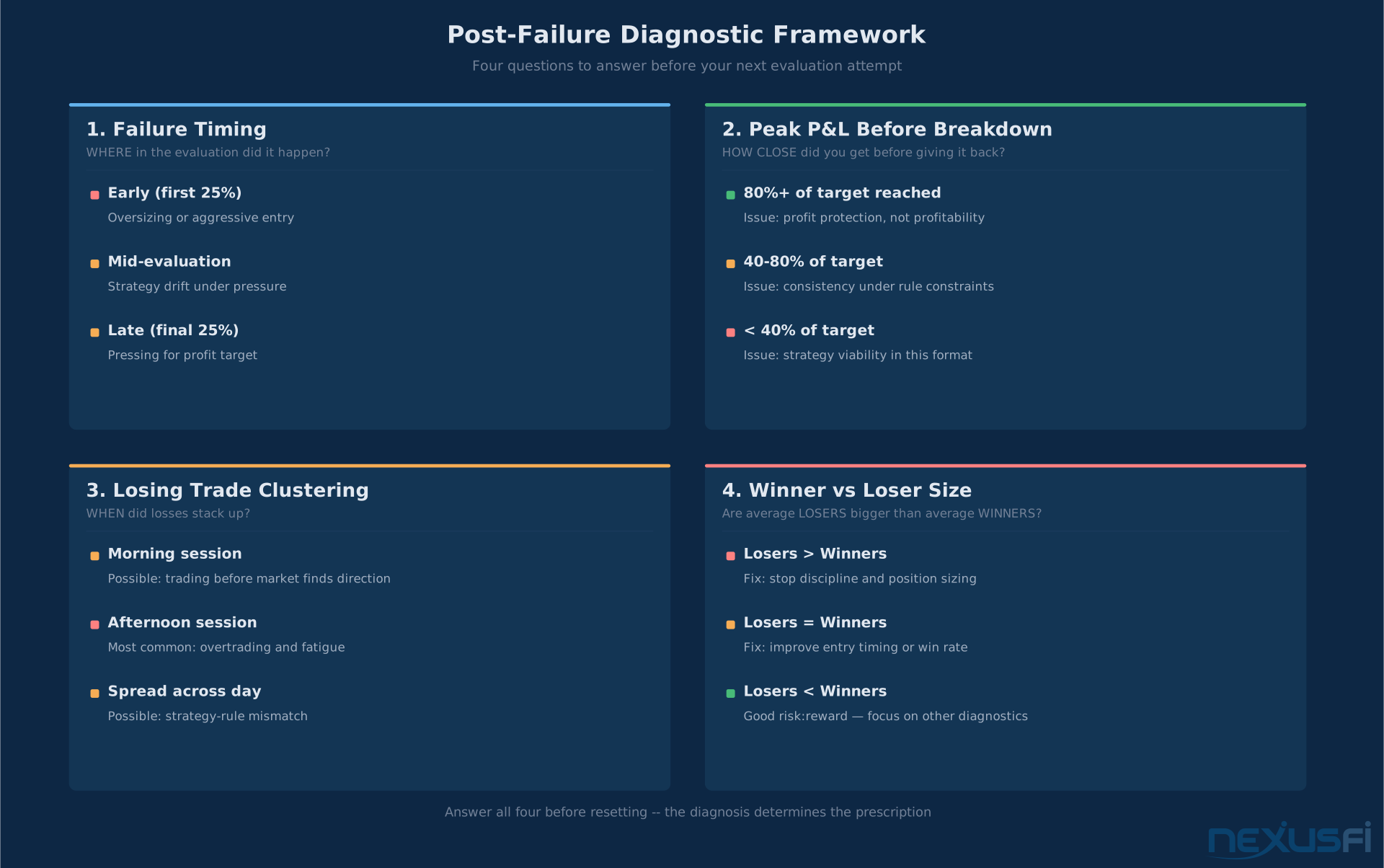
Pull your trade data from the failed attempt. Every firm provides this. Answer these specific questions:
- Failure timing: Where in the evaluation did it happen — early (first 25% of days), mid, or late? Early failures usually indicate oversizing or aggressive trading. Late failures often signal pressing for the target.
- Peak P&L before breakdown: If you were up 80% of the target before giving it back, the issue isn't profitability — it's profit protection. Different problem, different solution.
- Losing trade clustering: What time of day did your losing trades stack up? Afternoon overtrading is the single most common pattern in failed evaluations.
- Winner vs loser size: If average losers are larger than average winners, position sizing and stop discipline are the issues, not strategy selection.
Sim Trade the Rules, Not Just the Strategy #
Before paying for another attempt, sim trade under evaluation rules for at least 5-10 sessions. Not just your strategy — the rules. Set a sim account to the same starting balance, drawdown limits, and profit target. Track whether you'd pass. Many traders discover in sim that their strategy passes easily when they're not under the pressure of real evaluation fees.
@Mordecai's experience trading the Leeloo 150K Tryout across multiple attempts reinforces this point: pass the evaluation three times on sim before paying for a live attempt. That's rigorous, but the logic is sound — if you can't pass consistently in sim, paying for live attempts is premature.
Adjust Position Sizing First #
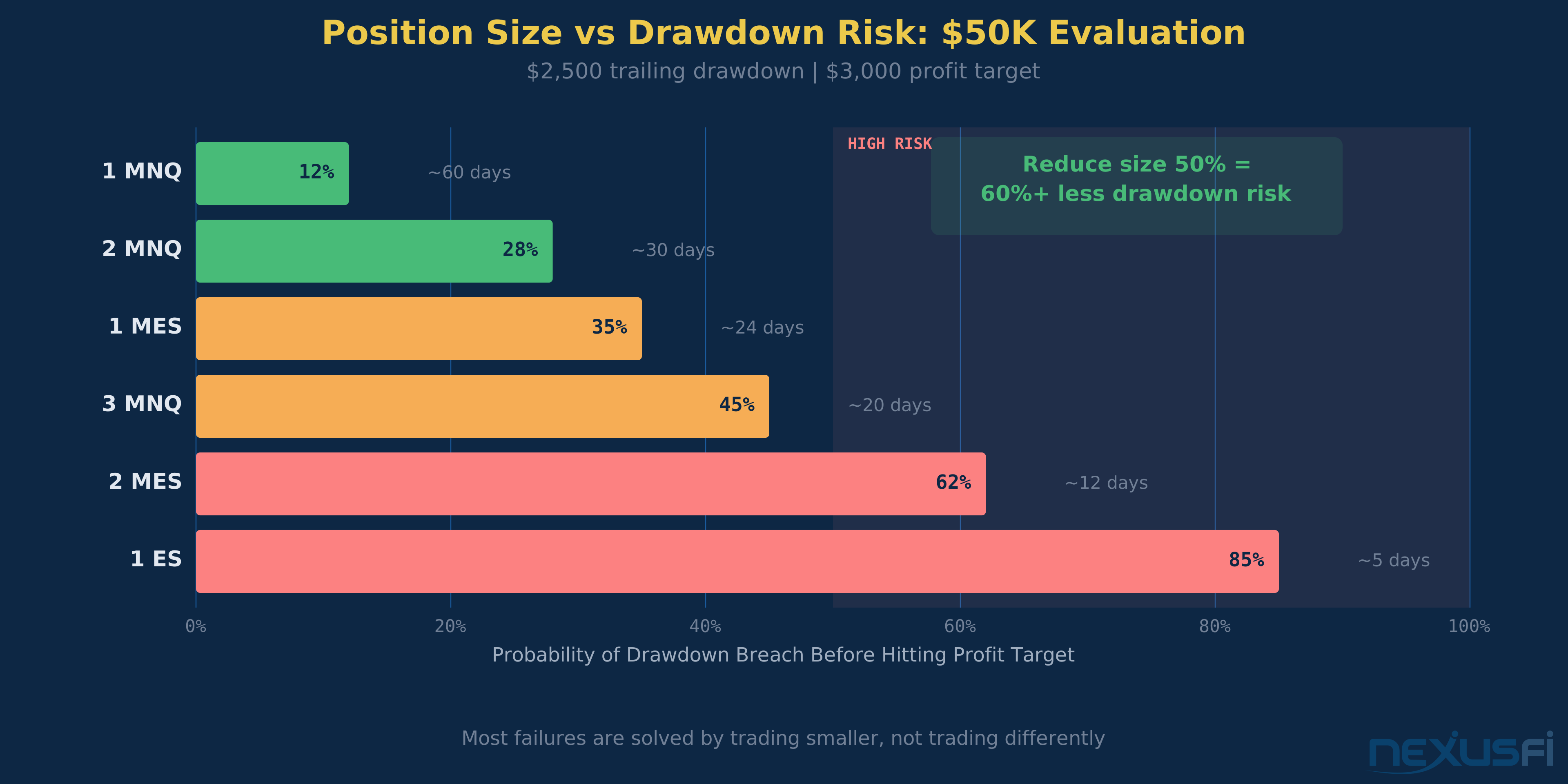
The single most impactful change between attempts isn't strategy — it's size. Traders who failed on drawdown almost always fix the problem by reducing position size by 30-50% and being patient about hitting the profit target. A $50K account with a $2,500 drawdown limit and a $3,000 profit target doesn't need large positions — it needs consistent small wins over time.
Run the math: if you're trading 1 MNQ contract ($2/point) and averaging $100/day net after costs, you'd hit a $3,000 target in 30 trading days. That's six weeks. Not fast, not exciting, but funded. Most evaluation rules give you plenty of time. Use it.
Free Retry and Conditional Reset Policies #
The prop firm industry has gotten increasingly competitive, and free retry policies have become a major differentiator. Here's how they typically work:
Conditional free retries: You get a free reset if you followed all risk rules but missed the profit target. The firm is basically saying: "You traded responsibly. Try again on us." This rewards discipline over results, which aligns with what funded trading actually requires.
Subscription-based resets: Some firms use a monthly subscription model where you pay a recurring fee and can reset unlimited times within each billing cycle. The economics shift: instead of paying per attempt, you're paying for time. If you pass quickly, the subscription is expensive per attempt. If you need multiple tries, it's cheaper than individual resets.
Loyalty and progress-based resets: A few firms now offer benchmark preservation — if you've passed Phase 1 and fail Phase 2, you can reset just Phase 2 without redoing Phase 1. This is a significant advantage for traders who consistently pass the first phase but struggle with the tighter rules of Phase 2.
When comparing firms, factor the retry policy into your total expected cost. A firm with a higher initial fee but free conditional retries may be cheaper overall than a firm with a low entry fee but expensive resets.
The Psychology of Failure and Recovery #
Here's what the economics don't capture: failing an evaluation messes with your head. The sting of lost money, wasted time, and self-doubt creates real psychological effects that carry into your next attempt if you don't address them.
The Revenge Reset Trap #
The single worst thing you can do after a failure is reset immediately while you're still emotional. The revenge reset — buying back in within hours because you're angry and want to "prove" you can do it — leads to the same aggressive, undisciplined trading that caused the failure. @Mordecai's experience across multiple Leeloo 150K Tryout attempts illustrates the pattern clearly — revenge trading after a loss repeats almost identically across attempts until you consciously break the cycle. Most firms let you reset instantly. That's a feature designed for impulse purchases, not good decision-making.
Minimum cooling period: 24 hours. Better: 48-72 hours. Best: one full sim week under evaluation conditions before you touch real capital again.
Reframing Failure as Data #
Professional traders in every domain — prop firms, hedge funds, independent retail — lose money regularly. @Ghappy21 on NexusFi is a profitable ES futures trader who has talked openly about failing evaluations repeatedly — the skill that makes you money in live markets doesn't automatically translate to passing a specific evaluation's constraints. A failed evaluation isn't evidence that you can't trade. It's evidence that something specific didn't work this time. The traders who get funded consistently are the ones who extract the data from each failure:
- What specific rule did I violate?
- Was the violation within my control?
- What would I do differently with this exact market sequence?
- Is this a pattern or a one-off?
Treating each failure as a debugging exercise — not a referendum on your ability — is the mental shift that separates traders who eventually pass from traders who burn through money.
The Sunk Cost Problem #
After three or four failed attempts, many traders feel trapped. They've spent $600-$800 on evaluations and feel like they have to keep going to justify the expense. This is textbook sunk cost fallacy — research published in PLOS ONE confirms that the emotional sting of money already lost creates irrational pressure to continue spending, independent of future expected value. The money you've already spent is gone regardless of what you do next.
The question is always forward-looking: given what you know now, is another attempt a positive expected value decision? If yes, proceed. If no — if you're still making the same mistakes, if the rule structure doesn't fit, if you're not profitable in sim under these conditions — stopping is the right call. It's not quitting. It's capital preservation.
The only question that matters: knowing what you know right now, is another attempt a positive expected value decision? If the answer is no, the money already spent is irrelevant.
Building a Systematic Retry Process #
Here's a structured process for handling evaluation failures that prevents impulsive decisions and maximizes your probability of passing on the next attempt:
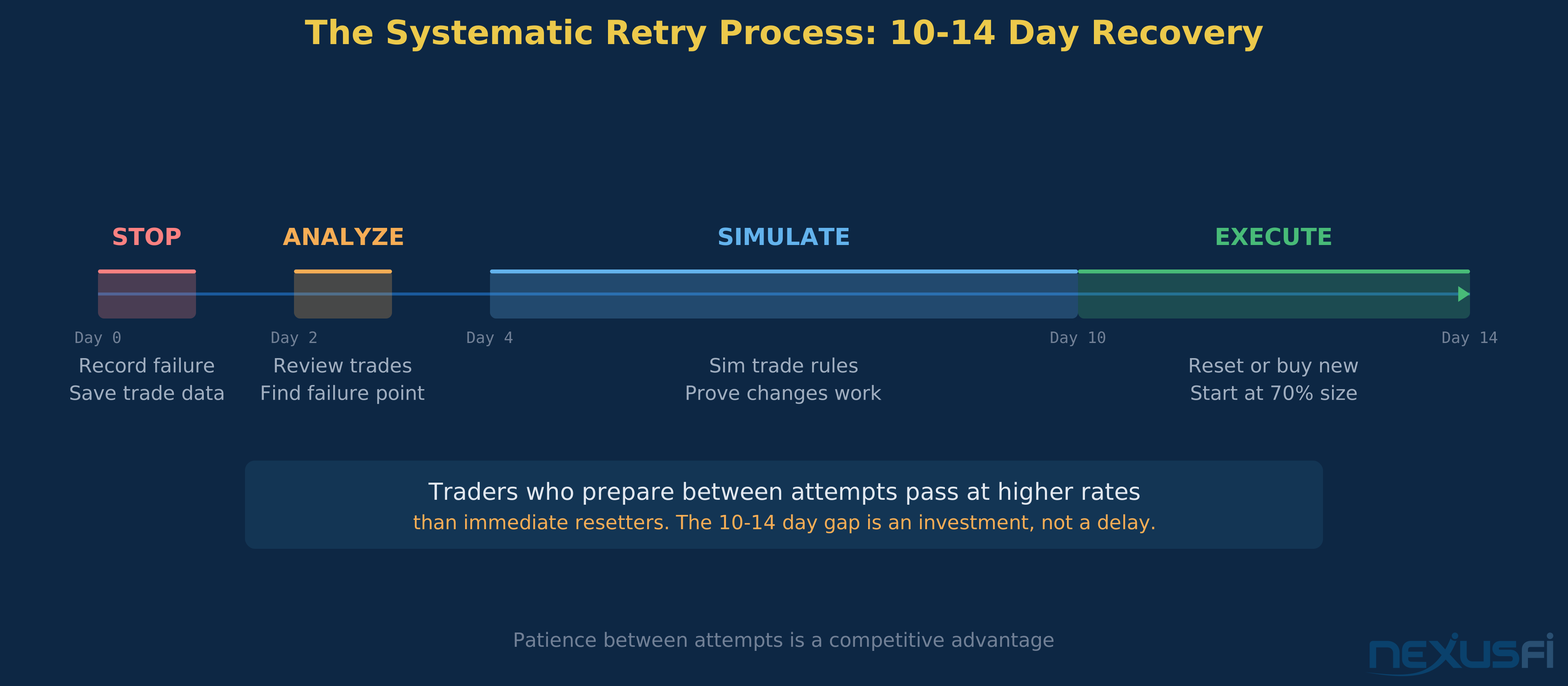
The 10-14 day framework: Day 0-1 record and walk away. Day 2-3 analyze every trade. Day 4-10 sim trade the changes. Day 10-14 decide reset vs new purchase based on sim results and economics.
Step 1: Immediate (Day 0-1)
- Record the failure type (behavioral, mismatch, event, exhaustion)
- Save all trade data and account statements
- Do NOT reset or repurchase. Walk away for at least 24 hours.
Step 2: Analysis (Day 2-3)
- Review every trade from the failed attempt
- Identify the specific moment the evaluation went wrong
- Determine if the cause is within your control
- Document what you would change
Step 3: Simulation (Day 4-10)
- Sim trade under identical evaluation rules for 5-10 sessions
- Implement the specific changes identified in Step 2
- Track whether you would pass the evaluation in sim
- If you wouldn't pass in sim, you're not ready to reset
Step 4: Decision (Day 10-14)
- If sim results pass: choose reset vs. new purchase based on economics
- If sim results don't pass: continue sim trading until they do
- Check for promotional pricing before paying reset fee
- If this would be your third+ reset of the same account, seriously consider switching firms or account sizes
Step 5: Execution
- Start the new attempt with reduced position size (70% of previous)
- Set a daily loss limit at 50% of the evaluation's daily max
- Plan your target progression: know what daily P&L you need
- If you hit 70% of the profit target, tighten risk further — don't press
This process adds 10-14 days between attempts. That feels slow when you're eager to get back in. But the traders who pass tend to be the ones who prepare between attempts rather than rushing through them.
The Bottom Line on Resets #
Account resets are a tool, not a strategy. Used wisely — after event-driven failures, with clear adjustments identified, and with favorable economics — they save money and preserve momentum. Used impulsively — as a rage-reset, or as the third retry of an account with rules that don't fit your style — they're just a slower way to burn through capital.
The prop firm industry wants you to keep resetting. Every reset is revenue for them. Your job is to make each attempt count: diagnose the failure, adjust the approach, prove it works in sim, and then execute with discipline. That's not just how you pass an evaluation. That's how you trade.
Knowledge Map
Go Deeper
Build on this knowledgeReferences This Article
Articles that build on this topicCitations
- — BertV's trade journal (2021) 👍 2“Failed Leeloo Express 4 times, twice hit $6000 goal in 2 days only to lose it”
- — Future career in hedge fund please help (2025) 👍 1“Sim trade their exact rules for 30 days, pass 3 times on sim first”
- — Topstep didn't pay (2021) 👍 7“Successful ES trader who failed evaluations repeatedly”
- — Trading with Intuition (2024) 👍 3“Prop firm rules have become very forgiving, numbers game approach is a fallacy”
- — Leeloo 150k Tryout Scalping Journal (2022) 👍 5“Leeloo 150k Tryout evaluation experience across multiple attempts, revenge trading pattern”
- — Prop Firm Statistics 2026: Pass Rates, Payouts and Industry Data (2026)
- — The feeling of throwing good money after bad: The role of affective reaction in the sunk-cost fallacy (2019)