



Decision Fatigue: Why Your Afternoon Brain Destroys Your Morning Profits
Overview #
You trade well for the first two hours. Your entries are clean, your stops are where they belong, and you're following your plan like it's written in stone. Then hour three rolls around. You start widening stops. You take a setup that isn't quite there. You modify an order three times before it fills. By the afternoon, you're a different trader — making decisions the morning version of you would never approve.
That deterioration isn't a discipline problem. It's a cognitive one. It's decision fatigue — the measurable decline in decision quality that occurs after making repeated choices under uncertainty. And in futures trading, where every minute demands another judgment call — entry or wait, hold or cut, add or reduce, adjust or leave alone — the decision load is relentless.
The concept was first proposed by psychologist Roy Baumeister (Baumeister et al., 1998) and popularized through research showing that judges, doctors, and executives all make measurably worse decisions as the day progresses. The landmark Danziger et al. (2011) study in PNAS found that Israeli parole judges' favorable rulings dropped from ~65% to near zero within each decision session, resetting after food breaks — a striking demonstration of sequential decision degradation in experts. [As @jstnbrg explains from 16 years of pit trading at the CBOT] [1]: "Researchers in psychology have identified a phenomenon they call decision fatigue. It turns out that over the course of a day decision making gets worse the more decisions a person makes."
The trading community has documented this pattern extensively. [In The PandaWarrior Chronicles] [2],
This article breaks down exactly where decision fatigue hits hardest in a futures workflow, how to detect it in your own trading, what it actually costs in P&L terms, and a concrete behavioral framework for managing your cognitive budget.
Key Concepts #
Decision fatigue — the progressive deterioration of decision quality after a sustained period of making choices. Unlike physical fatigue, which presents as obvious tiredness, decision fatigue operates silently. The depleted trader doesn't feel less capable. They just start making worse choices.
Cognitive load — the total demand placed on working memory at any given moment. In futures trading, cognitive load comes from processing price action, monitoring positions, evaluating risk parameters, tracking correlated markets, and managing execution — simultaneously and continuously.
Decision budget — the finite daily capacity for high-quality discretionary judgments. Every cancel/replace, every stop adjustment, every "should I take this setup?" evaluation draws from the same pool. When the pool runs low, the brain defaults to shortcuts: either impulsive action (just do something) or avoidance (do nothing and hope).
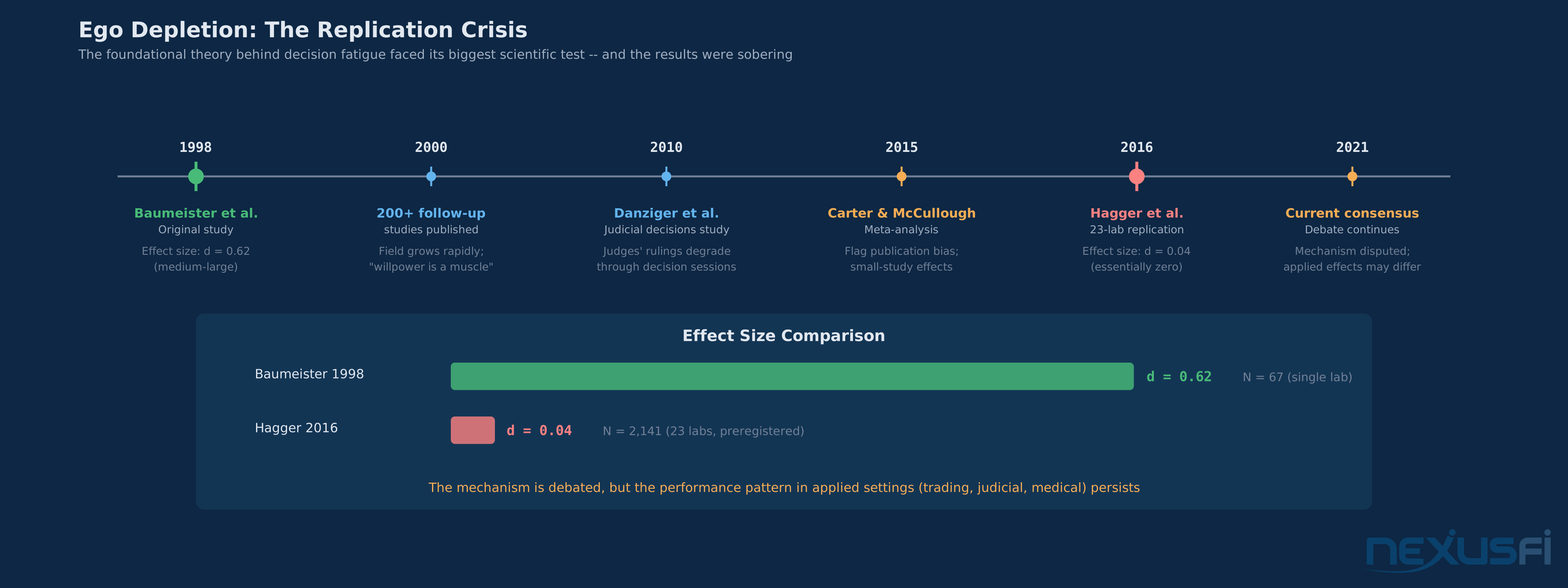
Ego depletion — the psychological model, first proposed by Baumeister et al. (1998), suggesting that willpower and decision-making share a common resource. Extended periods of self-control (following rules when the market tempts you to deviate) drain the same reserve needed for sharp analytical decisions later. This dynamic intersects with the broader environment of cognitive biases in trading — as decision reserves deplete, systematic mental shortcuts become increasingly difficult to override. Note: The ego depletion model has faced a significant replication crisis. A 2016 multi-lab preregistered replication (Hagger et al., 23 labs, N=2,141) found basically zero effect (d=0.04, 95% CI spanning zero), and meta-analyses have identified widespread publication bias in the original literature. The concept remains influential in applied performance psychology, but the underlying mechanism is actively debated among researchers.
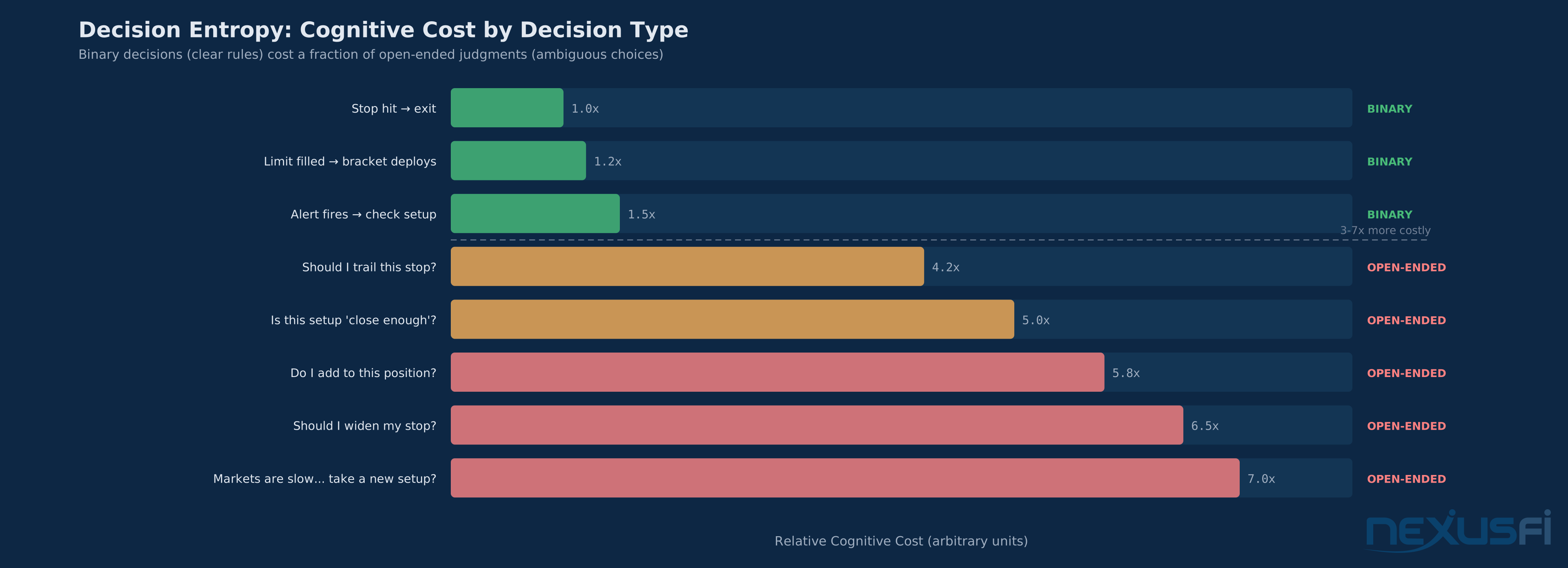
Decision entropy (original framing) — the idea that ambiguity and optionality increase fatigue disproportionately. This isn't an established academic term, but it captures a well-documented principle from decision science: a clear binary choice (price hits my stop, I'm out) costs less cognitive energy than an open-ended judgment (should I trail this stop or widen it or take profits here?). Research on choice overload (Iyengar & Lepper, 2000) and decision complexity supports this pattern. The more branches and "it depends" conditions in your trading plan, the faster you burn through your decision budget.
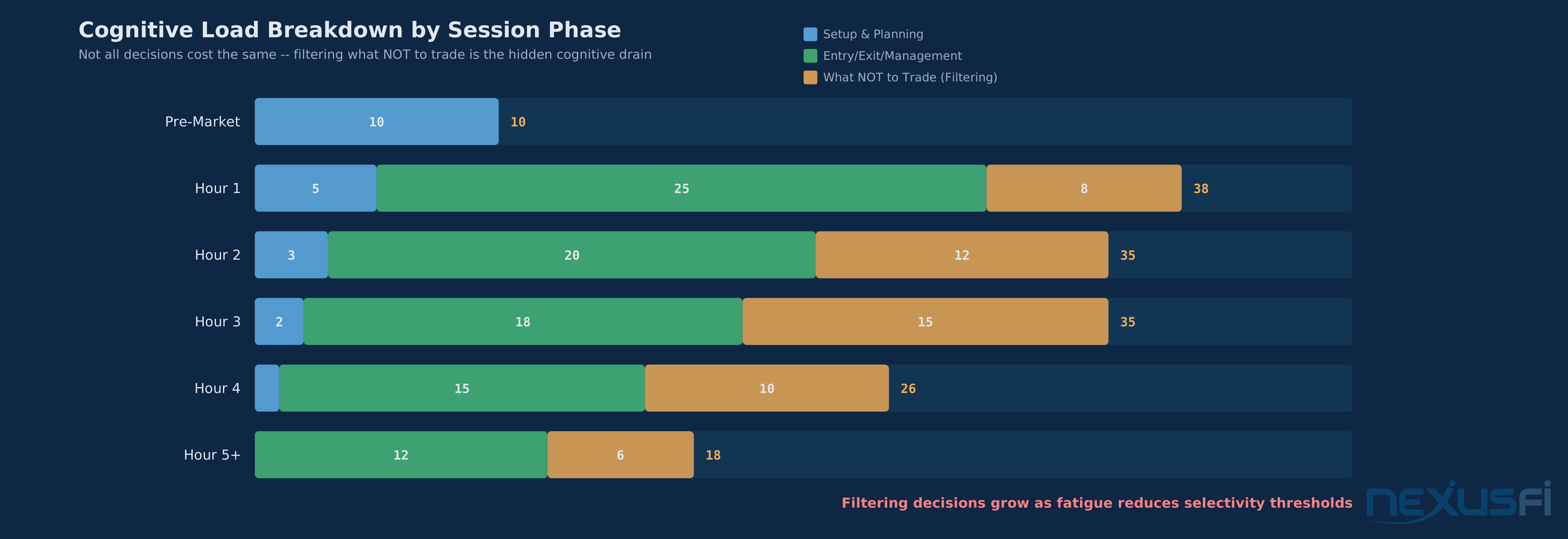
The Decision-Point Map: Where Fatigue Accumulates #
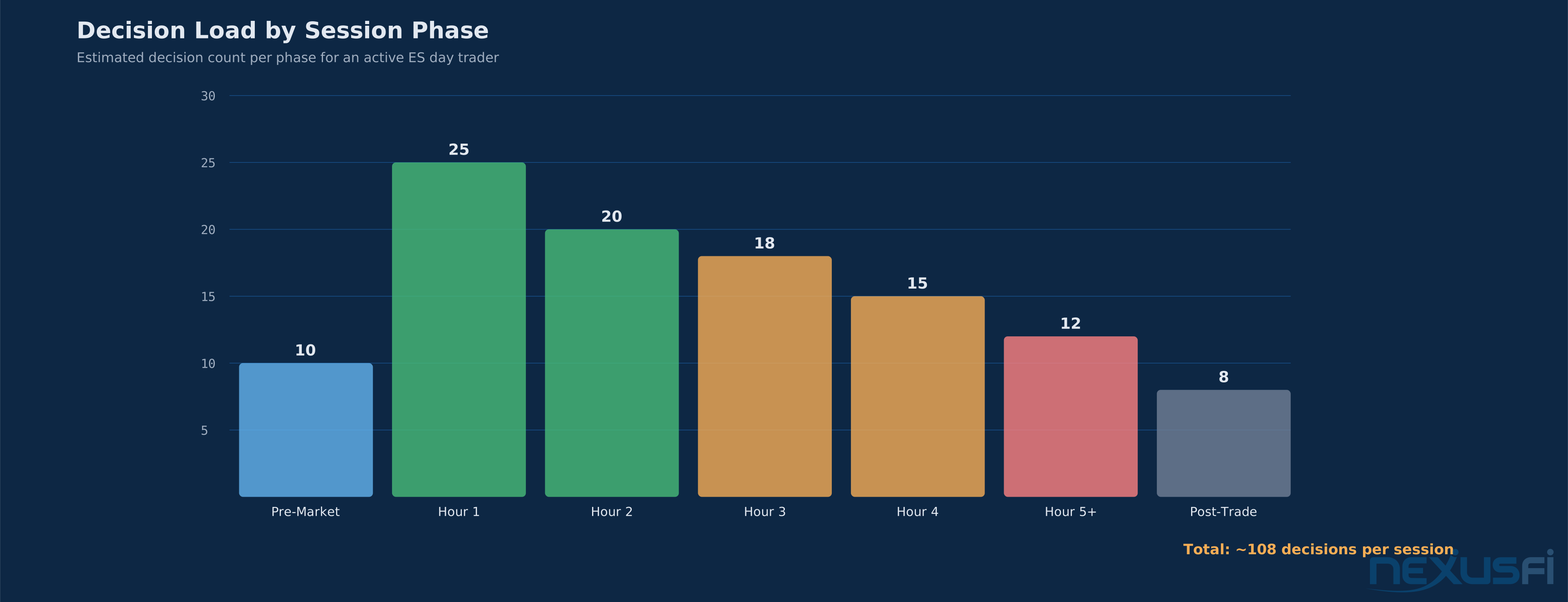
Every trading session is a chain of micro-decisions. Most traders dramatically underestimate how many judgments they're making. Here's the reality for a typical ES day trader:
Pre-Market Decisions (Before the Open) #
- Which markets to watch today (ES? NQ? CL? Multiple?)
- What's the overnight context? (Globex range, gap, key levels)
- Where are the day's reference points? (Prior session VPOC, VAH/VAL, overnight high/low)
- What setups am I looking for? (Reversion? Breakout? Both depending on context?)
- Where should I pre-place orders? (Or am I going fully discretionary?)
- What's my position size today? (Same as usual, or adjusted for volatility/news?)
That's 6-10 decisions before the opening bell, and many of them are complex, multi-variable judgments.
In-Session Decisions (Per Trade Cycle) #
For every potential trade, the decision chain includes:
- Is this a valid setup? (Pattern recognition under real-time uncertainty)
- Entry method: market order, limit, or wait for a pullback?
- Size: full position or scale in?
- Stop placement: where exactly? (ATR-based, structural, or fixed ticks?)
- Target: where to take profit? (Or trail?)
- Position management: hold, add, reduce, adjust stop?
- Exit: execute the plan or override because conditions changed?
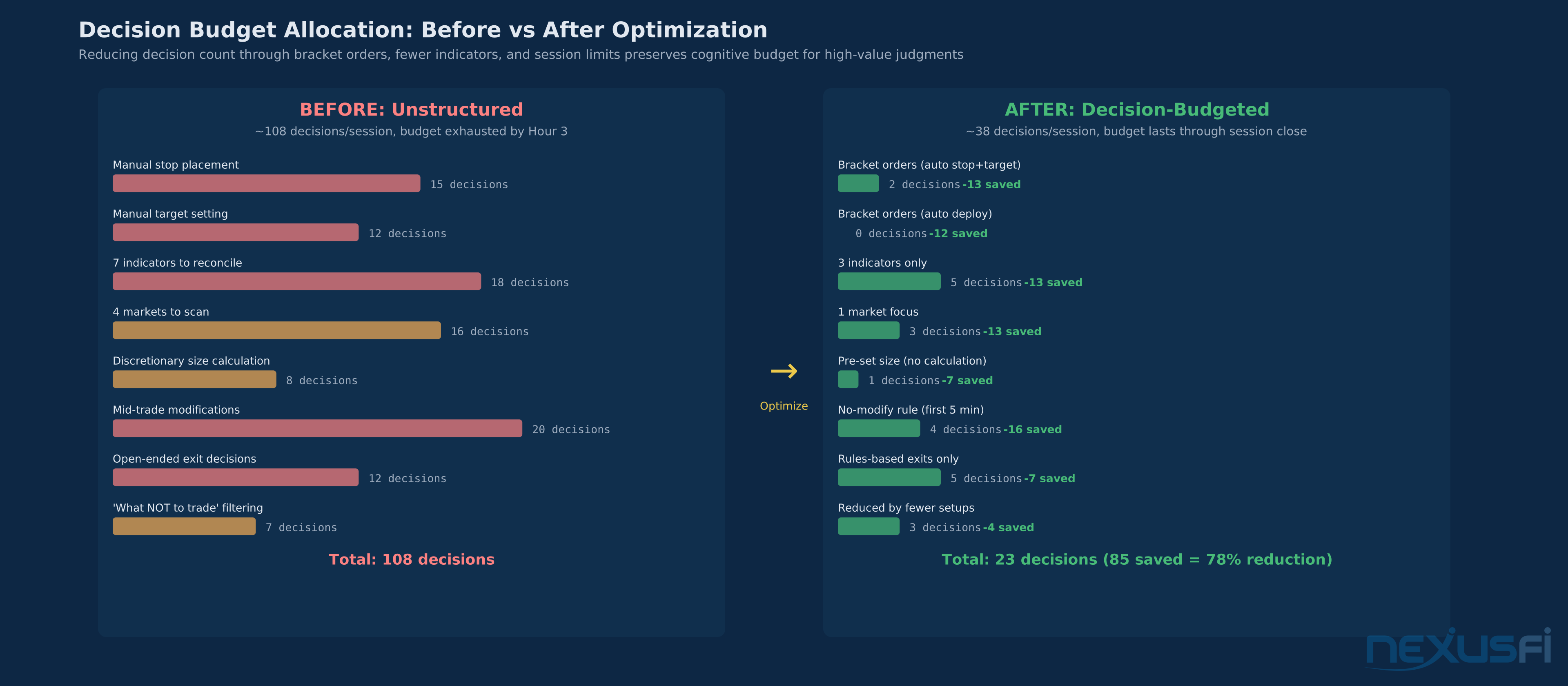
That's 7+ decisions per trade attempt. A trader taking 5-8 trades per day is making 35-60 in-session trading decisions, plus dozens more about what NOT to trade (each "no" is itself a decision).
Post-Trade Decisions #
- Do I review now or wait until end of day?
- Was that a process error or just an unlucky outcome?
- Do I need to adjust my plan for the remaining session?
The total decision count for an active day trader easily exceeds 100 meaningful judgments per session. [As @TropicalTrader discovered] [3]: "Something I've become increasingly aware of is that I can get decision fatigue or sucked into impulsive/careless trading after the 4 or 5 hour mark."
How to Spot Decision Fatigue in Your Trading #
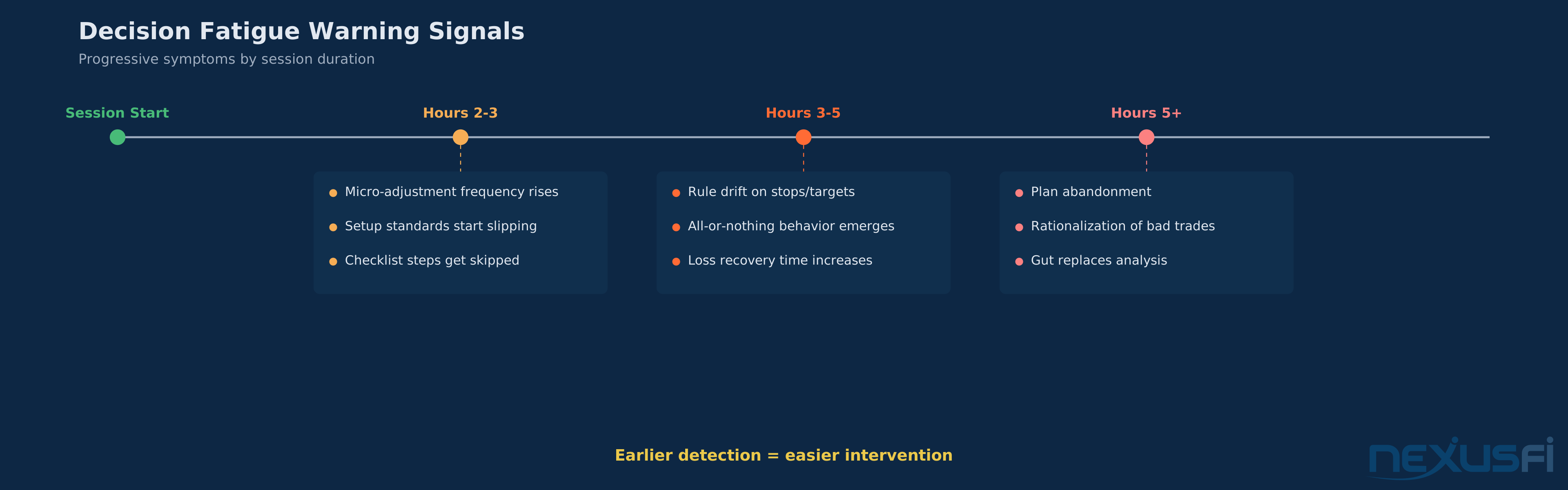
The dangerous thing about decision fatigue is that it doesn't announce itself. You don't suddenly feel unable to think. Instead, your behavior shifts in predictable but subtle ways. Here are the warning signals, ranked by how early they appear:
Early Warning Signs (Hours 2-3) #
Micro-adjustment frequency increases. You start modifying orders more often — moving stops, changing limit prices, canceling and re-entering. Each modification feels justified in the moment. But if you compared your modification rate in hour one to hour three, you'd see the drift clearly.
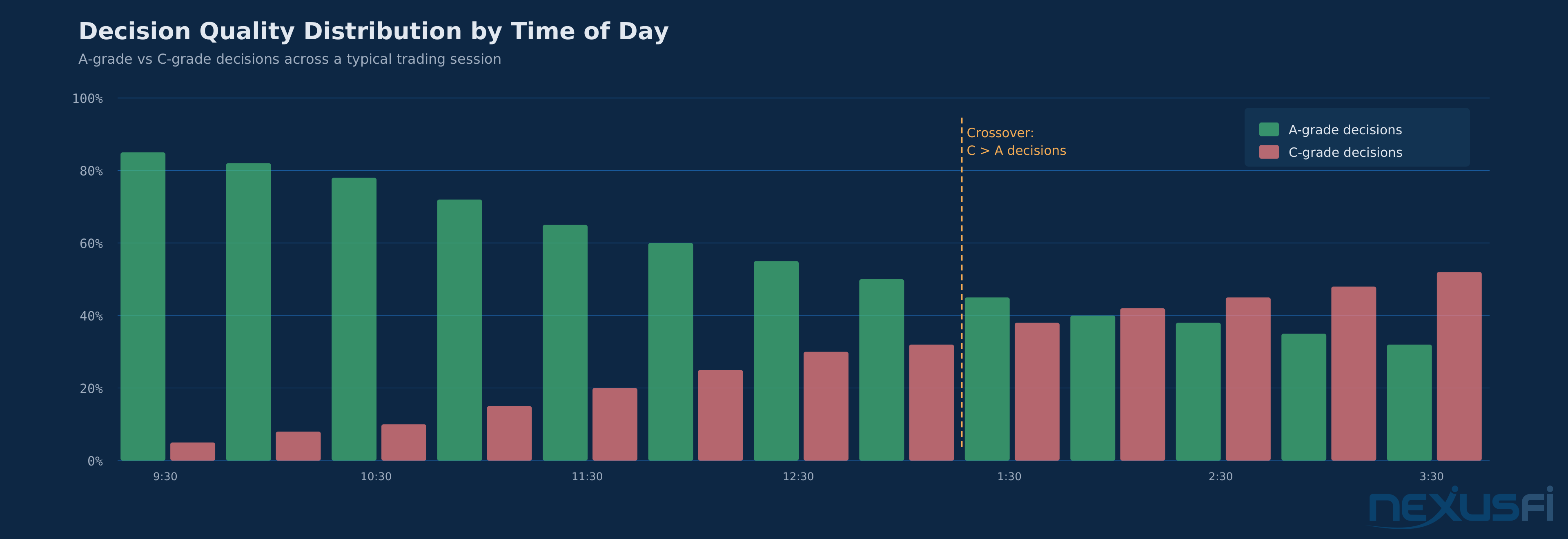
Setup standards slip. The morning you only trades A-grade setups. The afternoon you starts rationalizing B and C setups: "Well, it's almost there," or "Close enough." This isn't greed — it's your brain simplifying the evaluation criteria because the full assessment process costs too much energy.
Checklist shortcuts appear. You stop running through your full pre-trade checklist. You skip the correlation check, or you don't verify the higher timeframe context. Not because you decided to — because your brain silently dropped the steps to conserve resources.
Mid-Session Warning Signs (Hours 3-5) #
Rule drift on stops and targets. This is the signature symptom. Your stop goes from being based on market structure to "I'll give it a little more room." Your target goes from a defined level to "I'll just see where it goes." These aren't plan modifications — they're your depleted brain defaulting to vague decisions because precise ones require too much effort.
All-or-nothing behavior emerges. Instead of the measured, calibrated decisions you made in the morning, you start making binary choices: either aggressive action (revenge trading, doubling down, taking every signal) or complete paralysis (sitting on your hands, unable to pull the trigger on valid setups). Both extremes are fatigue signatures.
Recovery time after losses increases. A loss in the morning barely phases you — you check it against your rules, confirm it was valid, and move on. The same loss in the afternoon derails you for 30 minutes. Your ability to process setbacks degrades as decision reserves deplete.
Late-Session Warning Signs (Hours 5+) #
Plan abandonment. You stop trading your system and start trading your feelings. "The market looks like it wants to go up" replaces "My setup criteria are met." This is the brain's final cost-saving measure: abandoning the analytical framework entirely in favor of gut instinct, which requires almost zero cognitive energy.
Rationalization of poor execution. You take a trade that violates three of your rules and immediately construct a narrative for why it was actually fine. This post-hoc rationalization is the hallmark of a depleted decision-maker.
What Decision Fatigue Actually Costs #
The P&L impact of decision fatigue isn't abstract. Here's how it hits your account:
Execution quality degrades. Fatigued traders modify orders more frequently, creating worse fills. Each cancel/replace in a fast market costs you ticks. On ES, if fatigue causes just 2 extra modifications per trade across 5 afternoon trades, at 0.25 ticks average adverse slippage each, that's 2.5 points per day — $125 on a single contract. Scale that up and it's real money.
Risk rules get violated. Position sizing drift is the most expensive consequence. [As @creamyyy describes it] [6]: "Think of yourself as a battery. There are activities that replenish your battery (sleep and meditation) and activities that deplete your battery (exercise, trade decisions, diet, work, alcohol etc.). When you sleep 4 hours, you're only half charging your battery." When the battery runs low, risk rules are the first casualties.
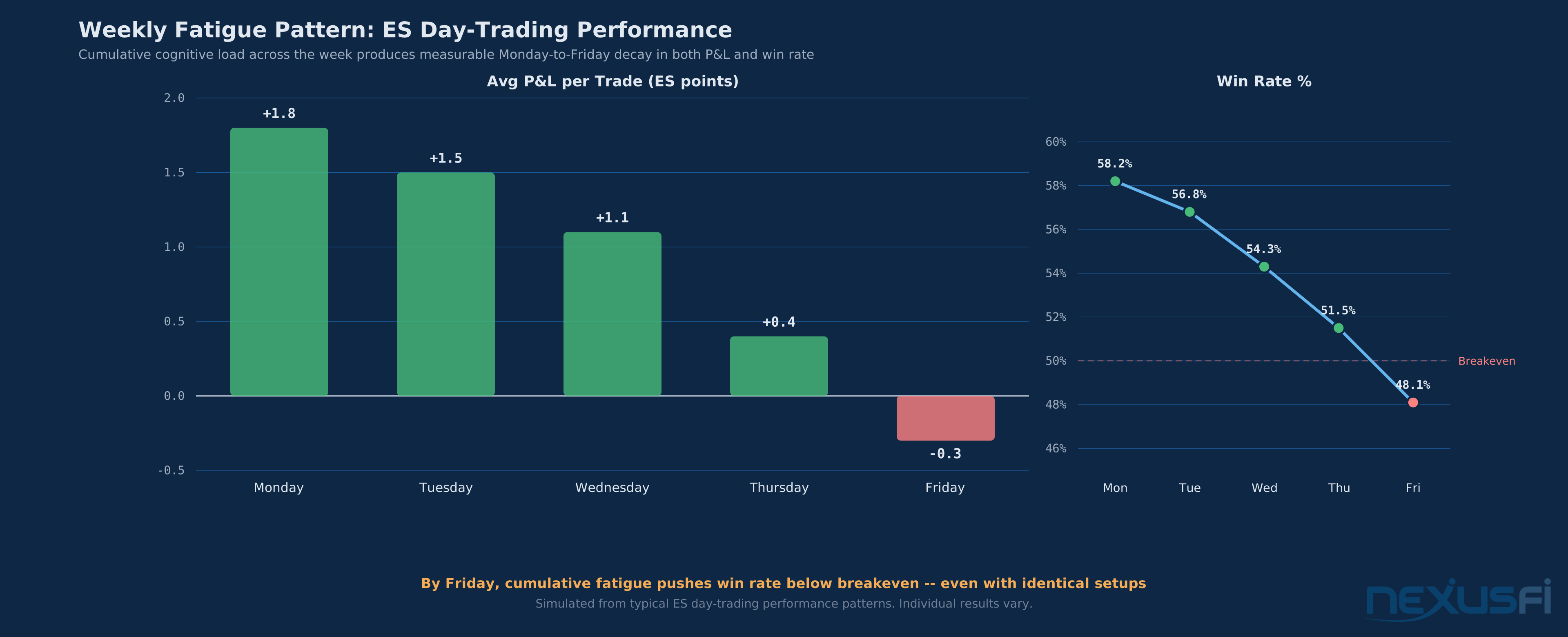
Win rate drops predictably in later sessions. Most traders who track their performance by time of day discover a pattern. [As @jstnbrg notes from The Scalper's Path] [5]: "My own totally unscientific view is that except on trend days the market generally does its price discovery work during the first couple of hours and consolidates the rest of the day." Whether it's fatigue, market character, or both — the data points the same direction.
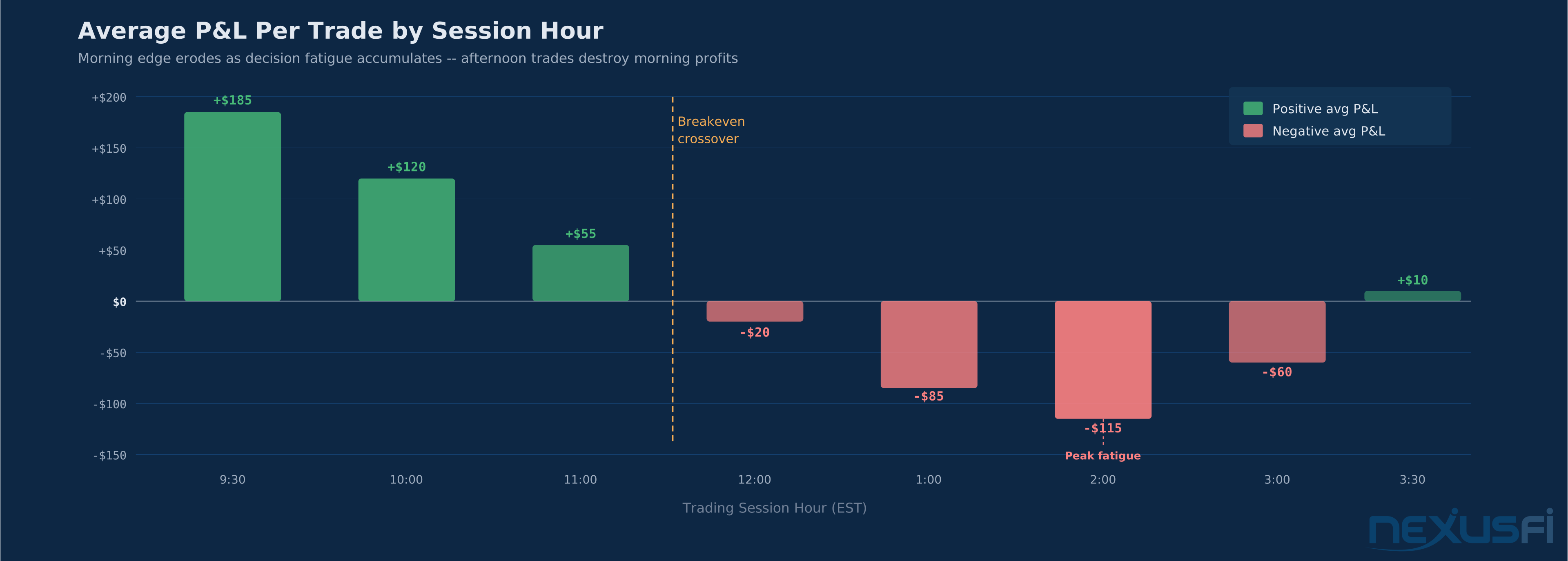
Drawdowns cascade. A single fatigued decision — holding a loser too long, sizing up after a loss, skipping a stop — can erase a week of disciplined trading. The asymmetry is brutal: 100 good decisions build profits slowly; one fatigued decision can destroy them instantly.
The asymmetry is the key insight: Building edge through disciplined decisions happens slowly — over hundreds of trades, across weeks and months. Losing it through a single fatigue-driven cascade takes minutes. Managing your cognitive budget isn't a productivity hack. It's your primary risk management tool.
The Mitigation System: Managing Your Decision Budget #
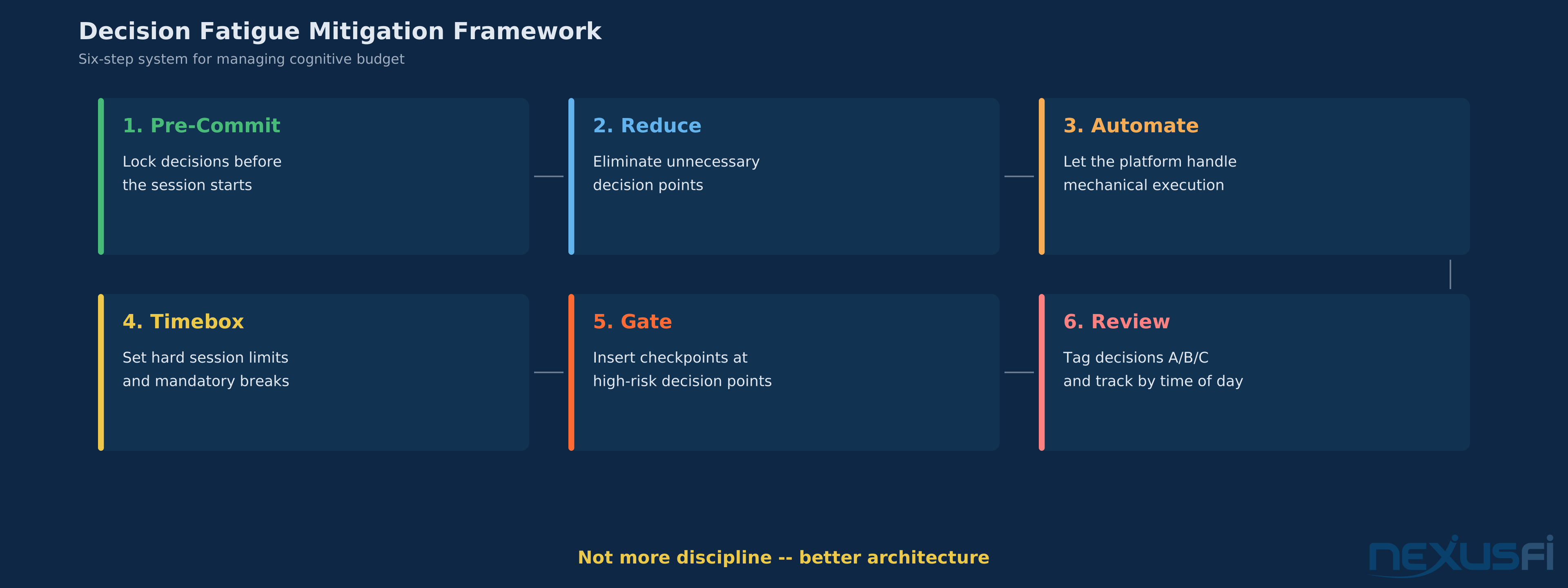
Decision fatigue can't be eliminated. But it can be managed systematically. Here's a six-step framework that treats cognitive capacity as a finite, depletable resource — because that's exactly what it is.
☑ 6-Step Framework: Quick Reference
- Pre-Commit — Make your hardest decisions before the session starts
- Reduce — Eliminate unnecessary decision points entirely
- Automate — Let the platform handle mechanical execution
- Timebox — Cap active trading at 2–3 hours maximum
- Gate — Insert a 3-item checklist before each entry
- Review by Decision Quality — Track A/B/C decisions, not just P&L
Step 1: Pre-Commit (Before the Session) #
Make your hardest decisions when your brain is freshest. Your pre-market preparation routine is where the real edge gets built — before the market opens:
- Lock your watchlist. Don't decide which markets to trade during the session. Decide before it starts. Two or three instruments, maximum. Every additional market multiplies your decision load.
- Define your setups precisely. Not "I'll look for pullbacks" but "I'll trade pullbacks to the 21 EMA on 5-minute bars when price is above the prior session VPOC." The more specific the pre-commitment, the fewer in-session judgments required.
- Set hard rules for size, stops, and targets. Write them down. Tape them to your monitor. When the plan says "stop at 4 points" and your in-session brain says "give it 6," the paper wins.
“I eventually decided to trade for a set goal of 4 ticks/unit of size per day, and then leave even if I had only been on the floor for 10 minutes, on the theory that with such a modest goal I could take only the safest trades. After I made that decision, I didn't have a losing month for 6½ years.”
Step 2: Reduce Decision Count #
Every decision you eliminate is cognitive budget saved for the decisions that matter.
- Use bracket orders. When you enter a trade, the stop and target should deploy automatically. No mid-trade decisions about where to exit. One decision (entry) instead of three (entry, stop, target).
- Eliminate mid-trade modifications. Create a rule: no order modifications for the first 5 minutes after entry. This single constraint removes the most prolific source of fatigue-driven micro-decisions.
- Cut your indicator count. Every additional indicator is another input to process, another potential conflict to resolve. Three indicators that agree are better than seven that sometimes contradict each other.
- Trade fewer markets. Multi-market scanning multiplies decision load exponentially. One market, traded well, beats four markets traded with a fatigued brain.
Step 3: Automate Execution #
Let the platform do the mechanical work. Reserve your brain for pattern recognition and judgment.
- Hotkeys for standard order placement. One keypress to enter with a bracket, not five clicks and a size calculation.
- Alert-based monitoring. Don't watch every tick. Set alerts at your levels and step away between them.
- Pre-programmed risk limits. Daily loss limit, per-trade maximum, and position size caps — built into the platform, not enforced by willpower.
Step 4: Timebox Your Sessions #
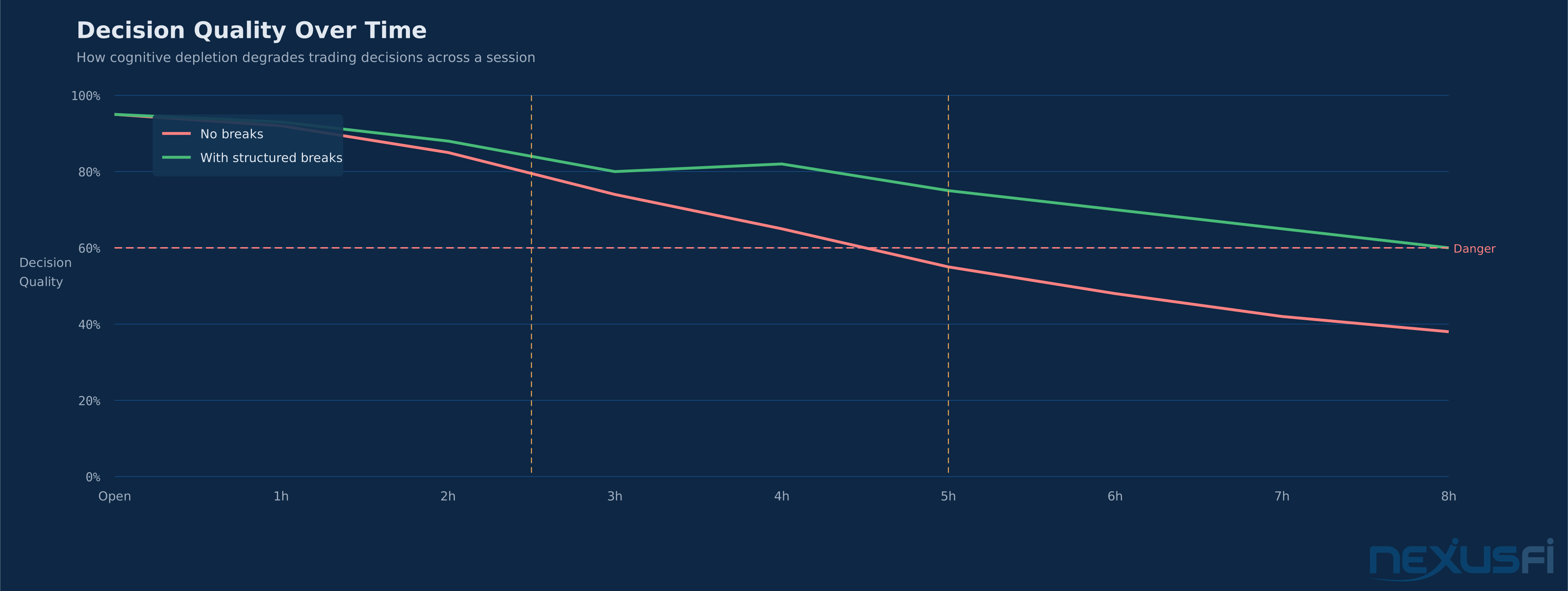
The data is clear: most traders perform best in their first 2-3 hours.
[As @kroz frames the tradeoff] [7]: "If there is definitive proof that decision-makers suffer emotional fatigue, then most of us will be more likely to trade worse as the day goes on."
- Set a hard session limit. Two to three hours of active trading, then stop. This isn't quitting early — it's protecting your best decisions from being undermined by your worst ones.
- Schedule mandatory breaks. Every 45-60 minutes, step away for 10 minutes. Eat something. Early research (Gailliot et al., 2007) suggested that glucose intake temporarily restores decision quality, though this finding is part of the broader ego depletion literature that has faced replication challenges — the practical benefit of eating during breaks likely works through multiple mechanisms beyond glucose alone.
- No "one more trade" exceptions. The urge to take one more trade at the end of a session is itself a fatigue symptom. If your plan says stop at 11:30, stop at 11:30.
Step 5: Gate Your Decisions #
Insert checkpoints at high-risk decision points:
- Before every entry: Run through a 3-item checklist (setup valid? size correct? stop defined?). If you can't answer all three clearly and quickly, skip the trade.
- Before any stop modification: Ask "Is this in my plan?" Yes = proceed. No = leave the stop alone.
- Before adding to a position: State out loud why you're adding and where the invalidation is. If you can't articulate it crisply, your brain is too tired for that decision.
Step 6: Review by Decision Quality #
Don't just review P&L — review the decisions themselves.
At the end of each session, tag every trade with the decision quality, not the outcome:
| Grade | Definition | Key Signal |
|---|---|---|
| A | Followed the plan, proper setup, correct size, managed per rules | No deviations; plan-driven throughout |
| B | Mostly followed the plan, minor deviation, still within guidelines | One rule bent; no cascade effect |
| C | Plan deviation, impulsive element, fatigue-influenced | Post-hoc rationalization present |
Track the ratio over time in your trading journal. If C-decisions cluster in the afternoon, that's your fatigue signature. If they increase after loss streaks, that's an emotional trigger compounding the fatigue. Both patterns have different solutions.
The Fatigue Cascade: How One Bad Decision Becomes Five #
Decision fatigue rarely produces a single bad trade. It produces a cascade.
Here's a realistic scenario for an ES day trader:
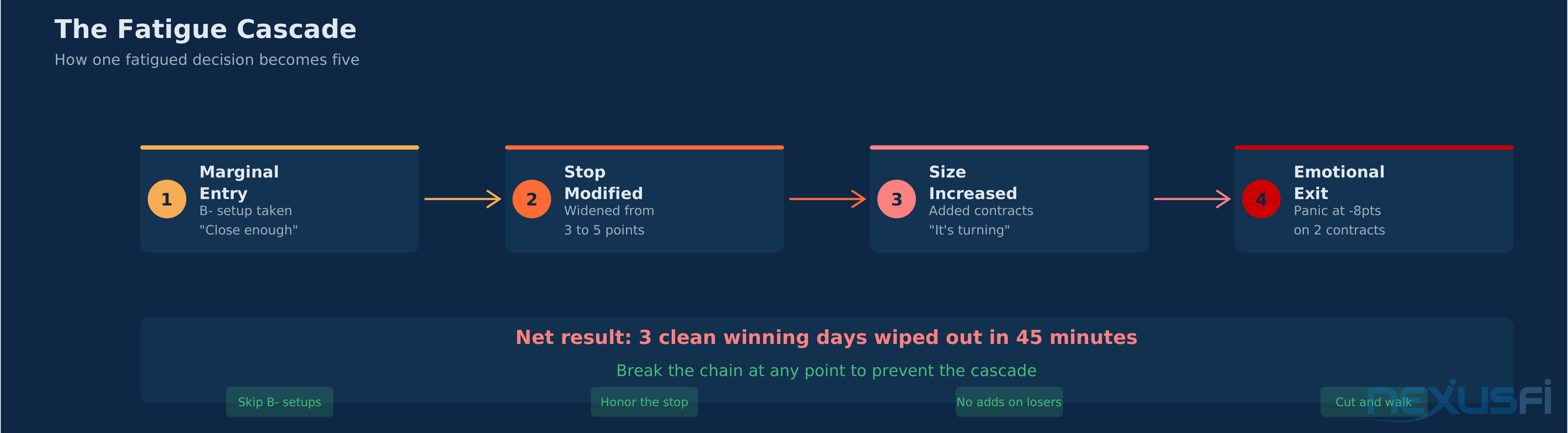
The cascade pattern is consistent: marginal entry → stop modification → size increase → emotional exit. Each step makes the next one more likely because each failed intervention depletes cognitive resources further. Breaking the chain at any point prevents the cascade.
Building a Fatigue-Resilient Trading Identity #
The traders who manage decision fatigue best don't rely on willpower. They design their environment to minimize the demands on it.
The shift isn't from "undisciplined" to "disciplined." It's from "unlimited decision-maker" to "budgeted decision-maker." The first identity fights fatigue with willpower (and loses eventually). The second one avoids the fight entirely by spending cognitive resources where they matter most and automating everything else.
[As @creamyyy puts it] [6]: "By understanding where in the battery level you start to lose discipline, what drains your battery quickly (get rid of it), and by structuring trading and placing it towards the period where you have peak battery, you're minimising the chances of making poor decisions."
That's the game. Not more discipline. Better architecture.
The Bottom Line #
Decision fatigue is a cognitive fact, not a character flaw. Every trader who sits at the screens for an extended session will experience it. The question isn't whether you're affected — you are. The question is whether you've designed your trading to account for it.
The traders who solve this problem share three traits. They pre-commit to specific decisions before the session starts. They ruthlessly eliminate unnecessary decision points through automation and simplification. And they set hard session limits based on their actual cognitive performance data, not on how long they think they "should" be trading.
Track your decision quality by time of day for two weeks. The data will show you exactly where your fatigue threshold is. Then build your trading day around that reality — not around the fantasy that you can make sharp decisions for eight straight hours.
Your best trading happens in your first two to three hours. Protect those hours. Automate everything else. And when your brain tells you "one more trade" at 2 PM, remember: that's not your edge talking. That's your fatigue.
References #
- Baumeister, R.F., Bratslavsky, E., Muraven, M., & Tice, D.M. (1998). Ego depletion: Is the active self a limited resource? Journal of Personality and Social Psychology, 74(5), 1252-1265.
- Danziger, S., Levav, J., & Avnaim-Pesso, L. (2011). Extraneous factors in judicial decisions. Proceedings of the National Academy of Sciences, 108(17), 6889-6892.
- Gailliot, M.T., Baumeister, R.F., DeWall, C.N., et al. (2007). Self-control relies on glucose as a limited energy source: Willpower is more than a metaphor. Journal of Personality and Social Psychology, 92(2), 325-336.
- Hagger, M.S., Chatzisarantis, N.L.D., et al. (2016). A multilab preregistered replication of the ego-depletion effect. Perspectives on Psychological Science, 11(4), 546-573.
- Iyengar, S.S. & Lepper, M.R. (2000). When choice is demotivating: Can one desire too much of a good thing? Journal of Personality and Social Psychology, 79(6), 995-1006.
Knowledge Map
Prerequisites
Understand these firstGo Deeper
Build on this knowledgeReferences This Article
Articles that build on this topicCitations
- — No BS Day Trading (2013) 👍 23“Researchers in psychology have identified a phenomenon they call decision fatigue. It turns out that over the course of a day decision making gets worse the more decisions a person makes.”
- — The PandaWarrior Chronicles (2012) 👍 12“The longer you trade, the more tired you become and eventually your brain does whatever it takes to relieve the tension of having to make constant decisions throughout the day.”
- — Finally Turning the Corner (2020) 👍 8“Something I've become increasingly aware of is that I can get decision fatigue or sucked into impulsive/careless trading after the 4 or 5 hour mark.”
- — Trading Psychology and How The Mind Works (I) (2011) 👍 23“I eventually decided to trade for a set goal of 4 ticks/unit of size per day, and then leave even if I had only been on the floor for 10 minutes.”
- — The Scalper's Journey (2016) 👍 6“My own totally unscientific view is that except on trend days the market generally does its price discovery work during the first couple of hours and consolidates the rest of the day.”
- — Discipline problems (2023) 👍 9“Think of yourself as a battery. There are activities that replenish your battery and activities that deplete your battery. When you sleep 4 hours, you're only half charging your battery.”
- — A daily $ goal (2015) 👍 1“If there is definitive proof that decision-makers suffer emotional fatigue, then most of us will be more likely to trade worse as the day goes on.”
- Baumeister, R.F., Bratslavsky, E., Muraven, M., & Tice, D.M. — Ego depletion: Is the active self a limited resource? (1998)
- Danziger, S., Levav, J., & Avnaim-Pesso, L. — Extraneous factors in judicial decisions (2011)
- Gailliot, M.T., Baumeister, R.F., DeWall, C.N., et al. — Self-control relies on glucose as a limited energy source: Willpower is more than a metaphor (2007)