



Fibonacci Retracement and Extension Levels
Overview #
Every trader has seen it — price pulls back exactly to 61.8%, hesitates, then reverses like someone drew a line in the sand. Fibonacci levels are the framework that explains why. They're horizontal lines derived from ratios in the Fibonacci sequence, and in futures trading they identify where price is likely to stall, reverse, or accelerate.
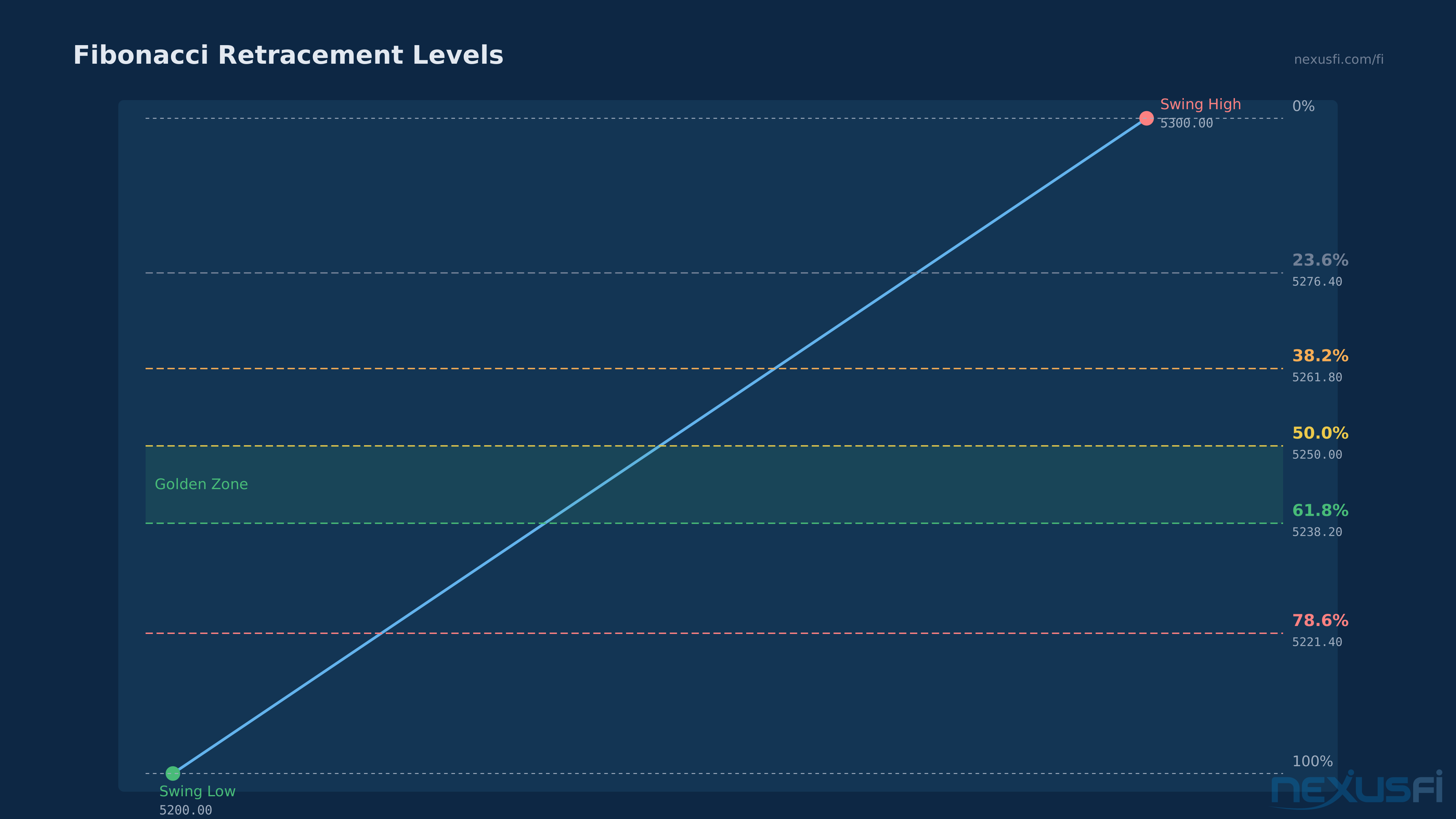
The core idea is straightforward: markets trend in waves, and those waves retrace and extend at predictable ratios. The 38.2%, 50%, and 61.8% retracement levels catch the bulk of pullback reversals. The 127.2% and 161.8% extension levels project where the next leg is likely to exhaust. None of this is magic — it works because enough traders watch these levels that they become self-reinforcing zones of supply and demand.
As @Fat Tails [explained when analyzing Fibonacci cluster zones] [1]: "I use Fibonacci tools for trading, not because I believe in black magic or the omnipresence of the golden ratio, but because they are an efficient tool to establish support and resistance."
That's the right framing. Fibonacci levels are a tool, not a prophecy. They work when combined with context — and they fail spectacularly when traders use them in isolation.
Key Concepts #
The Fibonacci Sequence and Its Ratios #
The Fibonacci sequence starts with 0 and 1, and each subsequent number is the sum of the previous two: 0, 1, 1, 2, 3, 5, 8, 13, 21, 34, 55, 89, 144... The trading ratios emerge from dividing these numbers:
- 61.8% — Divide any number by the next one (e.g., 89 / 144 = 0.618). This is the Golden Ratio. The single most important Fibonacci level.
- 38.2% — Divide any number by the one two places ahead (e.g., 89 / 233 = 0.382).
- 23.6% — Divide by the number three places ahead (e.g., 89 / 377 = 0.236).
- 78.6% — The square root of 61.8%. Deep retracement territory.
- 50.0% — Not technically a Fibonacci ratio, but universally watched. Price retracing half of a move carries psychological weight.
For extensions:
- 127.2% — The square root of 161.8%. First extension target.
- 161.8% — The inverse of the Golden Ratio (1 / 0.618 = 1.618). Primary extension target.
- 200% — A measured move — the next leg equals the prior leg.
- 261.8% — Extended target for strong momentum moves.
The CME Group's [Fibonacci Retracements and Extensions guide] [6] identifies the three core retracement zones as serving as "alerts for the trader to watch for possible areas of price resuming its previous trend" — shallow (38.2%), medium (50%), and deep (61.8%). This graduated framework is how professional futures traders calibrate trend strength from a pullback's depth.
Retracements vs. Extensions #
Retracements measure how far price pulls back within an existing move. You draw them from a swing low to a swing high (uptrend) or swing high to swing low (downtrend). They answer: "How deep will this pullback go before the trend resumes?"
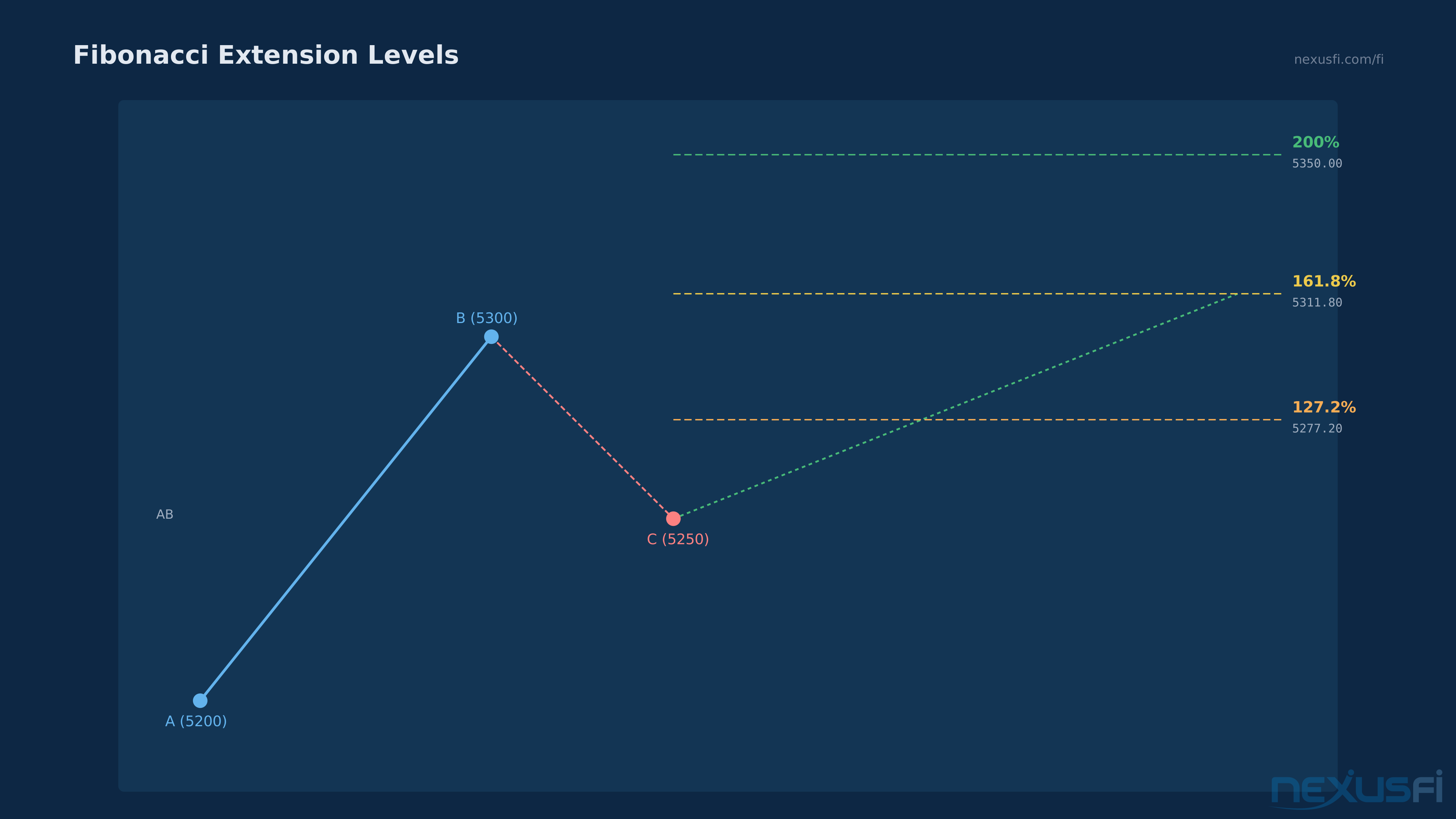
Extensions project where price is heading after the pullback completes. They use three points — the initial swing, the retracement endpoint, and the resumption point — to project forward targets. They answer: "How far will the next leg travel?"
Both tools measure the same underlying tendency: price moves in proportional waves, and those proportions cluster around Fibonacci ratios with enough frequency to create a tradeable edge.
Self-Fulfilling Prophecy — And Why That's Fine #
A common criticism is that Fibonacci levels only work because enough traders watch them, making them self-fulfilling. This is actually the point. Markets are participant-driven. When institutional algorithms and discretionary traders both park orders at the 61.8% retracement, that level becomes real support or resistance. The mechanism doesn't matter — the price reaction does.
Investopedia's [Fibonacci Retracement guide] [7] captures this dynamic precisely: key Fibonacci levels "align with market psychology, support and resistance zones, and technical indicators like moving averages" — a convergence of factors that creates the self-reinforcing price reactions traders depend on.
As @Fat Tails [documented after running statistical distributions] [1] on swing retracements and extensions: "The 100% line has the strongest impact both in absolute and relative terms... In terms of relative probabilities, the extension levels have a higher success rate than the retracements." The data supports the tool. Use it so.
How It Works #
Drawing Fibonacci Levels Correctly #
The number-one source of bad Fibonacci readings is choosing the wrong swing points. Here's how to get it right:
In an uptrend:
- Identify a clear swing low (a bottom where price reversed higher)
- Identify the subsequent swing high (the top before a pullback began)
- Draw the Fibonacci retracement tool from the swing low to the swing high
- The retracement levels now mark potential support where the pullback may end
In a downtrend:
- Identify a clear swing high
- Identify the subsequent swing low
- Draw from swing high to swing low
- The retracement levels mark potential resistance where the bounce may stall
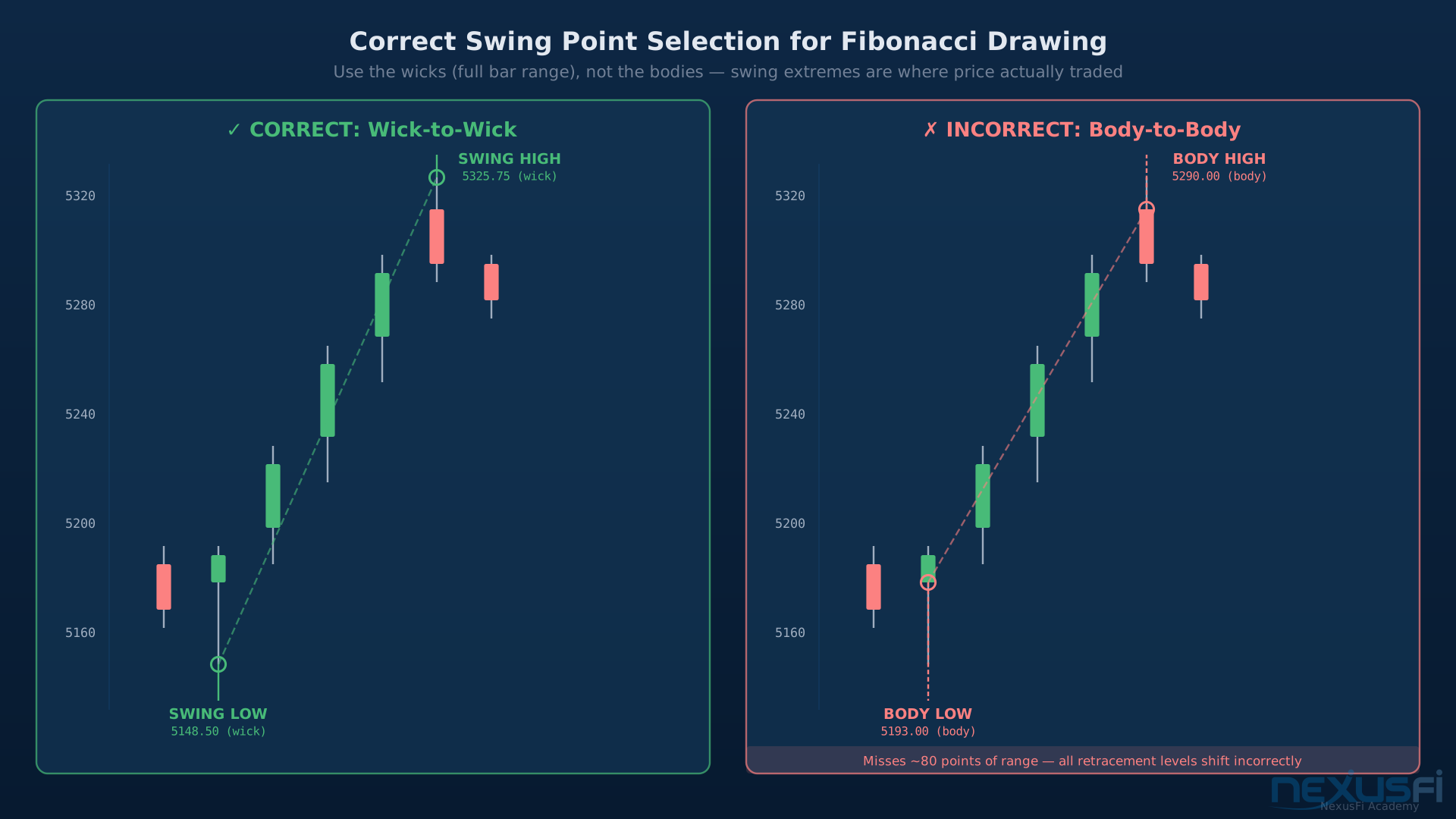
Critical rule: Use the wicks, not the bodies. The swing extremes are defined by where price actually traded, not where it closed. In futures, this means using the full bar range including any spikes.
Swing Selection Matters More Than the Tool #
The Fibonacci tool is only as good as the swing points you feed it. A shallow, choppy correction doesn't produce meaningful levels. You want clean, decisive swings — the kind where you can look at the chart and immediately say "that's the swing high" and "that's the swing low" without second-guessing.
@Lmess built an entire [Fibonacci trading system for the ES] [3] around this principle: "Retracement levels are used to determine entry, stop and target, while extension levels are used to determine when to draw a new fib and how to draw it." The system generates 1-3 trades per day — but on days where "price just extends itself without having much of a retracement, there will most likely be no trading opportunities." That's discipline. No clean swing, no Fibonacci, no trade.
Timeframe Hierarchy #
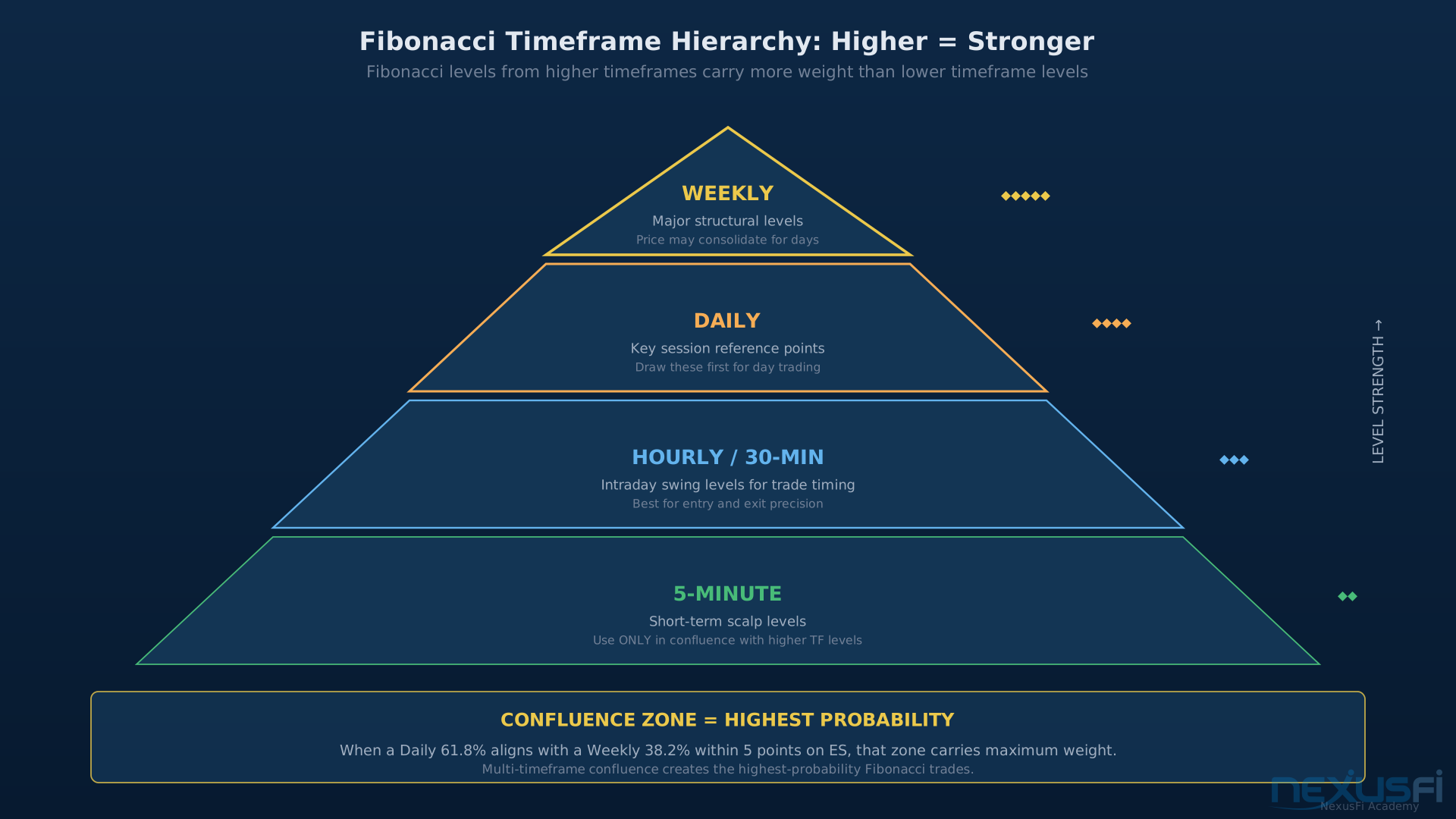
Fibonacci levels from higher timeframes carry more weight than those from lower timeframes. A daily chart 61.8% retracement will act as stronger support than a 5-minute chart 61.8%.
The practical hierarchy for futures day trading:
- Weekly chart fibs — Major structural levels. Price may consolidate here for days.
- Daily chart fibs — Key reference points for the session. Draw these first.
- Hourly/30-minute fibs — Intraday swing trading levels for trade timing.
- 5-minute fibs — Short-term scalp levels. Use only in confluence with higher timeframe levels.
When a daily 61.8% retracement aligns with a weekly 38.2% retracement, that confluence zone carries much more weight than either level alone.
The Retracement Levels #
23.6% — The Shallow Pullback #
The shallowest standard retracement. When price only retraces 23.6%, the trend is strong and aggressive. This level is more of a momentum gauge than a trade entry — if price can't even retrace past 23.6%, the move has serious conviction behind it.
Trading implication: Don't try to buy a 23.6% retracement as your primary entry. The trend is moving too fast and the stop distance is enormous relative to the reward. Instead, use it as confirmation that the trend is powerful — then look for entries on subsequent, deeper pullbacks.
38.2% — The Continuation Sweet Spot #
The 38.2% retracement is where healthy trends breathe. In a strong uptrend, price pulls back to 38.2%, finds buyers, and resumes higher. This is the level where momentum traders are most comfortable adding to positions — the pullback is deep enough to offer a reasonable entry, but not so deep that it questions the trend.
Best used: After a clear impulse move with strong volume. Enter at the 38.2% level with a stop below the 50% level. Target the prior swing high for 1:1, or the 127.2% extension for a larger move.
50% — The Psychological Midpoint #
Not a Fibonacci ratio, but one of the most respected levels in technical analysis. Retracing half of a move is a deeply intuitive concept — @sstheo noted in his [ES trading journal] [4]: "The 50% retracement and the 61.8% retracement are excellent at holding price much of the time. The 50% is also called the Half-way back (HWB). I used to think fibs were hocus-pocus, but after seeing the evidence (many times to the tick!) I am now a believer."
The 50%-61.8% zone is known as The Golden Zone — the area that catches the majority of healthy pullback reversals. When price enters this band, start watching for your entry signal. Most professional Fibonacci traders focus their attention here rather than chasing shallower or deeper retracements.
61.8% — The Golden Ratio #
The flagship level. Derived directly from the Golden Ratio, the 61.8% retracement is the single most watched Fibonacci level in futures markets. When price holds at 61.8%, the underlying trend structure remains intact. When it breaks through, the trend is likely exhausted.
Key behaviors at 61.8%:
- Strong bounces on first touch indicate the trend has legs
- Multiple tests at 61.8% weaken the level each time (just like HVN edges in volume profile)
- A clean break through 61.8% often leads to 78.6% or a full retracement
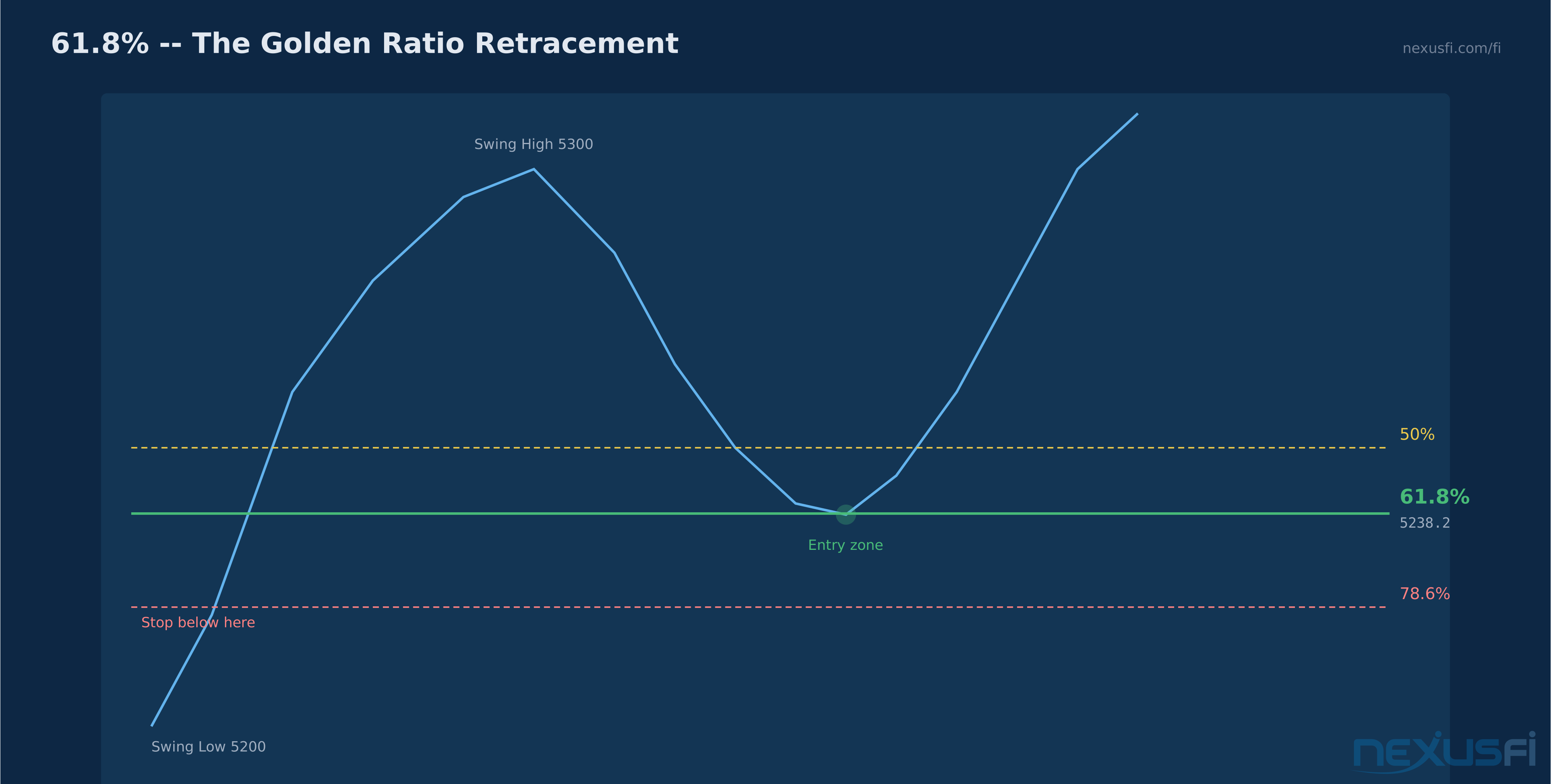
Trading implication: The 61.8% retracement is the highest-probability standalone Fibonacci entry. Place your limit order at or slightly beyond the 61.8% level, with a stop below the 78.6% level. This gives a defined risk with the mathematical expectancy of the Golden Ratio behind it.
Stop placement rule: Place your stop below the 78.6% level, not below the 61.8% level. The 61.8%-78.6% zone absorbs normal noise and false breakdowns. Stops placed right at 61.8% get clipped constantly — the 78.6% level preserves the trade through normal volatility while still protecting against genuine trend failure.
78.6% — The Last Chance Retracement #
A deep retracement that signals the trend is in serious trouble. If price retraces 78.6%, it has given back nearly the entire move. At this point, the odds of trend continuation drop much.
Trading implication: Don't use 78.6% as a standalone entry level. It works only in specific contexts — when a higher timeframe trend is strongly intact and the current swing is a minor correction within a much larger structure. In isolation, a 78.6% retracement is more likely to become a full reversal than a trend resumption.
Extension and Expansion Levels #
Extensions project where the next leg of a trend is headed after a pullback completes. You need three points: the initial swing start (A), the swing end (B), and the retracement end (C). The extensions project from C using the A-to-B distance multiplied by the Fibonacci ratio.
127.2% — Minimum Target #
The first extension level and the minimum expectation for a healthy trend continuation. If a trend can't even reach the 127.2% extension, momentum is weak. Many traders use this as their first partial profit target — take off half at 127.2% and trail the rest.
161.8% — The Primary Target #
The Golden Ratio extension. This is the most important extension level, analogous to 61.8% for retracements. When price reaches 161.8%, the probability of a reversal or significant consolidation increases sharply.
@Fat Tails found in his [probability analysis] [2] that "higher probability lines are expansions, followed by prior swing highs and lows and the common retracements." Extension levels, statistically, produce higher-probability reactions than retracement levels — they just occur less frequently.
@srgtroy's real-time [NQ-nalysis journal] [5] documented this in practice: "1.272 and 1.618 fib extensions have been rather precise targets" on live NQ trades. Price reacted to these extension levels with no additional support from prior structure — the math alone attracted the institutional orders that drove the reaction.
200% — The Measured Move #
A full measured move — the second leg equals the first. This is where Fibonacci overlaps with classical technical analysis. Measured moves have been documented as reliable price targets since the earliest days of charting.
261.8% — Extended Momentum #
A 261.8% extension only triggers in powerful trending markets. Think Fed announcement days, unexpected economic data, or gap-and-go sessions on ES. Don't target 261.8% as a default — reserve it for contexts where the fundamental trigger supports an outsized move.
Confluence -- Where Fibonacci Gets Serious #
Fibonacci levels alone provide a framework. Fibonacci levels in confluence with other technical tools provide actual trading setups. The principle is simple: the more independent reasons price should react at a level, the higher the probability of a reaction.
The confluence principle: A single Fibonacci level is a suggestion. Two independent tools pointing to the same price is a setup. Three or more is a high-conviction trade. Always look for Fibonacci levels that align with volume profile nodes, VWAP, or prior session reference levels before committing capital.
Fibonacci + Volume Profile #
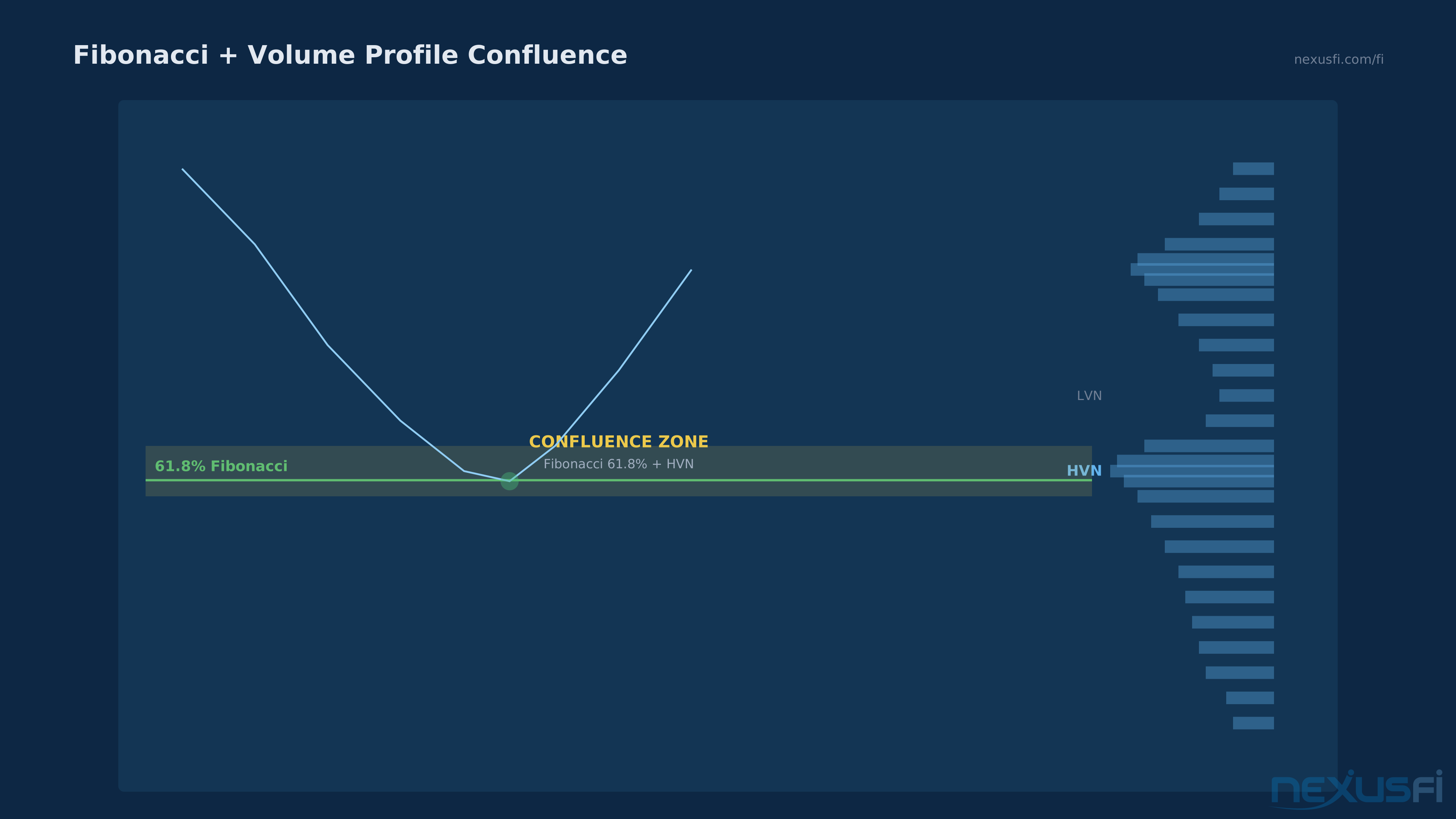
When a Fibonacci retracement level lands on a High Volume Node (HVN) or the Point of Control (POC) from a prior session, the combined level carries double the weight. The Fibonacci level says "this is a proportional pullback target." The HVN says "this is where the market previously accepted value." Both pointing to the same price? That's a high-conviction zone.
As @Fat Tails [emphasized] [1]: "Combinations of different Fibonacci levels increase the edge... Volume is the key indicator to verify whether S/R lines will be respected or ignored by the market."
Conversely, if a Fibonacci level falls in a Low Volume Node (LVN), expect price to slice through it. LVNs are rejection zones — price doesn't tend to linger there regardless of what Fibonacci says.
Fibonacci + VWAP #
When the session VWAP or a key standard deviation band aligns with a Fibonacci retracement, the level becomes much more reliable. VWAP represents the volume-weighted average transaction price — institutional benchmarking territory. Add Fibonacci confluence, and you have a level that both the technical and institutional crowd are watching.
Fibonacci + Prior Day Levels #
A 61.8% retracement that coincides with yesterday's Value Area High, or a 38.2% retracement at the prior session's close — these multi-source confluences create the highest-probability Fibonacci trades.
Fibonacci Clusters #
When multiple Fibonacci levels from different swing measurements converge within a narrow price band, you have a Fibonacci cluster. @Fat Tails [built an entire indicator system] [1] around this concept, using "a collection of 10 zigzags in different timeframes" to identify where Fibonacci lines from different scales stack up. The denser the cluster, the stronger the level.
When Fibonacci Fails #
Fibonacci levels fail in predictable ways. Knowing the failure modes is as valuable as knowing the setups.
Choppy, Range-Bound Markets #
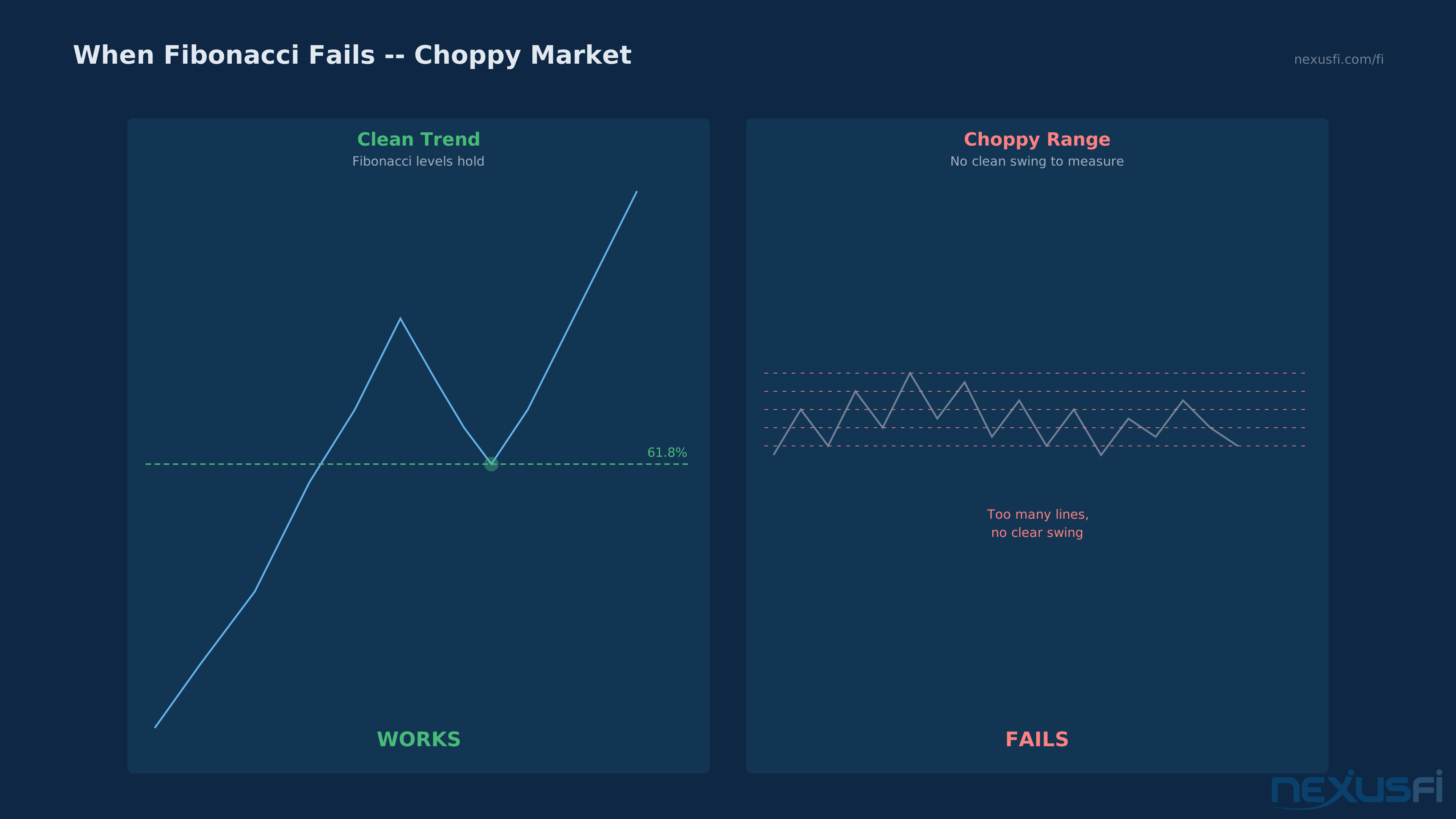
In a trading range, there are no clean swings to measure. Drawing Fibonacci on a consolidation range produces meaningless levels. The tool requires a clear directional move — without it, you're fitting a trending tool to a non-trending condition.
Overfitting — Drawing Too Many Fibs #
If you draw Fibonacci levels from every minor swing, your chart becomes a wall of horizontal lines. At that point, price will "hit a Fibonacci level" by pure chance. This is exactly the criticism
The solution is discipline — draw fibs only from the most significant, obvious swing points.
News-Driven Markets #
When a major economic release drops (NFP, CPI, FOMC), Fibonacci levels from the prior day's price action become unreliable. The fundamental trigger resets the playing field. Post-news, draw fresh Fibonacci levels from the new swing created by the reaction.
Late-Cycle Fibs #
Fibonacci levels from old, stale swings decay in relevance over time. A 61.8% retracement from a two-week-old swing carries far less weight than one from yesterday's swing. The further back the anchor points, the more likely the market has already repriced around that information.
Practical Application #
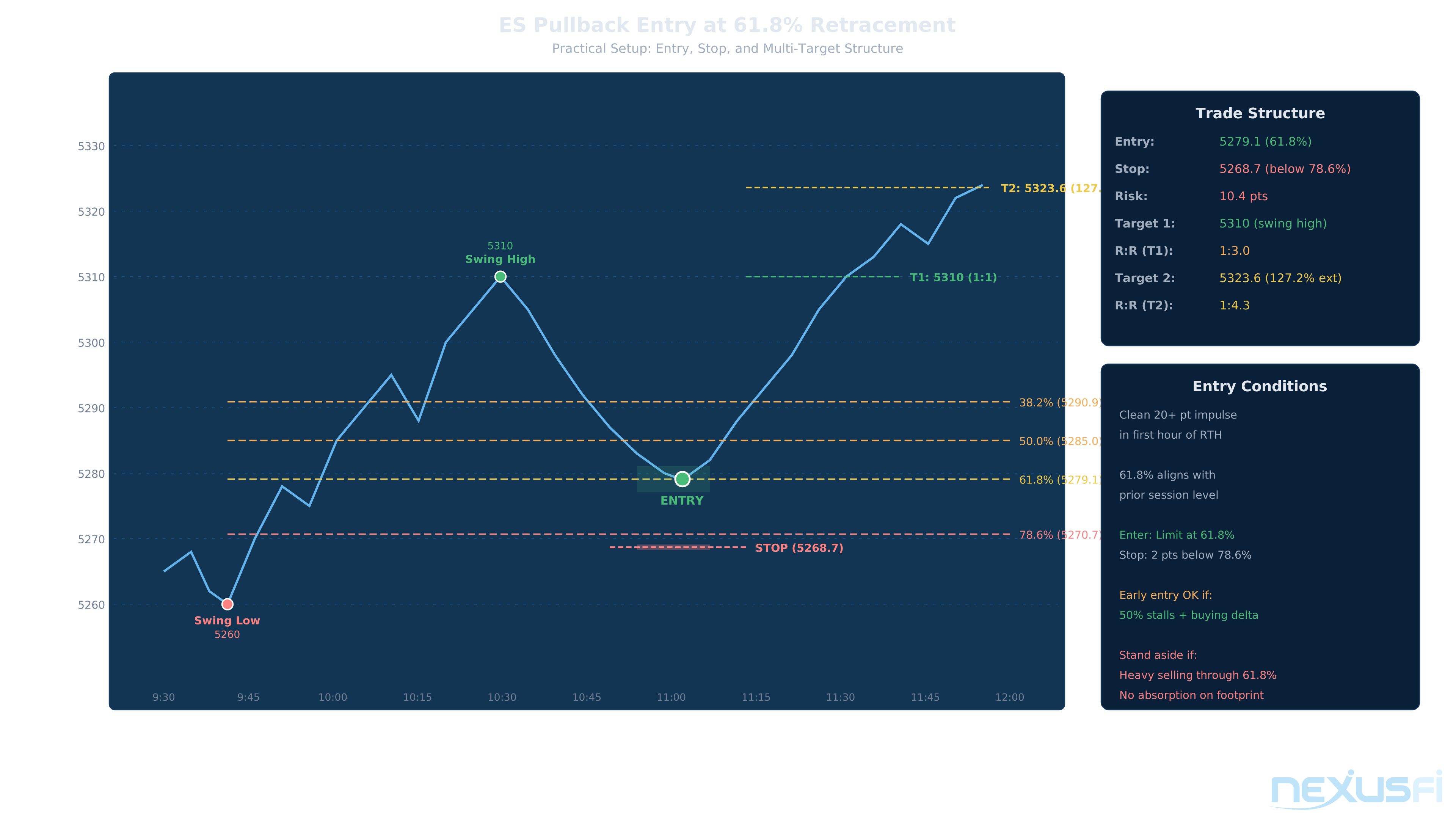
ES Pullback Entry at 61.8% #
Setup conditions:
- ES makes a clean impulse move during the first hour of RTH (at least 20 points)
- Price begins to retrace
- Draw Fibonacci from the swing low to the swing high
- The 61.8% retracement aligns with (or is near) a prior session reference level
| Component | Level | Notes |
|---|---|---|
| Entry | 61.8% retracement | Limit buy at or slightly beyond the level |
| Stop | 2 pts below 78.6% | Protects against trend failure, avoids noise |
| Target 1 | Prior swing high (100%) | ~1:1 reward-to-risk ratio |
| Target 2 | 127.2% extension | Trend continuation play, trail stop to breakeven |
Risk management: If price reaches the 50% level and stalls with strong buying delta, you can enter early. If price blows through 61.8% with heavy selling volume and no absorption, stand aside — the pullback is becoming a reversal.
CL Extension Target After Pullback #
Setup conditions:
- CL completes a pullback to the 38.2% or 50% retracement
- Price shows rejection (long wick, delta divergence, absorption on the footprint)
- Draw extensions from the initial impulse swing using the pullback low as the third point
Target 1: 127.2% extension — take partial profit Target 2: 161.8% extension — trail the rest with a stop at breakeven
Multi-Timeframe Fibonacci Confluence #
The highest-probability Fibonacci trades use multiple timeframes:
- Draw weekly chart Fibonacci levels for the macro picture
- Draw daily chart Fibonacci levels for session context
- Look for intraday price approaching a zone where weekly and daily fibs converge
- Enter on the lower timeframe when price shows a reaction at the confluence zone
When a weekly 38.2% retracement lands within 5 points of a daily 61.8% retracement on ES, that's a zone worth building a position around.
Knowledge Map
Go Deeper
Build on this knowledgeReferences This Article
Articles that build on this topicCitations
- — Applying Fibonacci Cluster and Confluence Zones (2010) 👍 60“I use Fibonacci tools for trading, not because I believe in black magic or the omnipresence of the golden ratio, but because they are an efficient tool to establish support and resistance.”
- — Fibonacci Indicators for NinjaTrader (2010) 👍 16“Higher probability lines are expansions, followed by prior swing highs and lows and the common retracements.”
- — Fibonacci trading system for the ES (2011) 👍 8“Retracement levels are used to determine entry, stop and target, while extension levels are used to determine when to draw a new fib and how to draw it.”
- — Making a Living with the Micros (2021) 👍 13“The 50% retracement and the 61.8% retracement are excellent at holding price much of the time.”
- — NQ-nalysis (2014) 👍 3“The 1.272 and 1.618 fib extensions have been rather precise targets for this swing.”
- — Fibonacci Retracements and Extensions
- — What Are Fibonacci Retracement Levels, and What Do They Tell You?