



Market Hours: Trading Sessions Across Futures, Equities, and Global Exchanges
A trader's guide to session times across futures, equities, and global exchanges — RTH, ETH, pre-market, and the 24-hour cycle that follows the sun
Overview #
Markets never truly close. When the NYSE rings its closing bell at 4:00 PM Eastern, Tokyo is already preparing for its morning session. When Tokyo breaks for lunch, London is opening. When London winds down, New York picks up the baton. This continuous relay shapes how every market — futures, equities, forex — behaves at any given hour.
For futures traders, the ES trades 23 hours a day on CME Globex. For equity traders, extended hours stretch from 4:00 AM to 8:00 PM Eastern. Understanding the session rotation — who's active, when liquidity peaks, and how overlaps create opportunity — is foundational knowledge.
Global Exchange Sessions #
US Cash Equity Markets: NYSE and NASDAQ #
The New York Stock Exchange and NASDAQ share identical core trading hours: 9:30 AM to 4:00 PM Eastern Time, Monday through Friday. This 6.5-hour window is the highest-liquidity period for US equities and the session that equity index futures (ES, NQ) are designed to track during RTH.
But the cash equity day extends well beyond those core hours:
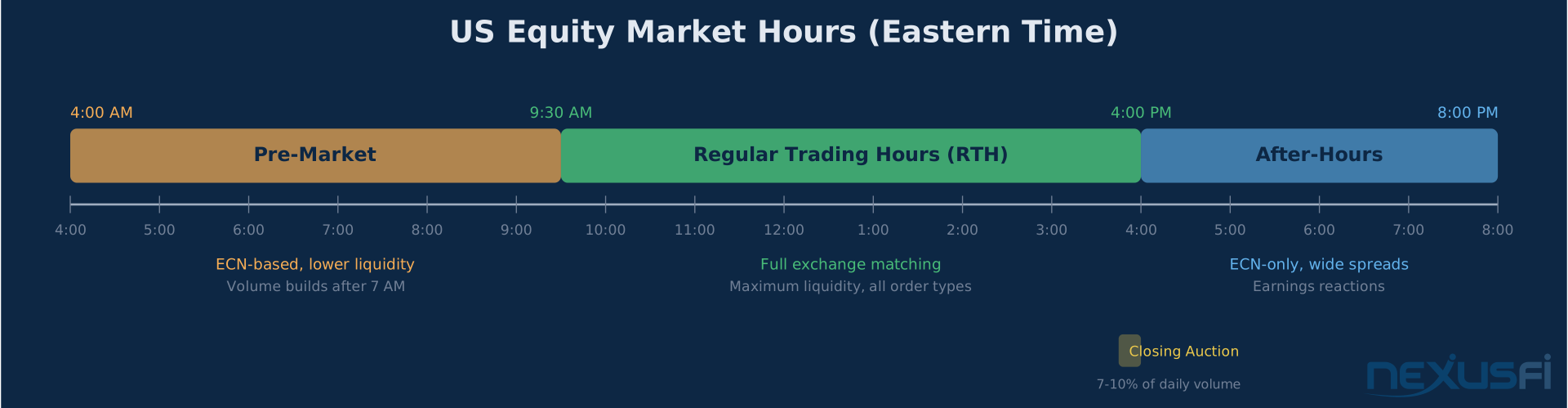
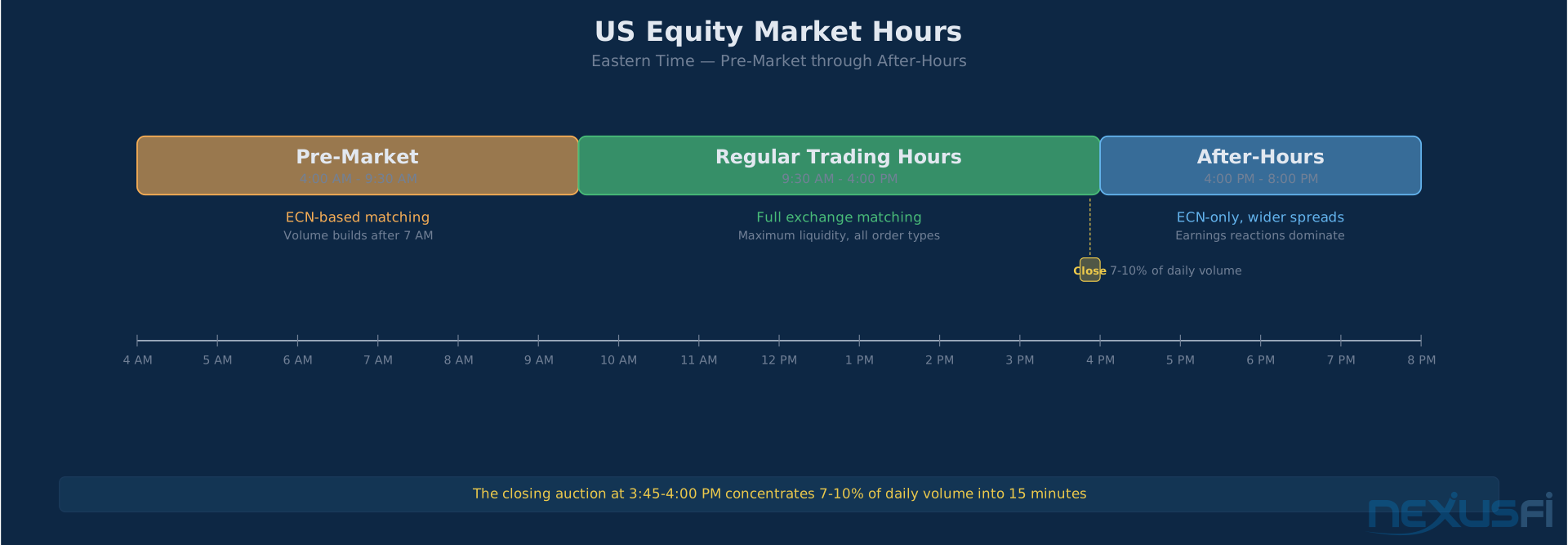
- Pre-market: 4:00 AM - 9:30 AM ET. ECN-based trading with lower liquidity. Earnings reactions, overnight news digestion, and positioning happen here. Volume builds after 7:00 AM ET.
- Regular session: 9:30 AM - 4:00 PM ET. Full exchange matching, maximum liquidity, all order types available.
- After-hours: 4:00 PM - 8:00 PM ET. ECN-only. Earnings releases drive the action. Spreads widen and price can move sharply on low volume.
The NYSE's closing auction at 4:00 PM ET can represent 7-10% of total daily volume in a stock, as index funds, ETFs, and institutional portfolios rebalance. This directly affects settlement prices that ripple into futures, options, and global ETFs tracking US indices.
European Exchanges #
Europe's major exchanges cluster their sessions around Central European Time (CET), creating a dense liquidity window that overlaps much with the US morning.
| Exchange | Market | Local Hours | US Eastern Time | Key Products |
|---|---|---|---|---|
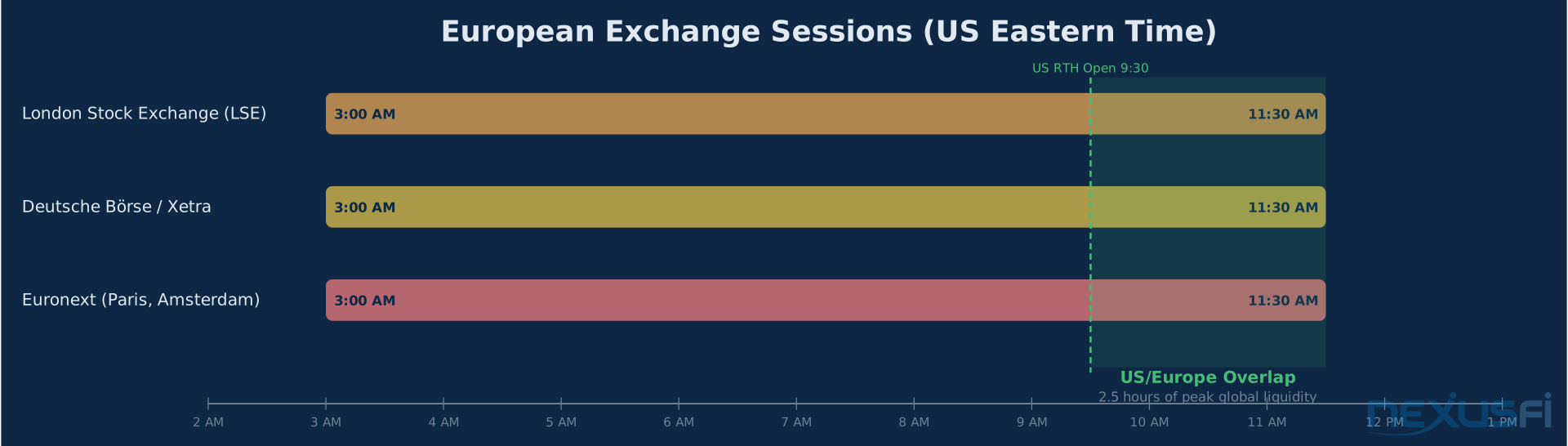
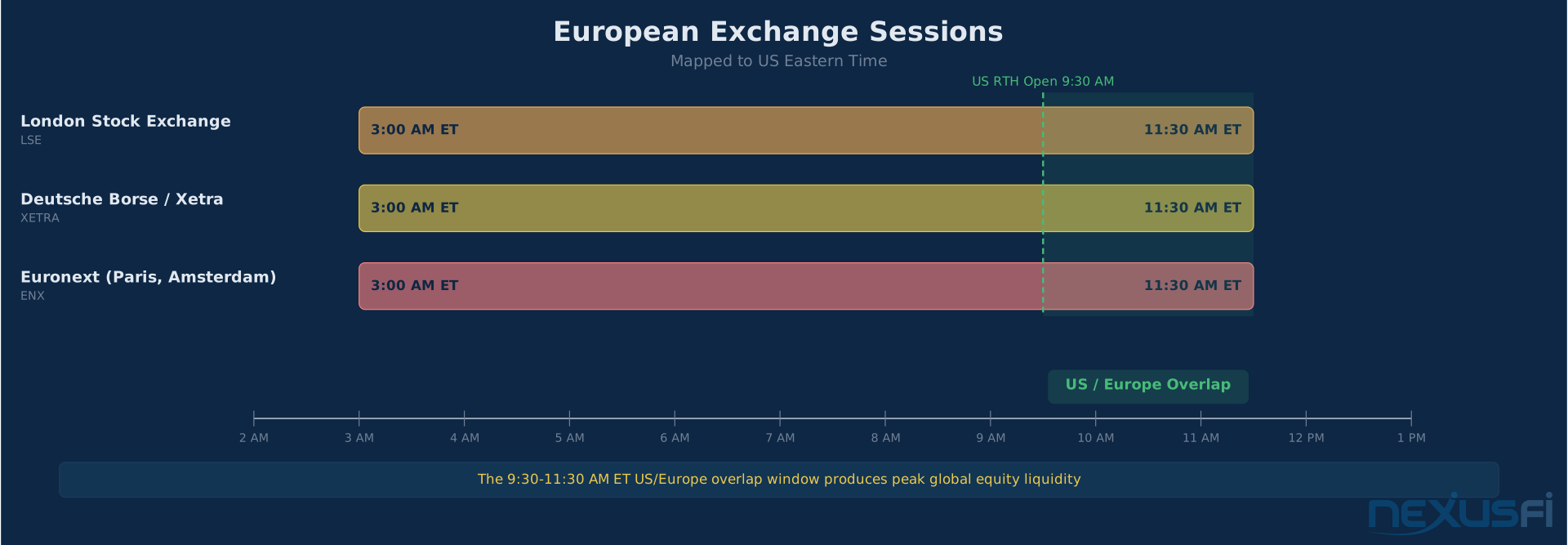
| London Stock Exchange (LSE) | UK | 8:00 AM - 4:30 PM GMT | 3:00 AM - 11:30 AM ET | FTSE 100, UK equities, ETFs, gilts |
| Deutsche Börse / Xetra | Germany | 9:00 AM - 5:30 PM CET | 3:00 AM - 11:30 AM ET | DAX 40, German equities |
| Euronext | France, Netherlands, Belgium | 9:00 AM - 5:30 PM CET | 3:00 AM - 11:30 AM ET | CAC 40, AEX, BEL 20 |
The practical effect for US-based traders: European equity markets are active from roughly 3:00 AM to 11:30 AM Eastern, creating a 2.5-hour overlap with US RTH (9:30 AM - 11:30 AM ET) that produces the highest combined global equity liquidity of the day.
Note that European exchanges observe their own holiday calendars, which differ from US holidays. UK bank holidays, German reunification day, and other national holidays create sessions where some European markets are closed while others remain open — affecting cross-market correlations.
Asia-Pacific Exchanges #
Asia-Pacific markets open the global trading day, and their sessions fall during what US-based traders call the "overnight."
| Exchange | Market | Local Hours | US Eastern Time | Key Products |
|---|---|---|---|---|
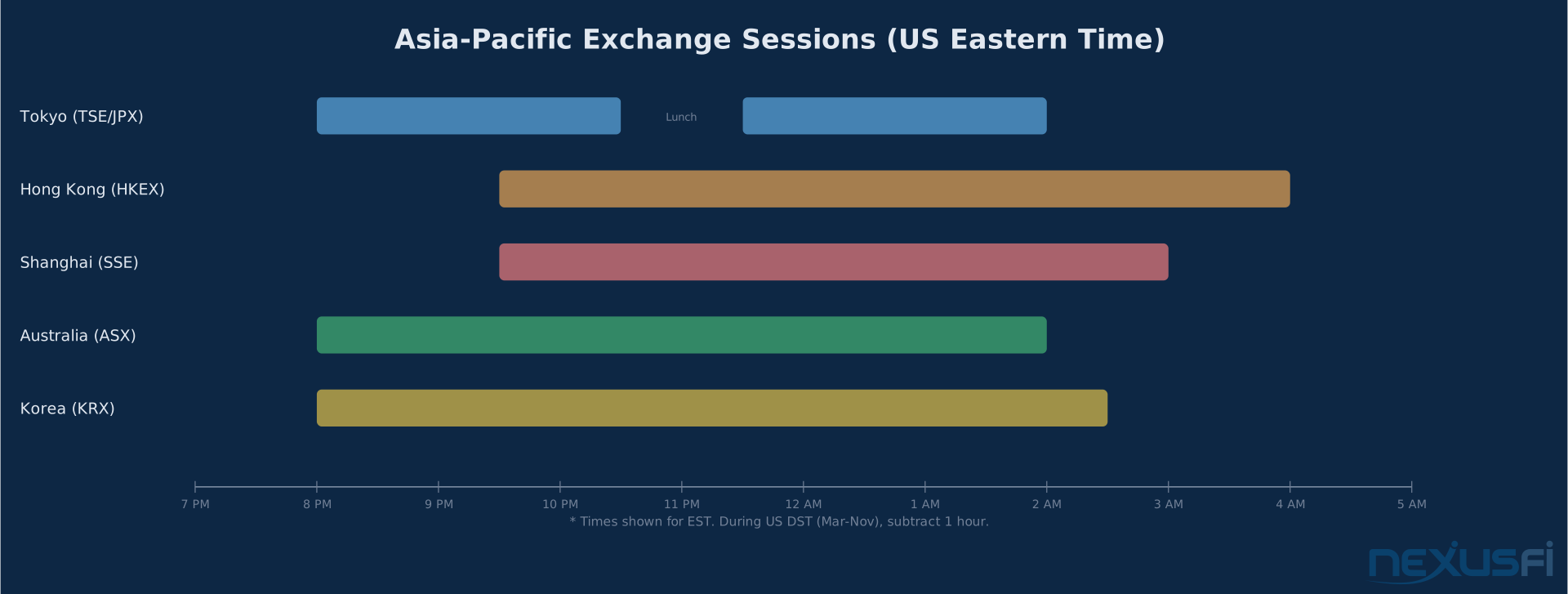
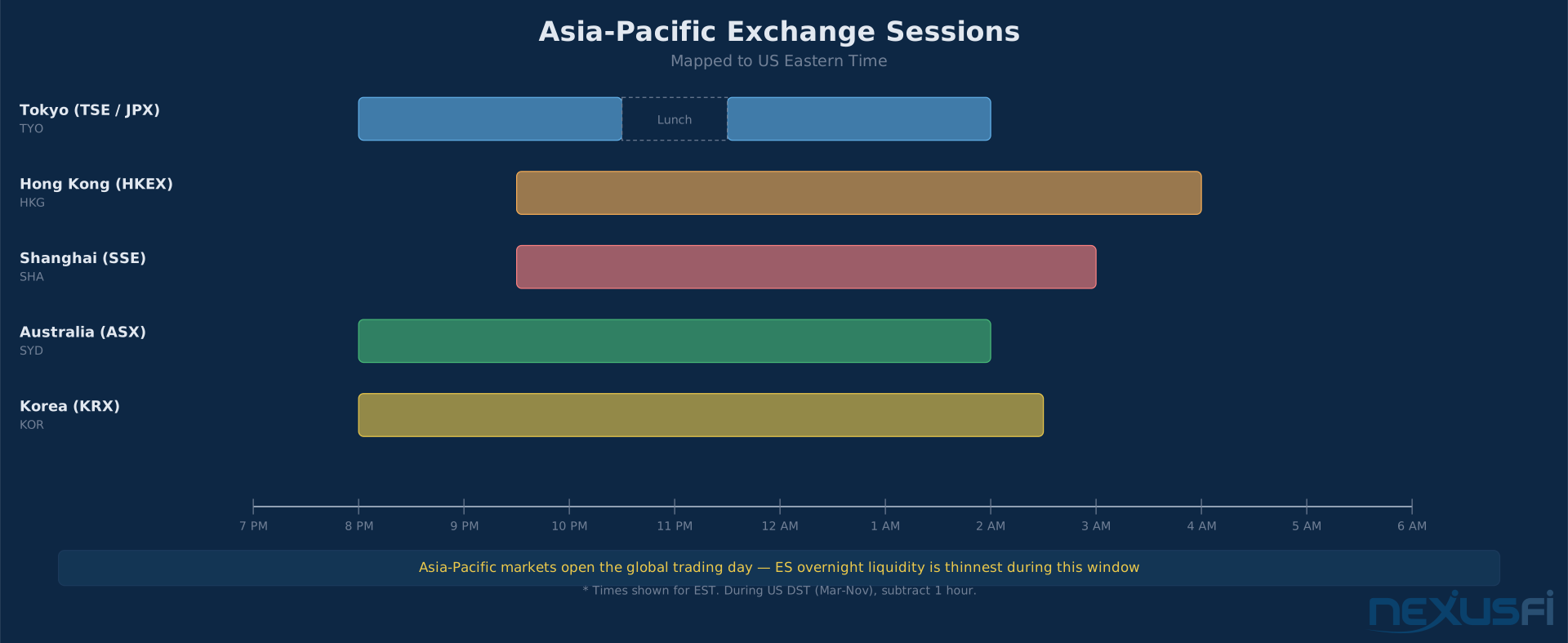
| Tokyo Stock Exchange (TSE/JPX) | Japan | 9:00 AM - 3:00 PM JST | 8:00 PM - 2:00 AM ET | Nikkei 225, TOPIX, Japanese equities |
| Hong Kong Stock Exchange (HKEX) | Hong Kong | 9:30 AM - 4:00 PM HKT | 9:30 PM - 4:00 AM ET | Hang Seng, H-shares, Chinese ADRs |
| Shanghai Stock Exchange (SSE) | China | 9:30 AM - 3:00 PM CST | 9:30 PM - 3:00 AM ET | SSE Composite, A-shares |
| Australian Securities Exchange (ASX) | Australia | 10:00 AM - 4:00 PM AEST | 8:00 PM - 2:00 AM ET | ASX 200, Australian equities, mining |
| Korea Exchange (KRX) | South Korea | 9:00 AM - 3:30 PM KST | 8:00 PM - 2:30 AM ET | KOSPI, Samsung, SK Hynix |
All times shown are US Eastern Standard Time. During US Daylight Saving Time (mid-March to early November), subtract one hour from the ET times shown, as Asian markets do not observe US DST.
Tokyo deserves special attention. The TSE has a midday break from 11:30 AM to 12:30 PM JST, creating two distinct sessions: the morning session (zenba) and afternoon session (goba). Hong Kong and Shanghai also maintain lunch breaks (SSE/SZSE break from 11:30 AM to 1:00 PM CST).
For equity traders, Asia-Pacific hours matter for ADRs. When Alibaba, Toyota, or BHP report earnings during their local sessions, the ADRs will gap at the US open. Understanding when the underlying exchange is active helps you anticipate these moves.
The Global Session Rotation #
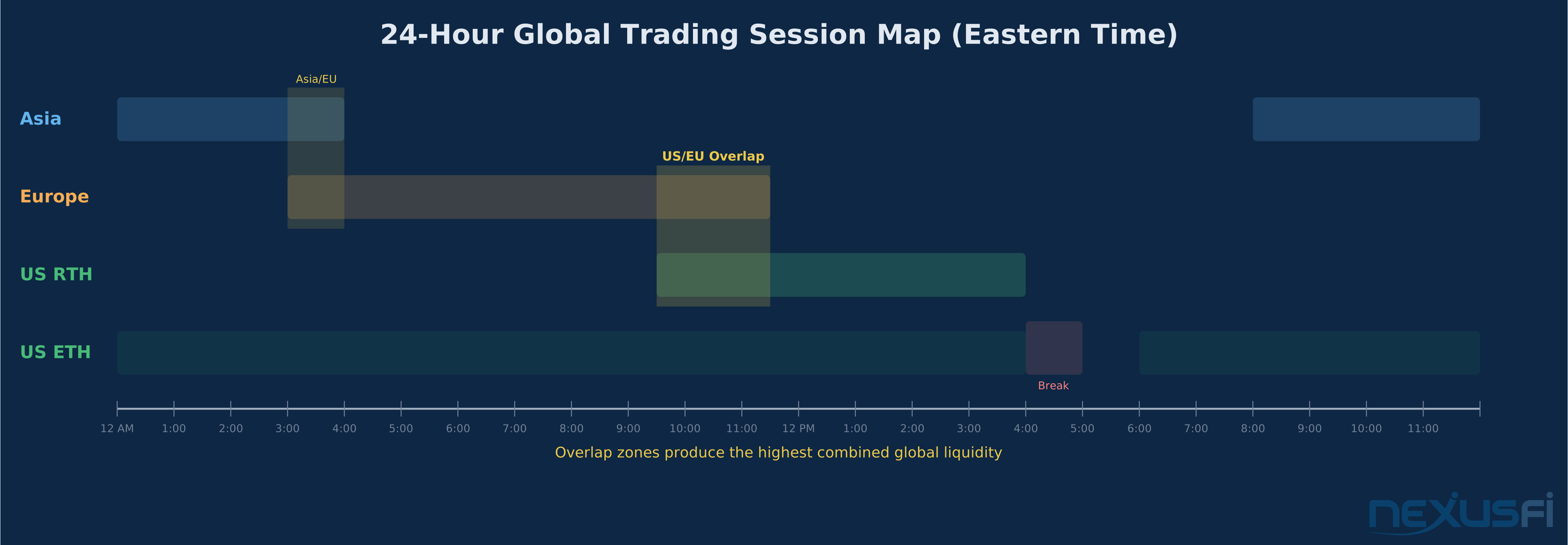
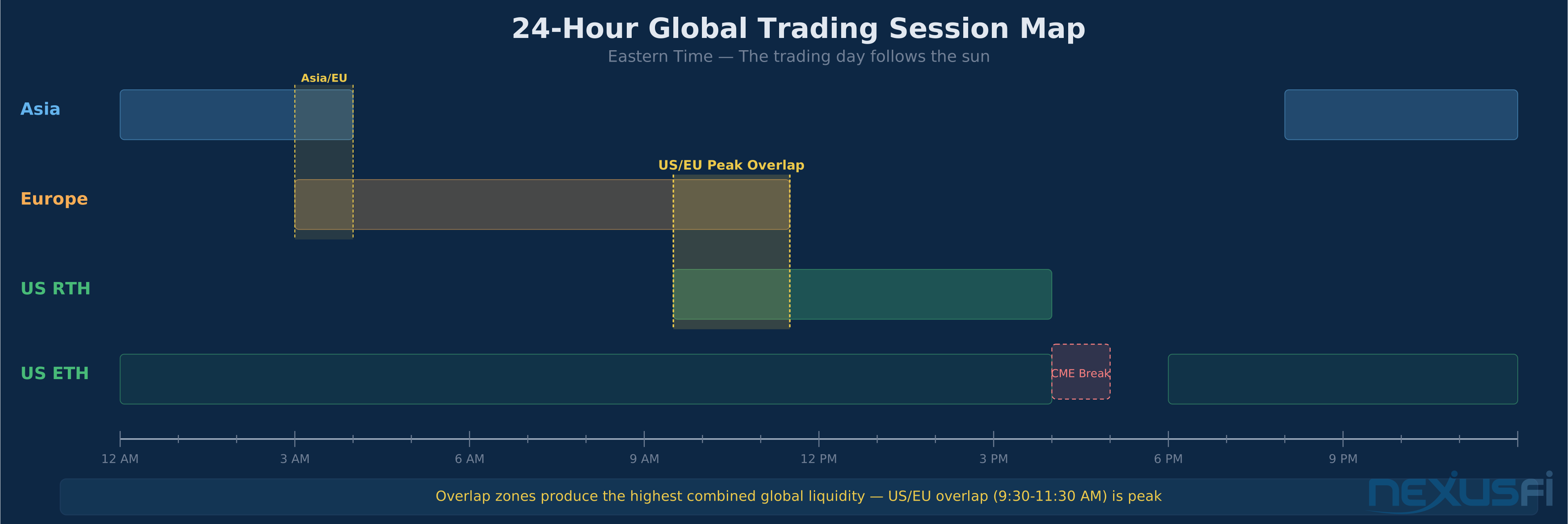
The trading day follows the sun: Sydney opens around 6:00 PM ET, then Tokyo, Seoul, Hong Kong, and Shanghai build the Asia session. As Asia winds down, London, Frankfurt, and Paris open — the Asia/Europe overlap is brief but important. Then New York opens with London still active, creating the deepest global liquidity window. London closes mid-morning US time, and the US carries the day alone until 4:00 PM ET.
@bobwest maps the approximate boundaries for US traders: "European: about 3:00 AM to 11:00 AM EST. This overlaps the US session from 9:30 to 11:00. Asian: about 7 PM to 3 AM, overlapping Europe from about 3:00 AM to 4:00 AM." [8]
The overlaps matter most. The US/Europe overlap (9:30 AM - 11:30 AM ET) concentrates the highest combined volume of any period in the global trading day. Cross-border institutional flows, ETF arbitrage, and currency hedging all peak here. For ES futures, this overlap typically produces the morning's trend-setting move. The Asia/Europe overlap (roughly 3:00 - 4:00 AM ET) is brief but critical for currencies and commodities.
Key Specifications #
The CME Trading Day #
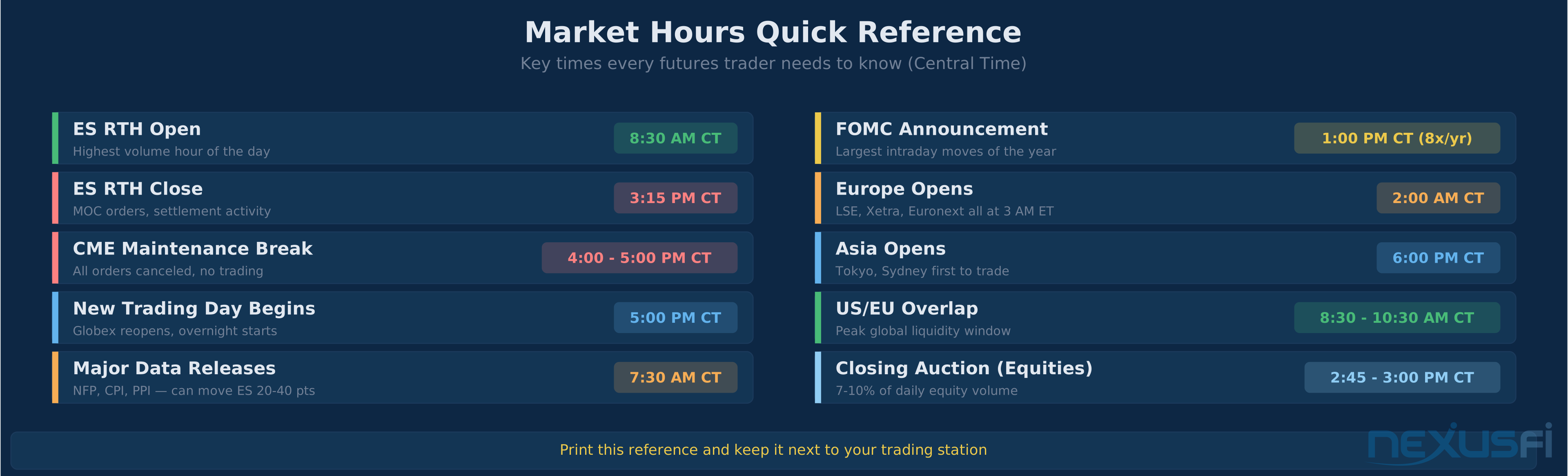
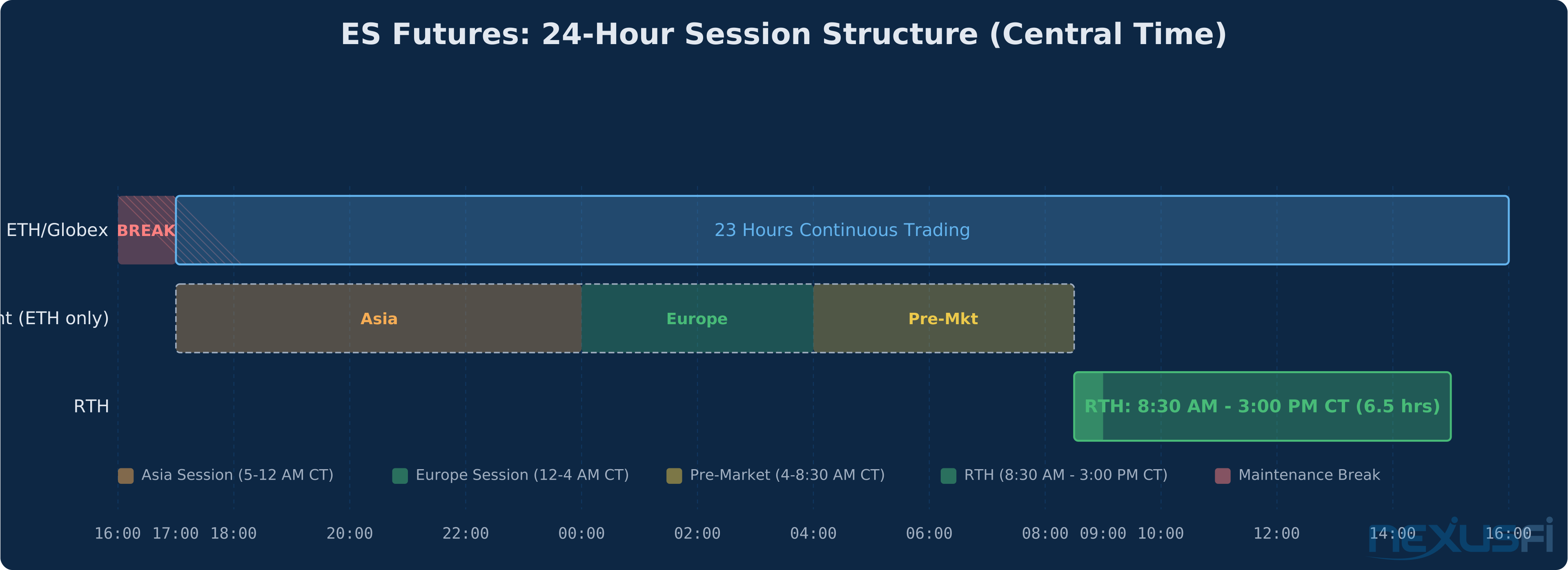
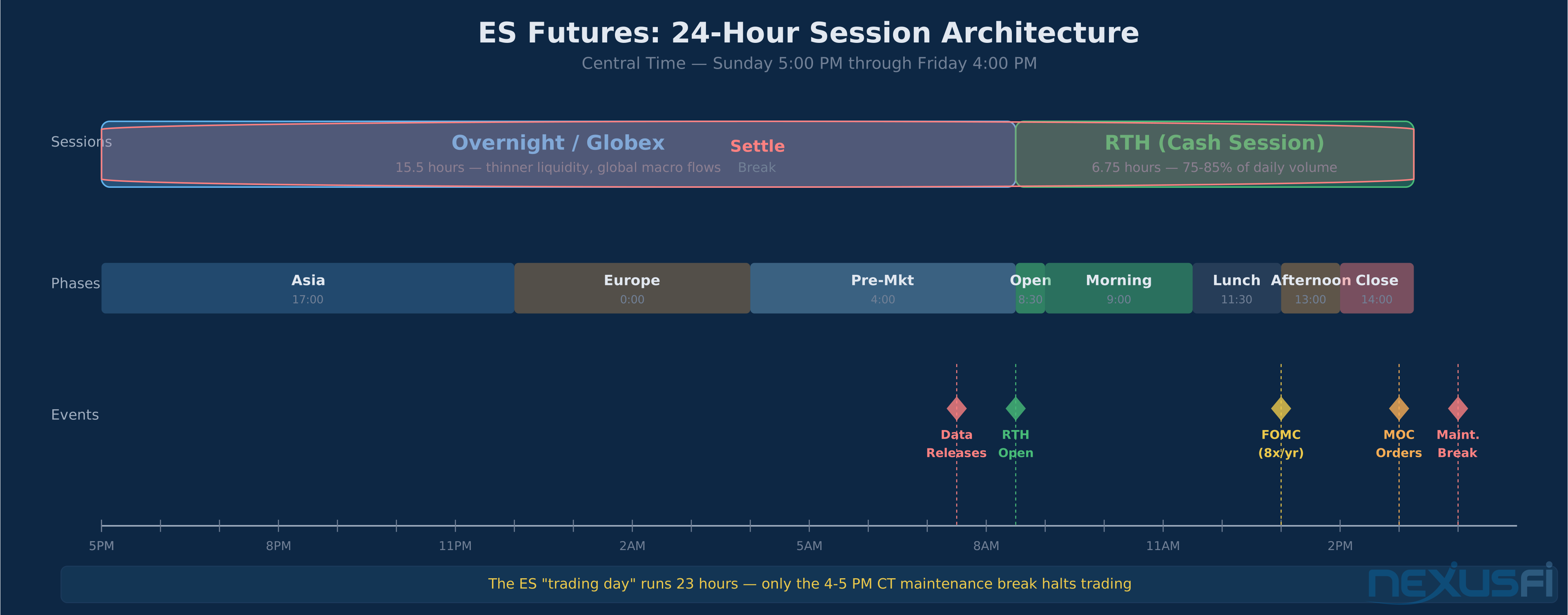
The CME Globex trading day for most products runs from 5:00 PM Central Time (6:00 PM Eastern) to 4:00 PM Central the following day. That's 23 hours of continuous electronic trading, with a one-hour maintenance break from 4:00 PM to 5:00 PM CT.
This wasn't always the case. Before November 2012, the trading day for equity index futures ended at 3:15 PM CT with a 15-minute halt before the overnight session resumed. CME eventually eliminated that halt for equity indices, creating the clean 23-hour session structure that exists today. [2]
RTH vs ETH: What They Actually Mean #
RTH (Regular Trading Hours) is the legacy pit-session window. For equity index futures (ES, NQ, YM, RTY), RTH runs from 8:30 AM to 3:00 PM CT (9:30 AM to 4:00 PM ET). This window aligns with cash equity market hours and represents the highest-liquidity period of the day.
ETH (Extended Trading Hours) covers the entire Globex session — from 5:00 PM CT the prior day through 4:00 PM CT. ETH includes RTH plus the overnight and after-hours periods. When someone says "Globex hours," they mean ETH.
The terminology creates confusion because ETH isn't a separate session that runs outside RTH. ETH is the full 23-hour session. RTH is a subset of ETH. Depending on your platform, your daily bars might be built from ETH data (full 23 hours) or RTH data (6.5 hours), and this changes everything about your high/low/close values, pivot calculations, and indicator readings.
Session Times by Product Group #
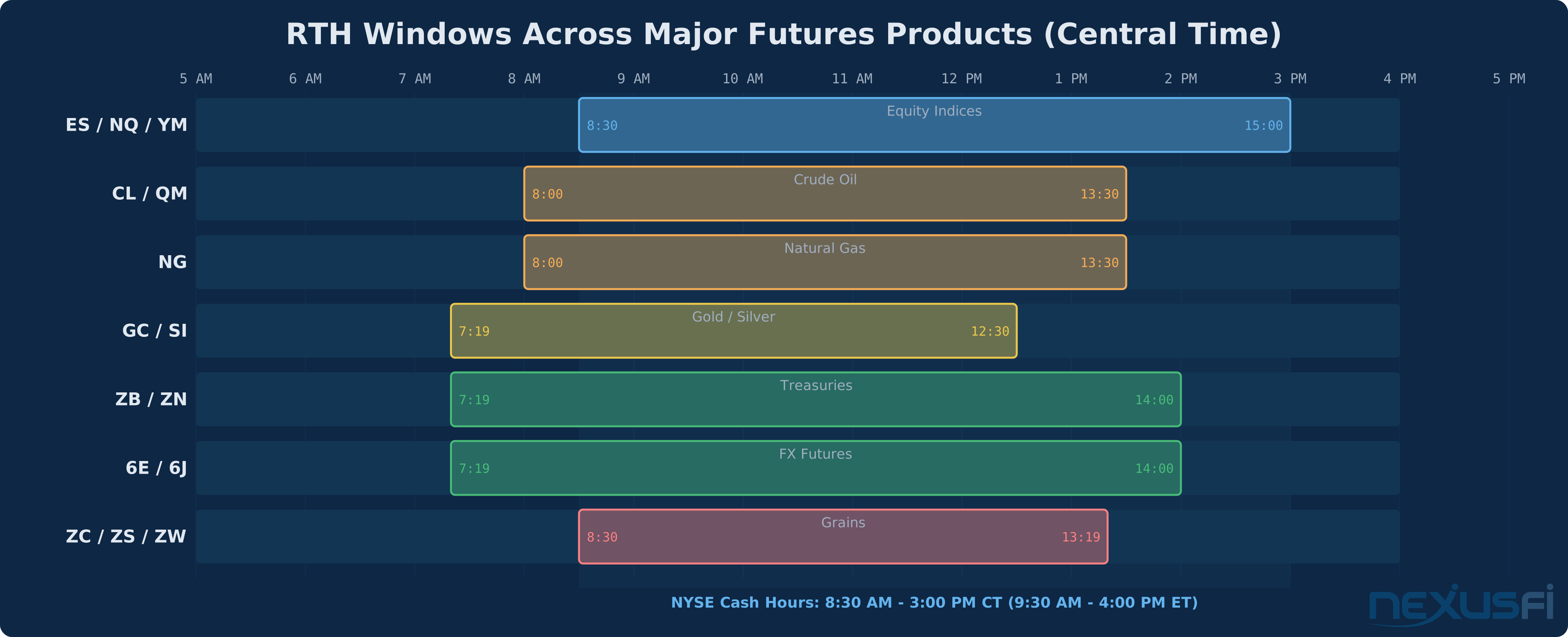
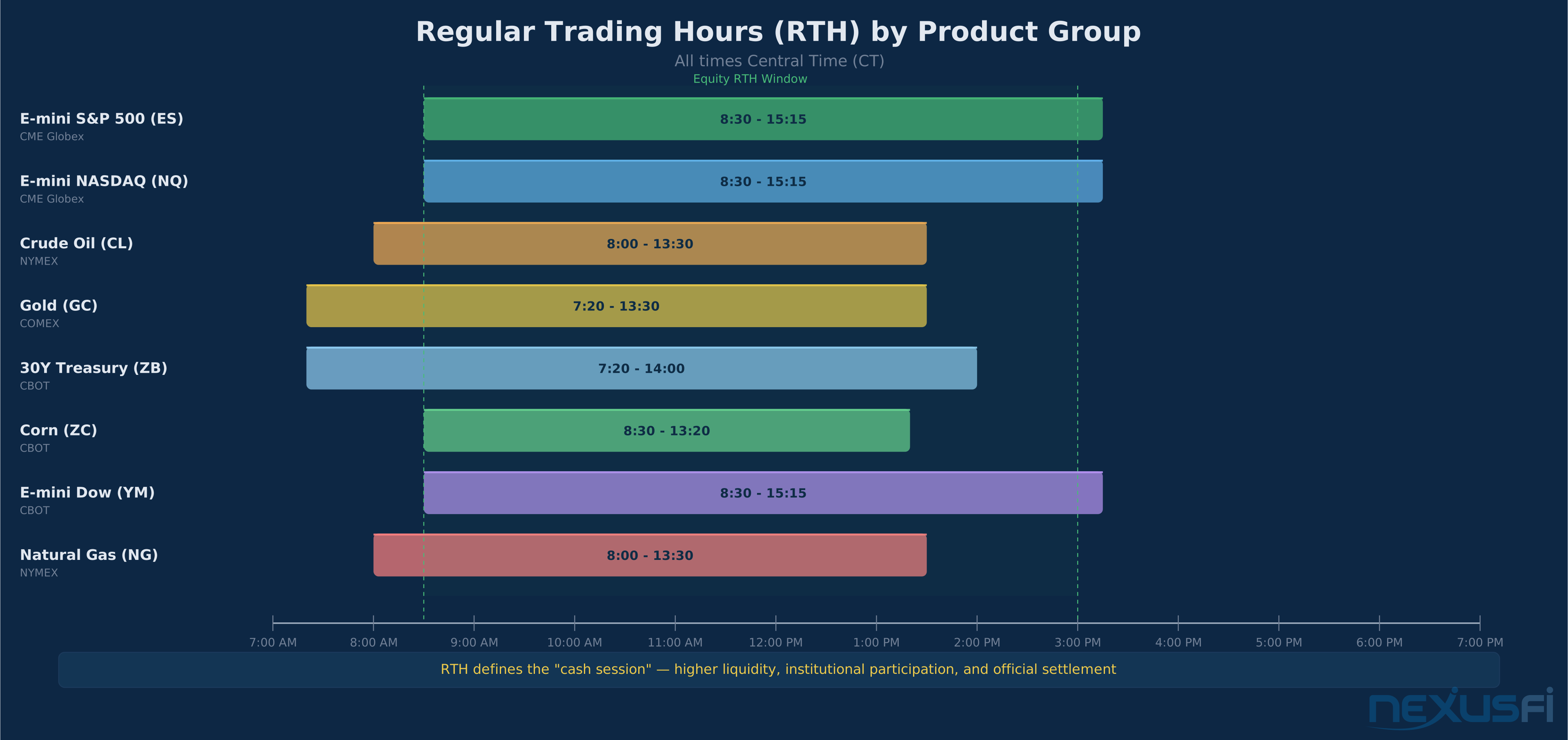
Every futures product has its own session schedule defined in its contract specifications. These are the key groups (all times Central/Chicago):
| Product Group | Examples | Globex/ETH Hours | RTH Window | Daily Break |
|---|---|---|---|---|
| Equity Indices | ES, NQ, YM, RTY, MES, MNQ | 5:00 PM - 4:00 PM (next day) | 8:30 AM - 3:00 PM | 4:00 PM - 5:00 PM |
| Crude Oil | CL, QM | 5:00 PM - 4:00 PM | 8:00 AM - 1:30 PM | 4:00 PM - 5:00 PM |
| Natural Gas | NG | 5:00 PM - 4:00 PM | 8:00 AM - 1:30 PM | 4:00 PM - 5:00 PM |
| Gold / Silver | GC, SI | 5:00 PM - 4:00 PM | 7:20 AM - 12:30 PM | 4:00 PM - 5:00 PM |
| Treasury Notes/Bonds | ZB, ZN, ZF | 5:00 PM - 4:00 PM | 7:20 AM - 2:00 PM | 4:00 PM - 5:00 PM |
| Currency Futures | 6E, 6J, 6B | 5:00 PM - 4:00 PM | 7:20 AM - 2:00 PM | 4:00 PM - 5:00 PM |
| Grains | ZC, ZS, ZW | 7:00 PM - 7:45 AM + 8:30 AM - 1:20 PM | 8:30 AM - 1:20 PM | Varies |
[3] Always verify against CME Group's current trading hours page — session times change, especially around DST transitions and exchange updates.
How It Works #
The Overnight Session: Who's Driving Price #
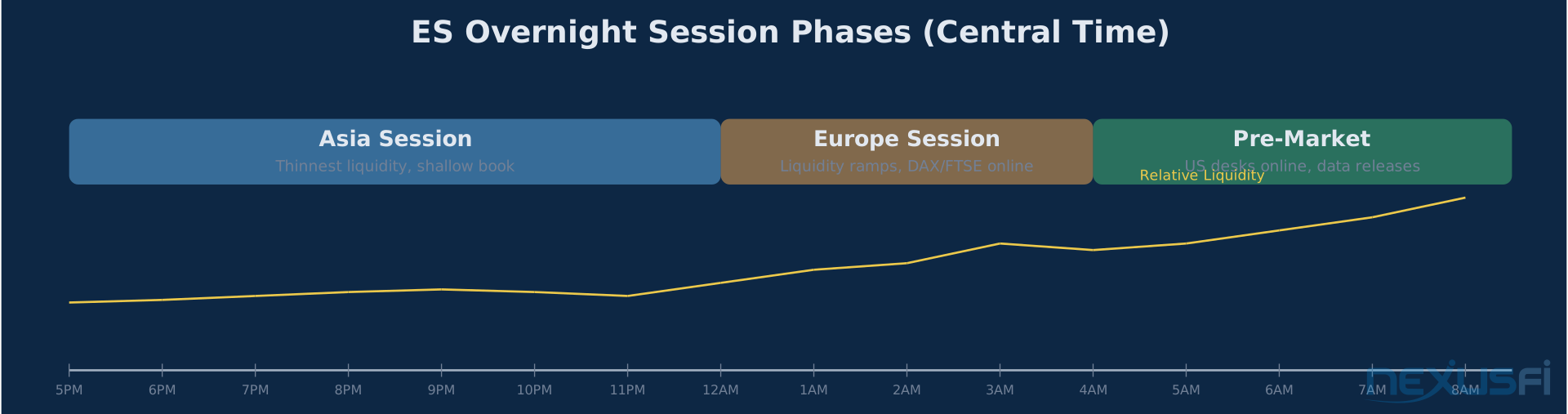
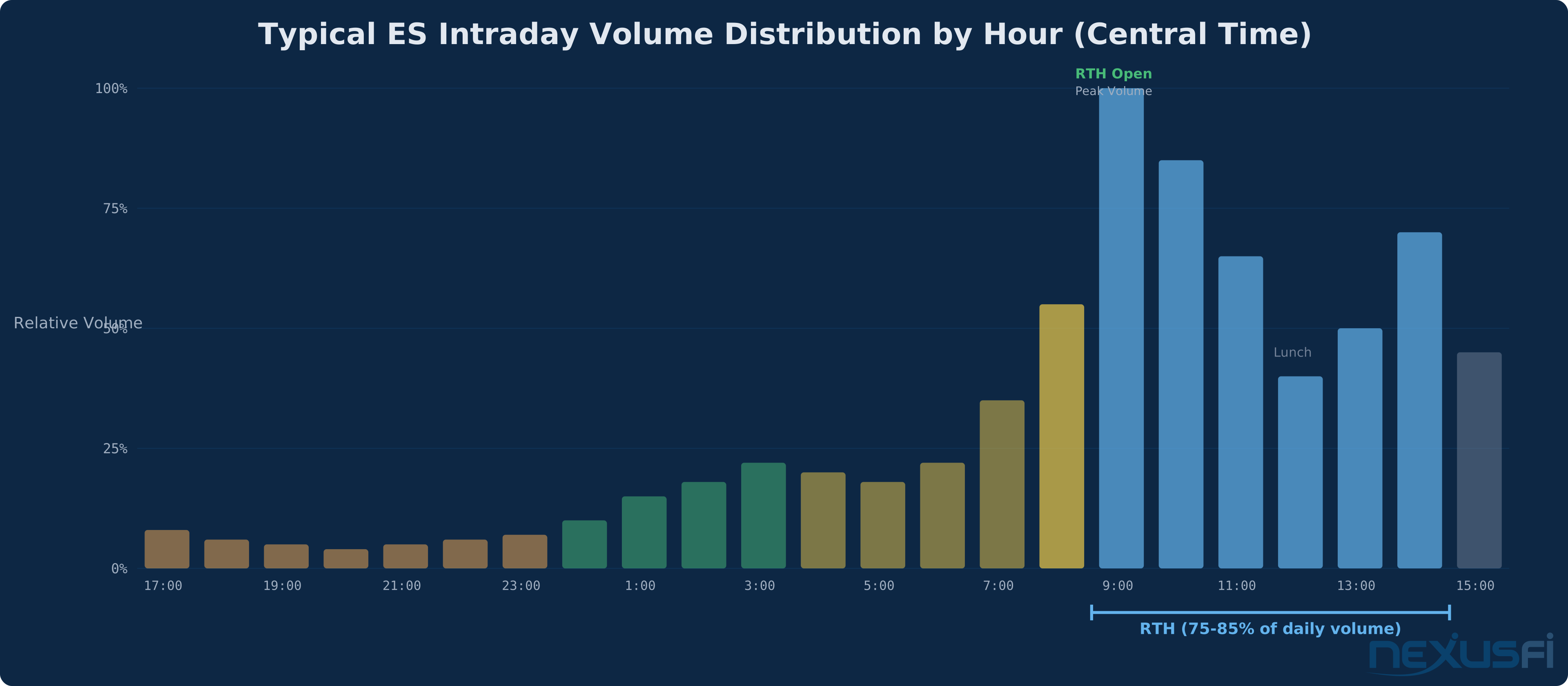
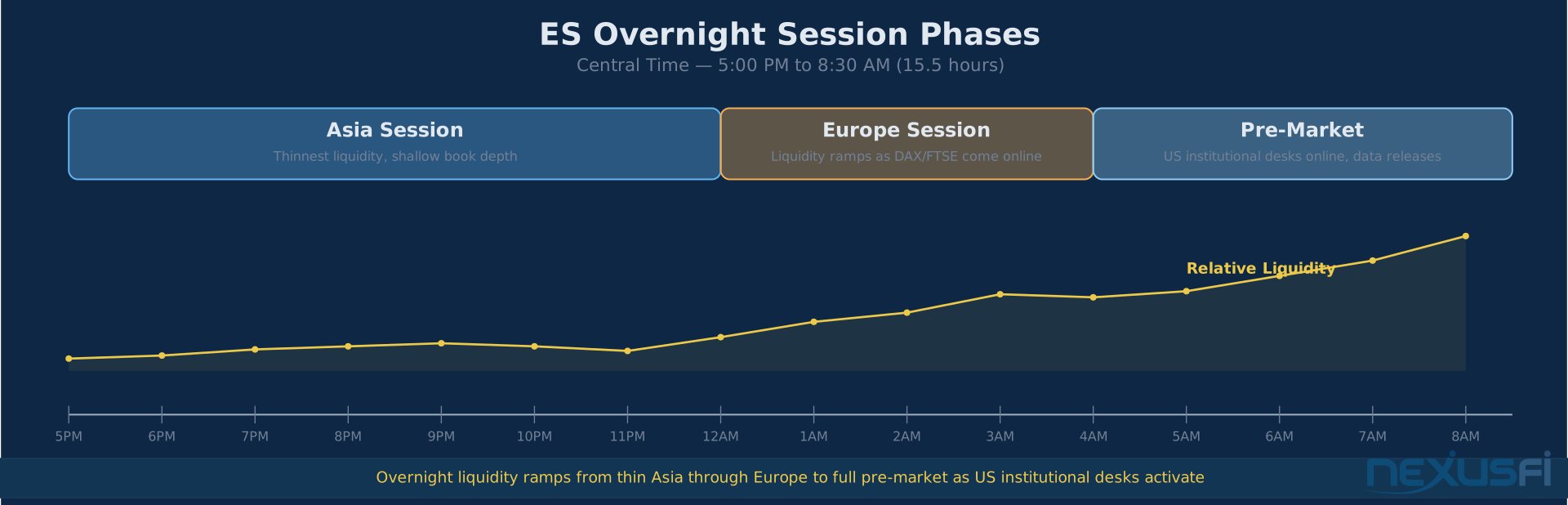
The overnight session (also called the "Globex session" by legacy traders) runs from 5:00 PM CT to 8:30 AM CT for equity index futures. That's 15.5 hours — more than double the RTH window — but it generates only a fraction of RTH's volume. The ES typically moves about 7-10 points overnight compared to 25+ points during RTH.
As @PeakGrowth notes, profitable after-hours ES trading hinges on understanding when liquidity shifts across sessions [11]. The overnight follows a predictable sequence driven by global market openings, as described in detail in the Global Exchange Sessions section above. It breaks down into three distinct phases:
Asia Session (5:00 PM - 12:00 AM CT) — The thinnest liquidity of the trading day. The ES book is shallow, spreads widen, and price tends to drift. Traders watching Tokyo and Hong Kong equity indices can use those as leading indicators for ES direction during this window.
Europe Session (12:00 AM - 4:00 AM CT) — Liquidity ramps as the DAX, FTSE, and EuroStoxx come online. European releases between 3:00 AM and 4:00 AM CT regularly move the ES 5-10 points. The London open at 3:00 AM ET marks when institutional-grade liquidity returns to global markets.
The Pre-Market Window: Setting Up the RTH Open #
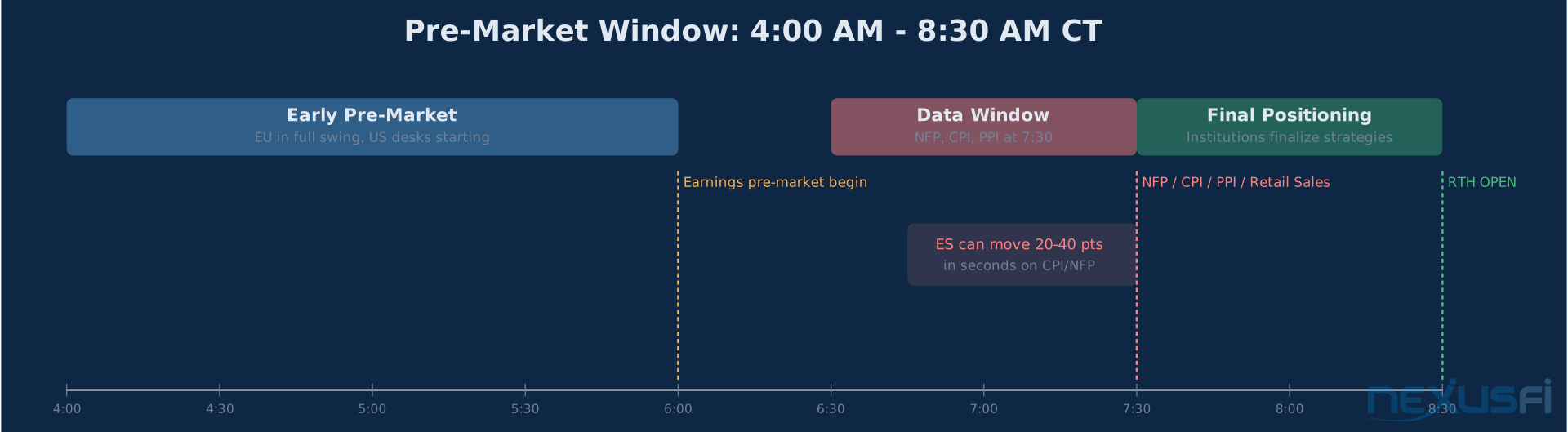
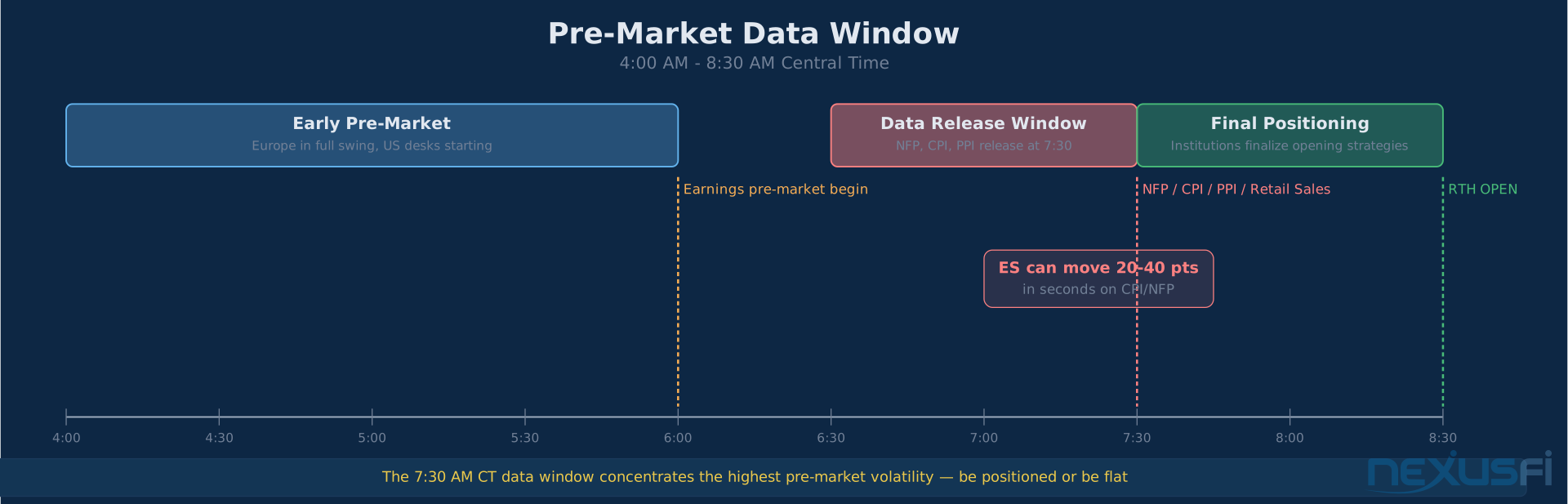
The pre-market period from 4:00 AM to 8:30 AM CT deserves closer attention than most traders give it. This 4.5-hour window is where the overnight narrative converges with incoming US-specific information, and it establishes the context that the RTH open will either confirm or reject.
Early Pre-Market (4:00 AM - 6:00 AM CT / 5:00 AM - 7:00 AM ET) — European markets are in full swing and the first wave of US institutional desks begins coming online. Liquidity in the ES starts building noticeably. Corporate earnings released before the US open (typically between 6:00 and 8:00 AM ET) begin hitting, and individual stock futures react — which bleeds into index futures through ETF basket arbitrage. Currency and bond futures are active as European and US flows overlap.
Data Window (6:30 AM - 7:30 AM CT / 7:30 AM - 8:30 AM ET) — Most market-moving US economic data drops at 8:30 AM ET (7:30 AM CT): NFP, CPI, PPI, Retail Sales, GDP. The market often compresses before major releases, then explodes as the number prints — the ES can move 20-40 points in seconds on a CPI or NFP surprise. Weekly jobless claims hit every Thursday at 8:30 AM ET.
Final Positioning (7:30 AM - 8:30 AM CT / 8:30 AM - 9:30 AM ET) — The last hour before RTH is a positioning window. Institutional traders finalize opening strategies based on overnight context, European price discovery, and data releases. The ES establishes a reference range that RTH will either accept or reject. Watching the pre-market high/low relative to the prior day's value area gives you a roadmap for the RTH open.
RTH: Where the Real Action Happens #
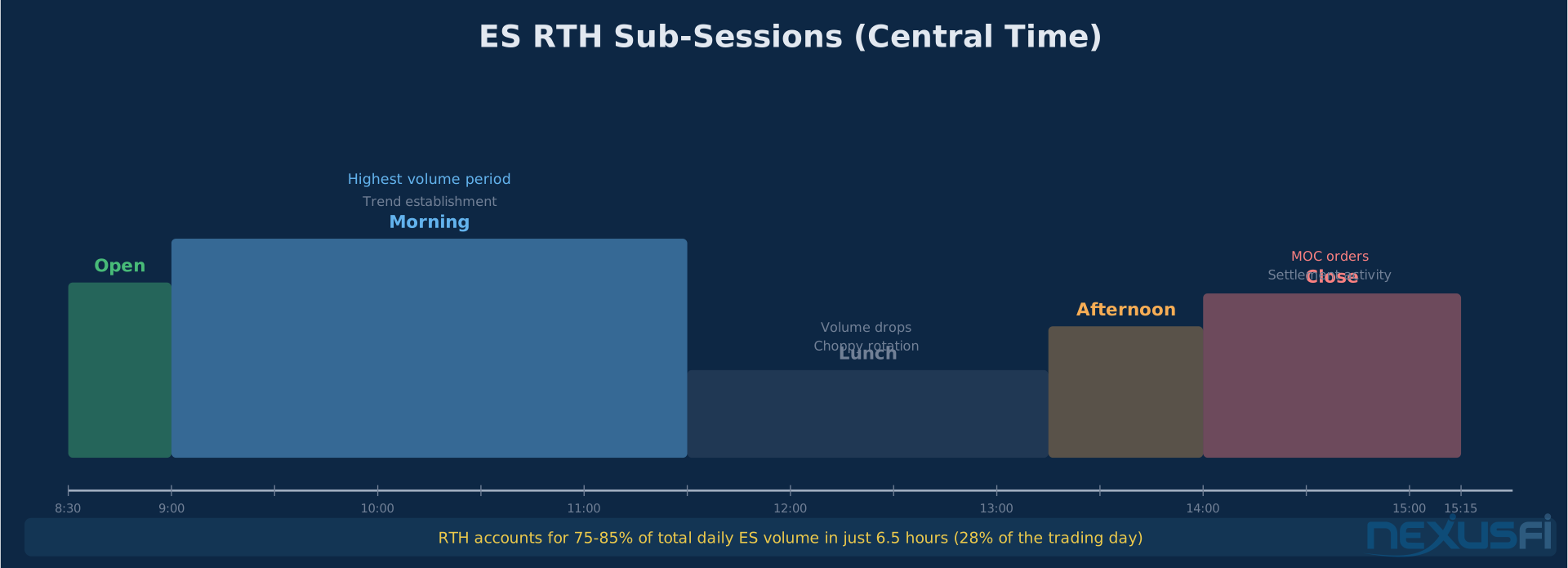
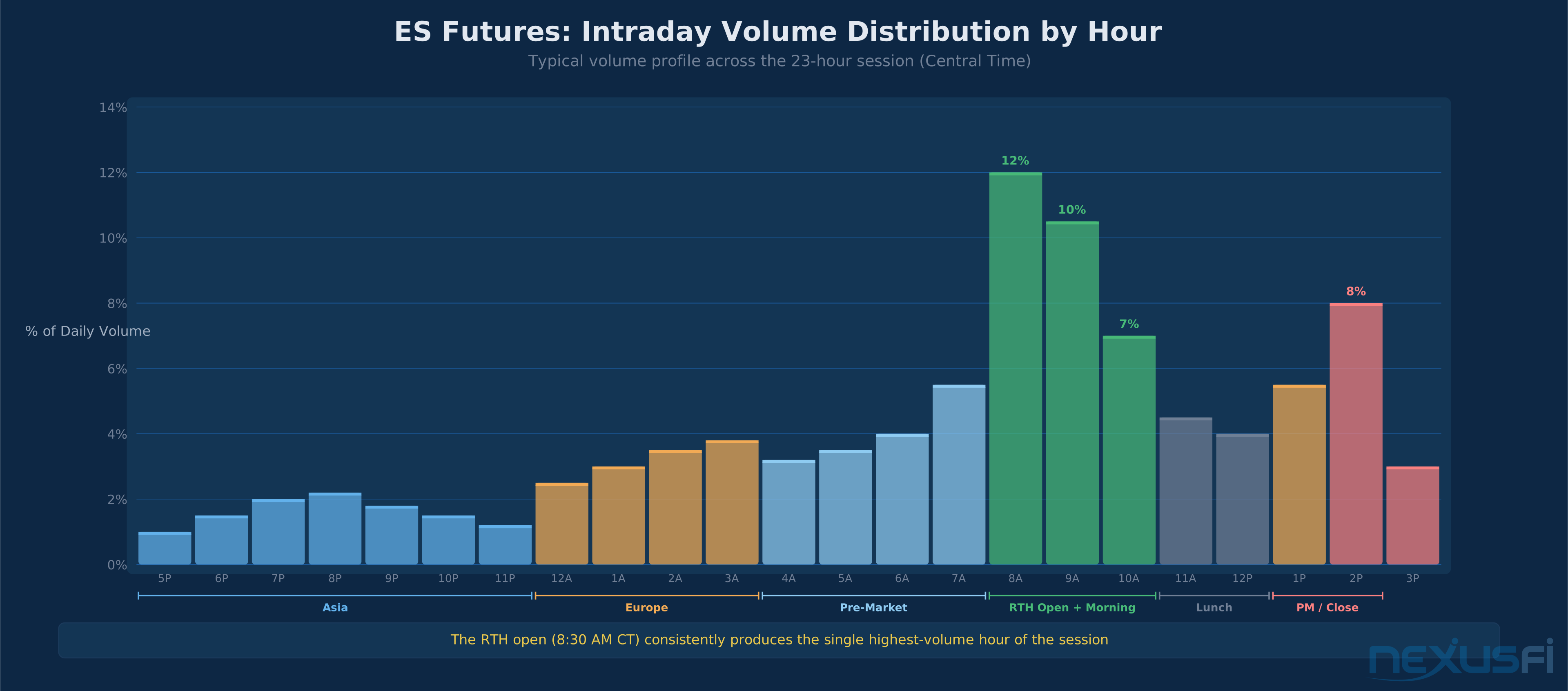
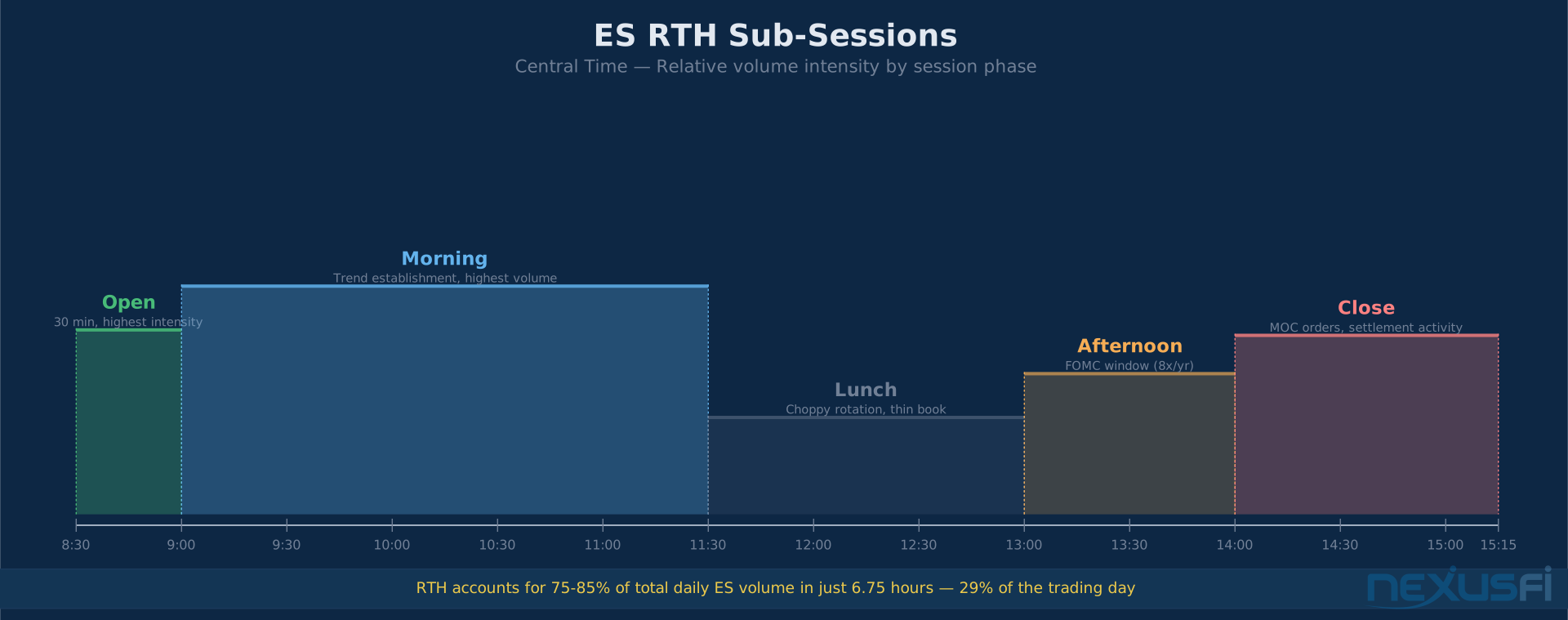
RTH volume dwarfs the overnight. For the ES, RTH typically accounts for 75-85% of total daily volume in just 6.5 hours (28% of the trading day). This concentration creates distinct intraday patterns.
@tigertrader breaks RTH into eight tradeable sub-sessions for the ES:
- "Pre-Market" (5:30 - 8:30 AM CT) — Positioning ahead of the open
- "Open" (8:30 - 9:00 AM CT) — The initial 30-minute price discovery window
- "Morning" (9:00 - 11:30 AM CT) — The highest-volume period, trend establishment
- "Lunch" (11:30 AM - 1:15 PM CT) — Volume drops, choppy rotational activity
- "Afternoon" (1:15 - 2:00 PM CT) — Institutional repositioning begins
- "Close" (2:00 - 3:15 PM CT) — MOC orders, portfolio rebalancing, settlement activity
Research on session profitability shows the overnight session ("Night" from 6:00 PM to 5:30 AM) is consistently the best performer for long-only strategies, with many S&P gains occurring while US traders sleep. [6]
The Opening Range: Why the First 30 Minutes Matter #
The first 30 minutes of RTH (8:30 - 9:00 AM CT for equity indices) produce more directional information than any other period. Institutional orders that accumulated overnight execute, the market reprices any gap, and the opening range establishes reference points used by Market Profile. As @Botts noted, the "3 sessions" concept is a throwback to pit trading days, though volume increases during traditional session boundaries remain very real [12] — these reference points are used by and auction theory practitioners throughout the day. A breakout above the opening range high with volume frequently sets the day's direction. An inside opening range (within the prior day's value area) suggests rotational activity.
This principle applies globally. The DAX cash market opens at 2:00 AM CT (8:00 AM Frankfurt), but DAX futures start at 1:00 AM CT — that gap creates a specific setup. Nikkei 225 futures on SGX and OSE provide a preview of how the cash TSE will open.
Session Breaks: The Liquidity Cliff #
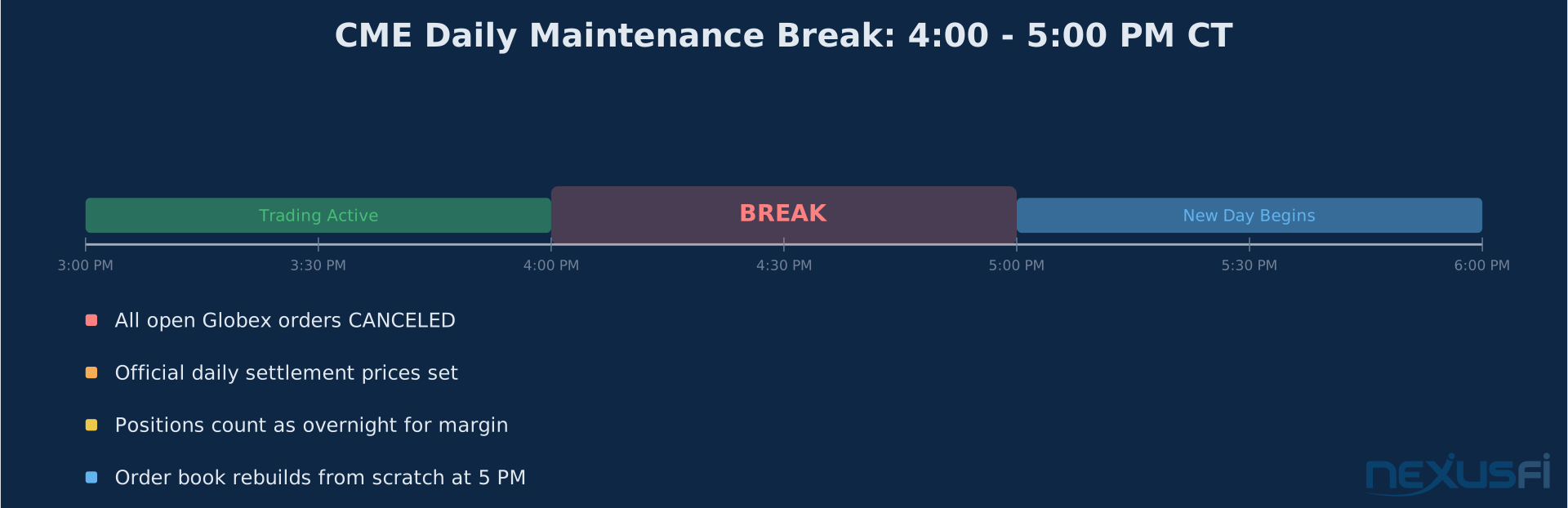
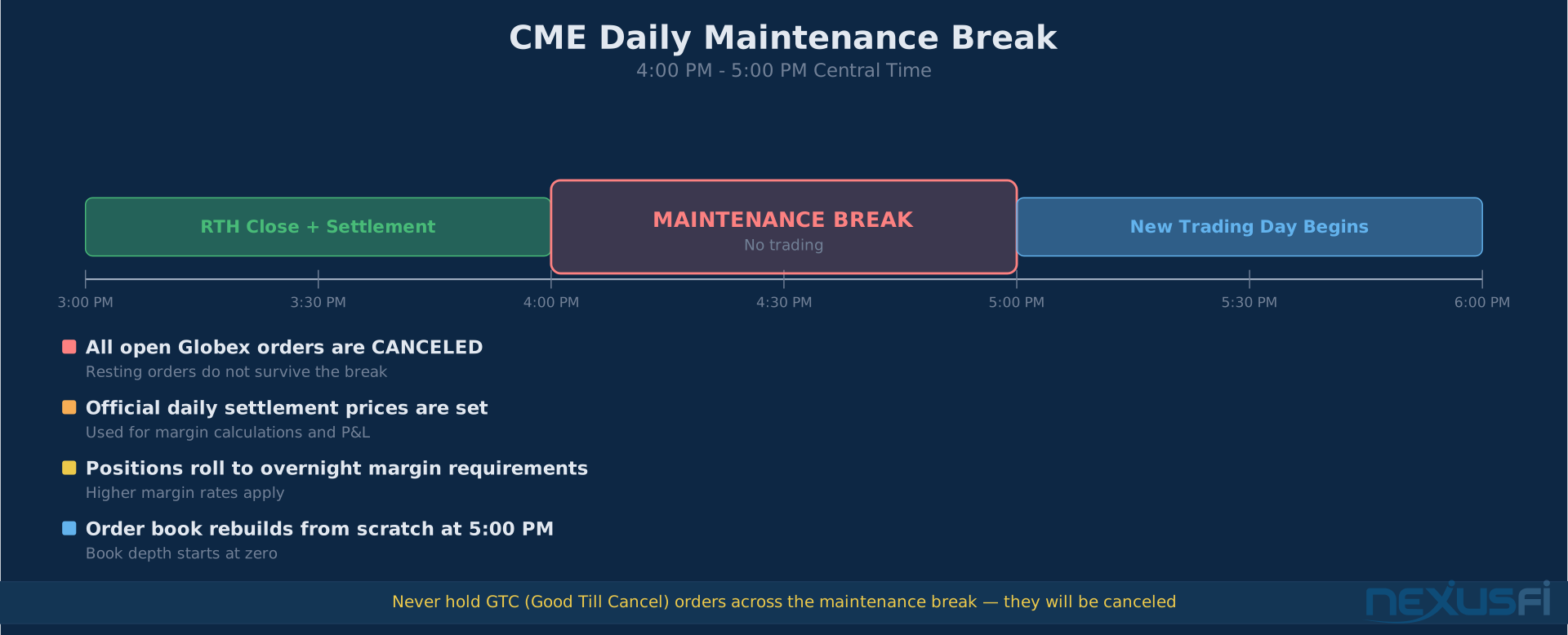
The daily 4:00 PM - 5:00 PM CT maintenance break is more significant than most traders realize. At 4:00 PM CT:
- All open orders on CME Globex are canceled
- The official trading day ends — daily settlement prices are determined
- Any position held past this point counts as overnight for margin purposes
- The one-hour break creates a price vacuum
When trading resumes at 5:00 PM CT, the order book rebuilds from scratch. Spreads are wider in the first few minutes, depth is shallow, and prices can jump. Don't carry resting orders into the break expecting them to survive — they won't.
For day traders, this boundary is critical. As bobwest notes, "At the CME, you're a day trader up until the exchange close at 16:00 CT." If you hold past that, your broker will require full overnight margin, which can be 2-4x the intraday margin requirement depending on the contract and broker. [1]
Other exchanges handle breaks differently — Tokyo has its traditional lunch break (11:30 AM - 12:30 PM JST) while the LSE and Euronext run continuously.
Practical Considerations #
Scheduled Macro Events and Session Timing #
The intersection of scheduled economic events with session timing is one of the most practical aspects of understanding trading hours. Macro releases don't arrive randomly — they hit at specific, predictable times, and knowing when they land relative to session boundaries is essential for risk management.
Pre-RTH Data Releases (7:30 AM CT / 8:30 AM ET)
The heaviest cluster of market-moving US economic data releases at 8:30 AM Eastern (7:30 AM Central), thirty minutes before the equity index RTH open. This timing is deliberate — it gives the market a window to digest the data before the cash equity session begins. The major releases at this time include:
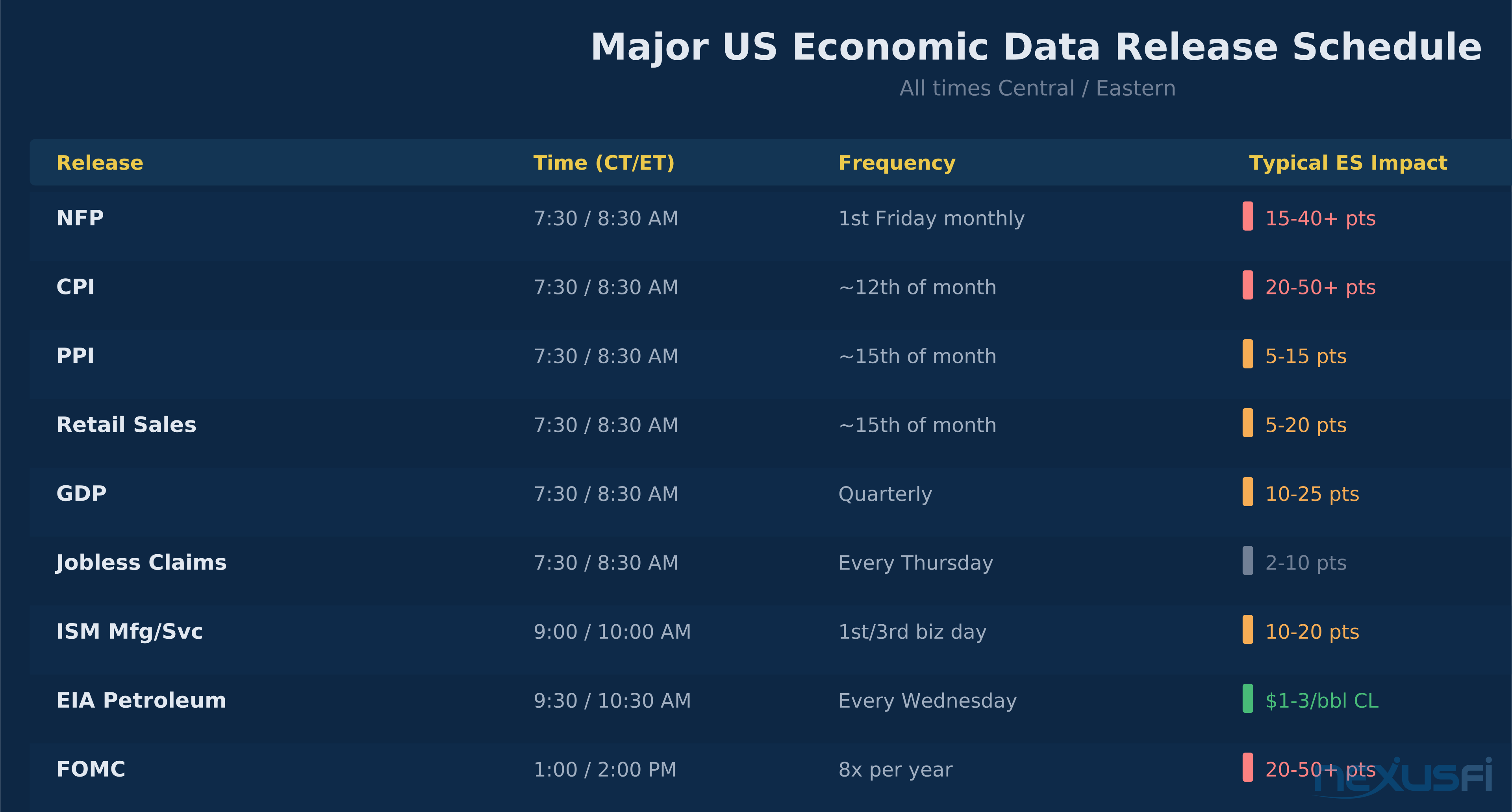
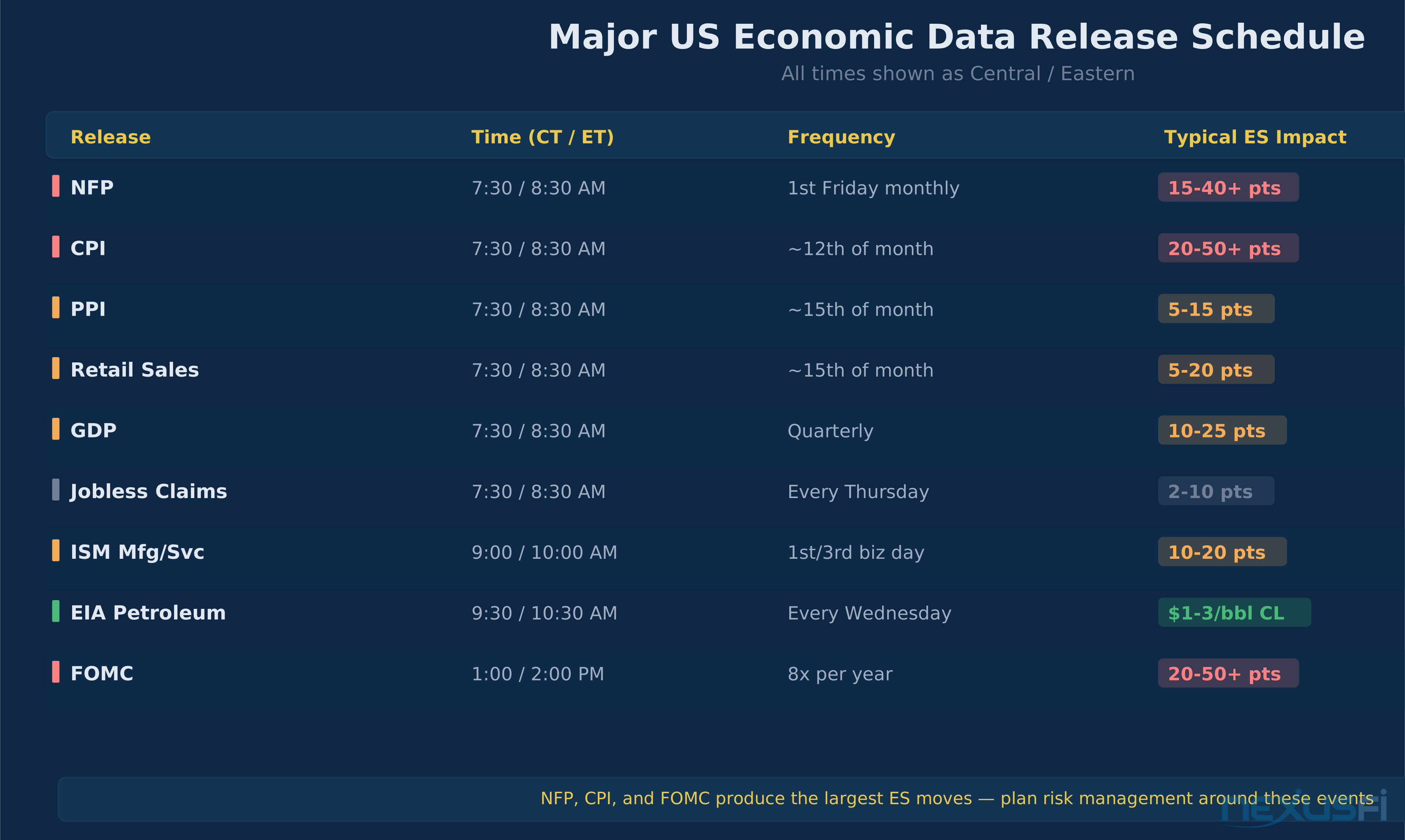
| Release | Time (CT) | Frequency | Typical ES Impact |
|---|---|---|---|
| Nonfarm Payrolls (NFP) | 7:30 AM | First Friday monthly | 15-40+ points |
| Consumer Price Index (CPI) | 7:30 AM | ~12th of month | 20-50+ points |
| Producer Price Index (PPI) | 7:30 AM | ~15th of month | 5-15 points |
| Retail Sales | 7:30 AM | ~15th of month | 5-20 points |
| GDP (advance/preliminary/final) | 7:30 AM | Quarterly | 10-25 points |
| Weekly Jobless Claims | 7:30 AM | Every Thursday | 2-10 points |
On NFP and CPI days, the ES often trades in a compressed range before the release. Experienced traders flatten positions or widen stops much. The initial move on a surprise can be violent and frequently wrong — fading the spike is well-known but requires discipline.
Global Macro Releases by Session
US data isn't the only game in town. European and Asian data releases move their local markets and frequently spill over into US futures. ECB rate decisions (1:45 PM CET / 7:45 AM ET, six times per year) move the DAX, Euro, and European bonds with ES spillover. BOE decisions (12:00 PM GMT / 7:00 AM ET) move GBP and FTSE. BOJ announcements during the Tokyo session can move USD/JPY 1-2% and ripple into overnight ES. China PMI releases (evening US time) much impact commodities and Asian equity indices. UK and EU CPI data, released between 7:00 and 10:00 AM CET, creates volatility during the European morning before US markets open.
During-RTH Releases
Several important releases and events occur during RTH itself:
- ISM Manufacturing/Services — 9:00 AM CT (10:00 AM ET), first and third business day of the month. Can move the ES 10-20 points on a surprise.
- JOLTS (Job Openings) — 9:00 AM CT, monthly. Increasingly watched as a labor market barometer.
- Consumer Confidence / Michigan Sentiment — 9:00 AM CT, monthly. Moderate impact.
- EIA Petroleum Status — 9:30 AM CT (10:30 AM ET), every Wednesday. The single most important release for CL crude oil futures — moves of $1-3 per barrel are routine.
- USDA Crop Reports — 11:00 AM CT (12:00 PM ET), monthly. The equivalent of NFP for grain futures. ZC, ZS, and ZW can move limit-up or limit-down on surprise acreage or yield numbers.
FOMC: The Most Important Recurring Event
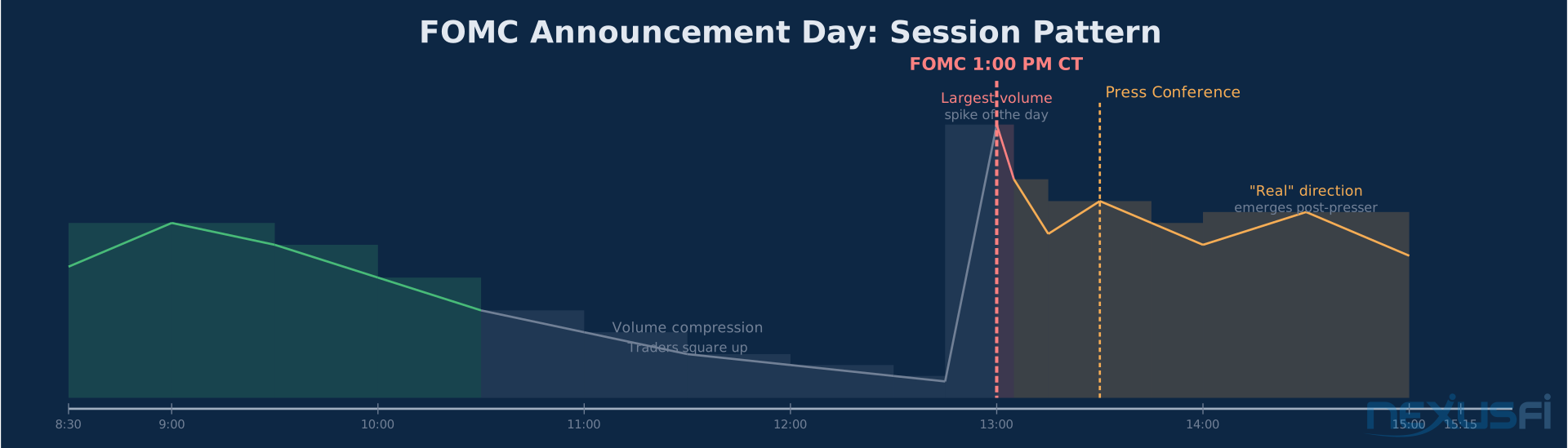
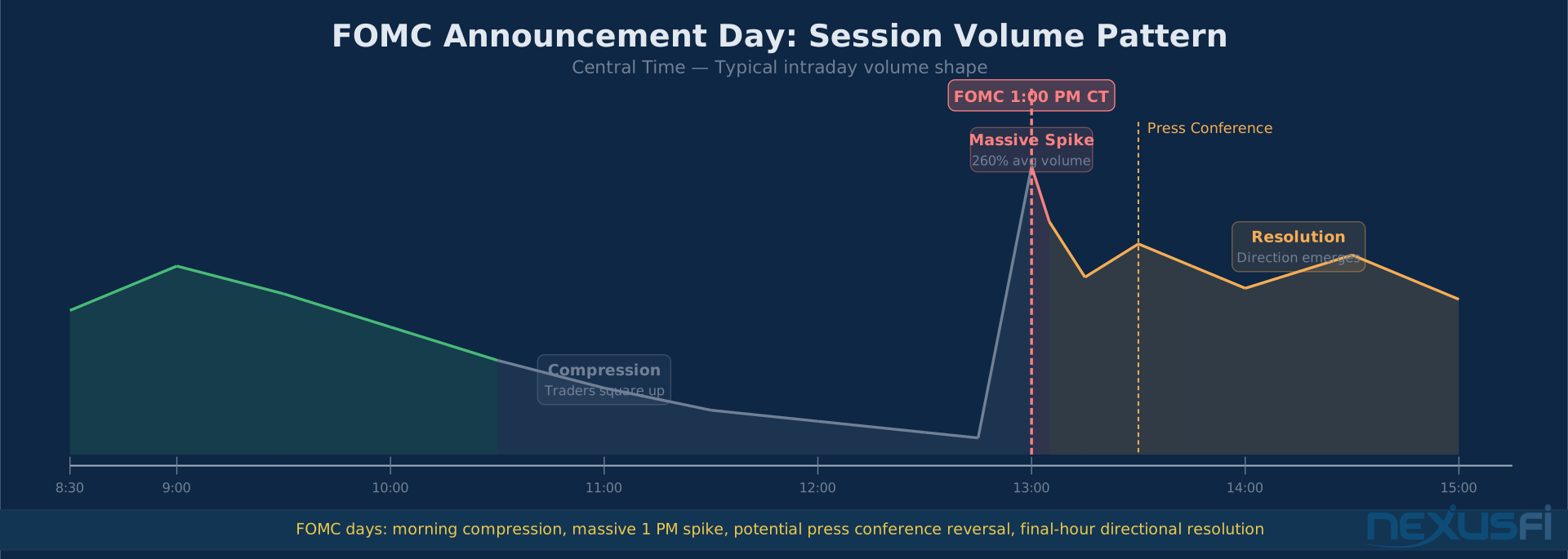
FOMC rate decisions are released at 1:00 PM CT (2:00 PM ET), eight times per year. The FOMC announcement creates a unique dynamic: volume drops pre-release, the 1:00 PM CT print spikes volume above RTH open levels, the initial 5-10 minute reaction establishes the headline trade, and the Fed Chair's 1:30 PM CT press conference can reverse it entirely. Many traders avoid FOMC days until after the presser. Treating an FOMC Wednesday like a normal session is a mistake.
Treasury Auctions — Results at 12:00 PM CT (1:00 PM ET). Weak auctions spike ZN/ZB and ripple into equities.
Earnings Season — Quarterly earnings season (January, April, July, October) concentrates releases before the RTH open (6:00-8:30 AM ET) and after the close (3:15-5:00 PM CT). A surprise from AAPL, NVDA, or AMZN after hours can gap the ES 20+ points by morning. Equity traders see the sharpest individual stock moves during pre-market and after-hours.
See Economic Calendar Data for the full release schedule.
Choosing RTH vs ETH for Your Charts #
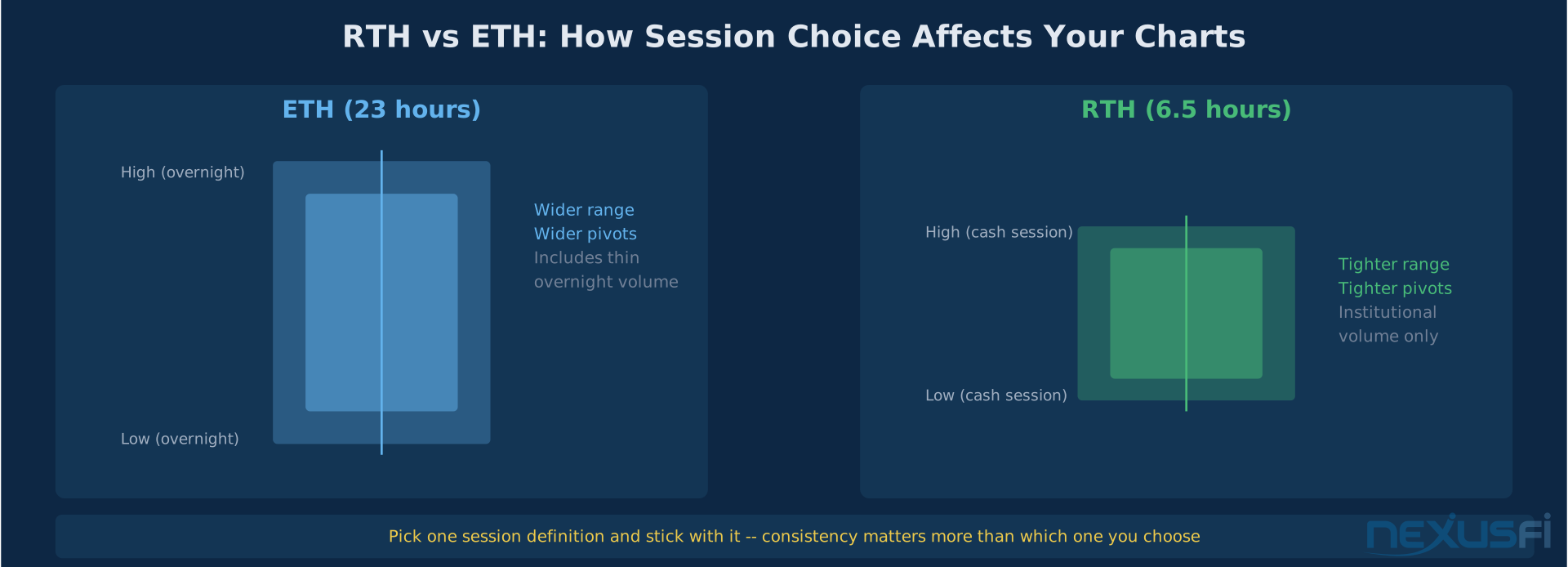
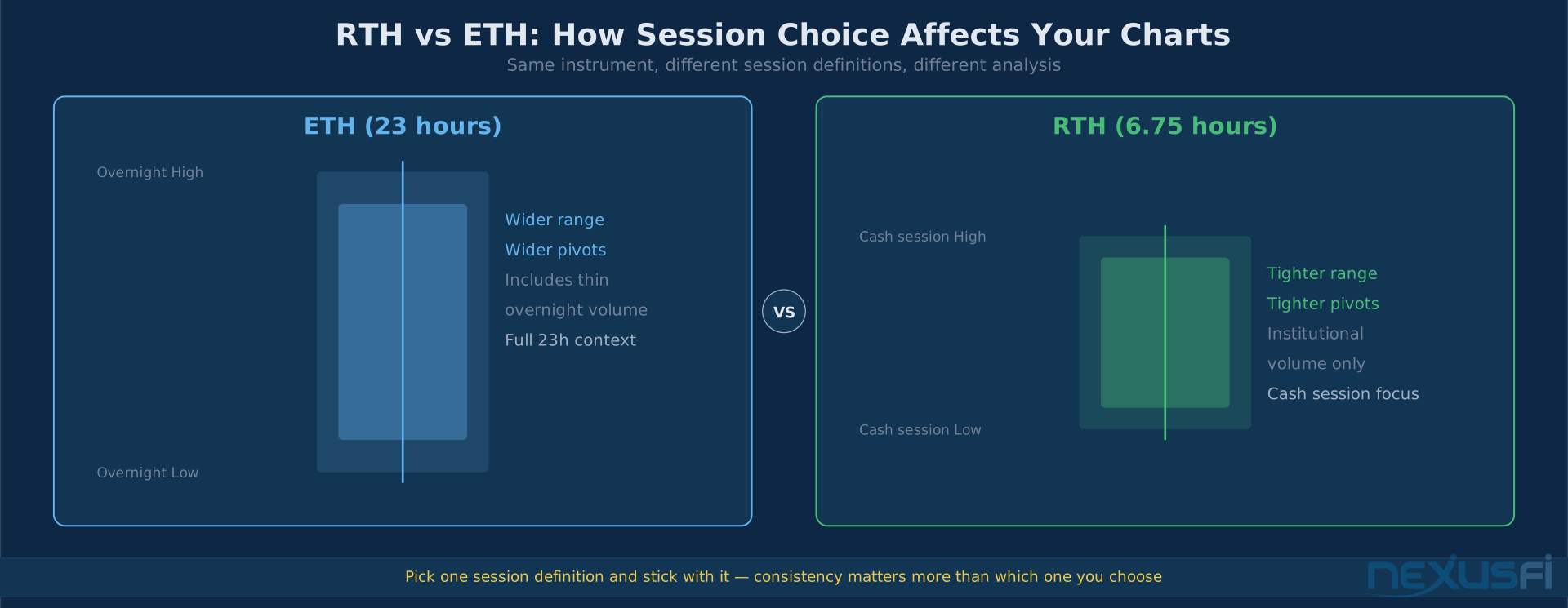
This decision affects every indicator on your chart. RTH-only daily bars show a 6.5-hour window with high concentration. ETH daily bars show the full 23-hour session including the thin overnight. The implications:
Pivot Points — RTH pivots use only the pit session's high, low, and close. ETH pivots use the full Globex session. ETH pivots will be wider because the overnight extends the range. Fat Tails observes: "Globex and floor pivots are only different if the US session does not fill the range created by the overnight session. In this case, Globex pivots are wider than the floor pivots." [3]
Volume Profile — RTH profiles show institutional activity concentrated in cash market overlap. ETH profiles include thin overnight volume that can create misleading distributions. Most Market Profile practitioners use RTH profiles for structure and reference the overnight separately.
Support/Resistance and Indicators — Overnight highs/lows create real reference points that RTH-only charts miss. Moving averages, RSI, and Bollinger Bands all produce different signals depending on whether they process 23 hours or 6.5. The key is consistency: pick one session definition and stick with it.
Margin and the Session Boundary #
Brokers set two margin tiers: intraday (day trading) margin and overnight (initial) margin. The boundary between them is the exchange close at 4:00 PM CT.
For ES, CME initial margin is around $12,000-14,000 per contract (varies by volatility). Many brokers offer $500-$2,000 day trading margins. If you hold through 4:00 PM CT with reduced margins, expect a margin call or auto-liquidation. Some prop firms add restrictions — Topstep historically required trades closed by 3:15 PM CT, the old pit close time.
Exchange-mandated margin requirements also change — and the timing catches traders off guard. When CME raises initial margins (typically during elevated volatility), the change becomes effective at the next daily maintenance break (5:00 PM CT). A trader who was adequately margined at 3:00 PM CT can face a margin call when trading resumes at 5:00 PM CT under the new, higher requirements. Monitor CME Performance Bond announcements, especially during volatility spikes, VIX above 25, or geopolitical events. Brokers may also independently raise house margin requirements above CME minimums with minimal notice.
Holiday and Modified Sessions #
Every exchange publishes its own holiday calendar, and they don't align. A US holiday may close CME and NYSE while London and Tokyo trade normally, creating gap risk for the US reopen. Chinese Golden Week shuts Shanghai for a full week while the rest of the world trades normally.
CME-specific modified sessions on US holidays typically mean early closes (sometimes 12:00 PM CT), reduced liquidity, and completely closed sessions on major holidays. Key US dates:
- Good Friday — Most US futures markets closed entirely
- Christmas Eve / New Year's Eve — Early close, extremely thin markets
- US Federal holidays — Often modified hours, always reduced volume
Liquidity on half-days can be treacherous. The volume simply isn't there to support normal execution quality. Tighter position sizing or sitting out entirely is the conservative play on modified-session days.
Rollovers and Contract Expiration #
Futures contracts expire quarterly (March, June, September, December). The roll typically happens 1-5 days before expiration during RTH. For a deep dive on roll mechanics, see Futures Contract Rolls.
DST Transitions #
Daylight Saving Time creates disruptions twice yearly. US and European clocks change on different dates, temporarily shifting session overlaps. CME times are always in US Central Time. The London/New York overlap shifts by an hour during the 2-3 weeks when the US and UK are on different DST schedules. Update your platform session templates after every transition.
What This Means for Your Trading #
Session structure isn't academic — it's the framework every trading decision sits inside. Here's what to take away:
Know your session, know your edge. The strategy that works during the RTH morning may bleed money during the Asia overnight. Scalping the ES at 10:00 PM CT, when the book is thin, is at the core different from scalping at 9:00 AM CT with institutional flow. This applies equally to equity extended-hours trading, where thin ECN books can whipsaw limit orders.
The clock is a trading tool. Session boundaries — the RTH open, the maintenance break, FOMC release times, the London open, the Tokyo lunch break — create predictable patterns in volatility and liquidity. These repeat because they're driven by structural forces, not randomness. Professionals build their day around the clock because it tells them when to expect opportunity and danger.
Think globally. Your market doesn't exist in isolation. The ES moves during Asia because Tokyo and Hong Kong are open. Understanding the full 24-hour rotation gives you context that single-session traders lack.
RTH vs ETH is a decision, not a default. Choose deliberately whether your charts show 6.5 hours or 23. Understand how that choice affects your indicators, pivots, and levels. There's no correct answer, but there is a wrong one: not knowing which session your analysis is based on.
Respect the data calendar. CPI, NFP, FOMC create entirely different microstructure. Check the economic calendar before every session.
The overnight tells a story. Where price traveled during Asia and Europe, whether it rejected the prior value area — this explains the opening trade.
Edges are not distributed evenly across the clock. Understanding which hours matter and why is the foundation everything else builds on.
Knowledge Map
Go Deeper
Build on this knowledgeReferences This Article
Articles that build on this topicCitations
- — What are the official Globex RTH and ETH times now with the 15 min gone (2022) 👍 5“The CME day ends at 17:00, or 5:00 PM, US ET, NY Time. Then there is a one-hour break in trading, and the CME new day begins at 18:00 ET.”
- — CME removal of 16:15-30 trading halt/effect on OHL (2021) 👍 2“There is a clean break -- at 5pm ET (4pm CT), the trading day is over.”
- — Correct Sessions for Your Charts (2010) 👍 25“For futures you will find the correct session on the homepage of the exchange under contract specifications.”
- — Overnight Session ES Trading (2011) 👍 20“The first major market to open following the close of the U.S. day session is the Nikkei stock index in Japan...”
- — Overnight Session-Exact Time (2015) 👍 4“The overnight session for index futures is the period from 5:00 PM Central to 8:30 AM in the morning.”
- — Spoo-nalysis ES e-mini futures S&P 500 (2015) 👍 21“Session #8 (Night from 18:00 to 5:30) is our best performer. Many gains in the S&P market occur in the overnight session.”
- — TRADING HOURS - post trading hours and Lots of Action (2020) 👍 6“Roughly speaking, the US session is followed by the Asian session, and in the early morning by US time, by the European session.”
- — What kind of work can I put in to earn a mentor? (2019) 👍 6“European: about 3:00 AM to 11:00 AM EST. This overlaps the US session from 9:30 to 11:00. Asian: about 7 PM to 3 AM.”
- — GlobexTrader's Journal of a method to consistently cashflow the market (2024) 👍 6“Sometimes the most important stuff on the chart happens in the 3-4 AM hours. The markets around the world are all interconnected.”
- — CME Group Global Trading Hours (2024)
- — NYSE Market Hours and Holiday Calendar (2024)