



Futures Contract: The Standardized Agreement That Moves Global Markets
Overview #
A futures contract is a standardized, legally binding agreement to buy or sell a specific quantity of an underlying asset at a predetermined price on a set future date. That's the definition, and every word matters. "Standardized" means the exchange sets the terms — you don't negotiate contract size, quality, or delivery date. "Legally binding" means both parties carry enforceable obligations. "Set future date" means these contracts expire.
Futures are the backbone of risk transfer in global markets. The CME Group alone clears over 20 million contracts daily across equities, energy, metals, rates, and agriculture. Retail day traders interact with this same infrastructure, accessing leverage and liquidity that doesn't exist in other markets.
Understanding futures at a structural level — not just how to click buy and sell — separates traders who manage risk deliberately from those who blow up accounts. This article covers the mechanics of futures contracts: what they are, how they differ from stocks and options, how margin and leverage work, and the daily settlement process that makes futures unique.
Key Concepts #
Long Position: The buyer in a futures contract, obligated to take delivery (or cash equivalent) at expiration. Going long means you profit when price rises.
Short Position: The seller in a futures contract, obligated to make delivery at expiration. Going short means you profit when price falls. No uptick rule, no borrowing required.
Margin: A performance bond (not a loan) deposited with your broker to open and maintain a position. Futures margin and leverage are at the core different from stock margin.
Mark-to-Market: The daily settlement process where gains and losses are realized every trading day, not deferred until you close the position. Covered in Settlement Prices and Daily Mark-to-Market.
Contract Rollover: The process of closing an expiring contract and opening the next month to maintain exposure. Front-month contracts have the most liquidity. See Futures Contract Rollover for timing details.
Settlement: How the contract resolves at expiration — either physical delivery of the underlying asset or cash settlement based on a final price.
Tick: The minimum price movement for a contract. On ES, one tick = 0.25 index points = $12.50 per contract. See Tick Size, Tick Value, and Contract Specifications for details across instruments.
Front Month: The nearest expiring contract with the highest trading volume. Most day traders work exclusively with the front month.
Open Interest: The total number of outstanding contracts that have not been settled. Rising open interest in a move confirms commitment; falling open interest signals unwinding. Covered in Open Interest Analysis.
What Makes a Futures Contract Different #
Three features distinguish futures from every other tradable instrument:
1. Obligation, not option. When you buy a futures contract, you don't have the right to buy — you have the obligation. Both the buyer and seller are locked in until one of them offsets the position.
2. Zero-sum structure. Every dollar gained by a long position is lost by a short position. There's no wealth creation in futures the way stocks can generate value through company growth. This makes futures a pure risk-transfer mechanism. @bobwest makes this concrete: "Balances are adjusted in CME futures trading, and who so know that it is a zero sum game in a literal sense. If I am long and my instrument closes up, at the end of the day my margin account is credited... All the credits, exchange-wide, come from money taken from accounts that were short."
3. Daily settlement. Gains and losses don't accumulate until you close. They're realized every single day through mark-to-market. Your account gets credited or debited at the close of each session.
Obligation Mechanics in Detail #
When you open a futures position, you're entering a bilateral contract with the clearinghouse. You can exit in three ways:
- Offset the position before expiration (most traders, most of the time)
- Let it expire and settle in cash (for cash-settled contracts like ES, NQ)
- Take or make delivery of the physical commodity (for CL, GC, ZB)
The obligation nature means you cannot simply "walk away" from a losing futures position the way you could ignore an out-of-the-money option. If the market moves against you and your account drops below maintenance margin, your broker will close the position — with or without your permission.
The Risk Transfer Function #
Futures markets exist because hedgers need someone to take the other side. A corn farmer sells futures to lock in a price for their harvest. A food manufacturer buys futures to lock in input costs. Speculators provide the liquidity that makes this price transfer possible.
Day traders are speculators. This isn't pejorative — it's functional. Without speculative volume, bid-ask spreads would widen and hedgers would face worse execution. Every time you provide liquidity as a day trader, you're performing a genuine economic function.
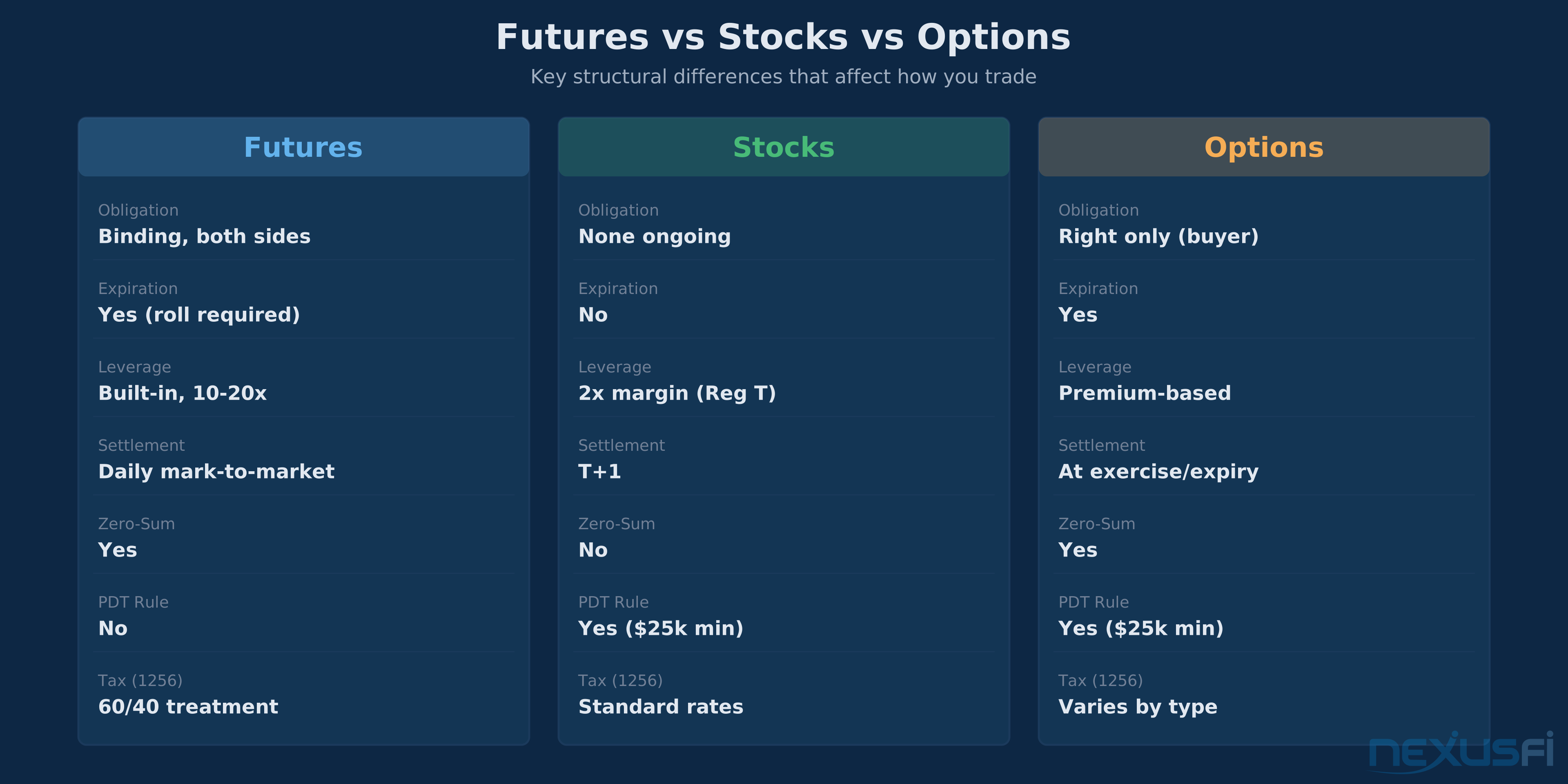
Futures vs Stocks vs Options #
| Feature | Futures | Stocks | Options |
|---|---|---|---|
| Obligation | Binding, both sides | None ongoing | Right only (buyer) |
| Expiration | Yes (must roll) | No | Yes |
| Leverage | Built-in, 10-20x | 2x margin (Reg T) | Premium-based |
| Settlement | Daily mark-to-market | T+1 | At exercise/expiry |
| Zero-sum | Yes | No | Yes |
| PDT Rule | No | Yes ($25k minimum) | Yes ($25k minimum) |
| Tax treatment | 60/40 (Section 1256) | Standard rates | Varies |
| Short selling | Unrestricted | Uptick rule, borrowing | Via puts |
The no-PDT-rule advantage is significant for undercapitalized traders. The Pattern Day Trader rule requires $25,000 in equity for traders making 4+ round trips in 5 business days — see Pattern Day Trader Rule for the full mechanics. Futures traders face no such restriction.
Section 1256 Tax Treatment
Under Internal Revenue Code Section 1256, futures profits receive automatic 60/40 treatment: 60% taxed at long-term capital gains rates, 40% at short-term rates. This applies regardless of holding period — even a 5-second scalp gets 60/40 treatment.
@Luger ran the numbers: "Tax rate on broad based index futures = (60% 15%) + (40% 25%) = 19% Pay IRS $190 for every $1,000 made." Compare that to short-term stock gains taxed at 37% in the highest bracket — futures traders in that bracket effectively pay 18 percentage points less on equivalent profits.
Margin and Leverage #
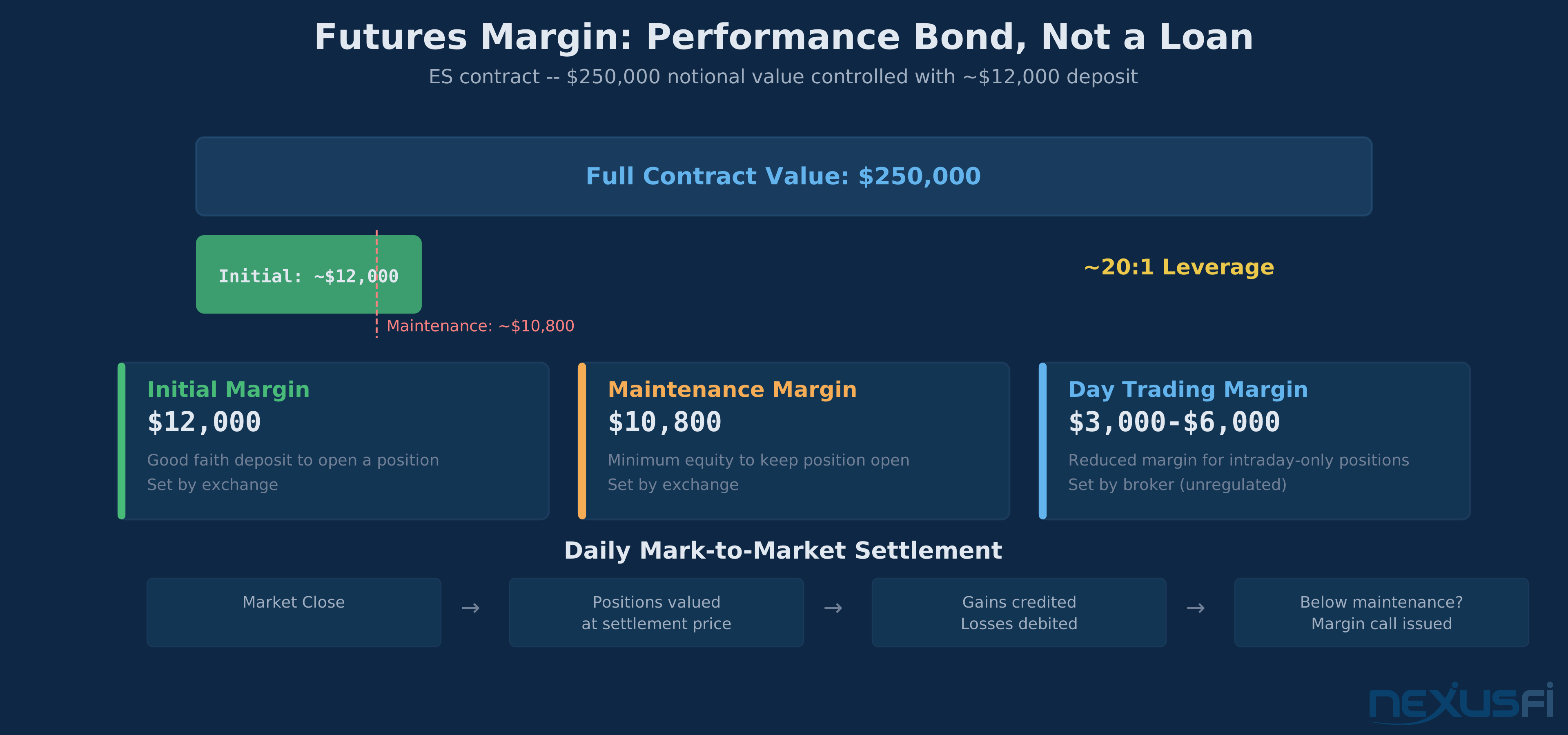
Futures margin is a performance bond — collateral proving you can cover potential losses. Stock margin is a loan from your broker. Completely different mechanics. For a full treatment, see Futures Margin and Leverage.
Three margin types matter:
Initial Margin: The deposit required to open a position. Set by the exchange (CME, ICE, etc.) and enforced by your broker. For ES (E-mini S&P 500), initial margin runs approximately $12,000. That $12,000 controls roughly $250,000 in notional exposure — about 20:1 leverage.
Maintenance Margin: The minimum equity you must maintain while holding the position, typically 75-80% of initial margin. If your account drops below maintenance, you receive a margin call and must deposit additional funds or close the position. See Margin Calls and Forced Liquidation for what actually happens when this occurs.
Day Trading Margin: Brokers set their own intraday margin requirements, which are unregulated and often 50-75% less than exchange overnight margins.
For details on day trading margin policies across brokers, see Day Trading Margins.
The leverage cuts both ways. A 2% adverse move on ES (about 100 points) represents $5,000 per contract — nearly half the initial margin. A 5% move would exceed the entire margin deposit.
Leverage Calculation #
For ES at current prices (~5,400 index points):
- Notional value: 5,400 x $50 = $270,000 per contract
- Initial margin: ~$12,000
- Leverage ratio: 270,000 / 12,000 = 22.5:1
Each 1% move in ES = $2,700. If your margin is $12,000, a 4.4% adverse move wipes out your entire deposit. Position sizing matters more than any other variable in futures trading. See Position Sizing Methods for frameworks on calculating appropriate position size.
Exchanges and Clearinghouses #
Futures trade on centralized exchanges — CME Group (which includes CBOT, NYMEX, and COMEX), ICE, and Eurex are the major ones. The exchange provides standardized specifications, a trading platform, price discovery, and regulatory oversight.
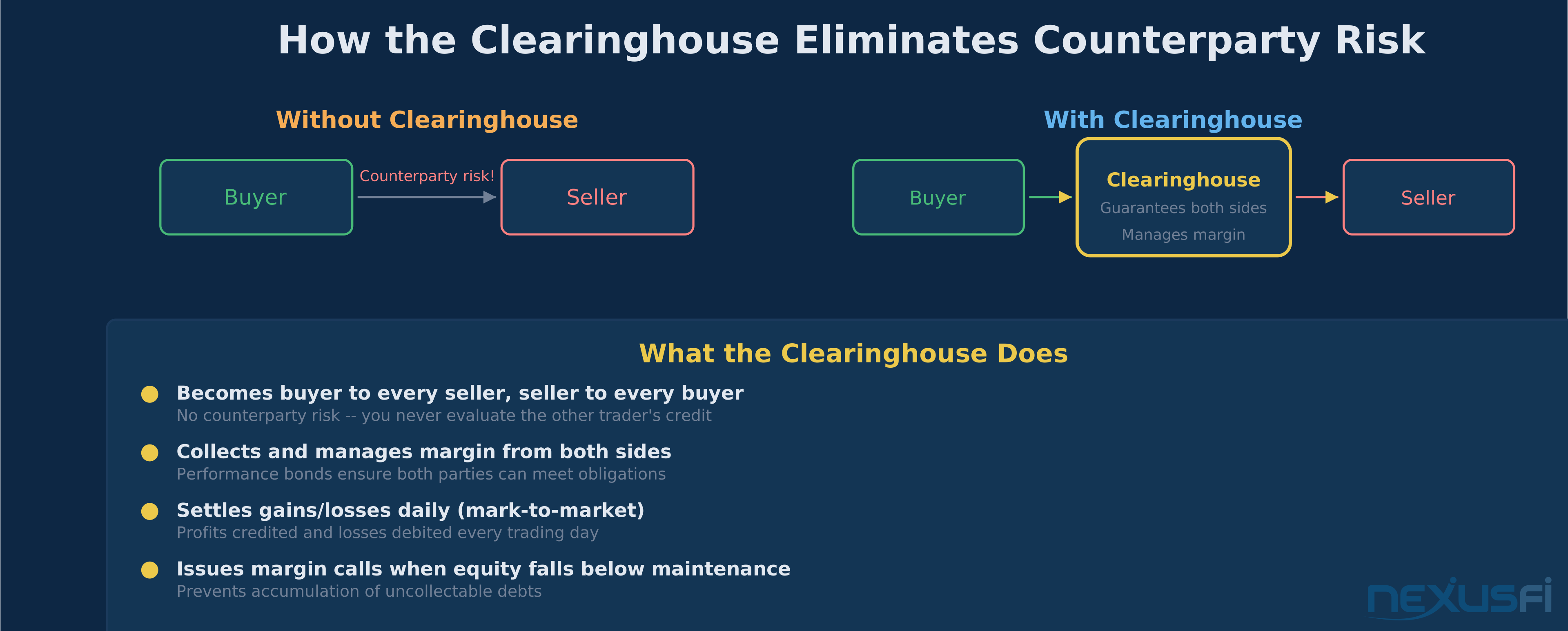
But the clearinghouse is the real structural innovation. The clearinghouse steps between every buyer and seller, becoming the counterparty to both sides. You never interact with the trader on the other side of your trade. The clearinghouse guarantees performance.
This eliminates counterparty risk entirely. Unlike OTC derivatives where your profit depends on the other party's ability to pay, exchange-cleared futures carry the full faith of the clearinghouse. This is why futures markets survived 2008 while OTC credit default swaps nearly collapsed the financial system.
How the Clearinghouse Works #
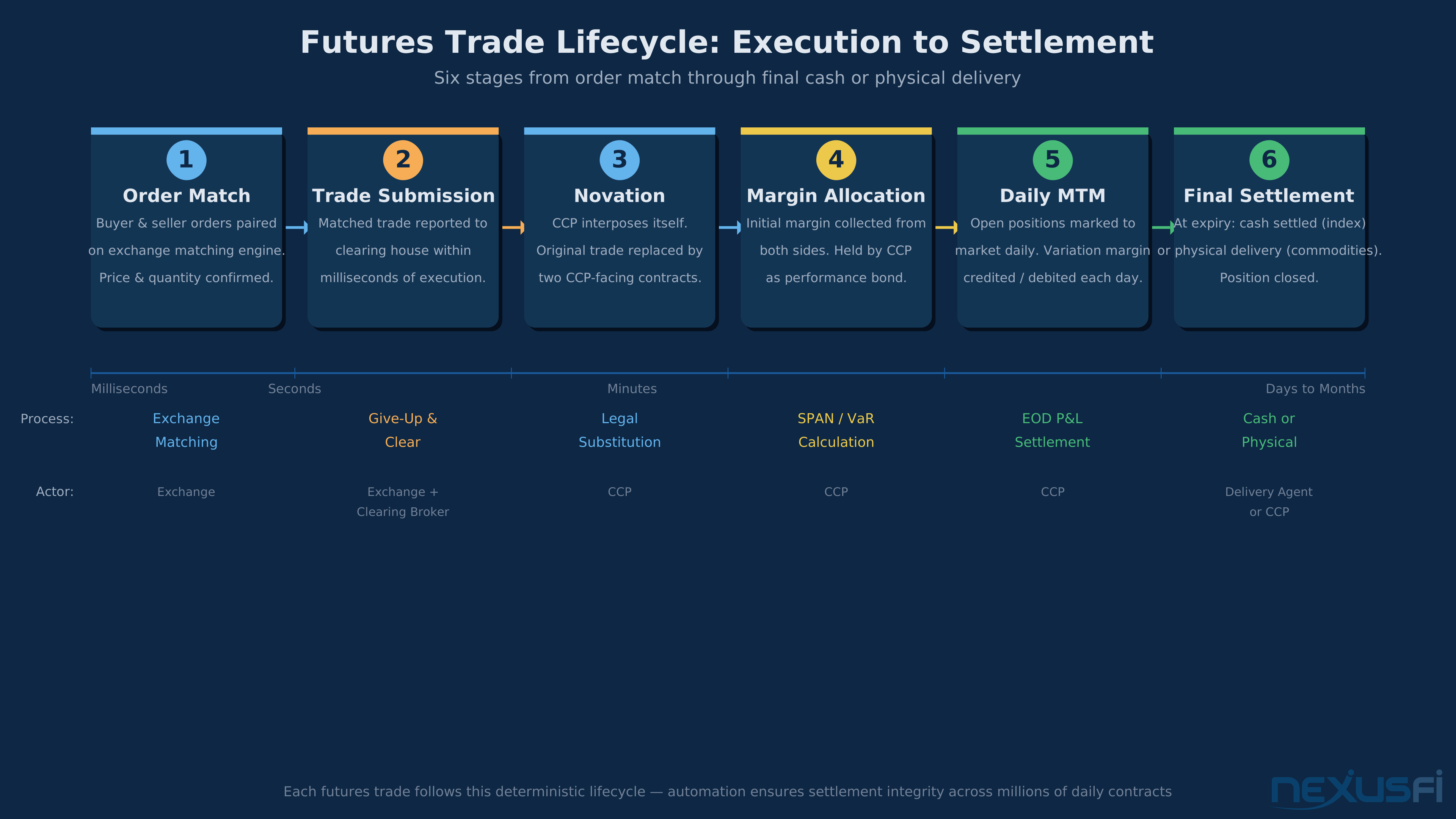
When your order matches:
- CME Clearing becomes your counterparty (both for you and for the other trader)
- The original trade relationship is novated — replaced by two separate relationships with the clearinghouse
- Both parties post margin with the clearinghouse, not with each other
- Each morning, the clearinghouse nets all positions and transfers margin so
The clearinghouse's default fund (contributed by clearing members) and regulatory capital requirements create multiple layers of protection. A single counterparty default cannot cascade into systemic failure the way it can in bilateral OTC markets.
Major Global Exchanges #
| Exchange | Products | Notable Contracts |
|---|---|---|
| CME Group | Equities, rates, FX, energy, metals, ag | ES, NQ, ZB, CL, GC, EUR/USD |
| NYMEX/COMEX (CME) | Energy, metals | CL, NG, GC, SI |
| CBOT (CME) | Rates, agricultural | ZB, ZN, ZC, ZS |
| ICE | Energy, softs, financials | Brent crude, cocoa, MSCI |
| Eurex | European equities, rates | DAX, Euro Stoxx, Bund |
Contract Specifications #
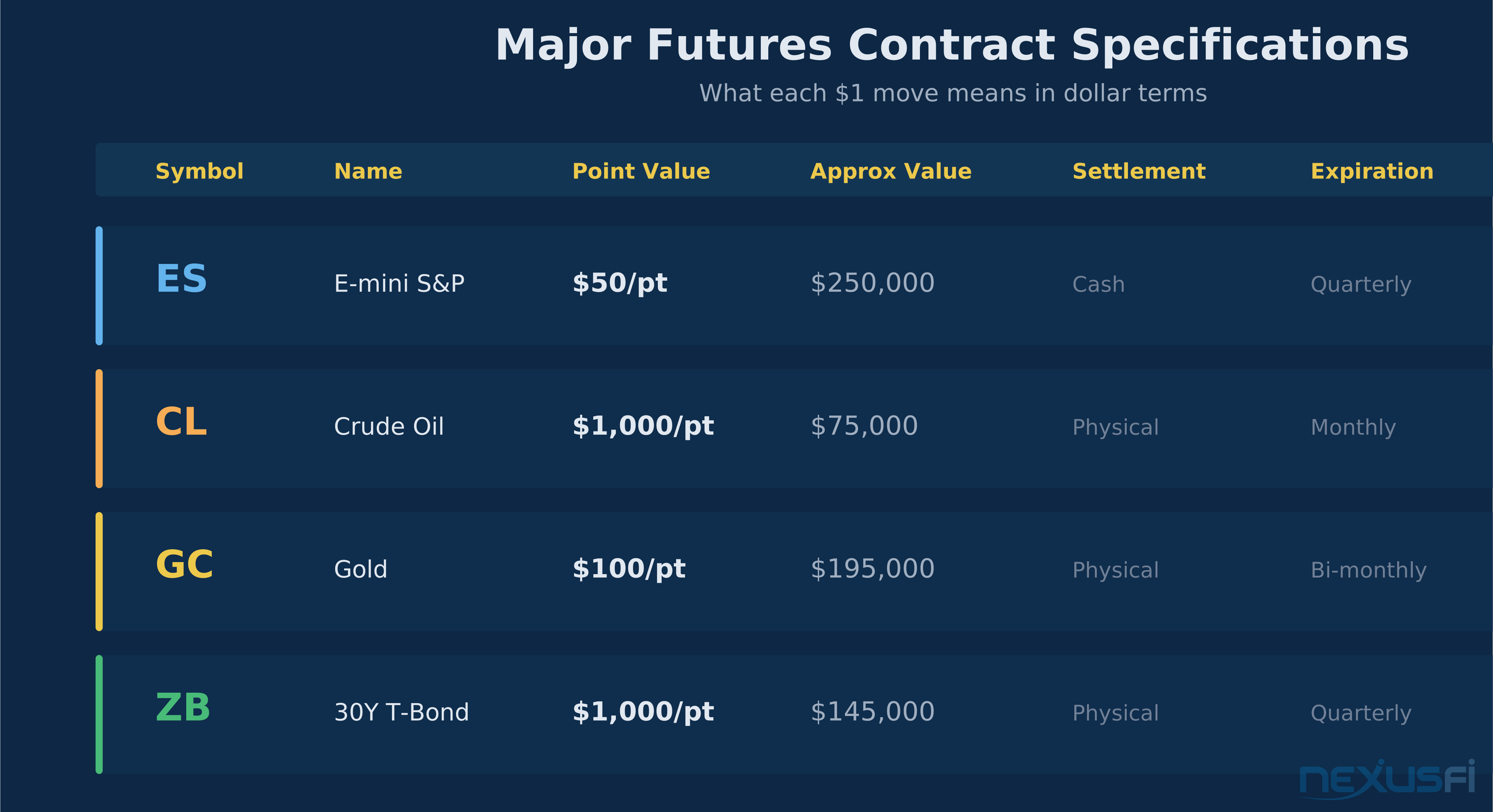
Every futures contract has standardized specifications that define exactly what you're trading. The exchange sets these; you can't negotiate them. For a full listing across instruments, see Tick Size, Tick Value, and Contract Specifications.
ES (E-mini S&P 500) #
- Contract size: $50 x S&P 500 Index
- Tick: 0.25 points = $12.50
- 1-point move: $50 per contract
- Expiration: Quarterly (March, June, September, December)
- Settlement: Cash-settled (no physical delivery)
- Trading hours: Nearly 24 hours, Sunday through Friday
- Average daily volume: 1.5+ million contracts
- See: E-Mini S&P 500 (ES) Futures
CL (Crude Oil WTI) #
- Contract size: 1,000 barrels
- Tick: $0.01/barrel = $10
- 1-point move: $1,000 per contract
- Expiration: Monthly
- Settlement: Physical delivery (Cushing, Oklahoma)
- Trading hours: Nearly 24 hours
- See: Crude Oil (CL) Futures
GC (Gold) #
- Contract size: 100 troy ounces
- Tick: $0.10/oz = $10
- 1-point move: $100 per contract
- Expiration: Even-numbered months
- Settlement: Physical delivery (COMEX vaults)
ZB (30-Year Treasury Bond) #
- Contract size: $100,000 face value
- Tick: 1/32 of a point = $31.25
- 1-point move: $1,000 per contract
- Expiration: Quarterly
- Settlement: Physical delivery of eligible bonds
- Pricing: Quoted in points and 32nds (e.g., 140'16 = 140 and 16/32)
Quarterly Expiration Cycle #
ES expires on the third Friday of the contract month (March, June, September, December). As @max-td documented on NexusFi: "Rollover is 8 days before expiration. Expiration is the third Friday of each quarter month (March, June, September, December)."
The front-month contract carries the most volume and tightest bid-ask spreads. Once rollover begins, volume migrates to the next contract. Trading the back month after rollover begins means wider spreads and less liquidity. For timing strategies on rolling, see Futures Contract Rollover.
Cash Settlement vs Physical Delivery #
Cash-settled contracts (ES, NQ, YM, RTY): At expiration, your P&L is calculated based on the final settlement price versus your last mark-to-market. No goods change hands.
Physically-settled contracts (CL, GC, ZB, ZC): At expiration, the seller delivers the actual commodity and the buyer pays. Retail traders who accidentally hold CL through expiration can end up with an obligation to accept 1,000 barrels of crude oil — at Cushing, Oklahoma. This has happened.
Rule: If you trade physically-settled contracts, close or roll before first notice day (typically two business days before expiration for CL). Mark your calendar. The exchange does not care if you forgot.
Micro Contracts #
Micro contracts (MES, MNQ, MCL, MGC) trade at 1/10th the size of their full counterparts. Same tick size, same price ladder, 1/10th the dollar impact.
MES initial margin is approximately $1,200, compared to $12,000 for ES. A $5,000 account can trade 1-4 MES contracts while maintaining reasonable margin buffers. Start here. The liquidity is deep, the spreads are tight, and the risk is proportional.
Daily Settlement and Mark-to-Market #
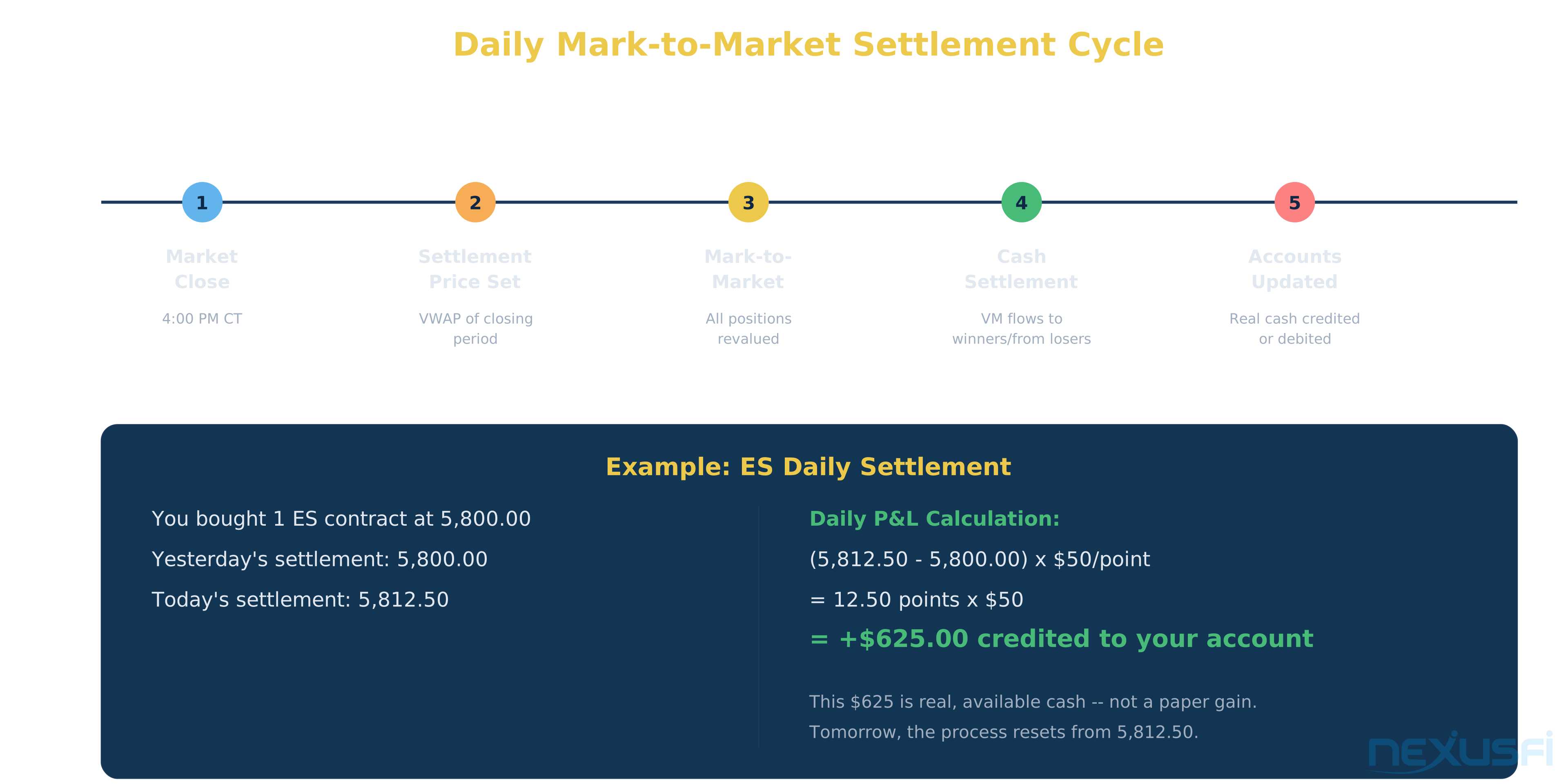
At the end of each trading session, every open futures position is valued at the settlement price. The difference between your entry (or previous settlement) and today's settlement is either credited or debited from your account immediately. For the full mechanics, see Settlement Prices and Daily Mark-to-Market.
This is at the core different from stocks, where unrealized gains stay unrealized until you sell.
Example: You're long 1 ES at 5400.00. Today's settlement comes in at 5390.00. That's a 10-point loss: 10 x $50 = $500. That $500 is debited from your account tonight. Tomorrow, your position resets at 5390.00.
The next day, ES settles at 5410.00. That's a 20-point gain from 5390: 20 x $50 = $1,000. Credited to your account immediately. You can withdraw that profit tonight even though your position is still open.
Margin calls happen when mark-to-market losses push your account below maintenance margin. You must deposit additional funds before the next session or your broker will liquidate your position. See Margin Calls and Forced Liquidation for exactly what happens.
The Variation Margin Flow #
Daily settlement is called variation margin collection. Here's what happens at the clearing level:
- After the close, CME Clearing calculates settlement prices for all contracts
- All open positions are marked to the settlement price
- Accounts with losses have funds debited (transferred to the clearinghouse)
- Accounts with gains have funds credited (transferred from the clearinghouse)
- The net across all accounts is always zero — this is the zero-sum nature made concrete
Every dollar credited comes directly from someone else's debit.
Overnight Holds and Gap Risk #
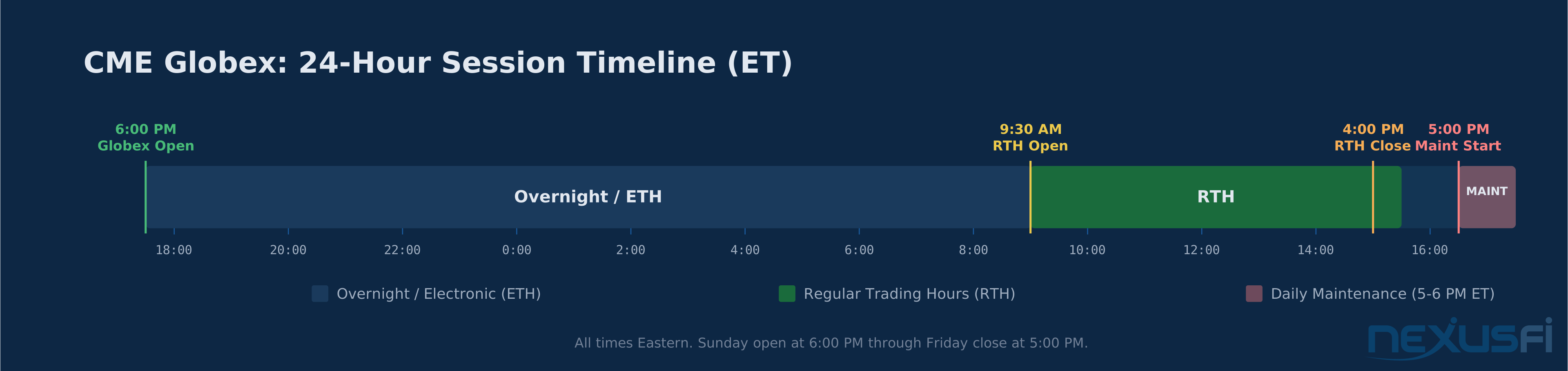
Futures trade nearly 24 hours — ES runs from Sunday 6pm ET to Friday 5pm ET with a 1-hour break each day. This near-continuous trading means gaps between sessions are rare, unlike stocks which halt for 17 hours overnight.
But "rare" isn't "never." Geopolitical events, surprise Fed announcements, or earnings from large-cap components can create significant gaps. A position held overnight carries this gap risk. For a framework on managing overnight exposure, see Overnight Risk and Gap Management.
Practical Considerations for Day Traders #
Capital Requirements #
The legal minimum is whatever your broker requires for margin. The practical minimum is much higher. Trading with just enough to cover margin means a single bad day can trigger a margin call. Professional guidelines suggest maintaining 10-15x the day-trading margin in your account — creating buffer against adverse runs.
For ES day trading:
- Day-trade margin (typical): $500-$1,000
- Reasonable starting capital: $10,000-$25,000
- Professional minimum: $50,000+
For MES (micro): similar ratios at 1/10th the capital requirements.
@bobwest gives the most direct advice on position sizing: "One. No matter the contract, and no matter your account size, just one. I would add, if there is a micro contract — as in the MNQ — use it." Start with one contract. Master the mechanics. Scale only after consistent profitability.
For systematic approaches to calculating appropriate position size, see Position Sizing Methods.
The 60/40 Tax Advantage in Practice #
In the 37% tax bracket:
- Short-term stock gains: 37% tax rate
- Long-term stock gains: 20% tax rate
- Futures (Section 1256): (60% x 20%) + (40% x 37%) = 12% + 14.8% = 26.8% blended
For a trader making $100,000 annually in short-term stock profits, switching to futures saves $10,200 in taxes in that bracket. That's meaningful alpha from purely structural advantages.
Economic Events and Market Hours #
Non-Farm Payrolls (NFP), FOMC rate decisions, and CPI releases can move ES 50+ points in minutes. That's $2,500 per contract in under a minute. These events create opportunity and risk in equal measure. Know the calendar. Have a plan before the release. Position sizes for event trades should be 50-75% smaller than normal.
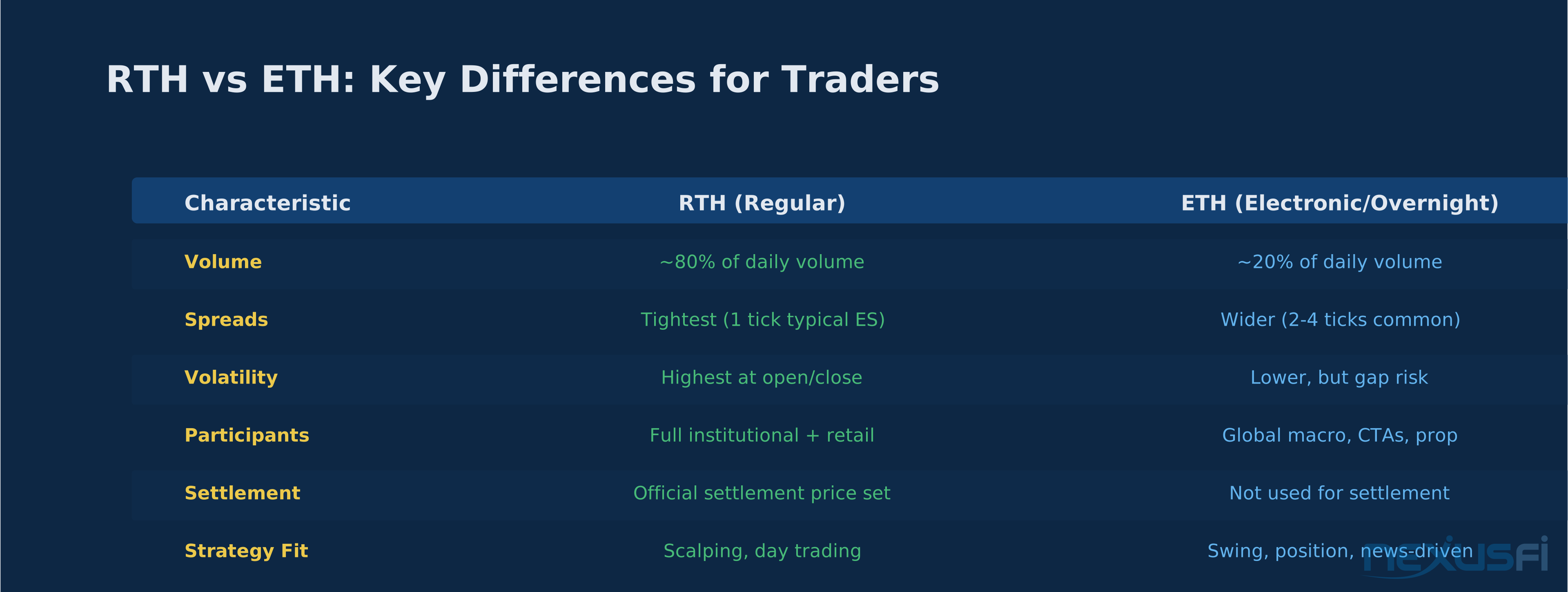
Most retail day traders stick to Regular Trading Hours (9:30am-4:00pm ET) when volume is highest and spreads are tightest. But significant overnight volume in ES and NQ means globex moves matter for gap analysis and daily range expectations.
Common Mistakes #
Over-leveraging: The most common account killer. Just because your broker offers $500 day-trade margin doesn't mean you should trade 10 contracts on a $5,000 account. Position size based on risk, not available margin.
Ignoring expiration: If you hold through expiration on a physically-delivered contract (CL, GC), you may end up with an obligation to take delivery of 1,000 barrels of crude oil. This has happened to retail traders. Roll your positions. See Futures Contract Rollover.
Underestimating overnight risk: Markets trade nearly 24 hours. Gaps are less common than in stocks, but major news events during the overnight session can move prices much before you can react.
Treating margin as your bankroll: Margin is not how much you can afford to lose. It's collateral. Your actual risk per trade should be a small fraction of your account.
Mixing up contract months: Always verify you're trading the front-month contract with the most volume. Trading a back-month contract means wider spreads, less liquidity, and different behavior around news events.
Knowledge Map
Go Deeper
Build on this knowledgeReferences This Article
Articles that build on this topicCitations
- — :$ :$ :$ REALLY DUMB FUTURE question (2016) 👍 4“You are not buying or selling anything. A futures contract is not an asset like a stock”
- — Lost & losing hope (2020) 👍 13“The clearinghouse guarantees that contract”
- — Margin: initial vs maintenance vs day trading (2017) 👍 7“Futures are a highly leveraged trading product. Margins are good faith deposits”
- — Margin and maintenance requirement at different brokers (2020) 👍 1“Some firms like to limit day margins to 25%-50% of the initial margin”
- — Gold Continuous Contract (2013) 👍 3“If you divide the contract value by the initial margin, you end up with the leverage ratio”
- — Lost & losing hope (2019) 👍 22“Balances are adjusted in CME futures trading -- it is a zero sum game in a literal sense. If I am long and my instrument closes up, at the end of the day my margin account is credited”
- — What am I buying when I go long in the ES? (2017) 👍 6“A futures contract is a standardized, exchange-traded contract. The time is fixed. Either you close the trade or it will be closed at expiry by the exchange.”
- — Selling Options on Futures? (2021) 👍 6“All futures are taxed as section 1256 contracts and hence are treated as 60% long term capital gains and 40% short term capital gains”
- — Why futures instead of equities/ETFs/spot forex? (2012) 👍 2“Tax rate on broad based index futures = (60% * 15%) + (40% * 25%) = 19%. Pay IRS $190 for every $1,000 made.”
- — Making a Living with the Micros (2021) 👍 23“The micro index futures were the CME's most rapidly adopted new contract in their history. Because traders wanted, they needed, to take less risk.”
- — How many contracts do you Trade? (2022) 👍 6“One. No matter the contract, and no matter your account size, just one. I would add, if there is a micro contract -- as in the MNQ -- use it.”
- — Rollover Days - some Quick Facts about (2009) 👍 22“Rollover is 8 days before expiration. Expiration is the third Friday of each quarter month (March, June, September, December)”
- — Futures Expirations Question (2013) 👍 7“If you hold your position into contract expiry (last trading date), there will be a cash settlement of the difference, similar to the cash settlement for index options.”