



Delta Analysis & Cumulative Volume Delta (CVD)
Overview #
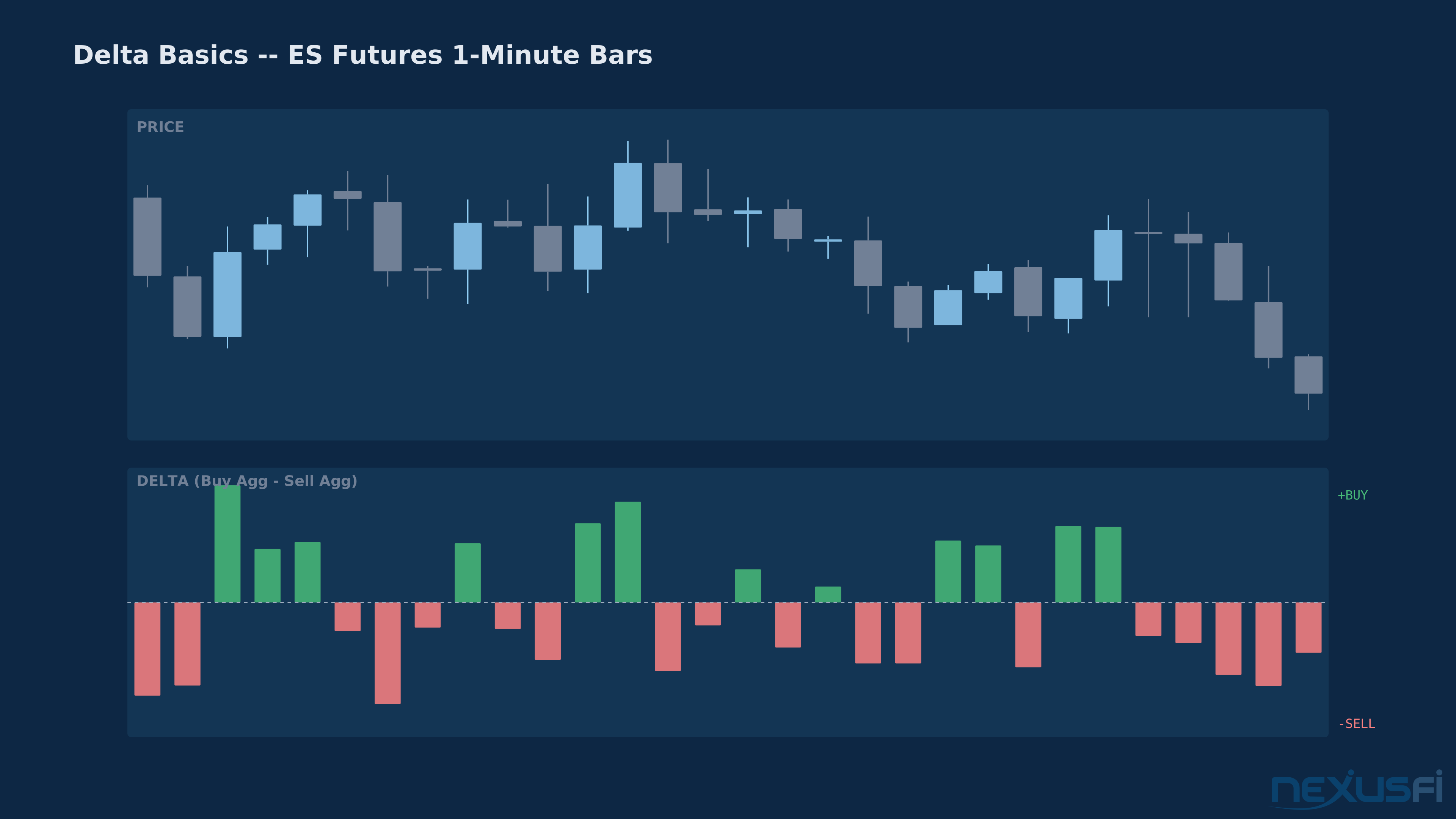
Regular volume tells you how many contracts changed hands. Delta tells you who won.
Delta is the difference between aggressive buying volume (market orders hitting the ask) and aggressive selling volume (market orders hitting the bid) within a single bar. Cumulative Volume Delta — CVD — is the running total of those per-bar deltas over time. Where regular volume measures activity, delta measures aggression. Where volume says "something happened," delta says "buyers did it" or "sellers did it."
Cumulative Delta Volume Trading (@Big Mike)
That last part matters. Delta tracks the aggressive side — the traders crossing the spread to get filled now. Limit orders don't show up in delta. This makes delta a proxy for urgency and conviction, not just participation.
Key Concepts #
Delta (per bar): Ask volume minus bid volume for a single bar. Positive delta = more aggressive buyers. Negative delta = more aggressive sellers. A bar with 5,000 contracts at the ask and 3,000 at the bid has a delta of +2,000.
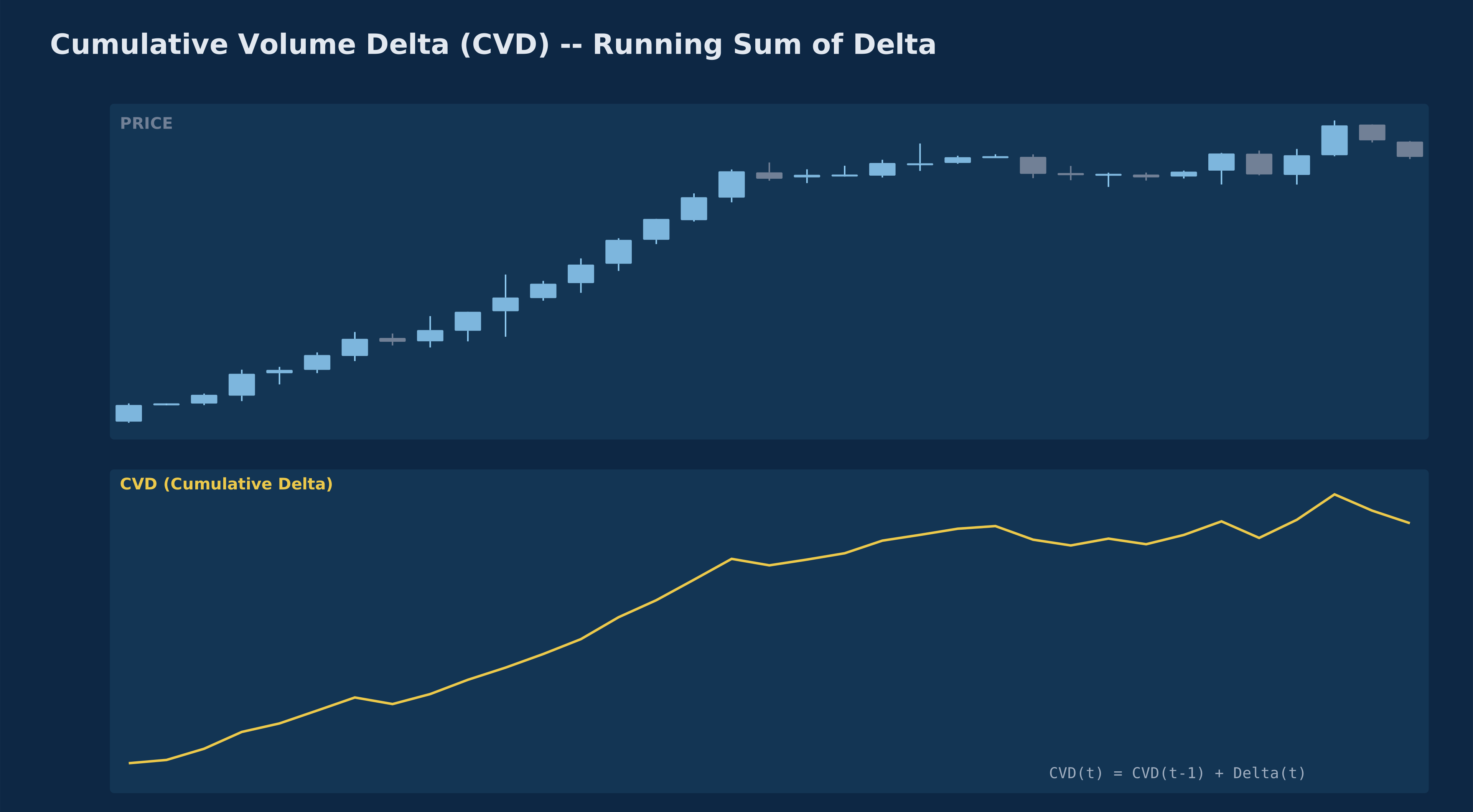
Cumulative Volume Delta (CVD): The running sum of per-bar deltas from a chosen anchor point. CVD(t) = sum of all Delta(i) from bar 1 to bar t. Think of it as a running scoreboard of aggressive order flow.
Footprint chart: A chart type that breaks each bar into individual price levels, showing the bid and ask volume traded at every tick. The microscope view of delta — you see exactly where aggressive buying and selling occurred within each bar.
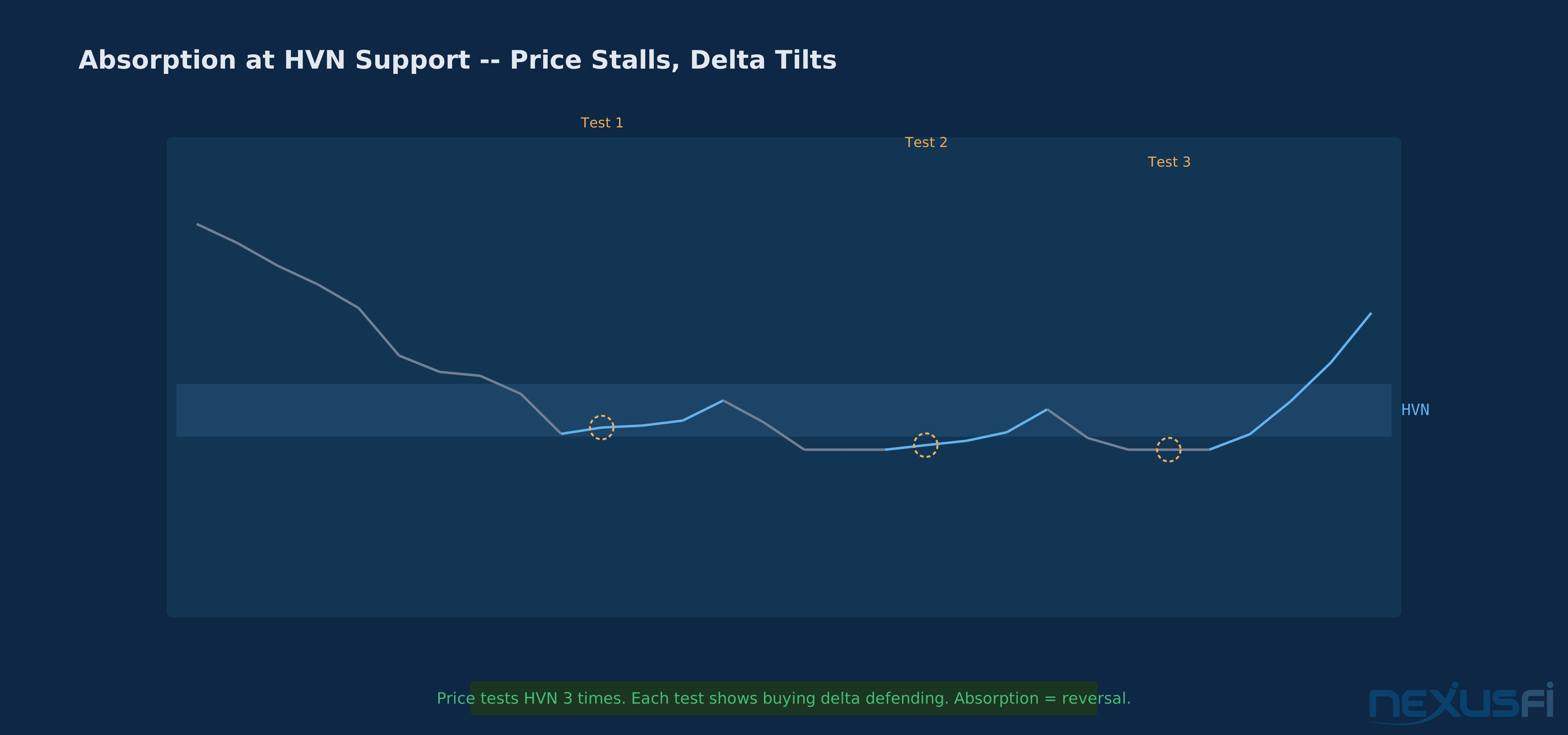
Absorption: One side aggressively attacks a price level, but the other side replenishes limit orders fast enough to prevent price movement. The aggressive orders get "absorbed." Price stalls while delta tilts one direction.
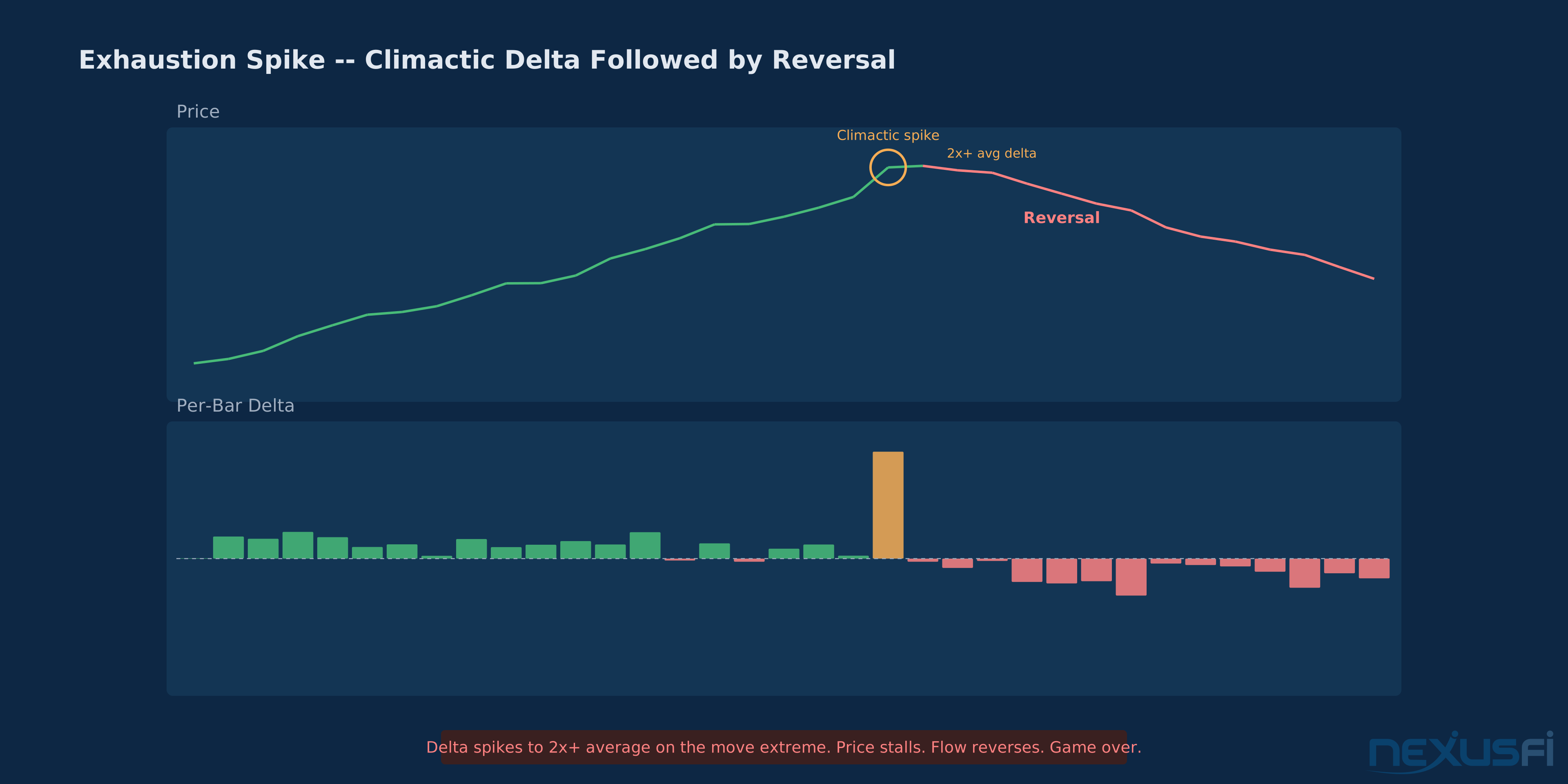
Exhaustion: The aggressive side runs out of orders. Delta spikes in one direction, price can't extend further, and flow reverses. The last buyers bought. The last sellers sold.
Delta vs. Regular Volume -- Different Questions, Different Answers #
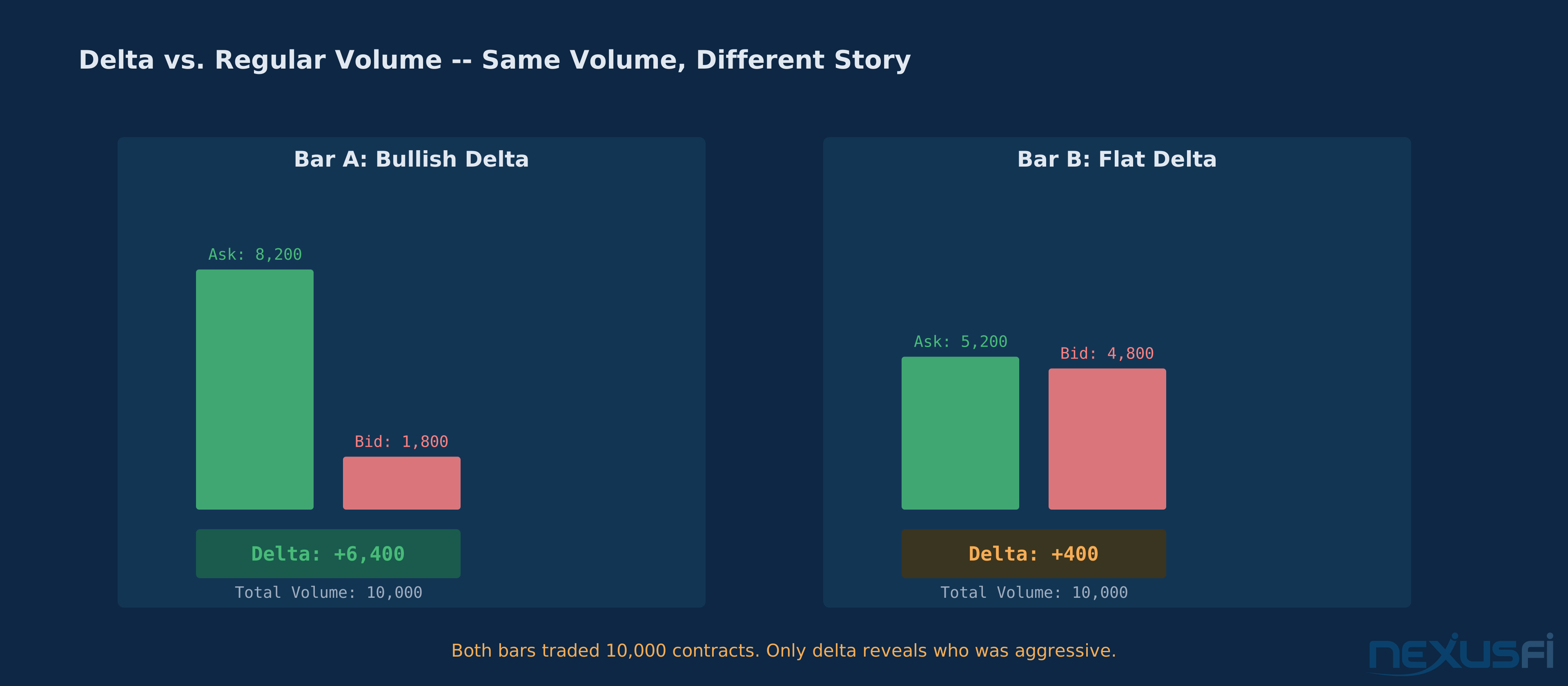
Regular volume is blind to direction. A bar with 10,000 contracts traded could be 9,000 aggressive buyers and 1,000 aggressive sellers (delta +8,000) or an even 5,000/5,000 split (delta 0). The volume is identical. The meaning is completely different.
Here's the practical split:
| Metric | What It Answers | Blind Spot |
|---|---|---|
| Regular Volume | How much was traded? How liquid is this level? | Who initiated the trades? |
| Delta | Who crossed the spread? Which side is more aggressive? | How much total liquidity exists? |
| CVD | Is aggressive pressure building or fading over time? | Limit order replenishment (the passive side) |
Use volume to assess liquidity and activity levels. Use delta to assess intent. Use both together.
Reading CVD -- The Pressure Gauge #
CVD functions like a pressure gauge for aggressive order flow. Four states matter:
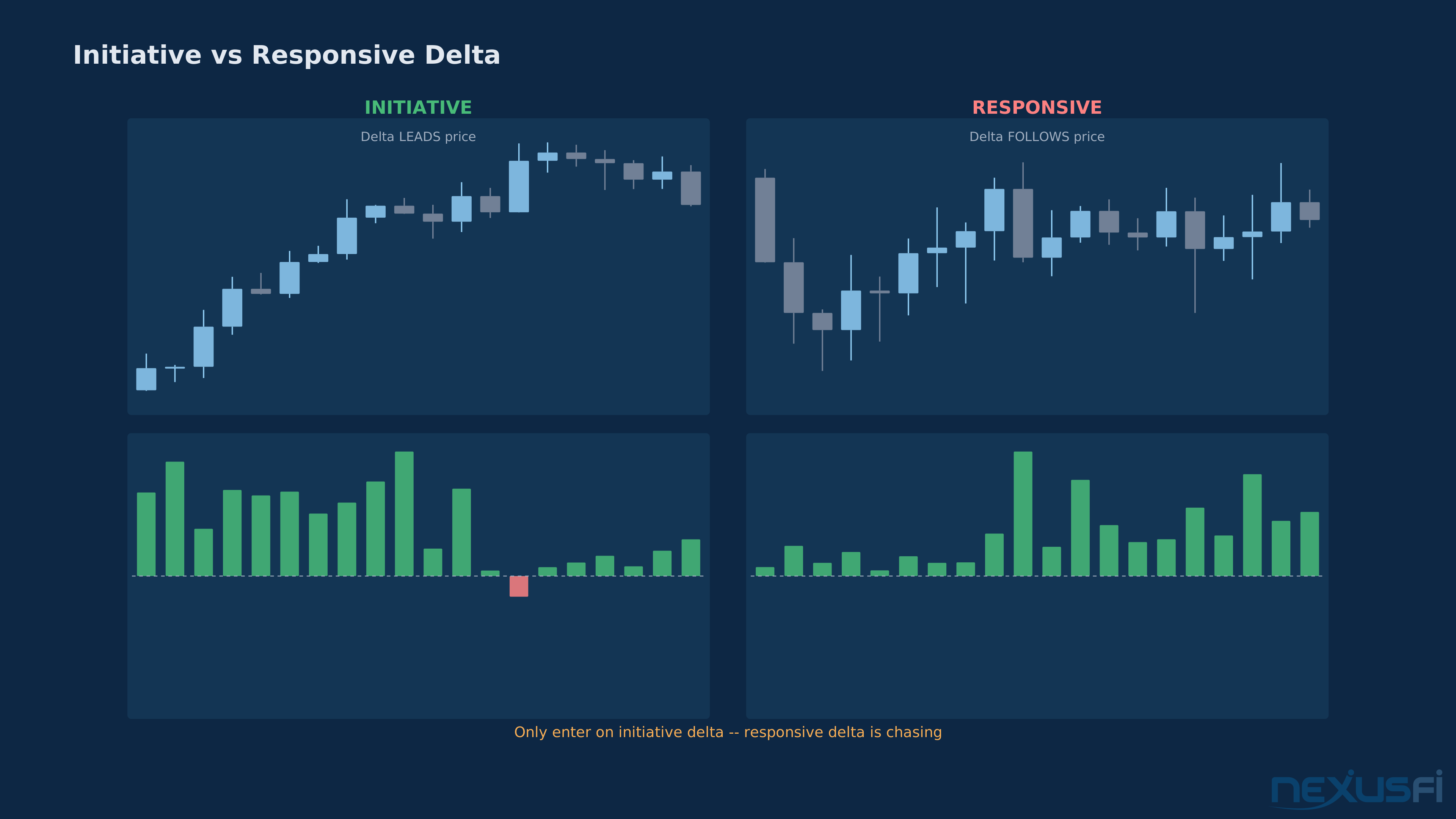
1. CVD confirms price — CVD rises as price rises, or falls as price falls. Normal. The aggressive side matches the price direction. Trend is healthy.
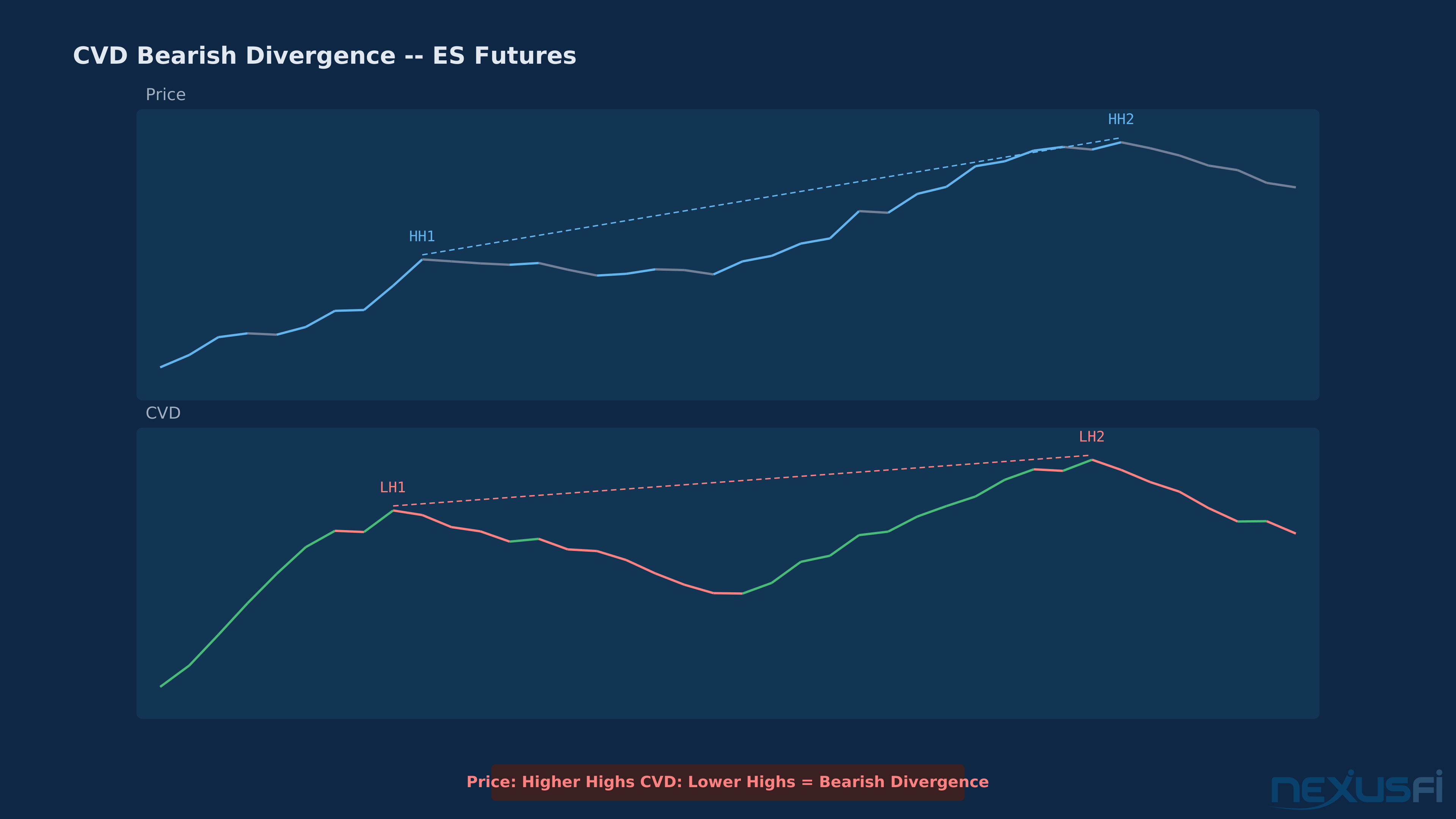
2. CVD diverges from price — Price makes new highs but CVD makes lower highs (bearish divergence), or price makes new lows but CVD makes higher lows (bullish divergence). The aggressive side is losing conviction. The move is vulnerable.
3. CVD builds while price stalls — Price sits in a tight range but CVD trends up (or down). Hidden accumulation or distribution. Aggressive buyers (or sellers) are quietly building positions. A breakout is loading.
4. CVD spikes and reverses — A climactic surge of aggressive orders followed by an immediate CVD reversal. Exhaustion. Everyone who wanted in is in, and there's nobody left to push further.
Delta Divergence Signals #
Delta divergence is the highest-value signal CVD produces. The concept is straightforward: when price and delta disagree, one of them is wrong. Usually it's price.
Bearish Divergence #
Price makes a higher high. Delta on that bar is weaker than the prior swing high's delta, or CVD fails to confirm with a new high. Buying pressure is fading even as price stretches higher. The rally is running on fumes.
ES example: Price prints 5520.00 (new session high). Delta on the bar: +800. Prior swing high at 5515.00 had delta of +3,200. CVD has flattened. The buying conviction to push price higher evaporated — sellers are likely about to take control.
Bullish Divergence #
Price makes a lower low. But delta is less negative than the prior swing low, or CVD makes a higher low. Selling pressure is exhausting. Buyers are stepping in more aggressively on each dip.
CL example: Crude drops to $68.40 (new low). Delta: -1,500. Prior swing low at $68.80 had delta of -4,000. Sellers are losing steam. Buyers are absorbing the pressure at progressively higher delta levels.
The Trap #
Divergence is a warning, not a trigger. @djkiwi's extensive delta research on NexusFi showed that divergence signals become actionable only when combined with structural context — a key volume profile level, a session boundary, or footprint confirmation of absorption. Divergence without structure is noise.
Cumulative Delta Volume Trading (@Big Mike)
Absorption vs. Exhaustion -- The Two Ways Moves End #
Every directional move in futures terminates via one of two mechanics. Learning to distinguish them in real time is the core skill of delta-based trading.
Absorption #
Aggressive orders attack a level. The passive side — limit orders — replenishes faster than the aggressive side can consume them. Price stalls or barely moves despite heavy one-sided delta. The aggressive side is being "eaten" by the defensive side.
How it looks on delta/CVD:
- Price tests a level repeatedly
- Delta tilts heavily in one direction (the aggressive attackers)
- CVD trends in that direction, but price doesn't follow
- Footprint shows large counter-side prints appearing at the level without price breaking
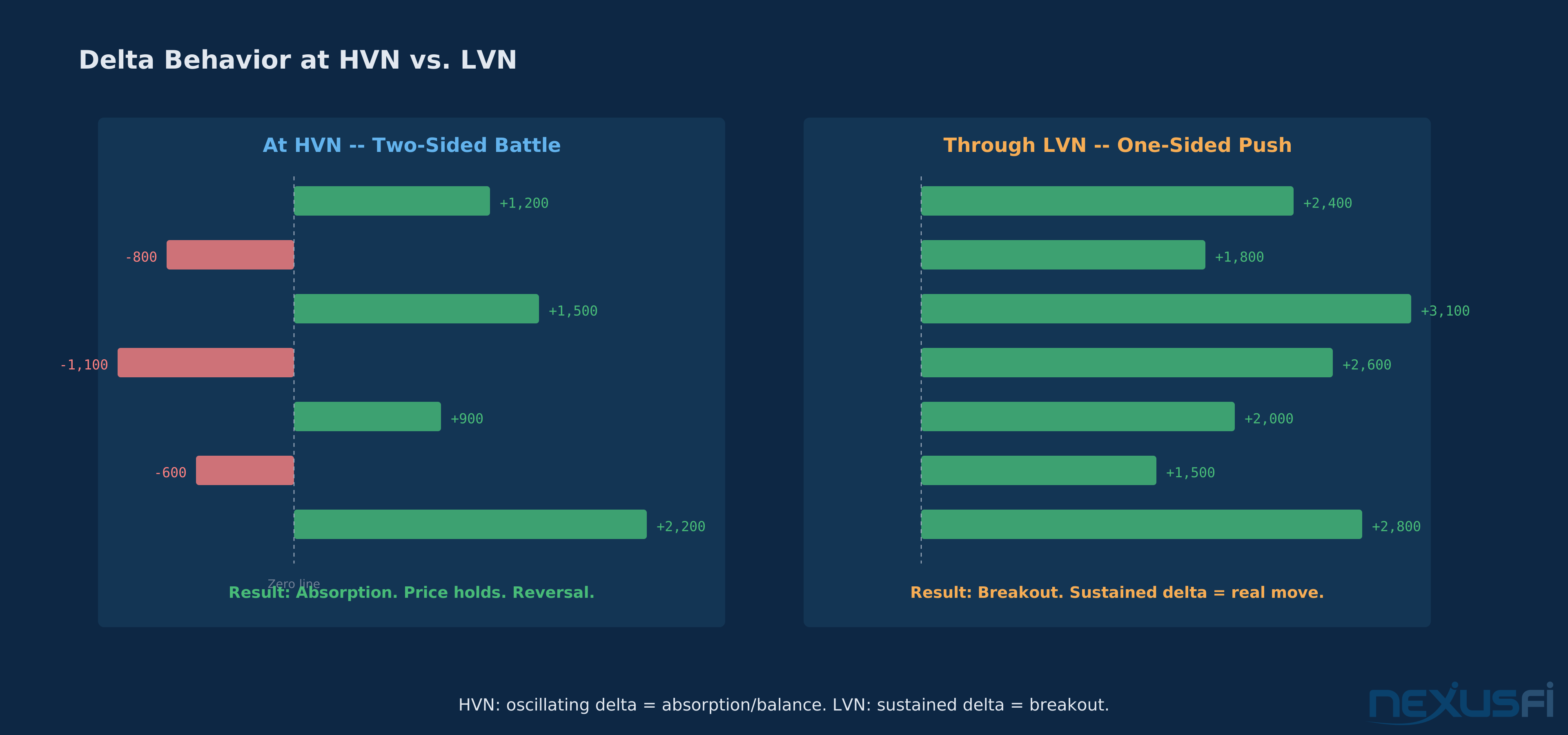
What happens next: The aggressive side tires out. Price reverses or enters a balance. Absorption at an HVN is a classic reversal setup.
Exhaustion #
The aggressive side pushes price with full conviction. Delta aligns with price — both trending in the same direction. Then delta spikes to an extreme and collapses. The last wave of orders ran into a vacuum. Nobody's left to push further.
How it looks on delta/CVD:
- Strong directional move with confirming delta
- A climactic bar with delta 2x-3x the average magnitude
- CVD peaks and sharply rolls over
- Footprint shows the aggressive side rapidly losing prints at the extreme
What happens next: Fast reversal. Exhaustion at an LVN or session extreme can produce violent snaps in the opposite direction.
Quick Reference #
| Pattern | Price vs. Delta | CVD Behavior | Typical Outcome |
|---|---|---|---|
| Absorption | Price stalls, delta tilts one way | Diverges from price | Reversal or balance |
| Exhaustion | Price and delta align, then delta spikes | Peaks and rolls over | Fast reversal |
| Hidden accumulation | Price flat, delta net positive | Creeping upward | Upside breakout |
| Hidden distribution | Price flat, delta net negative | Drifting down | Downside breakout |
Reading Delta at Volume Profile Levels #
Delta signals don't exist in a vacuum. They get their predictive power from where they occur on the Volume Profile. A divergence in the middle of nowhere is noise. A divergence at an HVN or LVN is a setup.
Delta at High Volume Nodes (HVN) #
HVNs are price levels where heavy two-sided trading occurred — acceptance zones. Price gravitates toward them and often stalls.
When delta analysis meets an HVN:
Positive delta accumulating at an HVN support level — buyers are actively defending the node. Expect a bounce or at minimum a pause. The heavier the positive delta relative to the selling pressure attempting to break it, the stronger the defense.
Negative delta building at an HVN resistance level — sellers are defending. Rejection is probable. Watch for delta to confirm with a bearish divergence as price tests the HVN's upper boundary.
Delta oscillating at an HVN — both sides competing, neither winning. This is rotation. Don't force a directional trade — the HVN is doing its job as a balance point.
Delta at Low Volume Nodes (LVN) #
LVNs are thin zones where price was rejected previously — gateway zones. Price either rips through them or bounces hard.
Strong directional delta through an LVN — the move is real. A breakout accompanied by sustained delta in the breakout direction confirms that aggressive orders are pushing through the thin liquidity. Expect continuation to the next structural level.
Weak or conflicting delta at an LVN — trap. Price poked into the LVN but aggressive participation doesn't back it up. This is the classic stop-run followed by reversal. If delta doesn't confirm the breakout, don't chase it.
Footprint Chart Essentials #
Footprint charts are the microscope view of delta. Instead of one delta value per bar, you see bid and ask volume at every single price level within the bar. This lets you spot absorption and exhaustion at exact prices.
Reading Footprint Imbalances #
At each price level, the footprint shows bid volume (left) and ask volume (right). When the ratio exceeds 3:1 in either direction, that's an imbalance — one side is dominating that tick.
Stacked imbalances — three or more consecutive price levels all showing imbalances in the same direction. This is institutional-grade aggression. When you see stacked buy imbalances climbing up through an LVN, that's real demand. Stacked sell imbalances pressing into an HVN from above signal distribution.
As @Jigsaw Trading demonstrated in their NexusFi webinar thread: the footprint reveals the exact bid-ask contest at every price level, letting you see micro-absorption and micro-exhaustion that a simple delta histogram can't capture.
Webinar: Order Flow Techniques for Day Traders, Multi-part webinar (@Big Mike)
Delta Shifts Within a Bar #
Inside a single bar, delta can tell a story. @djkiwi's research on tail pullbacks showed that the sequence of delta changes within a bar reveals entry opportunities: "Delta will be strongly positive at the beginning of a bar. Then price will drift down the bar to form a tail of 5+ ticks. Delta will then drop to a small negative meaning there is insufficient selling pressure to get things moving."
Cumulative Delta Volume Trading (@Big Mike)
This kind of micro-level delta reading — watching how delta develops as a bar forms, not just what it prints at bar close — separates order flow traders from everyone else.
Practical Trade Setups #
Three setups that combine delta, CVD, and Volume Profile. All assume you have a footprint chart, a CVD pane, and a Volume Profile loaded.
Setup 1: Divergence Reversal at an HVN #
Context: Price rallies into an HVN resistance level and makes a swing high.
- Price reaches an HVN (or prior POC) and prints a new local high
- Delta on the swing-high bar is less than half the delta on the prior swing high
- CVD has flattened or is making a lower high — bearish divergence
- Footprint at the HVN shows sell imbalances appearing on the test
Entry: Short on break of the swing-high bar's low. Stop above the high. Target: next LVN below or the POC.
Why it works: The HVN provides structural resistance. Delta divergence confirms that buyers can't sustain the push. Footprint sell imbalances show the defensive side stepping in.
Setup 2: Hidden Accumulation Breakout #
Context: Price consolidates in a tight range near an LVN boundary.
- Price ranges for 10+ bars within a narrow band
- CVD trends steadily upward during the range — buyers are quietly accumulating
- Footprint shows stacked buy imbalances building at the range high
- Price breaks above the LVN with a confirming delta impulse
Entry: Buy stop 1-2 ticks above the LVN. Stop below the range low. Target: next HVN or 1.5x risk.
Why it works: Hidden CVD accumulation during a range means aggressive buyers are building positions before the breakout. The LVN provides a "thin air" zone for the move to accelerate through.
Setup 3: Exhaustion Reversal at a Swing Extreme #
Context: A sharp move reaches a session extreme with climactic delta.
- Price makes a fast directional move (3+ bars of strong delta in the trend direction)
- A climactic bar prints delta at 2x+ the session average magnitude
- Price stalls — the extreme holds for 2-3 bars without extension
- CVD peaks and begins rolling over; footprint shows aggressive orders evaporating
Entry: Counter-trend on break of the exhaustion bar's body in the reversal direction. Stop beyond the extreme. Target: prior HVN or 2x risk.
Why it works: The climactic delta spike represents the last wave of aggressive orders. When price can't extend after that kind of commitment, the position is lopsided and the snap-back can be violent.
Risk Management Across All Setups #
- Require RTH (Regular Trading Hours) conditions. Delta signals degrade in overnight sessions where liquidity thins
- Set stops at structural levels, not at arbitrary delta thresholds. A stop "2 points below the HVN" beats "when CVD drops by X"
- Use delta for entry timing, Volume Profile for stop placement, and risk/reward math for position sizing
- 30% above-average volume is the minimum threshold before trusting exhaustion signals
When Delta Fails #
Delta analysis isn't magic. It has specific failure modes:
Low liquidity environments — overnight sessions, holiday trading, illiquid contracts. Delta readings become erratic when total volume is thin. A +500 delta reading in a 50,000-contract RTH session means something different than +500 in a 2,000-contract overnight session.
News events — FOMC, CPI, NFP. Delta can spike violently in both directions within seconds as algo-driven stop cascades trigger. The normal absorption/exhaustion framework breaks down when volume is event-driven rather than participant-driven.
Contract roll periods — volume splits between the front and back month. Delta signals on the expiring contract become unreliable as liquidity migrates.
Vendor-specific classification — different data vendors use different algorithms to classify trades as "at bid" or "at ask." Your delta readings depend on your data feed's classification methodology. Two traders watching the same market with different data vendors can see different delta values.
Market maker activity — large market makers replenish limit orders rapidly, creating the appearance of absorption when they're simply maintaining a spread. Not every "wall" of limit orders is a genuine directional opinion.
The mitigation is the same for all these failure modes: don't trade delta alone. Delta is one input in a three-factor framework — structure (Volume Profile), pressure (CVD), and precision (footprint). When all three align, the probability stacks. When they conflict, step aside.
Workflow Checklist #
- Mark structure: Load a Fixed-Range Volume Profile covering the prior 1-2 sessions. Identify HVNs, LVNs, and the POC
- Set the gauge: Add CVD as a separate pane. Identify whether CVD is confirming or diverging from price
- Wait for interaction: Let price reach a marked level. Don't force trades in the middle of no-man's-land
- Zoom in: Switch to footprint view at the level. Look for stacked imbalances, absorption signatures, or exhaustion spikes
- Confirm alignment: Structure says support/resistance + CVD says divergence/exhaustion + footprint confirms the mechanic
- Execute with predefined risk: Entry tied to the order flow turn. Stop at the structural invalidation level. Target at the next Volume Profile node
Delta Trading Rule Never trade delta alone. Use it as one input in a three-factor framework: structure (Volume Profile), pressure (CVD), and precision (footprint). When all three align, the probability stacks. When they conflict, step aside.
Knowledge Map
Prerequisites
Understand these firstReferences This Article
Articles that build on this topicCitations
- — Cumulative Delta Volume Trading (2011) 👍 38“I am no expert in CDV, but as I learn more about it I wanted to start a thread to discuss trade ideas. If you see me making mistakes in my analysis, by all means let me know.”
- — Cumulative Delta (2022) 👍 2“WoodyFox 's description was spot on. I'll try to answer this but the "exactly" part might be difficult. ;) In very broad terms, watching the how price and cumulative delta move in relation to one another can reveal things to a trained eye.”
- — Cumulative Delta Volume Trading (2013) 👍 19“COTtrader You raise some good points so I've gone into some lower level detail. I'm using it primarily as a means of determining changes in buyer and seller control. This requires fairly large time frames in my opinion.”
- — Cumulative Delta Volume Trading (2013) 👍 15“For those interested, I'm describing an interesting delta study I've been working on for awhile and recently incorporated the methodology into my live trading. The study focuses on taking trades on tail pullbacks using delta as a filter.”
- — Webinar: Order Flow Techniques for Day Traders, Multi-part webinar (2013) 👍 10“My settings for Cumulative Delta GOMCD https://nexusfi.com/attachment.php?attachmentid=111389 Then the footprint Charts Top part of the chart is the footprint (GomVolumeLadder) https://nexusfi.com/attachment.php?attachmentid=111390 https://nexusfi.”