



Volume Profile: Reading the Market's Structural Blueprint at Every Price Level
Overview #
Volume Profile flips the script on how you look at volume. Traditional volume bars tell you when people traded. Volume Profile tells you where they traded — and where is the only thing that matters when you're deciding whether to buy, sell, or sit on your hands.
Plot a Volume Profile on any futures chart and you'll see a horizontal histogram along the price axis. Each bar represents the total volume traded at that specific price level over your chosen time period. Long bars mean heavy participation — lots of buyers and sellers agreed that price was fair. Short bars mean price moved through quickly with minimal acceptance. That distribution creates a structural map of the market's memory.
Here's why this matters for futures traders specifically: you're trading on centralized exchanges. Every single contract traded on the CME, NYMEX, ICE, or Eurex gets recorded in one place. The volume you see is the real volume — not some broker's fraction of it. Spot forex and crypto traders can only dream of this data fidelity. CME Group publishes daily volume and open interest data across all its exchanges — every contract, every price level, fully transparent. For futures, Volume Profile isn't an approximation. It's the actual auction record.
Key Concepts #
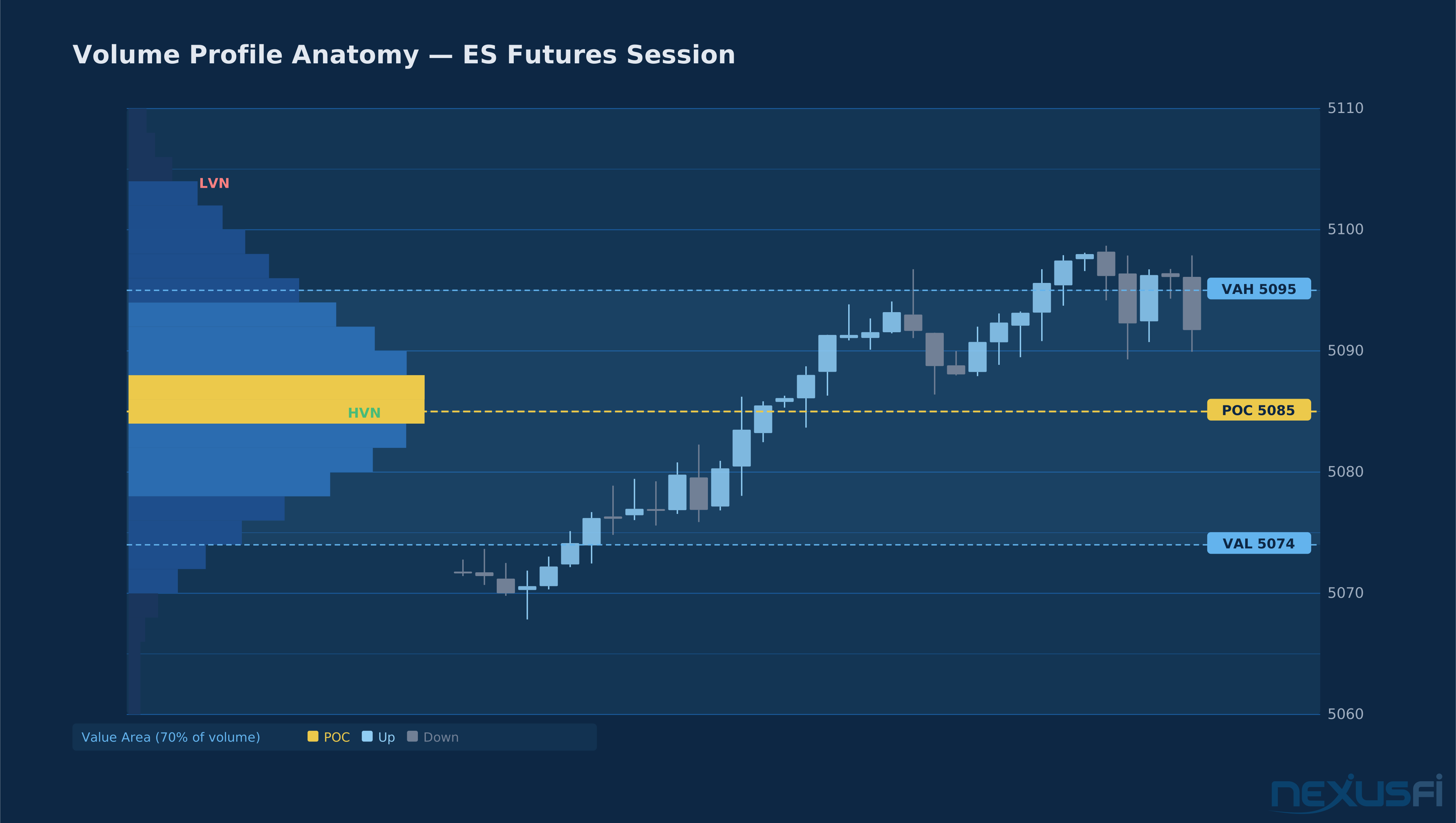
Point of Control (POC) — The single price level with the highest traded volume in the profile period; the market's consensus "fairest price" and a gravitational anchor for future price action.
Value Area (VA) — The price range containing 70% of total traded volume, bounded by the Value Area High (VAH) and Value Area Low (VAL); defines where the market considers prices "fair."
High Volume Node (HVN) — A price zone with a significant volume cluster where the market accepted price; acts as strong support and resistance because participants demonstrated repeated willingness to trade there.
Low Volume Node (LVN) — A price zone with minimal volume where price was rejected; acts as an acceleration zone because there is no historical transaction density to slow price down on revisits.
Additional terms — Developing Profile, Composite Profile, Naked POC, Profile Shapes, VAH, VAL, VPOC — are defined in context throughout the sections below and summarized in the Quick Reference Table at the end of this article.
How Volume Profile Works #
The Auction Framework #
Volume Profile is built on a simple auction principle: markets exist to help trade between buyers and sellers. Price moves to find levels where both sides are willing to participate. When it finds those levels, volume accumulates. When it doesn't, price moves on.
Think of it like a real estate market. Some neighborhoods see dozens of transactions per month — that's where buyers and sellers agree on value. Other areas sit empty. Volume Profile maps exactly this for every price level in your futures market.
The 70% rule behind the Value Area comes directly from J. Peter Steidlmayer's original Market Profile work, first published in Markets and Market Logic (The Porcupine Press, 1986) and formalized through the CBOT Market Profile product introduced in 1985. Following the normal distribution analogy, the central seventy percent of trading activity about the POC was termed the 'Value Area' — a concept that carried directly into modern Volume Profile.
That departure from the VA is where directional opportunities begin.
Building the Profile #
The profile builds by counting every contract traded at each price level during the specified period. On ES, for example, with 0.25 point tick size, the profile creates a volume bar for every quarter-point price increment. The result is a histogram that looks like a mountain range turned sideways.
The shape of that mountain tells you everything:
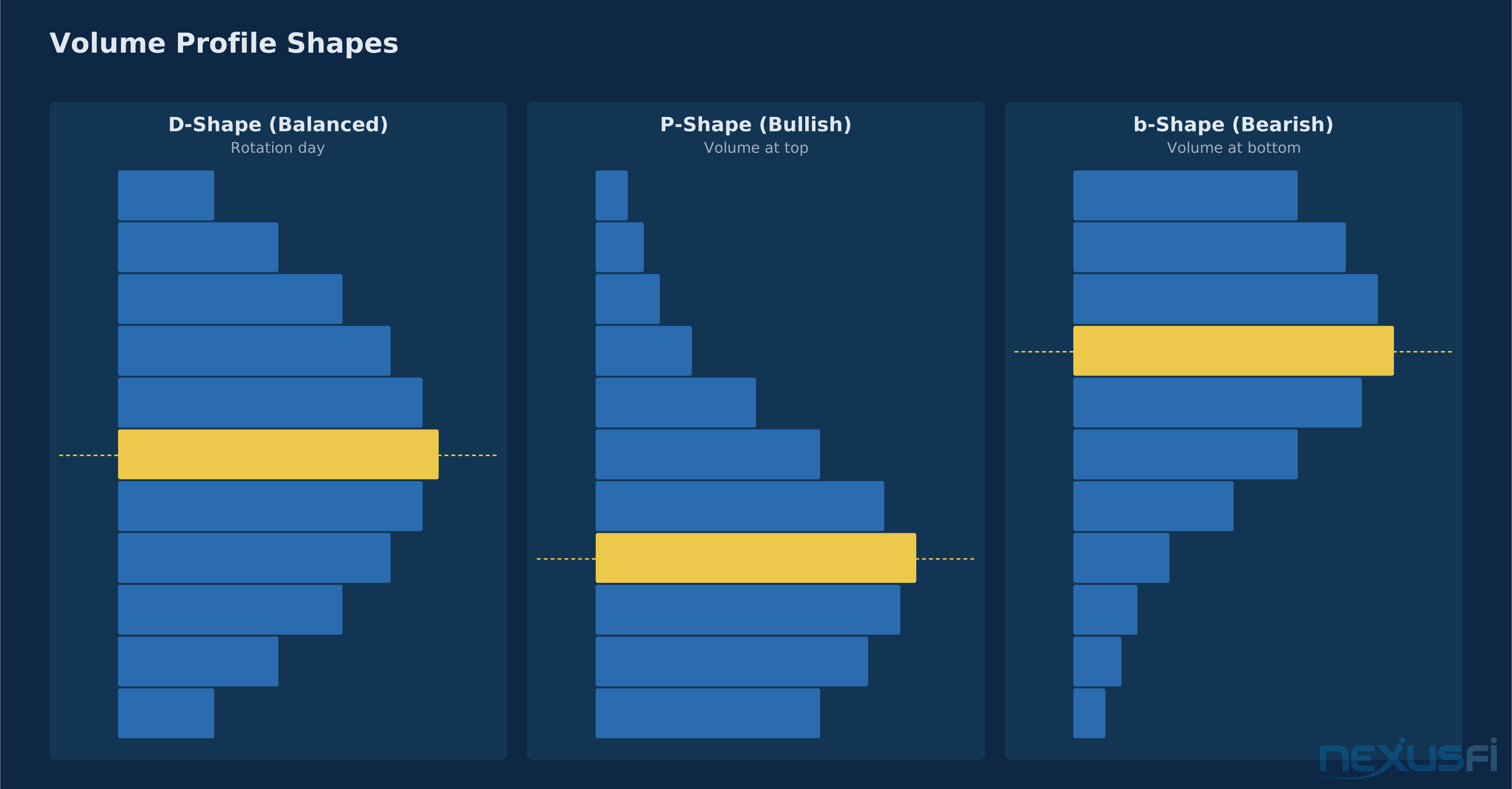
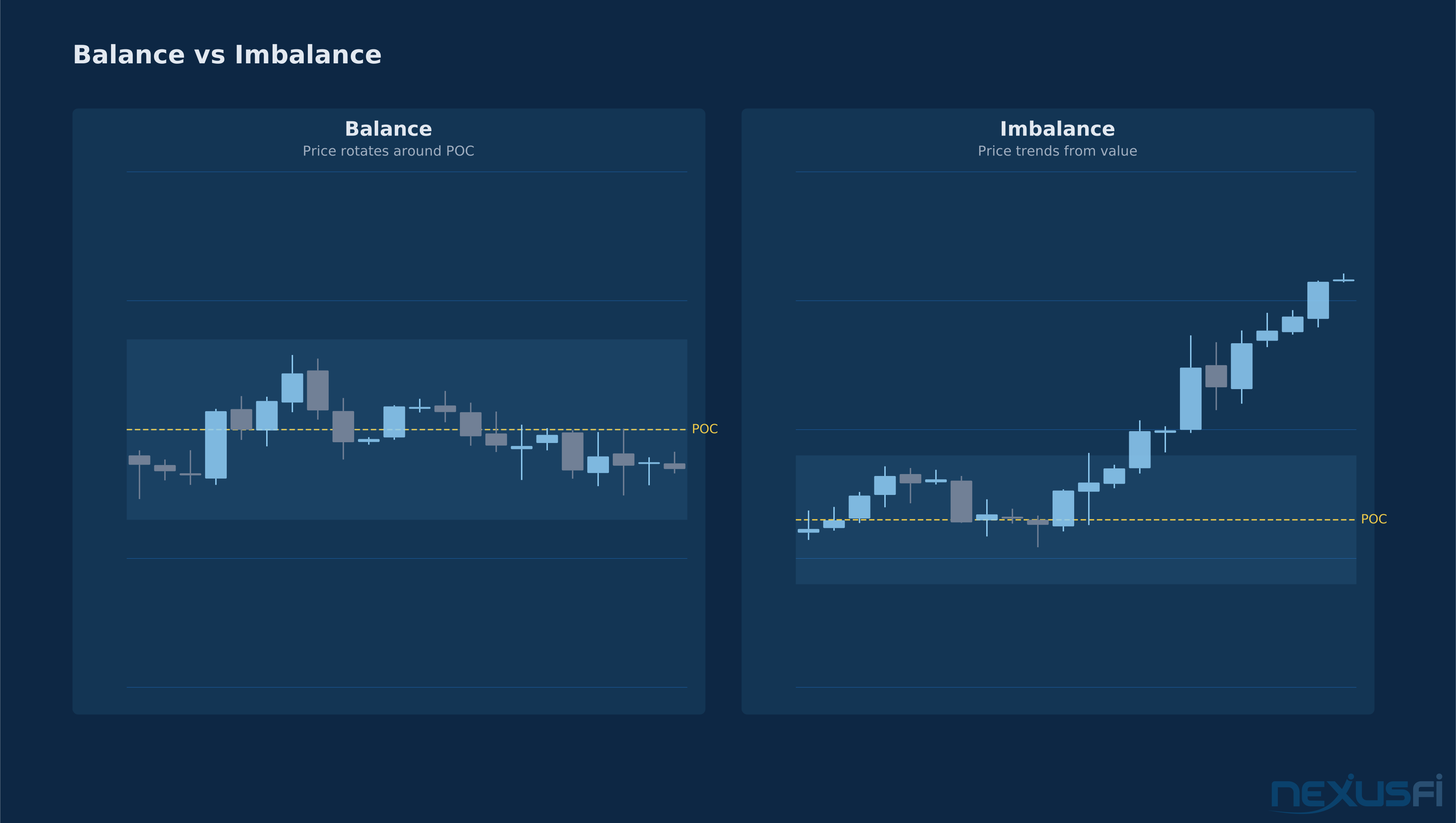
D-Shape (Balanced/Normal) — A roughly symmetrical bell curve. The market found equilibrium. The POC sits near the center with volume tapering evenly toward VAH and VAL. This is what a healthy, two-sided auction looks like. Range-bound strategies work best here. Breakout strategies get chewed up.
P-Shape (Bullish Accumulation) — Volume is concentrated in the lower portion of the range, with a thin tail extending upward. This happens when the market was bought aggressively from lower levels. The heavy volume at the bottom represents accumulation. The thin upper portion shows price extending into new territory without much resistance. Interpretation: buyers are in control, and the low-volume upper extension hasn't been tested yet.
b-Shape (Bearish Accumulation) — The mirror image. Volume clusters at the top with a thin tail extending downward. Aggressive selling from higher levels, with the low-volume lower extension showing price dropping into unchallenged territory. Sellers are in control.
B-Shape (Double Distribution) — Two distinct volume clusters separated by an LVN in the middle. This is the market in transition — it hasn't decided which value area to settle into. The LVN between them is a decision point. When price enters that gap, it tends to accelerate toward one cluster or the other.
Session vs. Composite Profiles #
A session profile covers a single trading day (or whatever period you define). It gives you the micro-structure of today's auction. Where was today's POC? Where did today's value form?
A composite profile combines multiple sessions into one histogram. If you build a 20-day composite on ES, you'll see where the aggregate volume clustered over the past month. This reveals the big-picture support and resistance levels that single-day profiles can't show.
His preference was to keep individual session profiles visible and look for relationships between them — where one session's VAH lines up with another session's POC, for instance. That interplay between separate session profiles creates a richer structural map than any single composite.
The practical answer: use both. Composite profiles for the big picture. Session profiles for the day's auction context.
The Developing Profile #
During a live session, the profile is constantly updating. The POC shifts as new volume prints. This "developing" or "dynamic" profile shows you where fair value is forming right now.
@Fat Tails built a developing value area indicator for NinjaTrader that visualized this in real-time: "To better understand the concept of the value area, I have tried to visualize the developing value area by coding an indicator which displays it." Watching the value area expand and contract throughout the session tells you whether the market is finding balance or still searching for acceptance.
A developing POC that stays anchored at the same level all session signals strong acceptance — the market has found its price. A developing POC that keeps shifting signals uncertainty — the market hasn't made up its mind yet.
Point of Control: The Market's Anchor #
The POC is the single most important element of Volume Profile. It's the price level where the market transacted the most volume — the consensus "fair" price.
Why POC Matters #
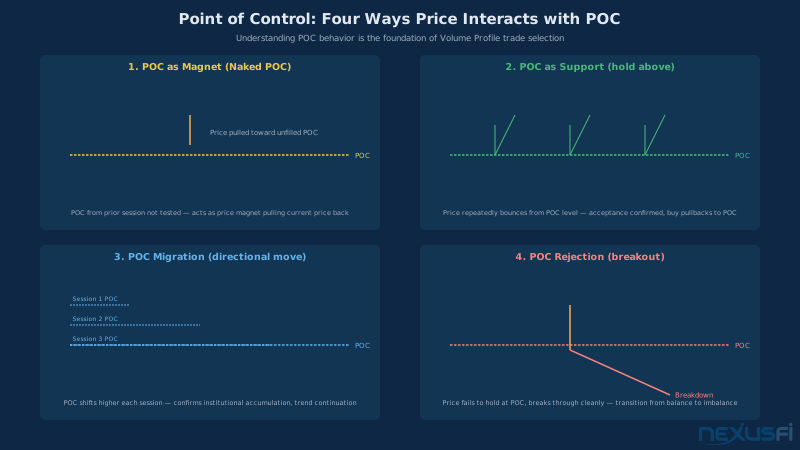
Price has a gravitational pull toward the POC. When price deviates from the POC, it often returns. This isn't mysticism — it's auction mechanics. The POC represents the price where the most participants were willing to trade. Supply and demand equilibrium lives there.
For day traders, the prior day's POC (often called the "VPOC" or "Virgin POC" if untouched) is one of the most reliable reference levels on the chart. If today's price opens above yesterday's POC, the bias is that price will at minimum test that POC level before any sustained directional move.
Naked POCs #
A Naked POC is a POC from a previous session that price never revisited. These are unresolved price magnets. The market owes a return trip.
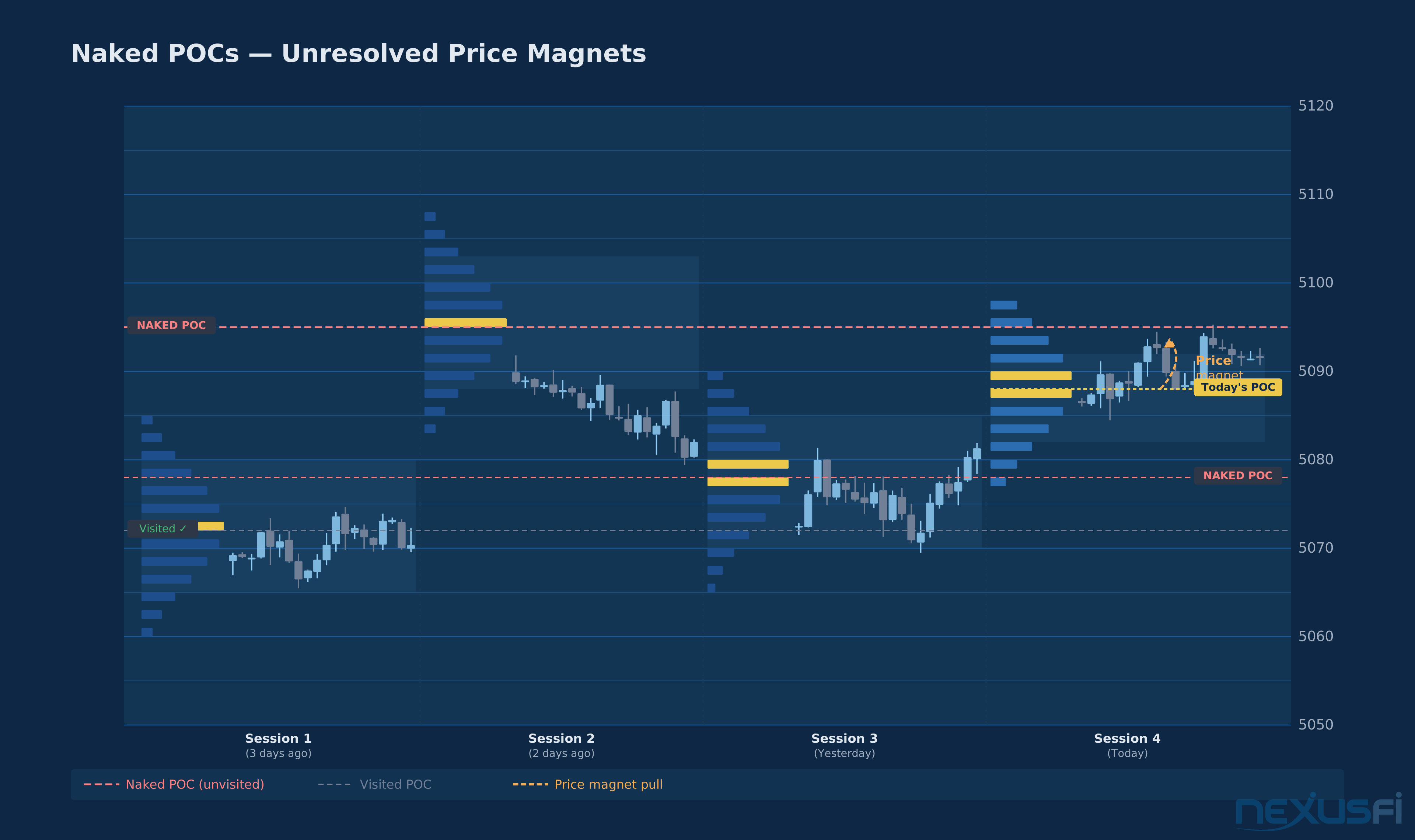
Track your Naked POCs going back 5-10 sessions. When price approaches one, expect a reaction — either a bounce off it or a clean sweep through it. Either way, the Naked POC is providing information about the market's structural memory.
Multiple POC Alignment #
When the POC from the daily profile, the weekly composite, and the monthly composite all cluster around the same price zone, you've found a structural fortress. That zone will act as extremely strong support or resistance because every time horizon's auction process identified the same fair price.
The Value Area: Where the Auction Lives #
The Value Area contains 70% of the total traded volume. It defines the price range where the market considers prices to be "fair." Everything outside the VA is considered unfair — either too high (above VAH) or too low (below VAL).
Value Area Calculations #
The calculation starts at the POC and expands outward, adding the next-largest volume bars alternately above and below, until 70% of total volume is enclosed. This isn't a symmetric expansion — it follows the volume, so the VA can be skewed in either direction.
Trading the Value Area Boundaries #
VAH as resistance: When price rises from within the Value Area and tests the VAH, it's attempting to break above fair value into premium territory. Without significant buying pressure, price tends to rotate back into the VA. Fade trades at VAH (selling into the test) work best when the profile is D-shaped and volume is declining on the approach.
VAL as support: The mirror image. Price falling to VAL from inside the VA is testing whether the discount attracts buyers. Fade trades at VAL (buying the test) work when the context supports mean reversion.
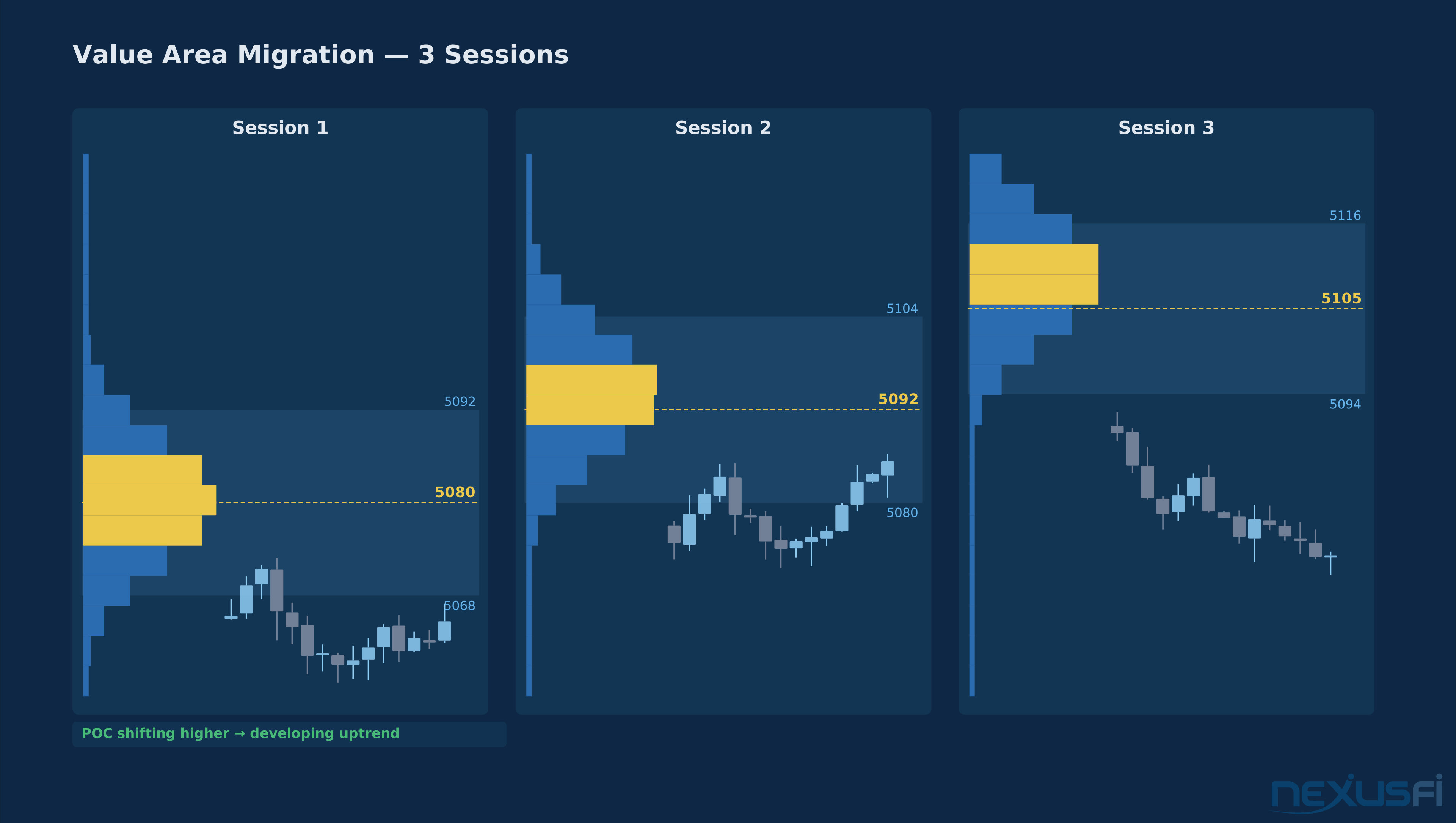
Value Area migration: When today's Value Area is entirely above yesterday's Value Area, the market has shifted its perception of fair value higher. This is an initiative move — the auction has moved to a new level of acceptance. Trade with the direction of VA migration, not against it.
The 80% Rule #
This widely cited principle comes from the observation that once price is accepted back into the value zone, the auction process tends to explore the full range of accepted value. The 80% figure is approximate and varies by instrument, but the logic is sound: re-entering the Value Area signals that yesterday's fair price range is still relevant, and the market is likely to auction through it.
High Volume Nodes and Low Volume Nodes #
HVNs and LVNs are the hills and valleys on your Volume Profile histogram. They tell at the core different stories about market structure.
High Volume Nodes #
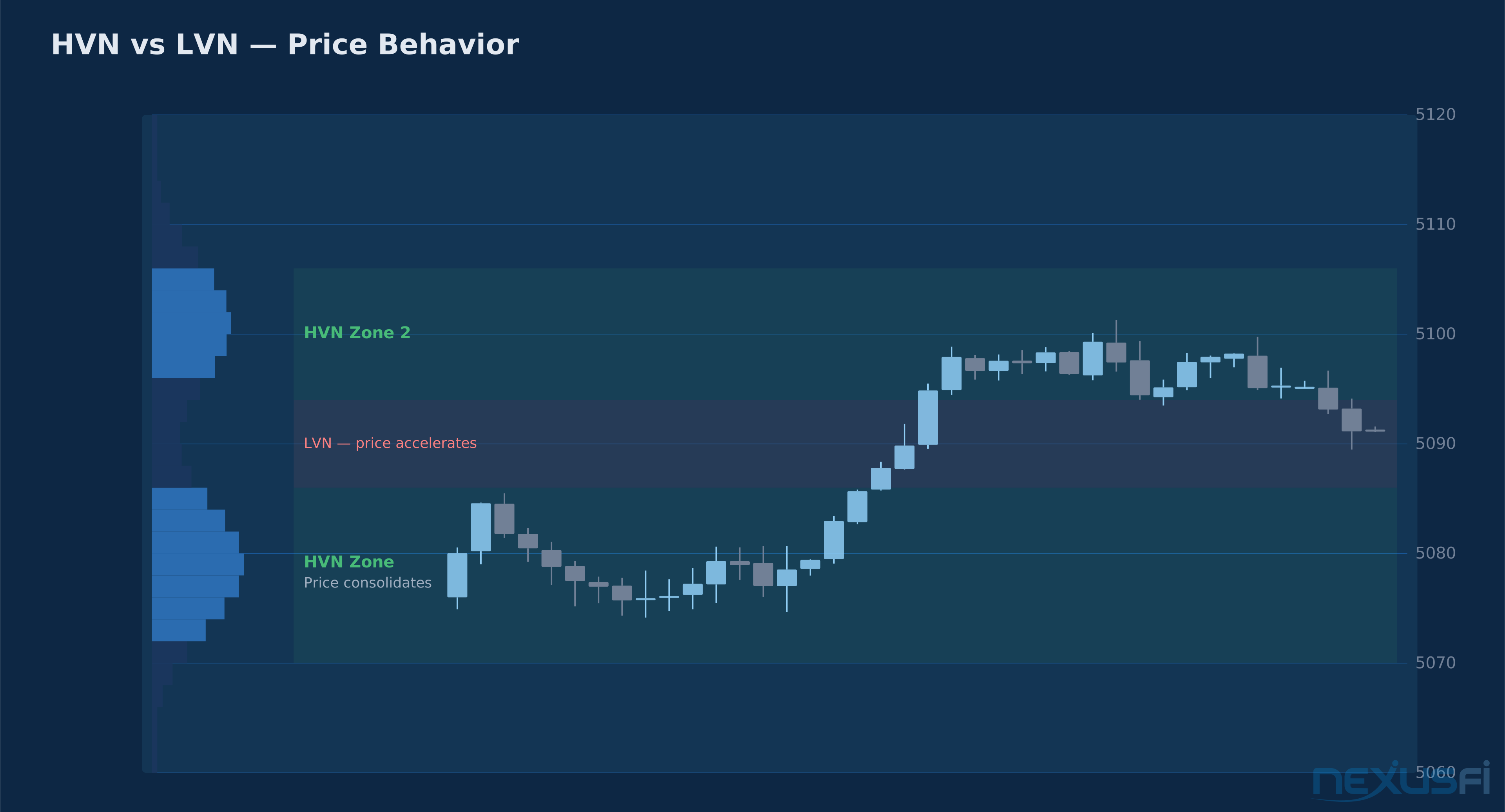
HVNs are acceptance zones. Heavy volume at a price level means many participants transacted there, establishing a consensus. When price returns to an HVN, it tends to slow down and consolidate because the market "remembers" trading there before.
As a support/resistance tool, HVNs are more reliable than traditional horizontal lines drawn from price swings. Price swings show you where price reversed. HVNs show you where the actual trading happened. The difference matters — a spike high with no volume behind it is a weaker resistance level than a zone where millions of contracts changed hands.
In trending markets, price often pulls back to the nearest HVN before continuing. These pullbacks to volume-confirmed levels are some of the highest-probability entries available.
Low Volume Nodes #
LVNs are rejection zones — conceptually related to fair value gaps in that price moved through these levels quickly because neither buyers nor sellers found them acceptable. When price re-enters an LVN, it tends to accelerate through it again.
This makes LVNs dangerous for entry but excellent for confirming breakout conviction. If price breaks through an HVN (support or resistance) and enters the LVN on the other side, the thin volume means price should move quickly to the next HVN. If it stalls in the LVN instead, the breakout is suspect.
But when the profile shows distinct HVNs separated by LVNs, the market is showing you its fracture lines — the price zones where sentiment shifts.
Volume Profile vs. Market Profile (TPO) #
Volume Profile and Market Profile (TPO charts) are cousins, not twins. Market Profile was developed by J. Peter Steidlmayer at the CBOT and introduced to the public in 1985 through the CBOT Market Profile product, with the theoretical foundations laid out in Steidlmayer and Kevin Koy's Markets and Market Logic (1986). It uses Time-Price Opportunity (TPO) letters to show how long price spent at each level. Volume Profile uses actual traded volume at each level.
The key difference: Market Profile measures time at price. Volume Profile measures volume at price. A price level can have high TPO count (price spent a lot of time there) but low volume (few actual trades occurred). The divergence between time and volume at a level provides additional information — time without volume suggests a quiet acceptance, while volume without time suggests aggressive, fast-paced trading.
Most futures traders now use Volume Profile as their primary tool, with TPO charts as a supplement. The reason is straightforward: volume is a more direct measure of participation than time. Two traders sitting at a price for an hour generates TPO but says nothing about actual market commitment. A million contracts transacting in five minutes generates massive volume that definitively marks a structural level.
The mode (volume-based) and the TPO-based POC can diverge within a session, and that divergence itself is informational.
That said, don't throw out TPO entirely. The TPO count identifies "poor highs" and "poor lows" (single-print extremes where the market barely tested before reversing), which Volume Profile alone can miss. Use both.
Practical Application #
Pre-Market Preparation #
Before the session opens, mark these levels on your chart:
- Prior session's POC, VAH, VAL — your primary reference framework
- Naked POCs from the past 5-10 sessions — unresolved magnets
- Composite profile HVNs and LVNs — structural support/resistance
- Current developing profile shape — set context for the day's auction type
- Overnight inventory direction — whether Globex positioned the market long or short relative to prior session value
Intraday Setups #
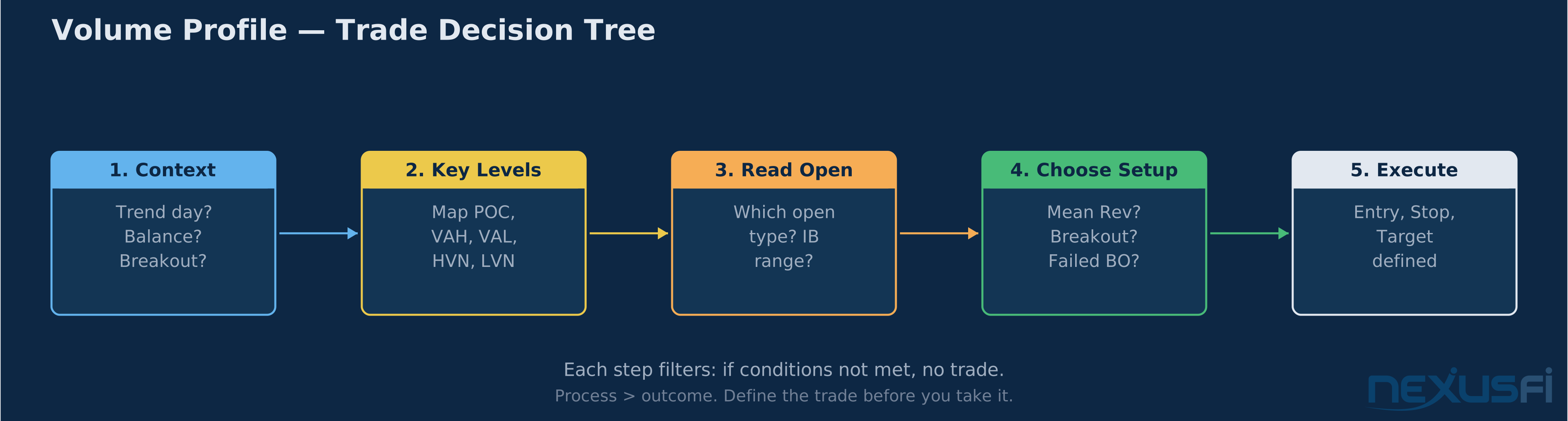
The VA Fade (Mean Reversion) When price tests VAH from inside the Value Area with declining momentum, sell against it with a stop above the next HVN. Target: POC, then VAL. This works best in D-shaped (balanced) profiles where the market is range-bound.
The LVN Breakout (Momentum) When price breaks through a well-defined HVN and enters an LVN, ride the acceleration to the next HVN. The thin volume in the LVN means there's nothing to slow price down until it reaches the next acceptance zone. Confirm with order flow — if the DOM shows aggressive market orders in the direction of the break, the LVN run is legitimate.
The Naked POC Test (Magnet Play) When price is trending toward a Naked POC from a prior session, anticipate a reaction at that level. The Naked POC often produces at least a temporary stall or bounce, giving you an opportunity for a scalp in either direction.
The VA Migration Trade (Trend Continuation) When today's developing Value Area is entirely above yesterday's VA, and price pulls back to today's VAL, buy the pullback. The VA migration confirms a directional shift in fair value, and the VAL acts as the new floor.
Timeframe Selection #
For ES day trading, most professionals run two profiles simultaneously:
- Session profile (RTH or 23-hour depending on your preference) — shows today's developing auction
- 5 to 20-day composite — shows the multi-session structural environment
Simple, clean, and effective.
Continuous Contracts and Rollover #
Futures expire quarterly. When the front-month rolls, the new contract starts with minimal volume history. For Volume Profile to work properly on futures, use continuous contracts that stitch together expired months. This preserves the volume distribution across contract boundaries and gives you a meaningful composite profile.
Without continuous contracts, your composite profile resets every quarter — losing critical structural information. Every serious Volume Profile trader uses continuous data.
Common Mistakes #
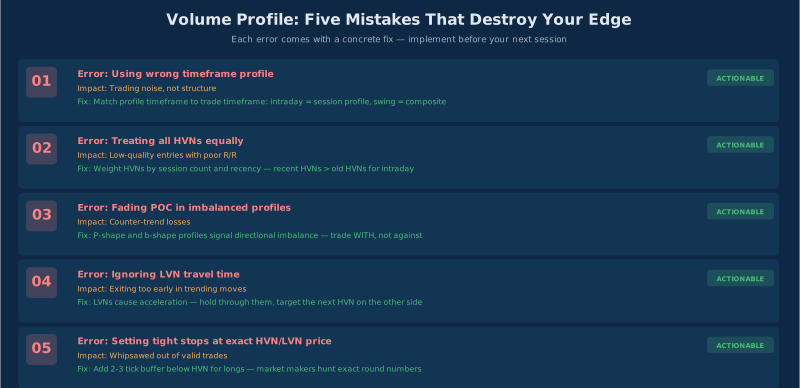
Over-relying on a single profile timeframe. The daily profile shows today's micro-structure, but it can't tell you about the multi-week supply/demand zones. Use multiple timeframes.
Treating the Value Area as a rigid box. The 70% boundary is a statistical reference, not a force field. Price doesn't bounce off VAH exactly — it tends to react in the zone around VAH. Give levels a buffer of a few ticks.
Ignoring context. Volume Profile tells you where structural levels exist. It doesn't tell you what the market will do when it gets there. Combine VP levels with order flow (footprint charts, delta, DOM) for real-time confirmation. VP gives you the map. Order flow gives you the weather.
Using Volume Profile on instruments with fragmented volume. Volume Profile is only as good as the volume data feeding it. On centralized futures exchanges (CME, ICE, Eurex), the data is complete. On spot forex, the volume is a fraction of the true market. On crypto spot exchanges, volume is routinely faked. If you're trading futures, Volume Profile is gold. For anything else, approach with caution.
Confusing Volume Profile with VWAP.
VWAP-based value area uses the volume-weighted average price (mean). VP-based value area uses the POC (mode). They're measuring different aspects of the volume distribution and will produce different levels.
Dismissing Volume Profile as outdated. In a NexusFi discussion titled "Is Volume Profile worth learning or is it an outdated concept?", @Zakalwe challenged the Value Area concept: "I'd ignore value area concepts in VP. It's irrelevant since it only applies to a normal gaussian distribution, which you're not going to get." This is a valid critique for non-normal distributions, but it misses the broader point. Even when the distribution isn't perfectly gaussian, the POC and HVN/LVN structure still identify meaningful acceptance and rejection zones. The 70% value area is less precise in skewed distributions, but the volume clustering itself remains informative.
Platform Implementation #
Every major futures platform supports Volume Profile:
- NinjaTrader — Built-in Volume Profile indicator plus dozens of Elite-level custom VP tools from @Fat Tails and the NexusFi community
- Sierra Chart — Native Numbers Bars and Volume Profile studies with granular configuration
- TradingView — Fixed Range Volume Profile (FRVP), Session Volume Profile (SVP), and Visible Range VP (VRVP) built in
- Bookmap — Volume Profile integrated with its signature heatmap visualization
- ATAS/OrderFlowTrading — Advanced VP with cluster analysis
For NinjaTrader users, the NexusFi community has produced extensive Volume Profile tooling. The "Want your NinjaTrader indicator created, free?" thread contains custom VP implementations from @Fat Tails that go beyond what the built-in tools offer.
The Bottom Line #
Volume Profile transforms a price chart from a timeline into a structural map. It shows you where the market has established value, where it's rejected price, and where the unresolved magnets sit waiting to be tested.
The core framework is simple: trade reactions at HVNs (acceptance zones), ride acceleration through LVNs (rejection zones), respect the POC as the market's gravitational center, and use the Value Area boundaries to frame your risk. Layer session profiles over composite profiles for both the micro and macro view.
The edge isn't in the indicator itself — it's in understanding what the volume distribution reveals about the market's structural memory. Every bar on that horizontal histogram represents real contracts traded by real participants. That record doesn't lie, and it doesn't forget.
Quick Reference: Volume Profile Terms #
| Term | Definition |
|---|---|
| POC (Point of Control) | The single price level with the highest traded volume in the profile period. |
| Value Area (VA) | The price range containing 70% of total traded volume. |
| VAH (Value Area High) | The upper boundary of the Value Area. |
| VAL (Value Area Low) | The lower boundary of the Value Area. |
| HVN (High Volume Node) | A price zone with a significant volume cluster; an acceptance zone. |
| LVN (Low Volume Node) | A price zone with minimal volume; a rejection and acceleration zone. |
| Naked POC / VPOC | A POC from a prior session that price has never revisited; an unresolved price magnet. |
| Developing Profile | The live, updating profile building throughout the current session. |
| Composite Profile | A profile combining volume from multiple sessions into a single histogram. |
| D-Shape | A balanced, bell-curve profile indicating a two-sided, equilibrium market. |
| P-Shape | A profile with volume concentrated at the bottom and a thin upper tail; bullish accumulation. |
| b-Shape | A profile with volume concentrated at the top and a thin lower tail; bearish accumulation. |
| B-Shape | A double-distribution profile showing two distinct value areas; market in transition. |
Knowledge Map
Prerequisites
Understand these firstGo Deeper
Build on this knowledgeReferences This Article
Articles that build on this topicCitations
- — Volume Profile and Footprint discussion“Let's say that it's a couple hours after open, and price starts to leave the value area, and the point of control within the VA.”
- — Volume Profile and Footprint discussion“I'm not a fan of combining previous profiles into one.”
- — Volume Profile and Footprint discussion“To better understand the concept of the value area, I have tried to visualize the developing value area by coding an indicator which displays it.”
- — VPOC indicator where can I find please?“First you will differentiate between today's point of control -- this is the developing point of control of the current session. The mode is the peak of the volume profile.”
- — Volume Profile and Footprint discussion“When a market is in balance, the profile will often be very gaussian/normal/bell shaped. In this situation, the VAH/VAL represent a meaningful boundary.”
- — Simple VWAP indicator“The value area calculated from a VWAP can be quite different from the value area as used with market profile.”
- — Crude Oil trading“3 important things about it -- VAL: Value Area Low, VAH: Value Area High, POC: Point of Control.”
- — Is Volume Profile worth learning or is it an outdated concept?“I'd ignore value area concepts in VP. It's irrelevant since it only applies to a normal gaussian distribution.”
- — Market Profile - Wikipedia (1986)
- — Volume and Open Interest Reports - CME Group (2026)