



Depth of Market (DOM): Reading the Order Book in Futures Trading
Overview #
The Depth of Market — universally called the DOM — is the price ladder that shows you every resting limit order at every visible price level. It's the raw feed of intent: who wants to buy, who wants to sell, how much, and at what price. For futures traders, the DOM is the closest thing you get to looking behind the curtain of price action.
But here's the thing. The DOM lies. It shows you what people claim they want to do — not what they'll actually do when price arrives. Orders get pulled. Icebergs hide real size. Spoofers stack phantom liquidity to bait you into the wrong side. The DOM is a game of poker where everyone's cards are face-up, except half the players are bluffing.
That tension — between the information the DOM provides and the deception baked into it — is what makes DOM reading a genuine skill rather than a simple indicator. As @Jigsaw Trading [1] puts it: "The DOM is a statement of intent, the Time & Sales represent actual trades. Combine the two and you have a good toolset to assess the gameplay."
This article covers what the DOM shows you, what it hides from you, who the players are, and how experienced futures traders actually use it. It does not cover footprint charts or cumulative delta in depth — those have their own dedicated Academy pages.
Key Concepts #
Bid: A resting buy limit order. Bids stack below the current price on the DOM. The highest bid is the best bid or inside bid.
Ask (Offer): A resting sell limit order. Asks stack above the current price. The lowest ask is the best ask or inside offer.
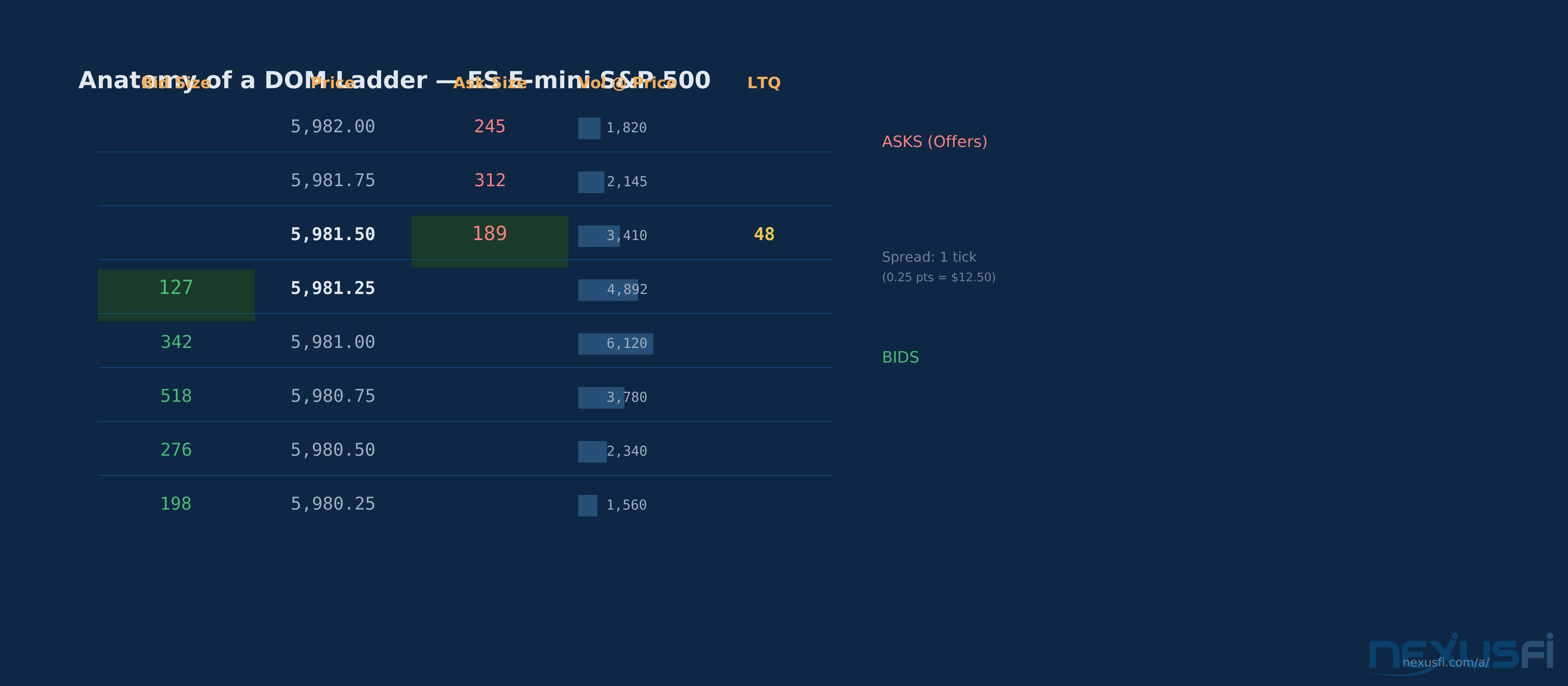
Spread: The gap between the best bid and best ask. In liquid futures like ES, the spread is almost always 1 tick (0.25 points = $12.50). In thinner contracts like MNQ during overnight hours, it can widen to 2-3 ticks.
Market Order: An order to buy or sell immediately at the best available price. Market orders consume resting limit orders. A market buy lifts the ask; a market sell hits the bid.
Last Traded Price (LTP): The price at which the most recent trade executed. On most DOM displays, this is highlighted in the center column.
Last Traded Quantity (LTQ): The number of contracts that traded in the last print. Large LTQ values at a price level signal aggressive participation.
Depth: The number of price levels visible on each side of the DOM. CME provides 10 levels of depth for most futures contracts. Some platforms aggregate or extend this.
Queue Position: Your place in line at a given price level. First in, first out (FIFO) — earlier limit orders fill before later ones at the same price. Queue position matters enormously for limit order traders.
Anatomy of the DOM Ladder #
The standard DOM ladder is a vertical display with three core columns: bid size on the left, price in the center, and ask size on the right. The current market — where the best bid meets the best ask — sits in the middle of the screen.
Most modern platforms (NinjaTrader, Sierra Chart, Jigsaw Daytradr, Bookmap, TT) add columns for:
- Volume traded at price: Cumulative contracts traded at each level during the session. This builds the volume profile in real time.
- Last traded quantity (LTQ): Flash of the most recent trade size. Large LTQ values at a price level signal intent.
- Buy vs sell volume: Contracts traded at the ask (buyers lifting) vs at the bid (sellers hitting). This is the delta at each price level.
- Order pulls/adds: Some tools show when resting orders are being pulled (removed) or added at a level — a critical signal for identifying spoofing.
The DOM updates tick-by-tick. On ES during regular trading hours (RTH), that means hundreds of updates per second. On NQ, peak update rates approach 1,000+ messages per second. As @hyperscalper [6] notes about Depth of Market analysis: it "requires some fast processing" — on NQ futures, "peak update rates will be roughly 1,000 messages per second."
Who Shows Size on the DOM -- and Why #
Not every resting order represents genuine intent. Understanding who's showing size and their motivation is the single most important DOM skill.
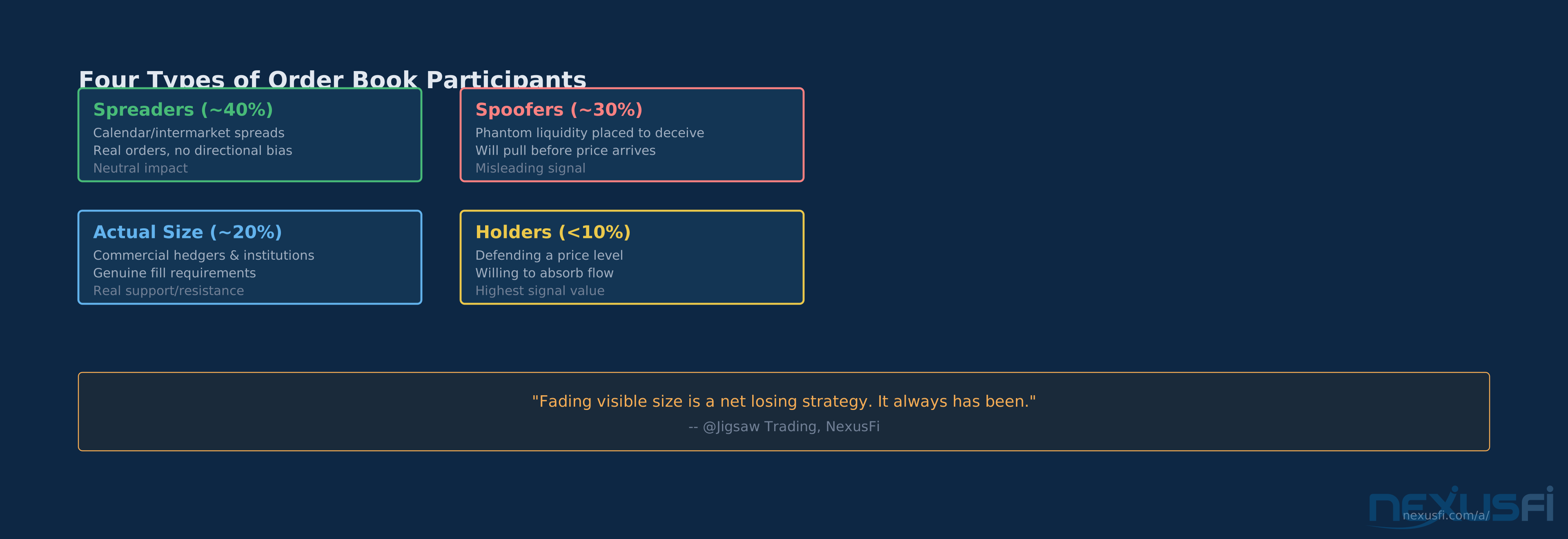
@Jigsaw Trading [2] breaks it down into four categories:
- Spreaders — "Who have no directional bias after the trade." They're simultaneously long one contract and short another (calendar spreads, intermarket spreads). Their resting orders are real, but their directional impact is neutral.
- Spoofers — "Who will pull as we get closer." These orders are placed specifically to be canceled before execution. They create the illusion of support or resistance.
- Actual size — "Who might just need their orders filled and are happy to display them — like Kellogg's hedging corn for Corn Flakes." Commercial hedgers and institutional players with genuine fill requirements.
- Holders — "People that want to hold the market and are willing to show their size." The rarest group — maybe less than 10% of visible large orders.
The practical implication is blunt: most large orders visible on the DOM are not what they appear to be. Fading visible size — seeing a big bid and going short, or seeing a big offer and going long — is, as Jigsaw Trading states plainly, "a net losing strategy. It always has been."
Resting Orders vs Market Orders: Intent vs Action #
The DOM shows you resting orders — the passive side. But price moves when aggressive orders (market orders) overwhelm the passive side. This is the fundamental distinction every DOM reader must internalize:
- Resting orders = statement of intent. They can be canceled at any time. They represent what someone says they'll do.
- Market orders = committed capital. Once a trade prints, it's done. The Time & Sales window shows this — actual executed trades.
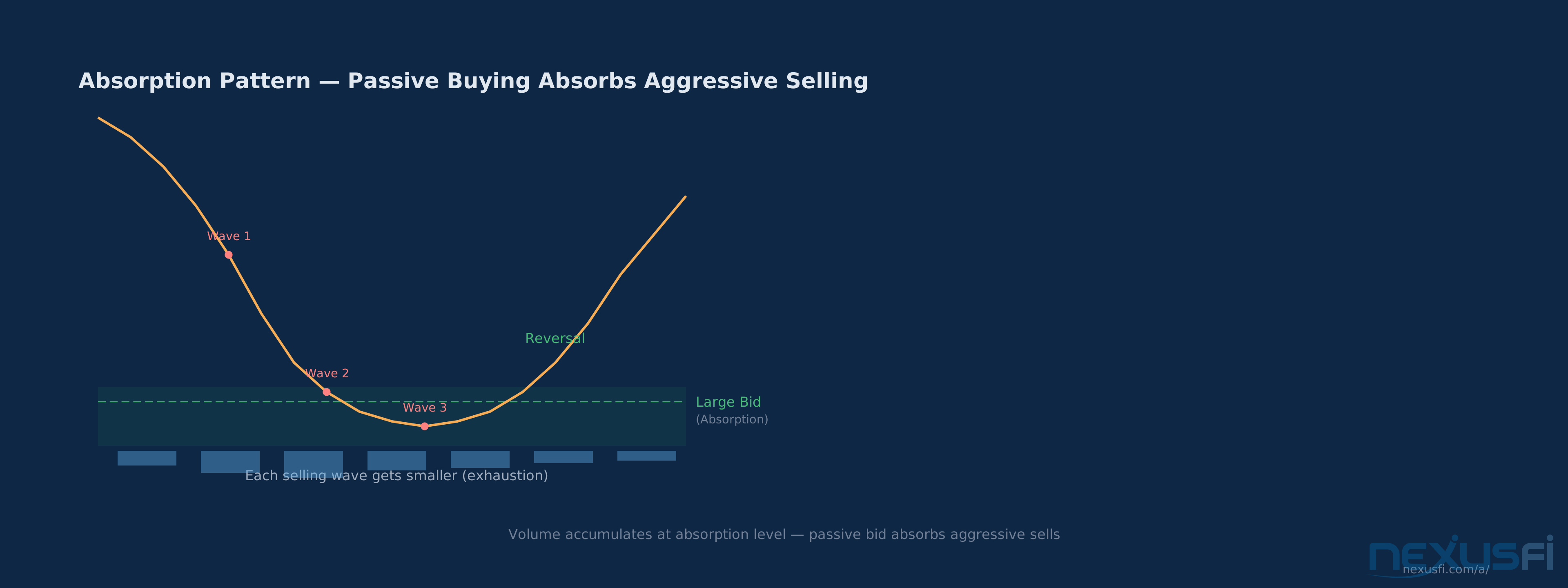
The edge in DOM reading comes from watching the interaction between passive and aggressive orders. When large resting bids sit at a level and aggressive sellers keep hitting them without price moving down — that's absorption. The passive side is absorbing the aggressive flow. If the absorption holds, it often precedes a move in the direction of the resting orders. For a deep dive on this mechanic, see the dedicated Absorption in Order Flow article.
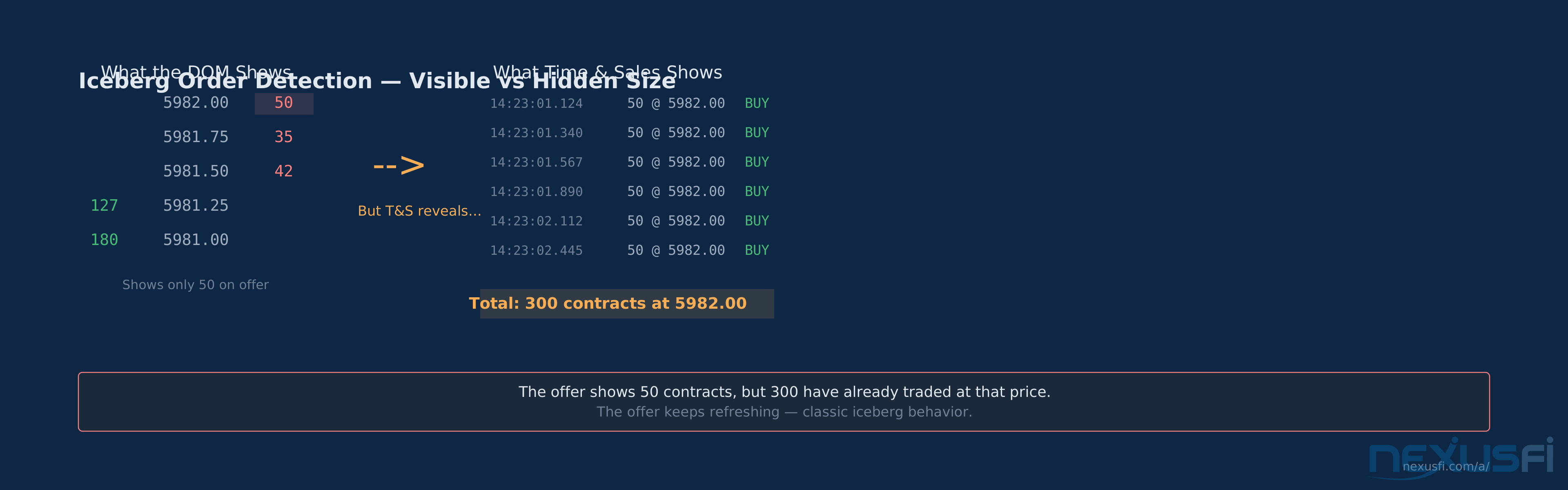
Conversely, when aggressive buyers lift the ask and the price doesn't move because offers keep refreshing at the same level — that's a classic iceberg or a very well-supplied offer. The aggressive side is spending ammunition without gaining ground.
Spoofing, Layering, and Deception #
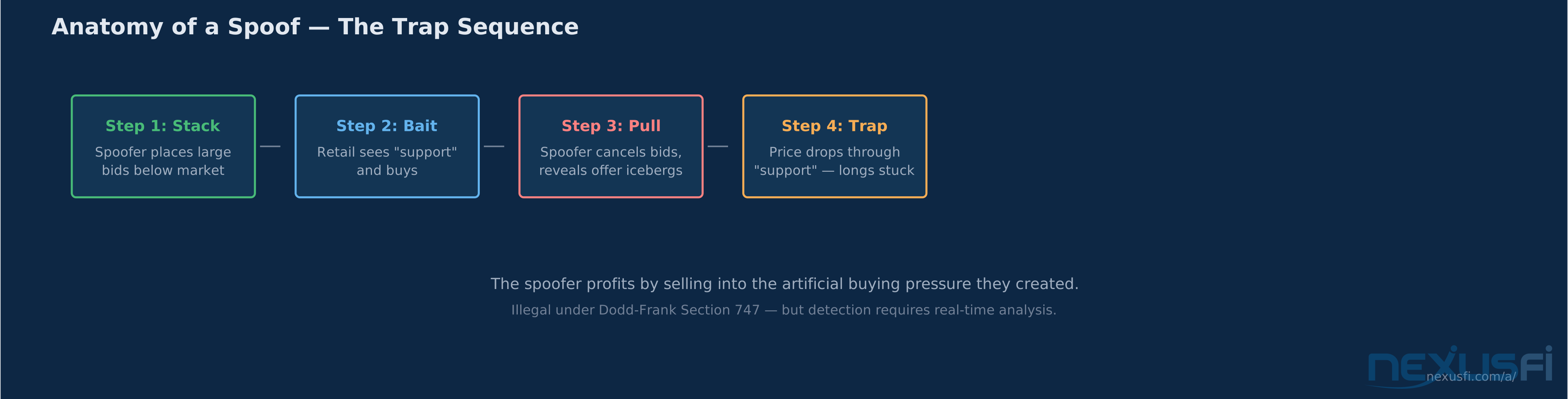
Spoofing is the practice of placing orders you intend to cancel before they're filled, designed to mislead other participants about supply and demand. It's illegal under the Dodd-Frank Act (Section 747) and aggressively prosecuted by the CFTC. But it happens constantly.
@Jigsaw Trading [1] describes the typical spoofing pattern: "A lot of spoofing goes on and generally that involves stacking the order book on one side to fool people into trading in the other direction. At the same time they will be putting in icebergs on the opposite side to scoop up the trades of the fooled traders. Then the size will flip to the other side, those fooled traders will be trapped and price will move through that large size as they exit."
Layering is a specific form of spoofing where multiple orders are stacked across several price levels to create the appearance of a wall of liquidity. The layers are pulled in sequence as price approaches.
Algo Baiting: Some large orders flash on the DOM for milliseconds — visible only to automated systems. As Jigsaw Trading notes: "You will occasionally see on the ES the order book flash up 6000 or so on a level and then it'll disappear again. That's not there to make you and me react, it's there to fool the algos."
Practical Implication: If you see size appear on the DOM and it makes you want to trade against it, pause. Ask: is this real, or is someone counting on my reaction? Experienced DOM traders watch what happens at the size — do aggressive orders trade into it and get absorbed, or does the size pull away as price approaches? The behavior of the size matters more than its existence.
DOM-Based Trading Techniques #
Reading Momentum Ignition #
@nestor2022 [5], a DOM-focused Bund scalper, describes the core technique: "I'm basically trying to spot momentum ignition and ride it a few ticks. Deep pockets WILL move the market when entering. They are just too big for the available liquidity. If I can spot the early signs, I can ride that entry wave."
The approach: watch for large aggressive orders entering one side while the resting book on that side thins. If a 200-lot market buy comes in on ES while the offer side is showing only 50-80 contracts per level, price is going to move. Getting in early on that move — before the offer is swept through multiple levels — captures the momentum.
Risk: Early entry means the institutional order might fail. If the large player gets absorbed and stops buying, you're stuck. Nestor2022 addresses this: "They fail? If I'm early enough AND they have moved the market I can still grab a tick or be even."
Absorption Detection #
When price pushes into a level and the resting book absorbs the aggressive flow without price breaking through:
- Watch the LTQ column — are large sizes repeatedly trading at the same price?
- Check cumulative volume at the level — is it building far beyond what the DOM shows as resting?
- Note how the aggressive side behaves — are the market orders getting smaller (exhaustion) or larger (conviction)?
If absorption holds through 3-4 waves of aggressive selling, and the aggressive size is diminishing, the sell-side is running out of ammunition. A reversal off that level has higher probability.
The Flip #
After absorption, watch for the resting side to flip from passive to aggressive. The large player who was absorbing sell flow with limit bids starts lifting offers. That transition from passive to aggressive — visible as a sudden burst of buy market orders after a period of limit bid absorption — is the highest-conviction DOM signal.
What Depth Do You Actually Need? #
This is instrument-dependent. Jigsaw Trading's framework:
- 2-Year Note (ZT): 5 levels of depth is plenty — tight spread, slow movement.
- Crude Oil (CL): 5 levels is insufficient — too fast, too volatile.
- E-mini S&P (ES): 10 levels (CME standard) is adequate for most DOM trading.
- NQ / MNQ: Speed is the issue more than depth — update rates are extreme.
Looking out 100 levels to spot a large order and then waiting to fade it is, per Jigsaw's assessment, exactly wrong. "What you should have done is go long as it went there, if trading was one-sided and healthy but not overly fast."
Limitations: When the DOM Fails You #
Trend Days and Discovery Sessions #
On strong trend days, the DOM is nearly useless for counter-trend entries. Resting orders on the wrong side get steamrolled. Absorption that looks like it'll hold gets overwhelmed. The DOM works best in rotational, balanced markets where price oscillates within a range and institutional players defend levels. During discovery sessions where price is searching for new value, the order book is thin and offers very little to read.
Speed and Cognitive Load #
DOM reading in real time is mentally exhausting. ES during RTH updates hundreds of times per second. Even with tools that highlight changes, the cognitive load of tracking bid/ask dynamics, volume prints, pulls and adds, and your own order management simultaneously is enormous. It's why most successful DOM traders focus on a narrow window — maybe 5-10 levels around the current price — rather than trying to process the entire book.
The 10% Signal Problem #
As @Jigsaw Trading [3] summarizes the reality of DOM reading: "The DOM has never been about the limit order levels, it's always been about 10% the levels and 90% what's trading at them." The static book — what's resting — is mostly noise. The dynamic flow — what's actually executing — is the signal. This means the DOM alone, without Time & Sales data, is naturally incomplete.
One-Rule Strategies Don't Work #
"The focus on the large bids/offers offers traders a 'one rule trading strategy' — see depth, fade it. Like all one rule trading strategies, it's a losing one. It is part of the picture — a 'heads up' — but there needs to be context." You need market structure context, session context, and ideally confirmation from other tools.
DOM vs Footprint Charts #
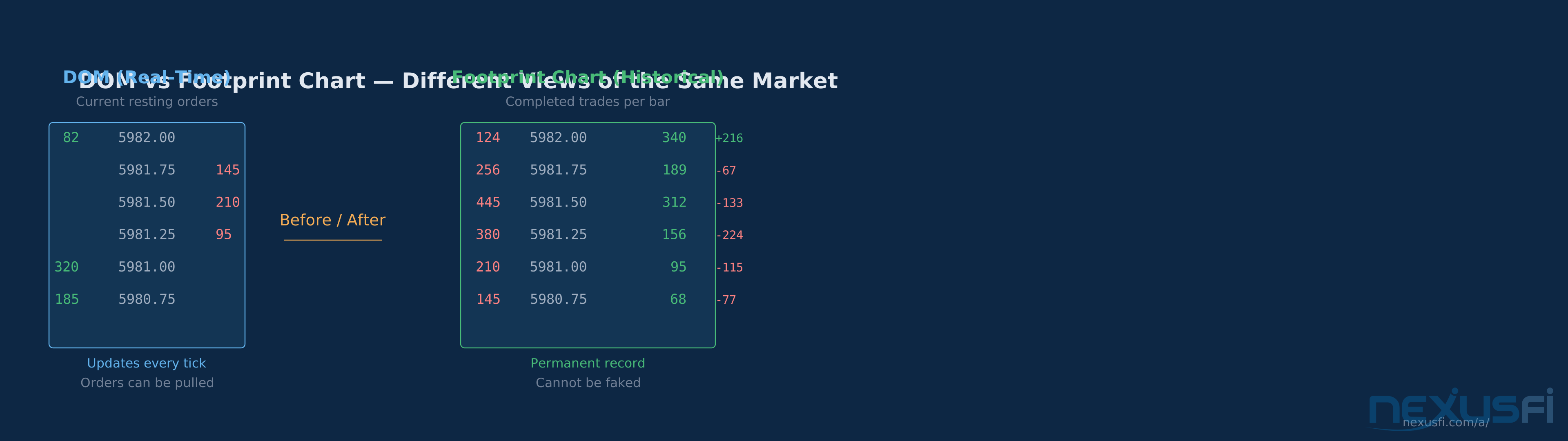
The DOM and footprint charts show different slices of the same market:
| Feature | DOM | Footprint Chart |
|---|
|
| What it shows | Current resting orders + live trades | Historical executed trades at each price |
|---|---|---|
| Best for | Execution timing, order flow reads | Post-trade analysis, volume distribution |
| Limitations | Changes instantly, can deceive | Historical — can't show current intent |
As one NexusFi community member [notes] [8]: "Normally with a DOM you can see what happens before a trade and with the footprint you can see what happens after." Professional traders use both — the DOM for real-time execution context and the footprint for confirming what actually happened.
For a complete guide to footprint charts, see Volume Ladder & Footprint Charts. For delta mechanics, see Delta Analysis & CVD.
Integration with Other Tools #
The DOM is most powerful when combined with:
- Volume Profile: Identifies key levels (POC, VAH, VAL) where DOM activity is likely to be meaningful. A large resting bid at the Value Area Low carries more weight than a large bid at a random level.
- Time & Sales: Validates what the DOM shows. The DOM says someone wants to buy; T&S confirms they actually did.
- Market Profile: Session structure tells you whether the market is in balance or trending. DOM reading is most effective in balanced markets.
- Cumulative Delta / Order Flow: Tracks the net aggressive buying vs selling over time, providing context for what the DOM shows at any given moment.
Knowledge Map
Prerequisites
Understand these firstGo Deeper
Build on this knowledgeReferences This Article
Articles that build on this topicCitations
- — Why does the market move towards the heavier side of the order book? (2011) 👍 11“Well, a lot of spoofing goes on and generally that involves stacking the order book on one side to fool people into trading in the other direction.”
- — Is DOM worth using if I only have access to best 5 bid and ask levels? (2022) 👍 3“I think at this point, there is too much focus on the DOM levels. If you think about it - there's a few types of players on the DOM showing size: - spreaders - who have no directional bias after the trader - spoofers - who will pull as we get closer...”
- — Is DOM worth using if I only have access to best 5 bid and ask levels? (2022) 👍 3“HFT isn't quite what you think - the overwhelming majority is in equities markets, where they buy order flow to execute and then they have an information advantage.”
- — Cumulative Delta Volume Trading (2012) 👍 11“It isn't possible for an exchange to remove iceberg orders because they don't exist at the exchange. There is some confusion about icebergs I think. They are NOTHING magical. They are simply the opposite of spoof orders.”
- — Scalping the Bund with orderflow (DOM reading) (2014) 👍 10“Hello everyone, Here will be the place for my orderflow reading trades. First things first, I’m French, not English fluent, so there WILL be language mistakes, mix of words and so on.”
- — Is Orderflow An Outdated Concept? (2020) 👍 2“DOM ANALYSIS requires some fast processing Case in point, ES and some discussion of NQ futures Just to give you a rough idea of how difficult Depth of Market Analysis can be, from an implementation standpoint, on the ES contract, I'm seeing as high a...”
- — buy market vs buy ask (2026)“josh, That refresh offer observation is the money shot of this whole discussion. You've basically described adverse selection in action -- when your market order gets filled suspiciously clean at a single level, you're often on the wrong side of info...”
- — Spoo-nalysis ES e-mini futures S&P 500 (2016) 👍 9“yes, they're different. normally with a dom you can see what happens before a trade and with the footprint you can see what happens after the trade.”