



Order Flow Analysis
Overview #
Order flow is the raw language of the market. Every price movement you see on a chart is the result of order flow — aggressive buyers lifting offers, passive sellers absorbing demand, institutional icebergs quietly accumulating at key levels. Charts show you what happened. Order flow shows you why it happened and — more importantly — what's likely to happen next.
This isn't an indicator overlay or a pattern recognition system. It's a discipline built on understanding market microstructure: how orders interact, who's participating, and what the balance of aggression and passivity tells you about the immediate directional pressure. Master this, and you read the market the way a pit trader reads the crowd.
Market Microstructure: How Orders Actually Work #
Every futures market operates as a continuous double auction. Buyers submit bids. Sellers submit offers. When a buyer's willingness to pay meets a seller's willingness to sell, a trade prints. That's it. Every candle, every indicator, every chart pattern — all downstream consequences of this matching engine.
Two types of orders drive everything:
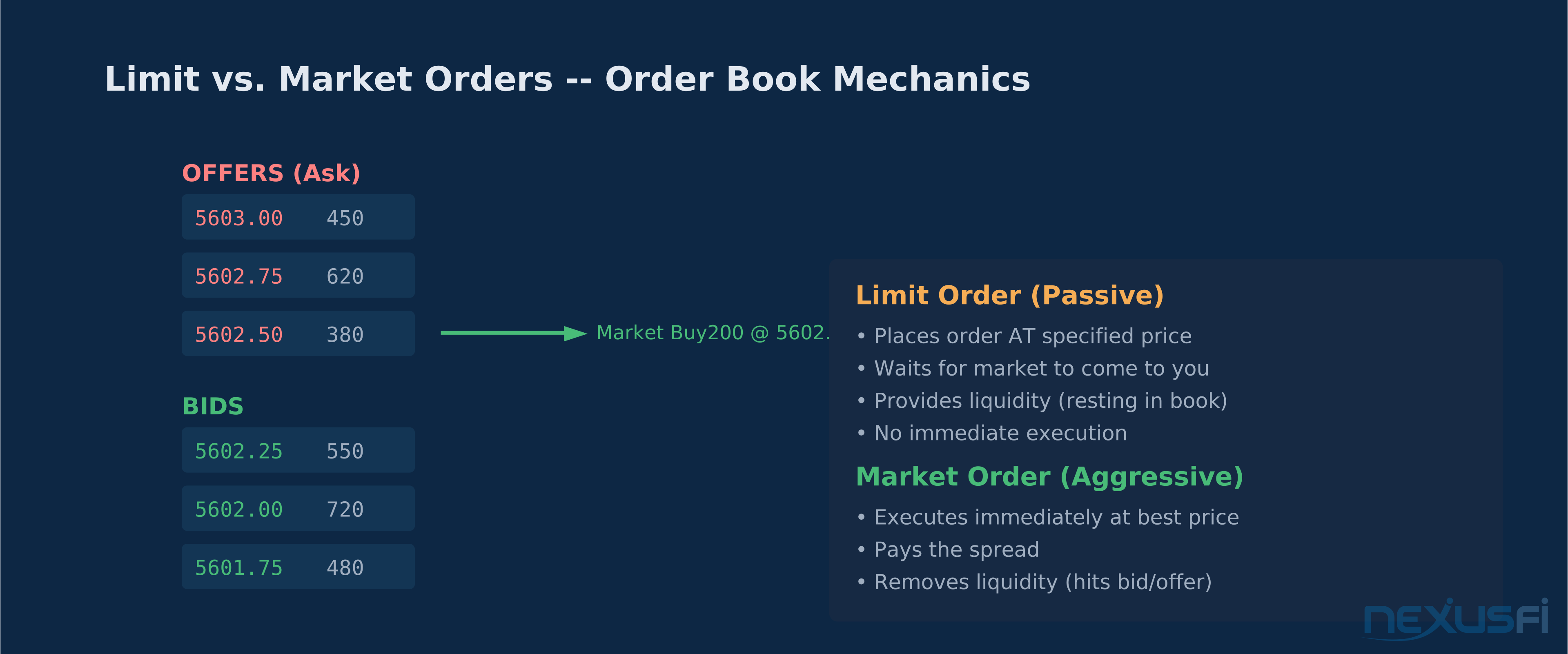
Limit orders sit passively in the order book at a specified price, providing liquidity. They don't move the market. A limit buy at 5600 waits patiently until a seller comes to fill it.
Market orders execute aggressively at the best available price, consuming liquidity. A market buy lifts the lowest available offer. If that offer is only 50 contracts and the buyer wants 500, price moves up as successive offer levels get consumed.
"It's volume and liquidity that moves markets, that's a pretty basic fundamental. If someone floods a market with heavy size relative to the liquidity on the bid, that price WILL go down as a FACT."
-- [DarthDion, Is Orderflow An Outdated Concept?] [1]
The key insight: price moves when aggressive orders exceed available passive liquidity at a given level. Everything in order flow analysis traces back to this fundamental mechanic.
Aggressive vs. Passive Participation #
The distinction between aggressive and passive market participants is the foundation of order flow reading.
Aggressive participants use market orders to enter immediately. They pay the spread and consume liquidity. Their urgency creates price movement. When you see aggressive buying — market orders lifting offers in size — someone needs to be long right now, and they're willing to pay for it.
Passive participants use limit orders to provide liquidity. They define the price levels where they're willing to transact and wait for the market to come to them. Passive buyers on the bid absorb selling pressure without moving price.
"Limit orders are passive. Market orders are aggressive. Is price being responsive or initiative? Responsive means the market reaches a level on increasing volume. Initiative means the buyers or sellers turn from passive orders to market orders."
-- [Grantx, Understanding Footprint Charts] [2]
The Aggressive/Passive Dynamic #
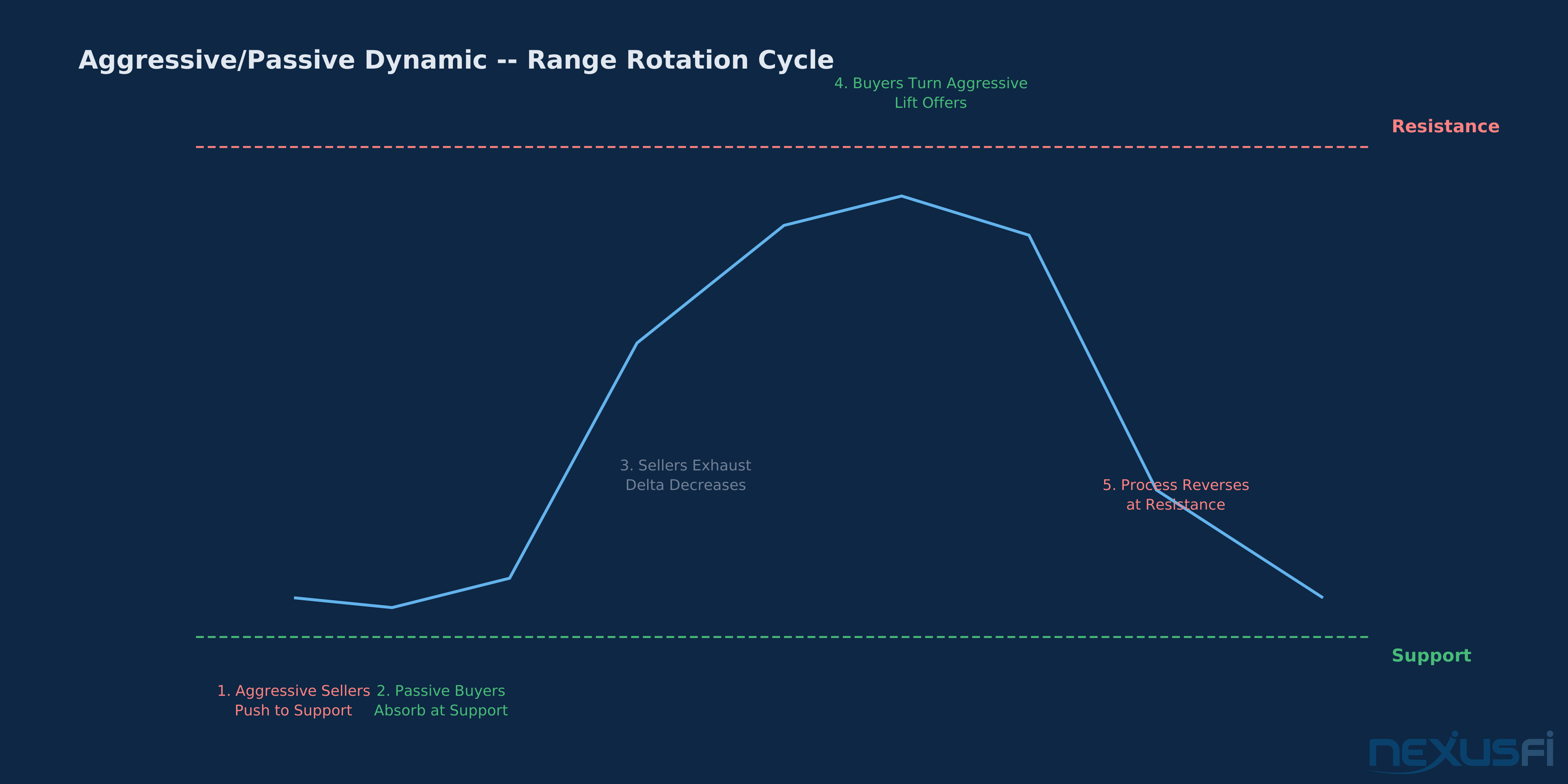
In a ranging market, the interplay between aggressive and passive participants creates the rotation:
- Price approaches support. Aggressive sellers push price down. At support, passive buyers place limit orders (bid-side liquidity).
- Sellers meet passive resistance. Aggressive selling is absorbed by limit buy orders. Delta decreases (less net selling).
- Sellers exhaust. When passive buying absorbs all the selling pressure, aggressive sellers back off and begin covering.
- Buyers turn aggressive. Former passive buyers start lifting offers. Price reverses as initiative shifts to the buy side.
- Price approaches resistance. The reverse process plays out at the upper extreme.
This is the micro-level engine that drives every support/resistance bounce, every range rotation, every trend continuation pullback. Order flow tools make this dynamic visible in real time.
Core Order Flow Concepts #
Delta #
Delta measures the net difference between aggressive buying and aggressive selling at each price level, within each bar, or cumulatively across a session. Positive delta means more contracts traded at the offer (aggressive buying). Negative delta means more contracts traded at the bid (aggressive selling).
Delta is the most fundamental order flow metric. It answers: who is more aggressive right now — buyers or sellers?
For complete mechanics, calculation methods, cumulative delta divergence, and practical trading applications, see Delta Analysis & Cumulative Volume Delta (CVD).
Absorption #
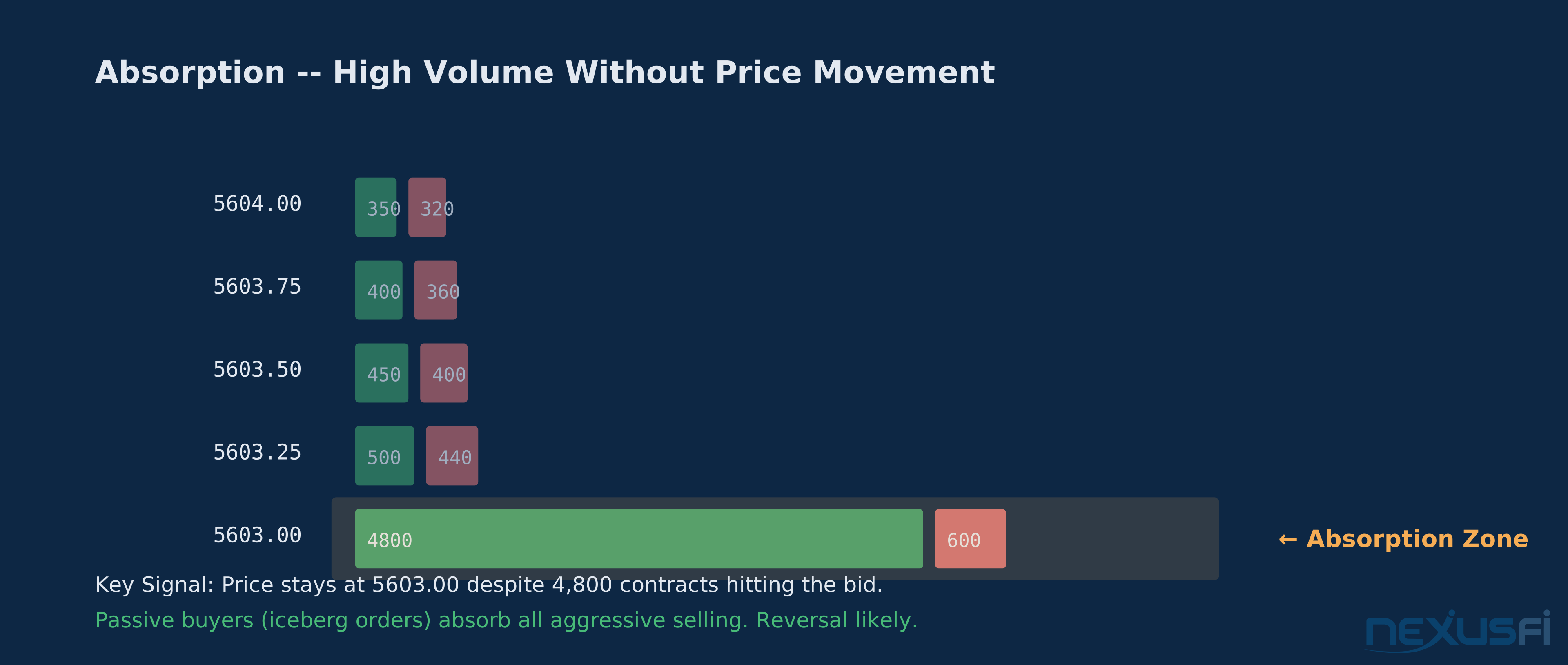
Absorption occurs when passive liquidity at a price level consumes aggressive orders without yielding ground. The price stays put despite heavy aggressive participation — someone is quietly absorbing all the pressure.
"The way I look at absorption is when you see either buyers or sellers cutting off the opposing traders. Just imagine trading in the pit and the orders coming through are aggressive sellers pushing the market down. Price then hits a level that a buyer steps in aggressively and buys/absorbs every order coming in until the sellers back off."
-- [Private Banker, Volume Profile and Footprint Discussion] [3]
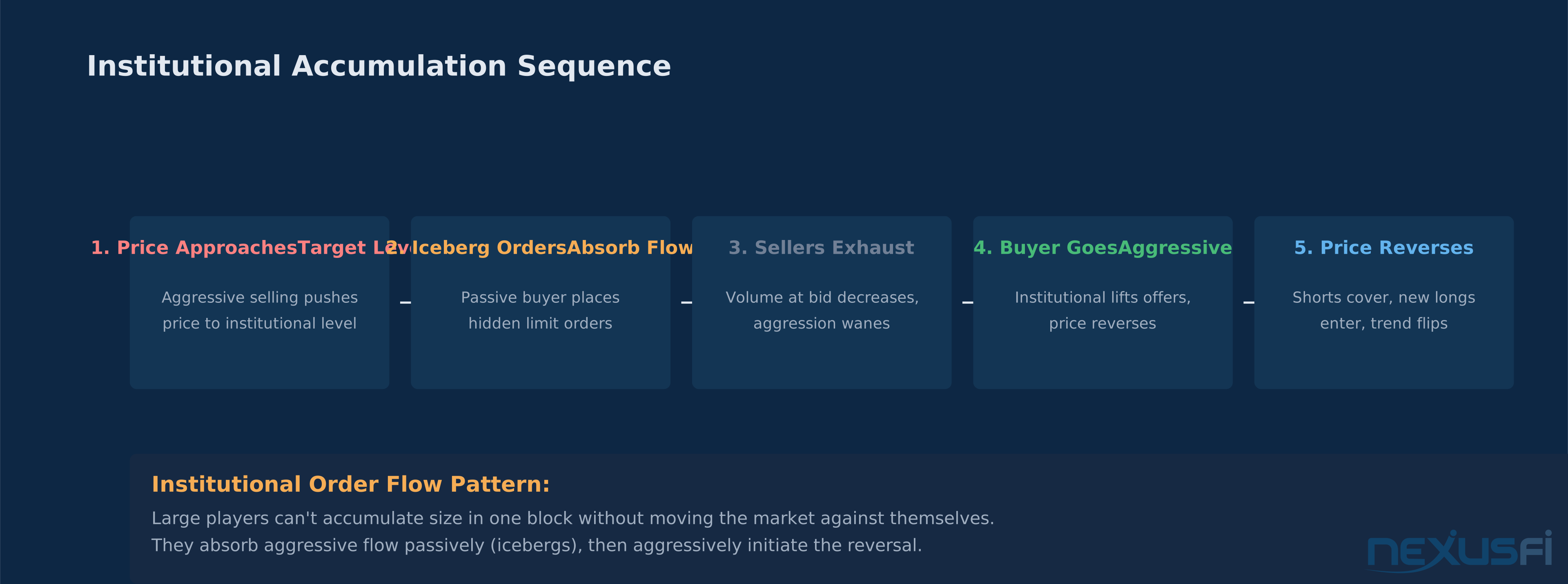
Absorption is the footprint of institutional participation. Large players who need to accumulate or distribute size can't do it all at once without moving the market against themselves. So they absorb — using limit orders (often icebergs) to quietly take the other side of aggressive flow at their target price.
How to identify absorption:
- High volume prints at a single price level without price movement
- Delta at the level is extreme but price doesn't follow — many contracts hit the bid/offer but the level holds
- Volume-to-price displacement ratio is abnormal: 10 contracts normally moves ES 5 ticks, but 500 contracts at this level only moved it half a tick
What absorption signals:
- At support: Passive buyers absorbing aggressive selling → potential reversal
- At resistance: Passive sellers absorbing aggressive buying → potential rejection
- In a trend: Absorption against the trend → potential continuation (the absorber is scaling in, not reversing)
Iceberg Orders #
Iceberg orders are large limit orders that display only a fraction of their true size. A trader wants to buy 2,000 contracts but only shows 100 on the book. When those 100 fill, another 100 automatically appear. This continues until the entire 2,000 are filled.
"This certain trader wants that price big time but doesn't want to advertise to the world that he wants it... So, he submits a huge Iceberg order of 2,000 contracts but only advertises a limit order amount of 100."
-- [Private Banker, Volume Profile and Footprint Discussion] [3]
Icebergs are the primary tool for institutional absorption. They're invisible on the order book in their full size, but their effects are visible on the tape: a price level that keeps refreshing despite heavy trading volume, volume printing far in excess of displayed depth.
"What you want is for the market to be selling off into an iceberg and get like 3-4000 contracts hitting the bid and just 1000 or so hitting the offer. Then you aren't looking at 2 sided trading, you are looking at absorption on the bid."
-- [Jigsaw Trading, Finessing the Entry] [4]
Liquidity and the Order Book #
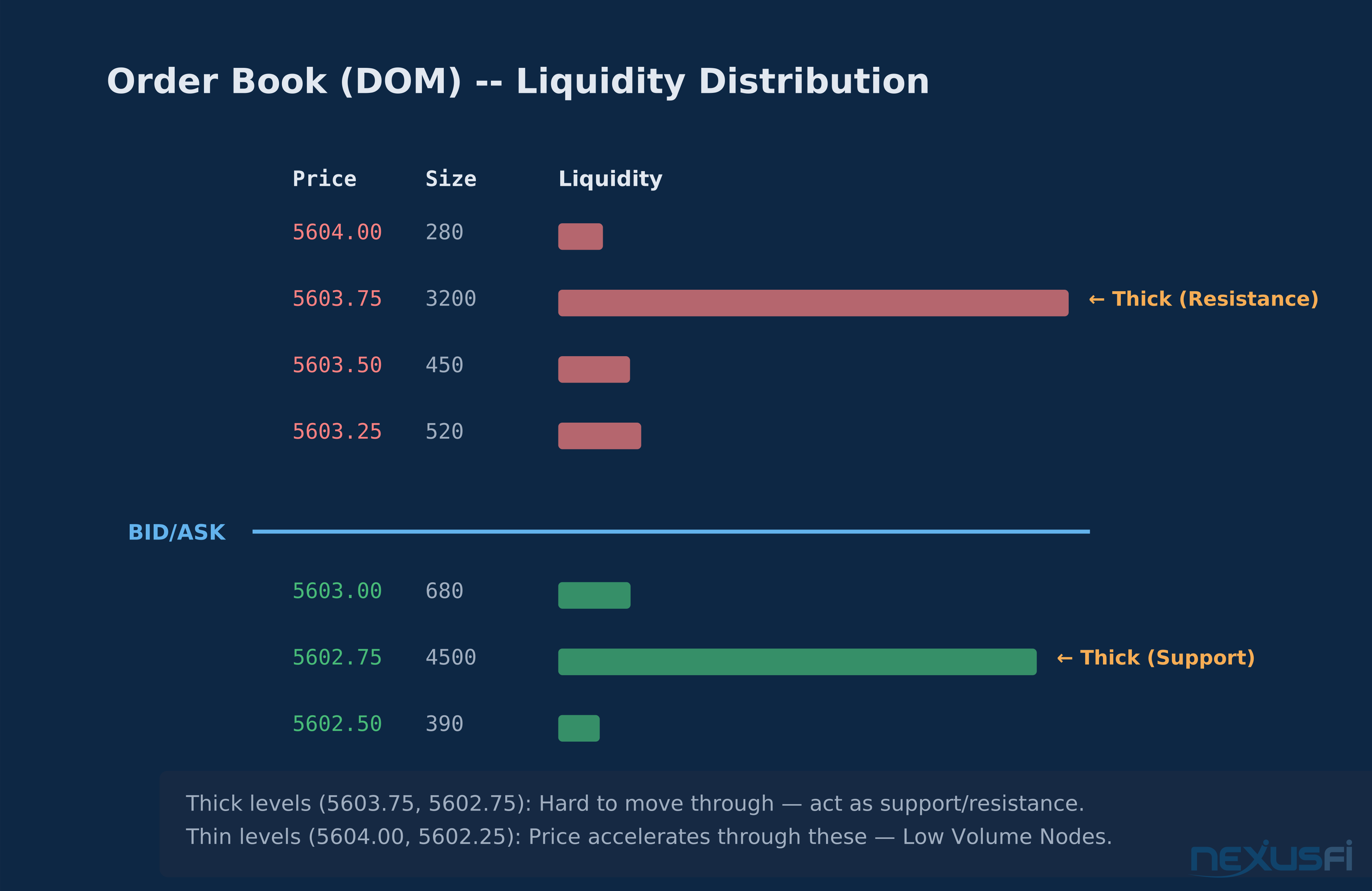
The order book (depth of market / DOM) shows visible limit orders at each price level. Liquidity is not evenly distributed — some levels have thick books (many resting orders), others are thin.
Thick levels resist price movement. It takes significant aggressive volume to consume 5,000 resting contracts at the bid. These levels tend to act as support/resistance.
Thin levels accelerate price movement. If only 200 contracts rest at the offer, a 500-lot market buy blows through that level instantly. These correspond to Low Volume Nodes on the Volume Profile.
Key insight: The order book is dynamic. Liquidity appears and disappears constantly. Displayed size is not committed size — orders can be pulled before execution. This is why order flow traders focus primarily on executed transactions (the tape) rather than displayed intentions (the book).
Order Flow Tools #
Time & Sales (The Tape) #
The most fundamental order flow tool. Time & Sales shows every executed transaction: time, price, size, and whether it traded at the bid or offer. This is the raw feed that all other order flow tools derive from.
Reading the tape is watching the market's conversation in real time. Large prints at the offer signal aggressive buying. Clusters of small prints at the bid suggest retail selling. A sudden acceleration of pace — trades firing faster — indicates urgency entering the market.
"I will go with Richard Wyckoff's definition of a tape reader as someone who identifies the immediate pressure and goes with it for the duration that that pressure exists — then moves on."
-- [DarthDion, Is Orderflow An Outdated Concept?] [1]
Footprint Charts (Volume Ladder) #
Footprint charts organize Time & Sales data into a visual matrix showing bid/offer volume at each price level within each bar. They reveal the internal structure of every candle — where the aggressive participation happened, how delta distributed across prices, and where absorption occurred.
For complete coverage of footprint chart reading, volume ladder configurations, imbalance detection, and practical setups, see Volume Ladder & Footprint Charts.
Depth of Market (DOM) #
The DOM shows the current order book — resting limit orders at each bid and offer level. Modern DOM tools overlay executed volume (pulling vs. refreshing, stacking vs. thinning) to provide a live picture of supply and demand dynamics.
DOM reading is especially valuable for:
- Entry timing: Watching a level's liquidity deplete in real time to time breakout entries
- Absorption detection: Seeing a price level continuously refresh despite heavy volume
- Pull detection: Watching large resting orders disappear before they're hit (spoofing or genuine retreat)
Institutional participants leave readable signatures on the DOM. Large players "will place huge hidden orders on the inside bid or offer and will use algorithms to either constantly refresh the price as contracts print into it, and will also use them to instantly build the preceding offer on a tick up, or a bid on a tick down" [5]. This refreshing and building behavior — a level that holds despite wave after wave of aggressive orders — is one of the clearest DOM-readable signals that a large participant is actively defending a position.
Cumulative Delta #
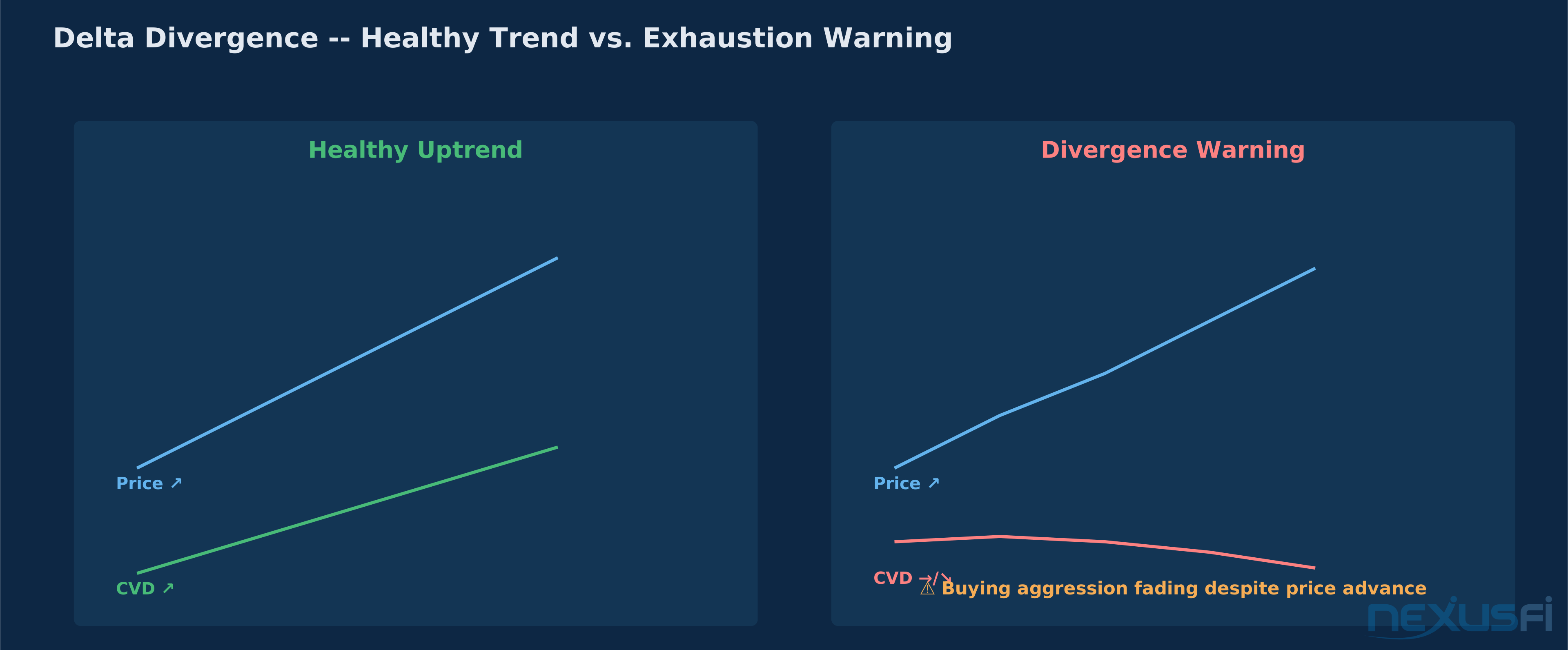
A running total of delta across the session. When cumulative delta trends up while price trends up, buying aggression is driving the move — healthy trend. When price makes a new high but cumulative delta doesn't, aggressive buying is waning despite the price advance — a divergence that often precedes reversal.
See Delta Analysis & CVD for complete coverage.
Reading Order Flow: Practical Framework #
Step 1: Identify the Context #
Order flow doesn't exist in a vacuum. Before reading the tape, establish your market structure context using Volume Profile and Market Profile:
- Where is the Point of Control? Where is Value Area?
- Is the market in balance or imbalance?
- What are the key structural levels from prior sessions?
Step 2: Watch for Participation Shifts #
At your identified levels, watch for shifts in the aggressive/passive dynamic:
- Absorption forming: High volume at a level without price movement
- Aggression shifting: Delta flipping from negative to positive at support
- Liquidity draining: Offer-side book thinning before a breakout
- Exhaustion signals: Aggressive volume declining while price extends
Step 3: Confirm with Delta #
Use bar delta and cumulative delta to confirm the participation shift:
- Delta supporting price direction = healthy move, trade with it
- Delta diverging from price = weakening move, prepare for reversal
- Delta extreme (unusually large) at a key level = potential climax/exhaustion
Step 4: Execute and Manage #
Order flow provides precise timing that chart-based analysis cannot:
- Entry: When absorption completes and aggression shifts, enter with the new direction
- Stop: Below/above the absorption level — if that passive participant gets overrun, your thesis is wrong
- Target: The next structural level where opposing absorption might form
Institutional Order Flow Patterns #
The Accumulation Sequence #
- Price approaches institutional target level on aggressive selling
- Institutional buyer places iceberg orders (passive absorption)
- Selling pressure is absorbed without further price decline
- Aggressive sellers exhaust — volume at bid decreases
- Institutional buyer begins lifting offers (aggressive buying)
- Price reverses as shorts cover and new longs enter
The Distribution Sequence #
The mirror image: institutional seller absorbs aggressive buying at resistance via iceberg offers, then hits bids aggressively when buying exhausts.
The Sweep and Reversal #
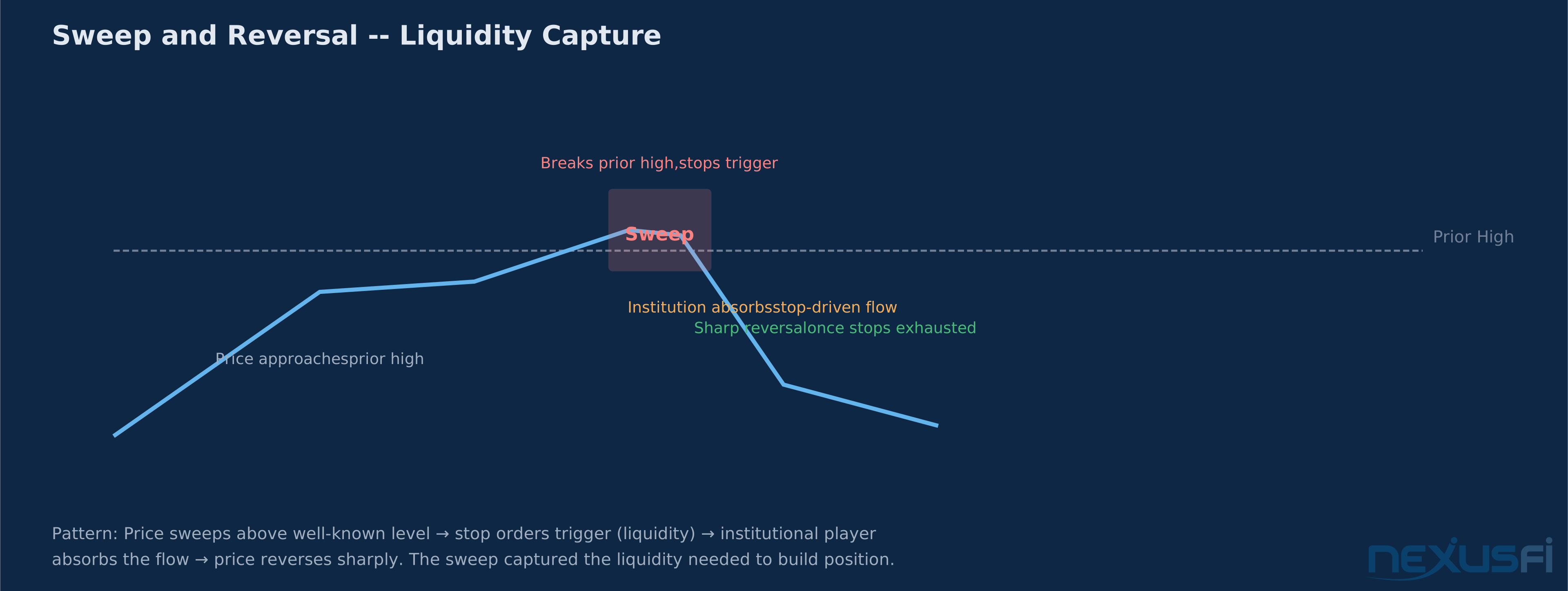
- Price breaks a well-known level (prior high/low, round number)
- Stop orders trigger, creating a burst of aggressive volume
- Institutional participant absorbs the stop-triggered flow
- Price reverses sharply once stops are exhausted
- The sweep captured liquidity that the institution needed to build their position
"Buying/selling pressure is created by large size traders through their inefficiency — their size relative to the market's liquidity. BIG traders provide us with edge through their PARTICIPATION and their PAIN."
-- [DarthDion, Is Orderflow An Outdated Concept?] [1]
Common Order Flow Mistakes #
Watching the book instead of the tape. Displayed liquidity is unreliable — orders get pulled constantly. Focus on what's actually executing, not what's displayed. Executed transactions can't be faked.
Ignoring context. A 500-lot print at the offer means something very different at a key structural level than in the middle of a range. Order flow without market structure context is noise.
Over-relying on delta. Delta measures aggressive participation, but passive participants (limit orders) don't register on delta. The trader who absorbed 5,000 contracts via an iceberg at the bid didn't generate any positive delta — they were passive. Absorption is visible through price behavior relative to volume, not through delta alone.
Trading every signal. Order flow provides continuous information. Not every absorption event leads to reversal. Not every delta divergence marks a top. Use it to confirm your structural thesis, not to generate entries from scratch.
Abandoning pre-existing frameworks too quickly. Order flow augments good analysis — it doesn't replace the need for market structure, risk management, and trade planning.
"The worst thing a trader can do when learning order flow is come in with pre-conceived notions and incompatible frameworks."
-- [DarthDion, Is Orderflow An Outdated Concept?] [1]
Order Flow in the Broader Toolkit #
Order flow analysis is most powerful when combined with structural tools:
- Volume Profile — identifies where to watch for order flow signals (structural levels)
- Delta Analysis & CVD — quantifies aggressive participation (the core metric)
- Volume Ladder & Footprint Charts — visualizes the bid/offer structure within each bar
- Market Profile (TPO Charts) — provides time-at-price context alongside volume-at-price
- Auction Market Theory — the conceptual framework that gives order flow its meaning
The structural tools tell you where to look. Order flow tells you what's actually happening there — and whether the market's behavior confirms or contradicts your hypothesis. That's the edge: real-time participation data at the levels that matter most.
Knowledge Map
Prerequisites
Understand these firstGo Deeper
Build on this knowledgeReferences This Article
Articles that build on this topicCitations
- — Is Orderflow An Outdated Concept? (2021) 👍 9“It's volume and liquidity that moves markets, that's a pretty basic fundamental...”
- — Understanding Footprint Charts (2020) 👍 21“Limit orders are passive. Market orders are aggressive. Is price being responsive or initiative?...”
- — Volume Profile and Footprint Discussion (2012) 👍 21“The way I look at absorption is when you see either buyers or sellers cutting off the opposing traders...”
- — Finessing the Entry (2013) 👍 11“What you want is for the market to be selling off into an iceberg and get like 3-4000 contracts hitting the bid...”
- — My Thesis on Tape Reading (2013) 👍 26“They will place huge hidden orders on the inside bid or offer and will use algorithms to either constantly refresh the price as contracts print into it...”
- — Understanding Order Flow and Market Microstructure (2023)
- — Order Flow, Transaction Clock, and Normality of Asset Returns (Ane & Geman, 2000) (2000)