



Volume Profile Trading
A futures trader's guide to reading the auction through volume distribution
Overview #
Volume Profile is a volume-at-price distribution. Instead of showing you how much traded during a time bar, it shows you where on the price axis the contracts actually changed hands. That distinction matters. Candlestick volume tells you the market was active. Volume Profile tells you where the market agreed on value — and where it didn't.
VP answers the question that matters before you place any order: where did business get done? The zones where volume clustered are where the market accepted price. The zones where volume is thin are air pockets — price moved through them fast because nobody wanted to transact there.
VP won't flash buy or sell. It maps the auction, and every trade you take should be located relative to that map.
That balance/imbalance framework is how experienced VP traders decide whether to fade or follow.
Two terms drive every VP call — acceptance and rejection. Acceptance means the market is building volume at a price level (bin thickening, repeated rotations back, time spent there). Rejection means price probed a level and pulled away without building volume — thin bins, no VA expansion. Acceptance at a new high means the breakout is real. Rejection at a new high means it's a failed probe. The developing profile shows you which one is happening as it prints.
Volume Profile shows where contracts traded, not when. It maps the auction so every trade you take is located relative to accepted value.
The Auction Framework #
The market is either balanced or imbalanced. Every VP component connects back to this binary.
Balance vs Imbalance #
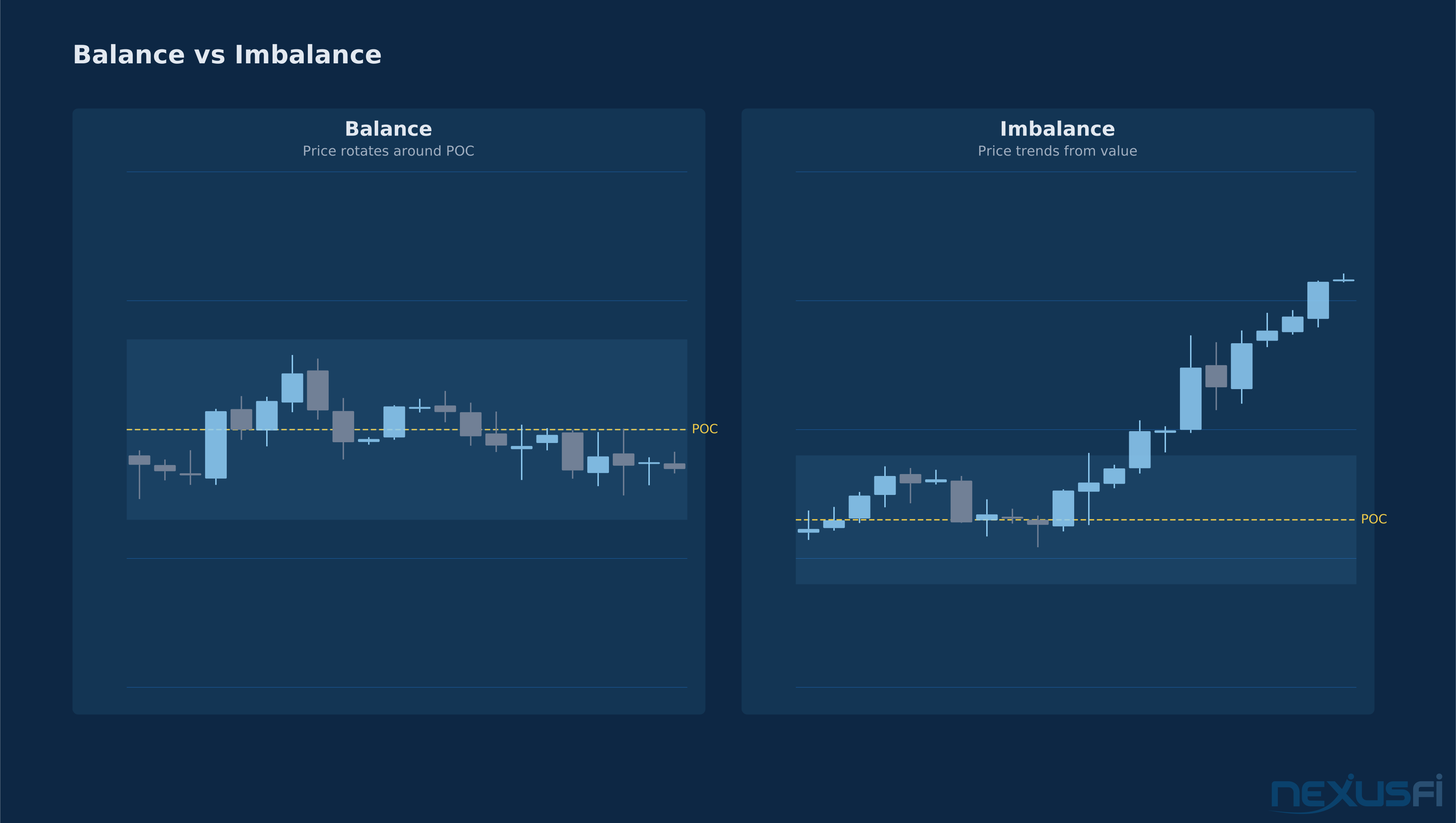
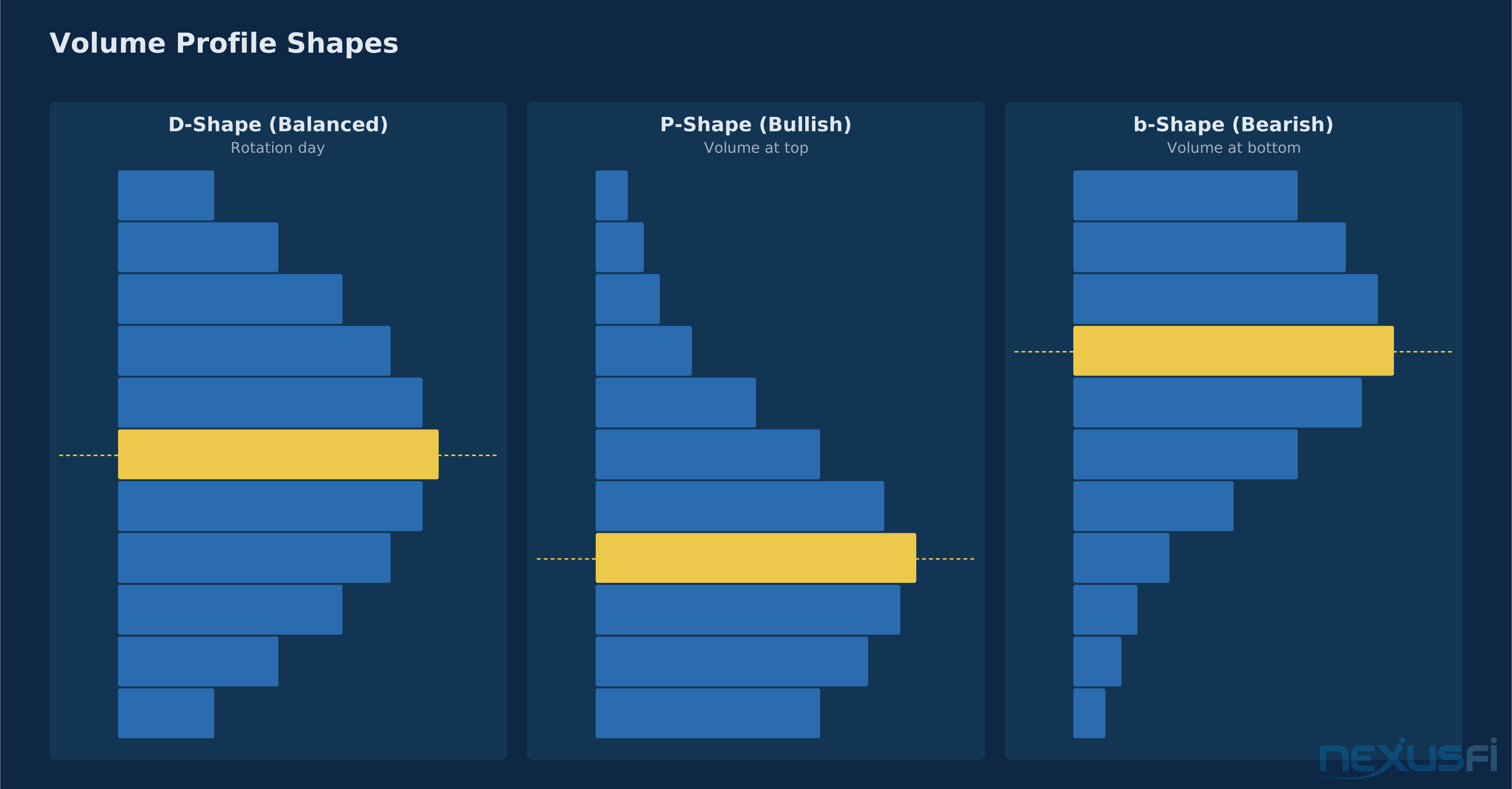
Balance means the market is rotating within a range. Value areas overlap across sessions. The POC is stable or wandering only slightly. The profile is often D-shaped (symmetric, bell-curve), but balanced sessions can also print b or P shapes depending on volatility compression — D-shape is a common clue, not a requirement. A rotation is one trip from value area edge to edge — VAH down to VAL or VAL up to VAH. A rotational day is a session where price completes multiple rotations without breaking out. Two-sided trade means both buyers and sellers are active, neither side has sustained control. In ES, three sessions with overlapping value around a 15-20 point range is textbook balance. Traders fade the edges and target the POC.
Imbalance means the market has directional conviction. The POC migrates. Value areas shift or expand in one direction. Single prints appear on the profile. A session that opens above prior value and never returns — building new value 30 handles higher — is imbalance.
[7] He also describes recognizing when you can't fade: "We had the higher high and higher low, an opening drive above previous value and an extremely steep VWAP. You do not fade this. You will get crushed." [7]
Initiative vs Responsive Activity #
Two types of participation drive every auction. Initiative activity is trade that pushes price into new territory — beyond the prior value area, beyond yesterday's range, into levels where business hasn't been done recently. Initiative participants are making a directional bet that price belongs somewhere new.
Responsive activity is trade that pushes price back toward prior value. When price probes above the value area and sellers step in to push it back, that's responsive selling. When price drops below value and buyers appear, that's responsive buying. Responsive participants believe the current value area is correct and the probe was an overextension.
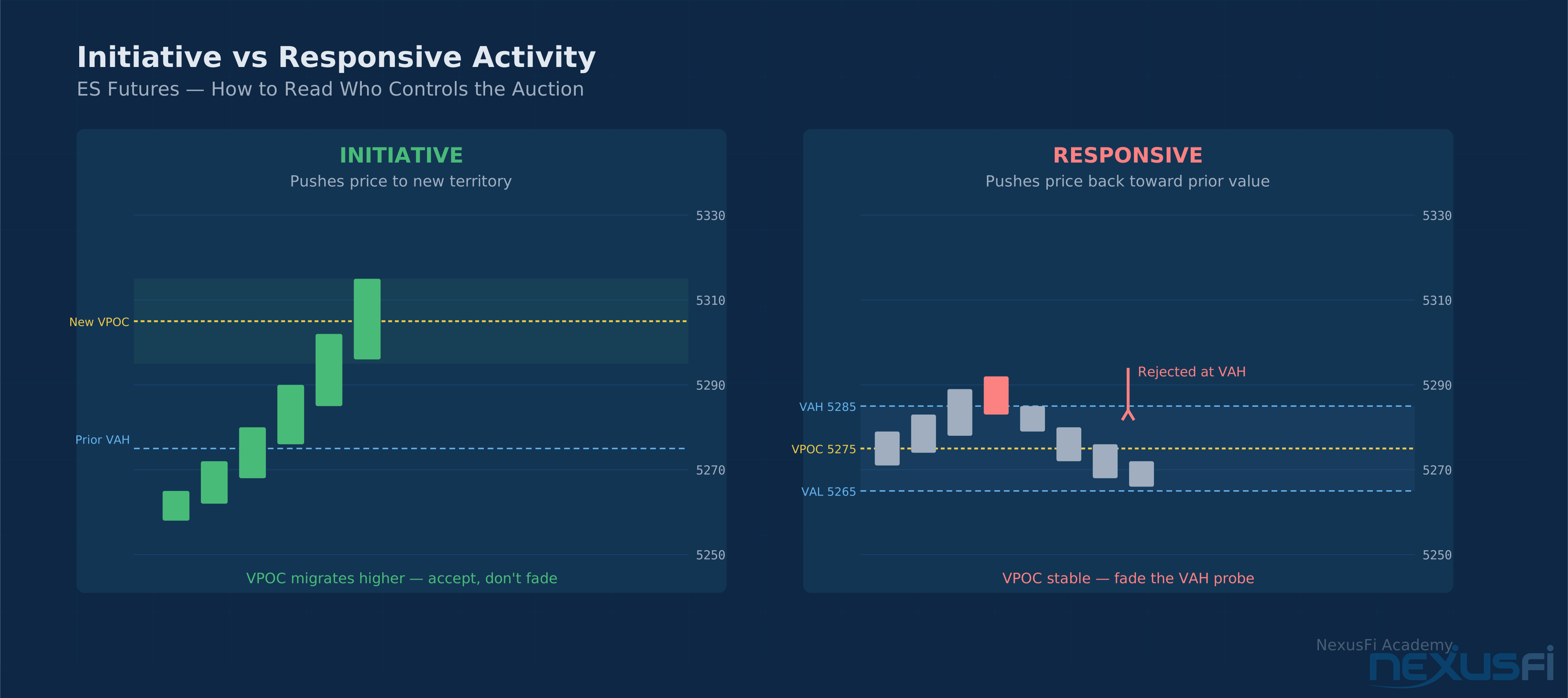
Every VP level you analyze involves this question: is the activity here initiative or responsive? If price breaks above VAH and volume builds at the new level, initiative buyers are establishing new value. If price breaks above VAH and immediately gets hammered back inside, responsive sellers rejected the probe. The volume distribution tells you who won.
30-second check: Did the move create new HVN structure and pull the developing VPOC toward the new price? That's initiative. Did the move leave thin volume at the extreme while the VPOC stayed anchored in the prior range? That's responsive. Check the developing profile bins at the extreme — thick means initiative won, thin means responsive won.
Value Migration #
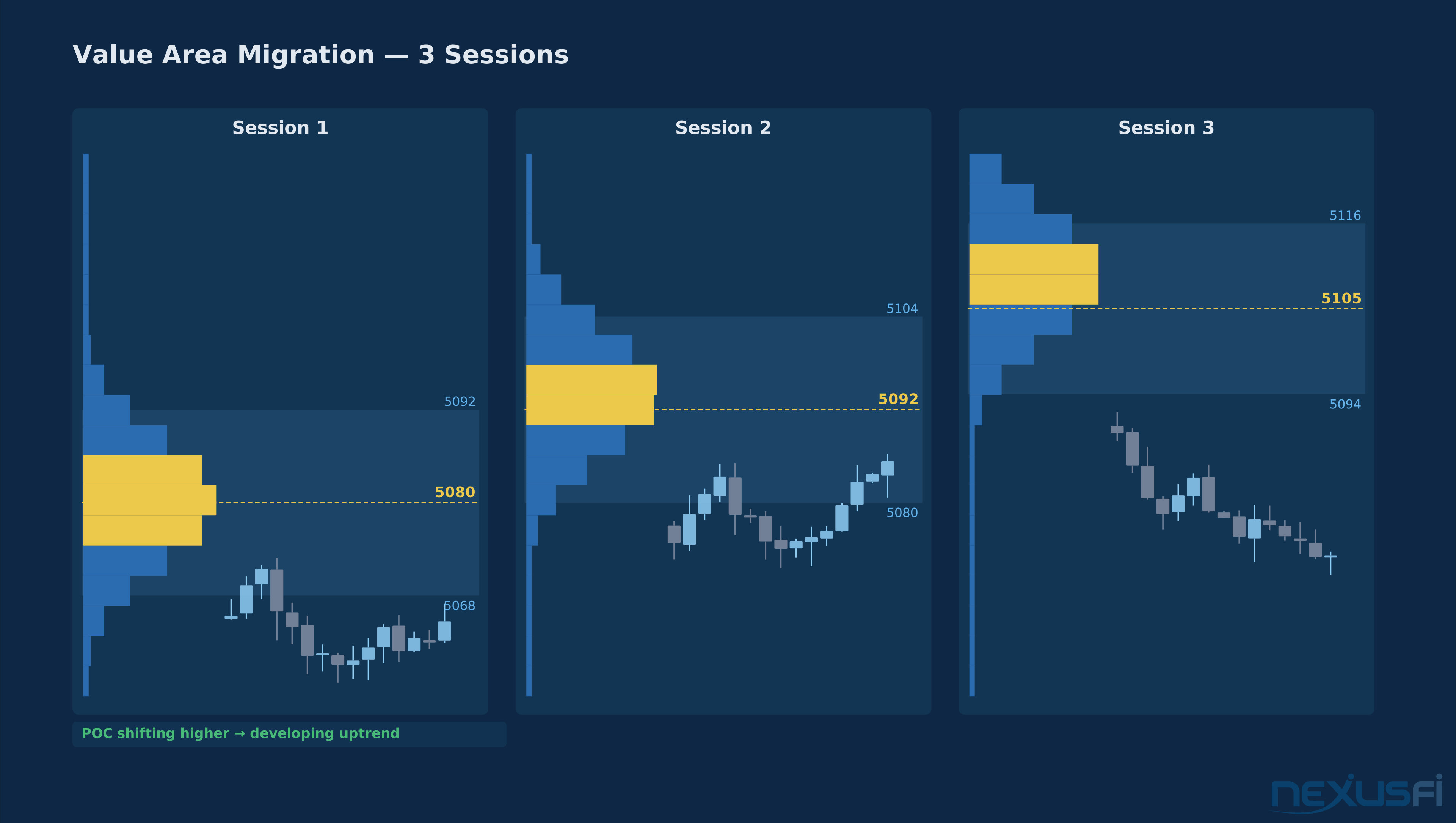
Value migration is how the auction reprices over time. Watch the developing VPOC across sessions: if it shifts higher on consecutive days, value is migrating up. The market isn't just probing higher — it's building sustained volume at progressively higher prices. That's a different signal than a single spike that leaves single prints.
The migration rate matters. Calculate it: (Today's POC - Yesterday's POC) / Tick Size gives you the rate in ticks per session. The absolute numbers are instrument-specific — what counts as "slow" on ES is different from CL or NQ. A useful baseline: if the POC shift is under 25% of the instrument's average daily range (ADR) with overlapping value areas, that's orderly repricing. If the POC jumps more than 75% of ADR between sessions with no VA overlap, that's an impulse move that may exhaust. The first one you lean into. The second one you approach with caution because the market hasn't built the volume structure to support the new prices. The rate isn't predictive — a news spike can break any linear trend — but it tells you what the auction has been doing, which is what matters for positioning.
Track migration with a simple overlay: mark each session's POC and VA on a multi-day chart. If POCs staircase in one direction with overlapping VAs, the trend has structural support. If POCs are scattered with gaps between value areas, the market is searching, not repricing.
Failed Auction #
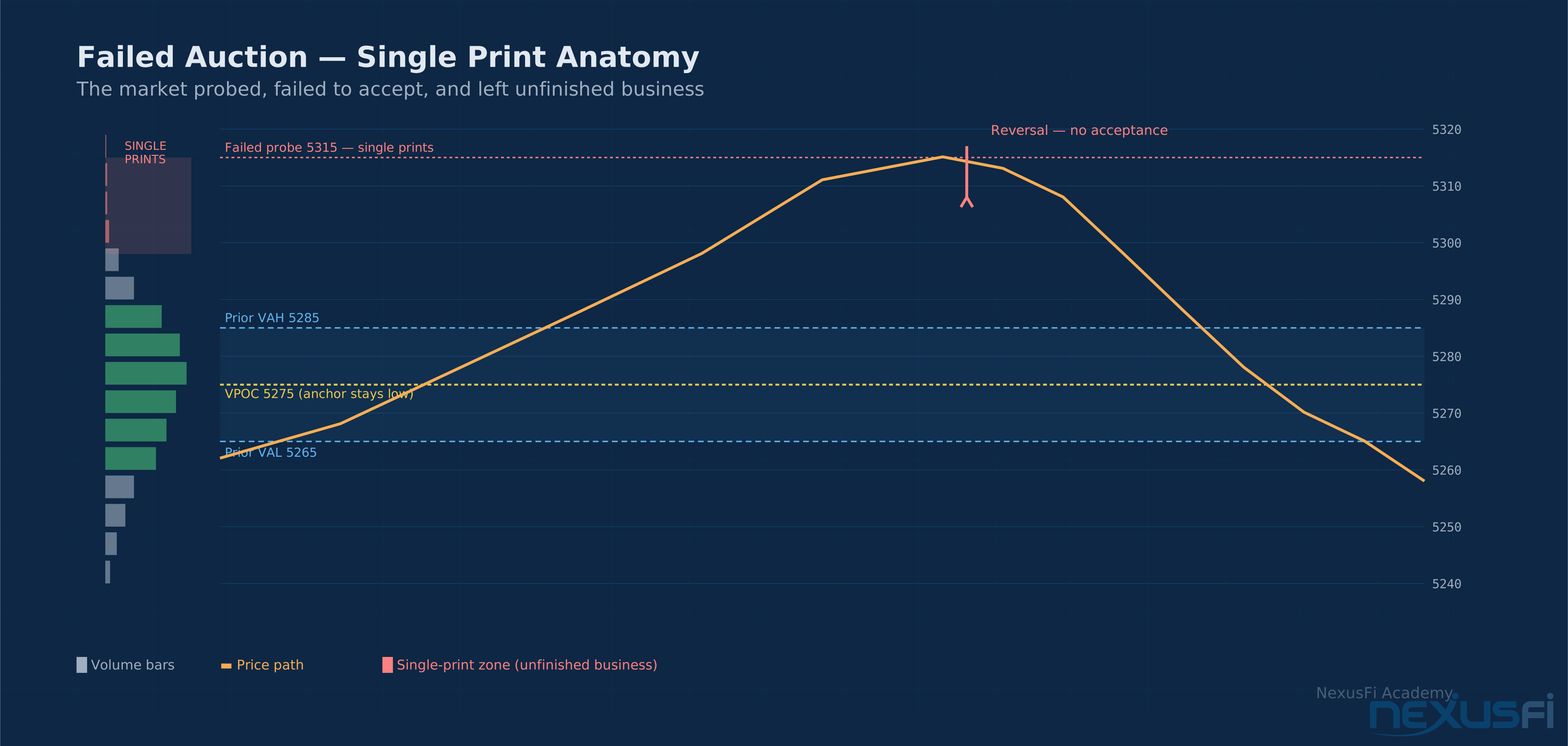
A failed auction happens when the market probes in one direction, fails to attract enough business to sustain the move, and reverses. The signature on the profile: price extends to a new extreme, volume at that extreme is thin (single prints or very low participation), and the developing VPOC fails to establish acceptance near the extreme. The VPOC might drift briefly toward the probe, but it doesn't hold there — it stays anchored in the prior range or migrates the other direction.
Auction completion is the opposite — the market probed, found opposing interest, and the auction resolved. A completed auction shows proper volume buildup at the extreme: the market tested, found responsive activity, and the profile reflects two-sided trade at the turning point.
Why this matters operationally: a failed auction at a high means the market still needs to test that level again. Unfinished business. A completed auction at a high means the market properly explored, found sellers, and reversed with conviction. The unresolved probe from a failed auction becomes a magnet for future price action — the market tends to revisit failed auctions to see if conditions have changed.
Look for failed auctions at the edges of multi-day balance ranges. A failed breakout above a balance high that leaves poor structure (thin volume, single prints, no POC migration) is the setup for a move to the opposite end of the range. @Private Banker's rule applies directly here: break out of balance, fail, and the market tests the other extreme.
The market is either balanced (rotating within value) or imbalanced (directional, migrating value). Every VP component connects to this binary. Balance means fade the edges; imbalance means don't fight the direction.
Key Concepts #
Bins and Tick Aggregation #
A bin (also called a row or price level) is the smallest price increment the profile uses to bucket volume. On ES, a 1-tick bin means each 0.25-point increment gets its own row. A 2-tick bin aggregates every 0.50 points. Larger bins smooth the distribution but lose granularity. Smaller bins show more detail but create noisier profiles.
Your bin size affects everything — POC location, Value Area boundaries, whether a node reads as HVN or LVN. Two traders looking at the same session with different bin sizes will draw different conclusions. Pick a bin size and stick with it. For ES, 1-2 tick bins are standard for intraday profiles. For CL, 1-tick bins work given the larger tick size.
When comparing your analysis with other traders, confirm you are using the same bin size. Two traders looking at the same session with different bin sizes will identify different POC locations and draw different conclusions.
Key VP Concepts — Quick Reference #
Each concept below has its own detailed article. Click through for deep dives with community citations and practical examples.
Point of Control (POC) — The single price where the most volume traded. Acts as a magnet in balanced markets, a directional signal when it migrates. Naked POCs (unvisited prior POCs) mark unfinished business the market tends to revisit.
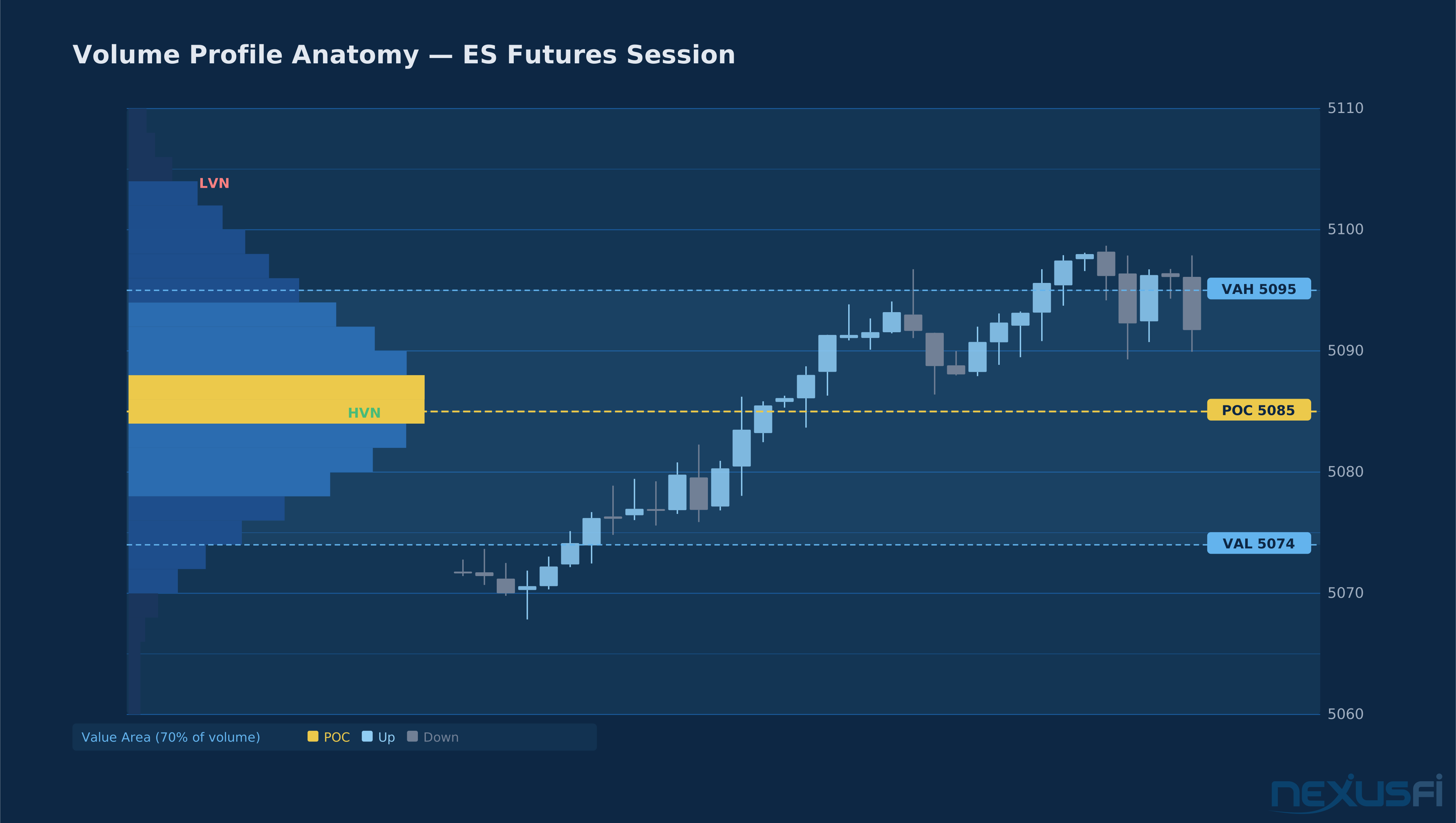
Value Area (VAH & VAL) — The price range containing 70% of session volume, built outward from the POC. VAH and VAL bracket where the bulk of business got done.
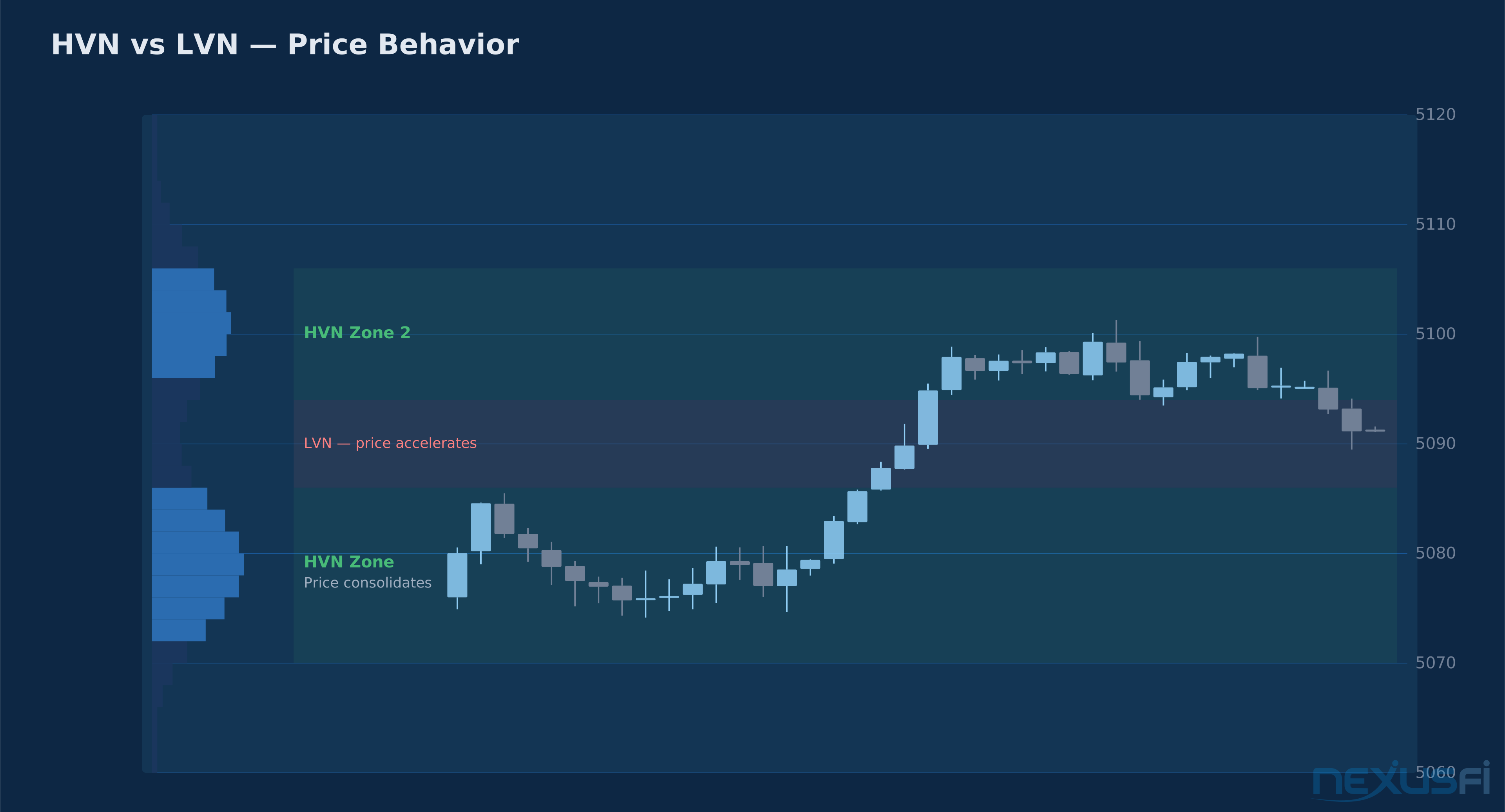
High Volume Nodes & Low Volume Nodes — HVNs are volume peaks where price congests and rotates. LVNs are volume valleys where price transits quickly. Don't originate trades in the middle of an HVN.
Single Prints — Thin-volume zones from fast directional moves. They mark initiative activity and tend to get filled as the market returns to complete the auction.
Profile Shapes — D-shape (balanced), P-shape (volume concentrated high), b-shape (volume concentrated low). Shape is a starting point — pair with POC migration and composite context.
POC is where the most business got done. VAH/VAL bracket 70% of volume. HVNs attract price; LVNs repel it. These are your reference points for every trade.
Building the Map #
Initial Balance (IB) #
The Initial Balance is the price range established during the first hour of RTH trading (9:30-10:30 ET for US equity futures). Don't confuse it with "opening range" — the opening range is a looser concept that different traders define differently (first 5 minutes, first 15 minutes, first 30 minutes). The IB is specifically the first 60 minutes of RTH and has a defined role in Market Profile theory as the range set by the first two 30-minute TPO brackets.
IB width tells you something about the day type ahead:
- Wide IB (ES: 15+ points): Strong early conviction. Often leads to rotational, balanced days where price stays within or near the IB range. Wide IBs suggest the market front-loaded its move.
- Narrow IB (ES: under 8 points): Indecision or positioning ahead of a trigger. Narrow IBs are more likely to see IB extension — a breakout beyond the IB range — as the session develops.
IB extension occurs when price breaks above or below the Initial Balance. The extension direction and magnitude are tradeable signals. A single IB extension (price breaks one side) suggests trend potential in that direction. Double IB extension (price breaks both sides) suggests a volatile, range-expansion day.
Combine IB with VP: if price extends above the IB and the developing VPOC migrates higher, that's confirmation of directional acceptance. If price extends above the IB but the VPOC stays anchored in the IB range, the extension may fail — the volume isn't following the price.
Open Type Classification #
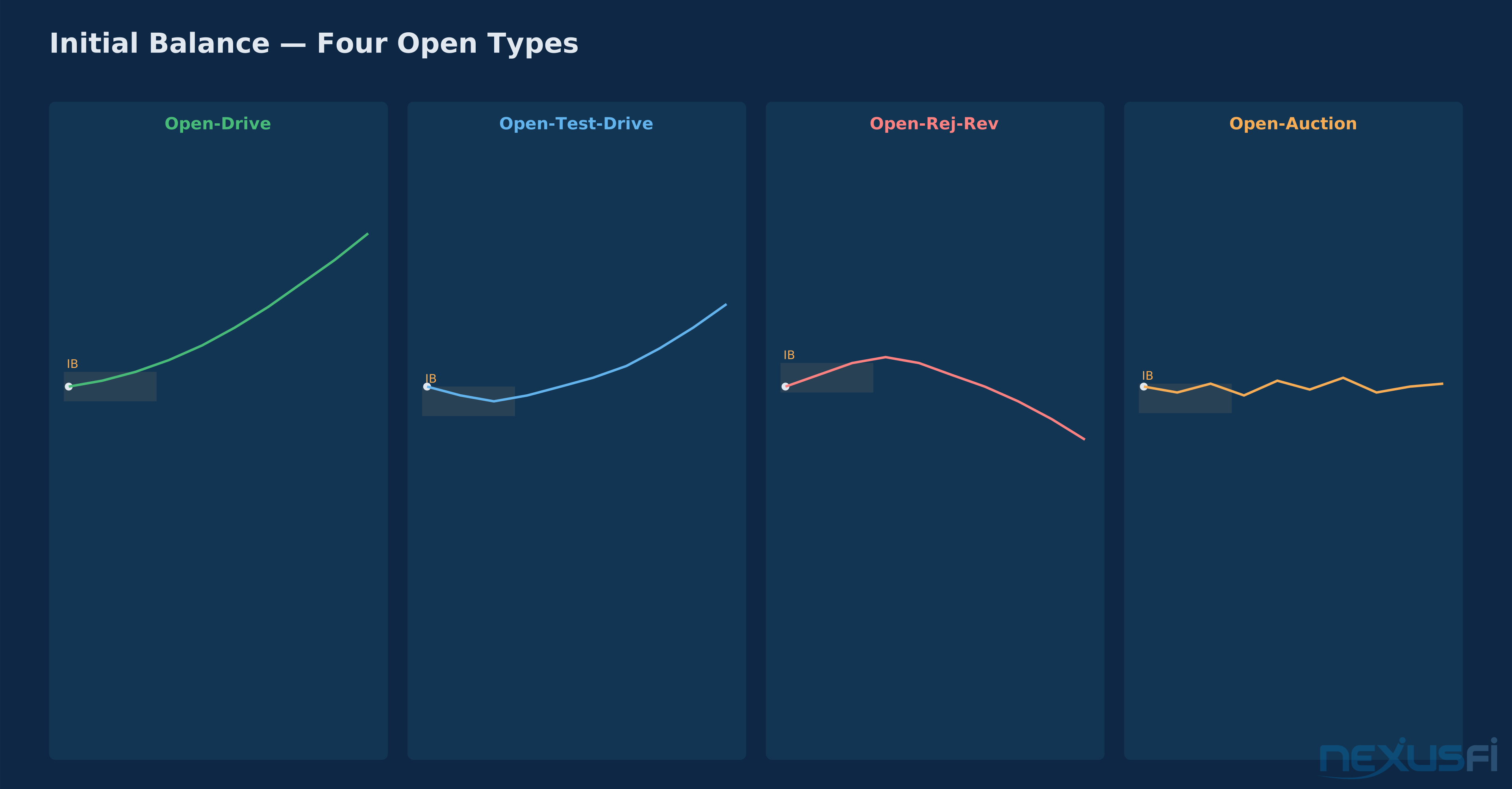
How the market opens relative to prior value sets the tone for the session. These classifications come from Market Profile theory and map directly to VP:
- Open Drive: Market opens at or near an extreme and moves aggressively in one direction from the open. Strong initiative activity. The profile starts building volume at one end of what will become the day's range. These sessions often become trend days. Don't fade the initial move.
- Open Test Drive: Market opens, tests one direction (probing for responsive activity), doesn't find enough to hold, then drives the other way. You'll see a small wick on one side of the profile early, then the real move. The failed test is the tell.
- Open Rejection Reverse: Market opens outside prior value, tests into the gap, gets rejected, and reverses back through the opening price. The profile shows initiative in one direction that got overwhelmed by responsive activity. The reversal through the open is the signal.
- Open Auction: Market opens in or near prior value and auctions back and forth without clear direction. This is the balanced open — the market is searching for direction. The developing profile will look D-shaped early. Wait for the IB to complete before forming a directional thesis.
Classify the open in the first 30-45 minutes. Open drive: don't fight it, look for pullback entries with the drive. Open auction: trade the edges of the developing range until a breakout resolves.
Session Definition & Composite Analysis #
Session definition is the single biggest source of conflicting VP analysis. See the detailed article for complete guidance on RTH vs Globex, composite construction, VP vs TPO, and contract roll considerations.
Session Types & Composite Profiles — RTH-only, ETH-only, and 24-hour profiles produce different POCs and value areas from identical data. Build separate profiles for RTH and Globex. Use developing profiles for execution timing; composites for structural context. Anchor composites to the last major structural shift, not arbitrary timeframes. VP measures contracts traded (where business got done); TPO measures time spent (where the market lingered). Avoid spanning contract roll dates.
Build composite profiles from multiple sessions to see developing structure. The developing VPOC during RTH is your real-time compass — when it migrates, the market has conviction.
Trade Setups #
Every trade you take should be located relative to the Volume Profile map. The question is never just "is price going up or down?" but "where is price relative to value, and is value accepting or rejecting this level?"
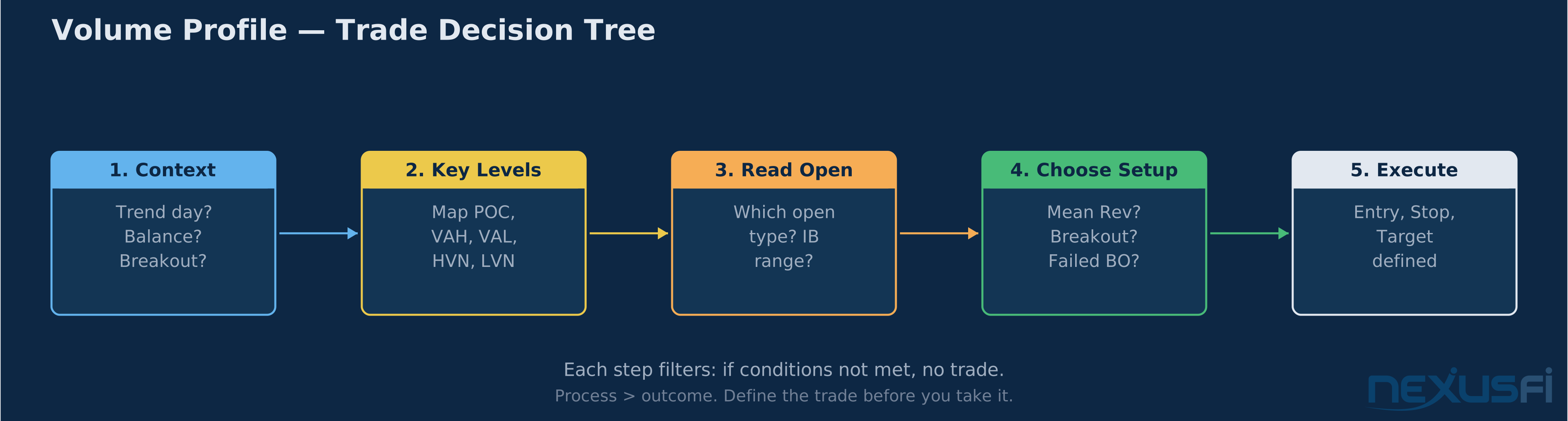
Decision Tree: What to Do at the Open #
Run this once the first 30-45 minutes of RTH have printed:
Step 1 — Where is price relative to prior value?
- Inside prior VA → balanced regime is the default assumption
- Above prior VAH → potential imbalance higher, check for acceptance
- Below prior VAL → potential imbalance lower, check for acceptance
Step 2 — What did the open look like?
- Open drive → trade with the drive, wait for pullback
- Open test drive → fade the failed test, trade with the reversal
- Open rejection reverse → reversal is the trade
- Open auction → wait for IB to complete, no directional bias yet
Step 3 — What is the developing profile telling you?
- VPOC migrating directionally → imbalance, don't fade
- VPOC stable → balance, fade the edges
- Volume building outside prior VA → acceptance of new value, lean with the direction
- Volume building inside prior VA → prior value still holds, lean toward mean reversion
Step 4 — Is IB wide or narrow?
- Wide IB → expect rotation within the range, fade extensions
- Narrow IB → expect IB extension, trade the breakout direction
Step 5 — Combine and commit. Balance signals (VPOC stable + inside prior VA + wide IB + open auction) → fade from VA edges toward POC. Imbalance signals (VPOC migrating + outside prior VA + narrow IB + open drive) → trade with the direction on pullbacks. Mixed signals → reduce size or wait for clarity.
Poor Highs and Poor Lows #
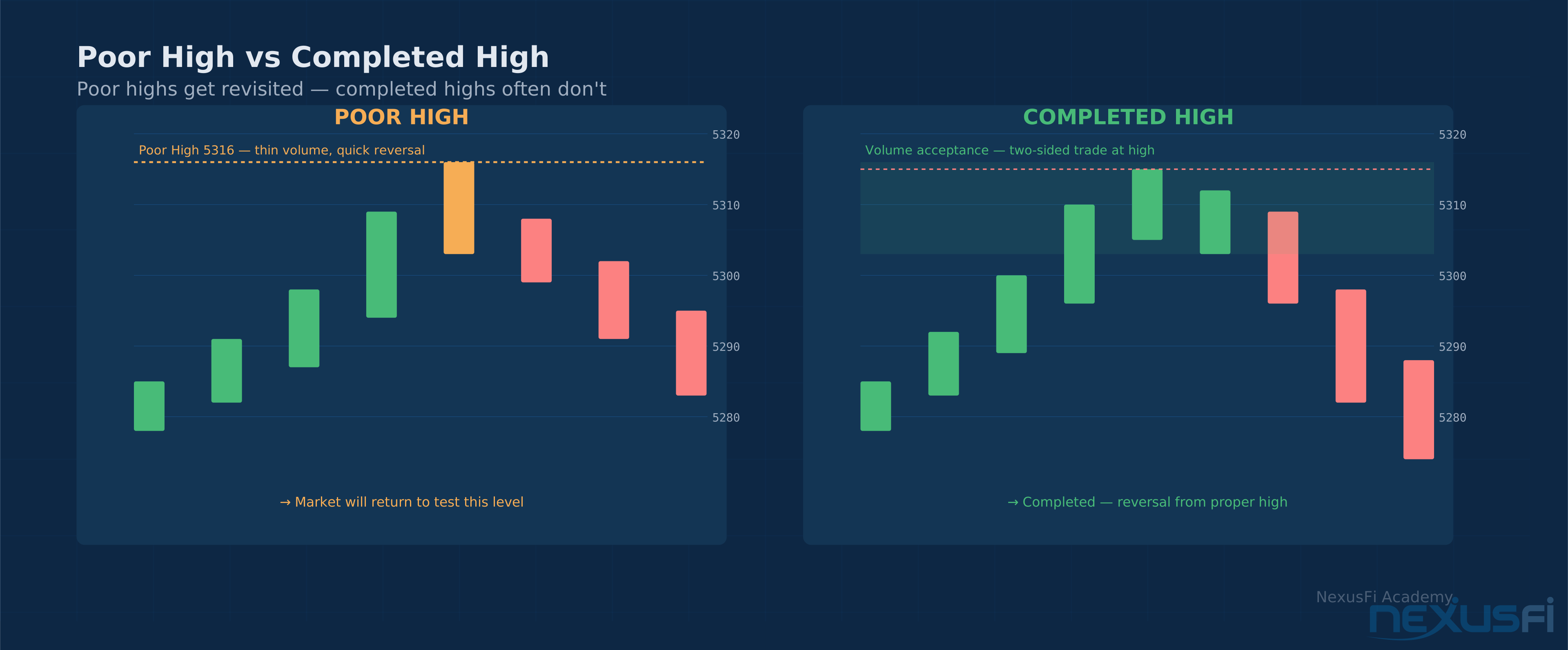
A poor high or poor low is an extreme that lacks proper auction completion. The market probed in one direction but didn't find enough opposing interest to build acceptance there — and didn't reject it cleanly with a sharp reversal either. The result is a weak extreme with thin volume that functions as unfinished business.
Poor highs and lows get revisited. When they do, the market either repairs them (building volume and establishing proper acceptance) or rejects them (creating a clean reversal with a strong tail). Mark poor highs and lows from prior sessions as potential targets — especially when the market is in balance and looking for a directional trigger.
The 80% Rule #
The classic 80% rule states: if price opens outside prior value, re-enters the value area, and sustains inside for two consecutive 30-minute periods, there's a high probability it will rotate to the opposite value area edge.
The "80%" label is a heuristic passed down through Market Profile literature, not a backtested statistic that holds up cleanly across all instruments and timeframes. @josh ran the numbers on ES and found the rule is far more subtle than the textbook version suggests. His conclusion after applying strict criteria: "In the past 4 years, 5 out of 8 days (62%) have fit the picture." [6] The small sample size is the point — when you define "re-enters and sustains" rigorously, the setup doesn't trigger often.
The rule works as a tendency in balanced conditions: price opens outside value, returns inside, and if it can't push back out, gravity pulls it toward the other side. But it breaks down when the market isn't respecting prior value — in trending conditions, price can re-enter the old VA briefly and then continue in the original direction.
If you want to use it operationally: price must open outside prior VA, cross back inside, and hold inside for two full 30-minute closes. Then target the opposite VA edge. Don't trade it blindly — pair it with developing profile confirmation and check whether the composite supports a rotational thesis.
News and Event Risk #
VP levels don't exist in a vacuum. Scheduled economic releases (CPI, FOMC, NFP, EIA inventory) and unscheduled geopolitical events can overwhelm any profile structure. A perfectly good HVN that held for three days will get blown through in 30 seconds on a surprise rate decision.
Before the RTH open, check the economic calendar. If a high-impact release is scheduled during your session, understand that your VP levels become provisional until the event prints. The developing profile before the release is likely to be thin and unreliable — the market is waiting, not committing. After the release, the profile will rebuild rapidly as volume floods in.
The practical rule: don't anchor VP trades into major events. If you're fading VAH and CPI drops in 10 minutes, either be flat or have a wider stop and accept the event risk. The market will tell you a new story after the release — your pre-event VP map may be irrelevant.
Run the decision tree at the open: locate price relative to prior value, read the open type, then check the developing profile. Your setup follows from that sequence — don't skip steps.
Trade Vignettes #
Vignette 1: Balance Fade from VAH on ES #
ES has been in a 3-day balance range. Prior RTH value areas overlap. The composite shows a clear D-shape with POC at 5250 and VA spanning 5240-5260. Today opens at 5258, near VAH. The open is an auction — no directional conviction.
The developing profile builds volume at 5255-5258. Price pushes to 5261 — one tick above VAH — and stalls. The profile at 5261 shows thin volume: a probe, not acceptance. The developing VPOC sits at 5255, not migrating higher. This is rejection at the value area edge in a balanced regime.
Fade short in the 5259-5261 zone (entry is a zone, not a perfect fill) with stop at 5265 (above the probe high, outside the balance range). Target 1: the developing VPOC at 5255. Target 2: the composite POC at 5250. Target 3: VAL at 5240 if the rotation completes.
Management: Take half at the developing VPOC (5255). Trail the remaining position with a stop one tick above the last swing high. If price reaches the composite POC at 5250, take another quarter. Let the final quarter ride toward VAL at 5240 with a trailing stop under each developing HVN as price works lower. Invalidation: if price returns above 5261 and the developing profile starts building volume there, the rejection thesis is dead — close the trade.
Why it works: Balance regime, overlapping value areas, rejection at VA edge confirmed by thin volume on the probe and static VPOC. The profile is telling you the market doesn't accept price above value. At entry, the only information available is: 3 days of balance, auction-type open, and thin volume at 5261. No hindsight required.
Vignette 2: Breakout Through Prior Value on CL #
CL closed yesterday with value at 78.50-79.80 and POC at 79.20. Overnight, API inventory data surprises to the downside. The ETH session trades down to 77.80, building volume between 78.00-78.30. The overnight POC prints at 78.15.
RTH opens at 78.10 — below prior value. This is an open test drive: the first 30 minutes probe up to 78.55 (back into the lower edge of prior value) but can't hold — price falls back below 78.40 within minutes. The developing VPOC sits at 78.20 and isn't migrating higher. The IB is narrow: 77.90-78.55.
When price breaks below the IB low at 77.90, this is IB extension to the downside with the developing profile confirming — value is building below prior value. Short entry on the break below 77.90 with stop above 78.40 (the failed re-entry level). Target: the next composite LVN or HVN below.
Management: Target the next composite LVN below. If CL hits a composite HVN, expect congestion — take partial profits. Trail stop to breakeven once the trade moves 30+ ticks in your favor. Invalidation: if price reclaims 78.40 and holds (developing profile building volume above that level), the failed re-entry has reversed — exit immediately.
Why it works: Overnight trigger shifted value lower. RTH attempted to reclaim prior value and failed (rejection, not acceptance). Open type was a test drive — the test up failed. IB extension confirmed the direction. At entry, the available information is: overnight gap down with volume, failed re-entry test, and narrow IB breaking to the downside. The developing profile was building new value below the old range — imbalance, not balance.
Vignette 3: Failed Breakout with Structure-Based Stop on ES #
ES has been trending higher for three sessions. Today opens above prior value — an open drive higher. The first hour pushes to a new high at 5310, 20 points above prior VAH. Volume is building at 5295-5305.
At 11:00, price reverses sharply from 5310. The profile at 5305-5310 shows single prints — price raced through without building volume. This is a failed auction at the high. The developing VPOC drops to 5298 and starts migrating lower. By 11:30, price is back at 5295 and the profile is building a HVN between 5290-5298.
The market probed higher, left single prints, and is now rejecting those prices. The structure-based stop for anyone long from the breakout is below 5290 — the bottom of the developing HVN. If price breaks below where the new volume is building, the breakout thesis is dead.
Alternatively, fade the failed breakout short from the 5298-5302 zone with stop at 5312 (above the single-print high). Target: prior session VAH, then POC. The single prints above become your invalidation level — if the market fills them with volume, the breakout is back on.
Management: First target is prior session VAH. Second target is prior session POC. Take half at the first target, trail the rest with a stop one tick above the developing VPOC (which is migrating lower, so your stop tightens automatically). Invalidation: if the market returns above 5308 and starts filling the single prints with volume (the thin zone thickens on the developing profile), the failed auction is being repaired — exit the short.
Why it works: Single prints at the high showed initiative without acceptance — a failed auction. VPOC migration reversed direction. The developing profile was building value below the probe high, not at it. At entry, the observable information is: single prints at the extreme, VPOC migrating away from the high, and new volume building at lower prices. Structure-based stop uses the profile's own information rather than arbitrary tick distances.
Vignette 4: Value Migration Day on ES #
Three consecutive sessions with POCs staircasing higher (5230, 5245, 5260) and VAs overlapping ~60% — orderly value migration (see The Auction Framework above for migration mechanics). Today opens at 5268 with an open auction. By 10:30, the developing VPOC sits at 5270 and is migrating higher. Volume building in the 5268-5275 zone continues the pattern.
Entry: buy the pullback to the 5264-5266 zone (developing VAL) with stop below 5258 (below prior session's VAH, which should act as support if migration continues). Target 1: developing VAH near 5275. Target 2: IB extension target.
Management: Trail a stop under each new developing HVN as price builds higher. Invalidation: if the developing VPOC drifts back toward yesterday's POC at 5260, migration is stalling — tighten stop and reduce size. If prior session VAH breaks as support, the thesis is over.
Why it works: Multi-session staircase POCs with overlapping VAs plus today's developing profile continuing the pattern. You're entering with structural trend support, not against it.
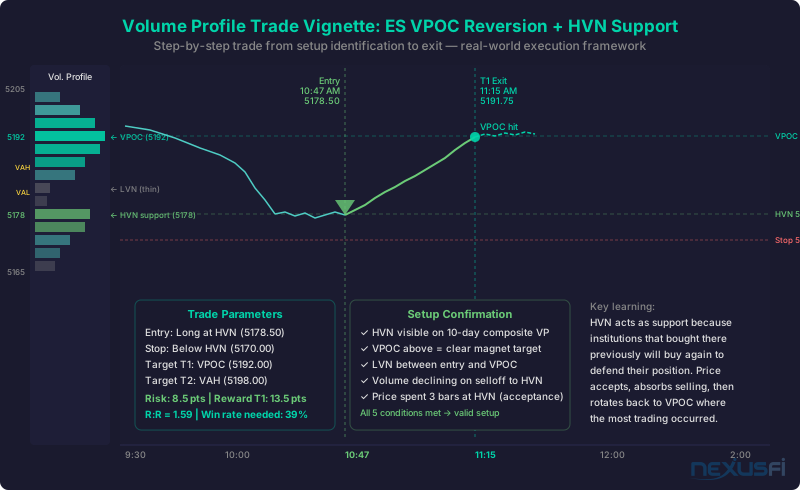
Real trades with real VP logic applied. Study how the framework translates from concept to execution — the pattern is always locate, read, decide, manage.
When Volume Profile Doesn't Work #
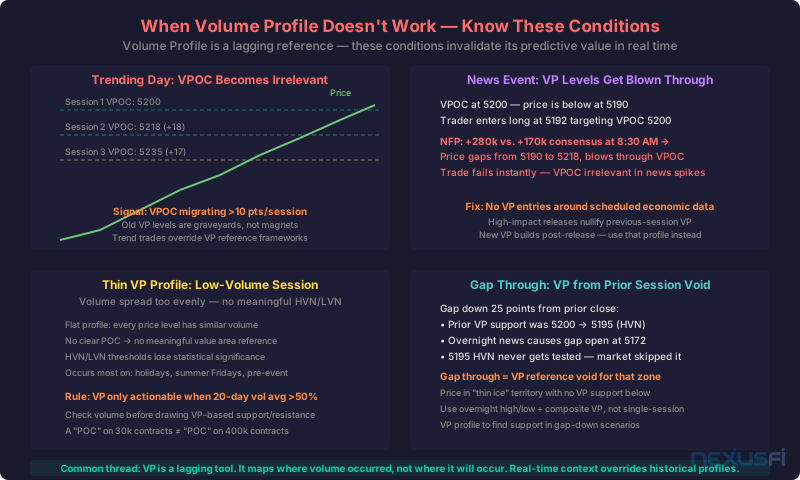
VP has blind spots. Know when to put it aside:
Volume Profile levels drawn before a major news event (FOMC, CPI, NFP) become unreliable immediately after the release. The auction that created those levels is no longer relevant. Wait for the new post-event profile to stabilize before anchoring trades.
Low-liquidity instruments. VP relies on meaningful volume to build its distribution. On thinly traded contracts (micro futures in off-hours, exotic commodities, deep-OTM options), the profile is noise — spurious volume spikes distort the distribution and make the POC unreliable. There aren't enough contracts to create statistically meaningful nodes. Stick to VP on liquid instruments: ES, NQ, CL, GC, ZB during active hours. Alternative: use pure price-action levels or moving-average breakout logic.
Event-driven sessions. FOMC days, CPI releases, NFP mornings — the pre-event profile is thin because nobody's committing, and the post-event profile is a single massive spike that hasn't been tested. VP levels drawn before the event are provisional at best because the auction that created them is no longer relevant. After a major data release, the old profile is stale immediately. Wait for the new profile to build before anchoring trades to it. Alternative: trade the event reaction with order flow and price-action, then switch back to VP once the post-event profile stabilizes.
Trending days with no rotation. On a strong trend day (open drive, one-time framing, no pullback to the developing VPOC), VP gives you the direction but not useful execution levels. The profile is elongated, the VPOC sits at one end, and every "node" is thin because price never revisited any level — so there's no two-sided acceptance to anchor against. VP tells you the trend is real (single prints, migrating VPOC, elongated profile). It doesn't give you a clean entry. Alternative: use VWAP standard deviation bands or order flow for pullback entries on trend days.
First 30 minutes of RTH. The developing profile at 10:00 is built from 30 minutes of data. That's not enough to establish reliable nodes — the sample size is too small and the opening auction is still resolving. Don't trade VP levels generated from an incomplete profile. Wait for the IB to set (at minimum) before using developing profile levels for trade location.
Overnight gaps with no revisit. If the market gaps through a VP level overnight, that level may not act the way it would during RTH. A naked POC that gets gapped through on Globex hasn't been "tested" in any meaningful way — overnight liquidity is thinner, participants are different, and the auction dynamics that created the original level don't apply to the gap-through. Mark it, but don't treat it the same as an RTH revisit.
VP has blind spots: thin liquidity, event-driven sessions, and strong trend days. Know when to set it aside and use alternative tools.
Practical Application #
Pre-Market Setup #
Before the RTH open, mark these levels:
- Prior RTH POC, VAH, VAL
- Overnight high/low and ETH POC
- Composite HVNs and LVNs from the weekly profile
- Any naked POCs from recent sessions
- Initial Balance range once the first hour completes
- Note where the market opens relative to prior value — inside or outside? This determines your starting framework (balanced vs imbalanced)
Trade Location by Regime #
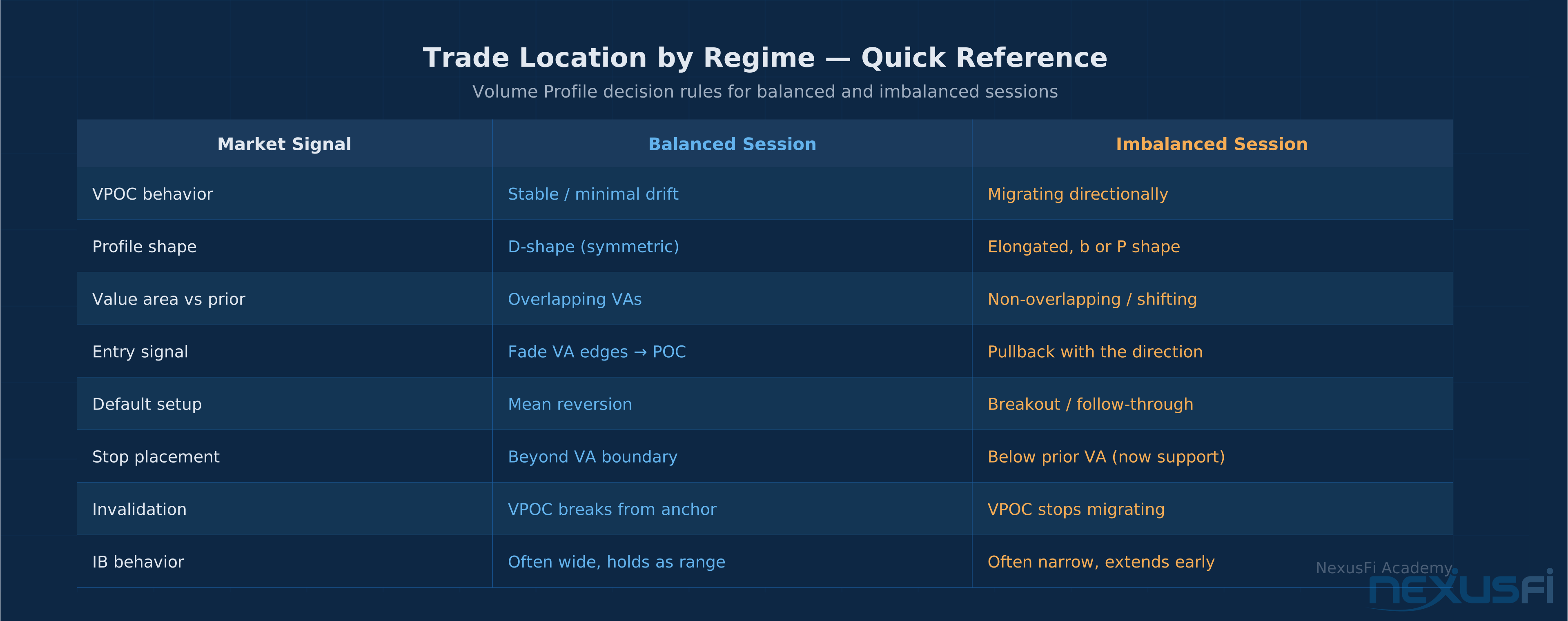
@Private Banker's intraday approach on ES: track the developing VAH, VAL, and VPOC as support/resistance levels, using the VPOC as a target from edge trades. [2] On CL specifically, he builds context from the previous session's profile, the overnight session's profile, and the developing profile's value area — then enters trades at predetermined levels while monitoring the volume ladder for confirmation. CL requires wider stops than ES due to aggressive overshoots before reversals. [2]
Multi-Timeframe Context #
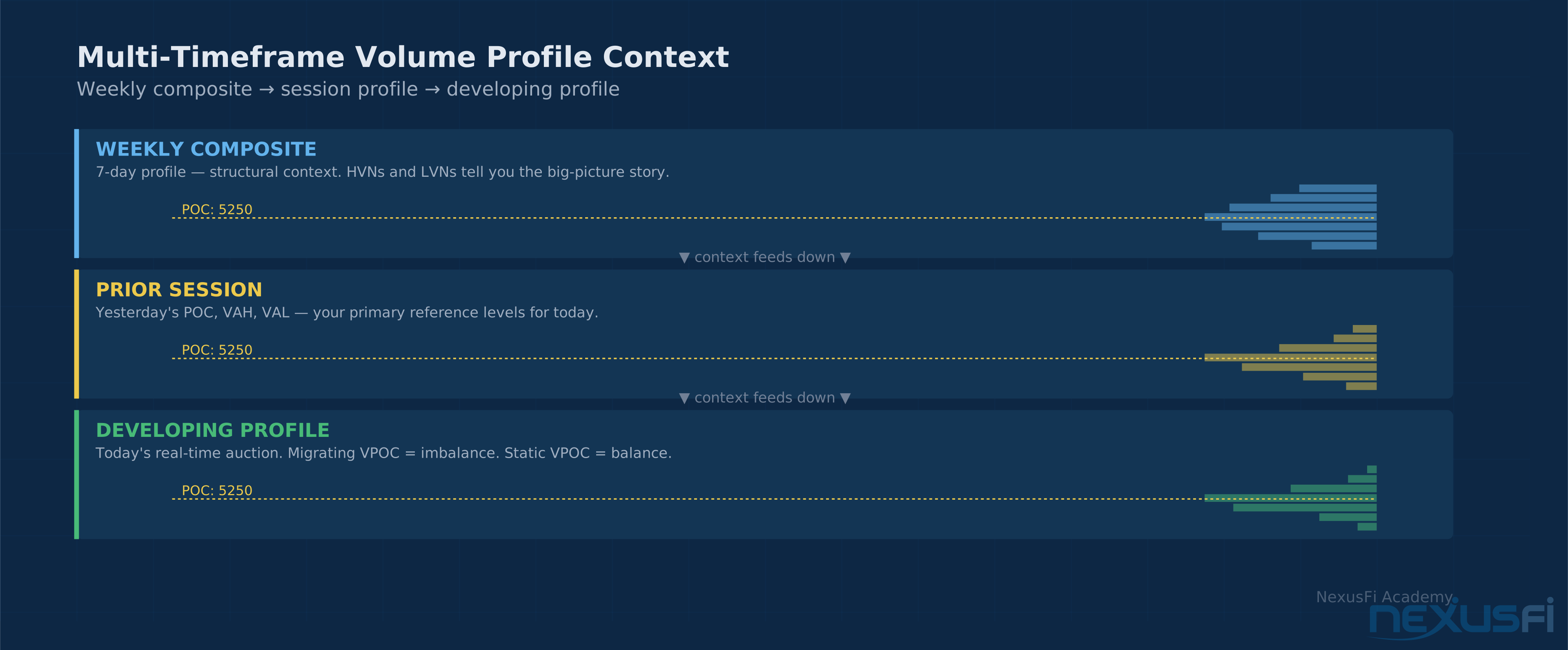
Today's developing profile gives you execution. Prior session gives you reference. The weekly composite gives you context.
If today's VAH aligns with a weekly LVN, expect fast traversal — less absorption, more velocity. If today's POC develops near a weekly HVN, expect congestion and rotation. The higher timeframe tells you where you are in the auction. The lower timeframe tells you how to execute.
Risk Management #
Place stops where your thesis is structurally wrong — not at arbitrary tick distances.
Fade trade: stop beyond the rejection high/low and outside the value boundary. If price accepts beyond your stop level (sustained trading, volume building), your balance thesis was wrong.
Breakout trade: stop below the breakout level if acceptance fails. The old VAH should hold as new support — if it doesn't, the breakout was false.
ES allows tighter structure-based stops because the profile is cleaner. CL requires more room — crude overshoots aggressively before reversing, and stops placed inside noise zones get clipped regularly.
Execution at VP Levels #
Knowing where to trade is half the job. Execution at those levels:
- At HVNs and thick zones: Use limit orders. These are congestion areas where price rotates — you'll get filled. Market orders in the middle of an HVN give you the worst possible entry in a zone where price is random.
- At LVNs and single prints: Consider market orders or aggressive limits. Price moves fast through thin zones — a limit sitting at the exact LVN may never fill because price gaps through it. If you're fading a test into a single-print zone, place your limit a tick or two inside the zone, not at the edge.
- Stop placement on single-print bounces: Give your stop at least one tick beyond the printed zone, not at the edge. Single prints can get a partial fill (price pokes into the zone before reversing) and a stop sitting right at the boundary gets clipped on the noise.
- Size into positions at profile levels: Rather than full size at one price, scale in across a zone. If you're buying at VAL, place orders across a 2-3 point range bracketing VAL. The market doesn't respect your exact level — it respects the zone.
Knowledge Map
Prerequisites
Understand these firstGo Deeper
Build on this knowledgeReferences This Article
Articles that build on this topicCitations
- — Volume Profile and Footprint discussion (2012) 👍 118“There are two primary categories for a days range within the profile or recent profiles -- balance and imbalance. Balance means the market is trading primarily within a recent range.”
- — Volume Profile and Footprint discussion (2012) 👍 16“For volume profiles, I prefer to contain them within a balance/bracket area. I then look to see what the balance's value area levels are and where the point of control is.”
- — Volume Profile and Footprint discussion (2012) 👍 25“To better understand the concept of the value area, I have tried to visualize the developing value area by coding an indicator which displays it.”
- — Crude Oil trading (2012) 👍 21“The VAL and VAH is the range where the 70% of the action happened in the previous day.”
- — Making a Living with the Micros (2021) 👍 21“VALUE is the area where the buyers and sellers tend to agree on price, and is usually a big magnet. The Point of Control (POC) is the price that had the most number of contracts traded.”
- — Volume Profile and Footprint discussion (2012) 👍 19“In the past 4 years, 5 out of 8 days (62%) have fit the picture. It is very hard to meet the strict criteria as defined.”
- — Volume Profile and Footprint discussion (2012) 👍 18“If a market breaks out of a balance area and fails and moves back within the balance area, my expectation is that the market will test the low of the balance area.”
- — Is Volume Profile worth learning or is it an outdated concept? (2020) 👍 6“The concept is easy to trade so long as you have good data feeds, and the opportunities on markets are many. You do still need to have some wits about you.”
- — Volume Profile and Footprint discussion (2015) 👍 14“When a market is in balance, the profile will often be very gaussian/normal/bell shaped. In this situation, the VAH/VAL represent a meaningful representation of one standard deviation.”
- — Volume Profile and Footprint discussion (2012) 👍 27“We then ripped back up into the developing value area and ran right up to the developing value area high. This is a destination trade in my book to test the high end of the range.”
- — Introduction to Market Profile and Volume Analysis (2023)
- — Market Profile Theory: J. Peter Steidlmayer on the Markets (1989) (1989)