All NexusFi Academy articles across every category, sorted by most recently updated.
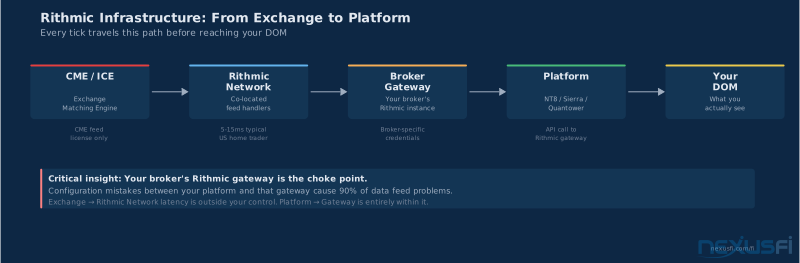
Overview Rithmic R|Protocol is the data feed technology that powers the order flow and market depth your NinjaTrader, Sierra Chart, Quantower, or Jigsaw plat...
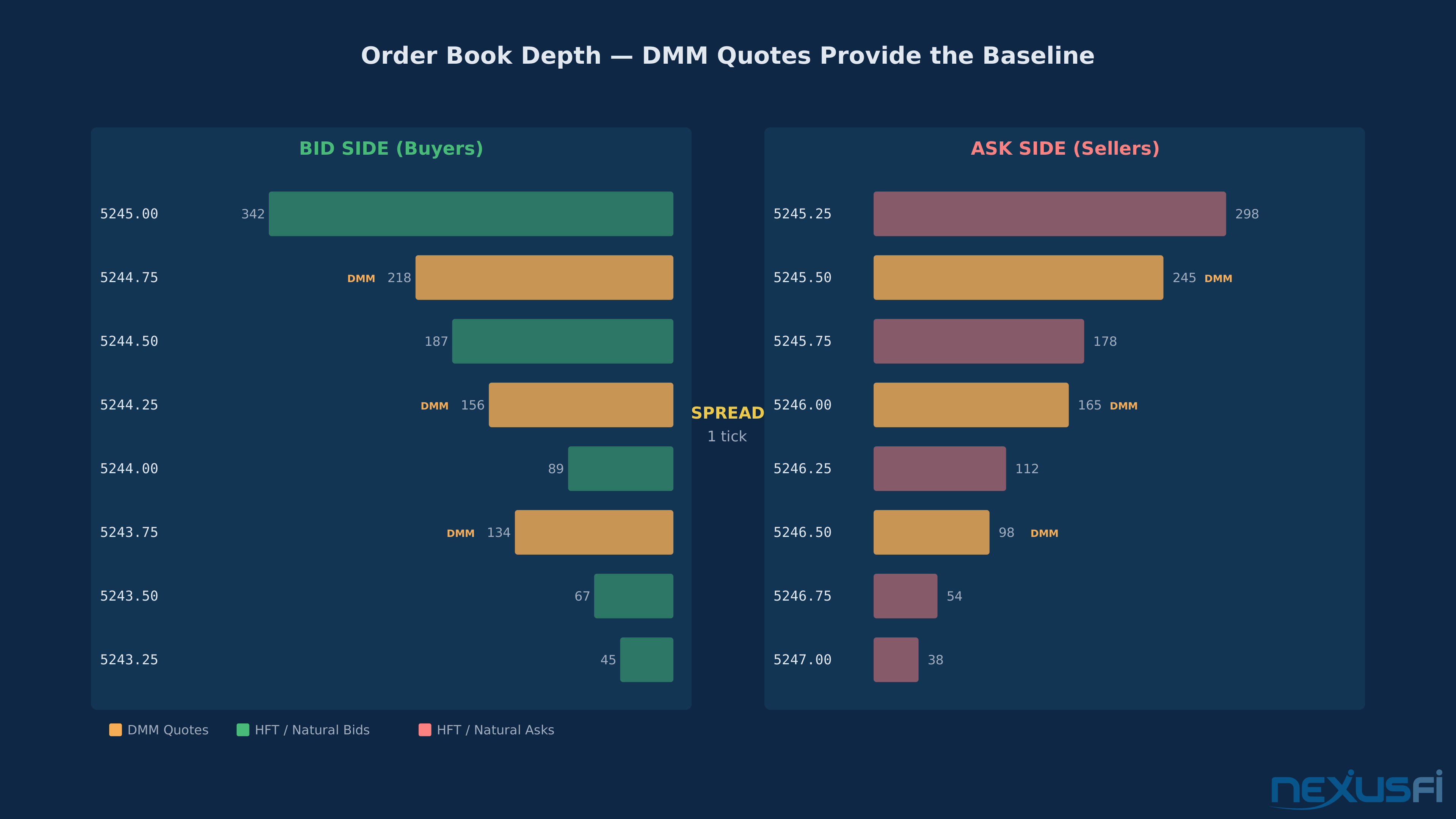
Every time you hit the bid or lift the offer on a futures exchange, someone is on the other side. Not just "someone" -- a specific participant with a specifi...
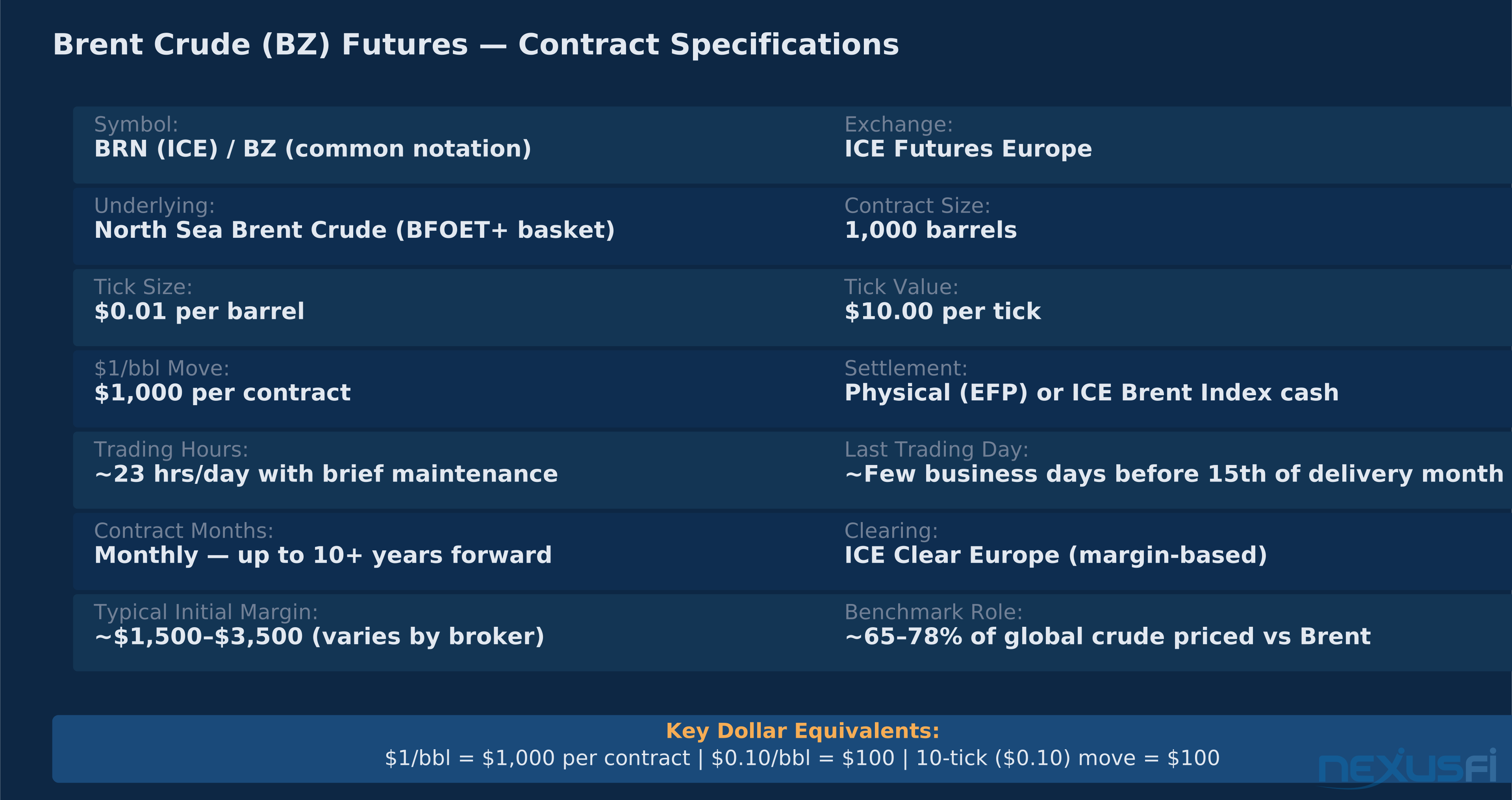
Overview Brent Crude futures (BZ on NYMEX, BRN on ICE) are the world's primary oil price benchmark. When news anchors say "oil is up $2 a barrel," they mean ...
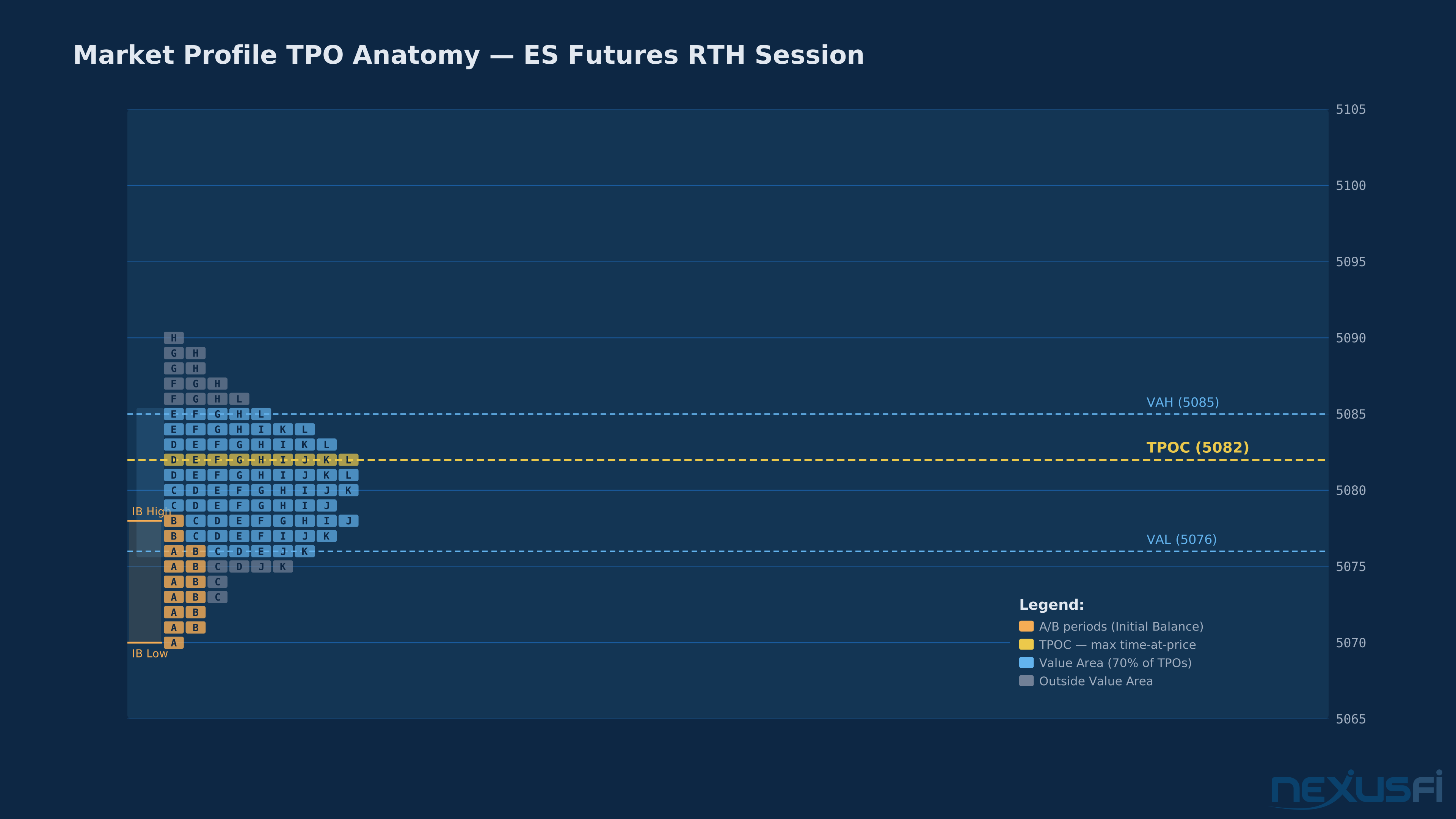
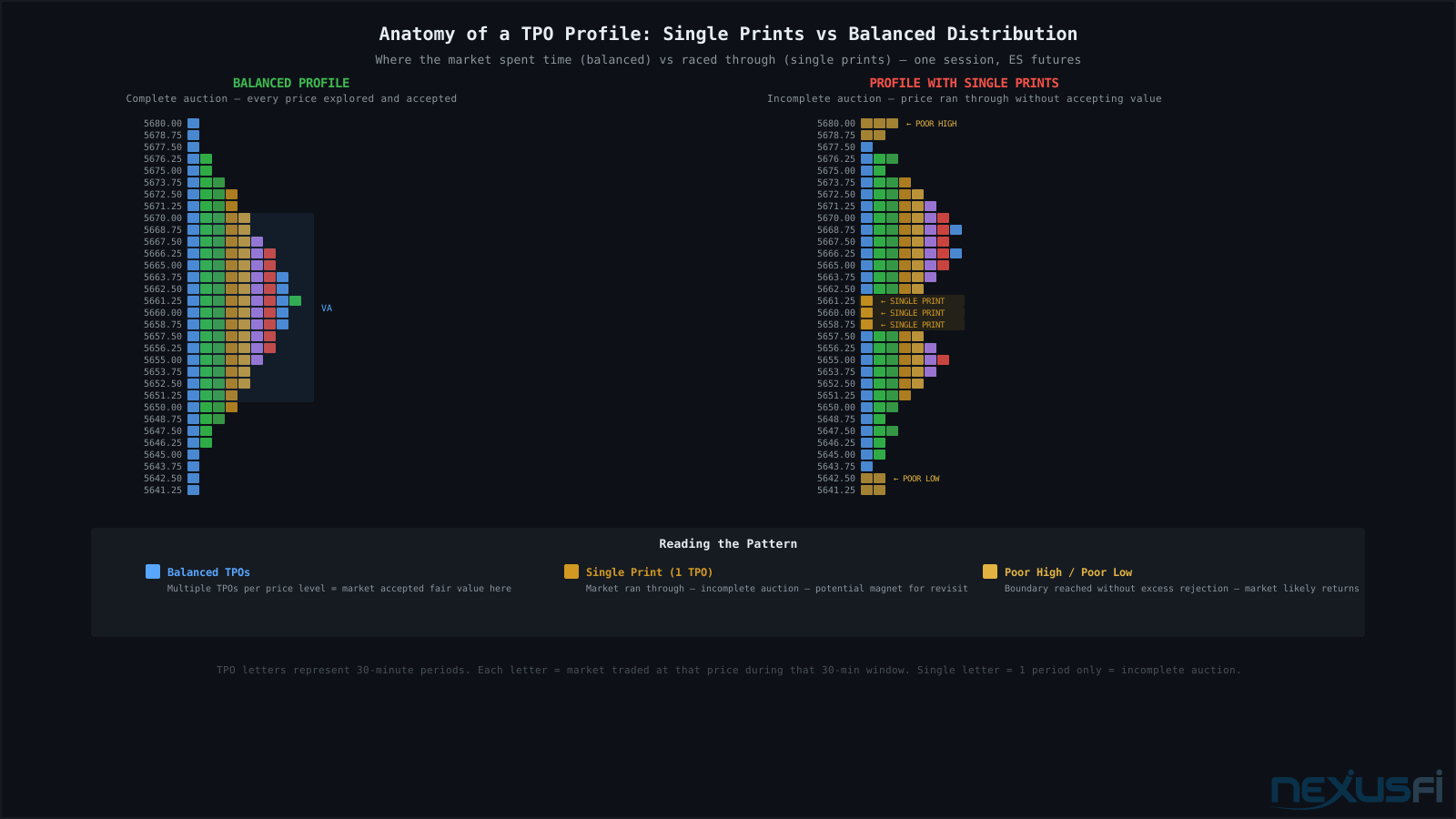
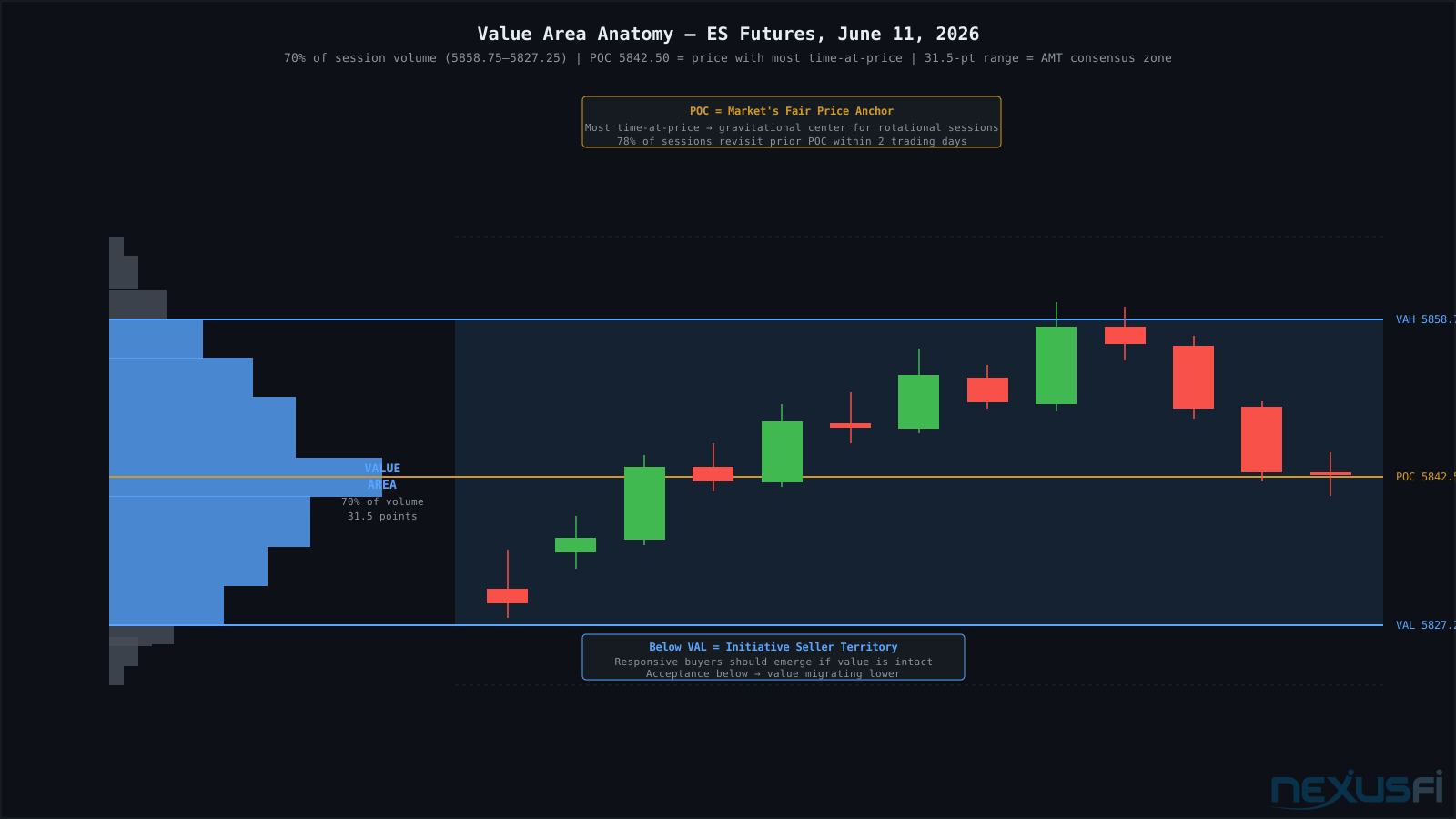
Market Profile is a framework for organizing price data by time. Developed by J. Peter Steidlmayer at the Chicago Board of Trade in the 1980s, it assigns a l...
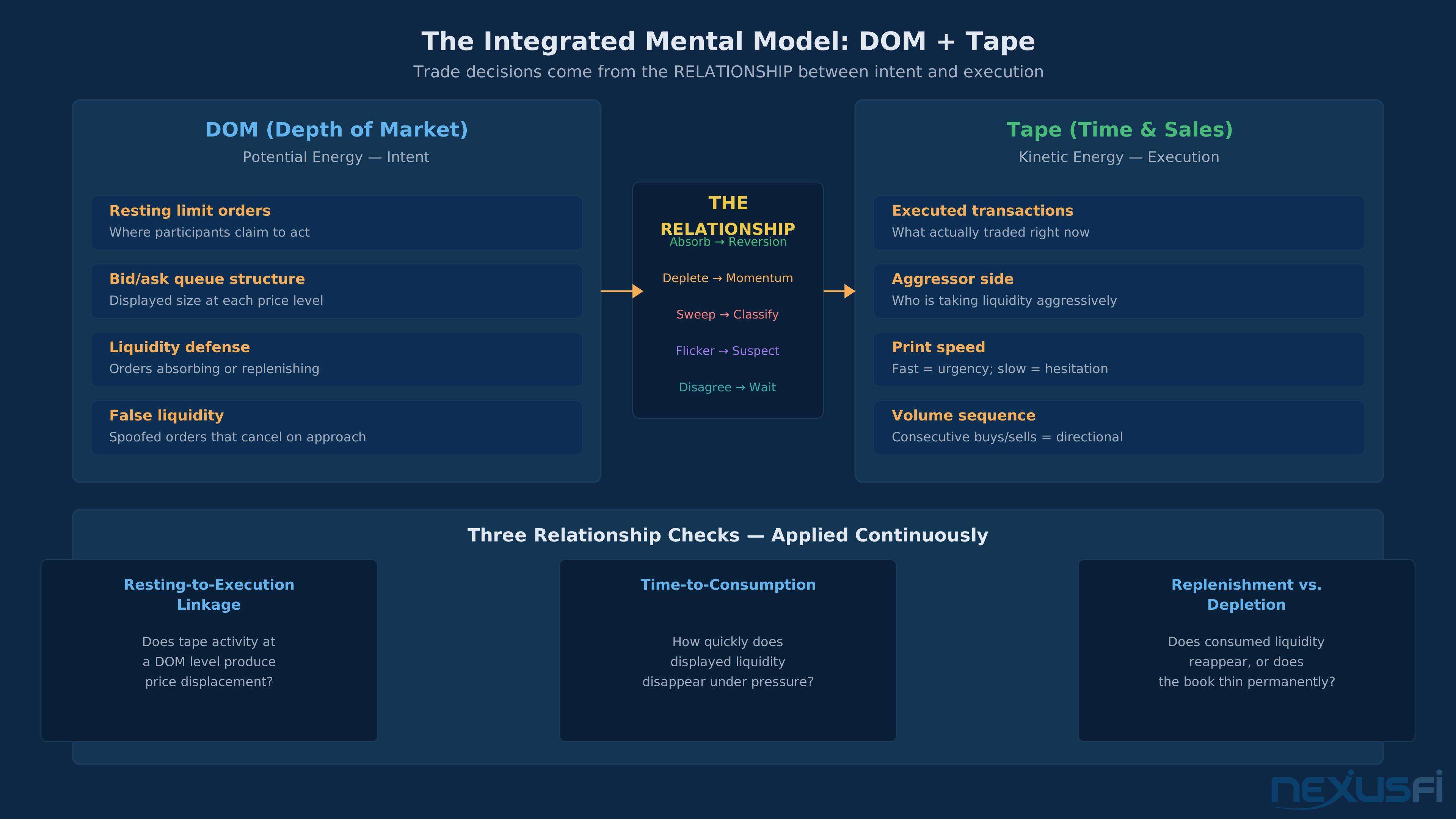
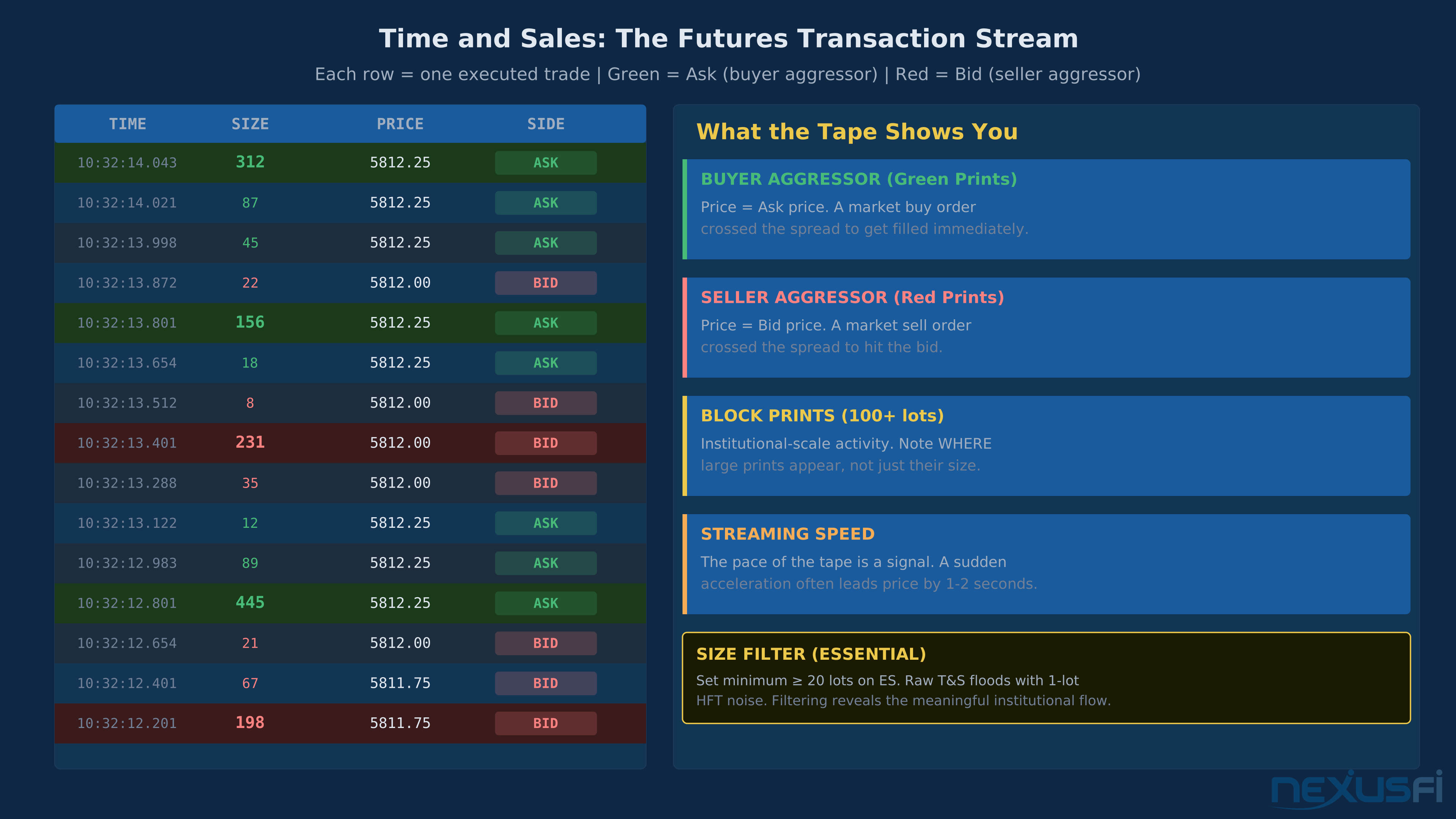
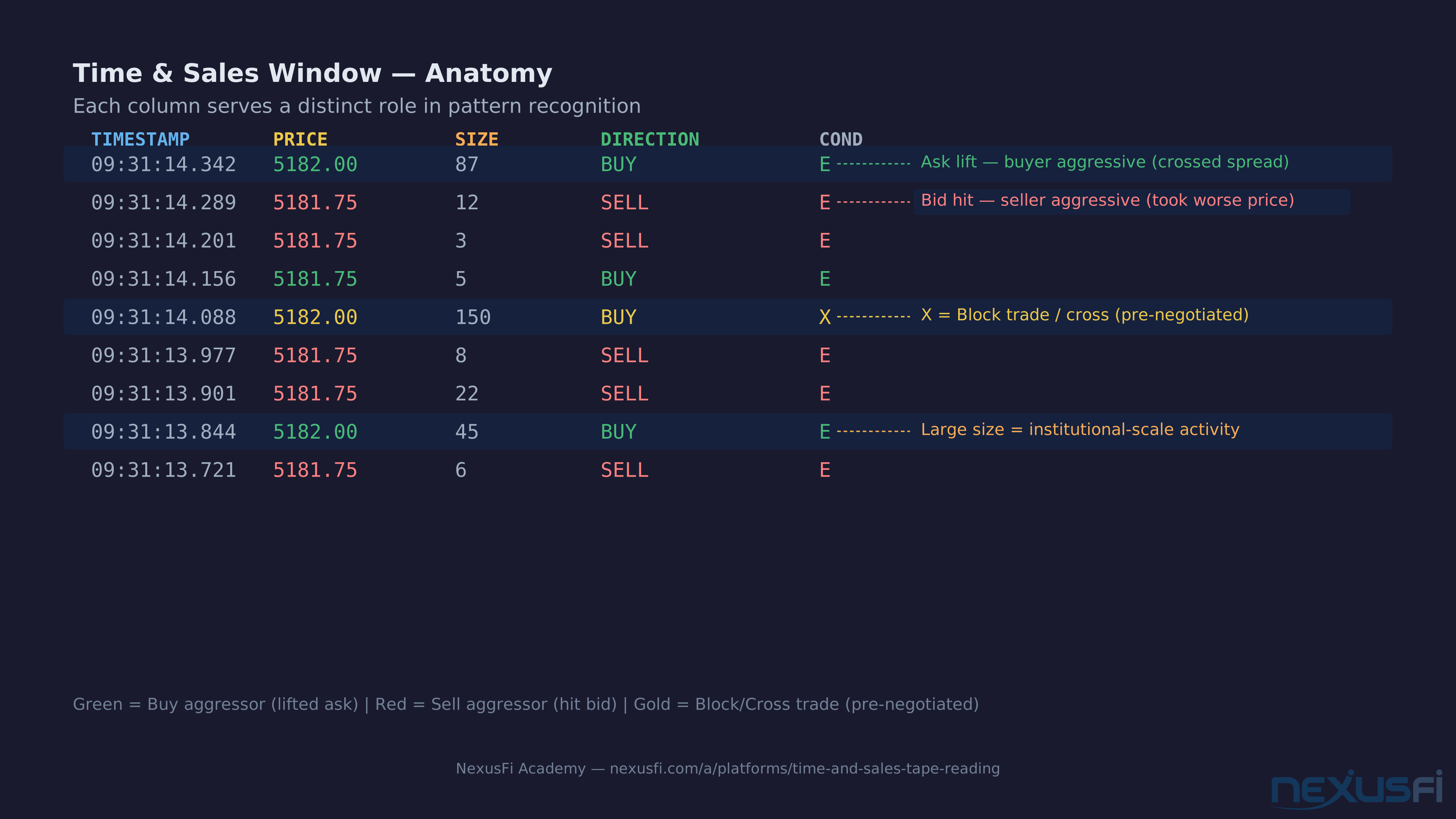
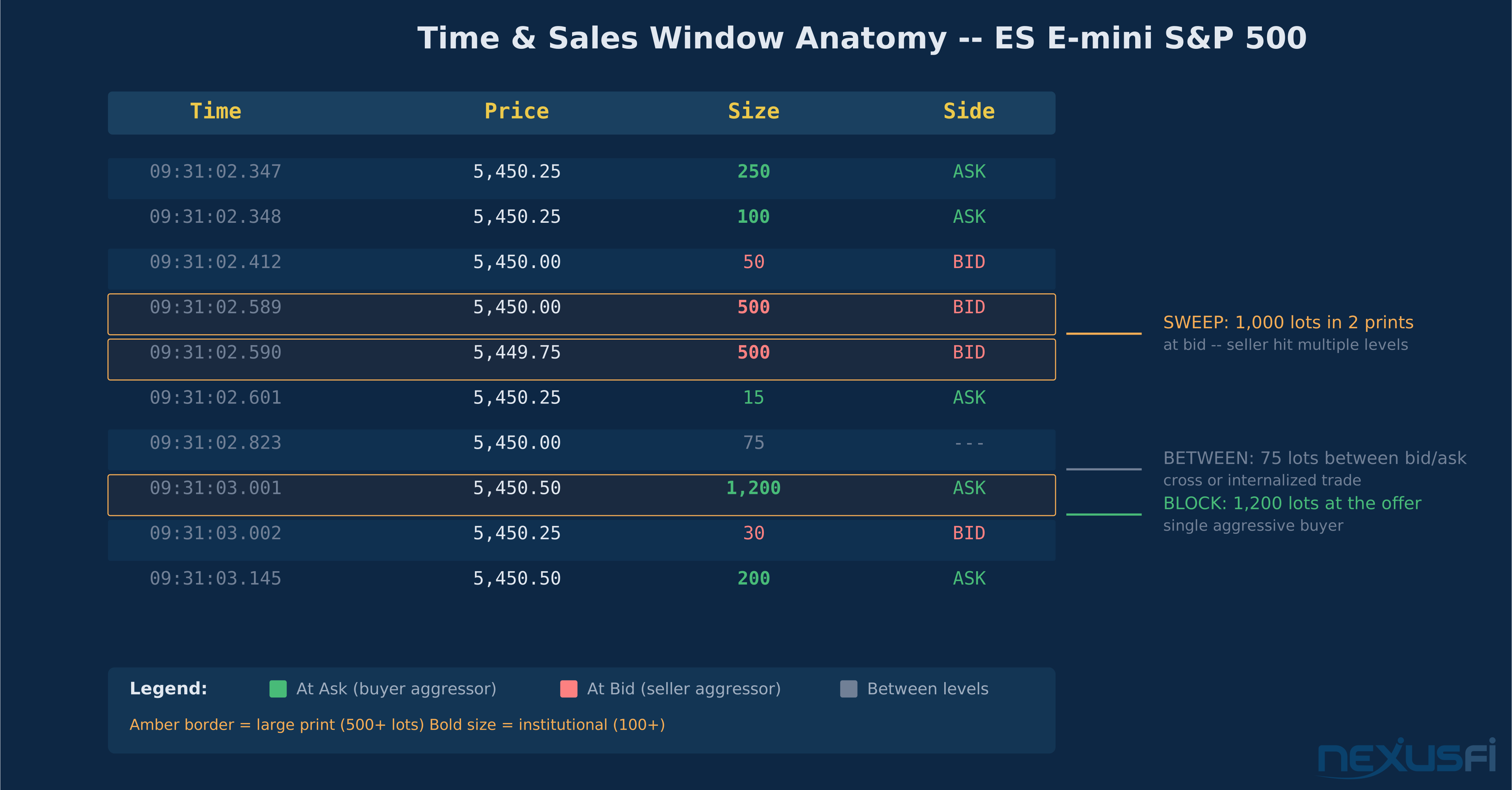
Most traders learn DOM and tape reading as separate disciplines. They study the order book over here and the time-and-sales feed over there, then try to comb...
The funded trader industry has changed more in the last three years than in the previous decade. What started as a handful of evaluation programs has explode...
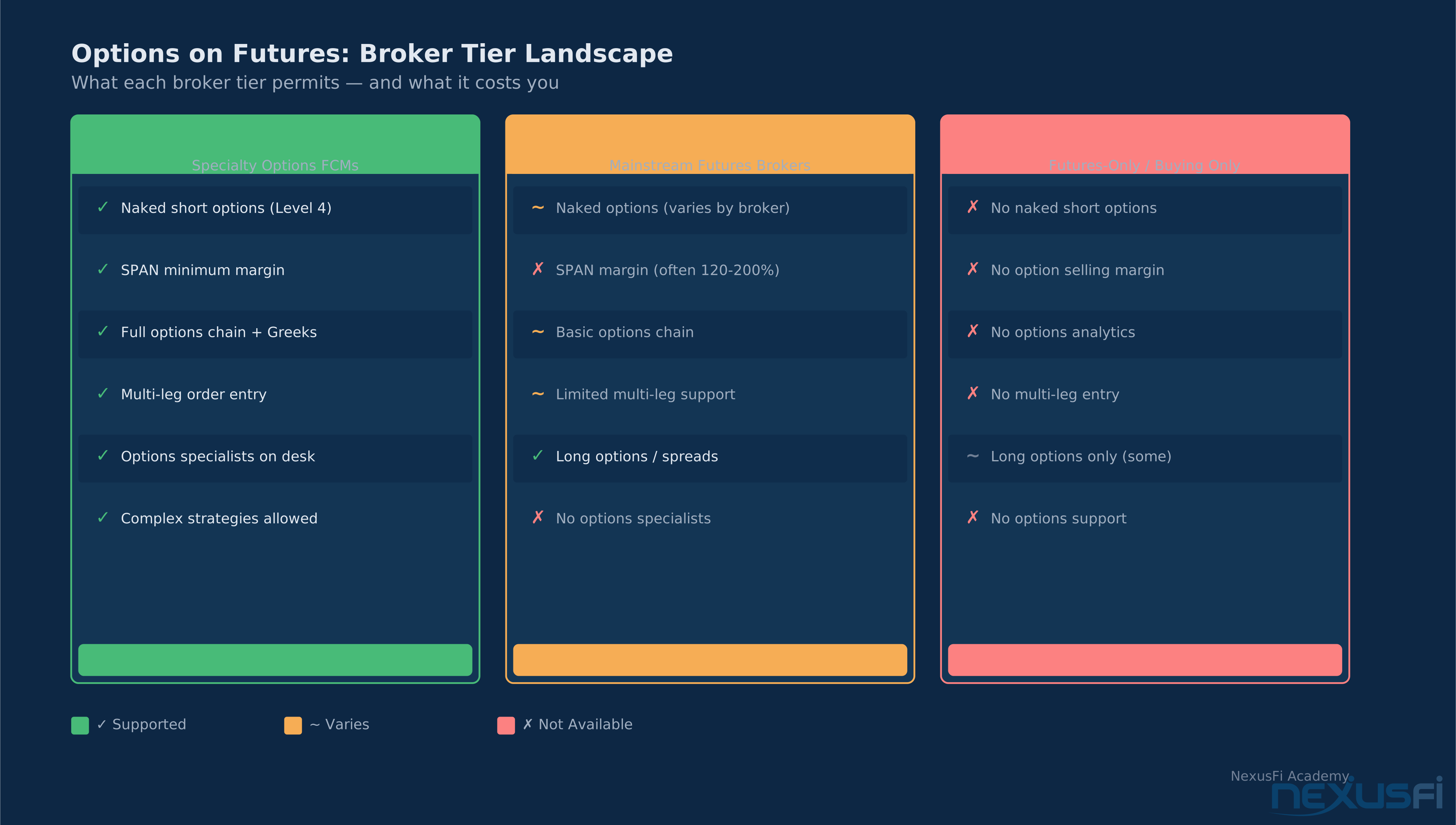
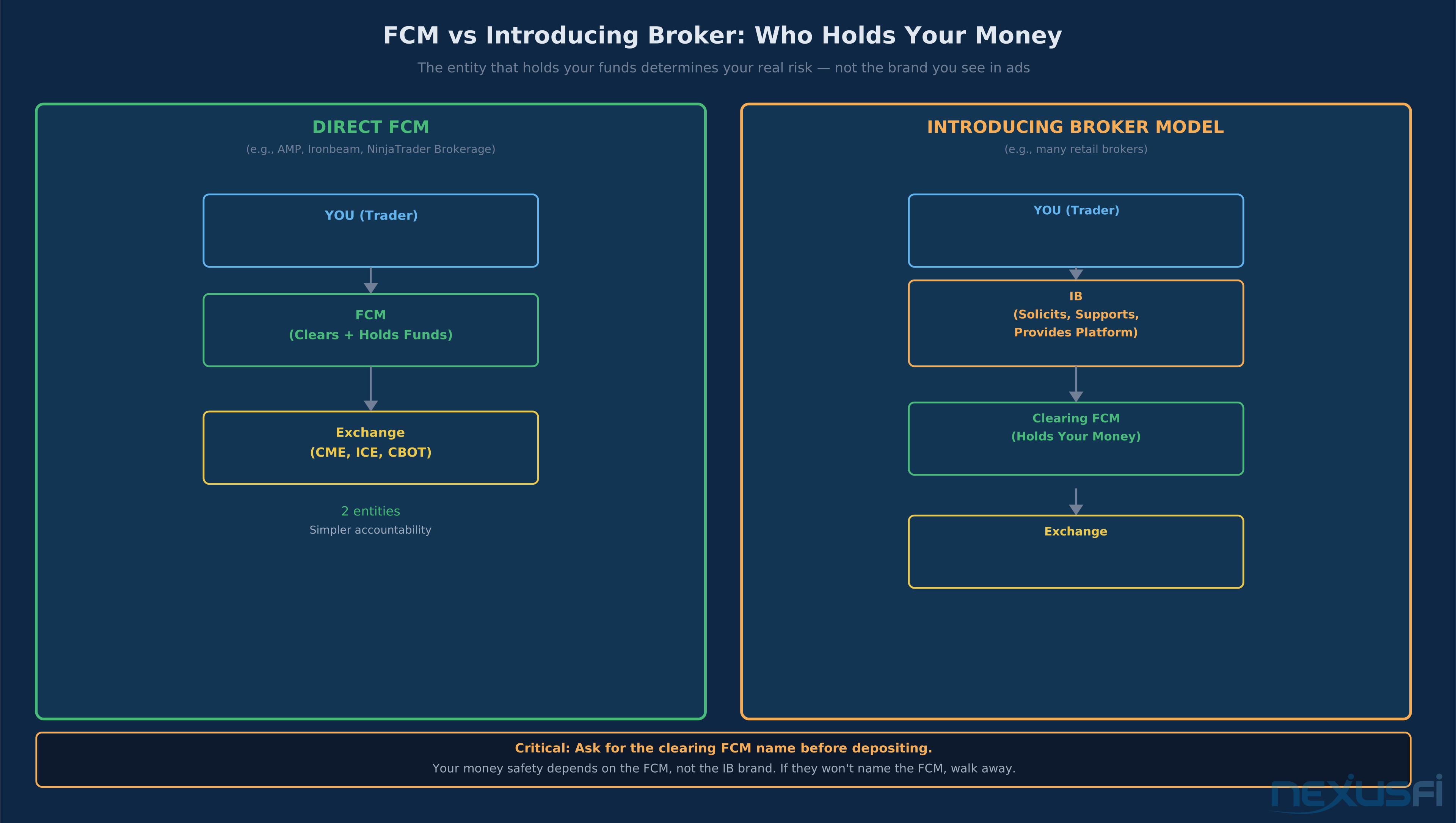
Most futures traders treat broker selection as a commodity choice. Commissions matter, execution quality matters, and after that, most FCMs are functionally ...
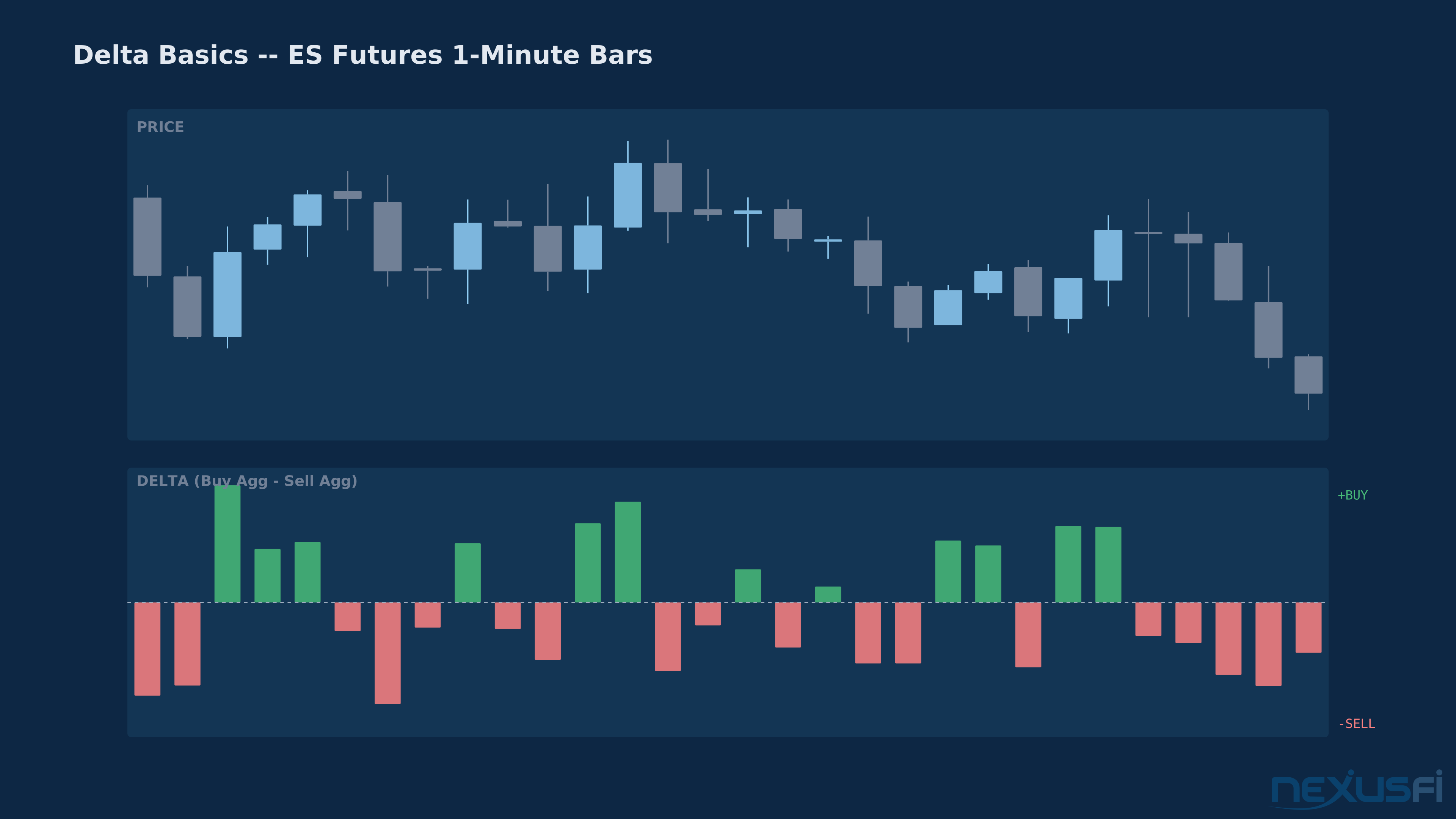
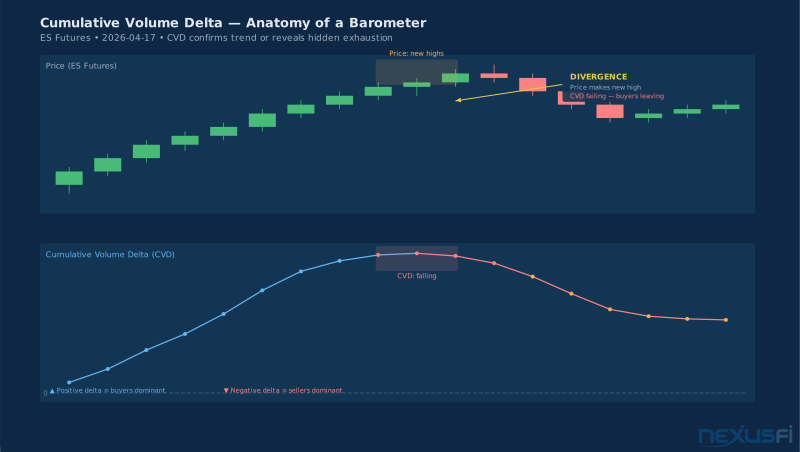
Cumulative delta (CD) is the running total of net aggressive buying versus selling pressure across a trading session. It's calculated by continuously summing...
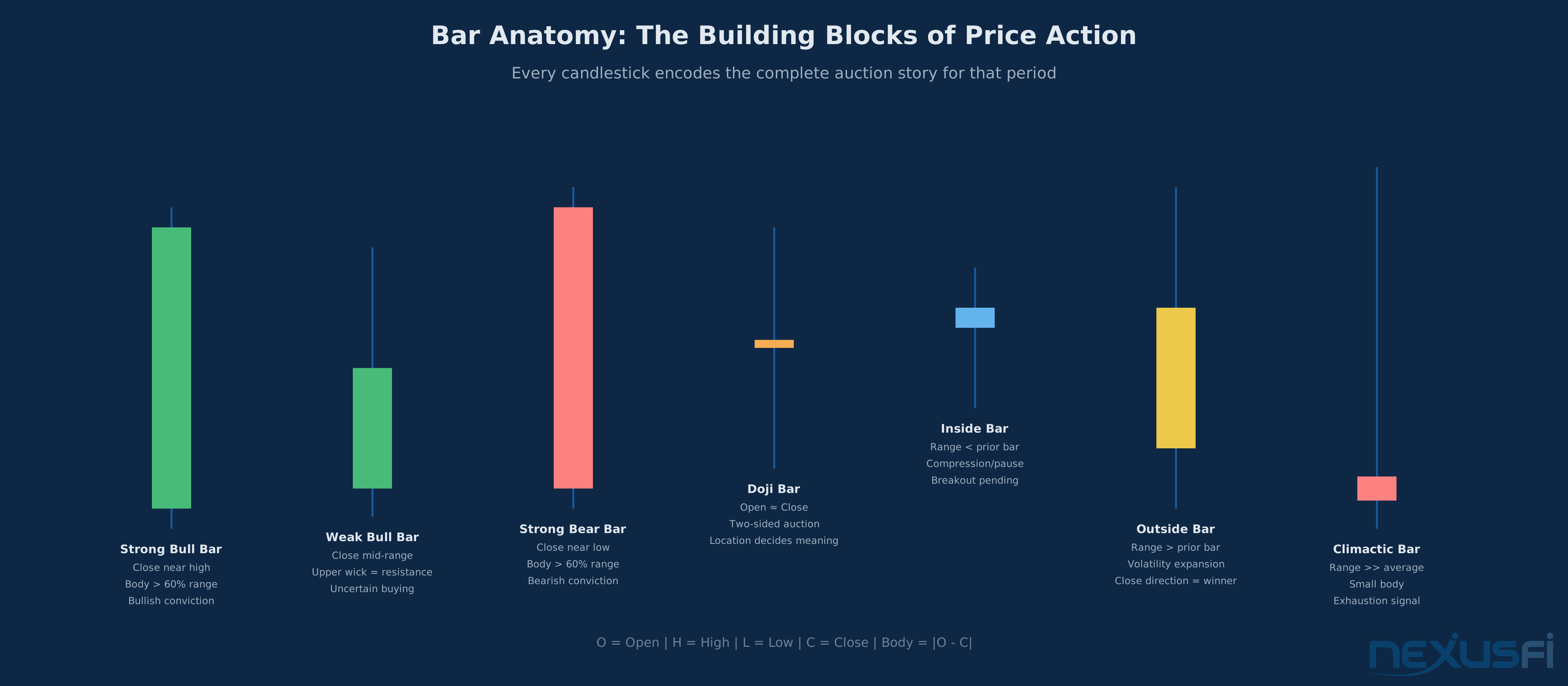
Brooks starts with a premise that sounds obvious but has radical implications: every bar on your chart shows you what buyers and sellers did during that peri...
Swing trading futures means holding a directional position for 2 to 15 trading days -- long enough to capture multi-session price moves, short enough to avoi...
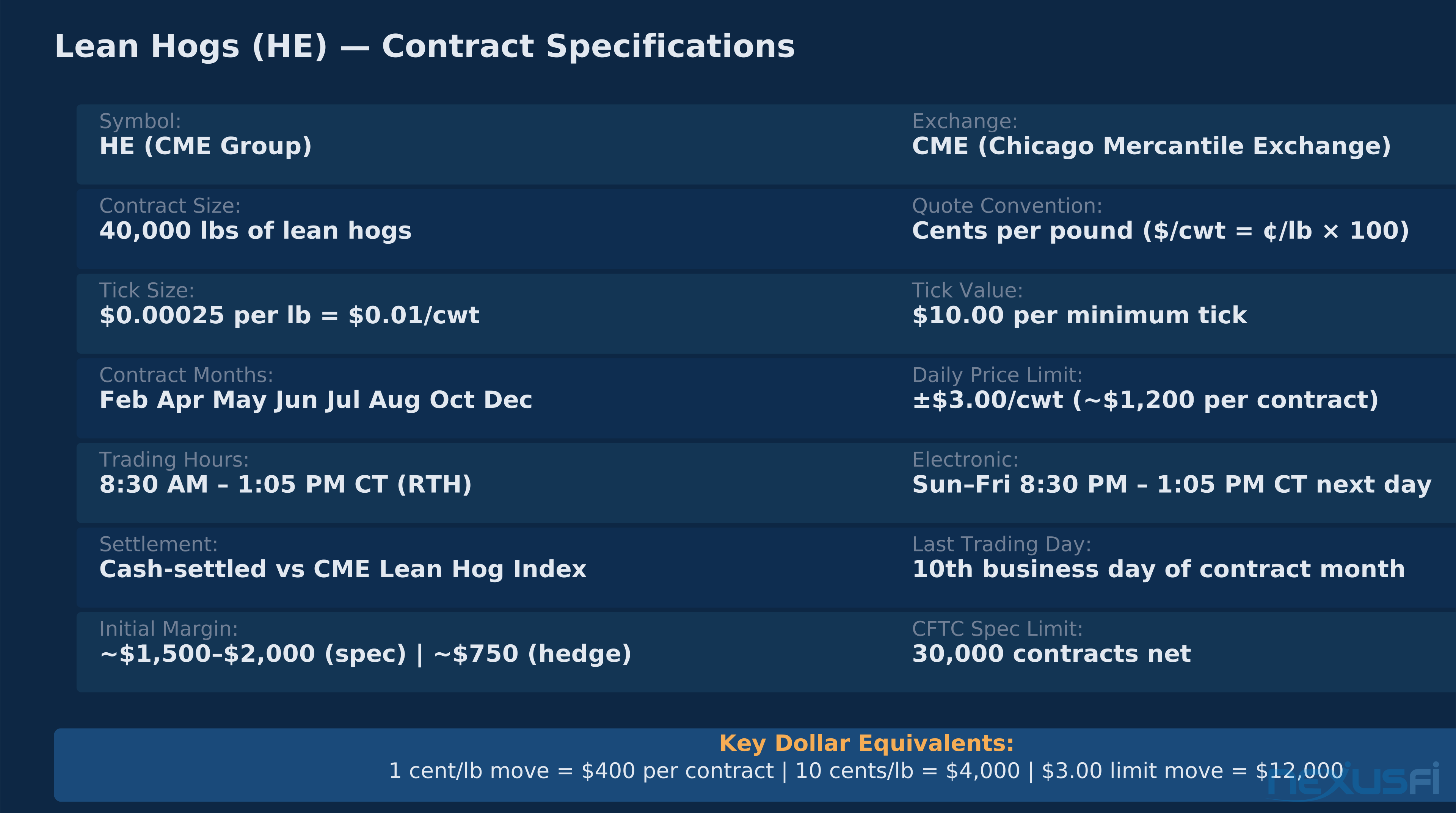
Overview Lean Hogs futures (HE) on CME Group is the primary risk management and speculative vehicle for U.S. pork markets. Every major pork processor -- Smit...
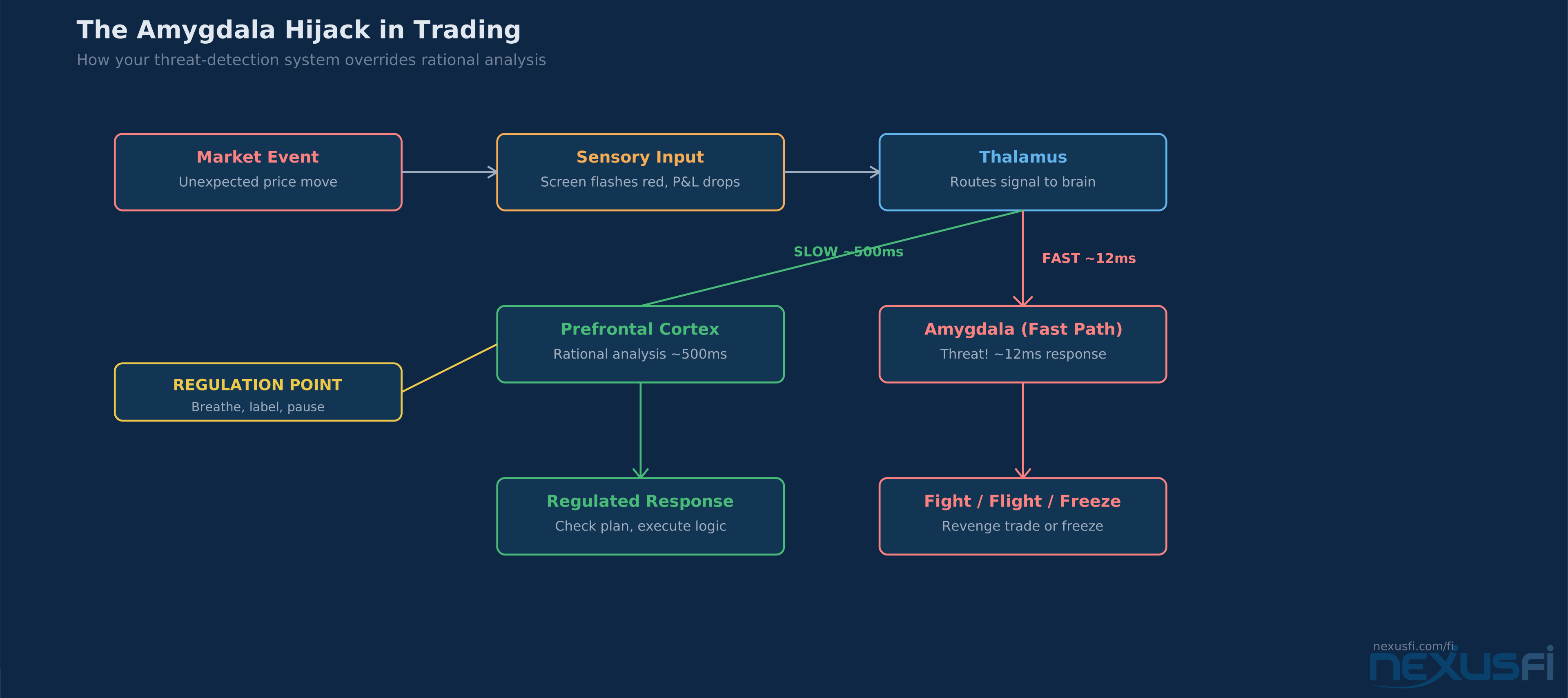
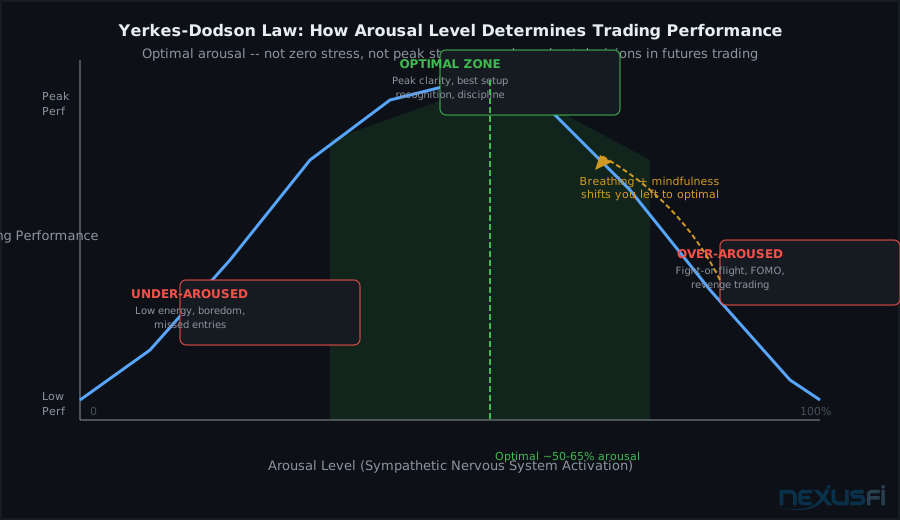
Every trader who's survived more than six months at the screens knows the feeling. Price rips against you, your chest tightens, your hand hovers over the mou...
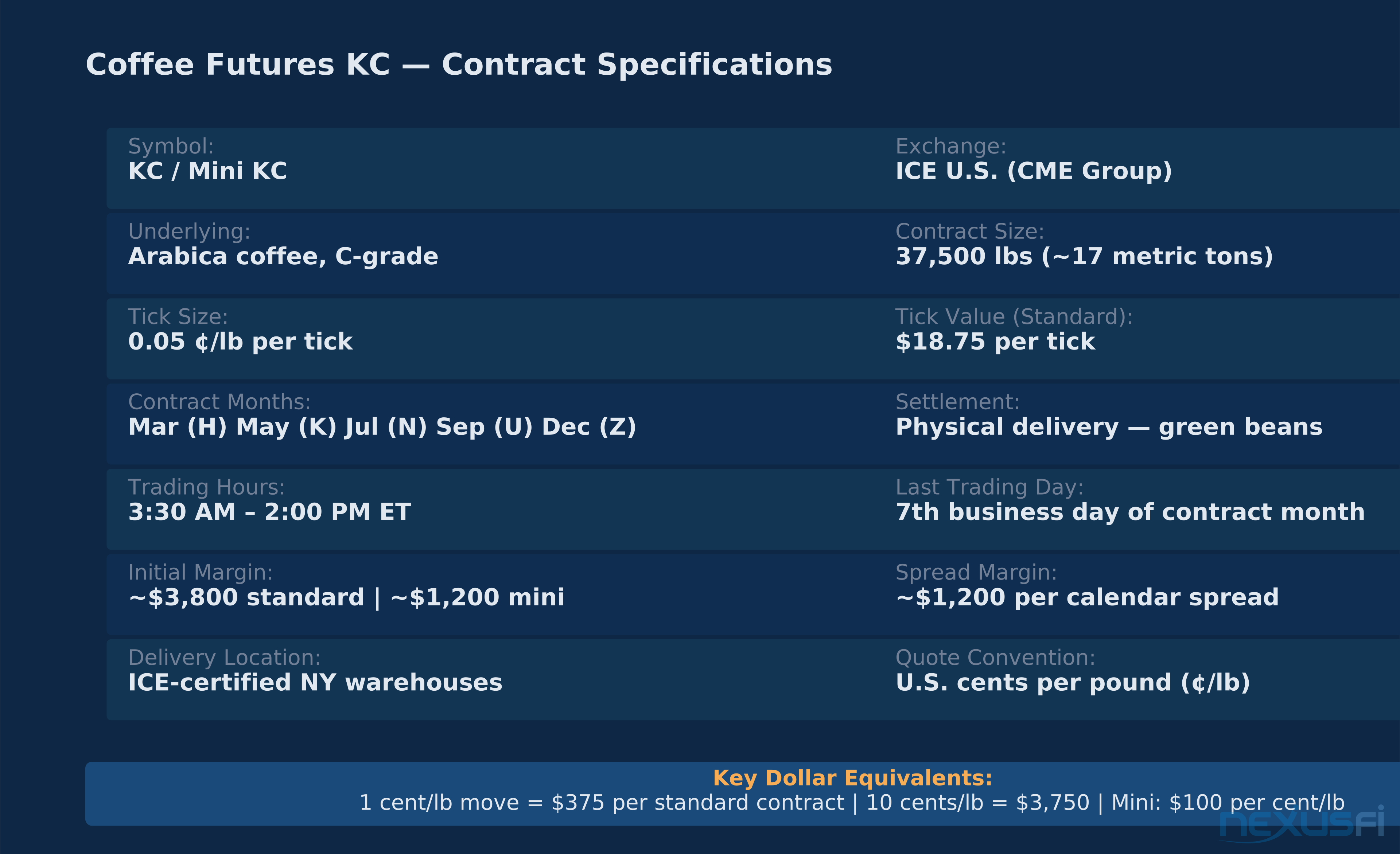
Coffee futures (KC) -- the Arabica "Coffee C" contract on ICE Futures U.S. -- occupy a category apart from the index and energy contracts most futures trader...
Overview Most traders use TradingView to look at one instrument at a time. Price goes up, price goes down, you make a call and take a trade. Clean, simple, a...
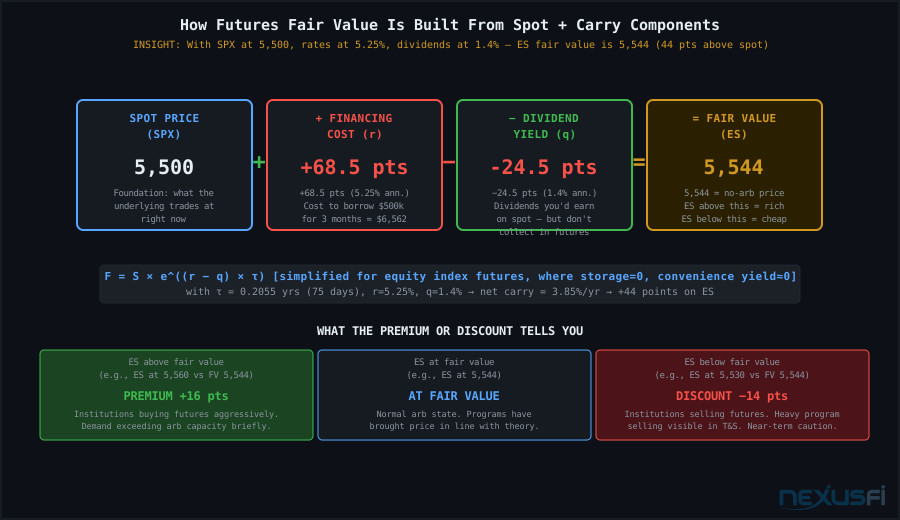
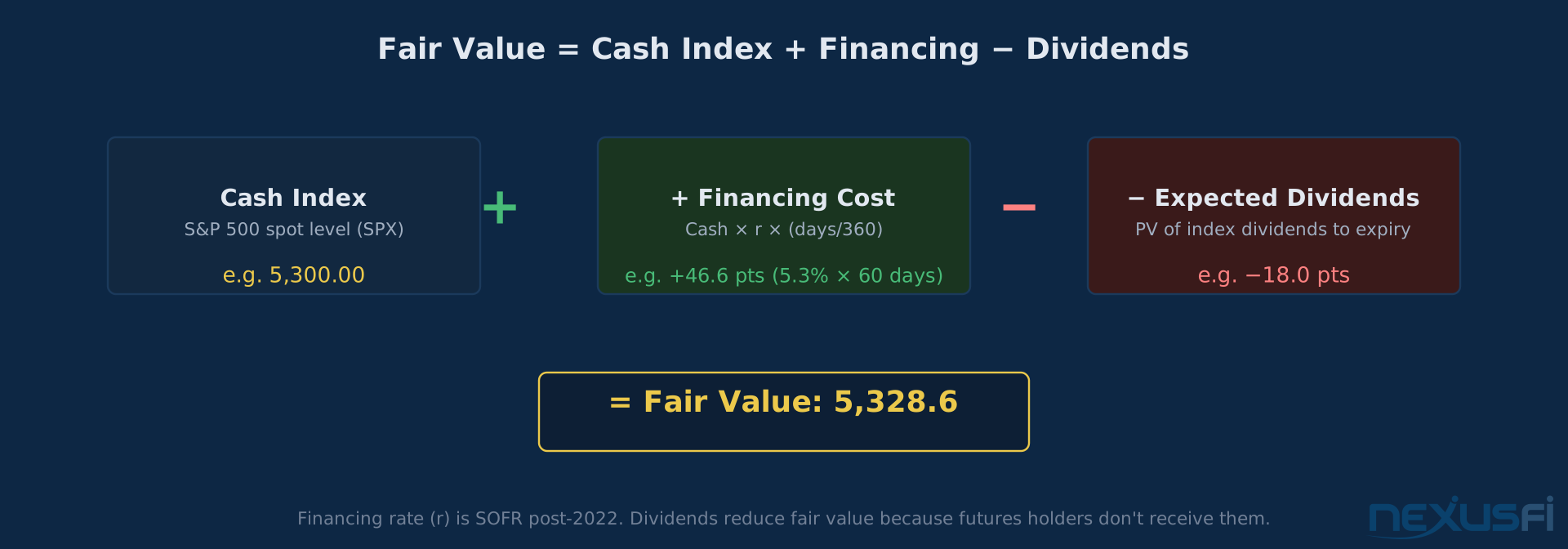
Overview Fair value anatomy: with SPX at 5,500, rates at 5.25%, dividends at 1.4%, ES fair value computes to 5,544 -- 44 points above spot. If ES is at 5,560...
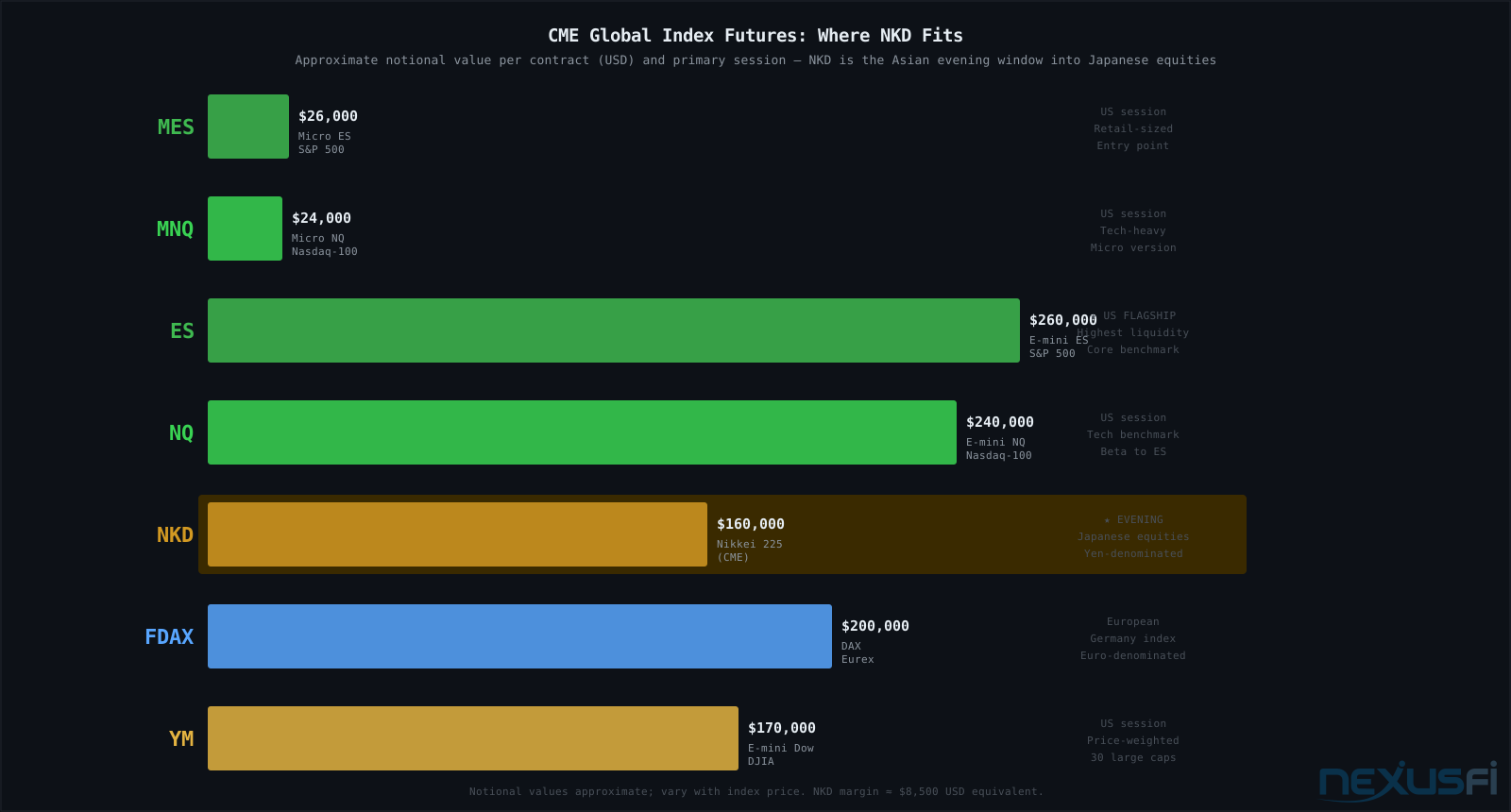
Overview The Nikkei 225 futures contract (NKD) is CME Group's gateway to Japanese equity markets -- a cash-settled index future on the world's third-largest ...
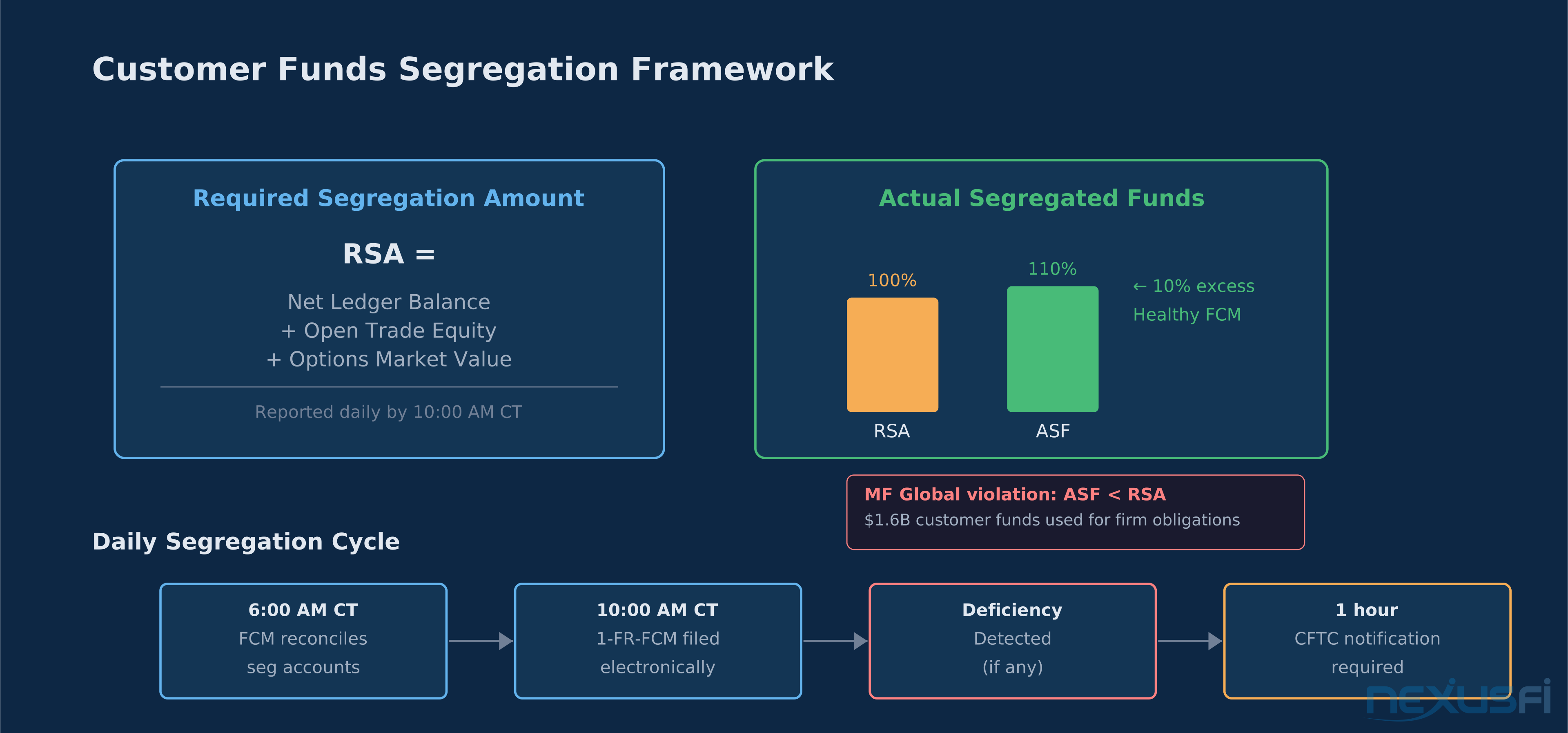
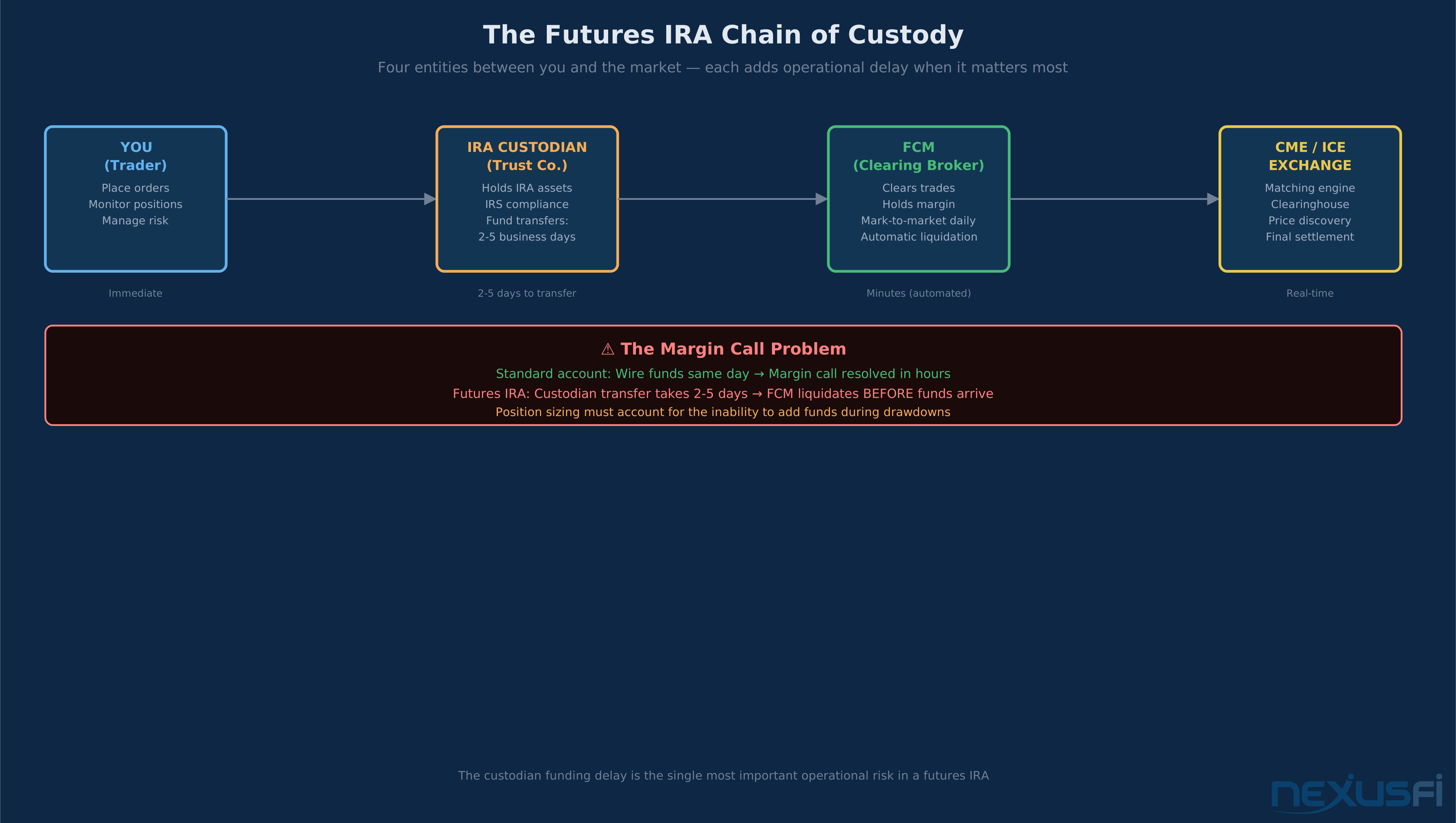
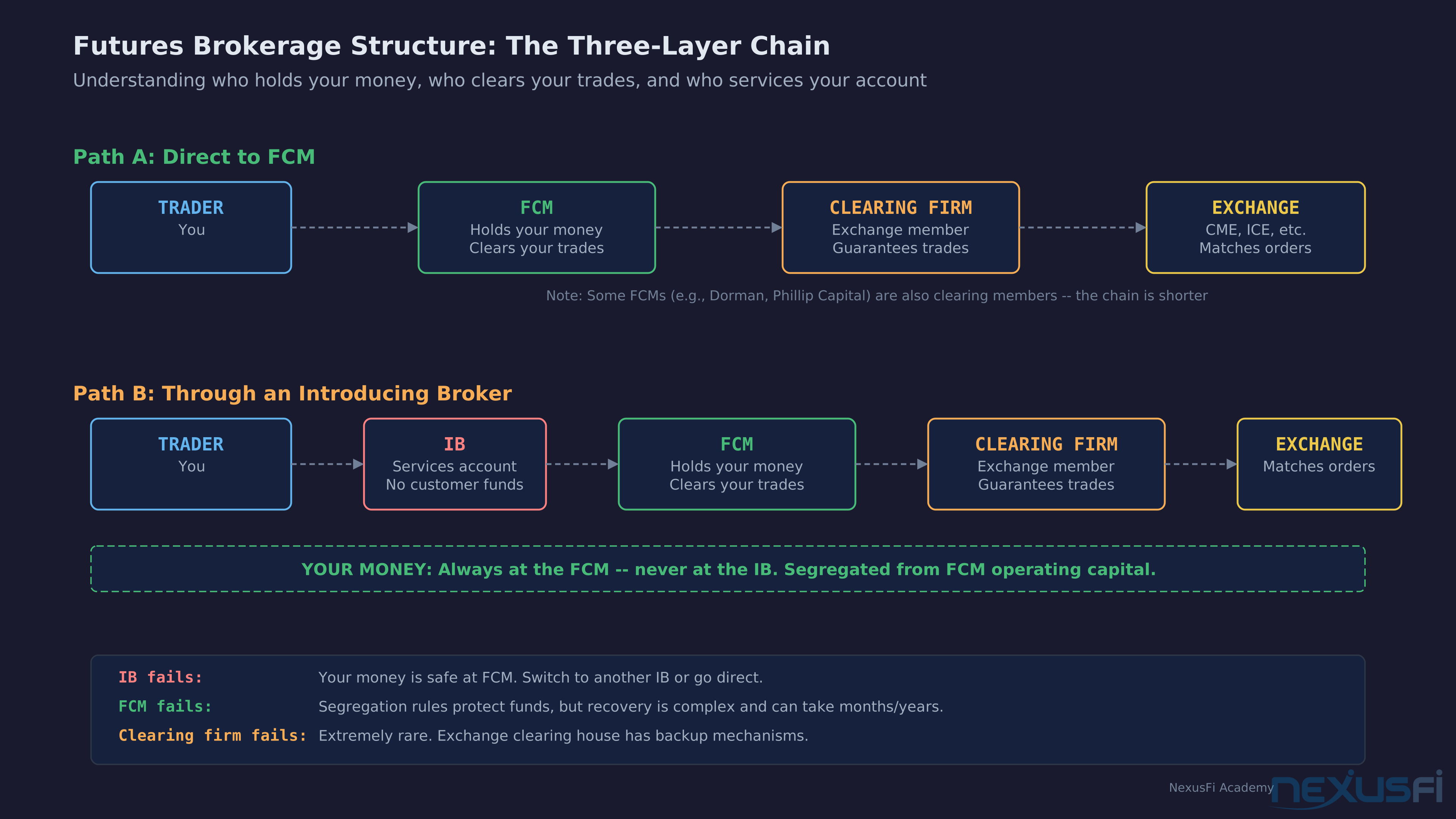
When your futures broker fails, you are not protected the way equity investors are. There is no SIPC. There is no government backstop. There is no $500,000 i...
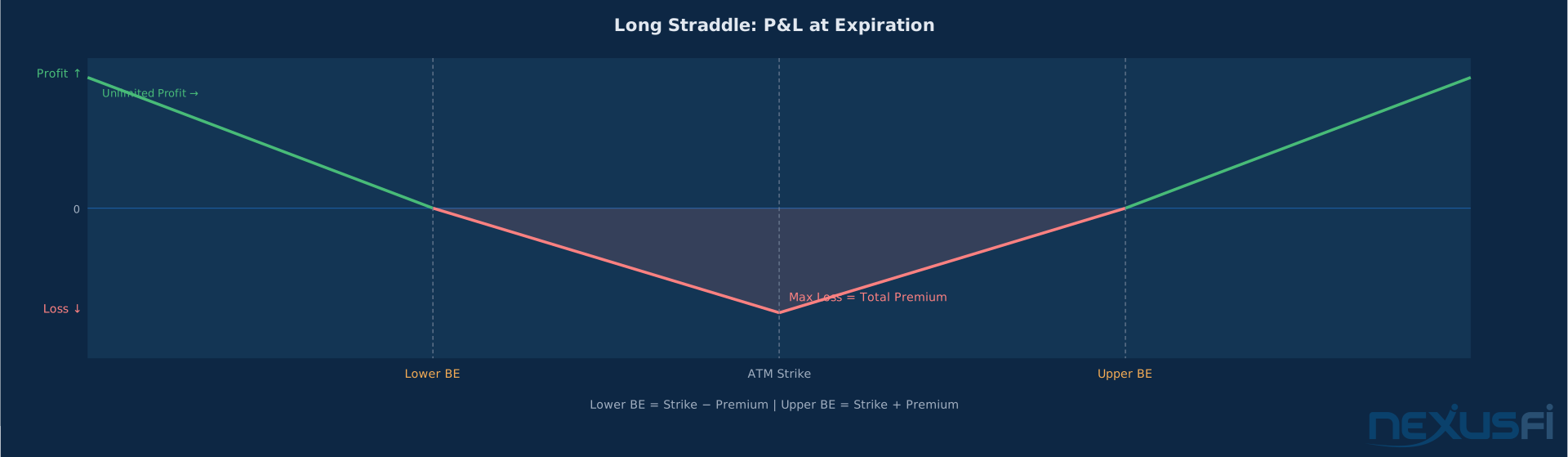
Straddles and strangles are the cleanest expression of a directional-neutral volatility trade in the options market. You're not betting on which way the unde...
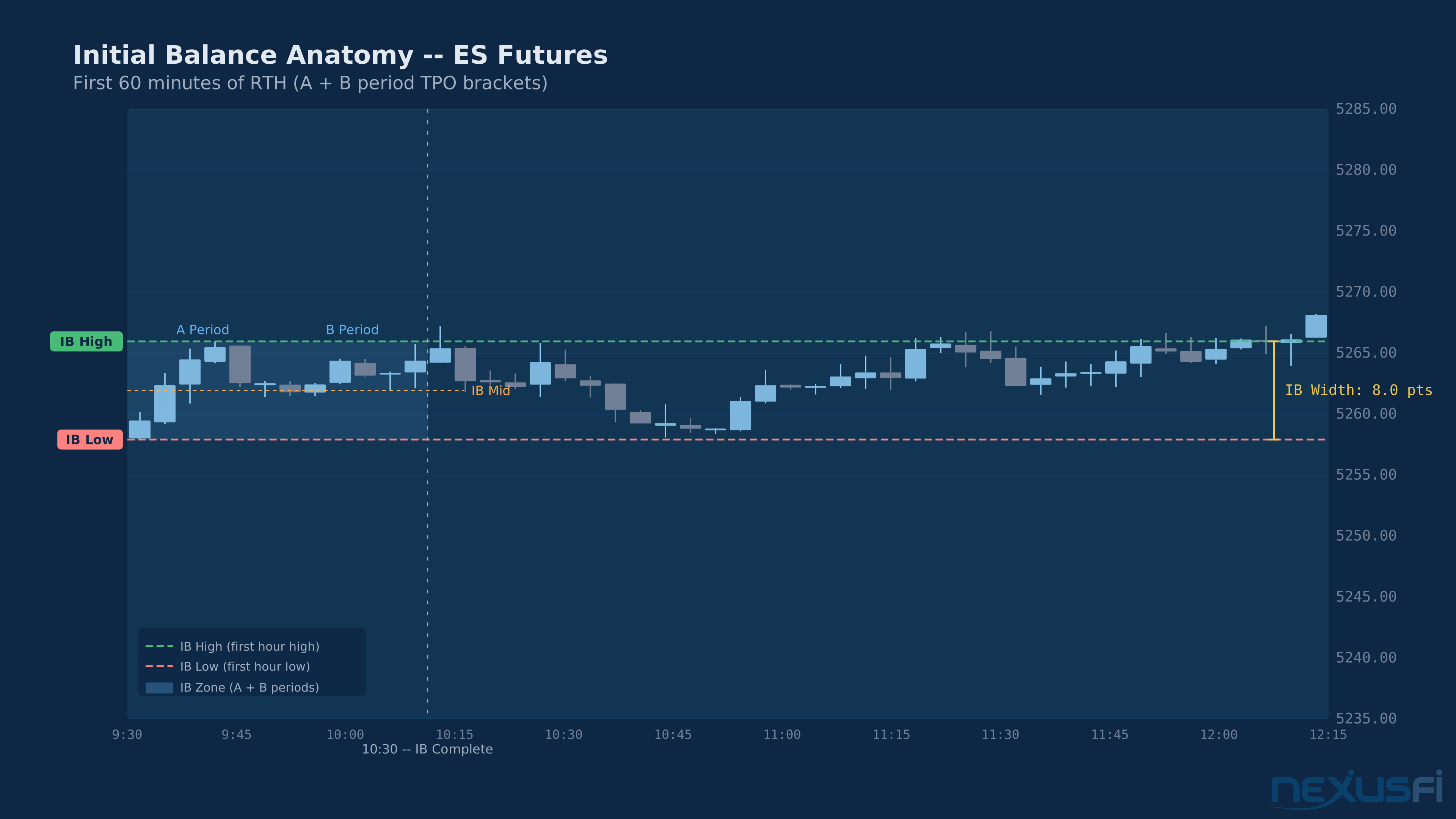
Overview Market Profile is a framework for reading the market's auction process — the continuous back-and-forth between buyers and sellers trying to find p...
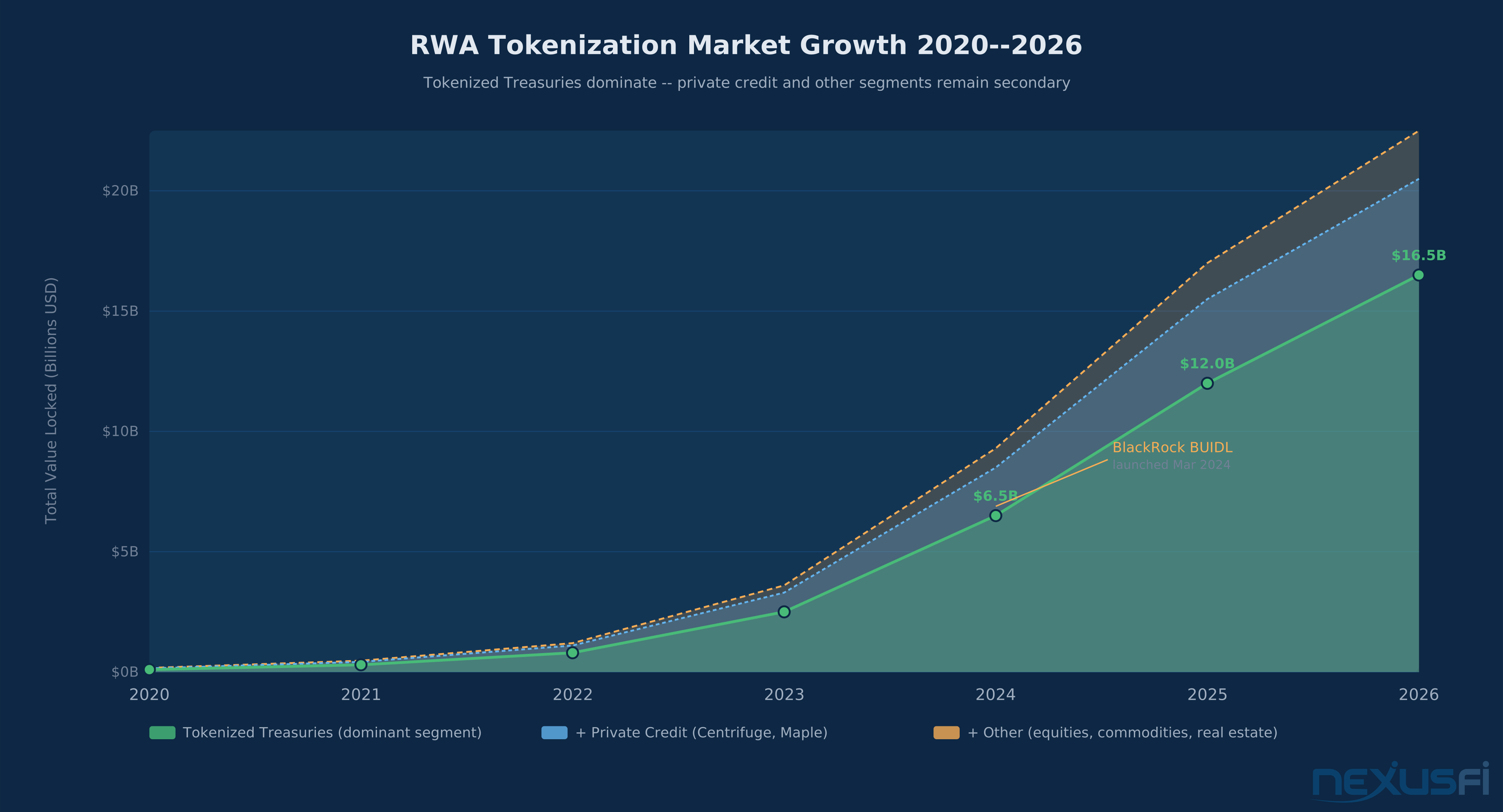
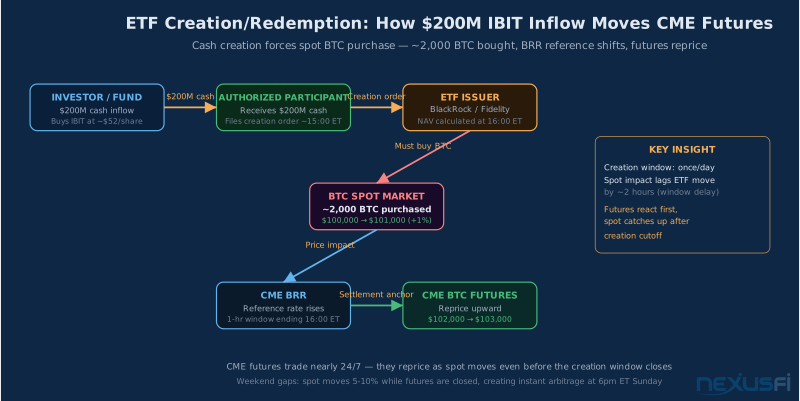
Overview The biggest quiet story in crypto right now isn't a new blockchain or a meme coin. It's Wall Street putting its financial infrastructure on-chain. R...
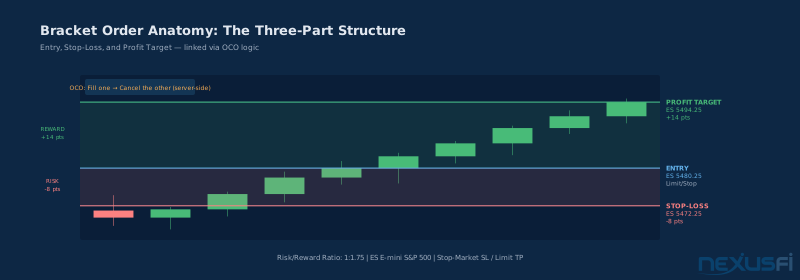
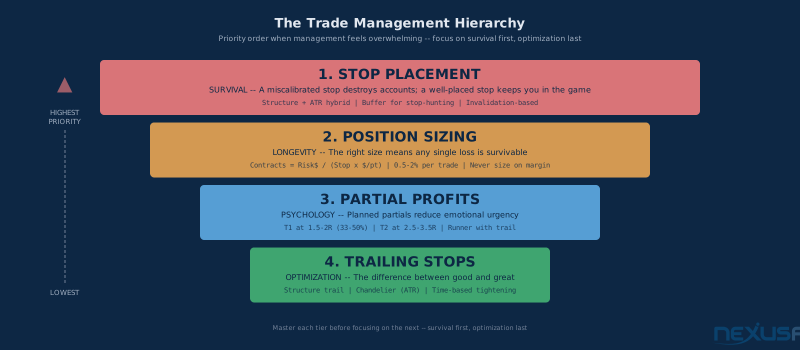
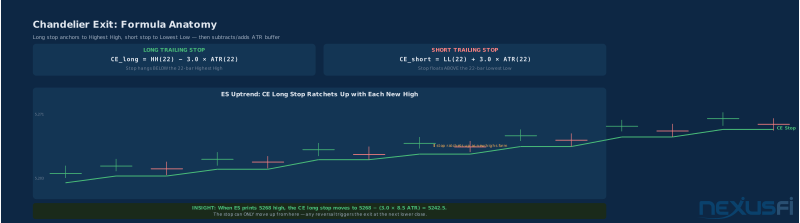
Overview Every futures trader eventually learns the same lesson, usually the expensive way: having a good read on the market means nothing if your exits are ...
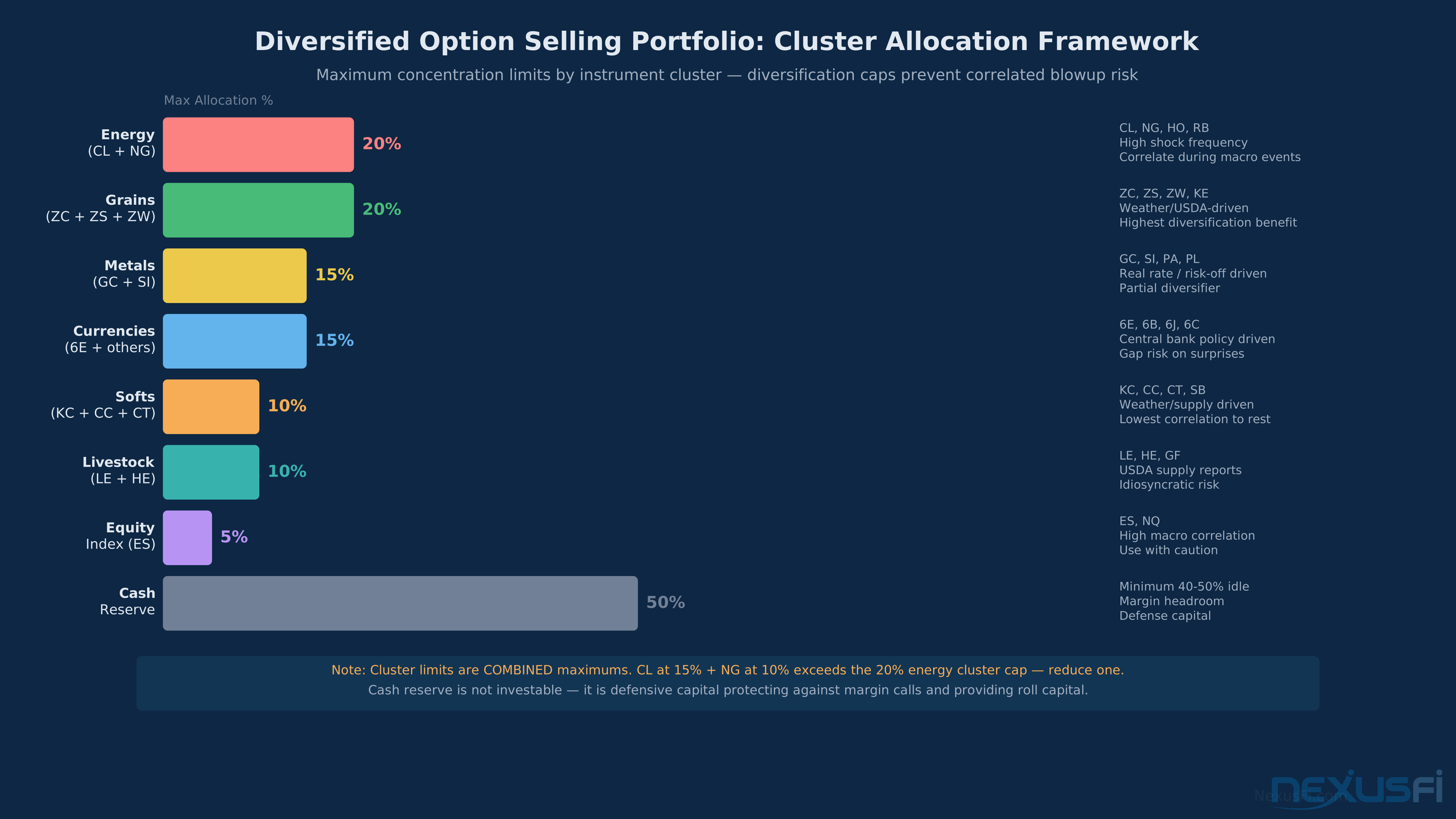
Selling options on futures is one of the oldest ways traders have collected premium. But single-instrument option selling is a concentrated bet -- when CL ha...
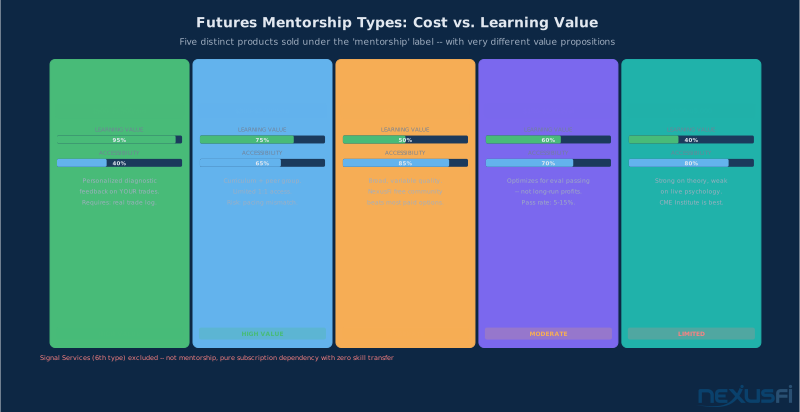
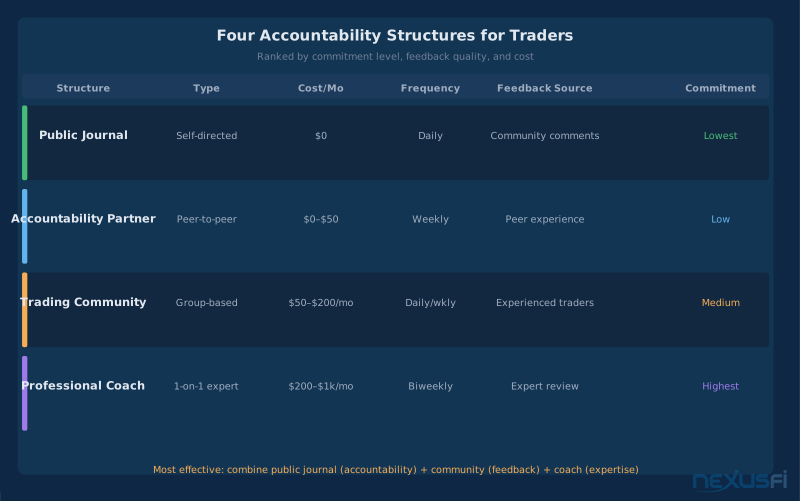
Overview The question gets asked constantly on NexusFi. Thread 15935 -- "Do you need a mentor to be successful?" -- has pulled in nearly a million views sinc...
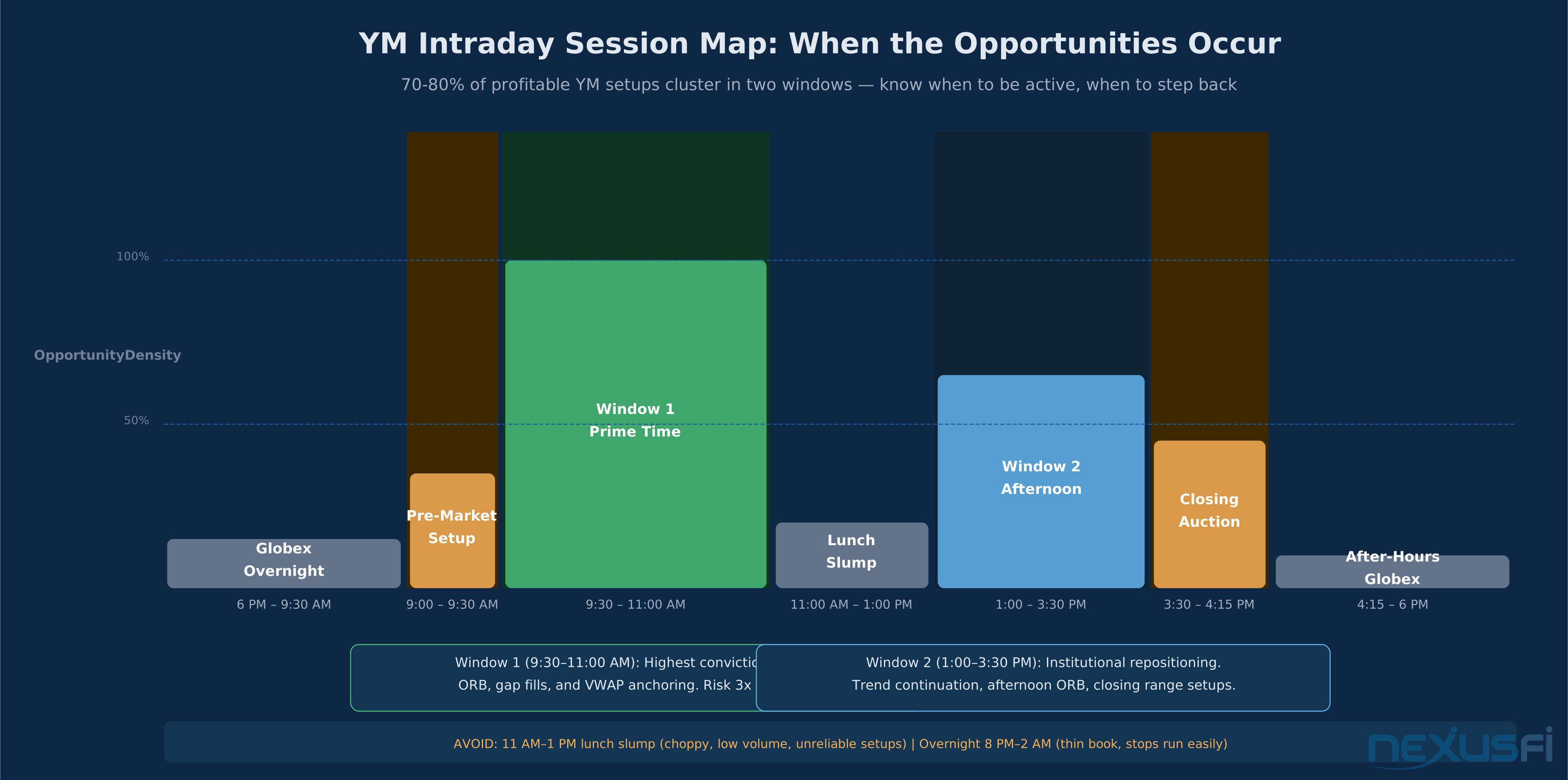
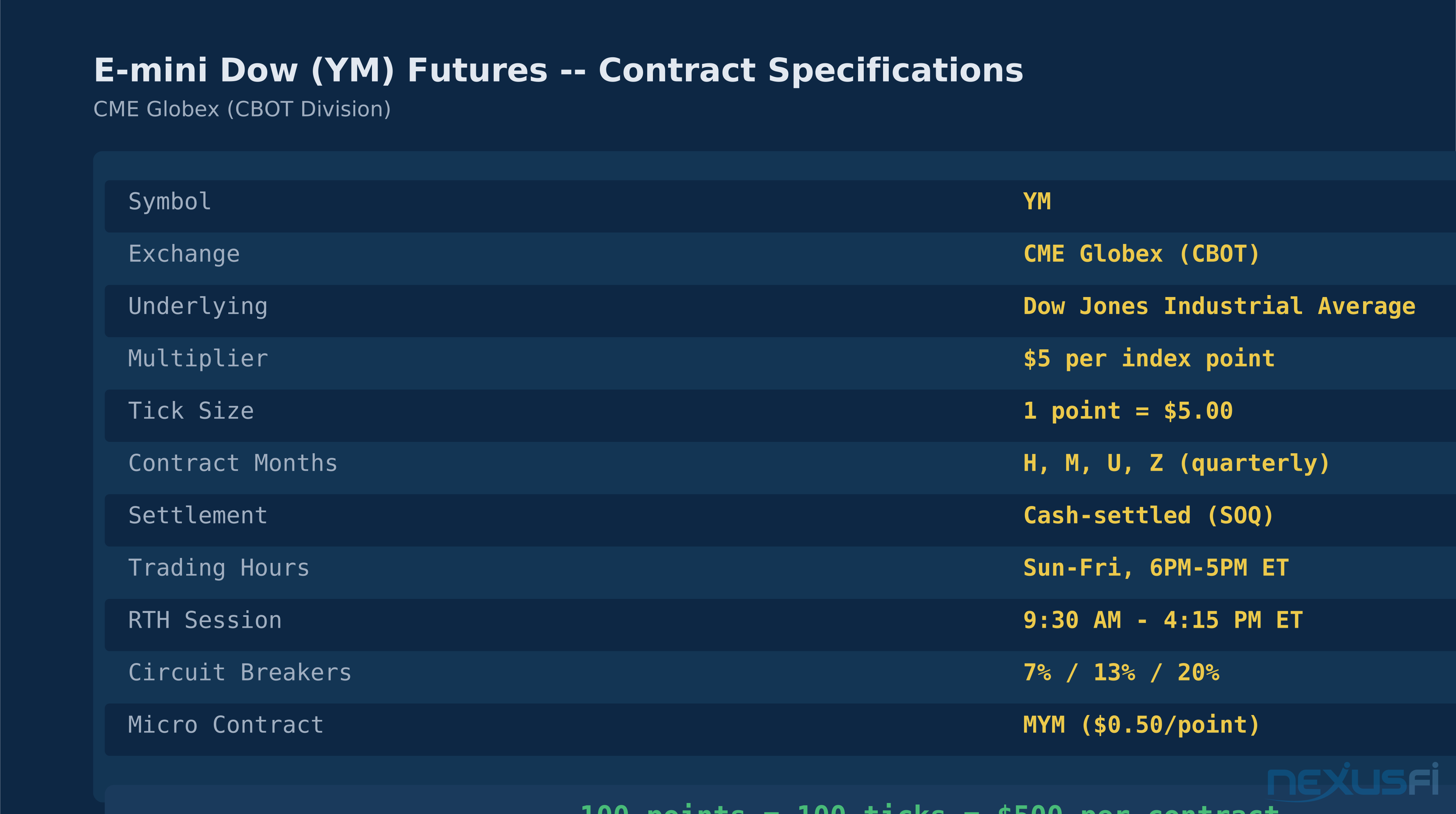
Overview The YM is the redhead stepchild of the equity index futures world. ES gets all the attention, NQ gets the momentum traders, and the YM quietly does ...
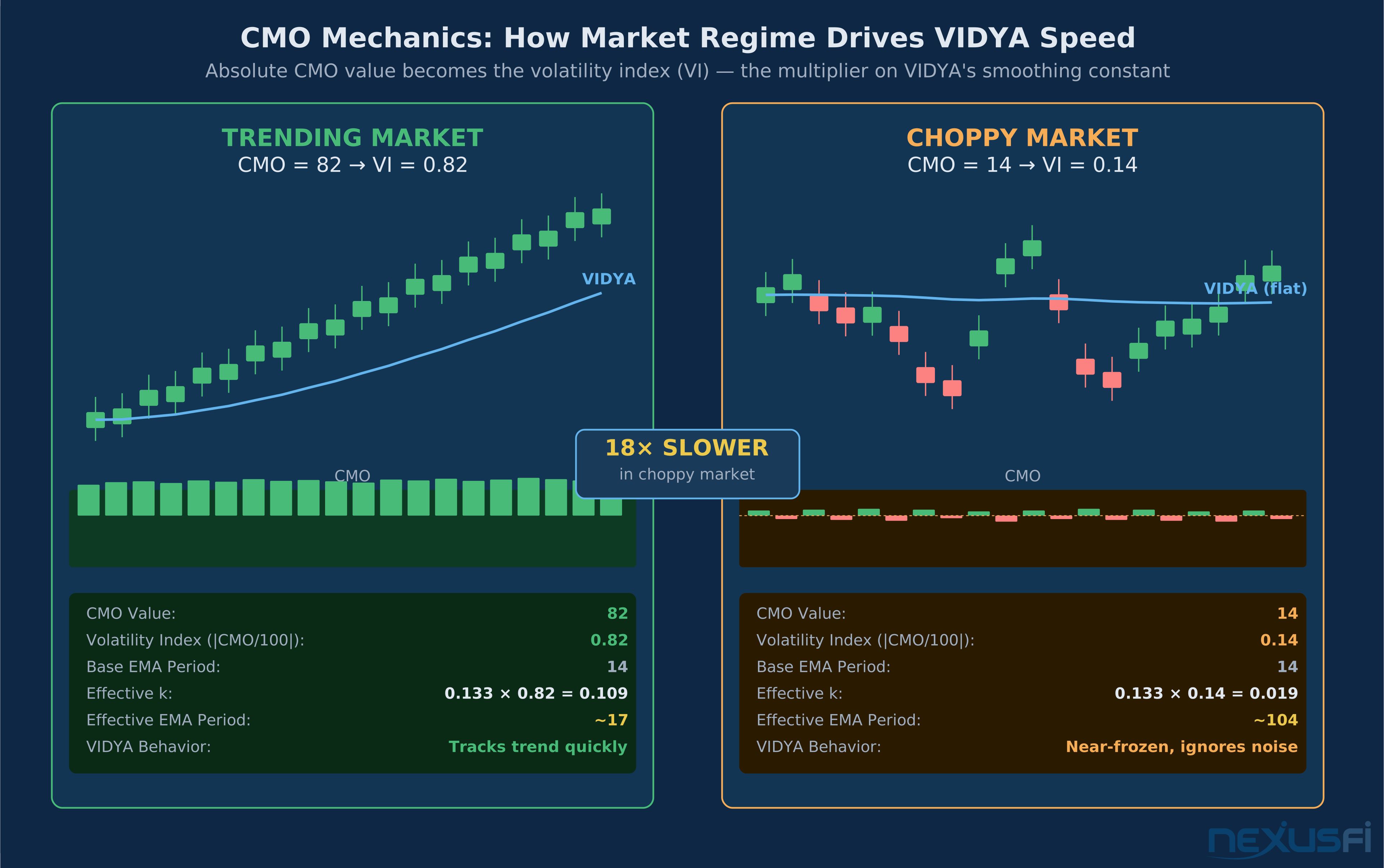
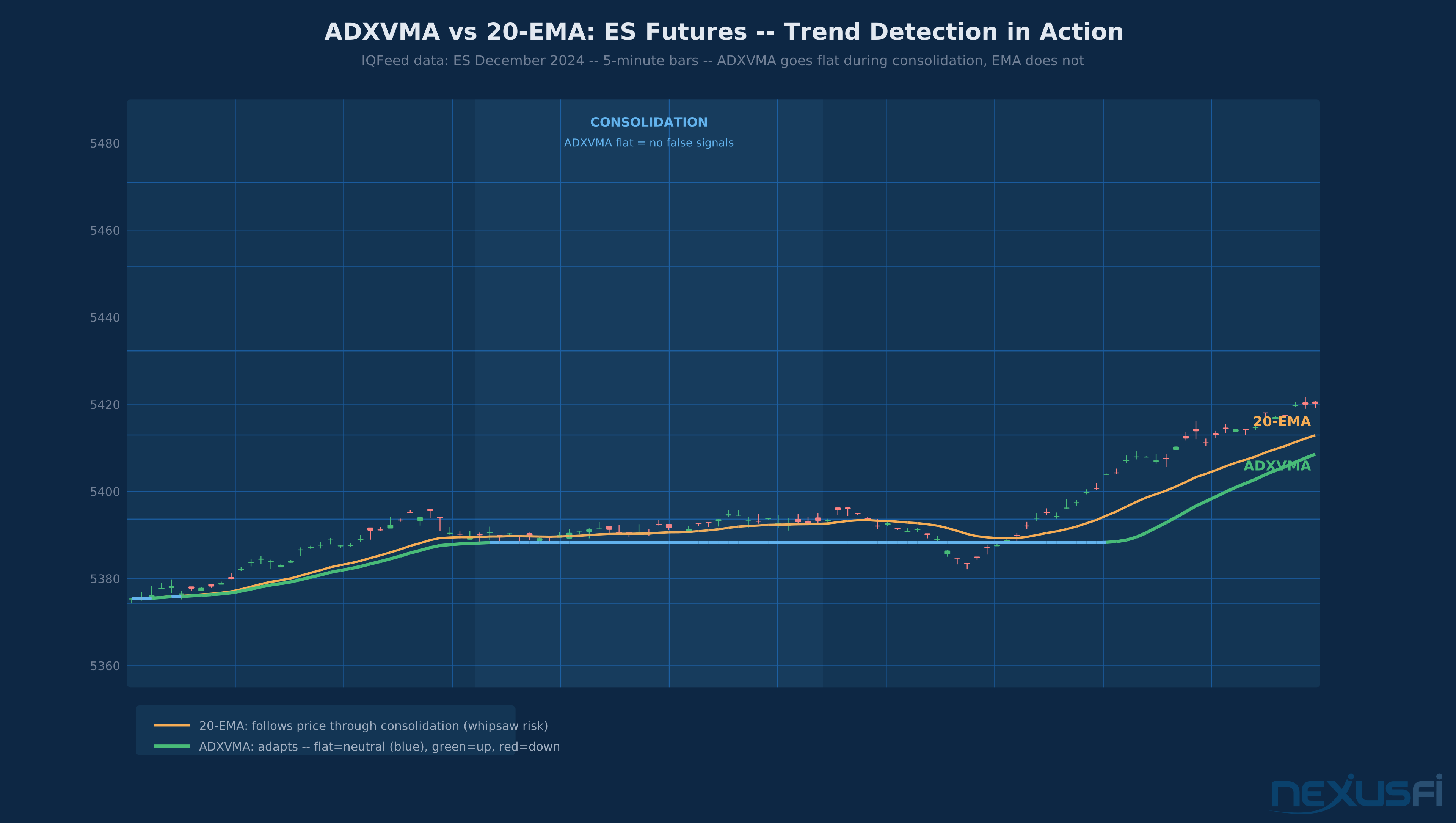
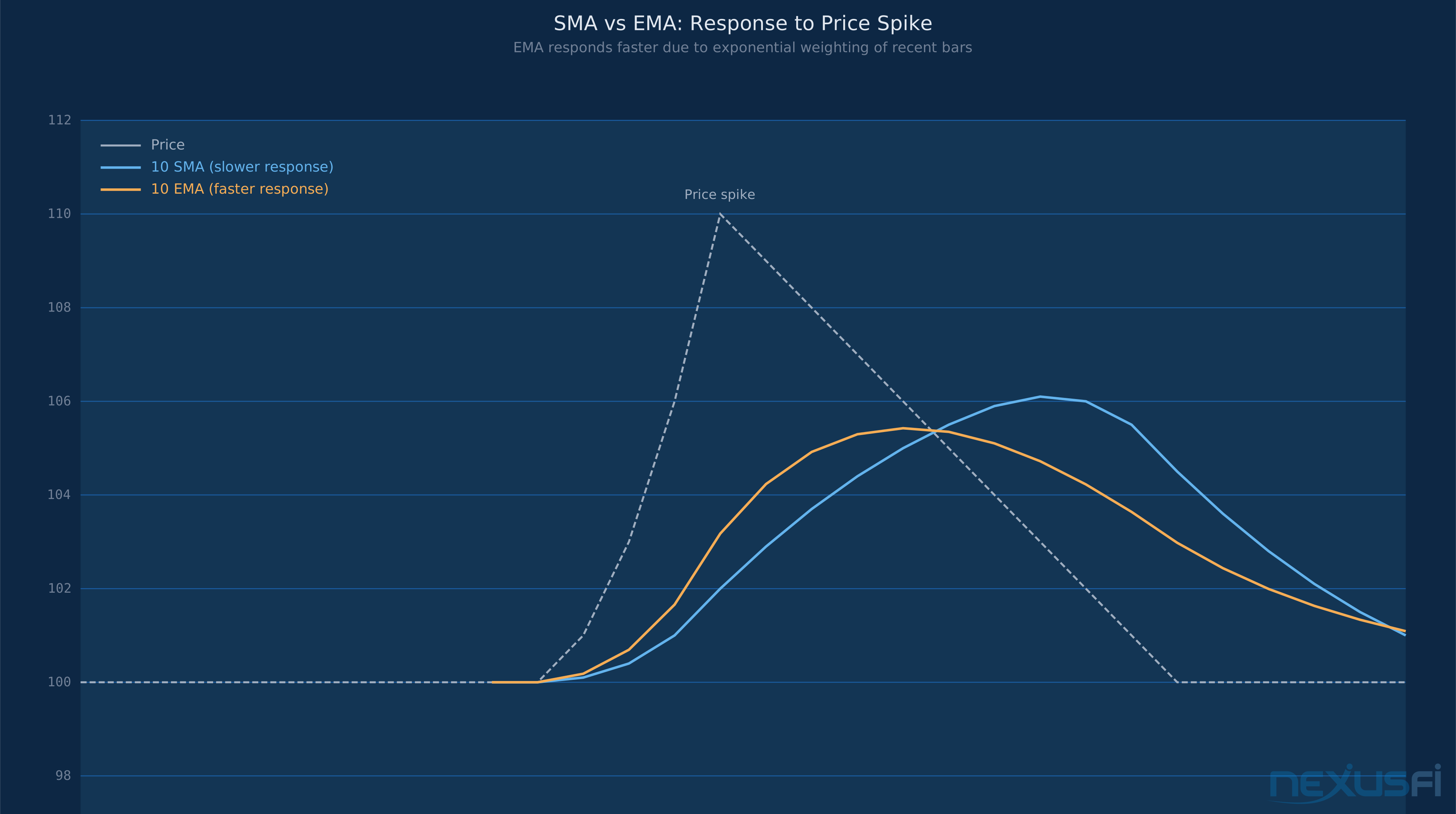
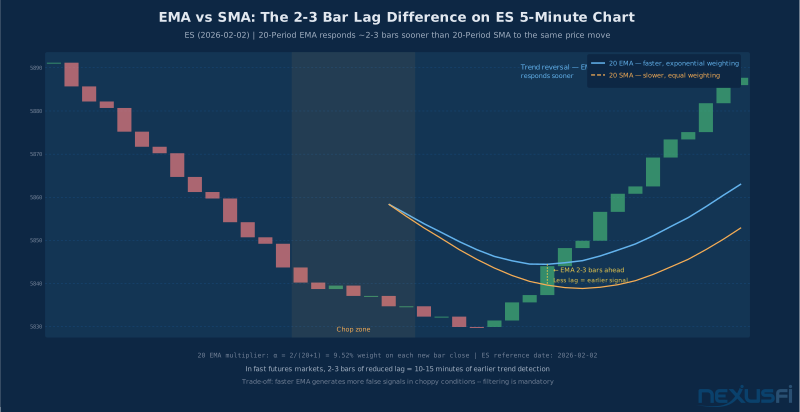
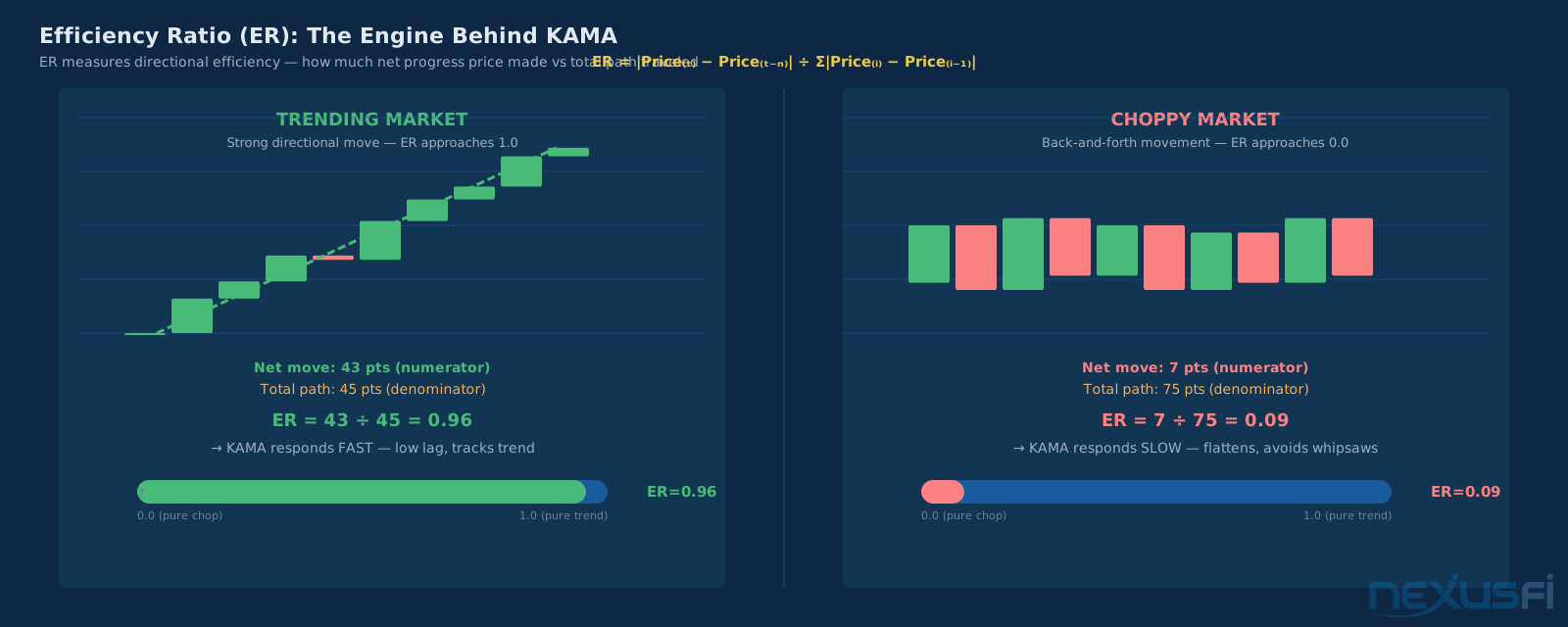
Every moving average faces the same fundamental problem: the smoothing constant that works in a trend destroys you in a range. A fast 9-period EMA catches tr...
tastytrade for Futures Trading: The Complete Guide for Retail Traders The brokerage built by the team that created thinkorswim is designed for one thing: mak...
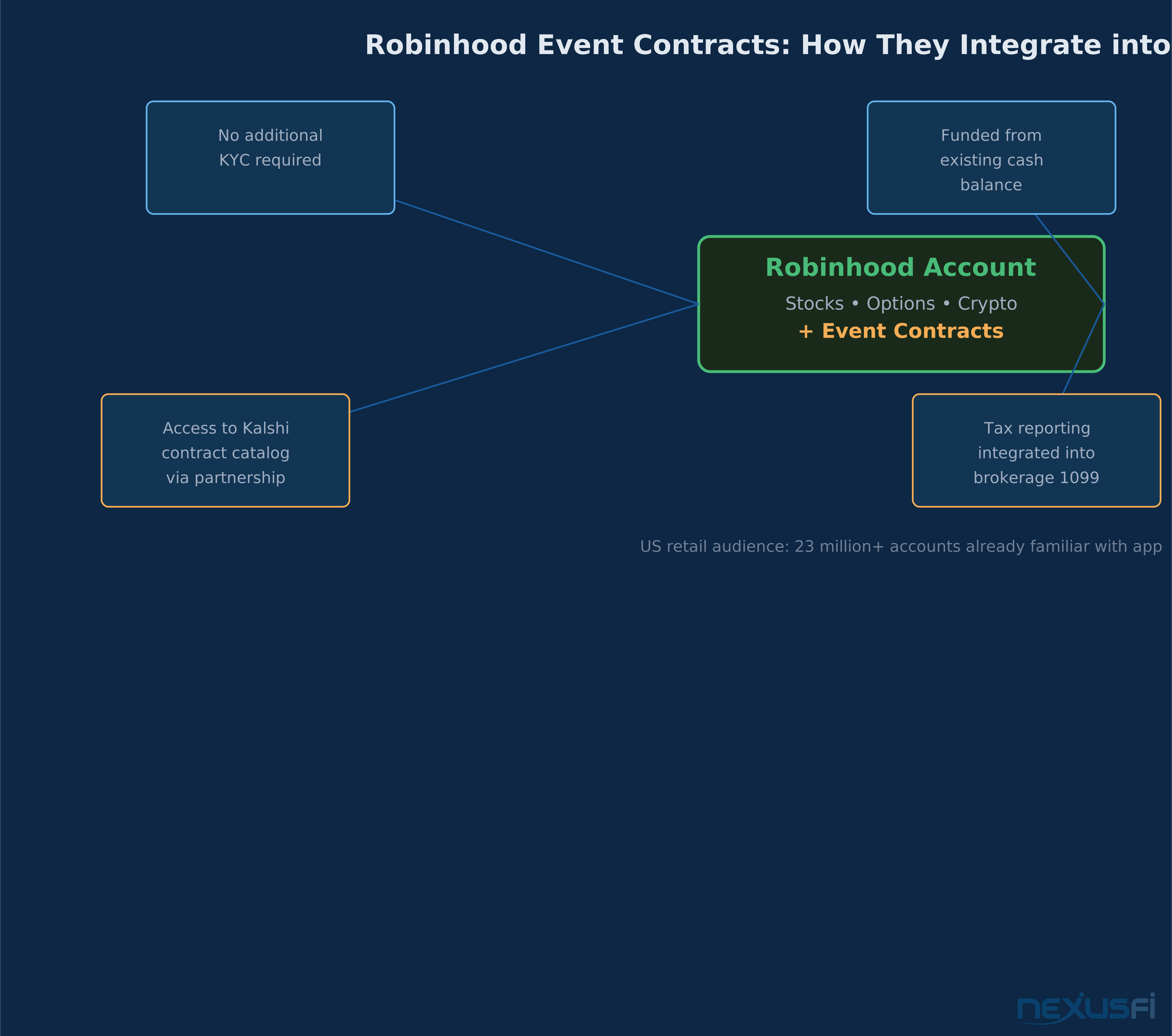
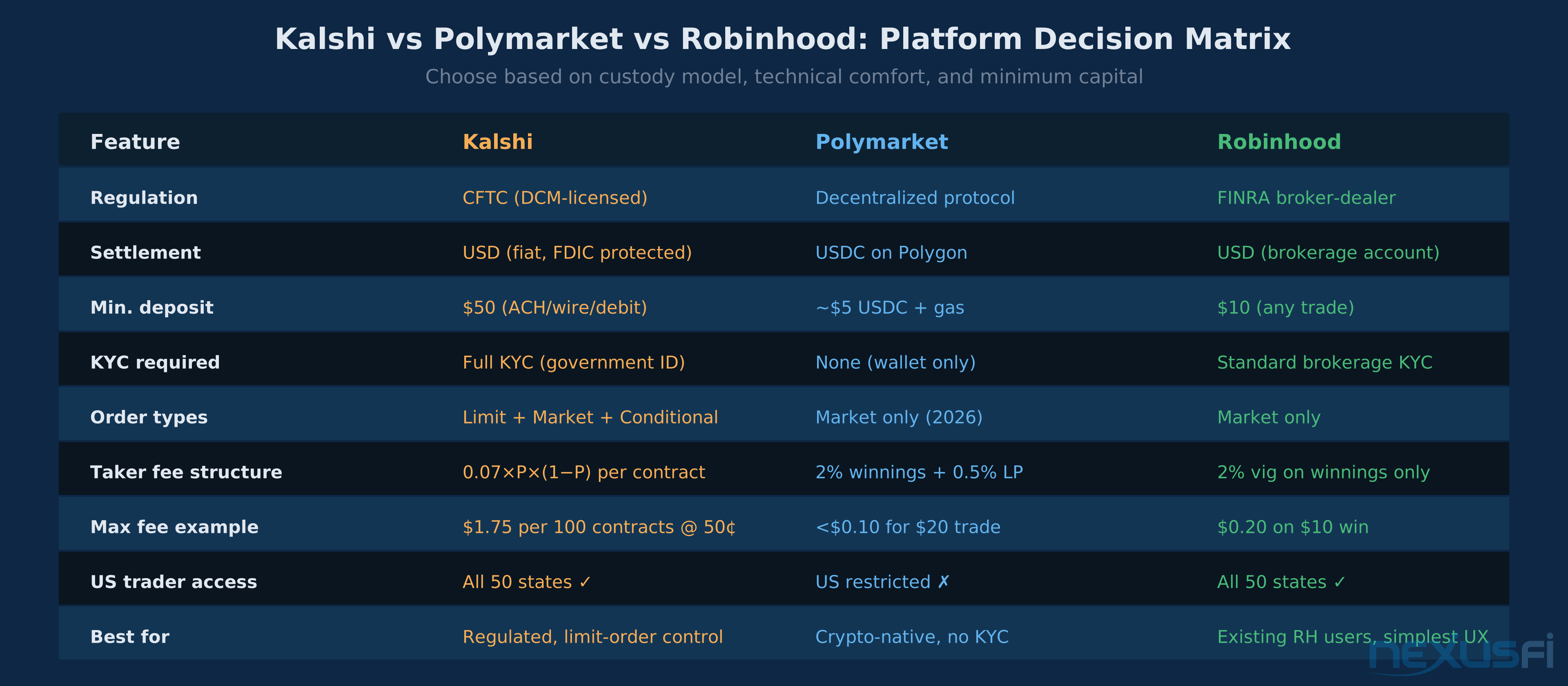
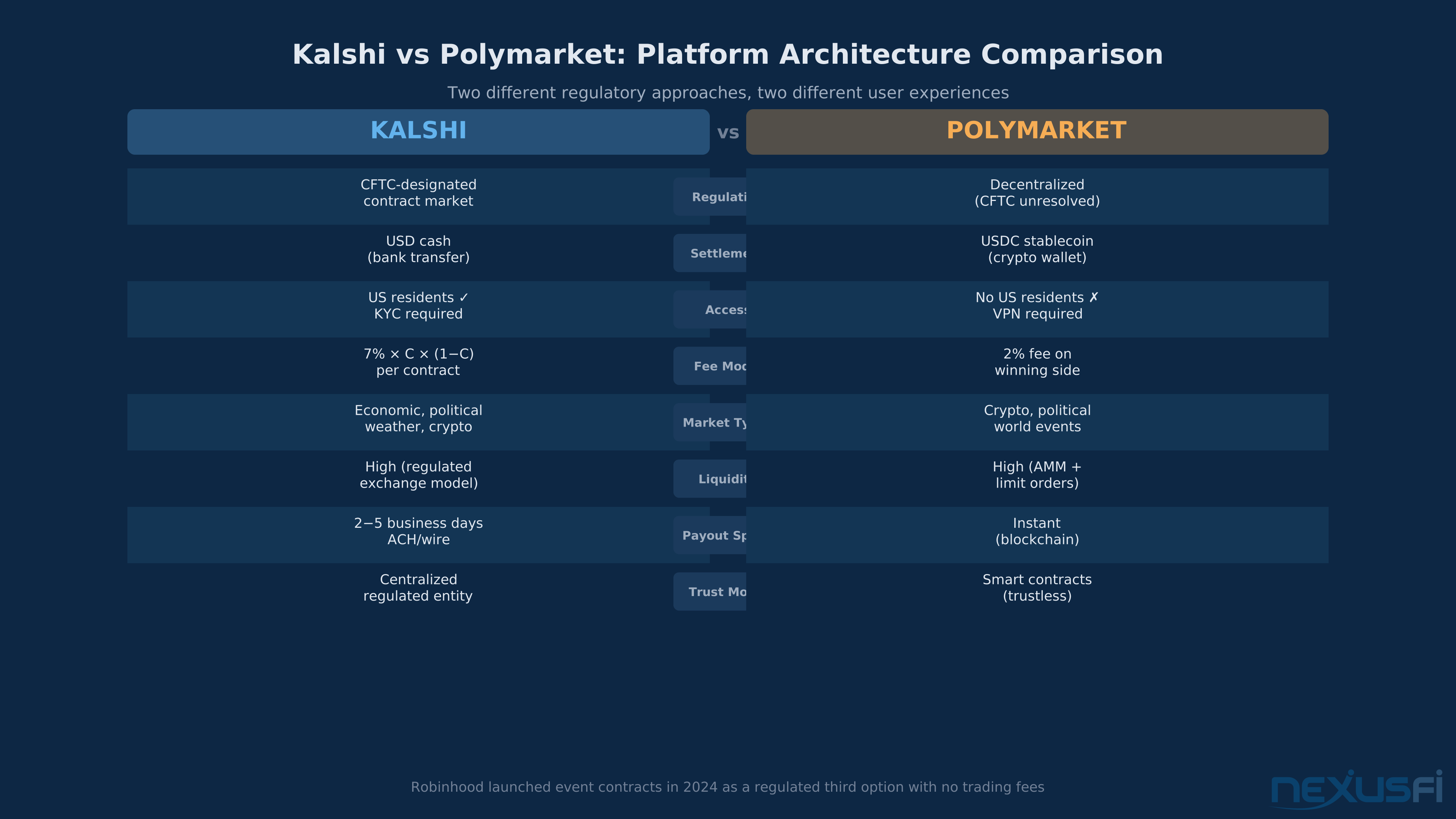
Robinhood launched event contracts in partnership with Kalshi in late 2025, bringing prediction market trading directly into its existing retail brokerage ap...
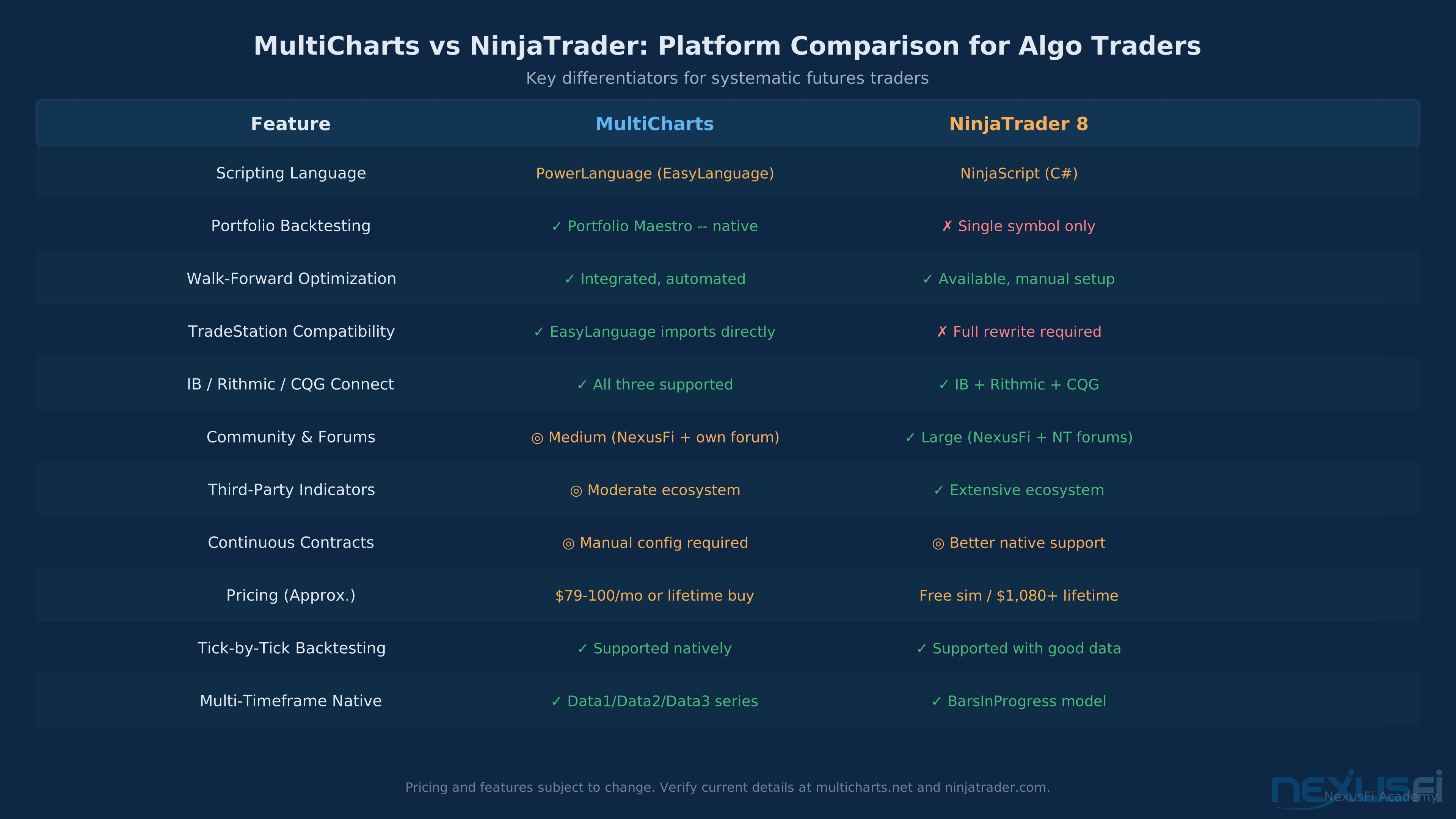
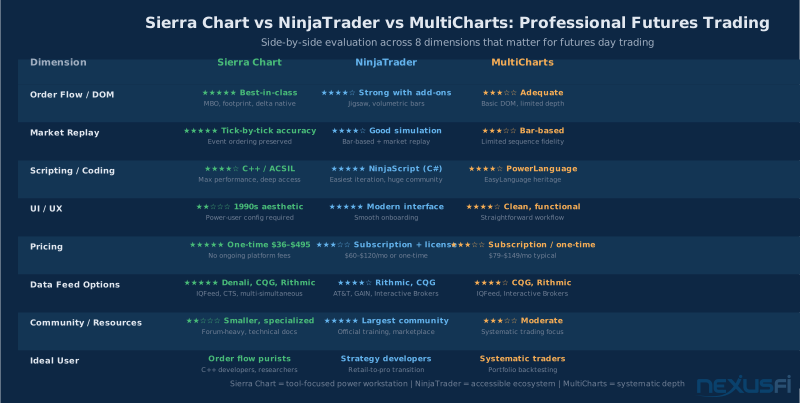
MultiCharts is a professional charting and automated trading platform with deep roots in the TradeStation ecosystem. The scripting language, PowerLanguage, i...
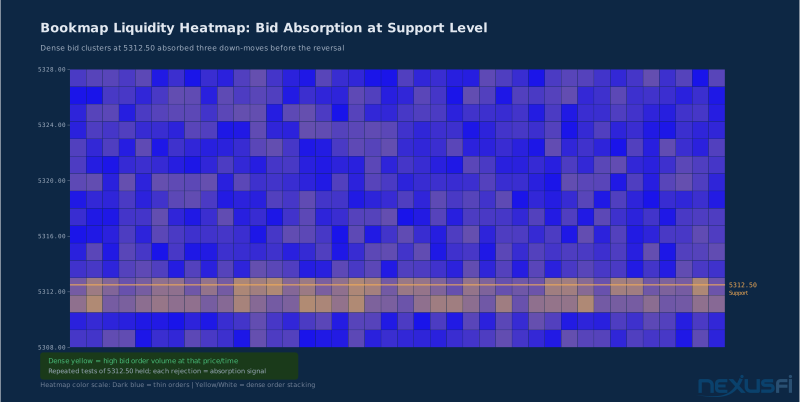
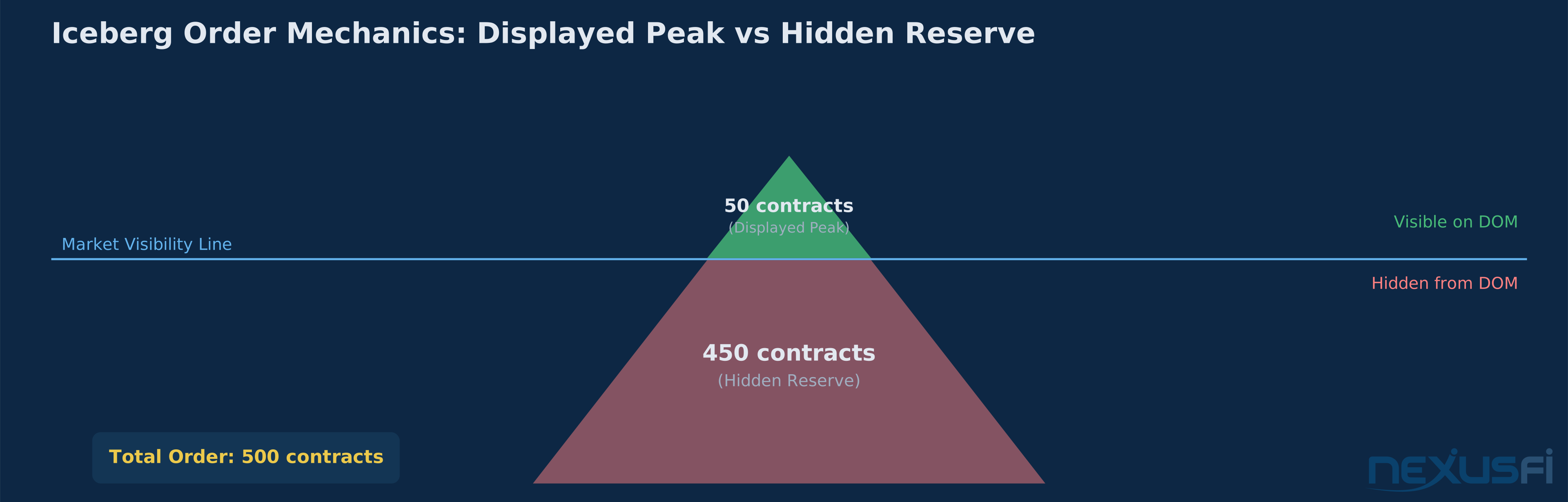
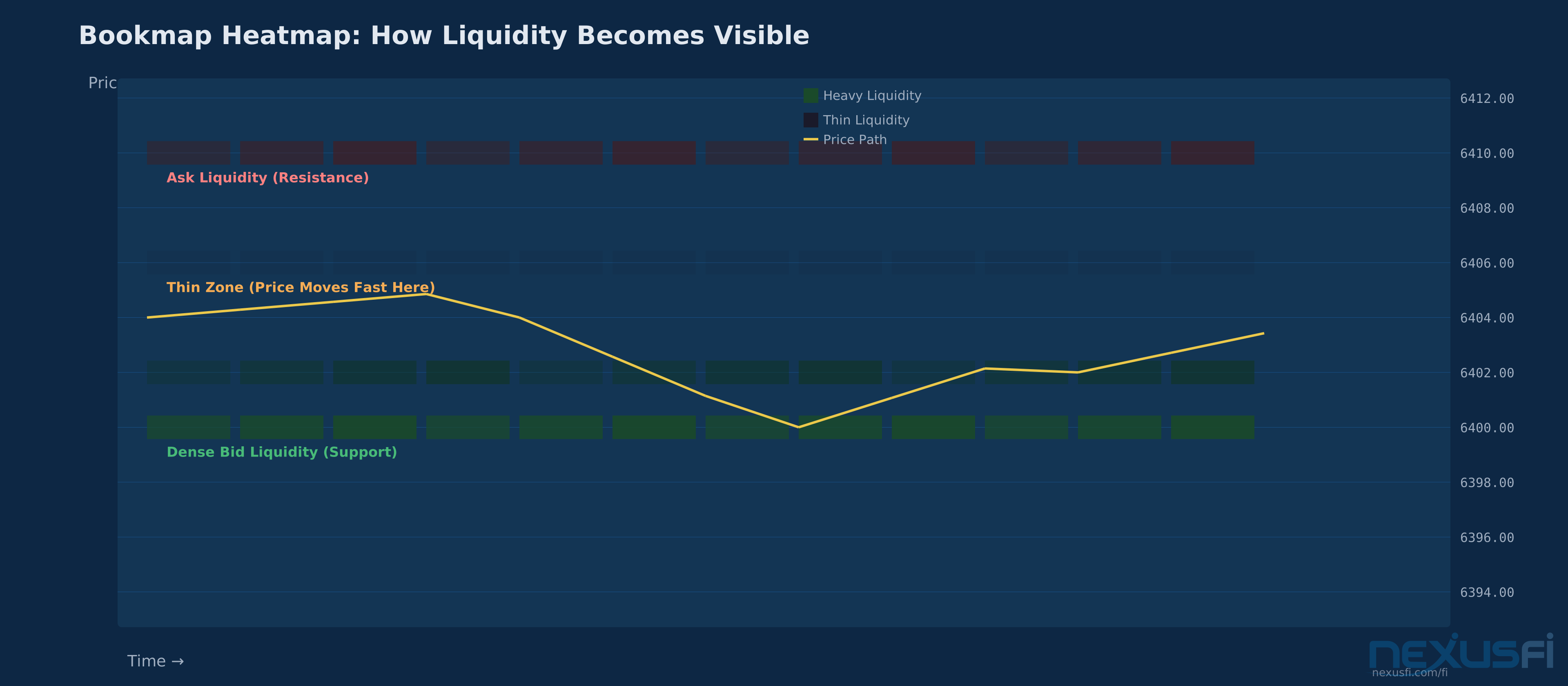
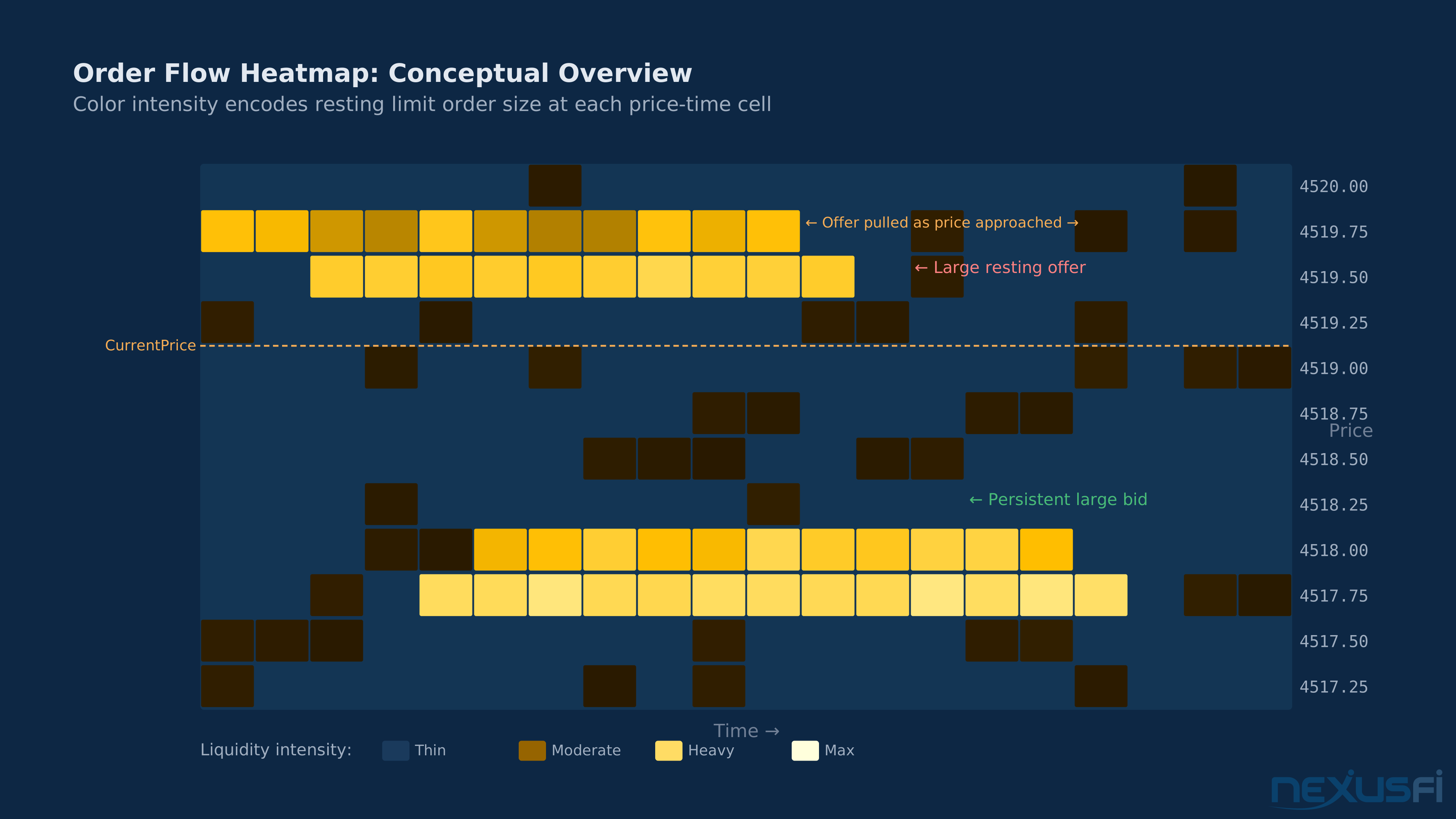
Every futures trader knows what the DOM shows: current bids and asks at each price level. What most DOM displays can't show you is what happened to those bid...
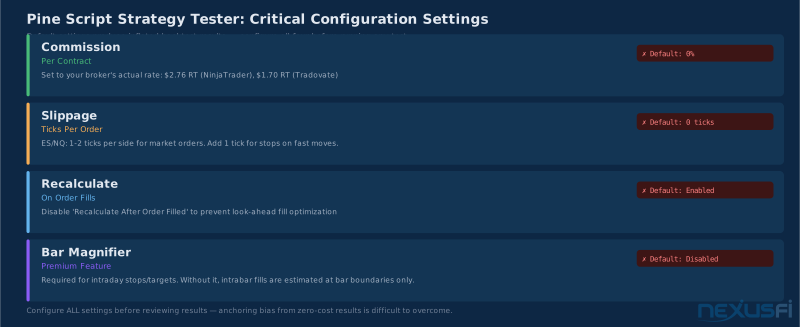
Overview TradingView's Strategy Tester is the most democratized backtesting tool in retail trading -- millions of traders use it to evaluate Pine Script stra...
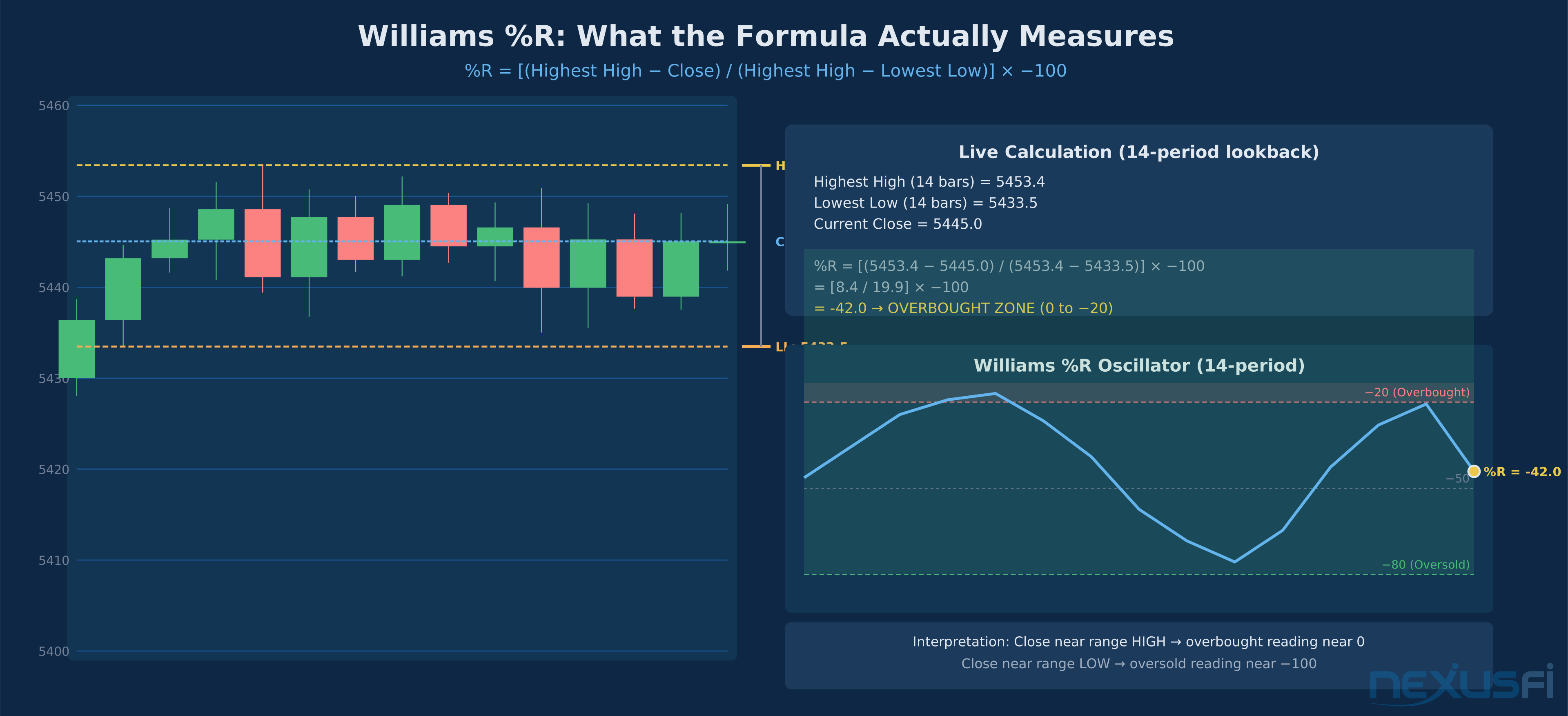
Every oscillator on your chart is trying to answer the same question: is the market stretched too far in one direction? Williams %R answers it more directly ...
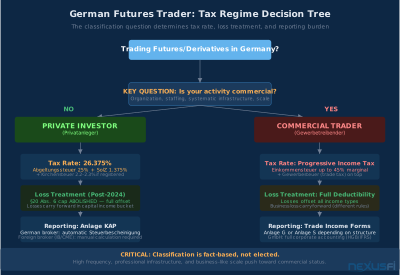
Overview Trading futures as a German private investor puts you in a surprisingly clean tax environment -- once you understand the rules. Gains from exchange-...
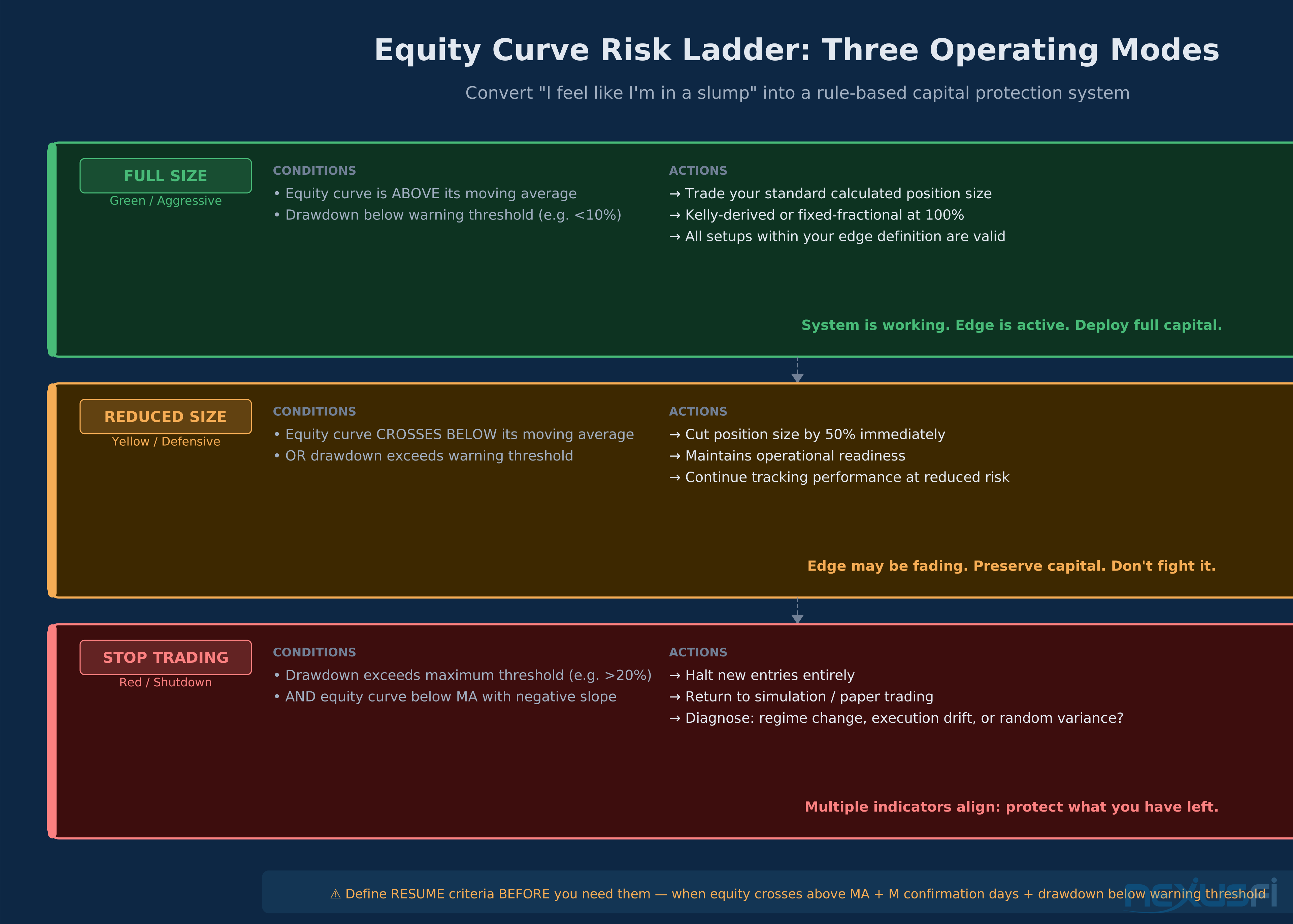
Overview Equity curve trading uses your own cumulative performance data -- your running net profit and loss record -- to decide when to trade full size, when...
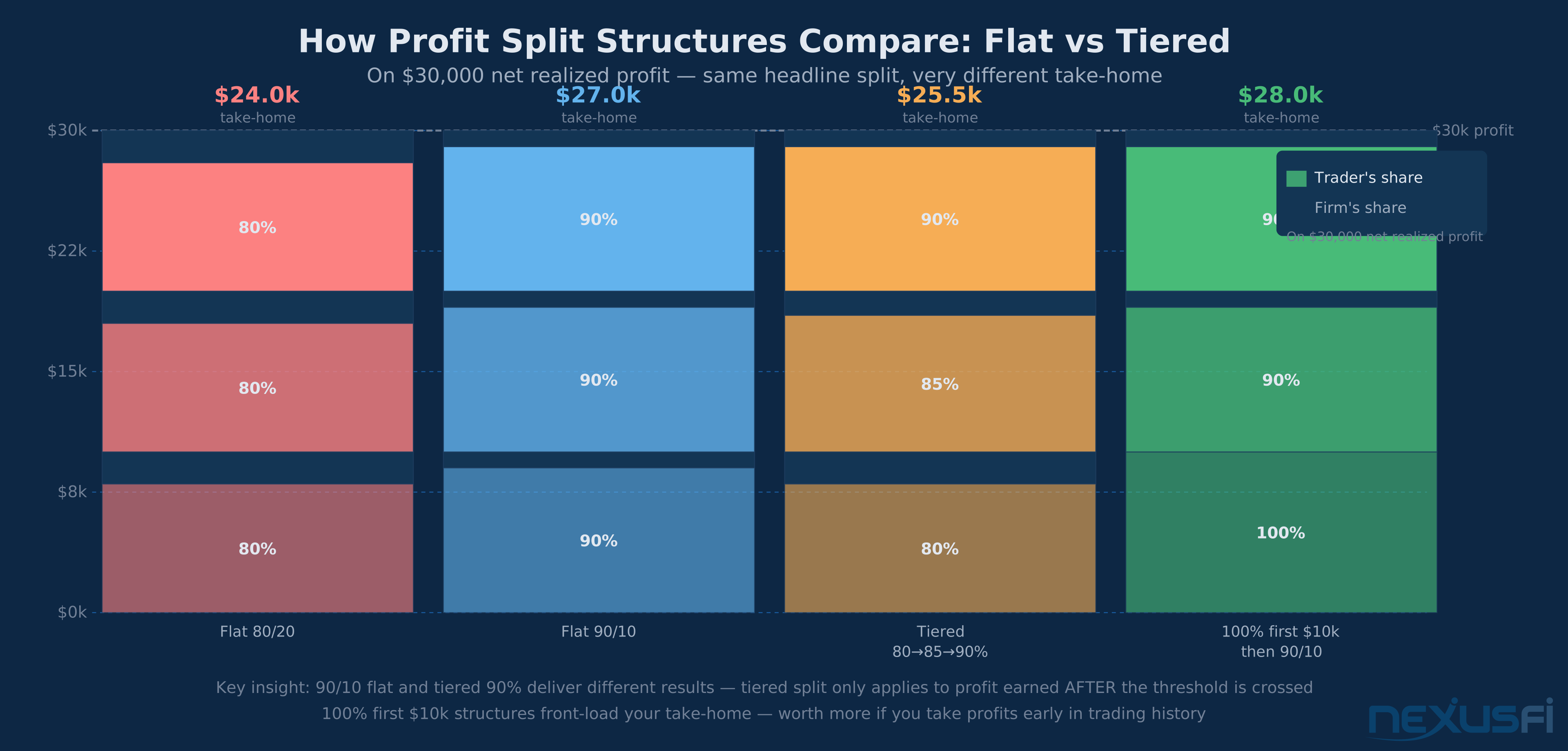
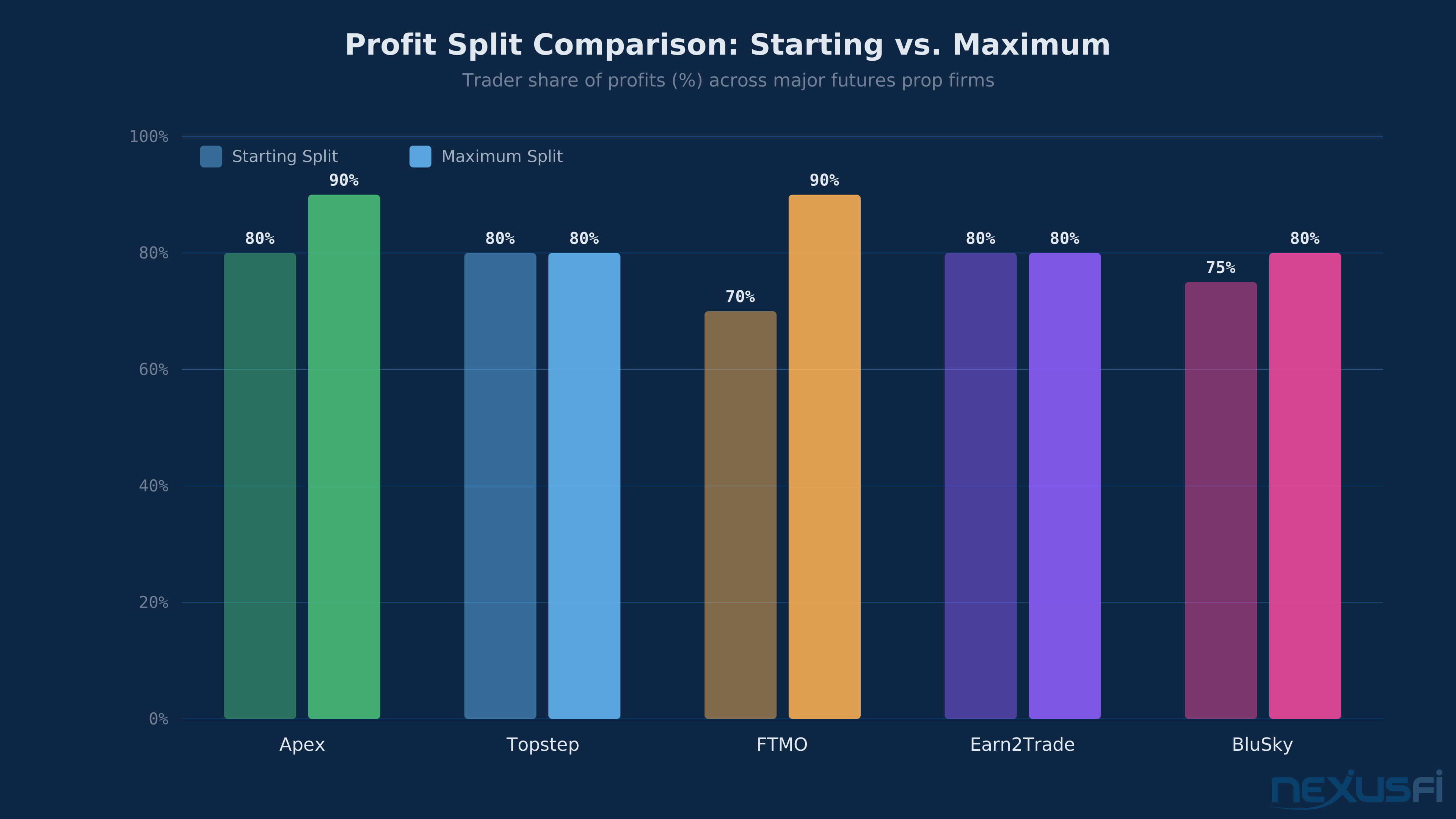
This guide covers how all of it works: the math of flat and tiered splits, how scale-up programs are structured and what disqualifies you from them, the exac...
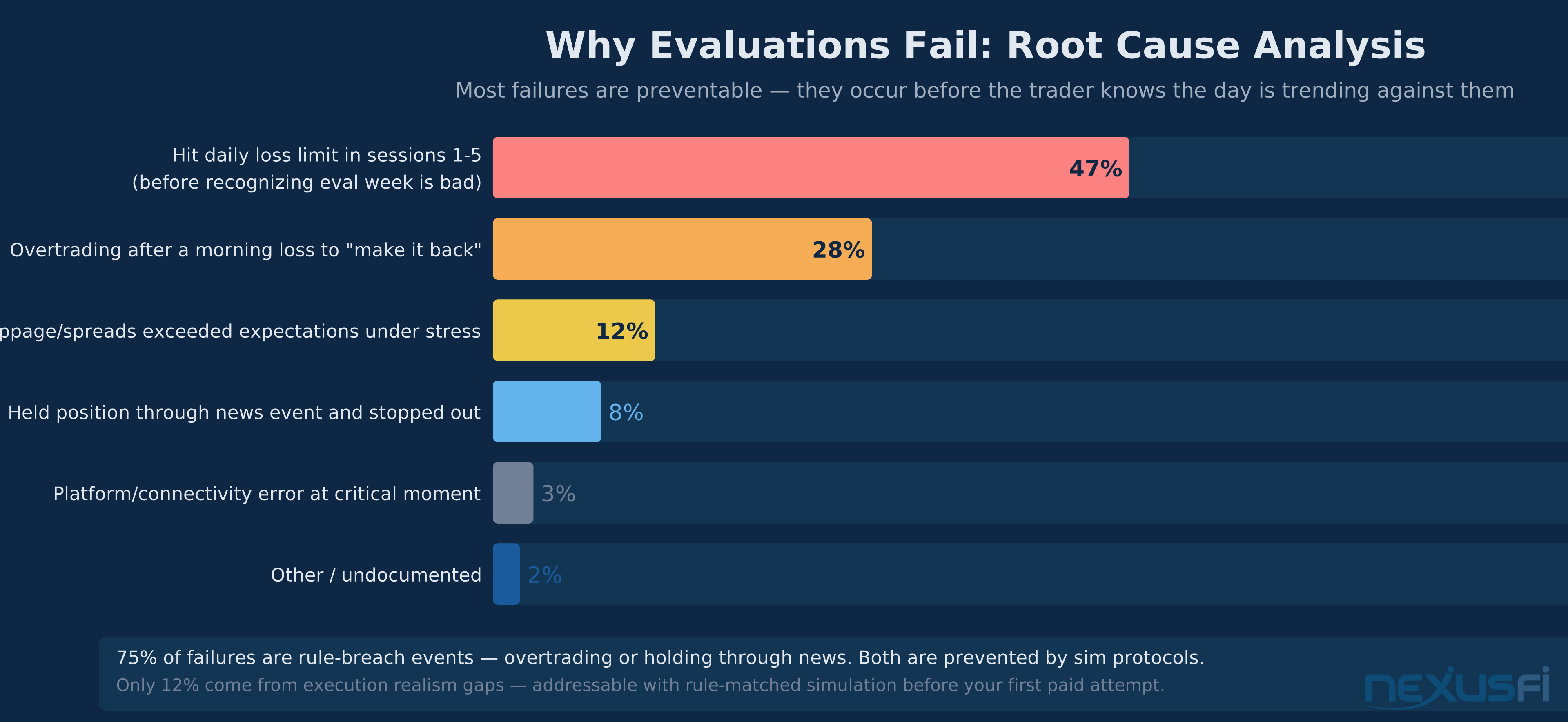
A prop firm evaluation is a compressed, rules-intensive environment designed to test whether a trader can execute their strategy consistently without breachi...
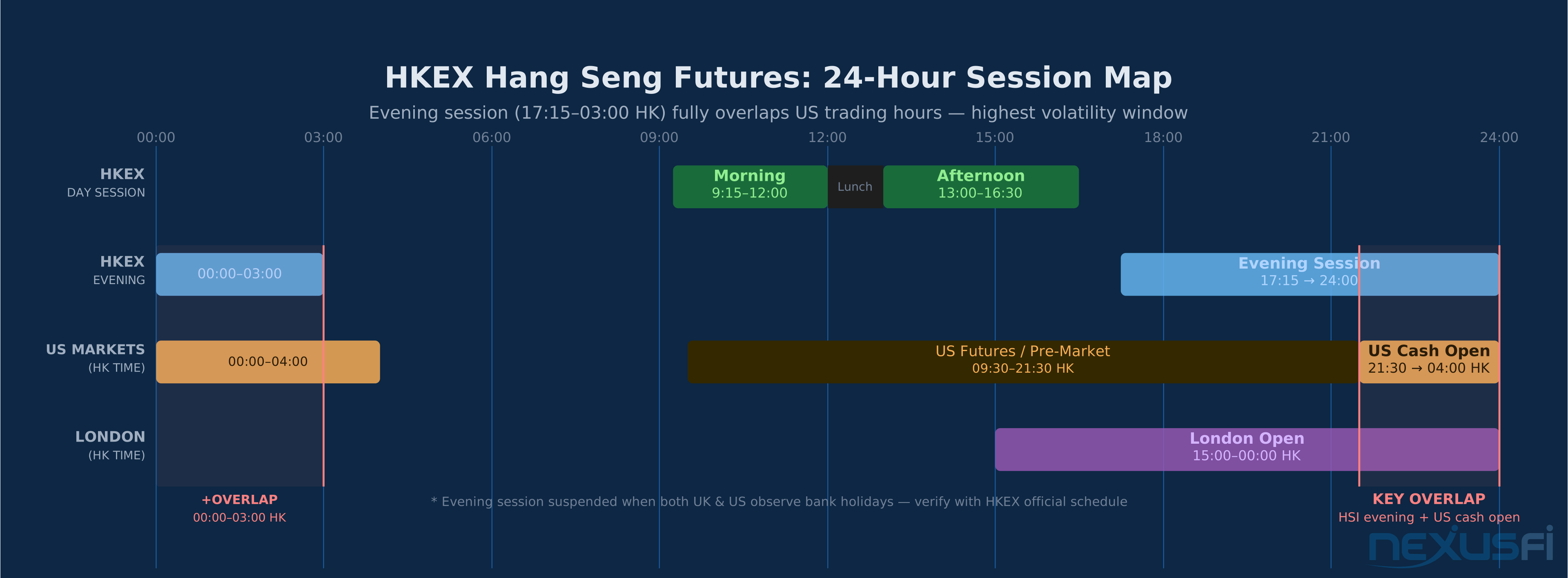
HKEX (Hong Kong Exchanges and Clearing Limited) is one of the world's largest exchange operators by market capitalization. It operates the Hong Kong Stock Ex...
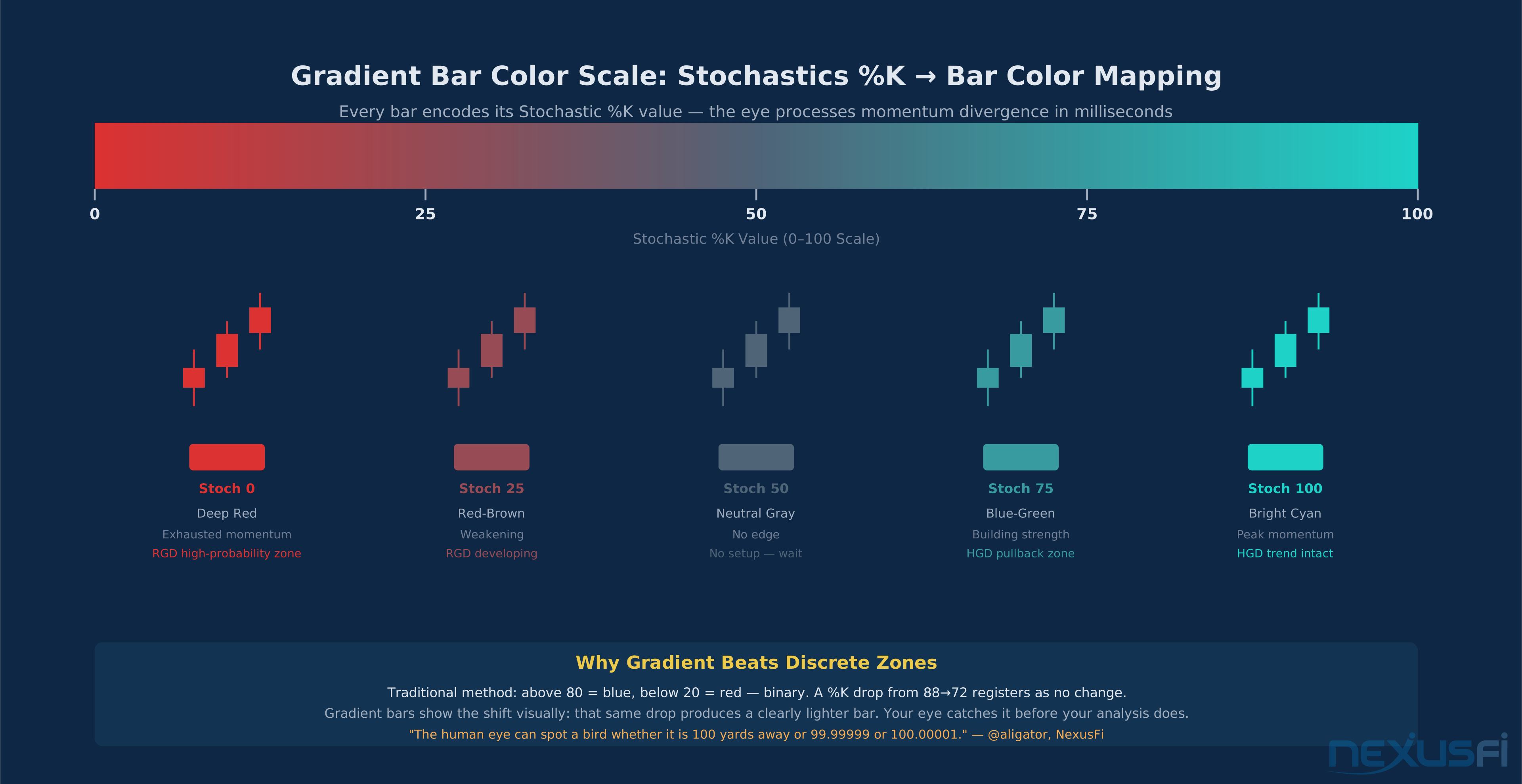
Gradient Divergence uses colored price bars -- bars where the shade corresponds to an underlying oscillator value -- to reveal divergence between price actio...
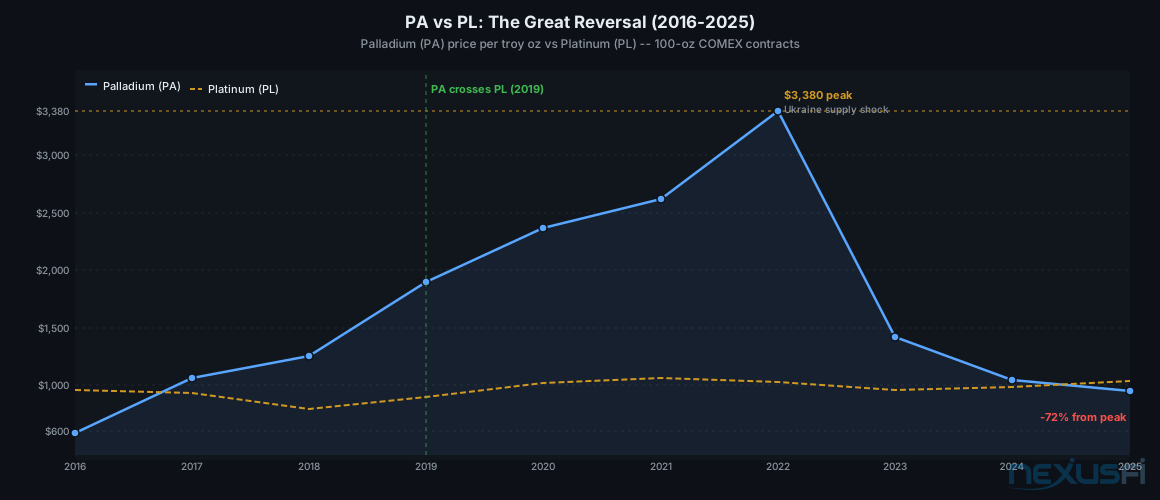
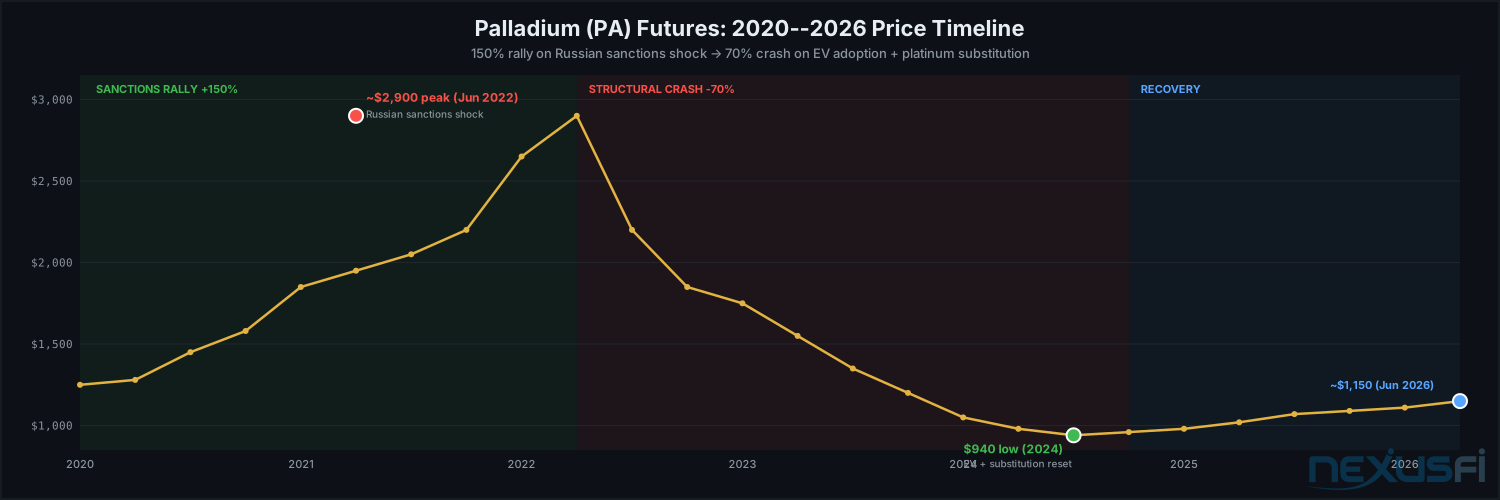
Palladium (PA) Futures: The Autocatalyst Metal That Moves Like Nothing Else Overview Palladium is the market that punishes people who treat it like gold. Sam...
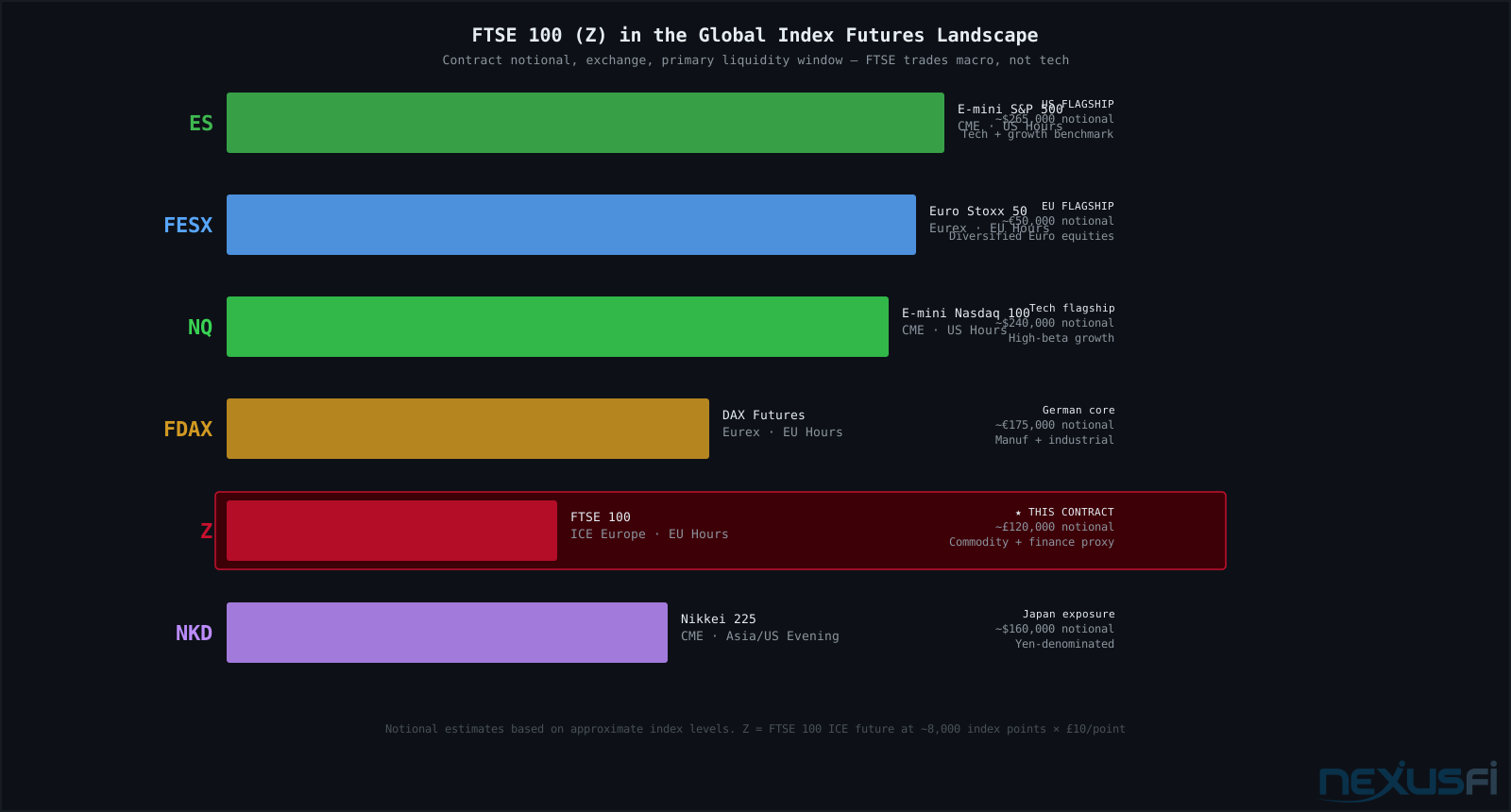
Overview If you trade the E-mini S&P 500 and want to add a second index to your rotation, the FTSE 100 futures (ICE ticker: Z) look attractive on the surface...
You've been trading futures for five years. You understand volume profile, order flow, risk management, and market structure. You've read Douglas, Steenbarge...
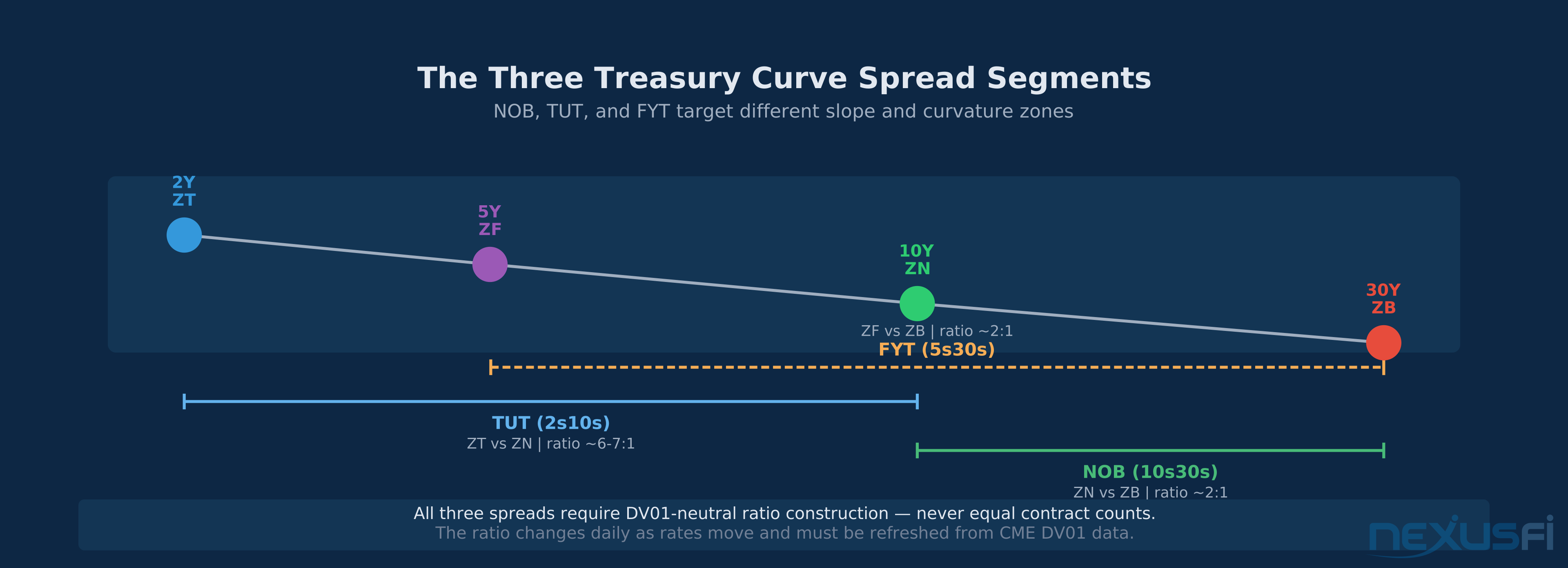
Most futures traders who touch Treasury markets start with outright positions — long ZN, short ZB, some view on where rates are going. That works, but it e...
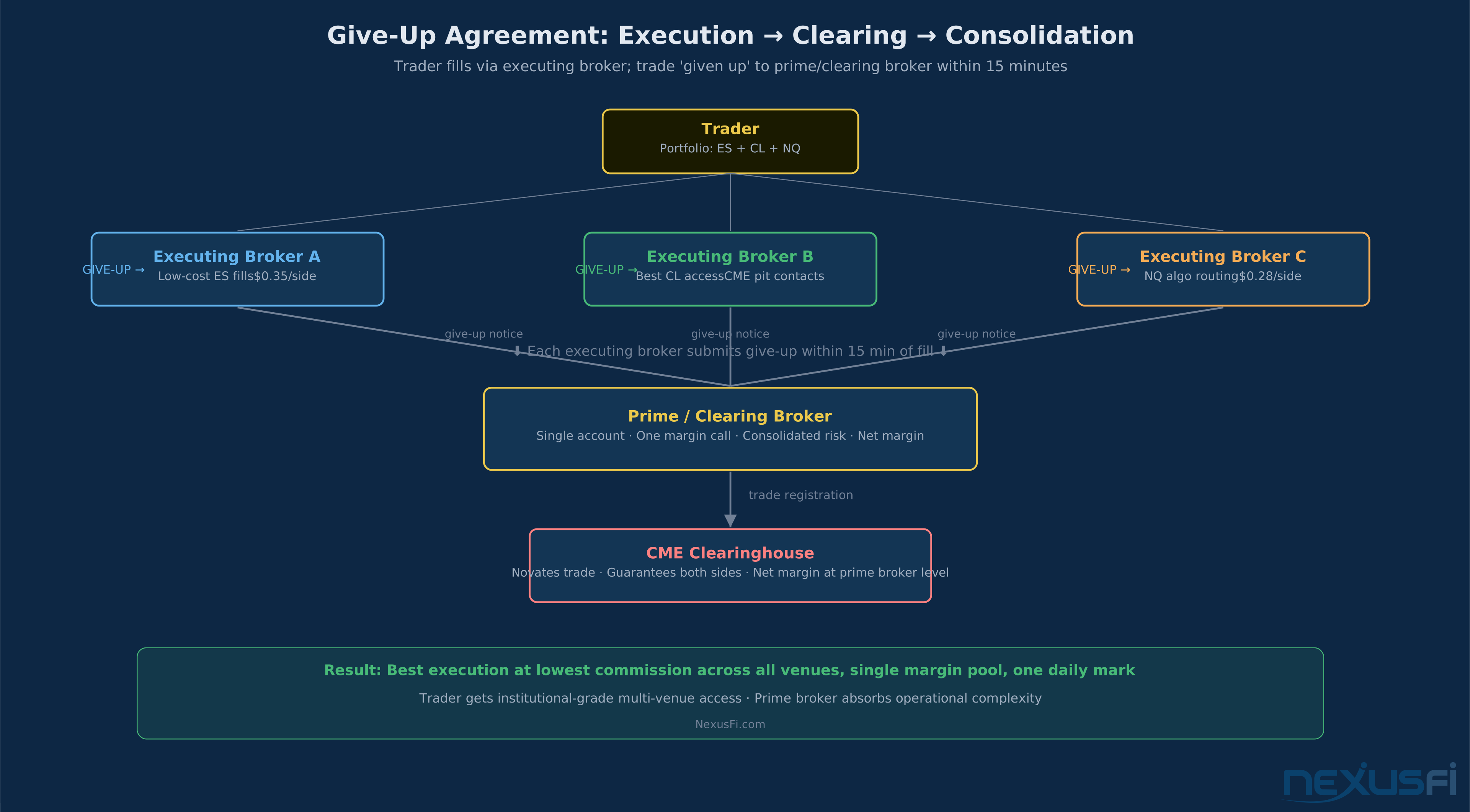
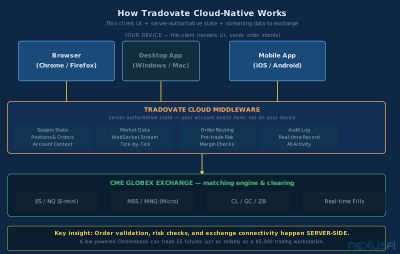
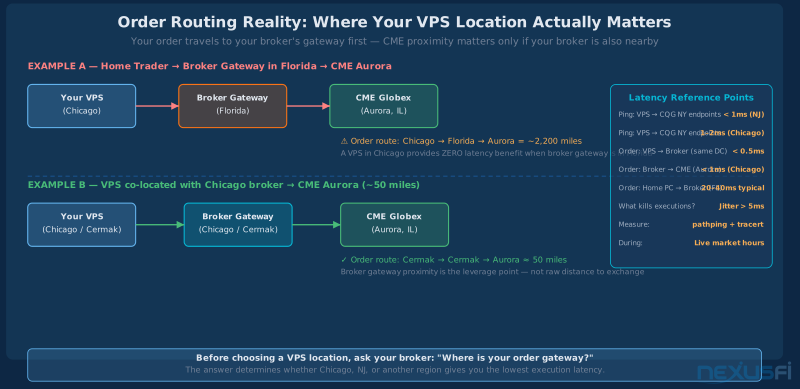
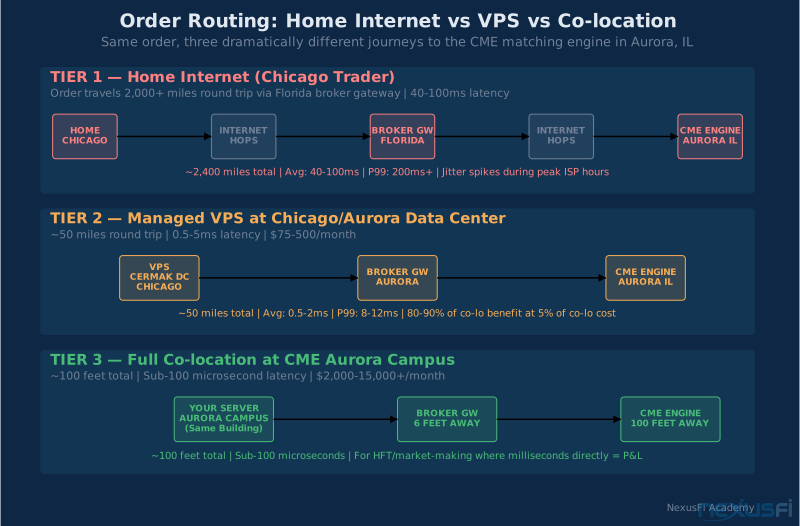
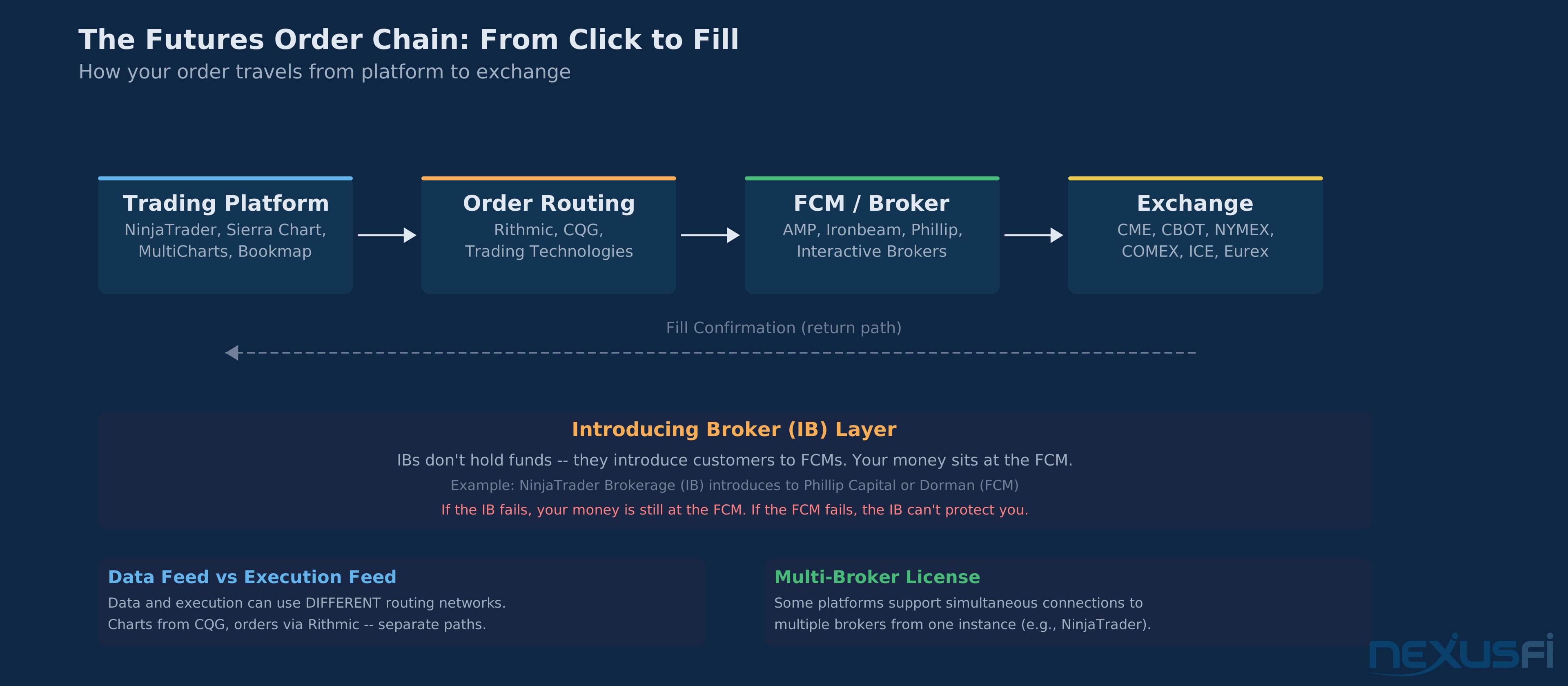
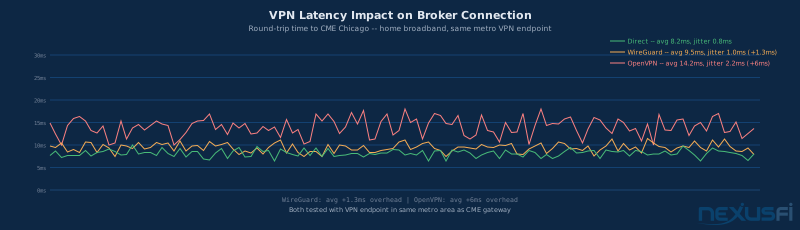
Overview Most futures traders never think about the infrastructure between their order and the exchange. You click sell, the market fills you, and you move o...
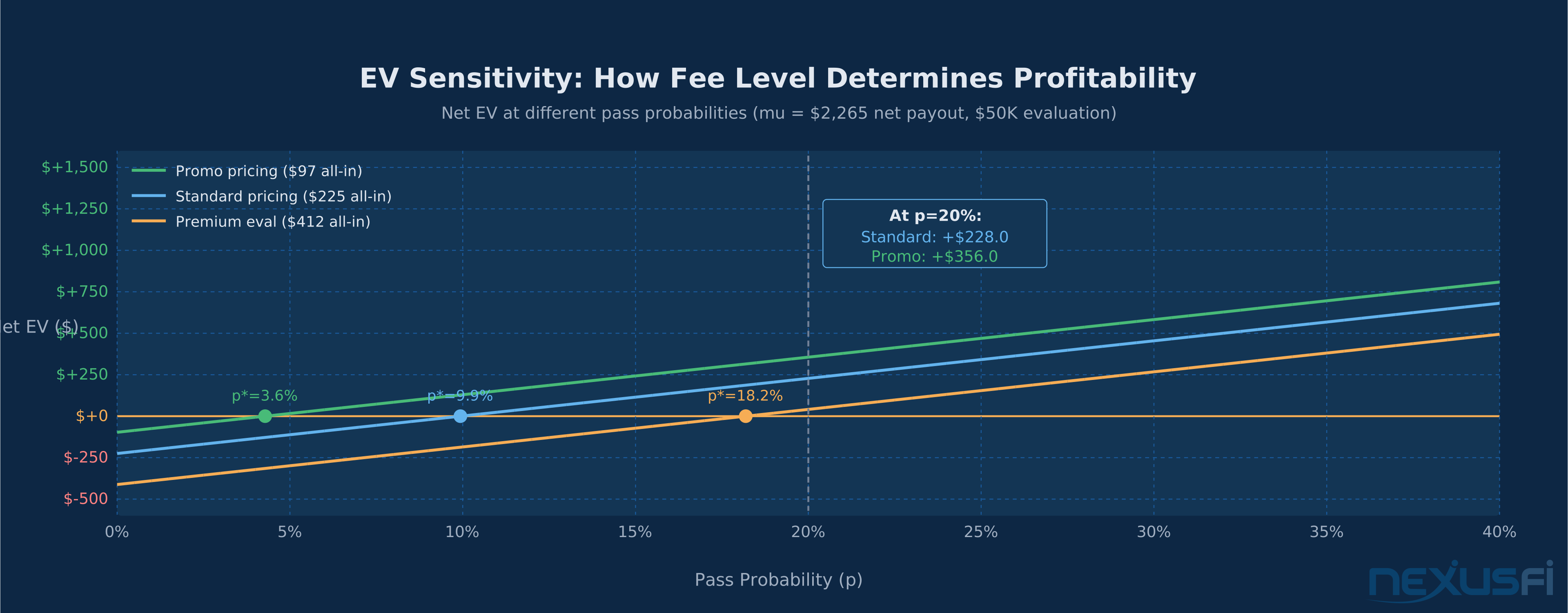
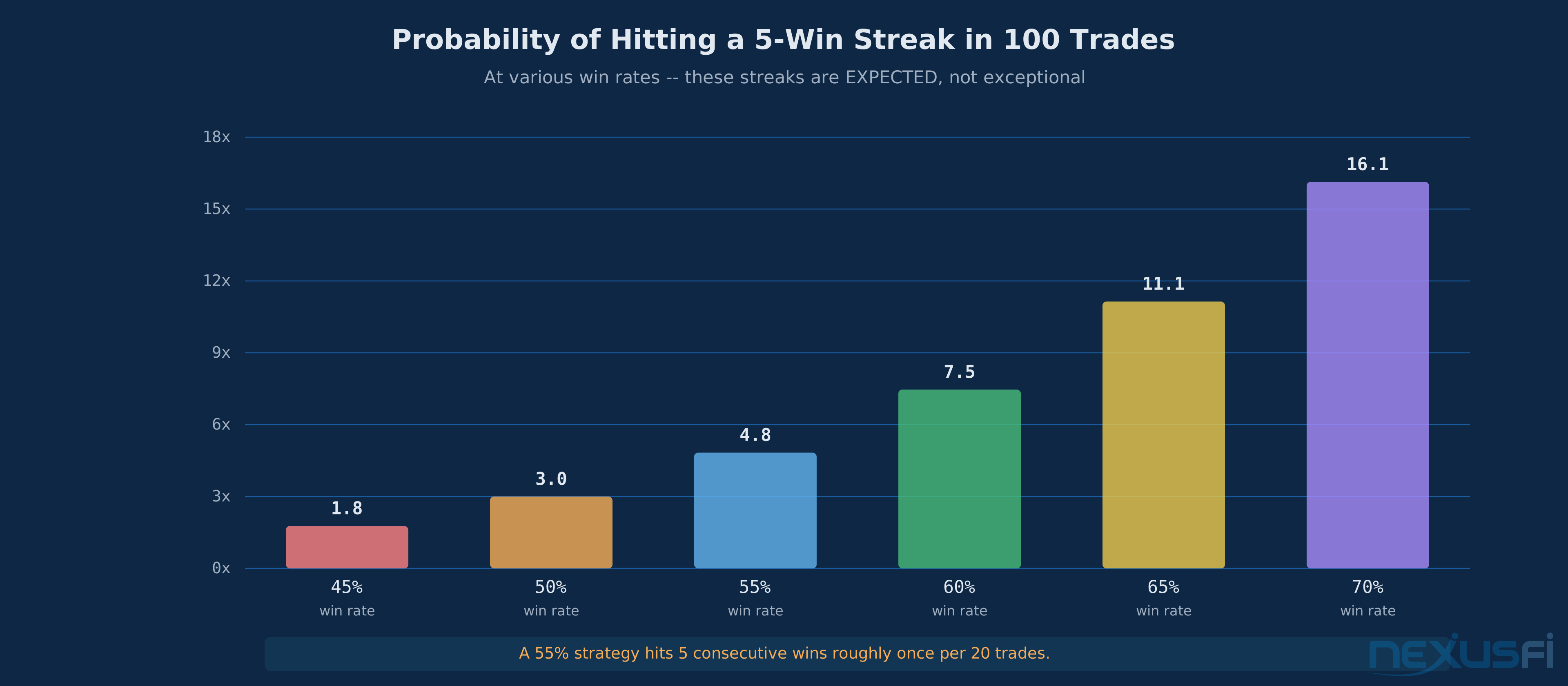
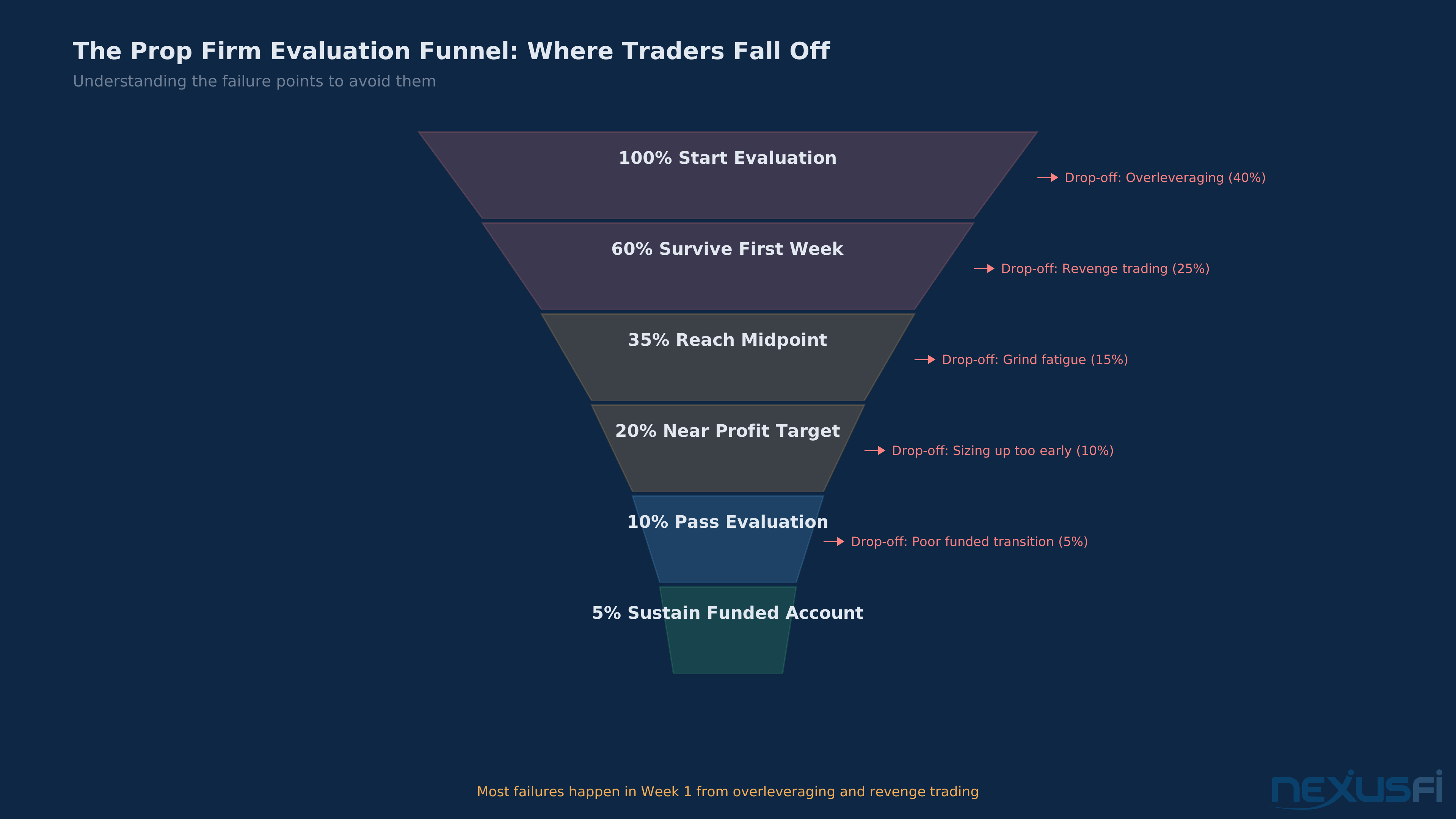
Most traders approach prop firm evaluations the same way gamblers approach slot machines -- they feel out the odds, notice a few big winners, and pull the ha...
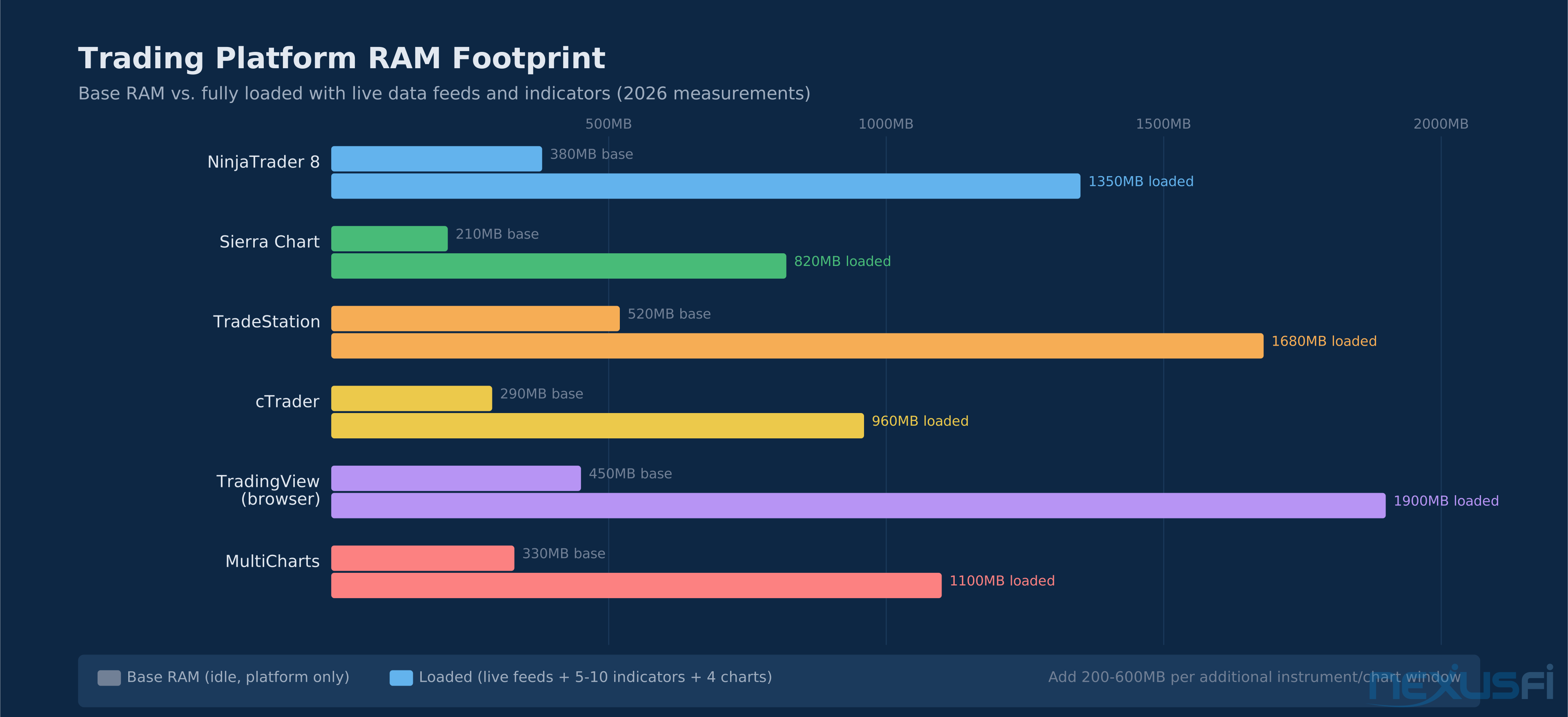
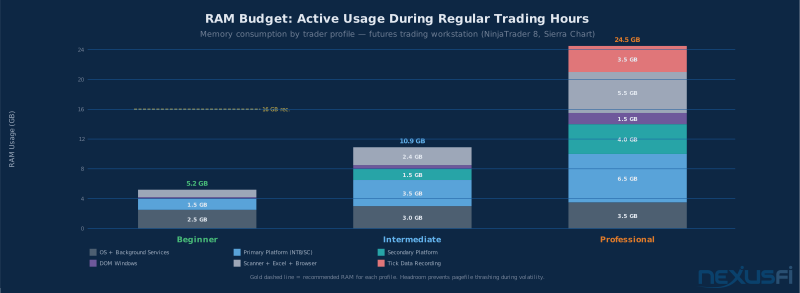
Overview RAM is the component most traders either obsess over or ignore completely. The obsessors buy 64GB thinking more is always better. The ignorers run 8...
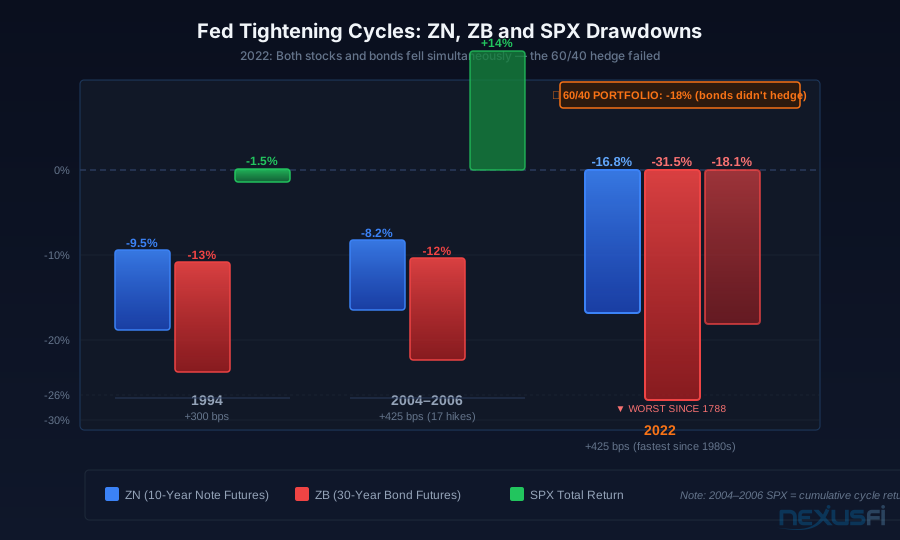
Overview In 2022, a portfolio running a textbook 60/40 equity-bond allocation lost 18% — the worst year since 2008. The equity sleeve was down. The bond sl...
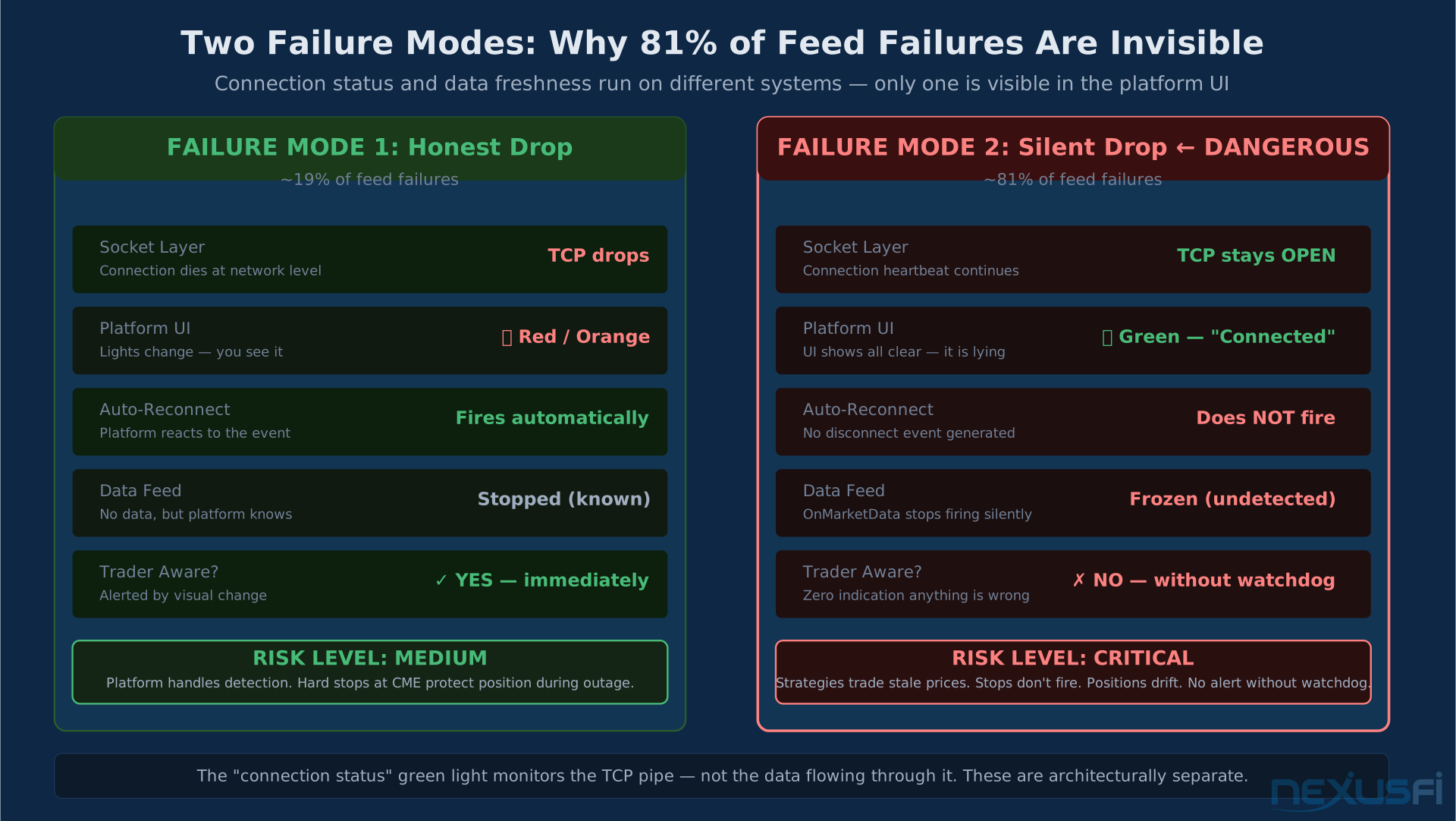
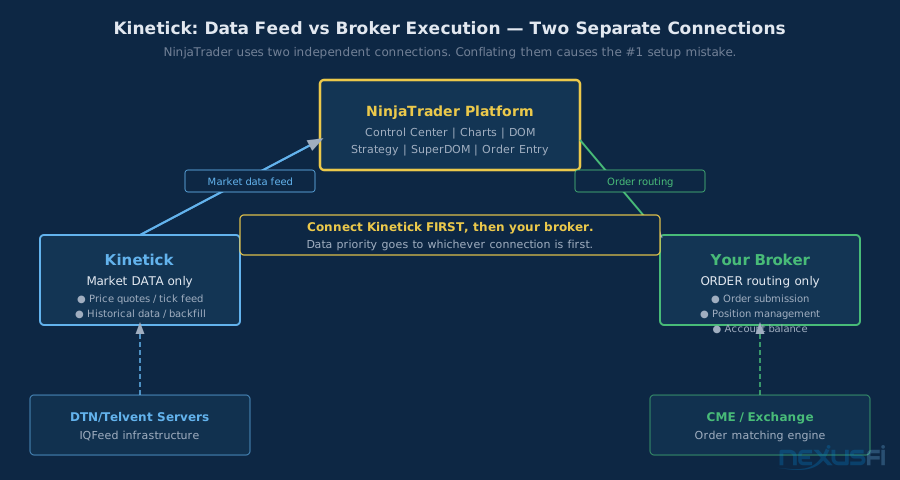
Before reading this article, it helps to understand how market data flows from exchange to platform and why NinjaTrader 8's connection architecture separates...
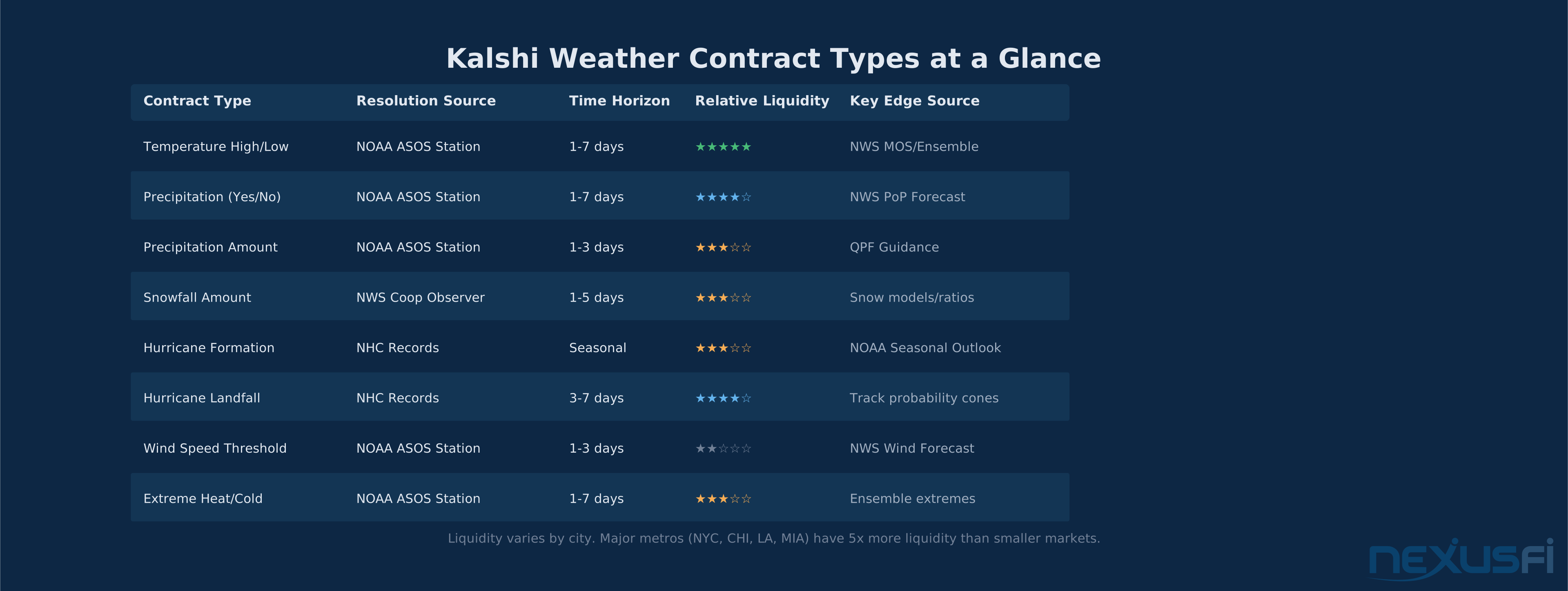
Weather prediction markets are one of Kalshi's most distinctive offerings, giving traders the ability to take positions on objectively verifiable meteorologi...
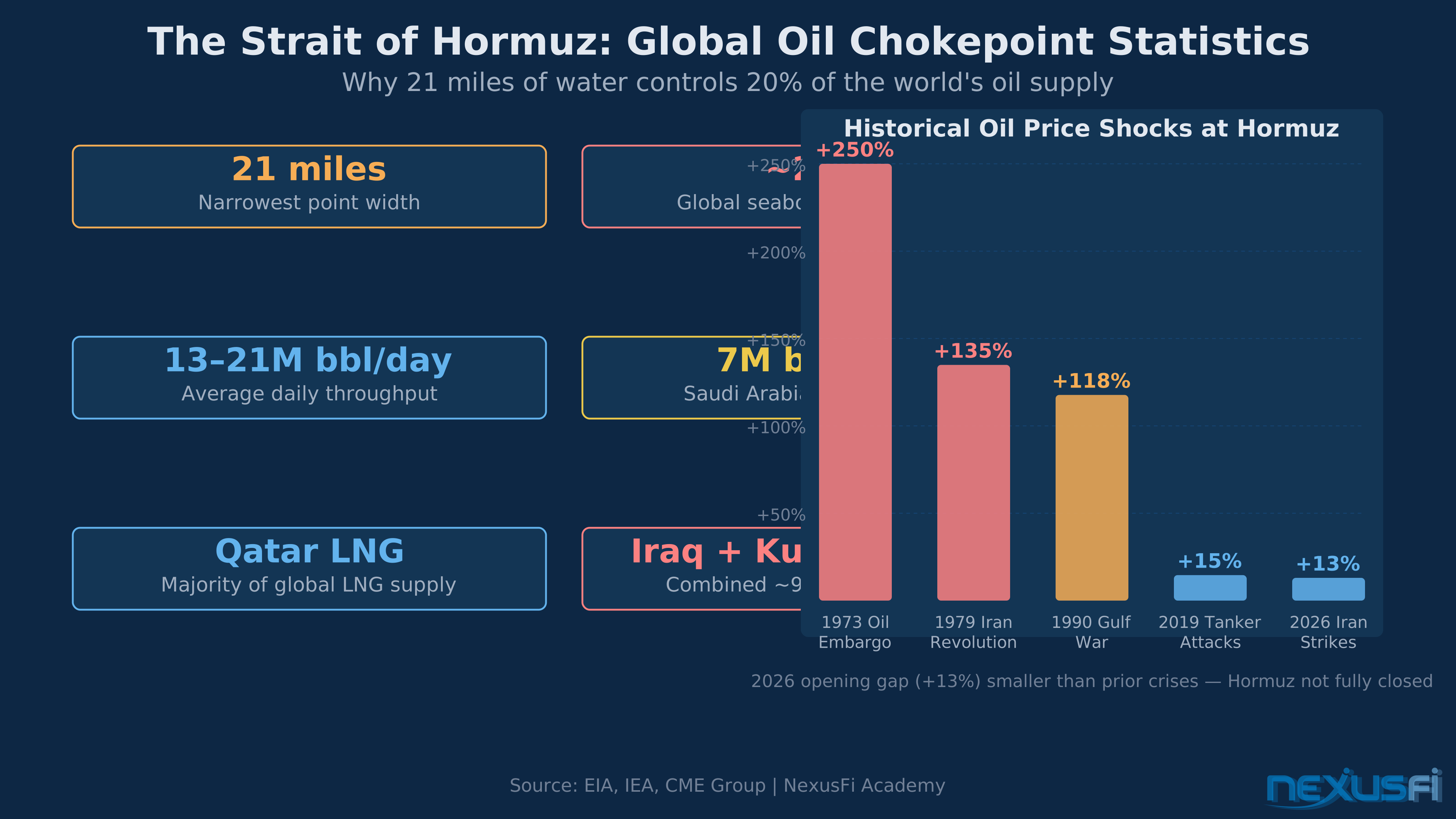
The Strait of Hormuz is 21 miles wide at its narrowest point. It connects the Persian Gulf to the Gulf of Oman -- and controls roughly 20% of all global seab...
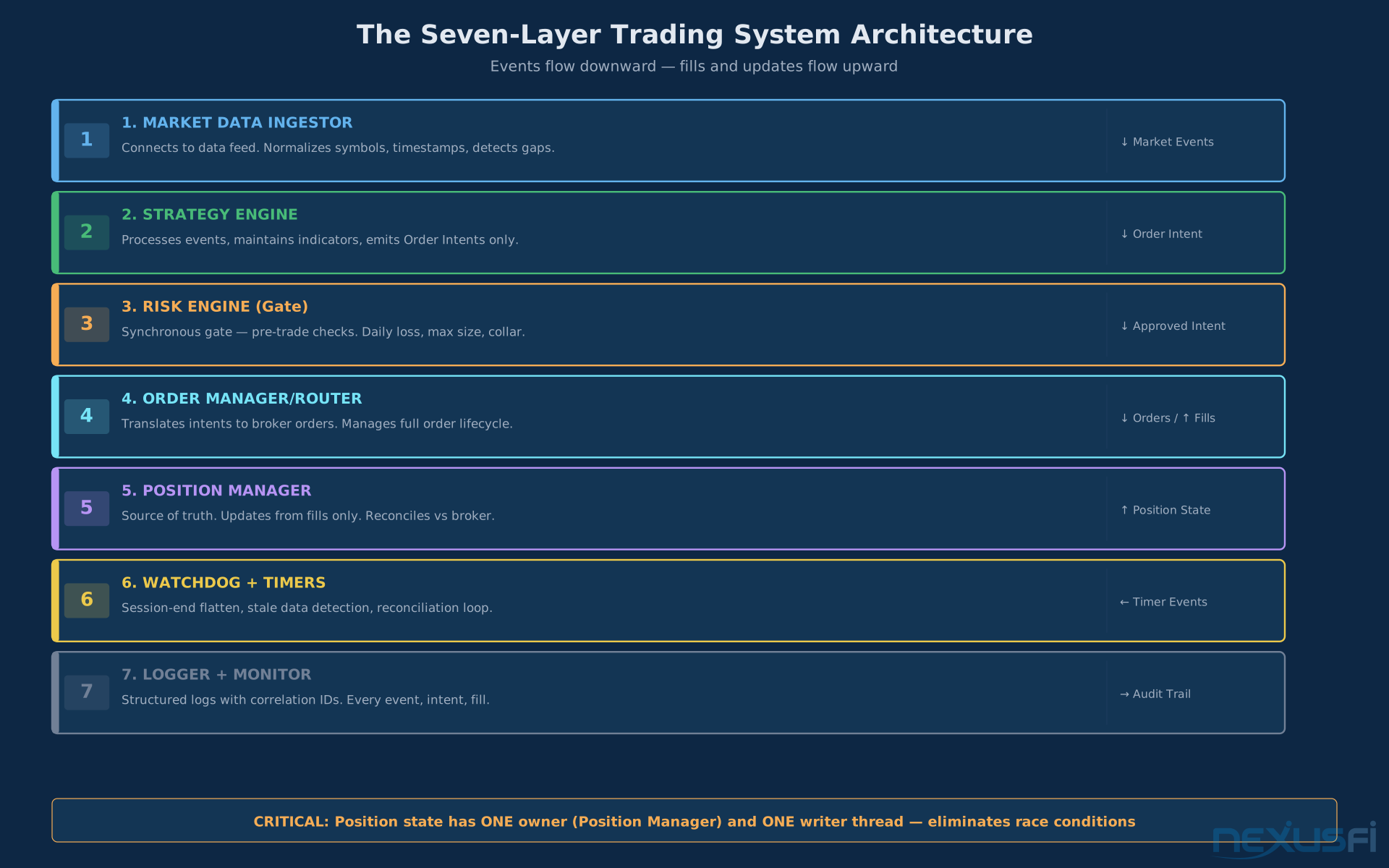
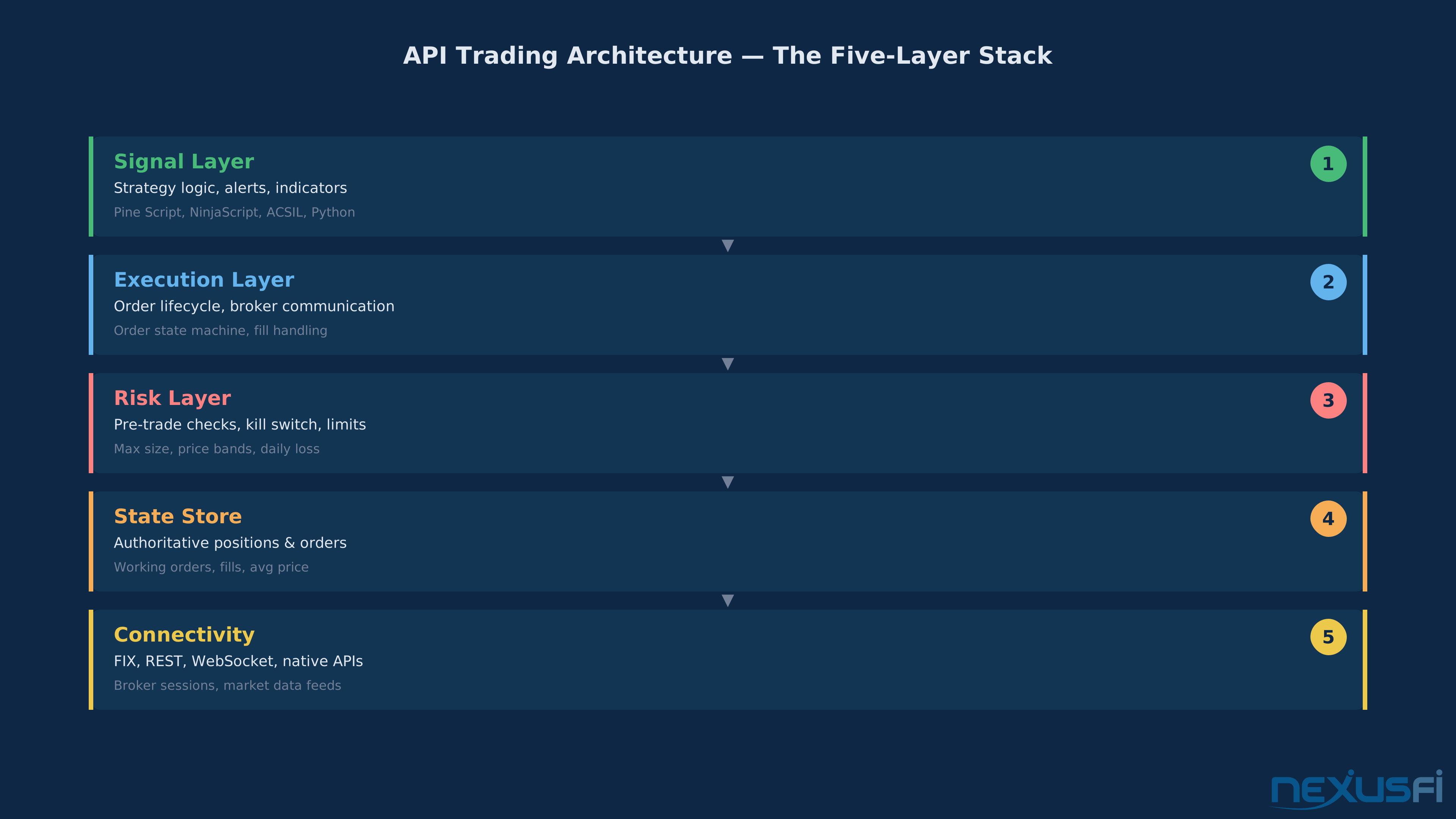
Most failed automated futures systems die from the same set of causes: state corruption after a disconnect, a risk check that runs at startup but not live, a...
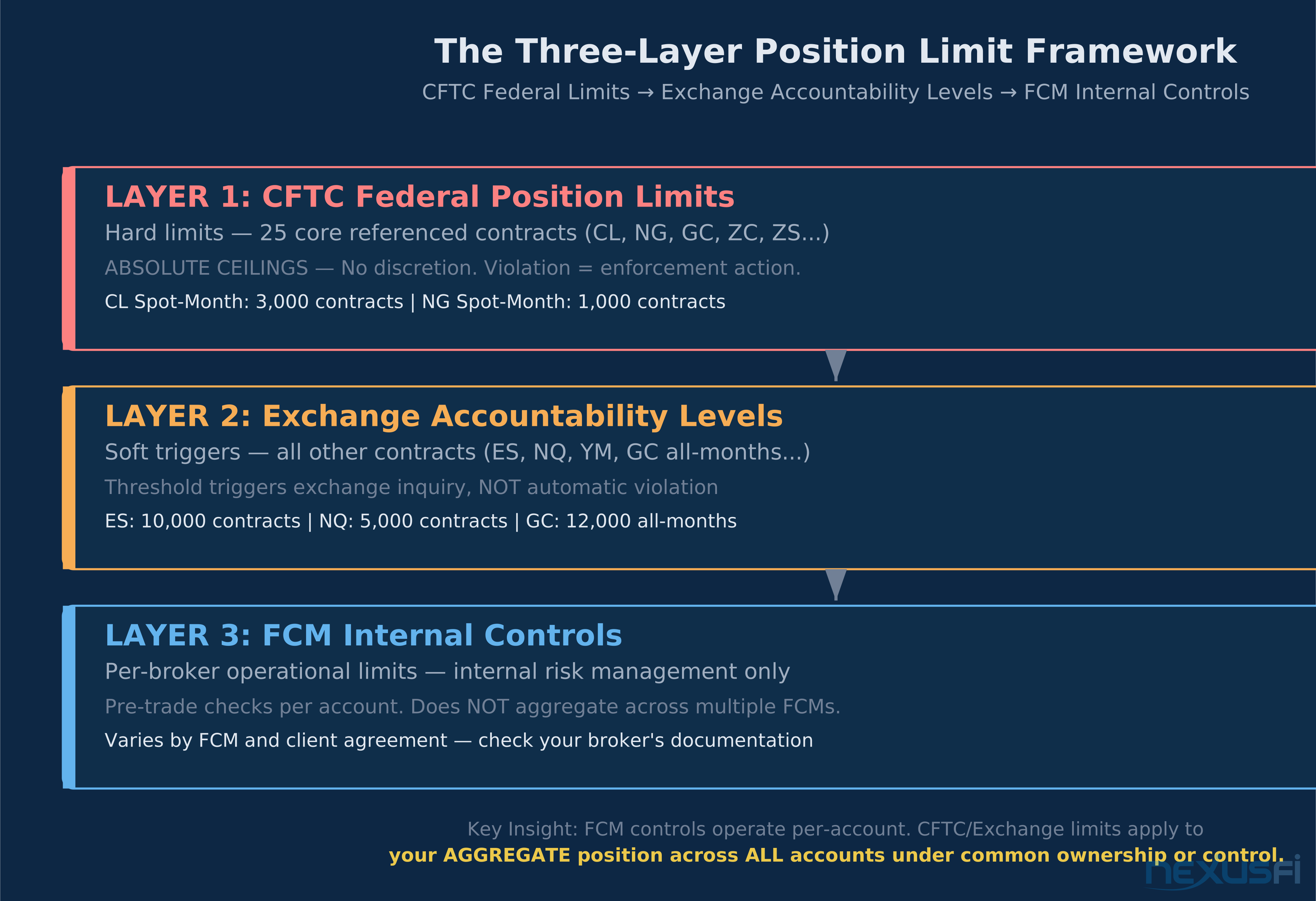
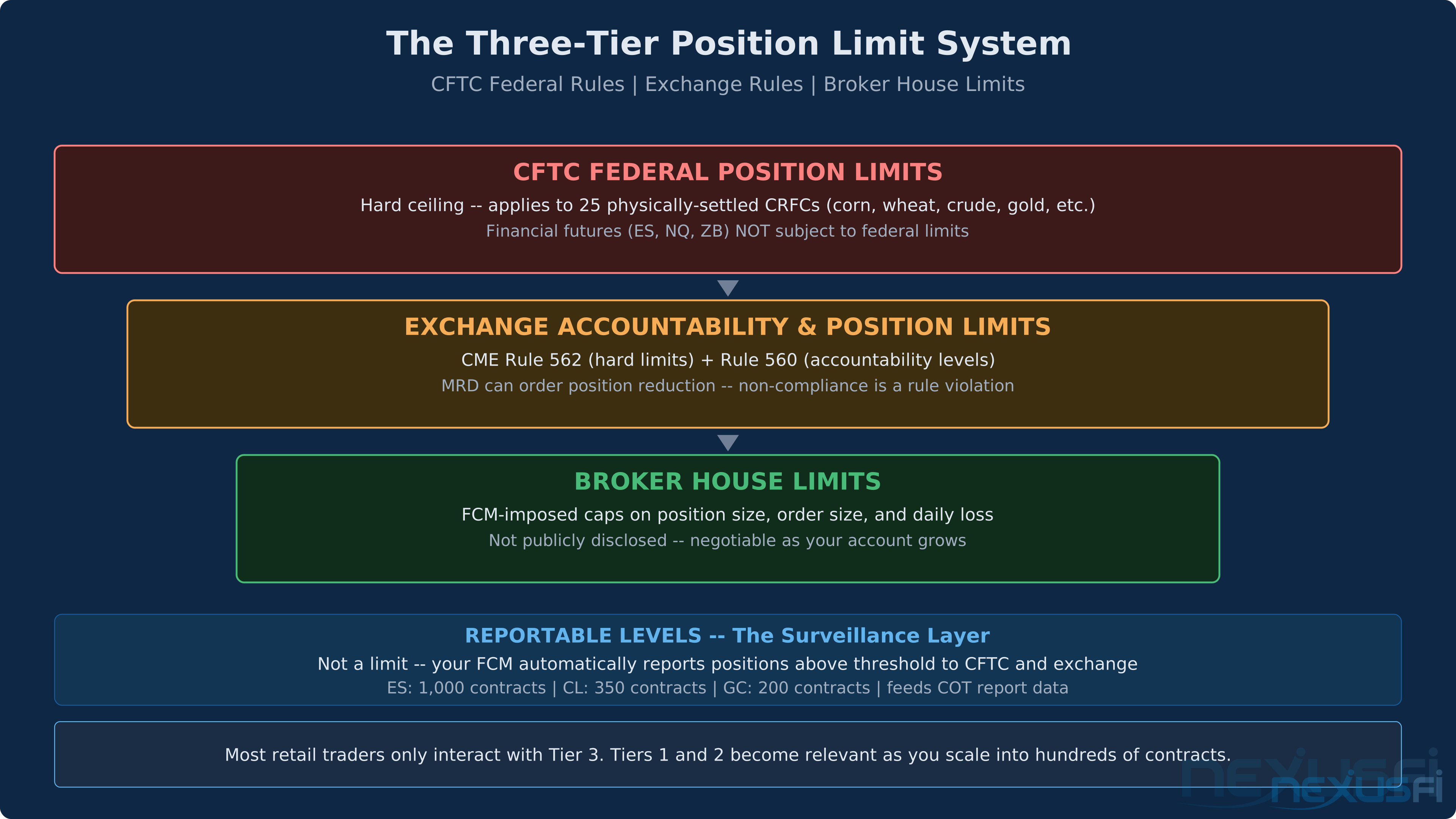
Position limits and large trader reporting thresholds vary by contract and change periodically. Always verify current limits directly with your FCM or throug...
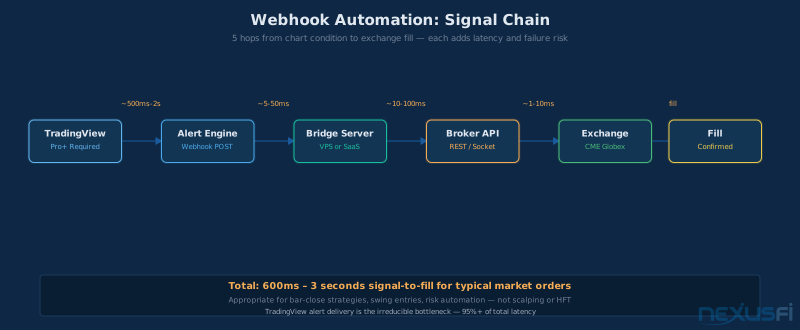
Overview Most traders who want to automate start with the strategy. That's backwards. The strategy is the easy part -- write a signal, define entry and exit ...
Auction Market Theory is a framework developed by J. Peter Steidlmayer at the Chicago Board of Trade in the 1980s. Its core insight: markets are not random. ...
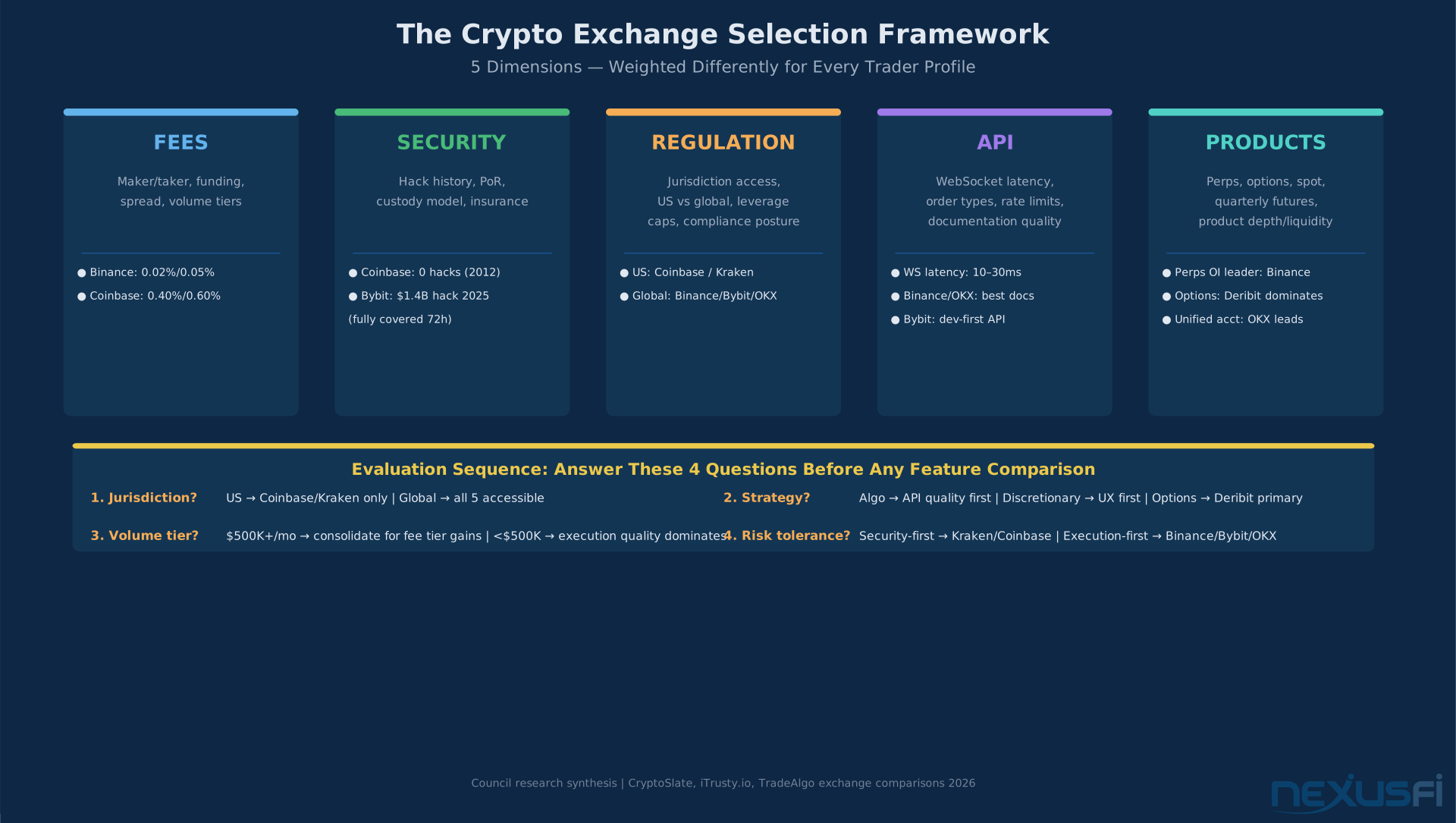
Overview Every futures trader who crosses into crypto eventually hits the same wall: choosing an exchange. In regulated futures, this decision is straightfor...
Overview Here's the thing nobody tells you when you're starting out: most traders don't fail because they can't find a good strategy. They fail because they ...
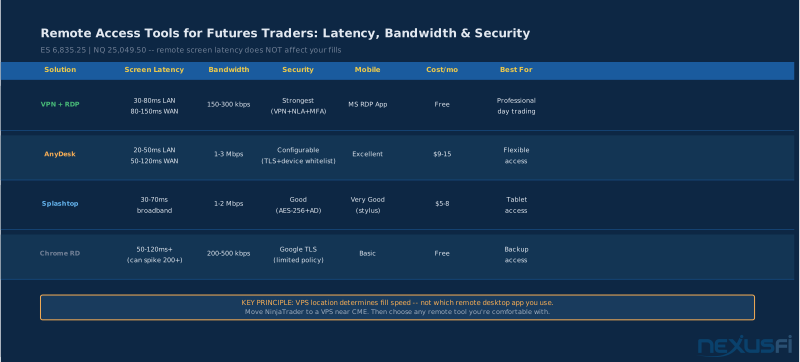
Overview Your trading platform runs on a desktop that can't leave the desk. The market runs 23 hours a day. At some point those two facts are going to confli...
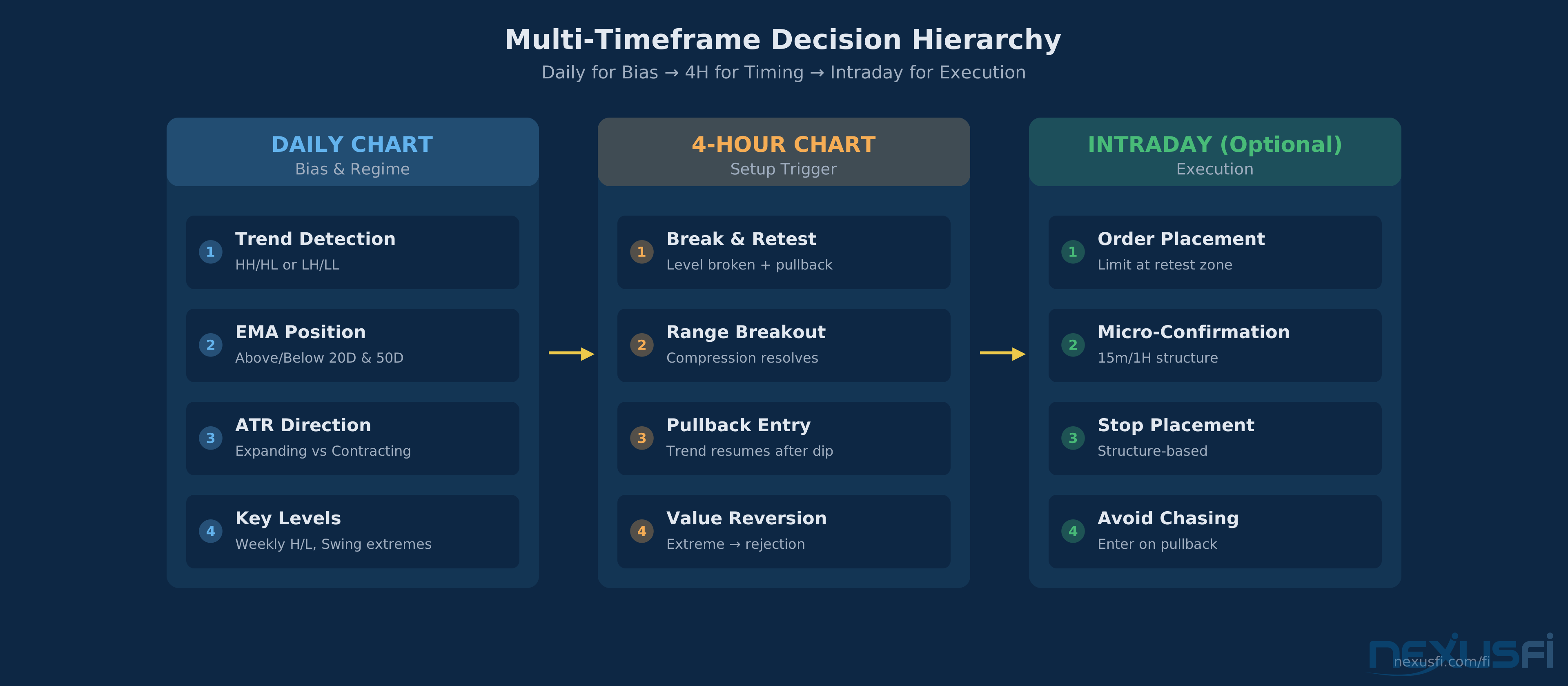
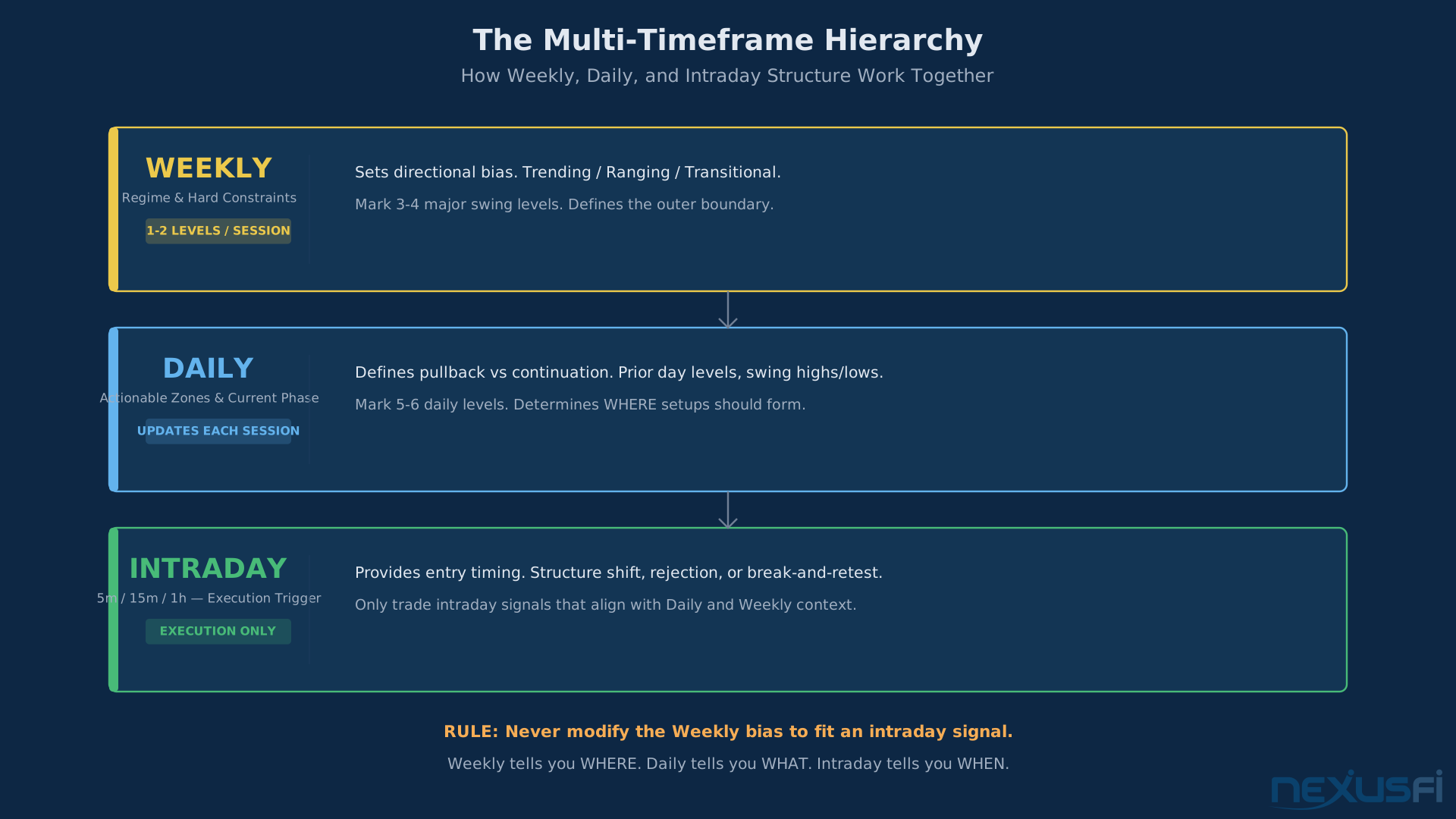
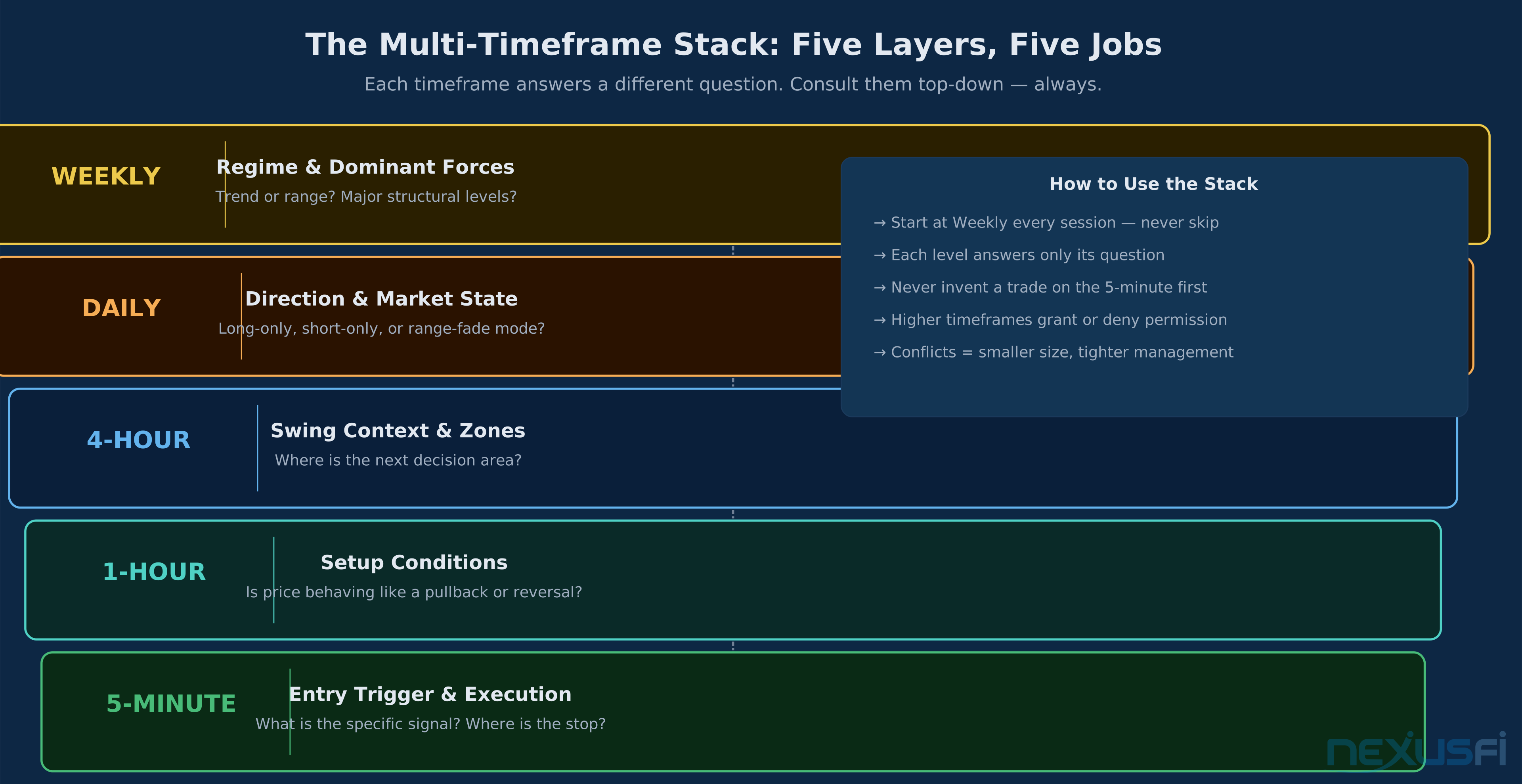
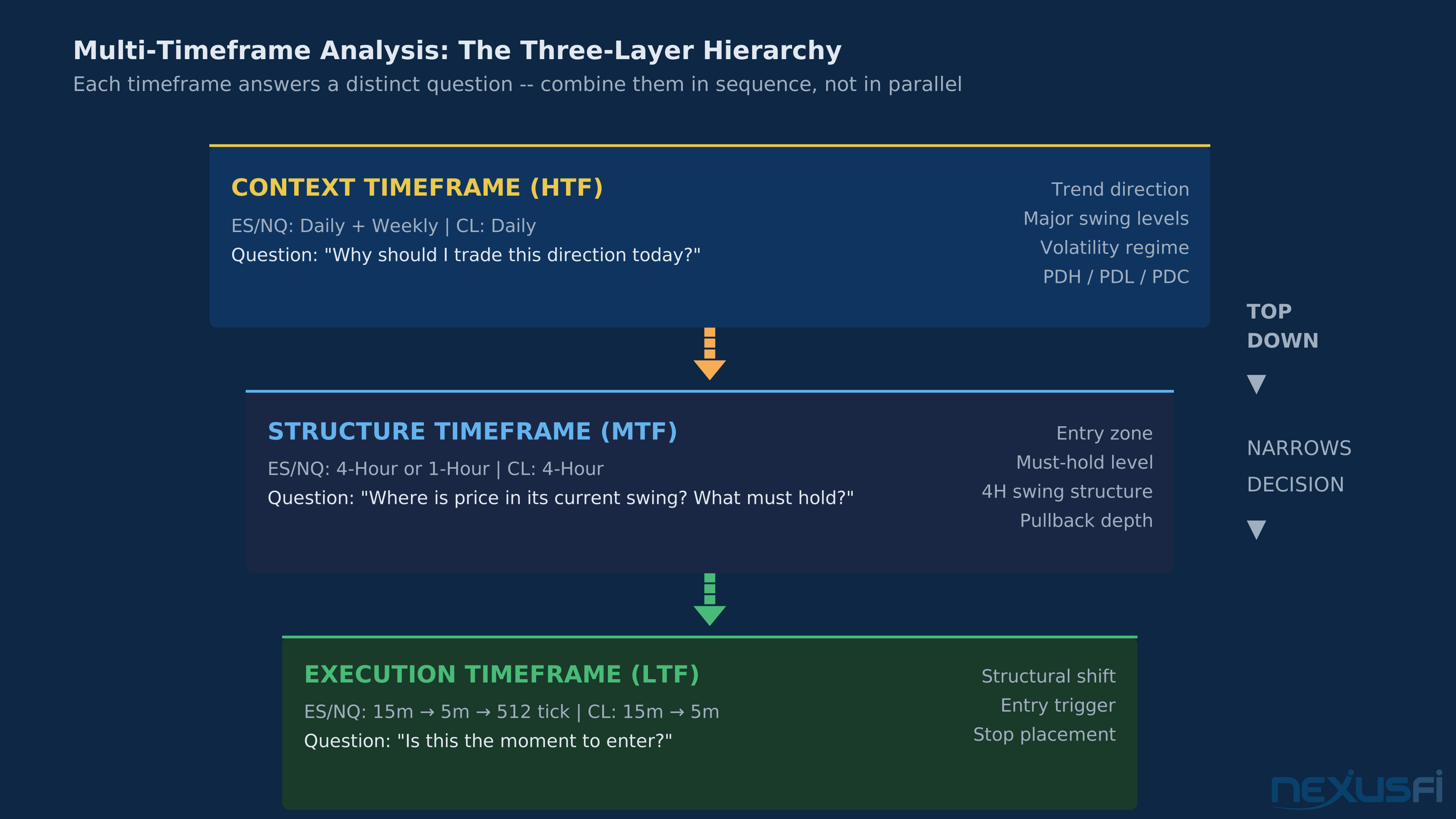
Multi-timeframe market structure analysis is the practice of using higher timeframes -- weekly and daily -- to filter, contextualize, and constrain intraday ...
Overview Bitcoin basis trading sits at the intersection of regulated derivatives and the spot cryptocurrency market. The trade earns a structural premium -- ...
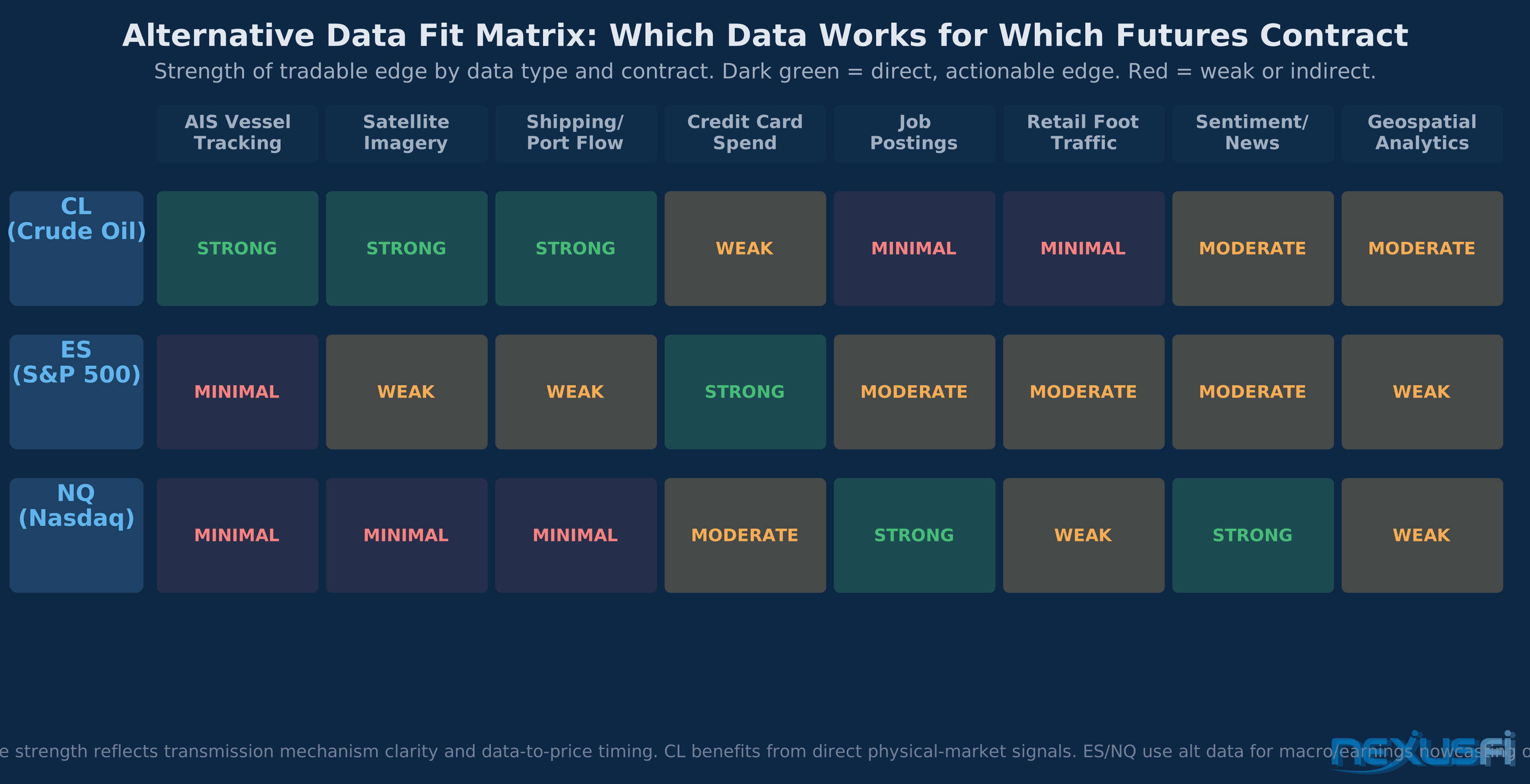
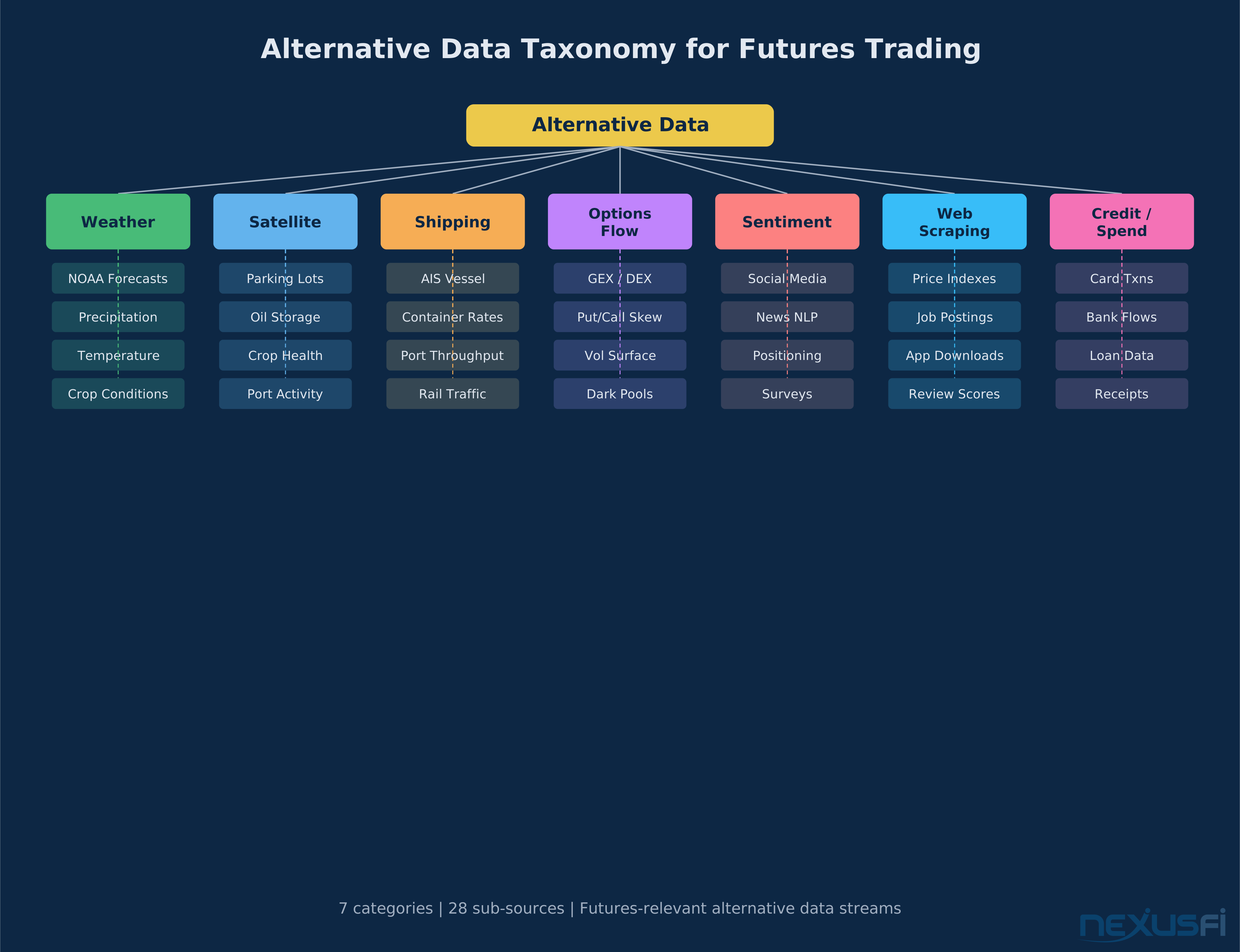
Most futures traders have access to the same data: price, volume, open interest, COT reports, and economic releases. Alternative data sits outside this stand...
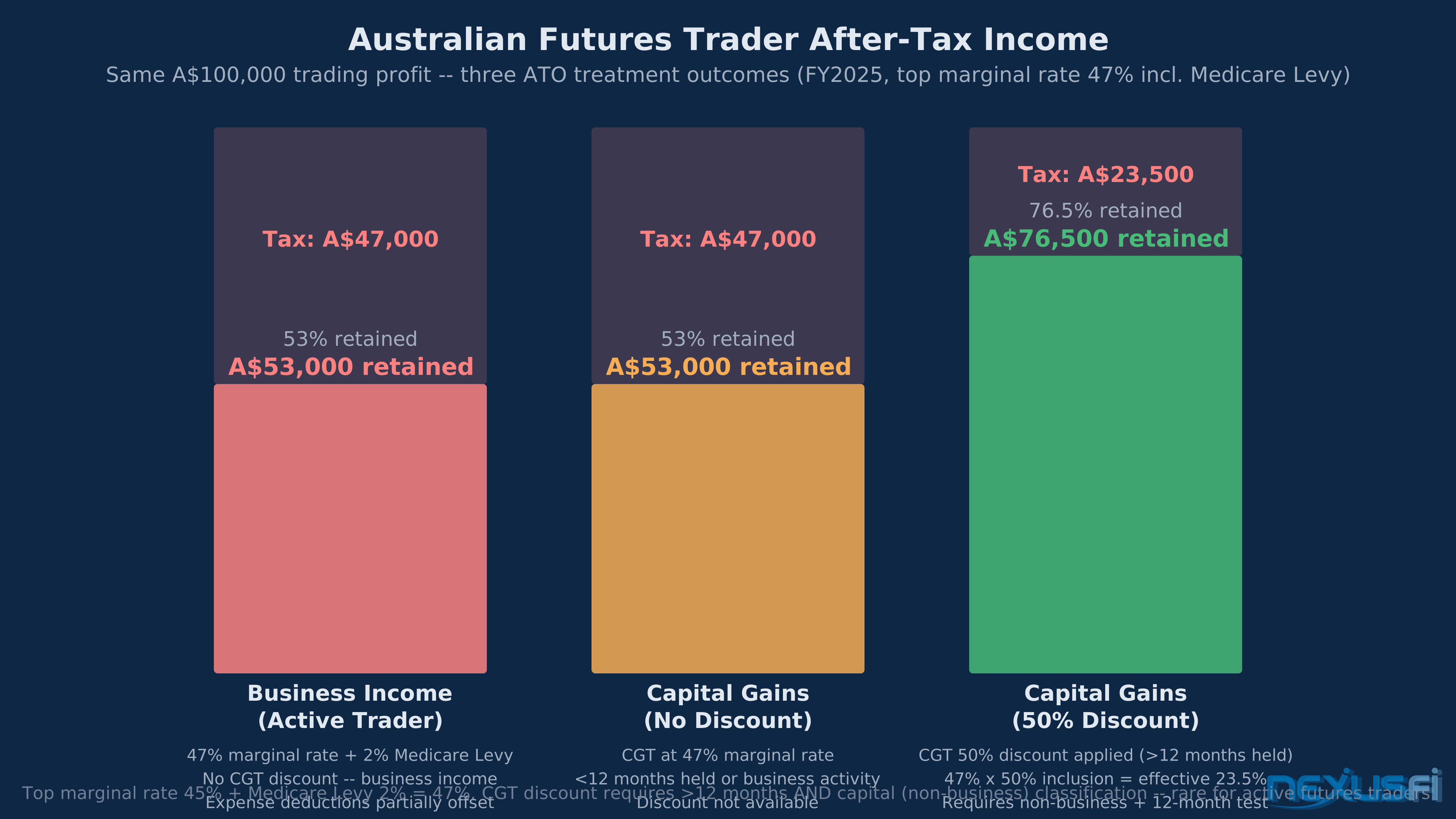
Australian futures traders operate under a tax framework fundamentally different from the Section 1256 treatment that US traders rely on -- and from the UK's...
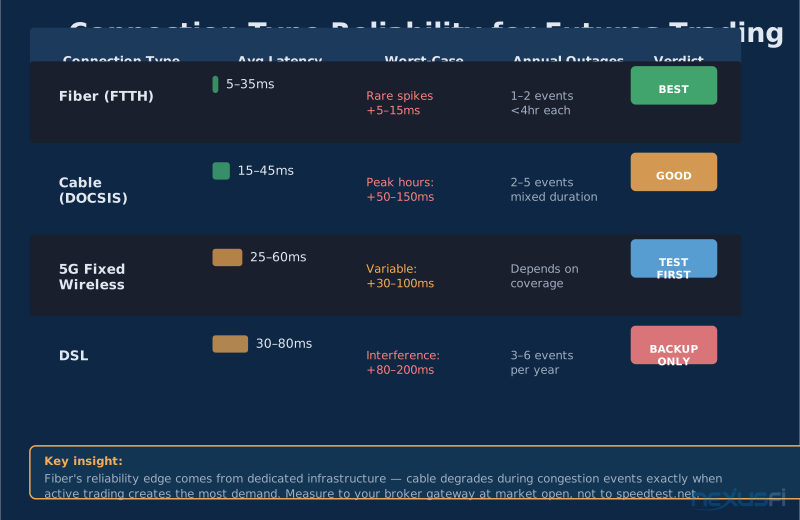
Overview Quick Start -- 60-Second Diagnosis 1. Install PingPlotter Free → point it at your broker's gateway (e.g. ritny.rithmic.com) → run for 10 minutes...
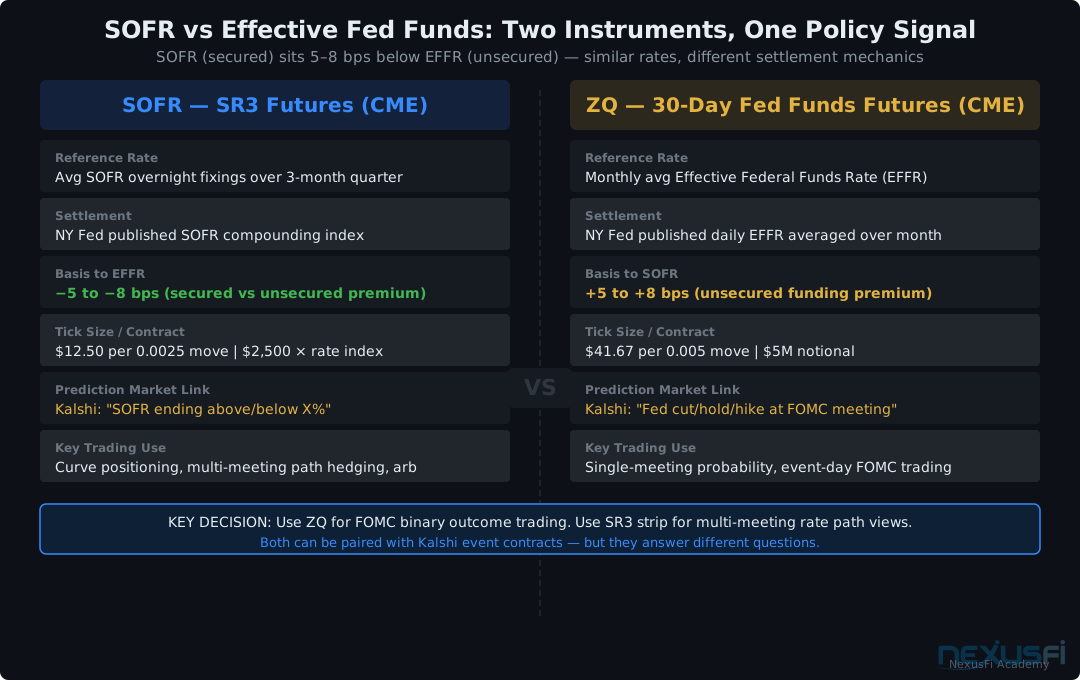
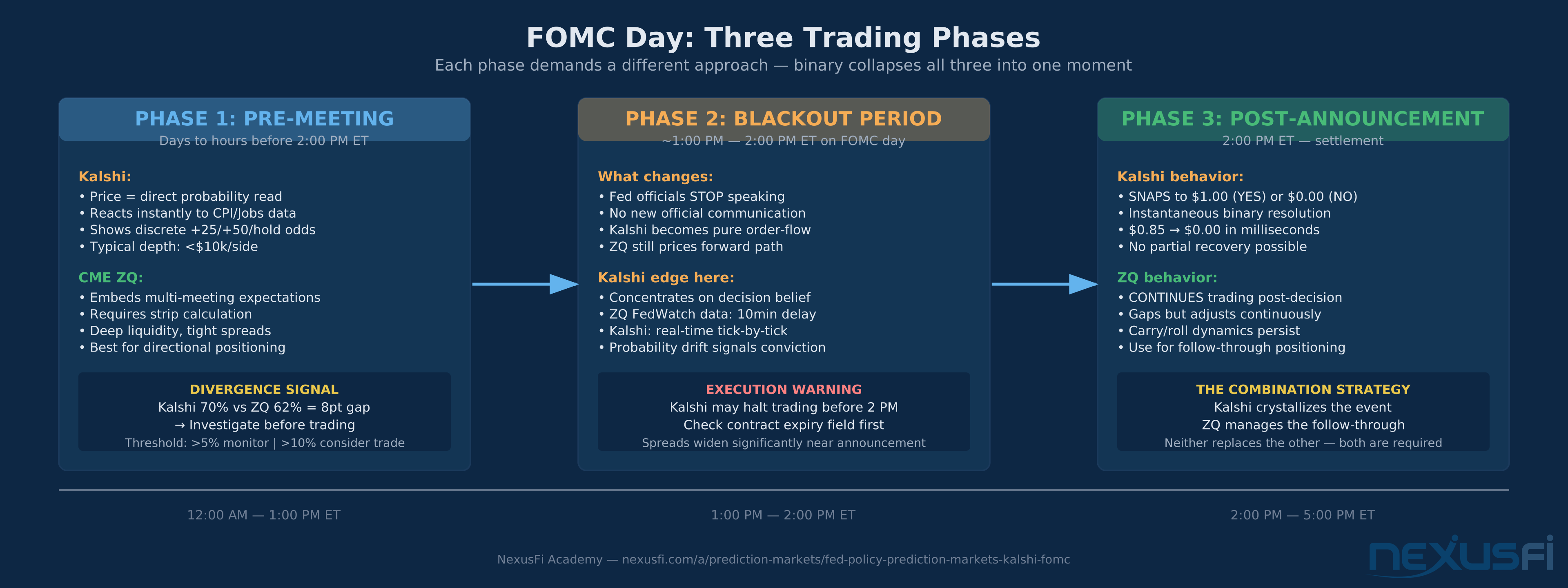
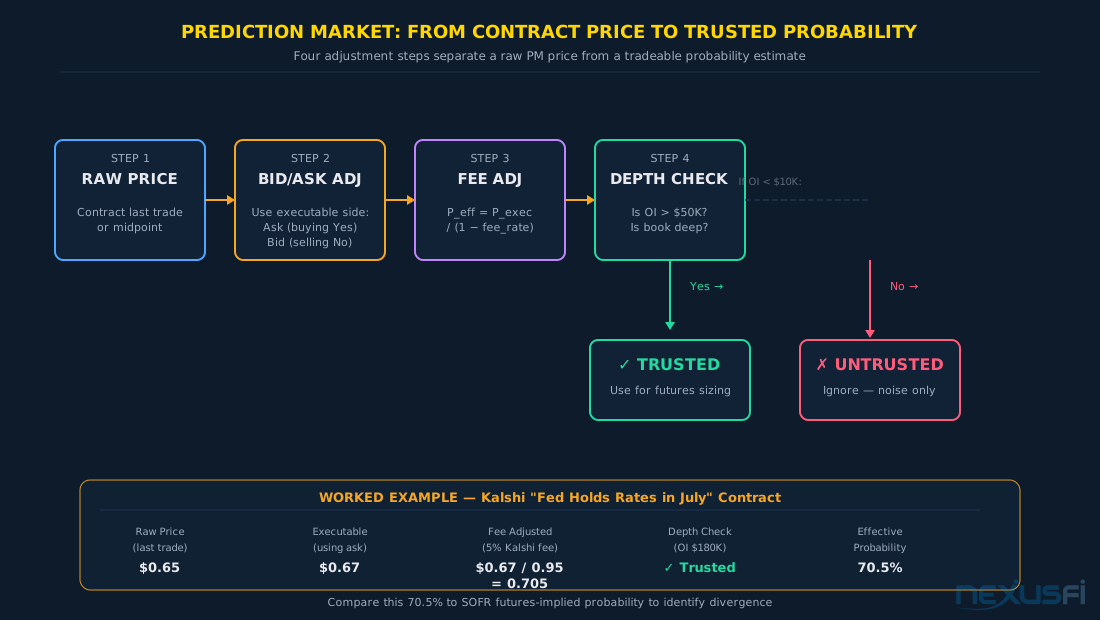
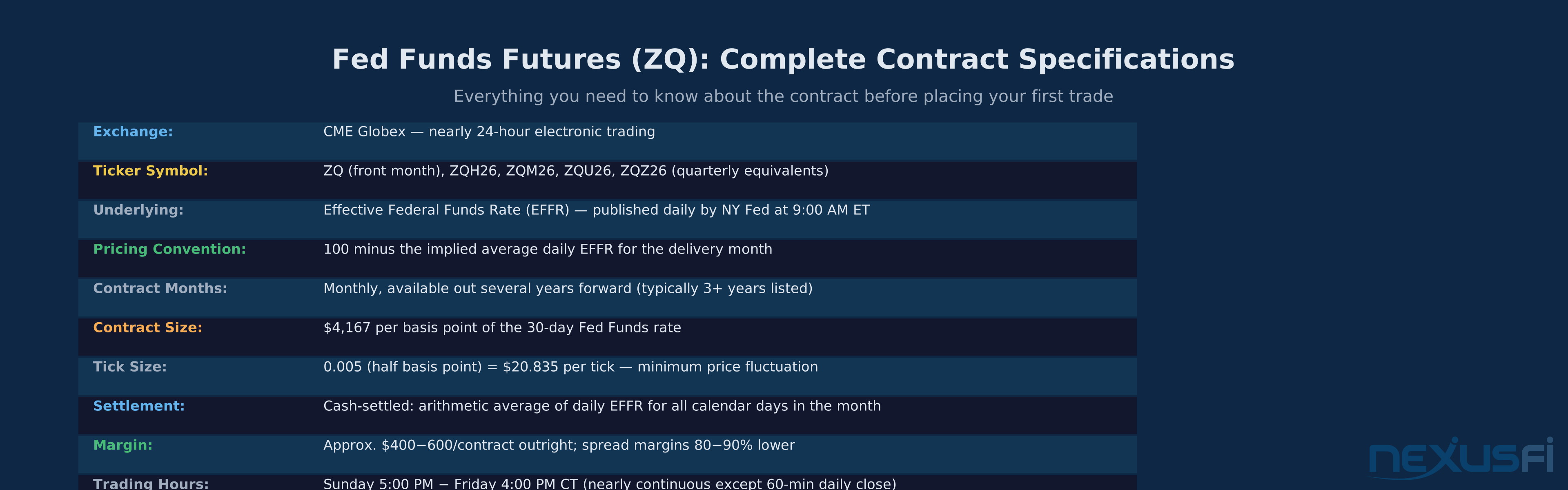
Overview Most traders who follow Fed policy gravitate to one of two instruments: CME Fed Funds Futures (ZQ) or Kalshi event contracts. Both encode the same p...
This article covers the mechanics, probability mapping, and practical strategy for trading Kalshi's FOMC binary contracts alongside CME ZQ futures. It's writ...
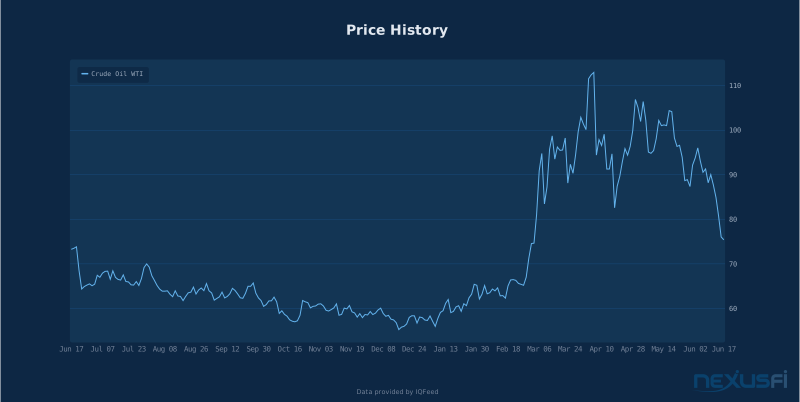
OPEC+ meets eight times a year to set production quotas for 23 member countries. Every meeting moves WTI crude (CL) and Brent (BZ) futures within seconds of ...
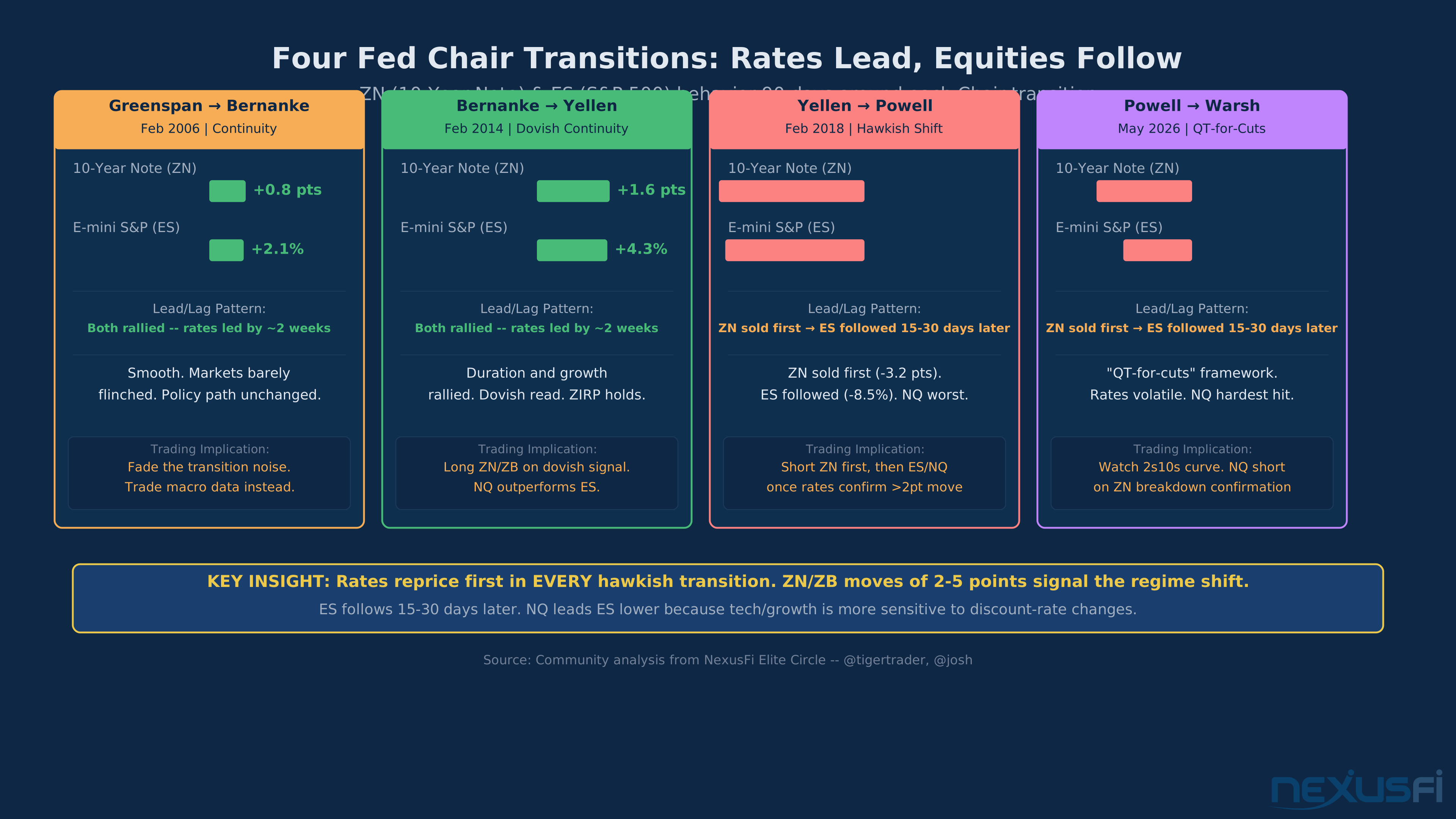
Overview Fed Chair transitions are regime-change events that reprice every major asset class at once. Unlike a CPI print that moves a number, a new Fed Chair...
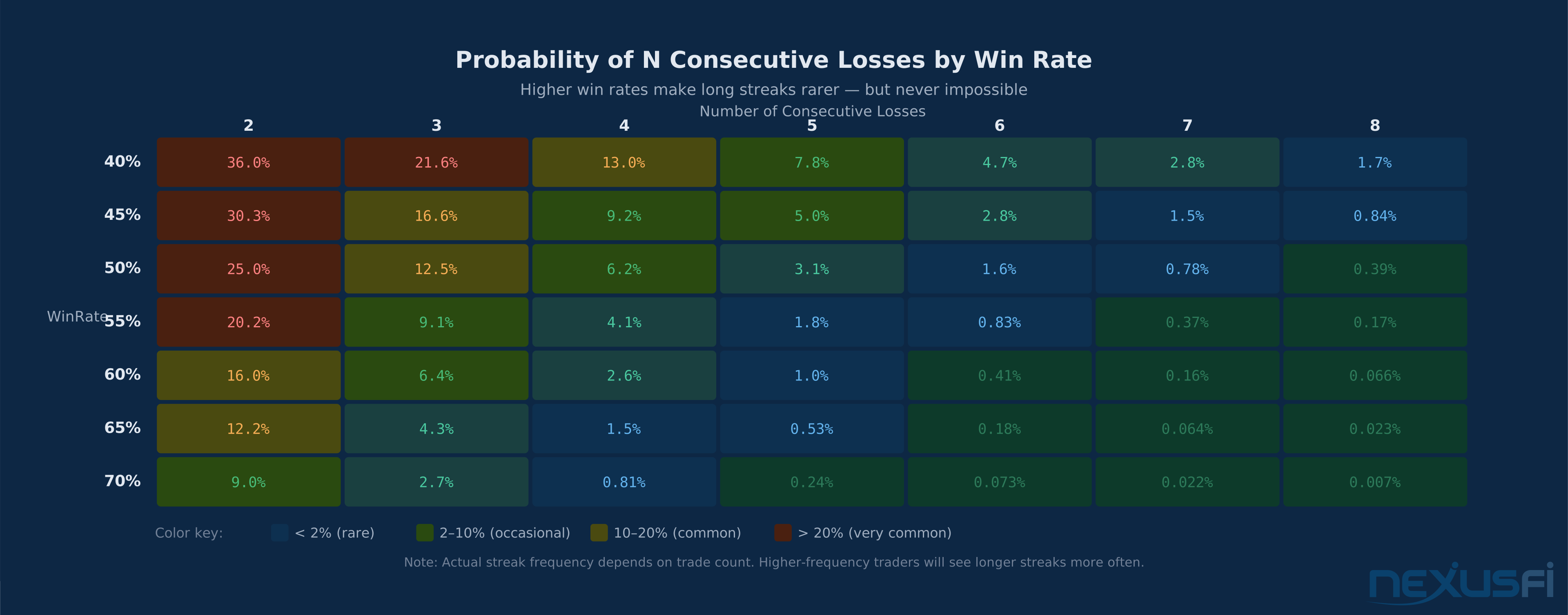
Every trader has a version of the same story. The morning starts fine -- maybe even strong. Then a loss. You shrug it off. Normal. Another loss. You start wa...
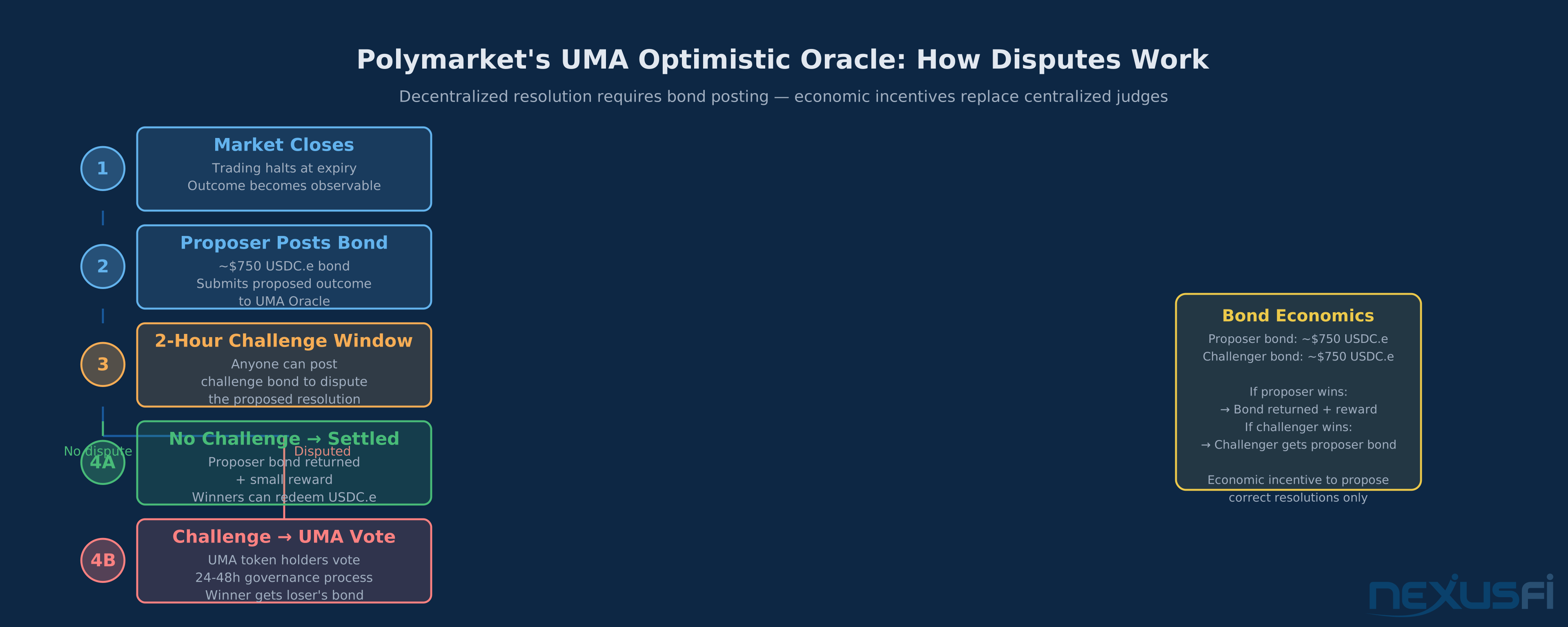
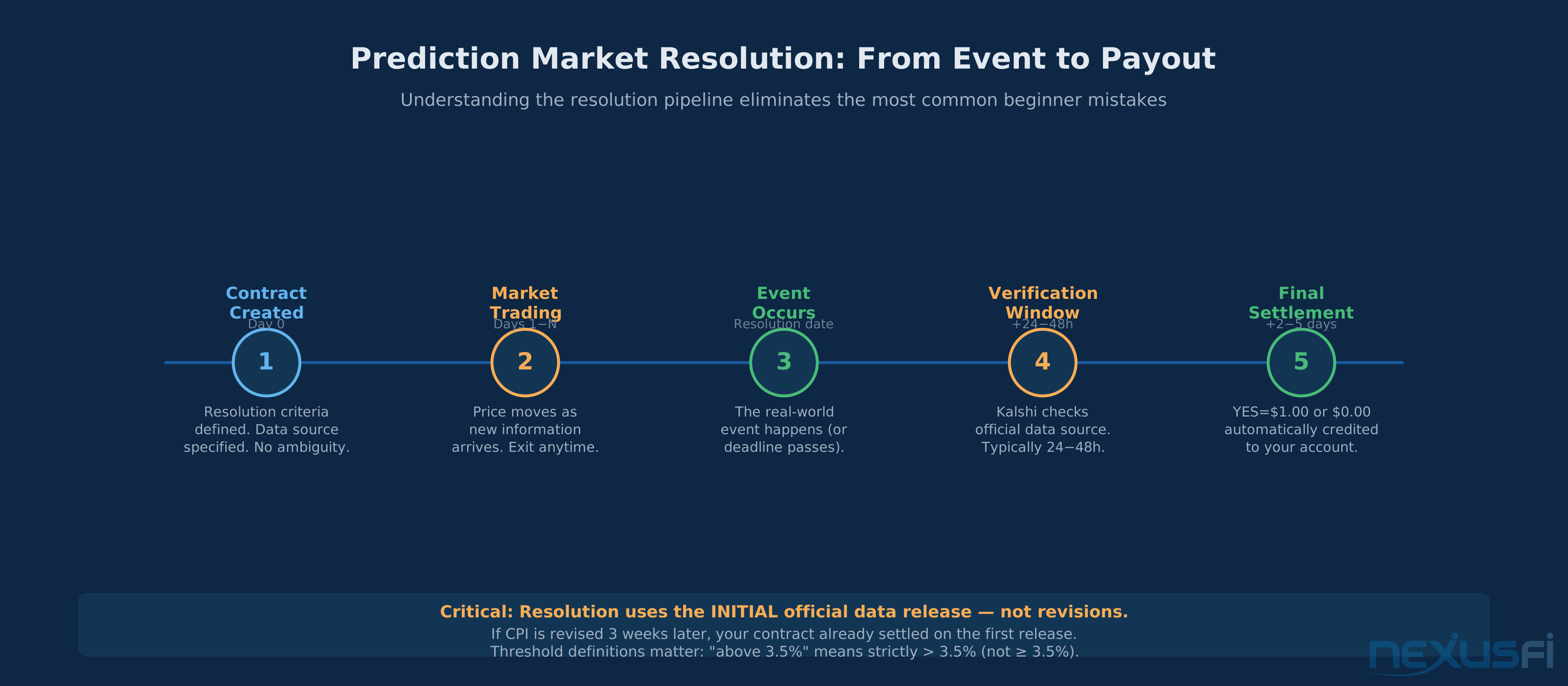
Overview Here's the uncomfortable truth about prediction markets: your winning trade is only as reliable as the system that decides whether you actually won....
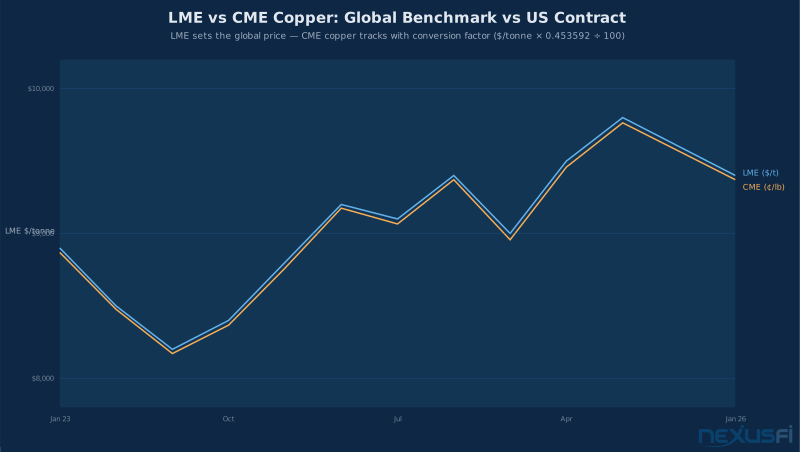
Overview The London Metal Exchange is 147 years old and still the only place on earth where you can discover the global price of copper, aluminum, zinc, nick...
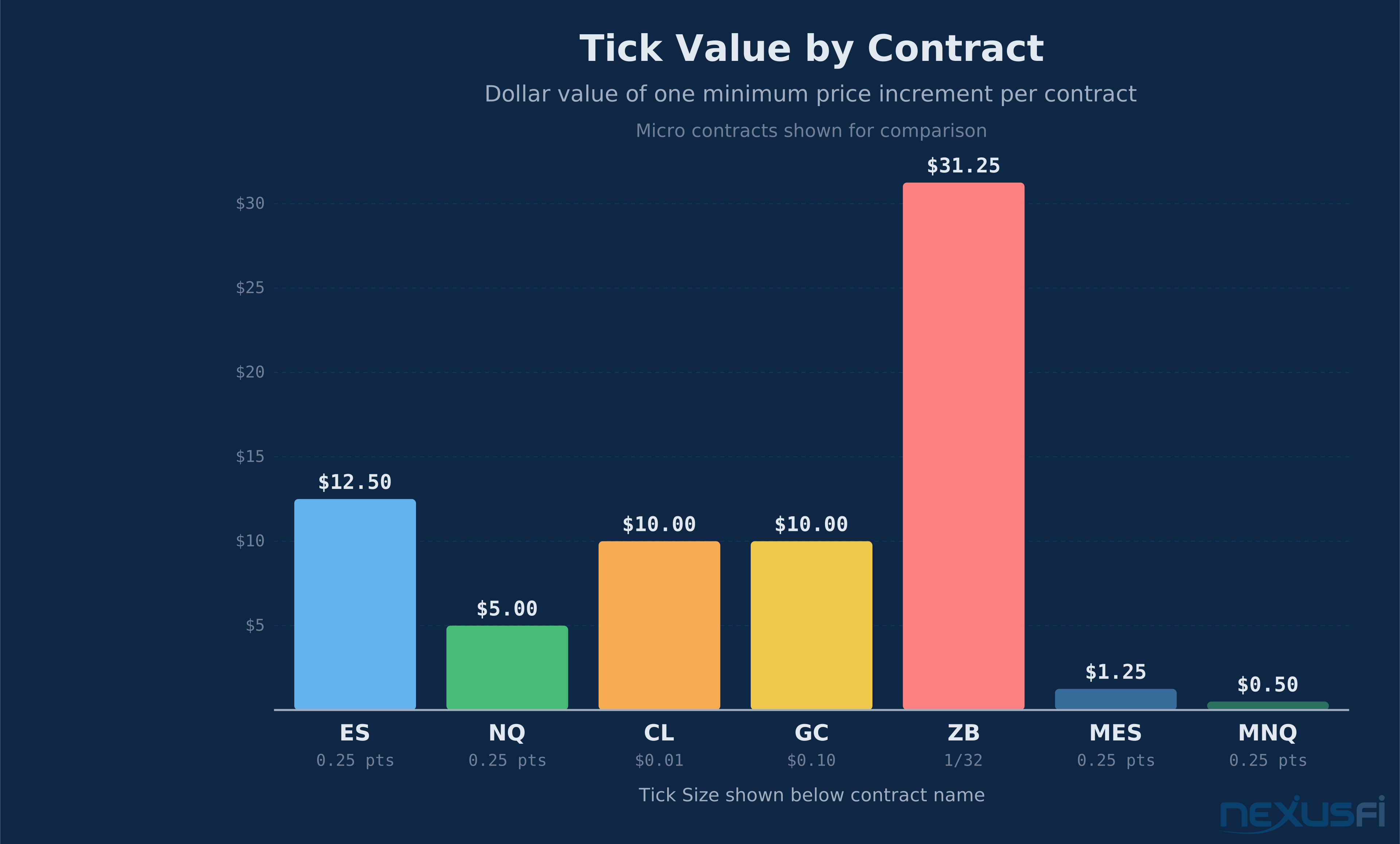
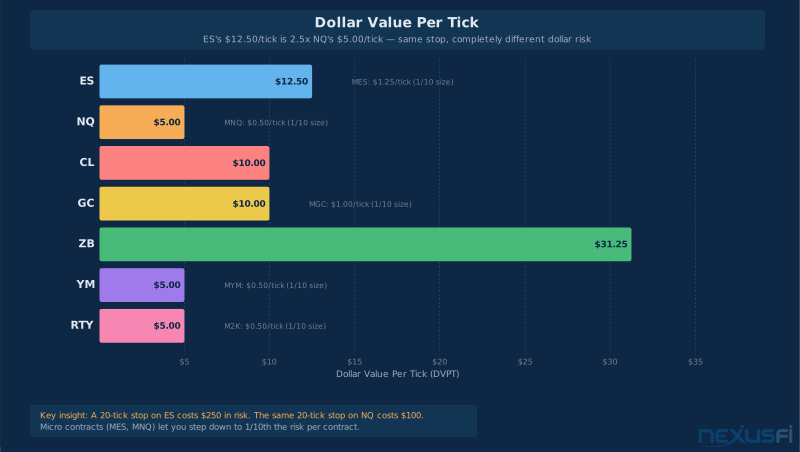
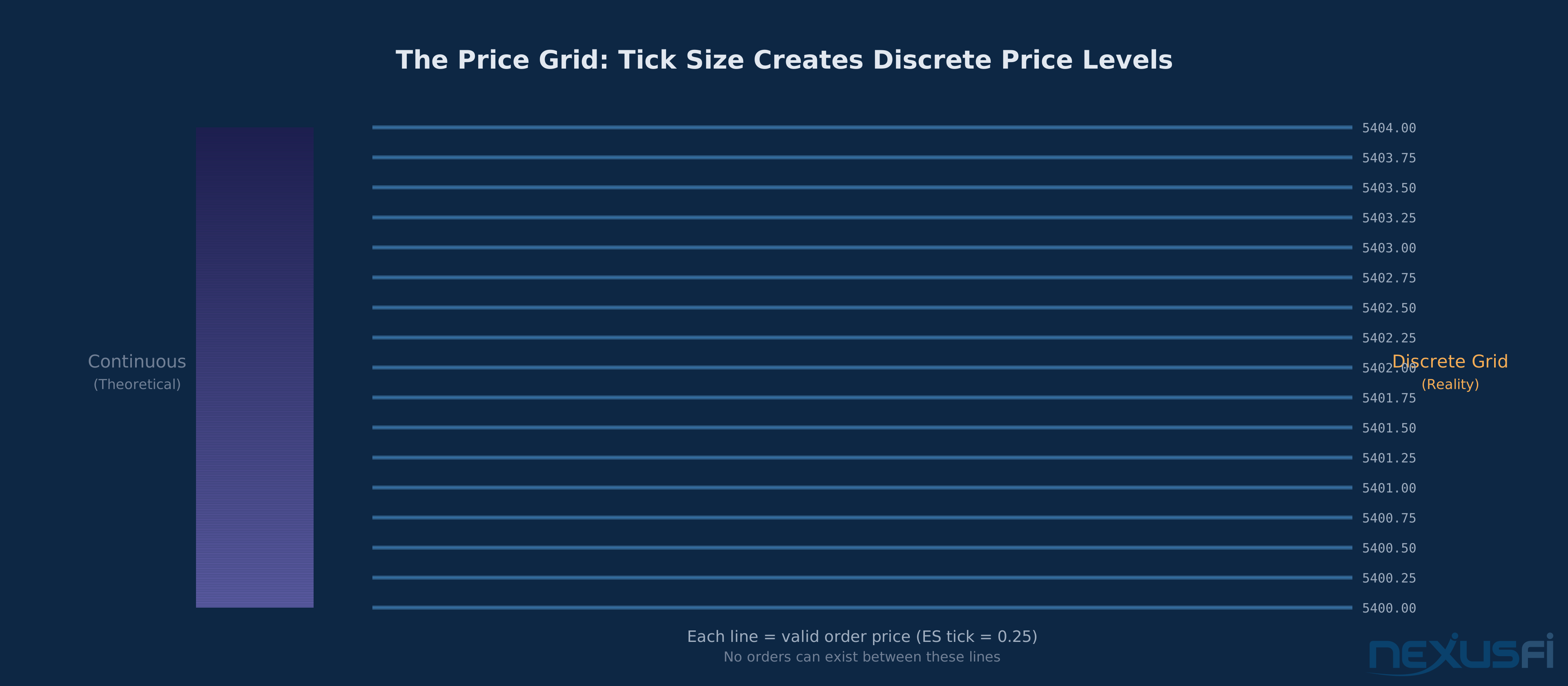
A tick is the minimum price increment a futures contract can move. That's the textbook definition, and it's correct, but it barely scratches the surface. Eve...
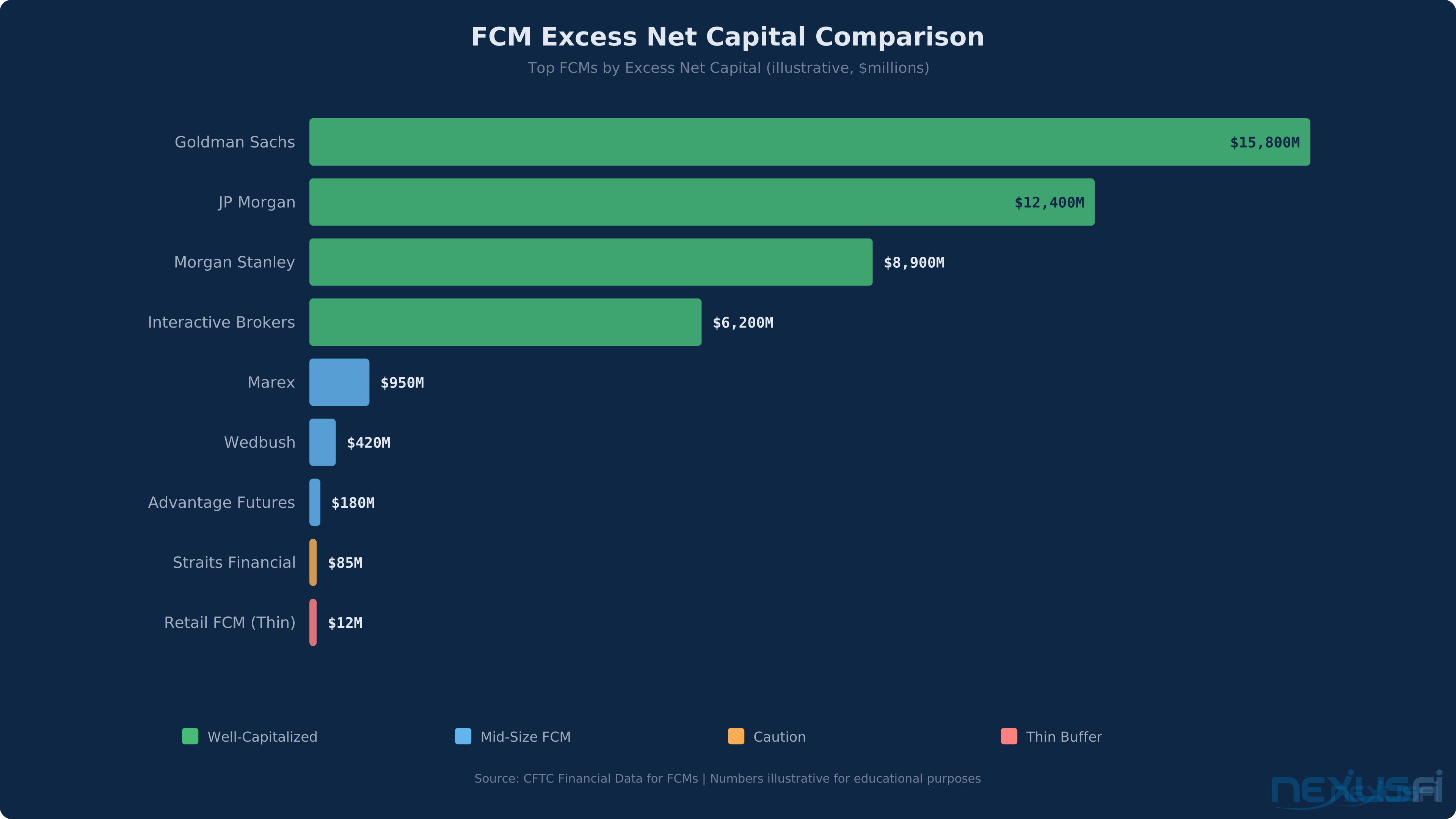
Every futures trader trusts a broker with their capital. Most never check whether that trust is justified. The CFTC publishes detailed financial data on ever...
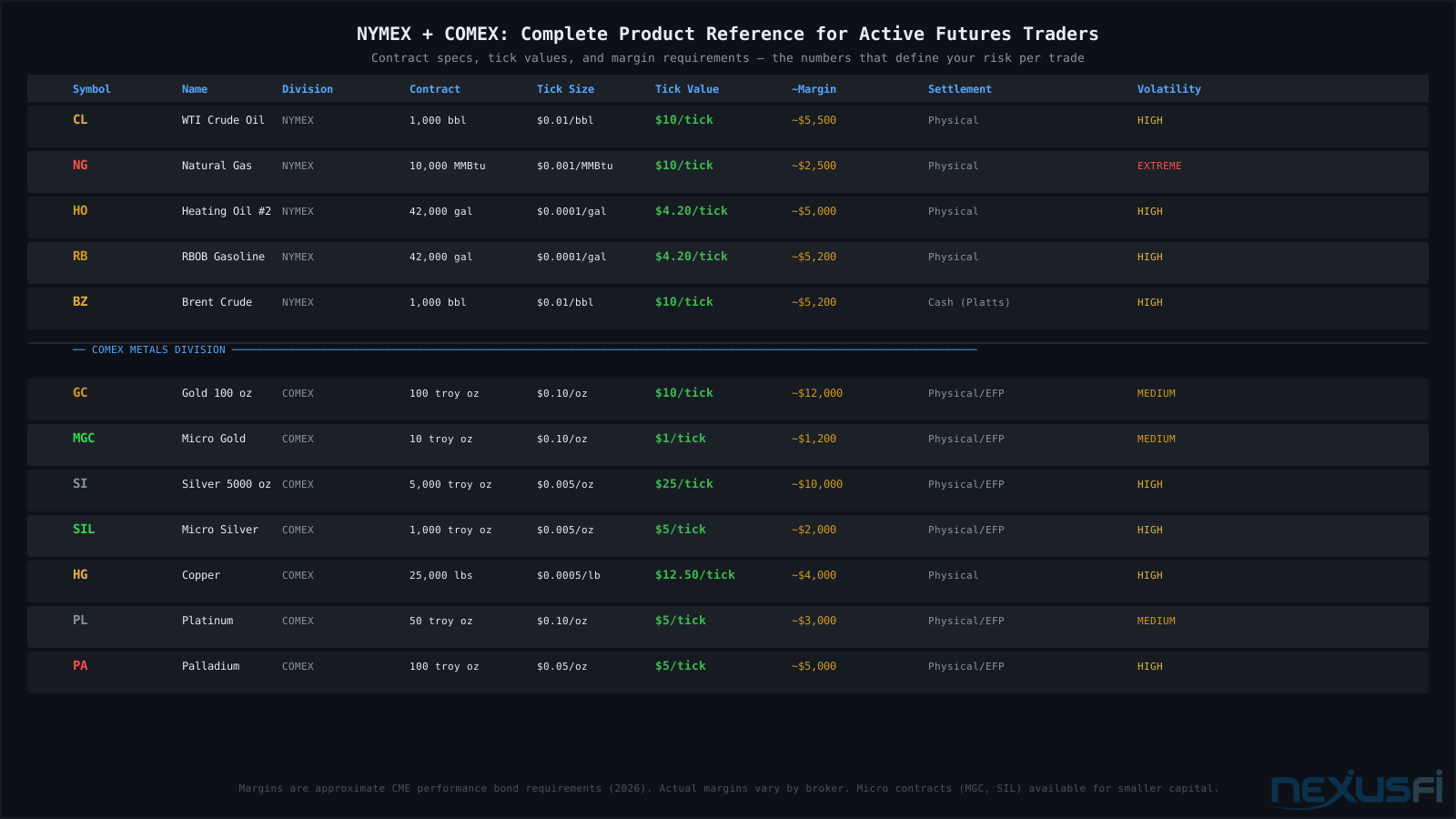
Overview NYMEX -- the New York Mercantile Exchange -- is where the world's price for crude oil, natural gas, gold, silver, and copper gets set every trading ...
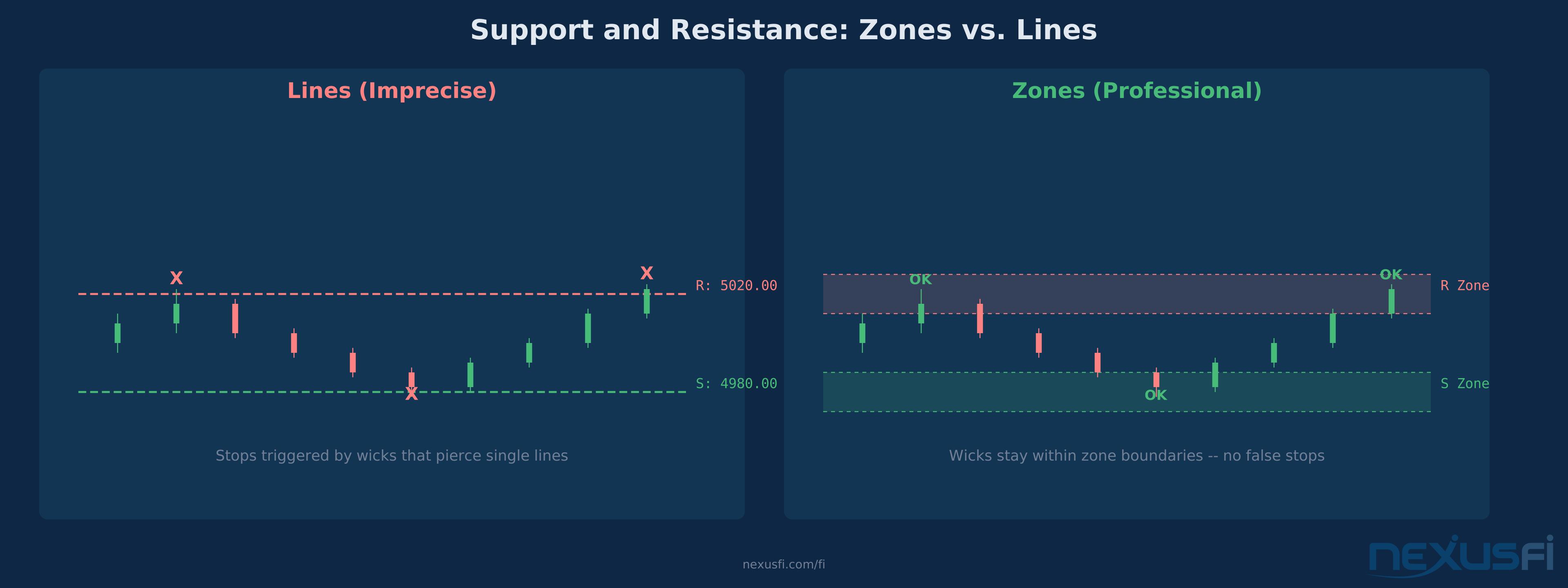
Support is a price zone where buying interest is strong enough to absorb selling pressure, causing price to bounce or stall. Resistance is the mirror -- a zo...
Prediction markets sit at a tax crossroads most traders walk into blindly. Trade on Kalshi or CME and you're holding Section 1256 contracts -- the same favor...
Overview The E-mini S&P 500 (ES) is the most liquid futures contract on earth. On a typical session, ES trades over $200 billion notional -- more than most s...
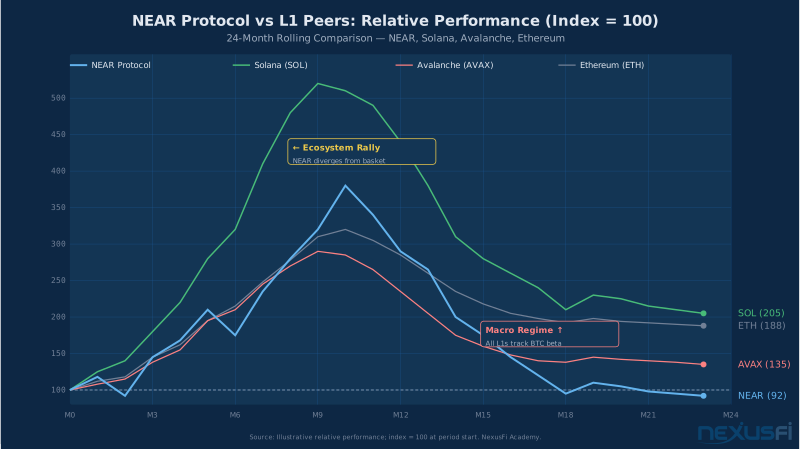
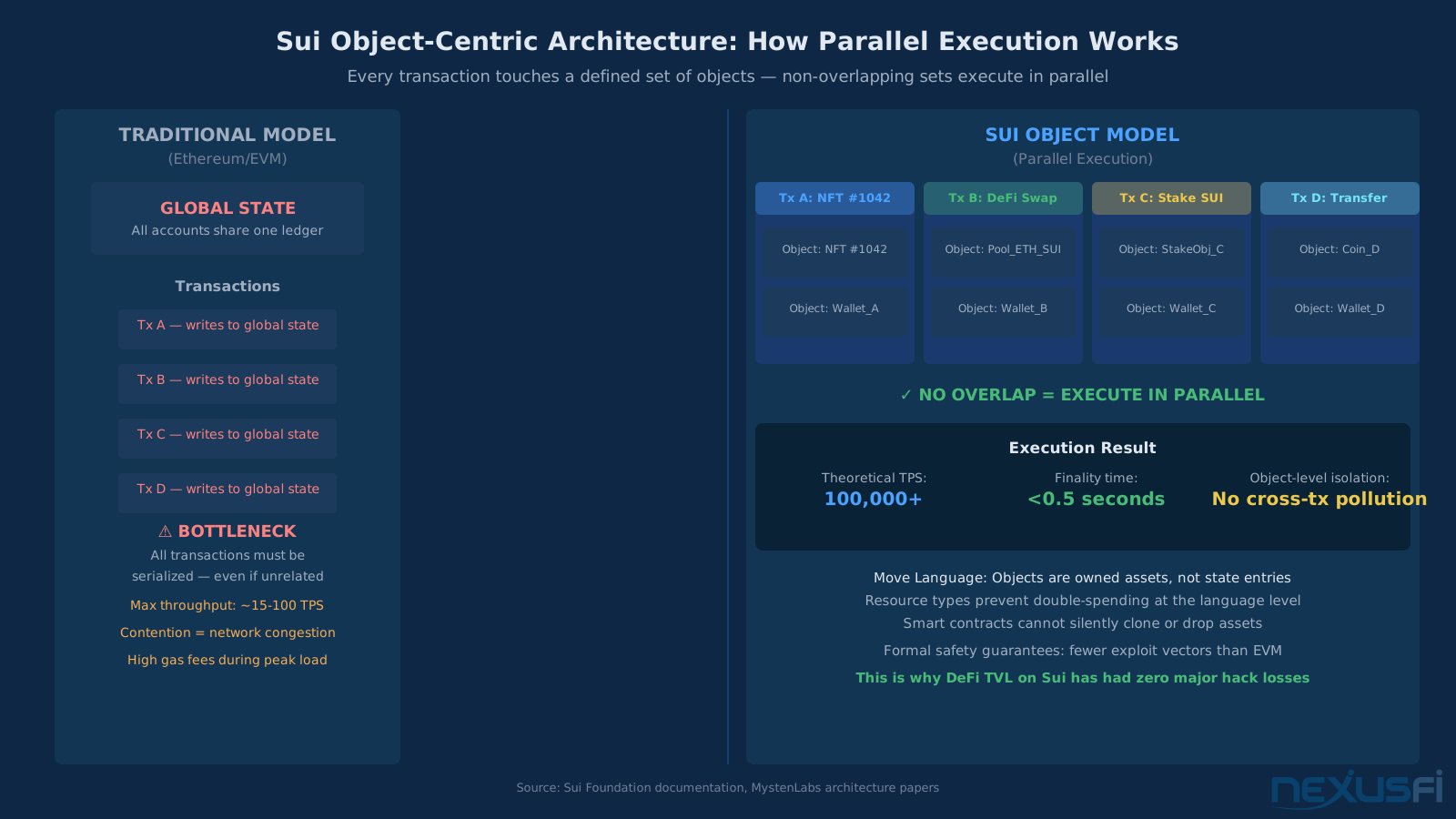
Overview NEAR Protocol is a sharded Layer-1 blockchain built around one architectural bet: that splitting transaction execution across parallel shards produc...
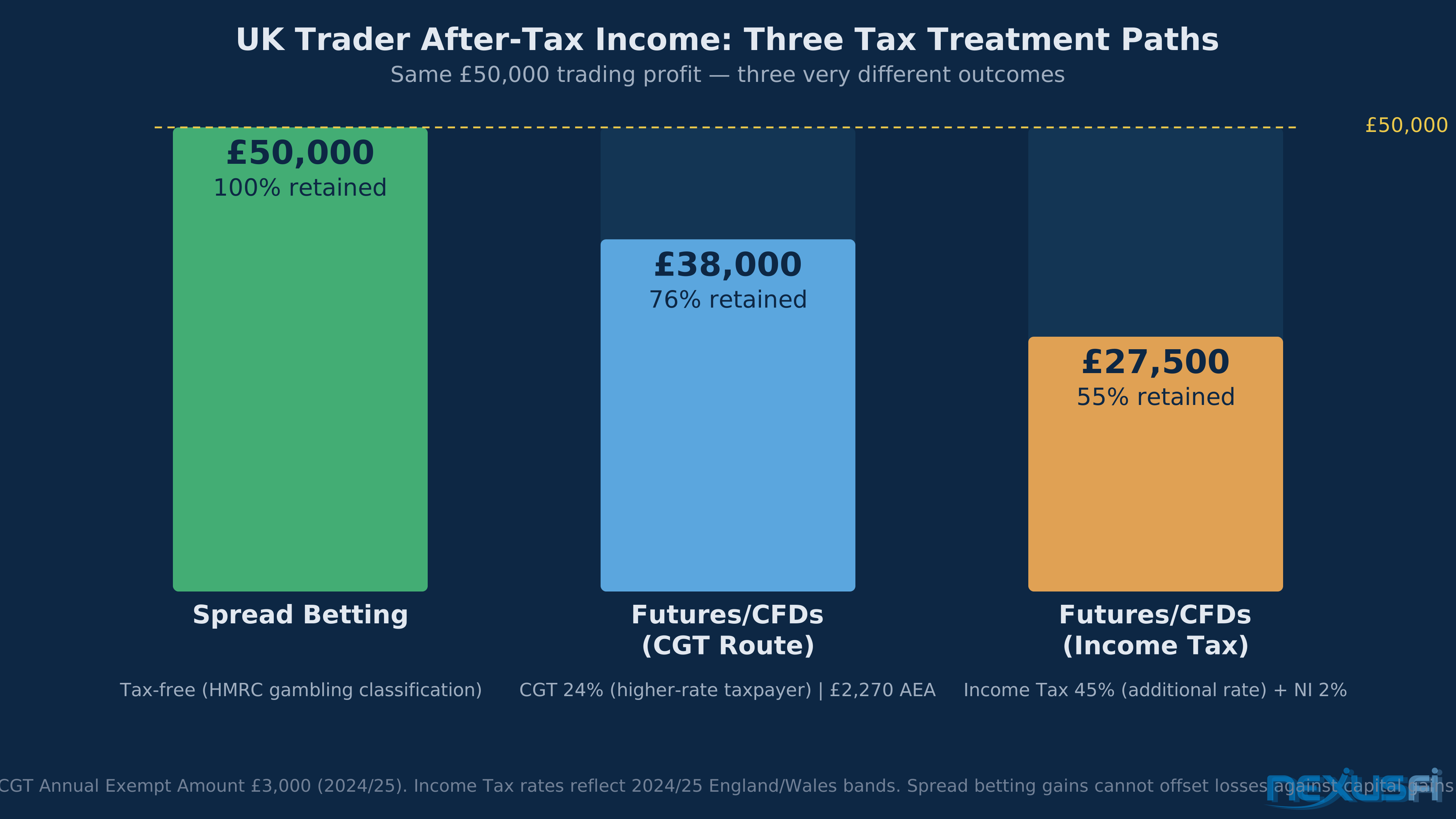
UK futures traders operate under a tax framework that has no equivalent anywhere else in the developed world. The same trading activity -- long a December ES...
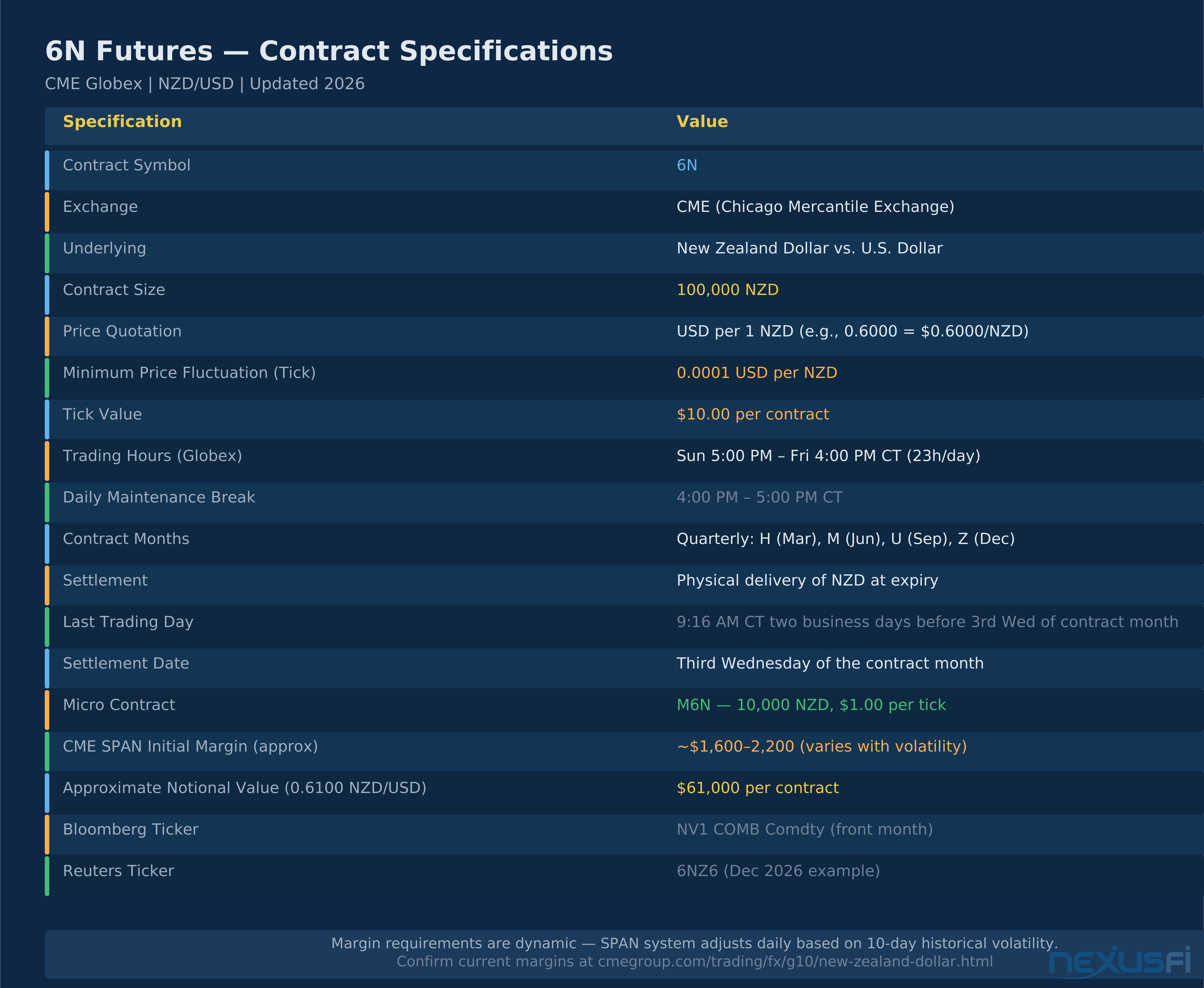
Overview The New Zealand Dollar (6N) futures contract is CME's vehicle for trading NZD/USD with regulated exchange clearing, transparent price discovery, and...
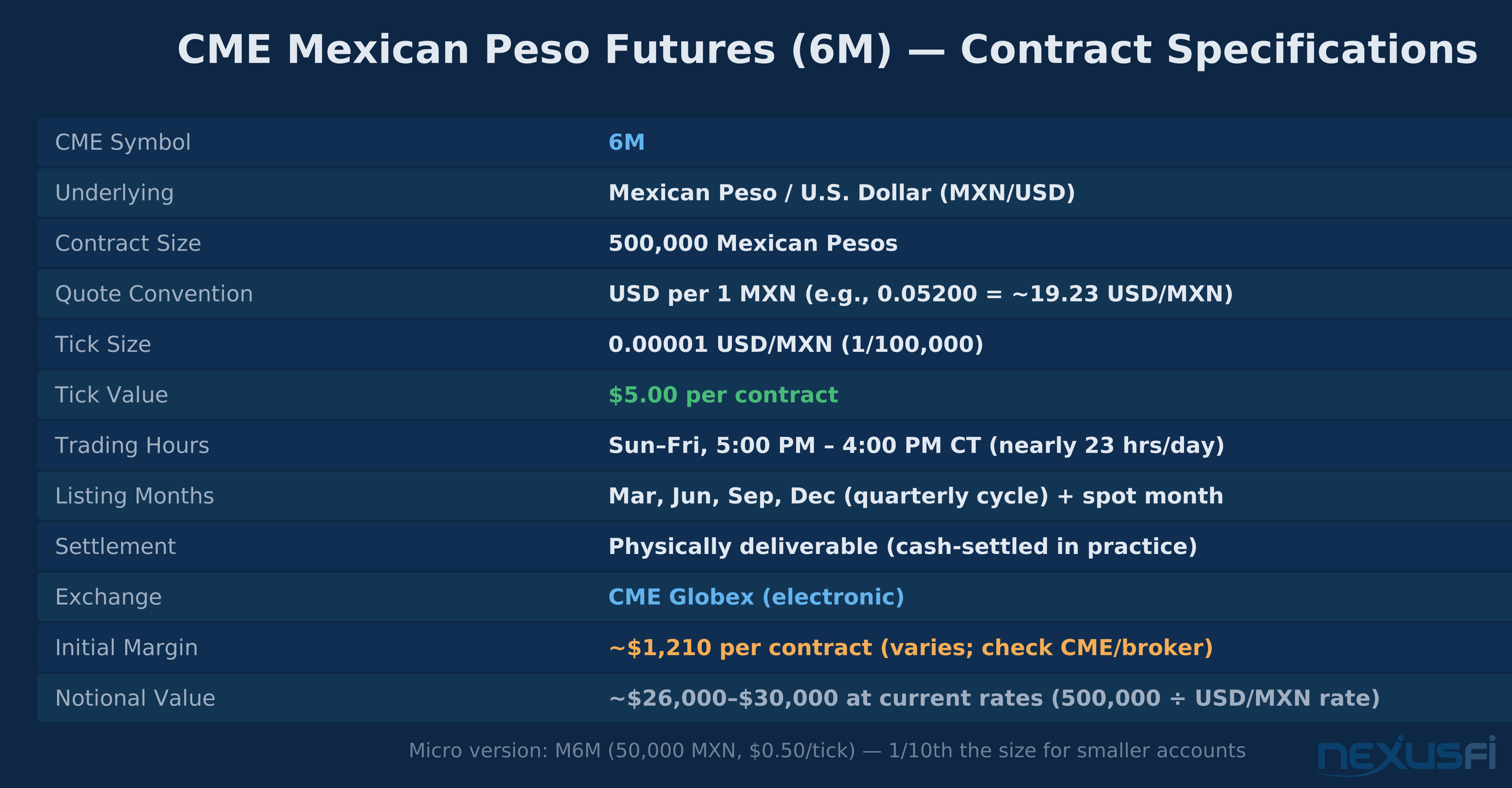
Overview The Mexican Peso--CME 6M futures contract--is a carry trade vehicle, EM risk proxy, U.S.-Mexico trade barometer, and live feed of Fed-Banxico policy...
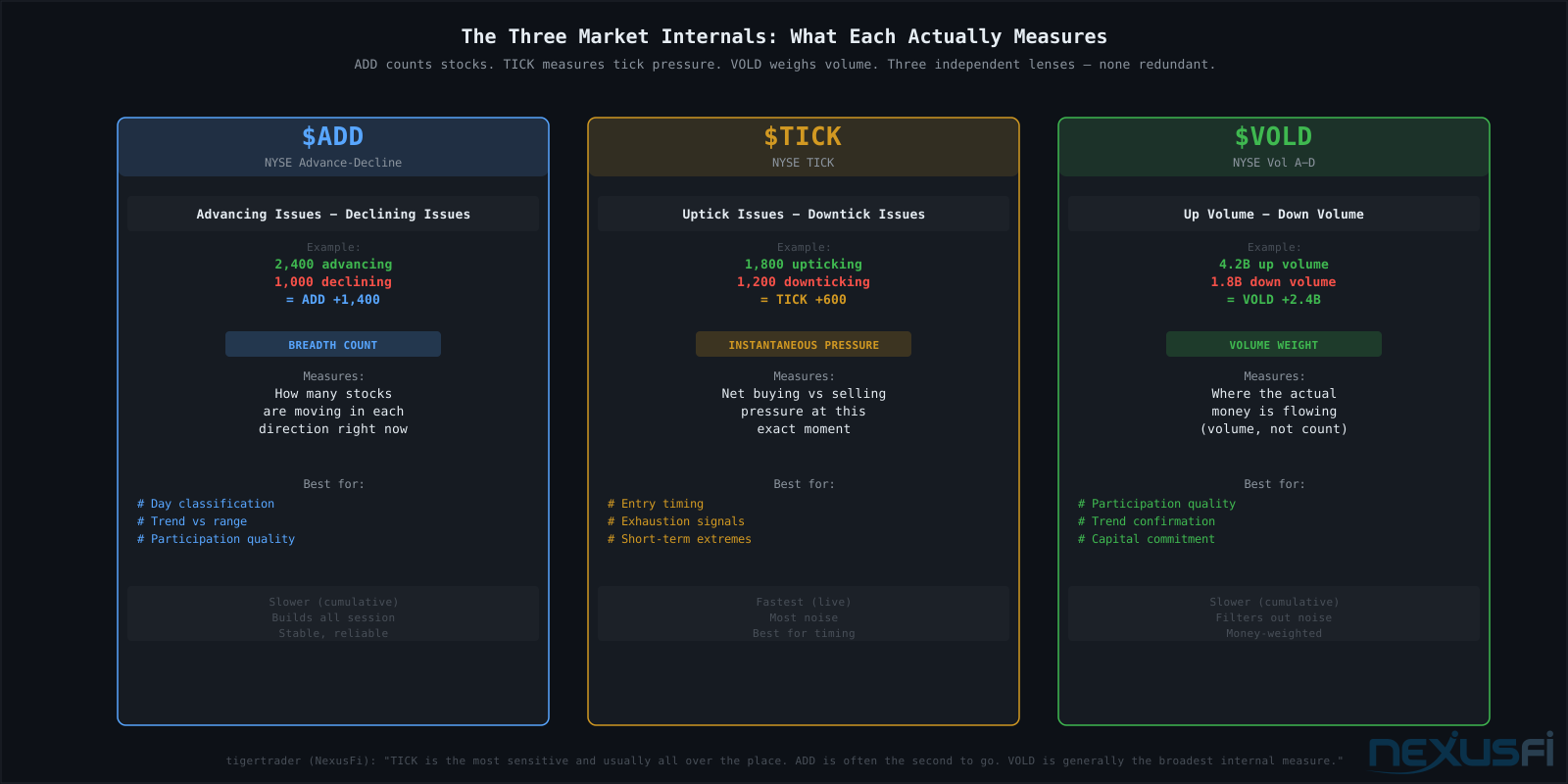
Before explaining how to use these indicators, it's essential to understand what they actually measure -- because this determines when they work and when the...
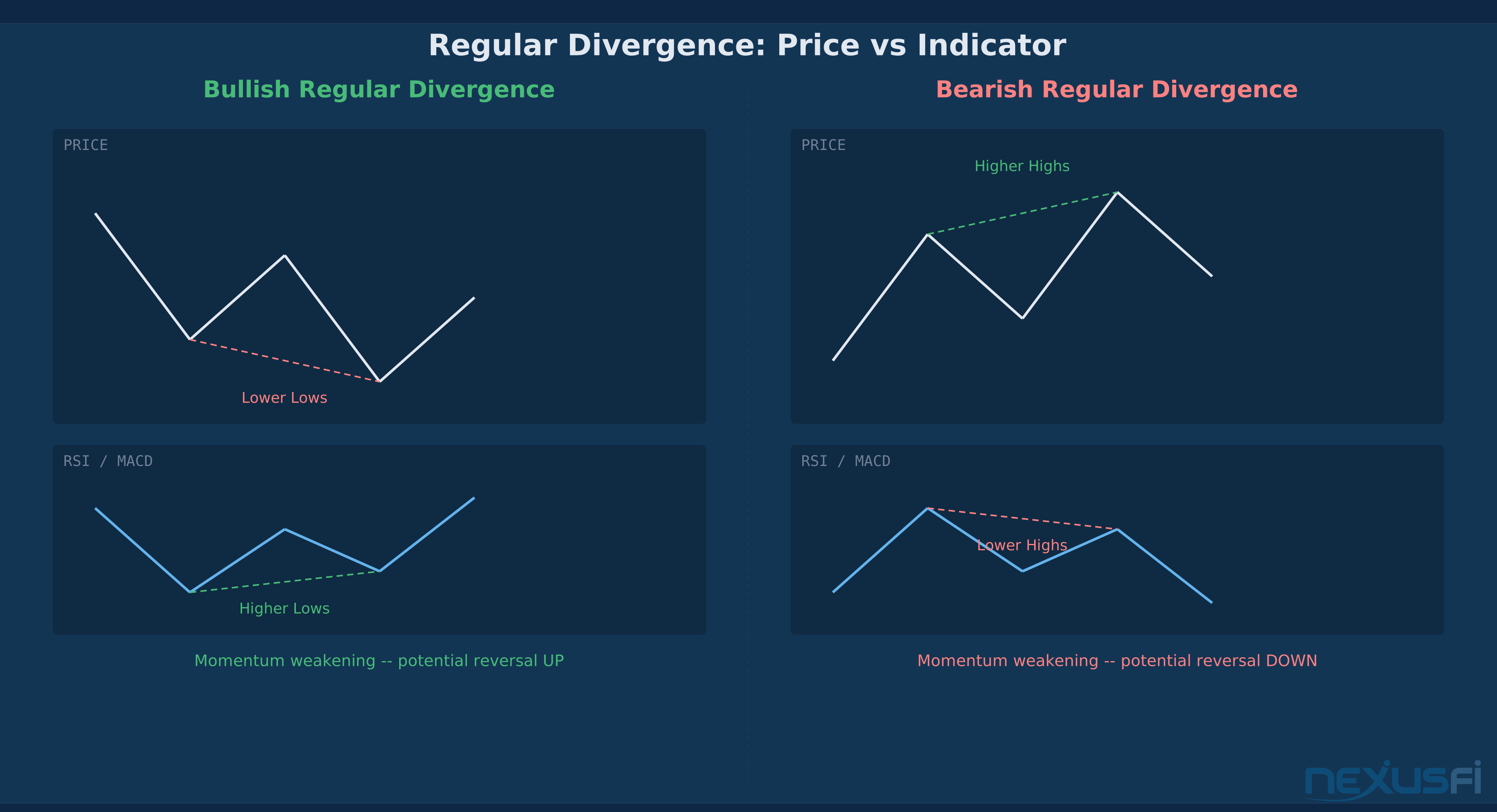
Divergence measures one thing: the rate of change in price versus the rate of change in an oscillator. When price makes a new extreme but momentum doesn't fo...
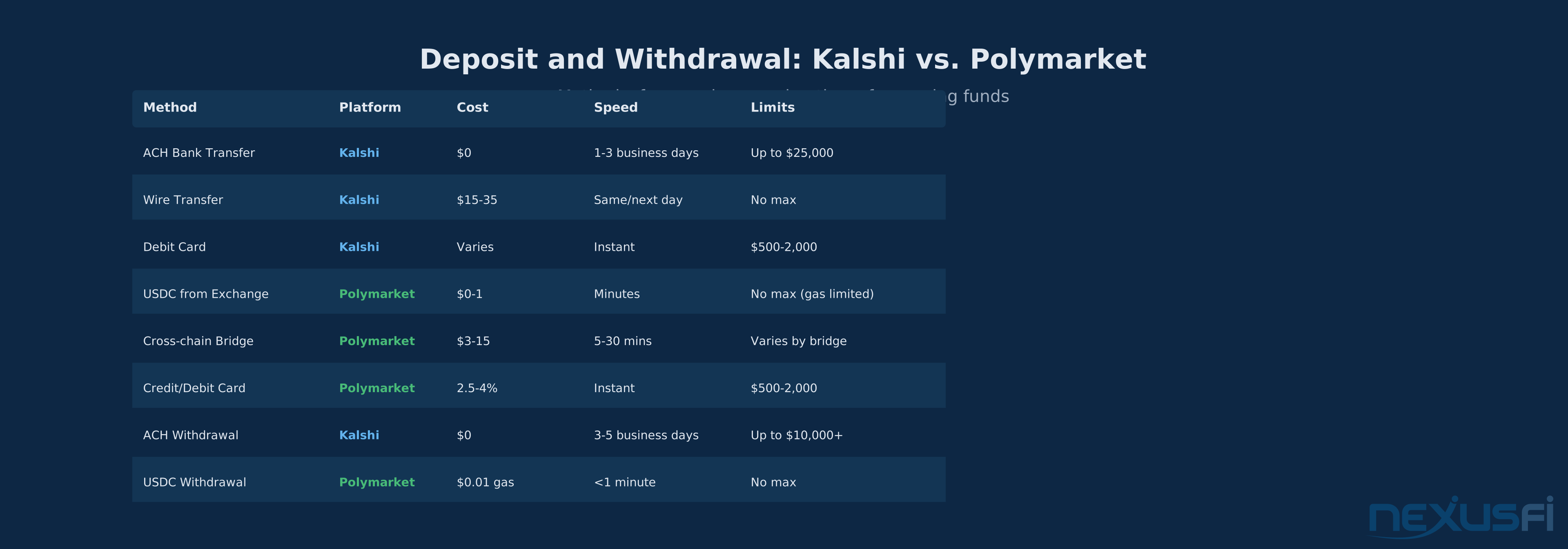
Opening a prediction market account is easy. Managing it well -- that's where most people trip up. You've got to understand deposits, withdrawals, identity v...
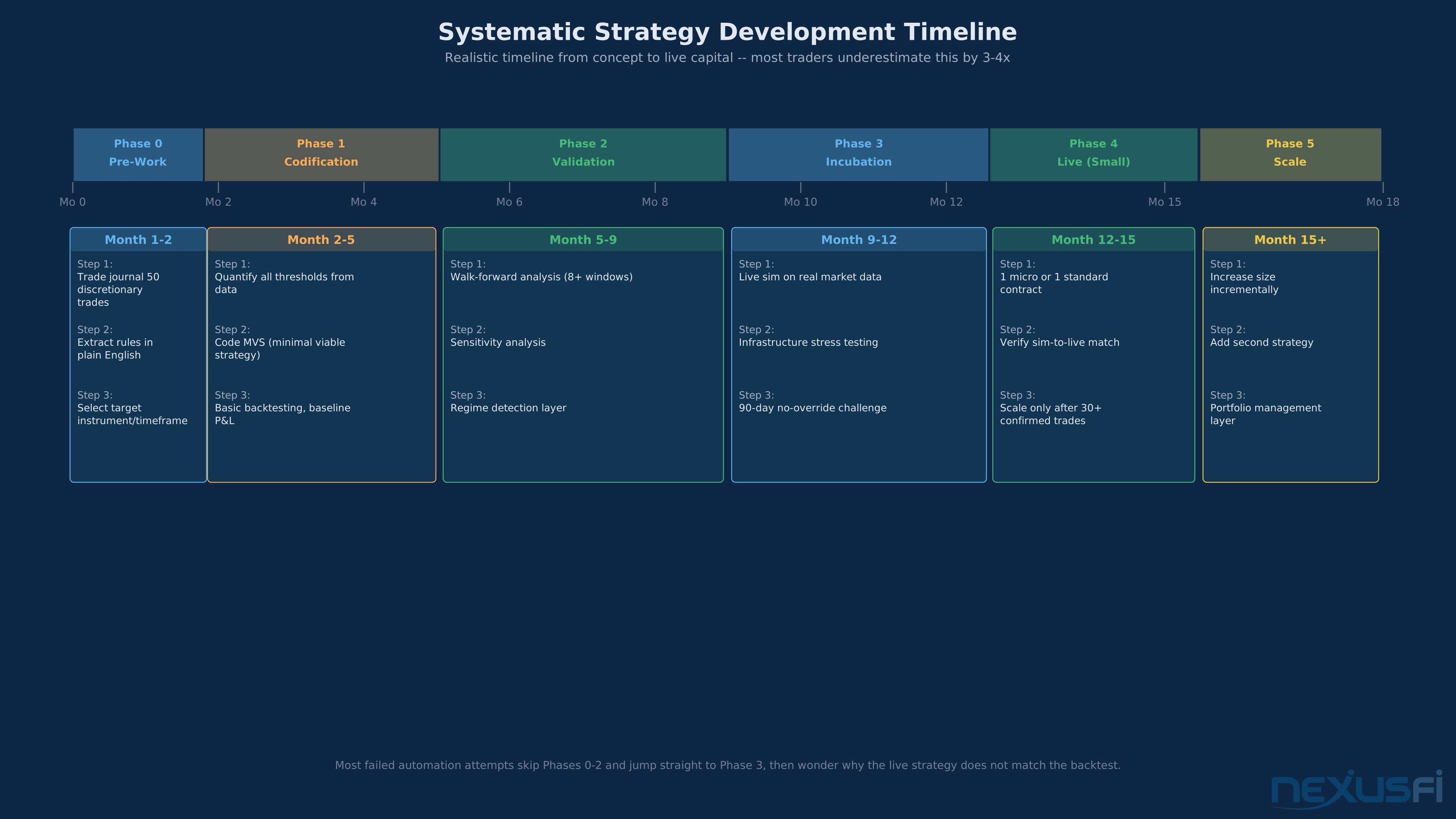
Overview Most traders start discretionary. You watch price, feel the market, pull the trigger on a read you can't fully articulate. When it works, it feels l...
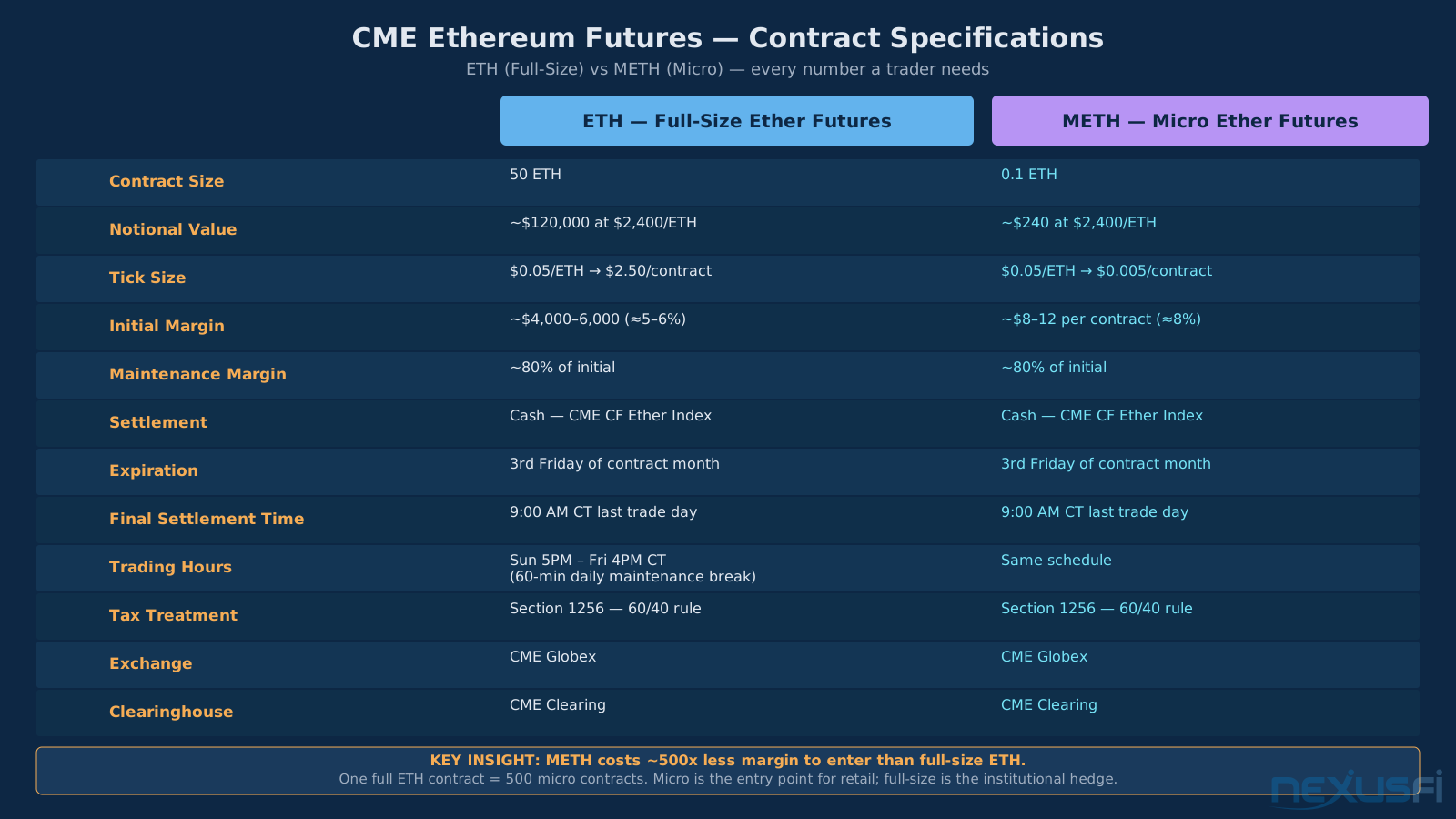
Overview Ethereum futures let you take regulated, leveraged positions on Ether -- the fuel for the world's largest smart contract network -- without touching...
Palladium doesn't get the attention that gold and silver do. There's no central bank buying it. No doomsday crowd stockpiling it. No retail investor products...
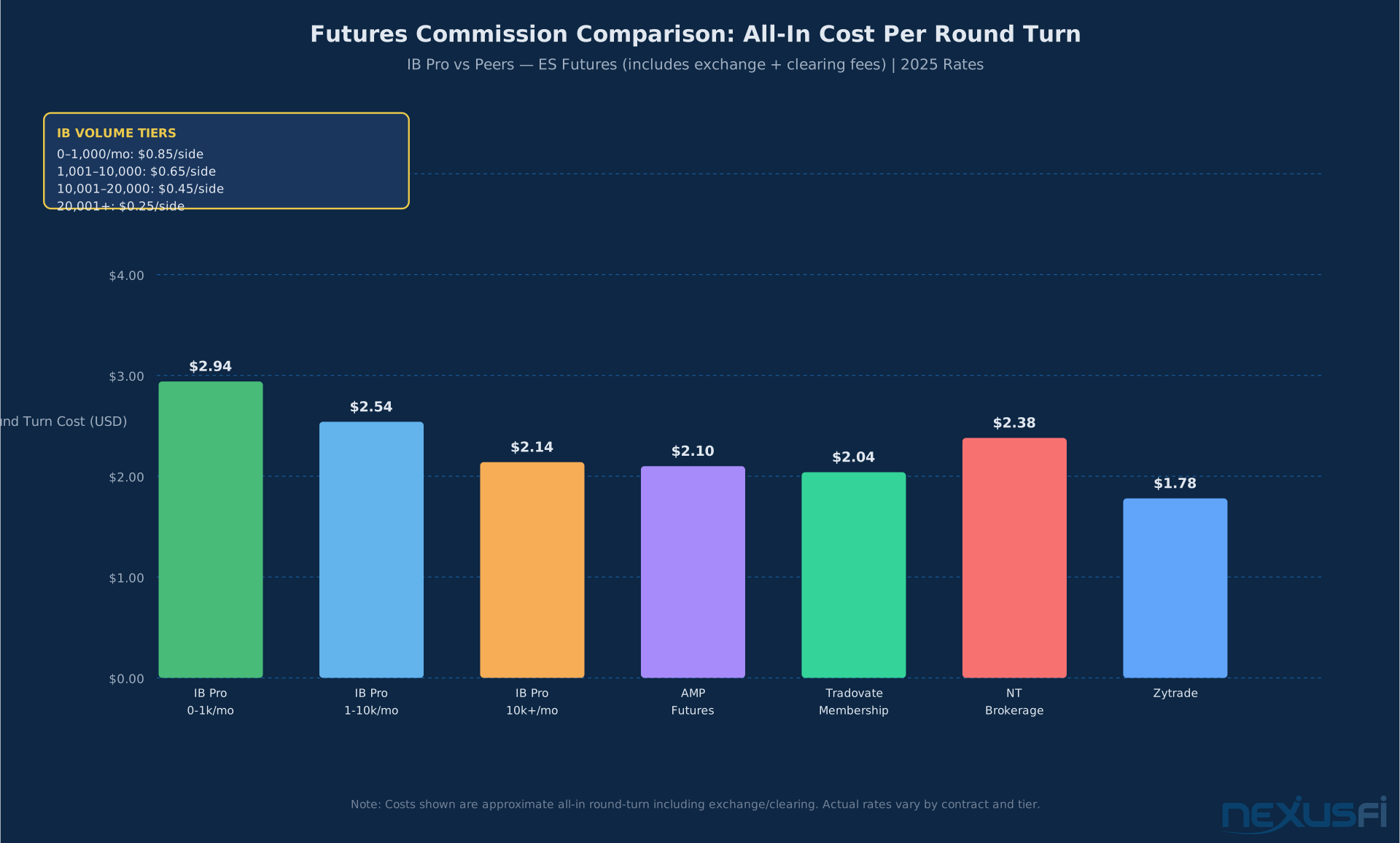
Interactive Brokers (IBKR) sits in a unique position in the futures broker landscape. It's not the choice of intraday scalpers who need $500 day-trading marg...
What Kinetick Is and Why NT Users Default to It Kinetick is NinjaTrader's branded market data service, launched in May 2010. It runs on DTN (formerly Telvent...
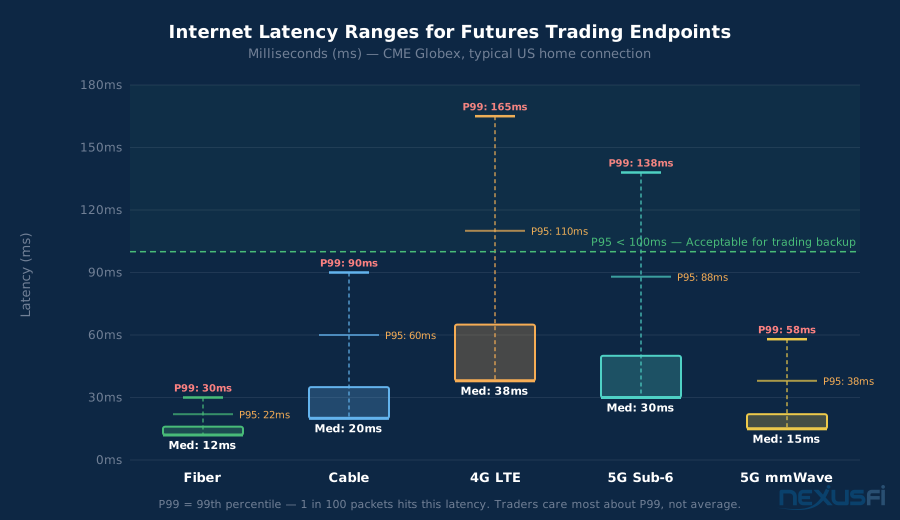
Why Cellular Backup Is Non-Negotiable Your ISP will go down. Not maybe -- will. Cable companies average 53 minutes of unplanned downtime per year. Fiber is b...
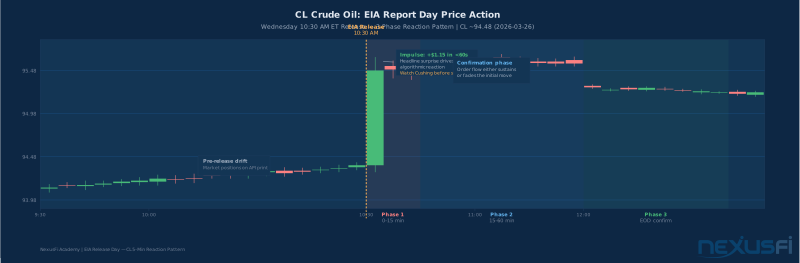
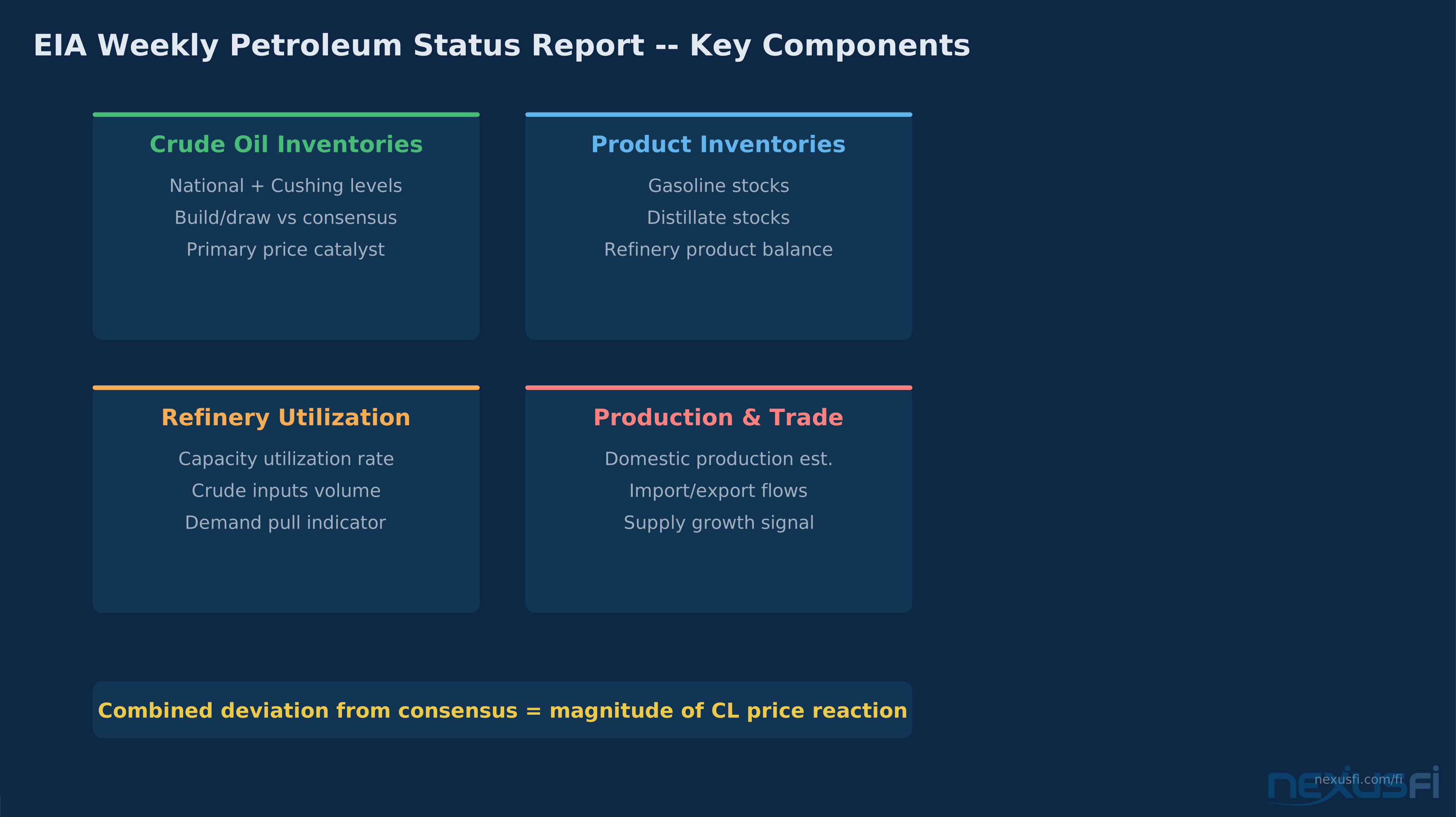
Two reports. Two instruments. Same basic structure. Every week the EIA publishes the Petroleum Status Report on Wednesday at 10:30 AM ET and the Natural Gas ...
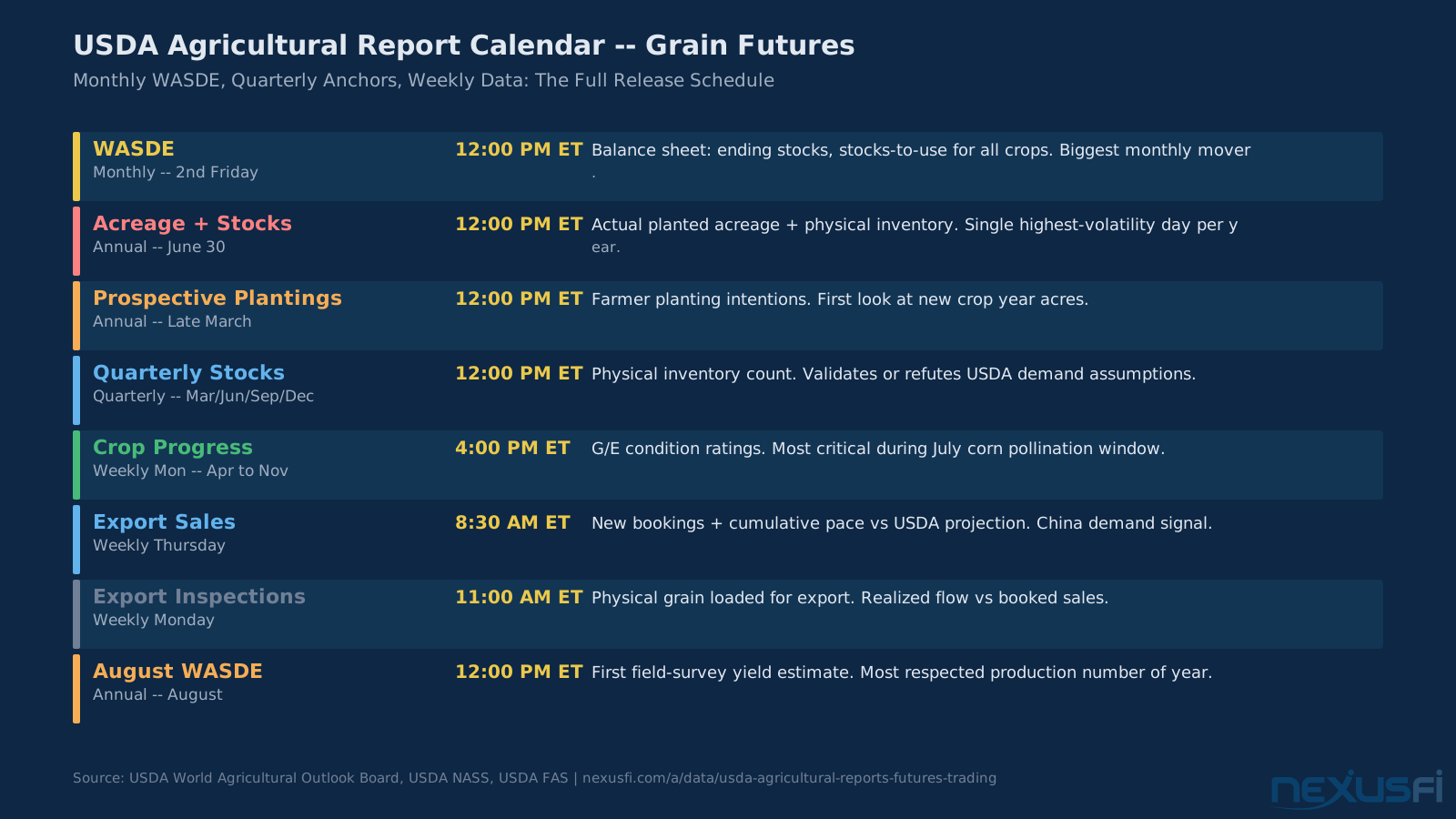
The Government Data Layer That Moves Grain Markets Grain futures -- corn (ZC), soybeans (ZS), wheat (ZW), soy meal (ZM), and soy oil (ZL) -- move on schedule...
Overview Sierra Chart's Advanced Custom Study Interface and Language -- ACSIL -- is the deepest automation layer available to retail futures traders. You're ...
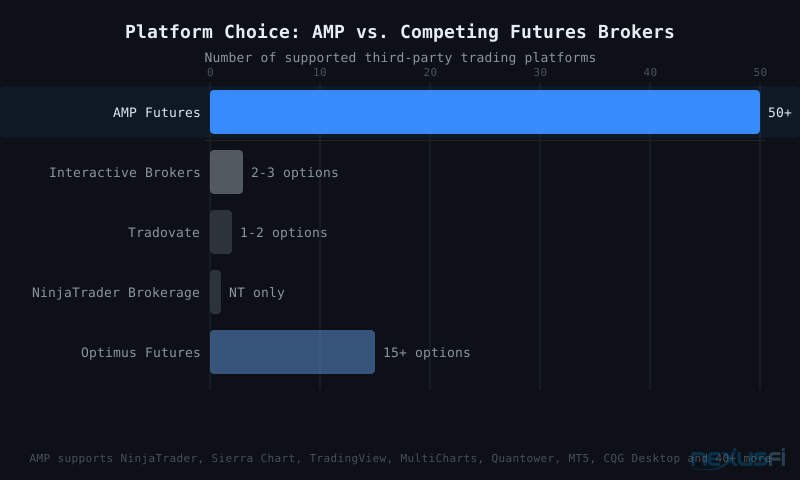
AMP Futures doesn't have a slick proprietary platform. They don't have a billion-dollar marketing budget. What they have is a futures brokerage that gets out...
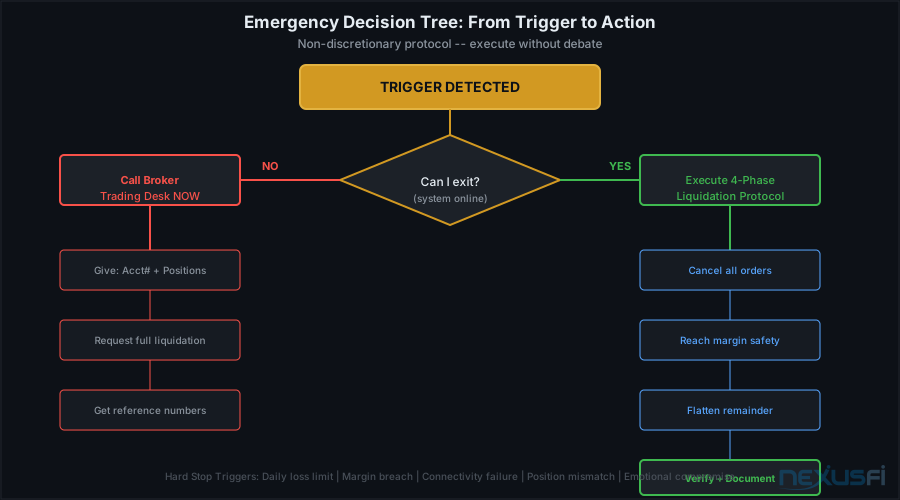
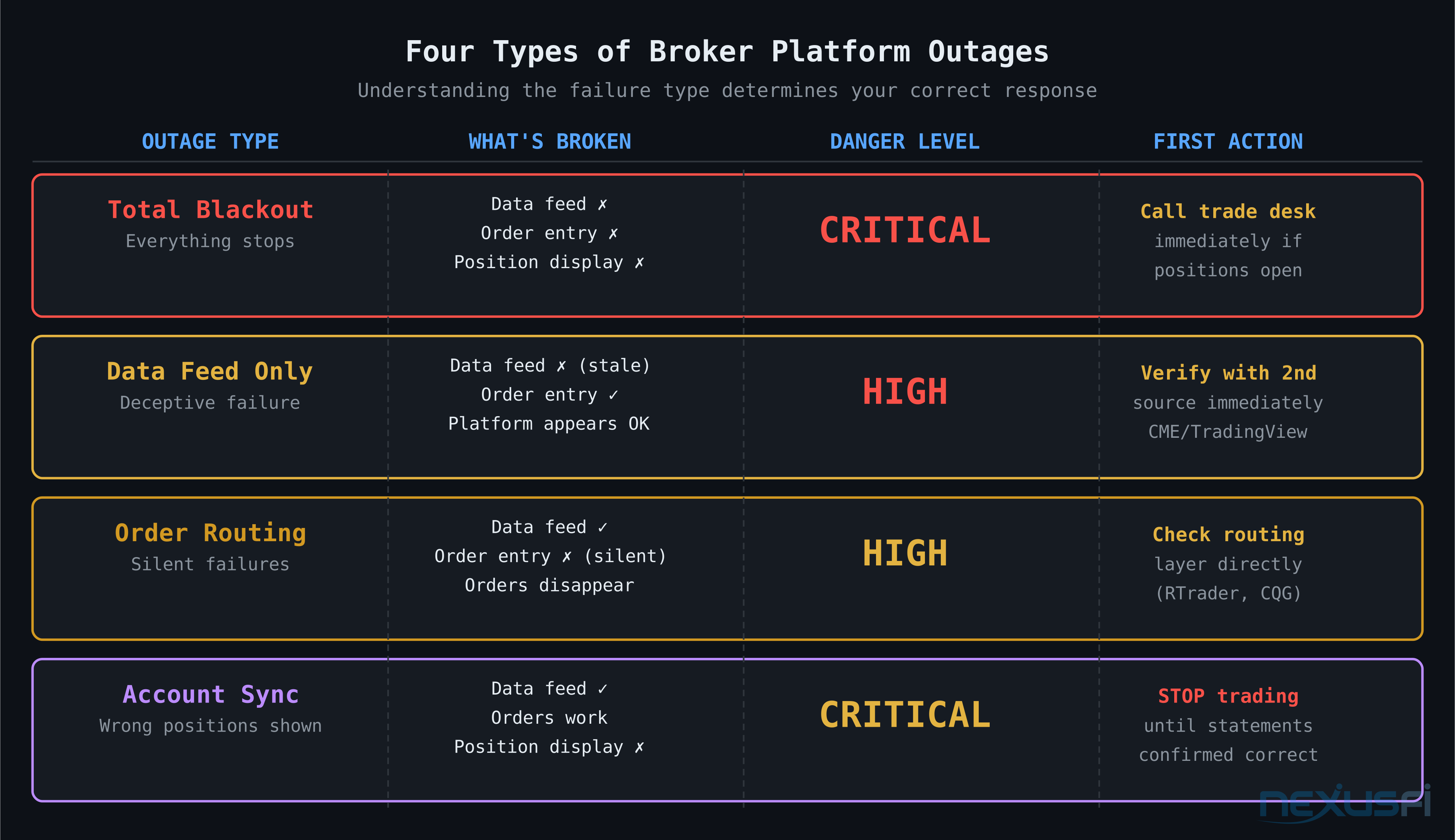
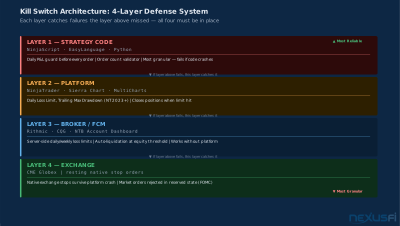
Overview Every futures trader has a plan for when the market goes up and a plan for when it goes down. Very few have a plan for when something goes wrong -- ...
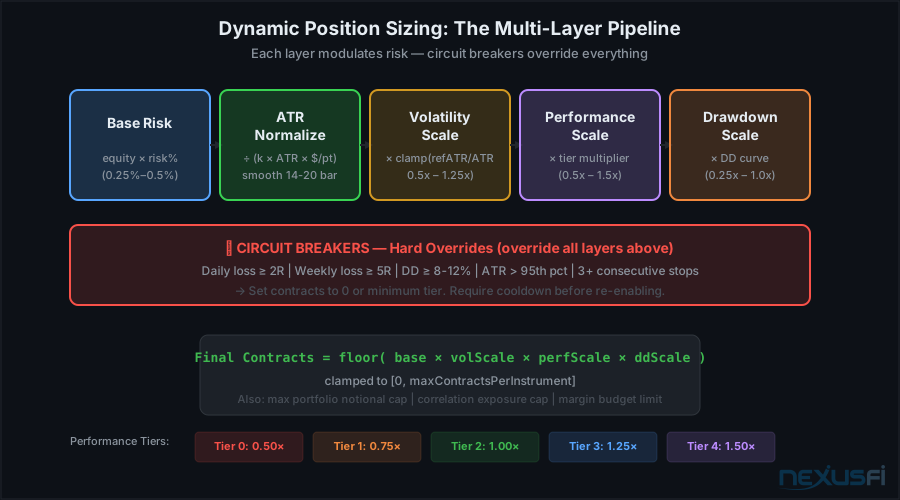
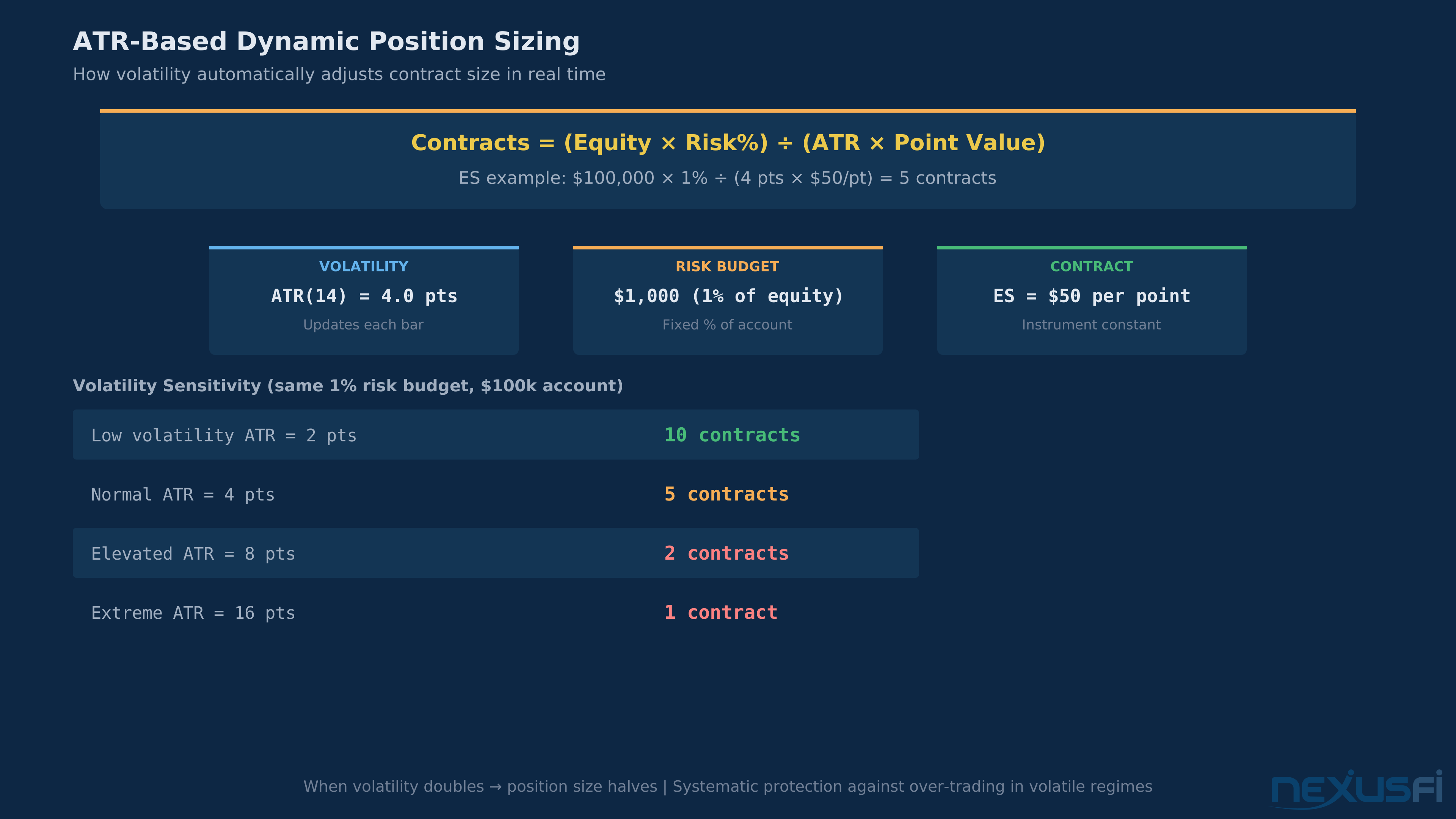
Overview Dynamic position sizing adapts how many contracts you trade based on three real-time inputs: current market volatility (measured by ATR), recent str...
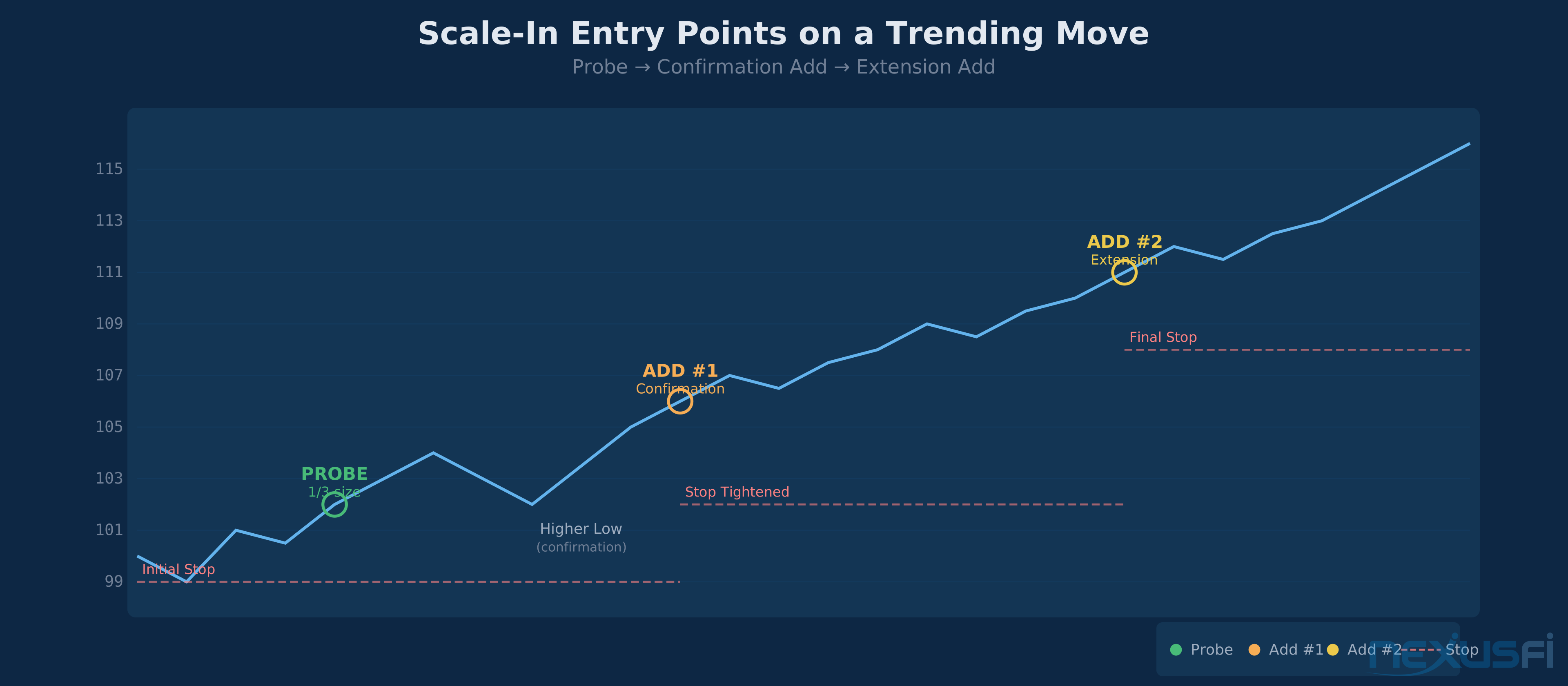
Professional scale-in trading follows a three-phase structure. Each phase has its own entry trigger, its own stop logic, and its own reason for existing. Ski...
Prerequisites This article builds on the fundamentals of prediction market trading. Before diving into settlement mechanics, review Introduction to Predictio...
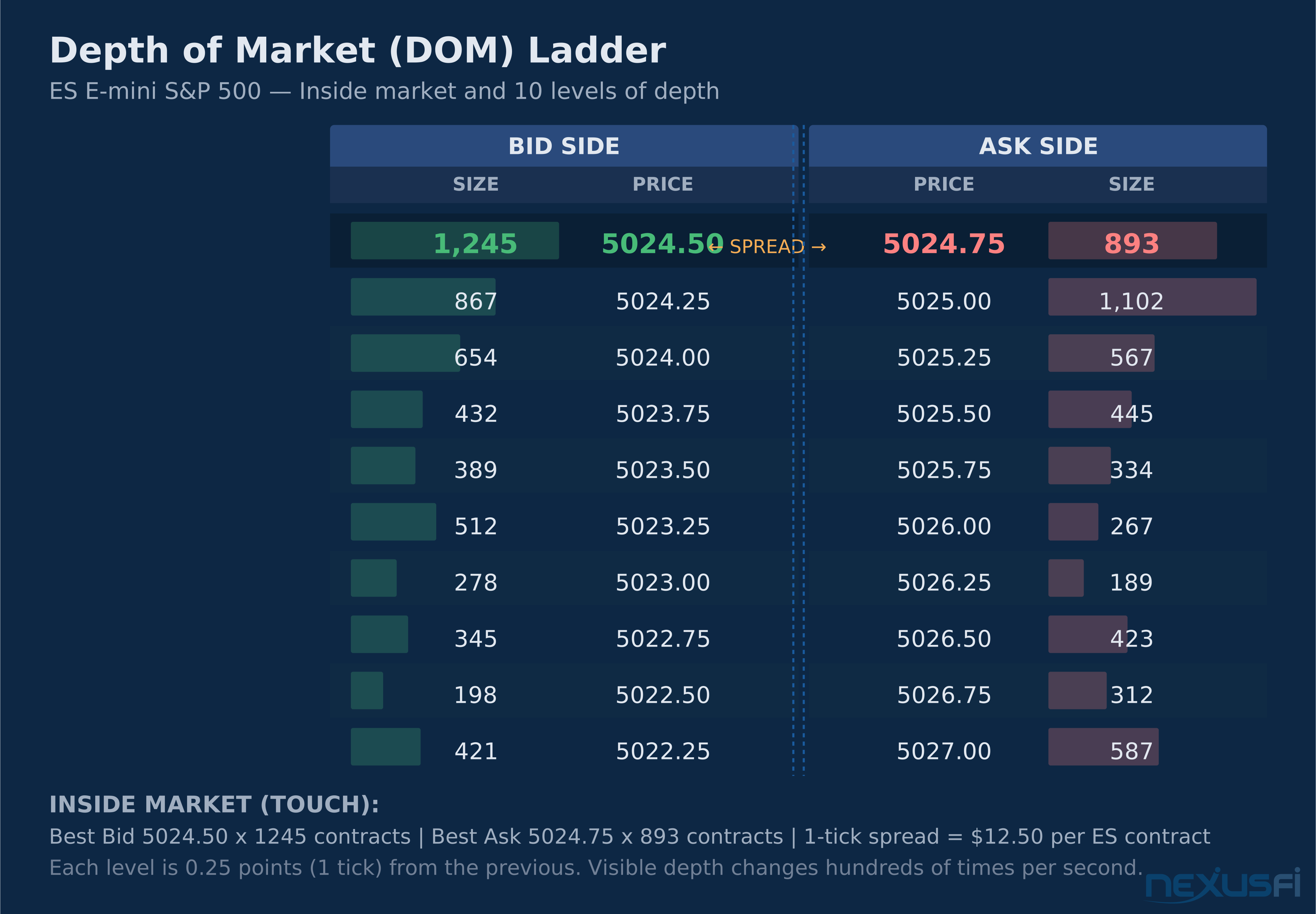
Every futures trader stares at the DOM. The depth ladder, the bid/ask stacks, the size sitting at each price. And every futures trader, at some point, watche...
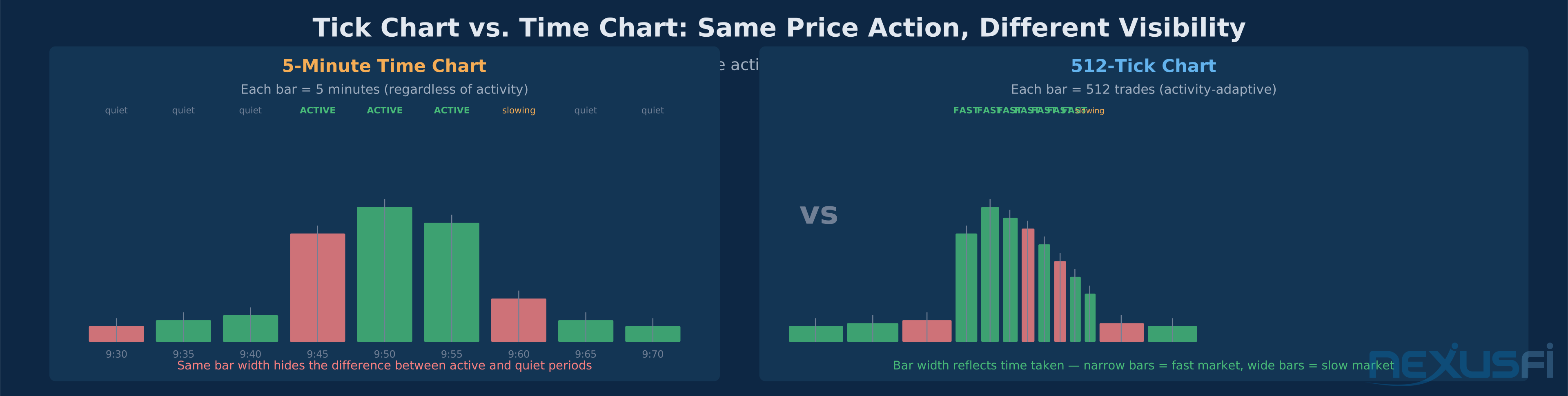
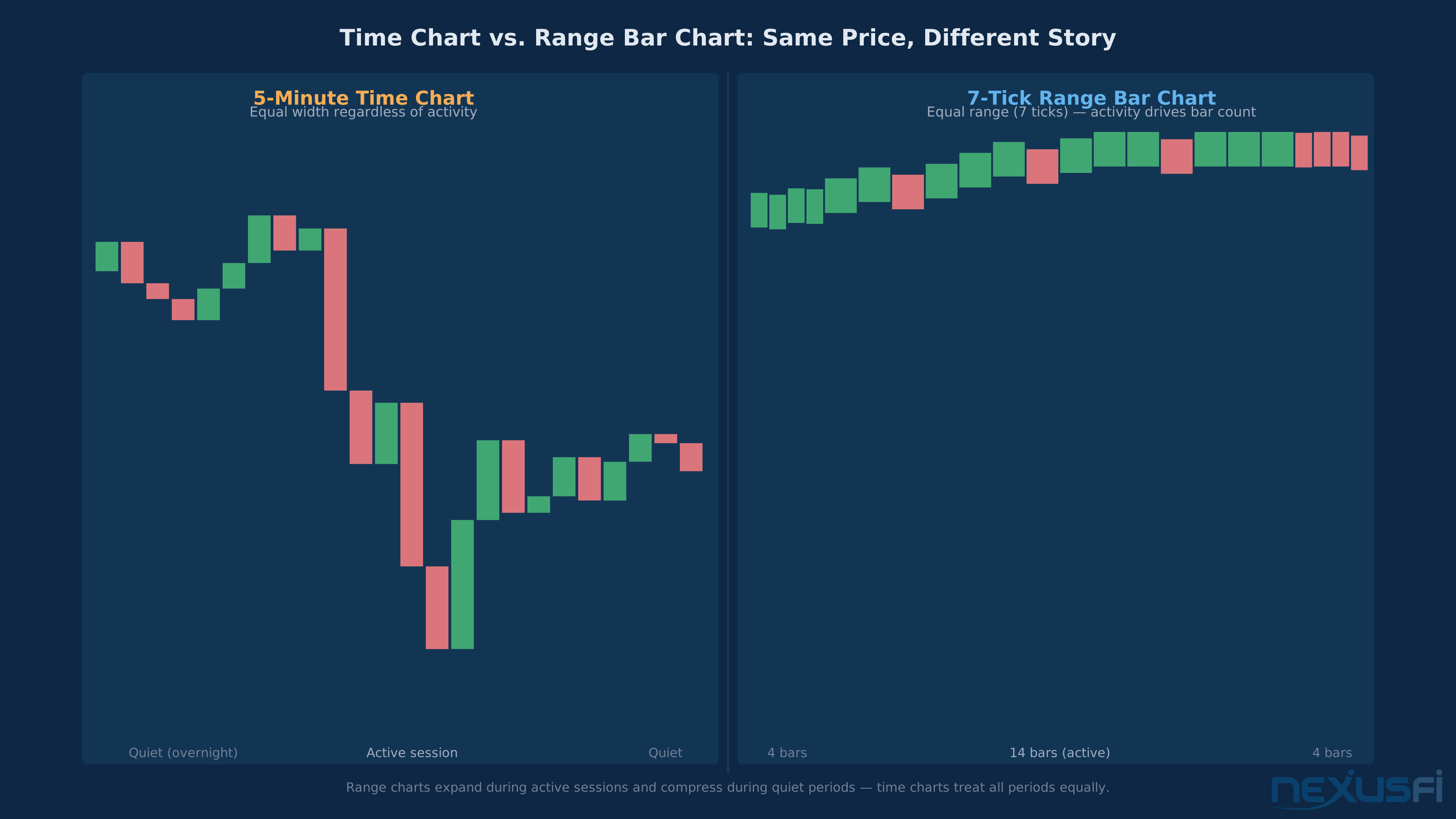
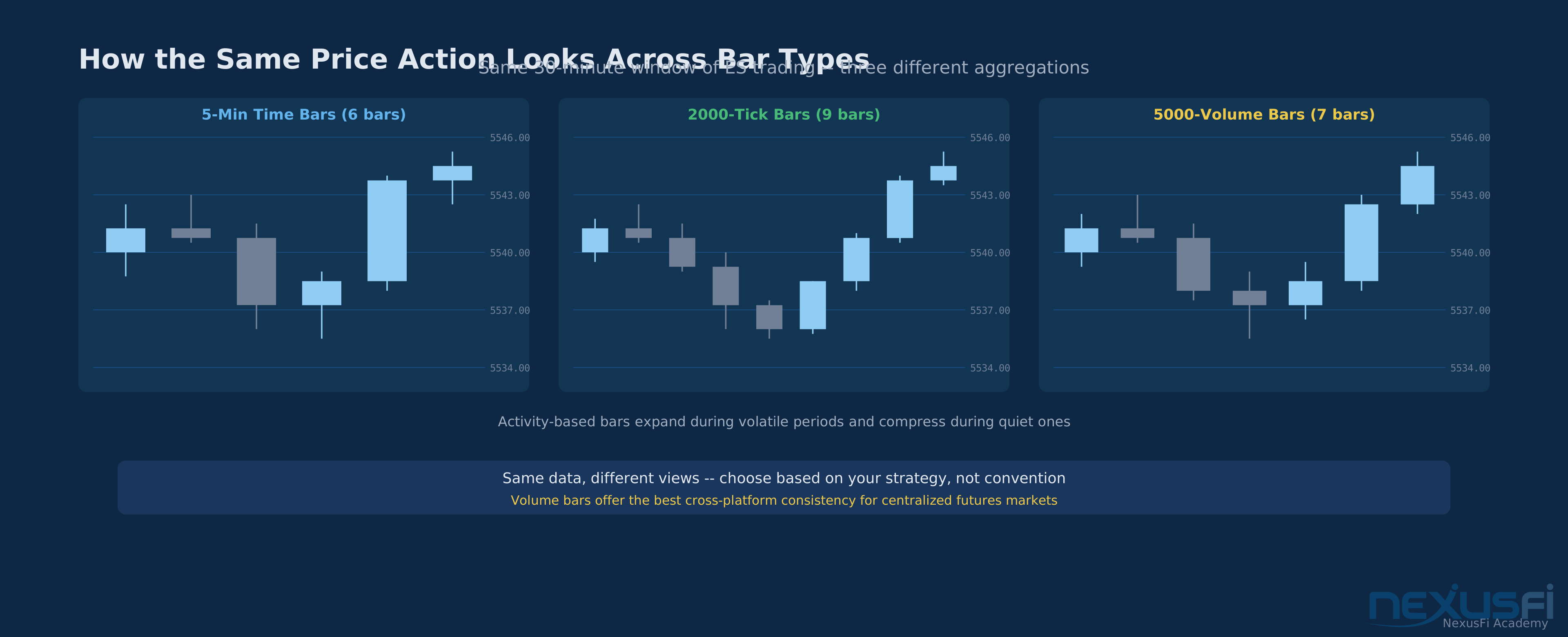
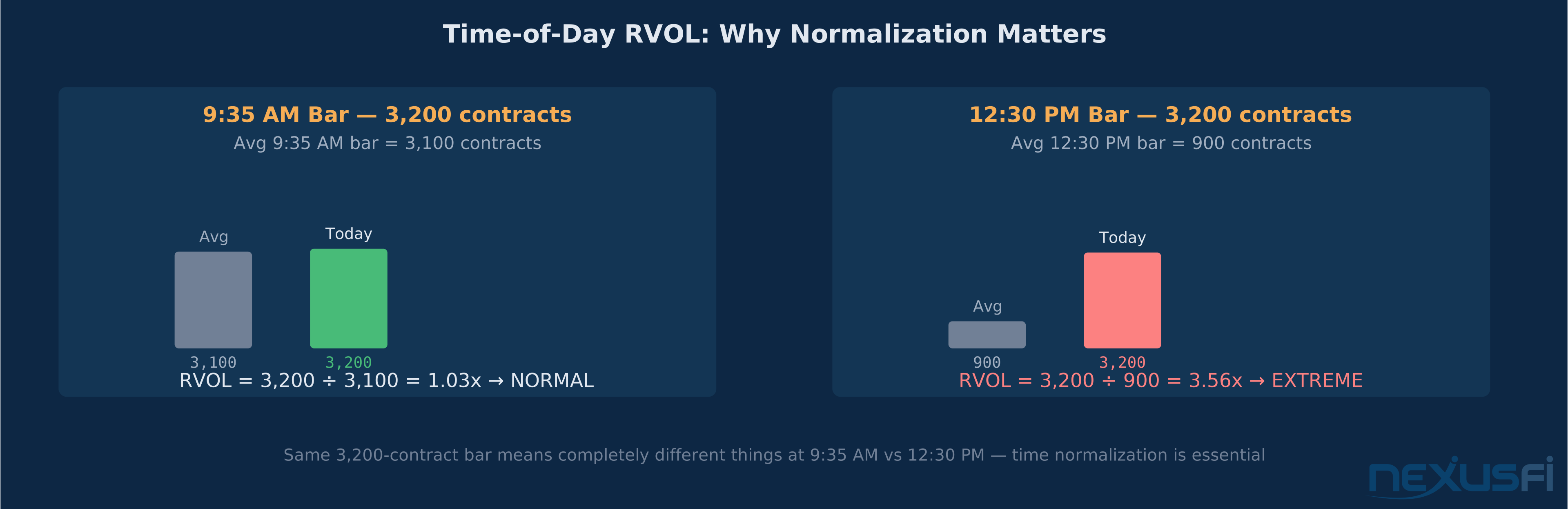
A 5-minute bar during the 9:30 AM opening rush on ES might contain 15,000 trades. A 5-minute bar during the post-lunch lull? Maybe 400. Same bar width on you...
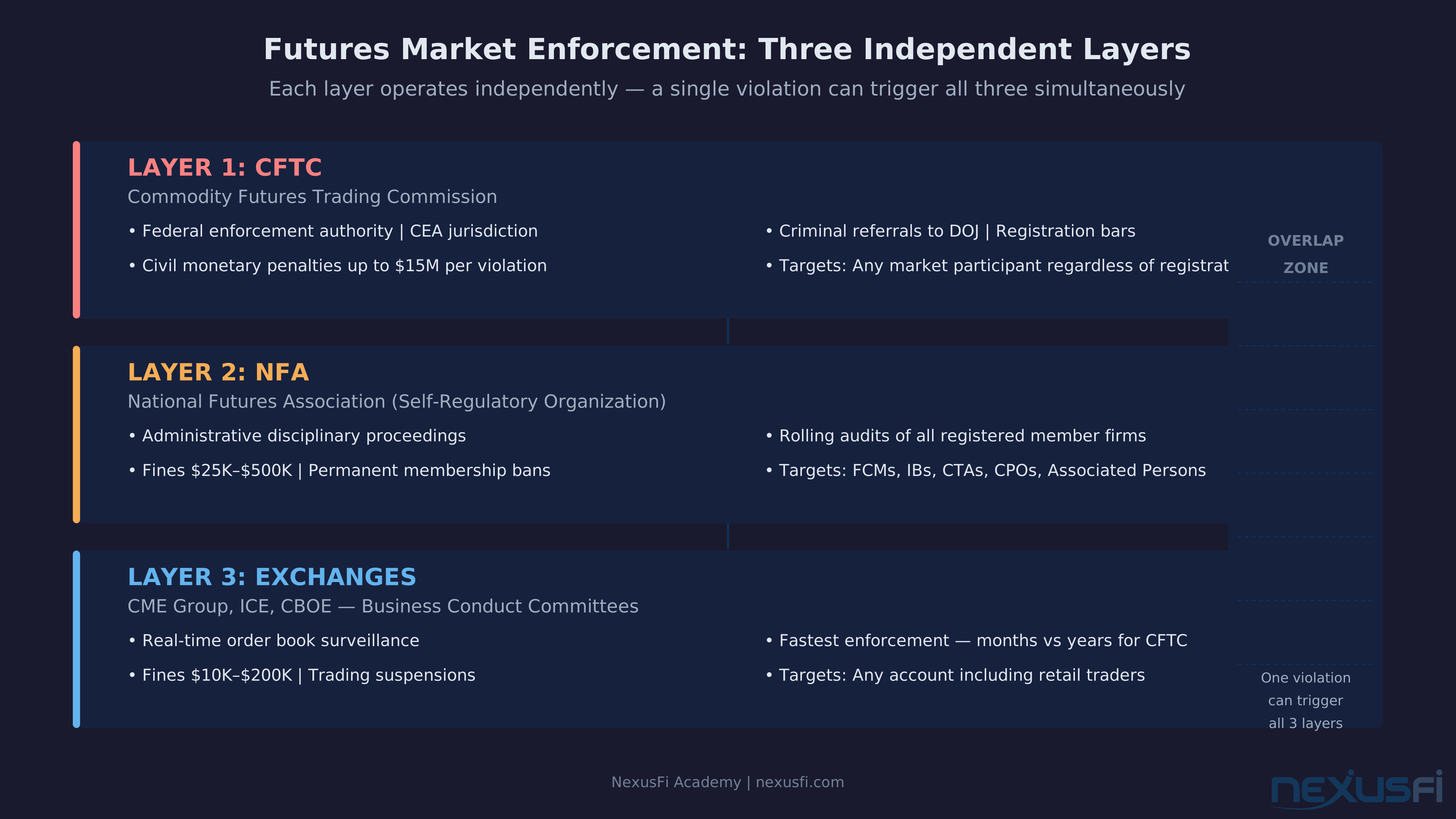
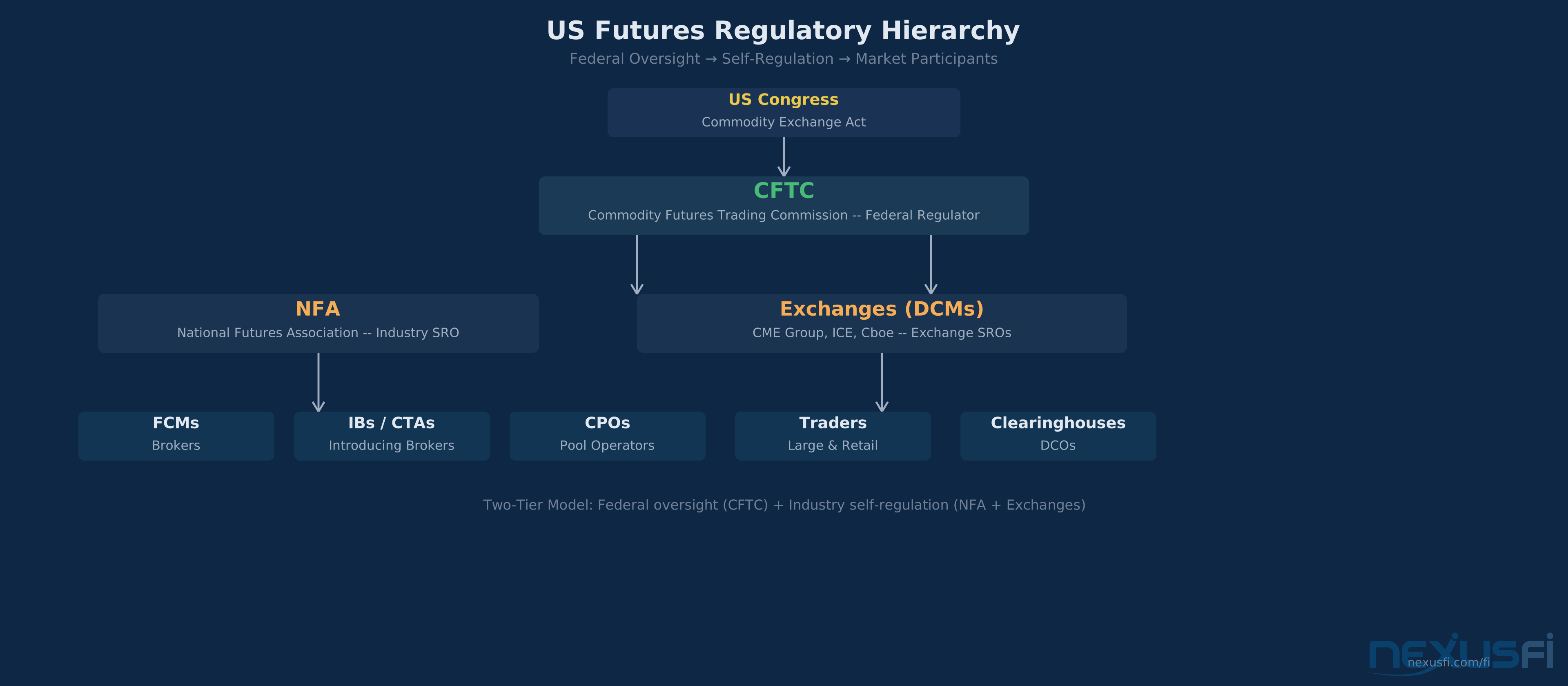
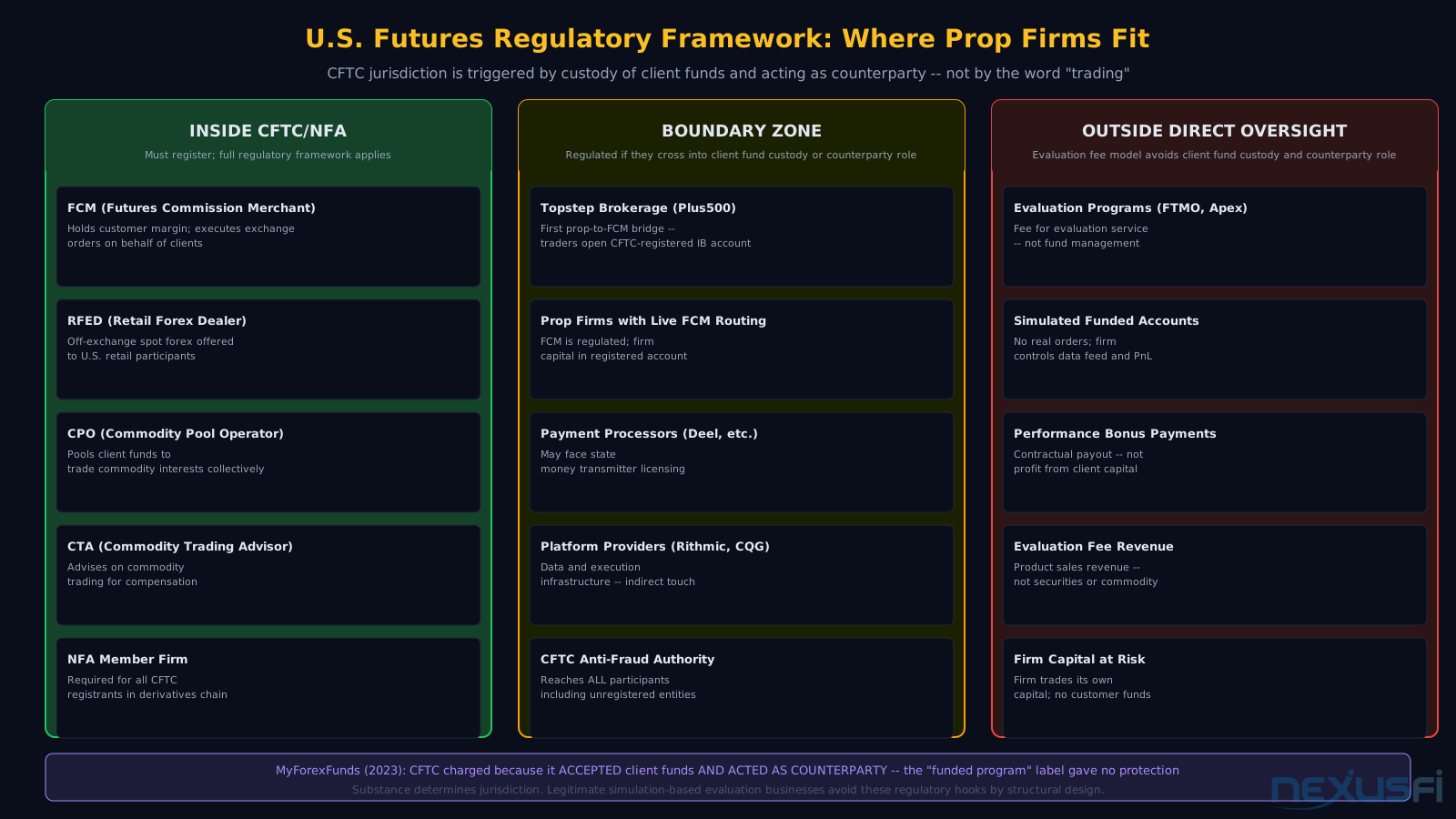
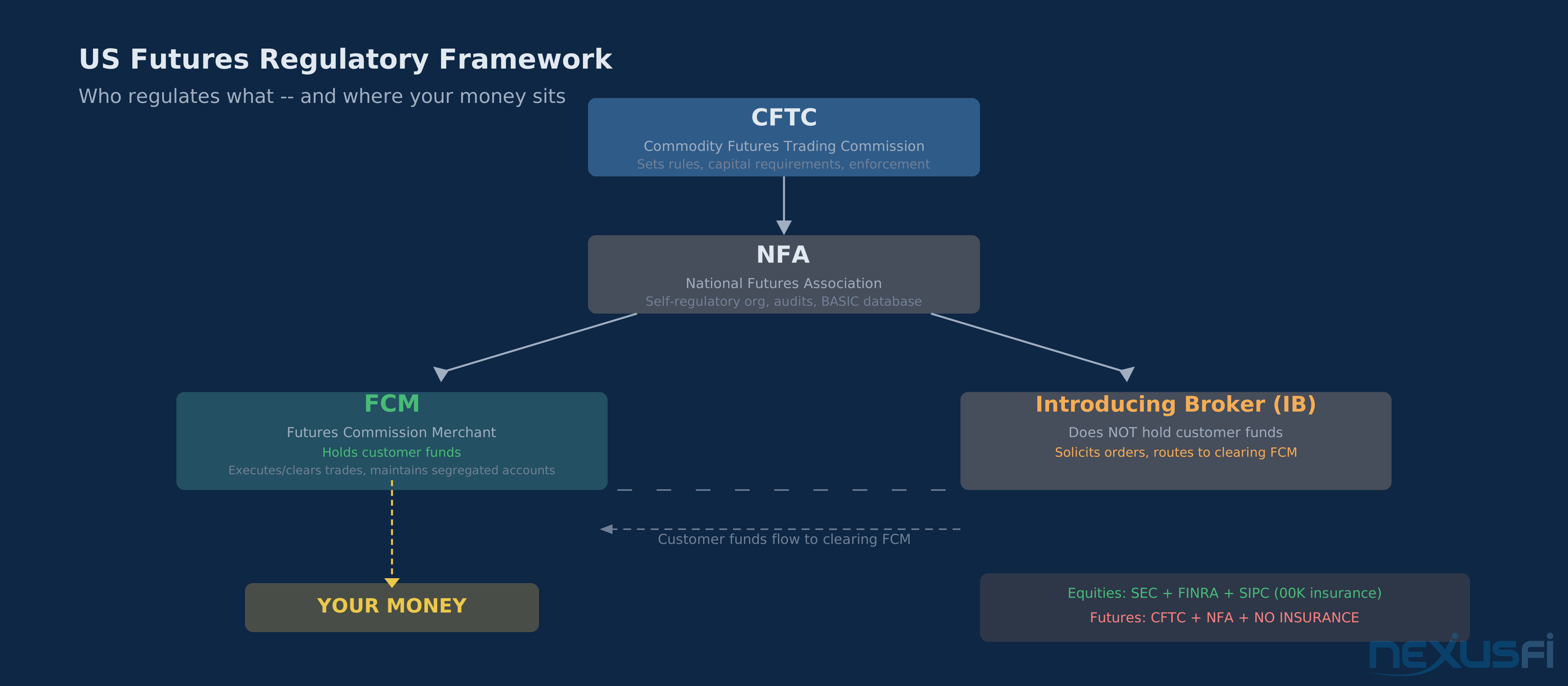
U.S. futures trading sits inside one of the most comprehensively supervised markets on the planet. That's not an accident. Futures are leveraged, centrally c...
Bar-by-bar reading is a real-time analytical skill developed by Al Brooks and documented extensively in his three-volume series on price action trading. Unli...
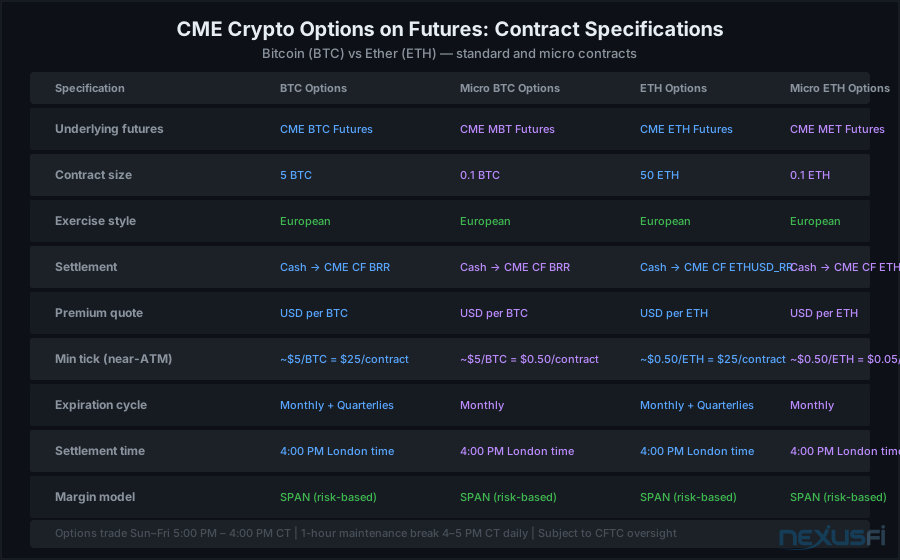
Prerequisites This article assumes familiarity with futures mechanics and basic options concepts. Before diving into CME crypto options specifics, review Cry...
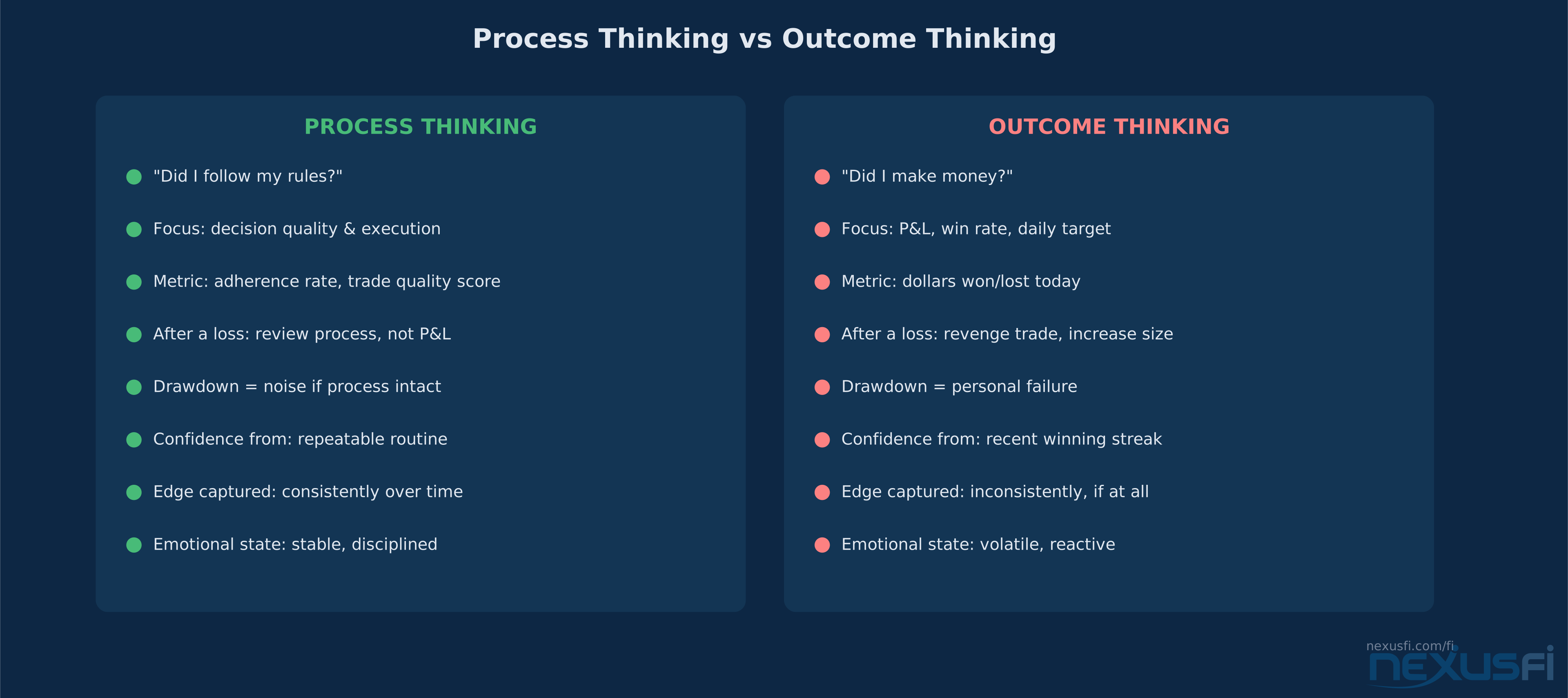
Here's a question that separates consistently profitable futures traders from everyone else: after a trade, what's the first thing you evaluate? If the answe...
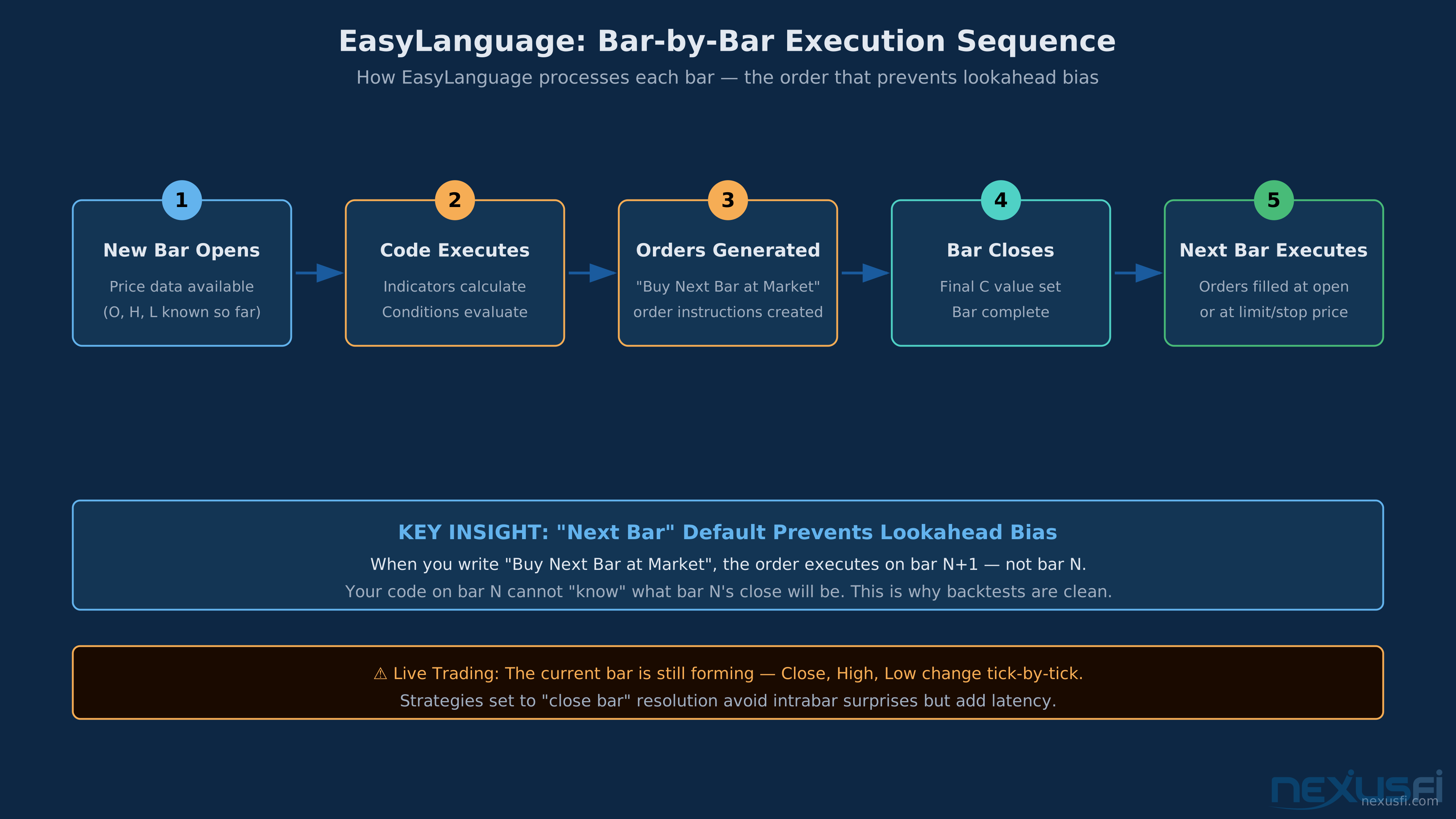
Overview TradeStation's EasyLanguage has been the entry point for systematic futures trading for over three decades. If you're coming from discretionary trad...
Gold futures (ticker: GC) at the COMEX exchange are trading near $5,247/oz as of early 2026, up dramatically from the $1,800-2,000 range that defined most of...
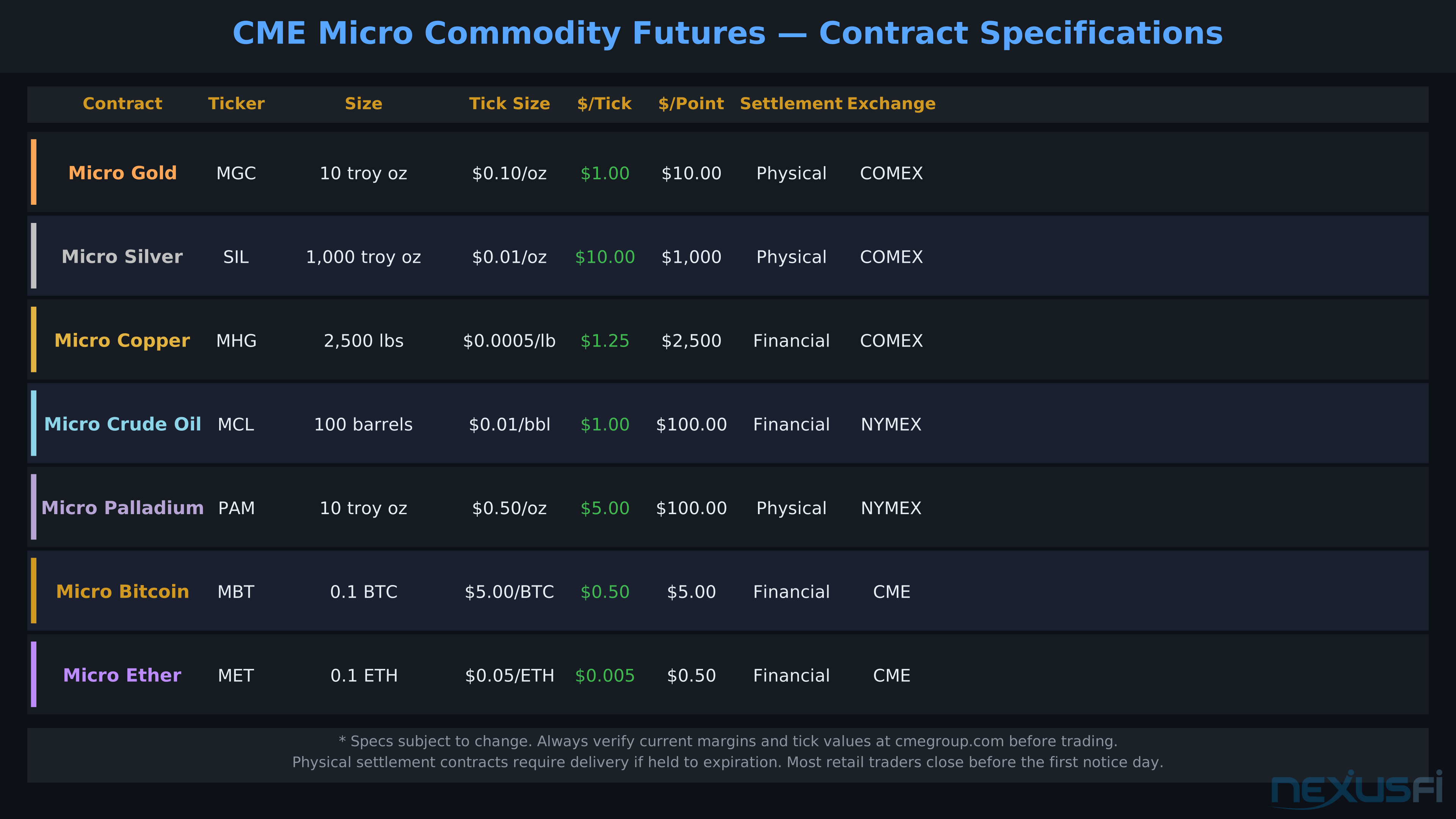
Overview The CME Micro suite gives retail futures traders something that didn't exist a decade ago: regulated, exchange-traded access to gold, silver, copper...
You've optimized your chart setup, your order flow software, your risk parameters. You've read Mark Douglas. You've journaled every trade. And you're still i...
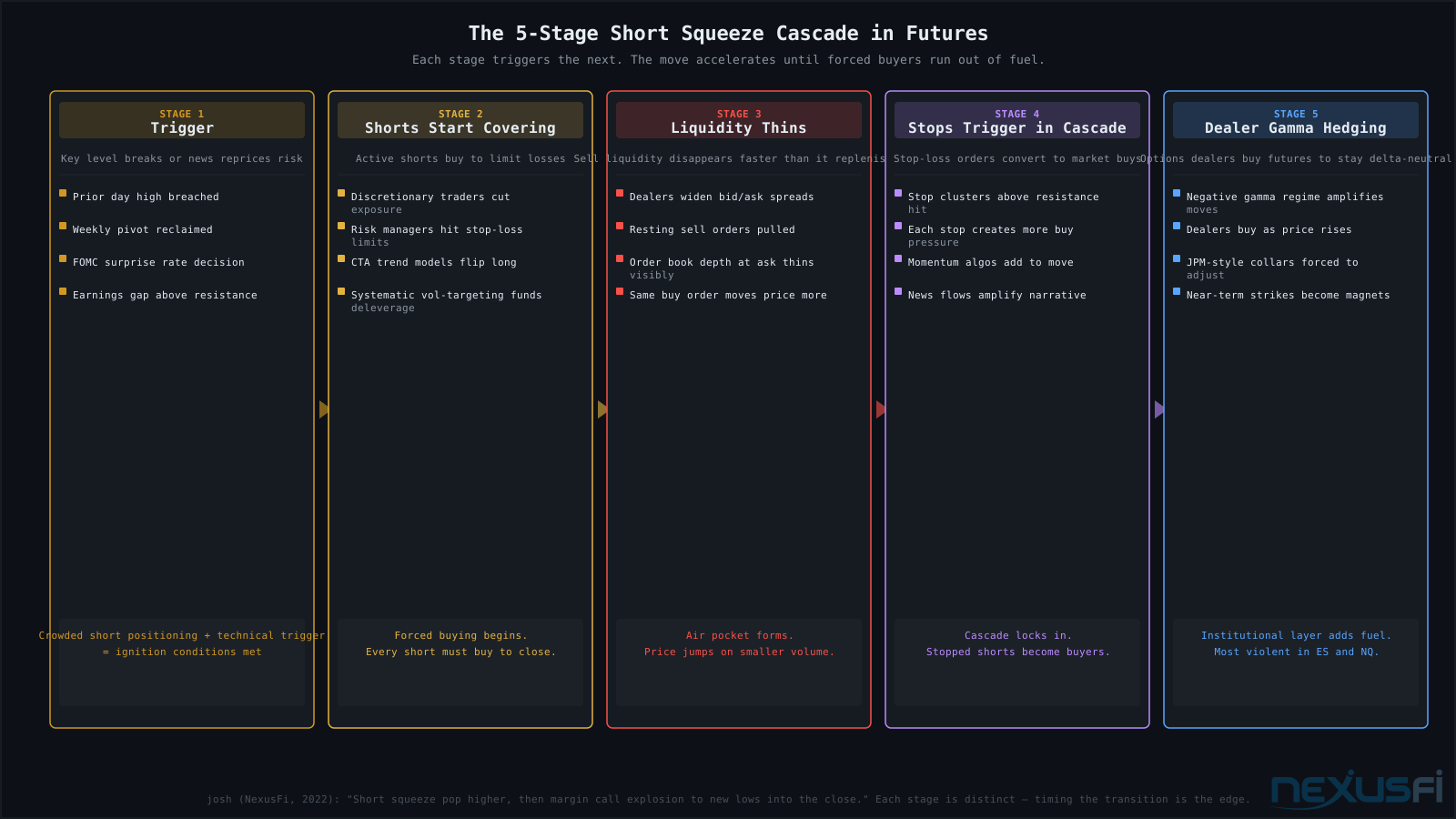
Overview A short squeeze in futures markets is one of the most violent, concentrated price events you'll encounter -- and one of the most misunderstood. Most...
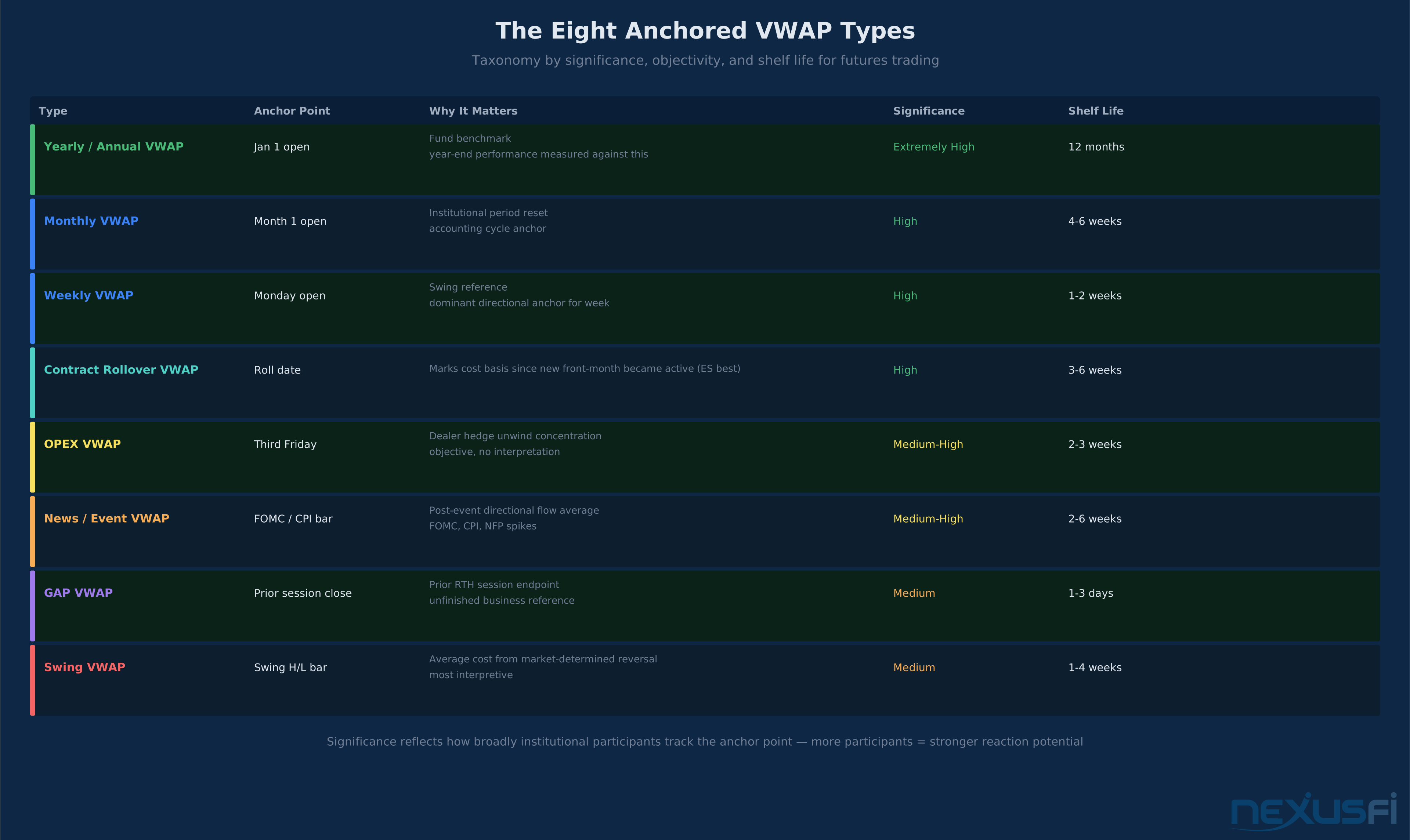
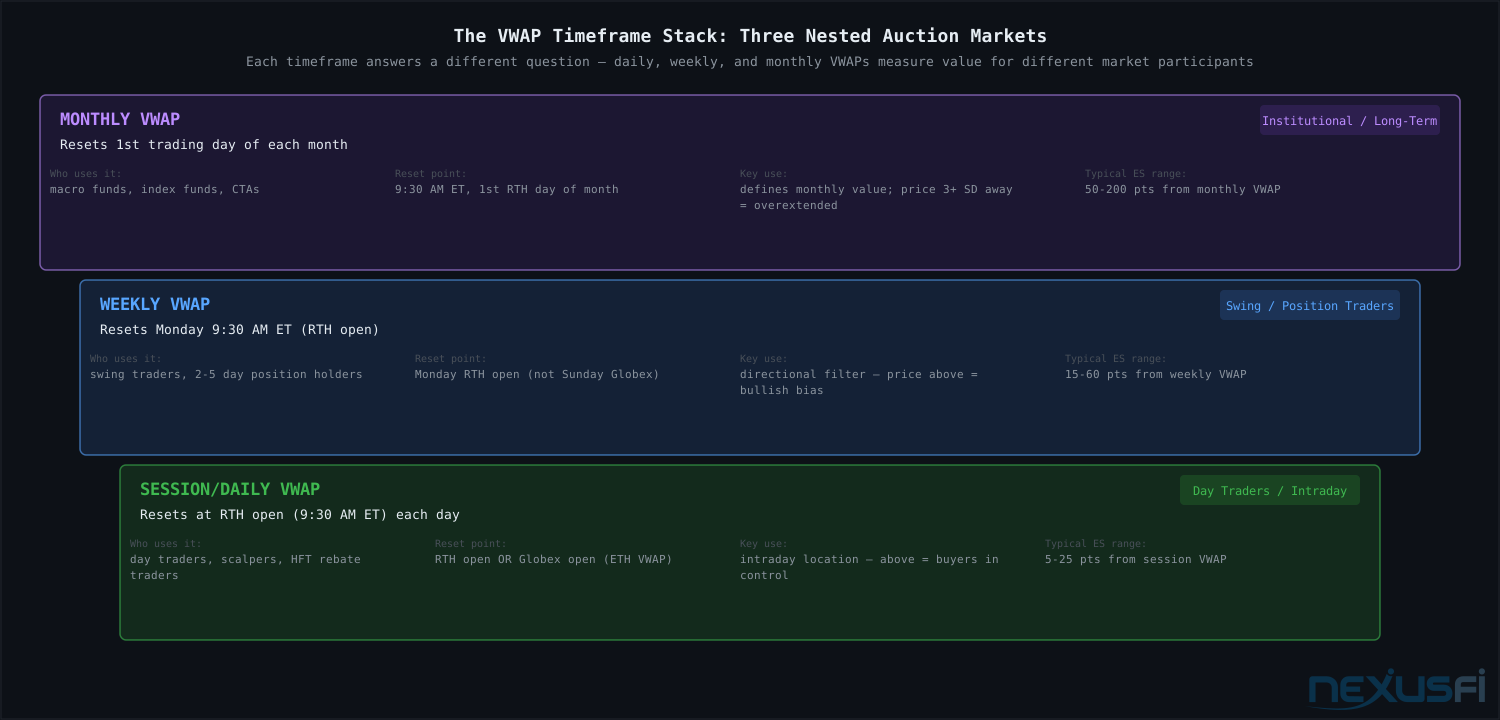
Session VWAP is the floor. Anchored VWAP is the entire building. The daily RTH VWAP tells you the average price of today's auction. That's useful for one thi...
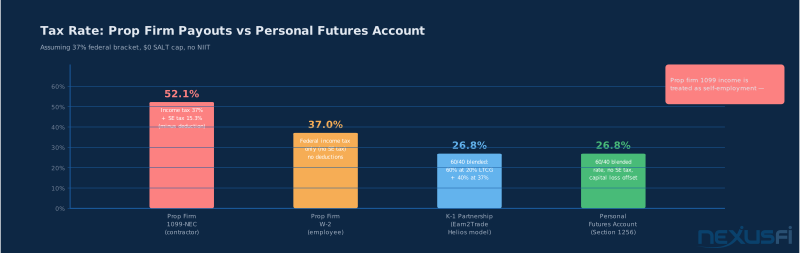
You passed the evaluation. You're funded. Money is hitting your account. Then tax season arrives and you realize you have no idea what you owe, who you owe i...
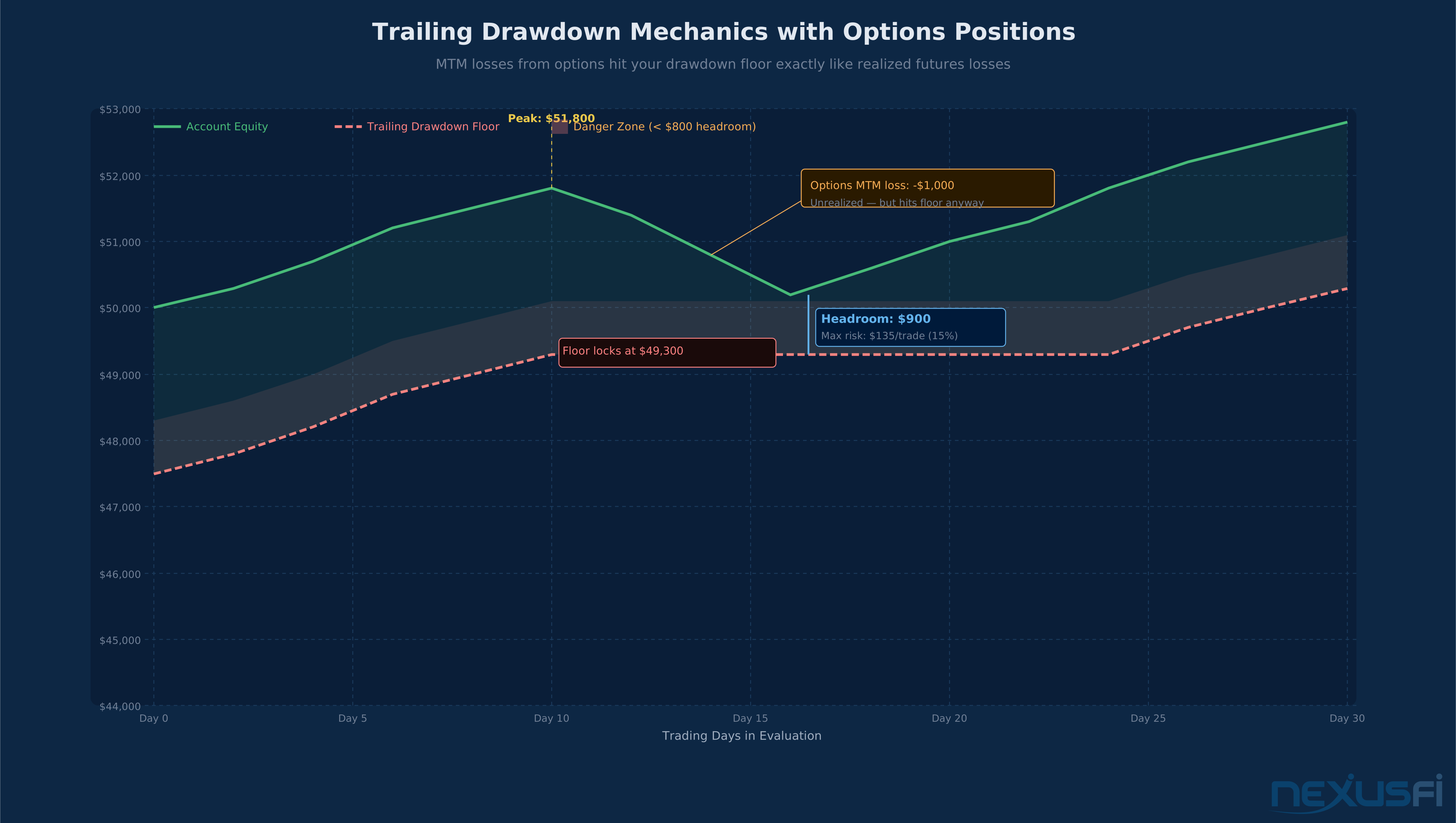
Options change the equation in a funded account in ways most traders don't fully understand until they're watching a breach happen in slow motion. In a perso...
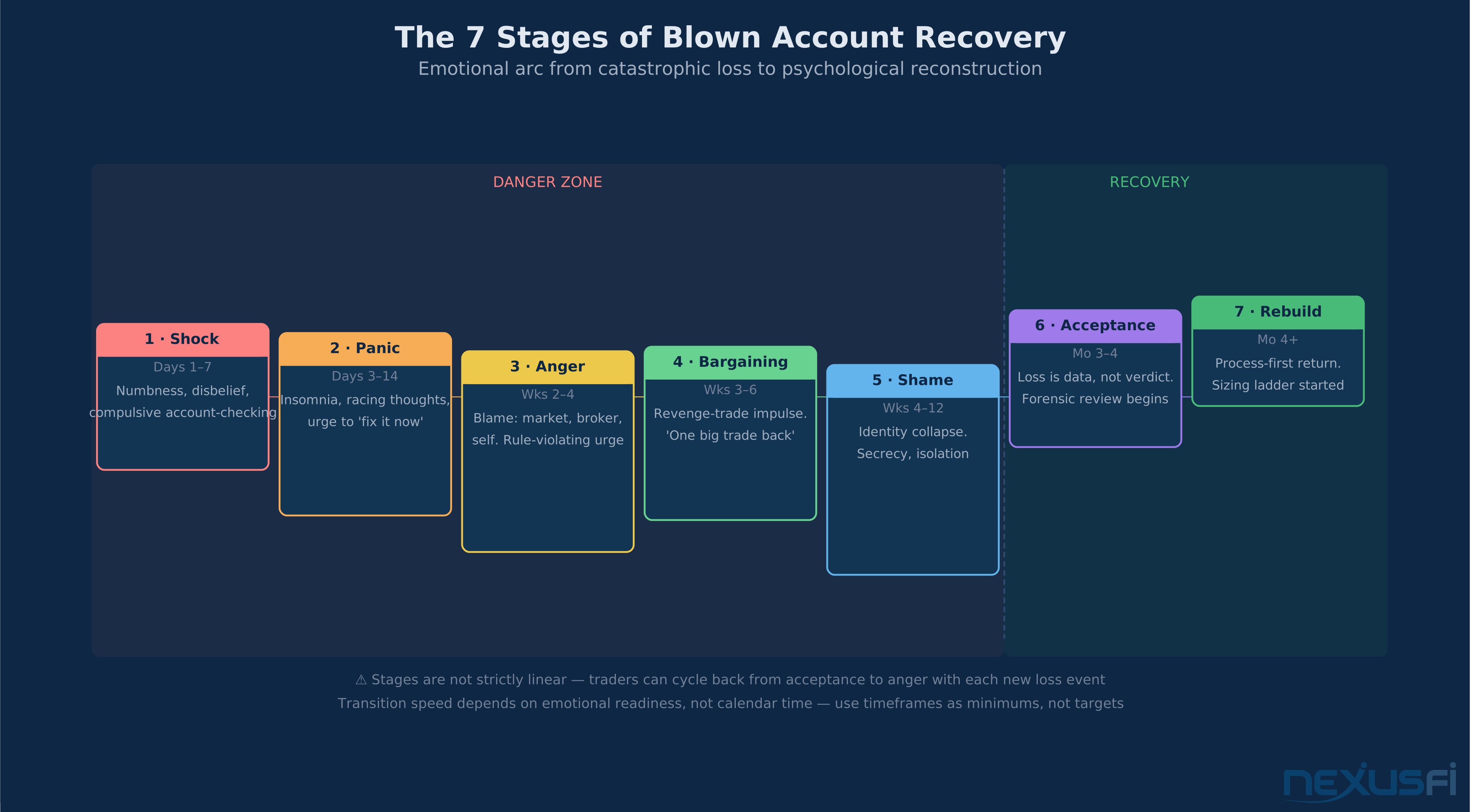
Overview The loss didn't break you. What broke you was the 45 seconds after it. The trade was wrong by $200, you took the stop, and then something happened i...
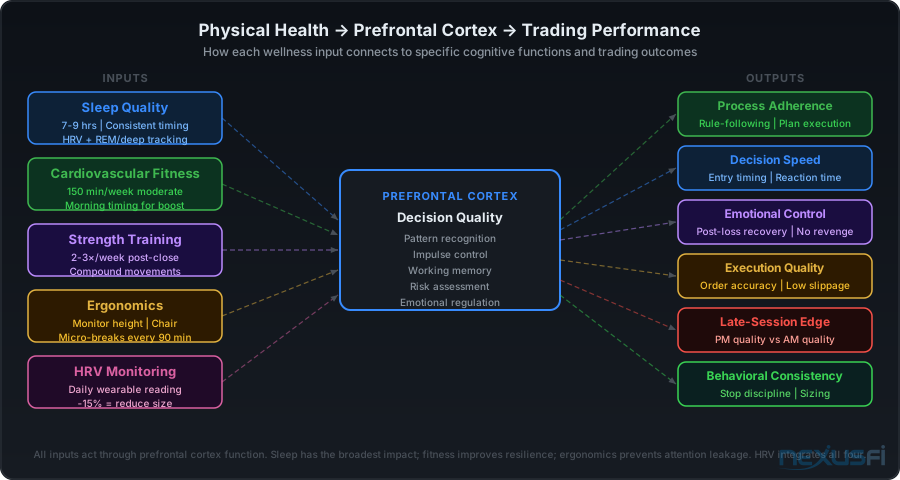
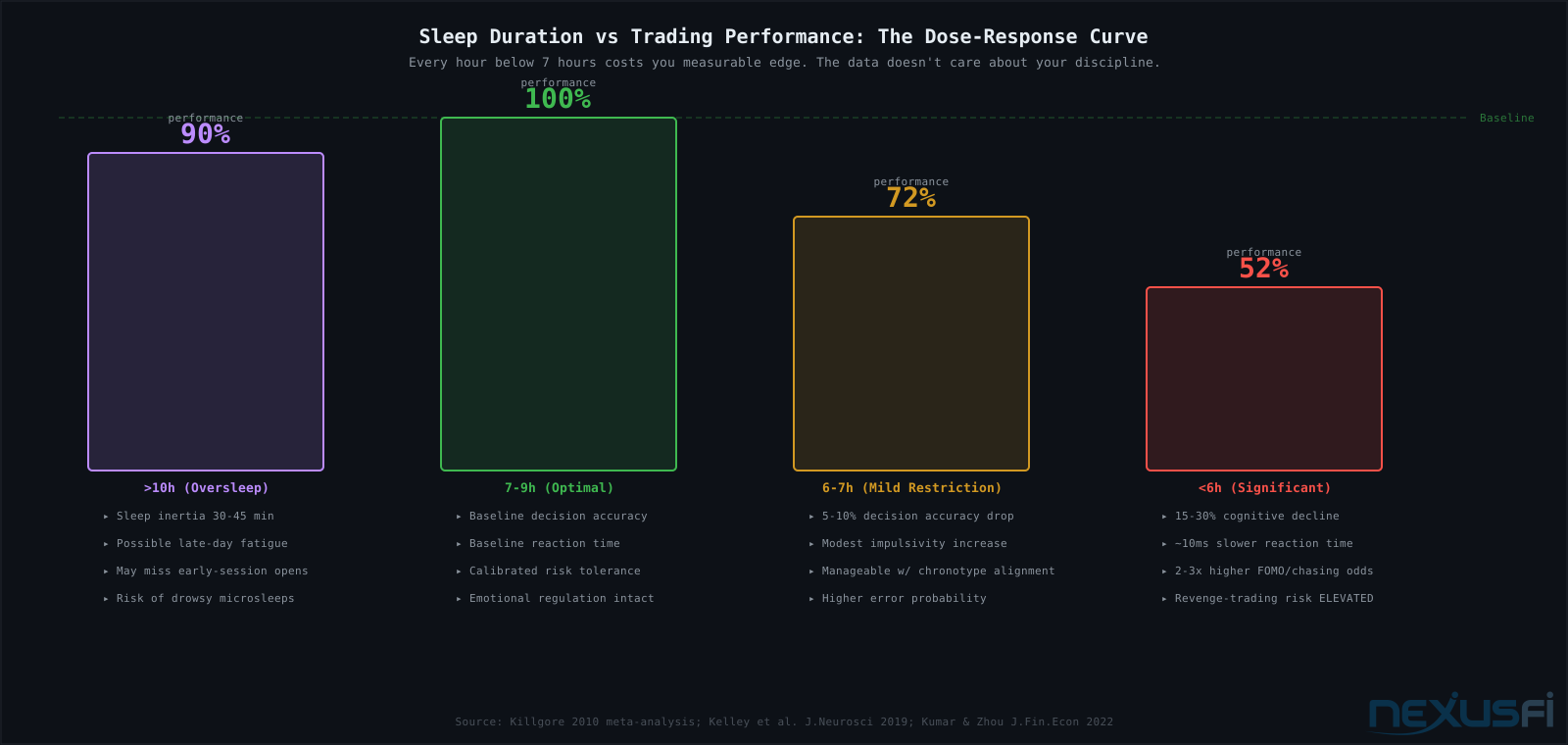
Overview The trade you remember most wasn't a bad read. It wasn't a wrong indicator or a poor setup. It was the one you took at 7:43 AM on four hours of slee...
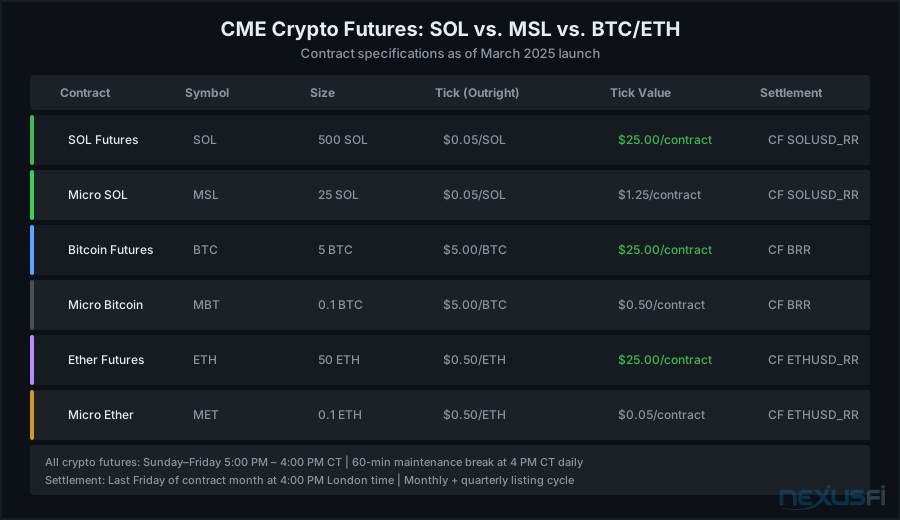
Overview Solana (SOL) futures launched on CME Group on March 17, 2025, giving futures traders regulated access to one of crypto's most actively developed net...
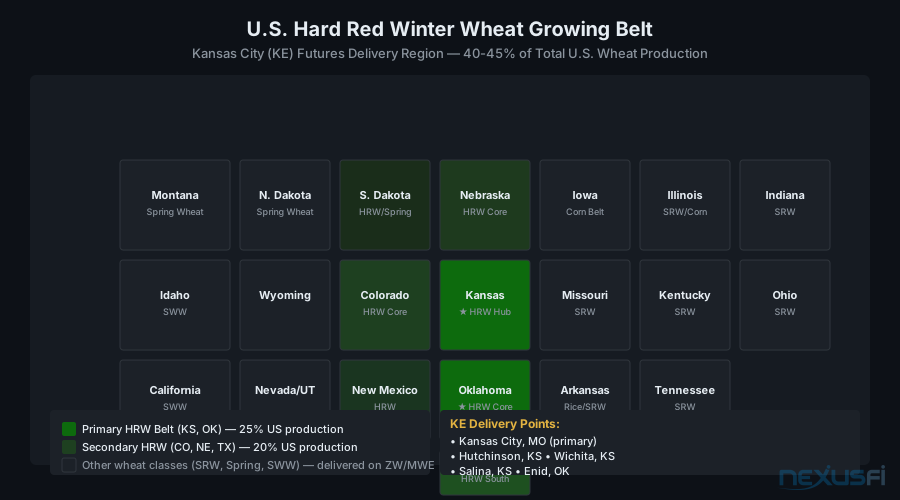
Overview Kansas City Hard Red Winter Wheat (KE) futures are the benchmark contract for the most widely grown wheat class in the United States. If you've eate...
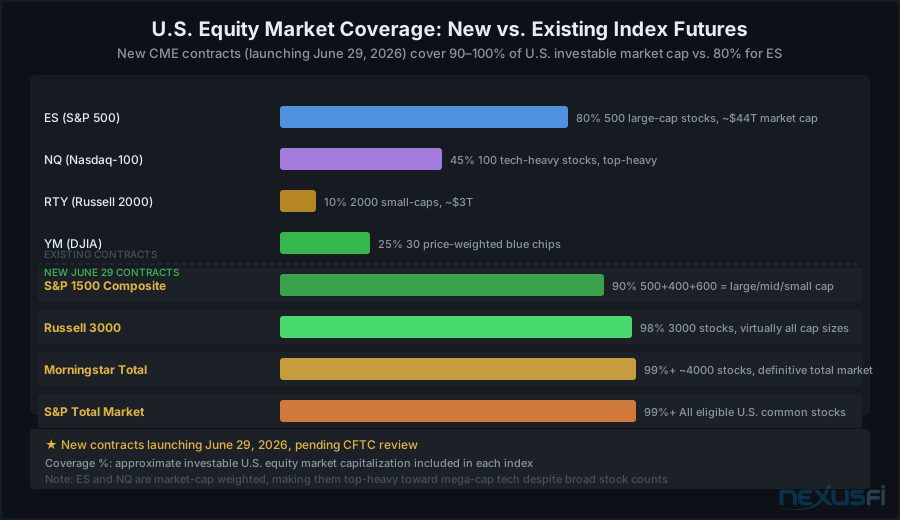
Overview CME Group is expanding its equity index futures lineup for the first time since 2011 with four new E-mini contracts launching June 29, 2026, pending...
\ Overview The livestock futures complex runs on two tracks. Most traders know Live Cattle (LE) futures -- the finished product, the contract that settles wh...
Sentiment data in futures markets is not about feelings. It is about positioning, hedging demand, and leverage distribution -- the measurable reality of wher...
Most futures traders focus on the wrong problem. They spend months hunting for the perfect indicator, the magic entry signal, or the setup that wins 70% of t...
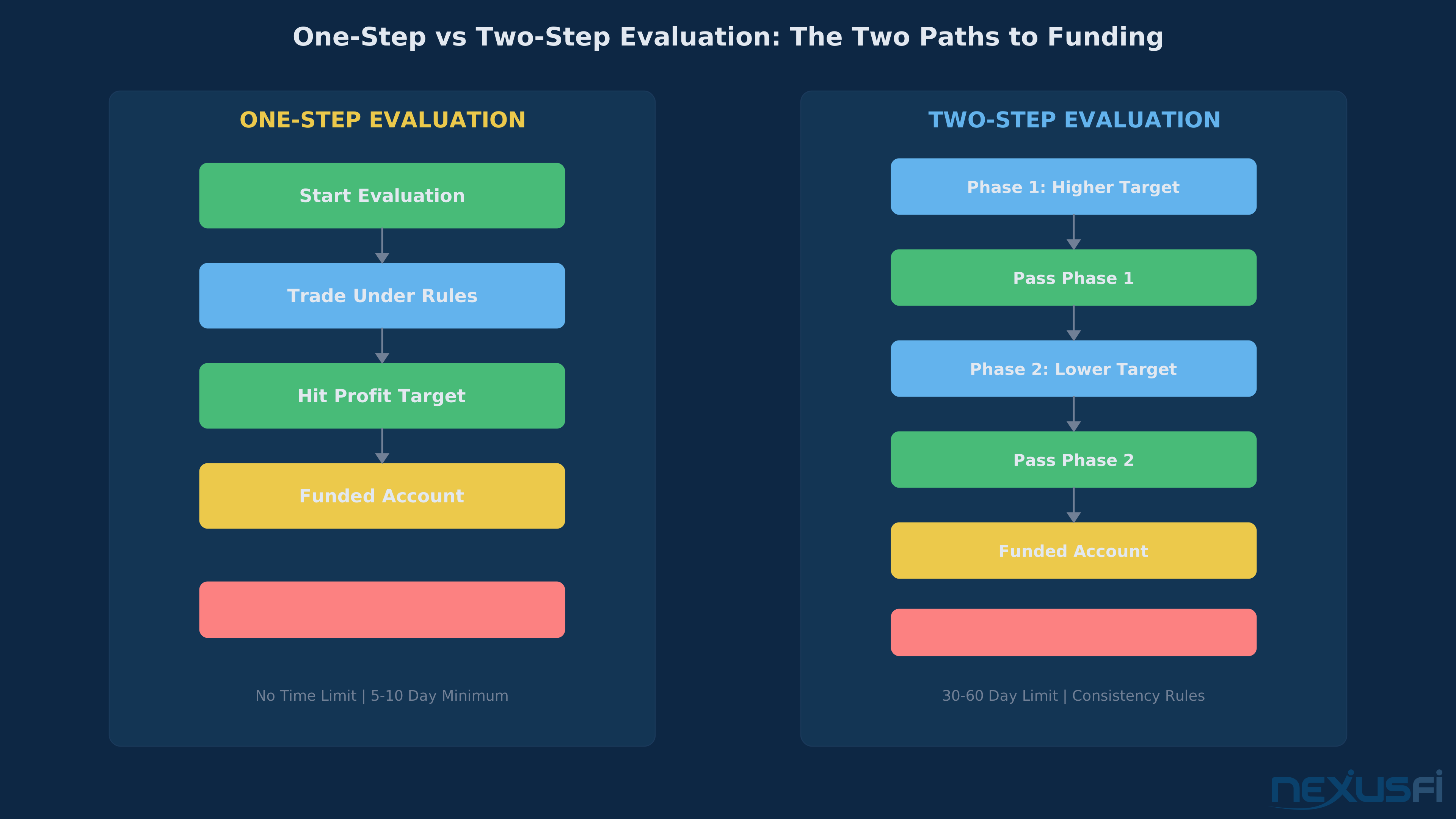
Every trader hitting the prop firm market faces the same fork in the road before they even place a trade: one-step or two-step evaluation? The marketing make...
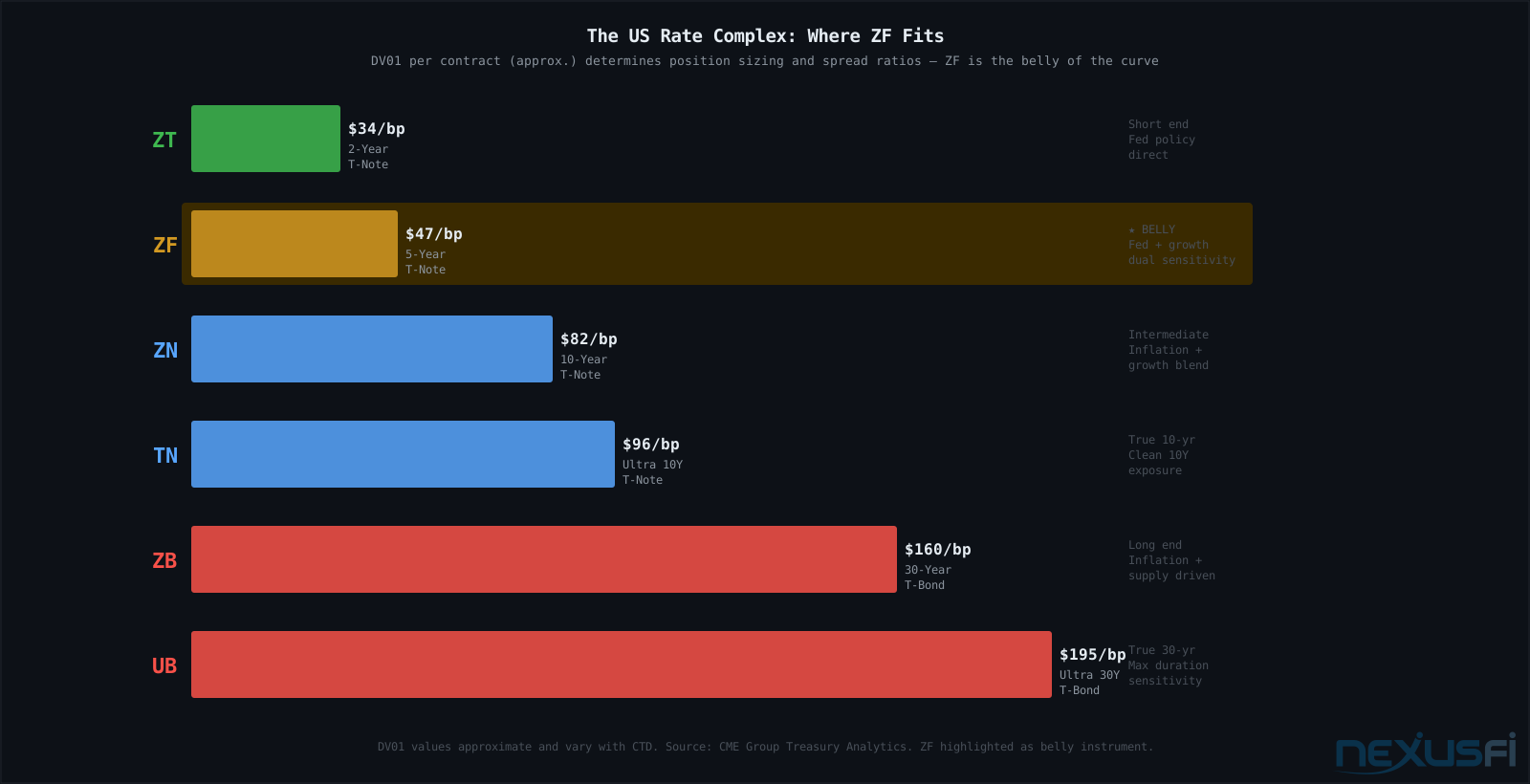
Overview The 5-Year Treasury Note futures contract -- ticker ZF on CME/CBOT -- is the belly of the US yield curve, and understanding it means understanding h...
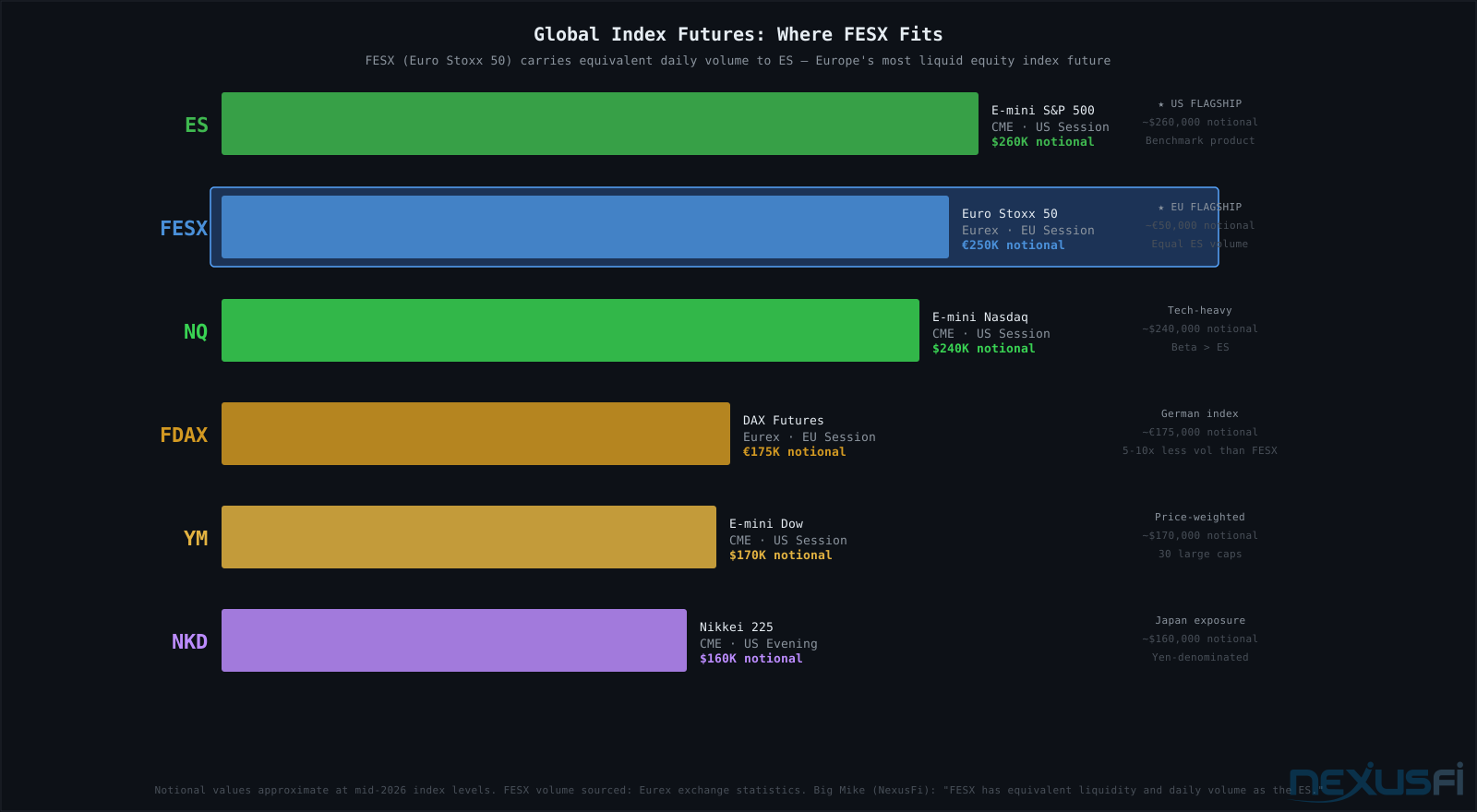
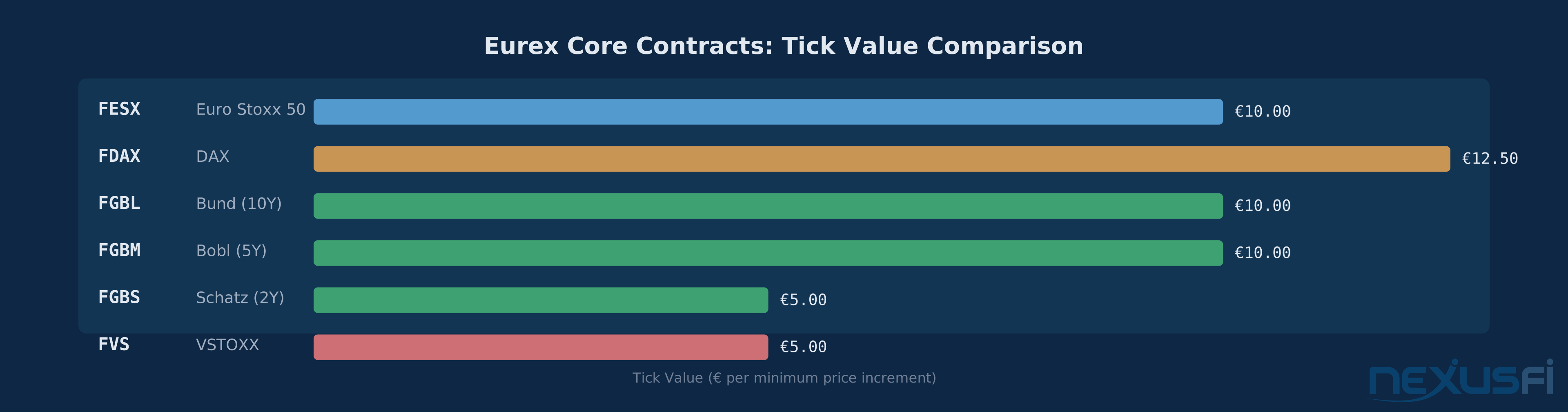
Overview The Euro Stoxx 50 futures contract -- ticker FESX on Eurex -- is the most liquid equity index futures contract in Europe and one of the most activel...
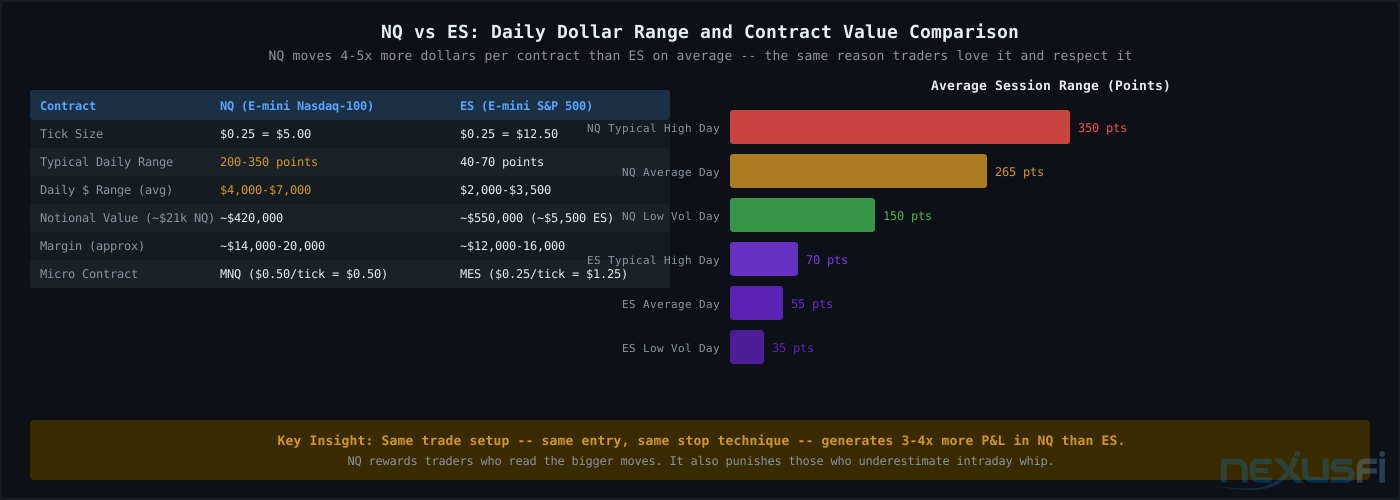
Overview NQ is not a faster ES. That's the most common mistake traders make when switching from the S&P 500 E-mini to the Nasdaq-100 E-mini -- they assume th...
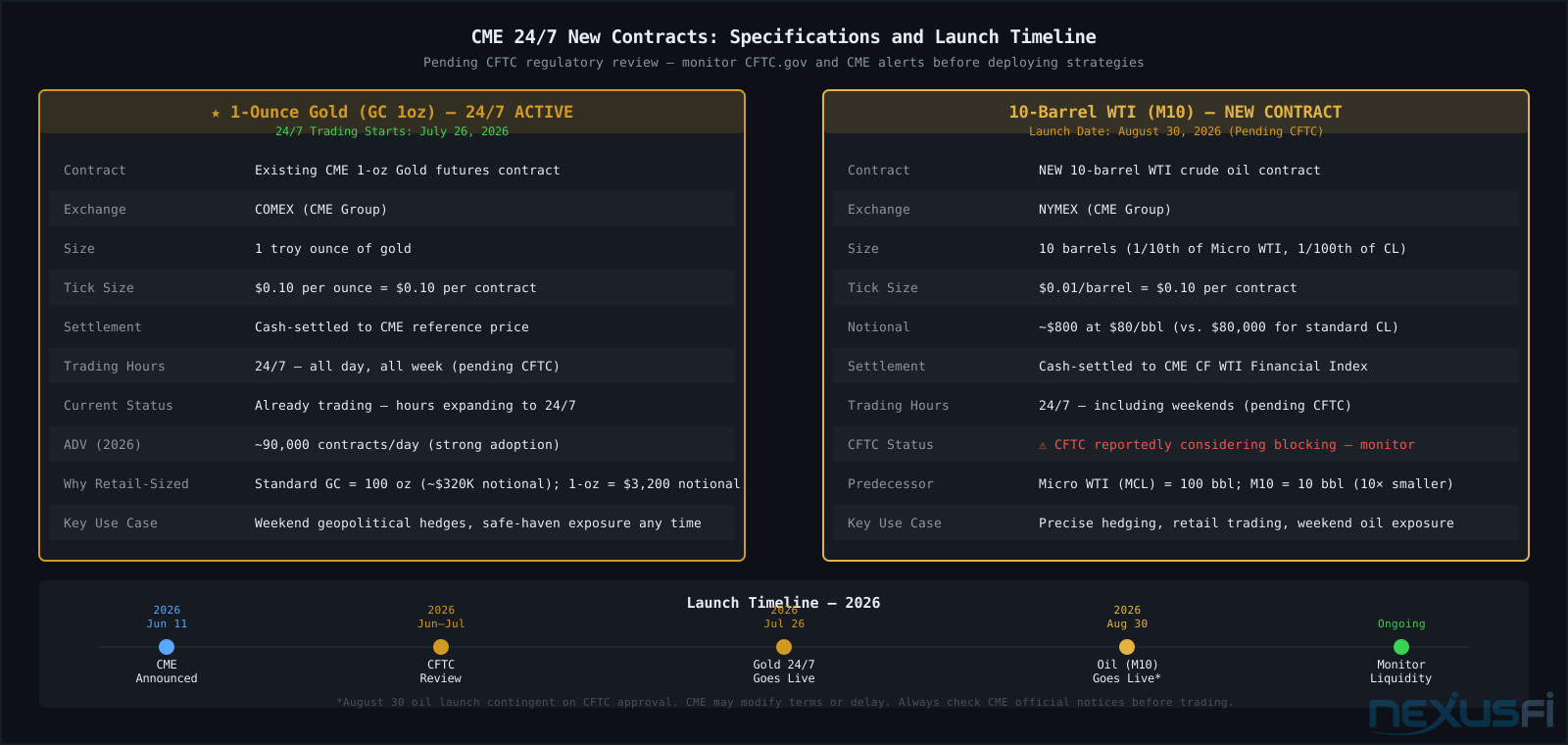
Overview On June 11, 2026, CME Group announced it will offer 24/7 trading for two new commodity contracts: a new 10-barrel WTI crude oil contract launching A...
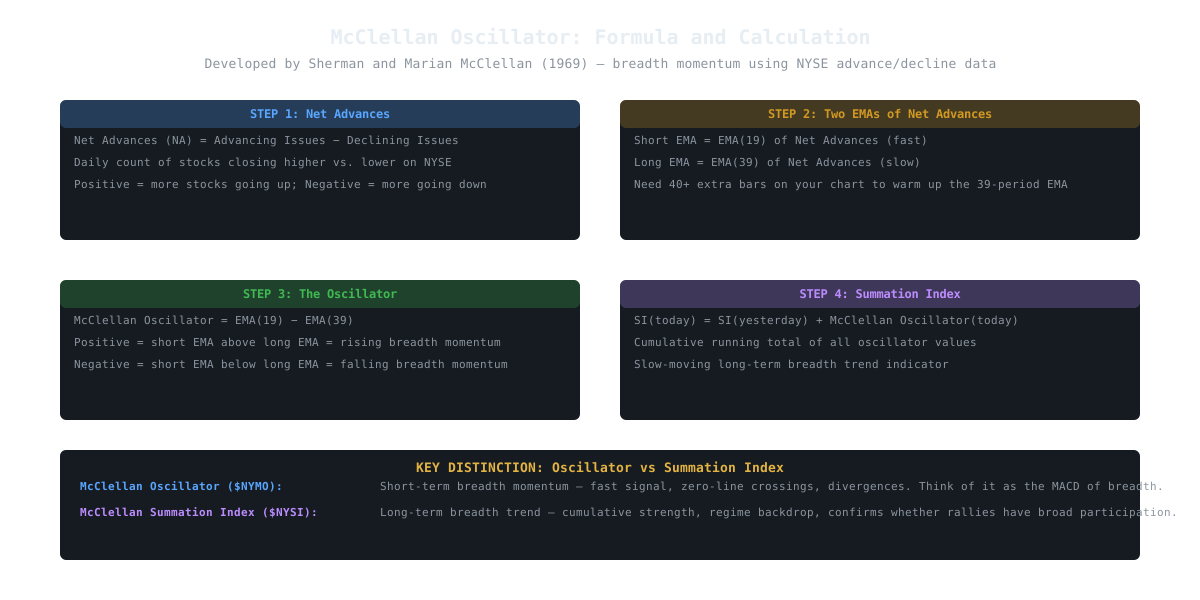
Overview The McClellan Oscillator measures the momentum of market breadth — the balance between advancing and declining stocks on the NYSE. Developed in 19...
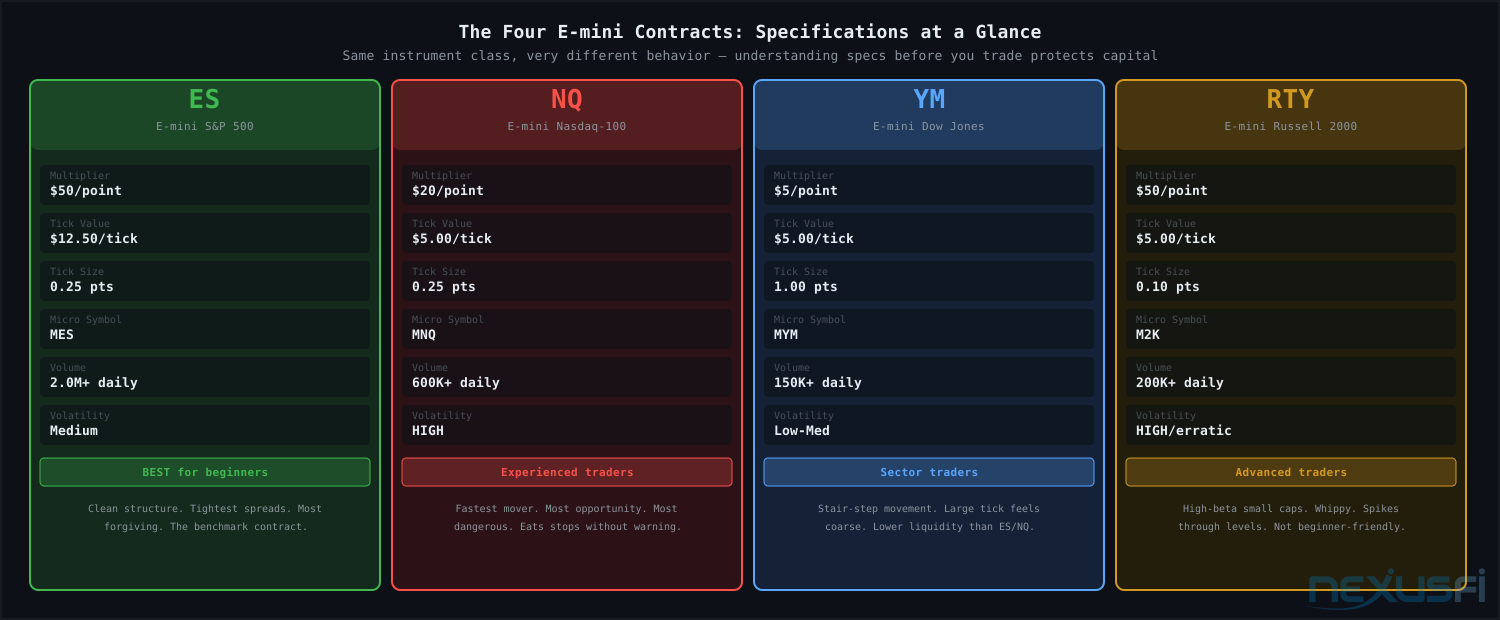
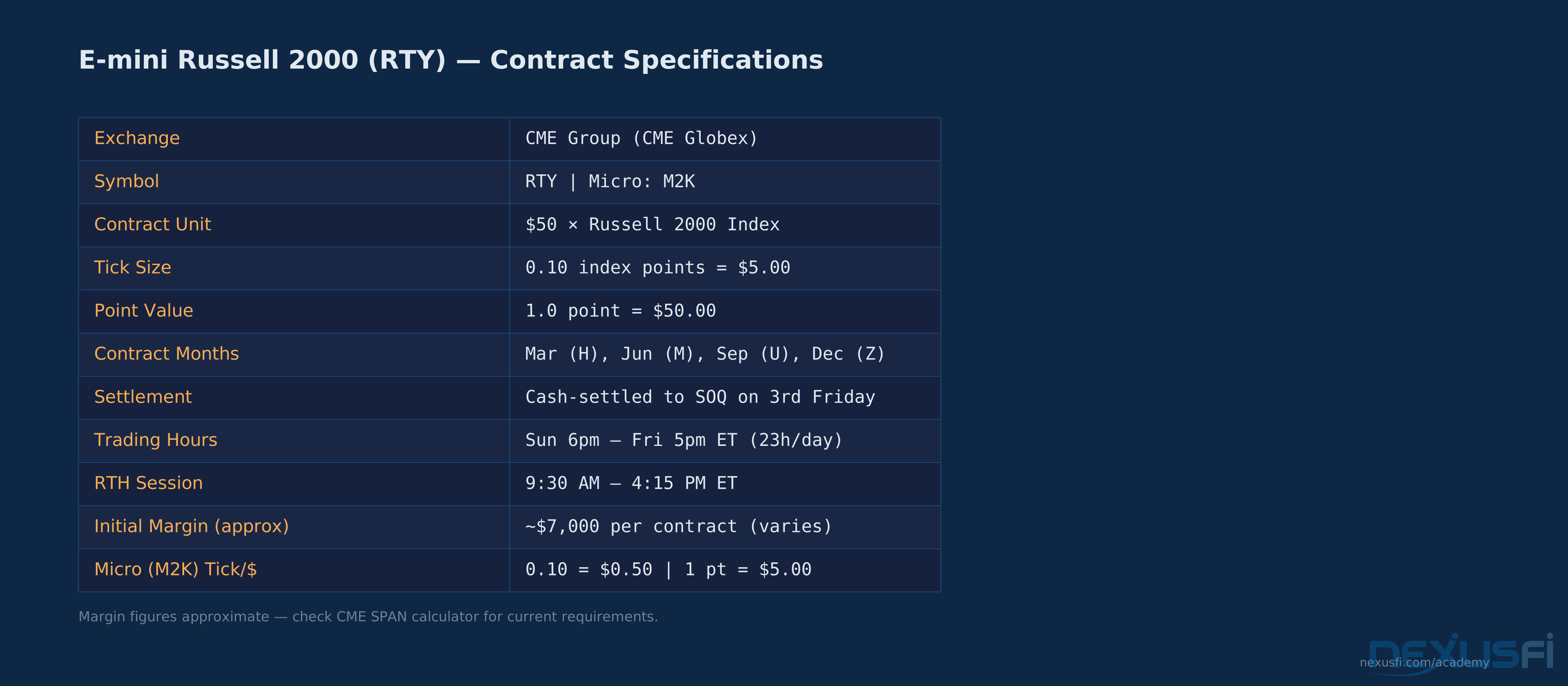
Overview Every new futures trader hits this question fast: ES or NQ? What about YM? What's RTY? You're looking at four different e-mini contracts tracking fo...
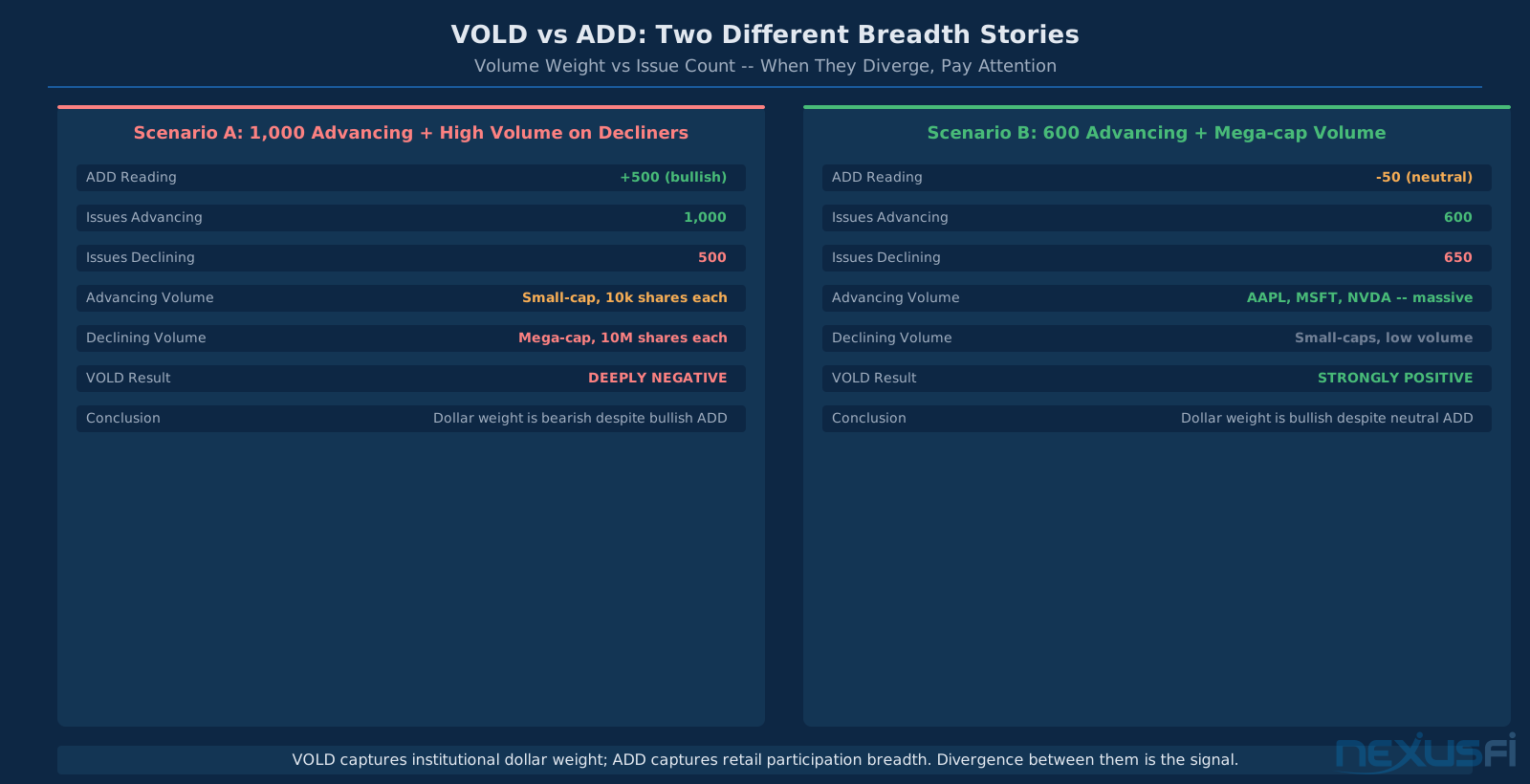
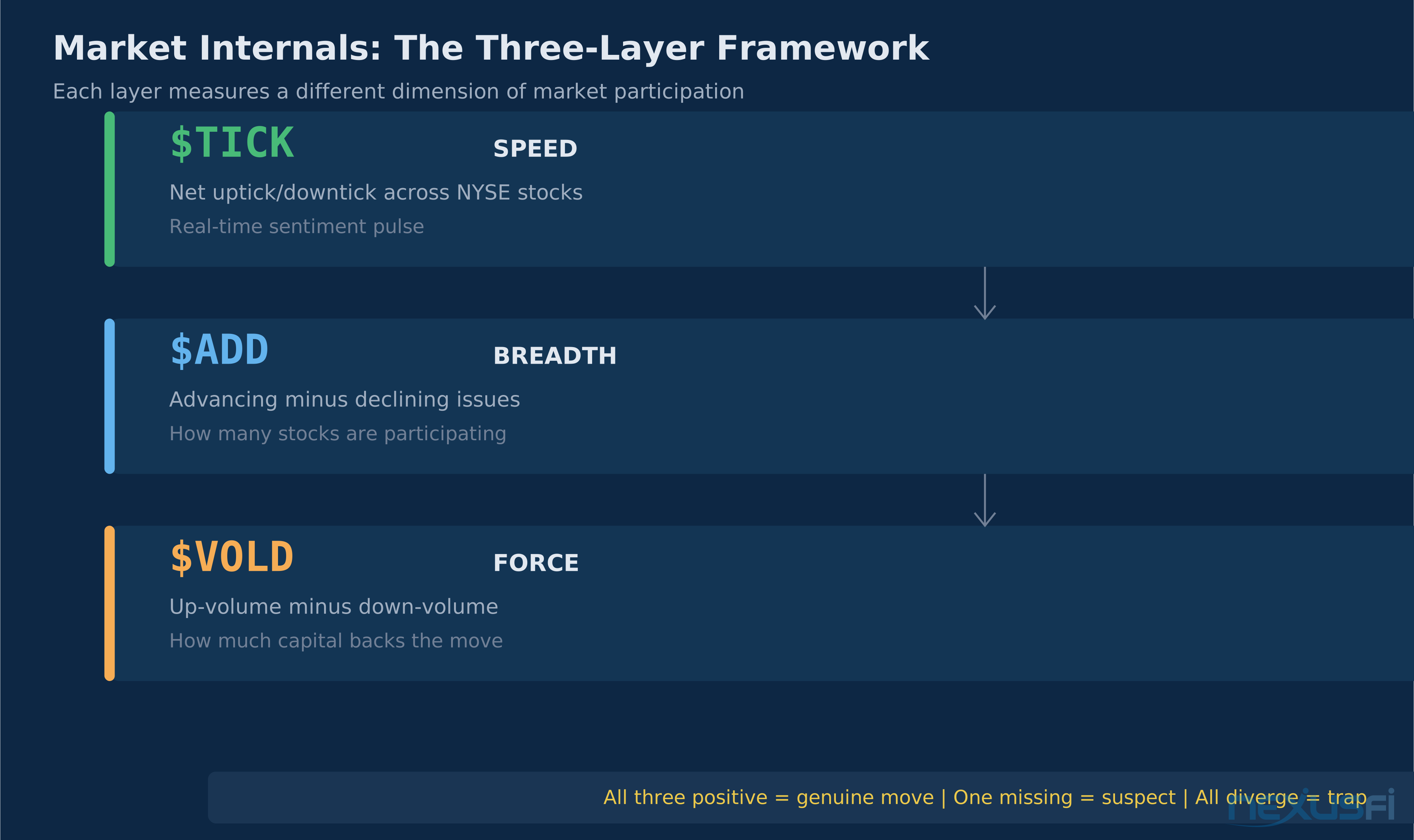
VOLD is the breadth indicator that fixes what ADD can't tell you. The NYSE Advance-Decline Line counts stocks -- how many are advancing, how many are declini...
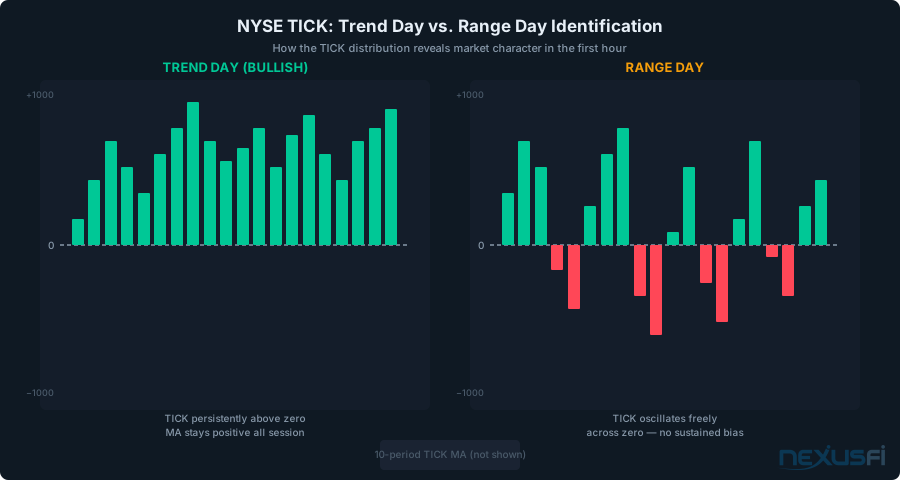
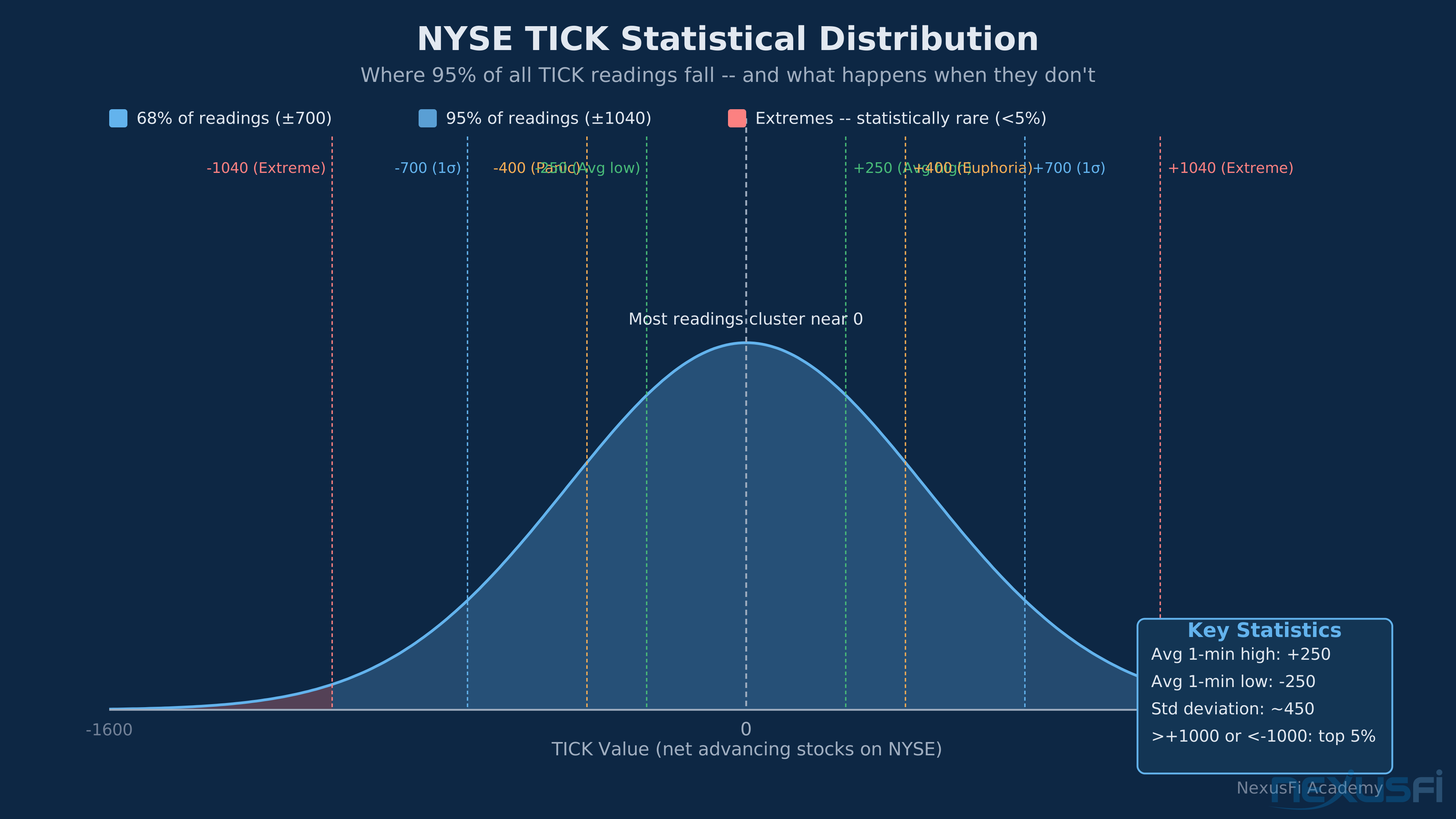
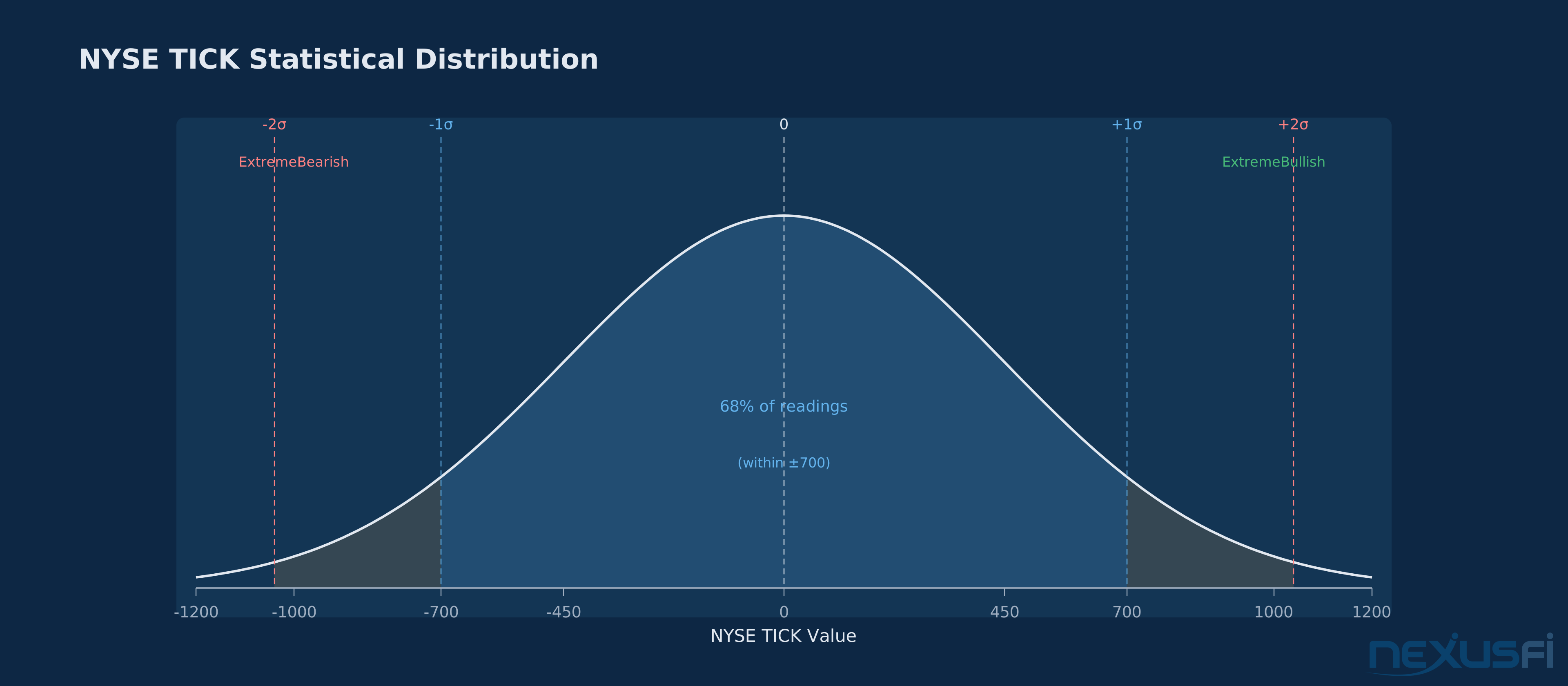
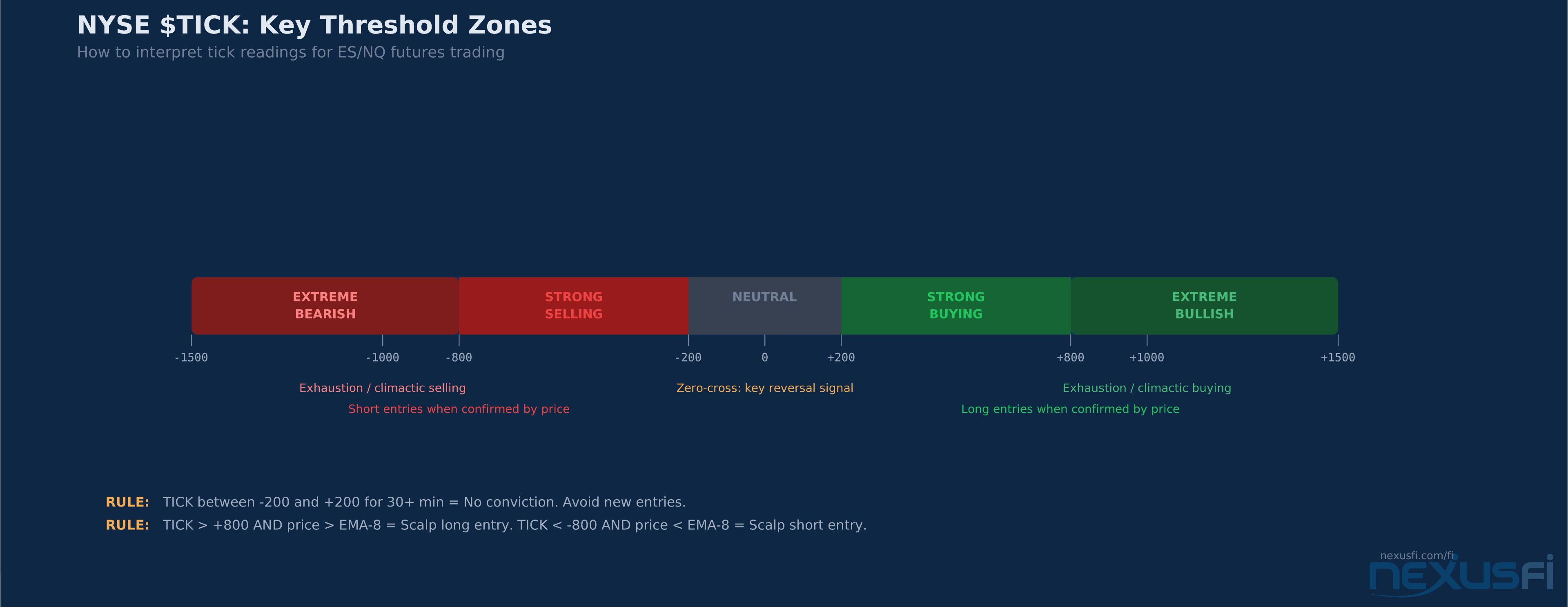
The NYSE TICK index is the market breadth indicator every ES and NQ futures day trader should have on their screen -- and most don't know how to use correctl...
Overview Most traders run one VWAP on their chart — the session VWAP that resets at 9:30 AM Eastern and gives them an intraday value reference. That's usef...
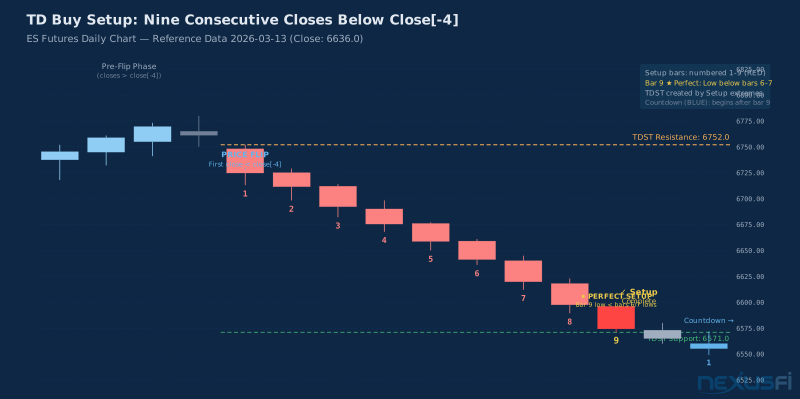
Tom DeMark originally developed TD Sequential in the 1970s while working with commodity traders. The methodology was later refined and commercialized through...
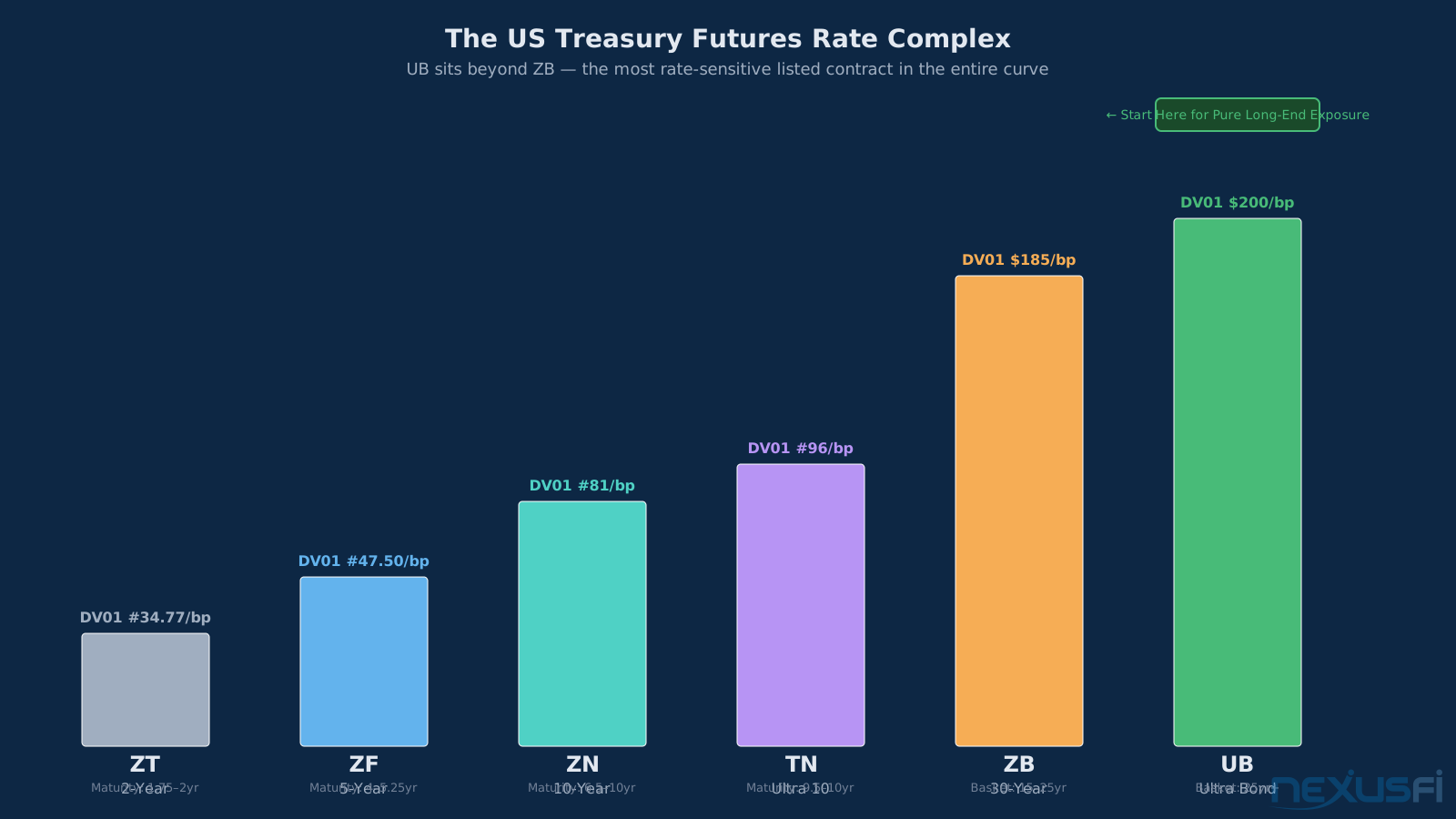
Overview The Ultra T-Bond futures contract (UB) is the most rate-sensitive listed Treasury instrument on the planet. While ZB (30-Year Treasury Bond futures)...
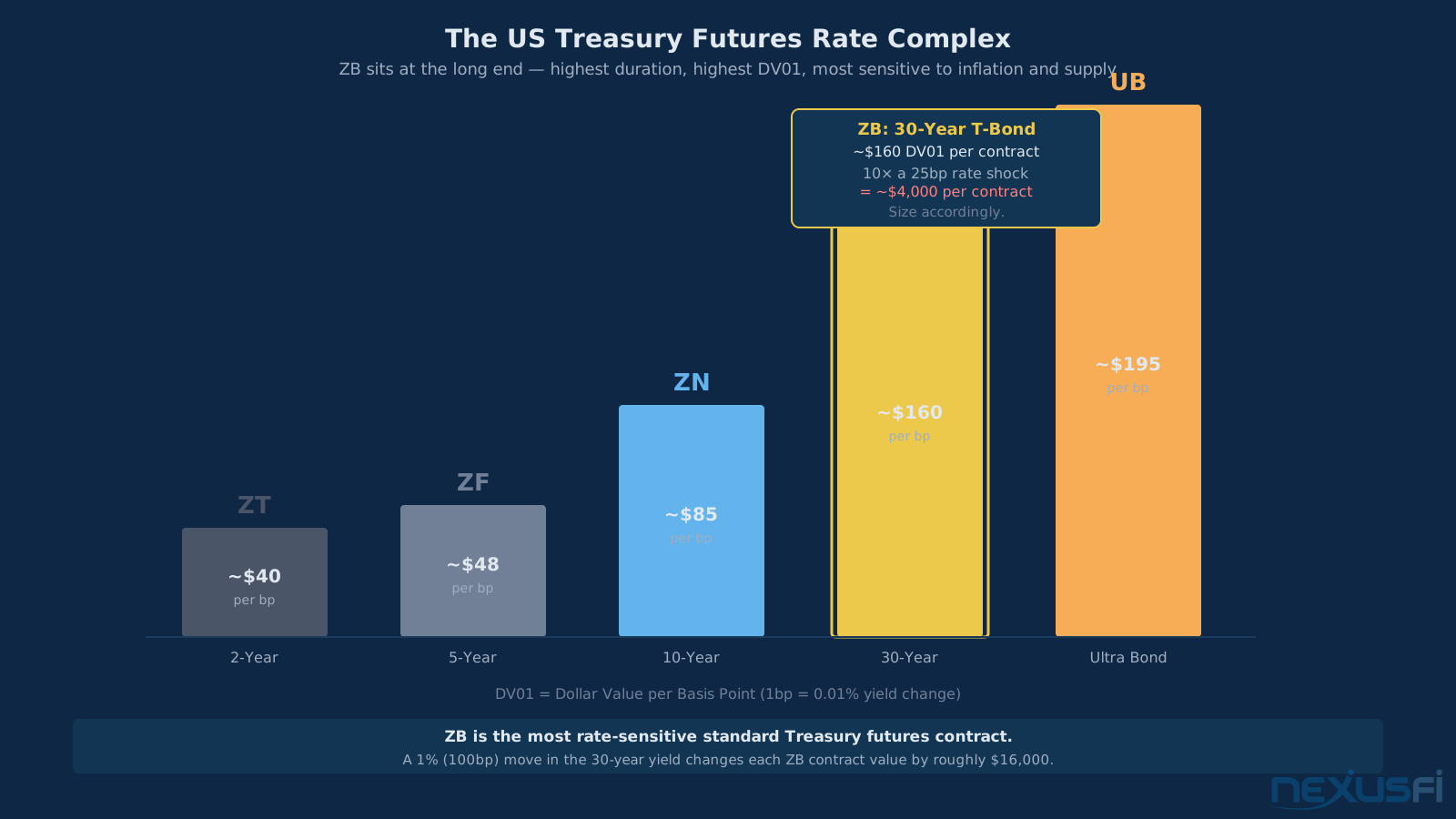
Overview The 30-Year US Treasury Bond futures contract -- ticker ZB on CME's CBOT exchange -- is the apex predator of the US rate complex. When you're in ZB,...
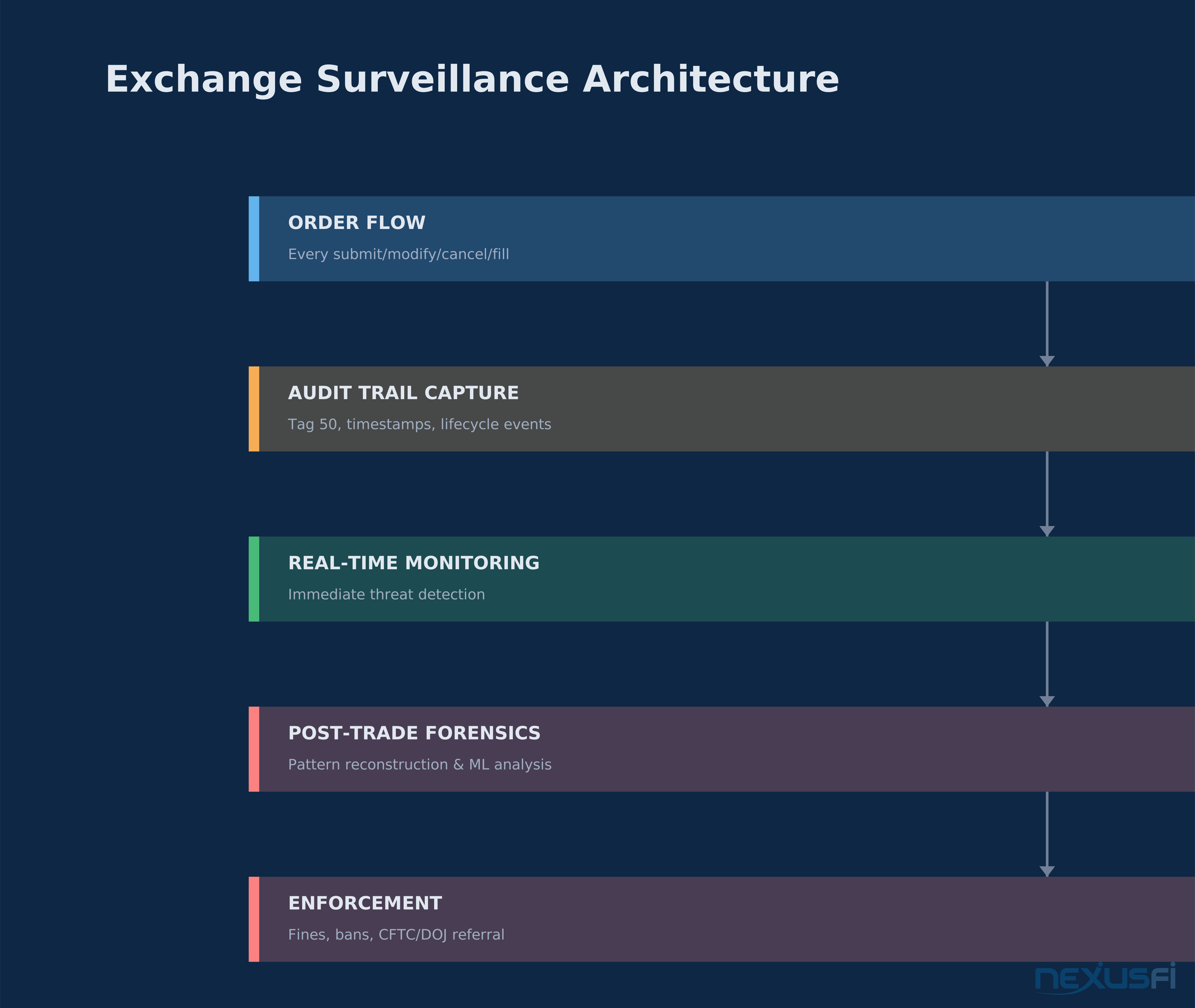
Every order you submit to a futures exchange is recorded, timestamped, and analyzed. Not just the fills -- every submission, every modification, every cancel...
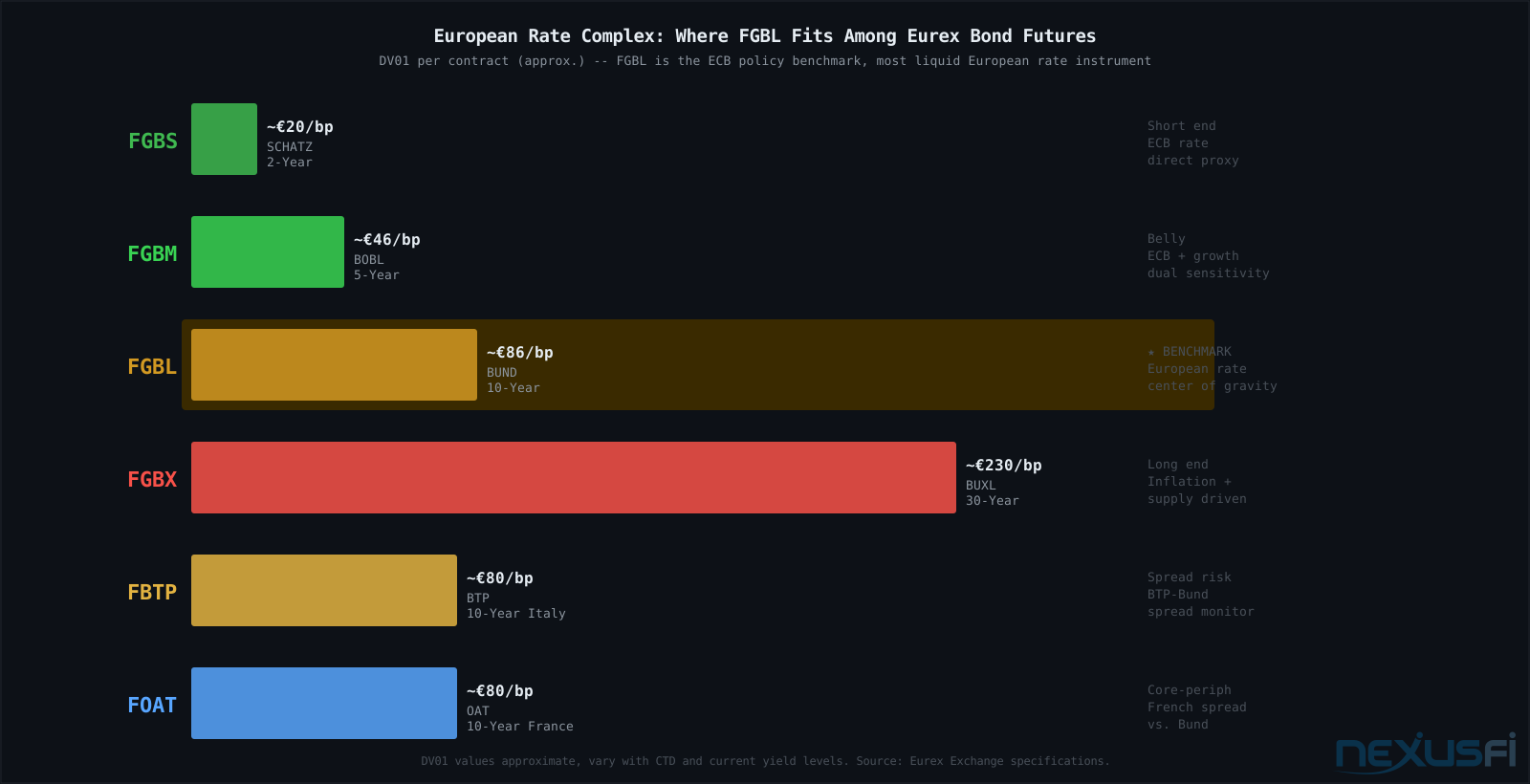
Overview If you want clean, liquid exposure to ECB monetary policy without touching equities, there's one instrument that belongs in every global macro trade...
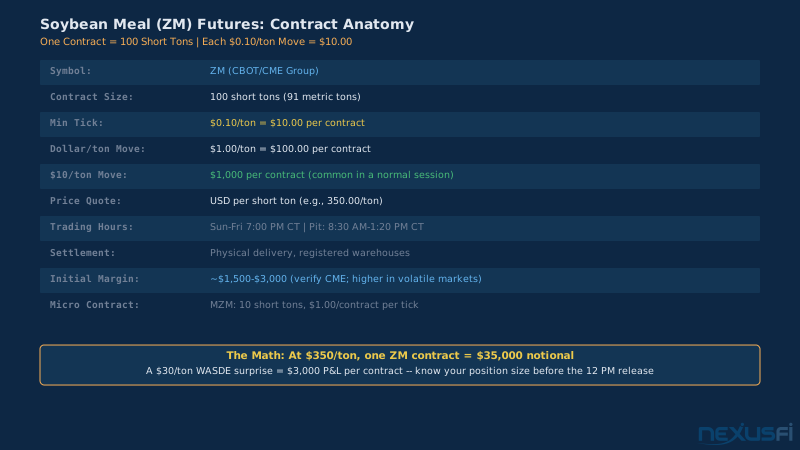
Overview Contract anatomy: at $350/ton, one ZM contract is $35,000 notional -- a $30/ton WASDE surprise is $3,000 P&L. Soybean meal is the world's dominant h...
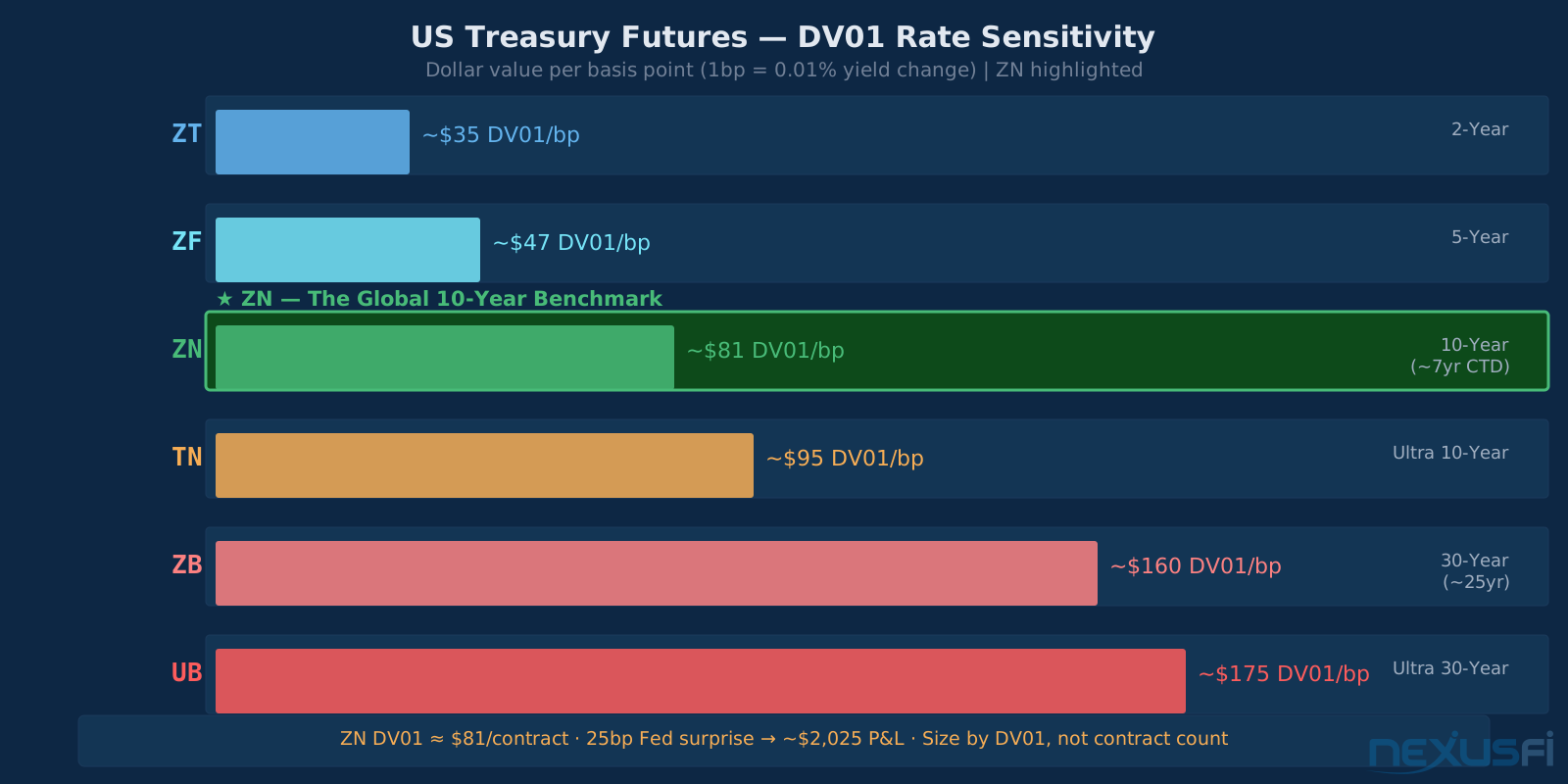
Overview The 10-Year Treasury Note futures contract -- ticker ZN on CME/CBOT -- is the world's benchmark interest rate instrument. When the financial press s...
Arbitrage is the practice of exploiting price discrepancies for the same asset in different markets. In prediction markets, this takes two main forms: 1. Cro...
Most traders fail not because they picked the wrong indicator or missed a setup. They fail because they never built a system for making decisions under press...
Most futures traders who've been at it for a year think they have edge. Almost none of them have measured it. That's not an insult -- it's just the uncomfort...
The forum thread "Primary source of income: how many have made it?" has accumulated 1.2 million views on NexusFi since 2010. That's not a number about techni...
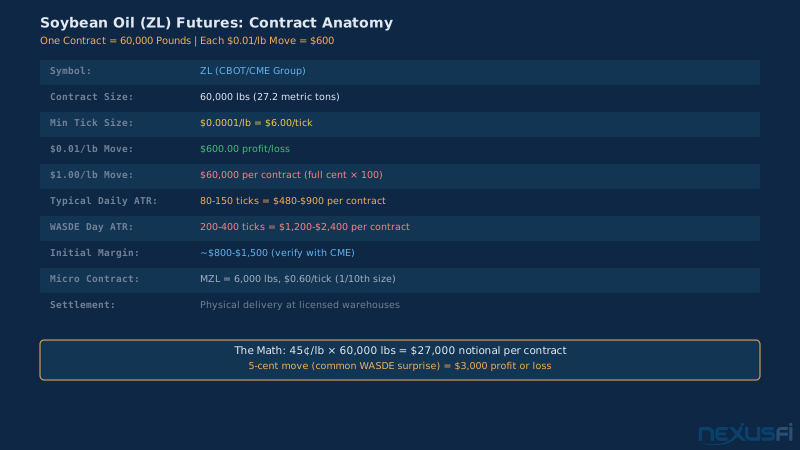
Overview Contract anatomy: a $0.01/lb move equals $600 -- size ZL accordingly before your first order. Soybean oil is the most widely consumed vegetable oil ...
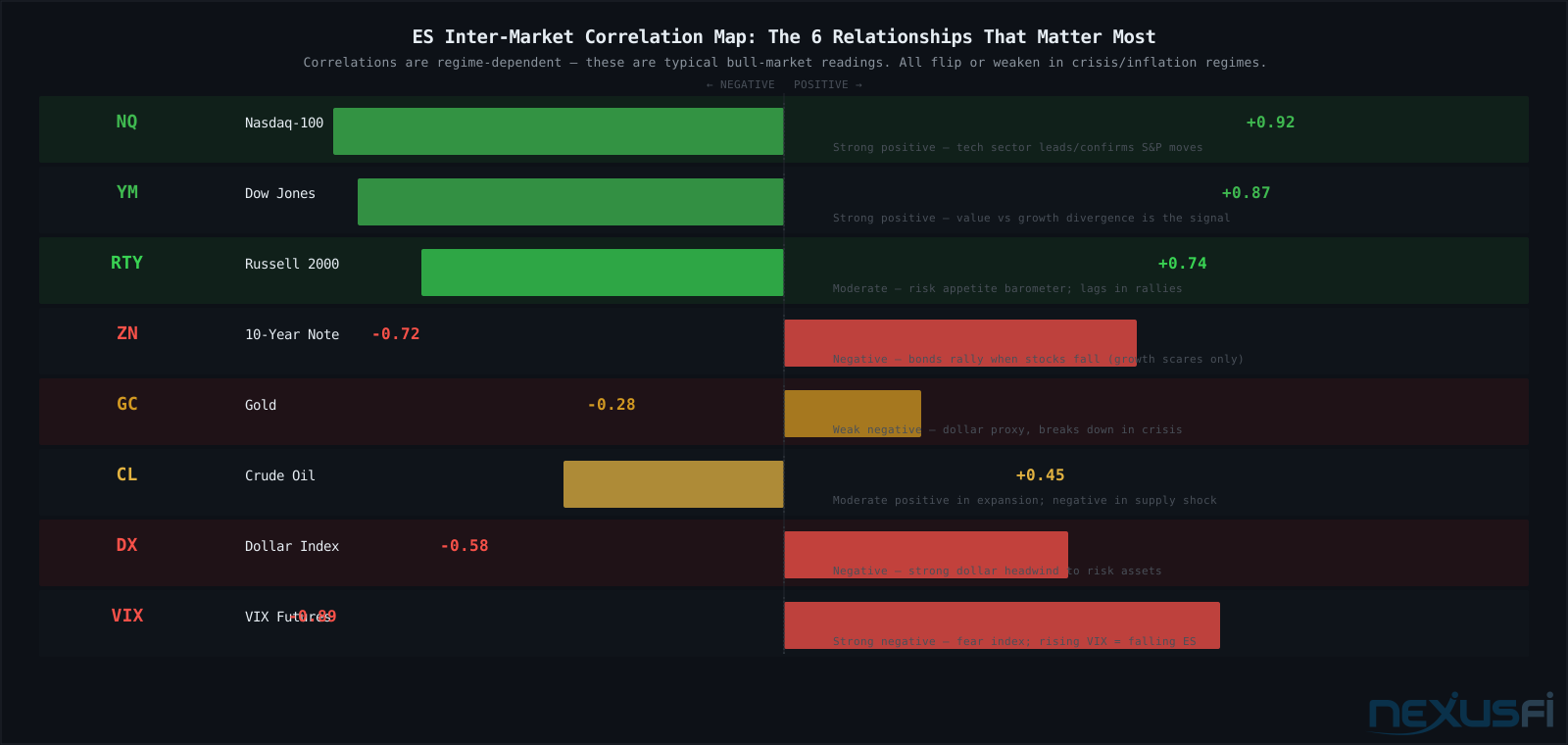
Overview Every futures market is connected. ES doesn't move in isolation -- it's responding to pressure from Treasury yields, the dollar's strength, what NQ ...
Overview If you want to know what the market thinks the Federal Reserve is going to do next, there's one futures contract that tells you with more precision ...
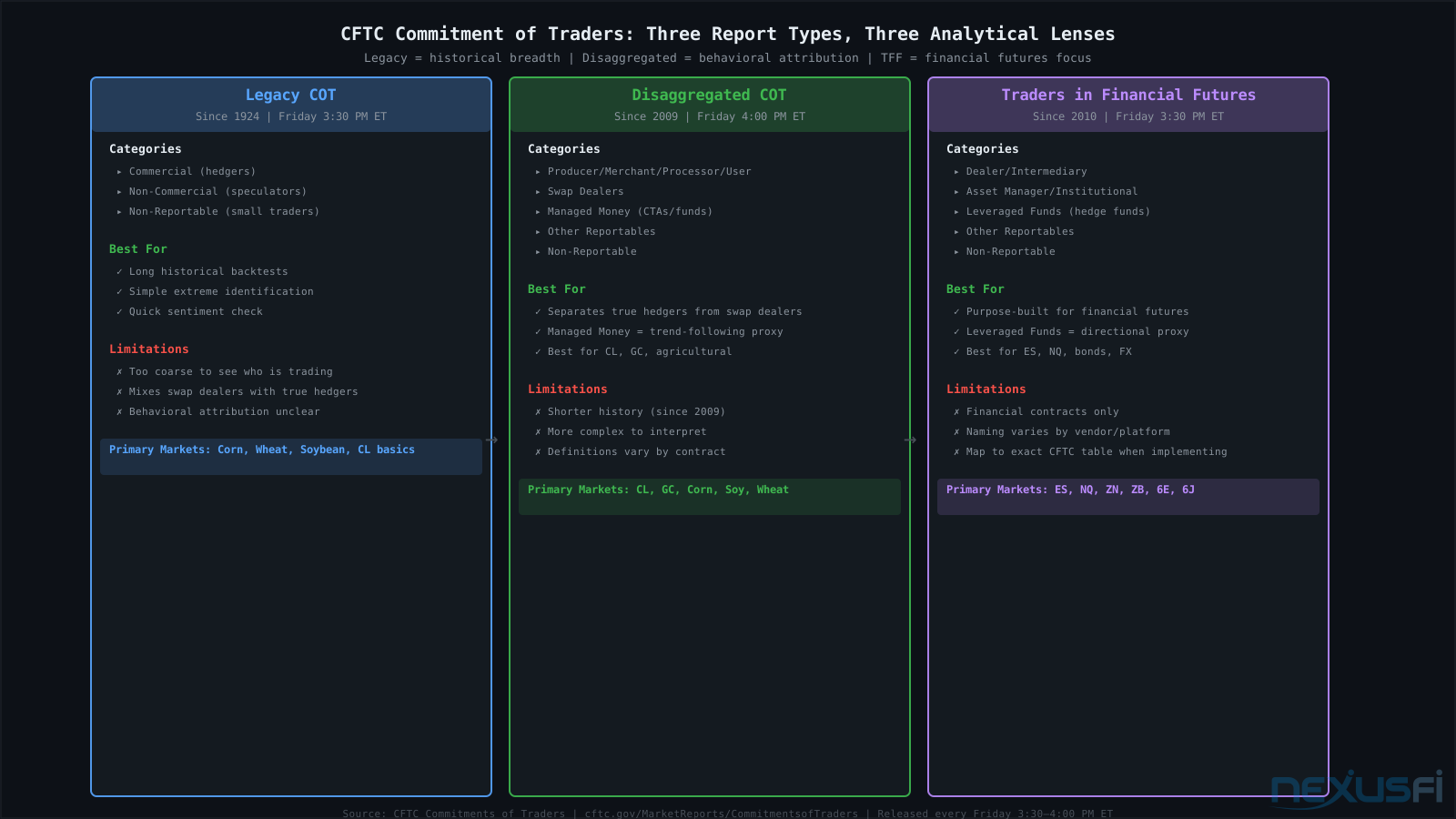
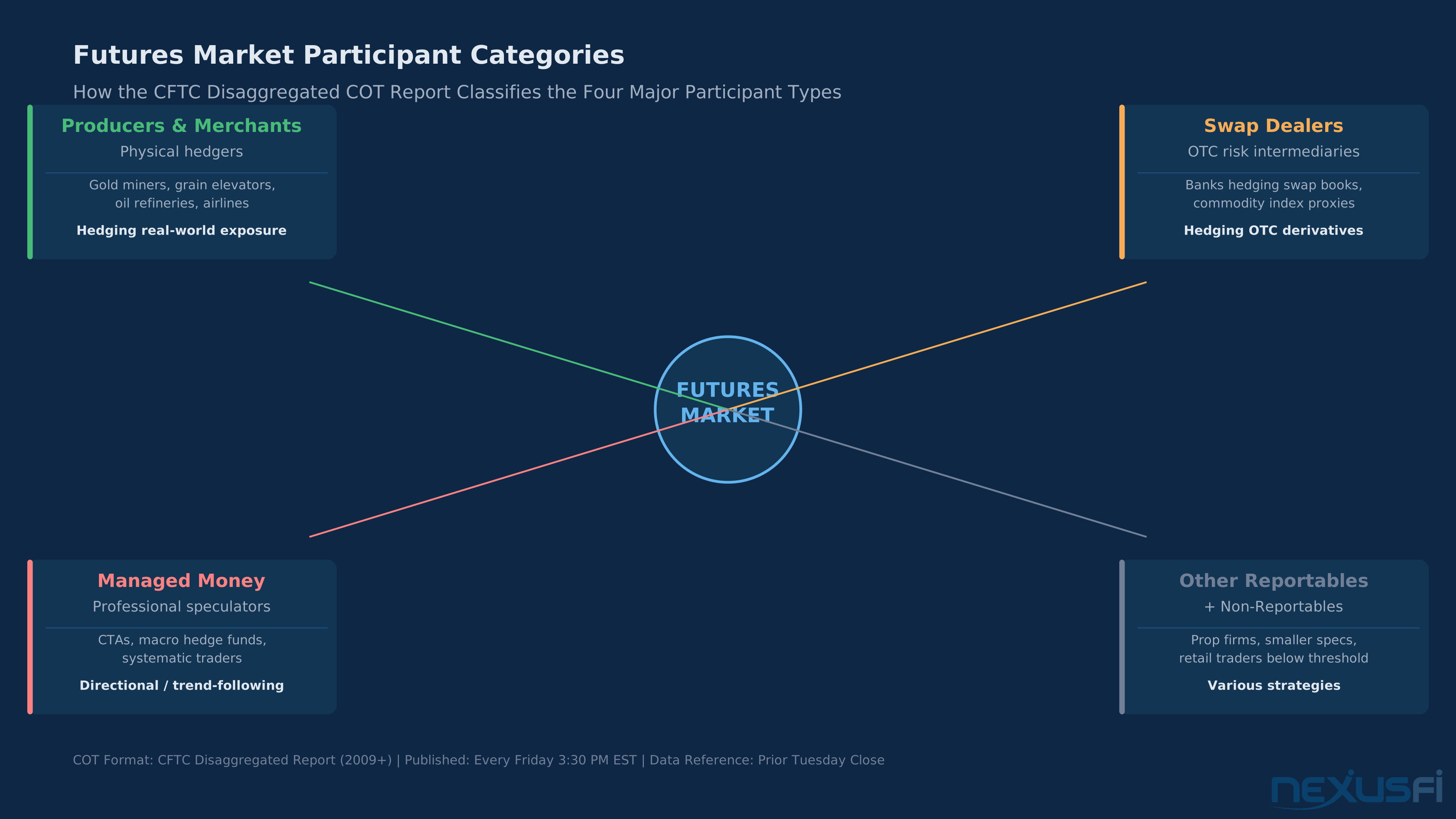
Overview Every Friday at 3:30 PM ET, the CFTC publishes one of the most valuable free datasets in futures trading: the Commitment of Traders (COT) report. Th...
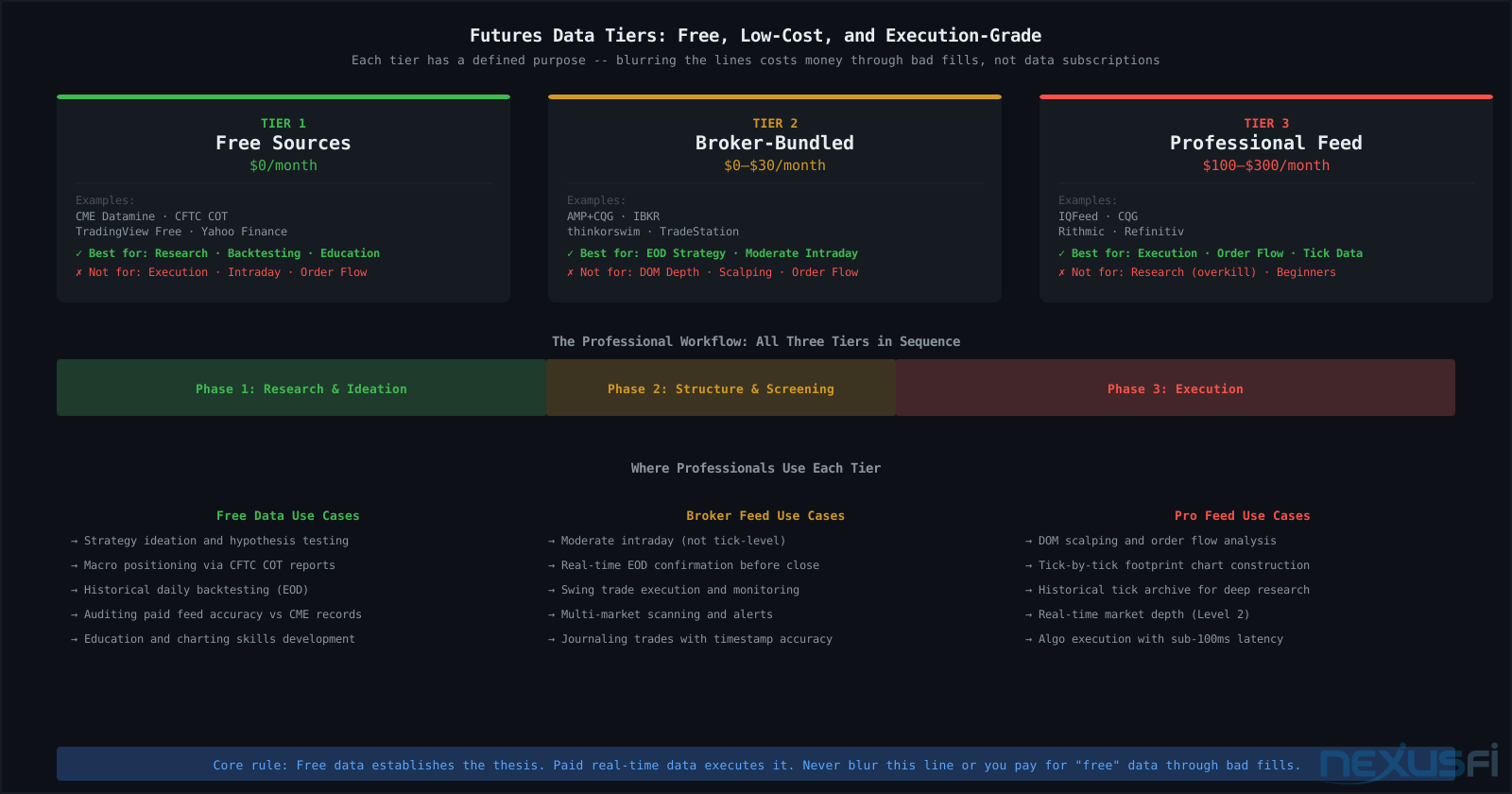
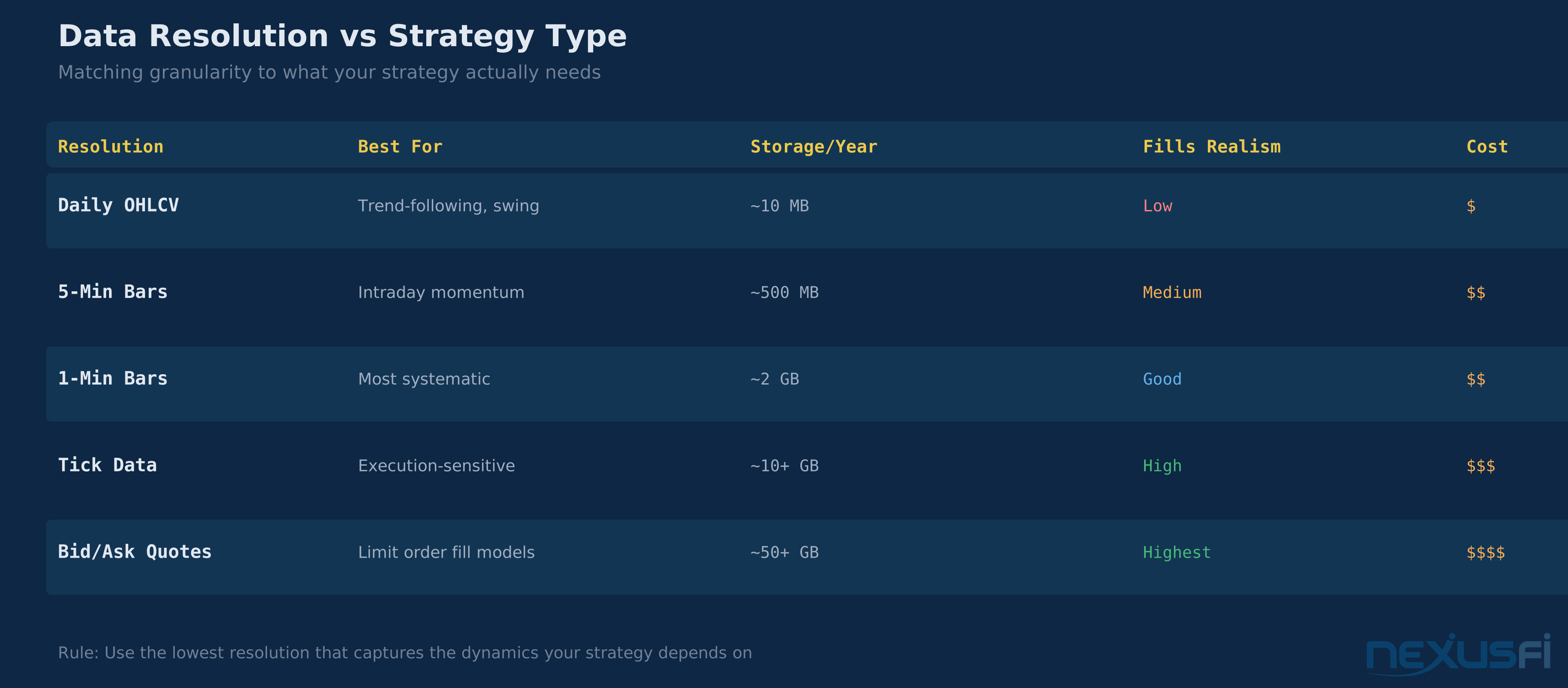
Overview Data is the raw material of every trading decision. And for most retail futures traders, the first question isn't "which data is best" but "do I act...
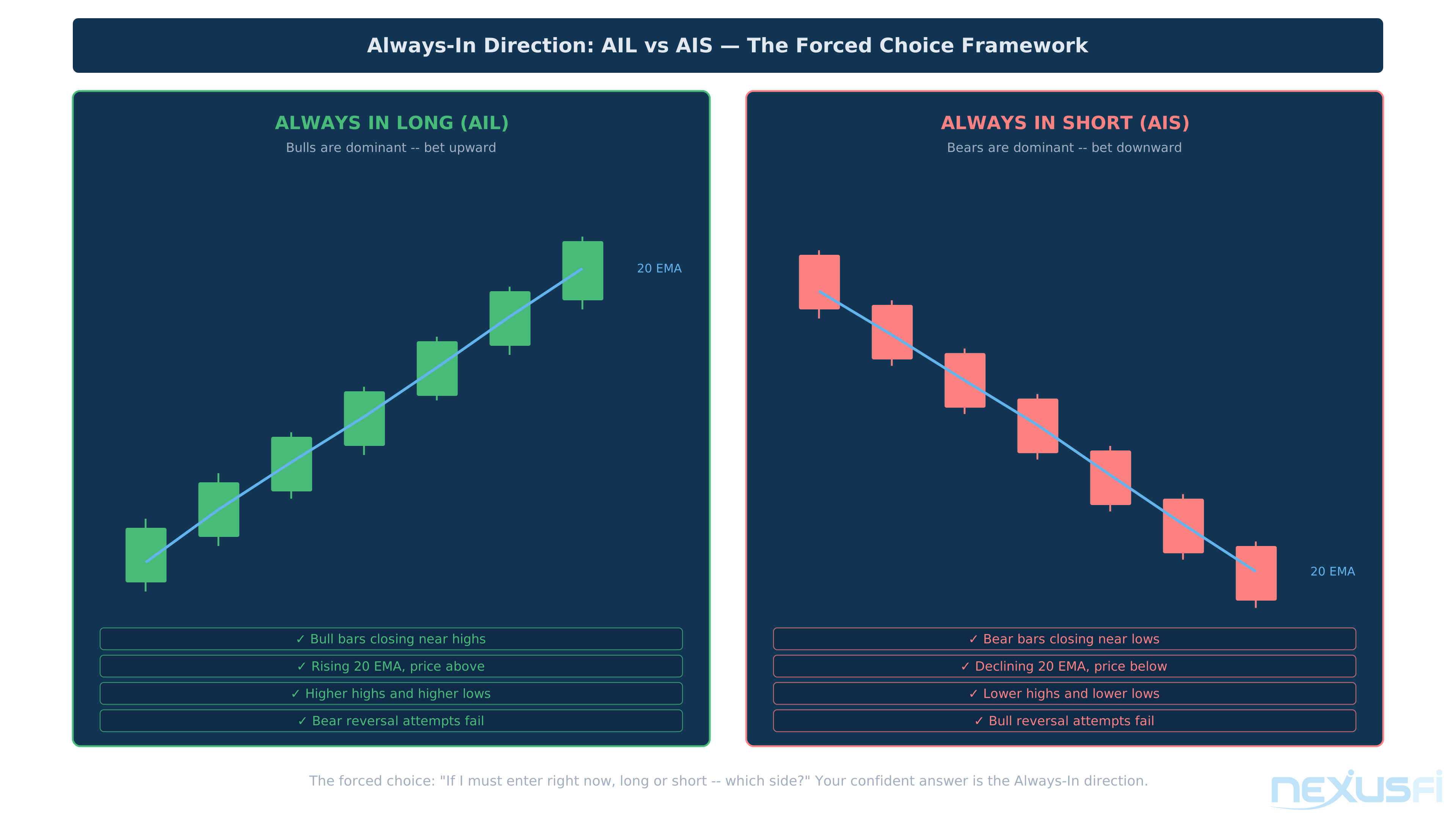
Most traders watch the market and ask "is this a good setup?" Al Brooks asks a harder question: "If I had to be in a trade right now -- long or short, no cho...
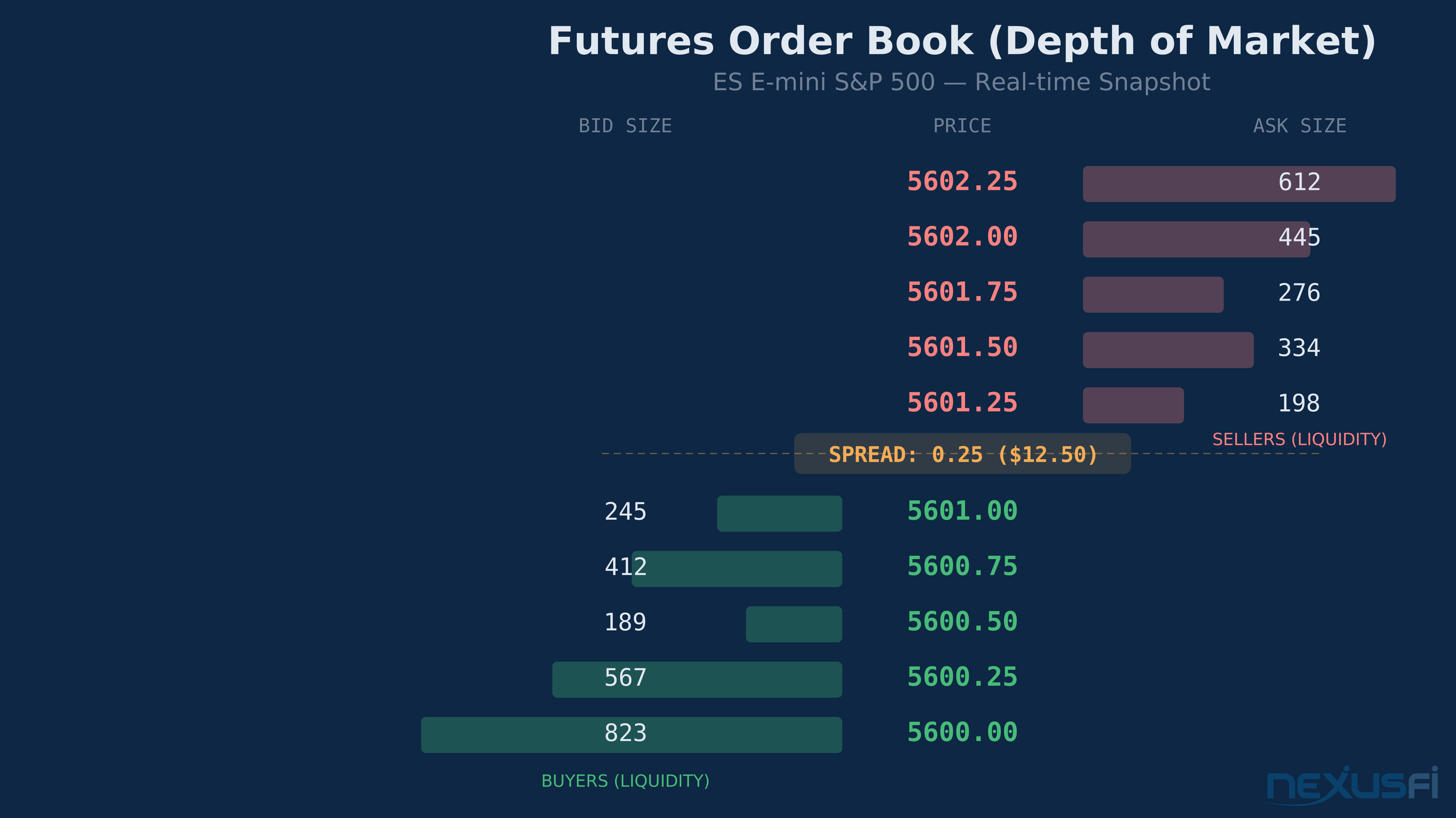
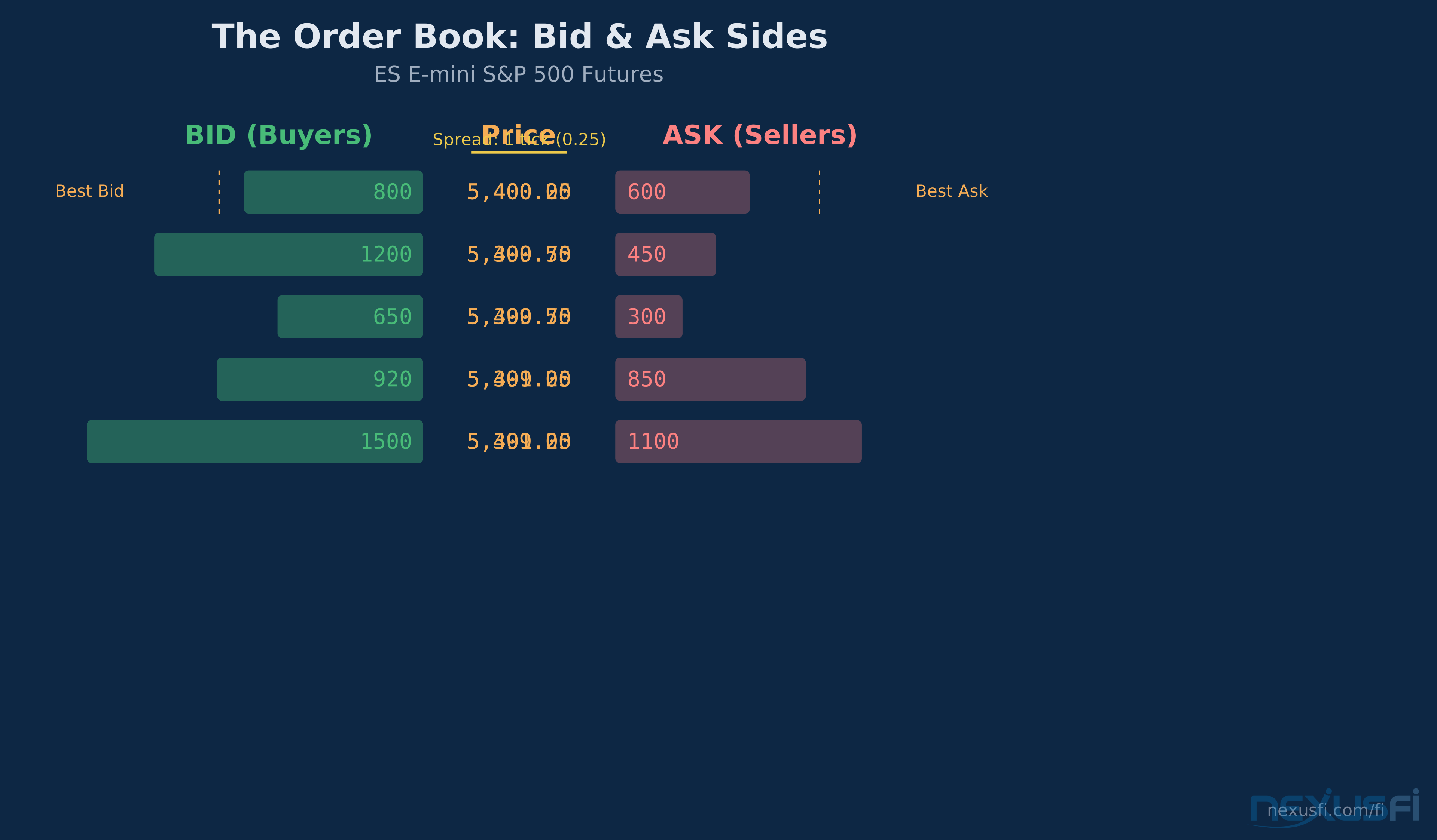
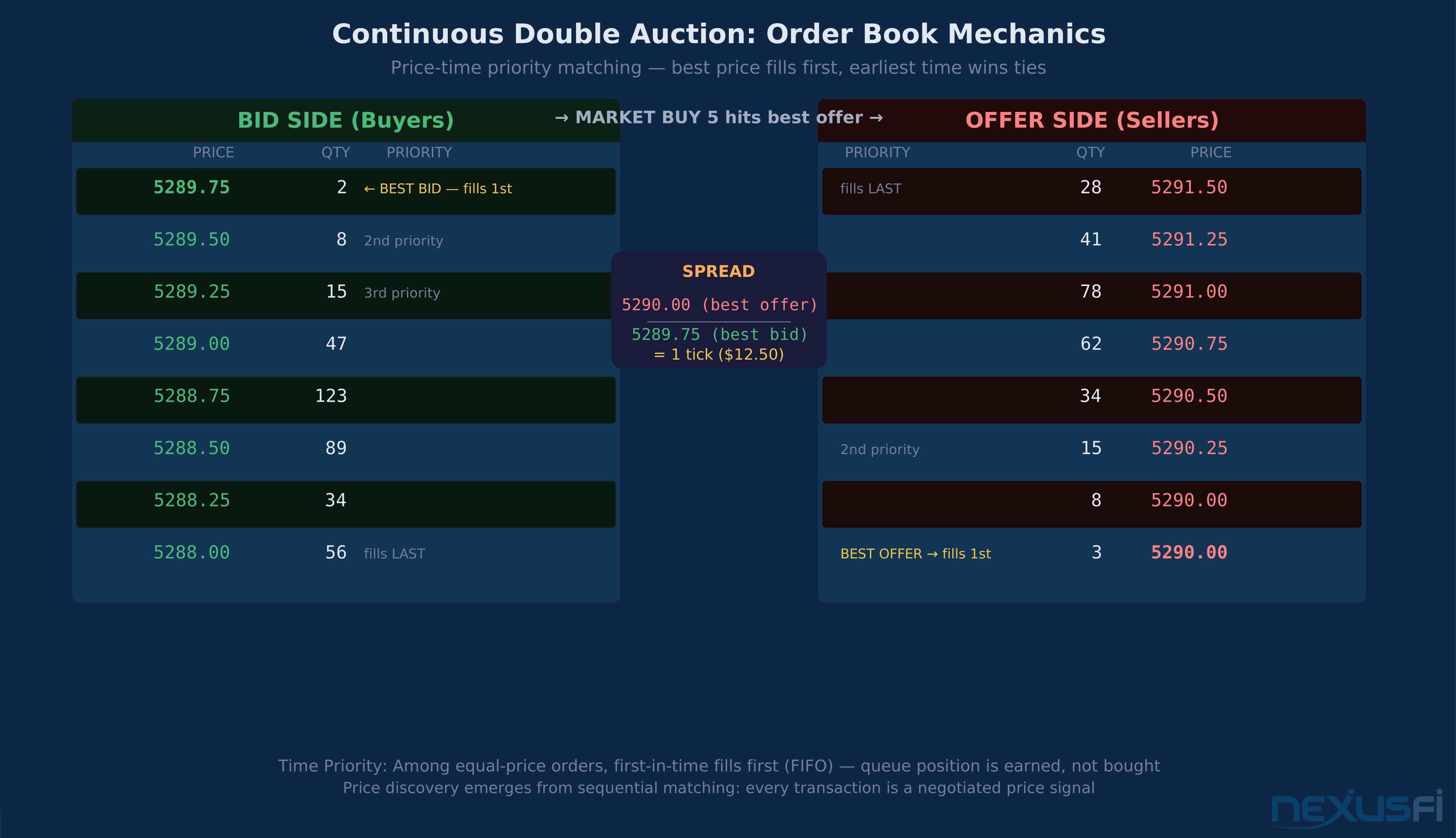
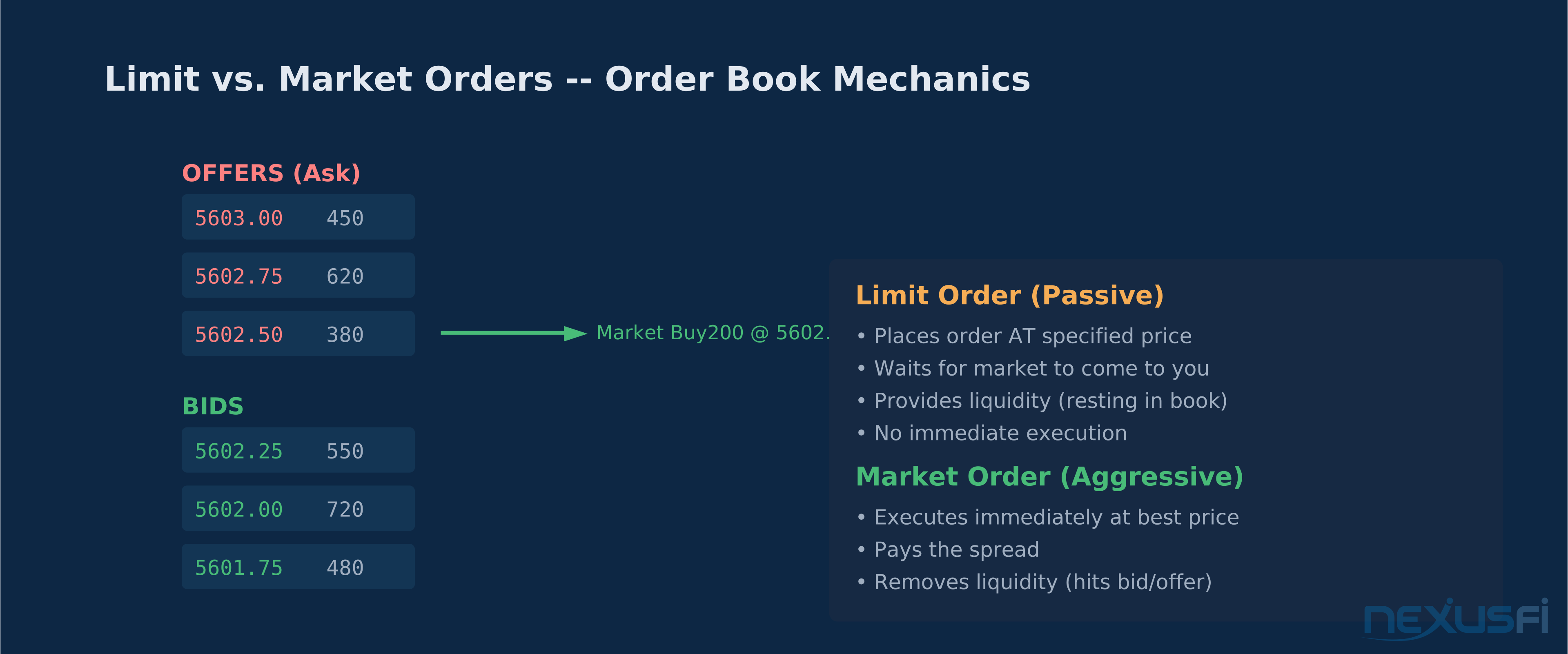
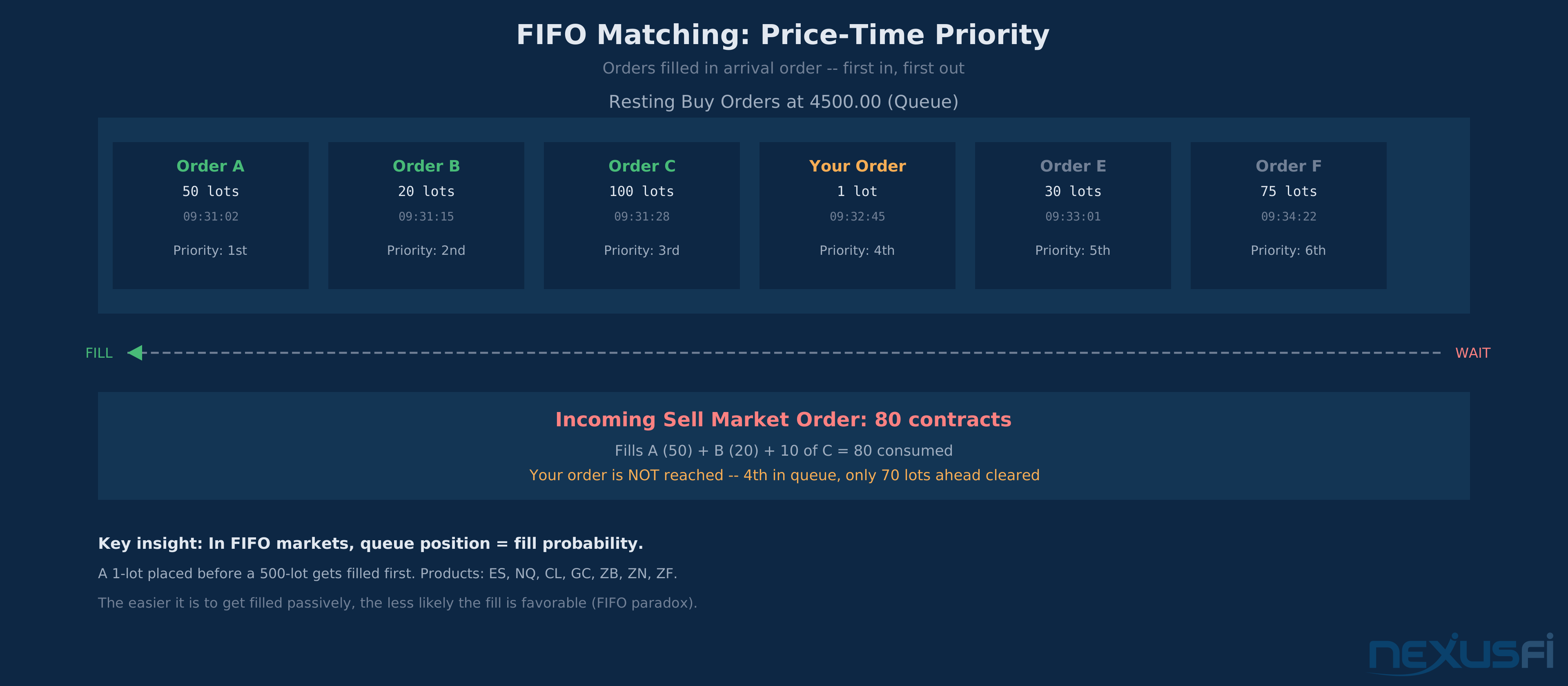
Futures exchanges run what's called a continuous double auction. "Double" because both buyers and sellers submit orders simultaneously. "Continuous" because ...
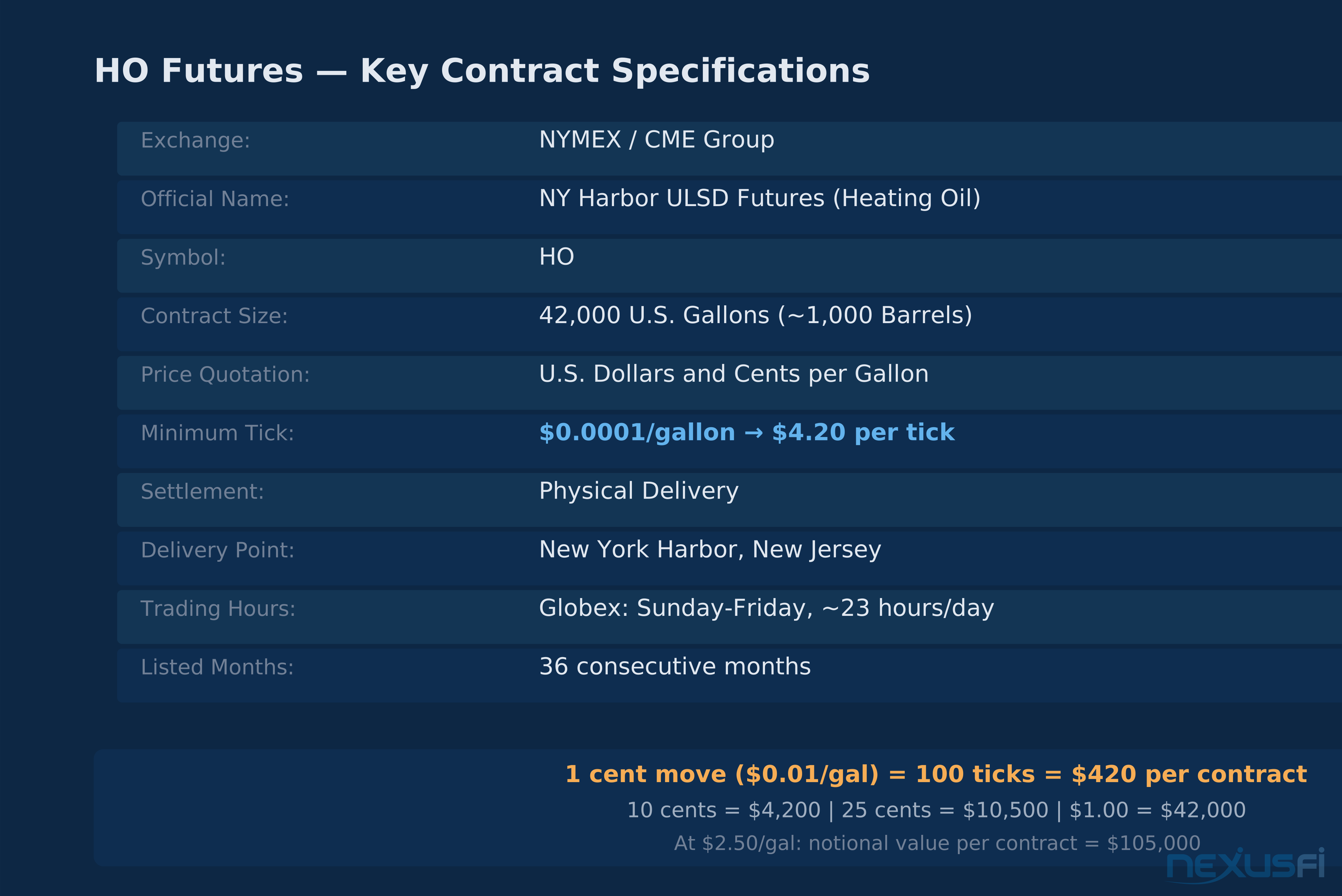
Heating oil futures are misnamed. The contract most traders call "HO" has not been about residential heating oil for decades. Since the early 2000s, the NYME...
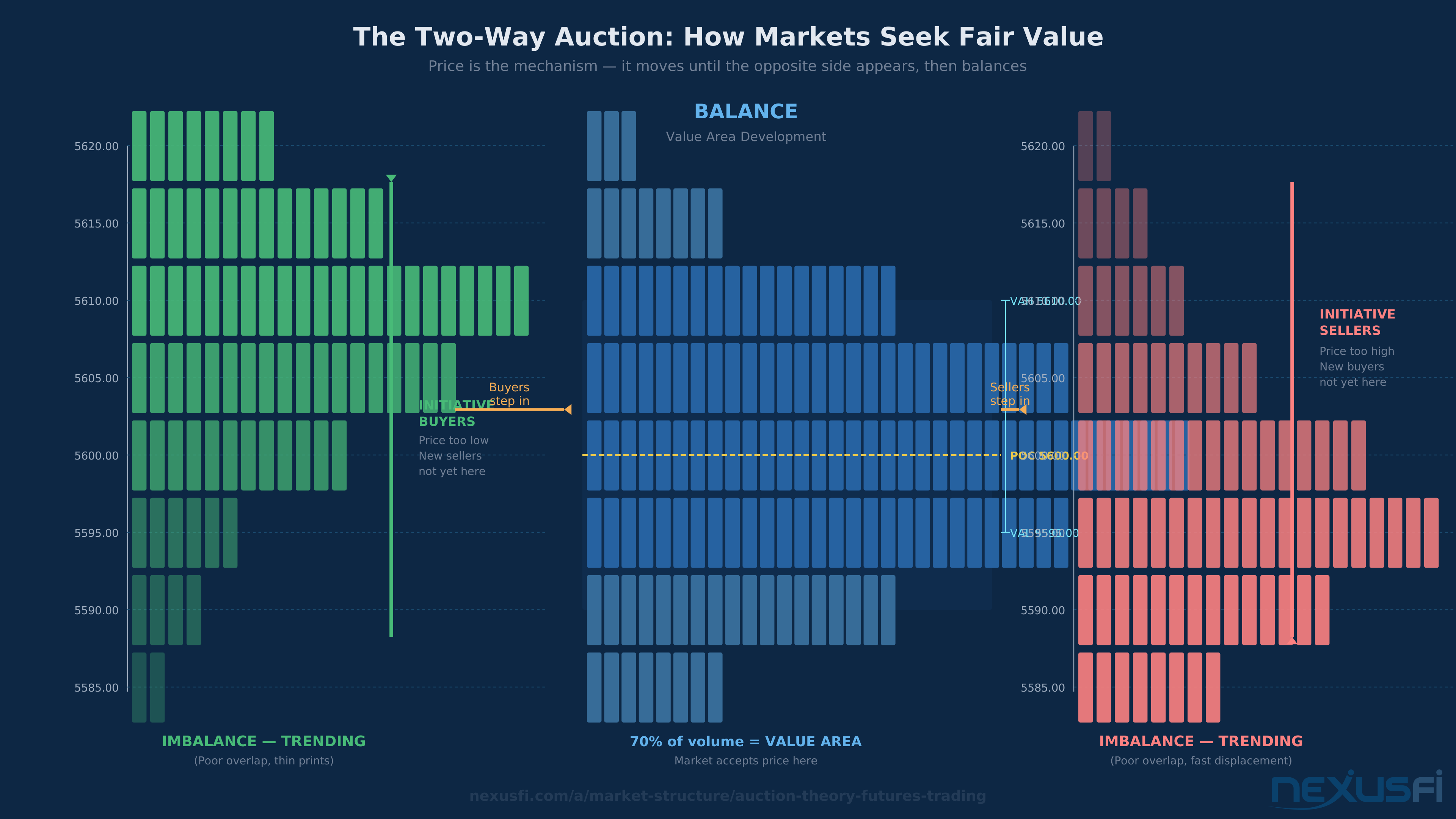
Overview Every market structure concept you've encountered — value area, balance days, failed auctions, single prints, responsive participants — traces b...
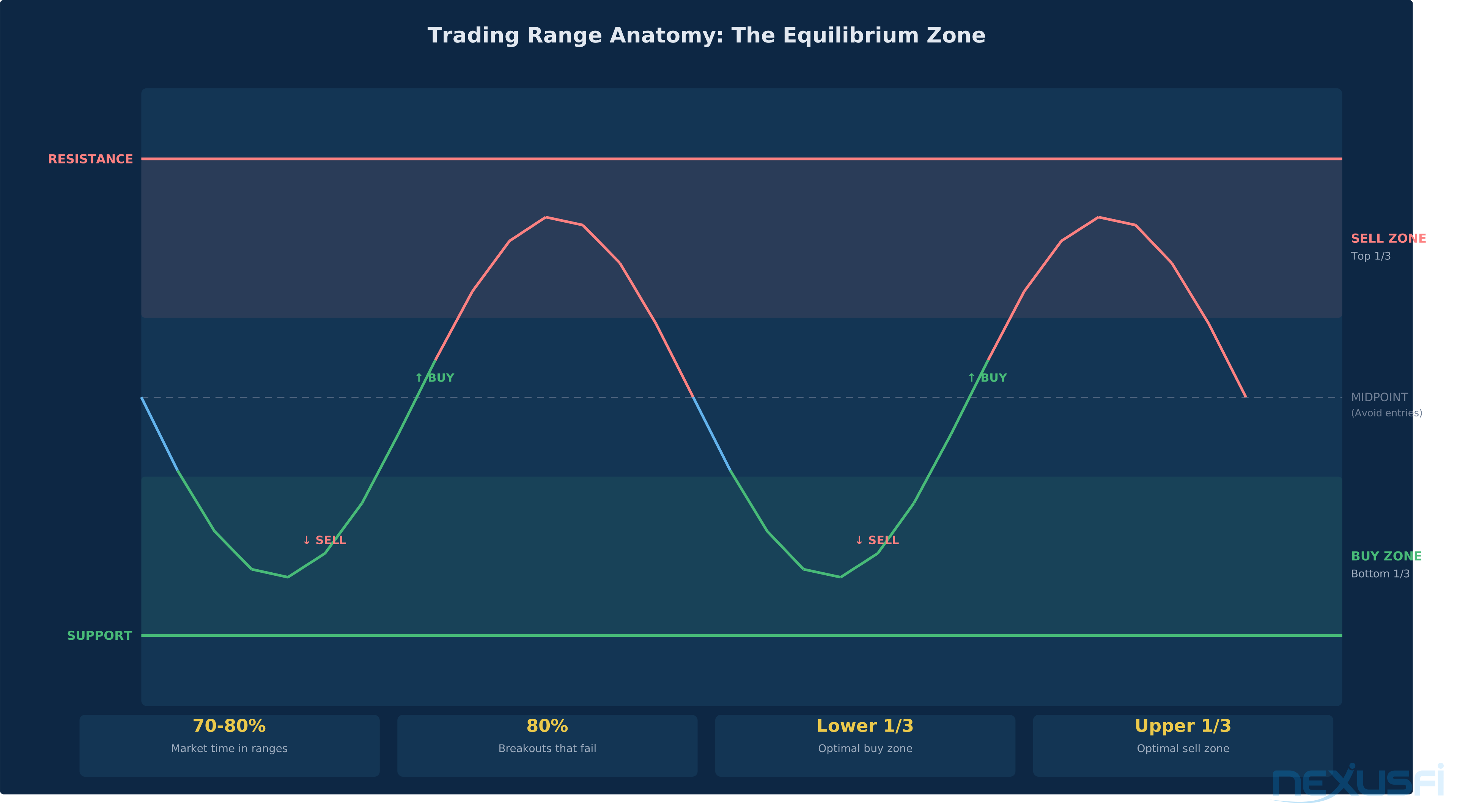
Trading ranges are the dominant market condition, yet most traders spend the majority of their educational time studying trends. Al Brooks estimates that mar...
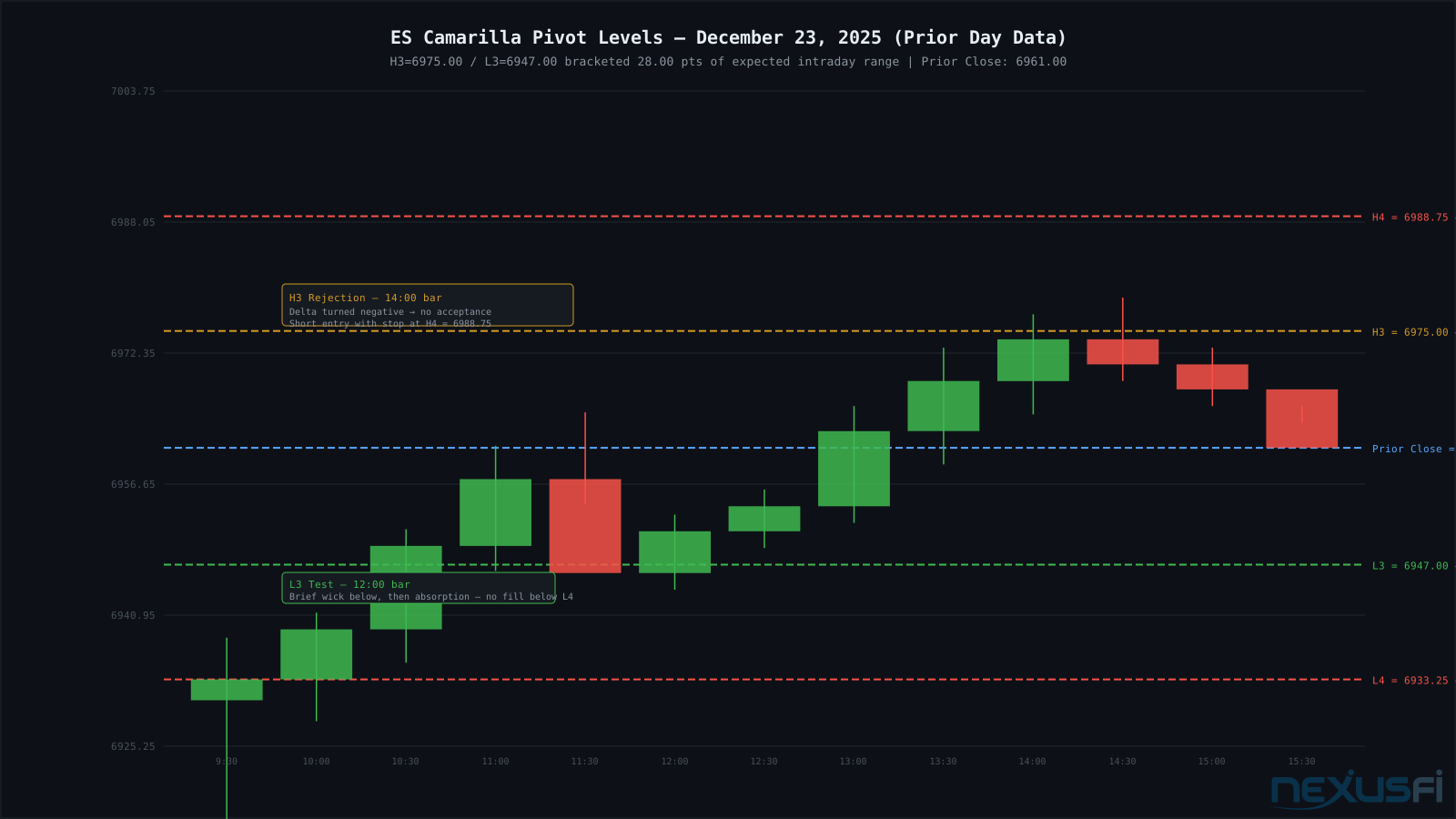
Overview Camarilla pivot points are one of the most quietly effective tools in futures day trading. Unlike floor trader pivots, which derive all their levels...
Iron condor: A four-leg options position consisting of a short strangle (short OTM call + short OTM put) combined with long wings farther out. Creates a defi...
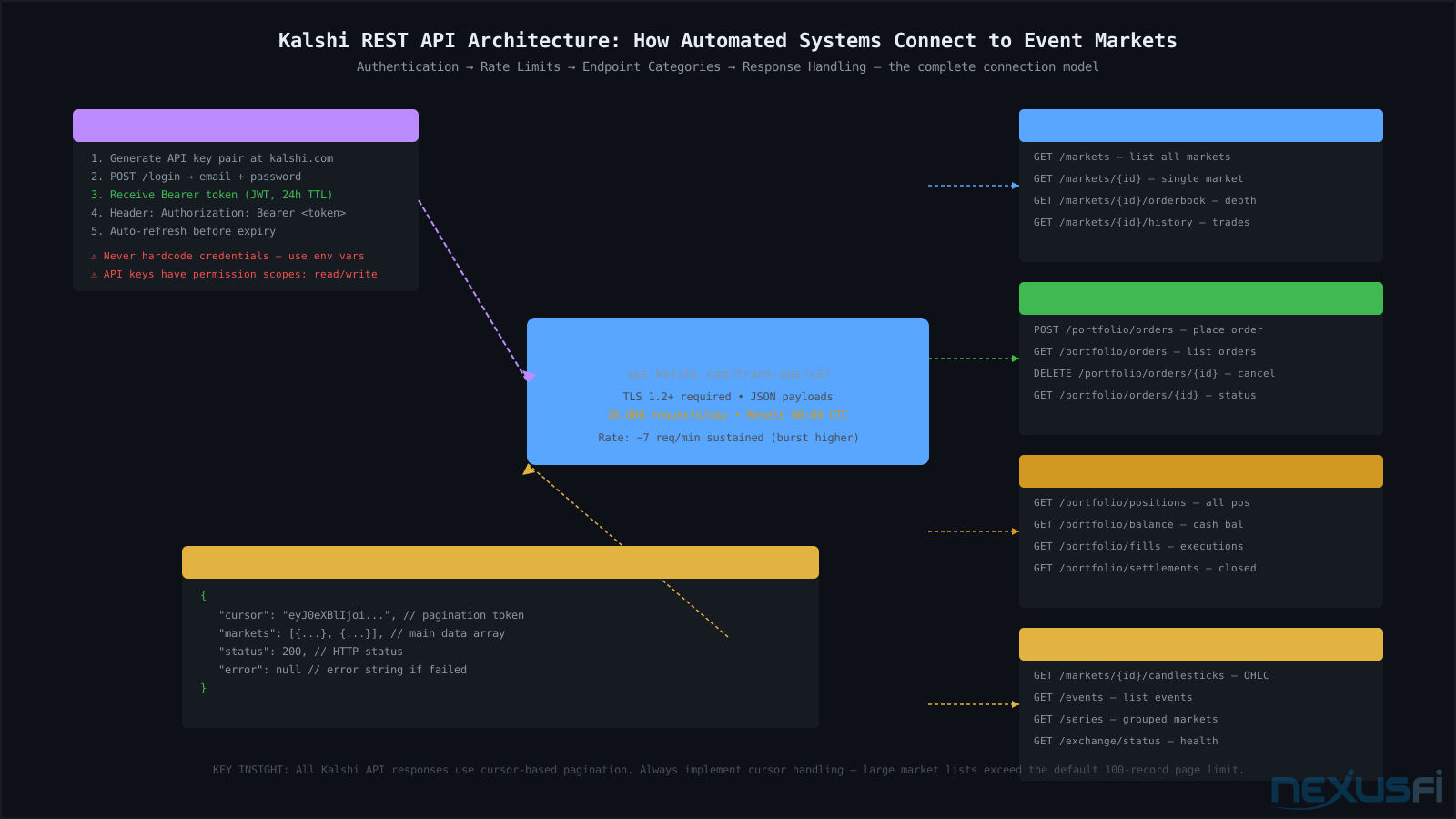
Overview Most prediction market trading is manual. You open Kalshi, check a market, place an order, and check back hours later. That works fine if you're tra...
Your trading platform is only as reliable as the hardware between your machine and your broker. The router gets all the attention. The ISP gets blamed when f...
Overview Every futures trader gets a Form 1099-B from their broker in January. Most of them stare at it blankly, hand it to a tax preparer who has never trad...
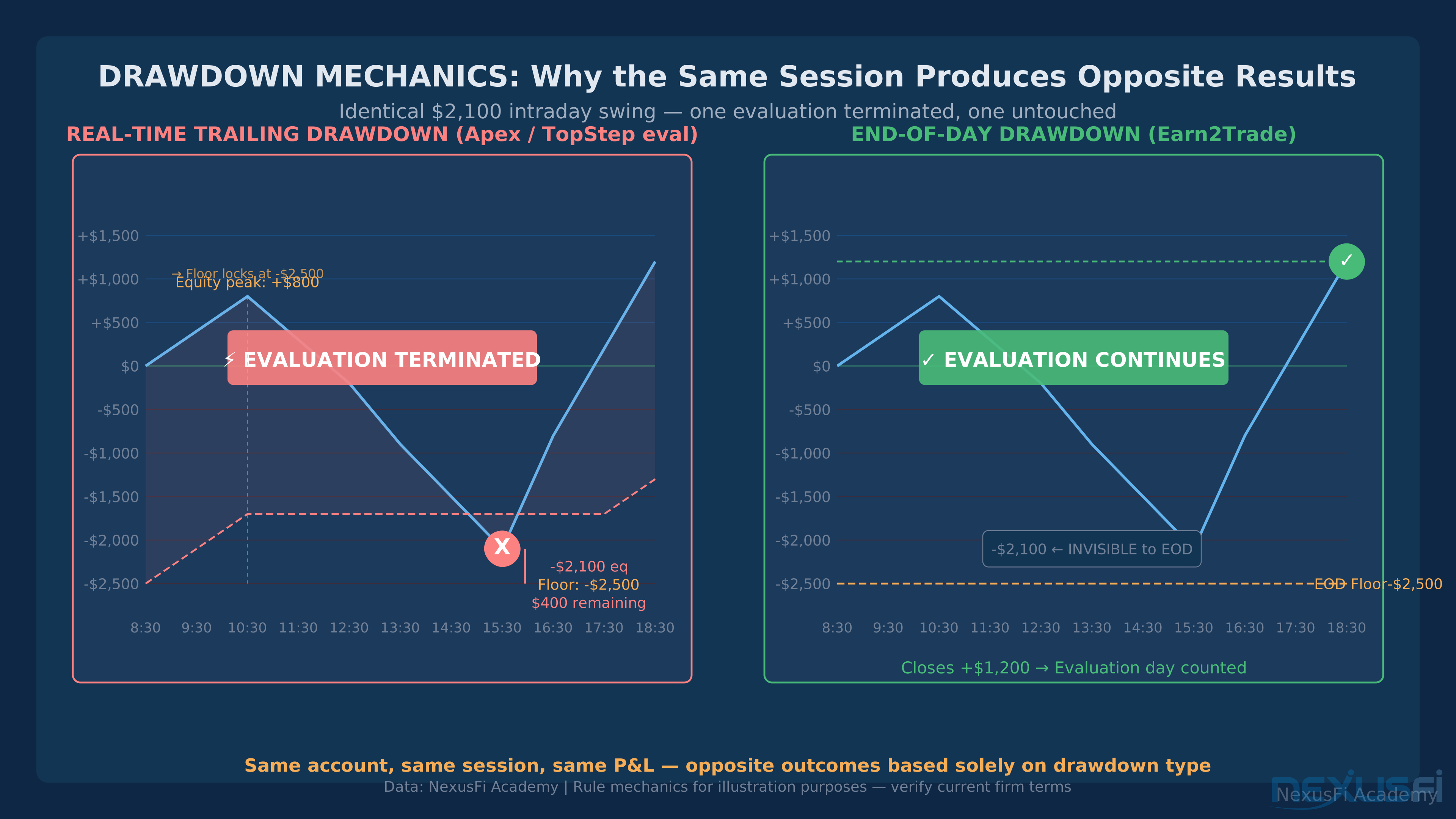
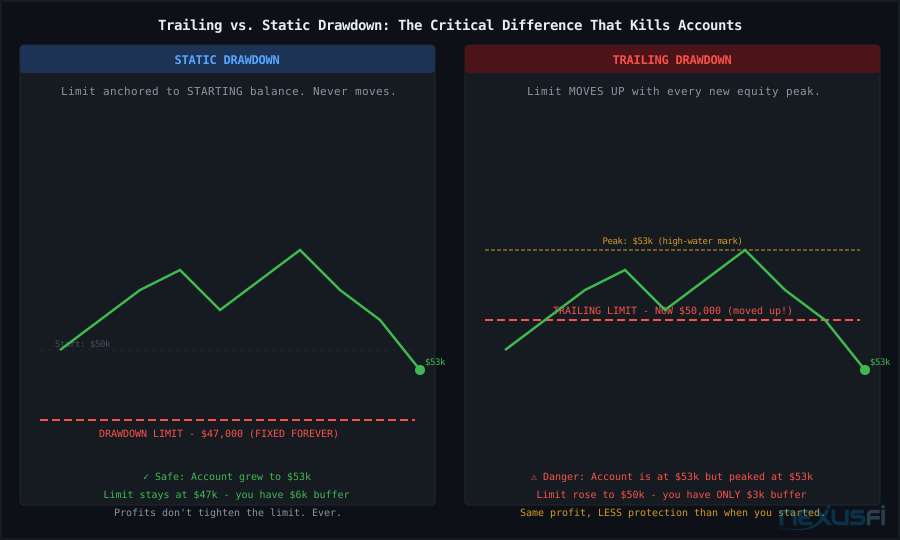
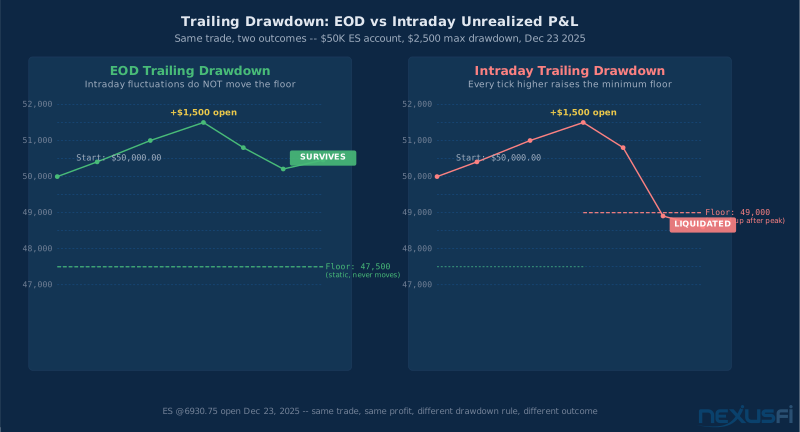
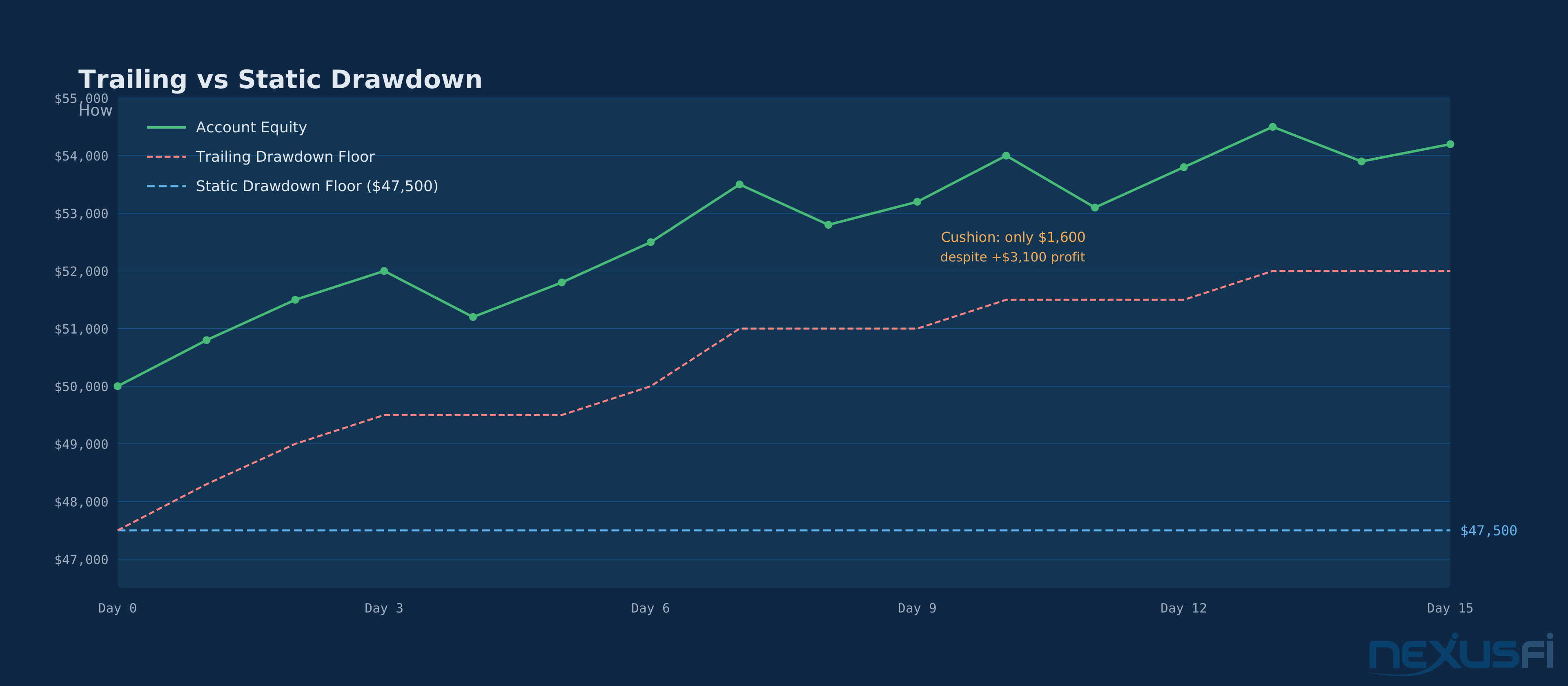
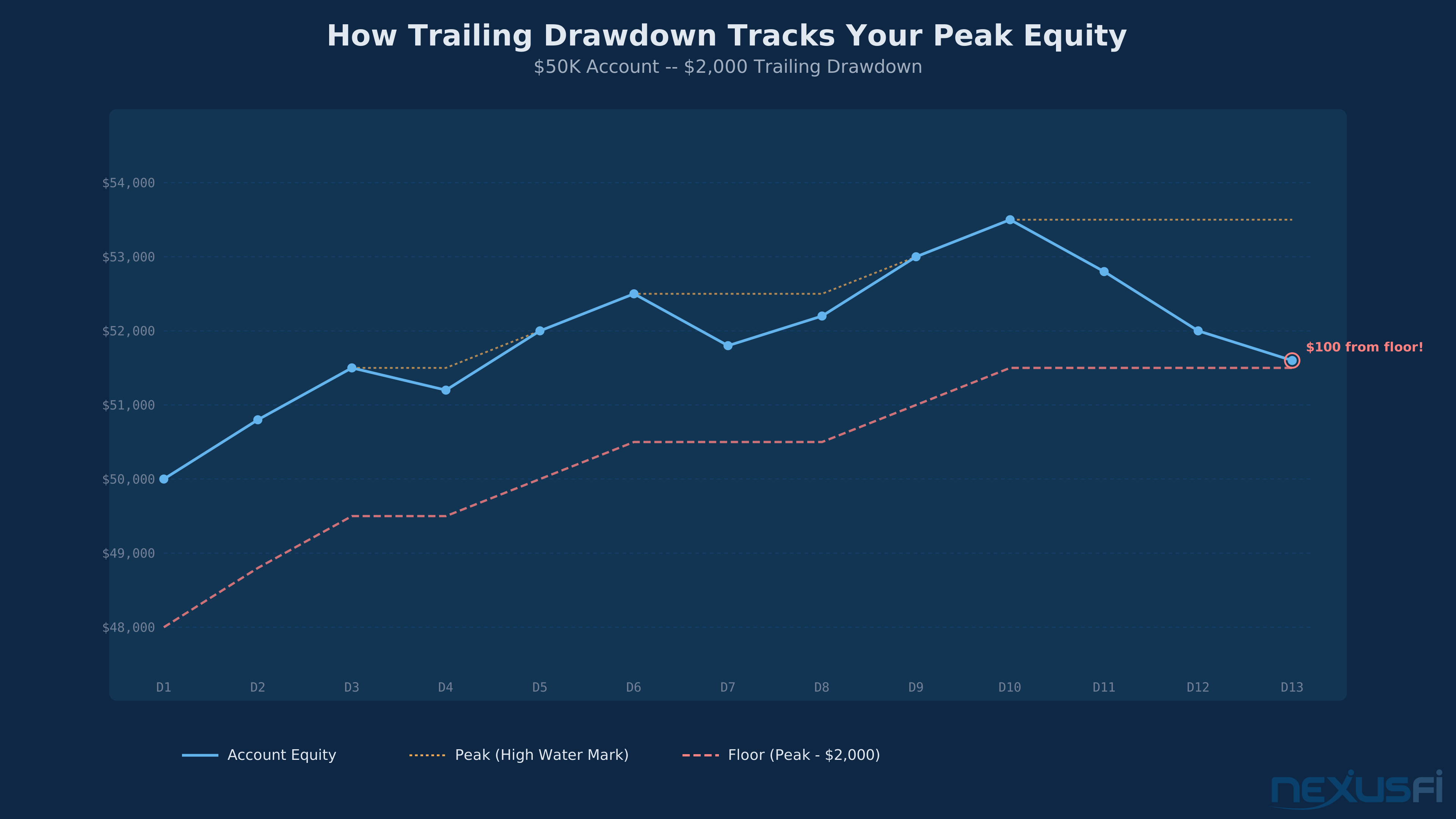
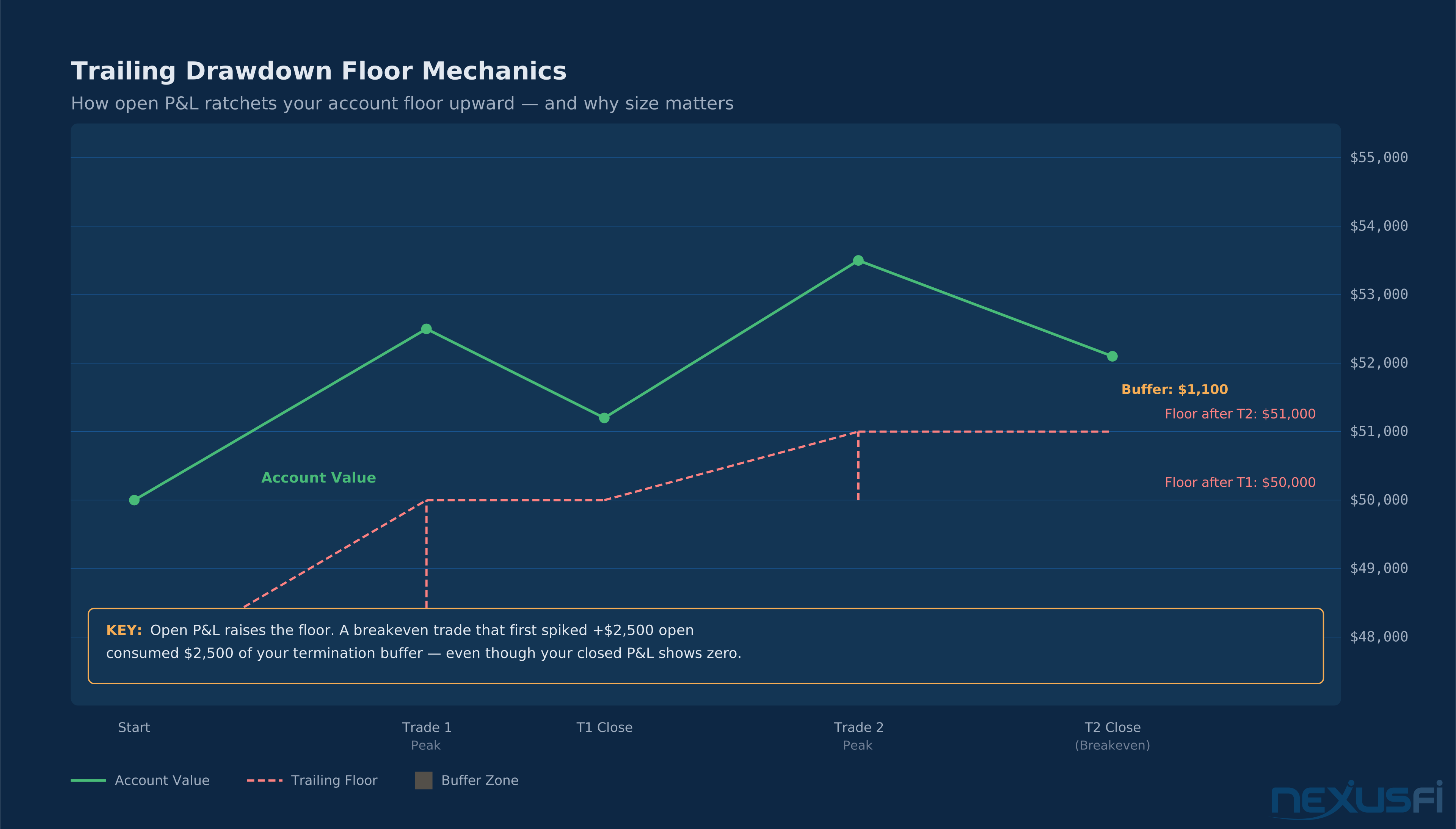
Overview Trailing drawdown is the single mechanism responsible for more funded account terminations than any other factor in prop trading. It is not about st...
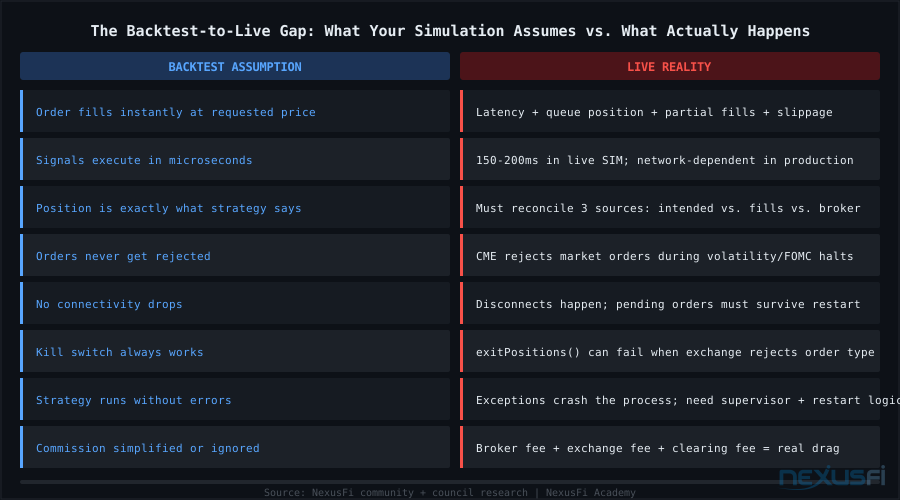
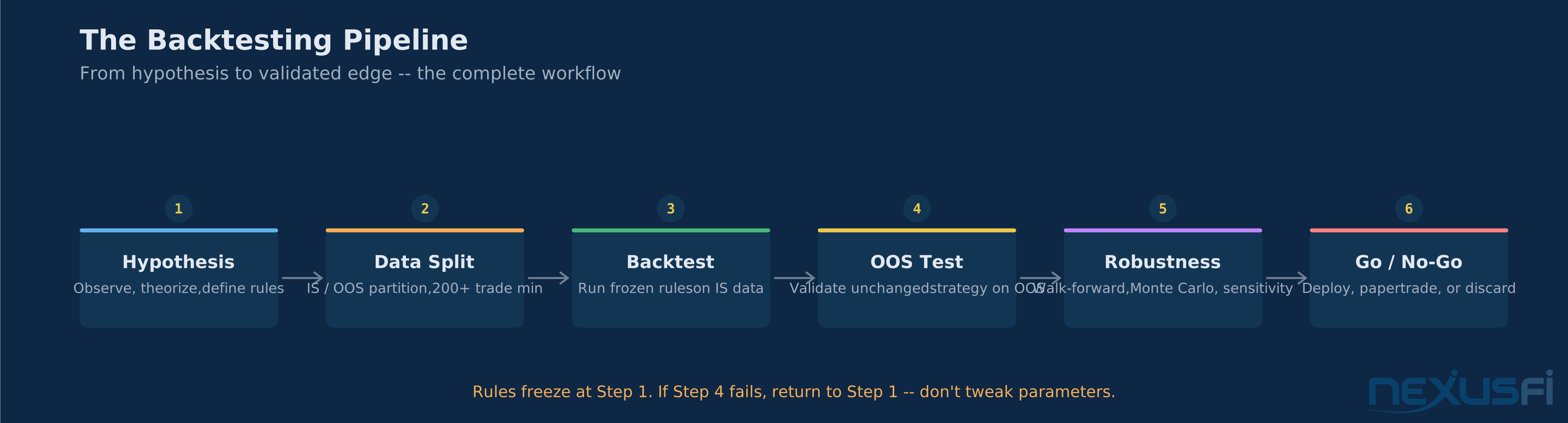
Overview A working backtest tells you what would happen under ideal conditions. A live trading system tells you whether you can survive the messy, latency-la...
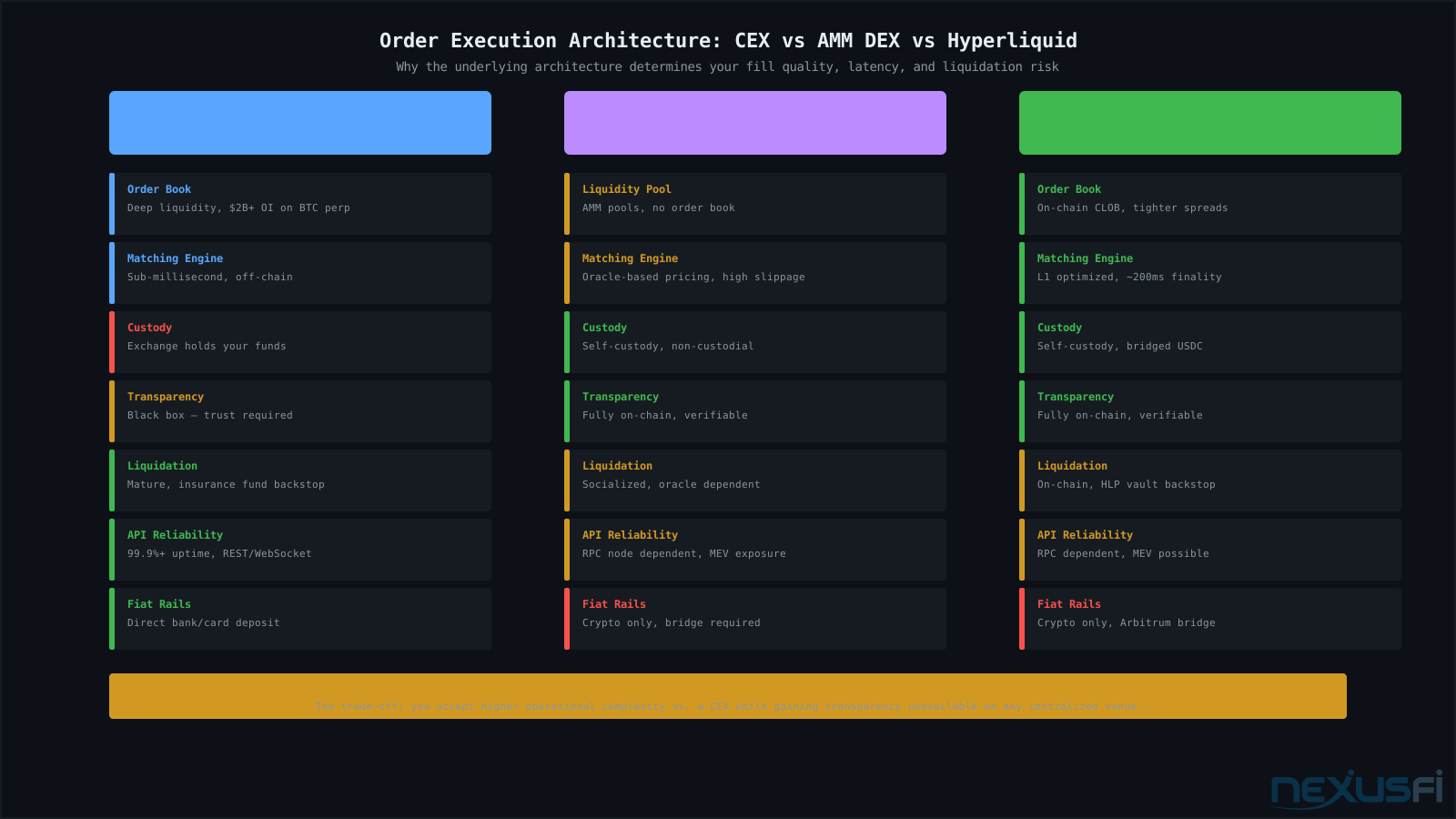
Overview Hyperliquid is a decentralized perpetuals exchange built on its own Layer 1 blockchain. It runs a Central Limit Order Book (CLOB) fully on-chain, pr...
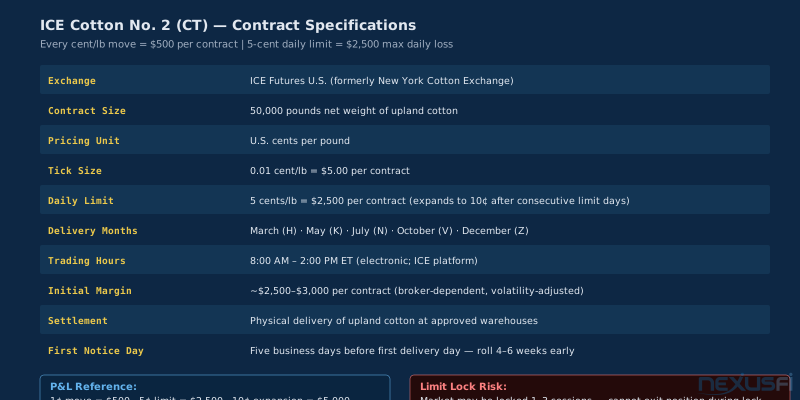
Every cotton futures contract you trade -- the ones that move with the USDA crop report and spike when a hurricane aims at the Mississippi Delta textile corr...
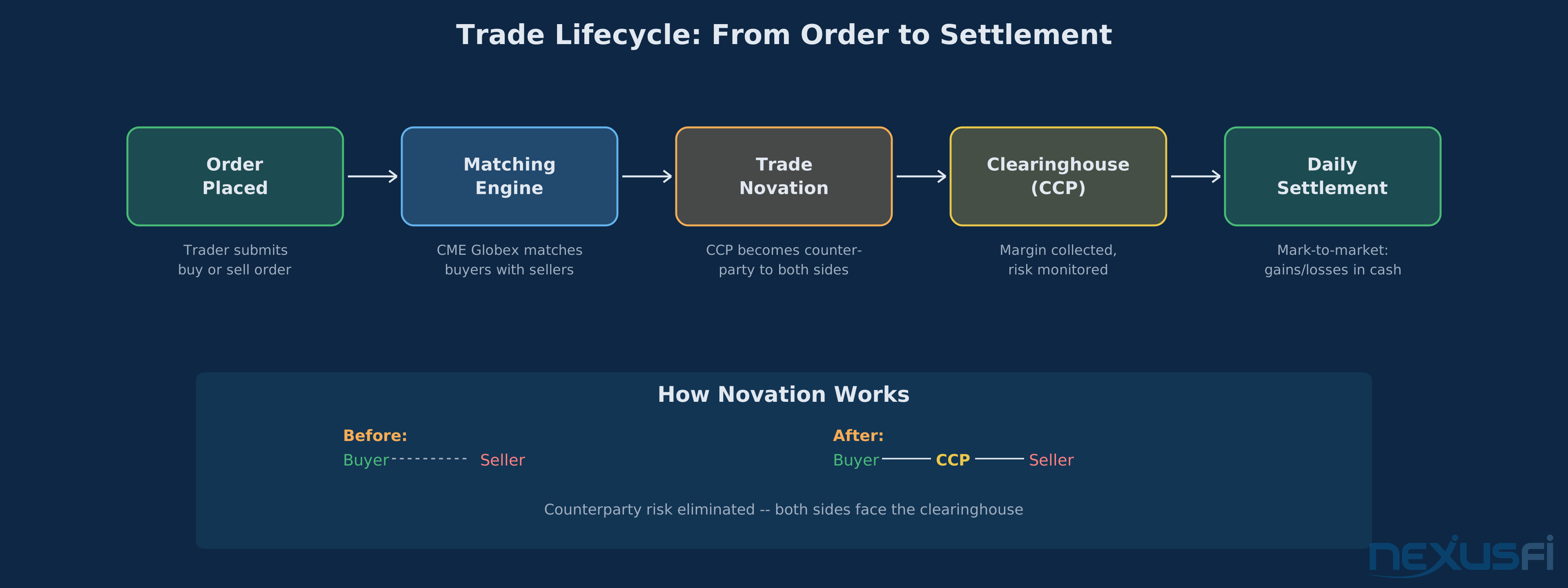
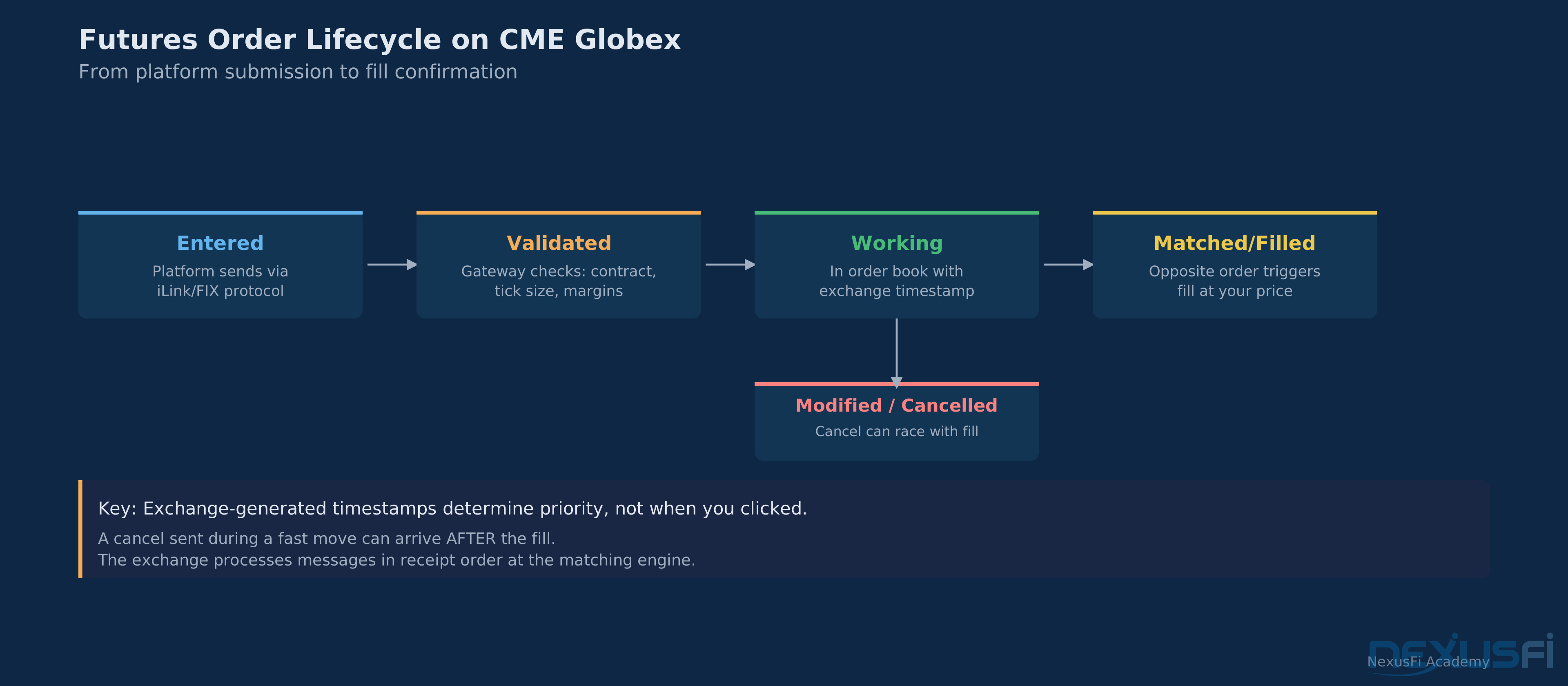
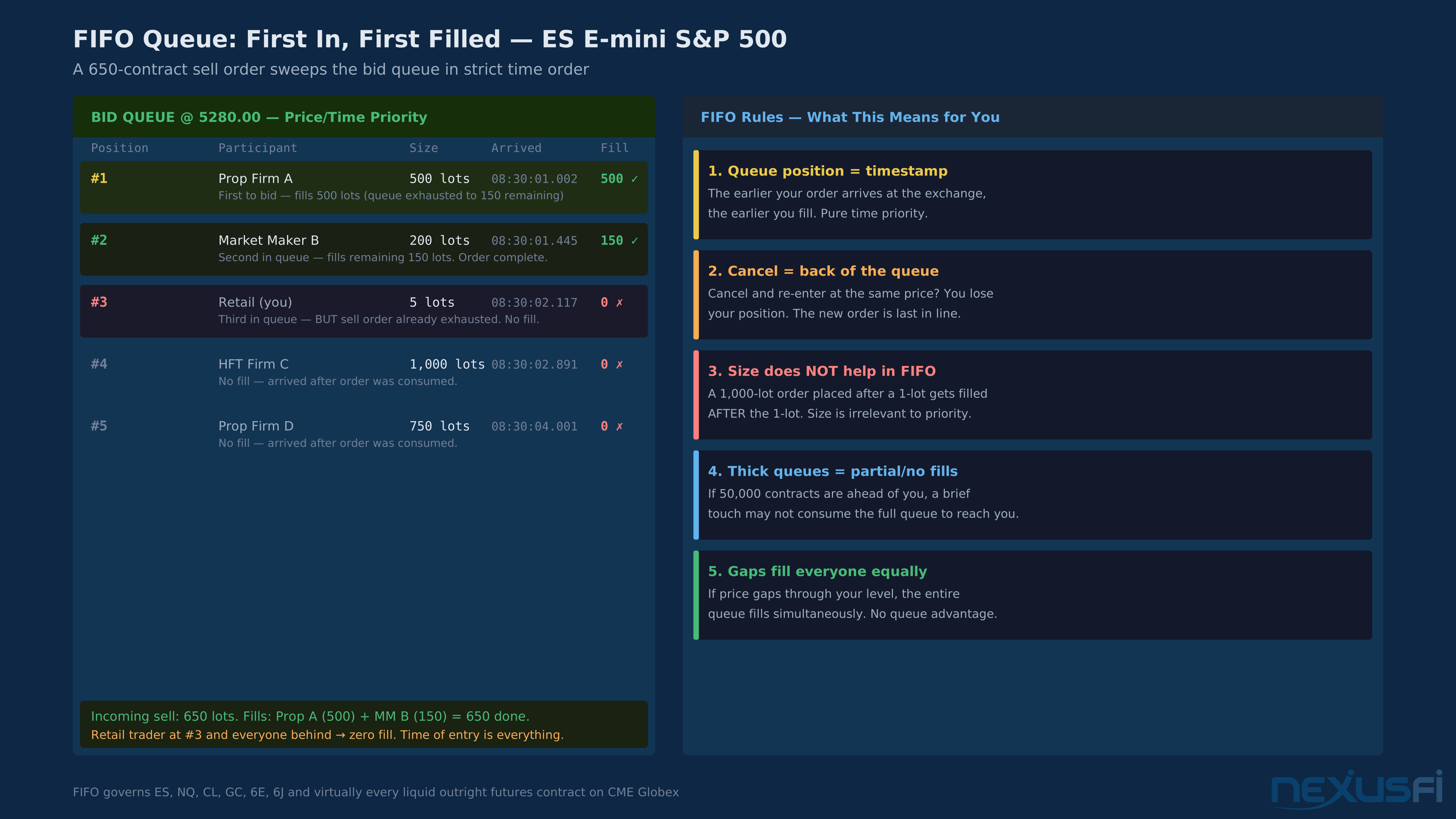
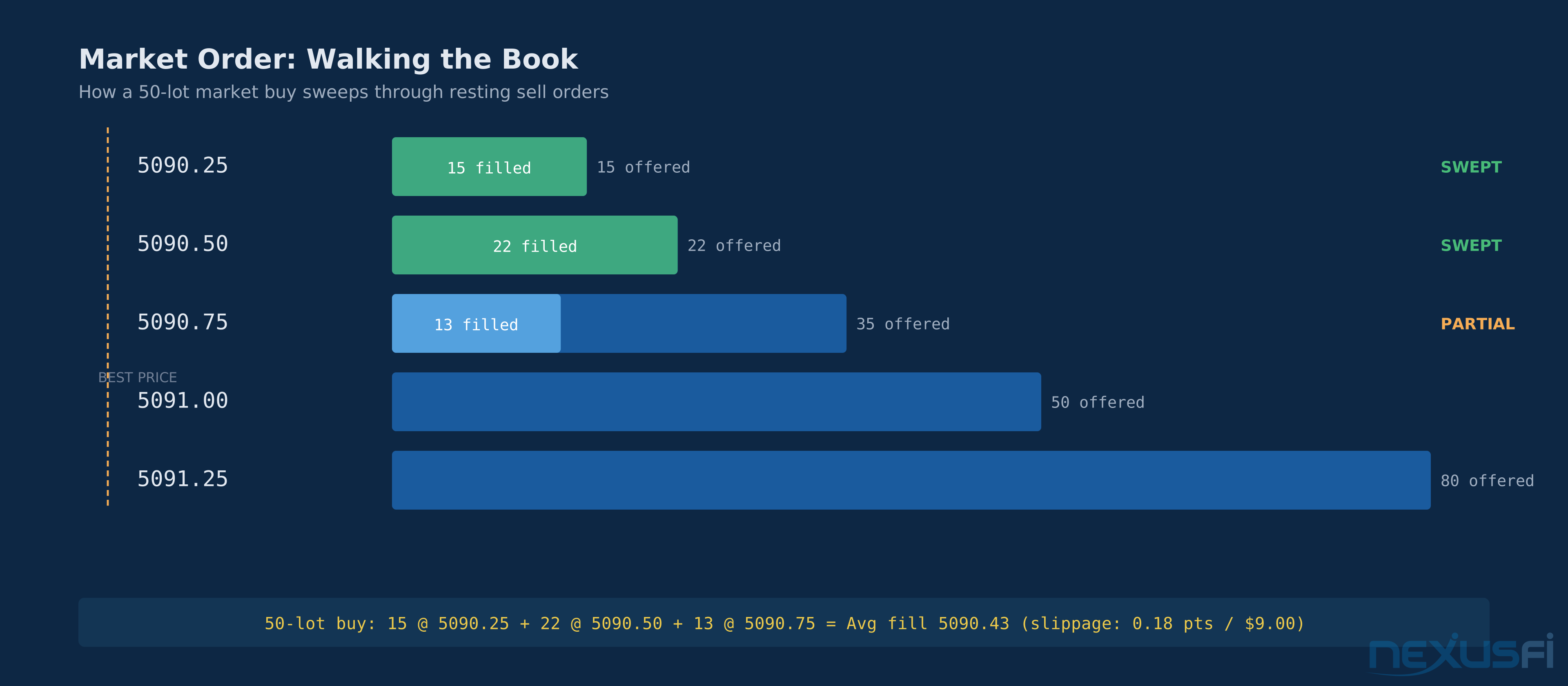
When you submit an order to CME, it enters the Globex matching engine -- the central system that pairs buyers with sellers. The process is simple in concept:...
The ADXVMA name creates a misleading impression that it derives from Welles Wilder's ADX. It doesn't -- not directly. As [Fat Tails clarified on NexusFi] [1]...
Here's the most dangerous moment in algo trading: you've spent three weeks building a strategy on ES or NQ. You've run it through backtests. The equity curve...
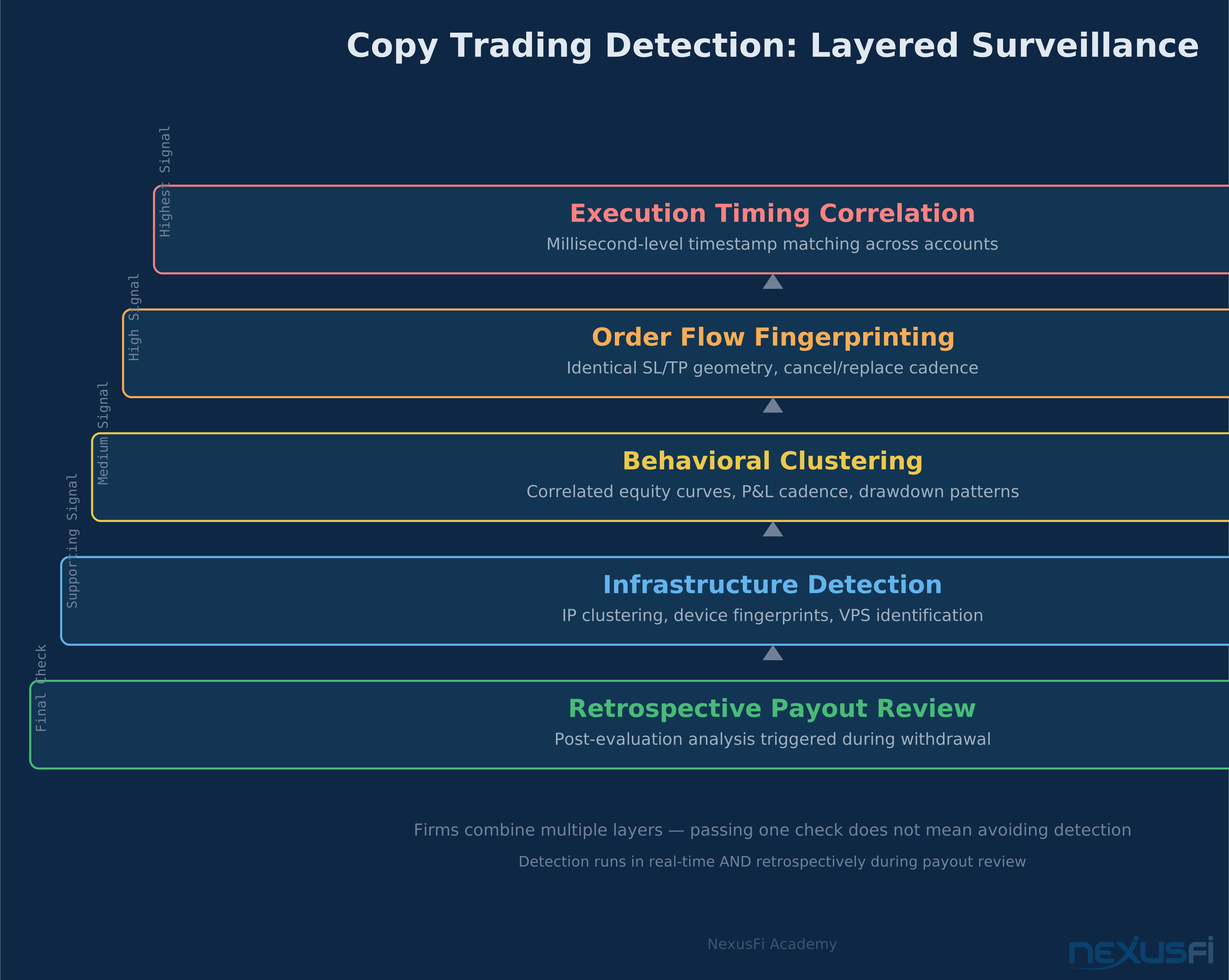
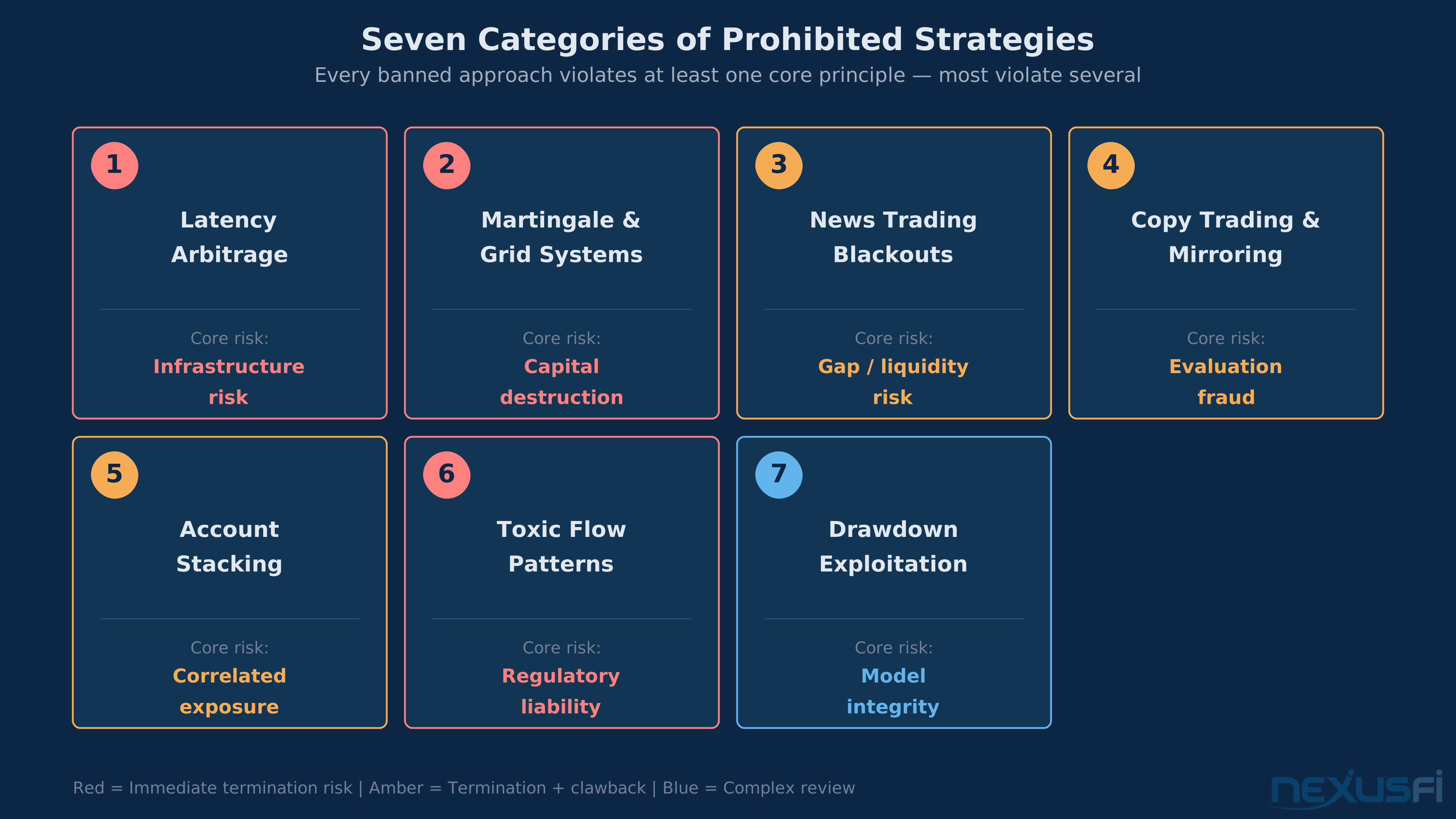
Copy trading in the prop firm context refers to any mechanism that replicates trade execution from one source to one or more funded or evaluation accounts. T...
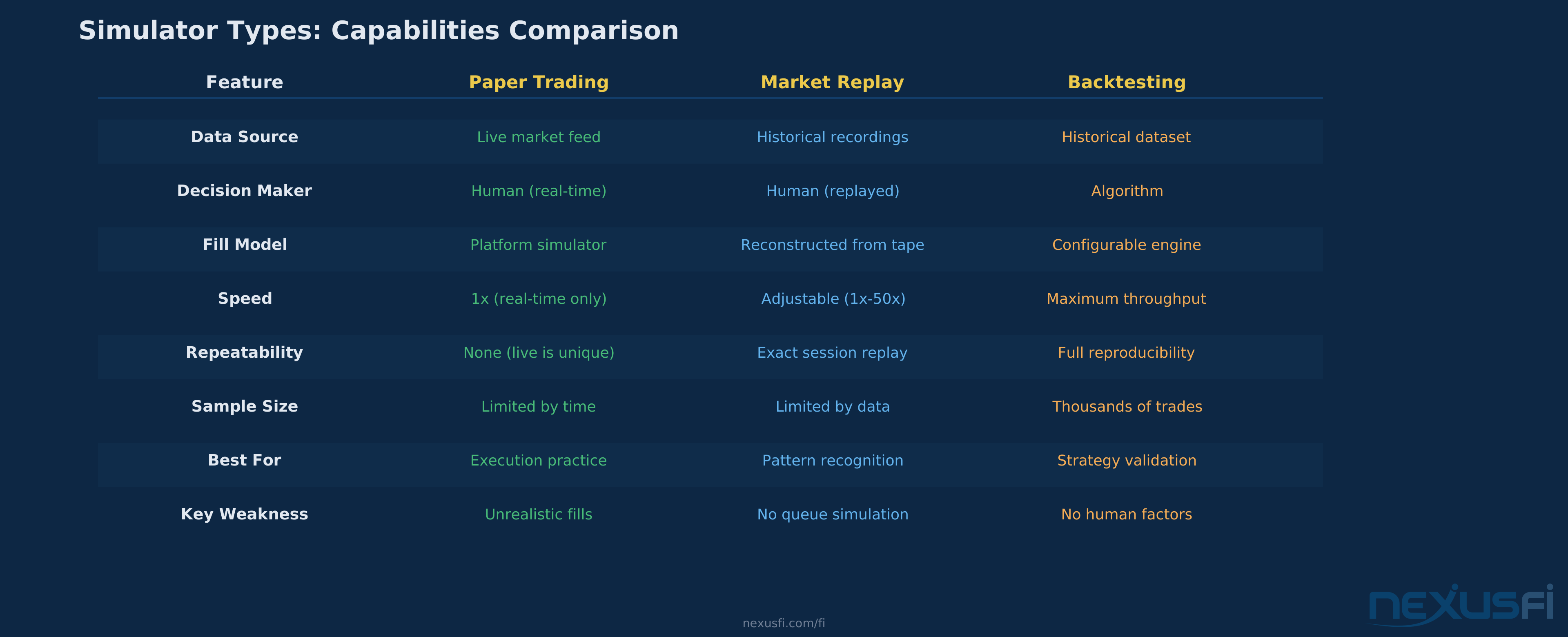
Three terms get used interchangeably in futures trading, and they shouldn't be. Each is a different activity with different strengths and failure modes. Pape...
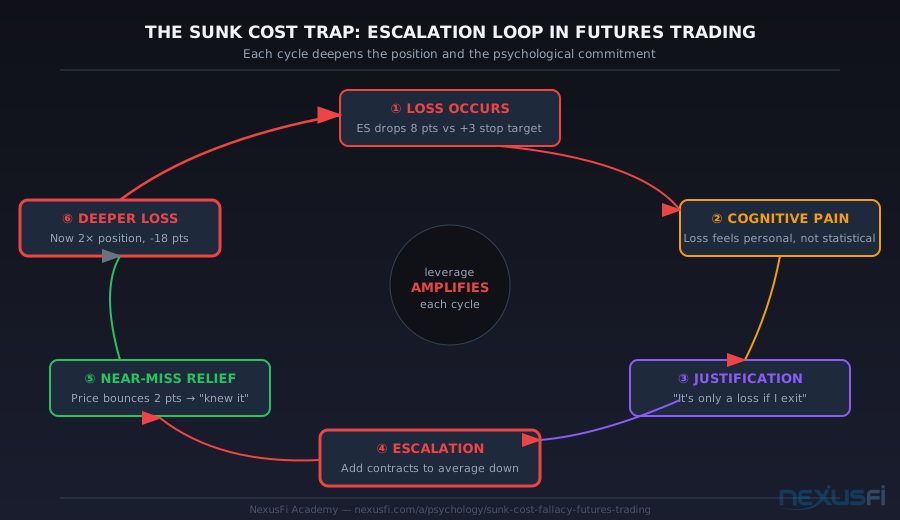
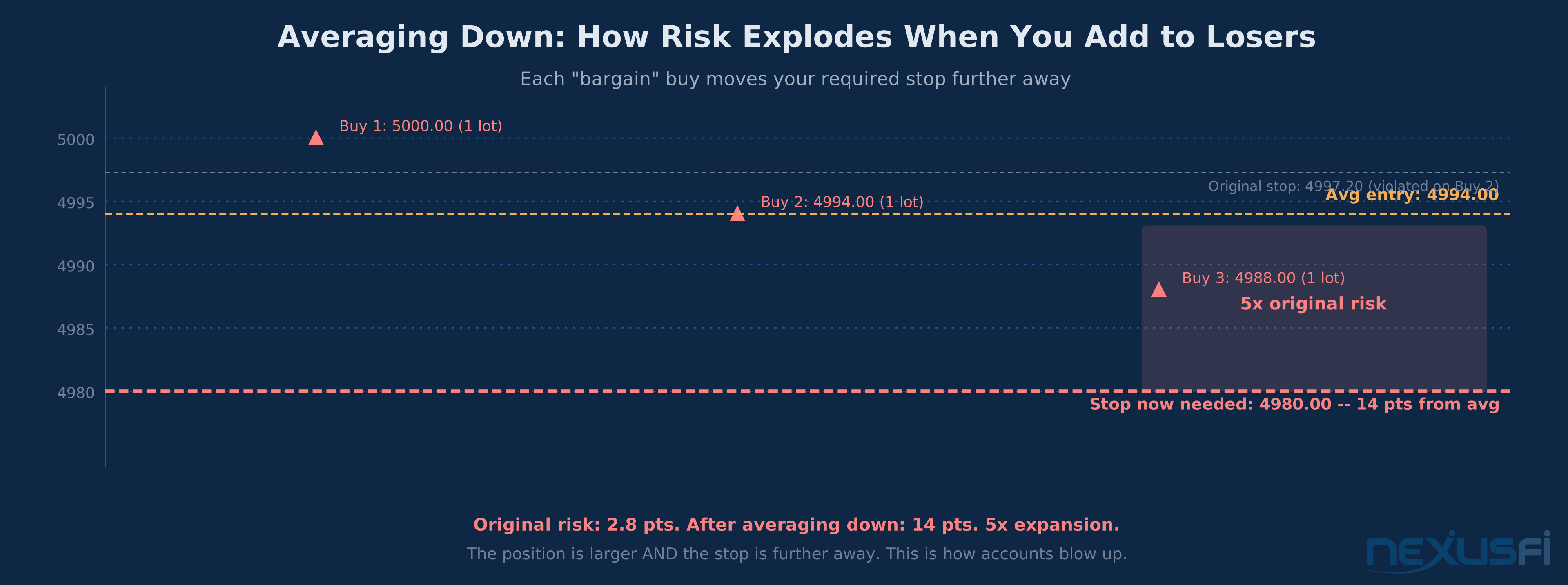
Every trader has done it: held a losing ES position an hour past where they should have exited, added contracts to a failing NQ short to "average a better en...
Overview Most futures traders look at price action, volume, and maybe a few indicators. A smaller group watches order flow through the DOM and CVD. But there...
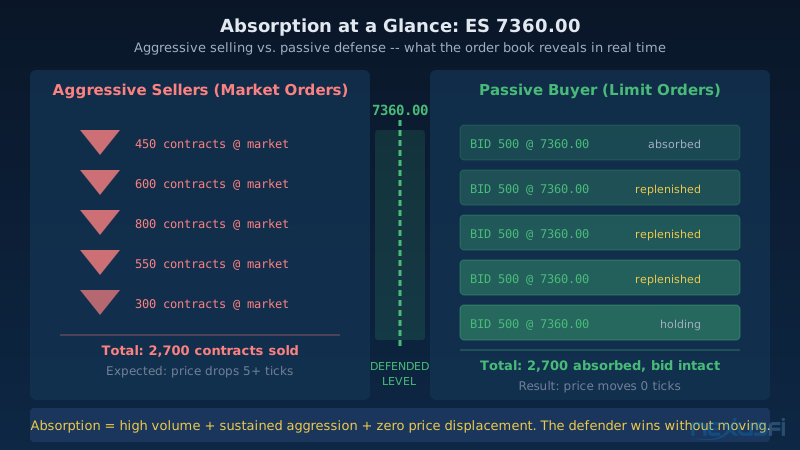
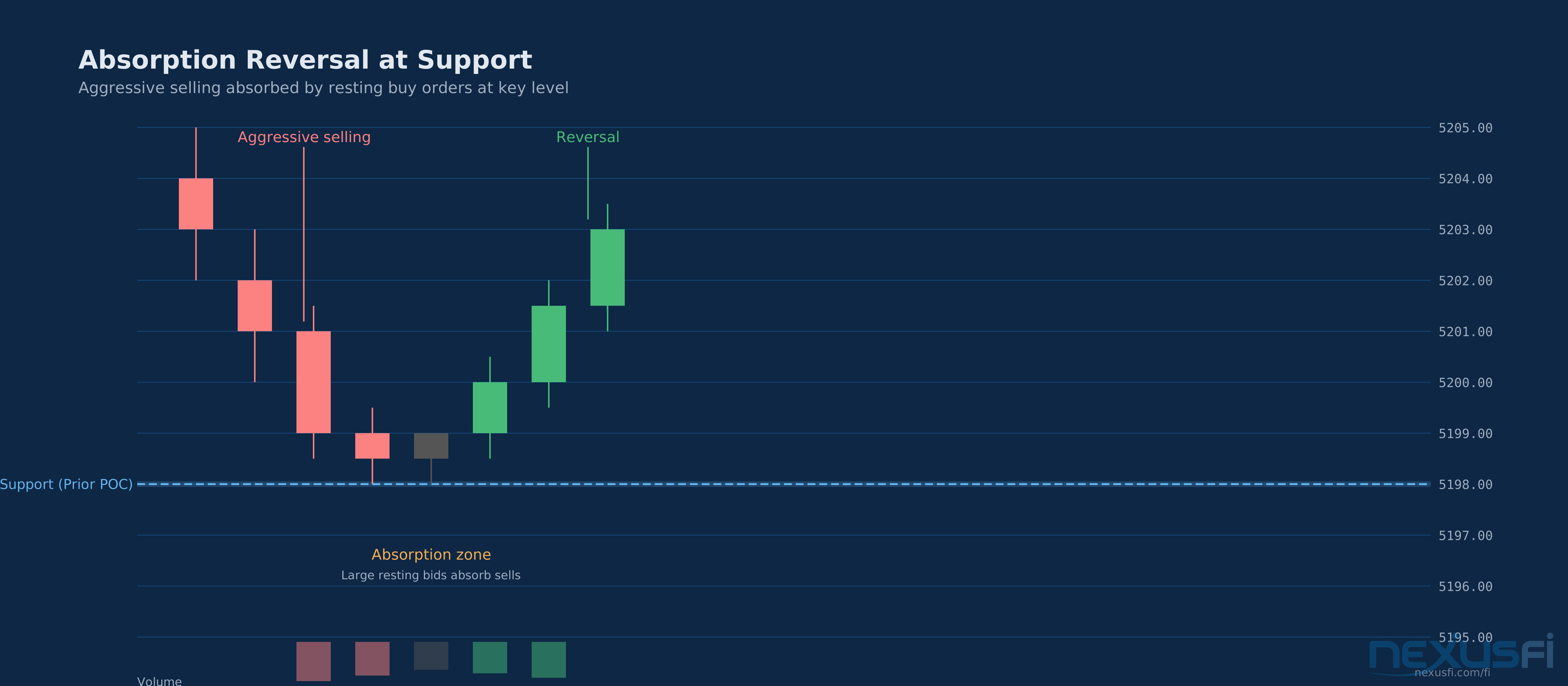
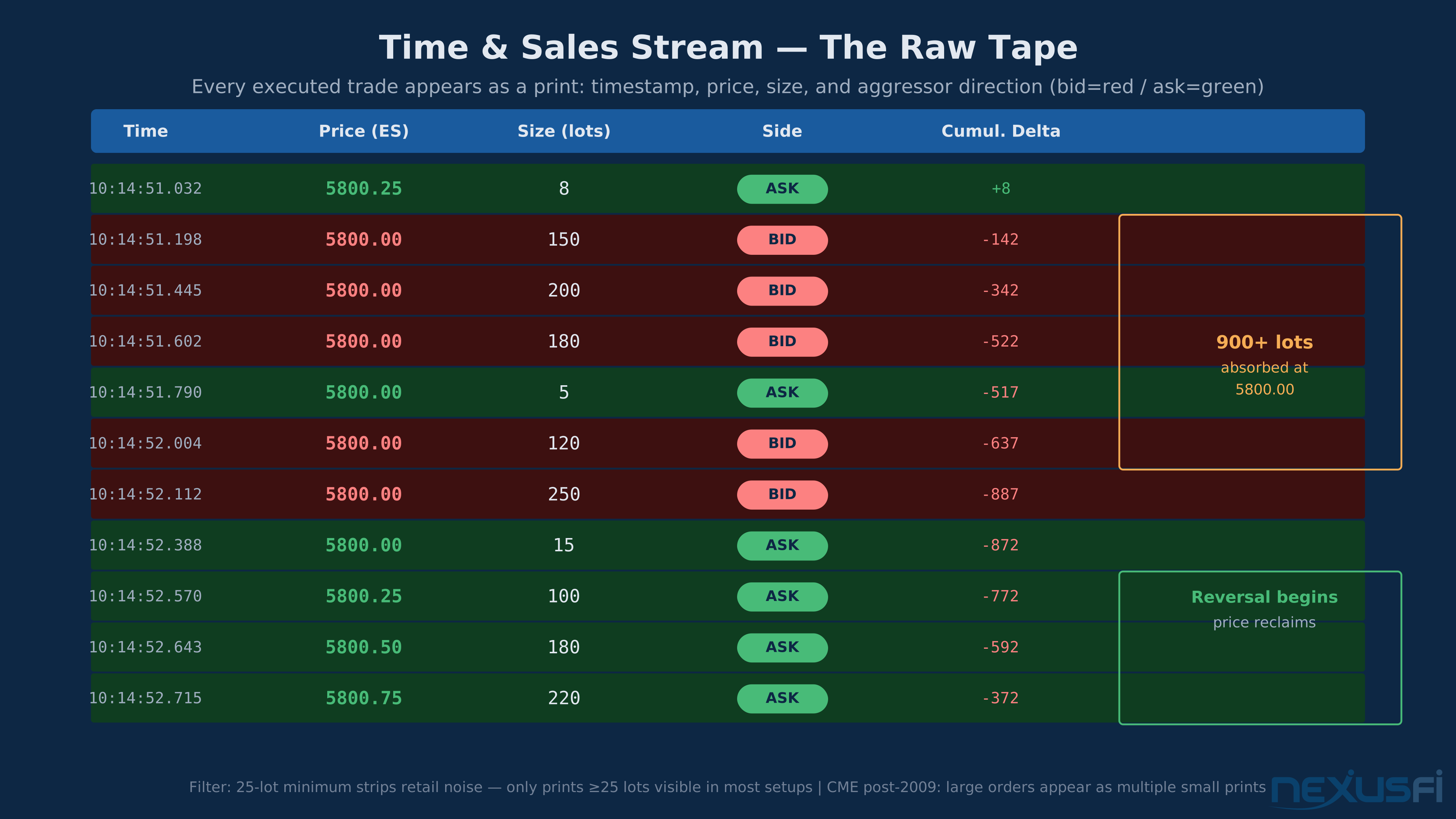
Absorption occurs when aggressive market orders hit a price level and are consumed by passive liquidity without producing expected price displacement. Seller...
The Risk Most Funded Traders Never Think About You passed the evaluation. You got funded. You're trading with real capital and making money. And then one day...
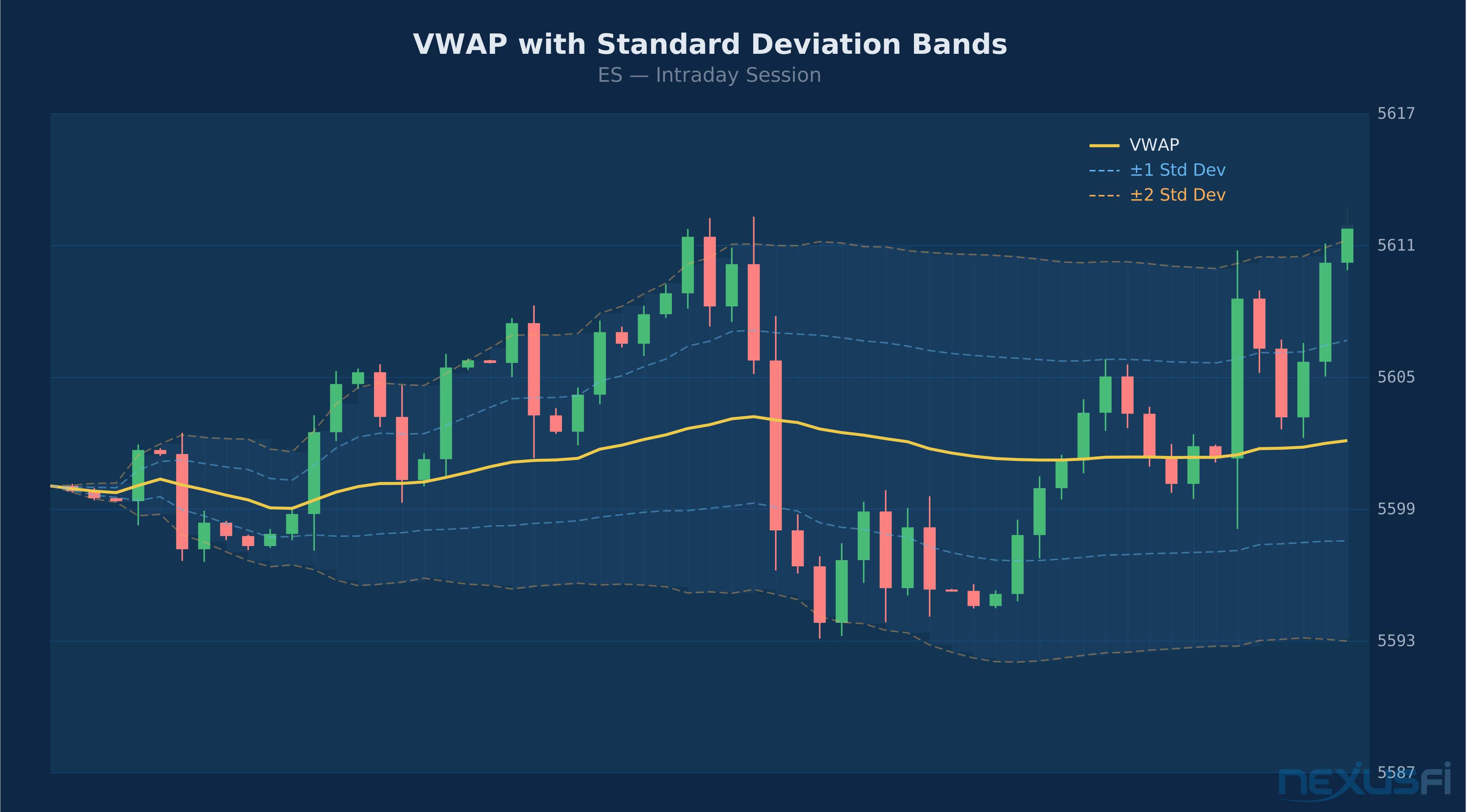
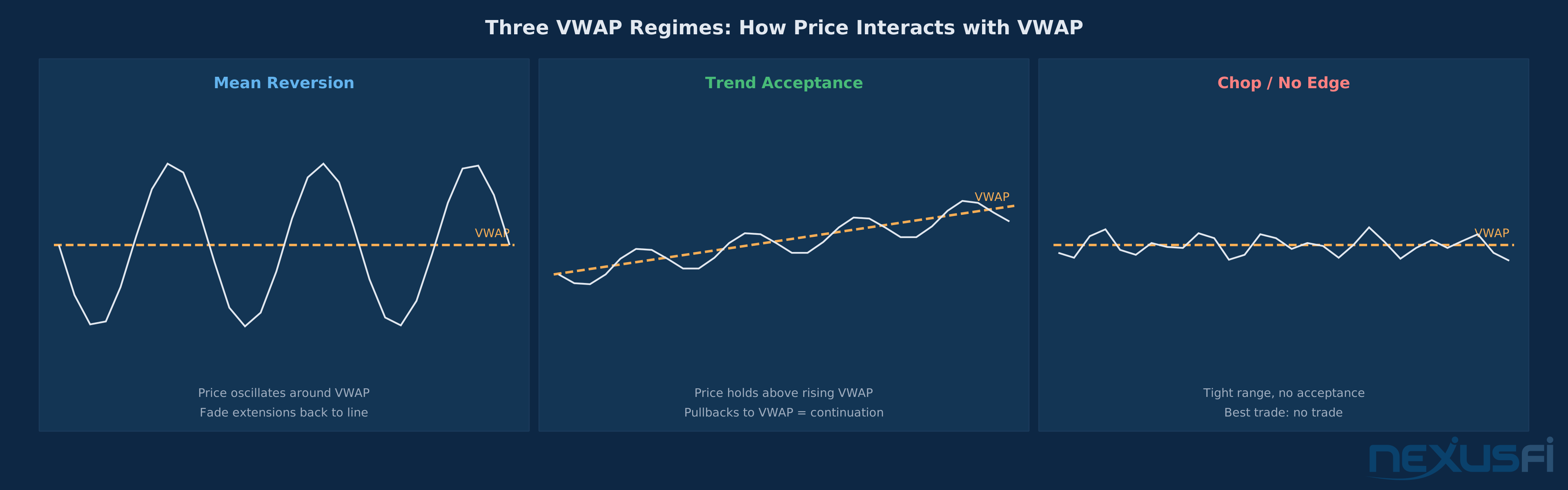
VWAP -- Volume Weighted Average Price -- is the cumulative average price weighted by volume over a specified period. The formula: VWAP = Σ(Price × Volume) ...
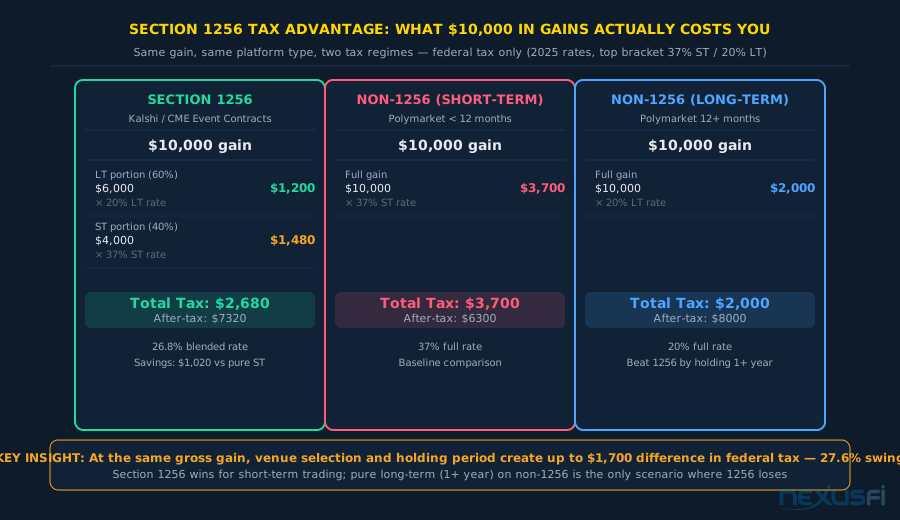
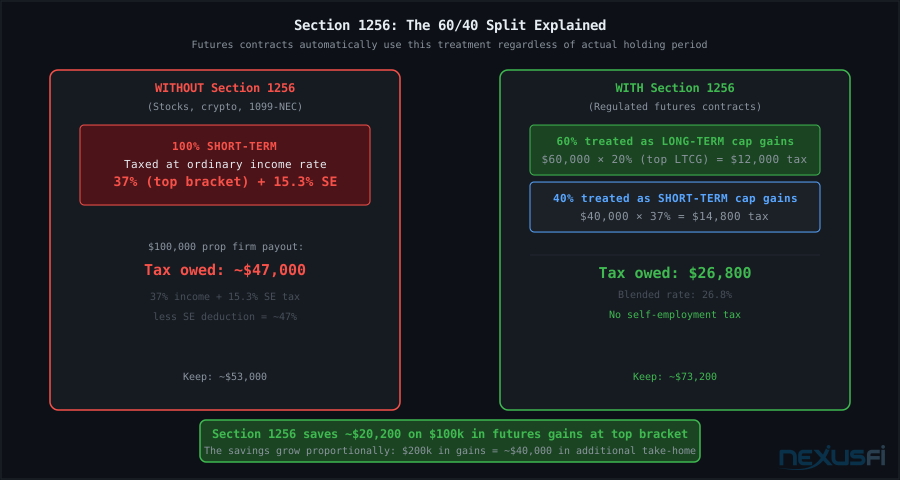
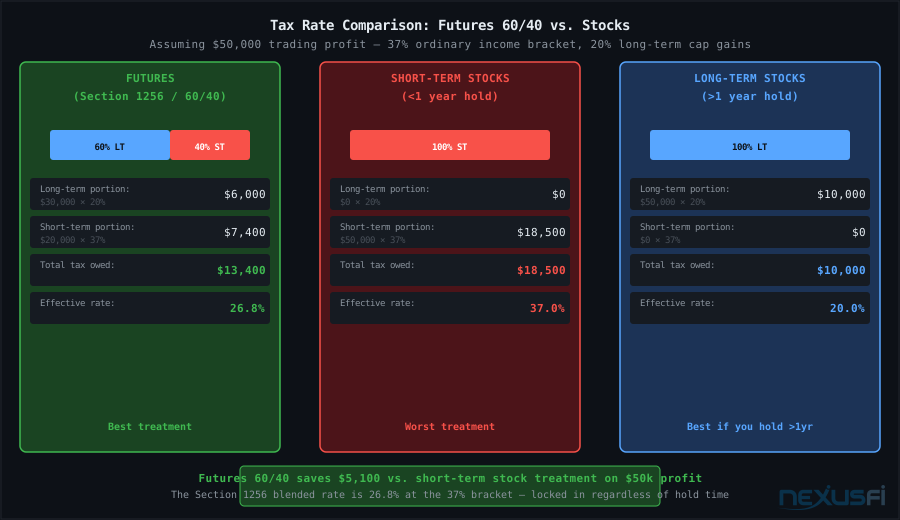
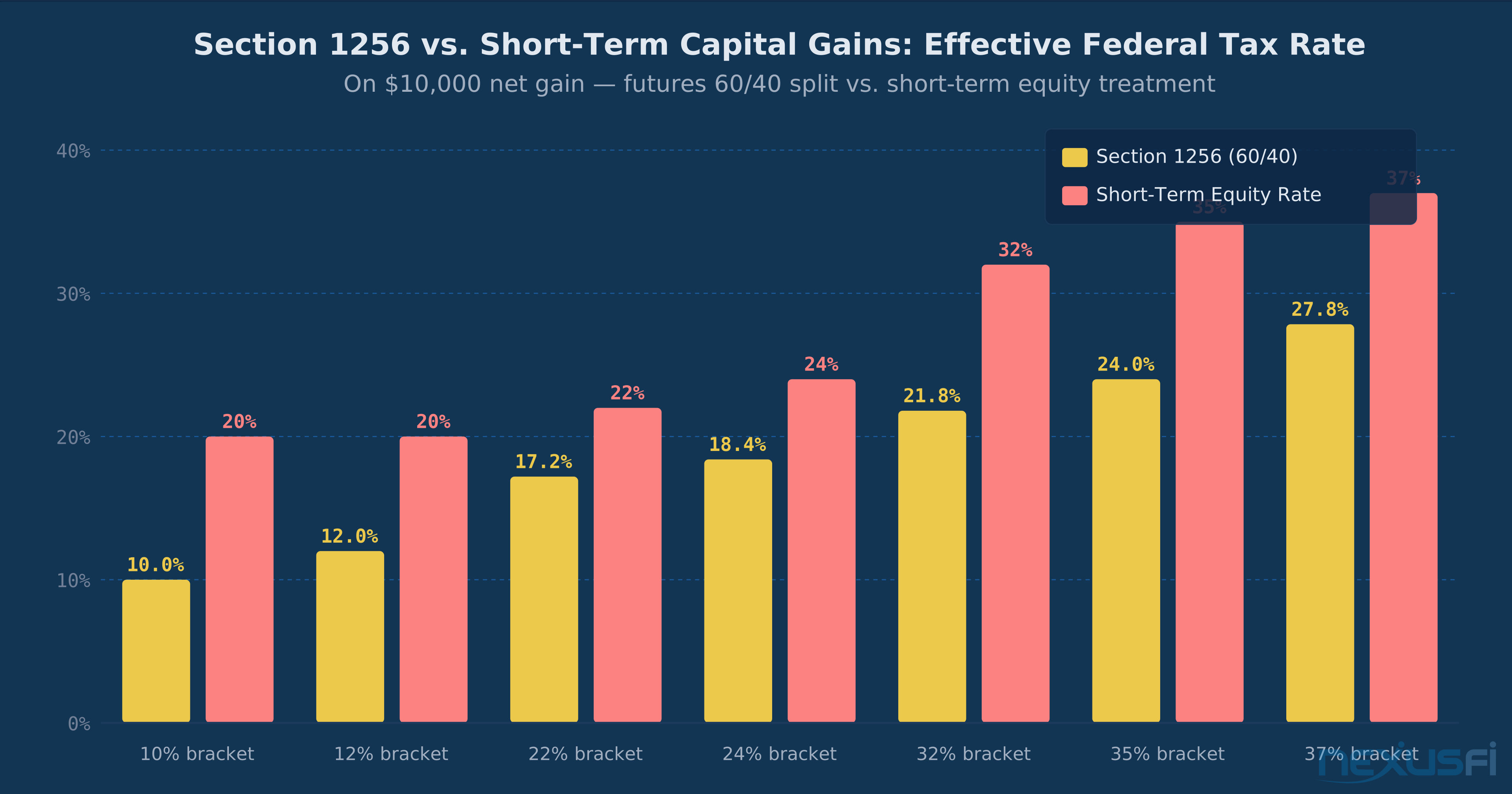
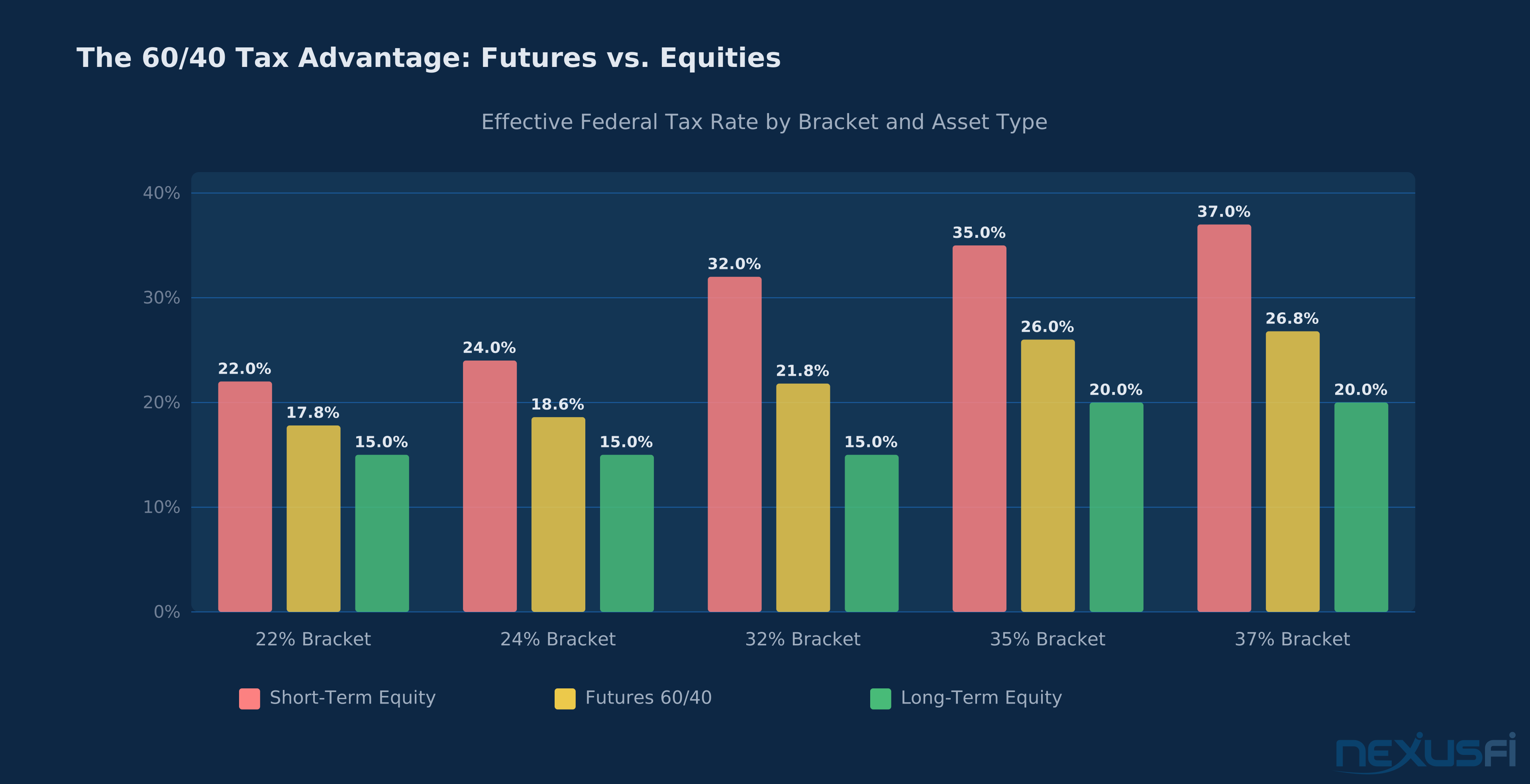
Section 1256 of the Internal Revenue Code grants futures traders a powerful structural tax advantage: the 60/40 split. Regardless of holding period, 60% of n...
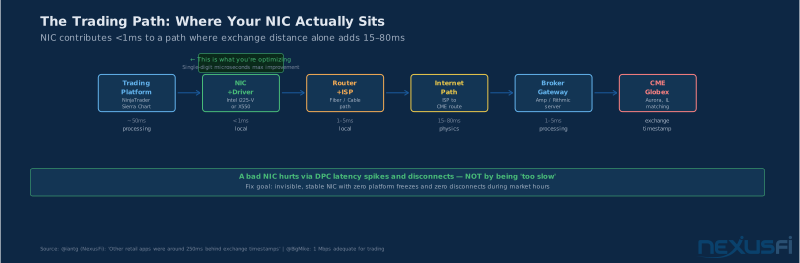
Your NIC is not your problem. That's the blunt truth most traders need to hear before they start shopping for a 10GbE card to fix their order fills. The domi...
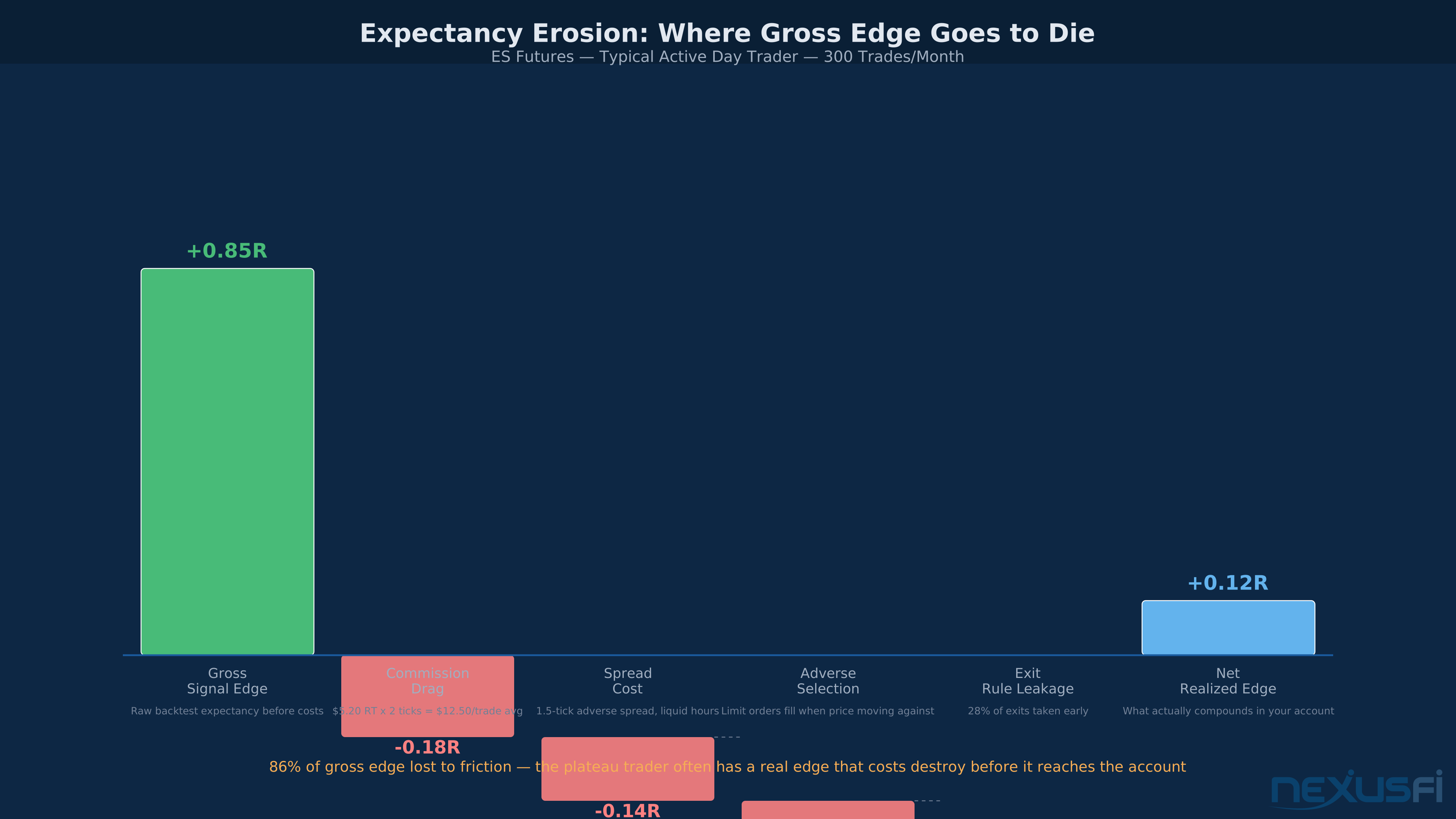
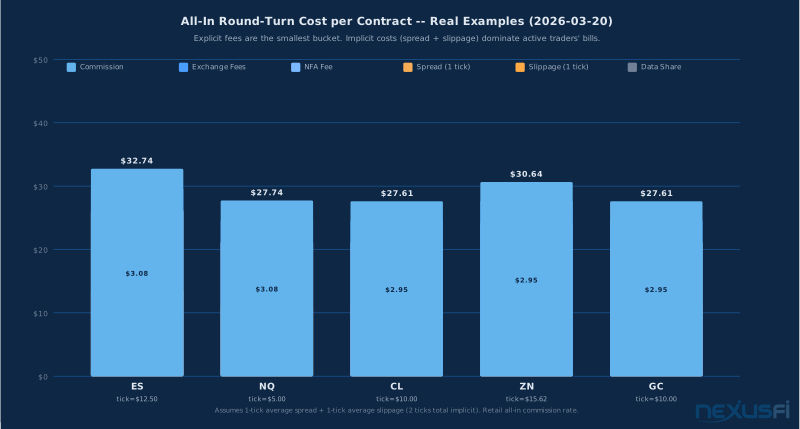
Overview Every futures trade costs more than the commission. That's the thing most traders figure out too late -- after months of watching profitable strateg...
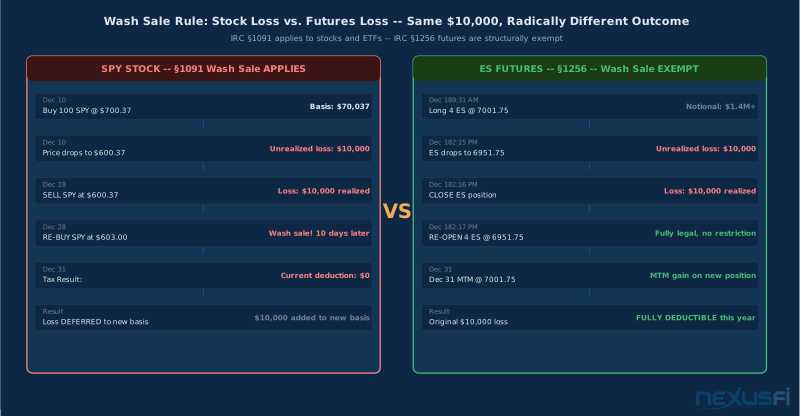
The wash sale rule exists to prevent traders from taking a tax loss while maintaining economic exposure to the same position. Sell SPY at a loss, buy it back...
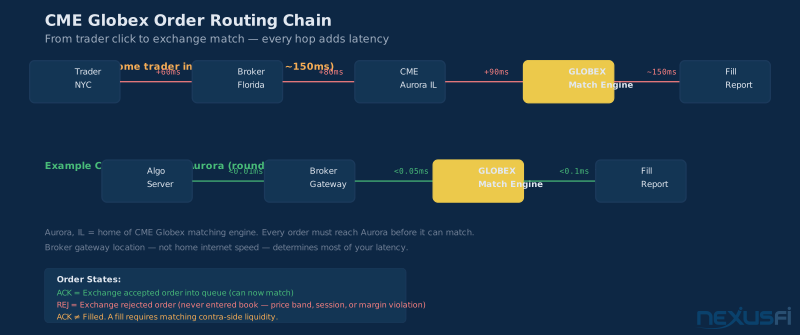
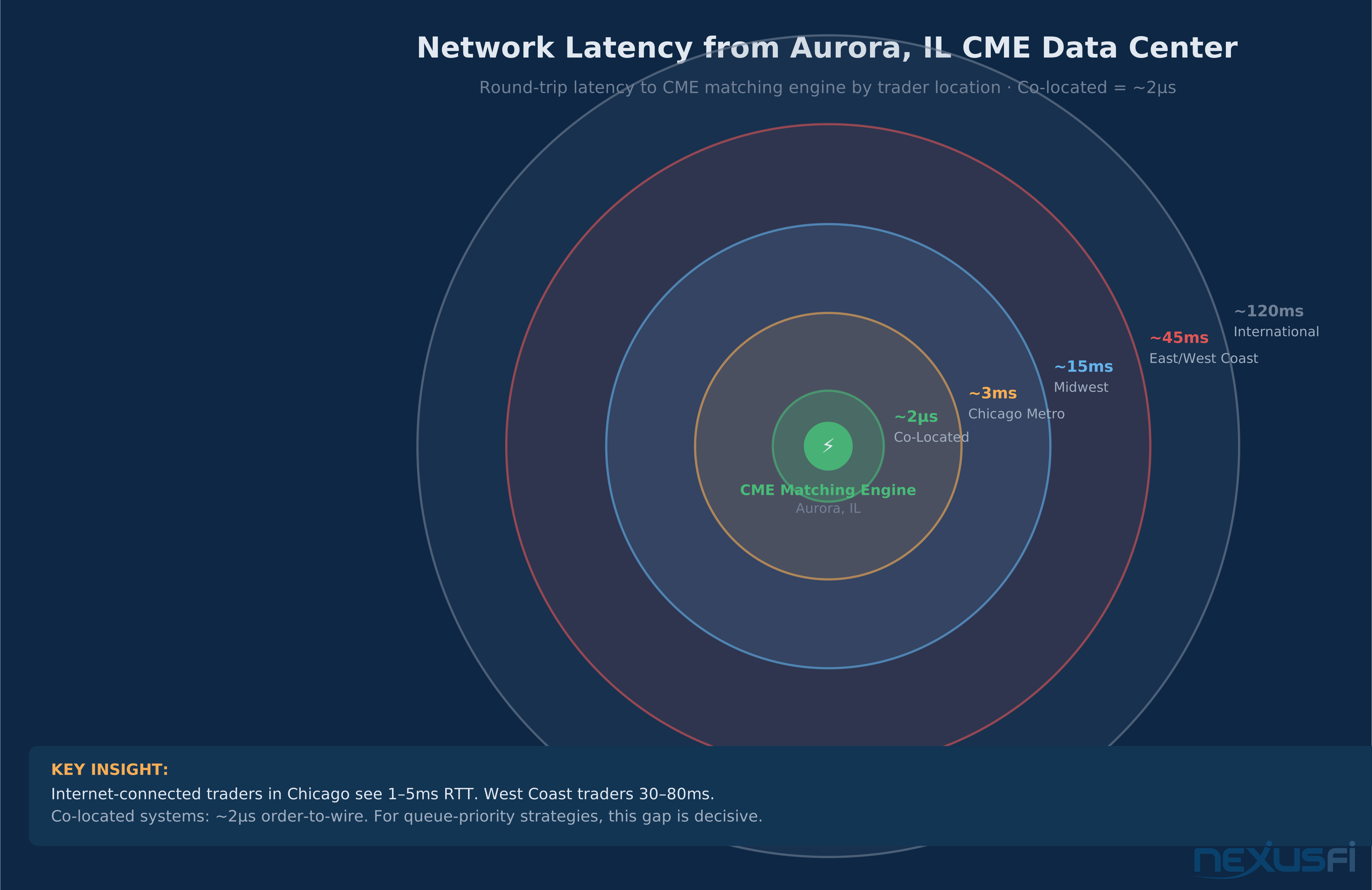
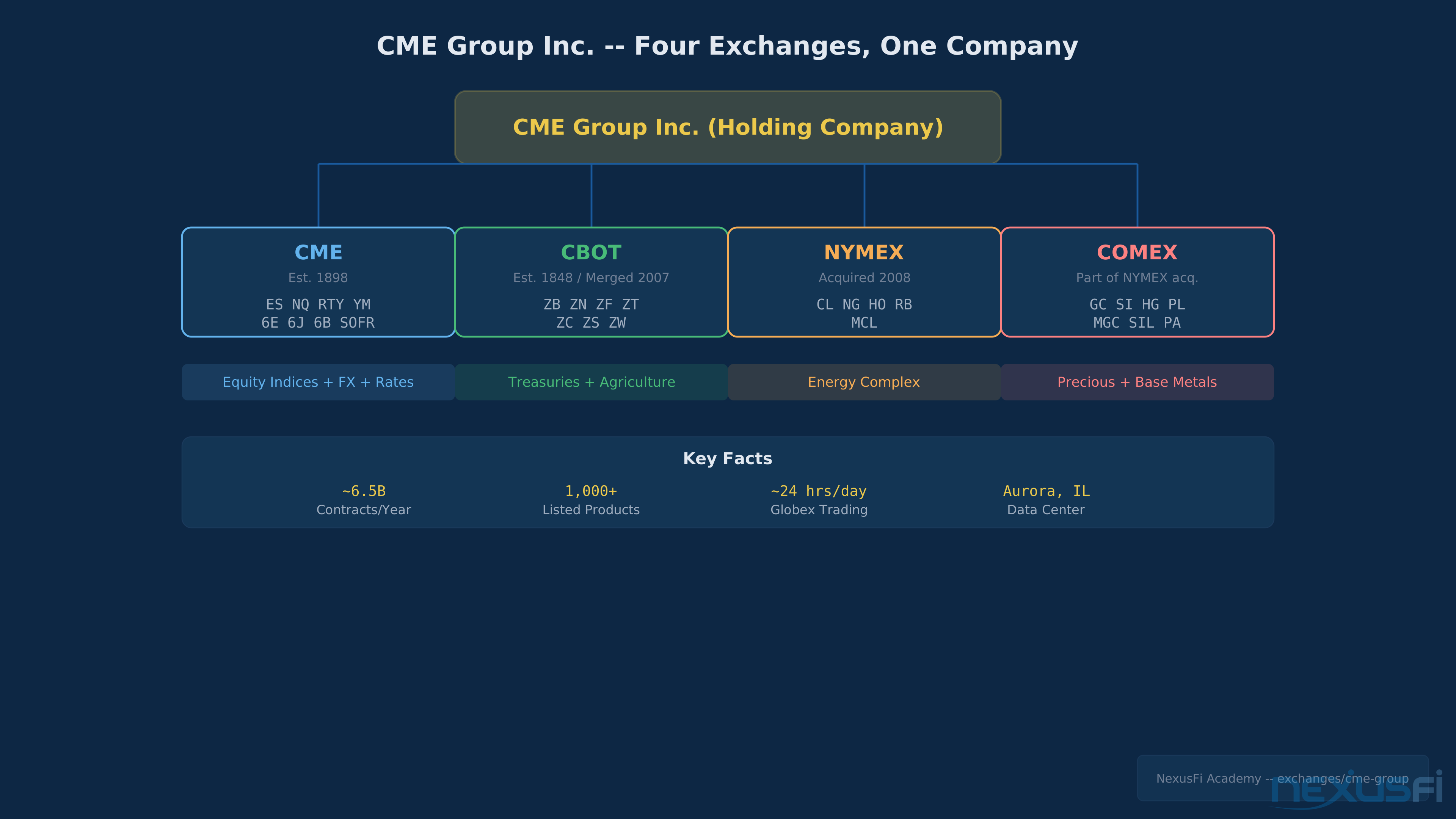
Overview Every futures fill you've ever gotten -- on ES, NQ, CL, ZN -- was decided in a data center in Aurora, Illinois. Not by your broker. Not by your trad...
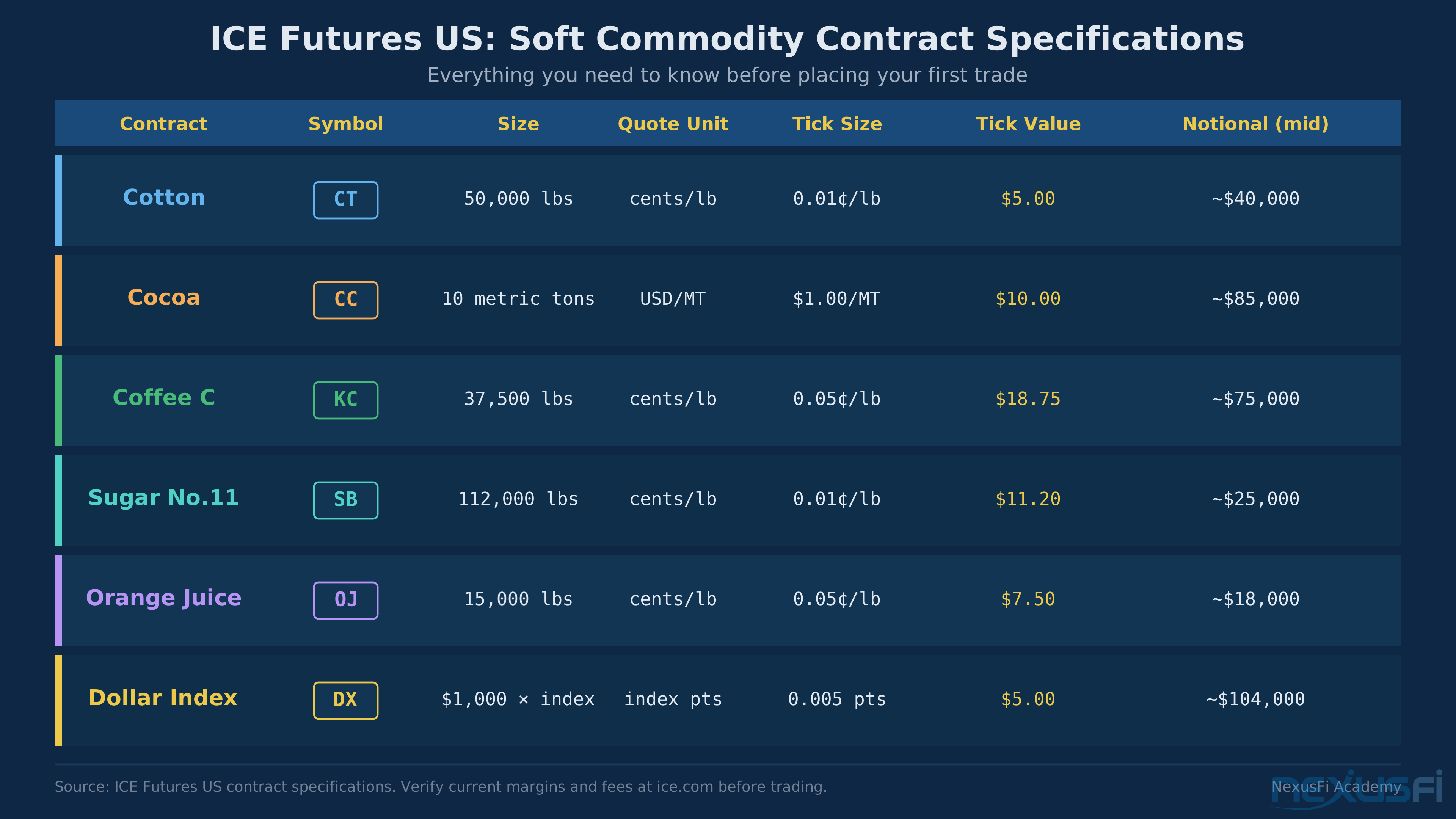
Cotton is one of the most volatile soft commodity futures on the planet. It gaps. It locks limit. It moves 5 cents in the first 60 seconds after a USDA repor...
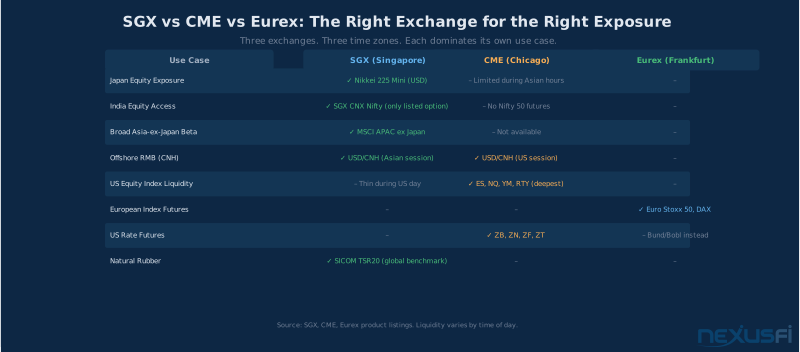
If you trade US markets, you probably know CME's uptime extends into Asian hours -- the Globex session technically runs overnight. But "access to Asian hours...
You trade well for the first two hours. Your entries are clean, your stops are where they belong, and you're following your plan like it's written in stone. ...
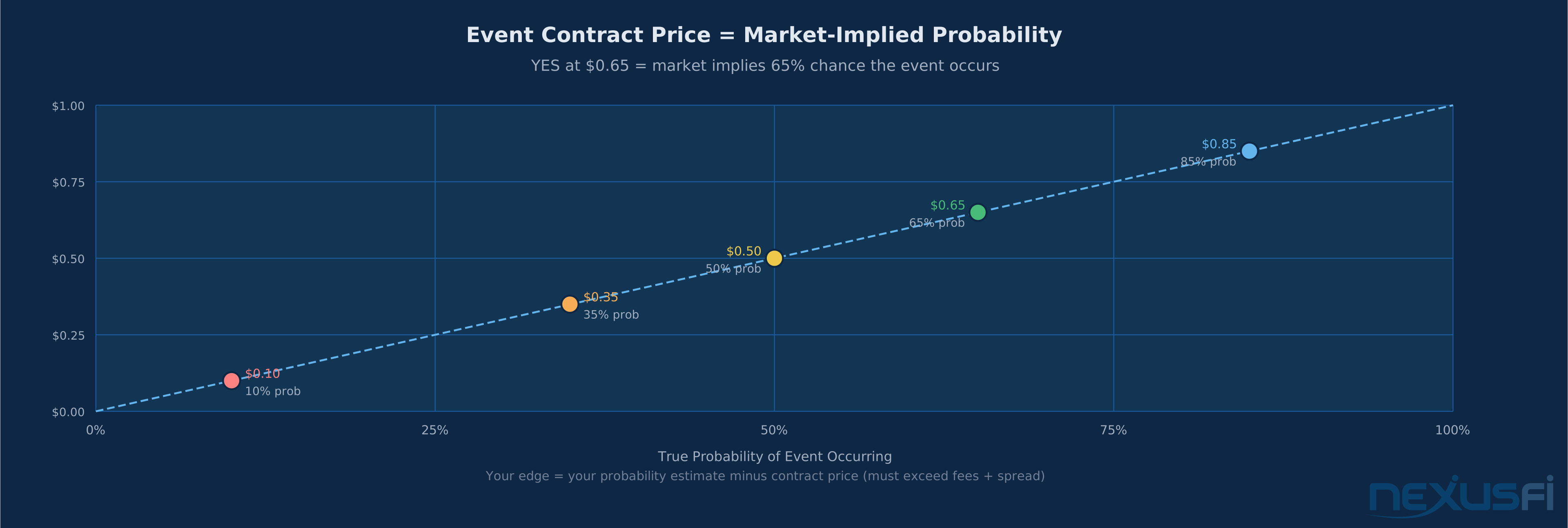
Prediction markets are one of the most intellectually honest financial instruments ever created. Unlike stocks, where you're betting on a company's future ea...
You spent three weeks grinding through a two-step evaluation. You hit the profit target on Day 18, stayed inside the drawdown on every session, traded minimu...
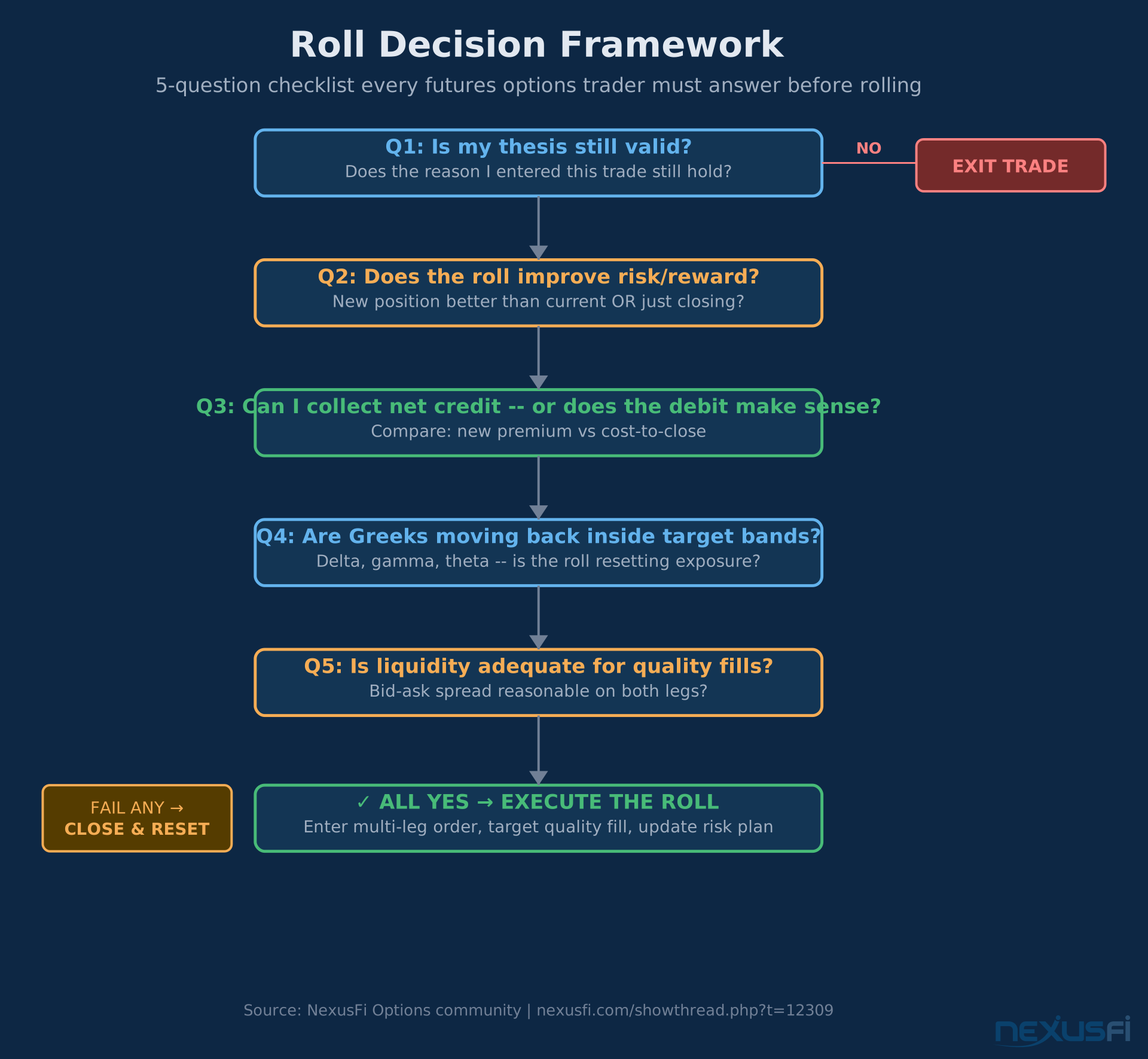
Overview Rolling an options position on futures is one of the most misunderstood risk management tools in the active trader's toolkit. Ask five traders what ...
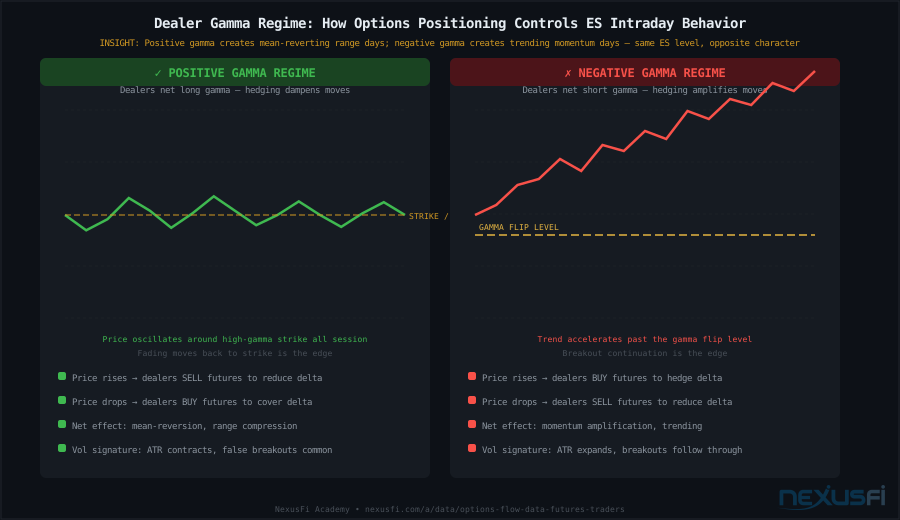
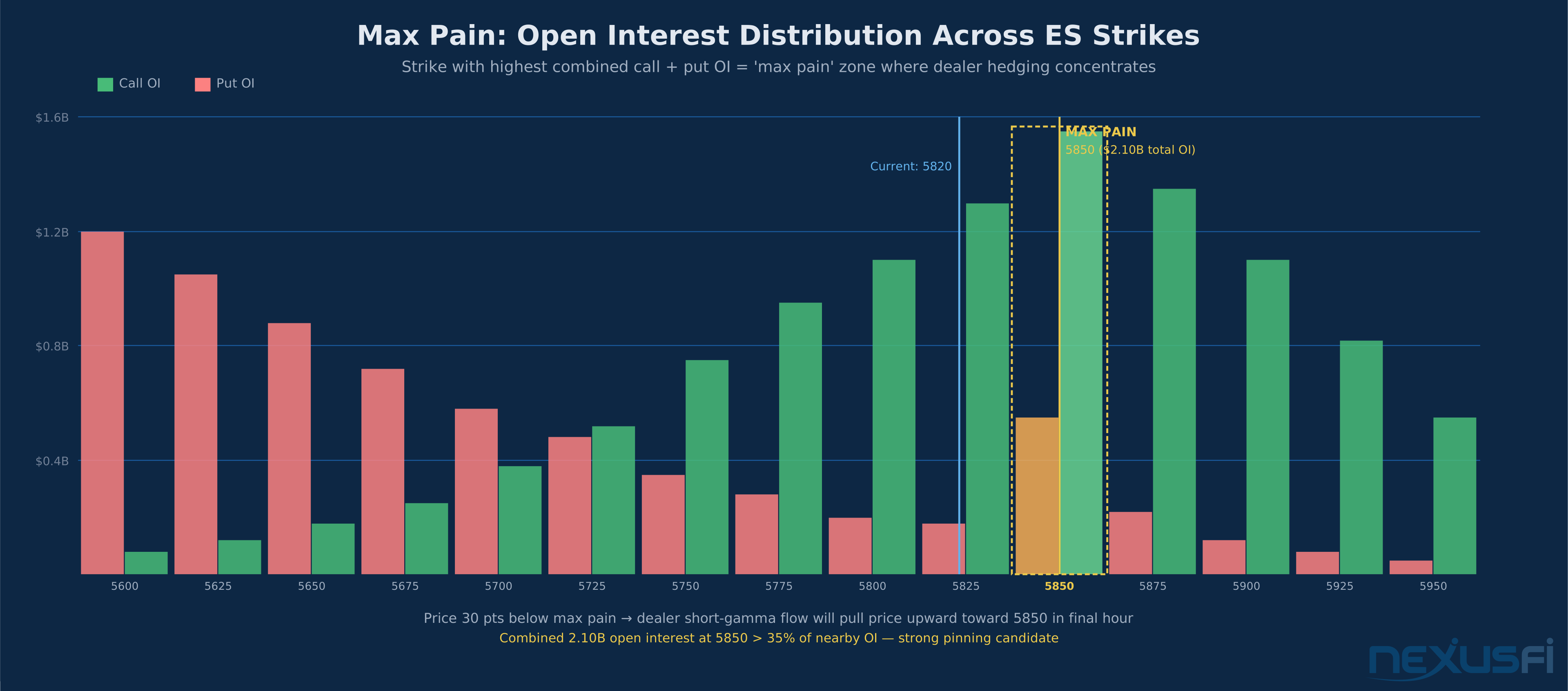
Overview Every experienced ES or NQ futures trader has seen it: price drifts toward a round number into Friday's close, oscillates there for an hour, then se...
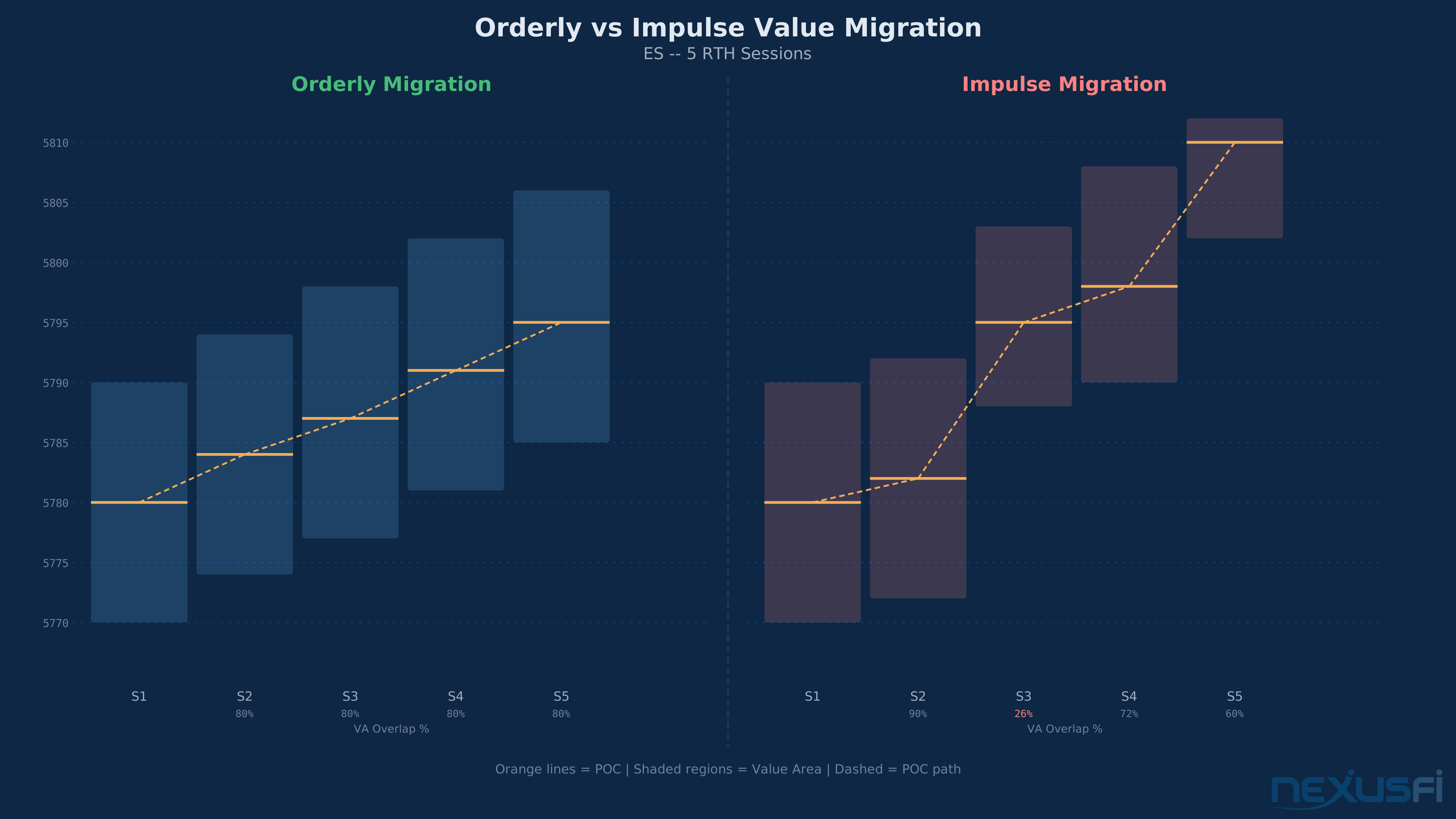
Value migration tracks the directional movement of the Point of Control and Value Area across sessions. Not price -- value. Price can move without value movi...
Every experienced futures day trader arrives at their platform before the market opens with the same task: build the map. Before a single order is placed, be...
Overview Currency futures are exchange-traded contracts to buy or sell a specific amount of one currency at a predetermined rate on a fixed future date. They...
Overview Most futures traders spend a lot of time thinking about where the market is going. They spend almost no time thinking about whether their account ca...
Overview You take a short. The RSI has been making lower highs while price has been making higher highs — textbook bearish divergence. You're confident. Th...
TradingView's Financials feature gives you access to income statement, balance sheet, and cash flow data directly within the charting interface. Available fo...
Databento is an API-native market data platform that gave retail systematic traders access to institutional-grade CME futures tick data at transparent, usage...
Before this article, make sure you're comfortable with: - Market Internals and Breadth Indicators — Understanding $TICK, $ADD, and how index concentration ...
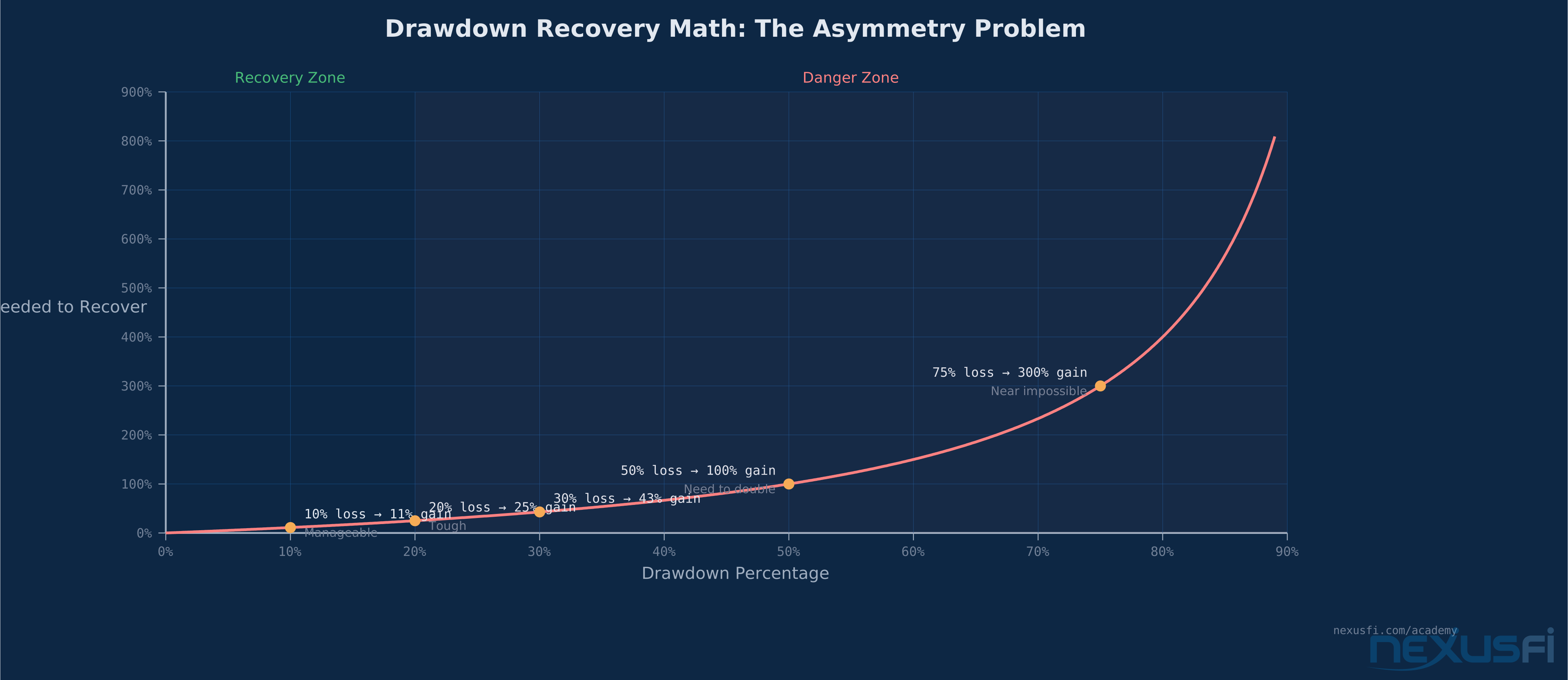
Drawdown is the distance between your equity peak and where you are now. In futures trading, leverage makes this number move faster and hit harder than anywh...
VWAP -- Volume Weighted Average Price -- is the single line on your chart that every institutional desk in the world is watching. Not because it's a magic in...
Every 5-minute candle exists inside a 1-hour move, which exists inside a 4-hour swing, which exists inside a daily trend. Ignoring that hierarchy doesn't mak...
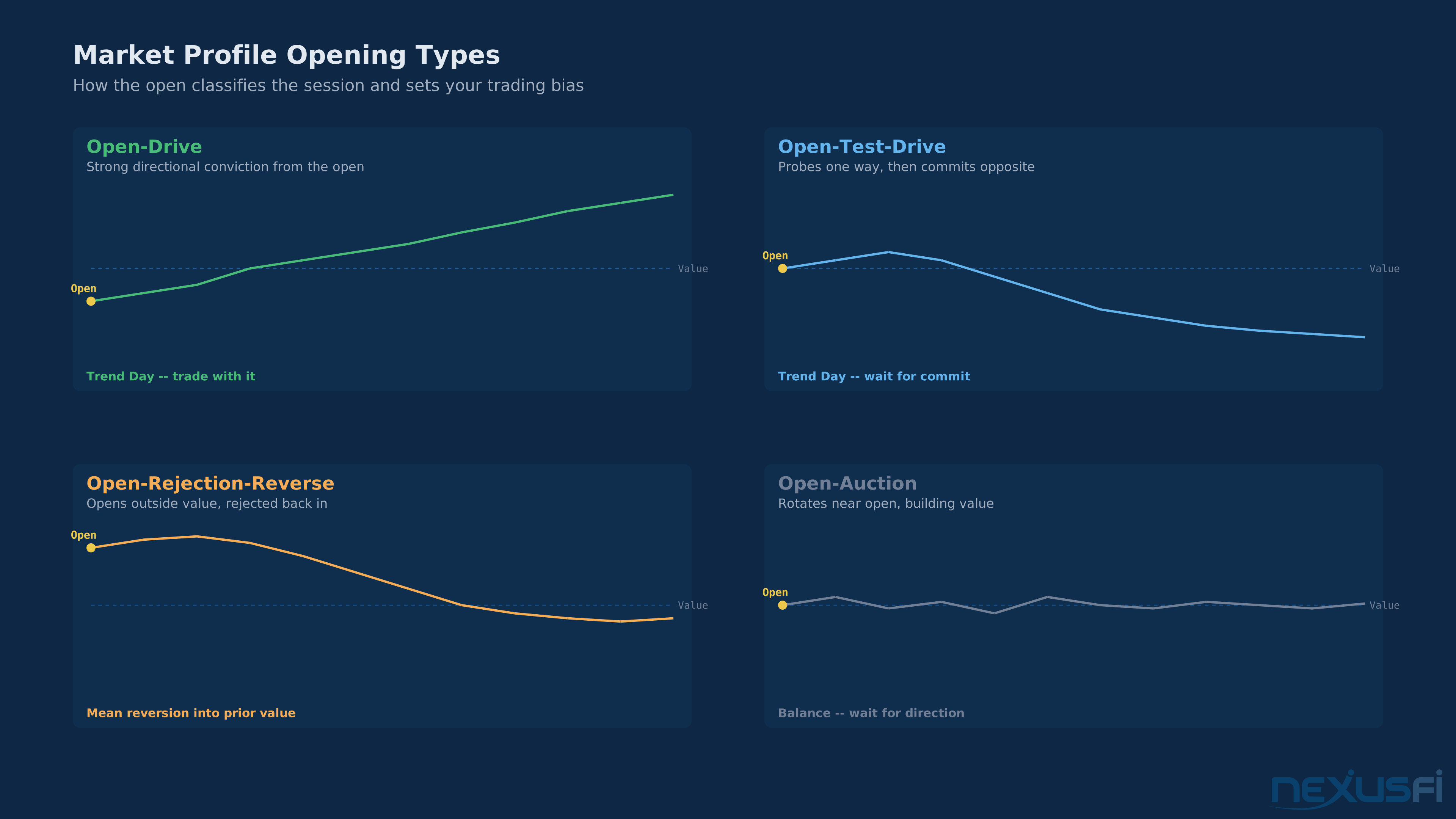
How the market opens relative to prior value is one of the most actionable reads you can make all day. The open type tells you whether other timeframe (OTF) ...
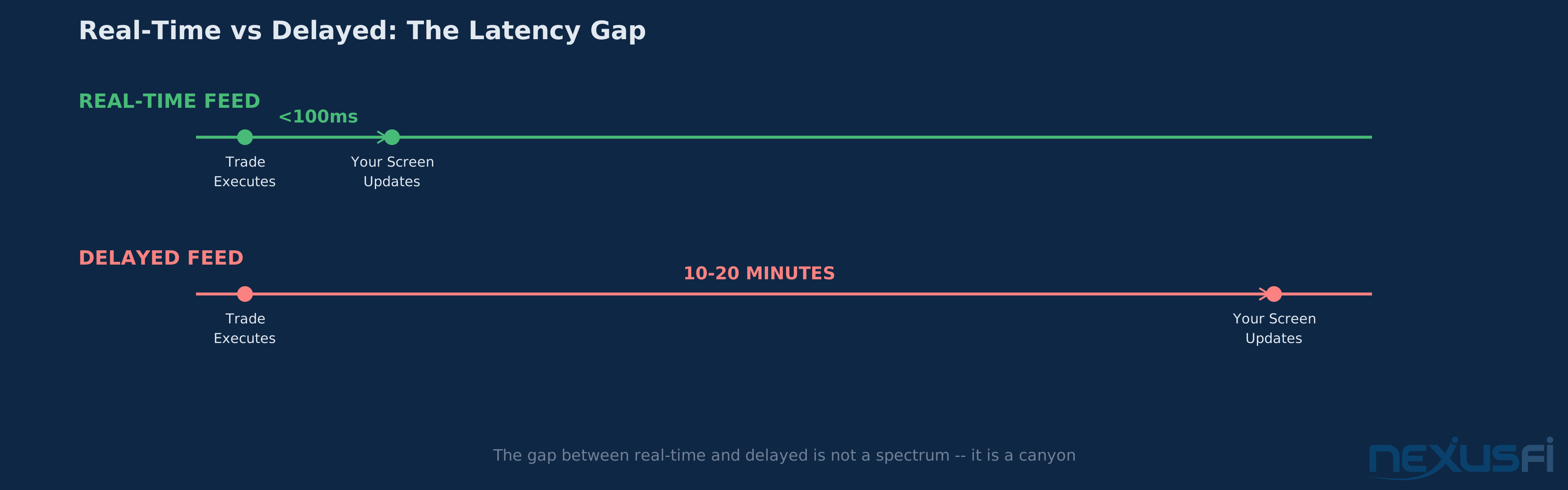
Real-time data delivers market information -- prices, quotes, trades, order book updates -- as it happens, with latency measured in milliseconds. When ES tic...
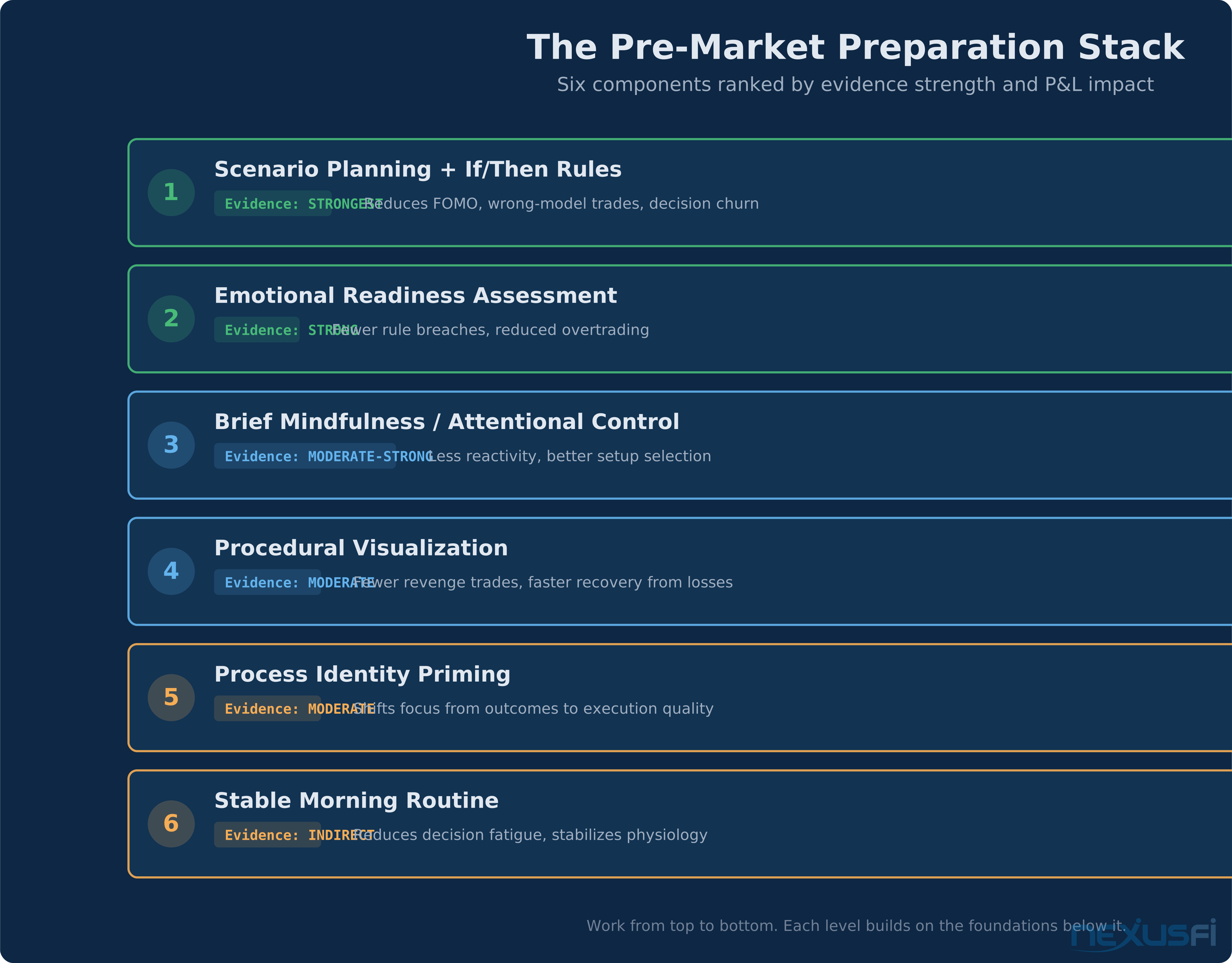
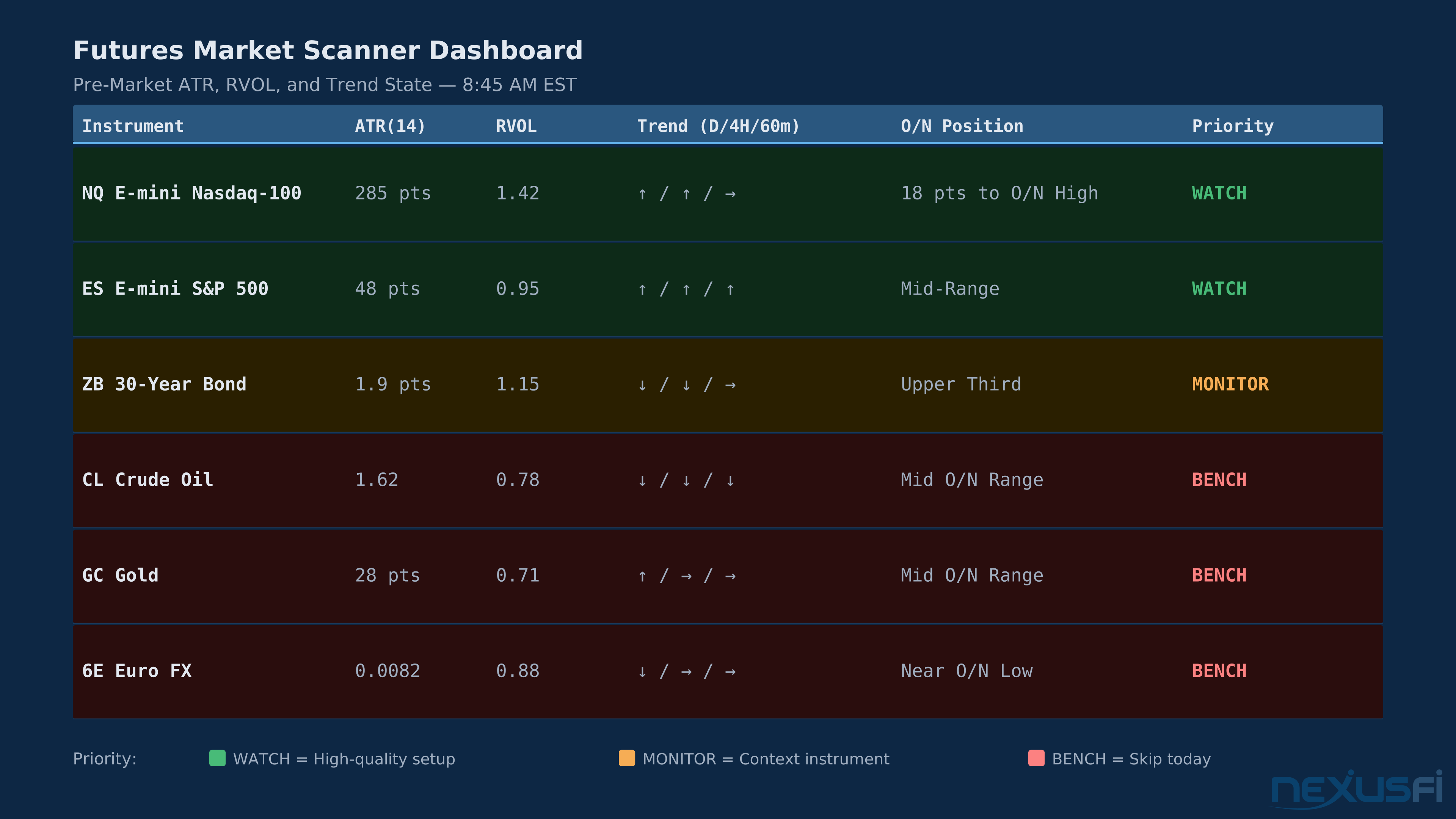
Most day traders spend their pre-market prep reviewing yesterday's chart, maybe checking the economic calendar, and glancing at the current futures quote. Th...
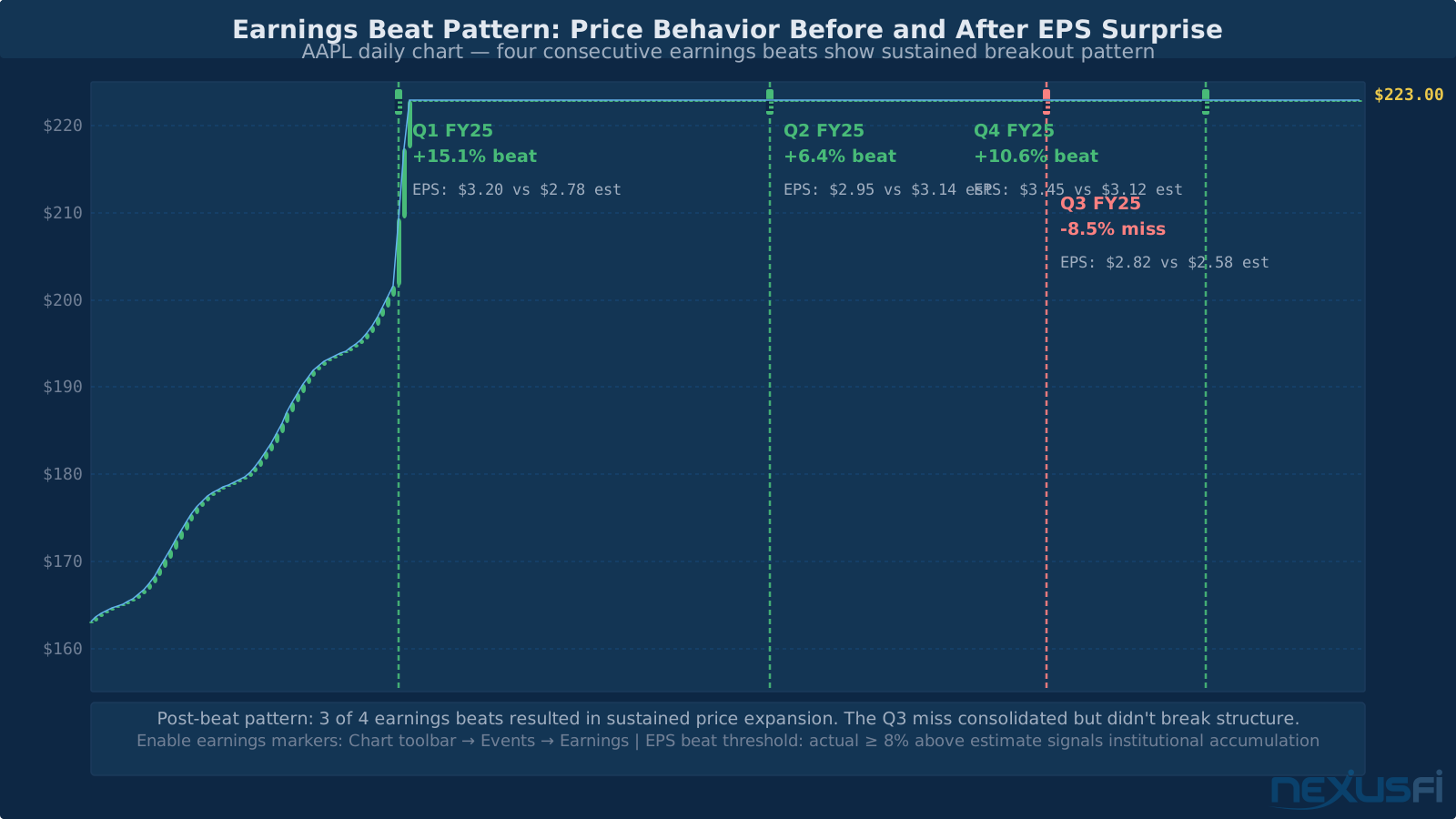
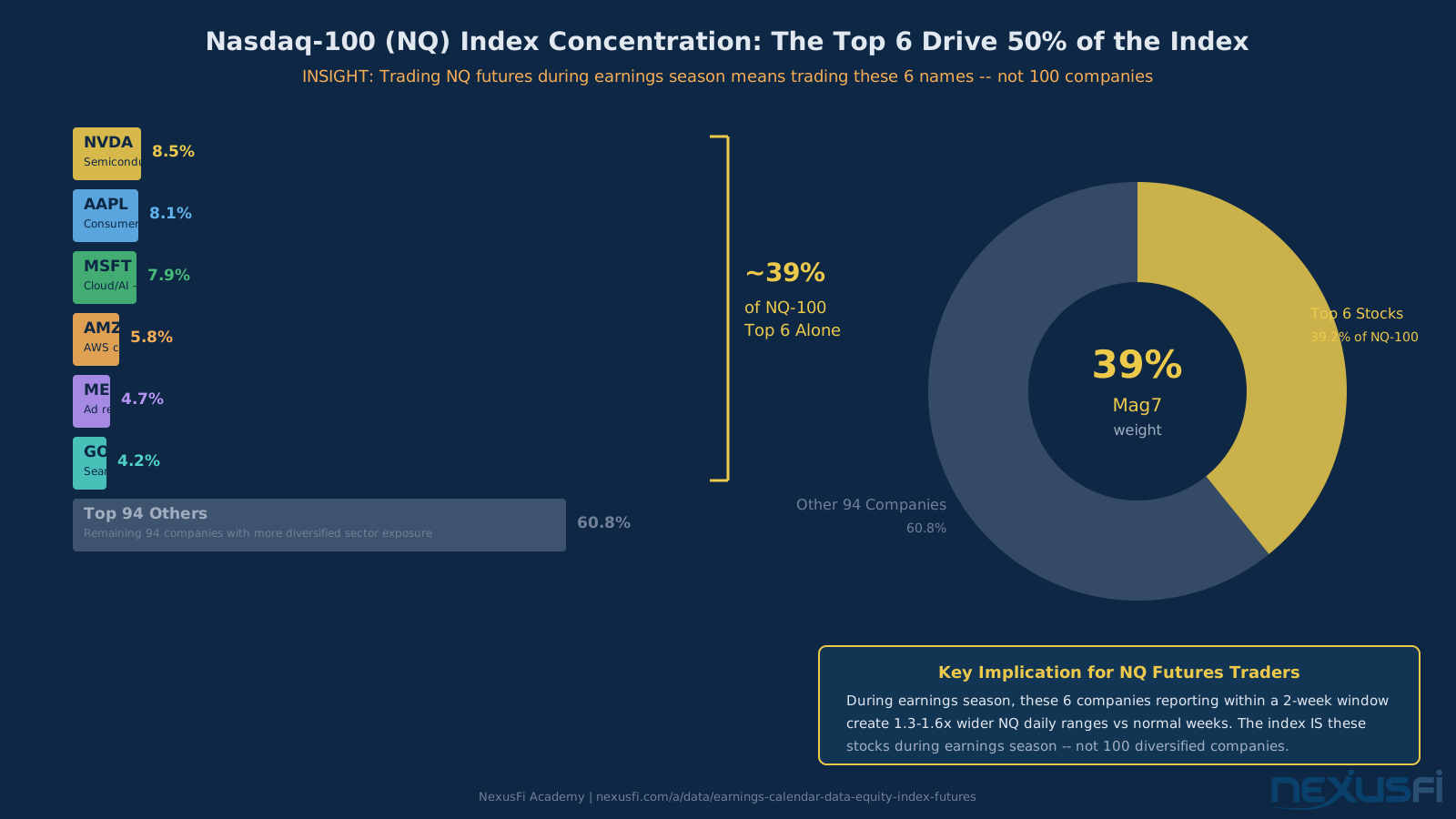
Overview Earnings season runs four times a year and every time it does, futures traders watch the same ritual: NVDA gaps $40, TSLA rips 15% after-hours, AAPL...
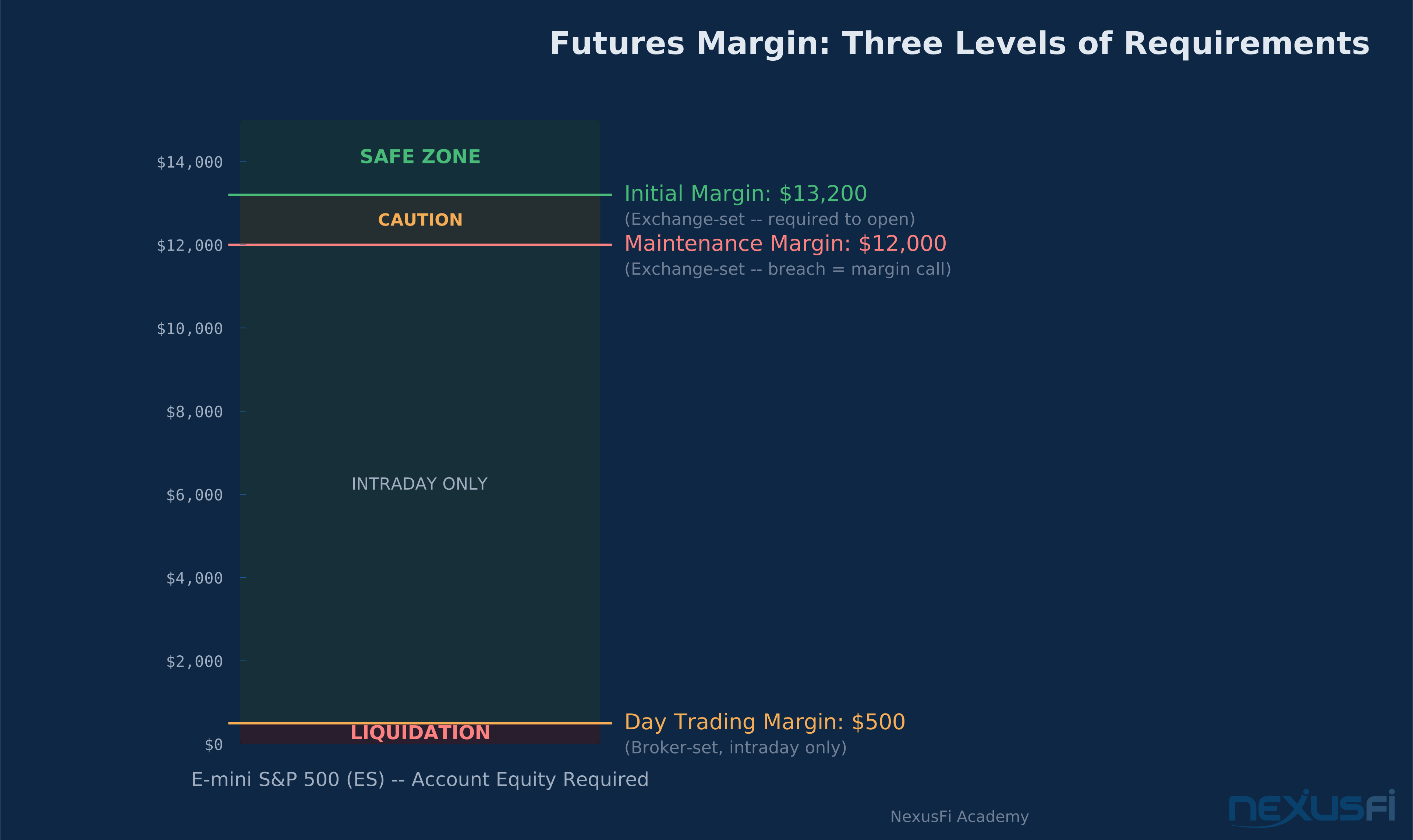
Overview Every time you open a futures position, your broker debits a specific dollar amount from your account before a single tick has moved. That number --...
Overview The most expensive trade any futures trader makes isn't a bad entry on a news spike or a position held through a margin call. It's the invisible cos...
Overview You can blow up a futures account in a morning. Three bad trades, a margin call, and you're staring at a balance that wasn't supposed to be possible...
Position sizing in futures is the most consequential decision you make before a trade -- not the entry, not the indicator, not the setup quality. Get it righ...
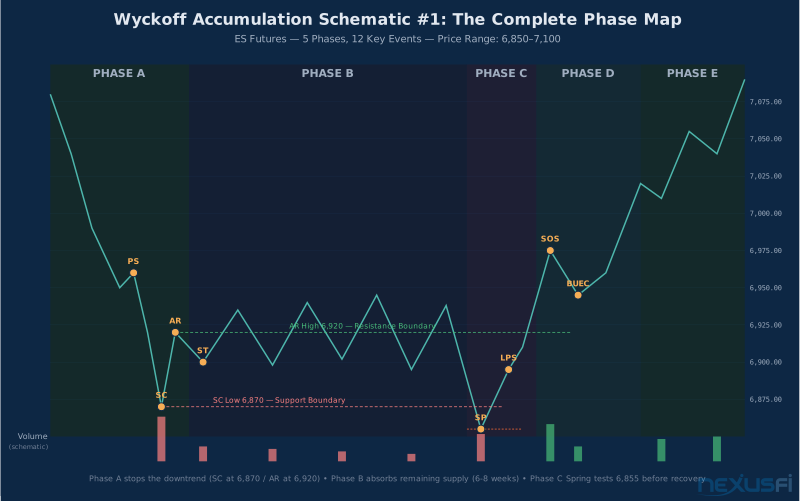
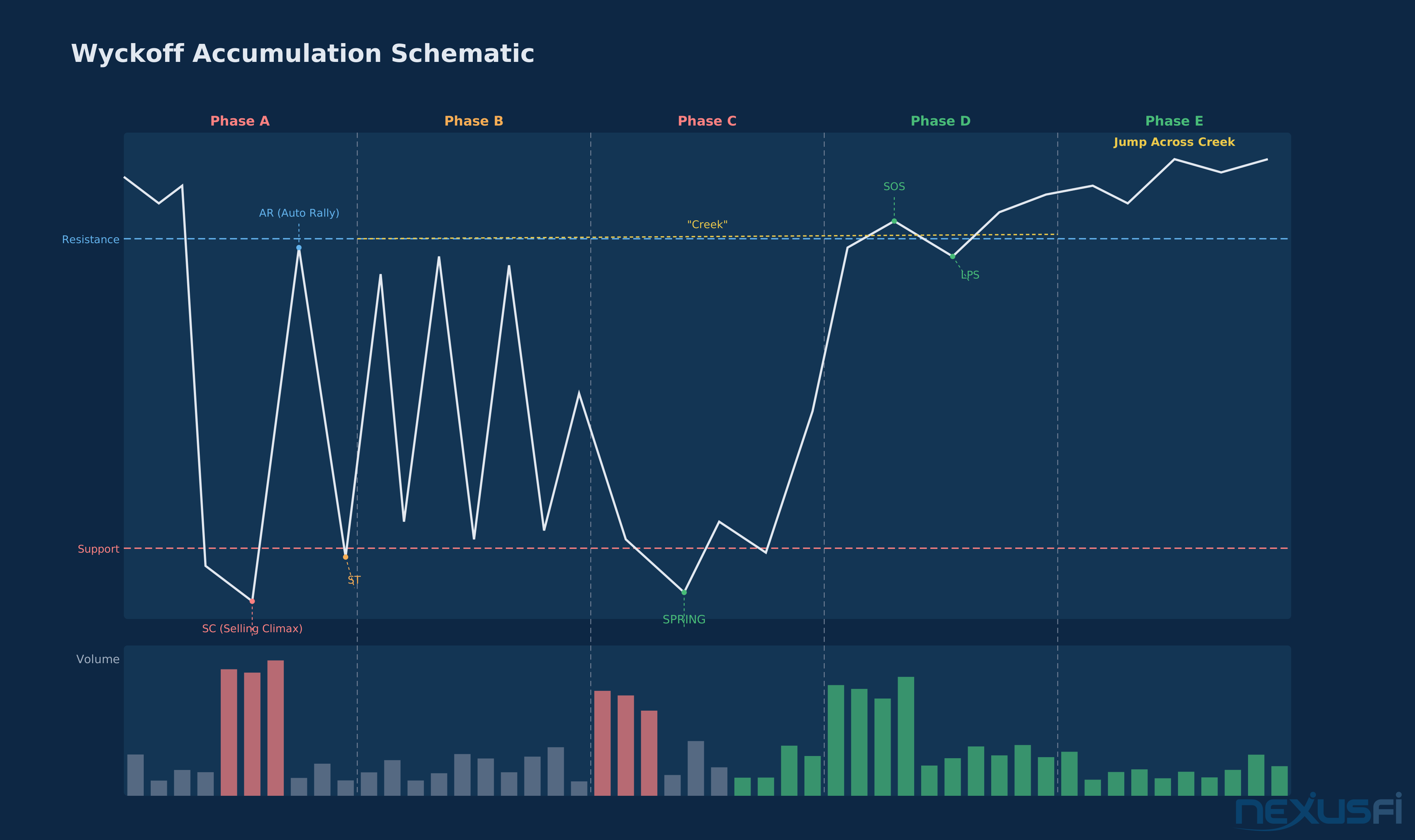
Most traders who discover Wyckoff's method get excited about the schematics -- the numbered phases, the labeled events (PS, SC, AR, ST, Springs, Upthrusts), ...
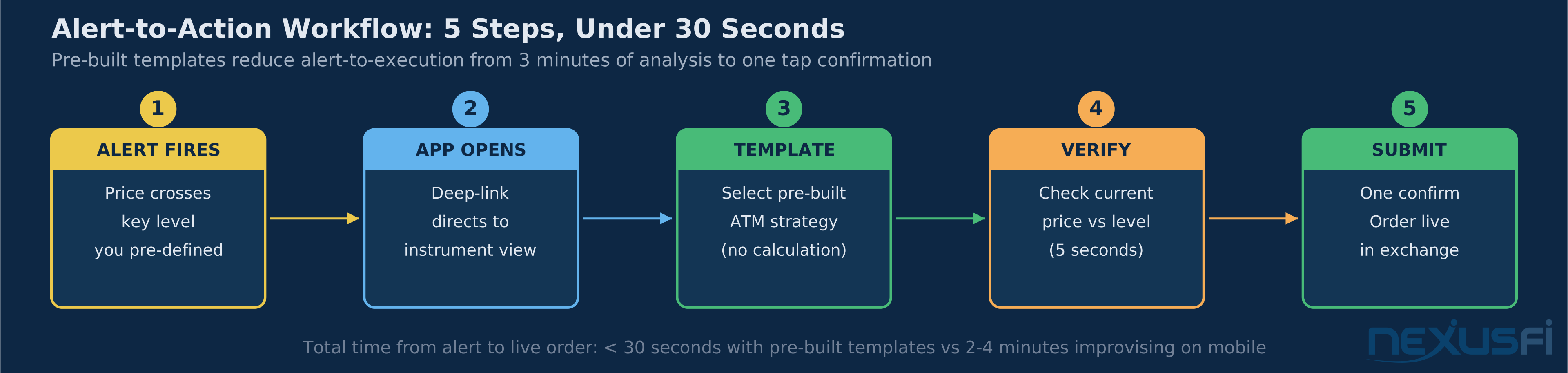
Overview Your phone buzzes at 1:47 PM. ES just hit the level you've been watching since morning. You're three blocks from the office, waiting for coffee. The...
Position sizing is where most prediction market traders lose money -- not because their probability estimates are wrong, but because they size positions with...
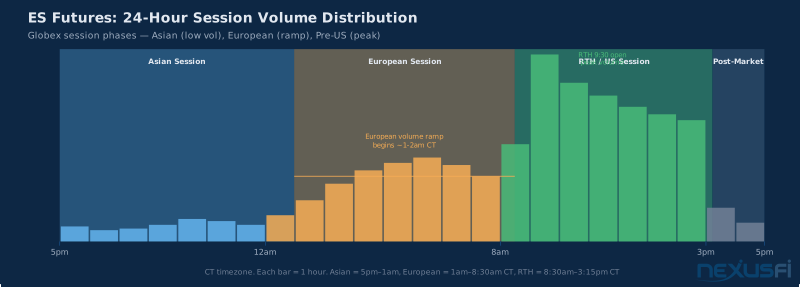
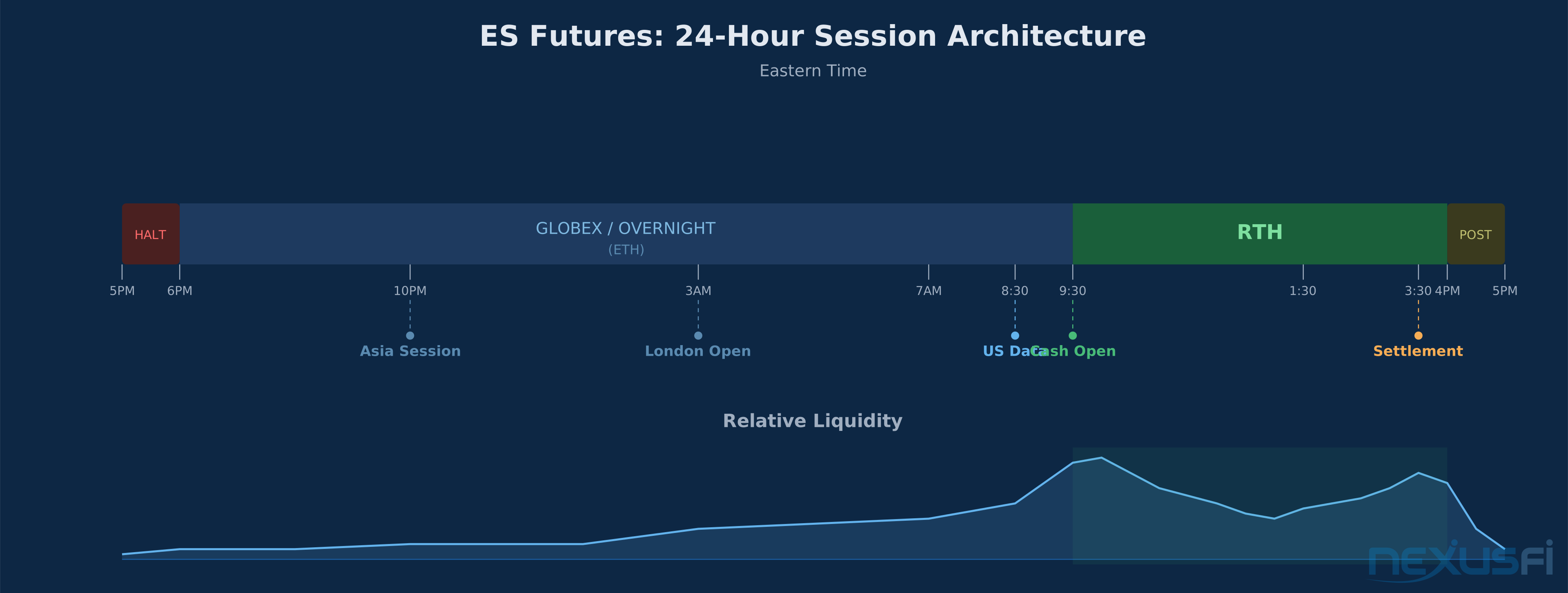
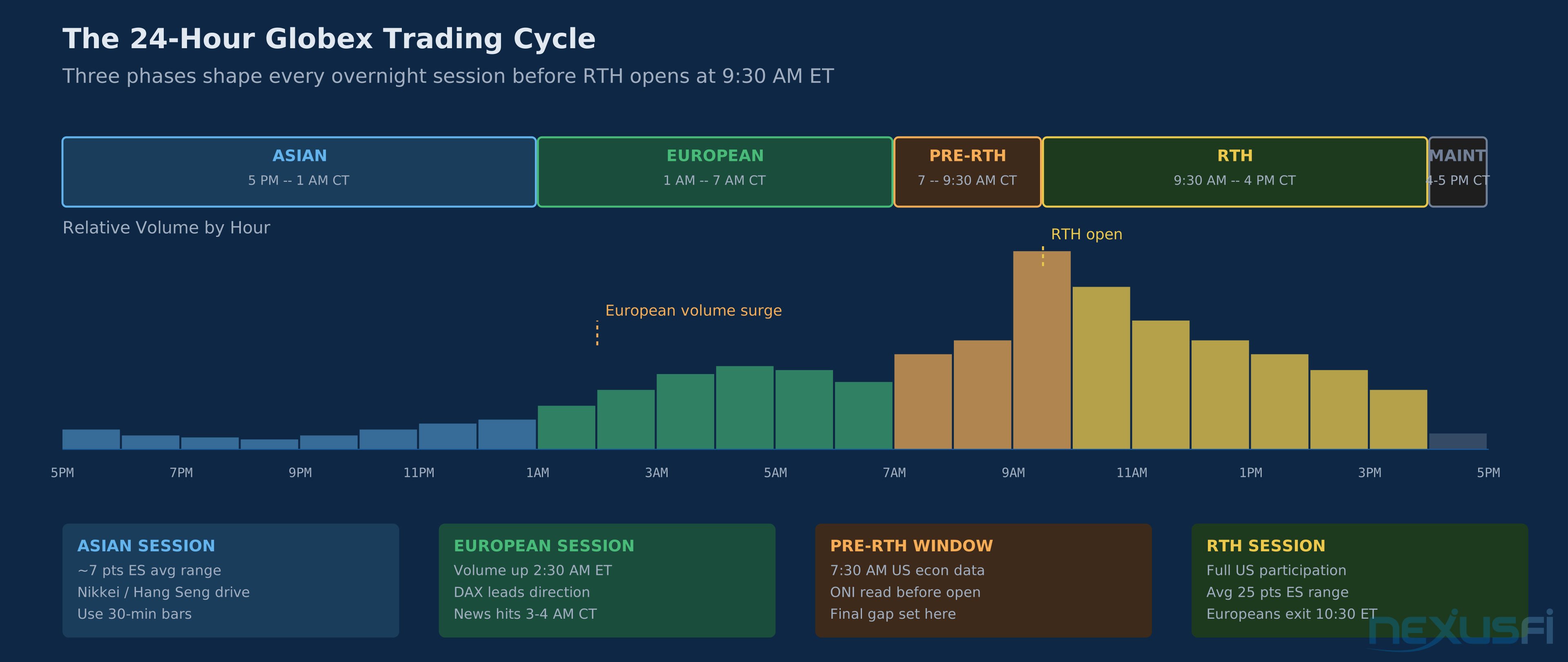
Every futures market runs on a clock, and the transitions between sessions are the moments when the market's personality changes. Not gradually -- abruptly. ...
Market Profile day types are the five structural classifications that describe how each trading session organizes its auction: Normal, Normal Variation, Tren...
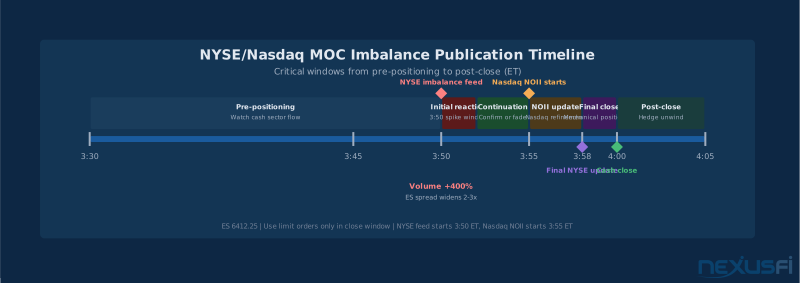
Overview Every trading day ends with a race. At 3:50 PM ET, the NYSE publishes an imbalance feed showing exactly how many shares need to buy or sell at the c...
Before any discussion of stops, targets, or trailing methods, there's one question every trade plan must answer: Where is my thesis wrong? This is the invali...
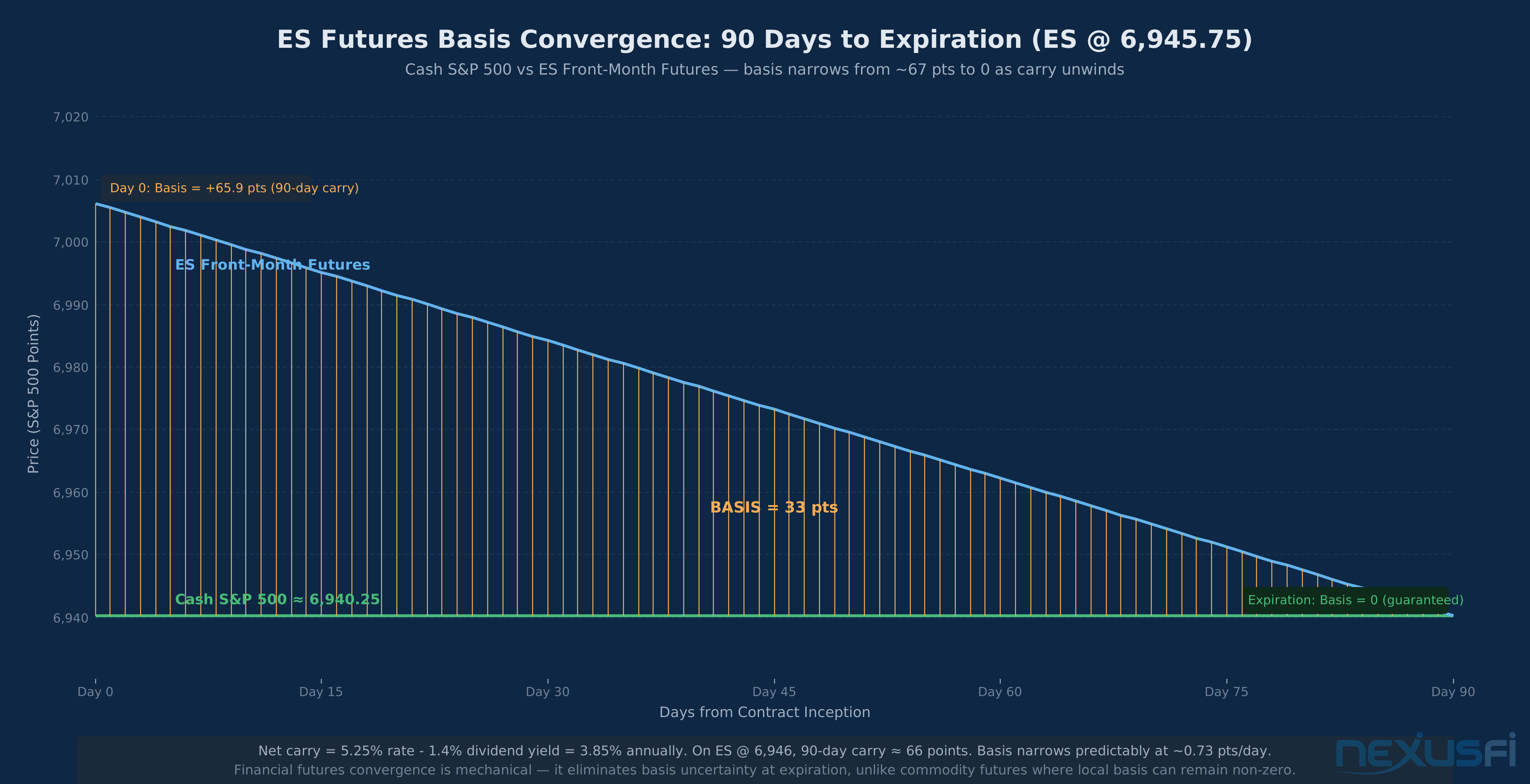
Basis is the difference between the cash (spot) price of an asset and the price of its futures contract. On any given day, ES futures trade at a different pr...
Most futures traders watch the order book and time & sales the same way every day: they see bids, offers, aggression, sweeps, and the normal mechanics of pri...
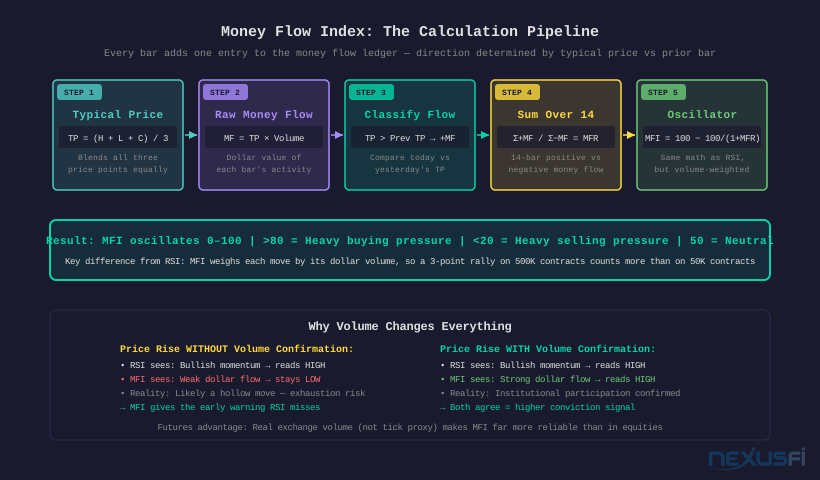
The Money Flow Index (MFI) is a volume-weighted momentum oscillator that ranges from 0 to 100. It answers a question RSI can't: is the price move backed by r...
Overview The Force Index has exactly one job: it tells you whether volume is supporting a price move or undermining it. That sounds simple, but it solves a p...
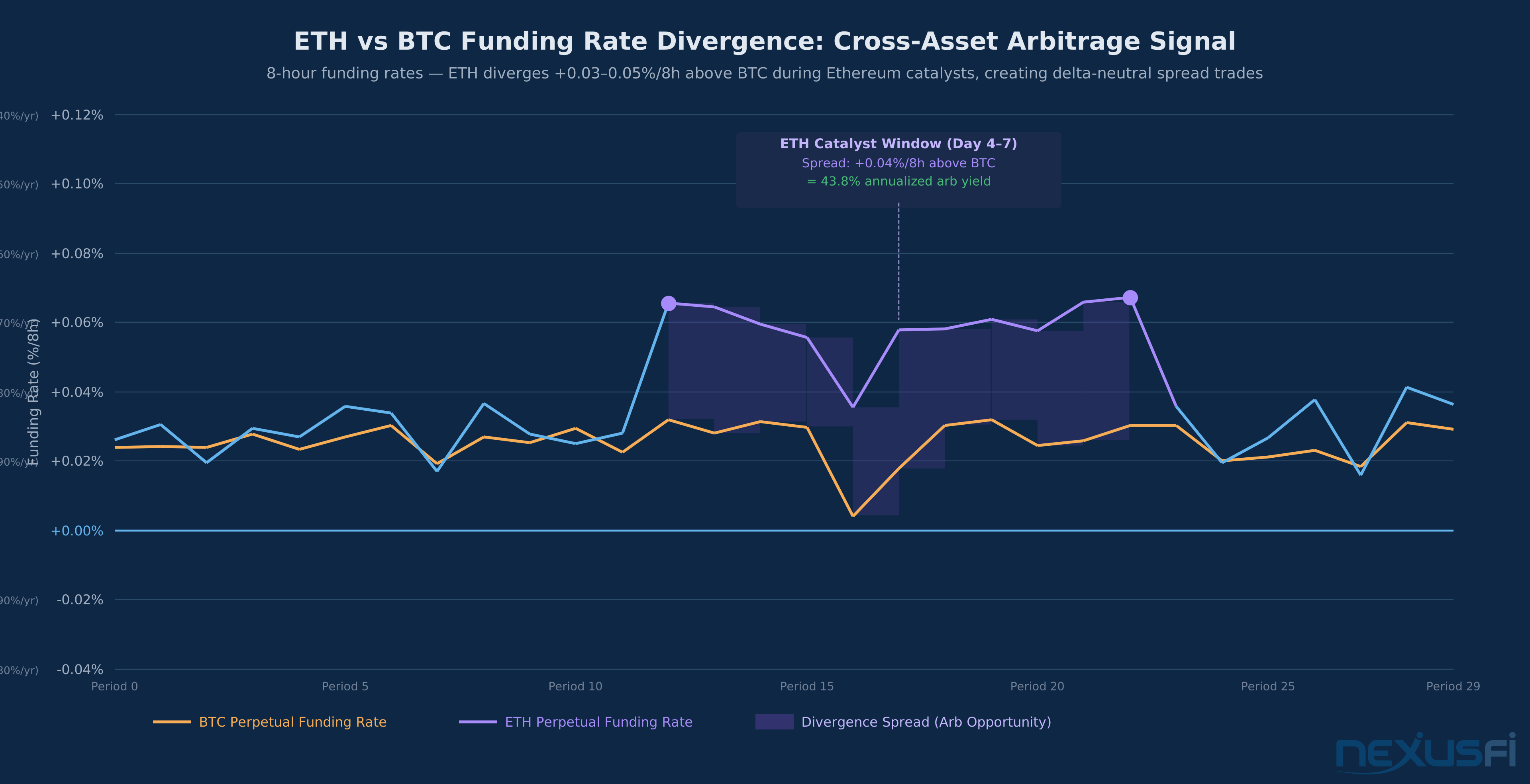
The CFTC's May 29, 2026 approval of BTCPERP on Kalshi was the regulatory opening, not the destination. Within six days, Kalshi launched Ethereum perpetuals. ...
There's a question that comes up constantly on NexusFi: can you trade futures from a remote location using Starlink satellite internet? It's not a theoretica...
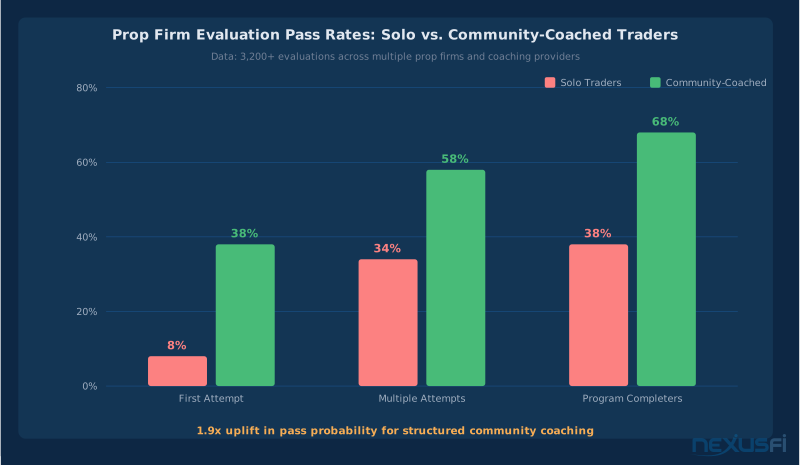
Overview Most traders who fail prop firm evaluations don't fail because they can't trade. They fail because they can't trade under constraints -- alone, with...
Tradovate is a NexusFi sponsor. View their full company profile, current pricing, Elite member offers, and community reviews. View Tradovate in the Directory...
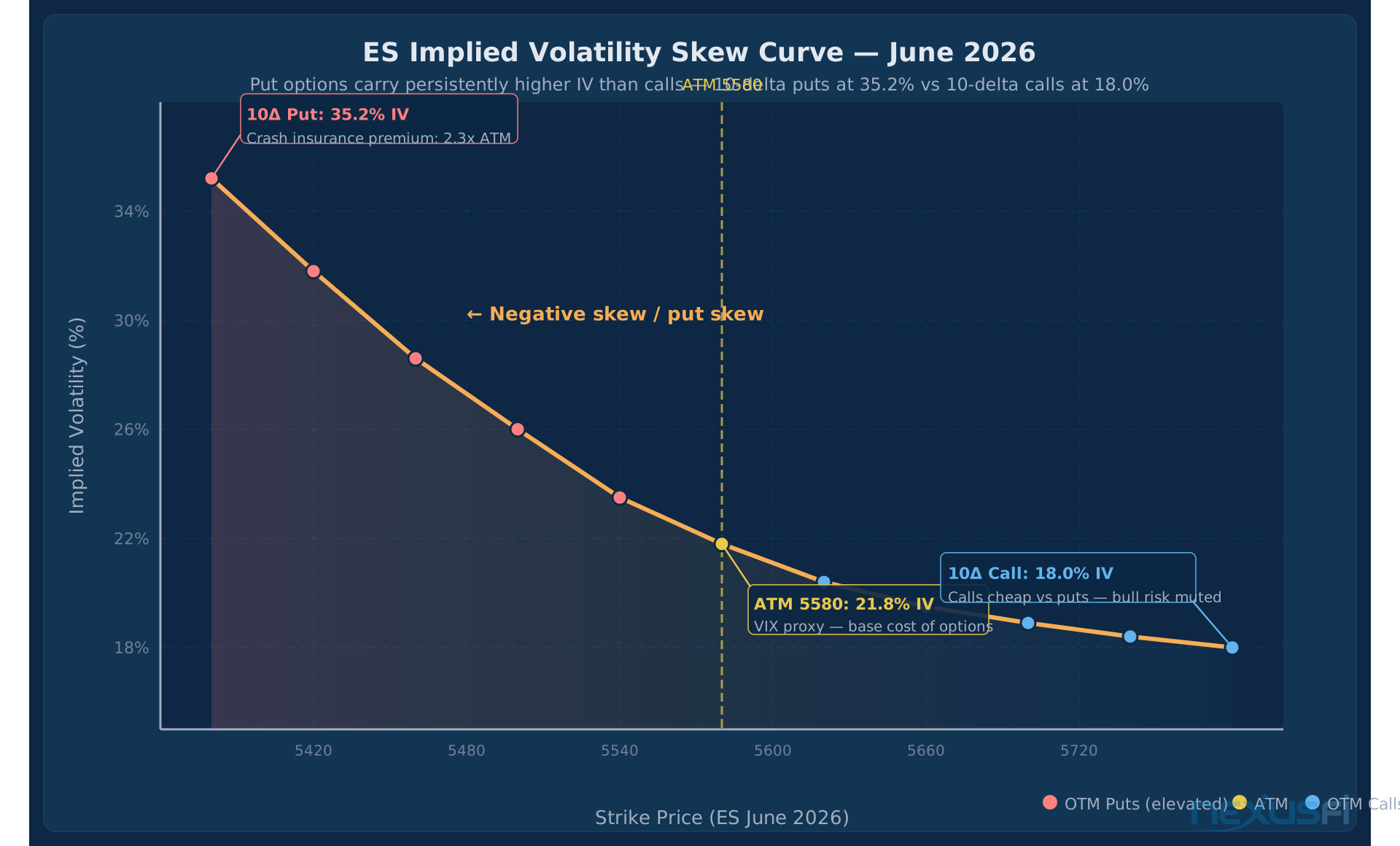
Every options trader has seen the volatility surface -- that three-dimensional chart showing implied volatility across strikes and expirations. But most futu...
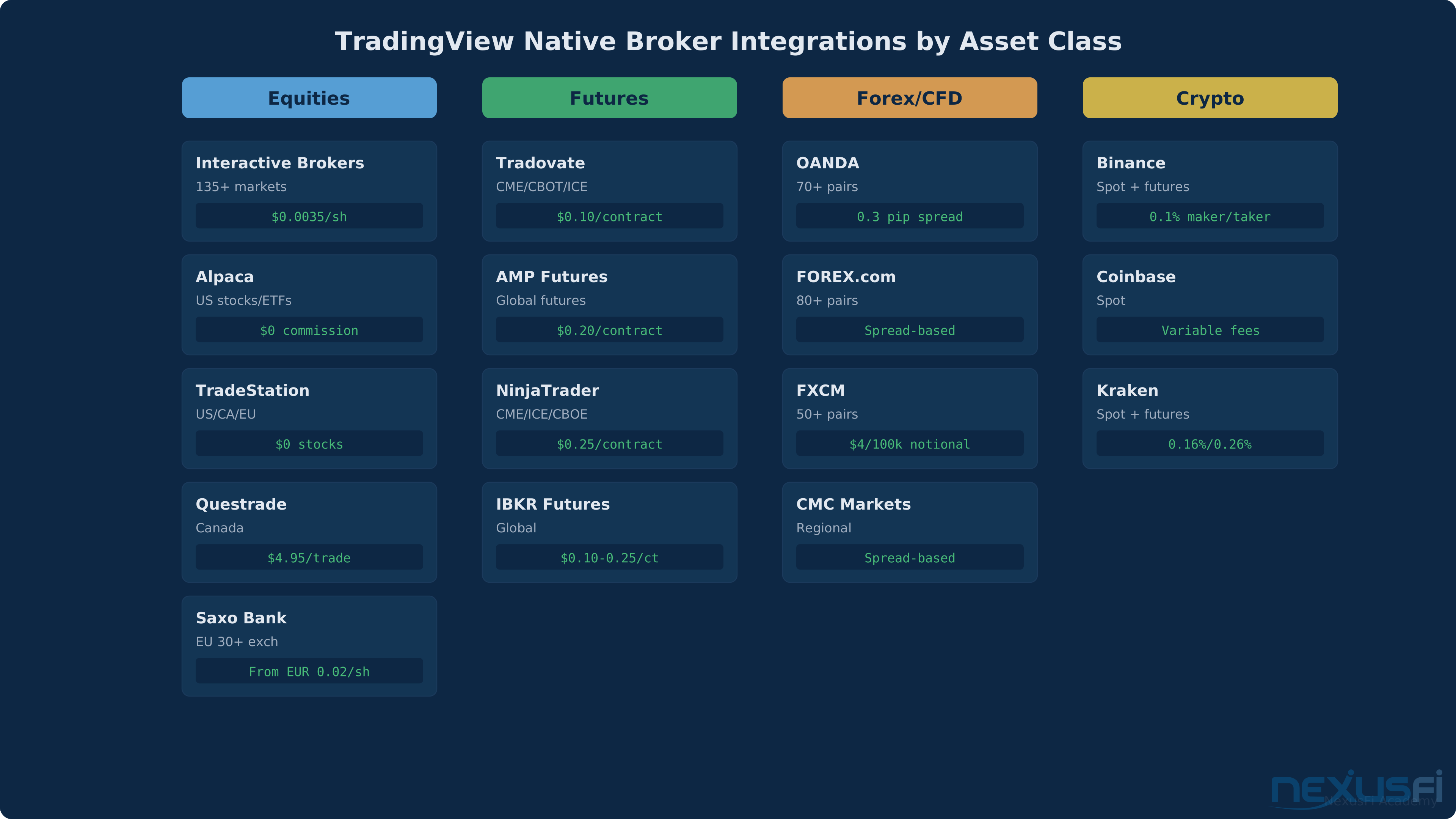
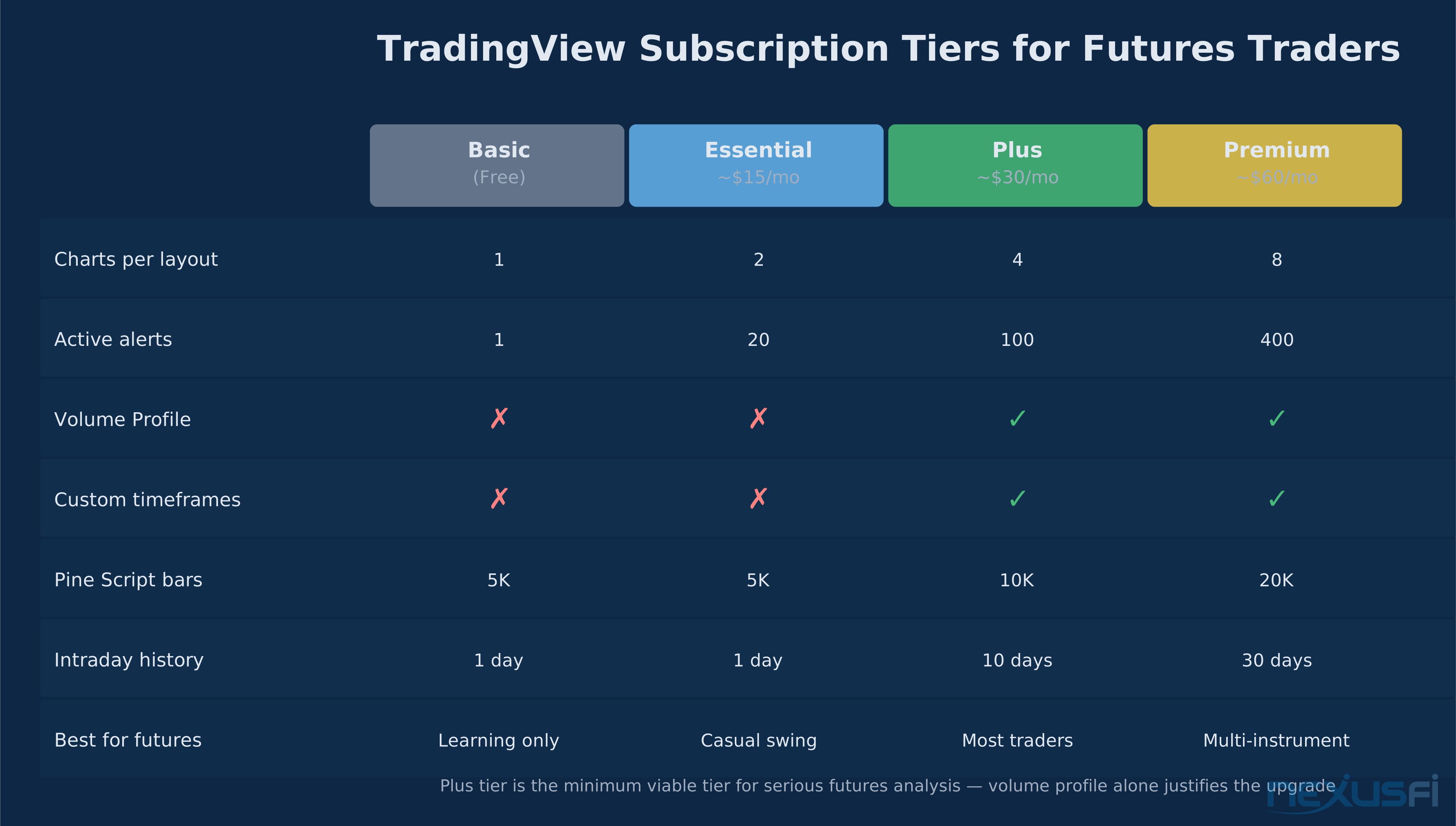
Overview TradingView started as a charting platform. Clean charts, Pine Script, a community that shares indicators like trading cards. But somewhere along th...
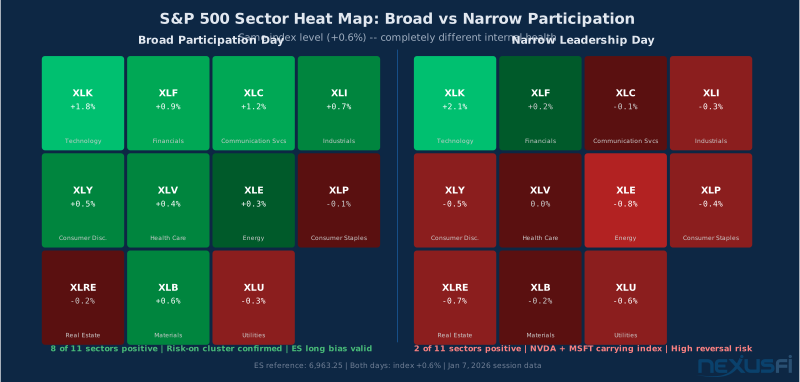
Pull up TradingView's heat map on a random Tuesday morning and you'll see something most traders never think about: the entire S&P 500, compressed into a sin...
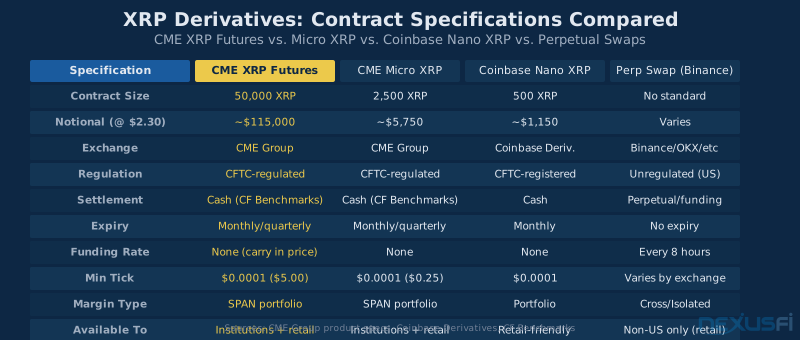
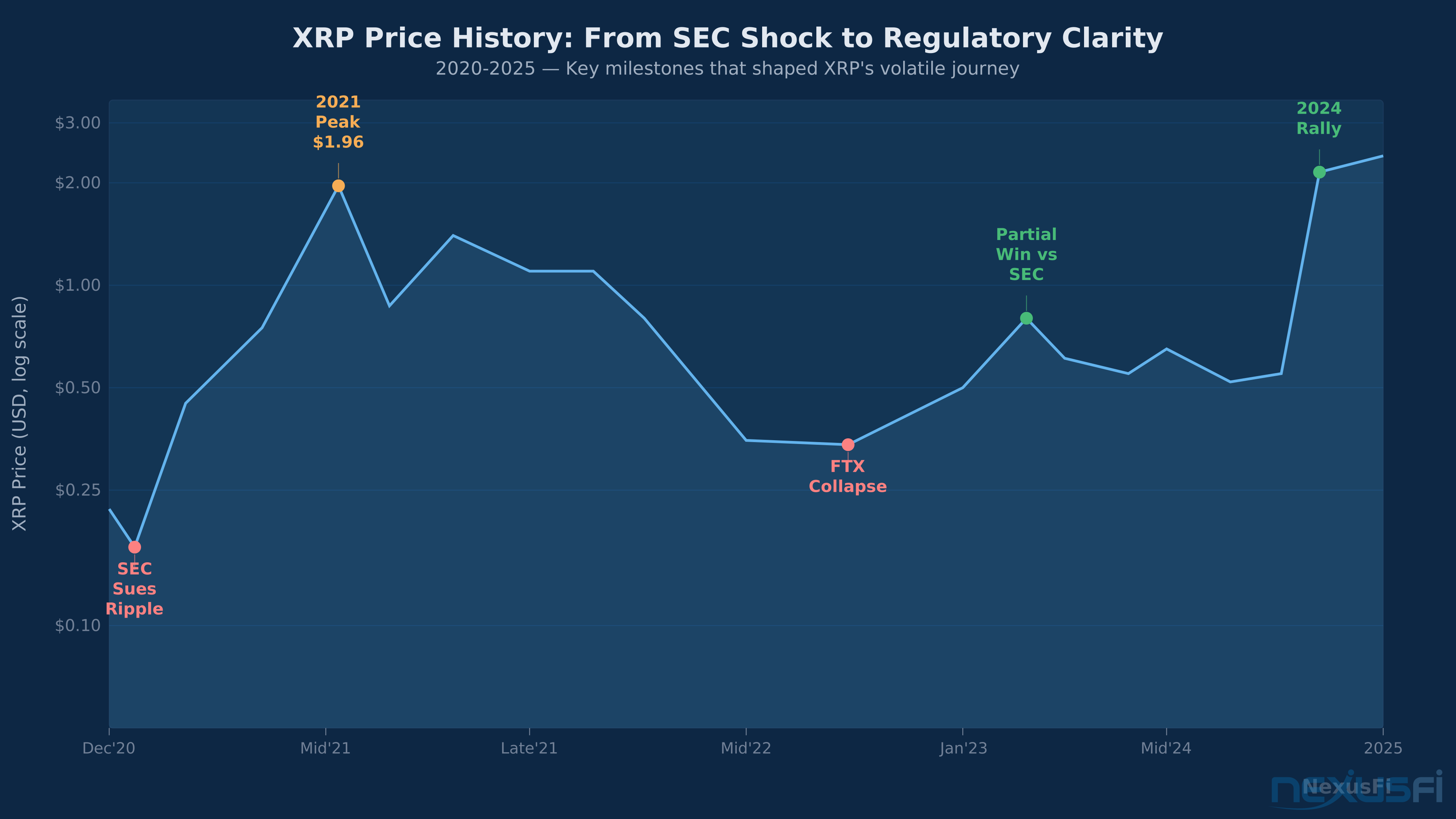
Overview XRP spent years as one of the most actively traded cryptocurrencies without a viable regulated futures market. That changed in May 2025 when CME Gro...
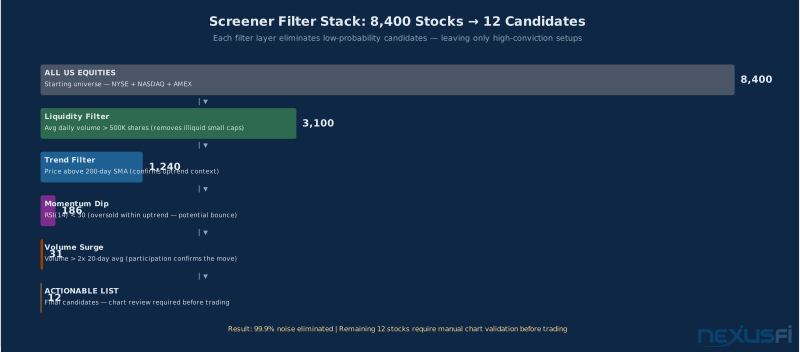
Overview The TradingView Stock Screener is one of the most-used tools on the platform -- and probably one of the most misused. Traders treat it like a slot m...
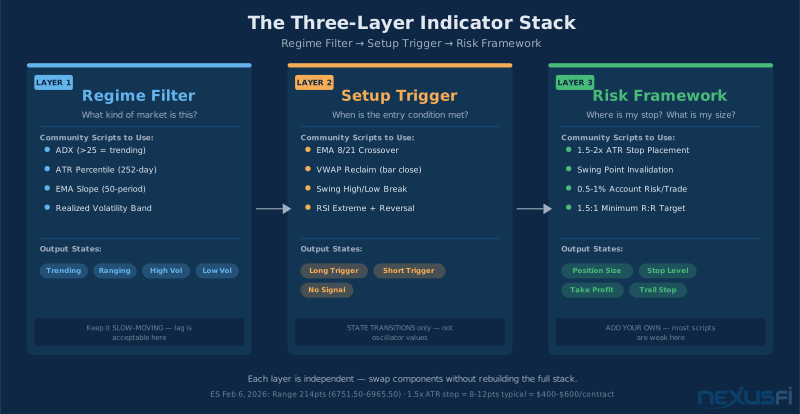
Overview TradingView hosts more than 200,000 community-authored Pine Script indicators and strategies -- a number that keeps growing as the platform's user b...
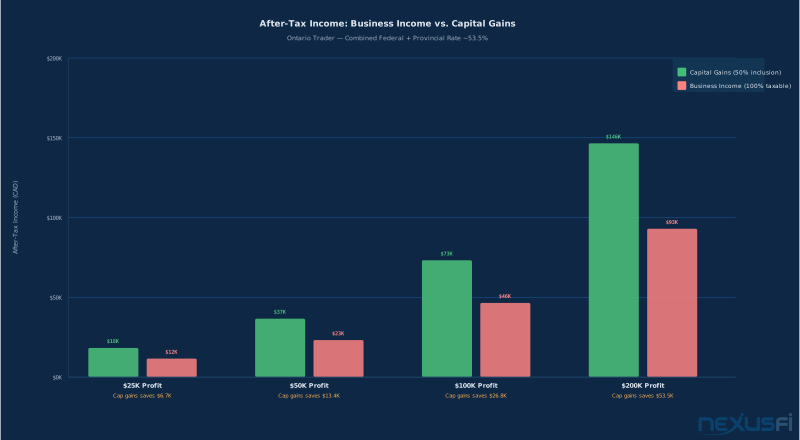
Canadian futures traders face a tax framework fundamentally different from the 60/40 rule that US traders enjoy under Section 1256 of the Internal Revenue Co...
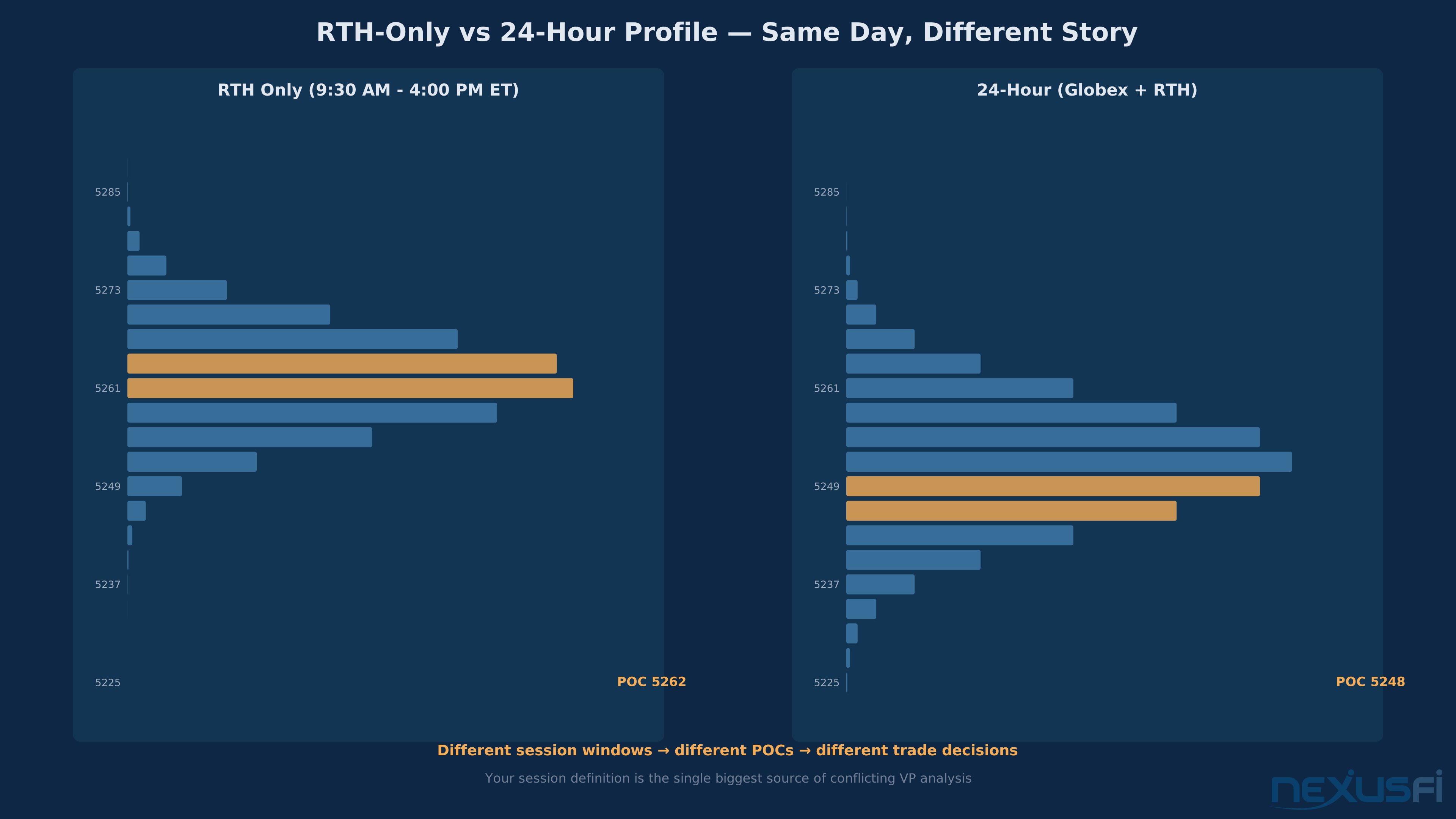
Session definition and composite construction are the invisible infrastructure beneath every volume profile analysis. Get them wrong and your POC, value area...
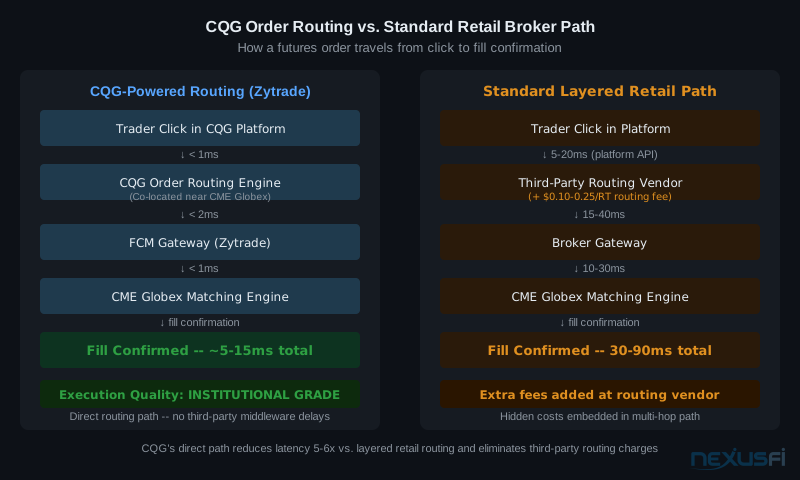
Overview Zytrade built its brokerage on a simple bet: if you give traders institutional-grade technology for free and charge a low, transparent rate per cont...
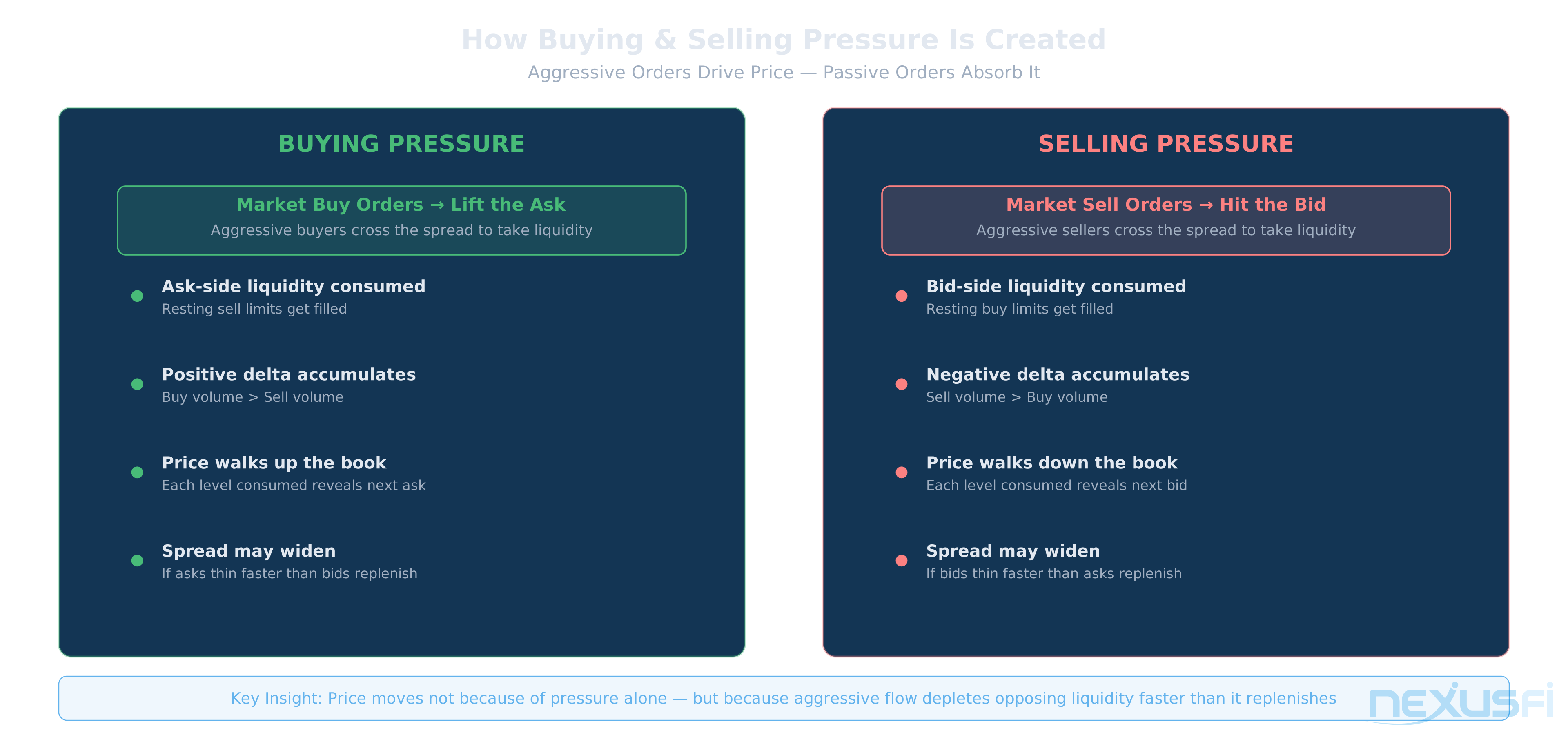
Most traders think price moves because of heavy buying or selling. That's only half the story. What actually moves futures prices is liquidity depletion -- w...
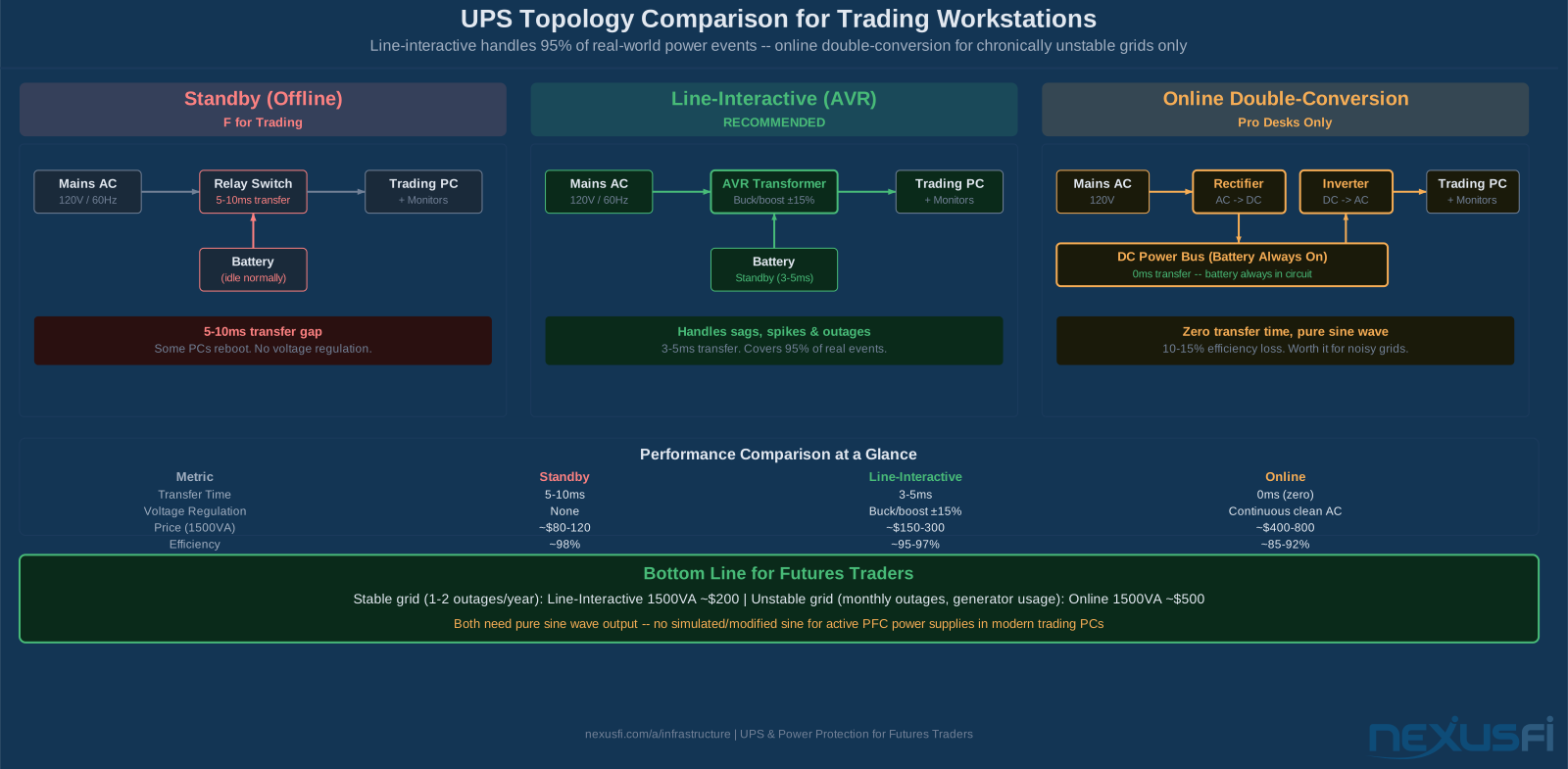
Overview You're in a live ES trade. NQ is ripping through your entry zone. And the power goes out. If you have a UPS, you have 10-20 minutes to close positio...
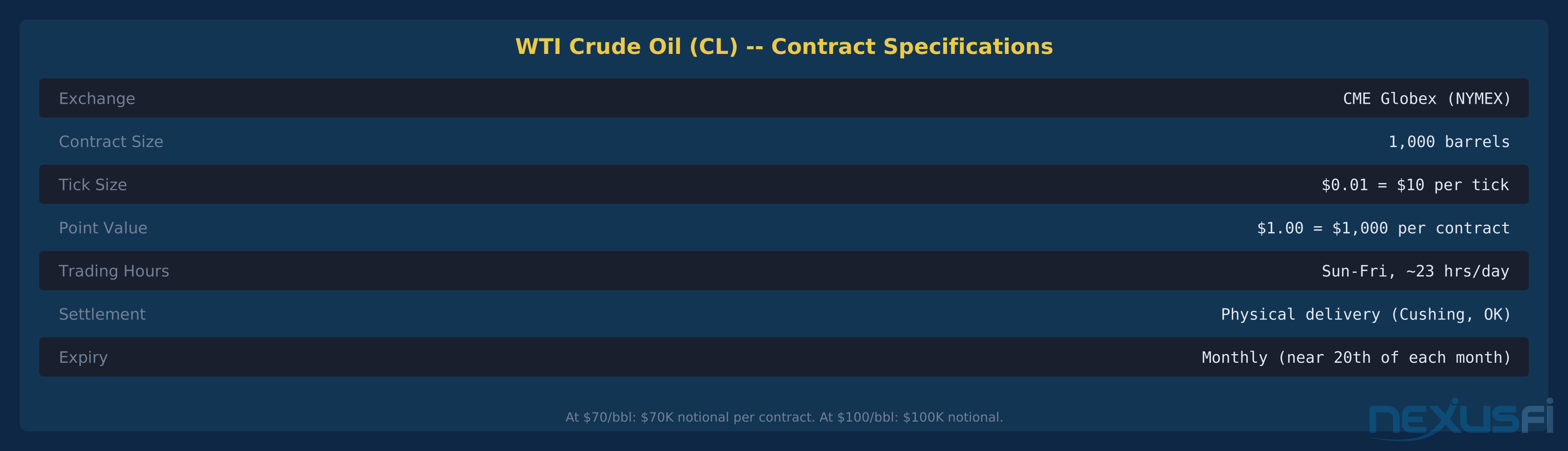
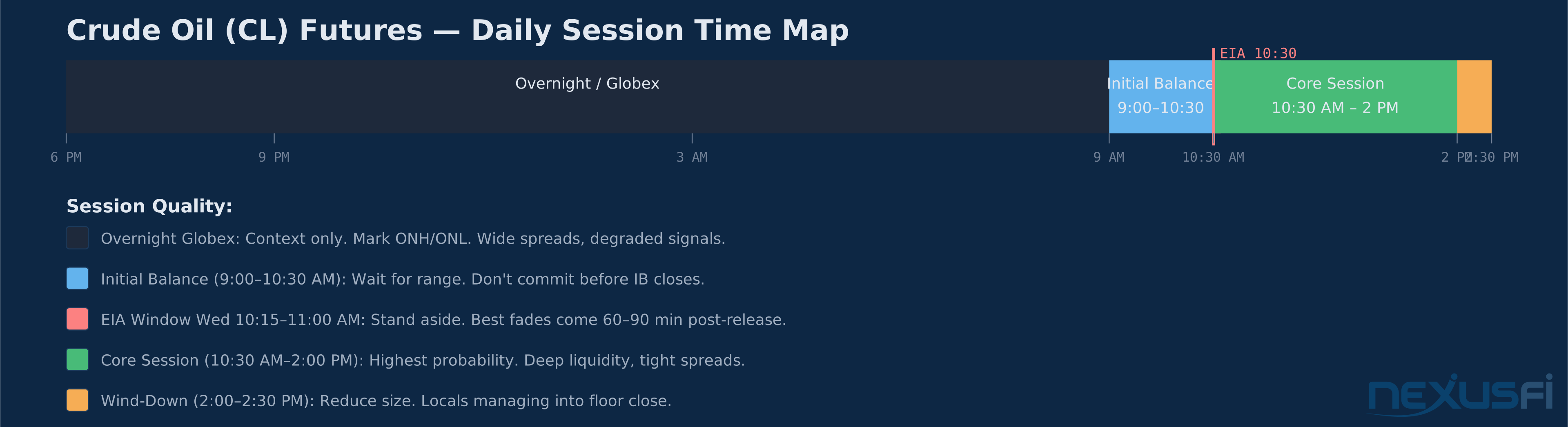
Crude oil futures -- ticker CL -- are the world's most actively traded commodity contract. On a busy day, over 1.5 million CL contracts change hands on CME G...
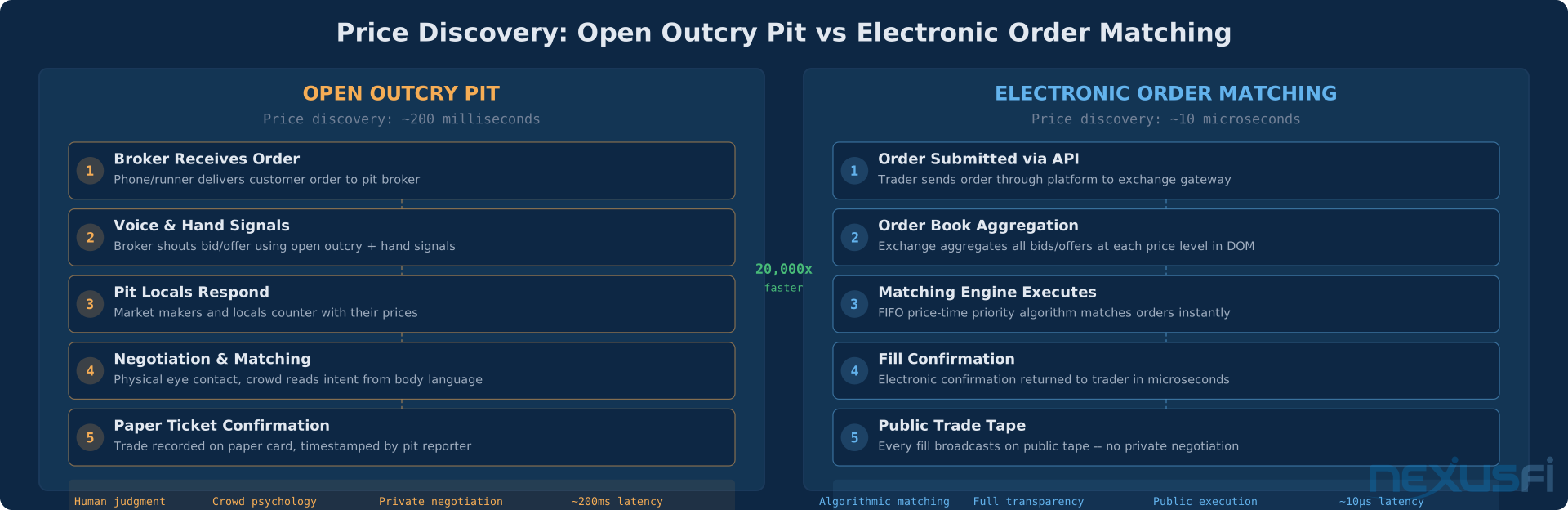
Futures Price Discovery is the process by which exchanges convert competing buyer and seller interests into prices. This article covers the exchange-level ma...
The starting point of this methodology is treating each bar as a self-contained auction record. When a bar closes, it encodes exactly four pieces of informat...
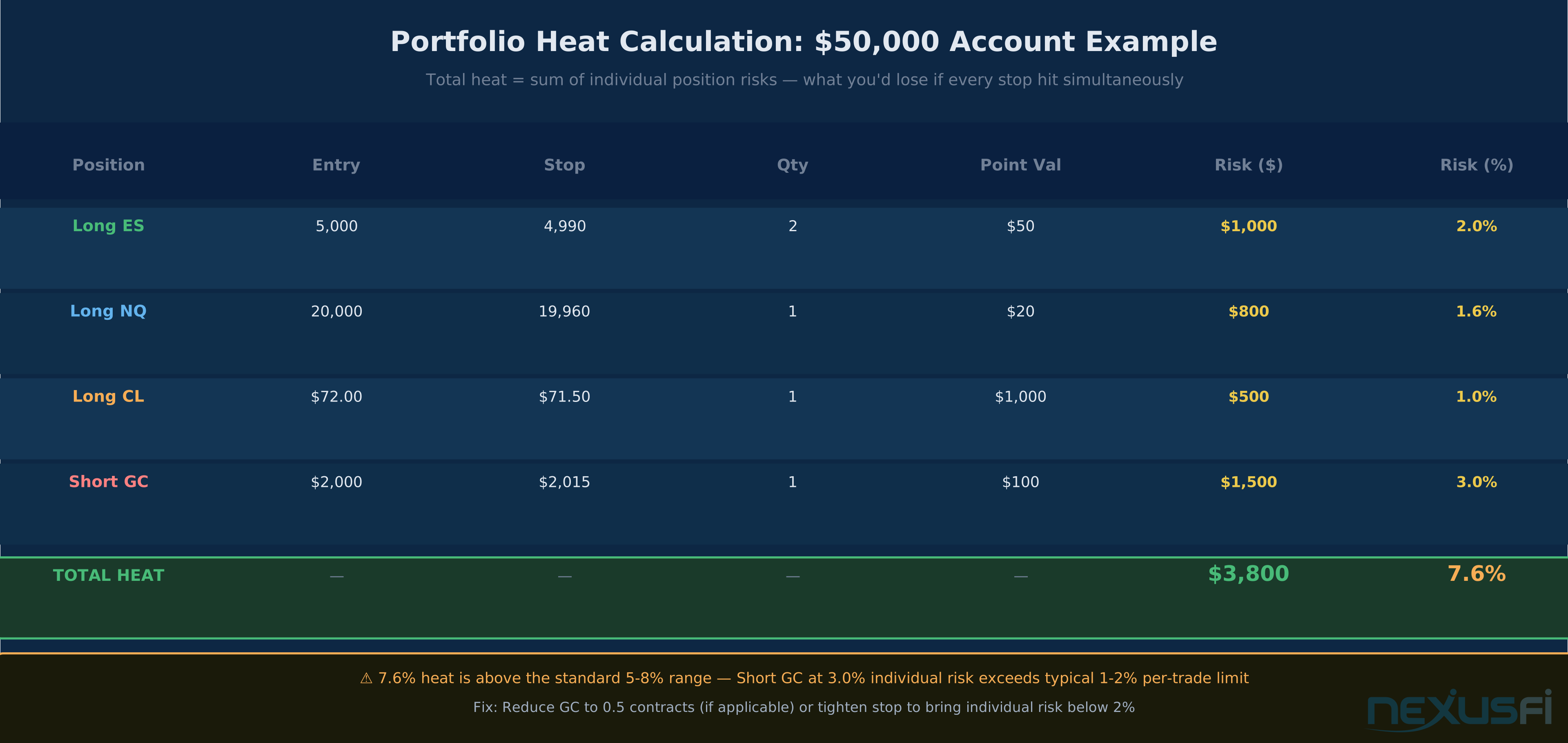
Overview Every experienced trader knows the one-percent rule: never risk more than 1-2% of your account on a single trade. Most traders apply this rule and c...
Overview Most traders treat prop firm evaluations like a performance test -- hit the profit target, avoid the drawdown, done. That framing is wrong and it's ...
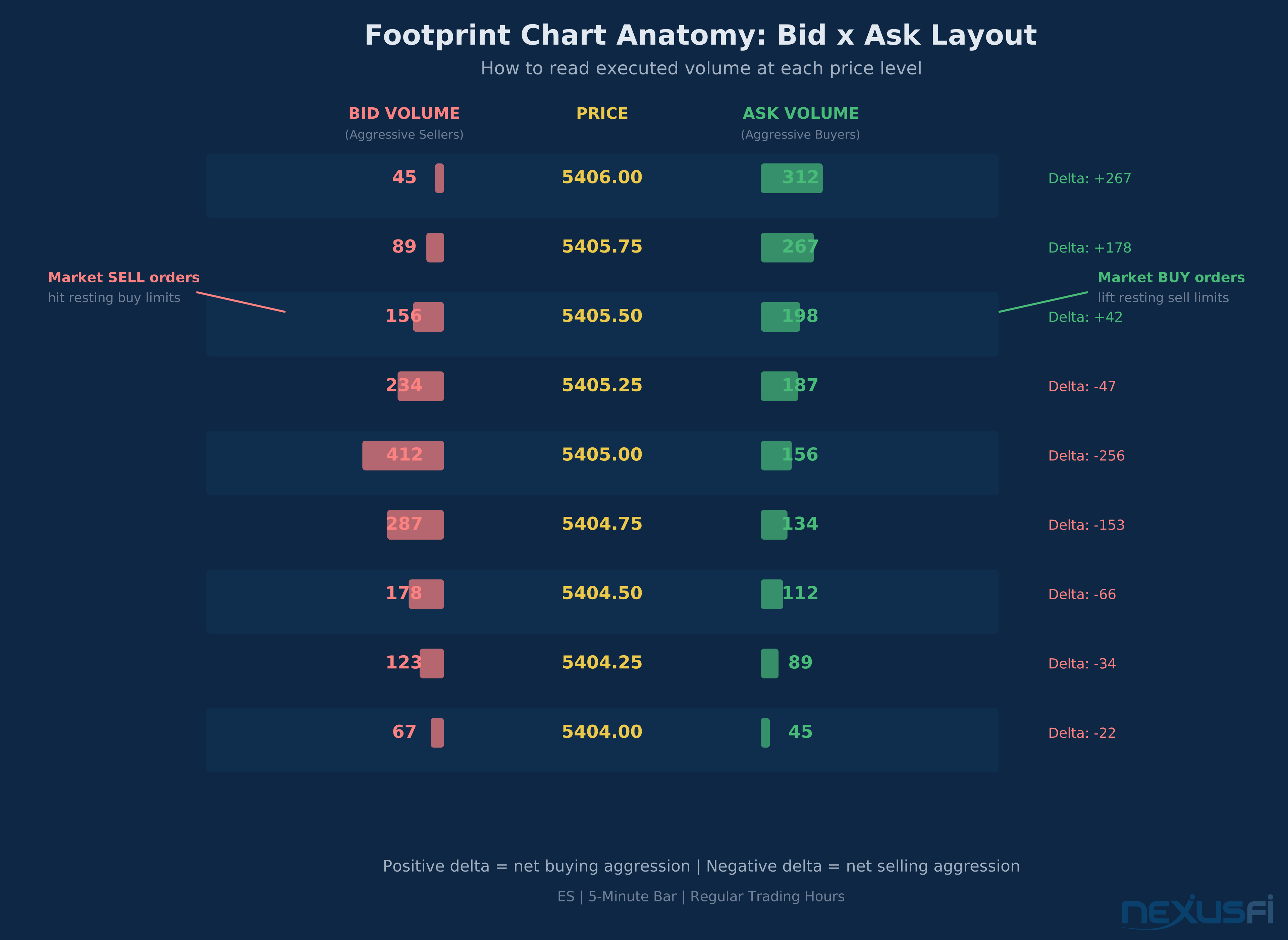
Overview Footprint charts are the most searched tool on NexusFi -- and for good reason. They show something standard price charts hide entirely: which side o...
On May 29, 2026, the CFTC issued an Order for Approval to KalshiEX, LLC for the listing of BTCPERP -- a perpetual contract that references the spot price of ...
Overview Getting funded is the goal. Staying funded is the job. Most traders spend months obsessing over evaluation strategy -- the rules to pass the challen...
Overview At some point, every serious futures trader faces the same moment. You're running NinjaTrader or Sierra Chart, you've got automation firing during t...
Overview Every futures trader eventually faces the same problem: you have a position you believe in, but a scheduled macro event is about to create binary ri...
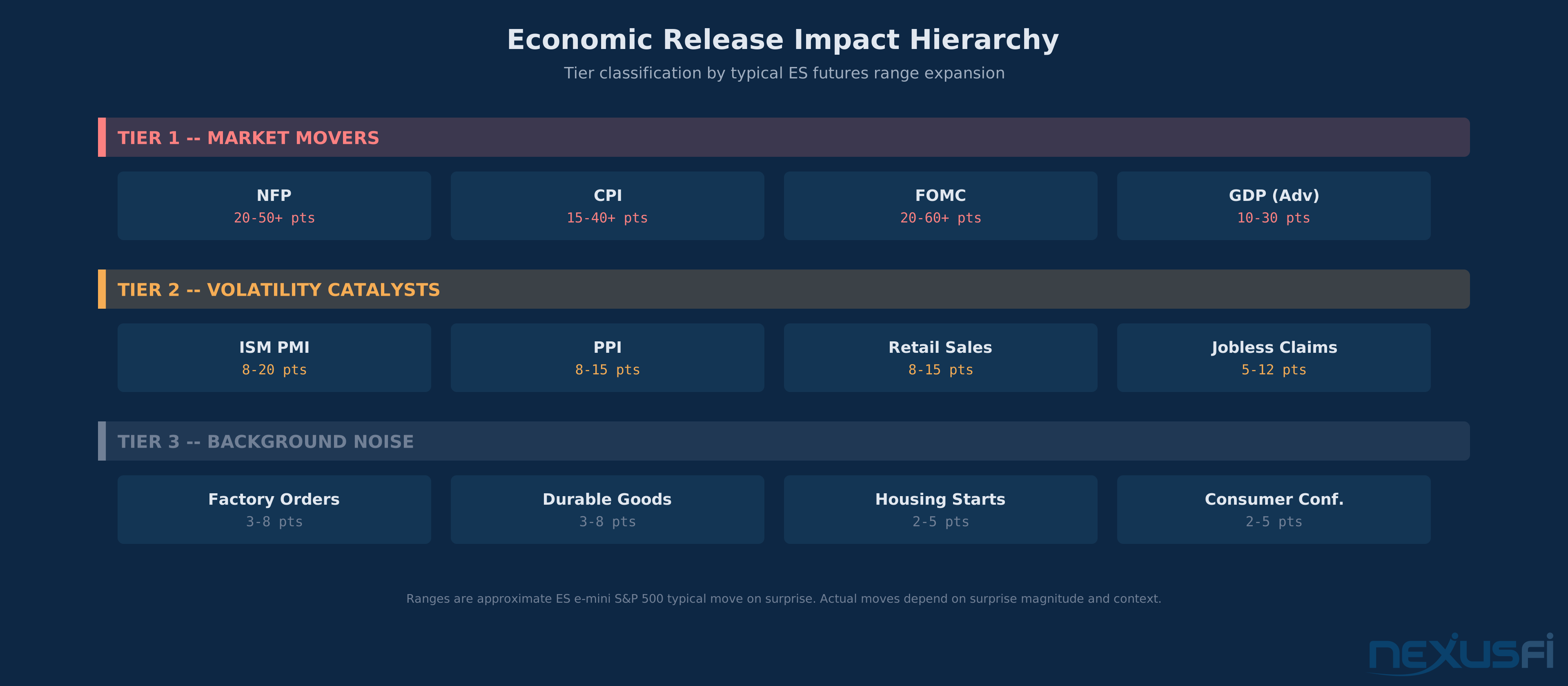
The Bureau of Labor Statistics releases the Employment Situation Summary at 8:30 AM on the first Friday of each month, covering the prior month's data. The r...
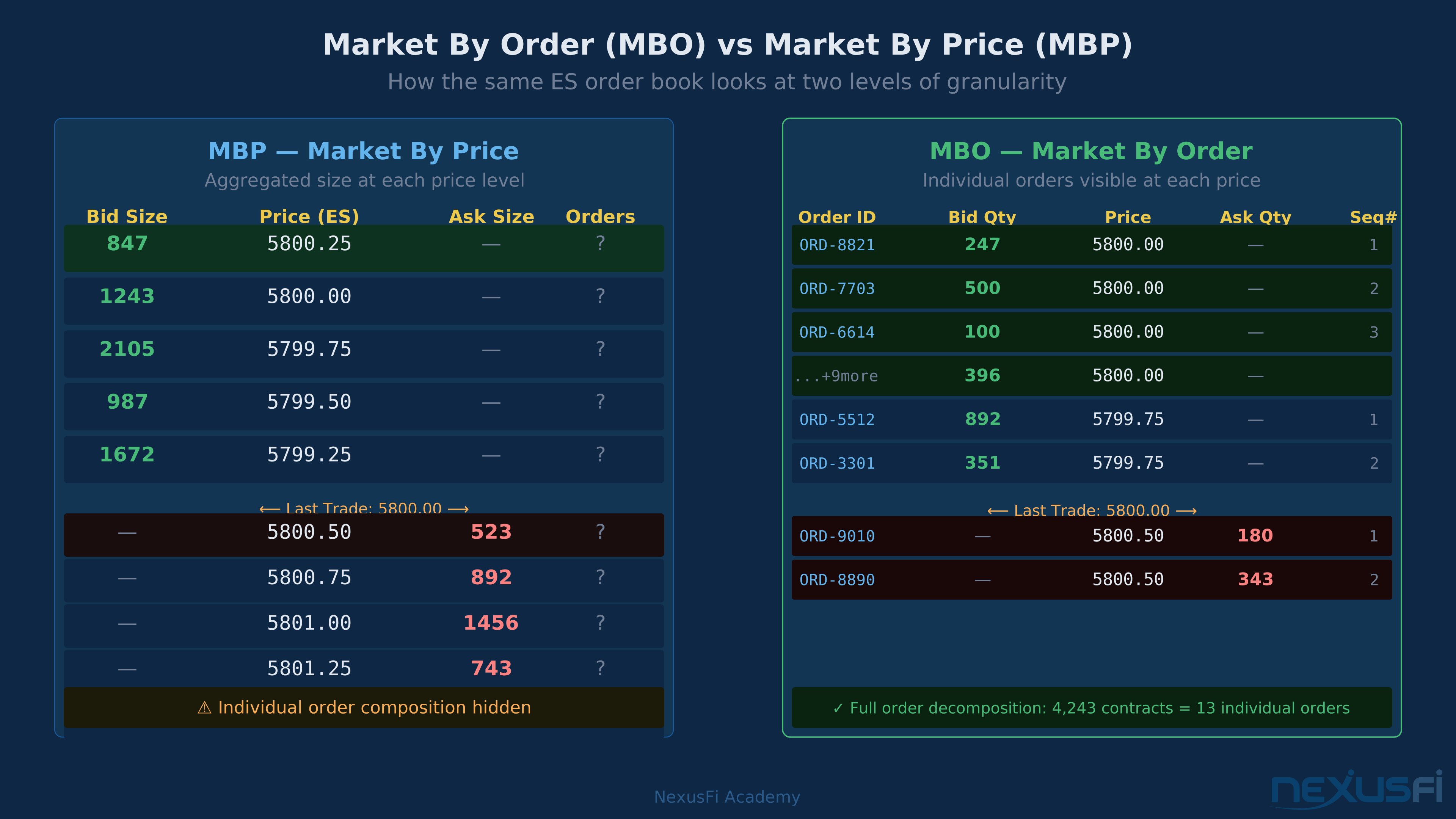
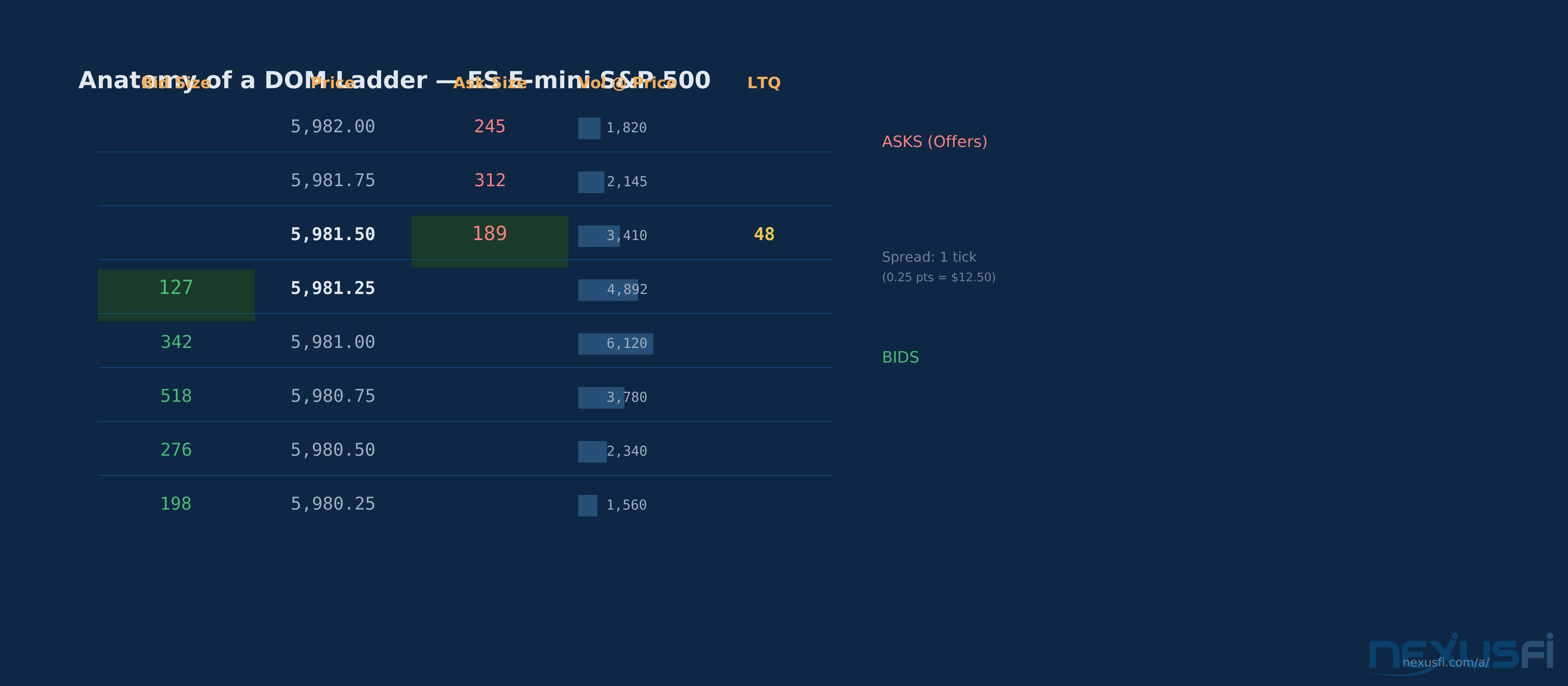
Overview Every DOM ladder you've ever stared at is lying to you. (If you're new to depth of market (DOM) mechanics, that guide covers the basics before divin...
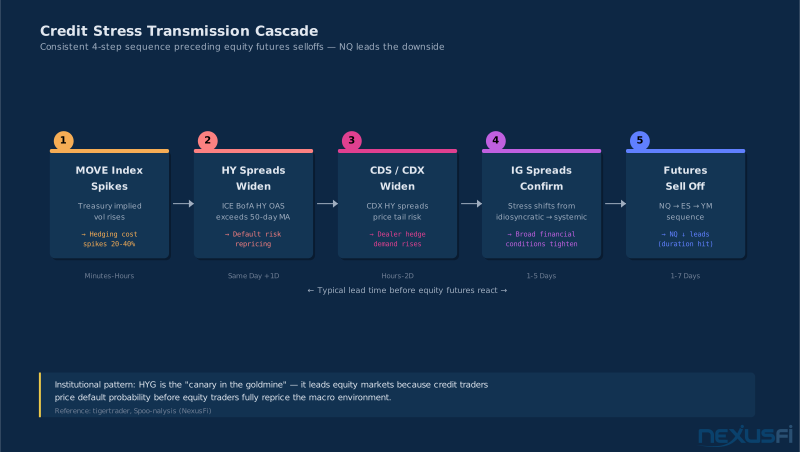
Most futures traders watch price. Experienced futures traders also watch credit. Credit markets -- high-yield bonds, investment-grade corporate debt, credit ...
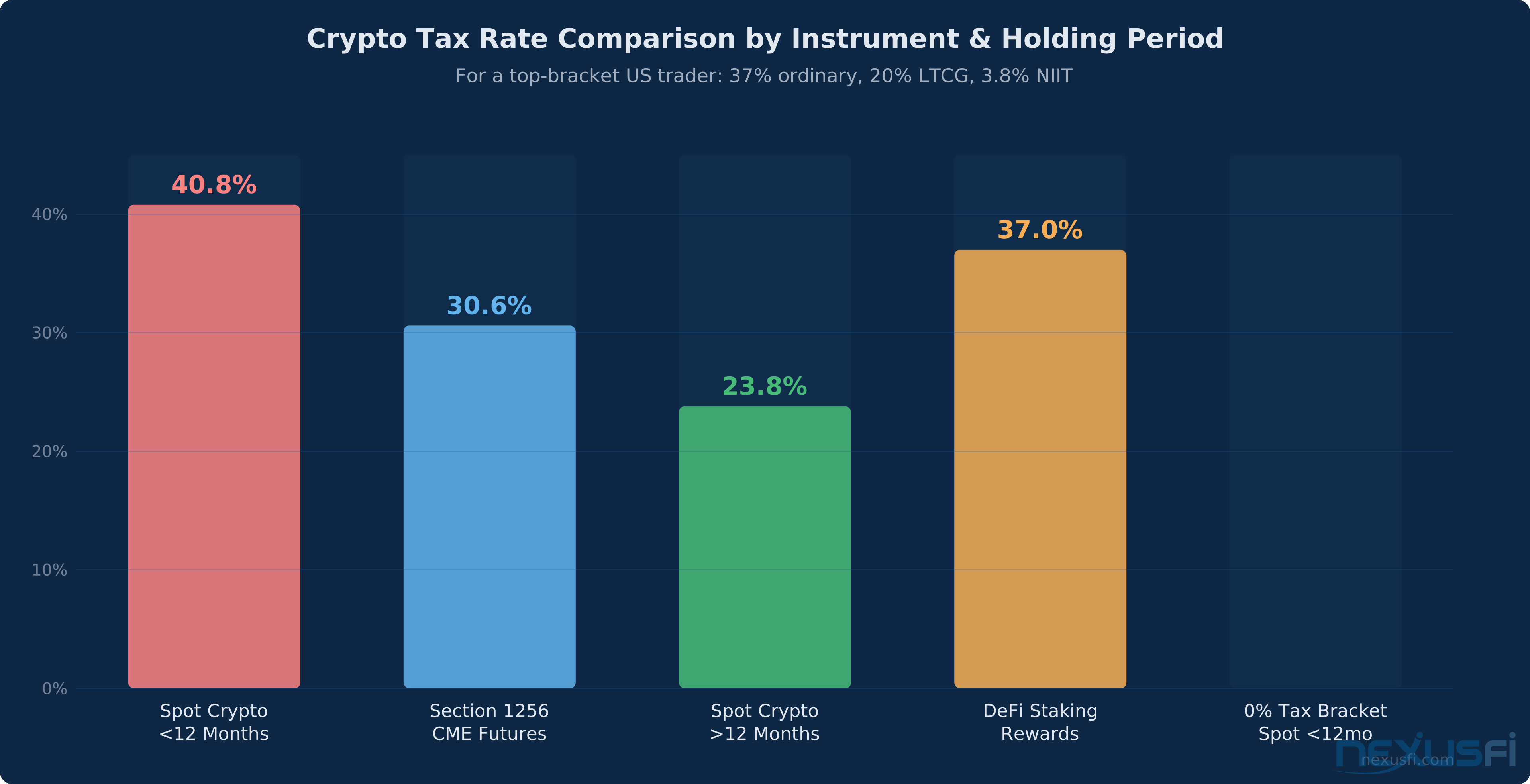
Active crypto traders face a tax compliance challenge that's fundamentally different from equities or even traditional futures. Bitcoin, Ethereum, and every ...
Every automated futures trader eventually hits the same wall. The strategy works in backtesting. It works in simulation. Then it goes live and something brea...
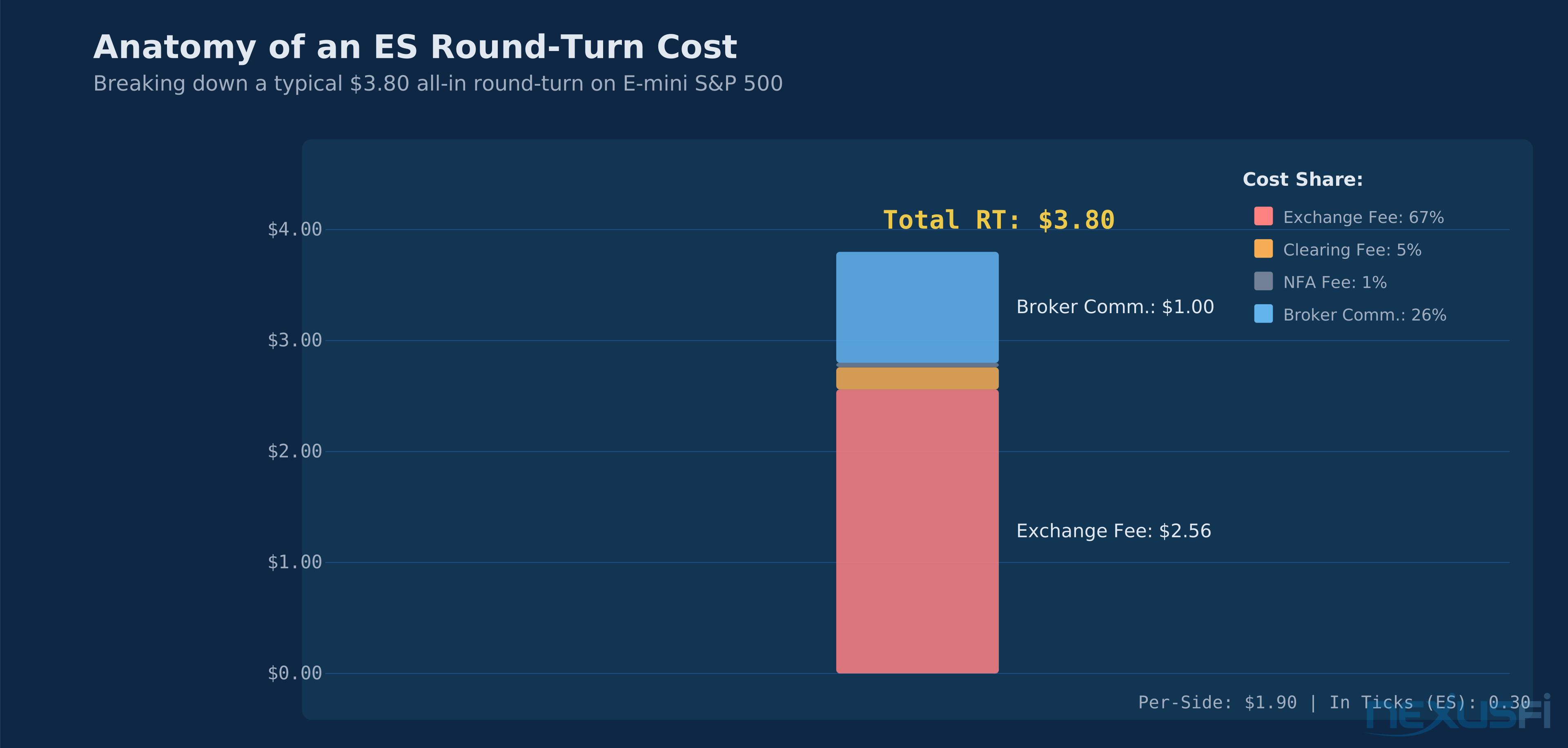
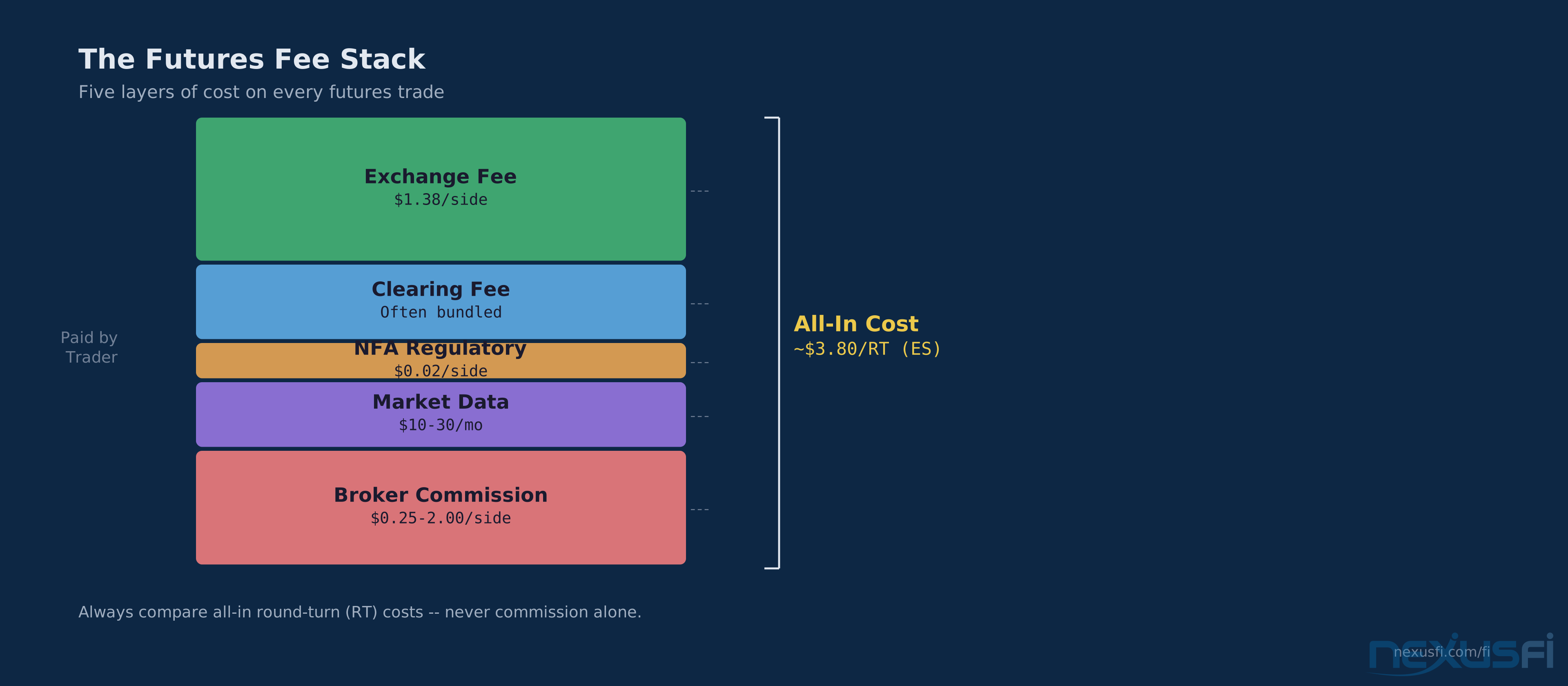
Every time you execute a futures contract, multiple entities take a cut. Here's the full stack, from bottom to top: 1. Exchange Transaction Fee -- The exchan...
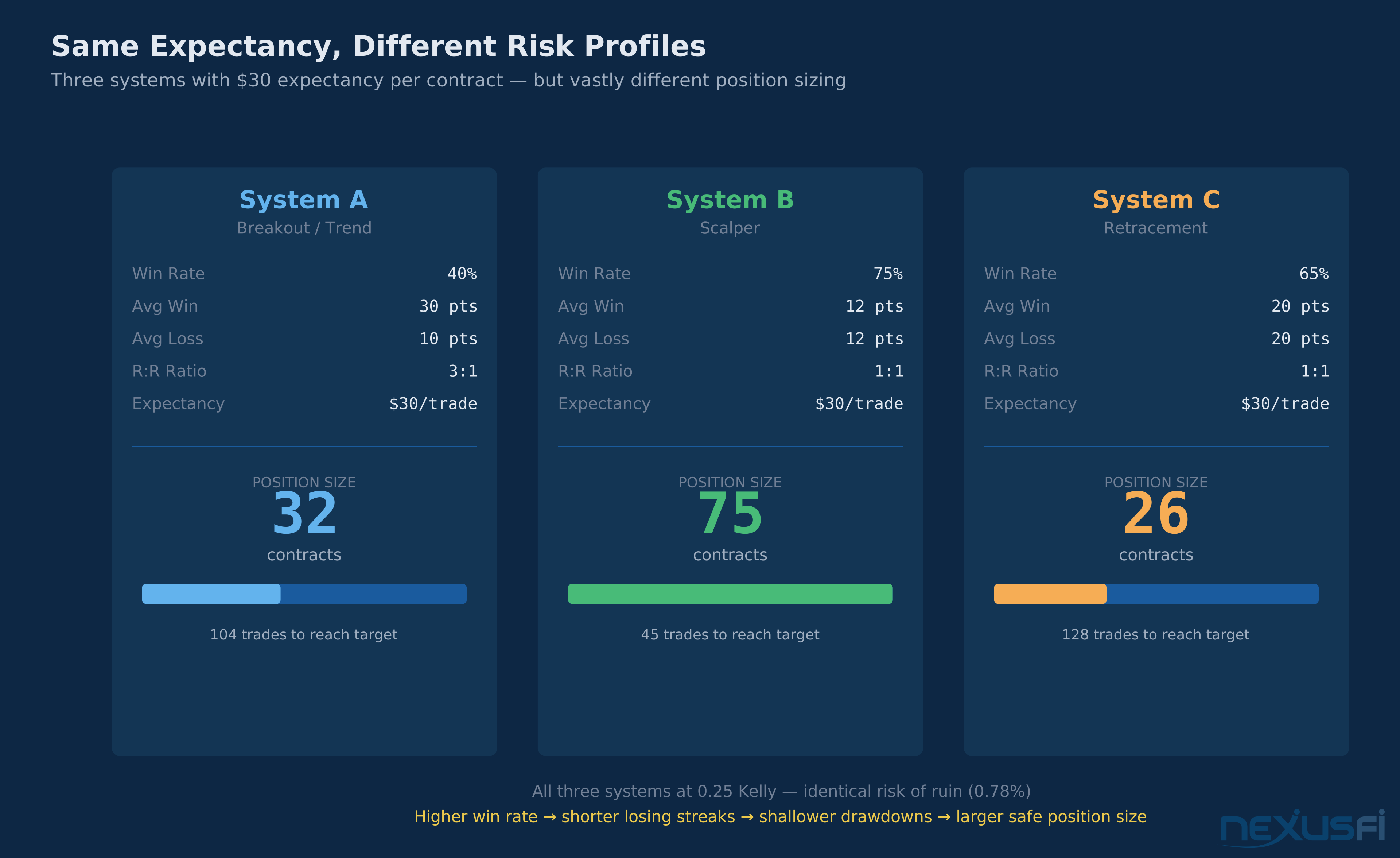
Most futures traders know about position sizing. Risk 1% per trade, know your stop, size accordingly. You've probably done it a hundred times: account equity...
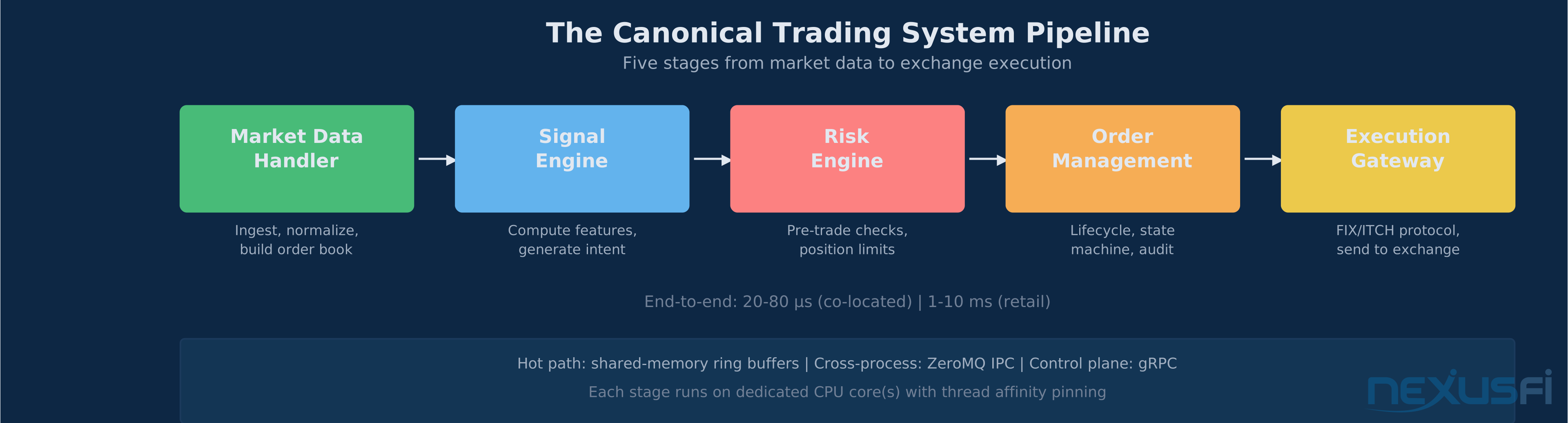
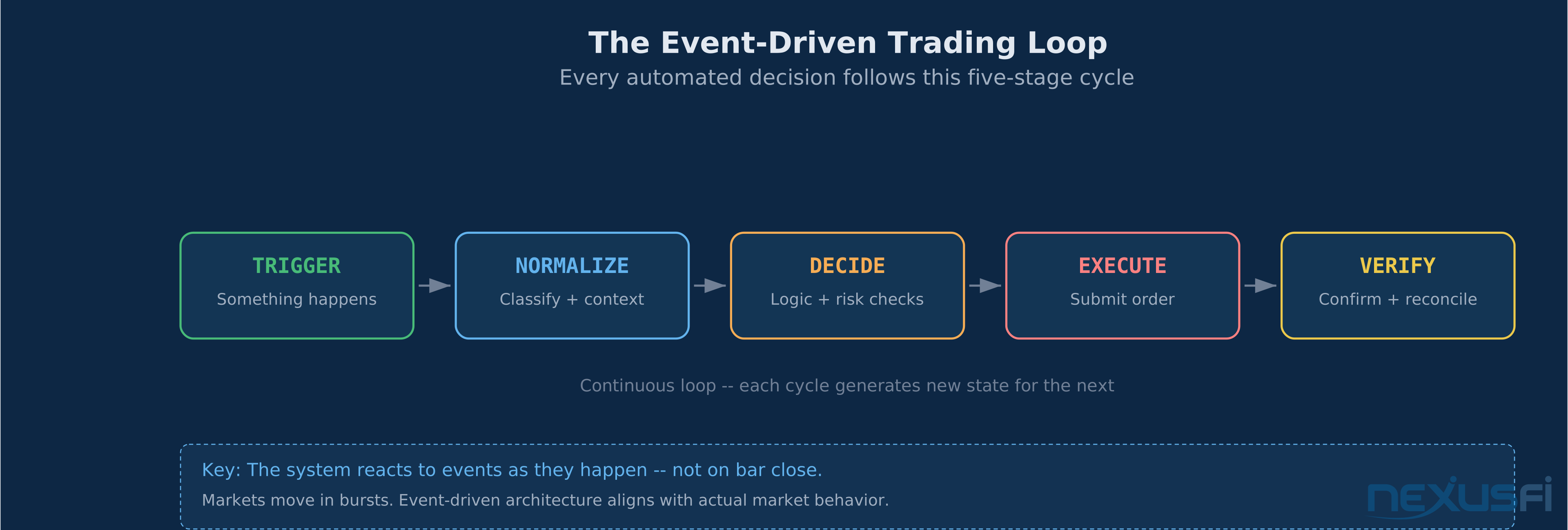
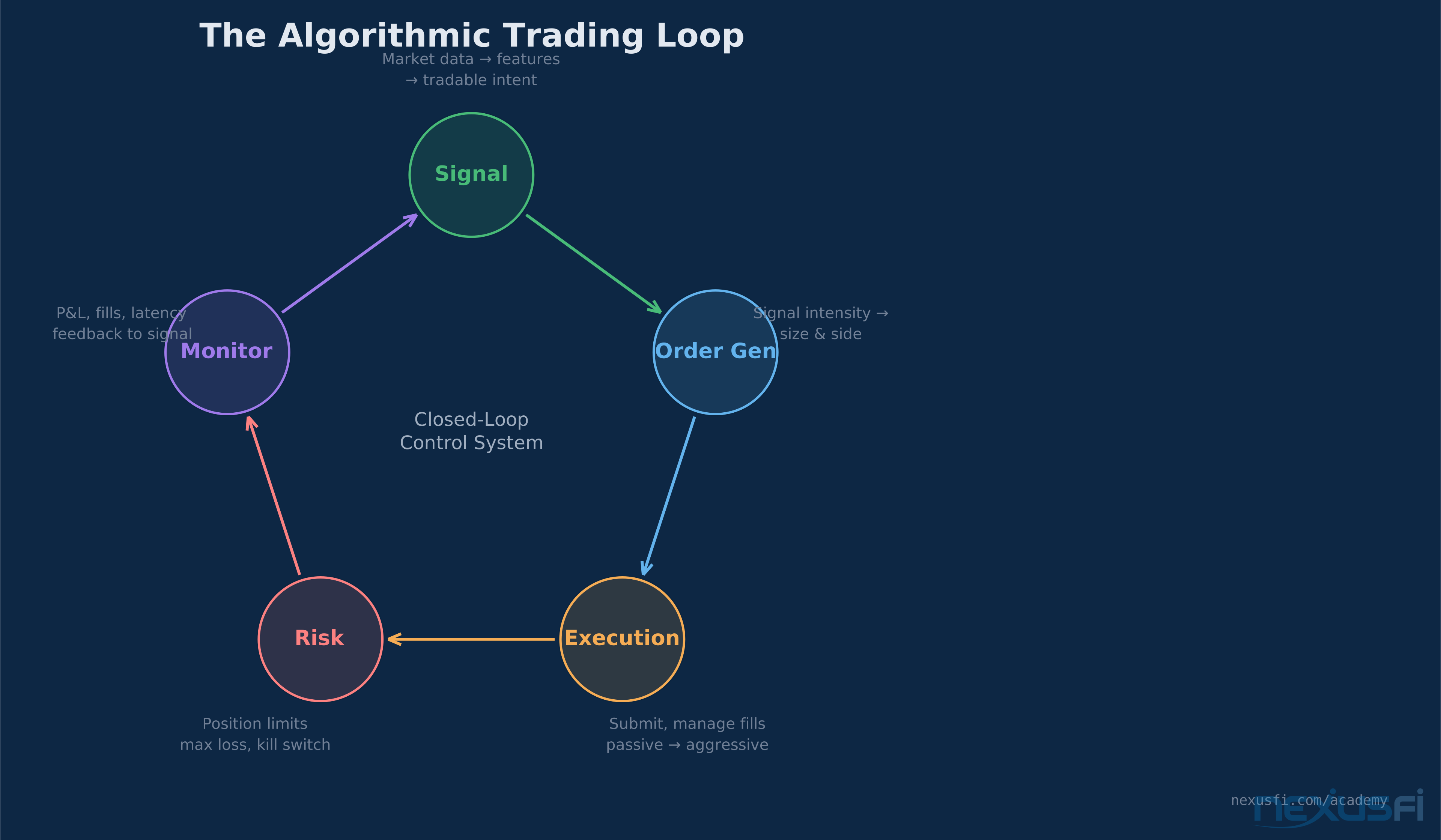
This article covers the complete architecture of event-driven trading systems for futures markets -- from data ingestion and signal generation through execut...
Overview Most traders treat news events as trading opportunities. Professional futures traders treat them as risk management tests. That's the fundamental di...
Sierra Chart has been around since 2003. The UI looks like it hasn't changed much since then. The documentation reads like it was written by someone who assu...
You've been selling ES puts. Maybe 16-delta strangles, 45 DTE, taking them off at 50%. The math works. The win rate is good. And then August 2015 happened, o...
Your internet connection is not infrastructure. It's your order entry line. When it goes down with an open position, you don't get a technical timeout -- you...
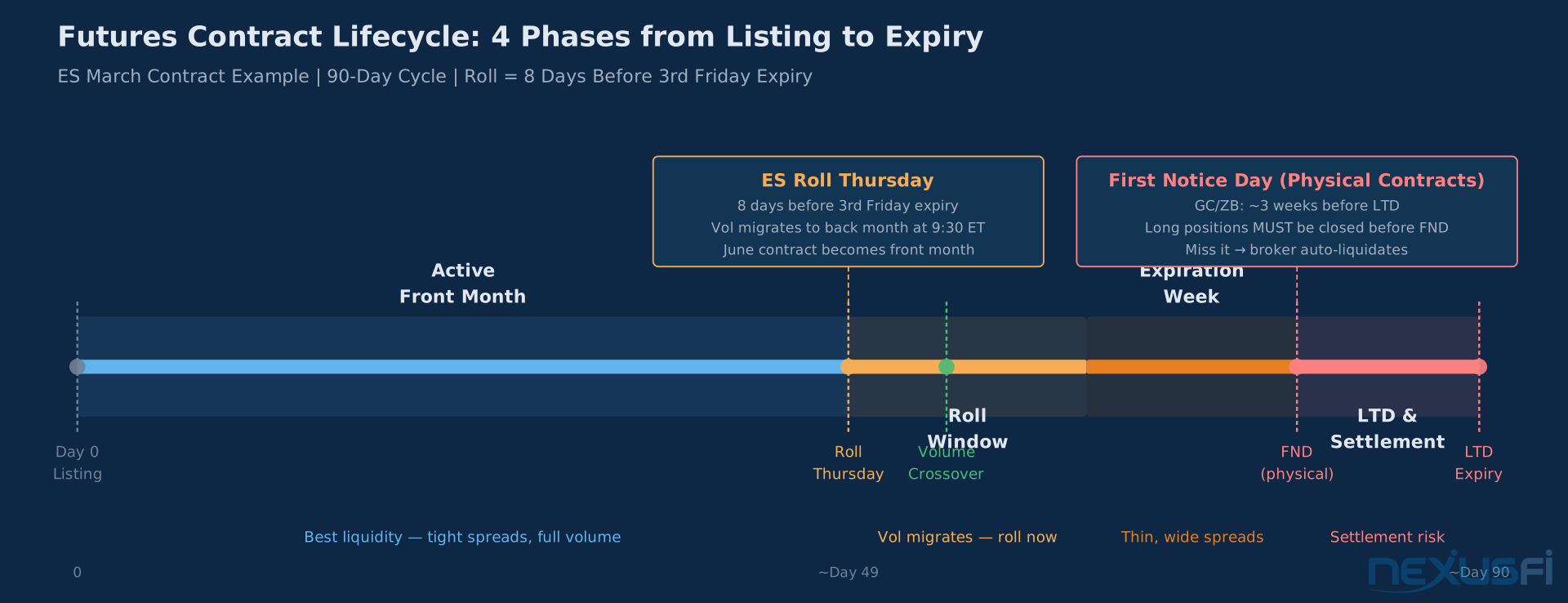
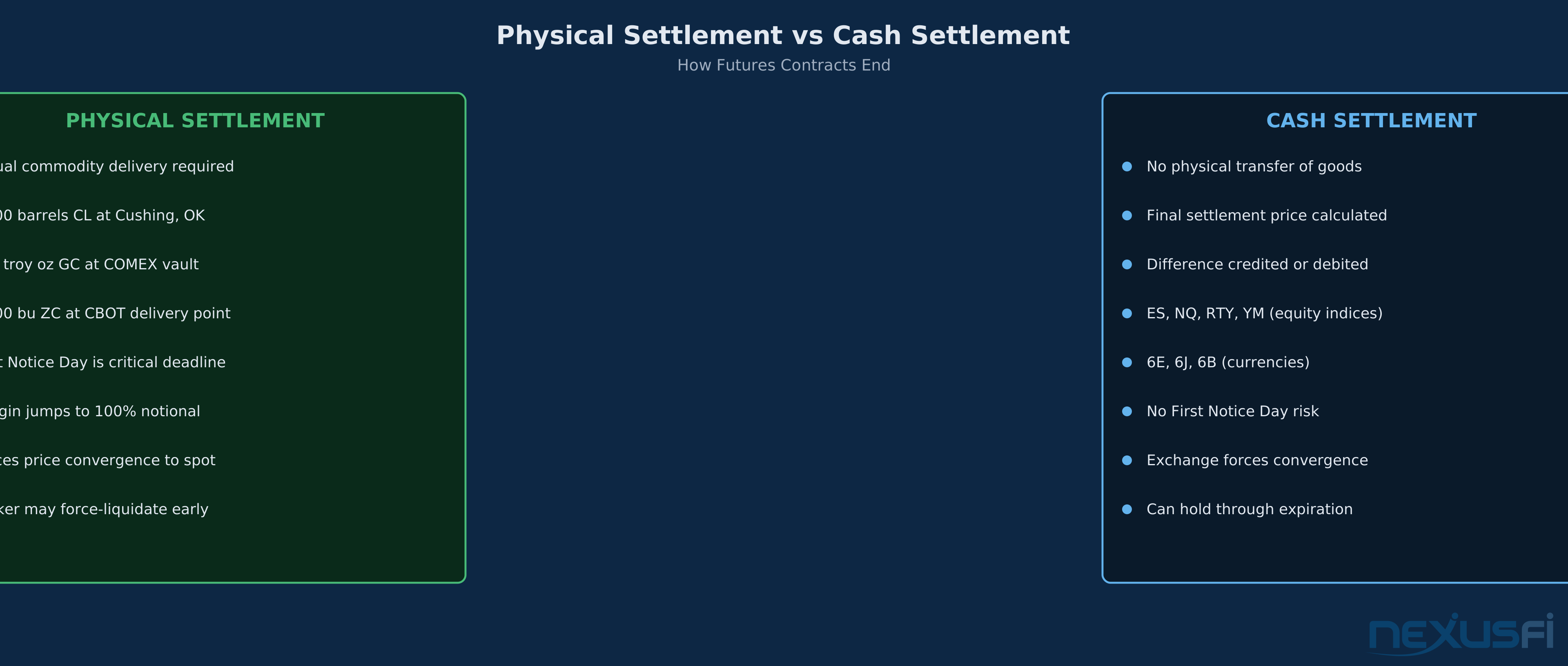
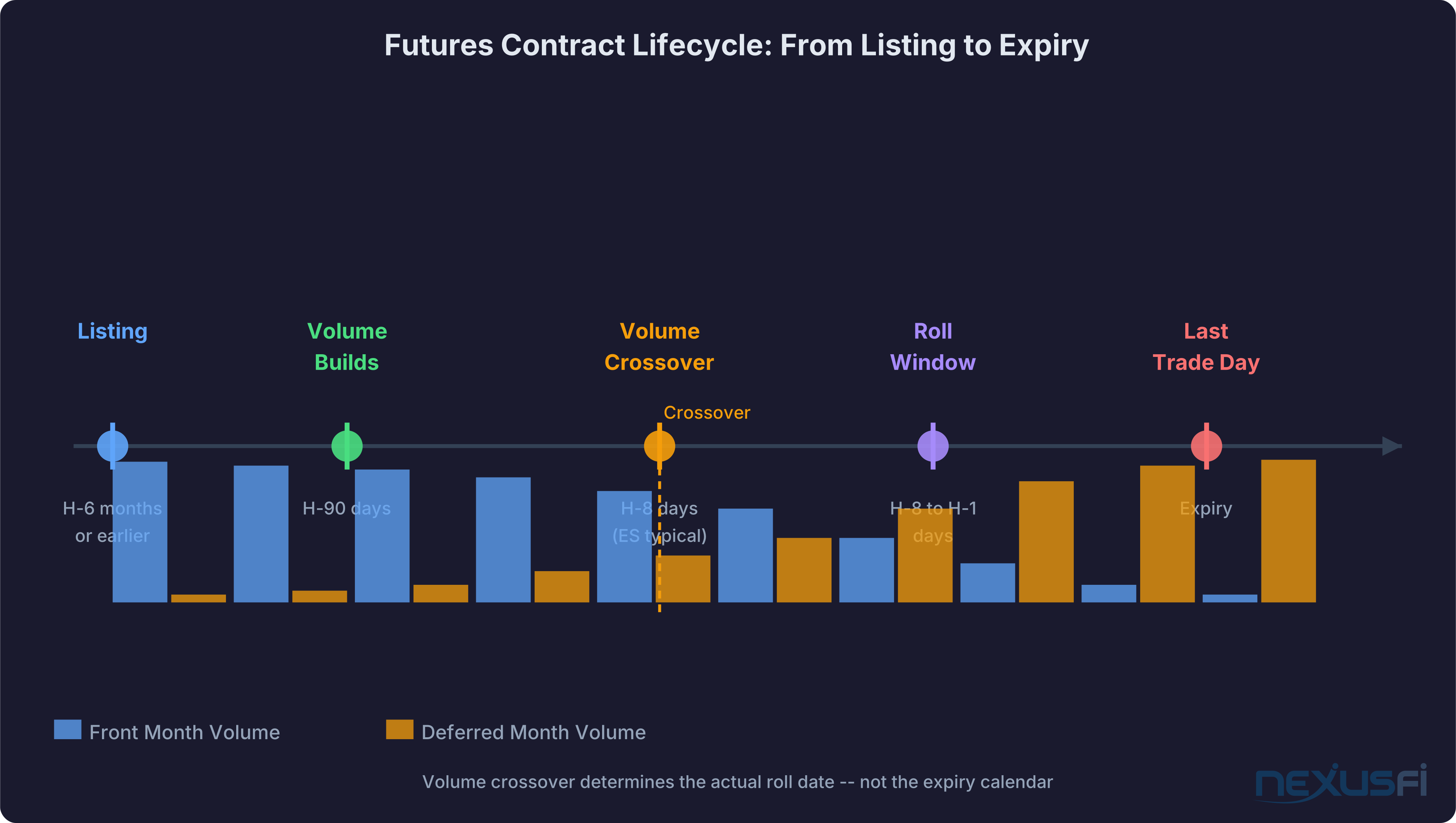
Every futures contract has a death date. You can fight it, ignore it, or pretend it doesn't apply to you -- but on Last Trading Day, your position either get...
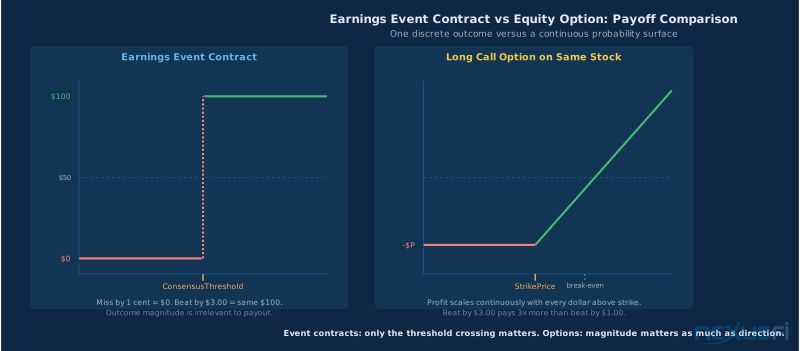
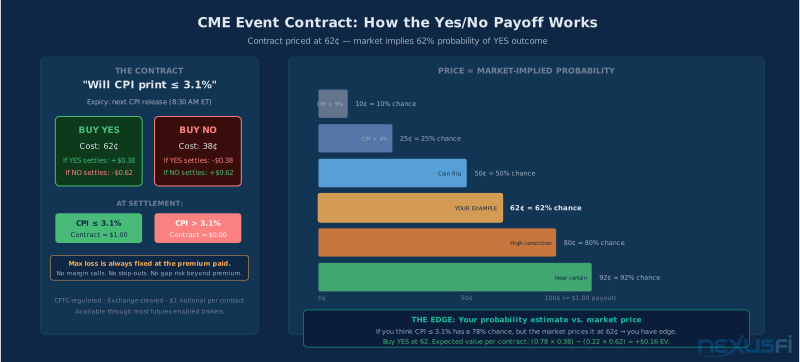
Overview CME Group launched event contracts quietly. Most futures traders missed it. The marketing was buried in press releases, the product pages were confu...
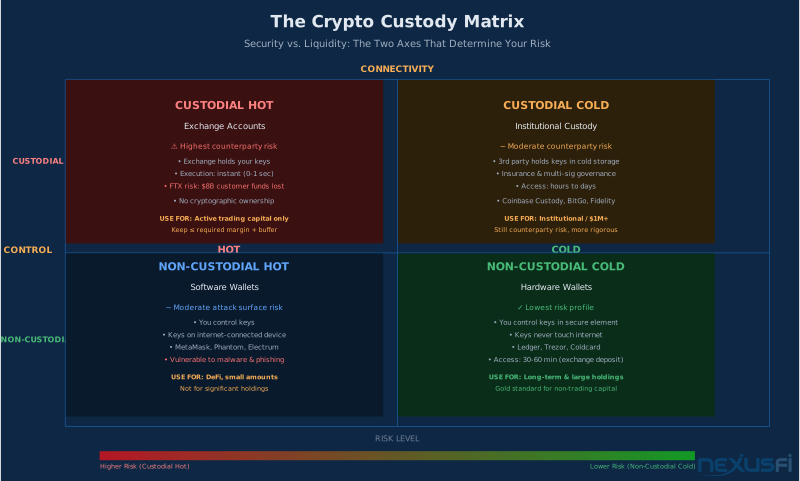
Overview Crypto exchanges have lost -- or stolen -- tens of billions of dollars in customer funds. FTX: $8 billion gone overnight in November 2022. Mt. Gox: ...
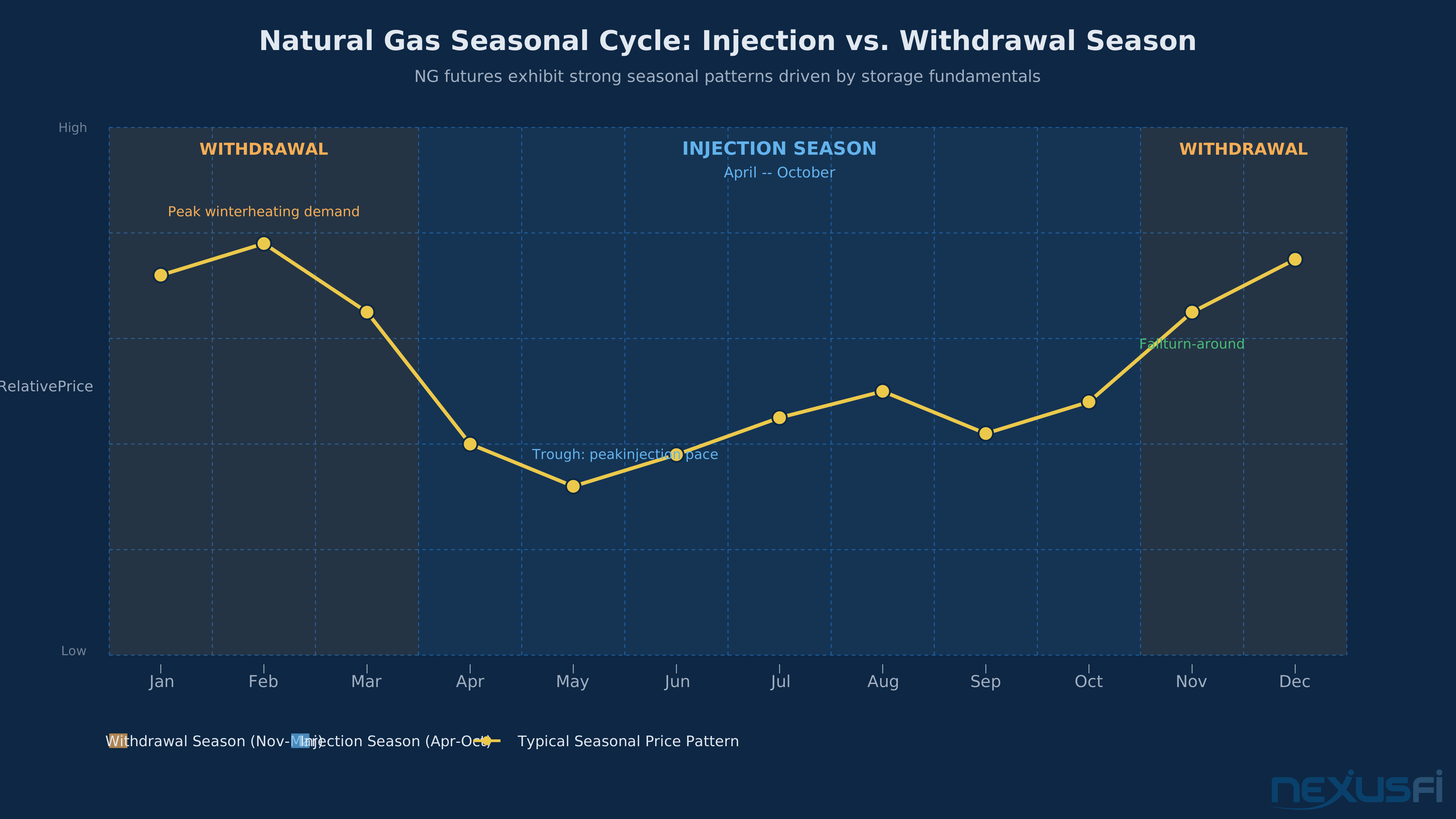
Natural gas is the market that rewards preparation and punishes guesswork. More than almost any other futures contract, NG rewards traders who understand why...
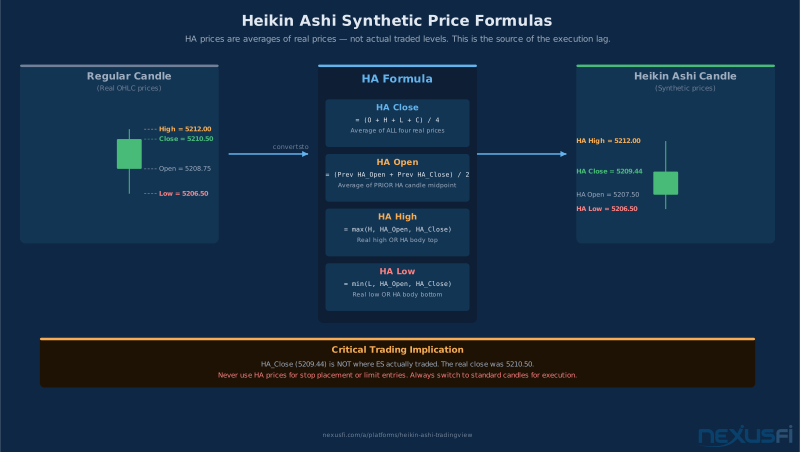
Heikin Ashi candles are TradingView's most underused noise-reduction tool. While every futures trader eventually discovers them, most never learn to use them...
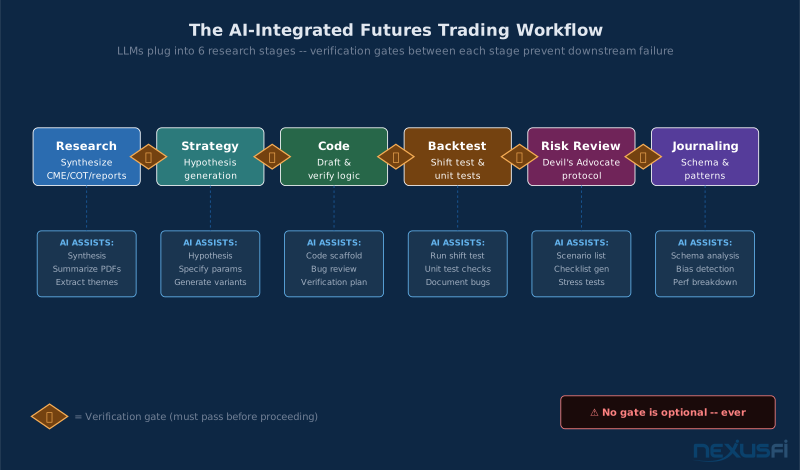
There are two kinds of traders who've tried AI tools for trading. The first kind asked ChatGPT for a trading strategy, got back something generic and useless...
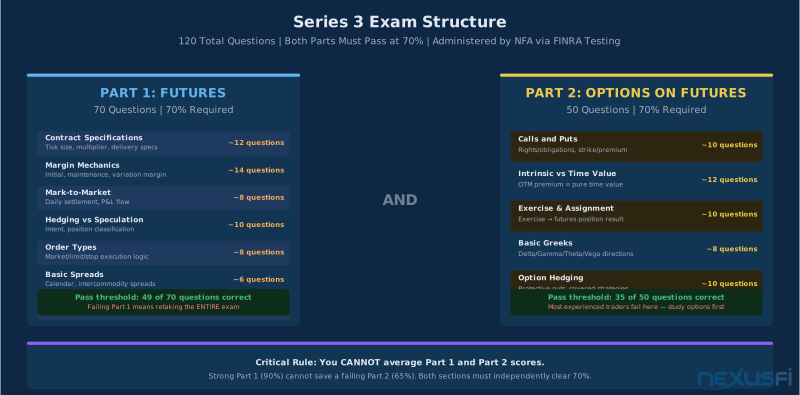
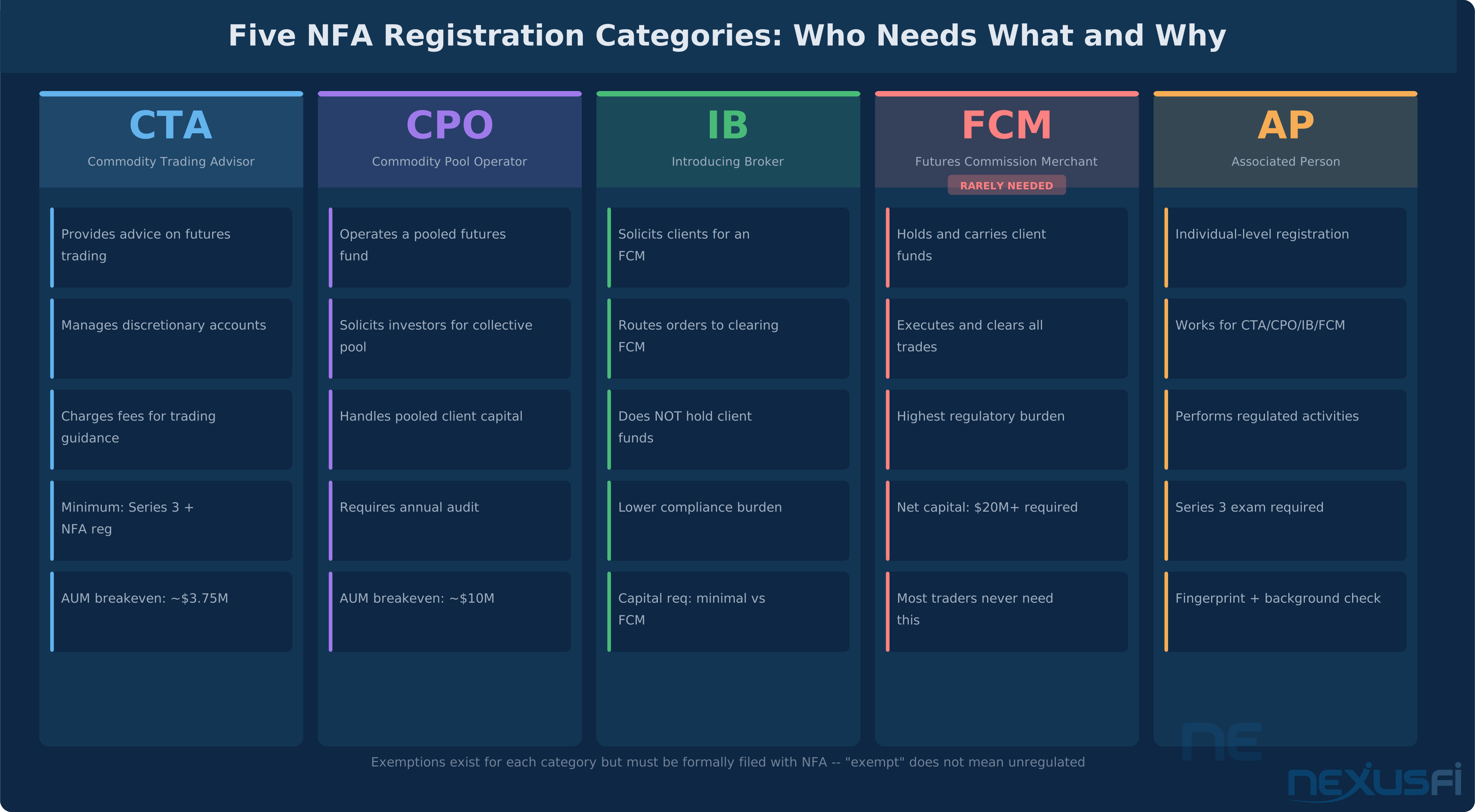
Overview Most futures traders who decide to launch a CTA, take a solicitation role, or work in managed futures hit the same wall: the Series 3 exam. You can ...
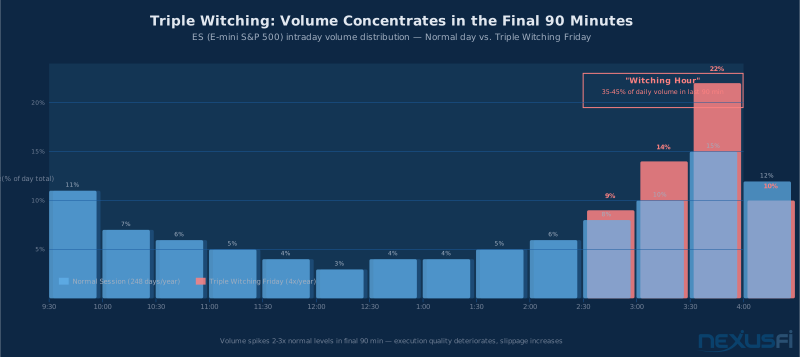
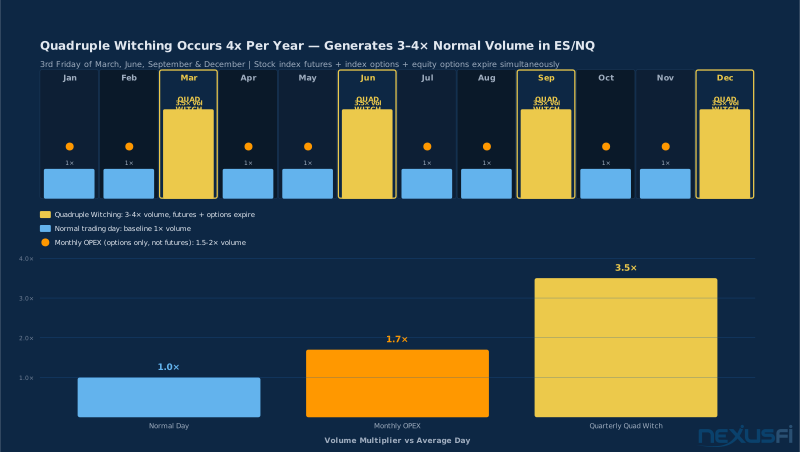
Four times a year, the market turns into something it isn't the other 248 trading days. Volume surges. Price action gets weird. Stops that should hold don't....
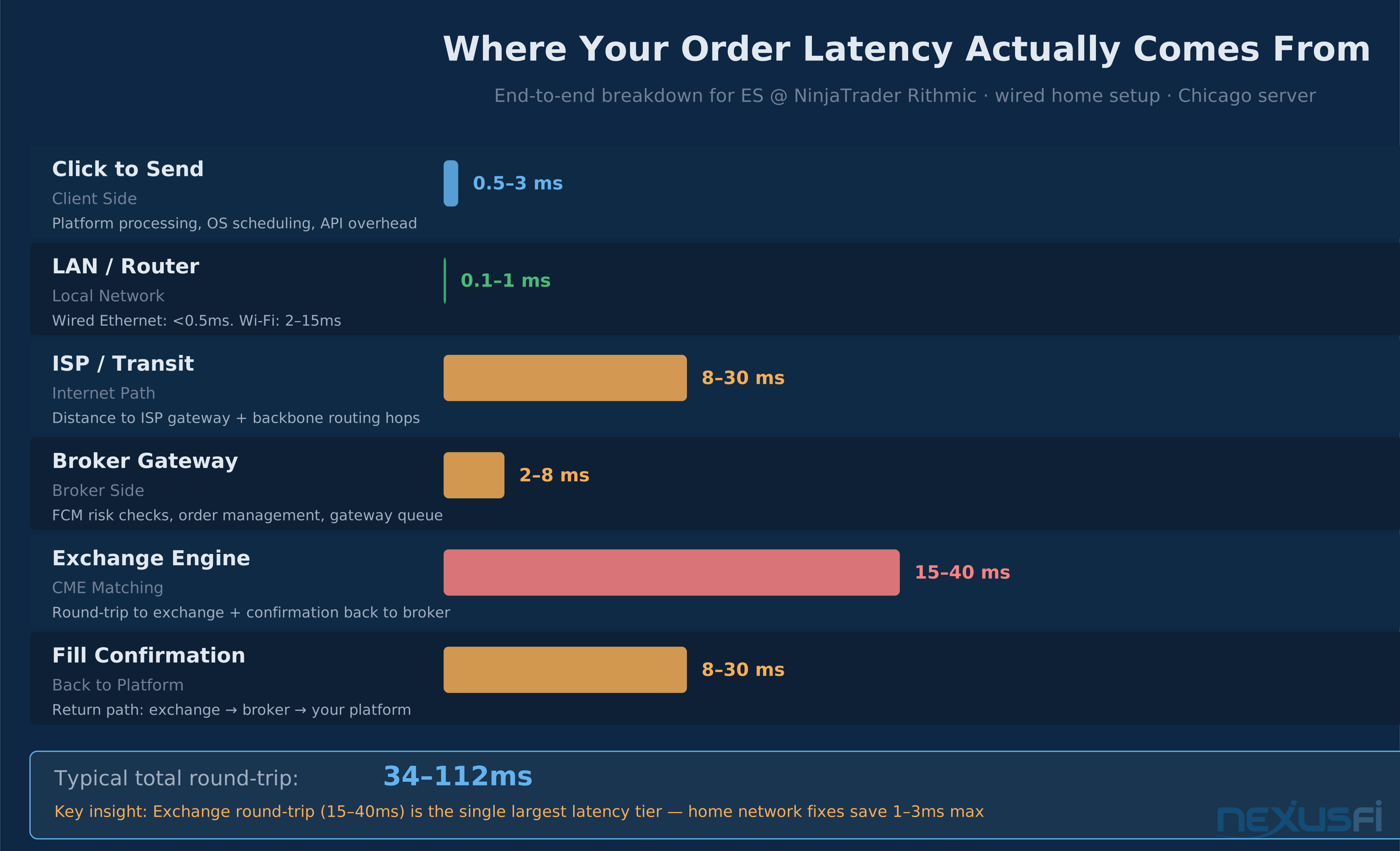
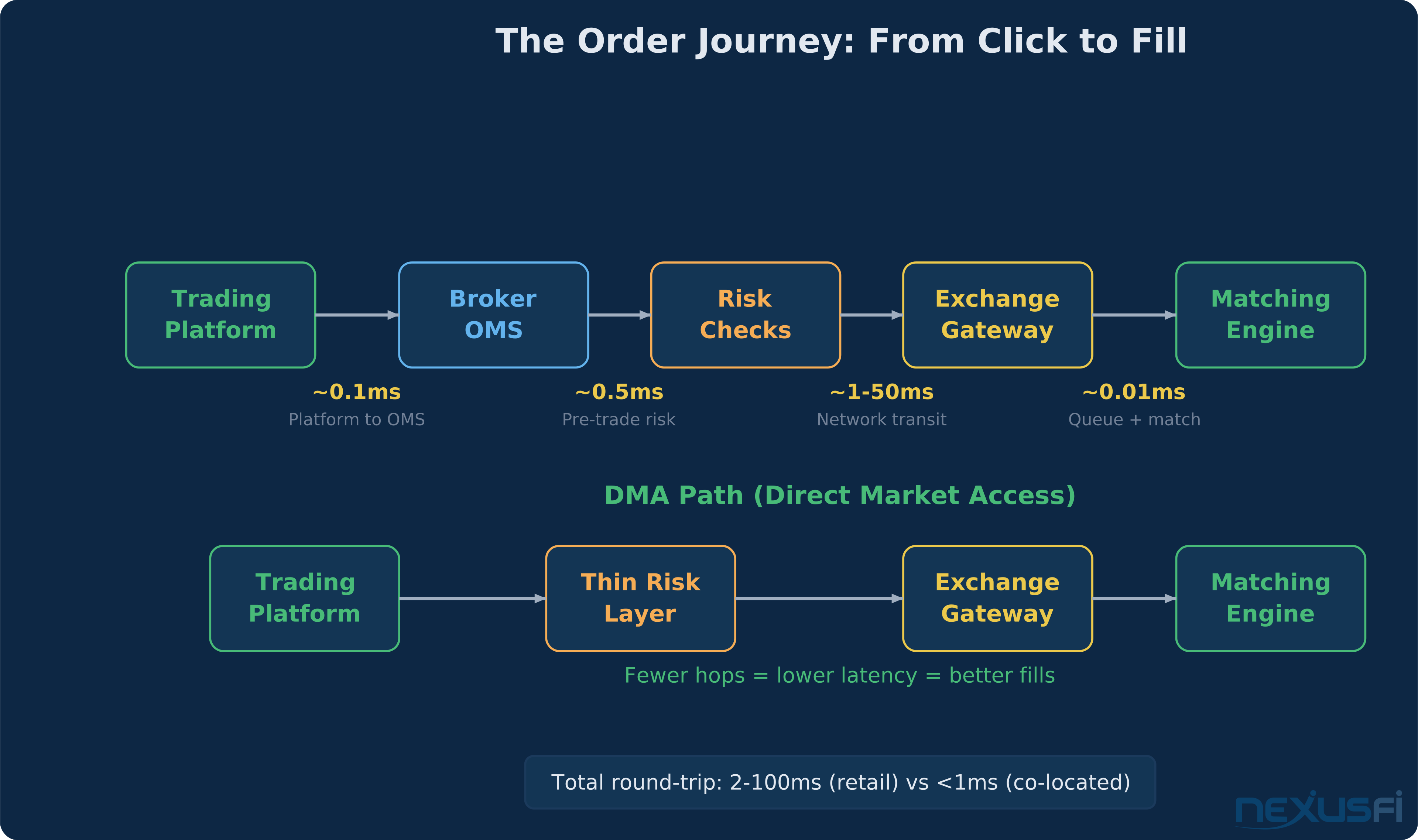
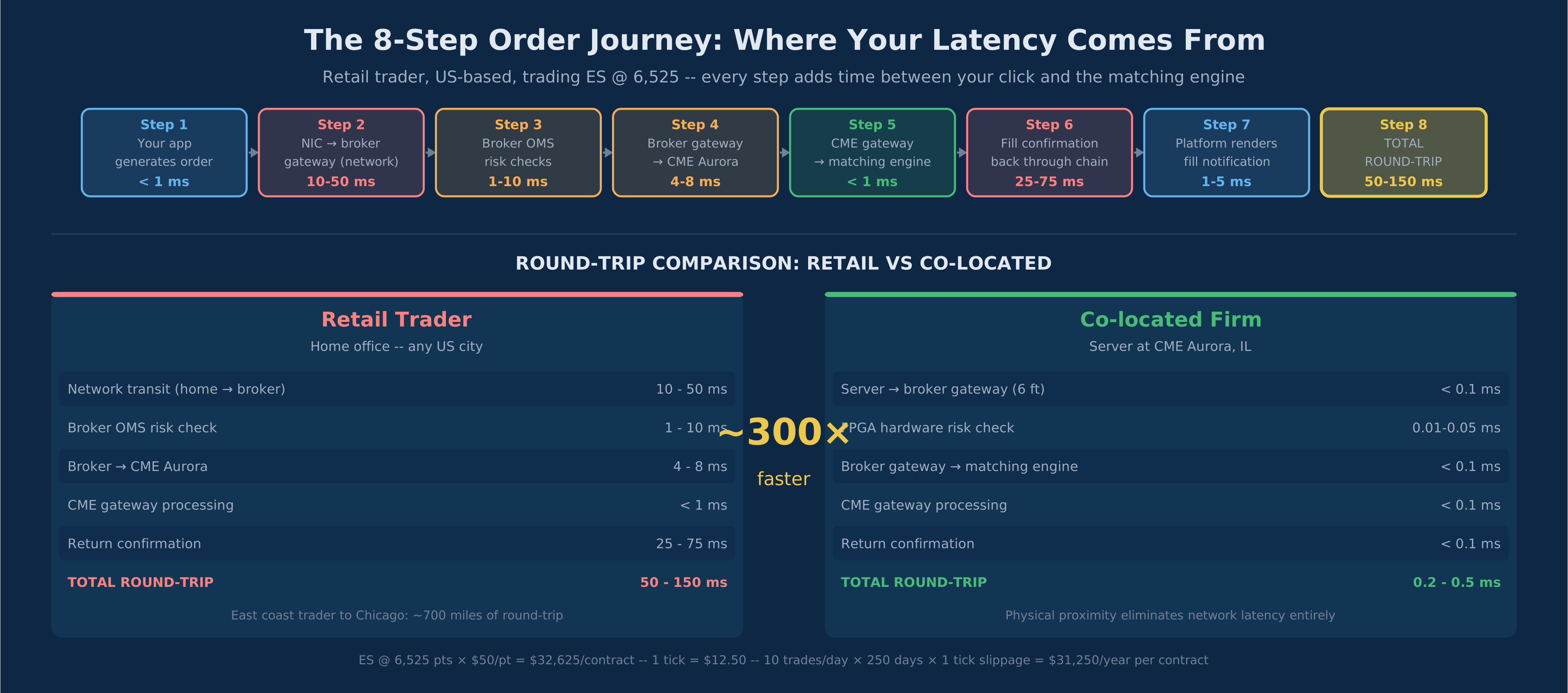
Every futures trade starts the same way -- you click a button. What happens between that click and your fill confirmation is where money gets made or lost, a...
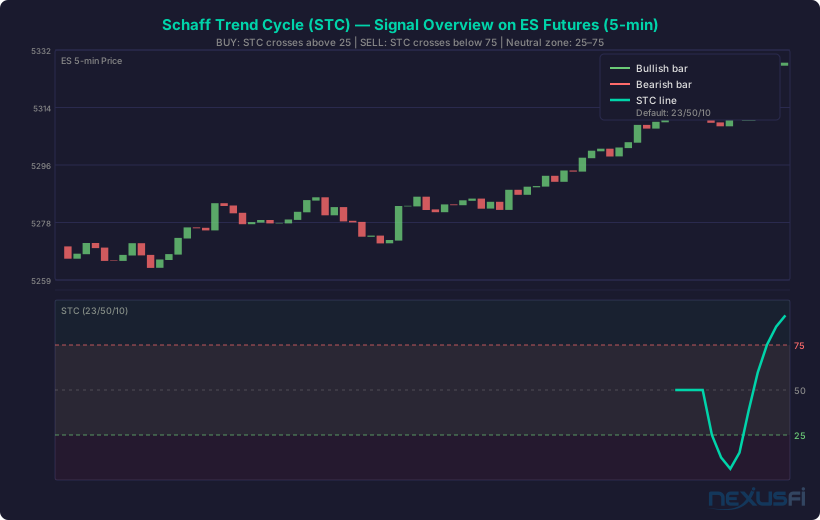
Overview The Schaff Trend Cycle (STC) is a momentum oscillator created by Doug Schaff in 1999 that solves a problem most traders encounter the hard way: the ...
Every futures trader learns the same lesson eventually -- sometimes the hard way. You're in a position, everything looks clean on the chart, and then price r...
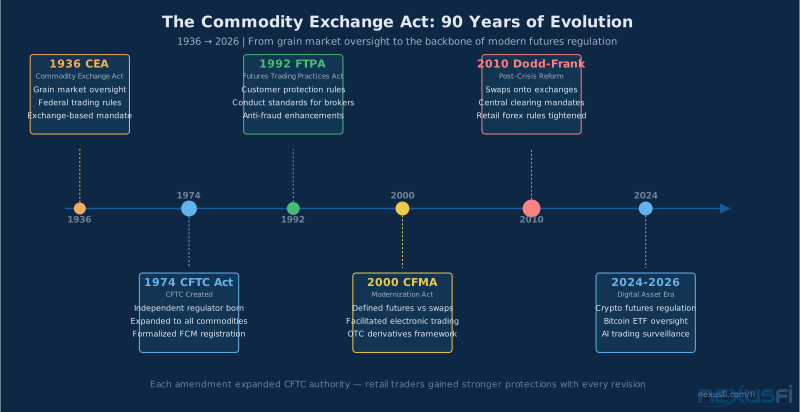
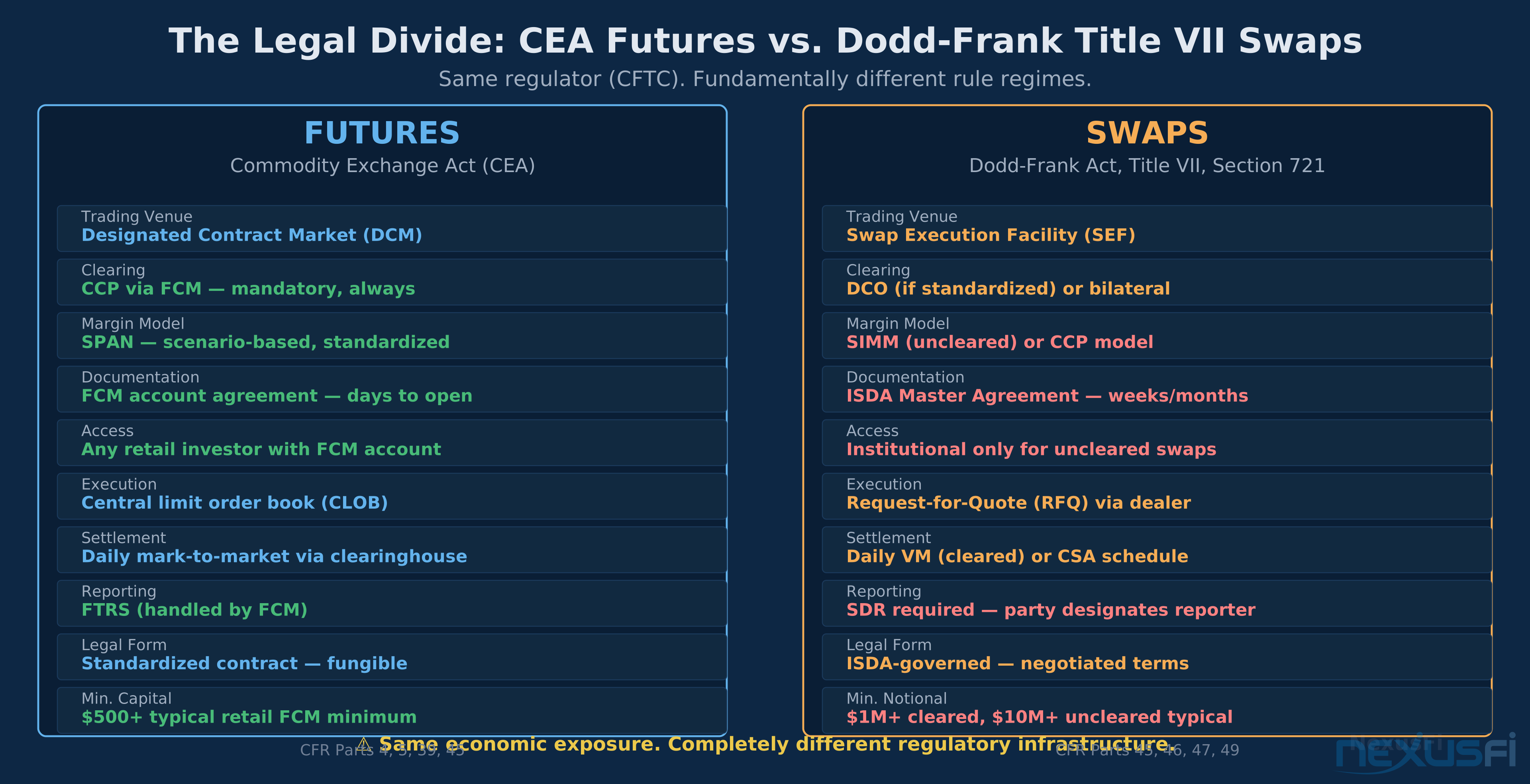
Overview Most futures traders have never read the Commodity Exchange Act. That's not an insult -- it's 500+ pages of dense federal statute, and you have bett...
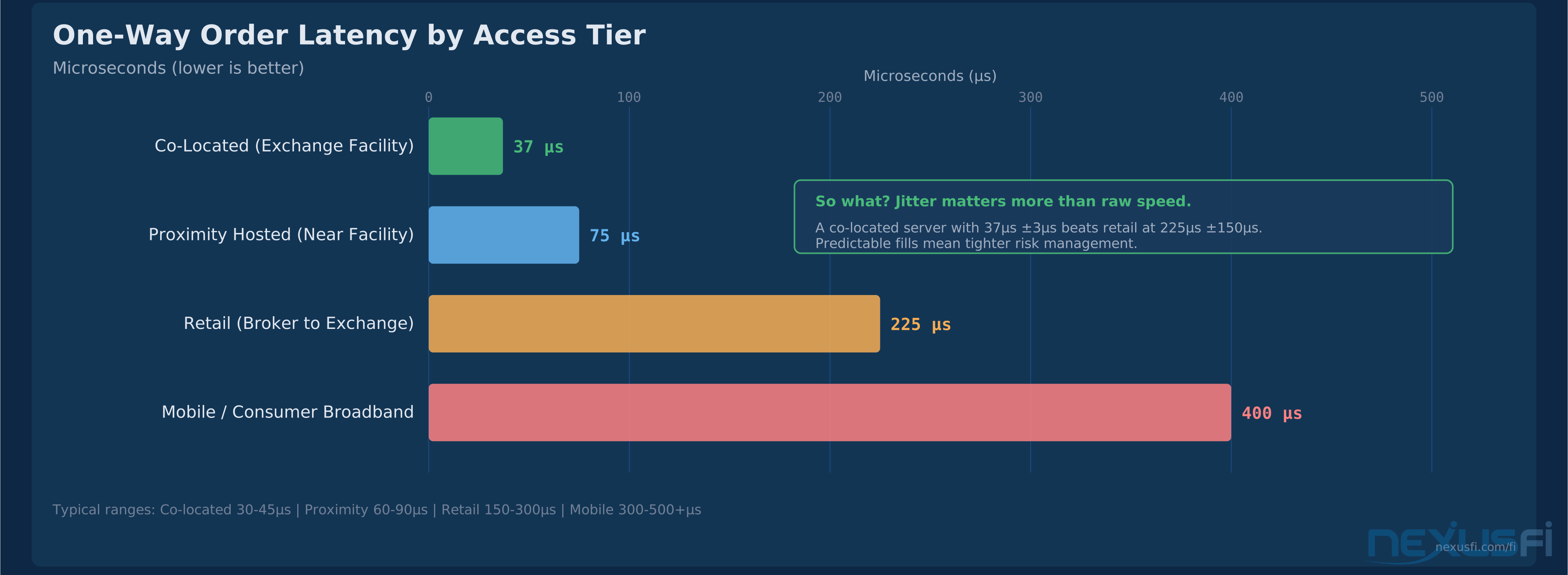
Every futures trader eventually falls down the latency rabbit hole. You see a fill that should have been yours slip away by one tick, and suddenly you're res...
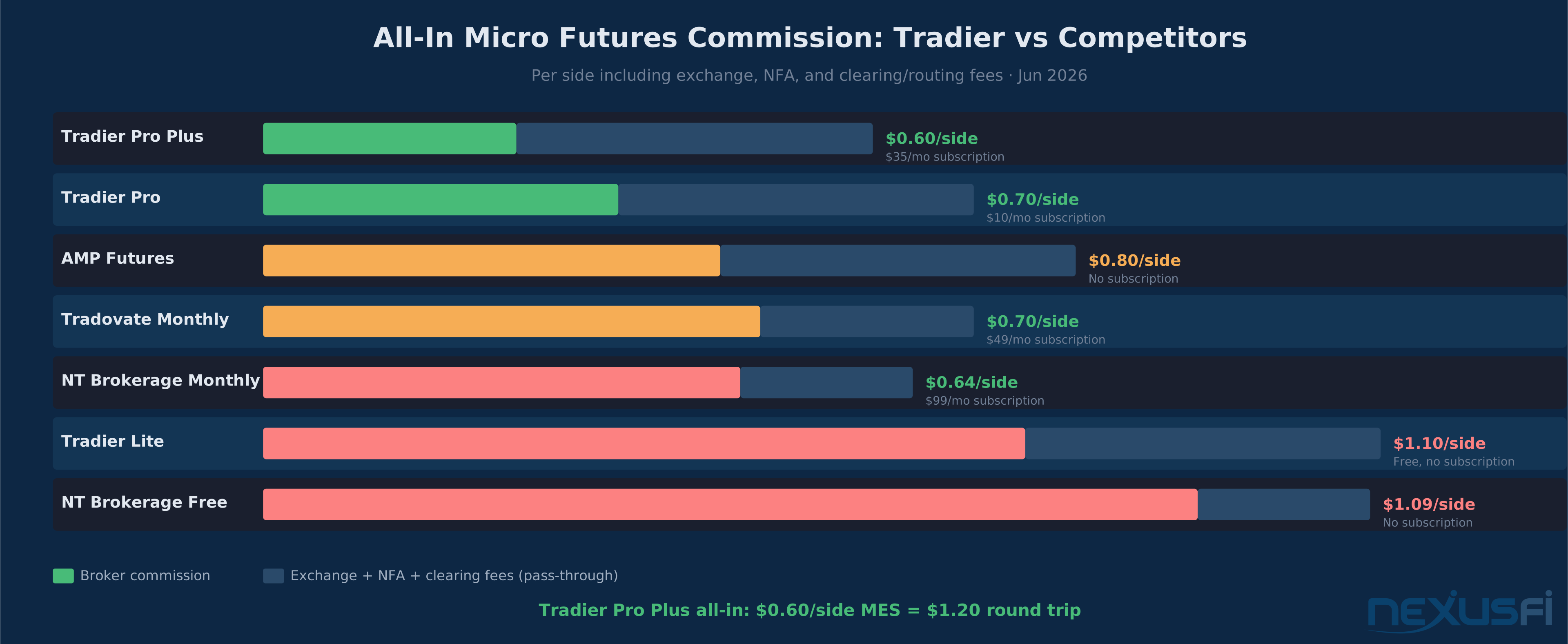
Tradier Futures is a NexusFi sponsor. View their full company profile, current pricing, Elite member offers, and community reviews. View Tradier Futures in t...
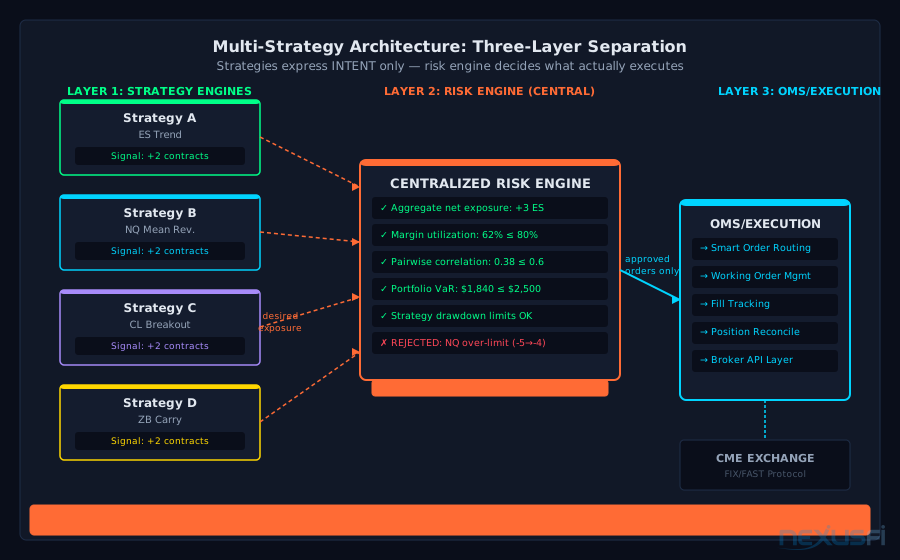
Running a single automated strategy is hard enough. Running several simultaneously -- each competing for capital, each generating its own risk, each interact...
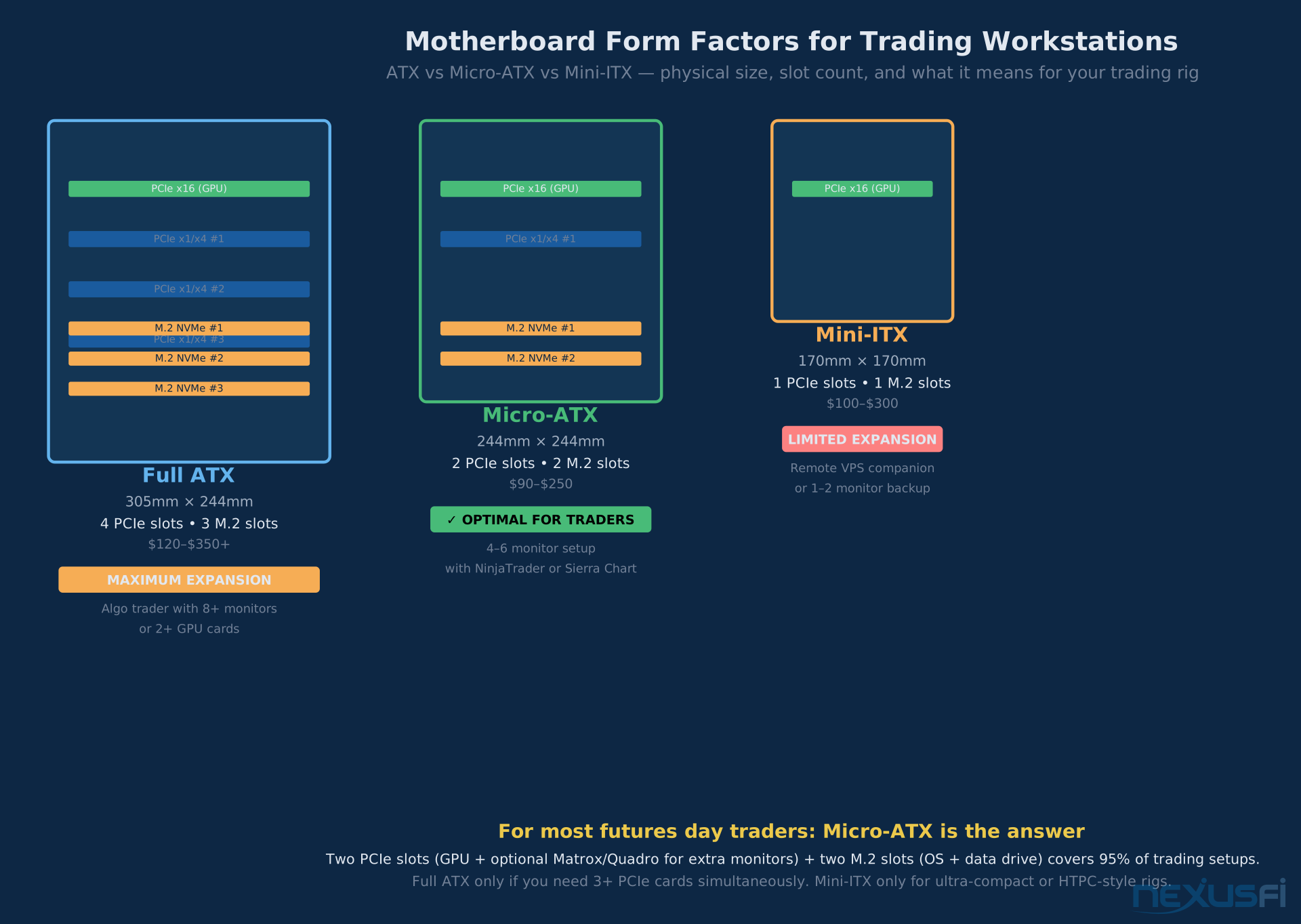
The motherboard is the most overlooked component in a trading workstation build. Everyone debates CPUs, argues over RAM speeds, and agonizes over GPU selecti...
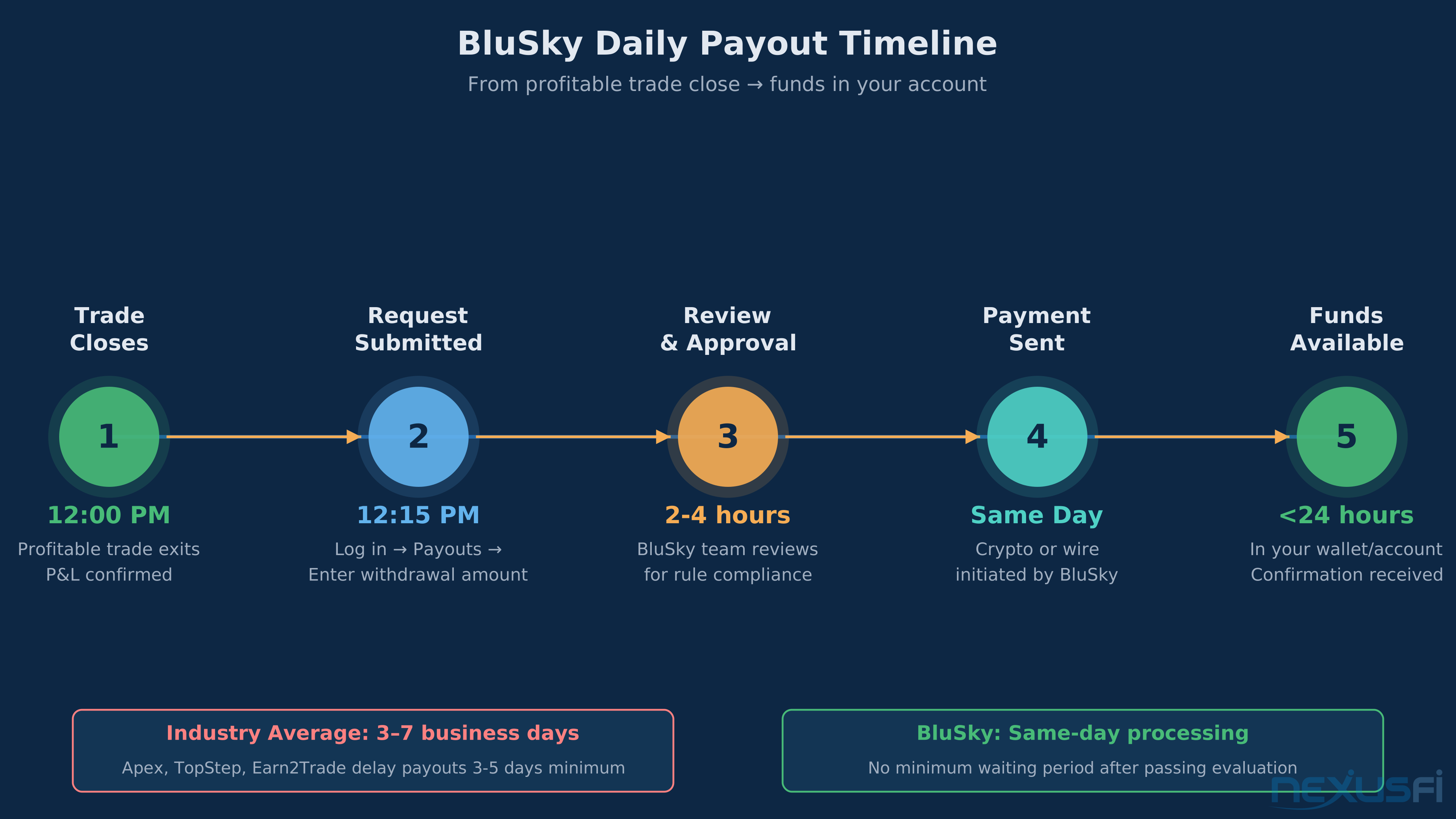
Overview Most prop firms treat withdrawals as an afterthought. Submit a request, wait until the pay period closes, hope there's no compliance review that del...
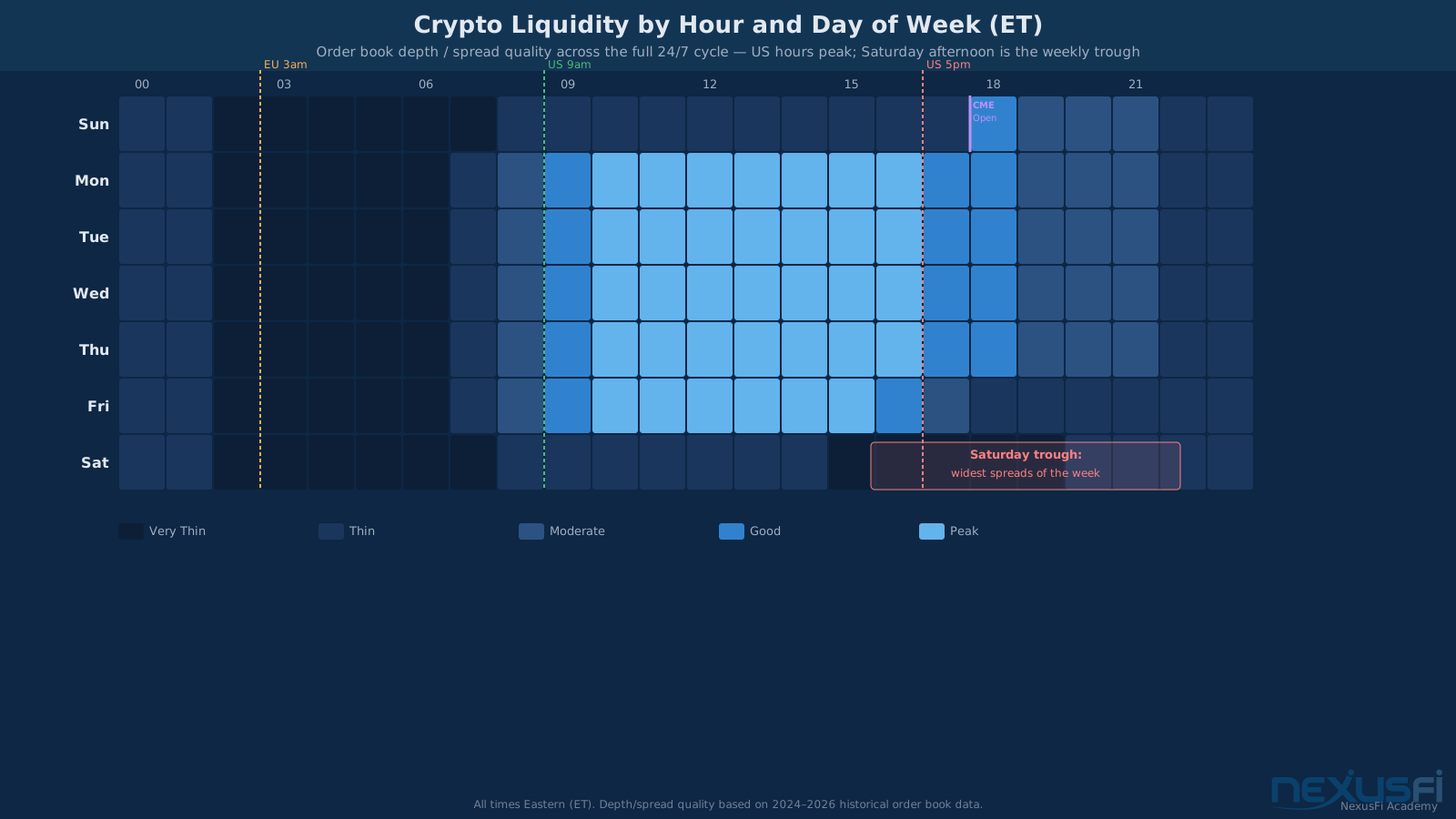
Overview Every futures trader eventually looks at crypto and thinks: same market, different hours. That's the wrong frame. Crypto isn't a longer version of E...
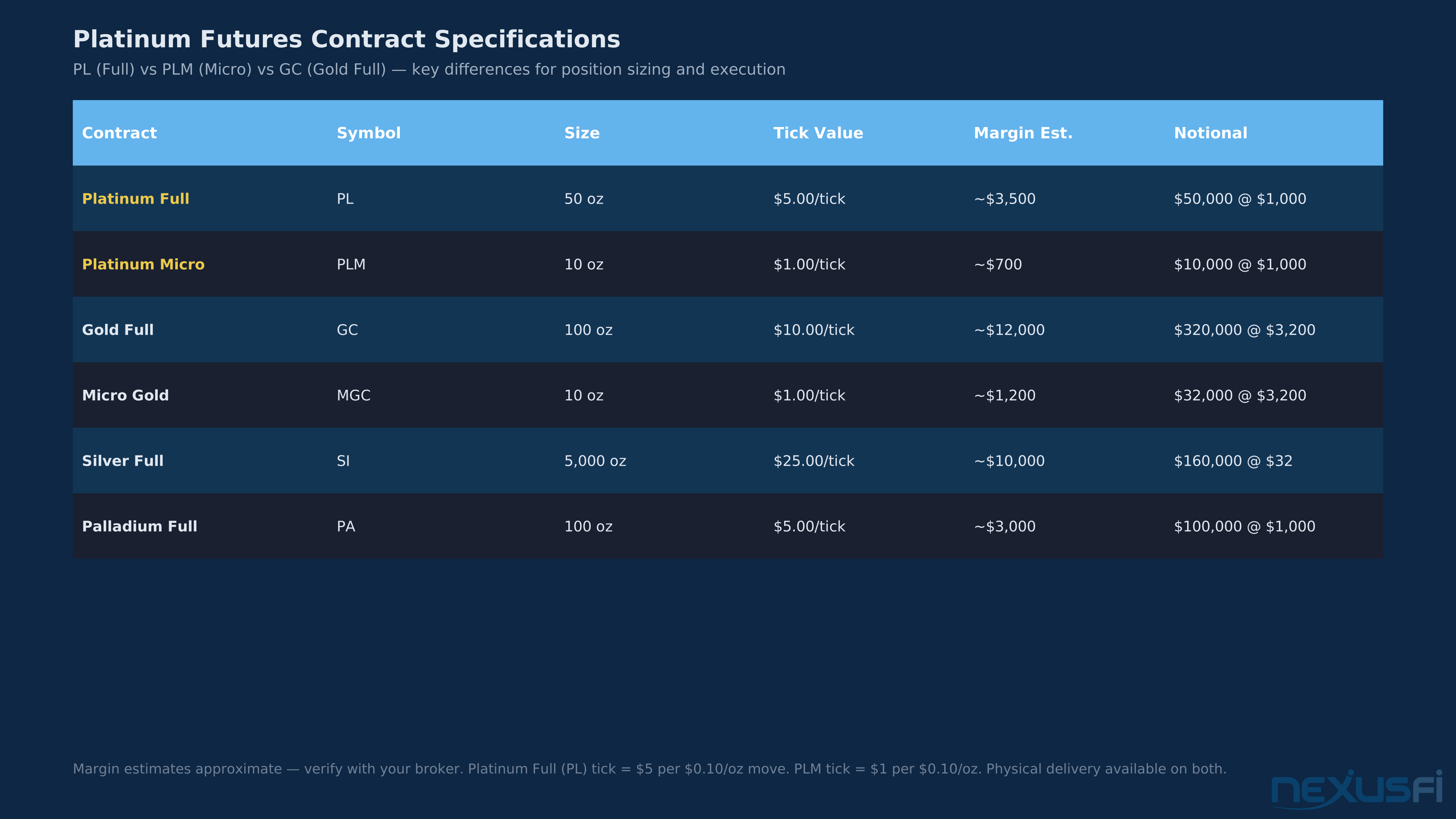
Platinum occupies a strange position in the futures landscape. It trades on precious metals desks alongside gold and silver, gets grouped into "PMs" by most ...
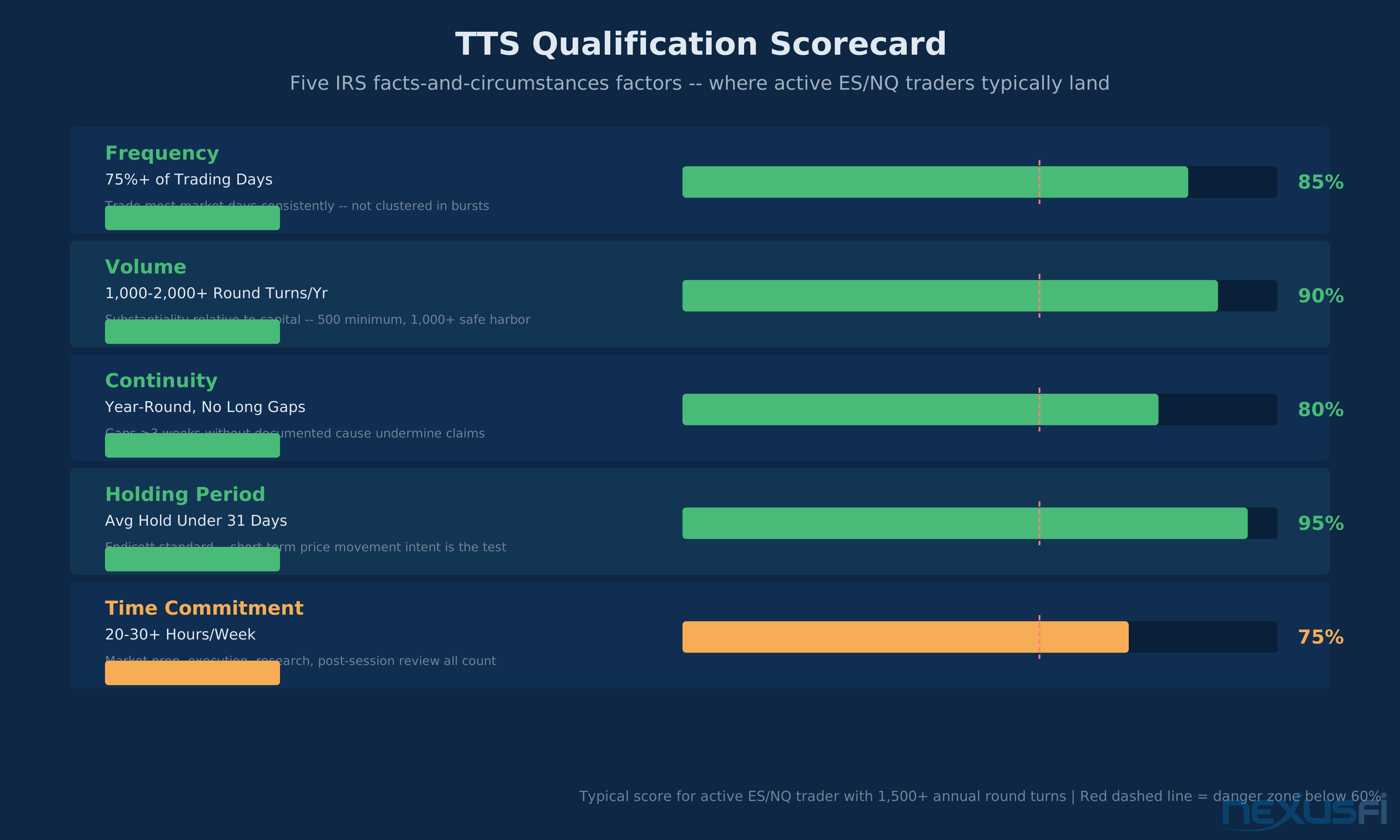
Trader Tax Status is the IRS designation that treats your trading activity as a trade or business under Section 162 of the Internal Revenue Code. For active ...
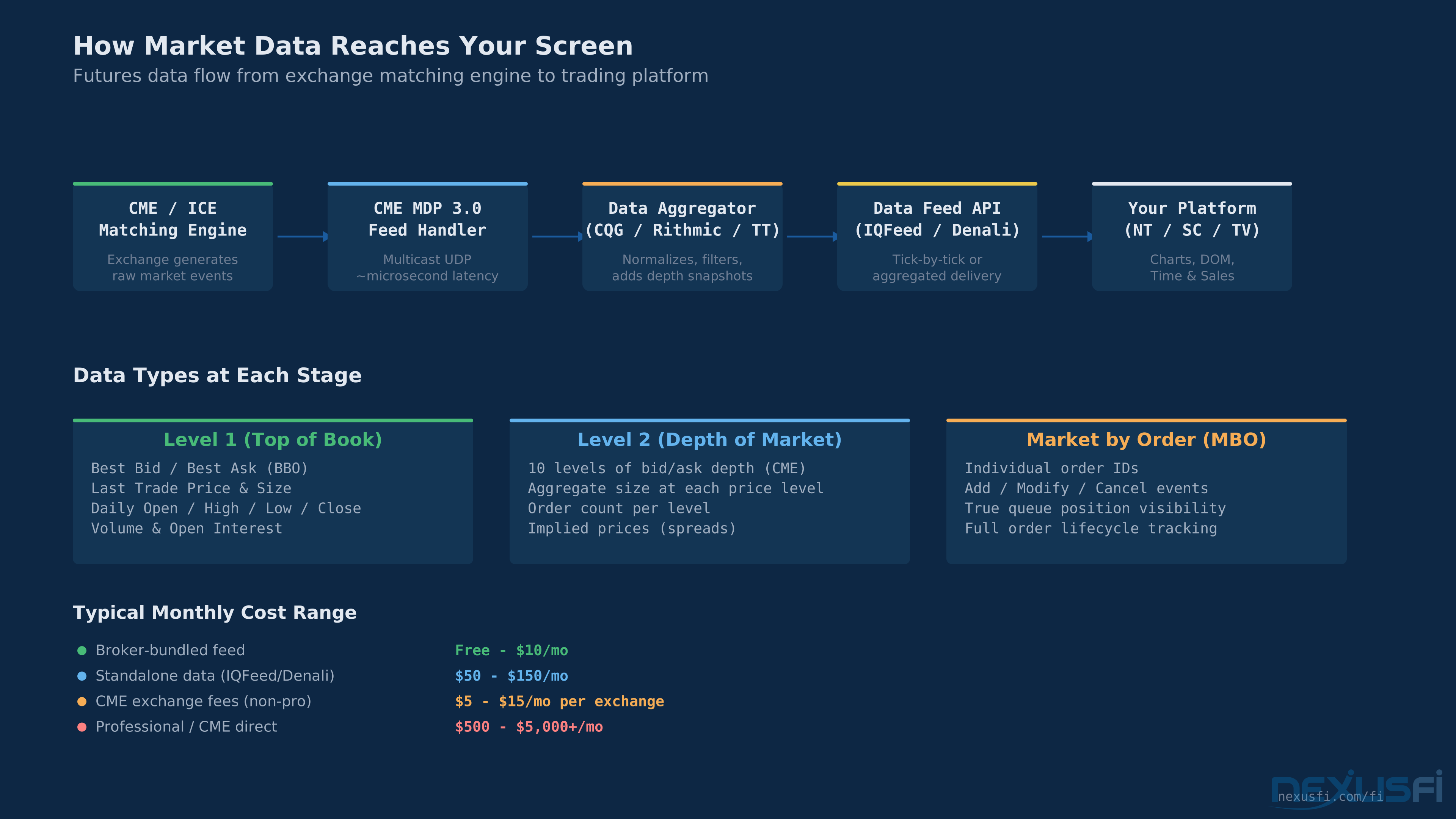
Every chart you look at, every DOM you read, every Time & Sales print scrolling past your screen -- all of it is market data. And the quality of that data sh...
Overview Every trader has seen it in the background of trading floor photos: the distinctive dual-screen setup with black background, orange text, and the pr...
Every futures trader learns about macro events The mechanics are simple. Earnings don't affect ES and NQ equally. NQ is structurally more sensitive because i...
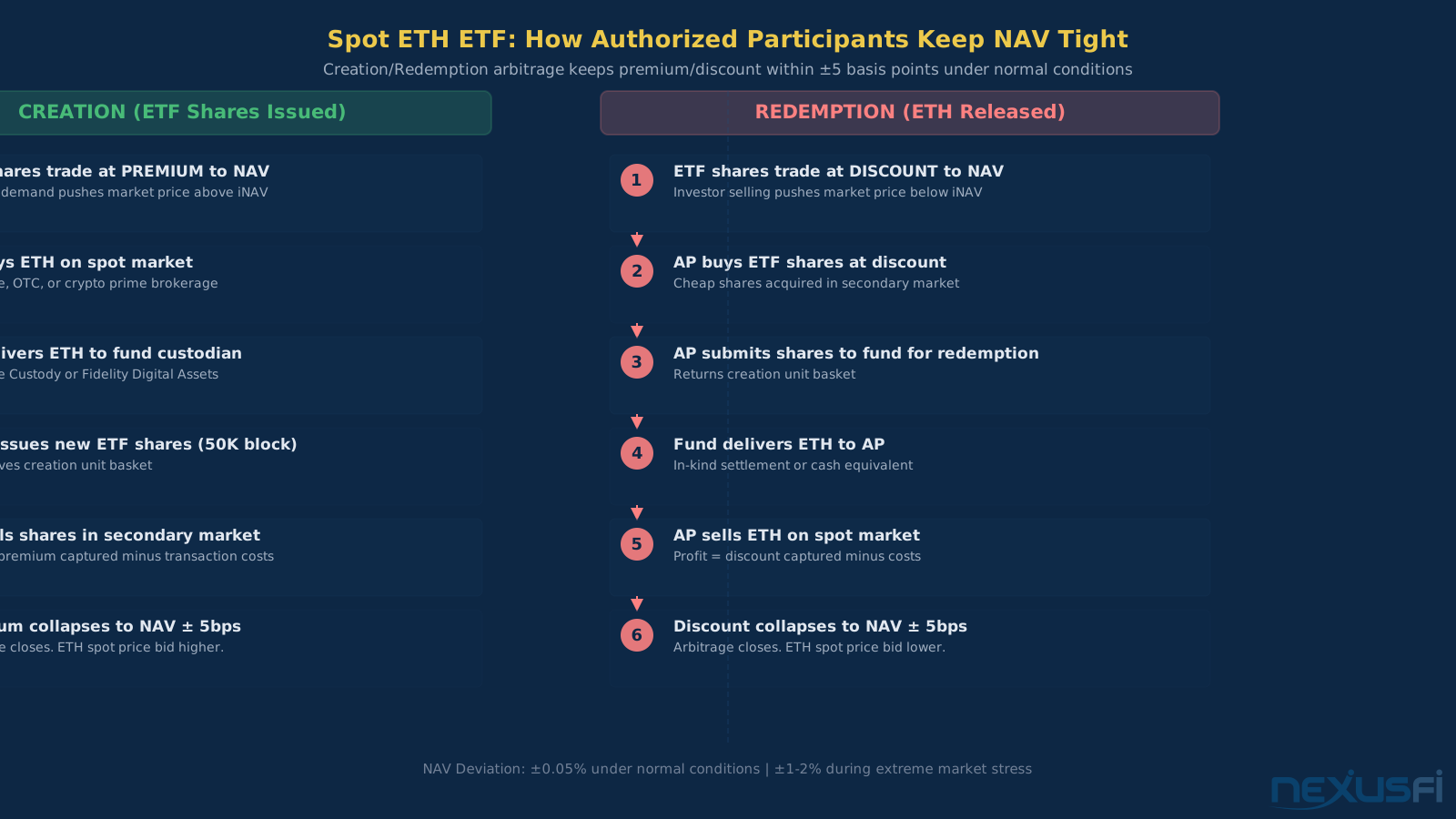
Overview May 23, 2024. The SEC approved eight spot Ethereum ETFs. Within 24 hours, BlackRock's ETHA and Fidelity's FETH began trading on July 23, 2024 after ...
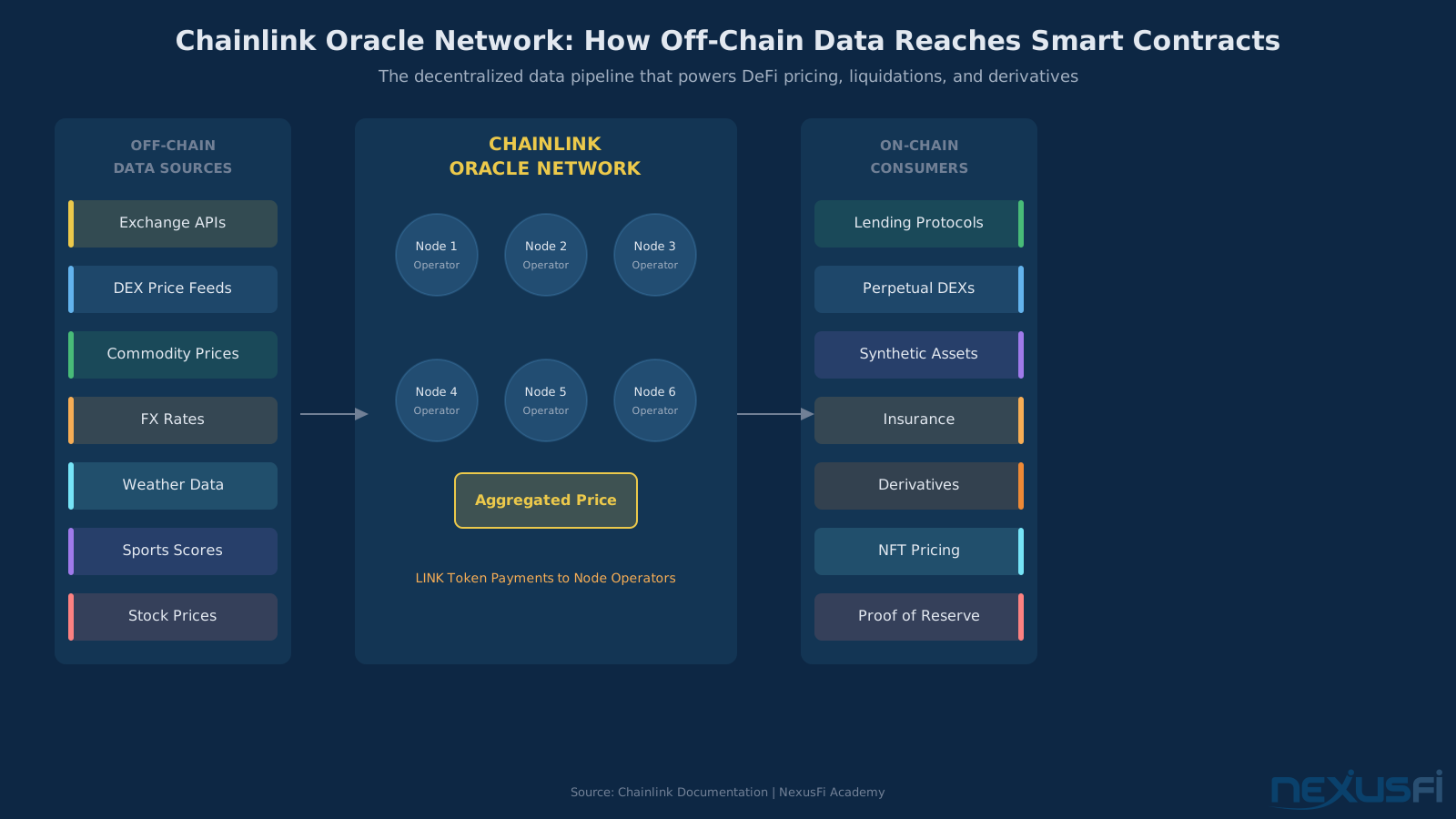
Chainlink isn't a cryptocurrency you trade purely on chart patterns. It's market infrastructure -- the plumbing that keeps DeFi from collapsing. Every time a...
Overview Most funded traders focus on the wrong problem. They obsess over the perfect setup, the right indicator stack, the ideal market to trade. What actua...
Overview The 2026 FIFA World Cup kicks off June 11 in Los Angeles, and prediction markets are running a parallel tournament that's gotten genuinely interesti...
Overview Kraken launched in 2011, six months after the first Mt. Gox hack made the phrase "exchange security" an oxymoron. Jesse Powell started it partly bec...
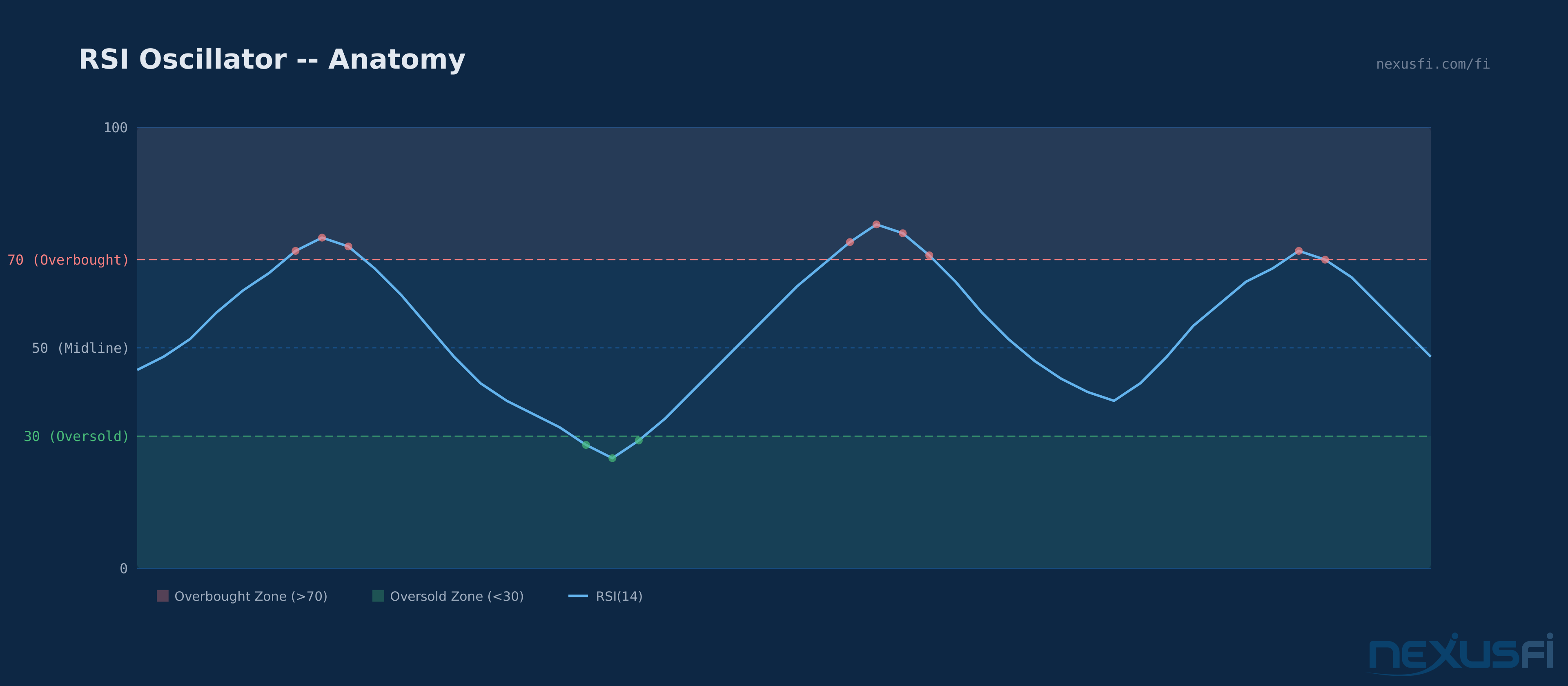
RSI (Relative Strength Index) -- A bounded momentum oscillator that ranges from 0 to 100, measuring the ratio of average gains to average losses over a speci...
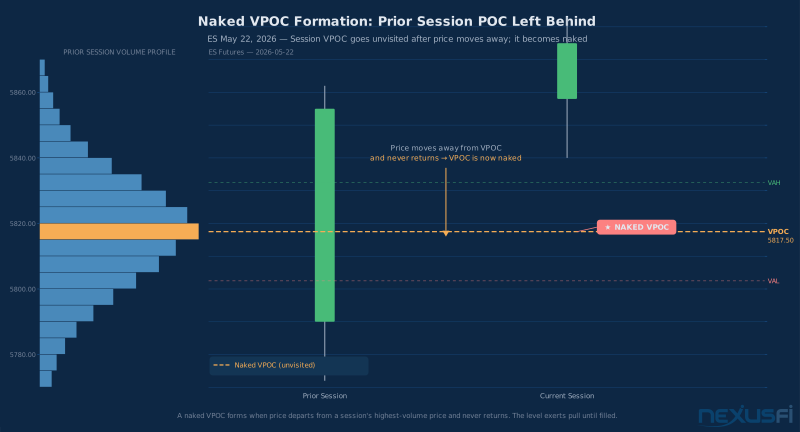
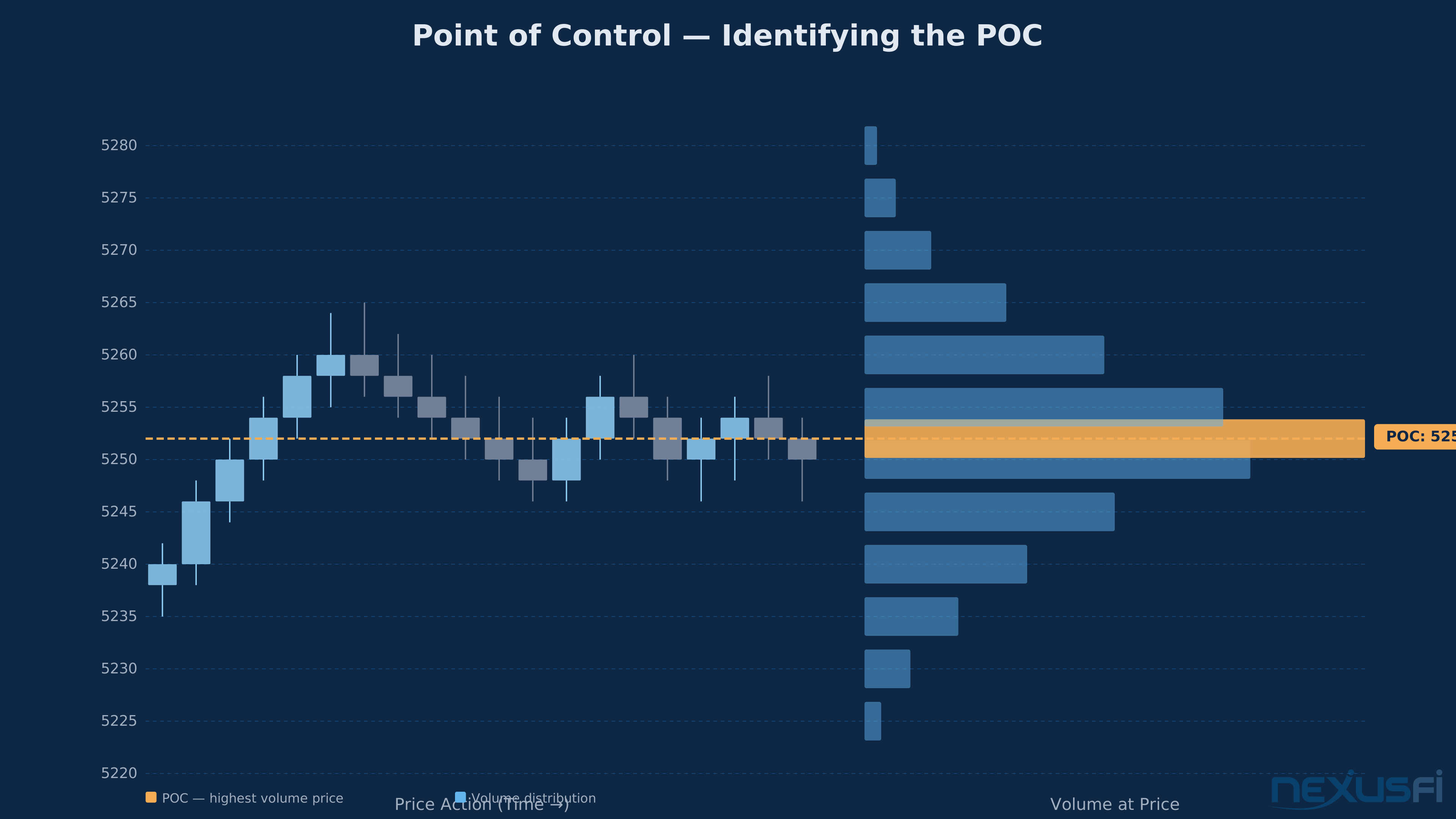
Most futures traders learn about the Point of Control as a historical curiosity -- the price where a session concentrated its volume, a line you draw and the...
Overview Every futures trader has experienced it: a clean breakout setup, everything lining up technically, price pushing through a level with conviction -- ...
Overview Most futures traders reach the same wall eventually. You've built a system—maybe it's a TradingView setup with custom indicators, maybe it's a Sie...
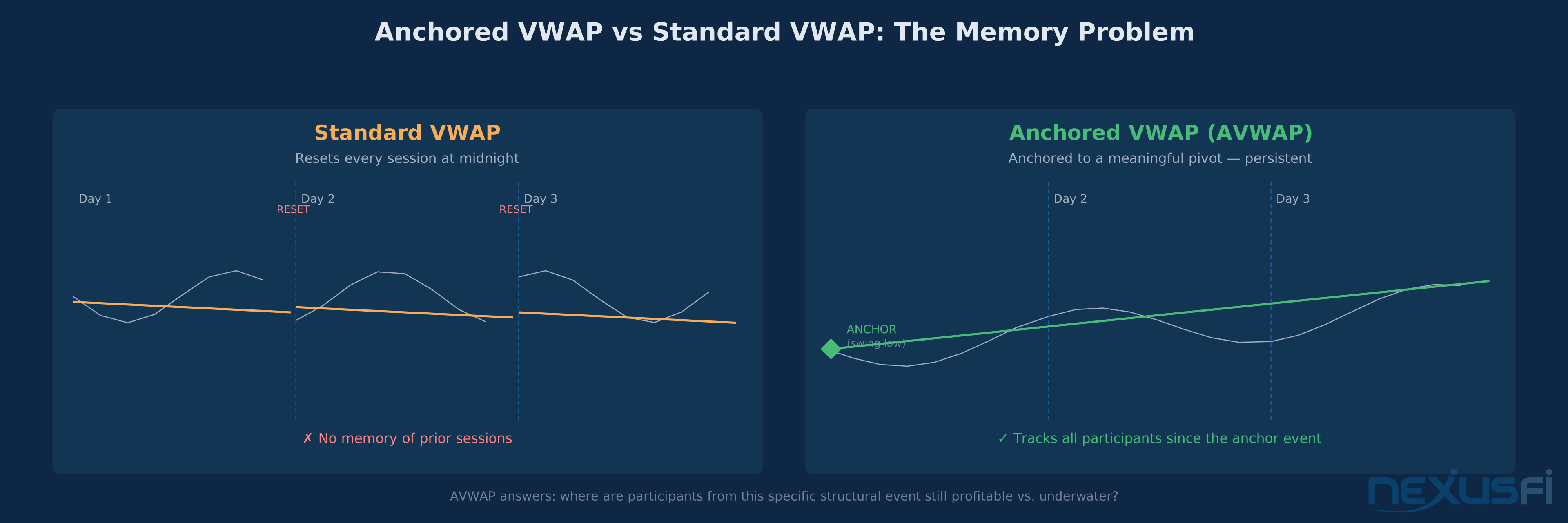
Anchored VWAP (AVWAP): The Dynamic Value Reference That Remembers Market Structure Standard VWAP resets every day at midnight. It has no memory. As @Fat Tail...
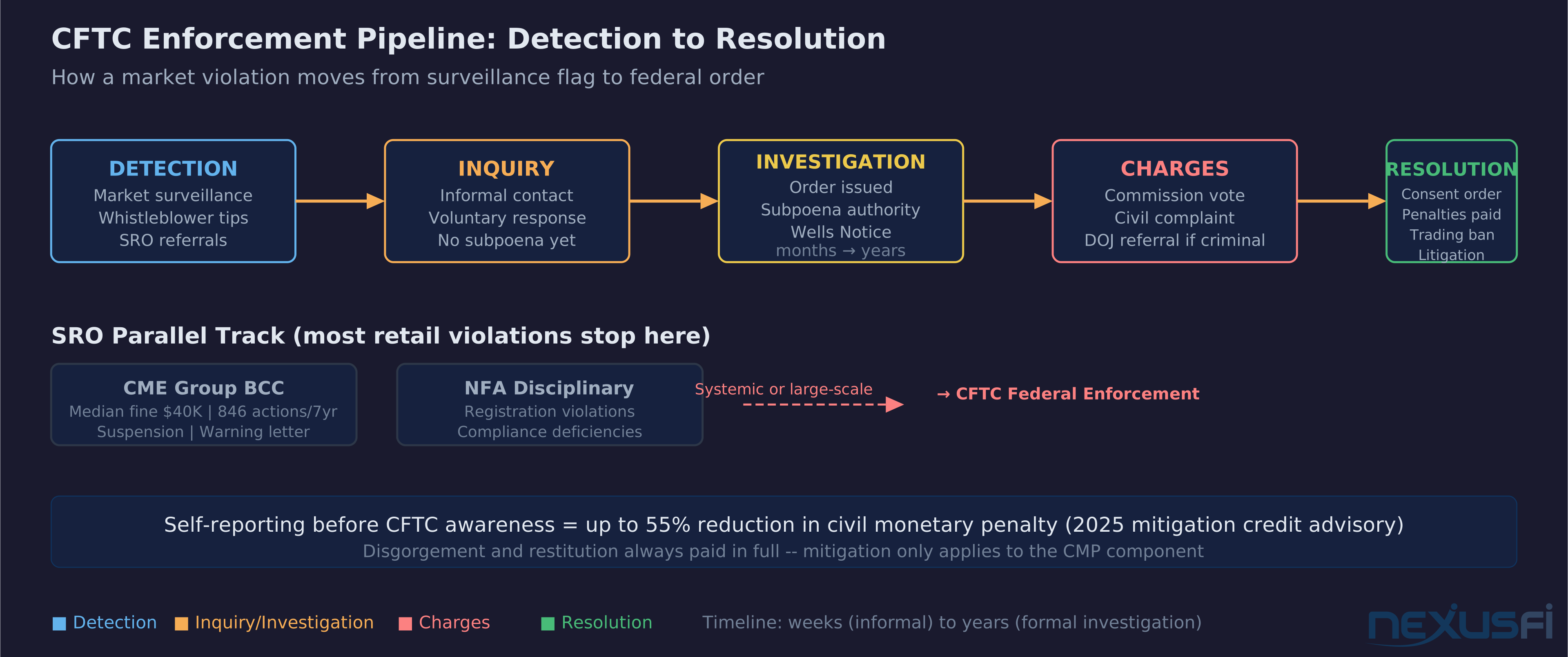
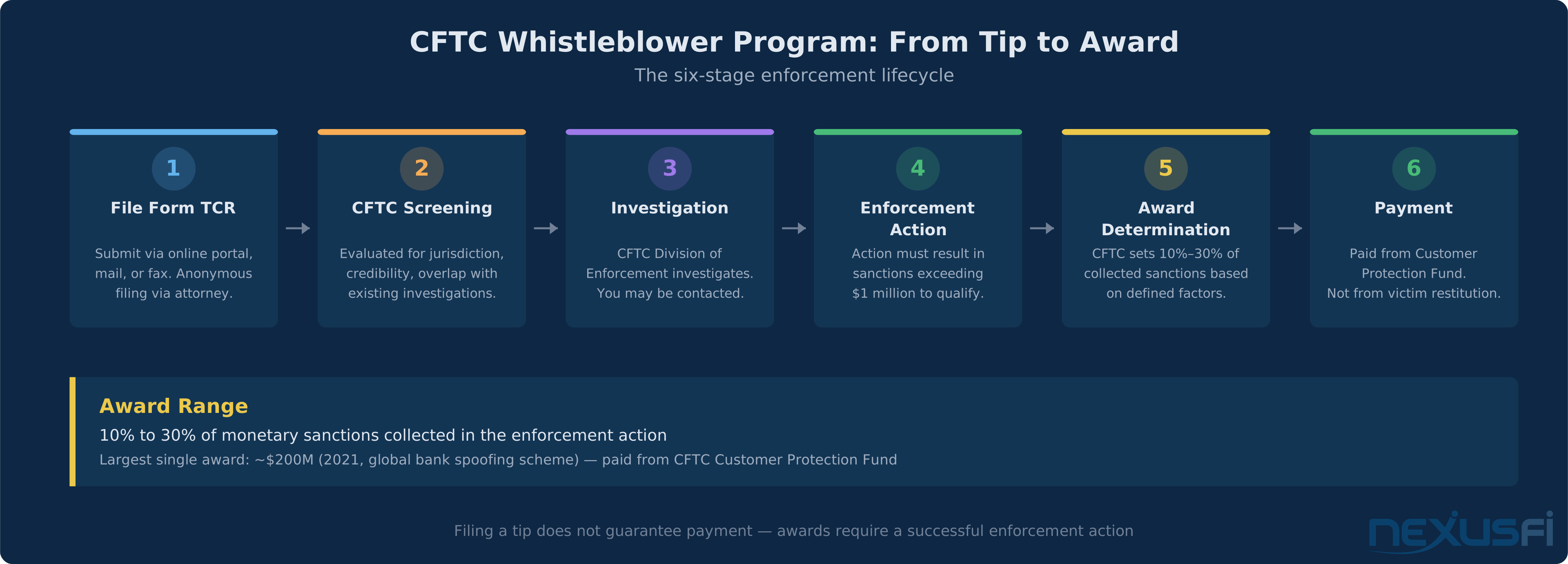
The Commodity Futures Trading Commission runs the toughest enforcement program in U.S. financial regulation -- and most retail futures traders have no idea h...
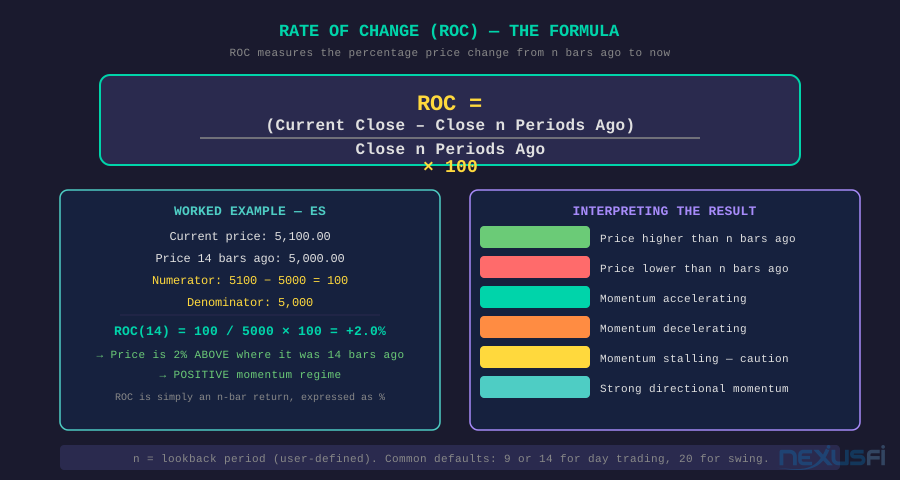
Rate of Change (ROC) is the most honest momentum indicator you can put on a chart. No smoothing, no lag, no proprietary formula. It asks a single question: h...
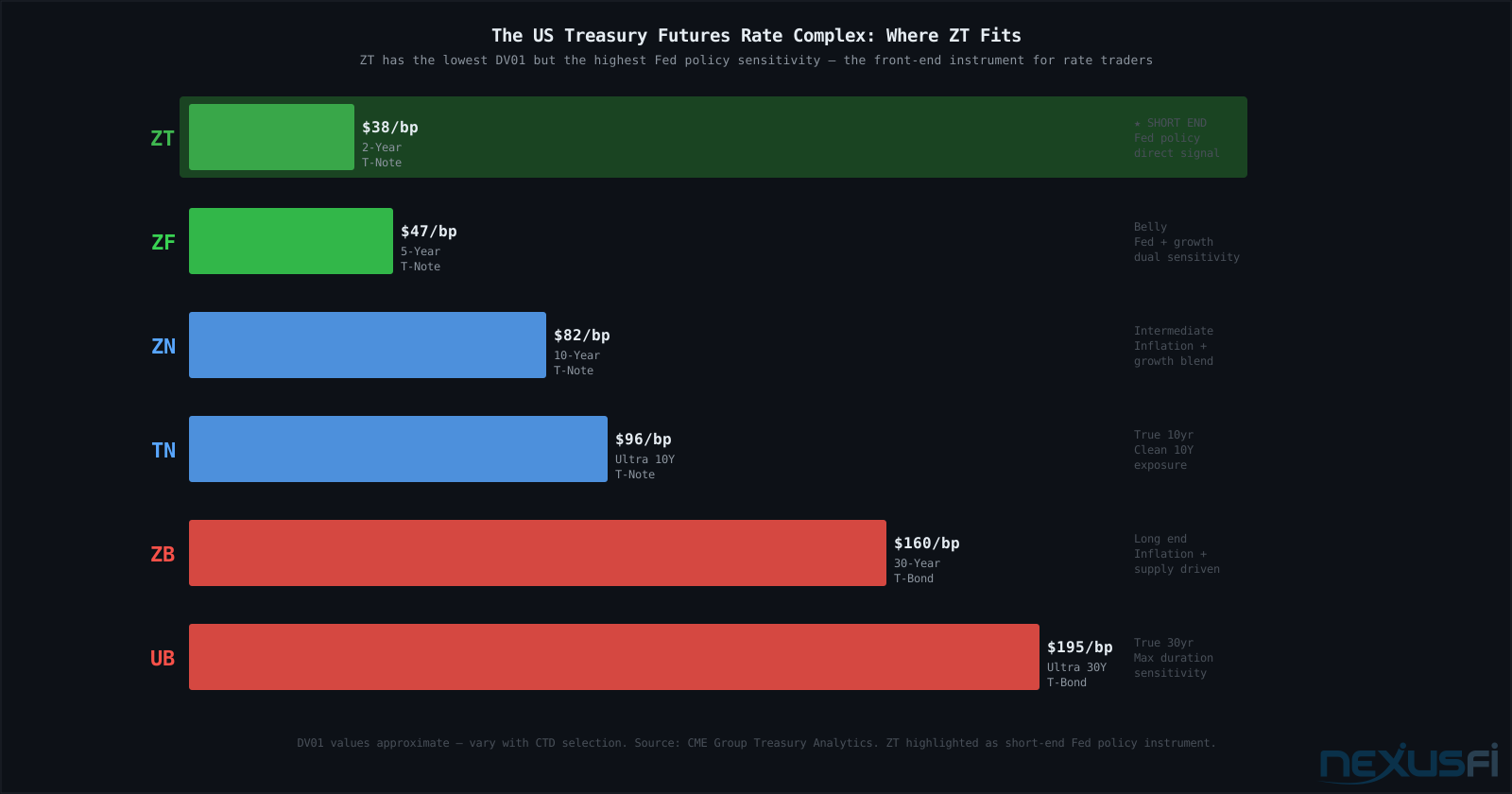
Here's something that trips up even experienced traders: you can run the exact same interest rate risk in two different instruments -- one labeled a "future"...
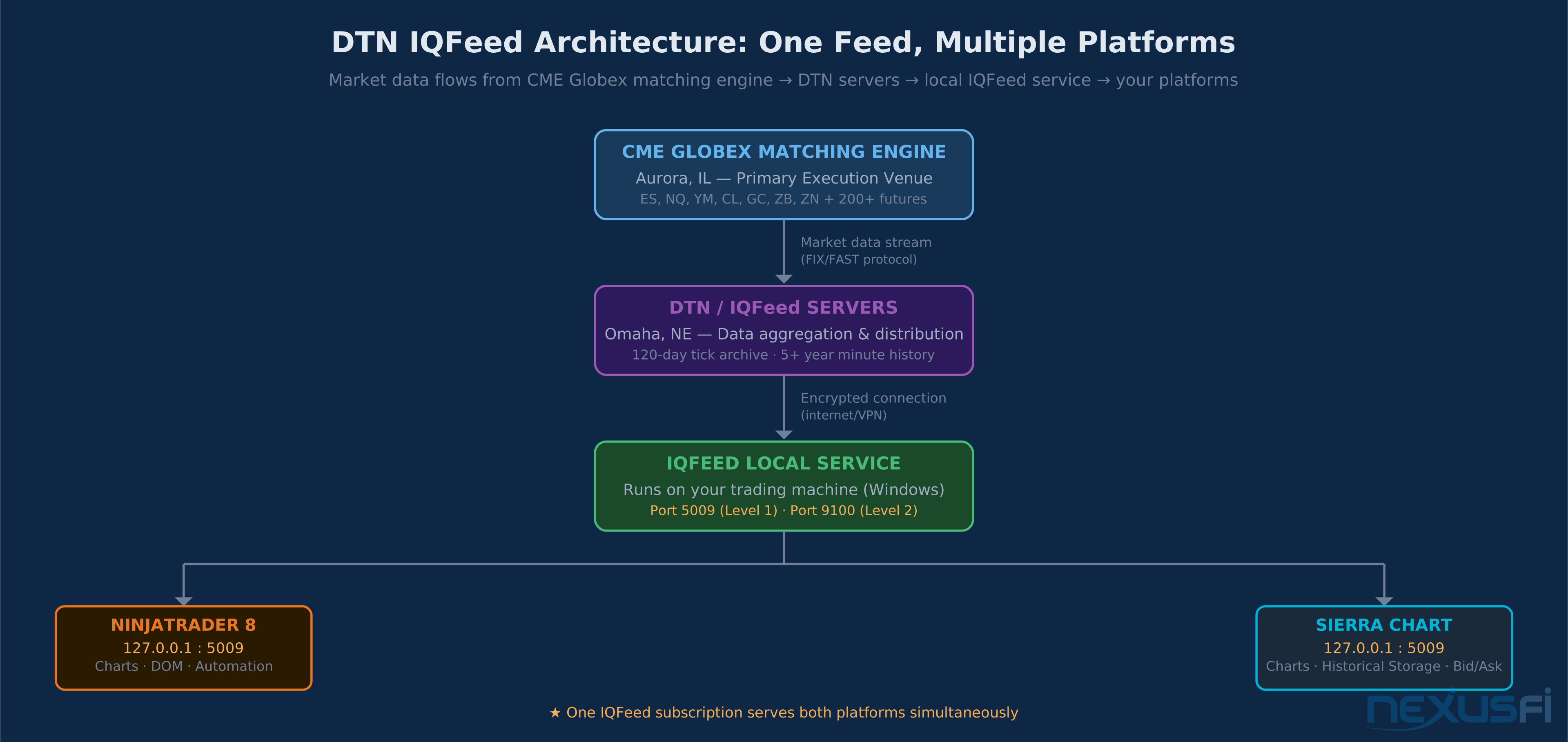
DTN IQFeed is a third-party market data feed for futures traders. It delivers real-time quotes, market depth, and historical data -- but it does not route or...
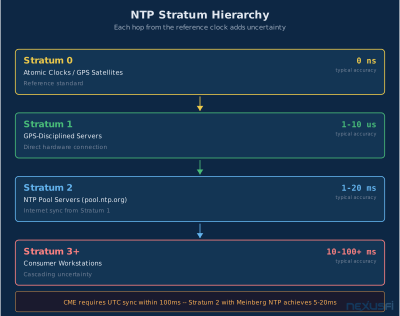
Your trading workstation's clock is probably wrong. Not by much -- maybe a few seconds, maybe a few hundred milliseconds -- but wrong enough to corrupt your ...
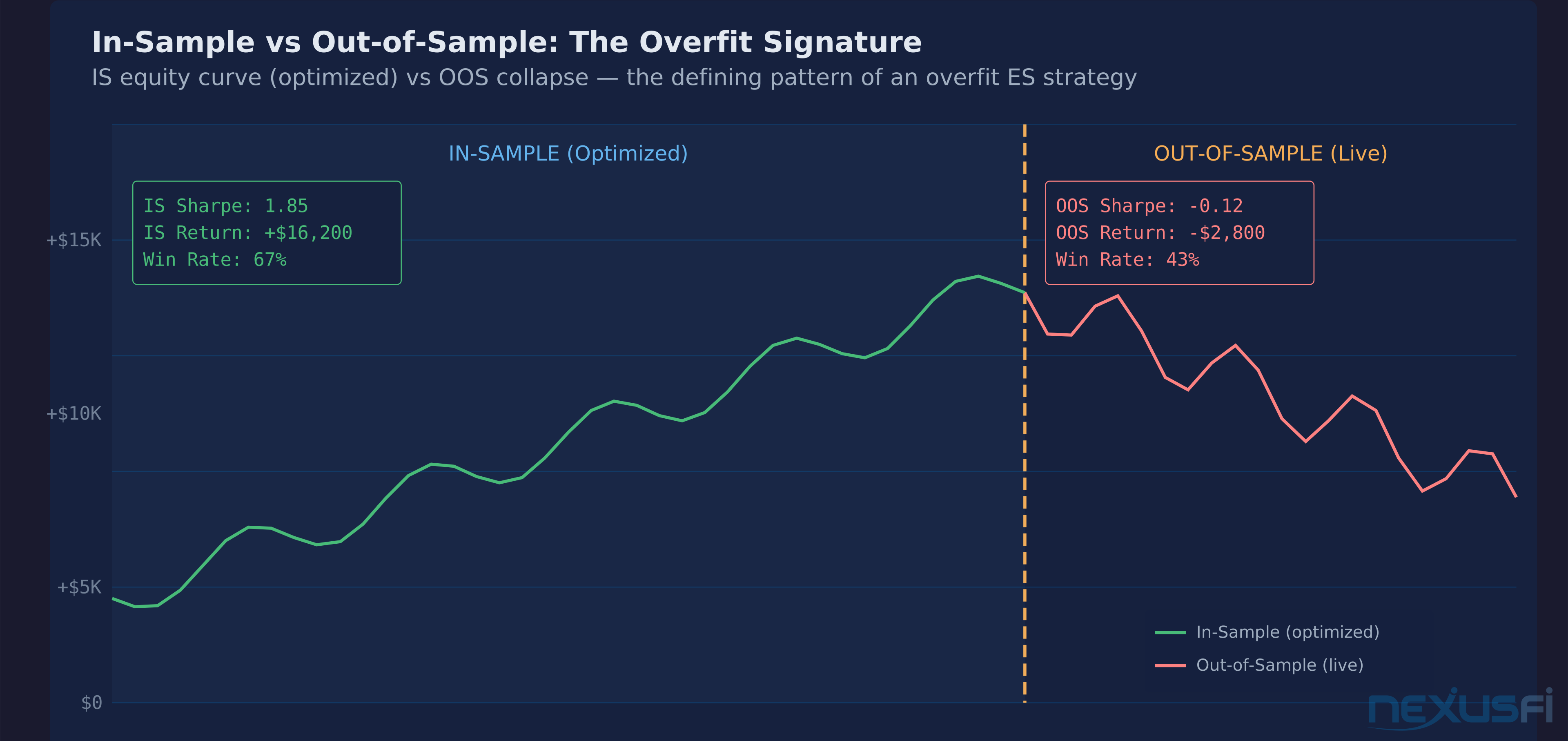
Overview Your backtest looks beautiful. The equity curve climbs steadily from left to right. Drawdowns are shallow and brief. The strategy has a Sharpe ratio...
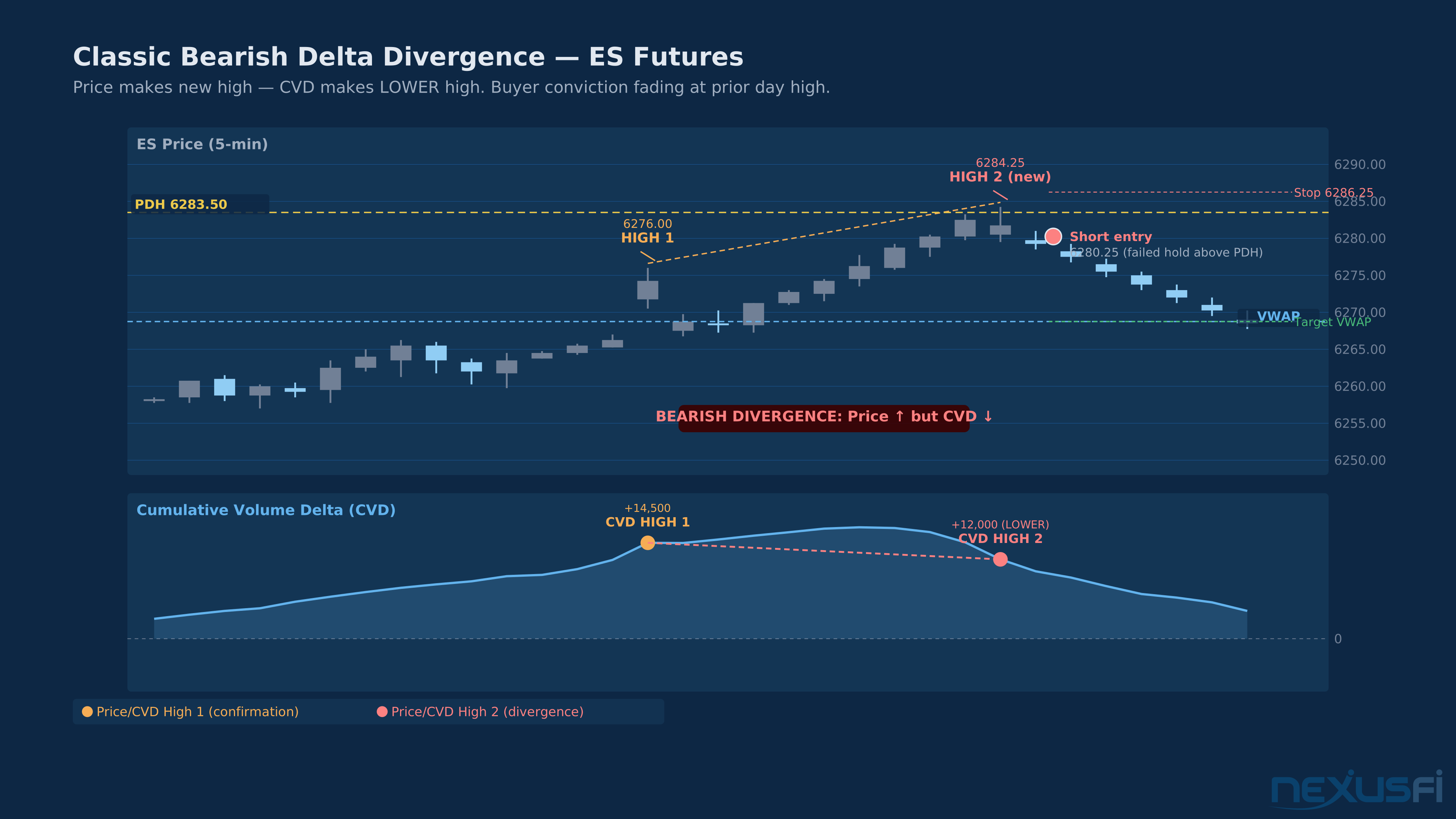
Price doesn't lie. But it doesn't tell the whole truth either. When the ES makes a new session high at 6284.25, every indicator on your screen screams "conti...
Overview Every futures trader has missed a fill. Not because the platform didn't fire the alert -- because they were staring at the wrong chart when it happe...
Most futures traders land on NinjaTrader or Sierra Chart by default. The platforms have been around long enough that every broker supports them, every forum ...
Most futures traders treat BIOS as a one-time configuration you forget about after building your rig. Set it and leave it alone. And for casual users, that's...
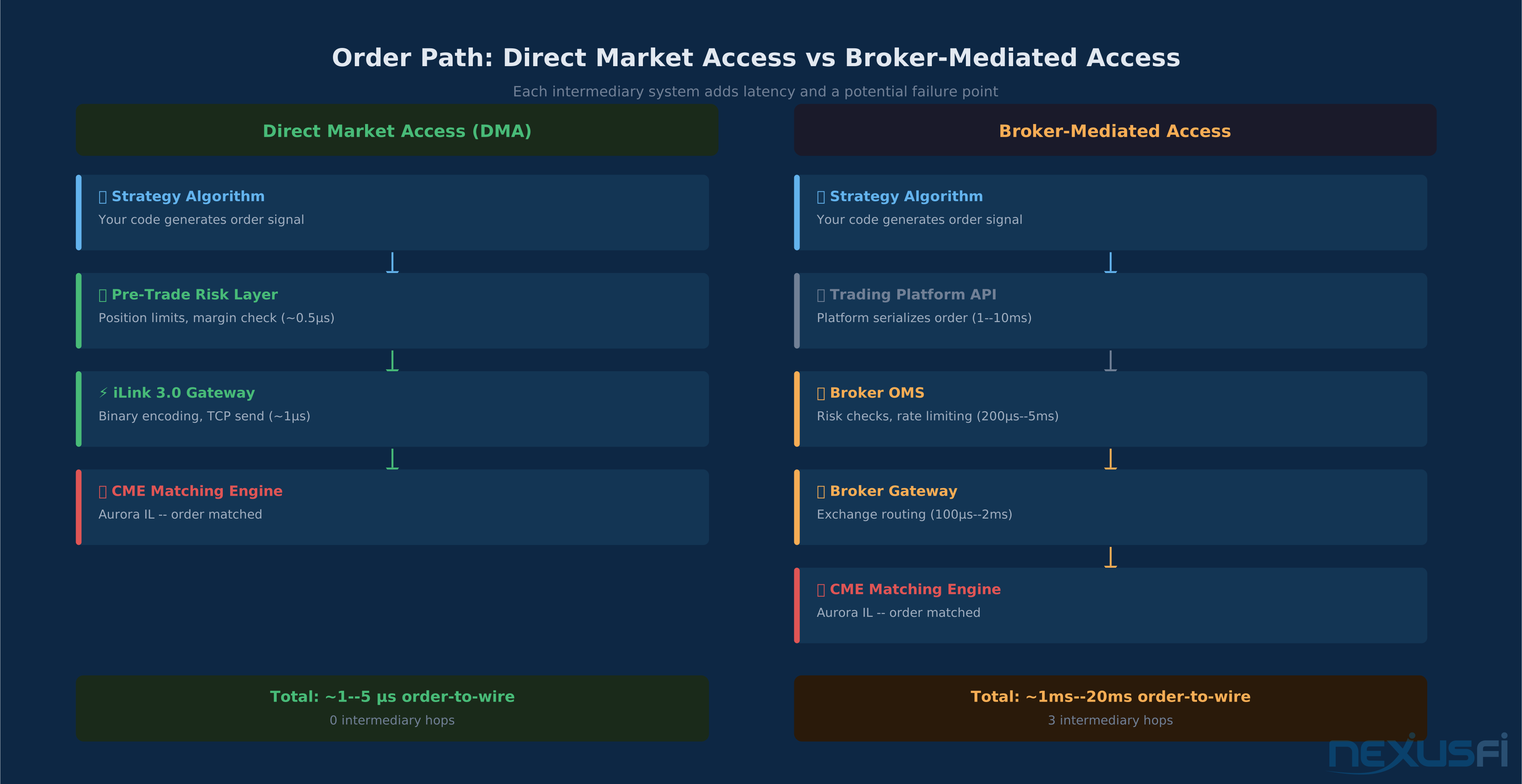
Direct Market Access (DMA) means your algorithm's orders reach the CME Globex matching engine without passing through a broker's order management system. Ins...
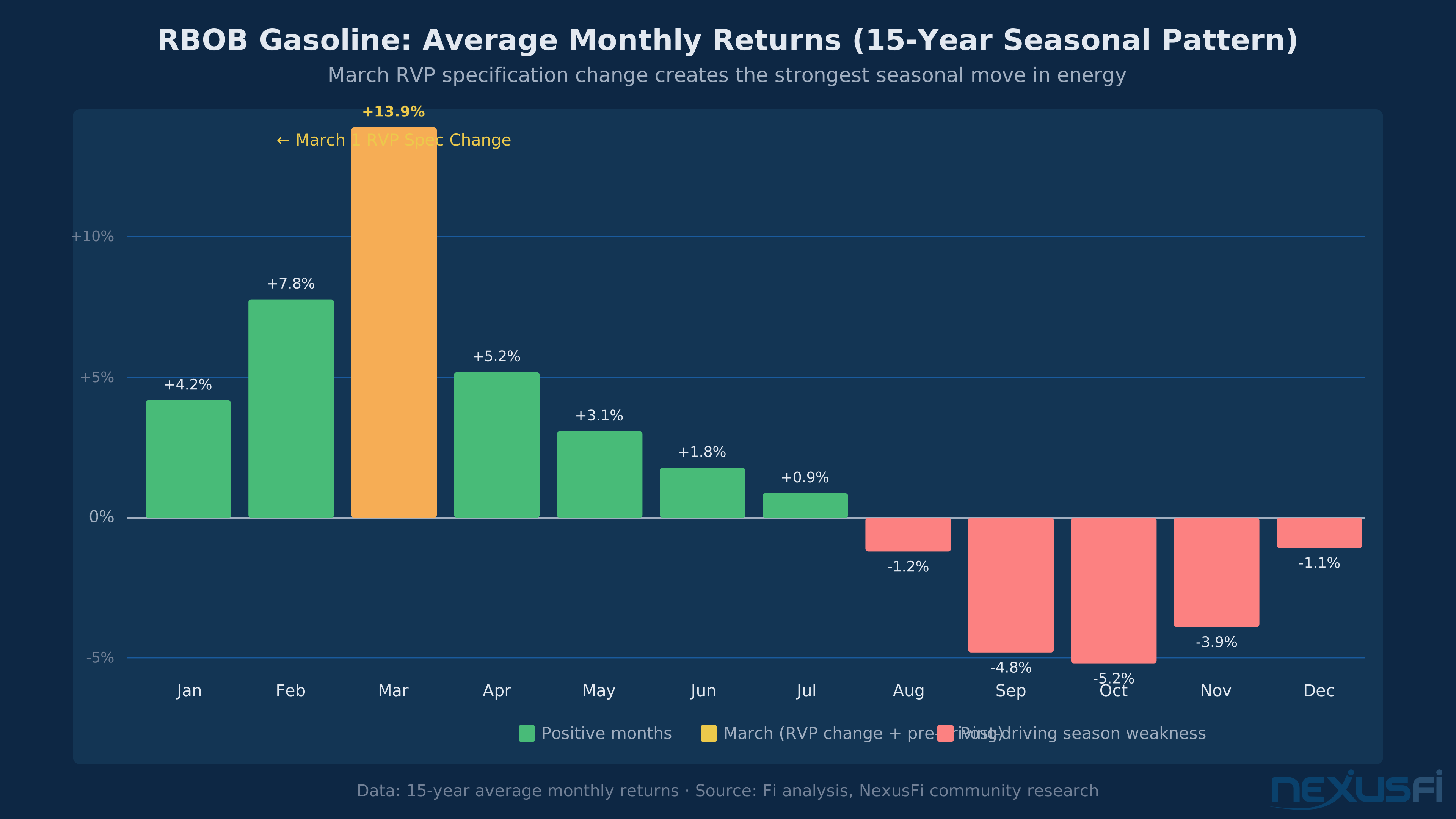
RBOB gasoline futures are the world's benchmark for wholesale gasoline -- the contract that refiners use to lock in margins, hedgers use to protect fuel cost...
Managed co-location for futures trading is what happens when you want the infrastructure advantages of running your algorithm inside the exchange's data cent...
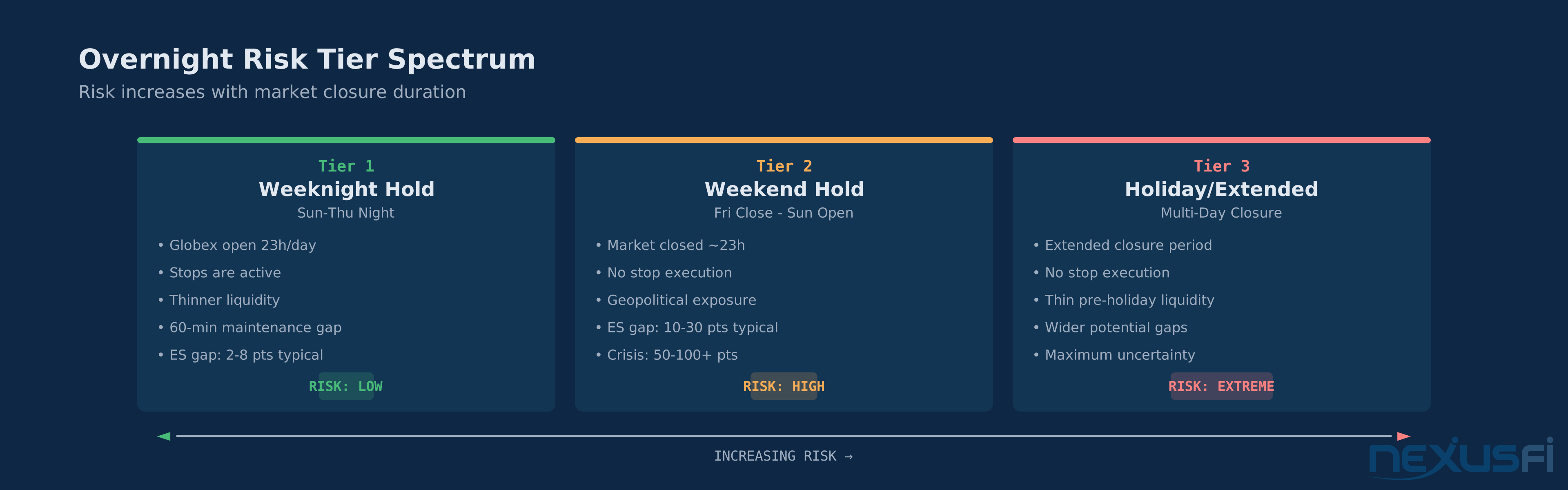
Overview Every futures trader eventually faces the same question: do I hold this overnight or flatten before the close? The answer isn't as simple as "always...
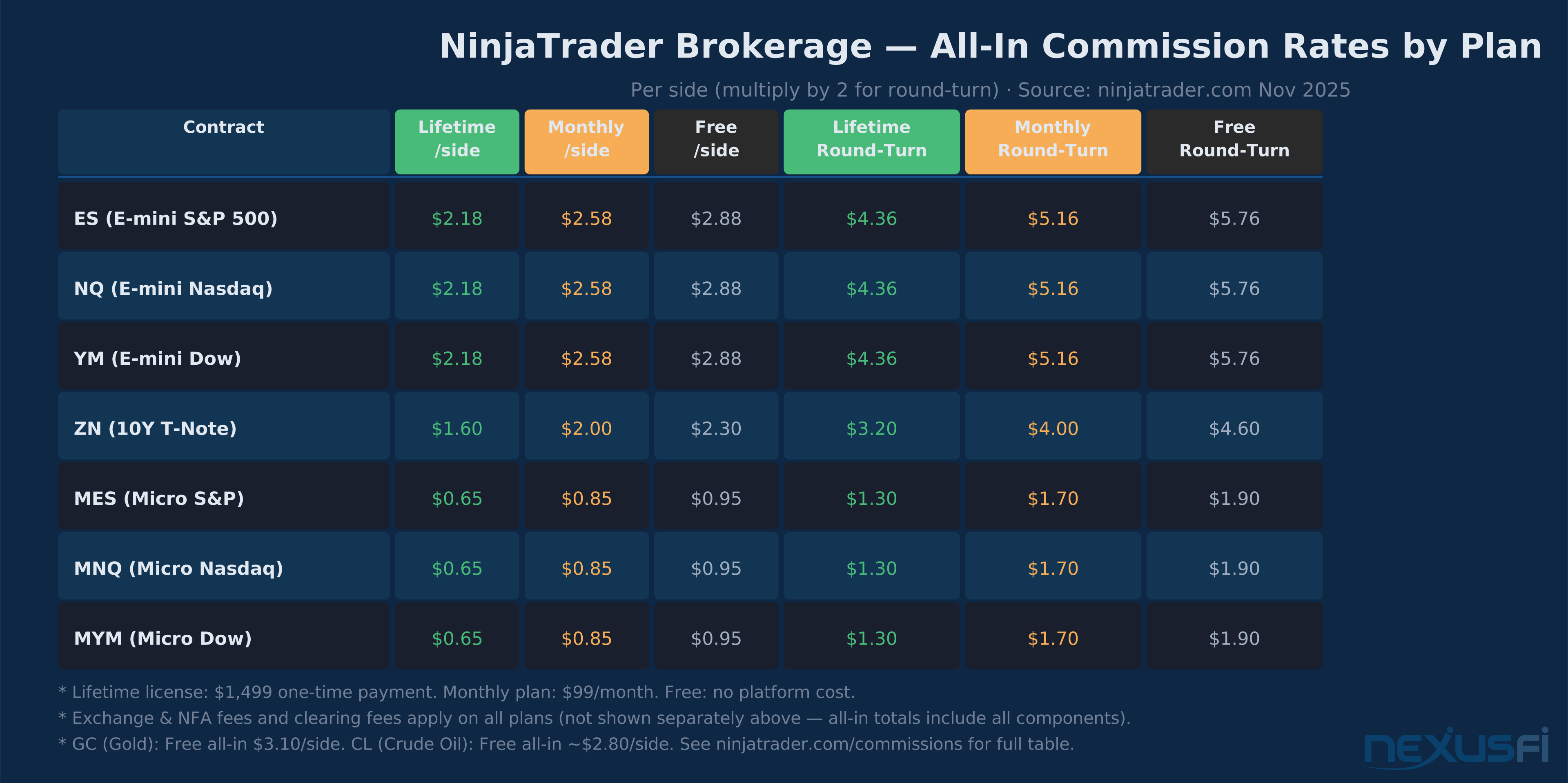
NinjaTrader Brokerage is the most widely used futures broker among retail traders running the NinjaTrader platform, and it's one of the few retail brokers th...
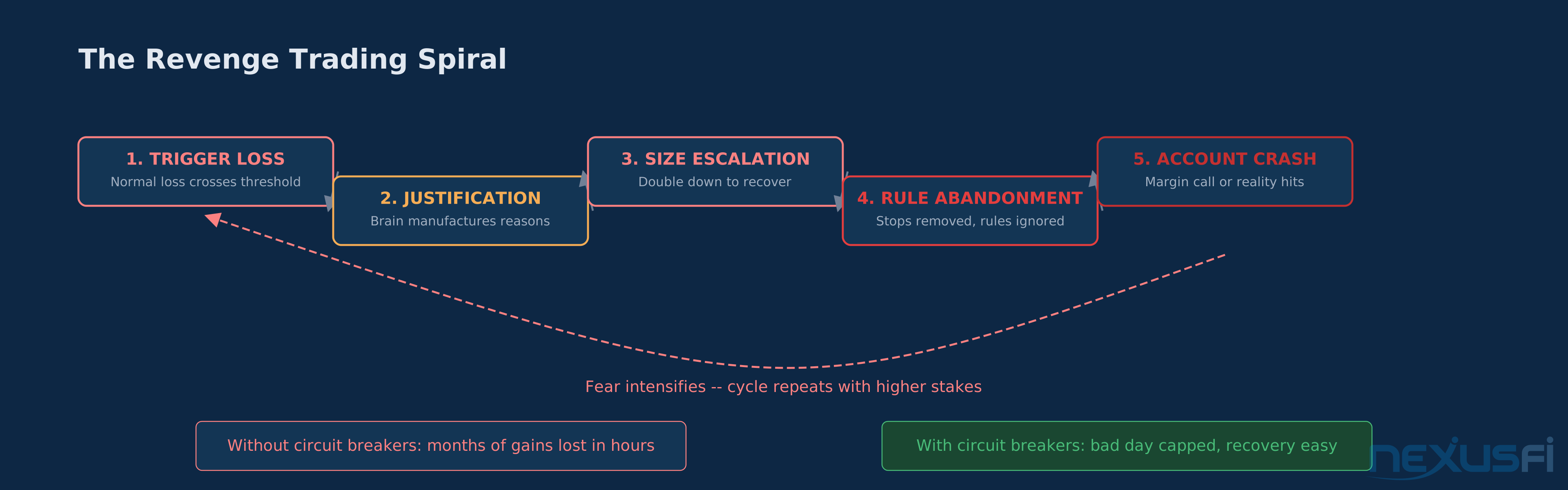
Every futures trader knows the feeling. A loss hits. Then another. Something shifts -- the rational part of your brain goes offline and a different version o...
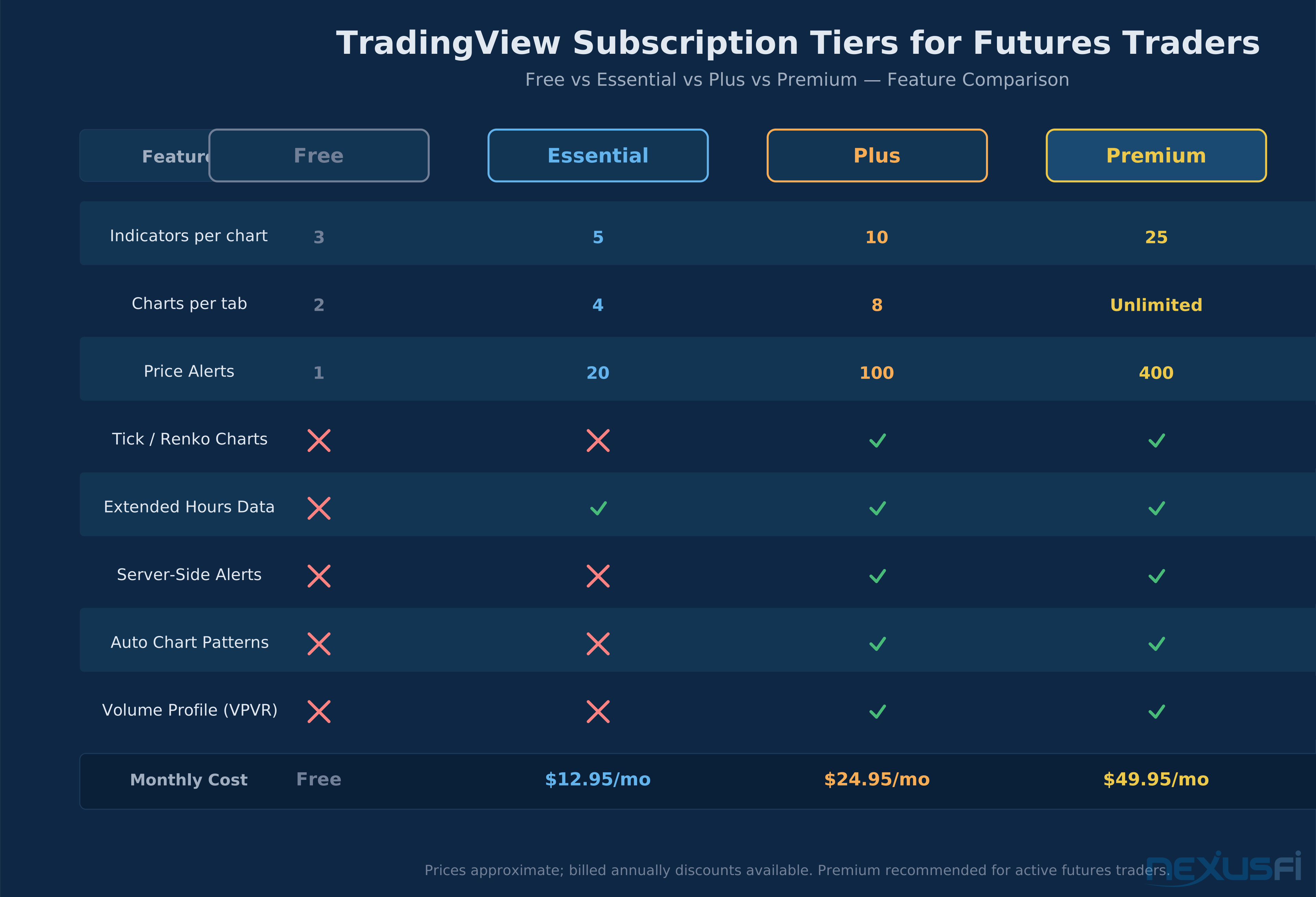
Overview Browser-based charting has fundamentally changed how retail futures traders access professional-grade tools. Ten years ago, serious futures analysis...
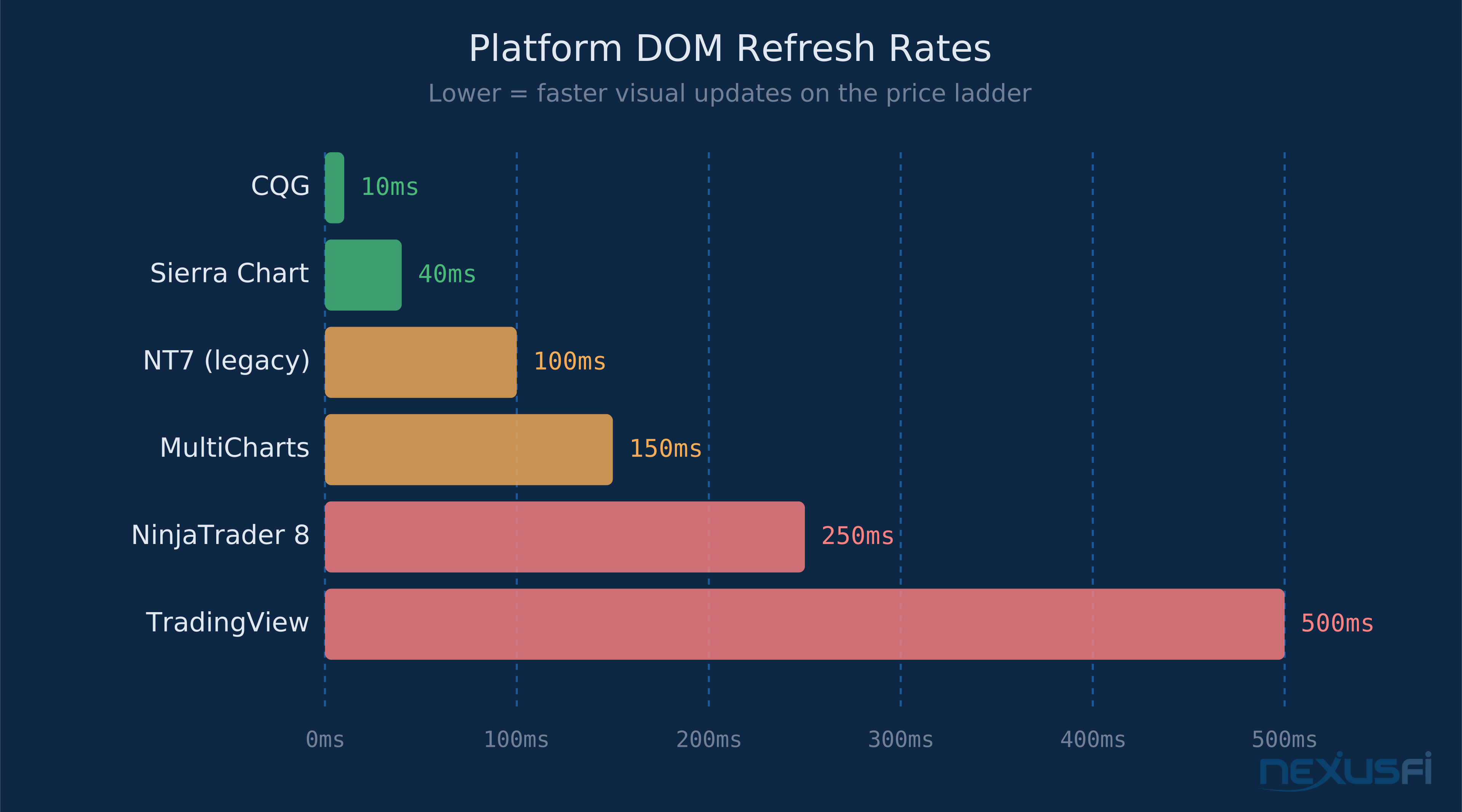
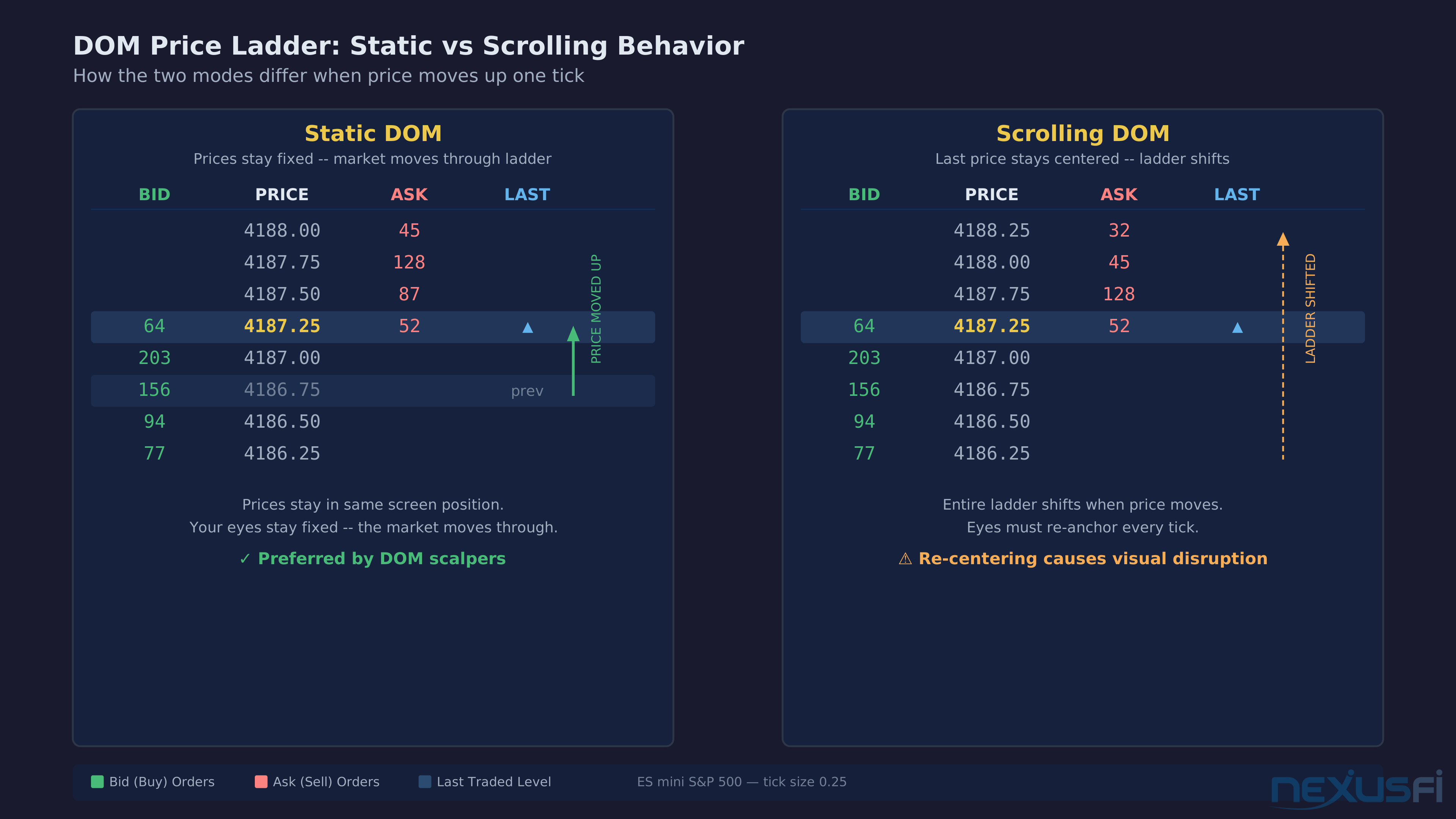
Every futures trader eventually lands on the same question: which platform gives me the best DOM? The price ladder is where execution happens -- limit orders...
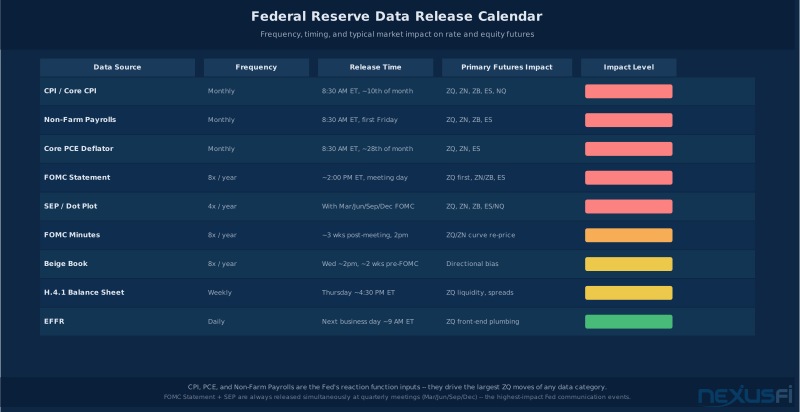
Overview Most futures traders know the Fed matters. Far fewer have a systematic framework for which Federal Reserve data sources to track, when to track them...
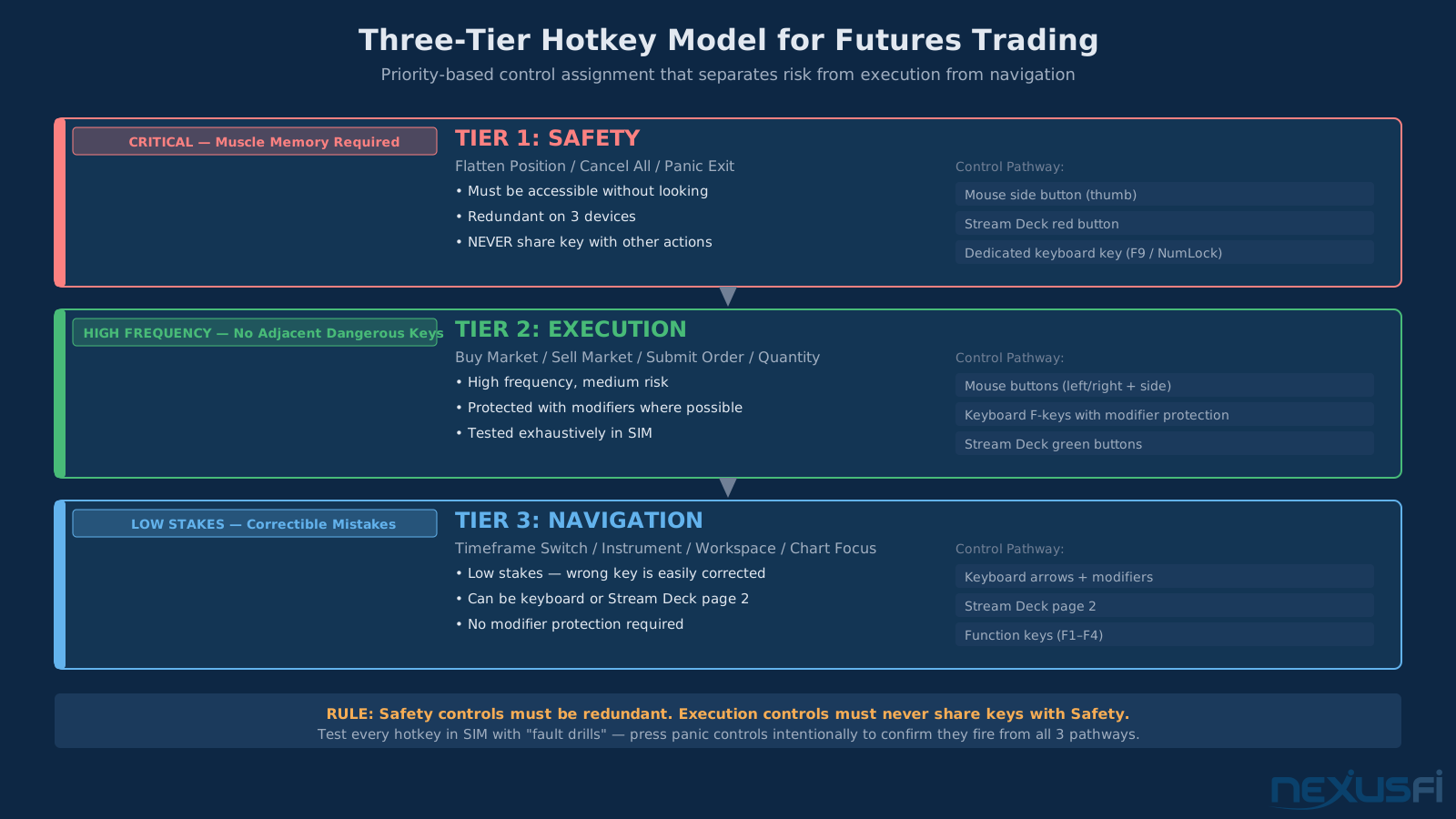
Your keyboard, mouse, and peripherals are the last link between your decision and the market. On a slow day, a misfired click is an annoyance. In a fast-movi...
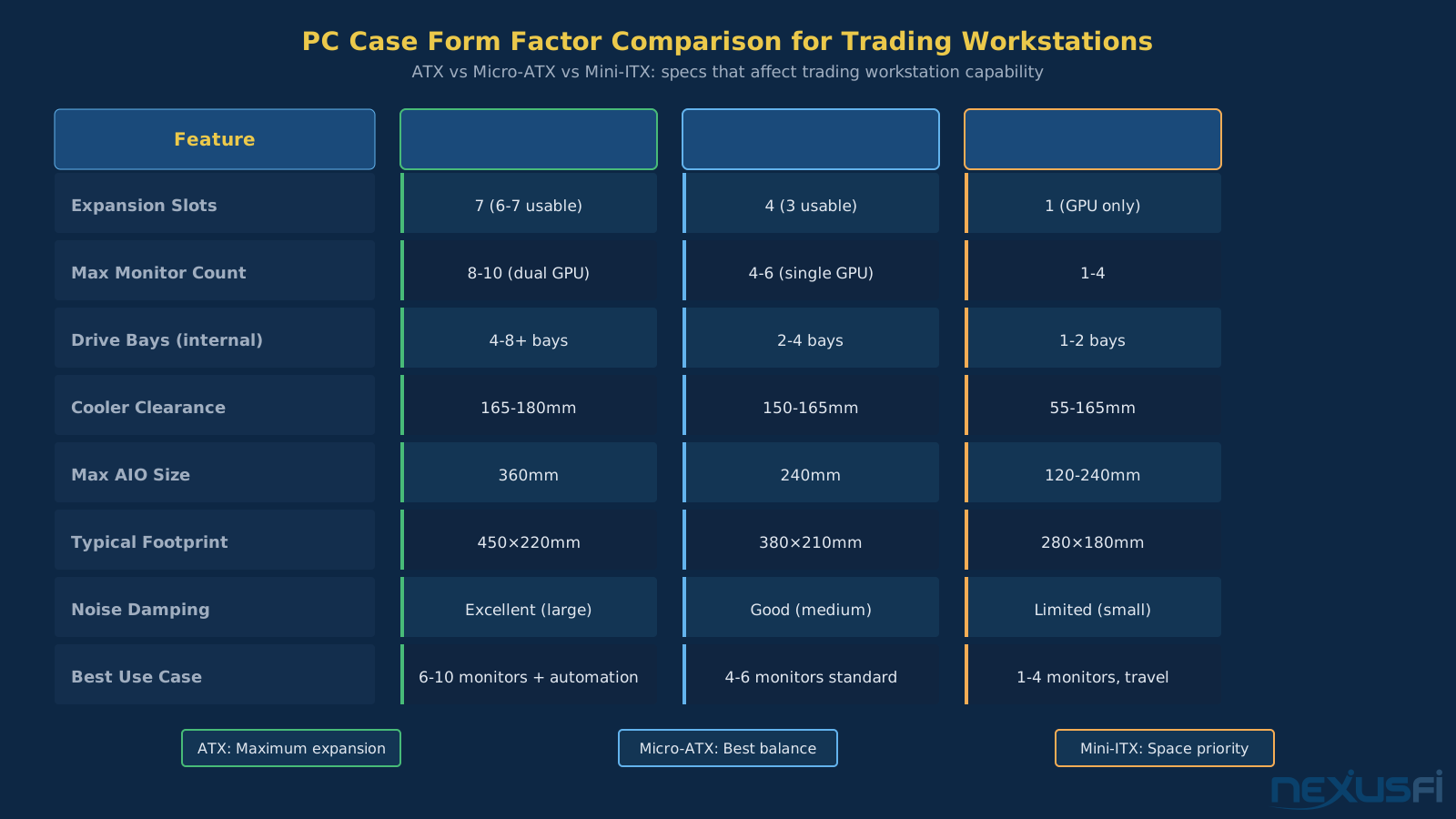
Your trading rig's case is the one component that shapes everything else. Get it wrong and you're fighting airflow problems, cramped builds, and fan noise th...
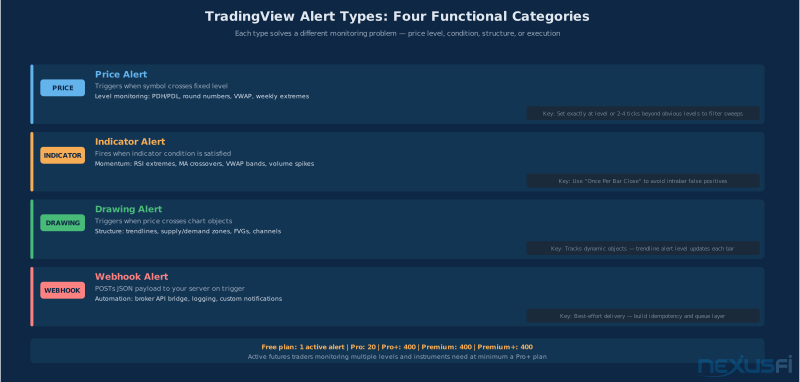
Overview Most traders use TradingView alerts the same way they use phone alarms -- one or two set at obvious price levels, ignored half the time, turned off ...
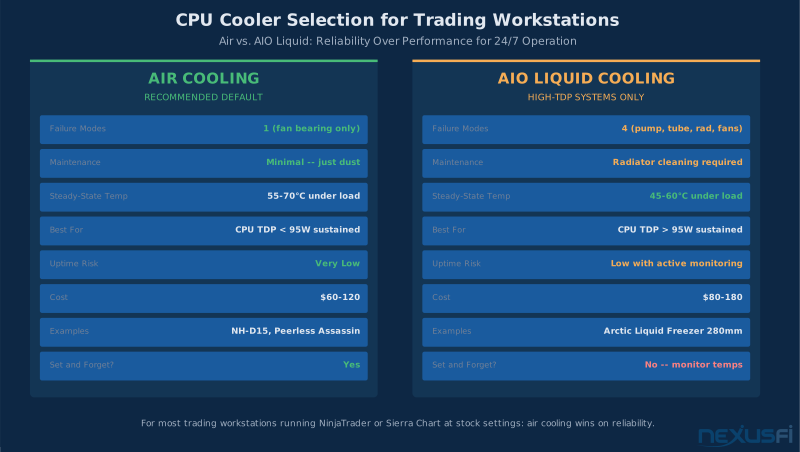
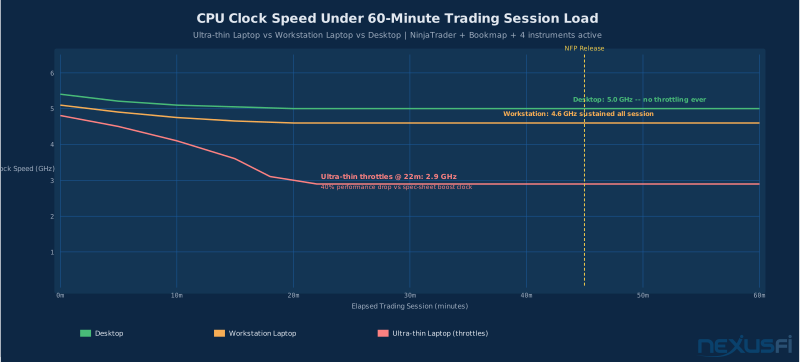
Your CPU just thermally throttled at 9:29 AM. The market opens in 60 seconds. NinjaTrader's indicators are recalculating. The DOM is updating. And your proce...
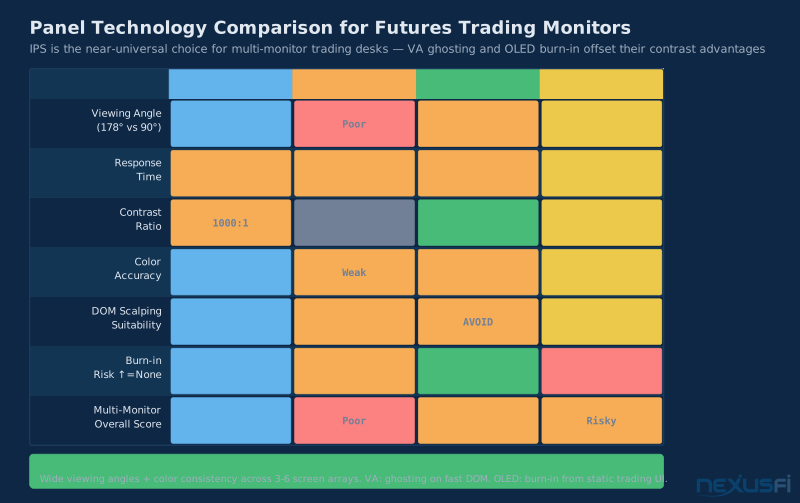
Most traders spend more time researching their next trade than they did choosing the monitors they stare at for six hours a day. That's backwards. The wrong ...
Overview You picked a futures broker. Now you're wondering why your orders fill at a different price than what you saw on the screen. Or why your algo, which...
Overview You're short NQ at the open, position is working, and your computer goes dark. Not a browser crash -- the whole machine. Power supply failure, mid-s...
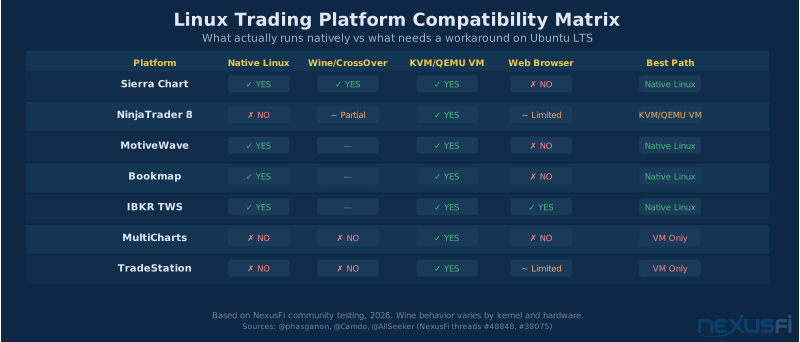
Overview Running futures trading software on Linux is both more practical and more specific than most online guides admit. Some platforms run natively, some ...
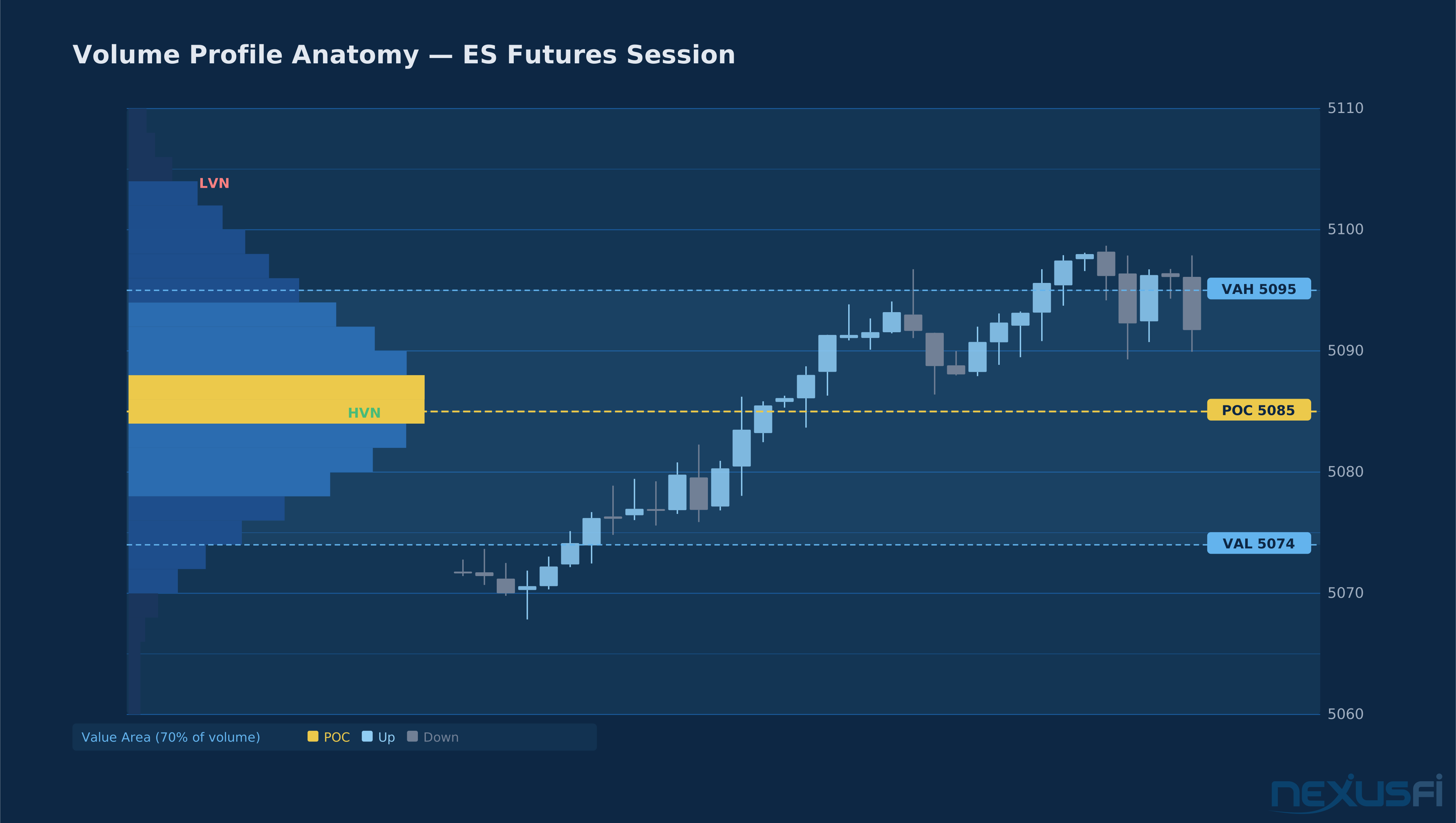
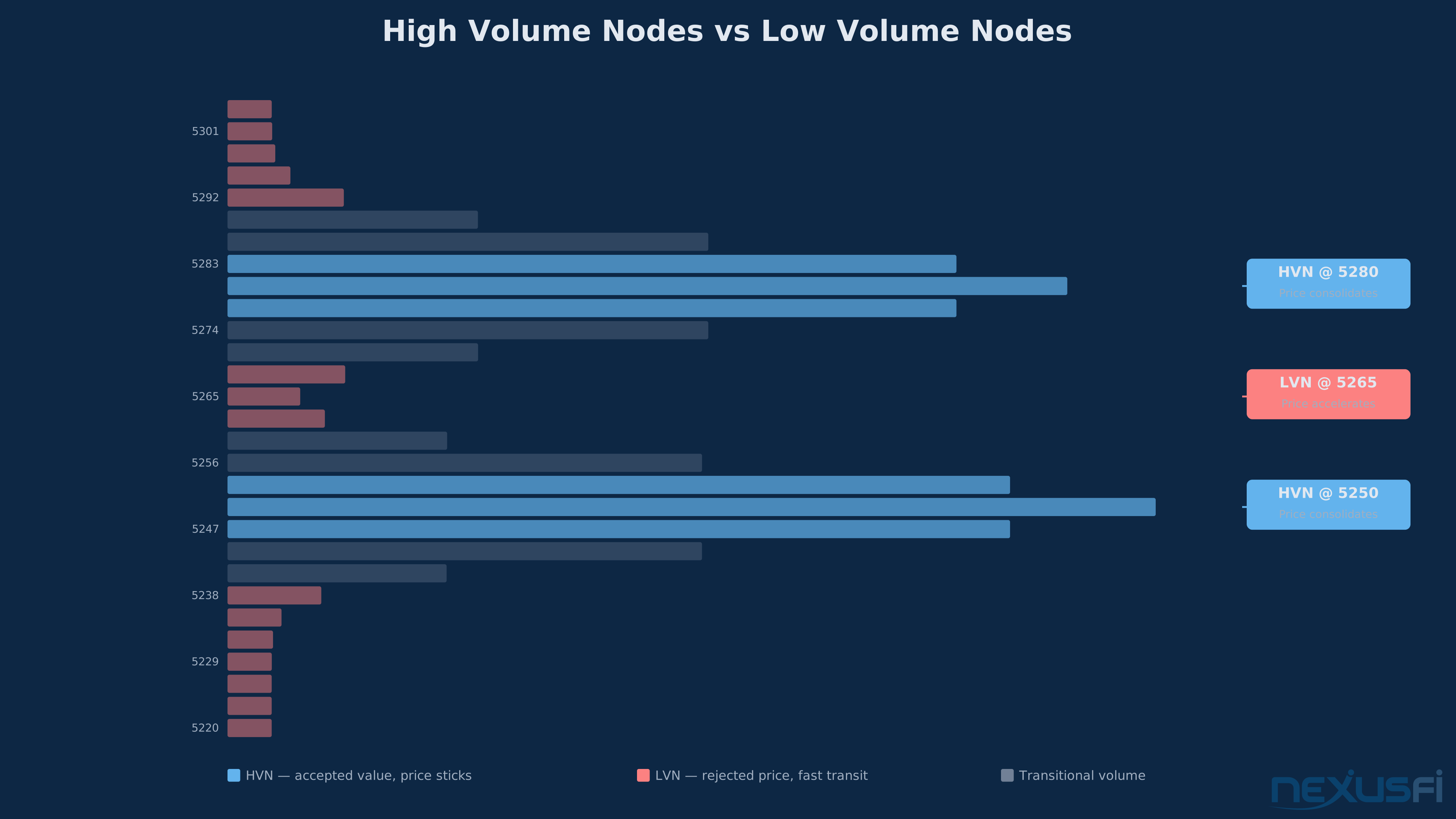
Volume Profile is a volume-at-price distribution. Instead of showing you how much traded during a time bar, it shows you where on the price axis the contract...
Four times a year, the market puts on a show unlike any other. Quadruple witching -- the simultaneous expiration of stock index futures, stock index options,...
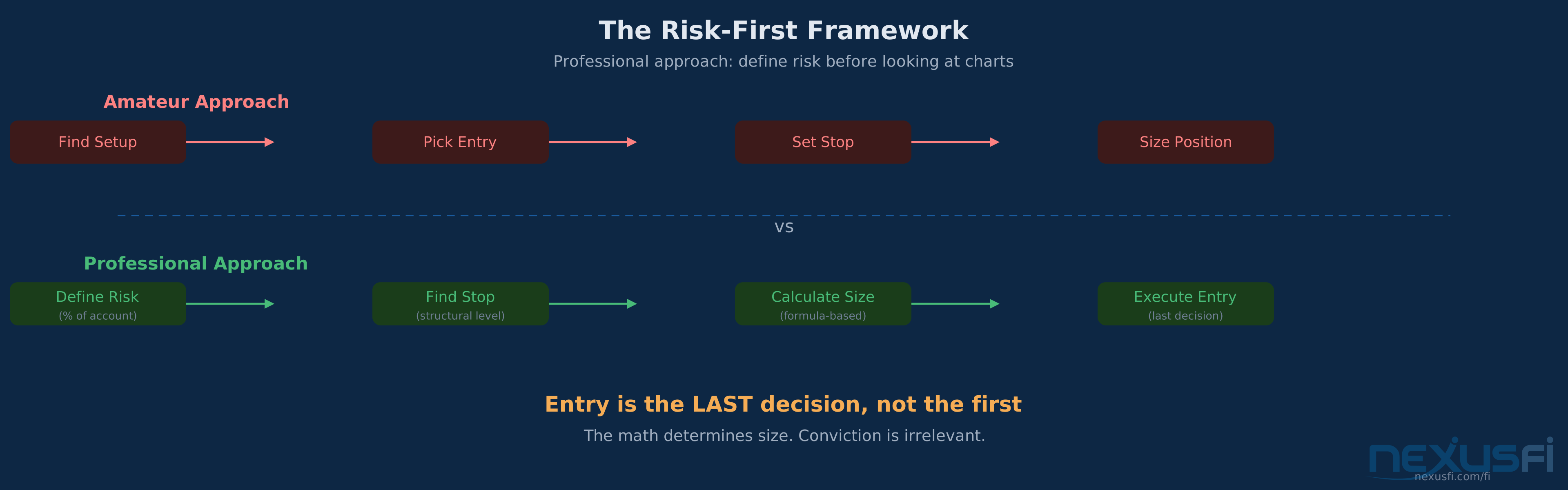
Risk management isn't a chapter you read after you learn to trade. It IS trading. Every profitable trader who survives long enough to compound returns got th...
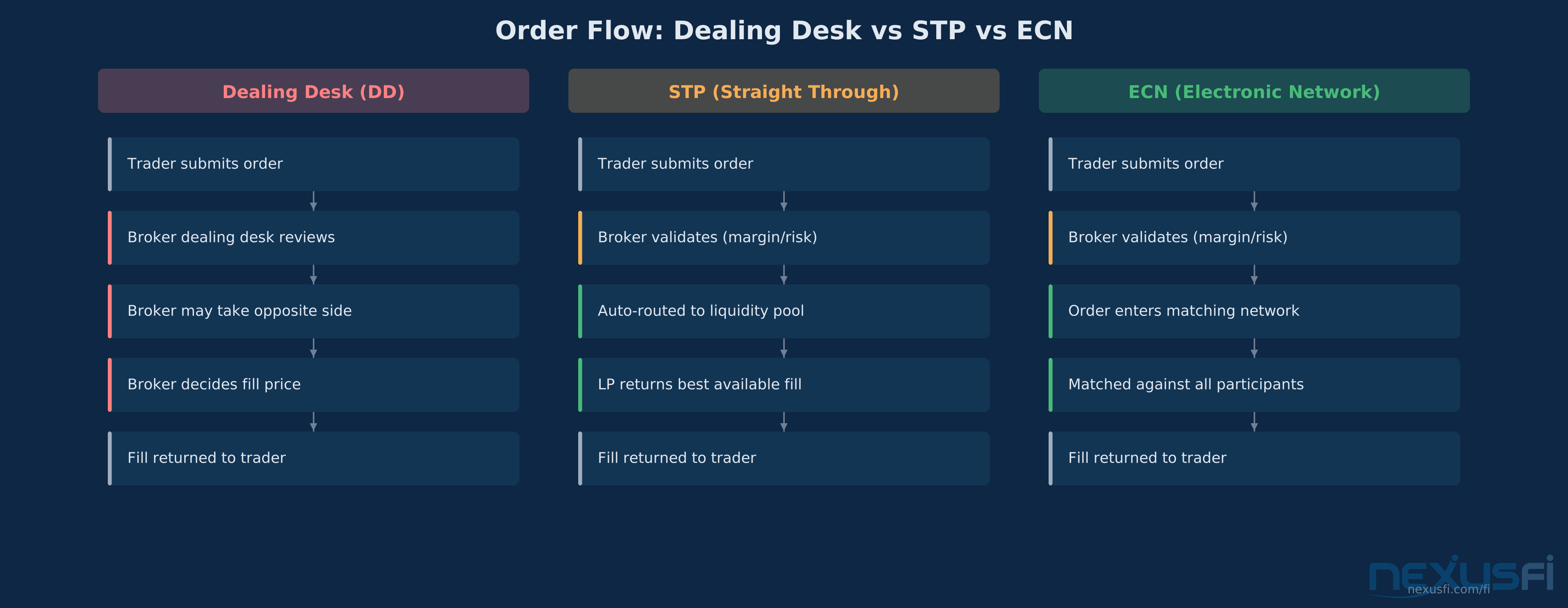
No Dealing Desk execution means the broker routes your order electronically to external liquidity venues instead of sitting on the other side of the trade. I...
Most retail futures traders start with their home exchange -- CME for U.S. traders, Eurex for Europeans, SGX for Singapore-based traders. But global futures ...
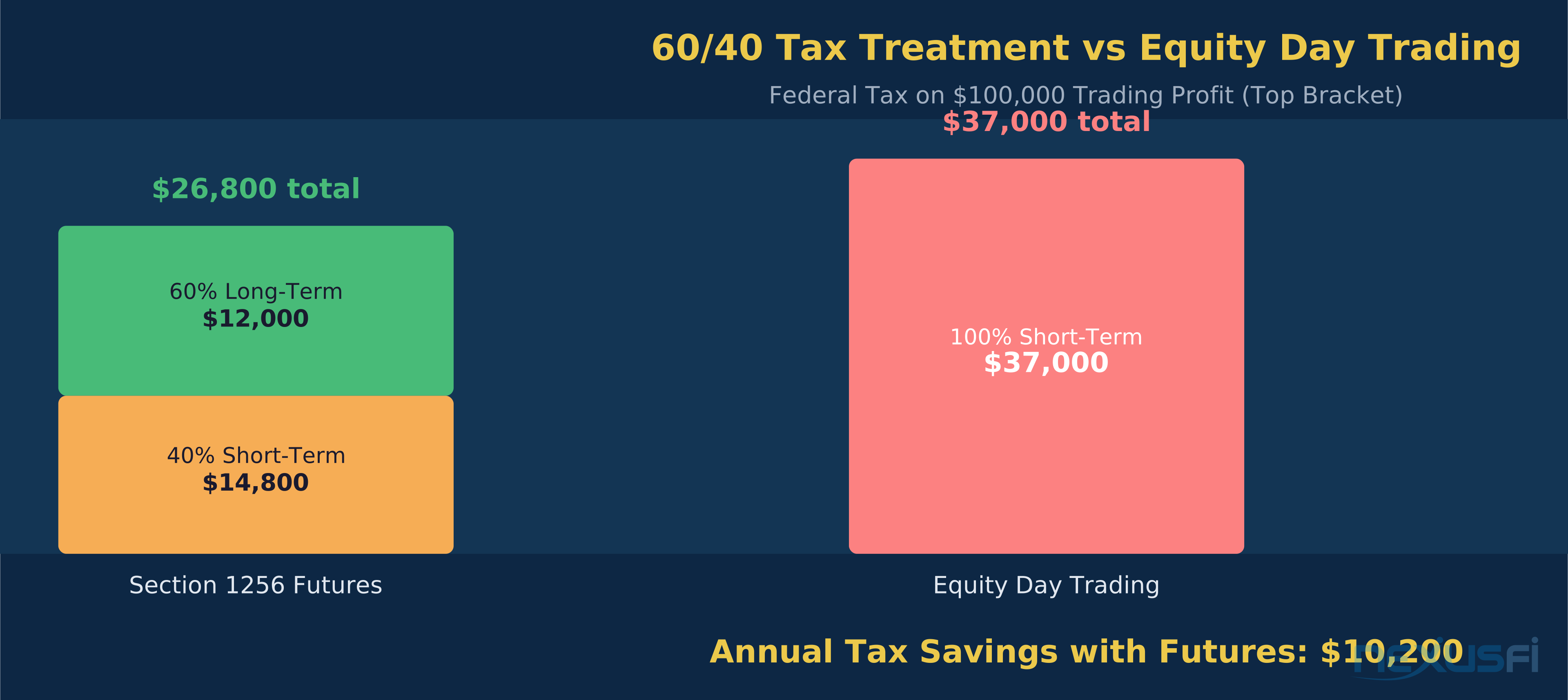
Overview Here's one of the most overlooked advantages futures traders have over equity day traders: the tax code is built in your favor. Section 1256 of the ...
Most traders think of risk management as position sizing and stop losses. Infrastructure belongs in the same conversation. A server outage during a volatile ...
Exchange co-location is one of those infrastructure concepts where retail traders either spend too much money chasing microseconds that don't affect their st...
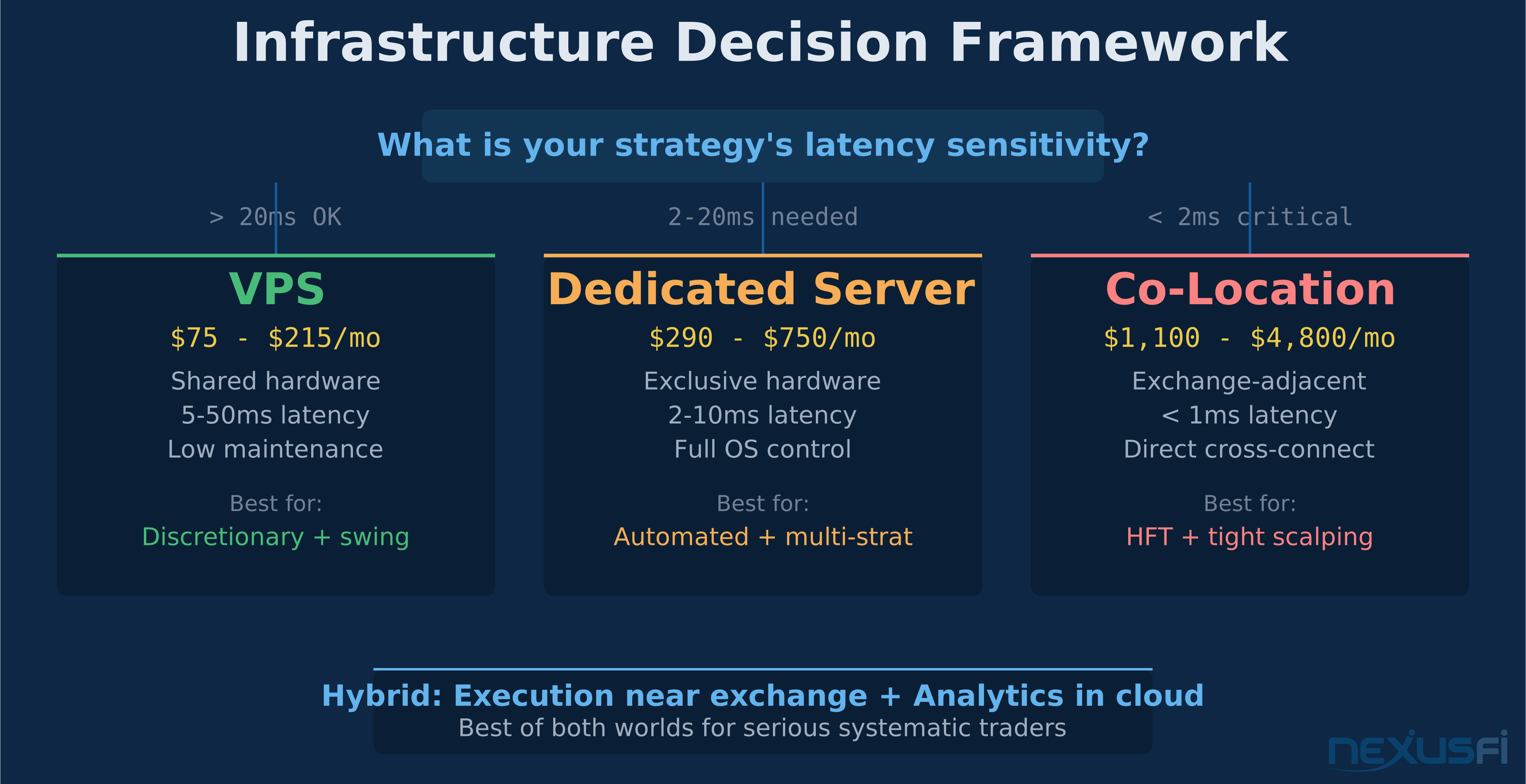
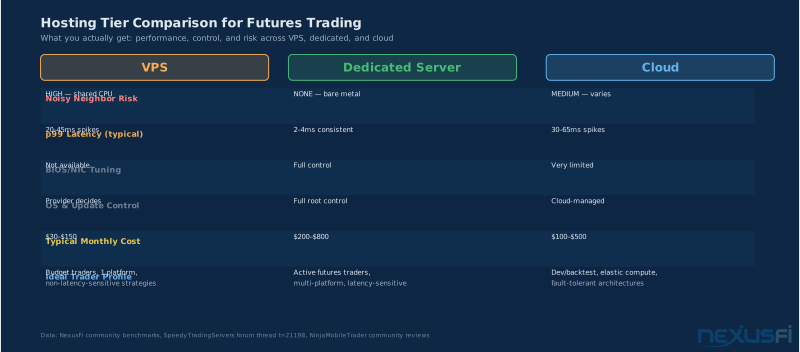
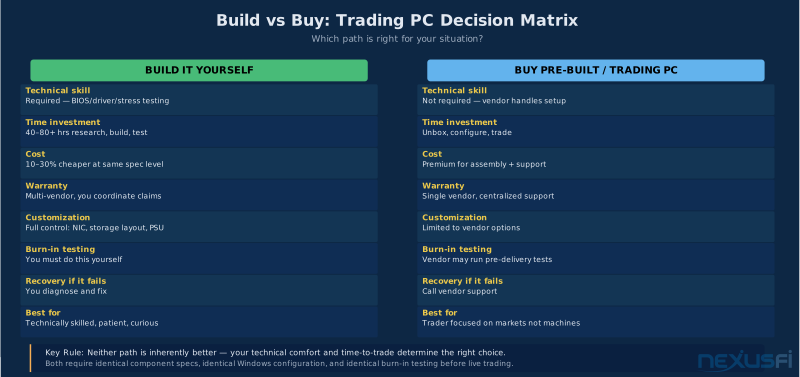
Overview Most futures traders start on a laptop or desktop at home. That works fine -- until it doesn't. The first time your chart freezes during a news rele...
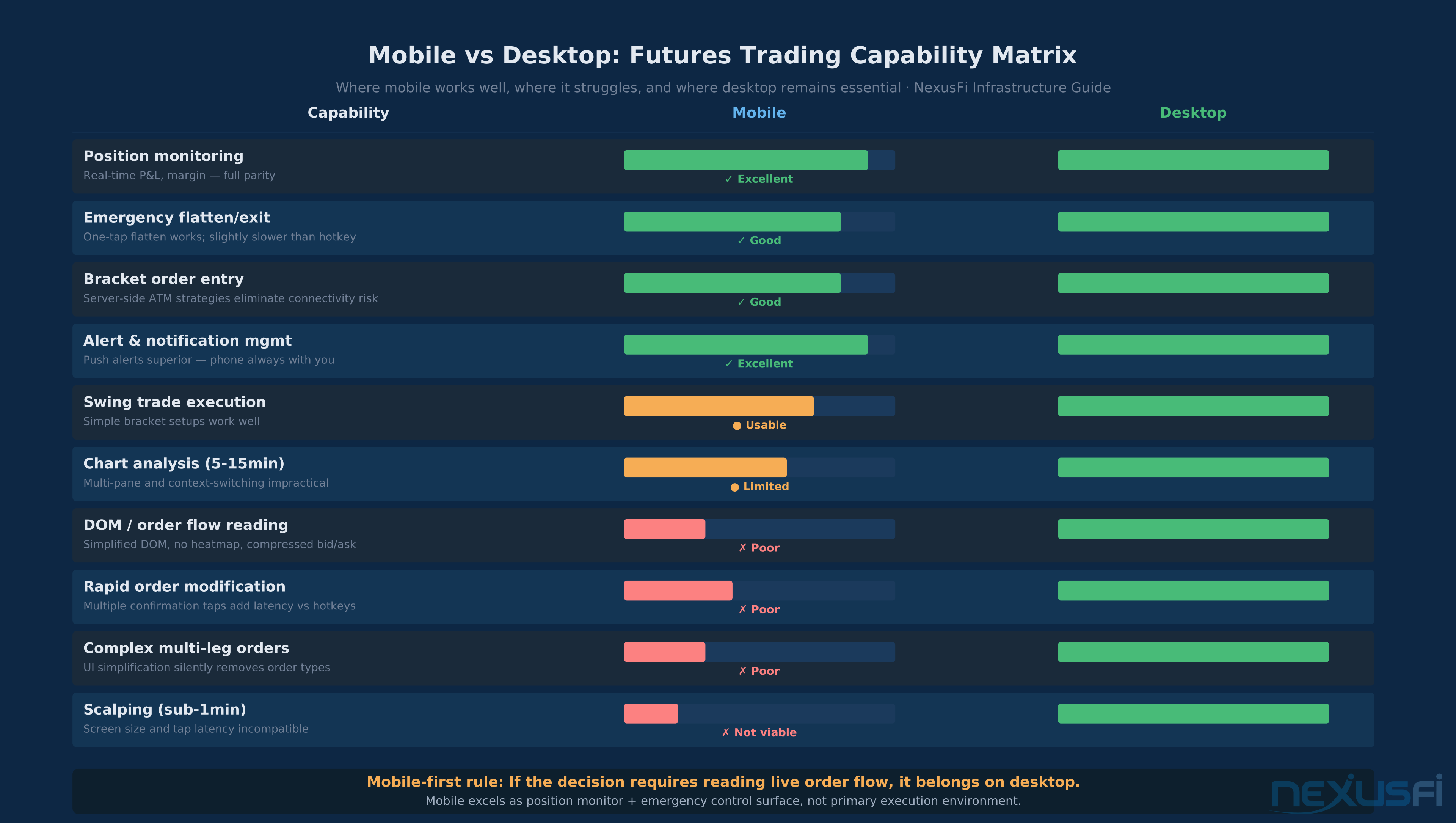
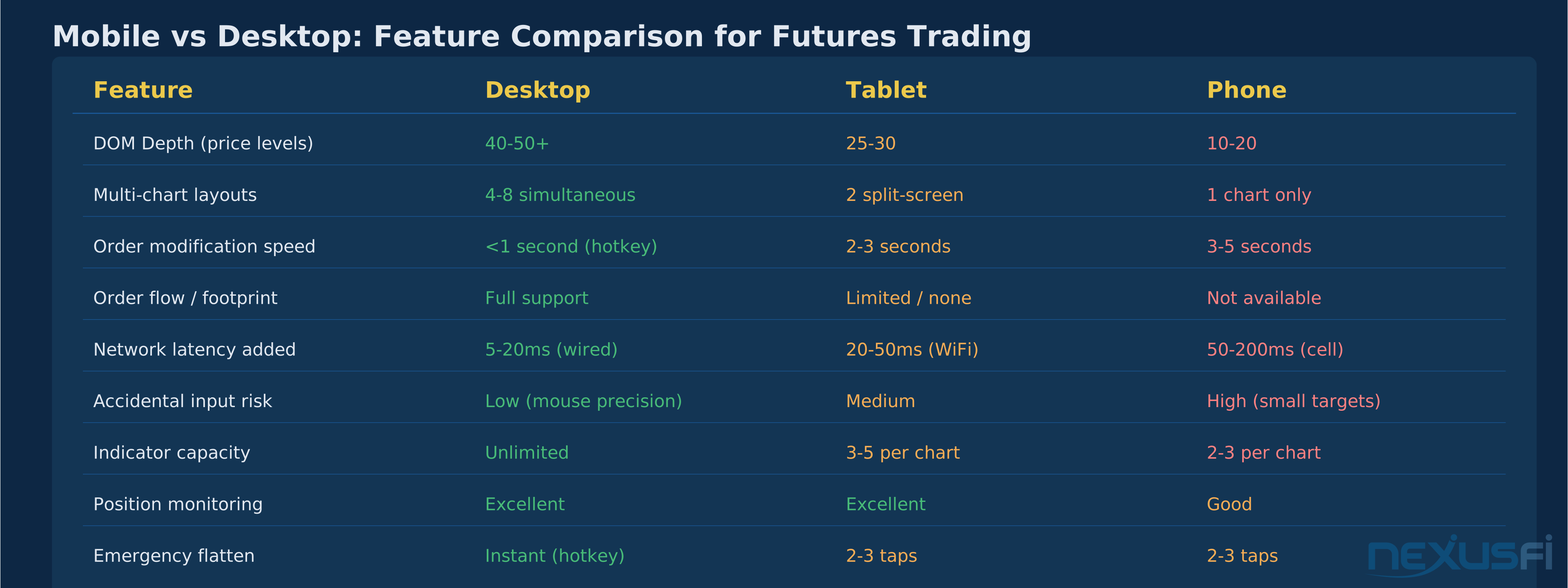
Mobile trading for futures covers two distinct use cases that get lumped together too often. Position management -- checking P&L, adjusting stops, flattening...
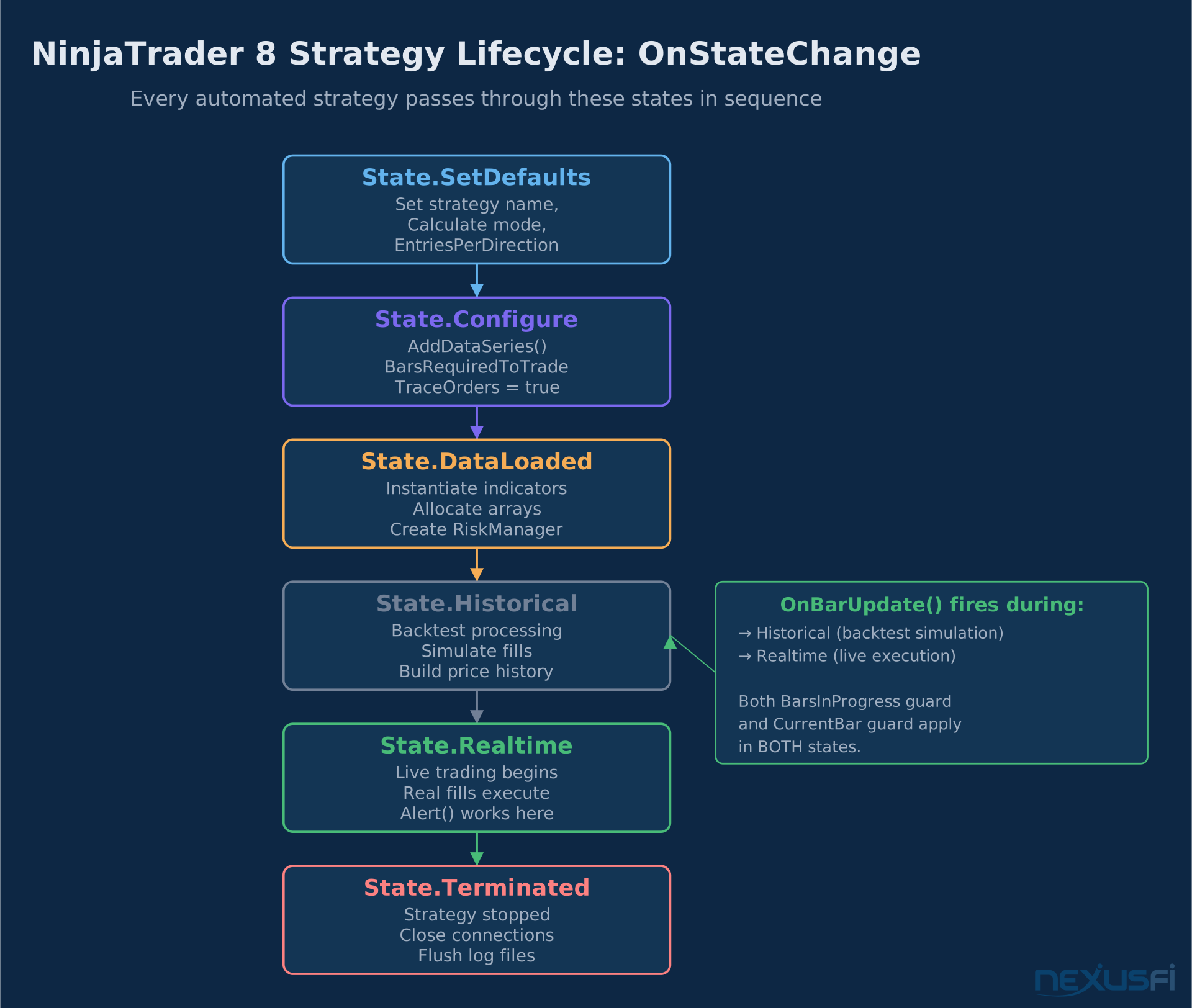
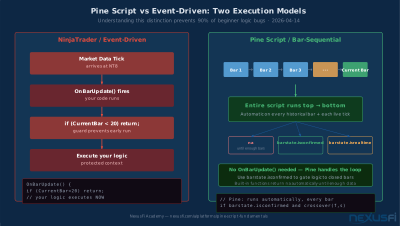
Most traders who write their first NinjaTrader strategy make the same mistake. They put everything in `OnBarUpdate`. Signal logic, order placement, risk chec...
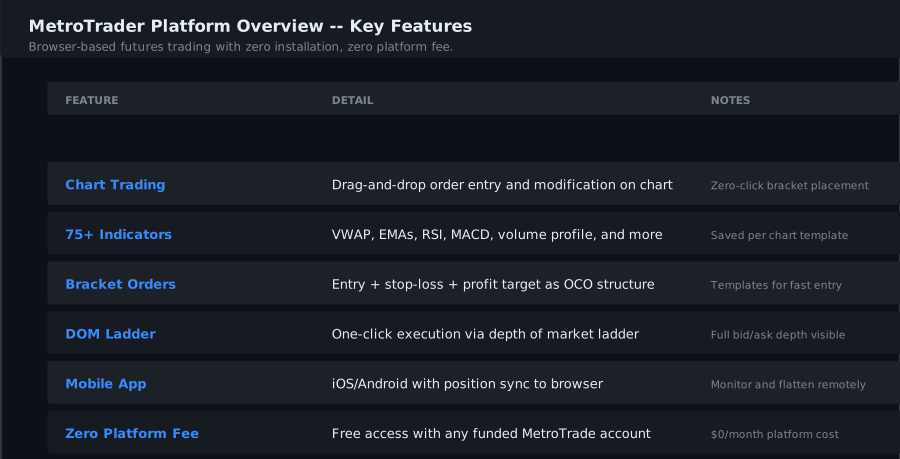
MetroTrader is MetroTrade's proprietary trading platform. View MetroTrade's full company profile, current pricing, Elite member offers, and community reviews...
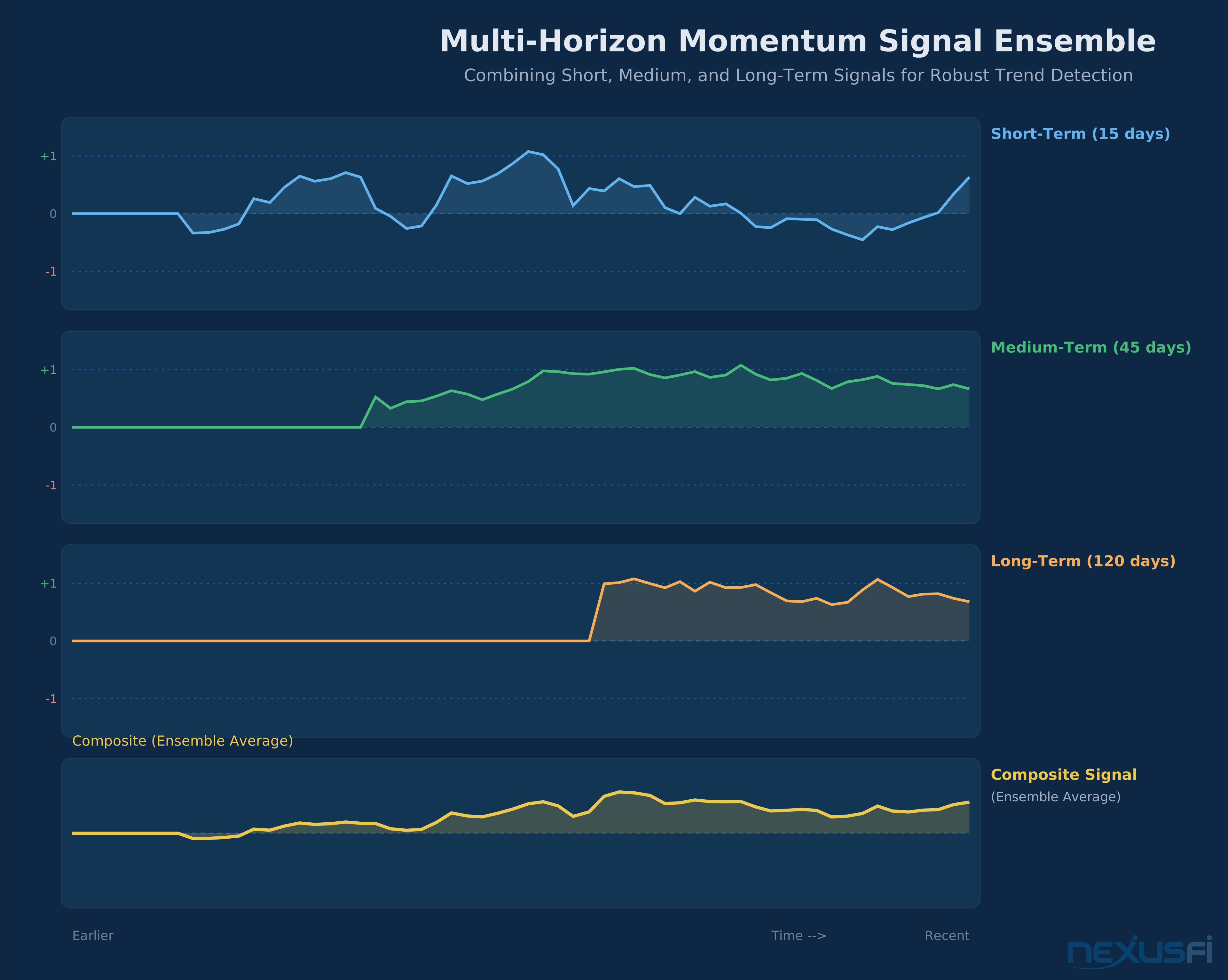
Momentum trading is the systematic exploitation of price persistence -- the tendency of assets that have been moving in a direction to continue moving in tha...
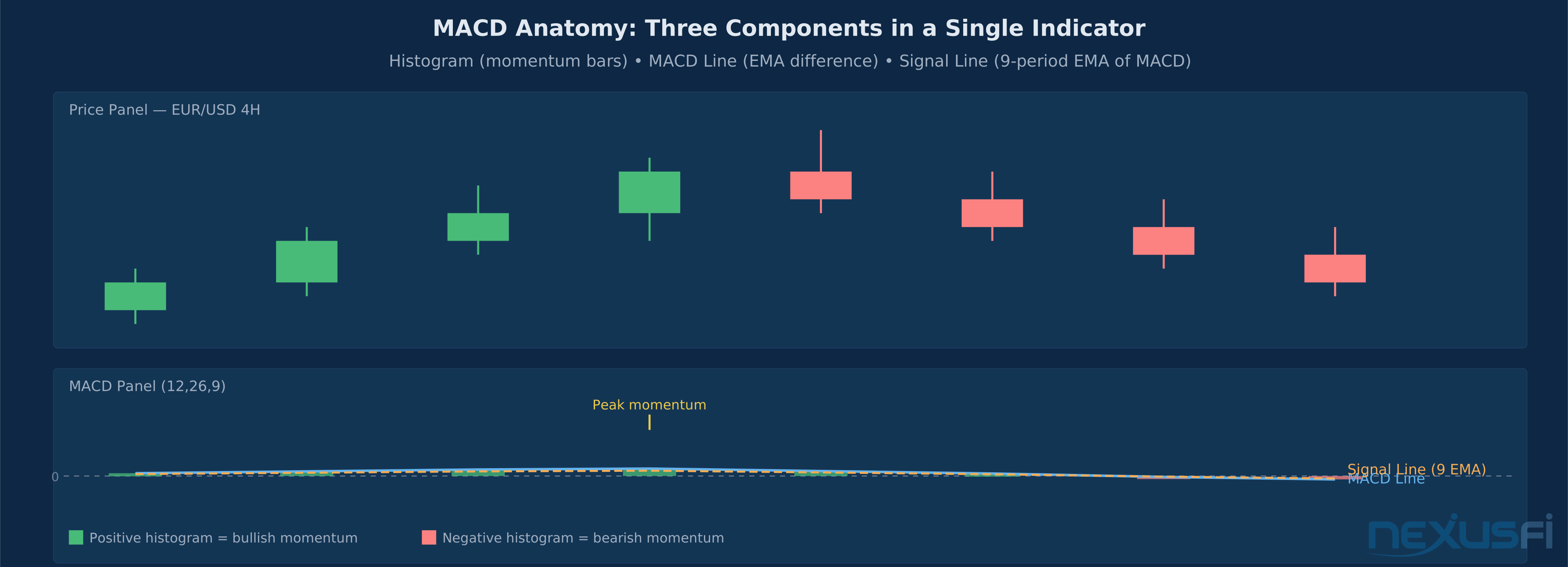
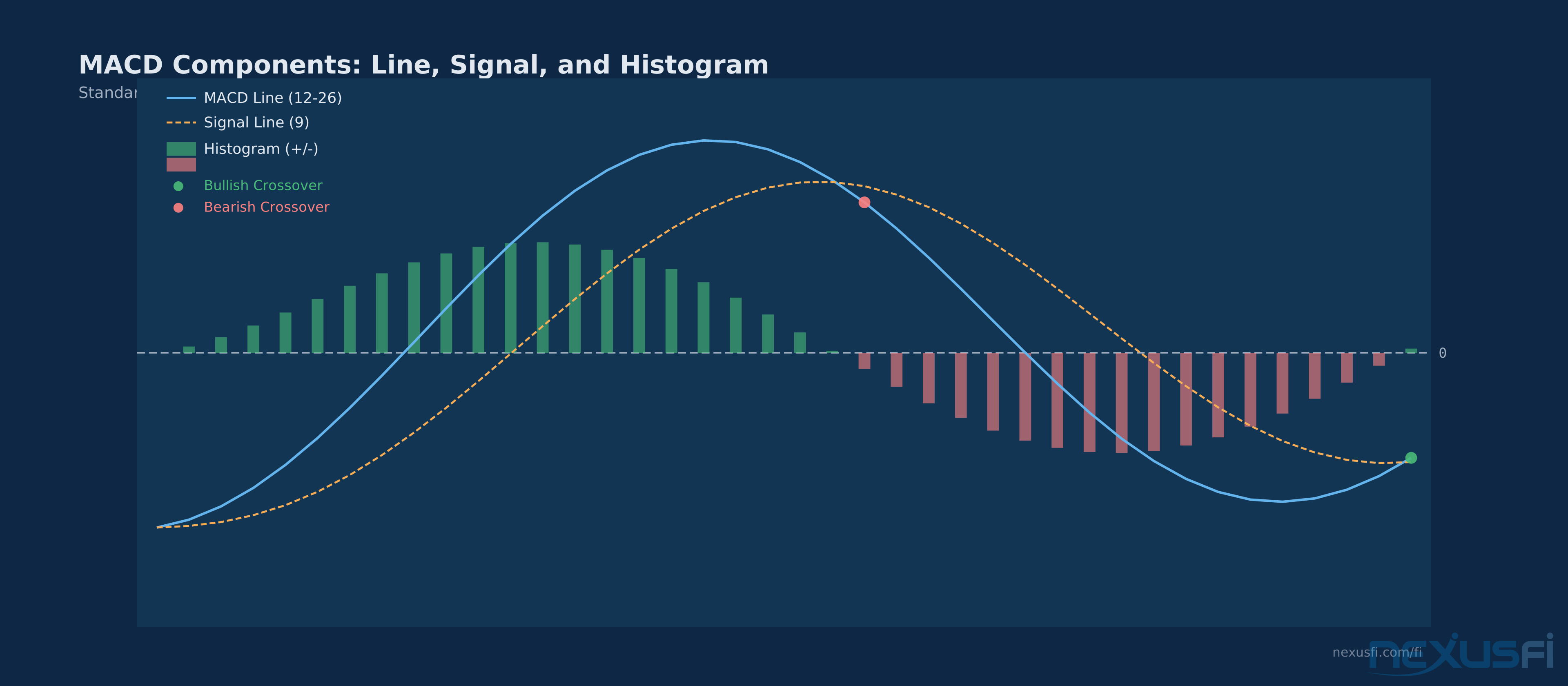
The MACD (Moving Average Convergence Divergence) indicator has been around since Gerald Appel developed it in the late 1970s -- first introduced in his Syste...
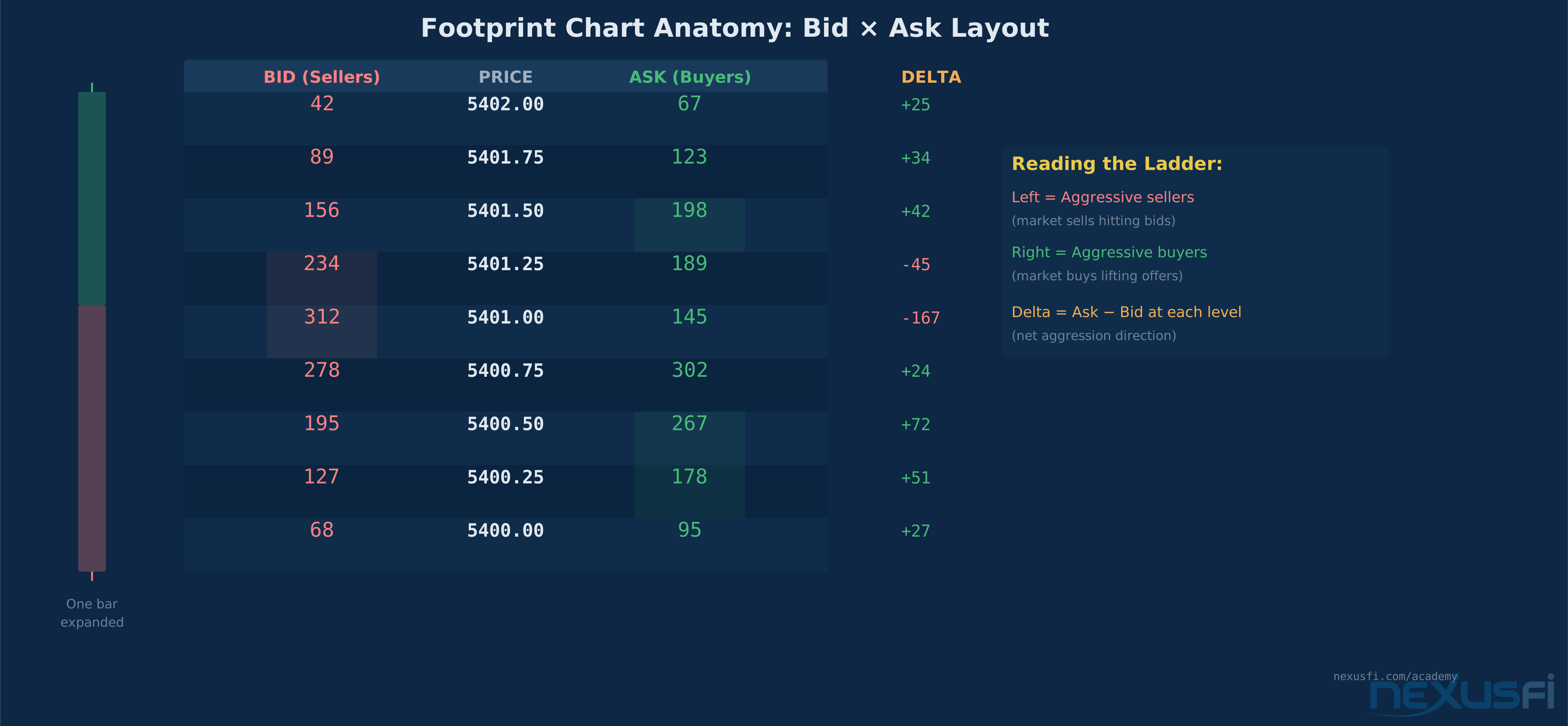
A footprint chart breaks open the candlestick and shows you what actually happened inside. Instead of open-high-low-close, you get executed volume at every p...
Wyckoff Method in Futures Trading ES breaks below yesterday's low on heavy volume. The sellside liquidity sweep looks decisive -- most traders call it a brea...
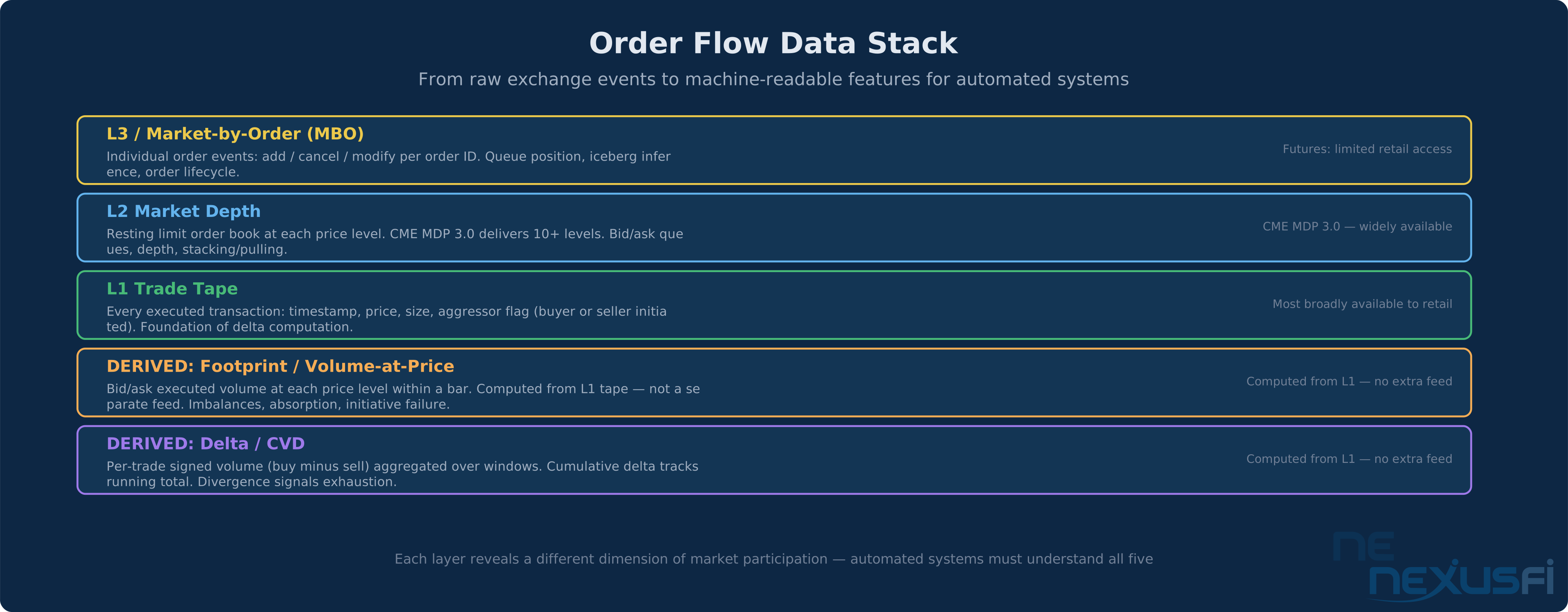
Order flow is the raw language of the market. Every price movement you see on a chart is the result of order flow -- aggressive buyers lifting offers, passiv...
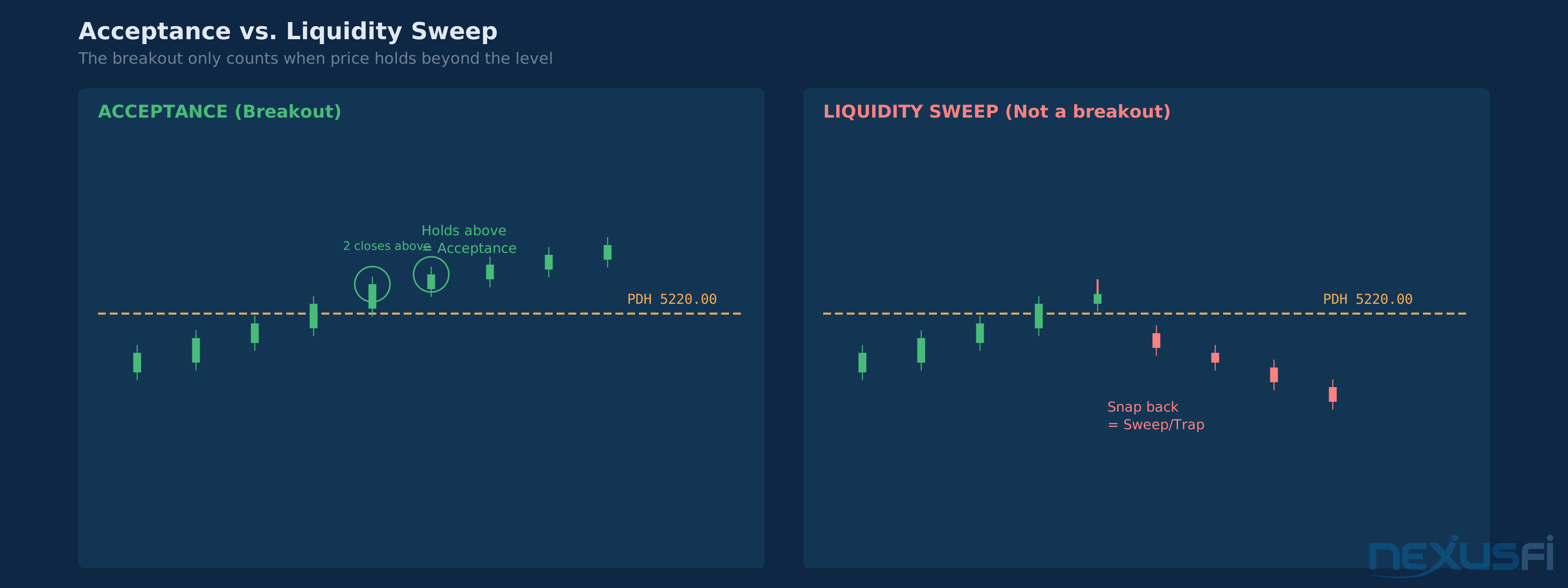
A breakout isn't price crossing a line. It's the market deciding it belongs somewhere new -- and staying there. That distinction is everything. Most breakout...
Scalping is the shortest-timeframe discretionary trading approach in futures -- holding positions for seconds to minutes, targeting small moves, and relying ...
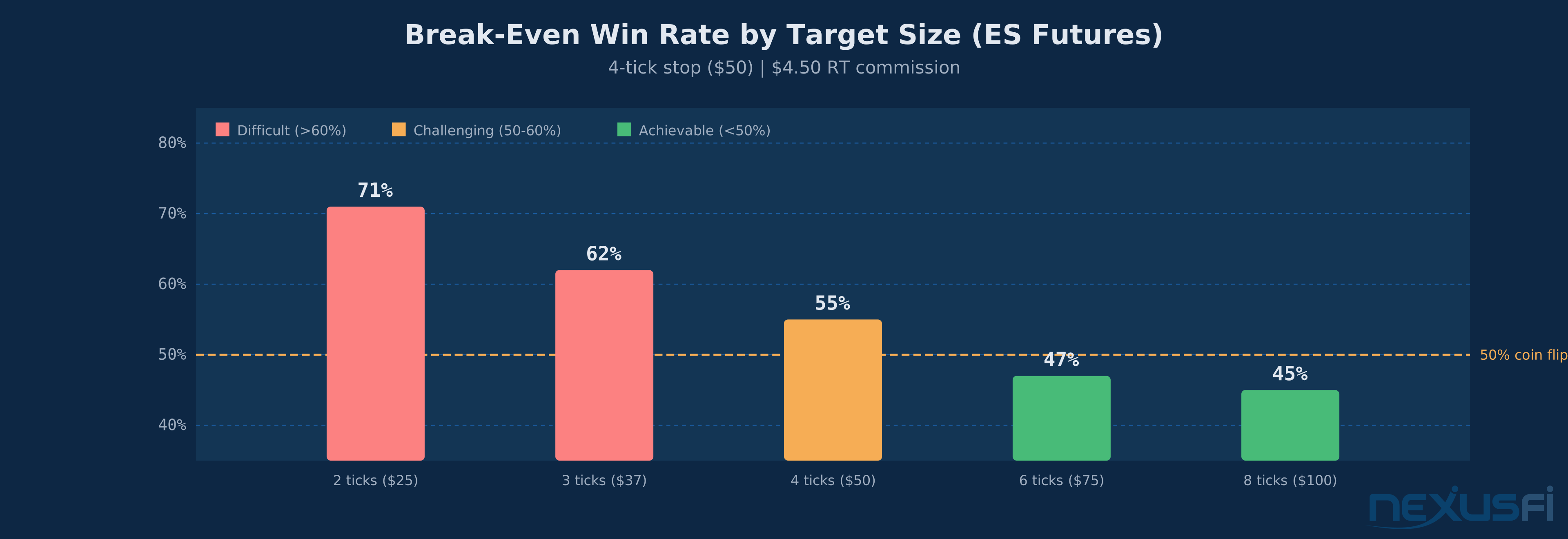
Scalping is the art of extracting small, consistent profits from micro-movements in price -- getting in, getting paid, getting out. In ES that means 2-6 tick...
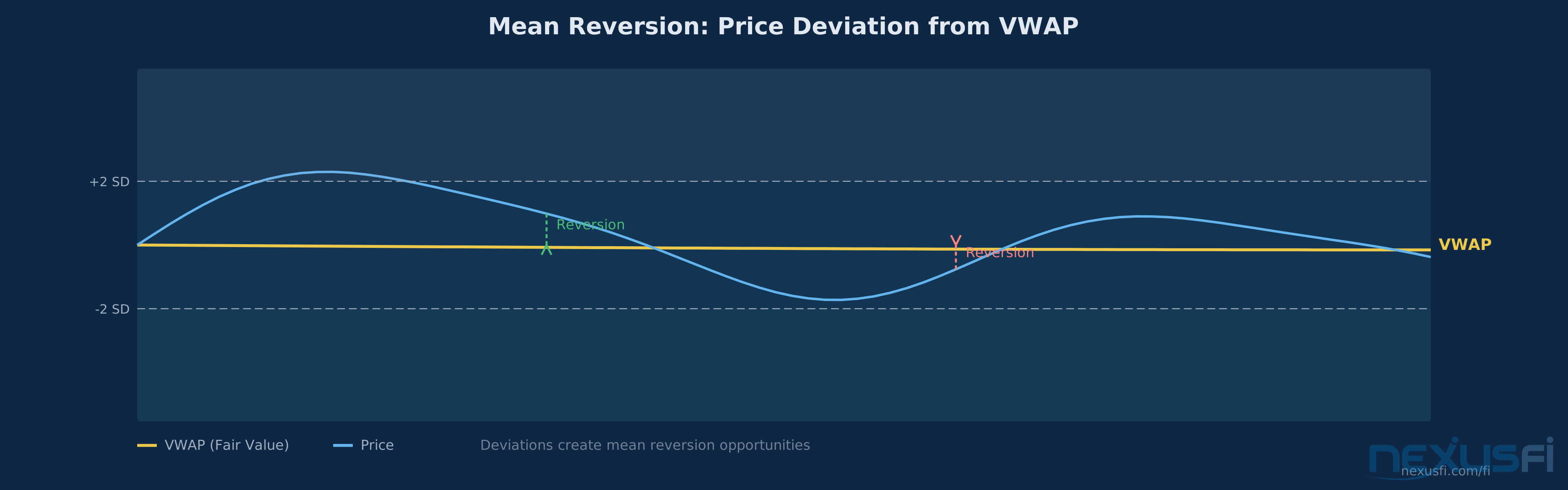
Mean reversion is the single most traded behavior in futures markets This isn't a single-indicator strategy. Mean reversion is a behavior Here's the differen...
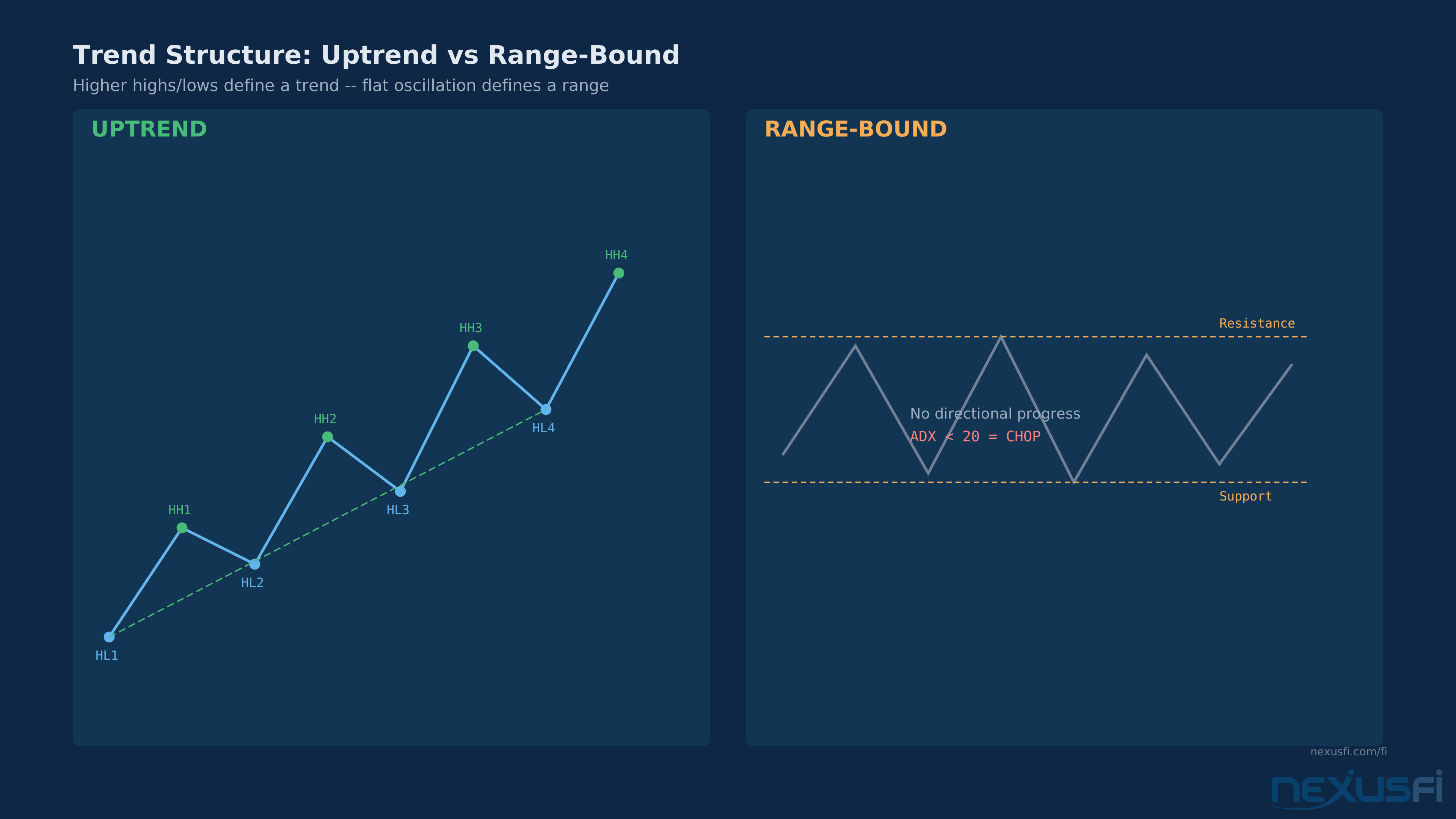
Trend following is the oldest and most studied approach in futures trading -- and the most psychologically demanding. The premise is deceptively simple: iden...
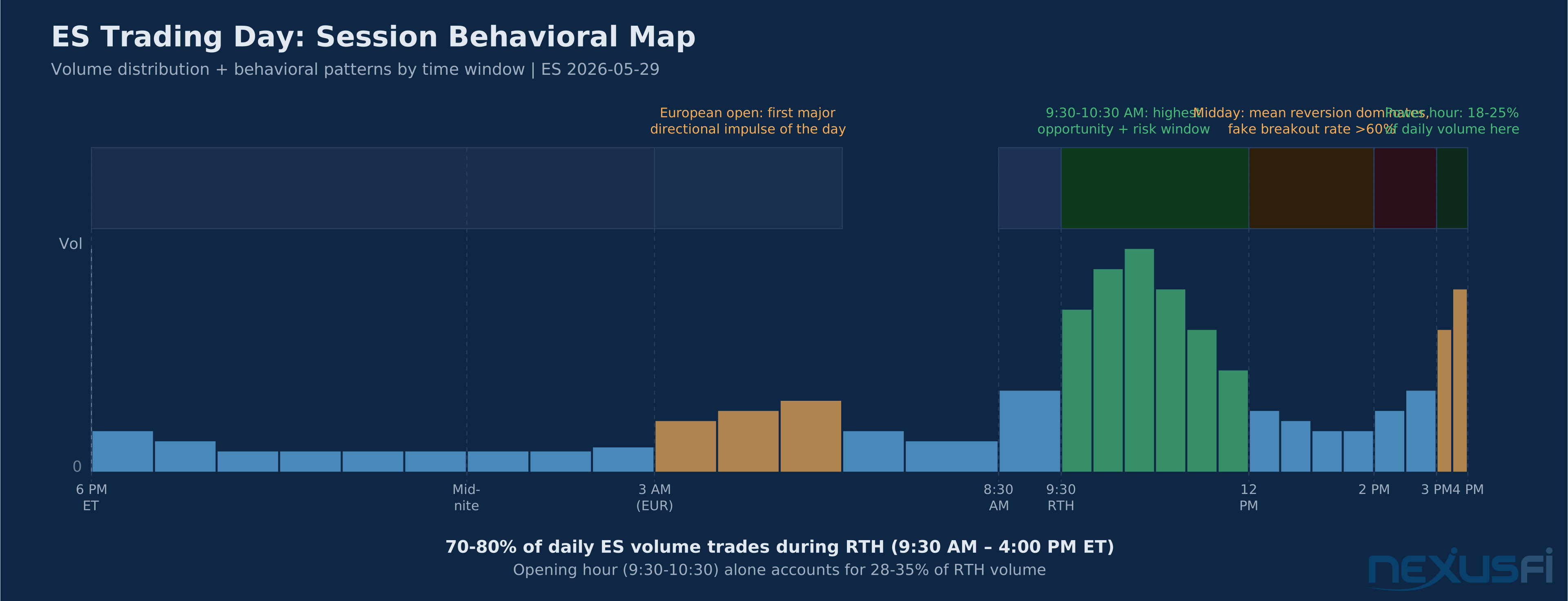
The opening of the regular trading session is not just the first trade. It is the first moment when the full participant pool -- retail, institutional, algor...
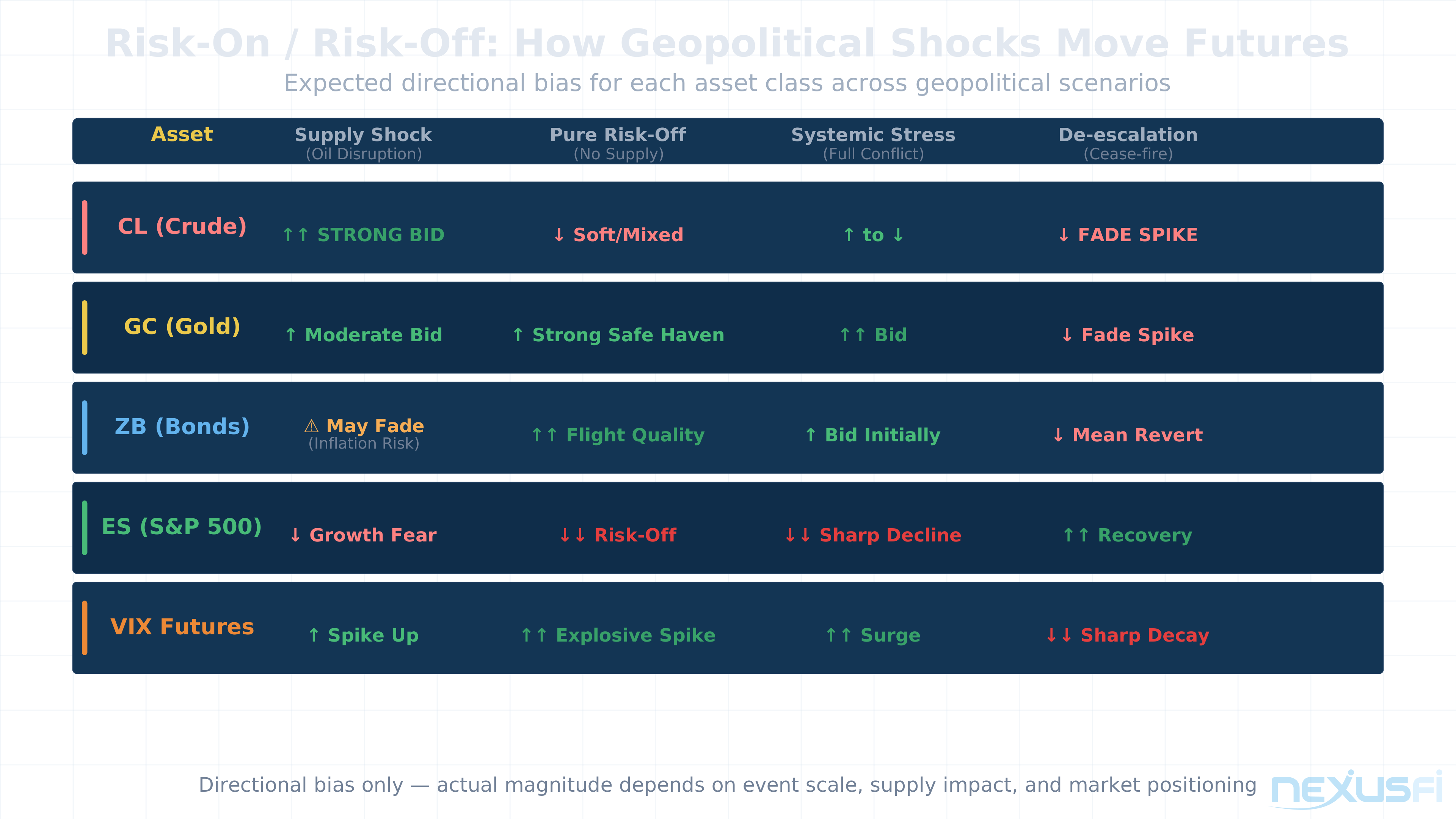
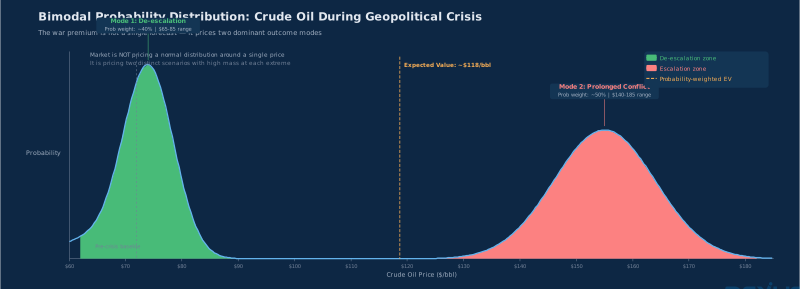
Geopolitical shocks create what traders call regime shifts -- moments when the normal rules of market behavior temporarily break down. During these events: -...
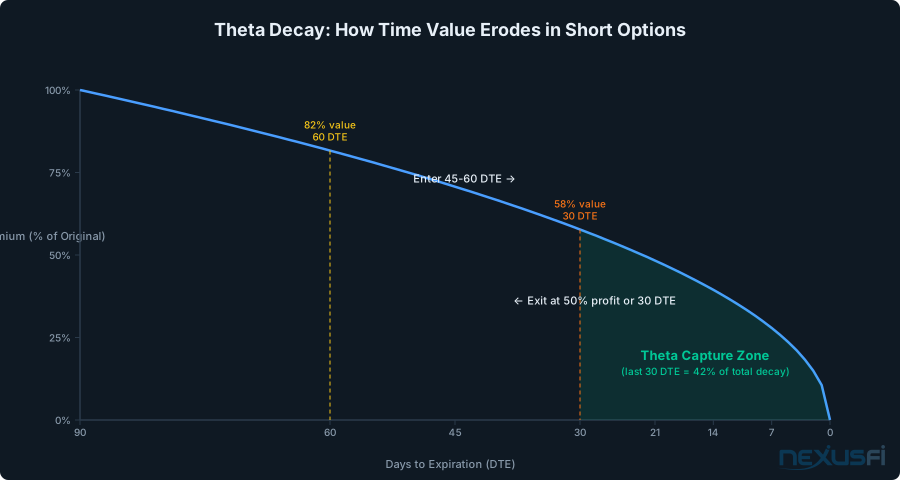
Professional option sellers overwhelmingly prefer futures options over equity options. Three structural advantages explain why. Theta decay accelerates in th...
The framework rests on three pillars -- and the order matters. Context first, pattern second. This is the single most important principle in price action tra...
Overview Selling options on futures has 4.4 million views. The debate about whether ICT works has generated its own thread. That gap between the popularity o...
Futures markets are continuous two-sided auctions. Price moves directionally when one side is more aggressive, willing to lift offers or hit bids to transact...
0DTE options on futures are same-day expiration contracts -- options that expire the day you buy or sell them. On the ES (S&P 500 E-mini), that means Monday,...
Before trading FOMC events, you should understand: - Fed Funds Futures (ZQ) -- the market's real-time pricing mechanism for interest rate expectations - VWAP...
On a normal trading day, liquidity is abundant. The order book is thick, spreads are tight, and you can enter or exit a position at or near your intended pri...
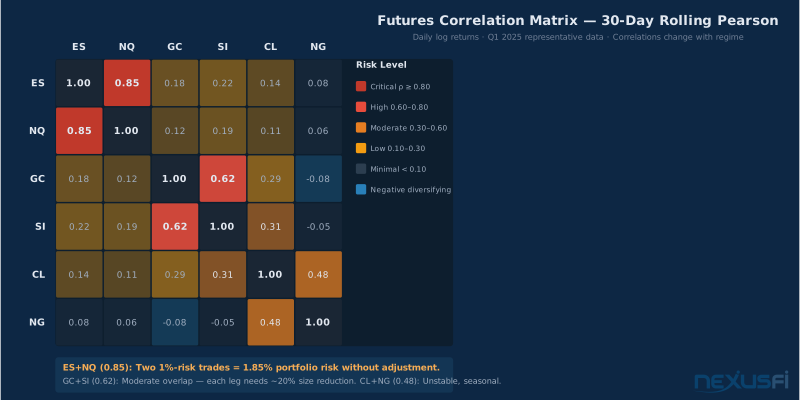
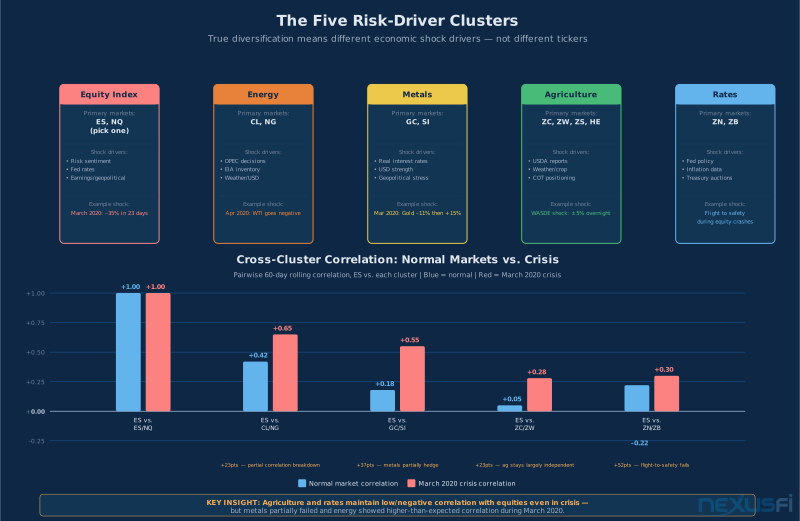
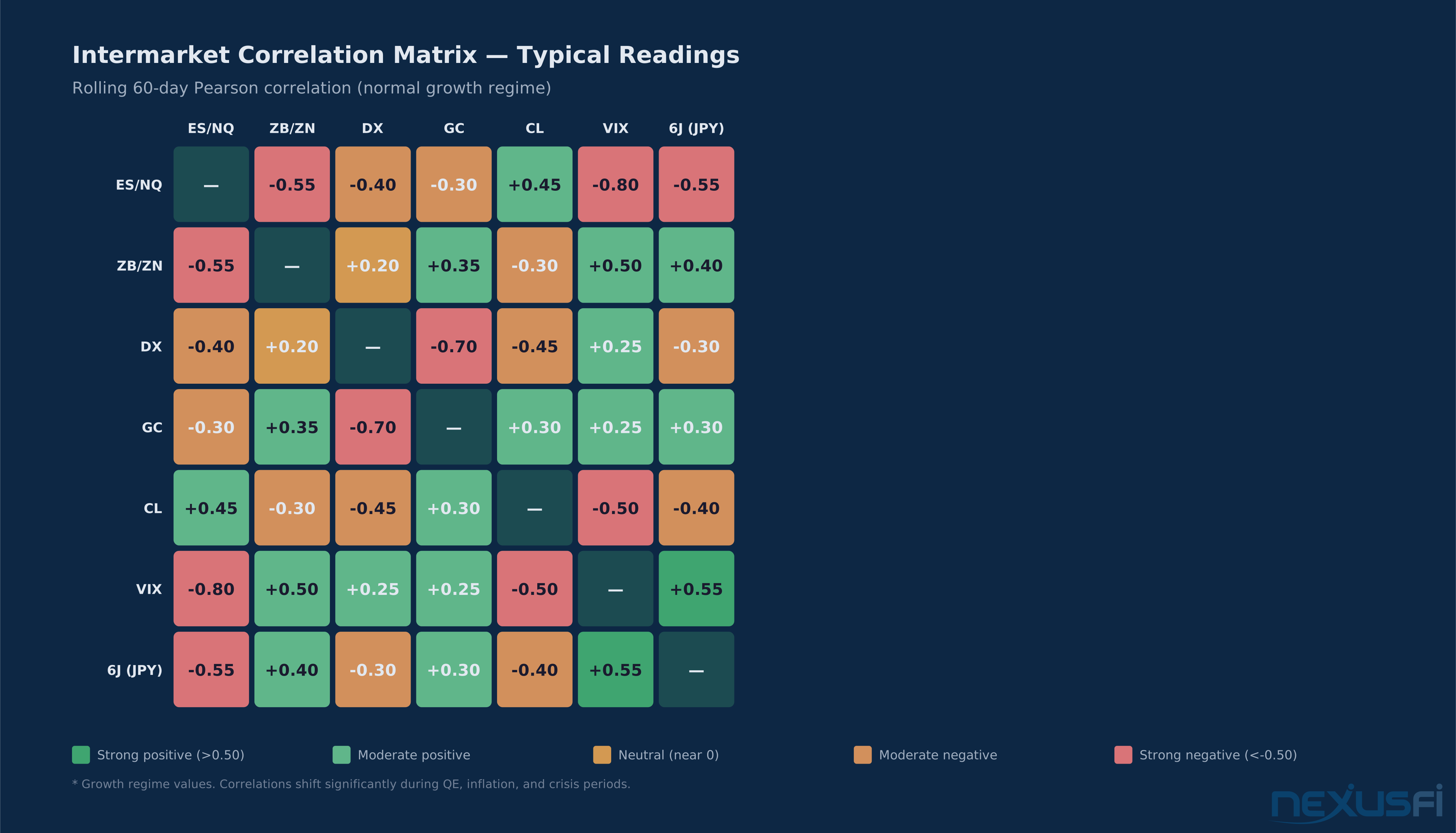
Every futures market exists inside a web of relationships. Rates move, equities react. The dollar strengthens, commodities feel it. Gold catches a bid while ...
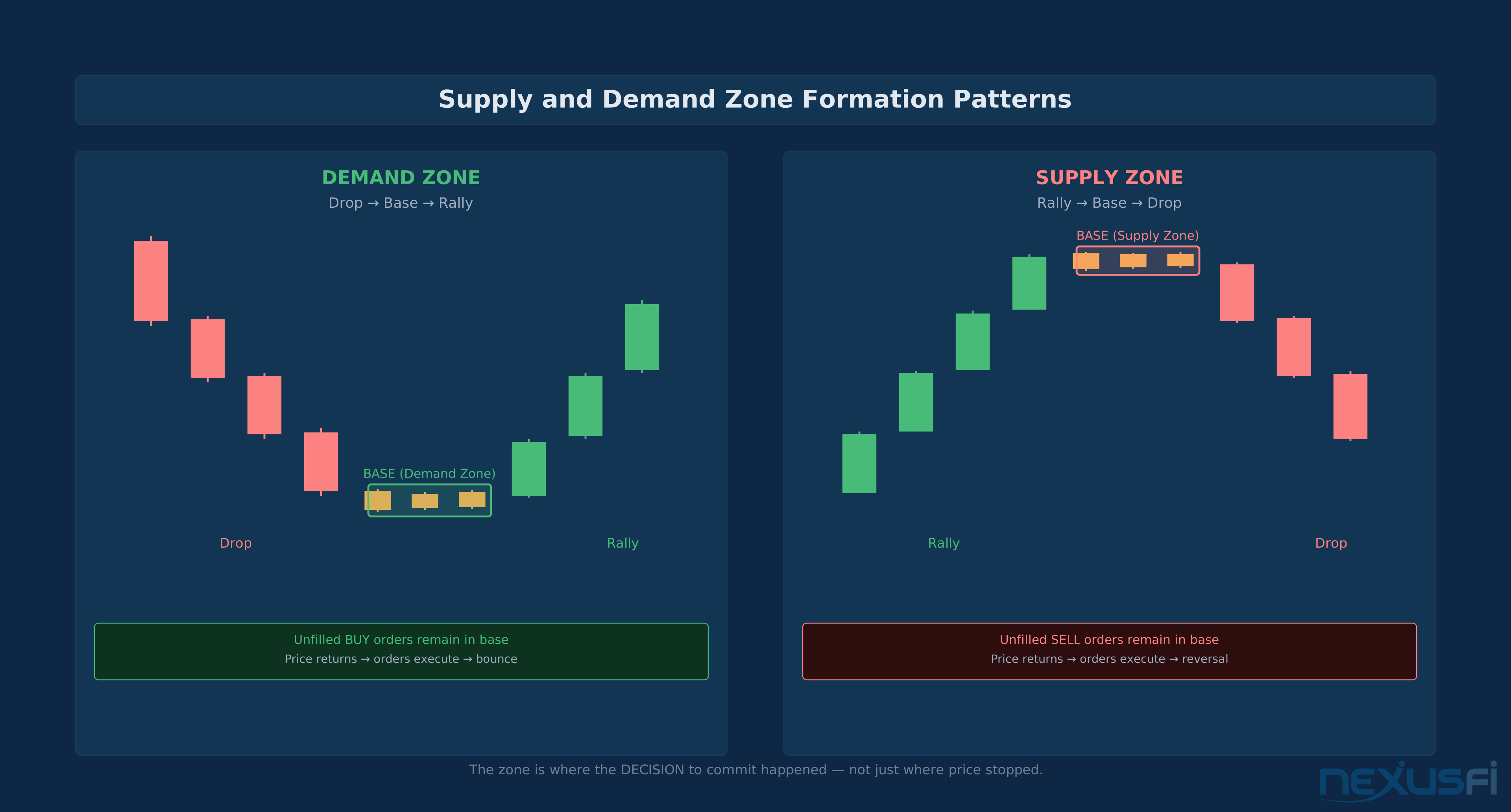
A supply and demand zone is not just a level where price reversed. It is a region where an order flow imbalance was created and left unresolved. When institu...
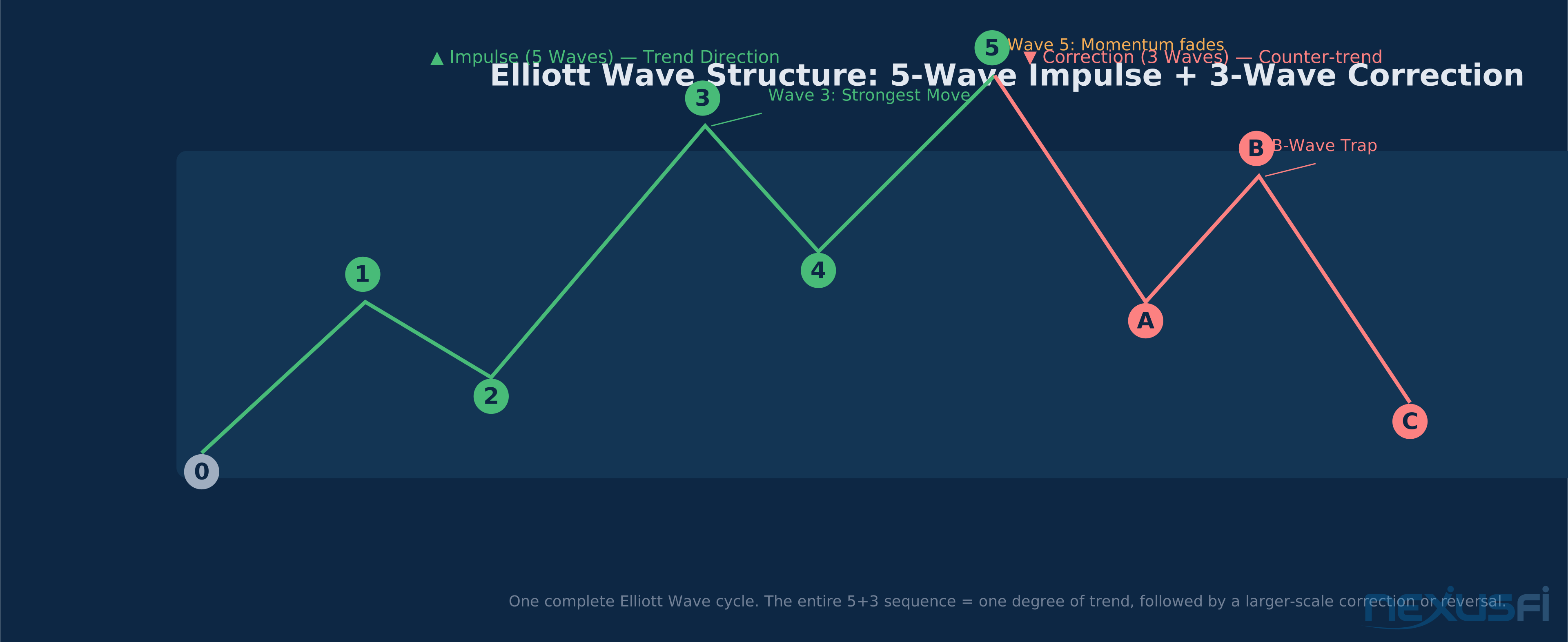
Every Elliott Wave count starts with distinguishing between two types of movement: Impulse Waves (Motive Waves) An impulse wave is a five-wave move in the di...
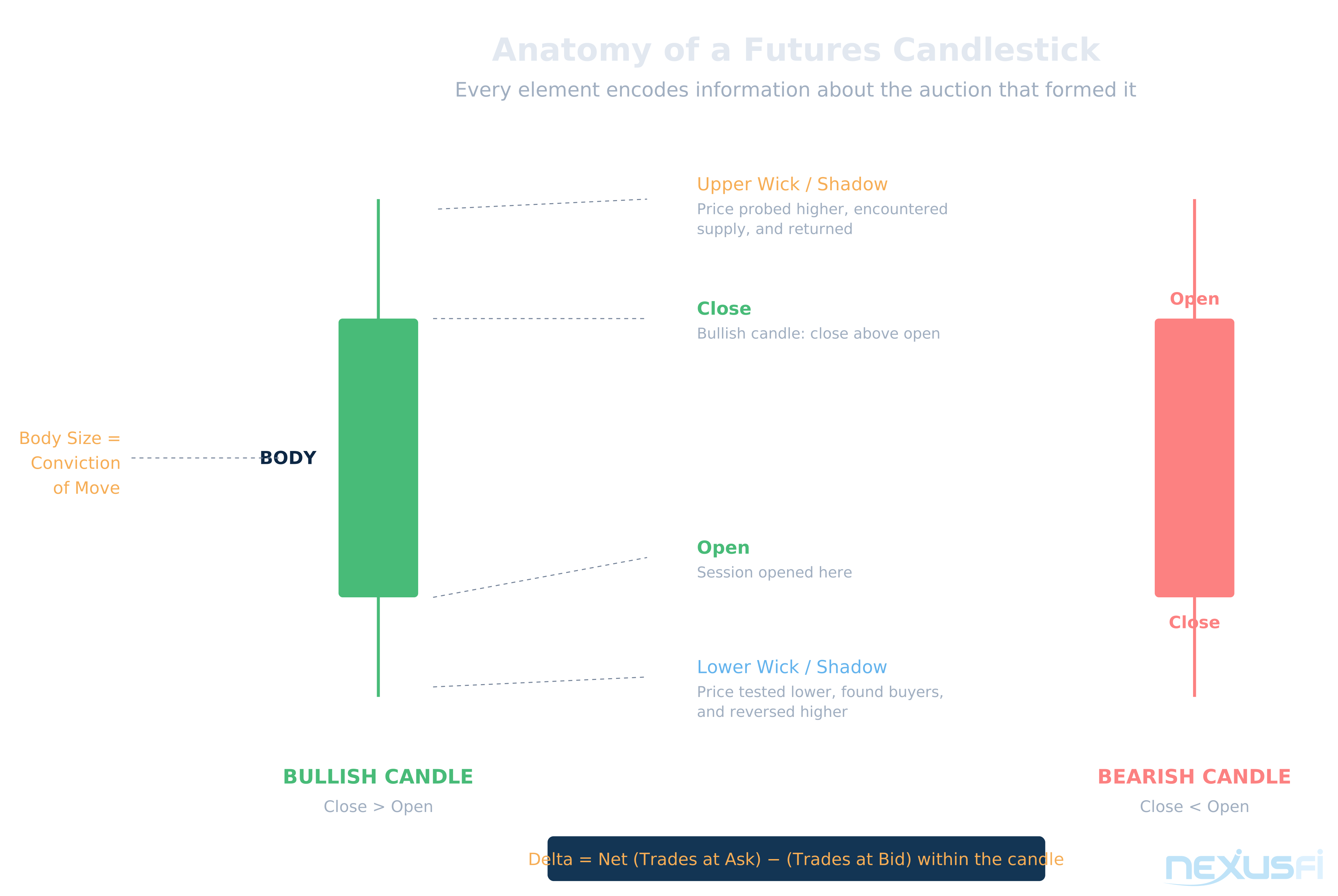
Before diving into patterns, understand what each element represents: The body (the wide rectangle) shows the range between the open and close. A large body ...
In futures markets, price moves because participants are repeatedly testing what the other side will accept. This is auction market theory at its core: buyer...
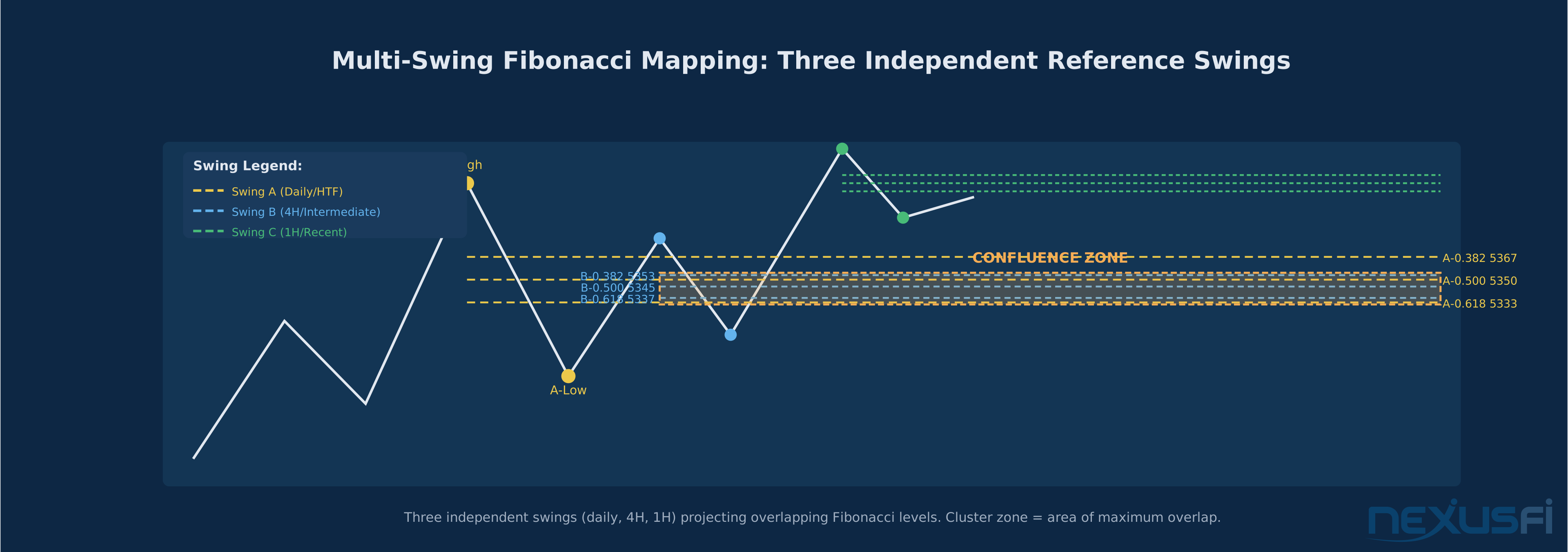
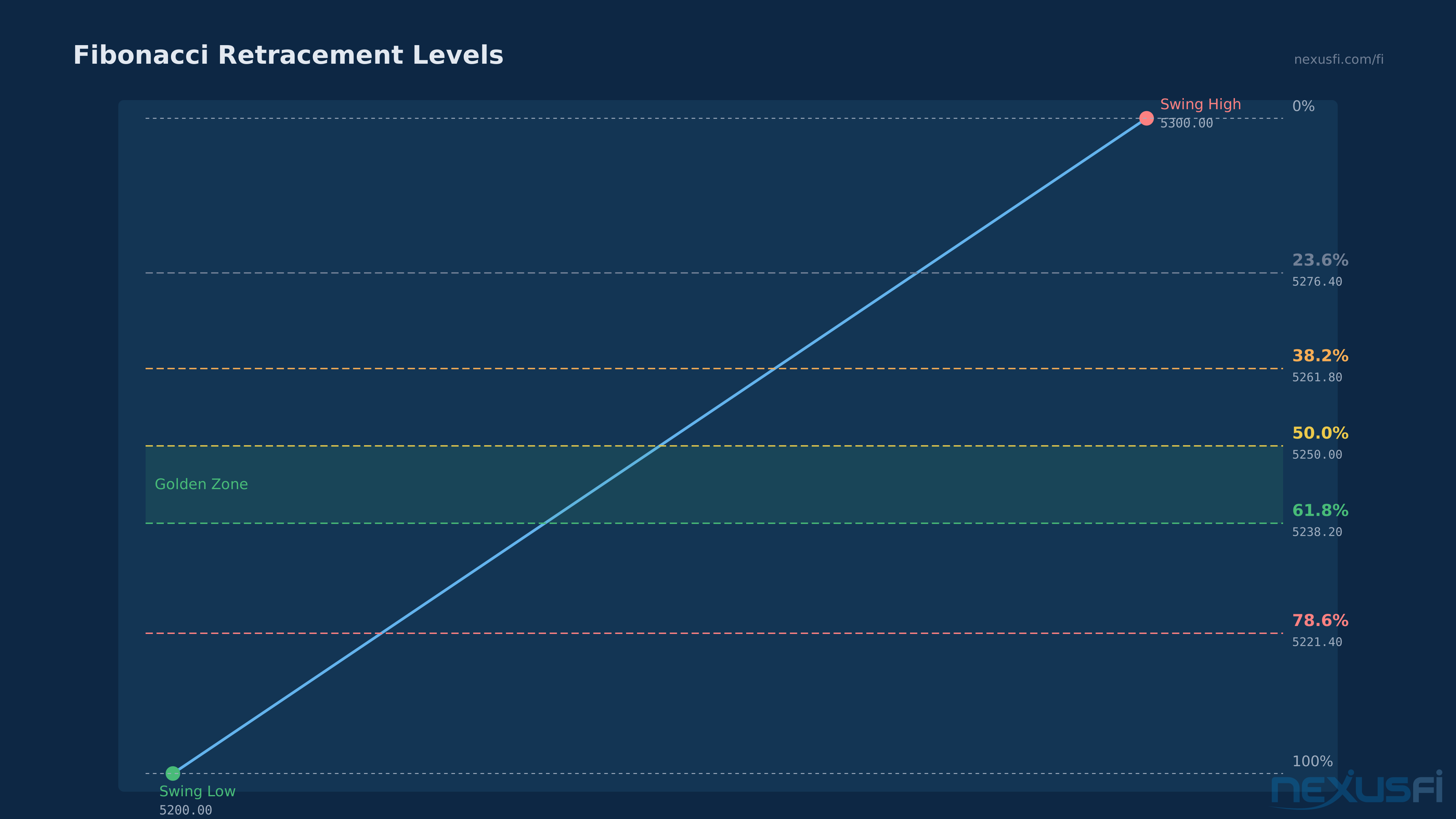
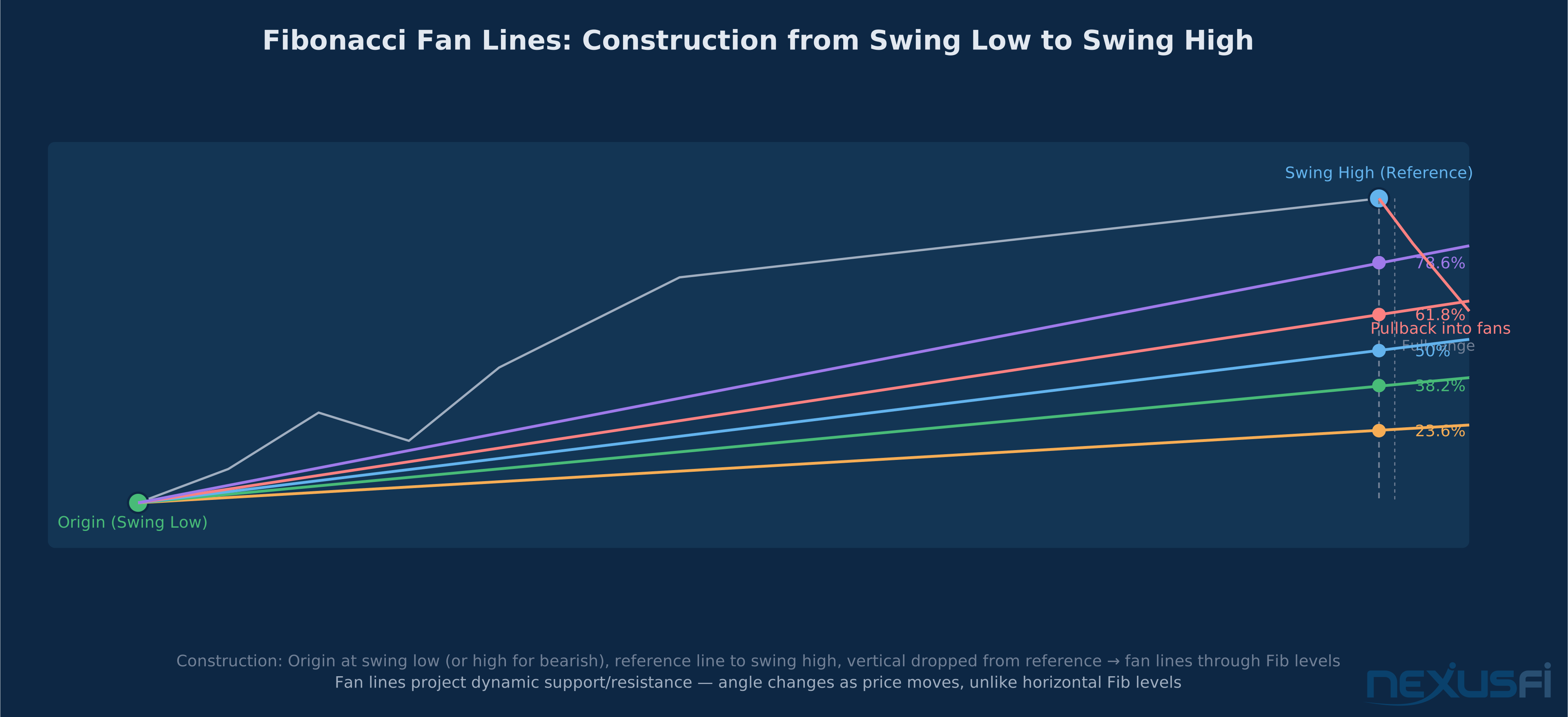
Every trader who has used Fibonacci tools has experienced the frustration of price stopping at 38.2% on one trade, blowing through 61.8% on the next, and app...
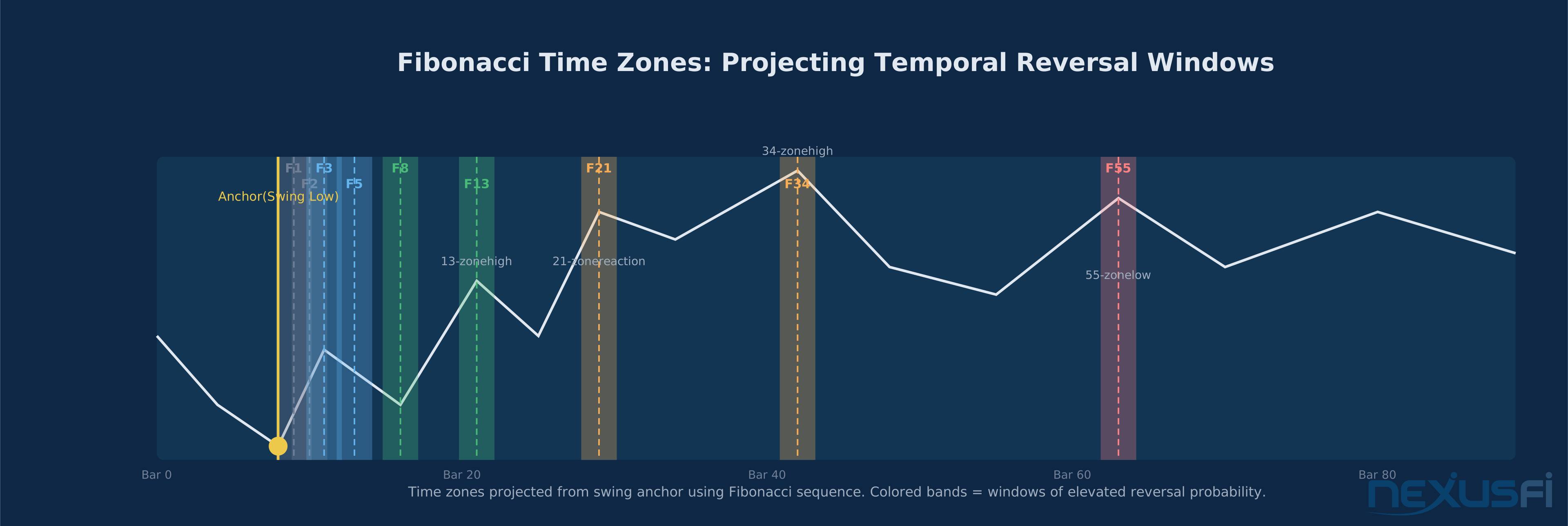
Most traders who use Fibonacci apply it to the price axis -- retracements, extensions, projections. Fewer apply it to the time axis. The concept is simple: j...
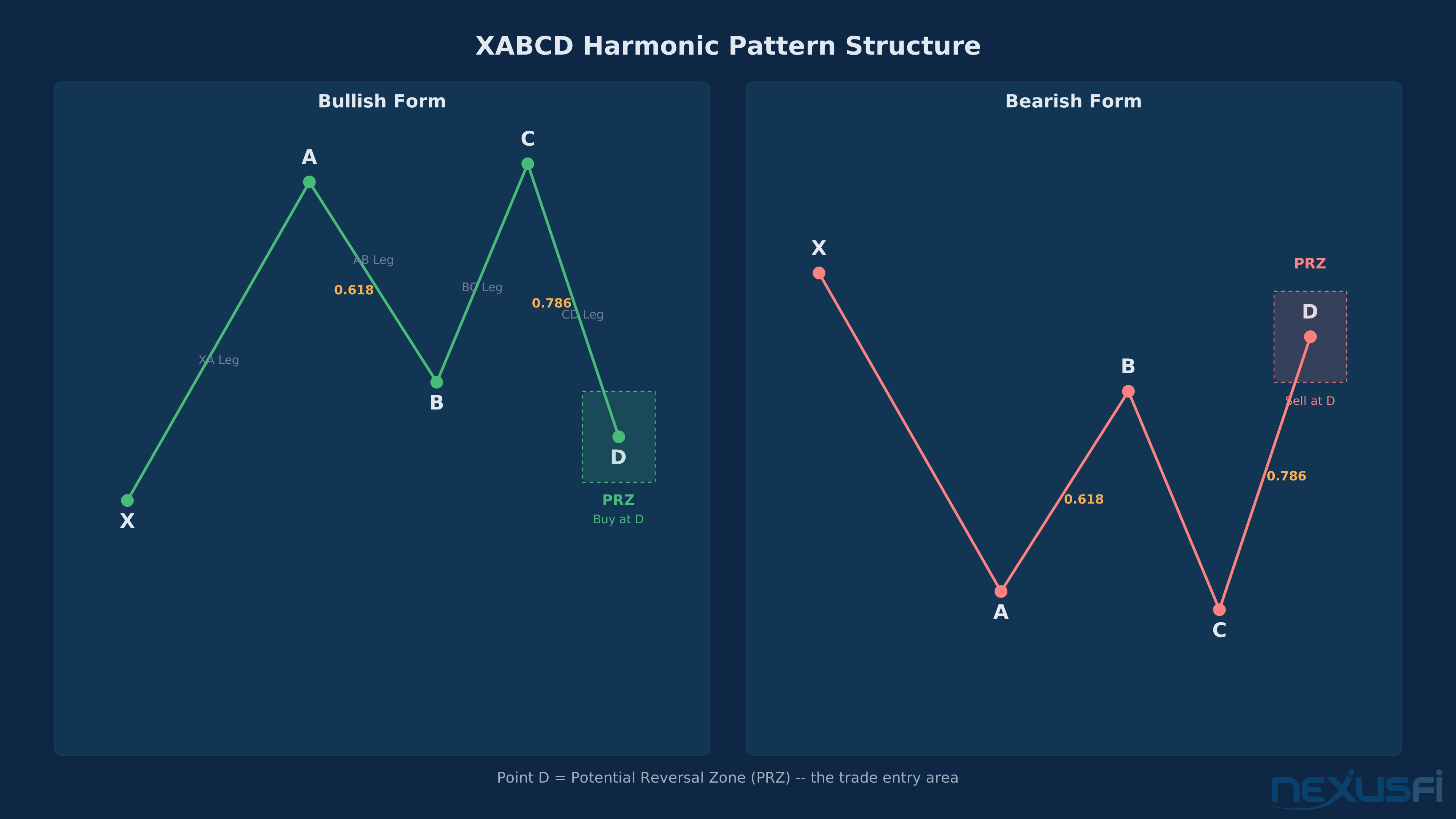
Every harmonic pattern is built from five price points labeled X, A, B, C, and D, connected by four price legs (XA, AB, BC, CD). The pattern is read as a seq...
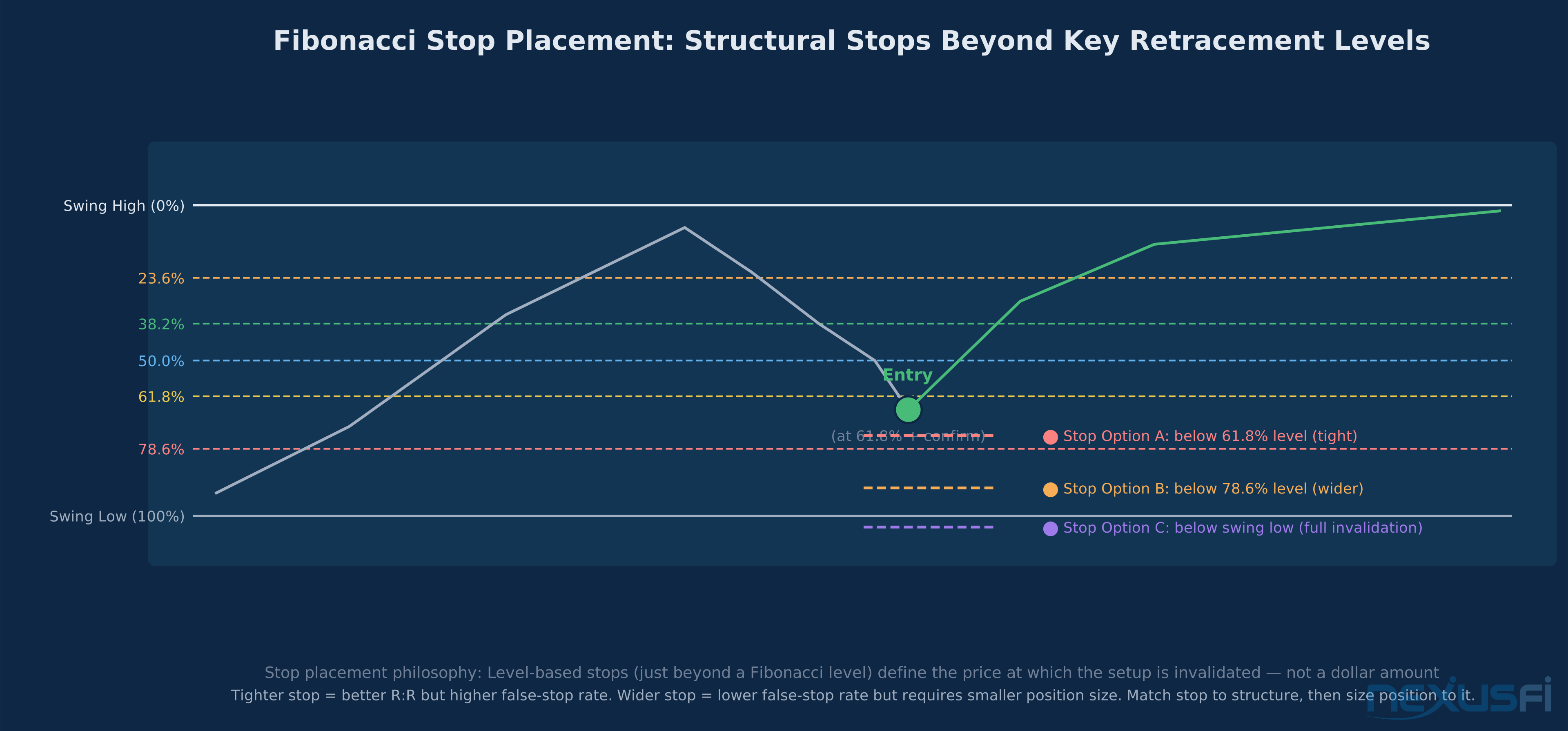
The most common mistake in stop placement is sizing stops by dollar amount before considering price structure. A trader who says "I'll use a 10-point stop on...
Overview Every losing streak has a pattern. You find a setup that works, repeat it faithfully for two weeks, then suddenly the same setup produces five losse...
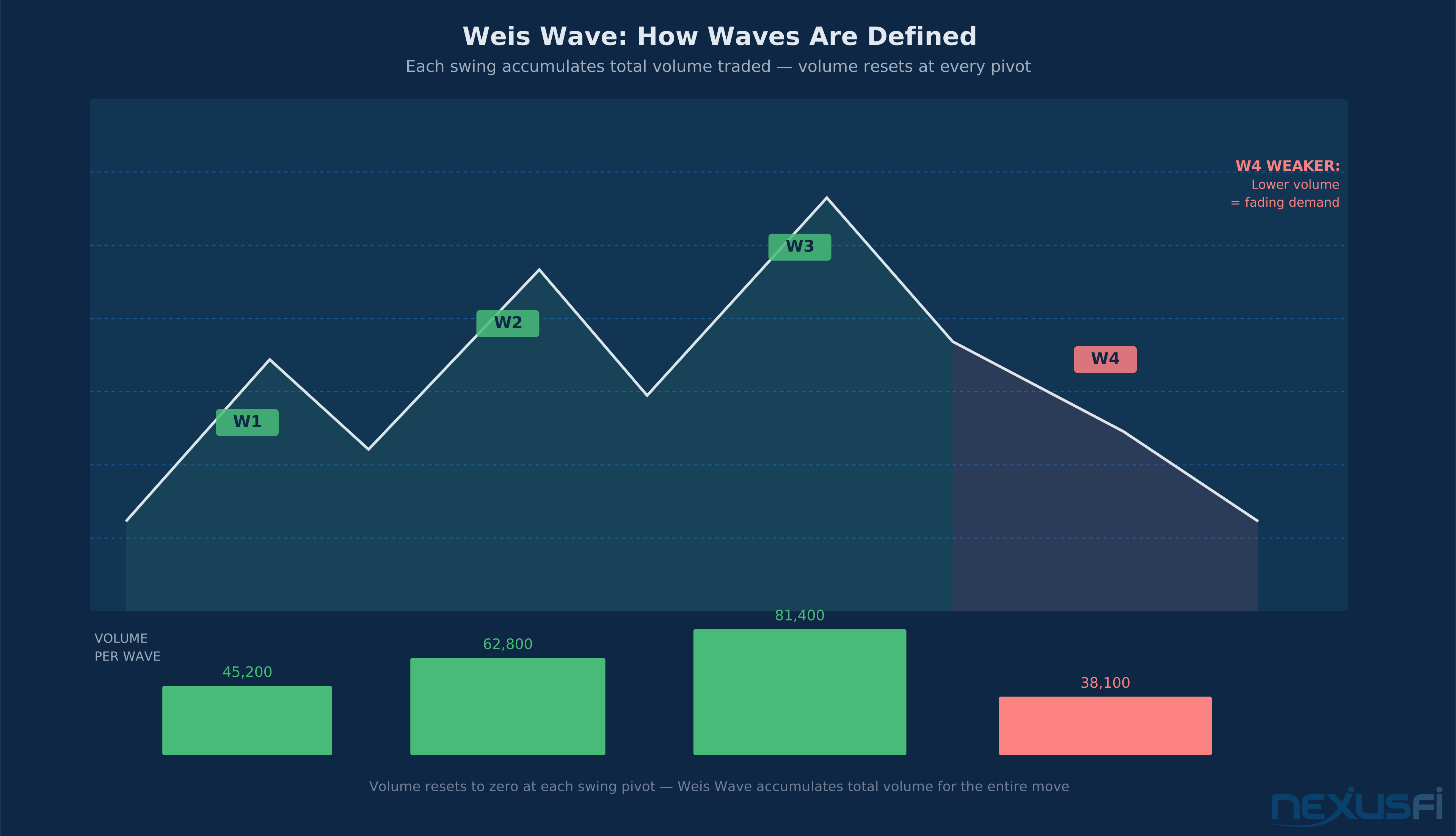
Weis Wave Volume Analysis transforms raw volume into a directional story. Instead of reading individual candle volumes -- a noise-heavy exercise -- it accumu...
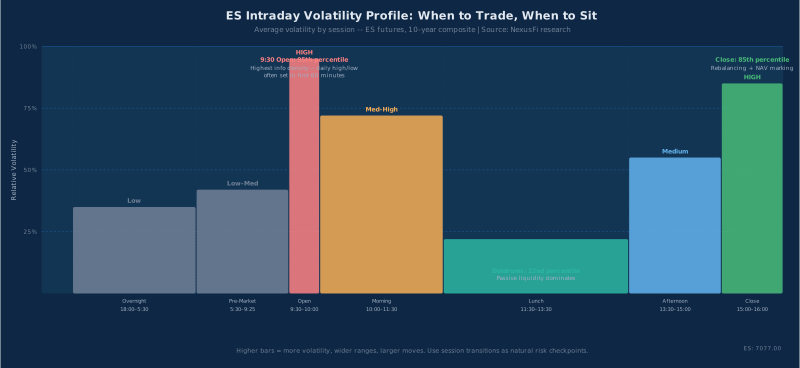
The futures market doesn't trade the same way at 9:35 AM as it does at 12:45 PM. This isn't random -- it's structural. The same institutional forces that mov...
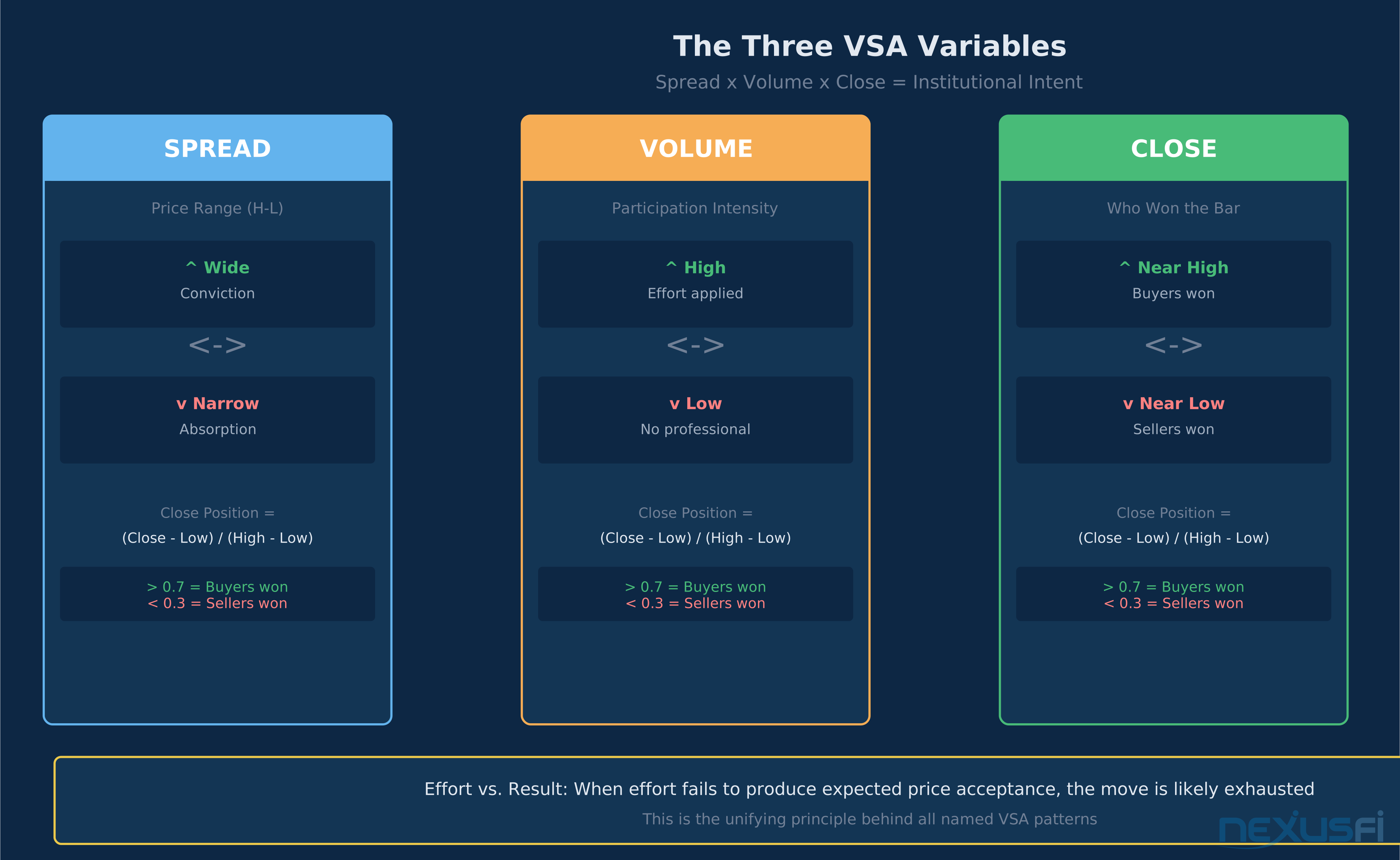
VSA reduces the entire market to three inputs. That simplicity is deceptive -- the combination of all three is where the edge lives. Variable 1: Spread (Pric...
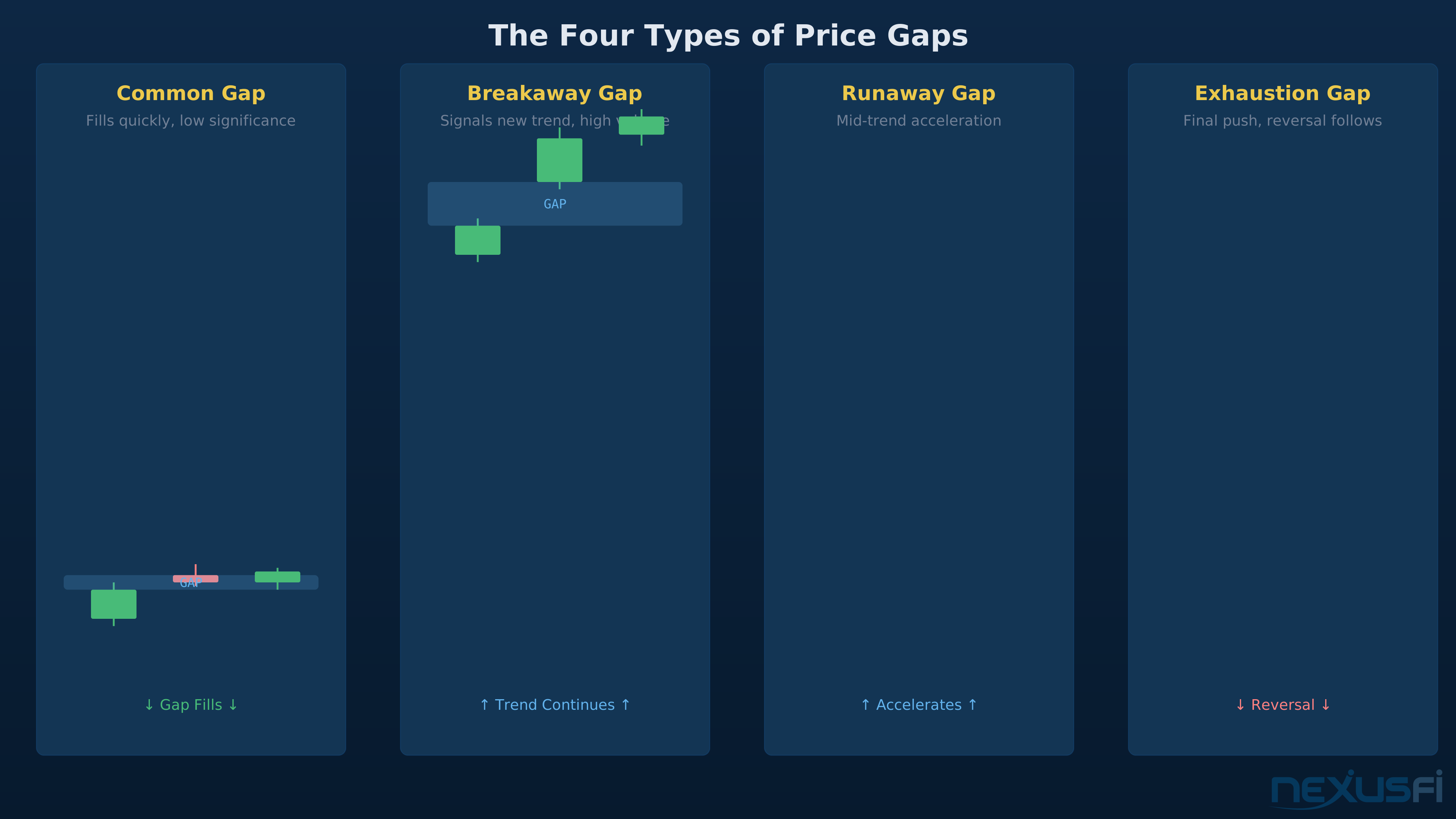
A gap is the price difference between one session's close and the next session's open. In futures, gaps show up between the RTH close at 4:00 PM ET and the n...
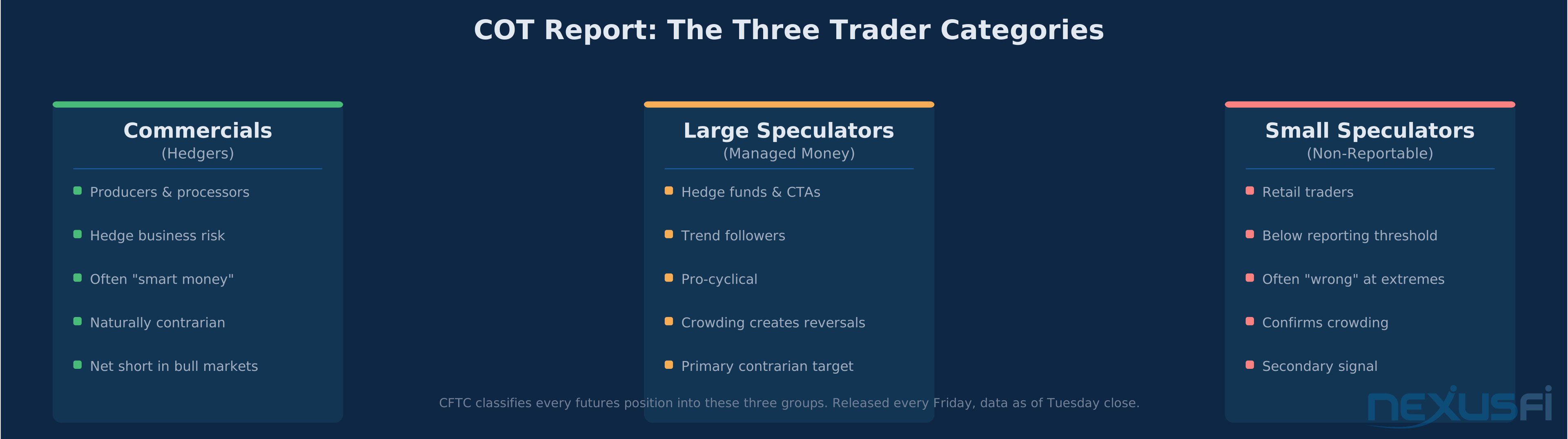
The Commitment of Traders (COT) report gives futures traders something most indicators can't: a direct window into the actual positions held by the largest m...
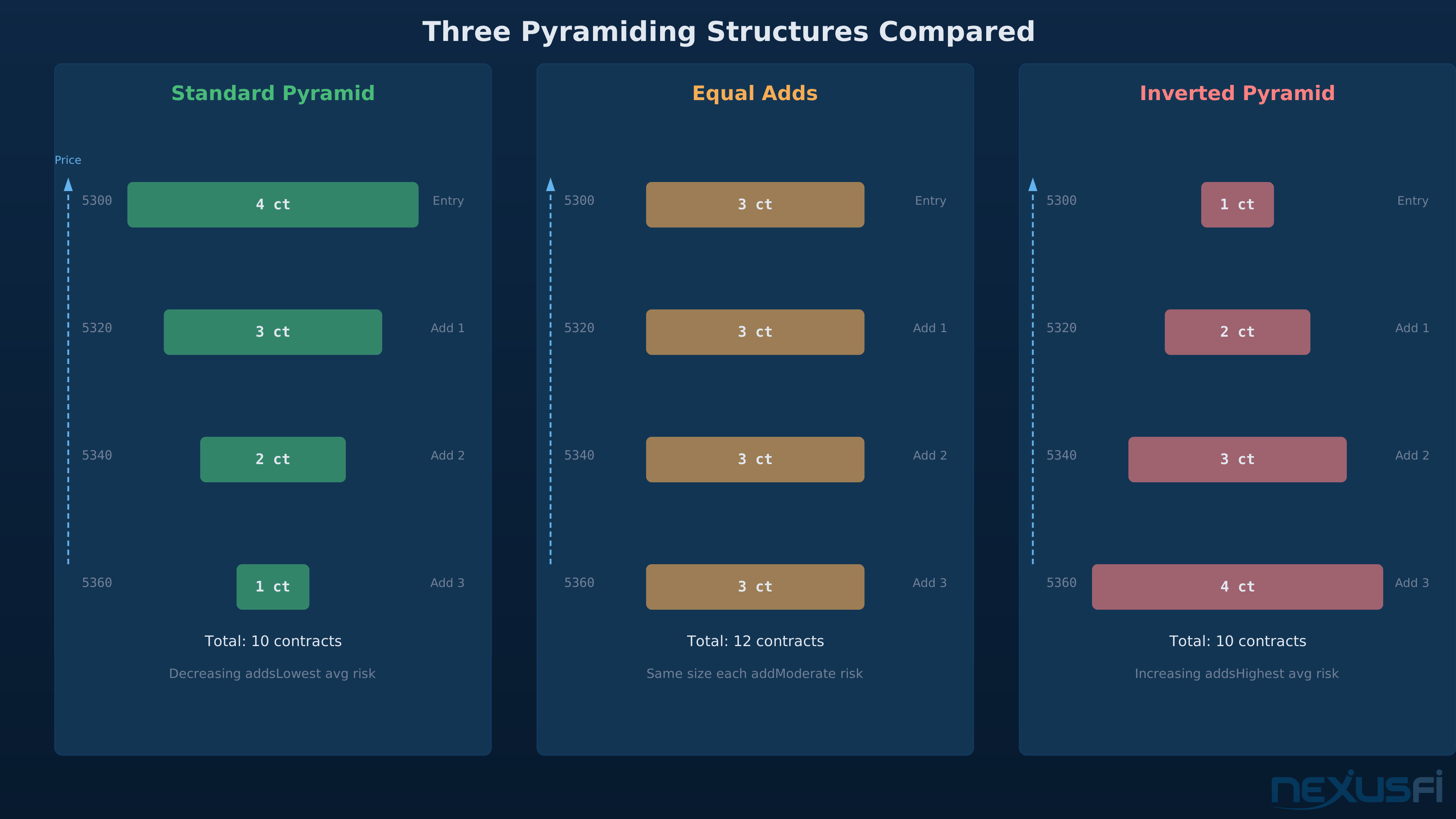
Pyramiding is the practice of adding to a winning position as the trade moves in your favor. Instead of entering your full size at one price, you build the p...
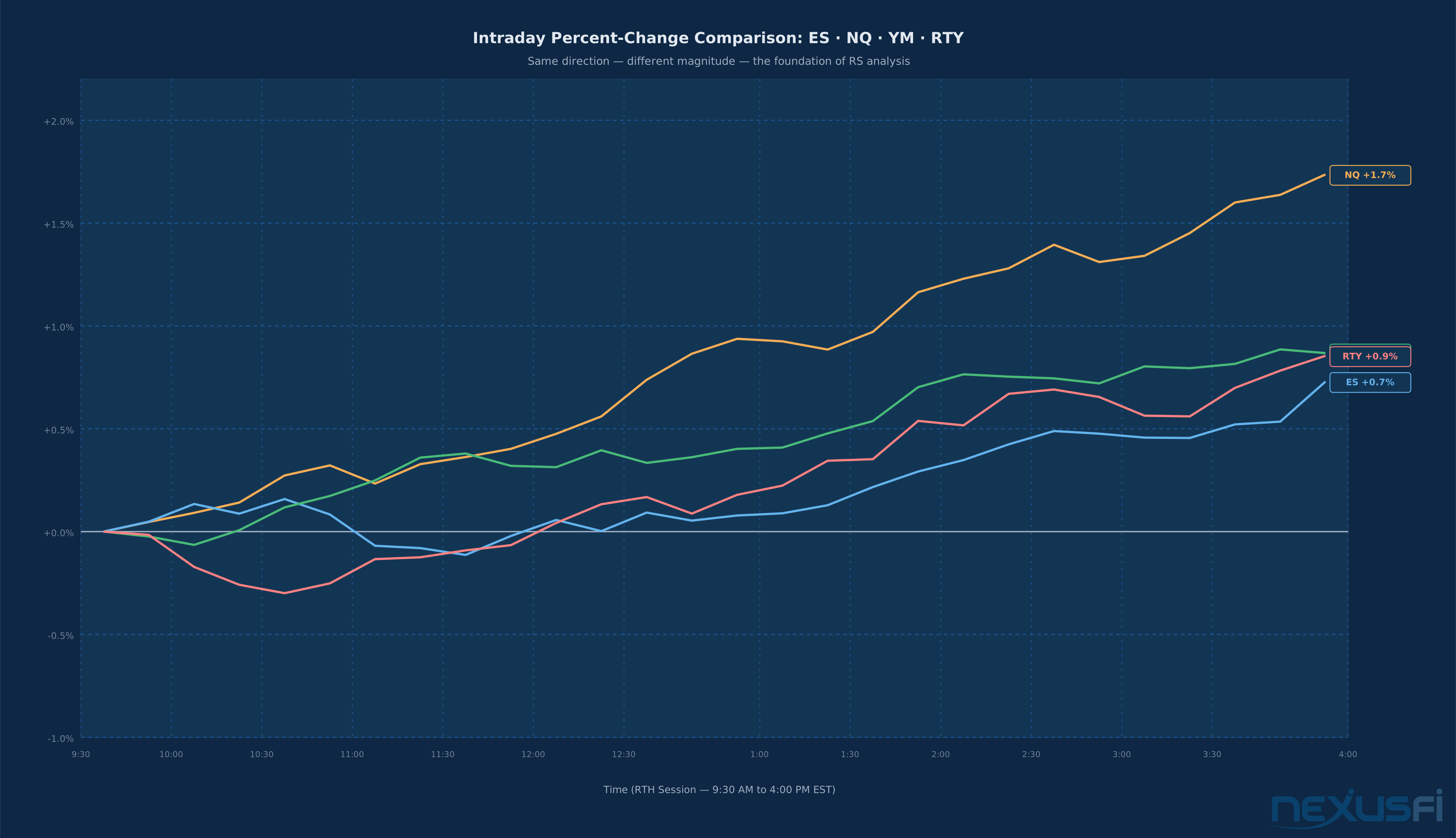
Overview Every futures trader eventually asks: "Which index should I be trading right now?" On most days, ES, NQ, YM, and RTY all trend in the same direction...
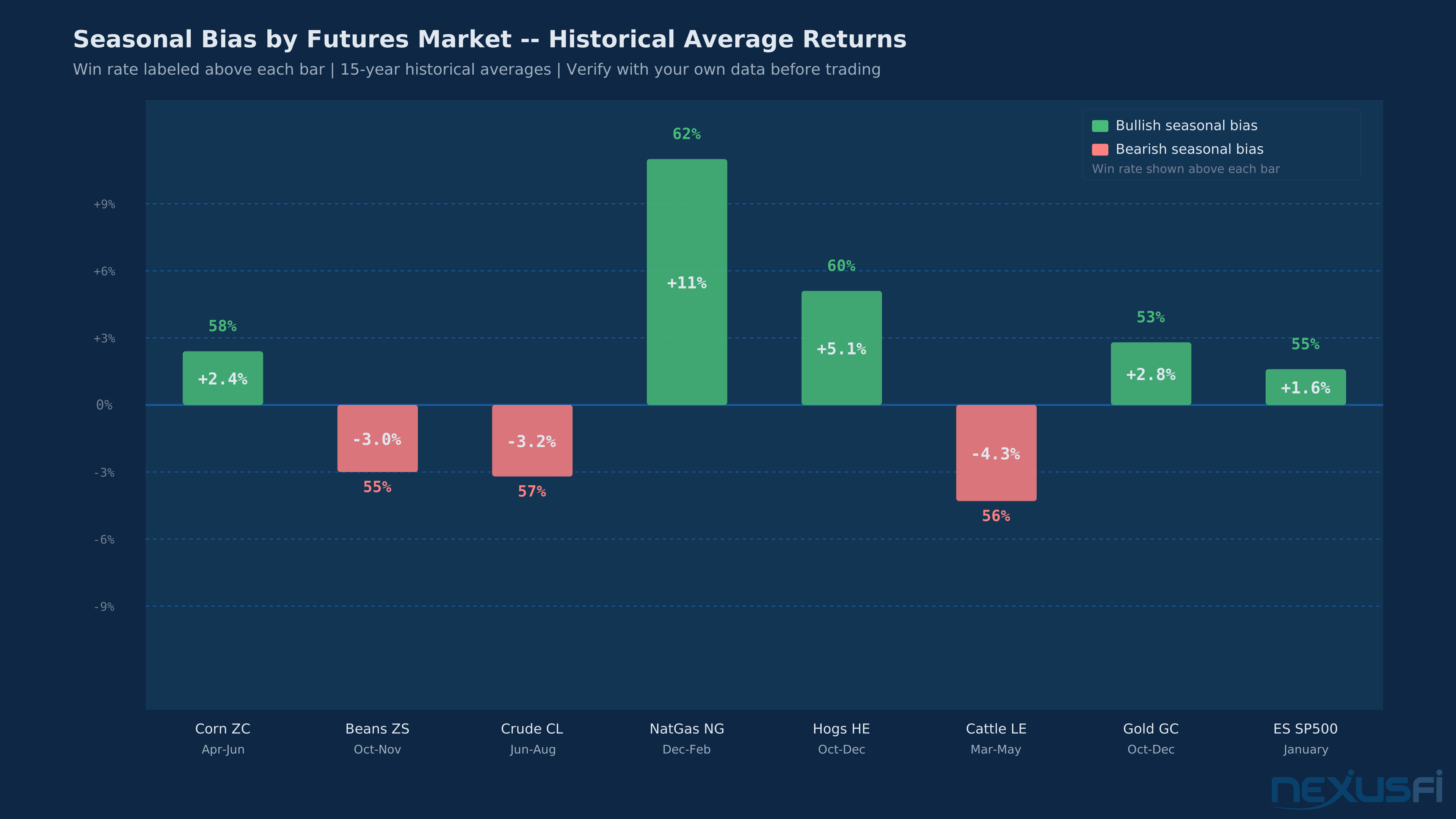
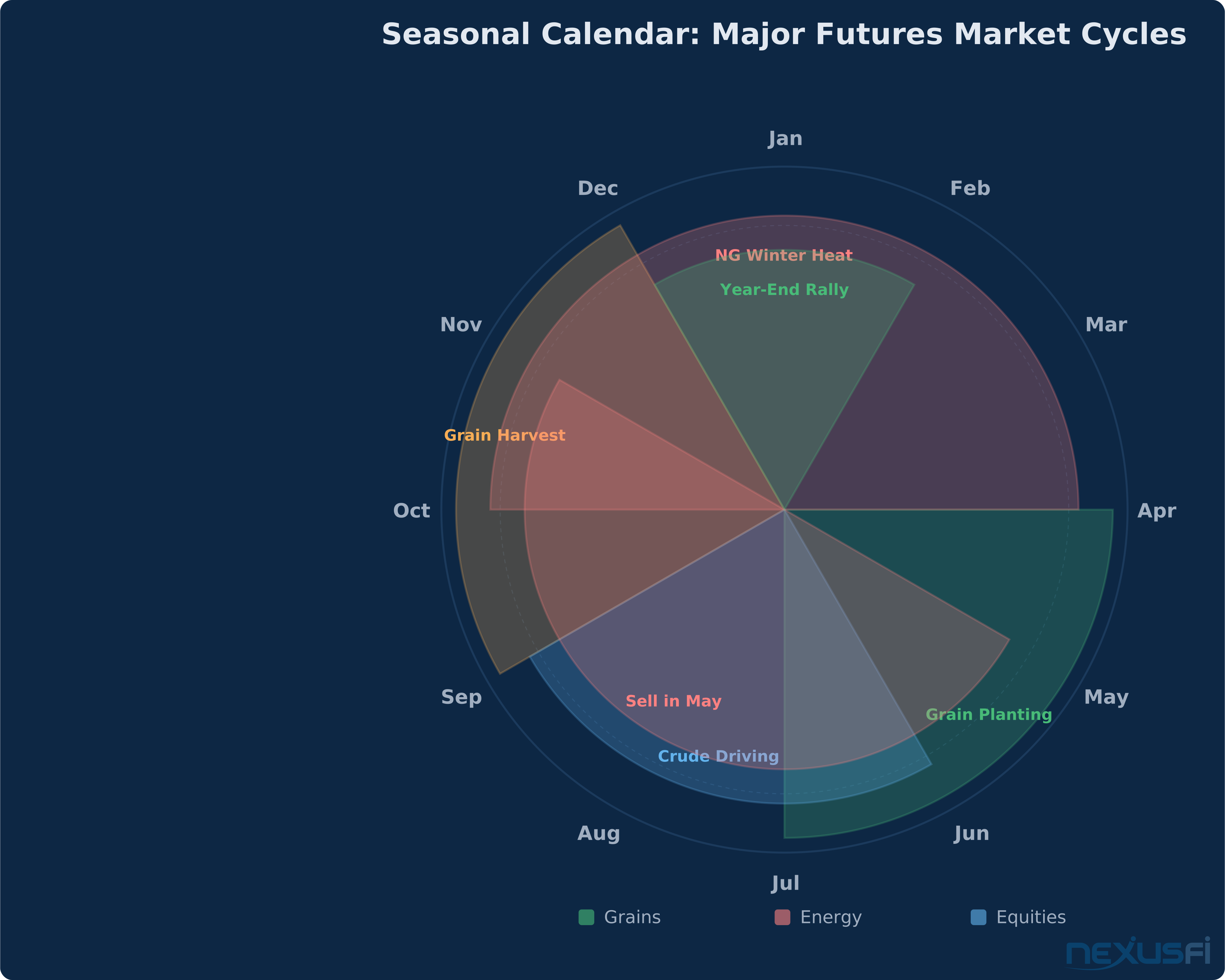
Every year, corn rallies into planting season. Natural gas rips higher when winter storage draws begin. Lean hogs firm up as holiday ham demand peaks. These ...
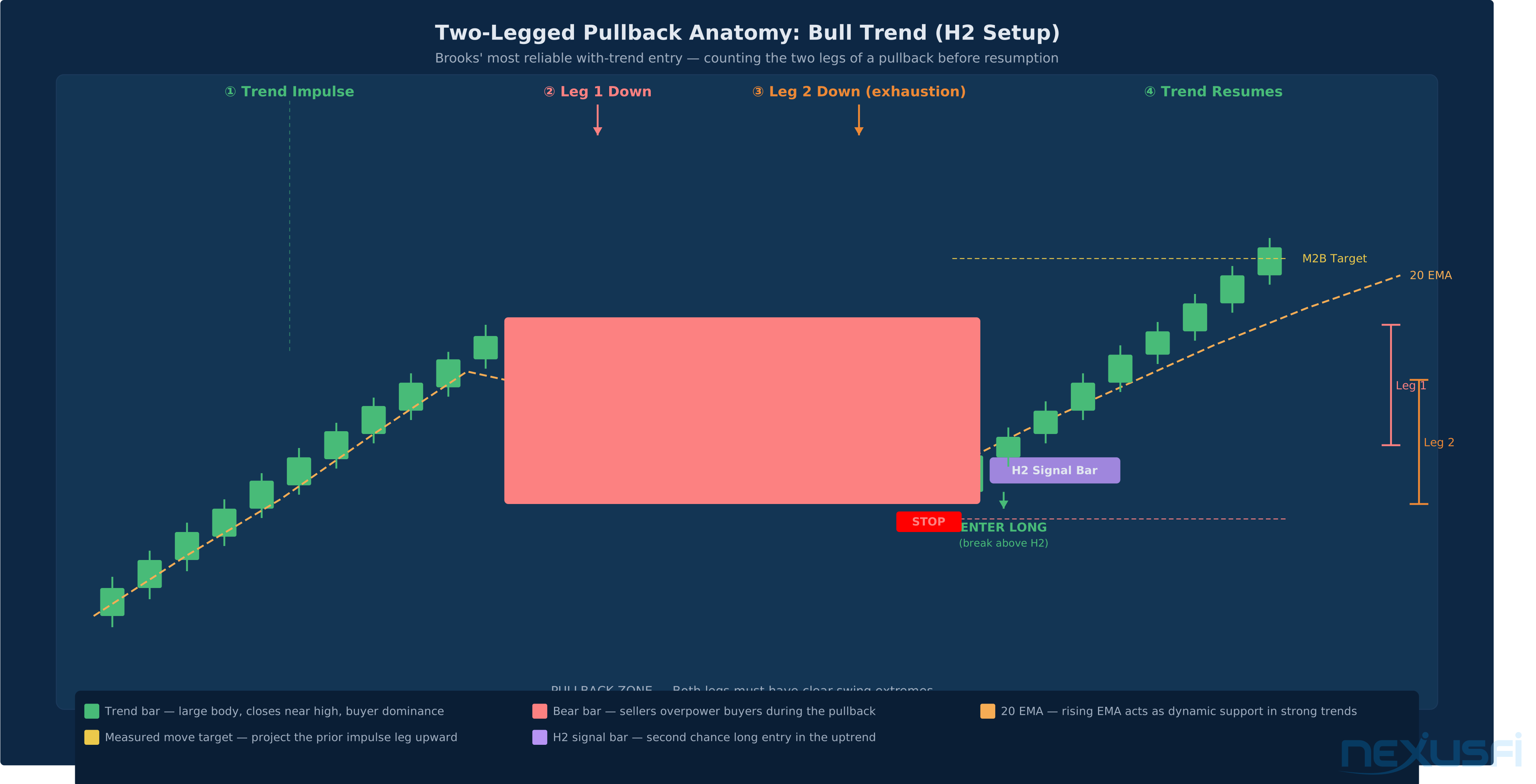
Al Brooks calls the two-legged pullback his most reliable with-trend entry -- and after decades of price action analysis across ES, NQ, CL, and virtually eve...
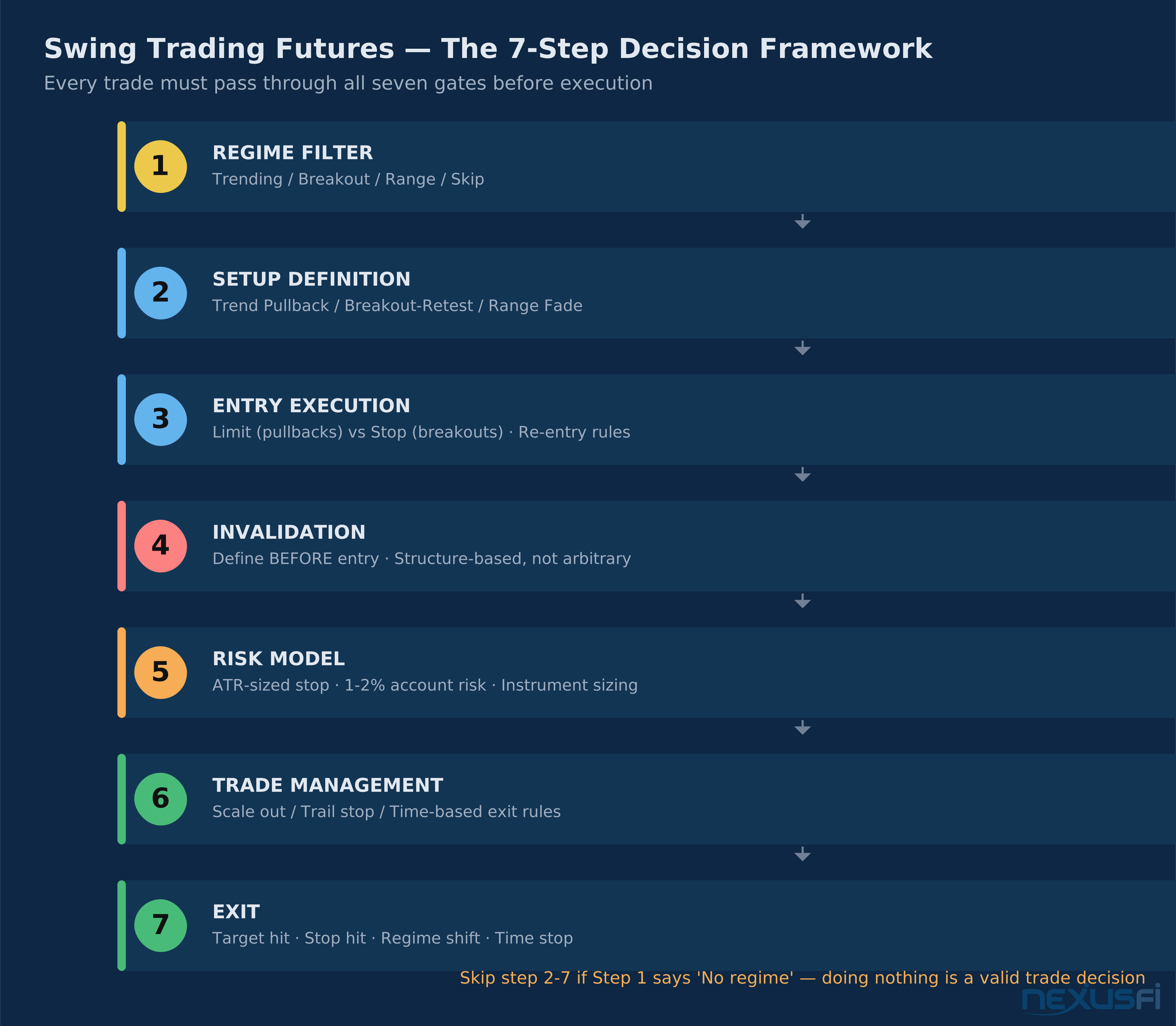
Swing trading futures sits in a distinct lane. You're not scalping ticks on a 1-minute chart, and you're not holding a macro thesis through a quarterly rebal...
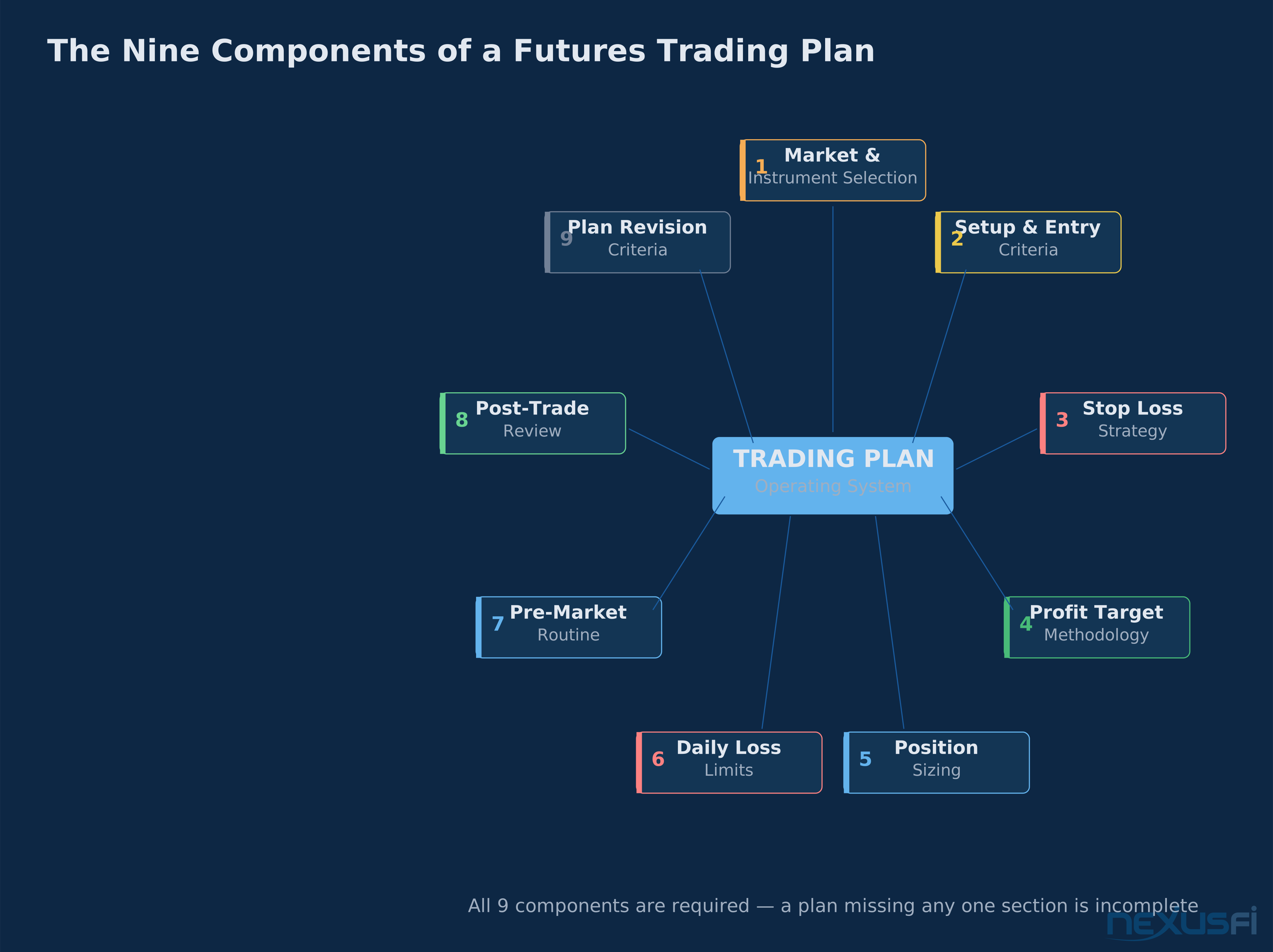
Overview Most traders who blow up don't blow up because they have bad strategies. They blow up because they have no plan -- or they have one on paper and ign...
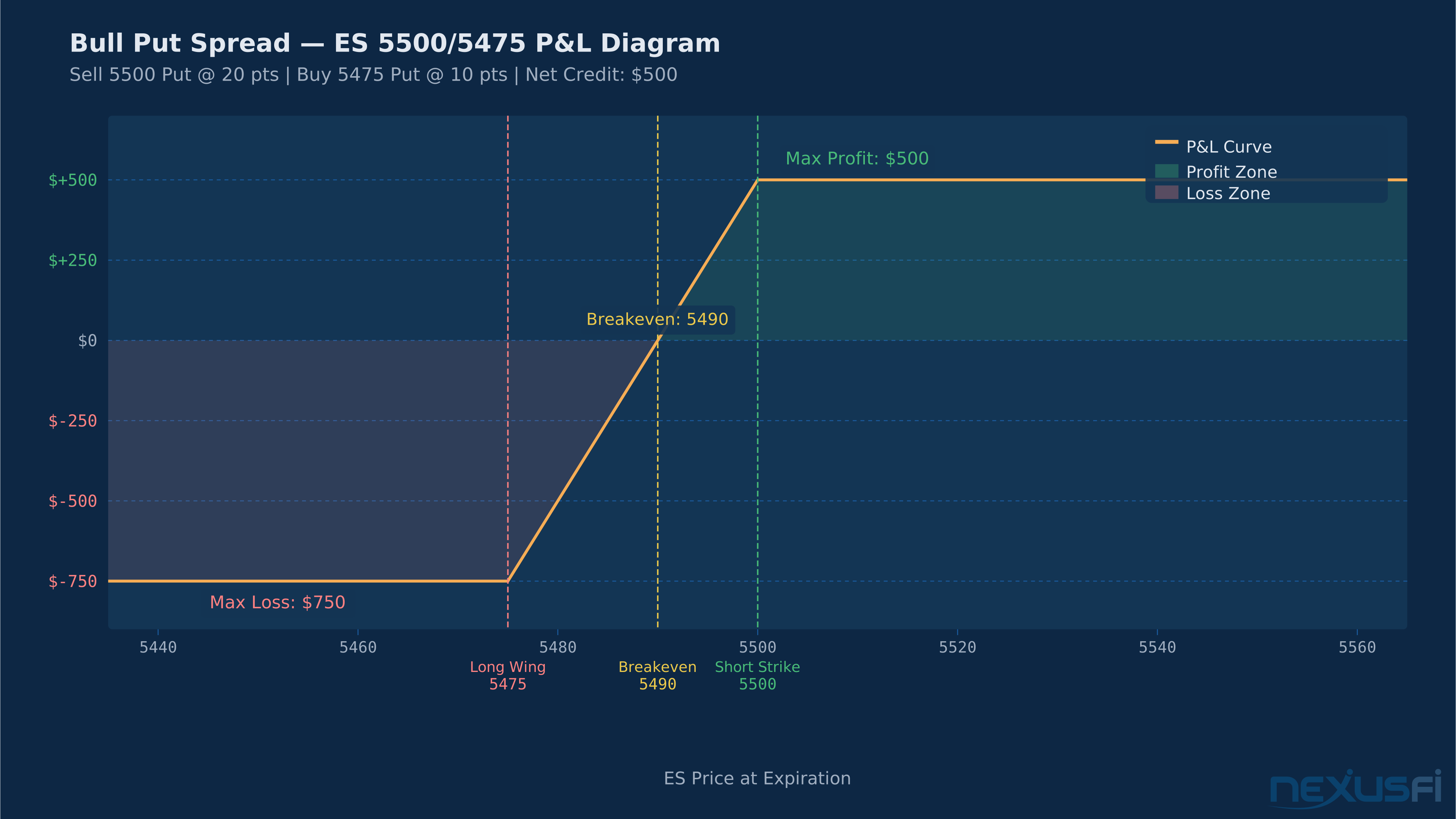
Vertical spreads are the most underused tool in the futures options trader's arsenal. You've got traders who go straight from "how do options work" to sellin...
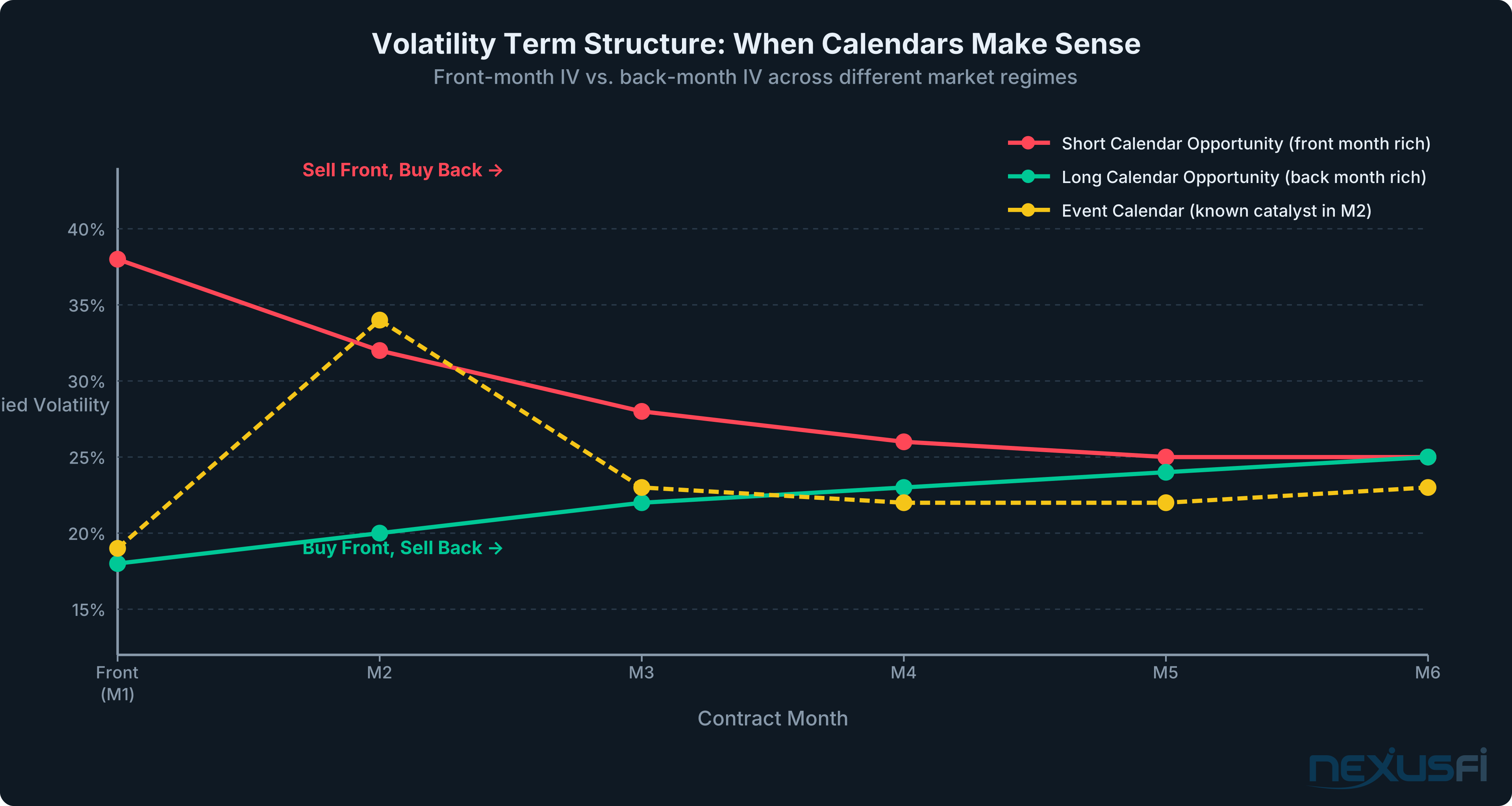
A calendar spread on futures options -- also called a time spread or horizontal spread -- is a two-legged position where you sell a near-term option and buy ...
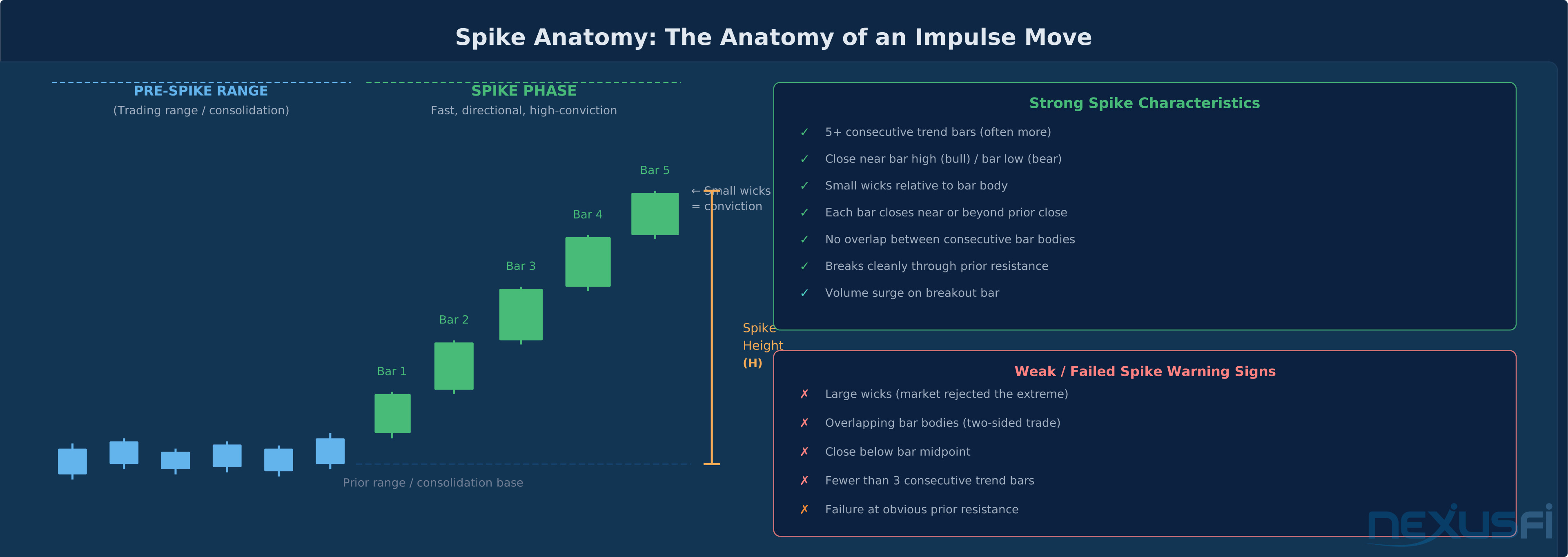
Price action trading rests on a deceptively simple observation: strong moves almost never happen in a single, uninterrupted thrust. They unfold in phases. Al...
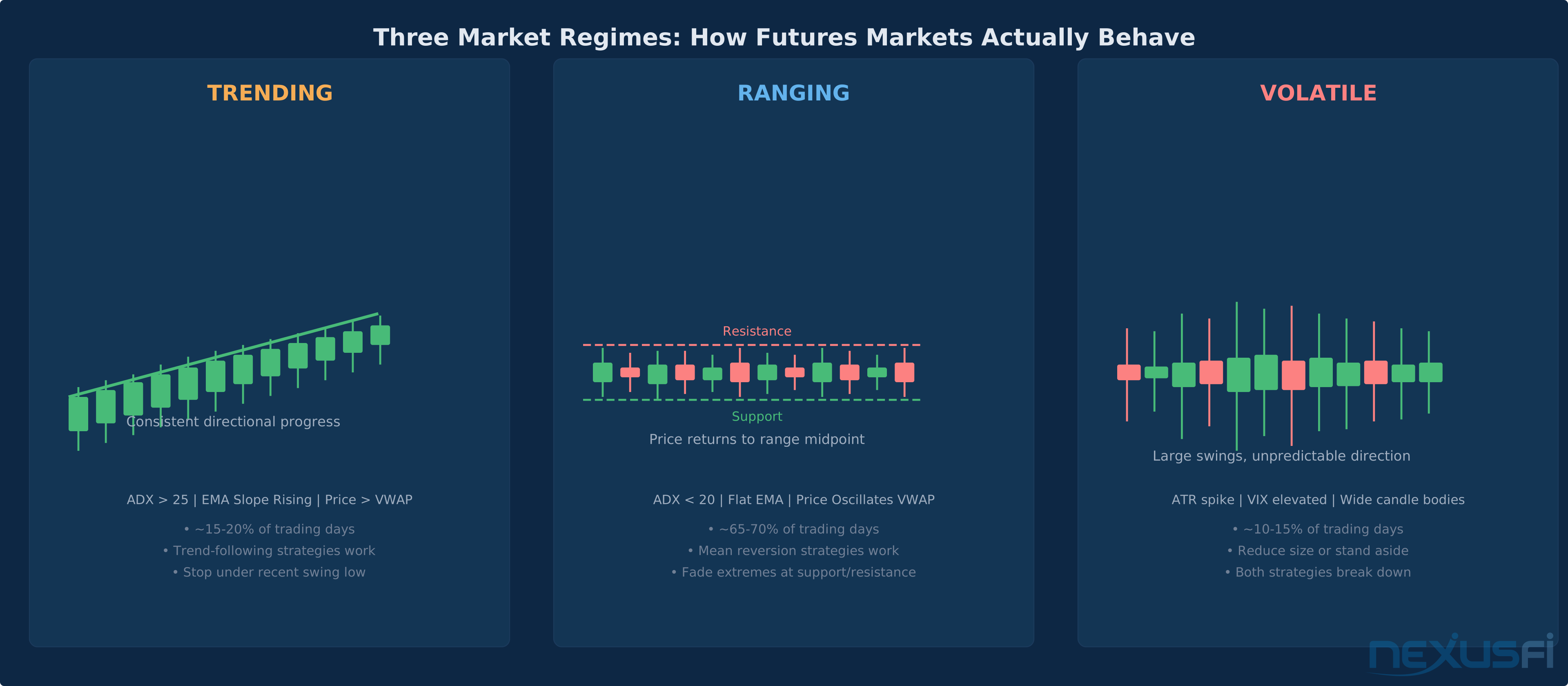
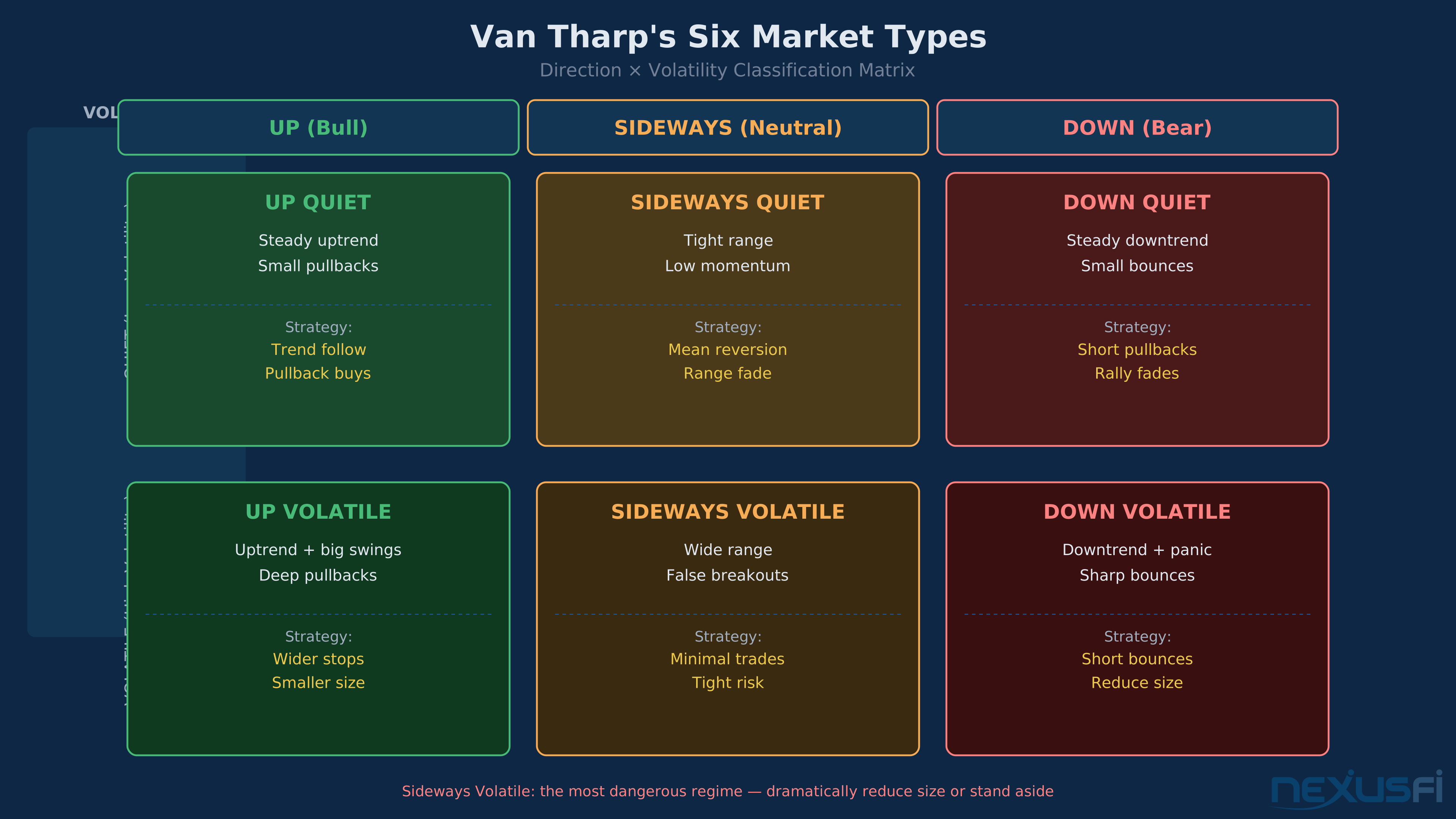
Market type classification is the practice of identifying which of six distinct market environments currently exists -- and then adapting your strategy, posi...
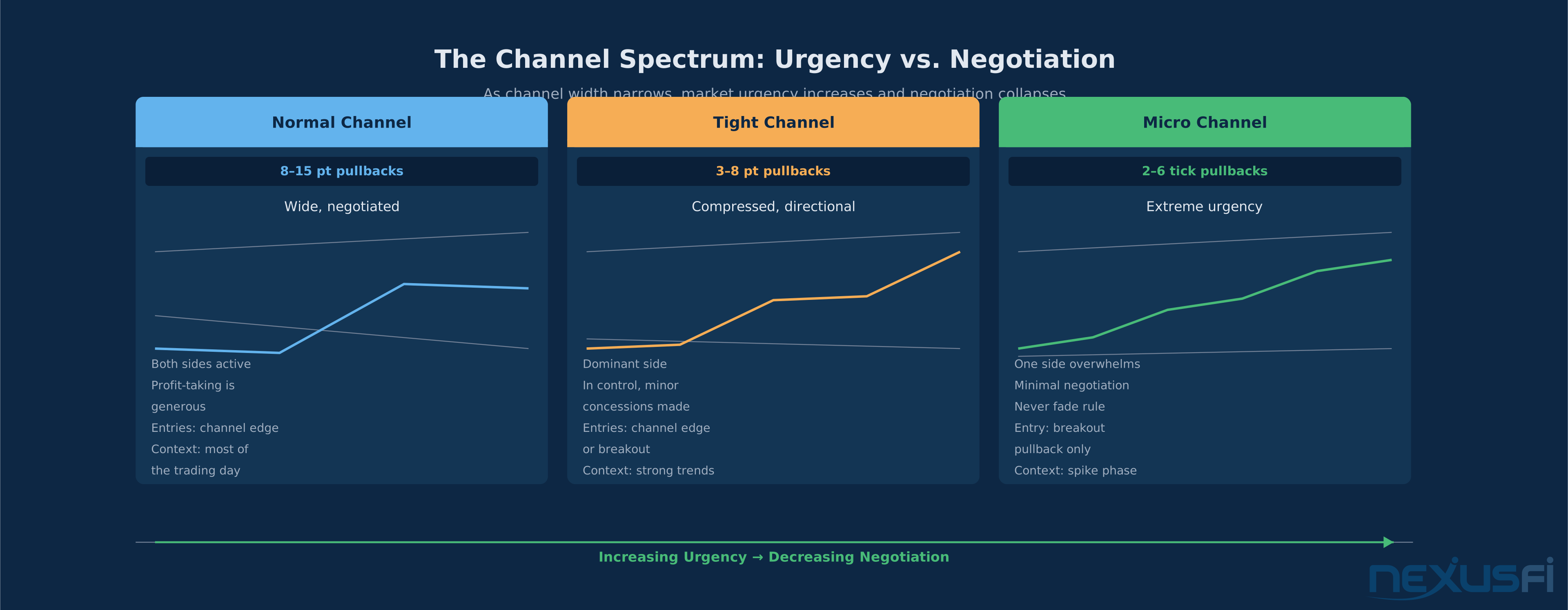
Micro Channels and Tight Channels in Day Trading: Al Brooks' Framework for Trading Extreme Urgency If the markets have a red-alert mode, micro channels are i...
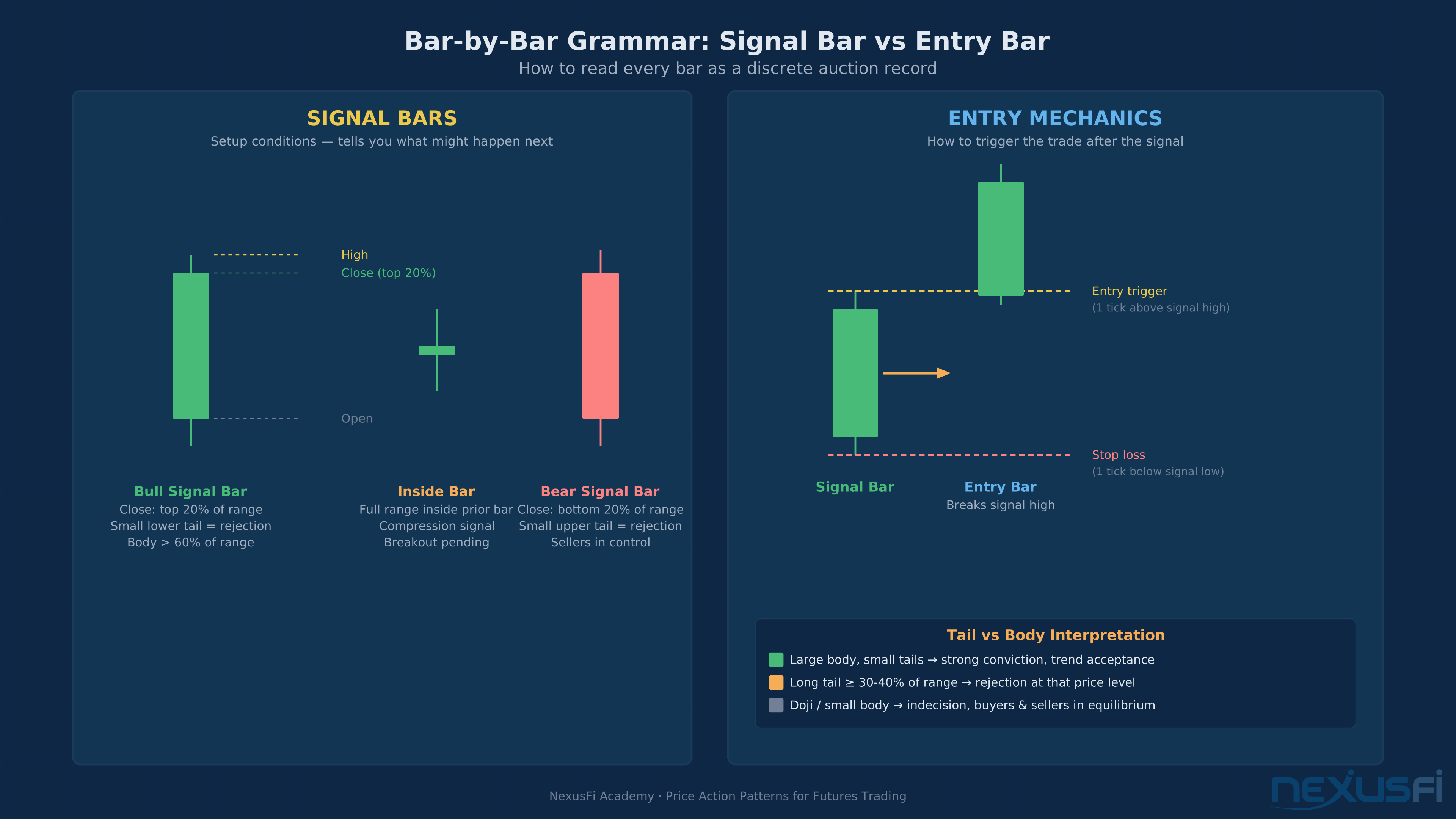
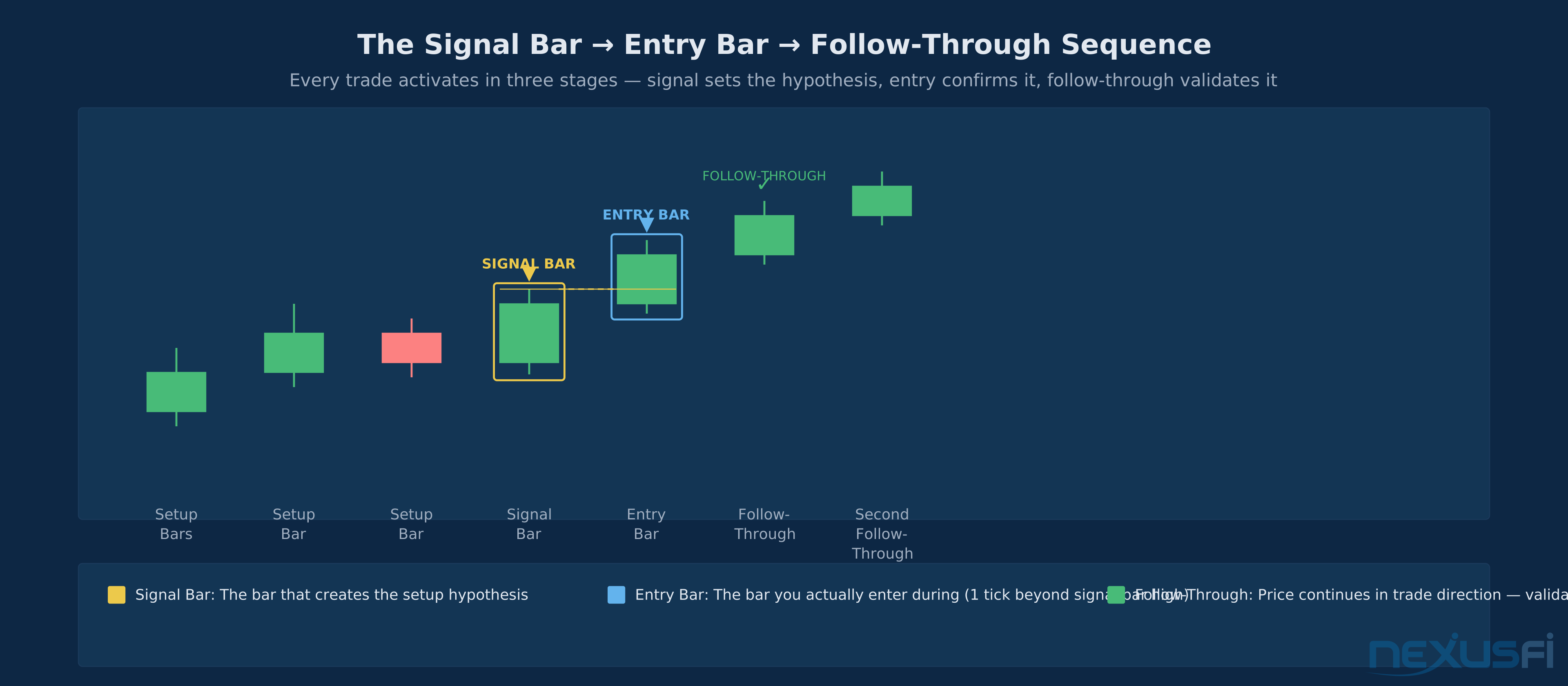
Signal bars and entry bars are the two most important individual bars in Al Brooks' price action trading system. Understanding the distinction between them -...
Most trend trades fail at the same place: the third push. Price has been grinding higher for two clean legs, you're long and feeling good, and then the marke...
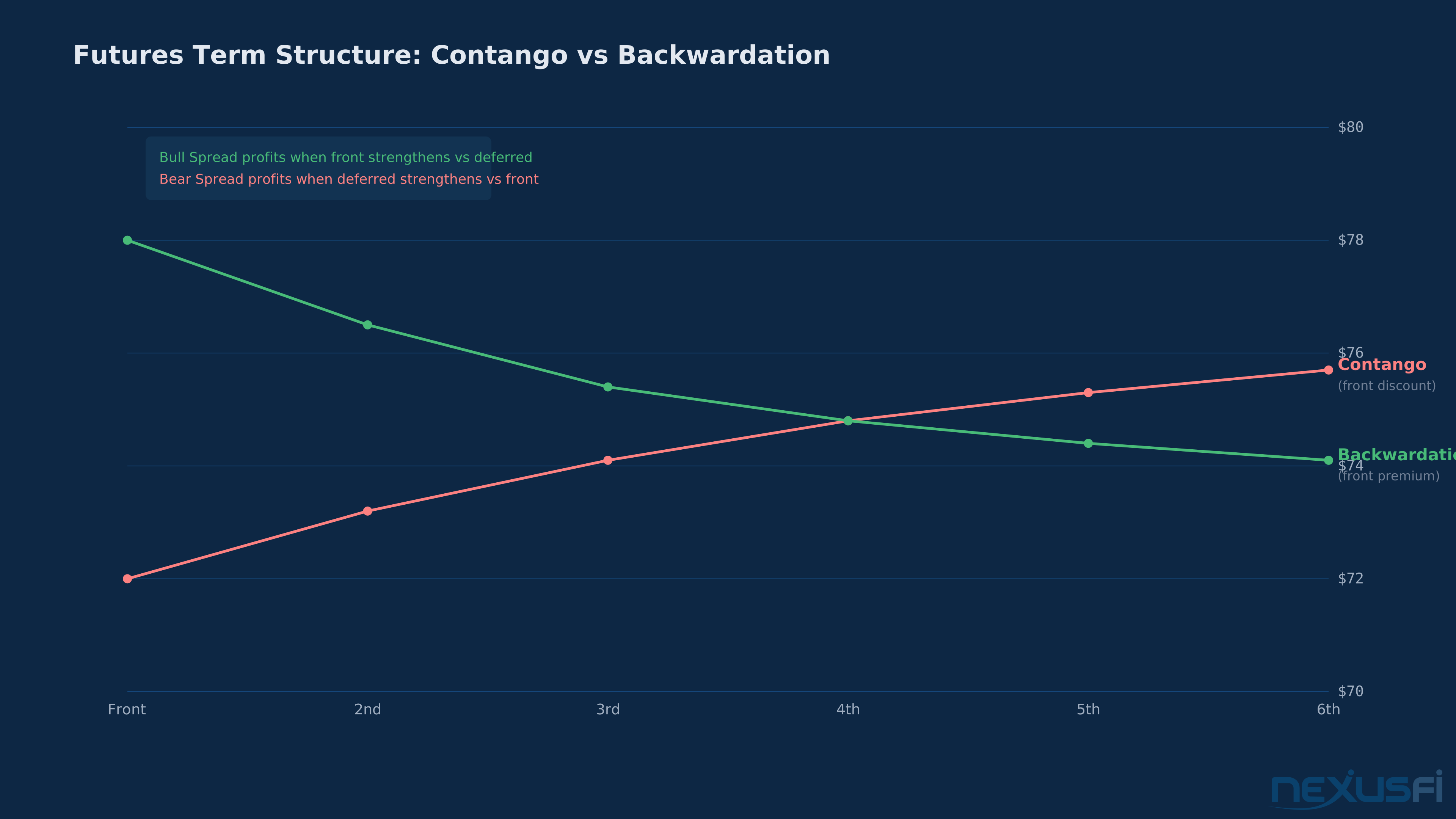
Spread trading is relative value trading. You're not betting on where crude oil goes -- you're betting on the relationship between two contracts. Long one le...
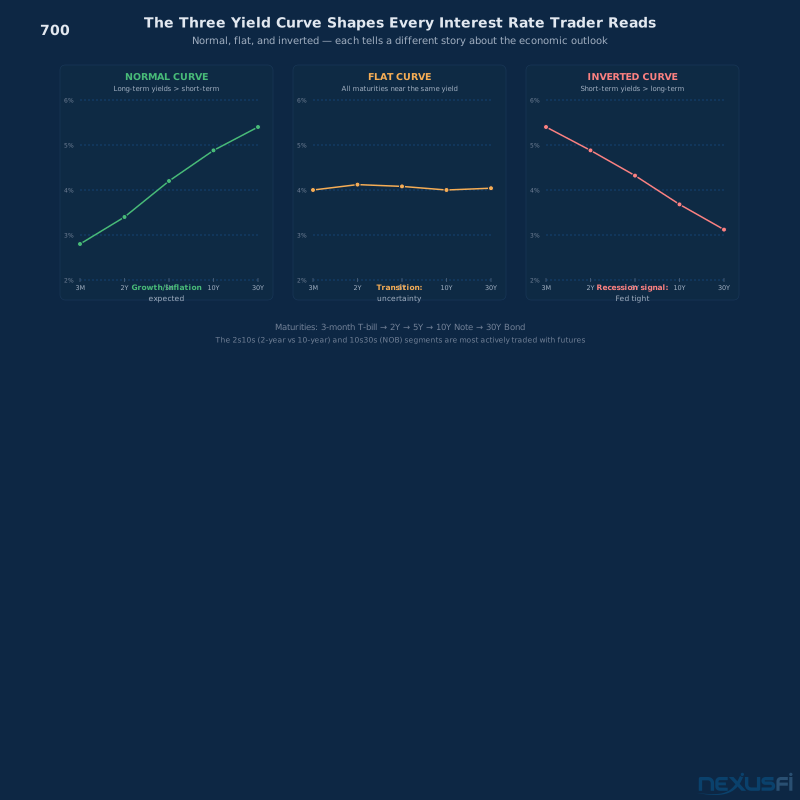
The yield curve is the most important macro indicator in futures trading, and most traders barely look at it. That's backwards. If you trade ES, NQ, ZB, GC -...
Crude oil is not ES. Traders who arrive on CL from equity index futures get humbled fast, and usually for the same reason: they apply the same setups without...
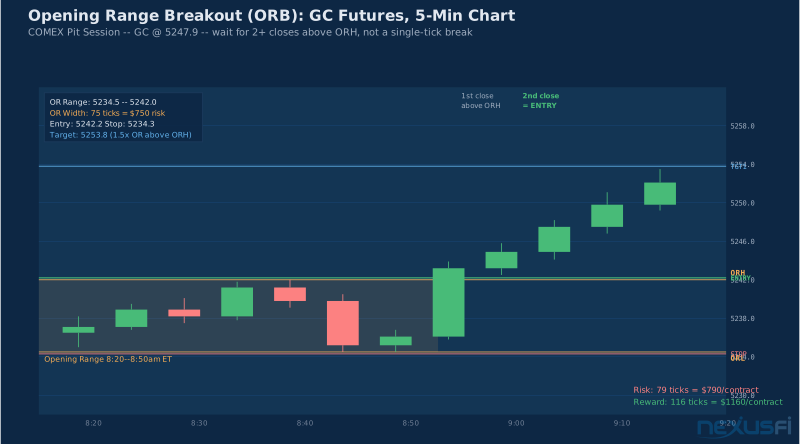
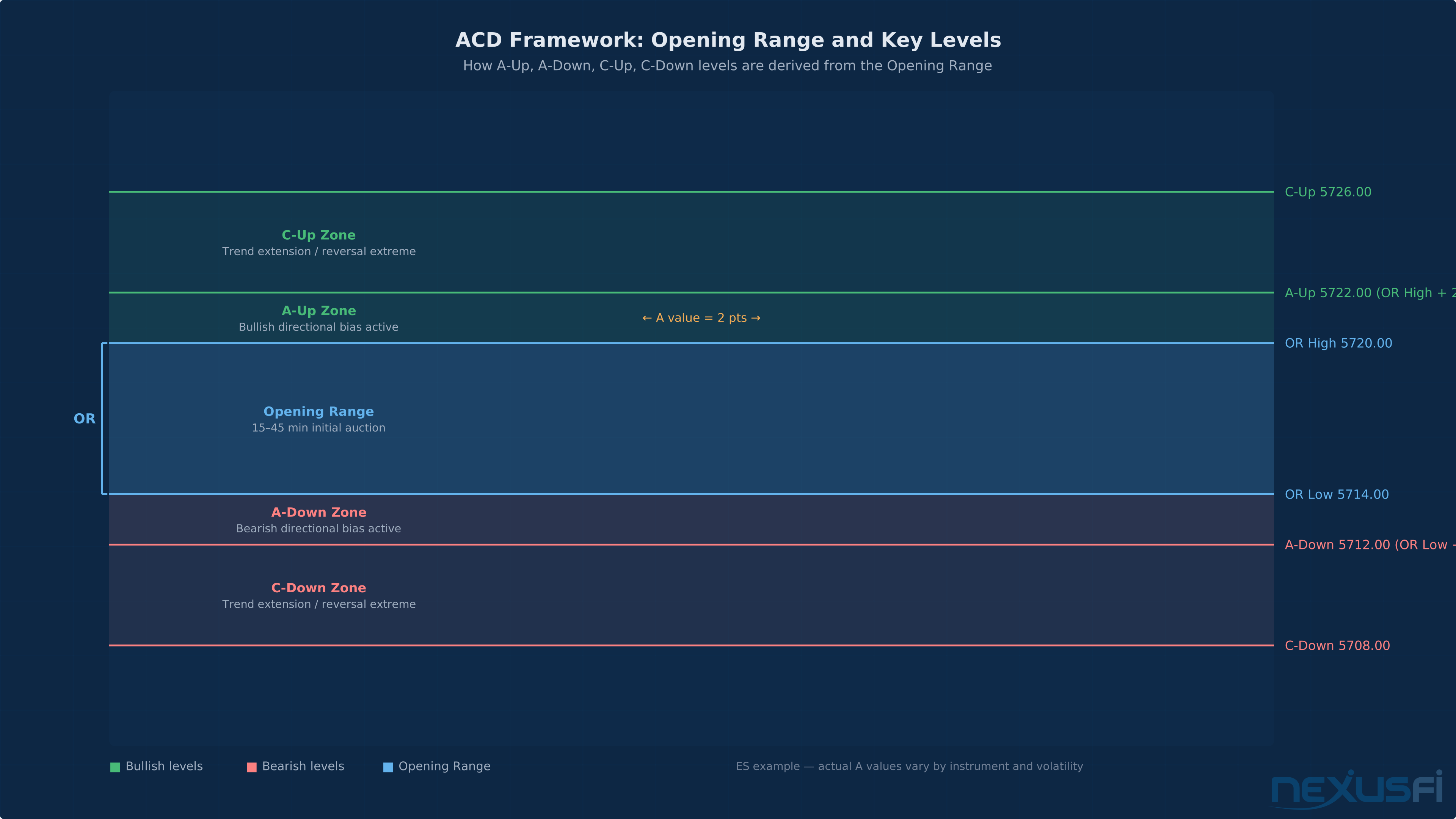
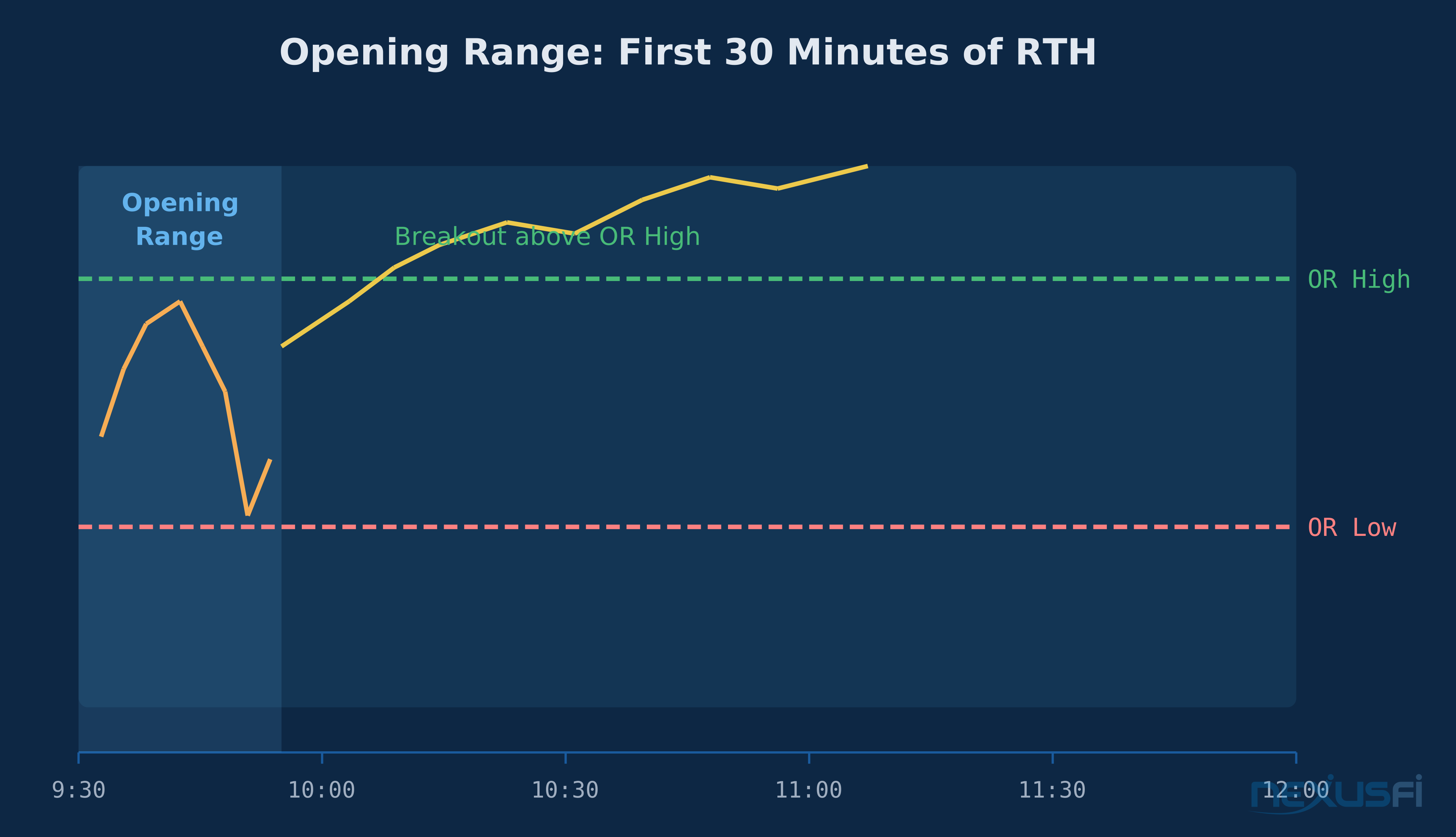
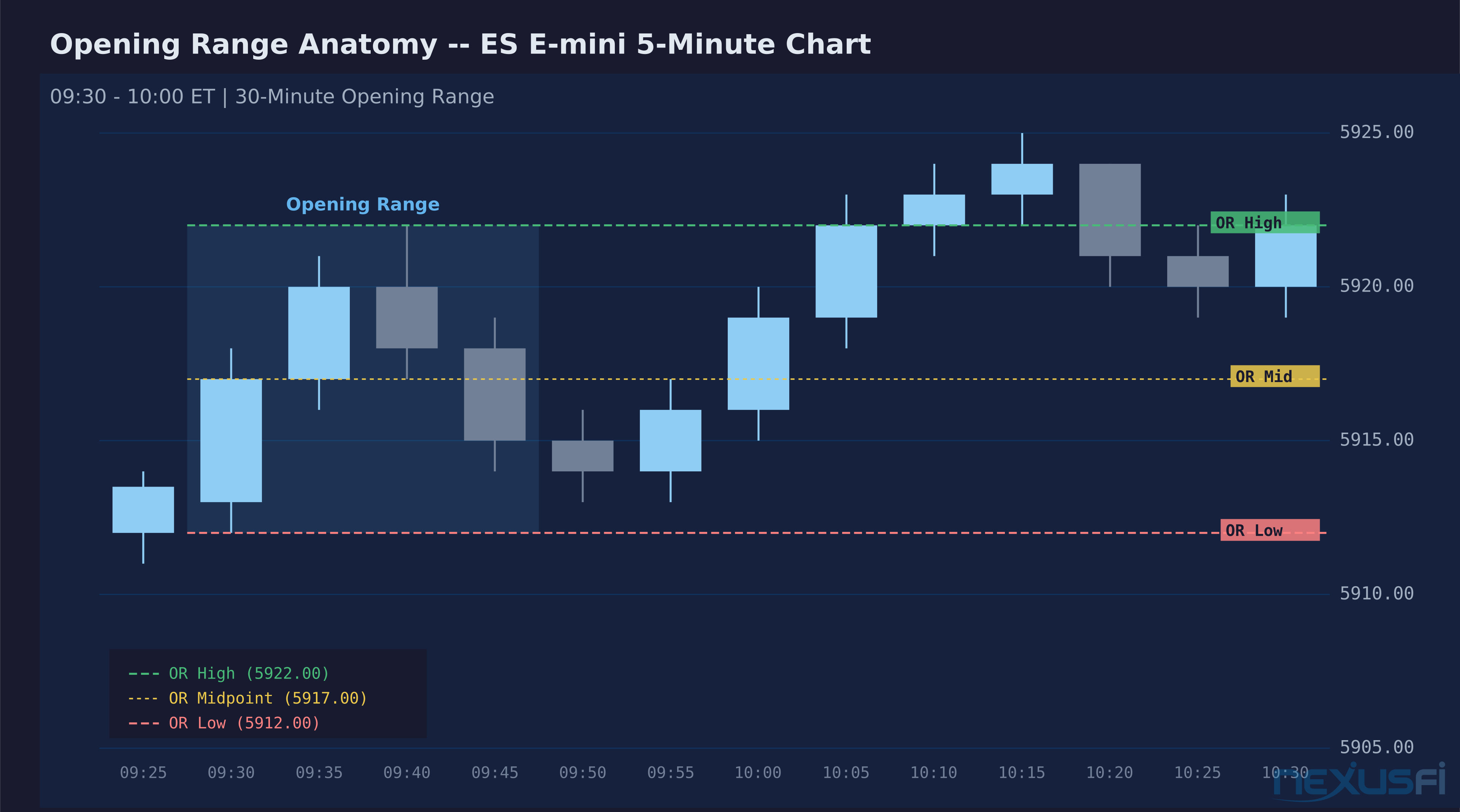
Overview The opening range breakout is one of the oldest and most statistically tested day trading strategies in futures markets. The concept is straightforw...
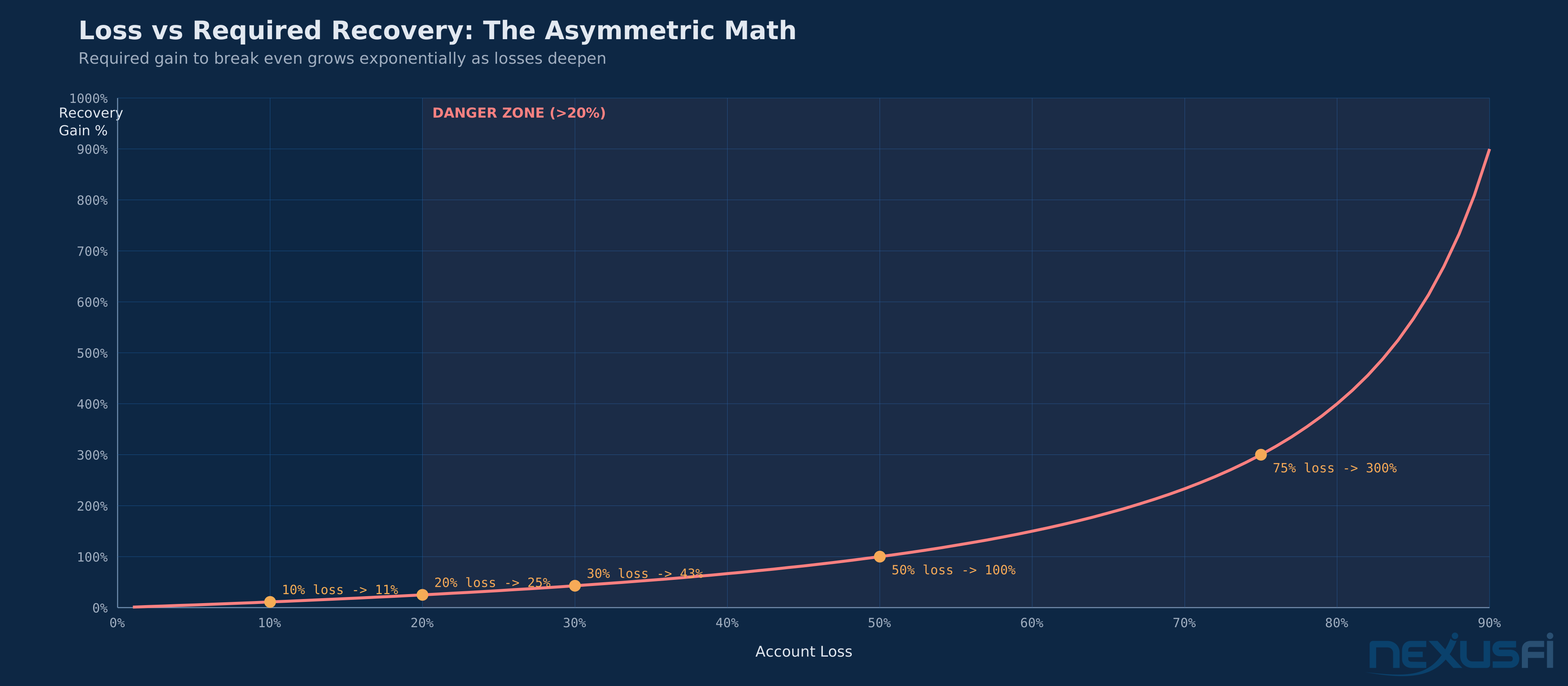
You lost 20% of your account last month. That stings, but it's recoverable -- just make 20% back, right? Wrong. You need 25%. Lose 30%, and you need 42.9% to...
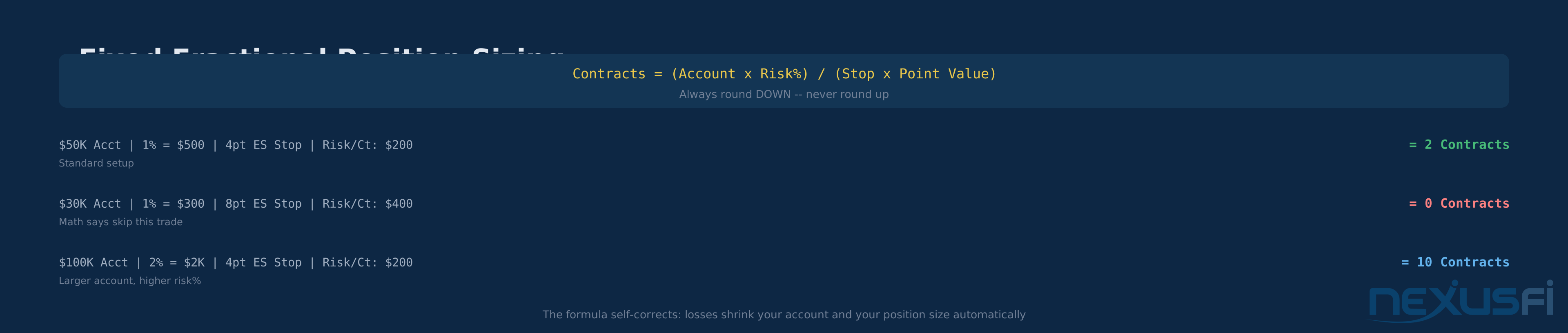
Position sizing is the single most powerful lever in your trading operation. Get entries right but sizing wrong and you'll still blow up. Get entries mediocr...
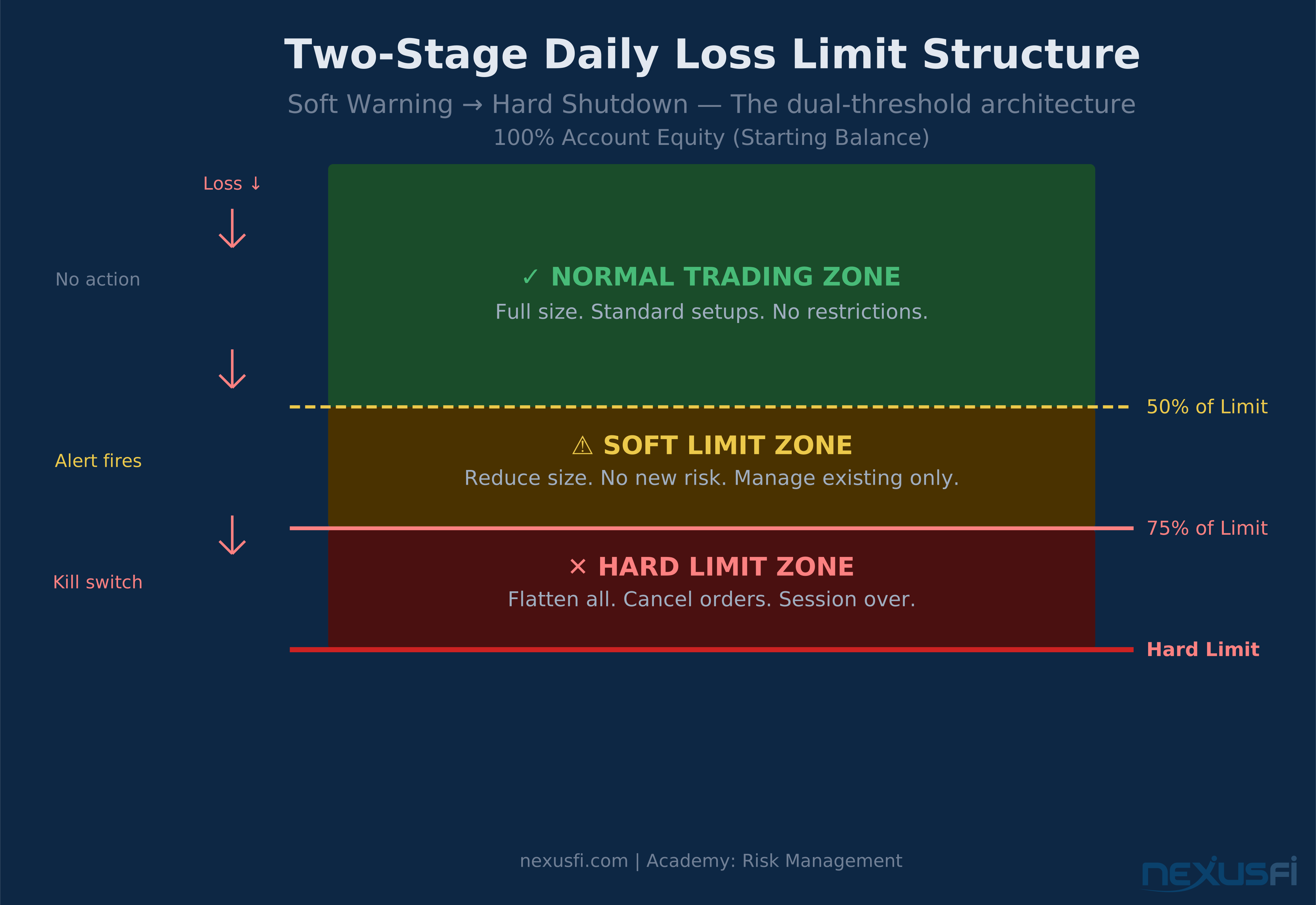
Daily Loss Limits and Account Preservation Protocols for Futures Trading The Circuit Breaker Between You and a Blown Account Every futures trader eventually ...
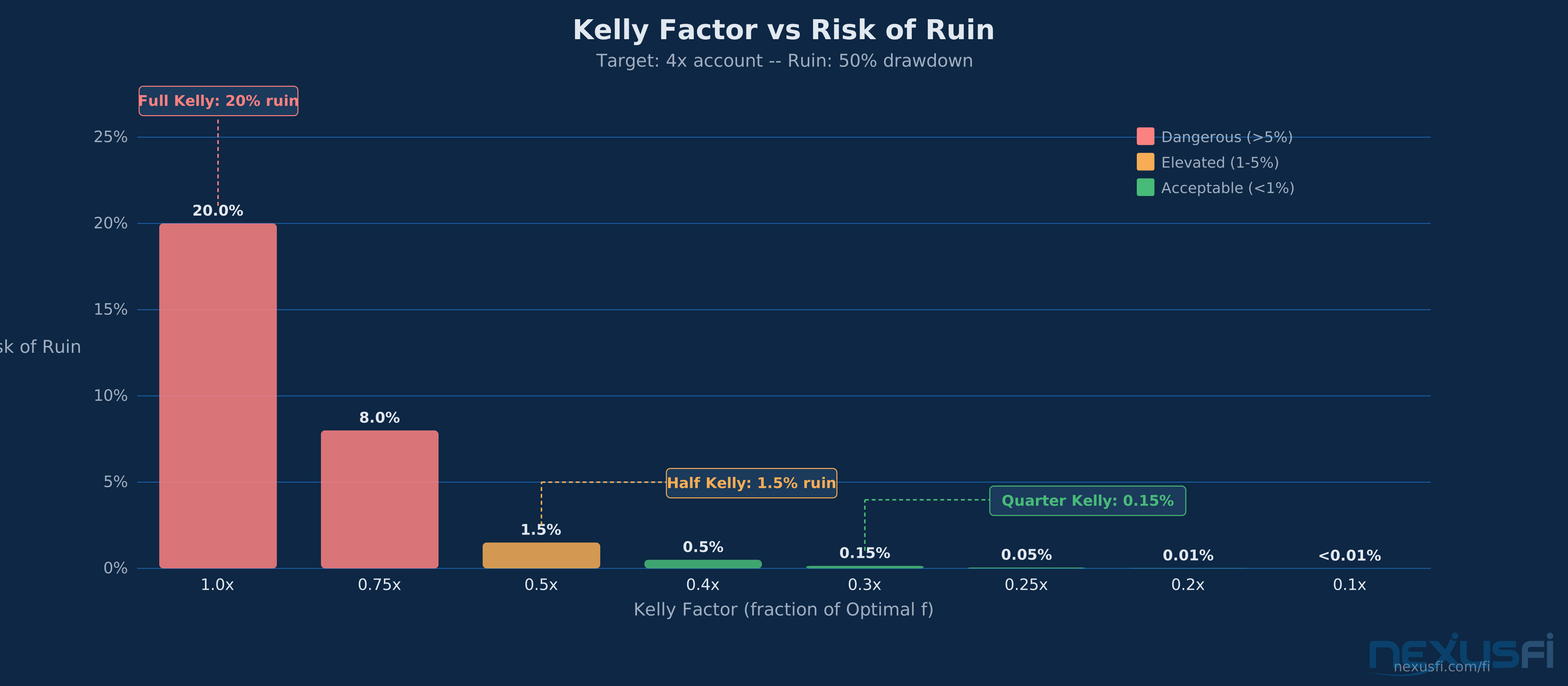
Risk of ruin is the probability that your account hits a predefined loss threshold before reaching your target. Not "the chance you lose money" -- every trad...
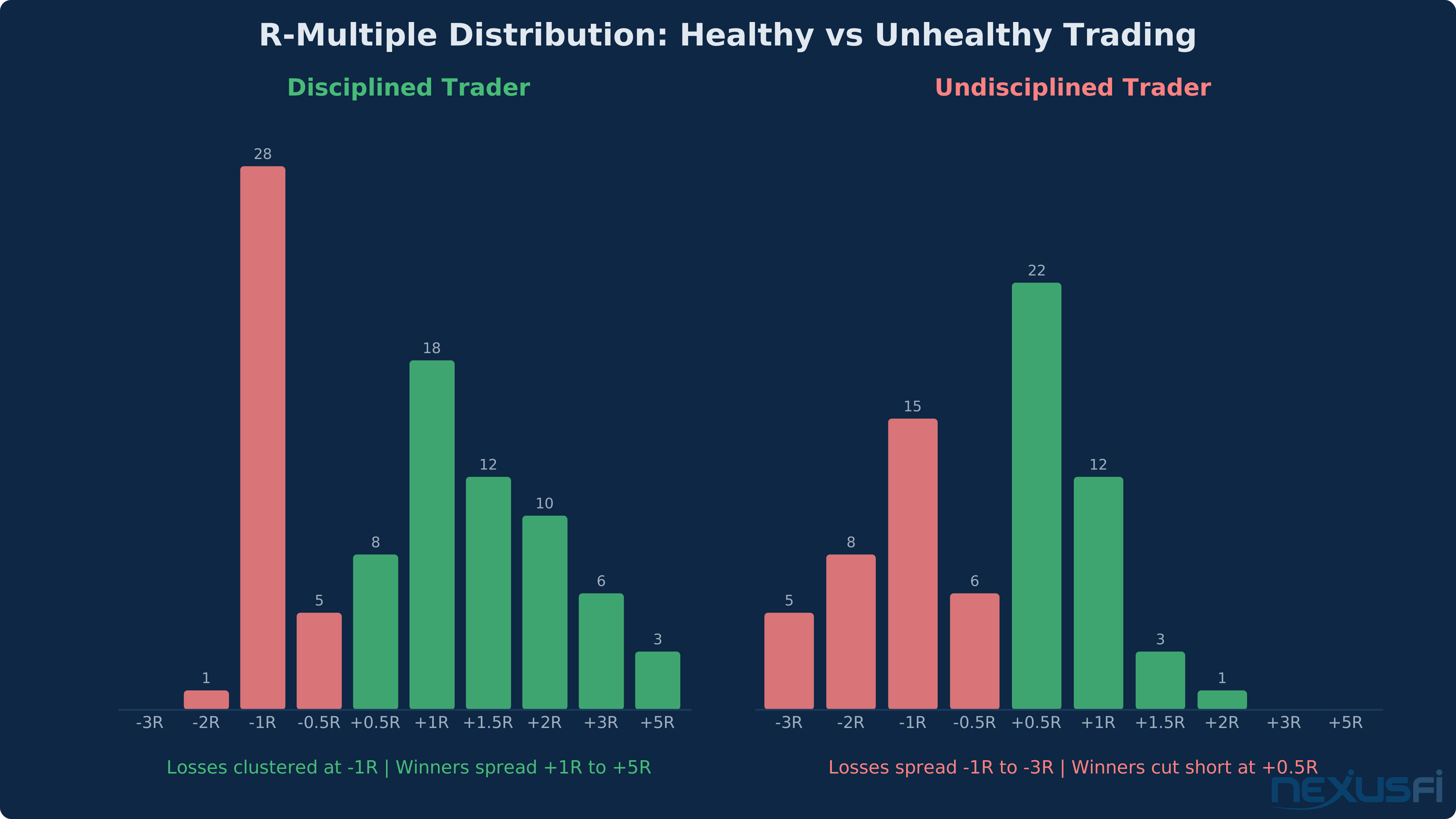
R-multiples express every trade's outcome as a multiple of the amount you risked. Not in dollars, not in ticks, not in points -- in units of risk. A +2R trad...
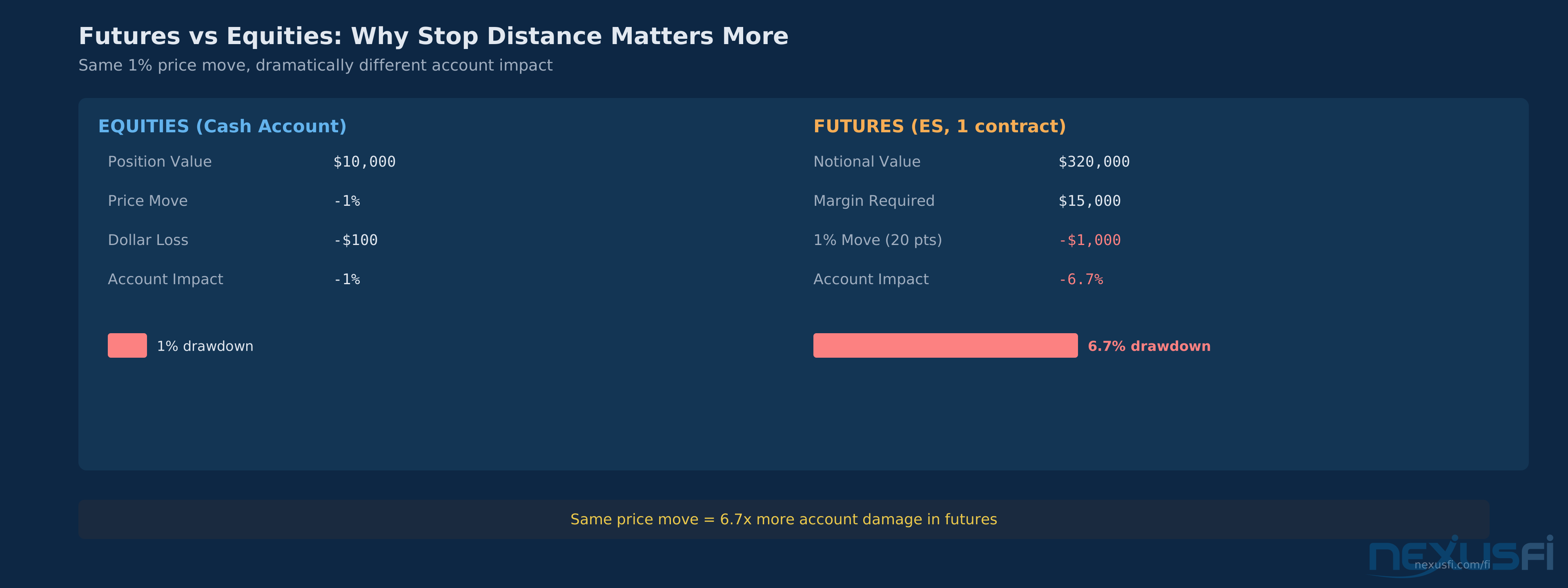
A stop loss isn't a safety net. It's the structural answer to one question: where is this trade wrong? Every stop placement decision in futures flows from co...
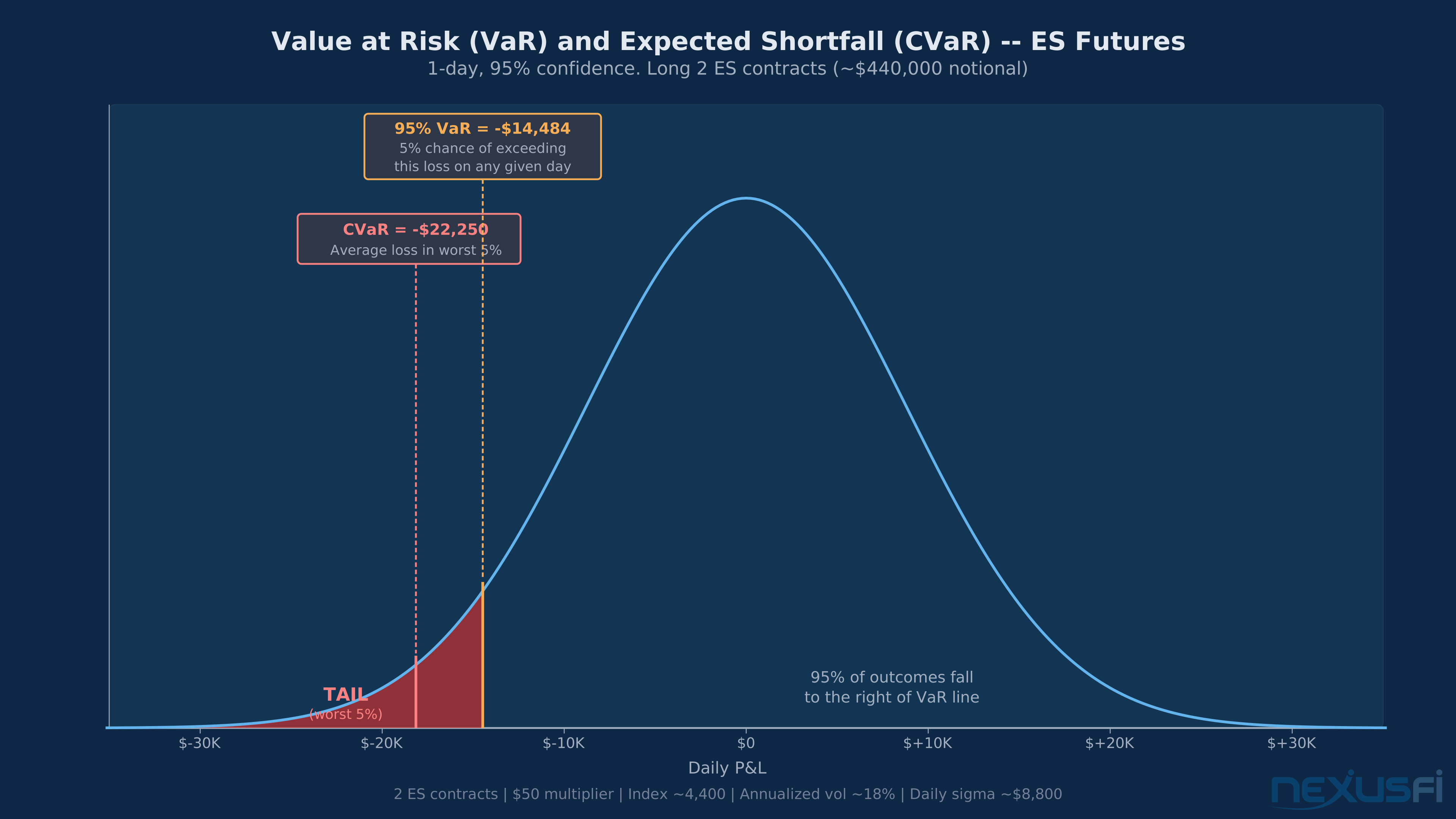
Before diving into VaR mechanics, you should understand the foundation concepts: - Margin Requirements and Leverage in Futures Trading -- how notional exposu...
Every futures trader has a number tattooed on their brain -- the maximum daily loss before they stop trading, the percentage risk per trade, the margin buffe...
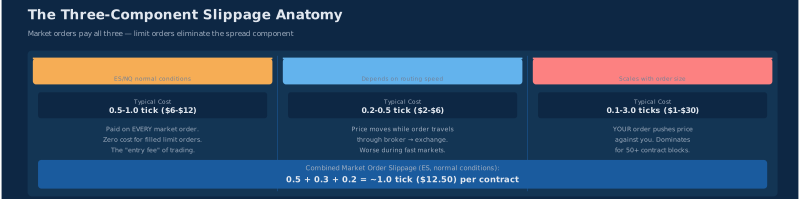
Overview Every time you send a market order, three invisible taxes hit your account simultaneously. The bid-ask spread costs you the moment the order leaves ...
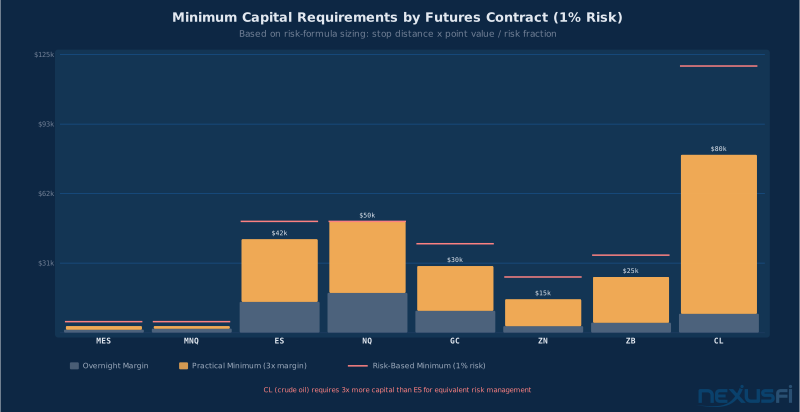
Here's the question every new futures trader asks, and almost nobody answers correctly: how much money do you actually need? The broker says $500 for day tra...
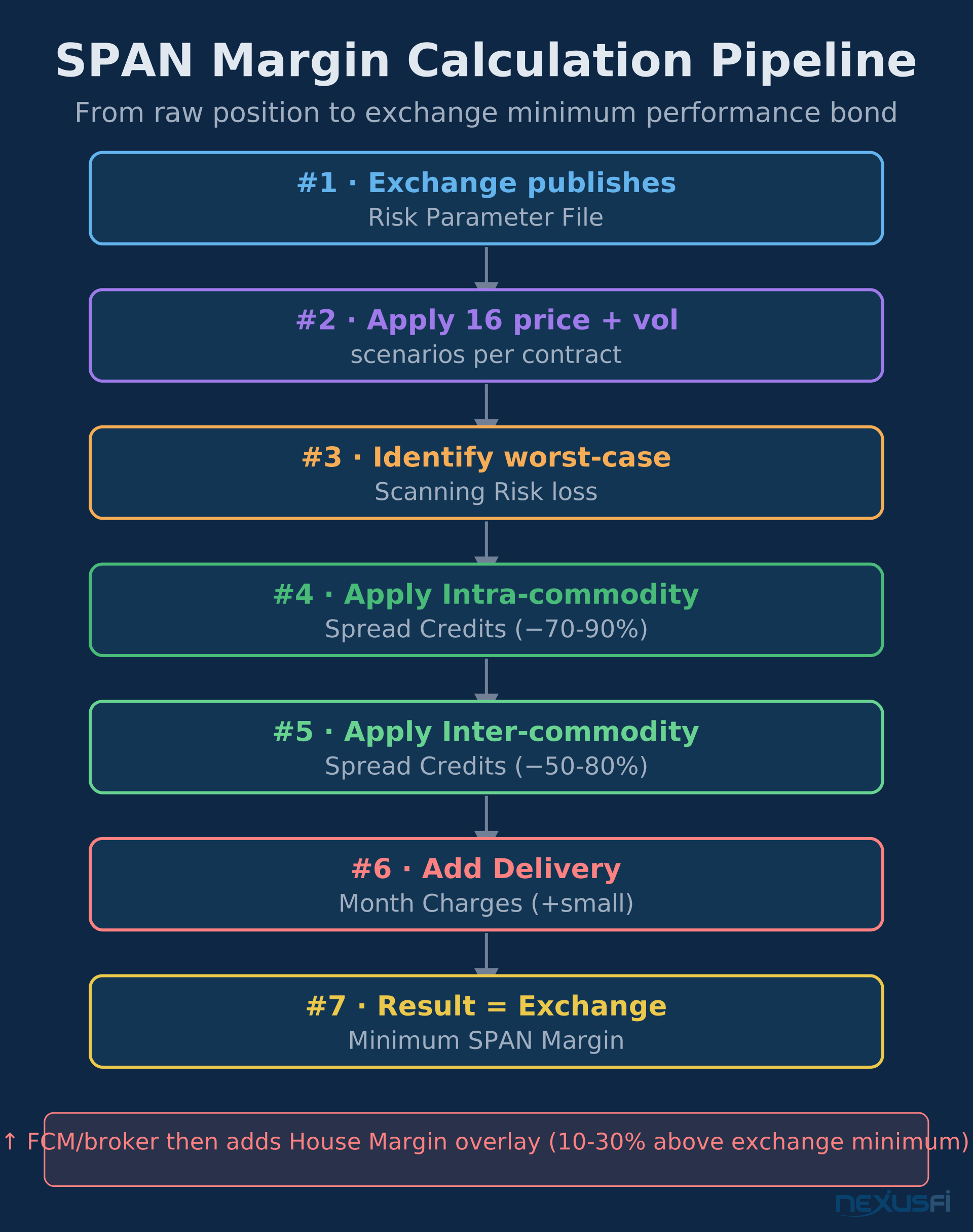
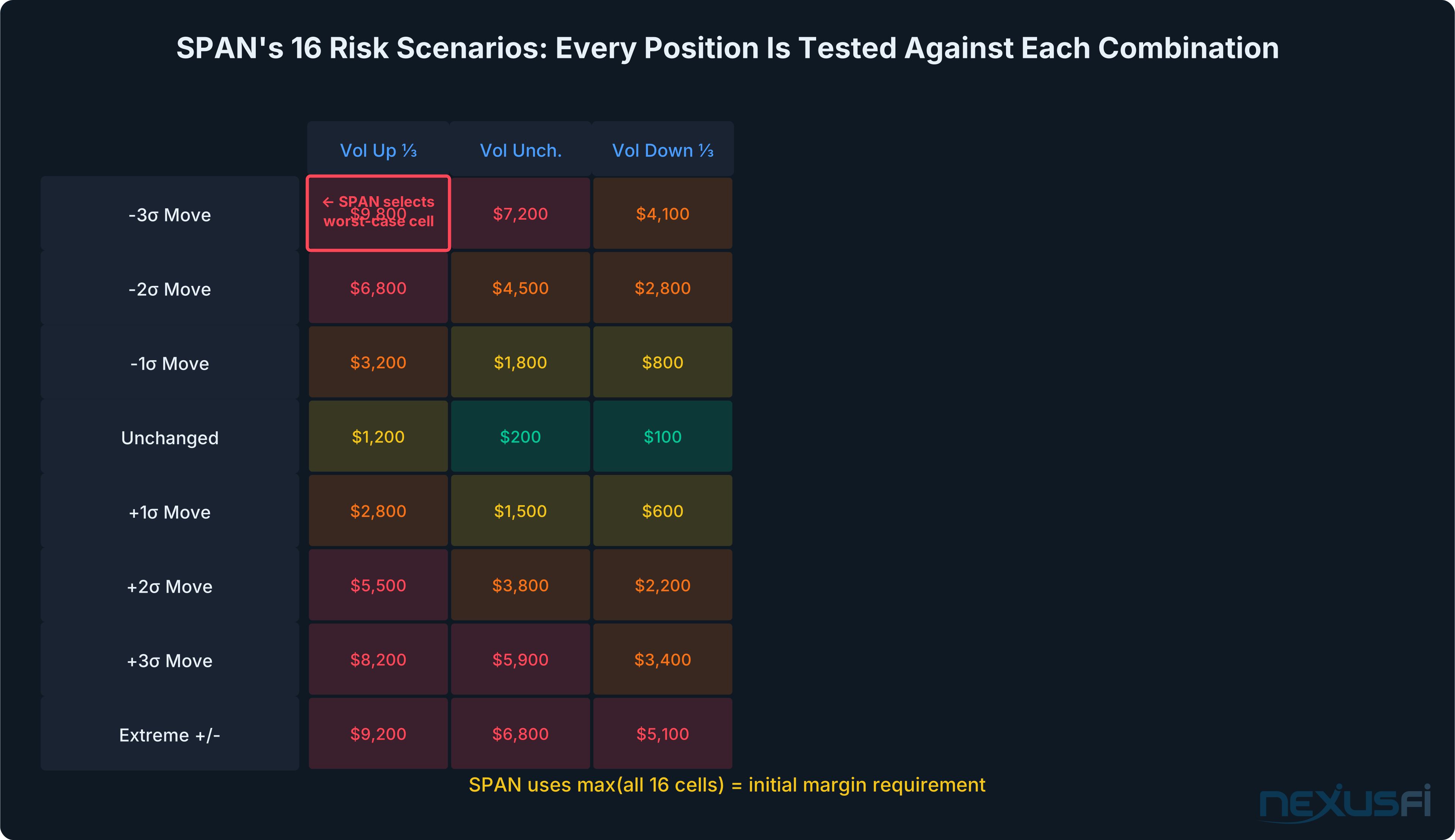
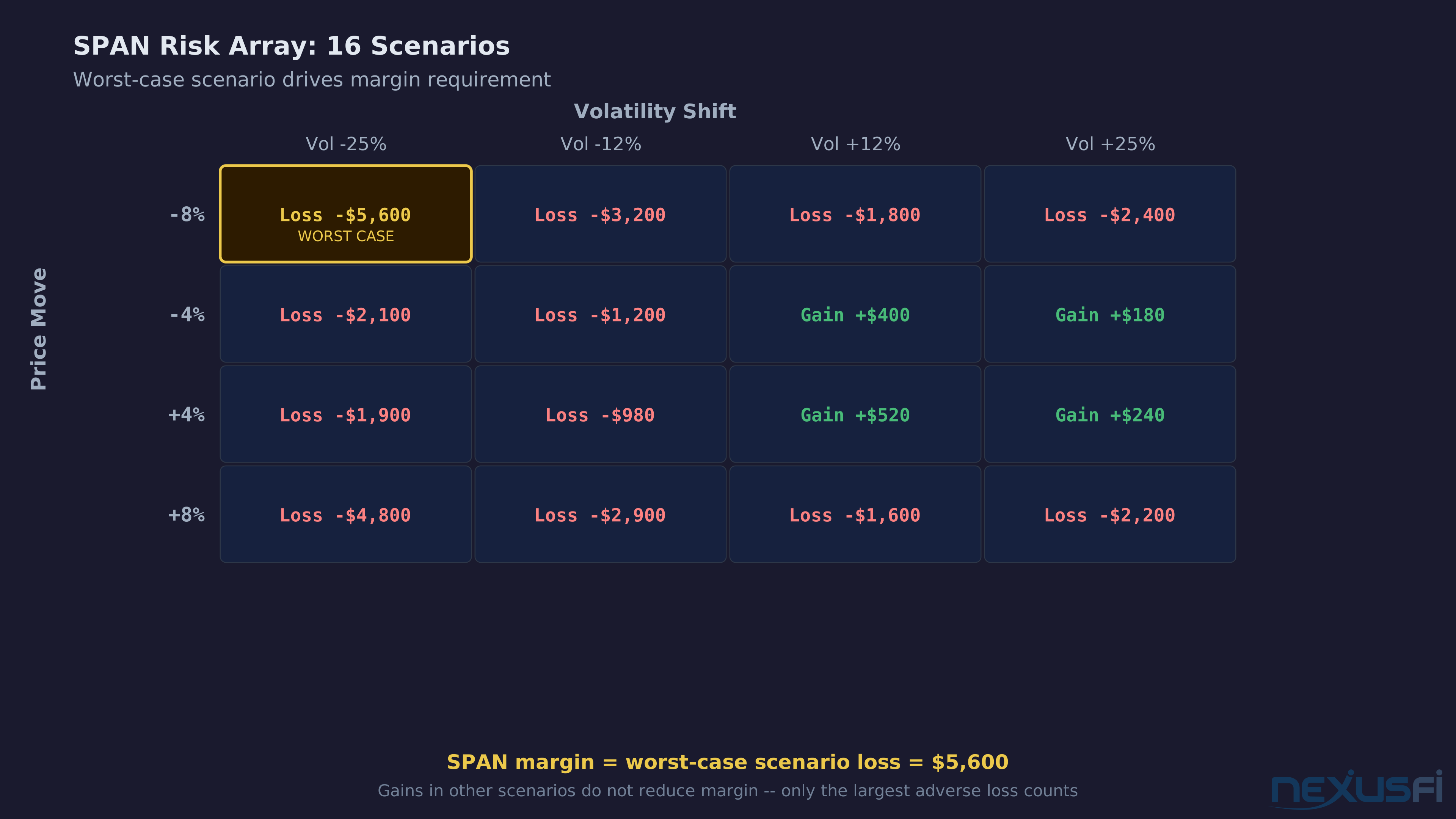
SPAN -- Standard Portfolio Analysis of Risk -- is the margin methodology used by CME Group and most major futures exchanges to determine how much capital a t...
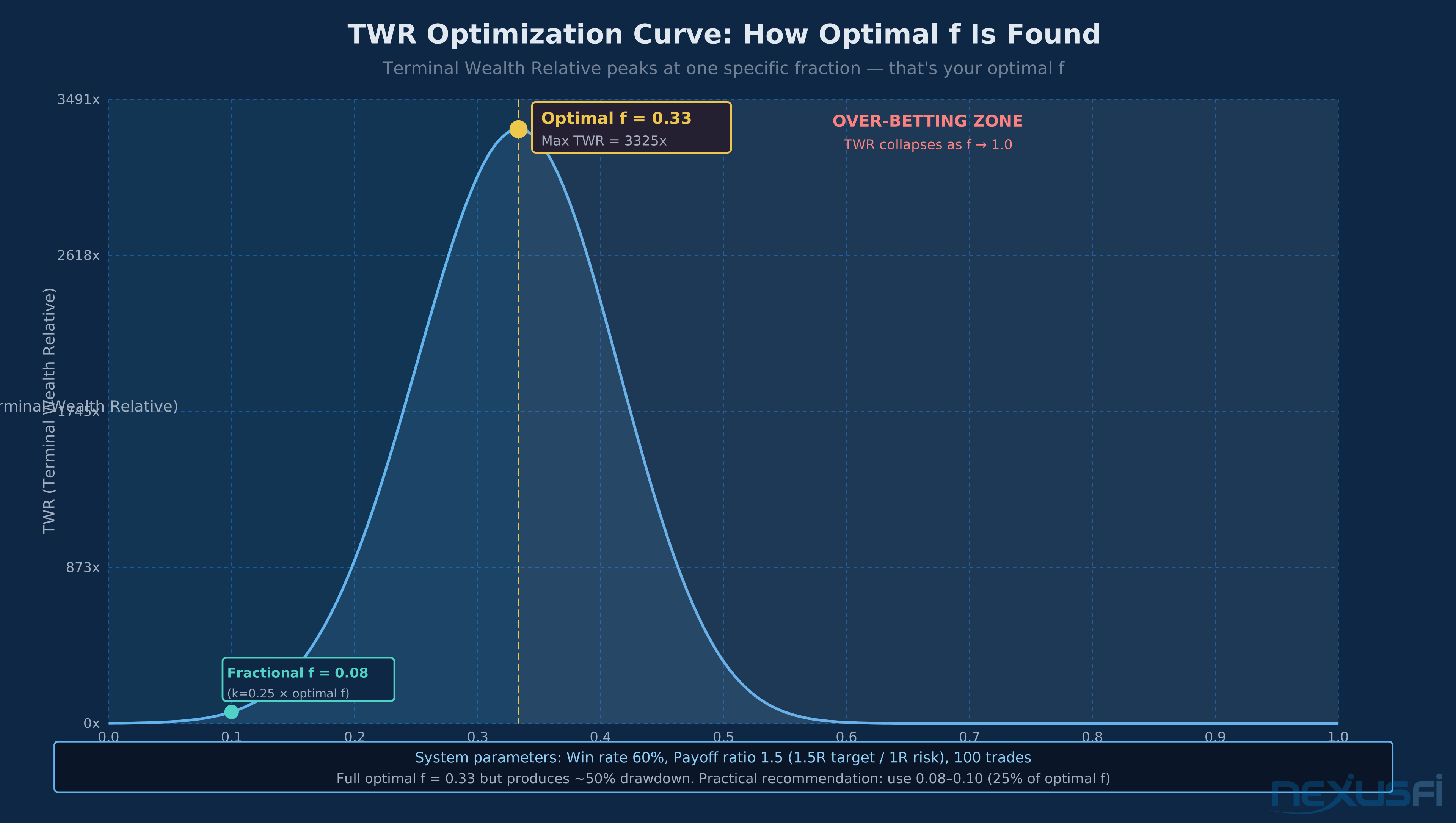
Ralph Vince published The Mathematics of Money Management in 1990 and introduced a concept that has haunted futures traders ever since: Optimal f. The idea i...
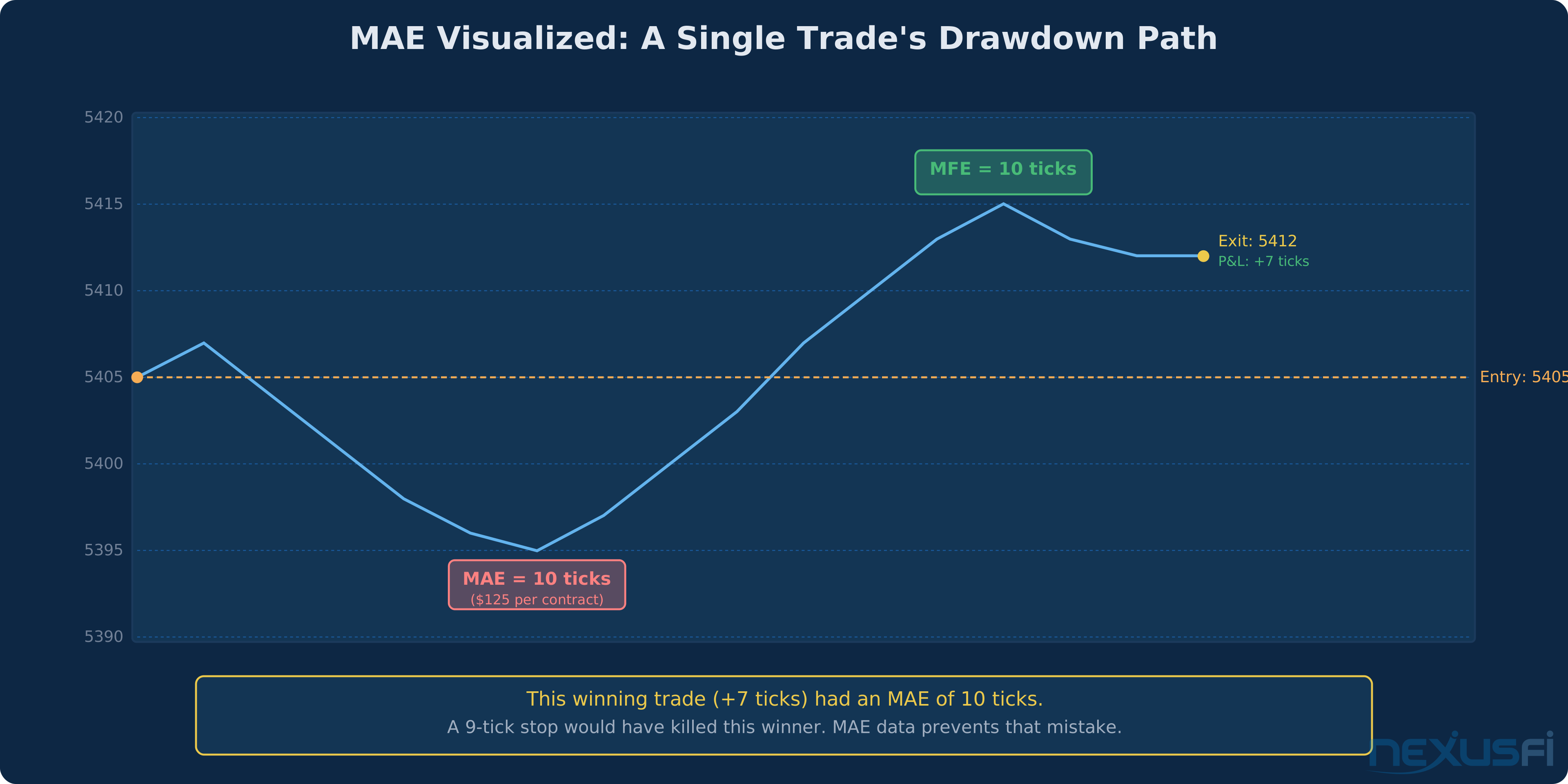
Every trader picks a stop loss. Most pick it wrong. They grab a round number, eyeball a support level, or use whatever the last YouTube video suggested. Maxi...
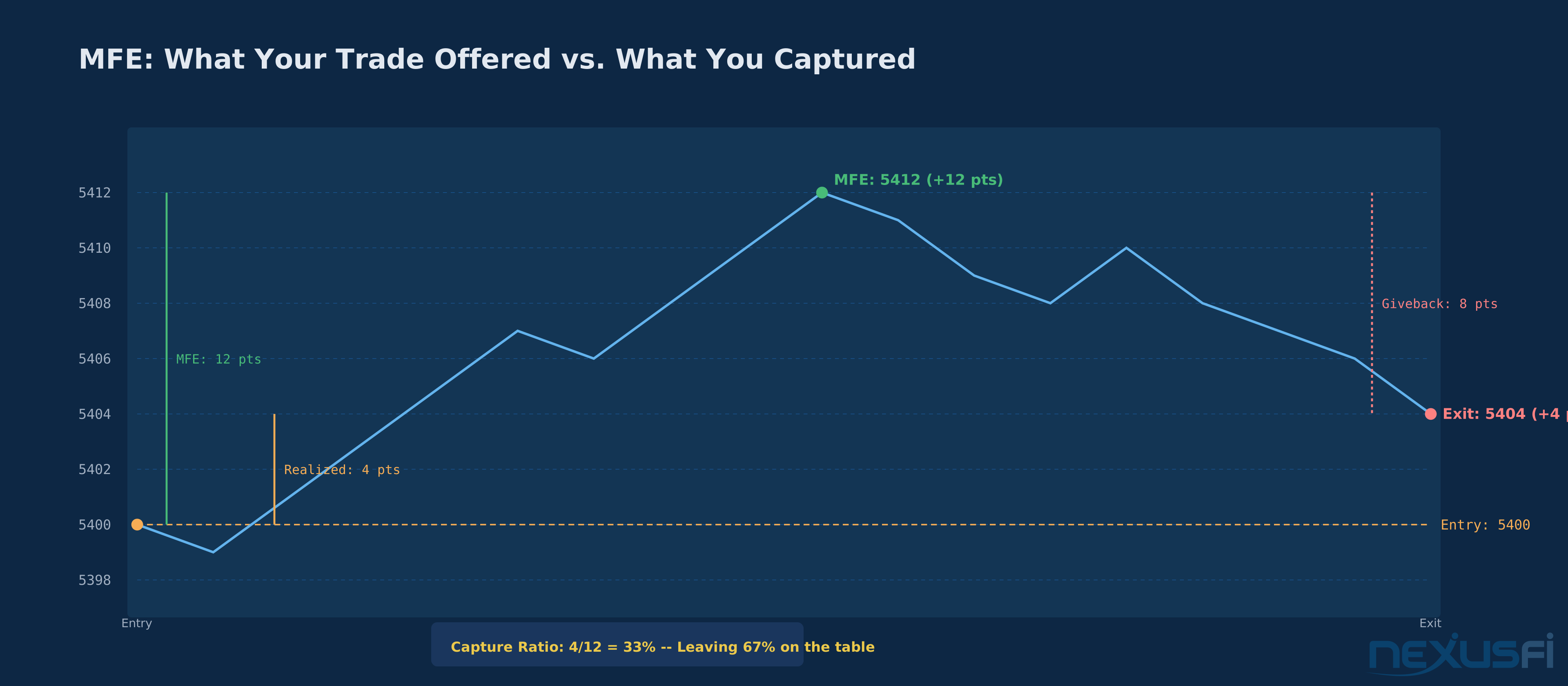
You entered a trade. It moved 12 ticks in your favor. You exited with 4. That gap -- 12 ticks of available profit versus 4 ticks captured -- is the informati...
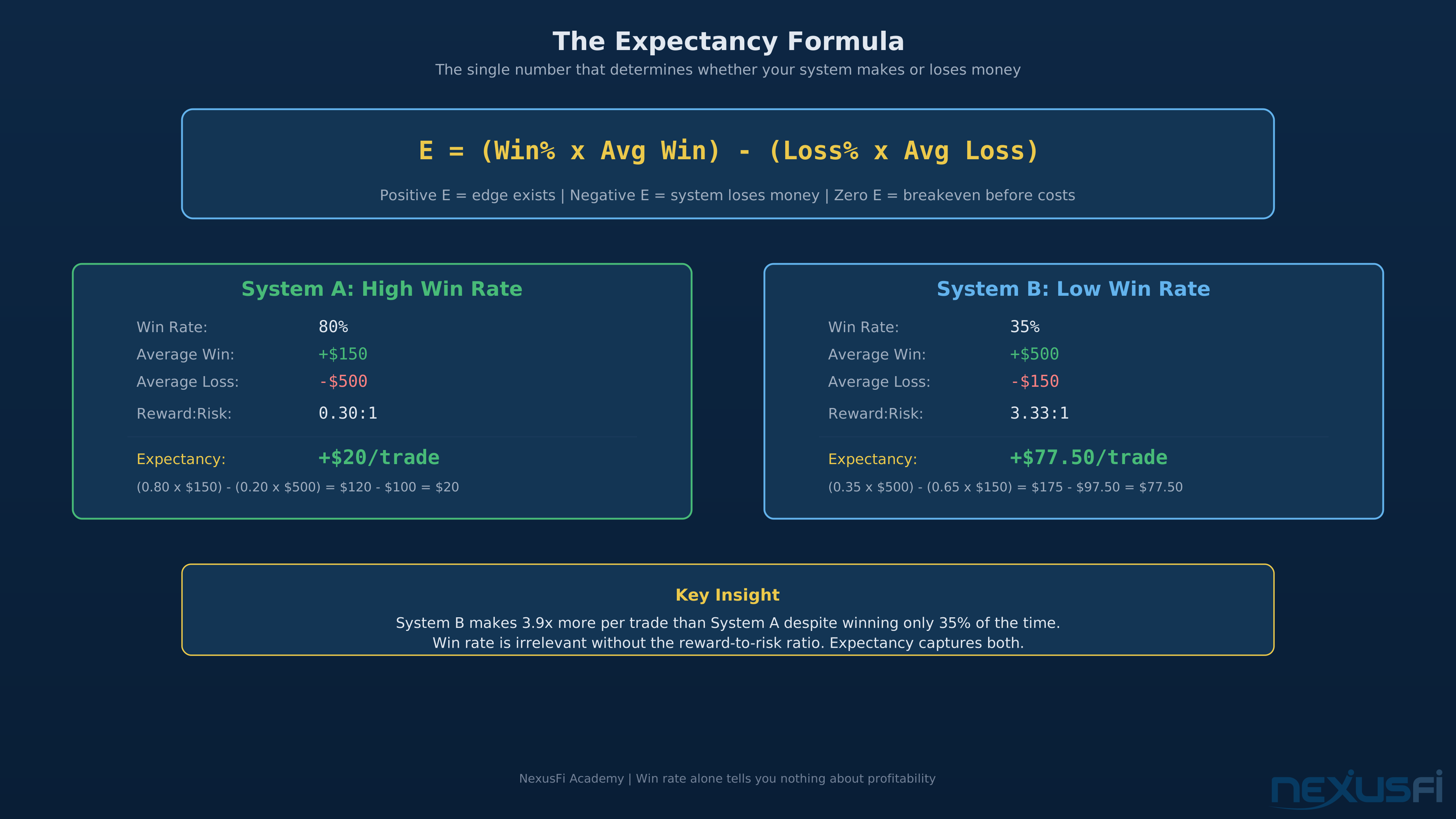
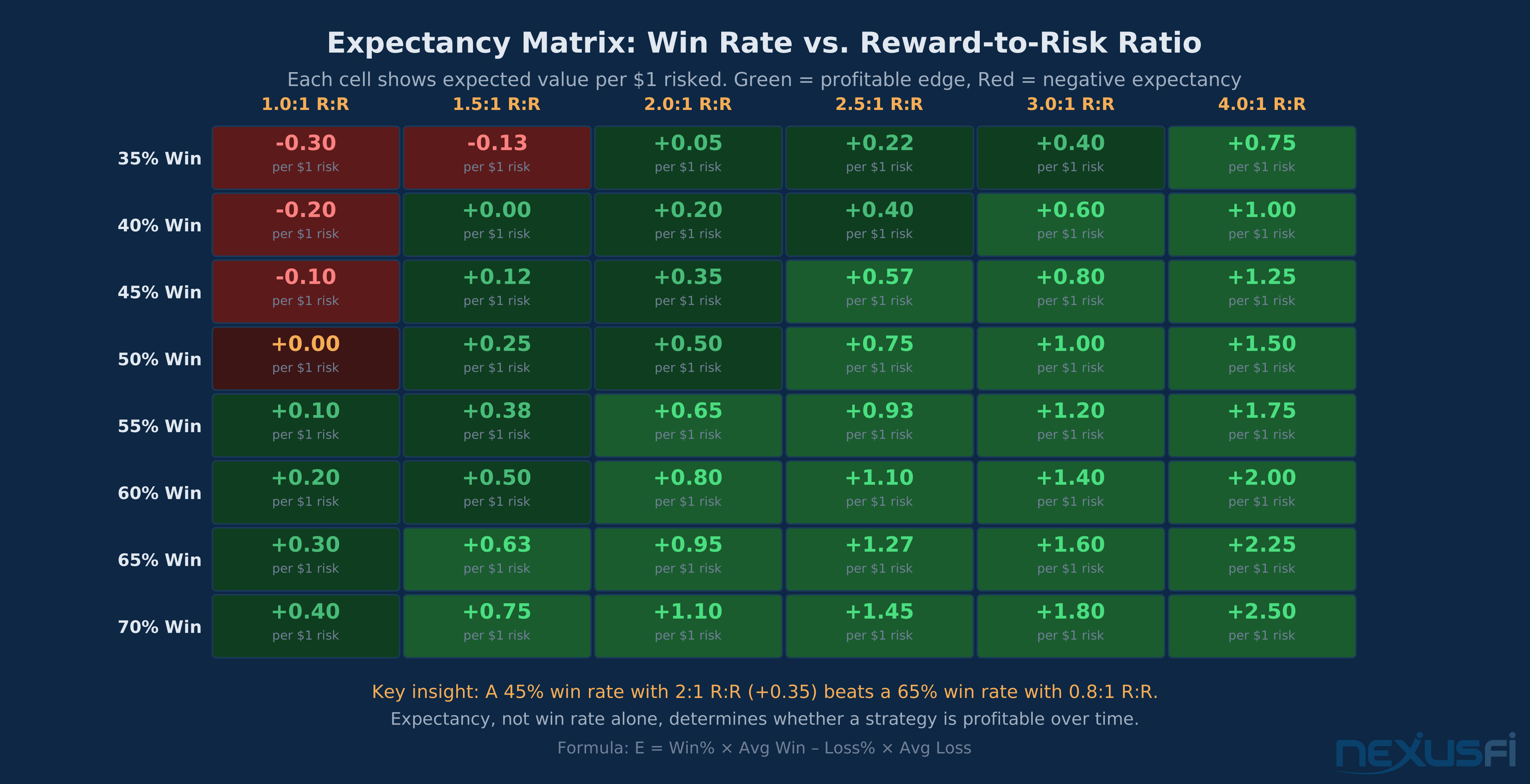
Overview The Formula That Replaces Everything You Think You Know About Win Rate Here's the formula: Expectancy = (Win Rate x Average Win) - (Loss Rate x Aver...
Futures were invented to hedge. Before anyone was day trading ES for $50 ticks, grain farmers were selling forward contracts to lock in harvest prices and fl...
Every futures position starts with a number: how many contracts. Most developing traders treat that number as fixed from entry to exit. Professional traders ...
Most traders track whether they made or lost money today. That's account management, not performance analysis. The traders who consistently improve -- the on...
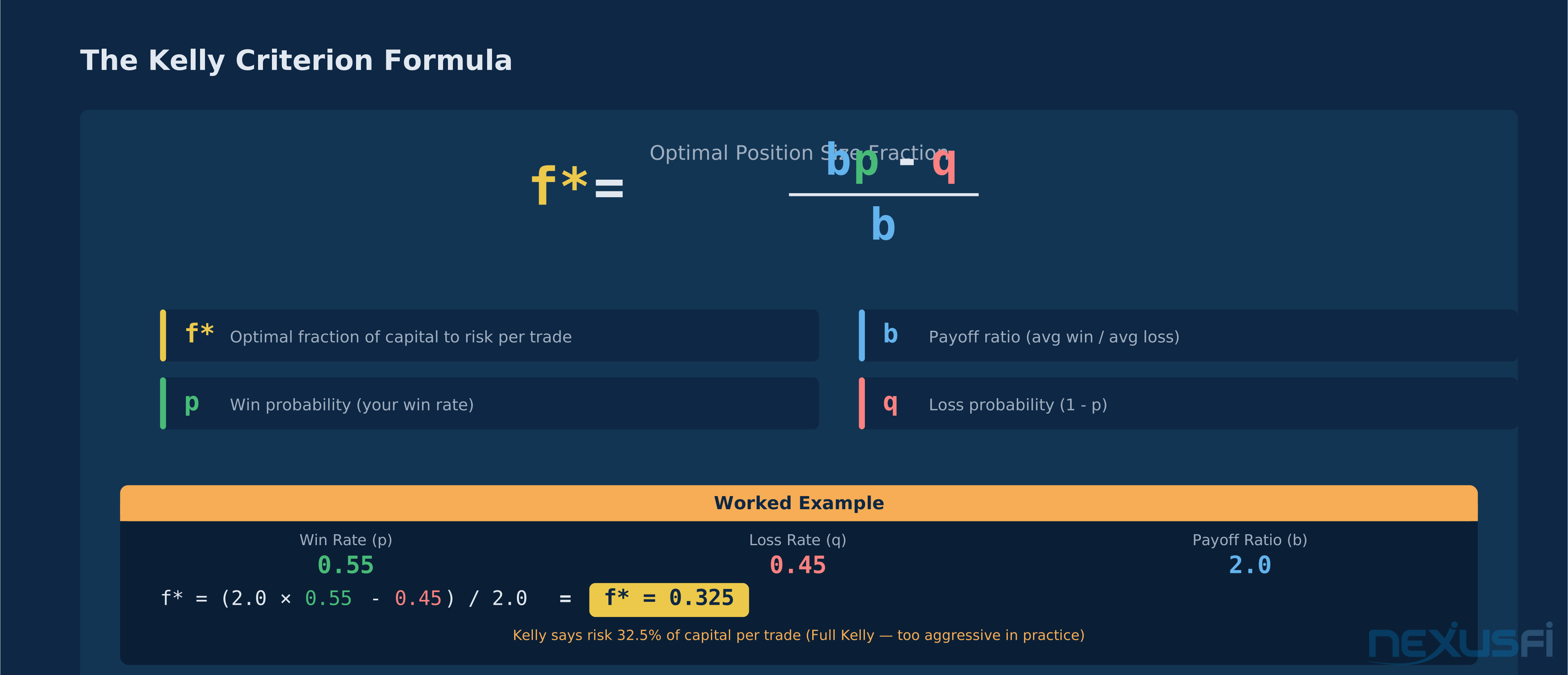
Overview Every futures trader eventually faces the same question: "I have an edge Developed by John L. Kelly Jr. at Bell Labs in 1956 for information theory ...
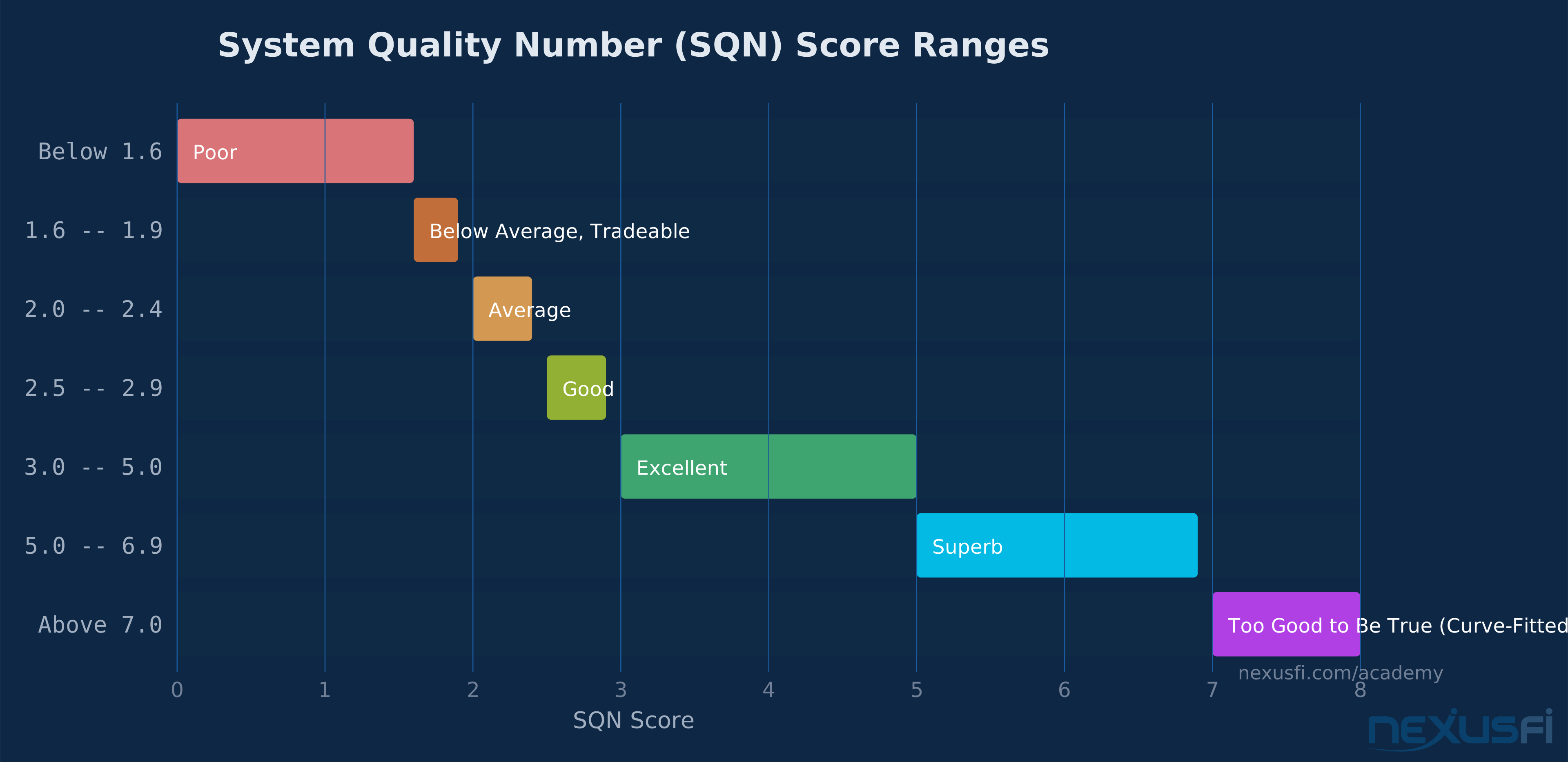
Overview The System Quality Number (SQN) is Van Tharp's statistical framework for scoring the quality of any trading system. It combines three inputs -- trad...
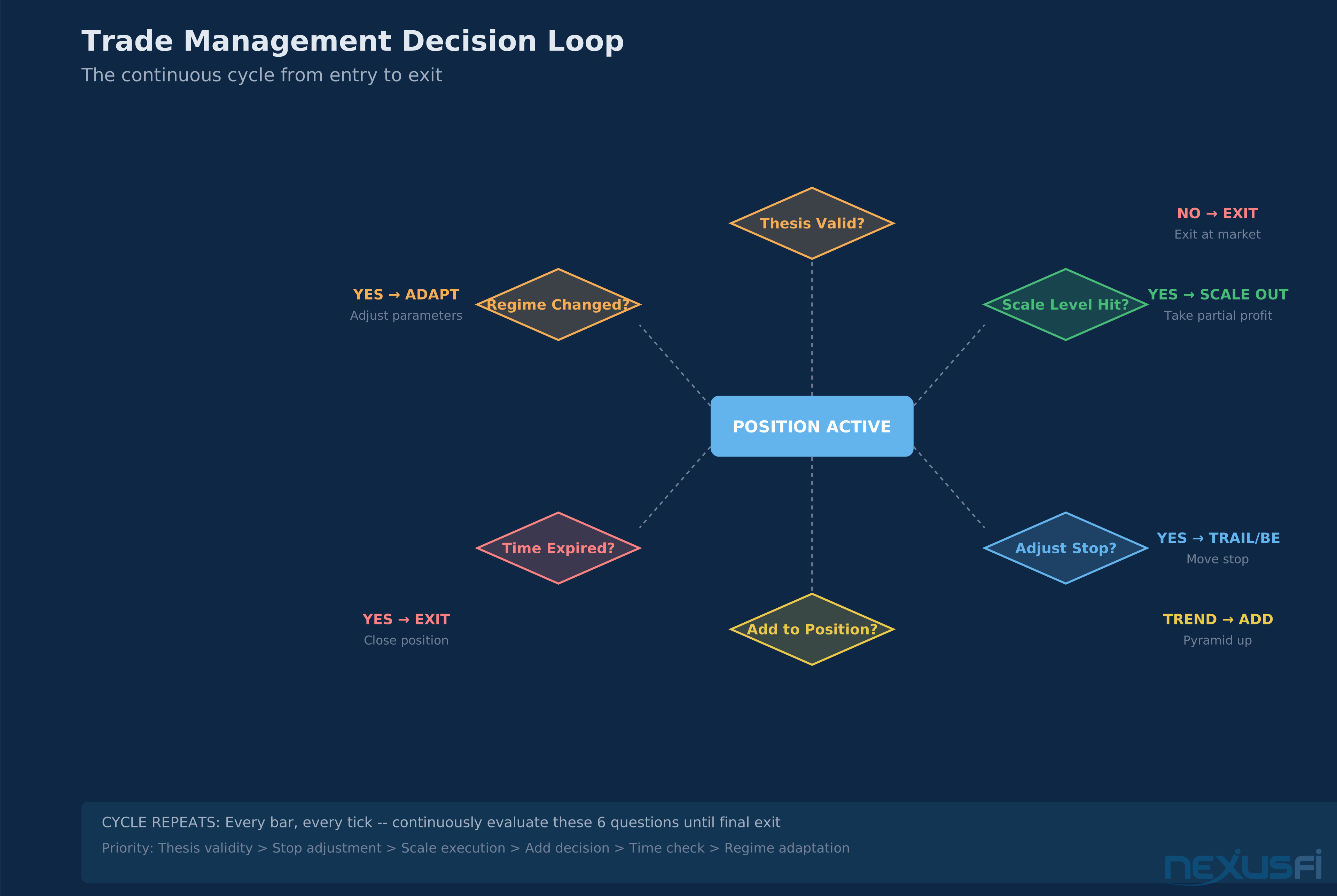
Overview You found your setup. You placed the order. You're filled. Now what? Trade management is the entire decision chain between entry and final exit This...
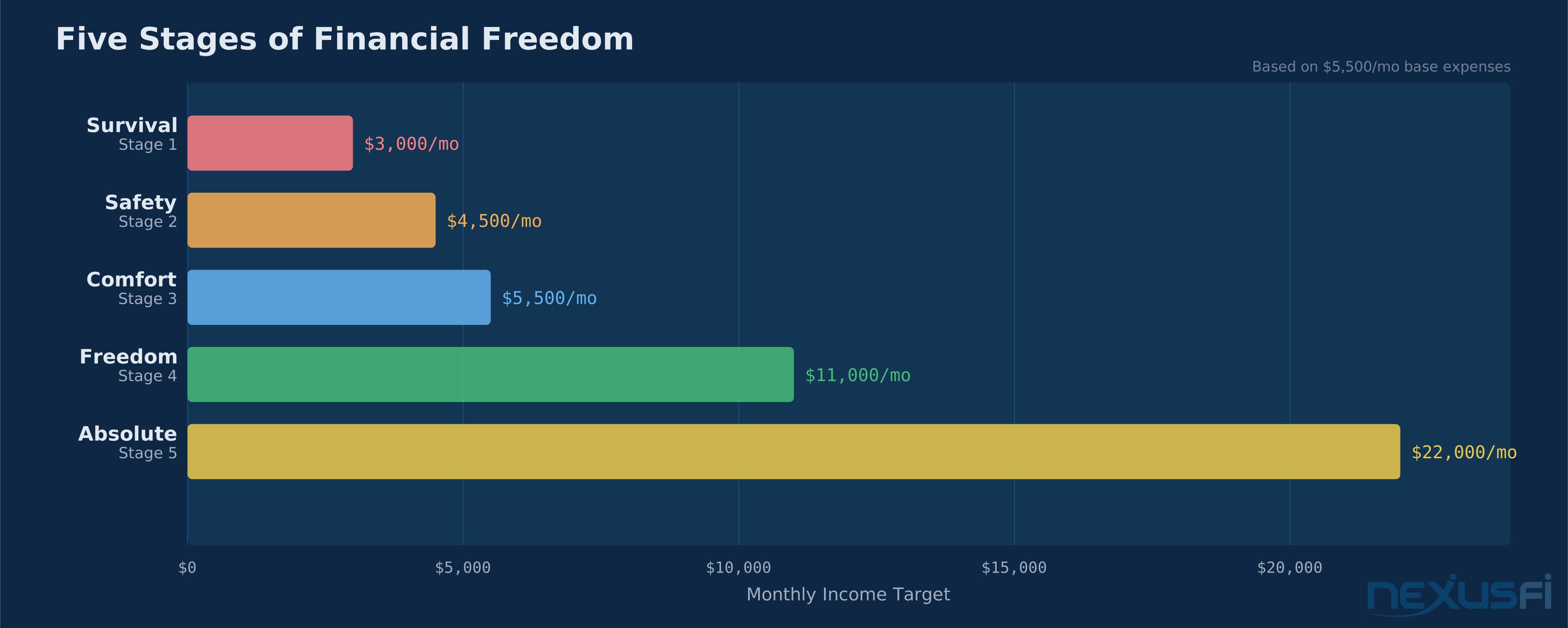
Overview Every trader has a number. Not a P&L target for Tuesday, not a "wouldn't it be nice" daydream -- a hard, calculated threshold where trading inco...
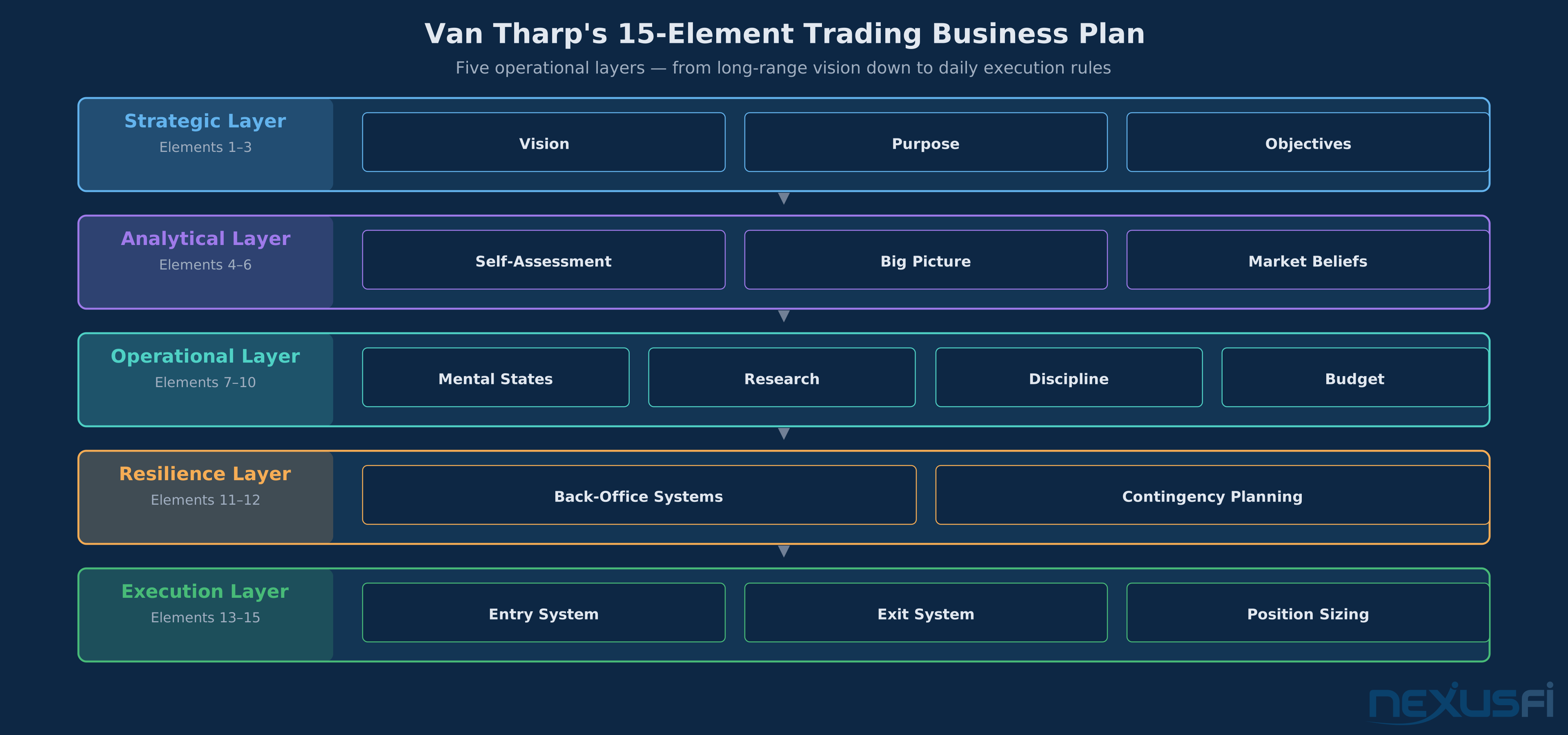
Most futures traders have a strategy. Very few have a business. The distinction sounds semantic until the third consecutive losing week -- the moment when "s...
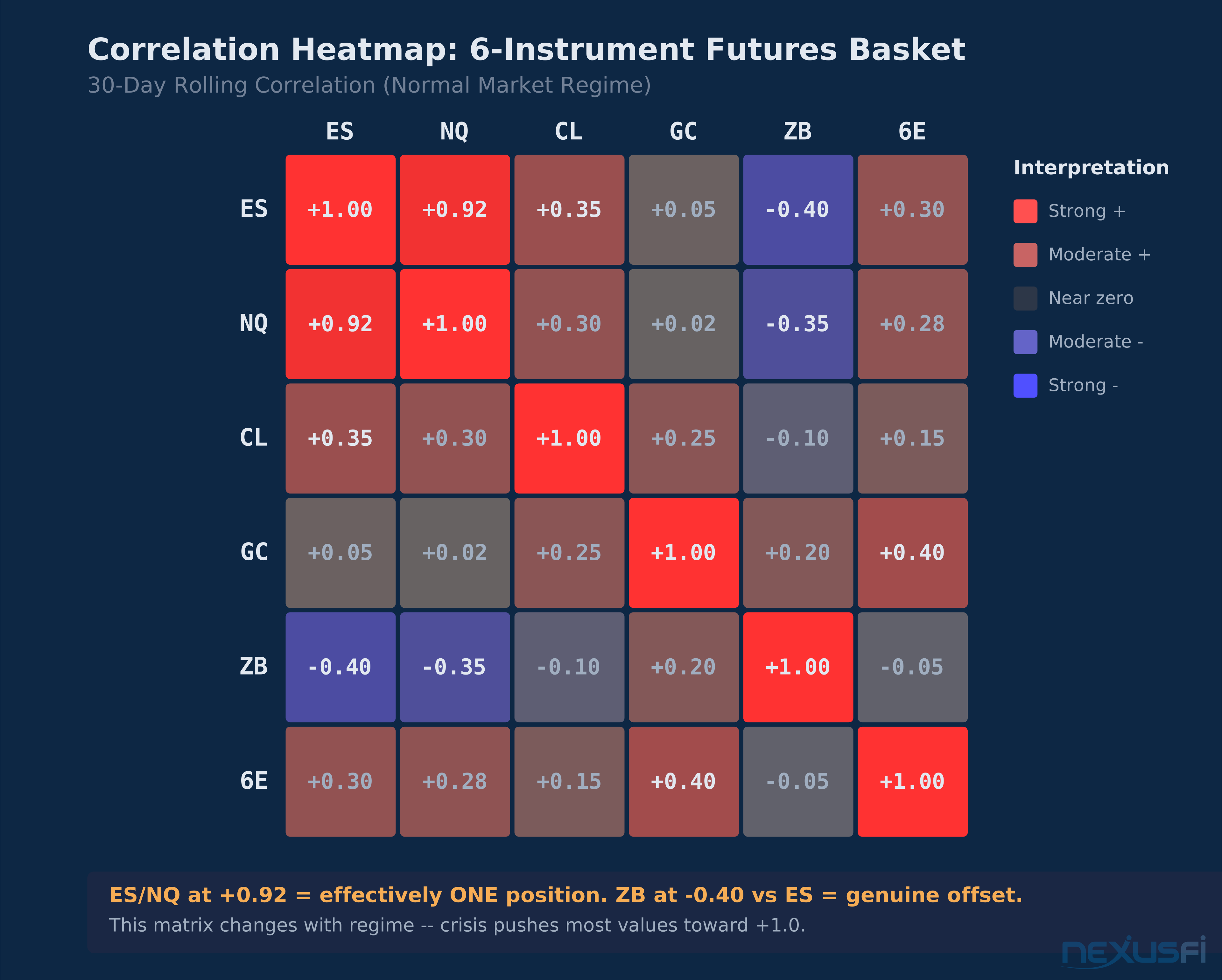
Here's a scenario most multi-instrument traders have lived through: you're long ES and long NQ, thinking you've got two separate positions. Then a risk-off e...
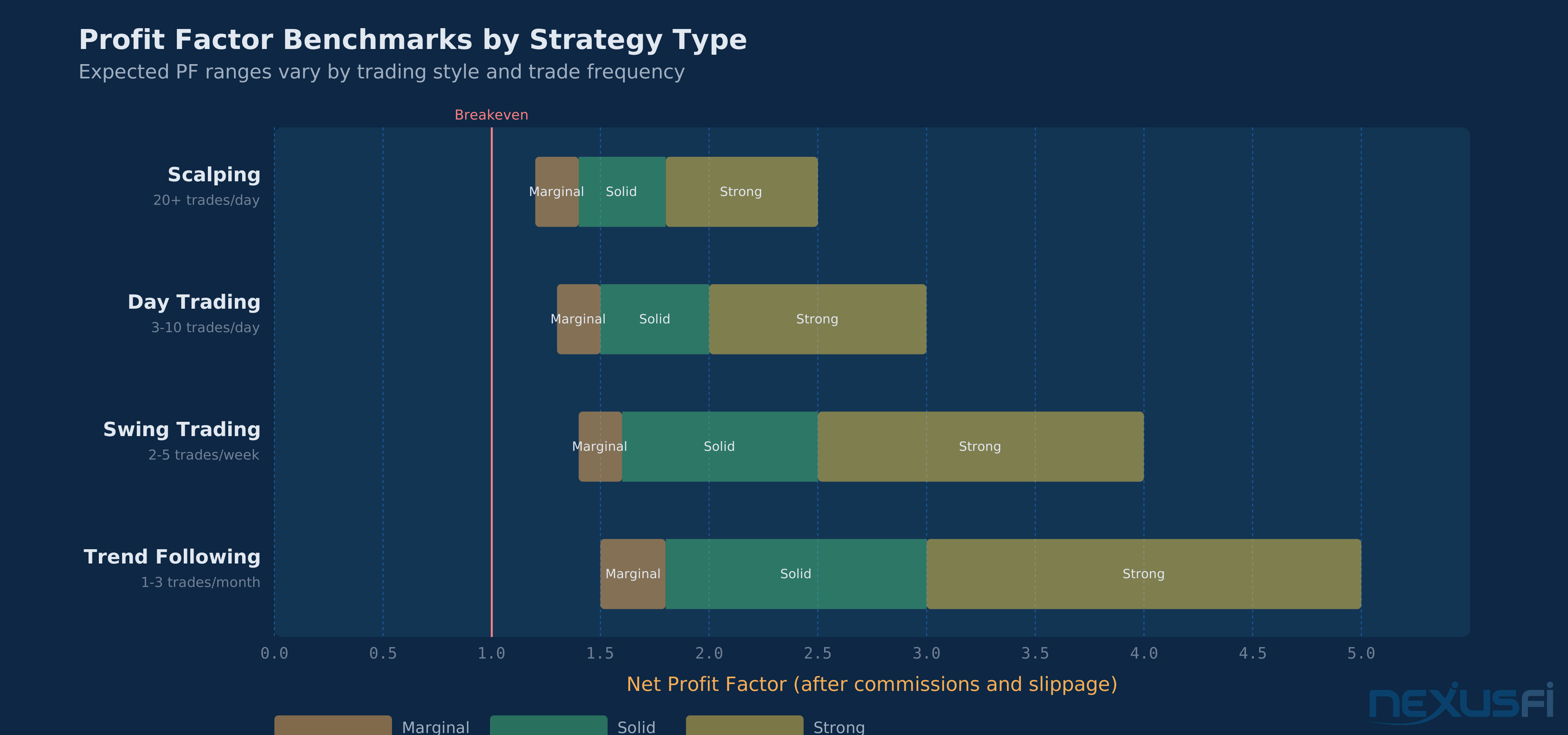
Overview Profit Factor is the simplest diagnostic ratio in your trading toolkit -- and one of the most misunderstood. It answers exactly one question: are yo...
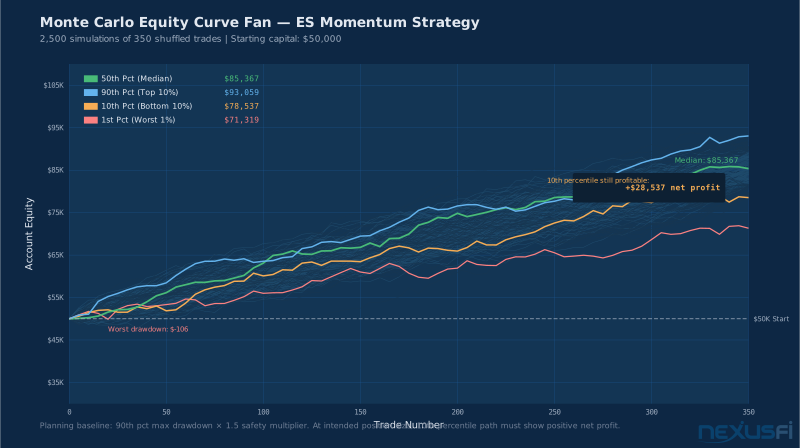
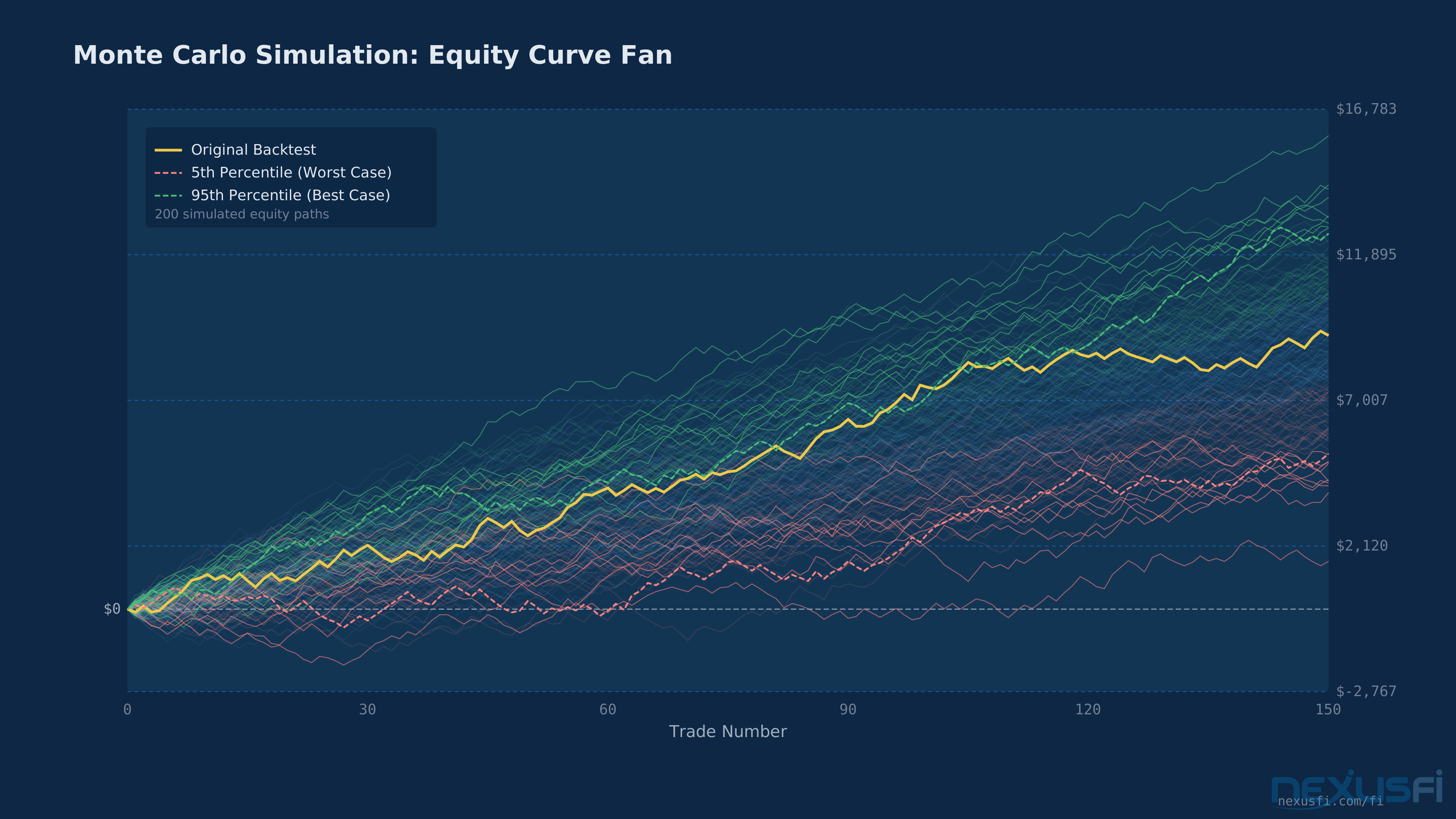
You ran your backtest. The equity curve slopes upward. The profit factor is 1.8. You're ready to go live. But here's the question nobody asks: what if those ...
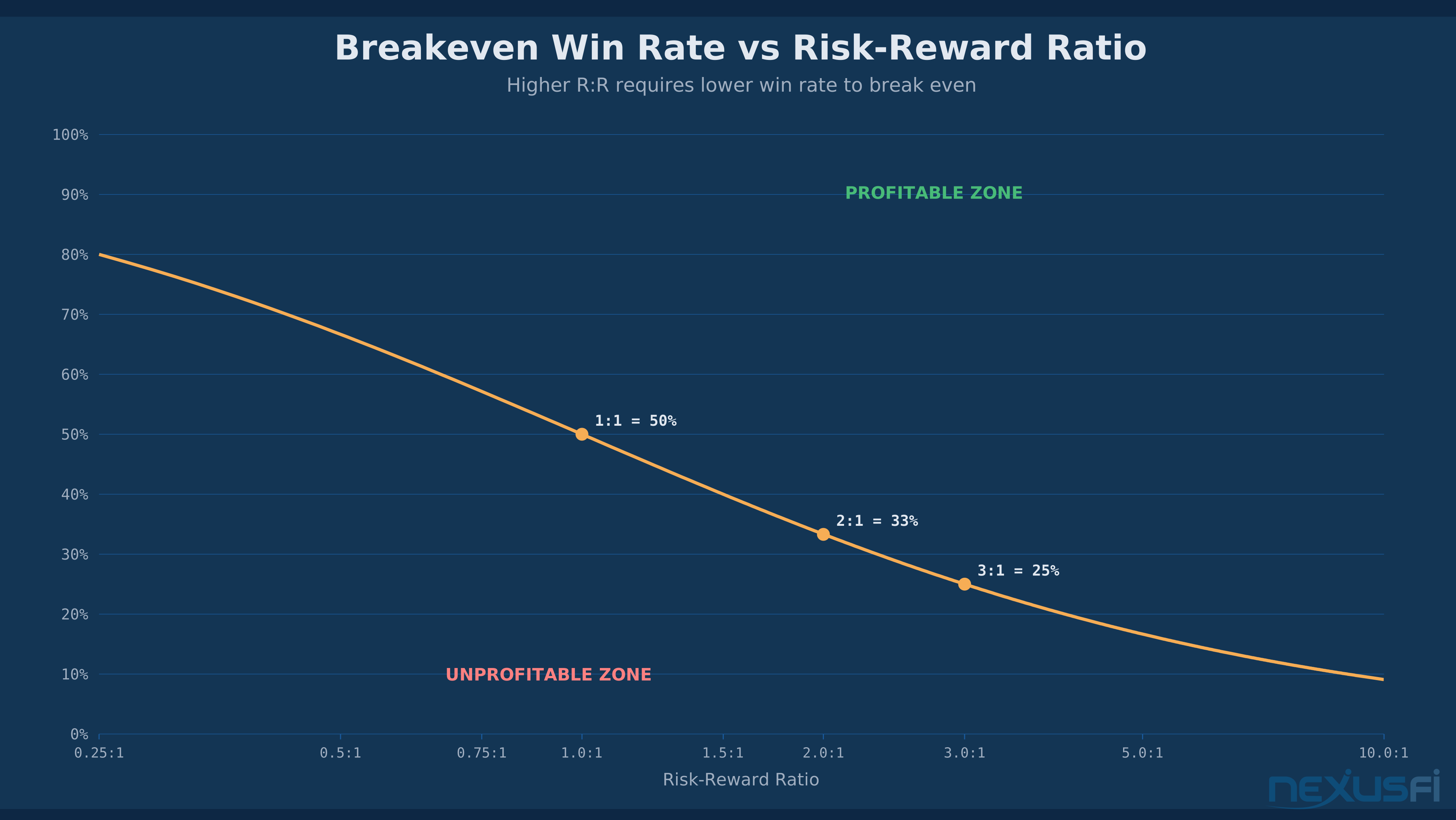
Risk-reward ratio is the single most misunderstood number in futures trading. Every new trader learns "aim for 2:1 or better" and treats it like a magic filt...
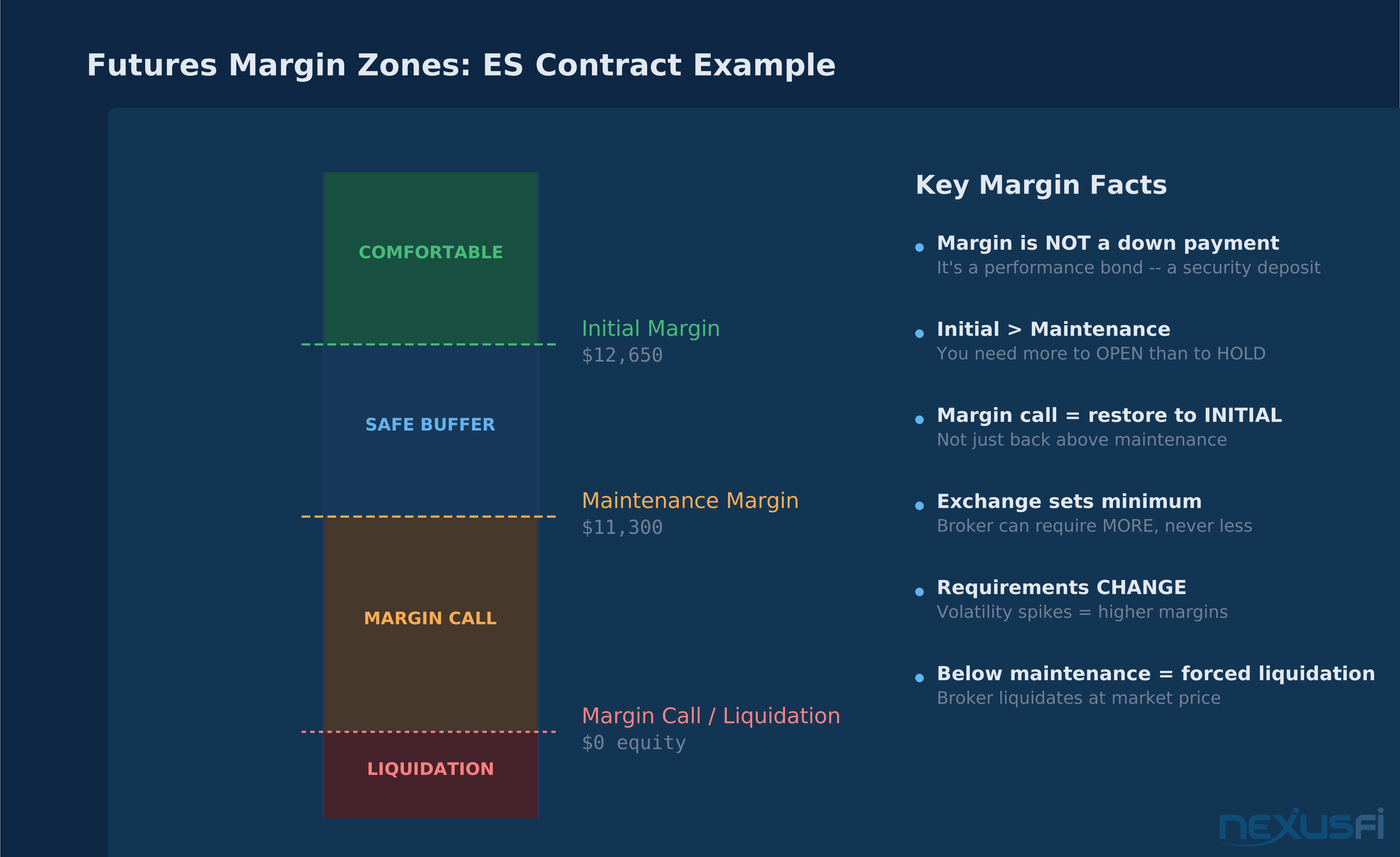
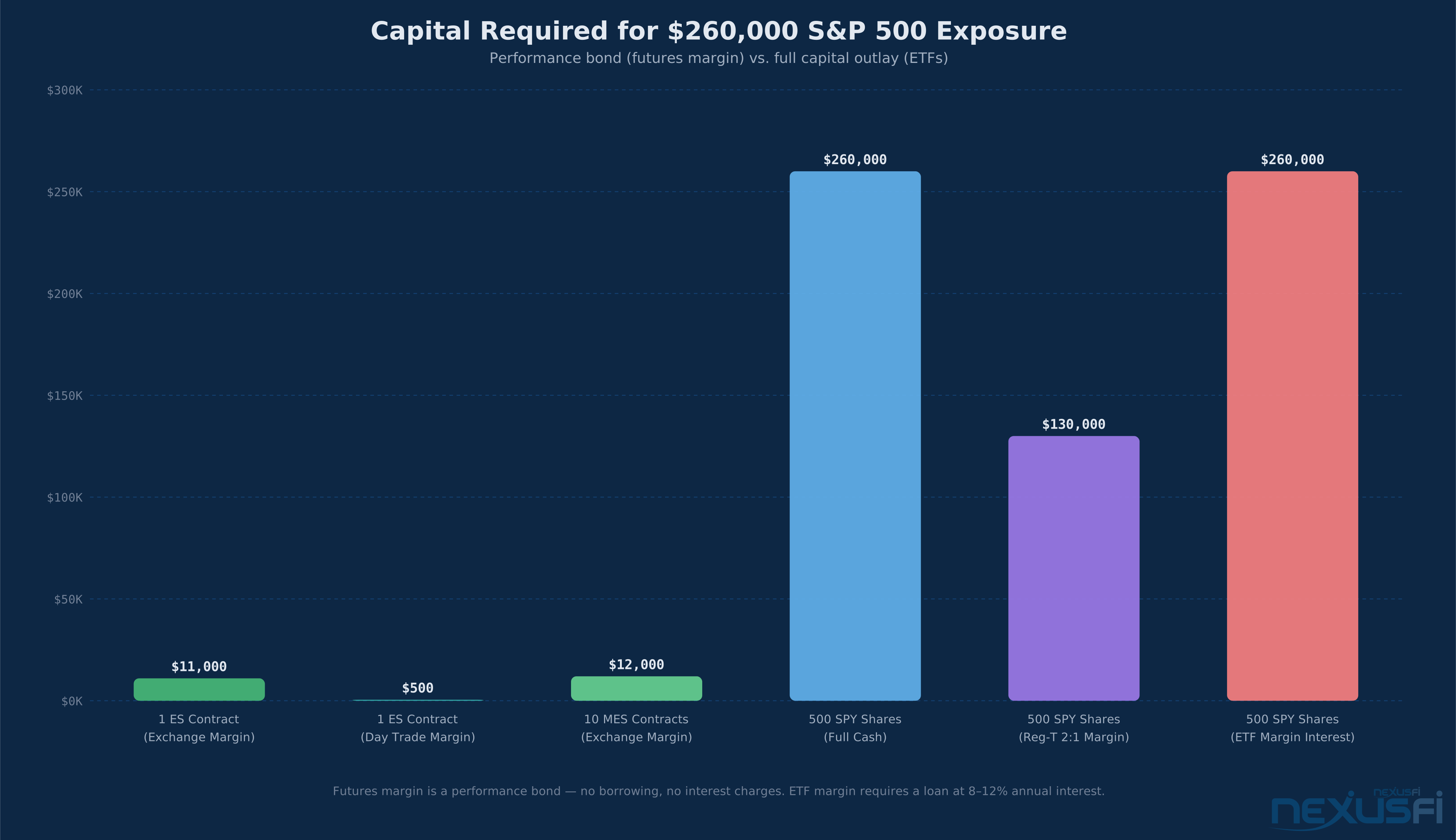
Futures margin isn't what most people think it is. It's not a down payment. It's not the cost of a trade. It's a performance bond -- collateral you post with...
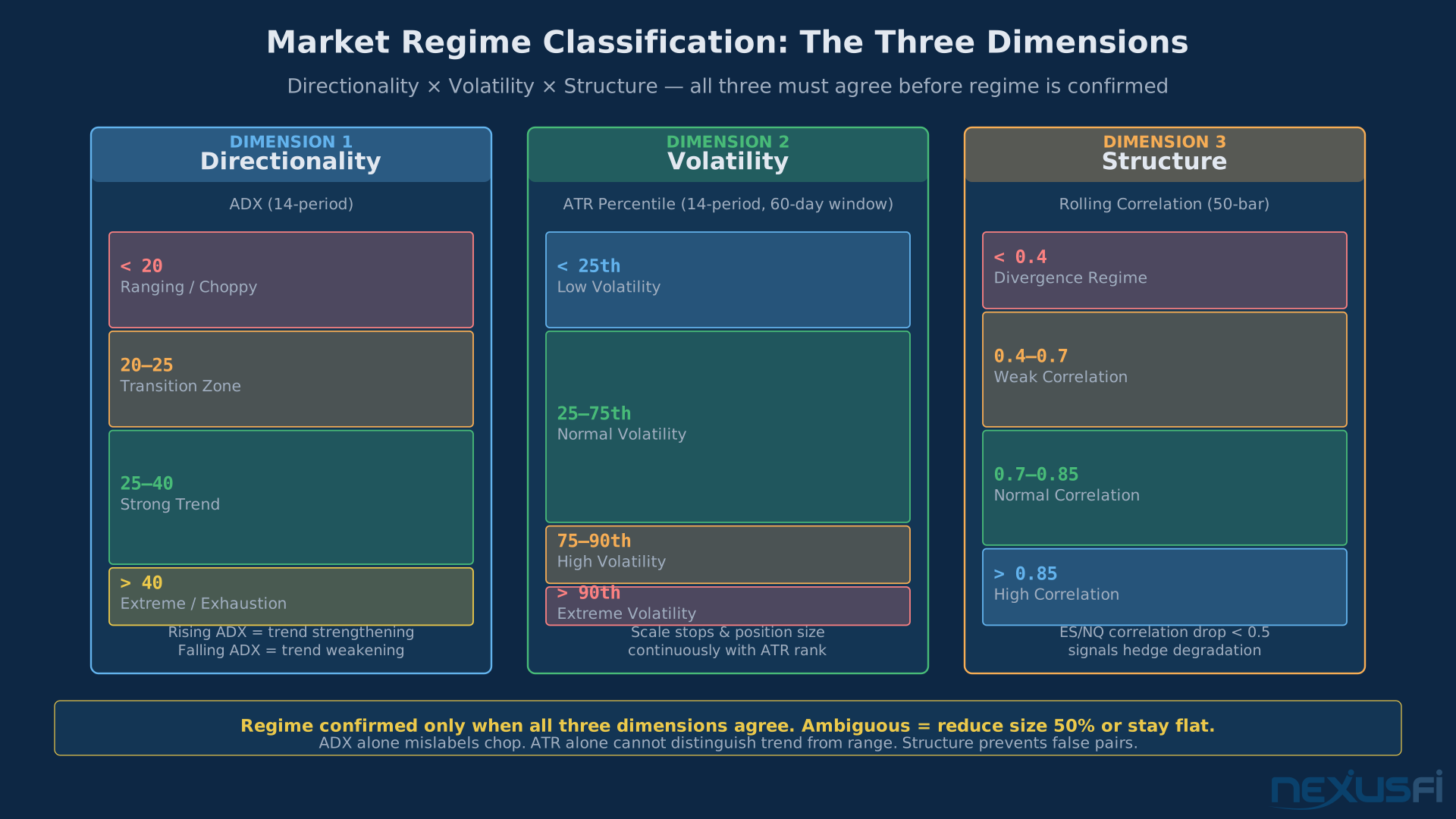
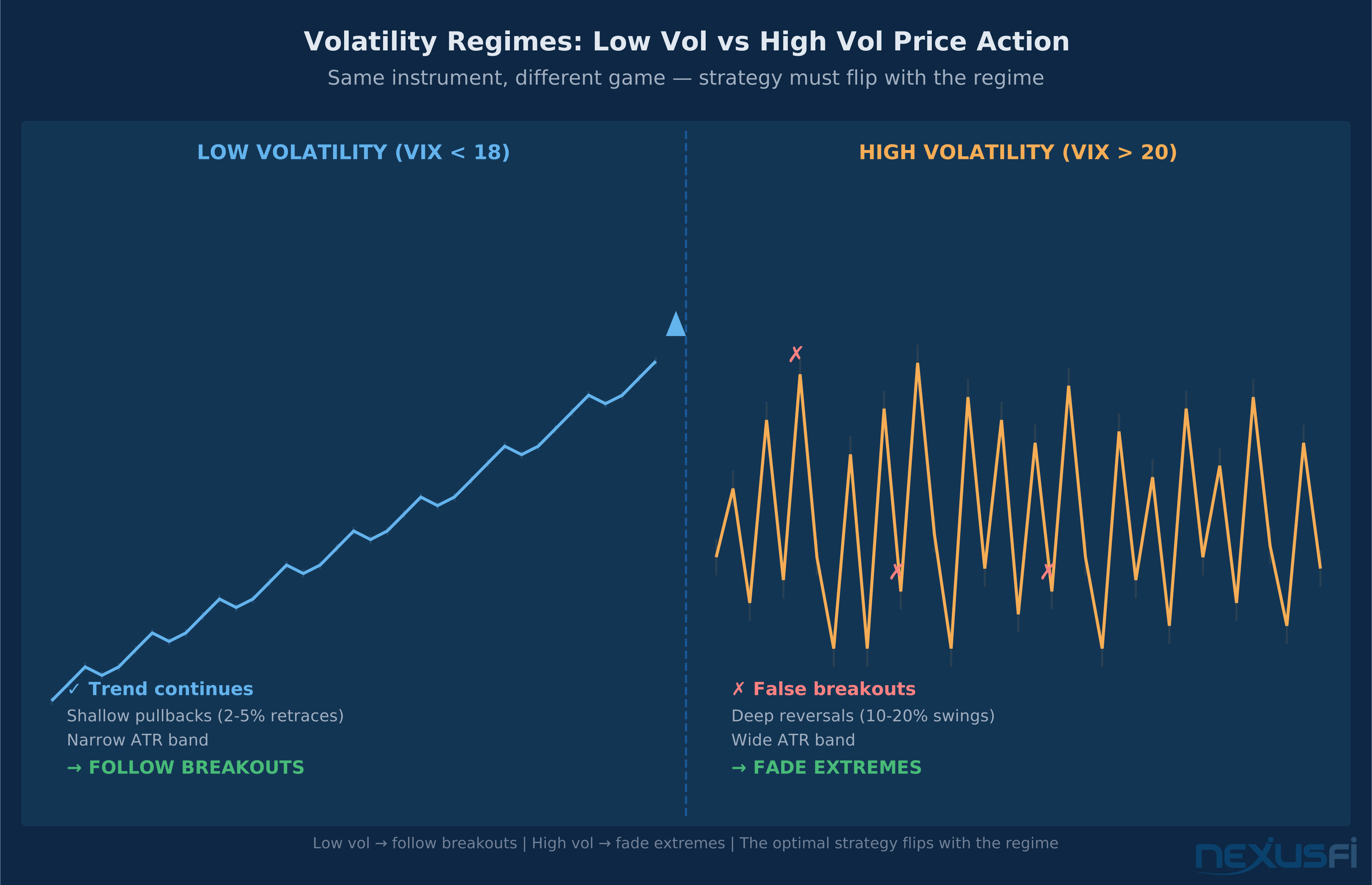
Every futures market has a personality, and that personality changes. ES trades with a 20-point daily range for weeks, then a tariff announcement hits and su...
Most traders know their broker is regulated. Few know what that means in dollar terms, where to find the data, or what numbers indicate danger. That gap is e...
If you trade crypto futures -- or you're thinking about it -- the regulatory landscape changed materially in 2026. The decade-long turf war between the CFTC ...
Most futures traders know the CFTC exists. Fewer understand exactly where the CFTC's authority ends and the SEC's begins -- and almost no one thinks about th...
CFTC enforcement actions are public record and permanently visible on the NFA BASIC database. Even a minor regulatory infraction can follow a trader or firm ...
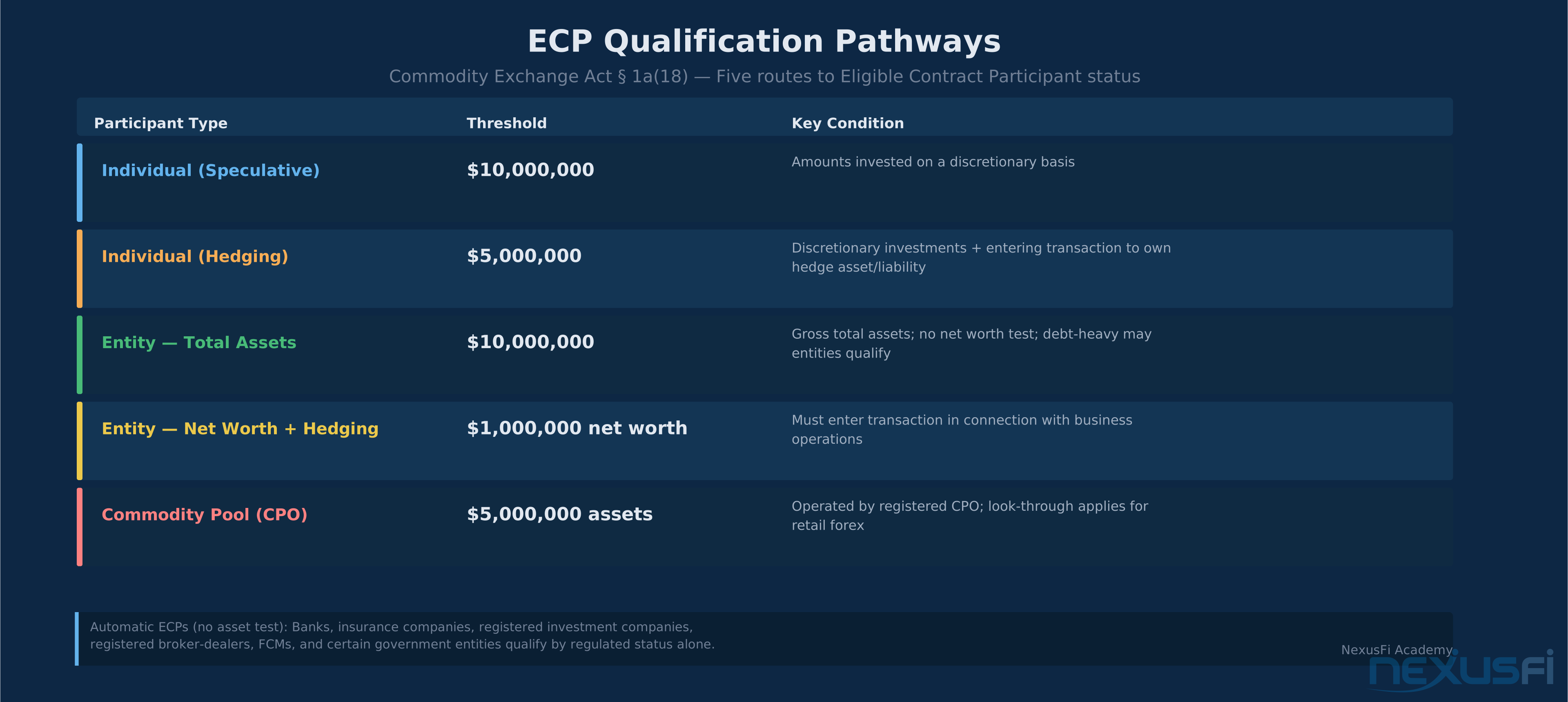
Overview Most retail futures traders have never encountered the term "Eligible Contract Participant." They trade ES, NQ, or CL on CME, post margin, take risk...
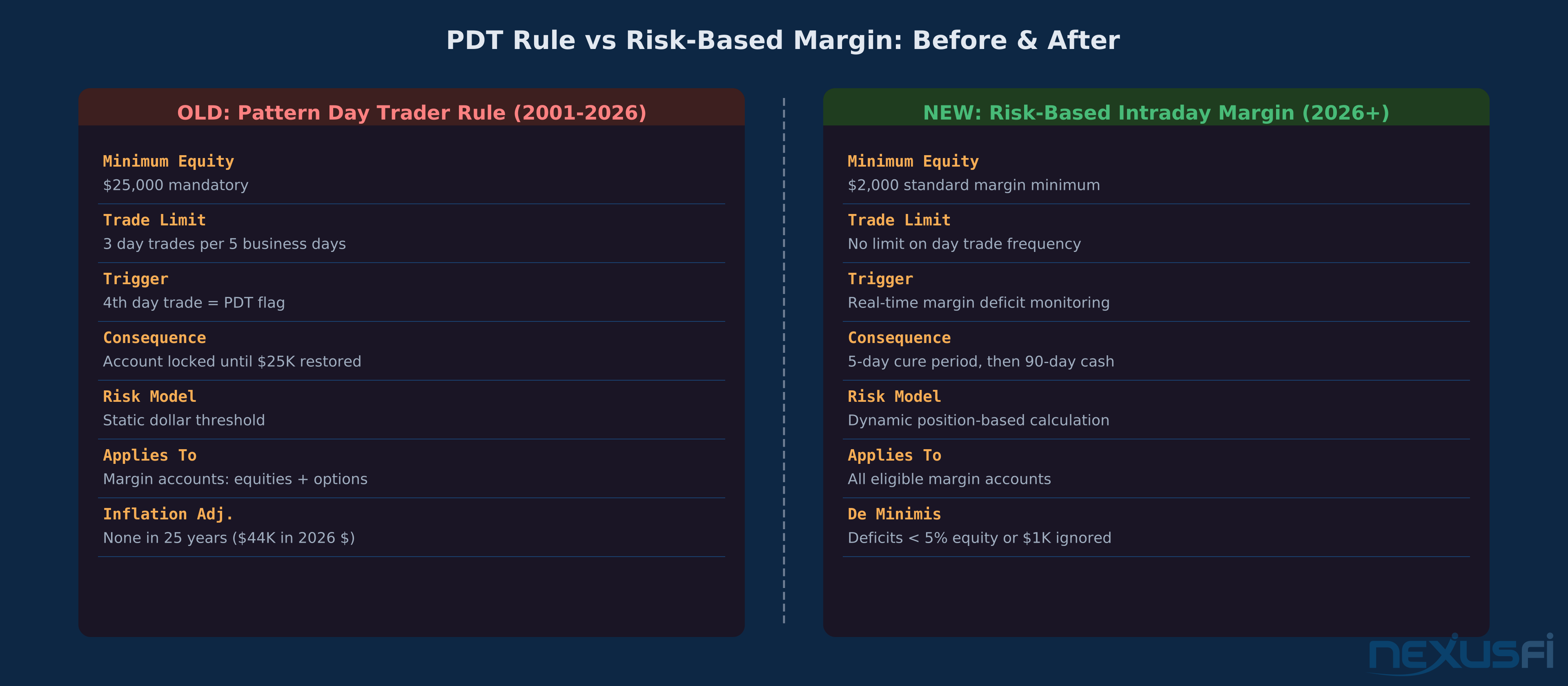
For a quarter century, one rule defined the boundary between who could day trade equities and who couldn't: maintain $25,000 in your margin account, or stop ...
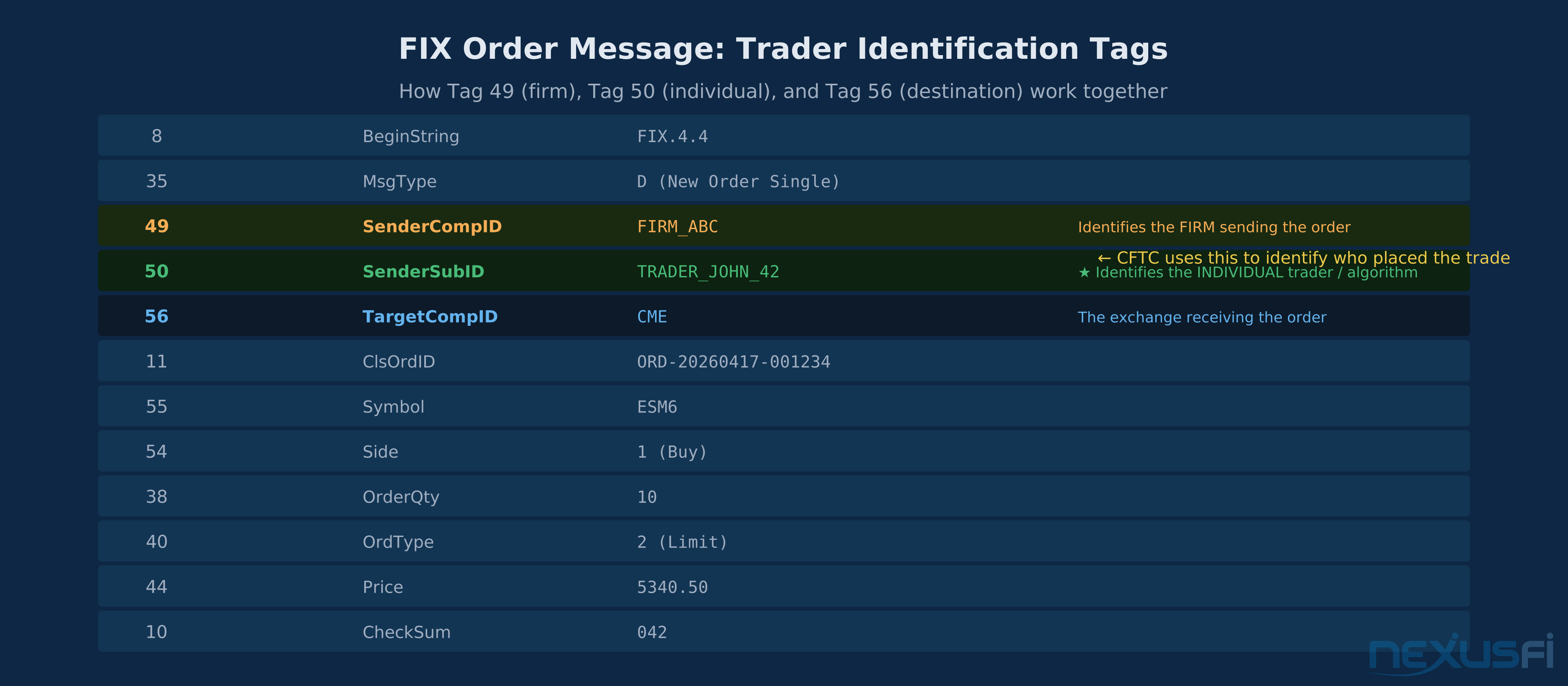
Every electronic order placed on a futures exchange carries a hidden fingerprint. Buried inside the FIX message that transmits your trade from platform to ex...
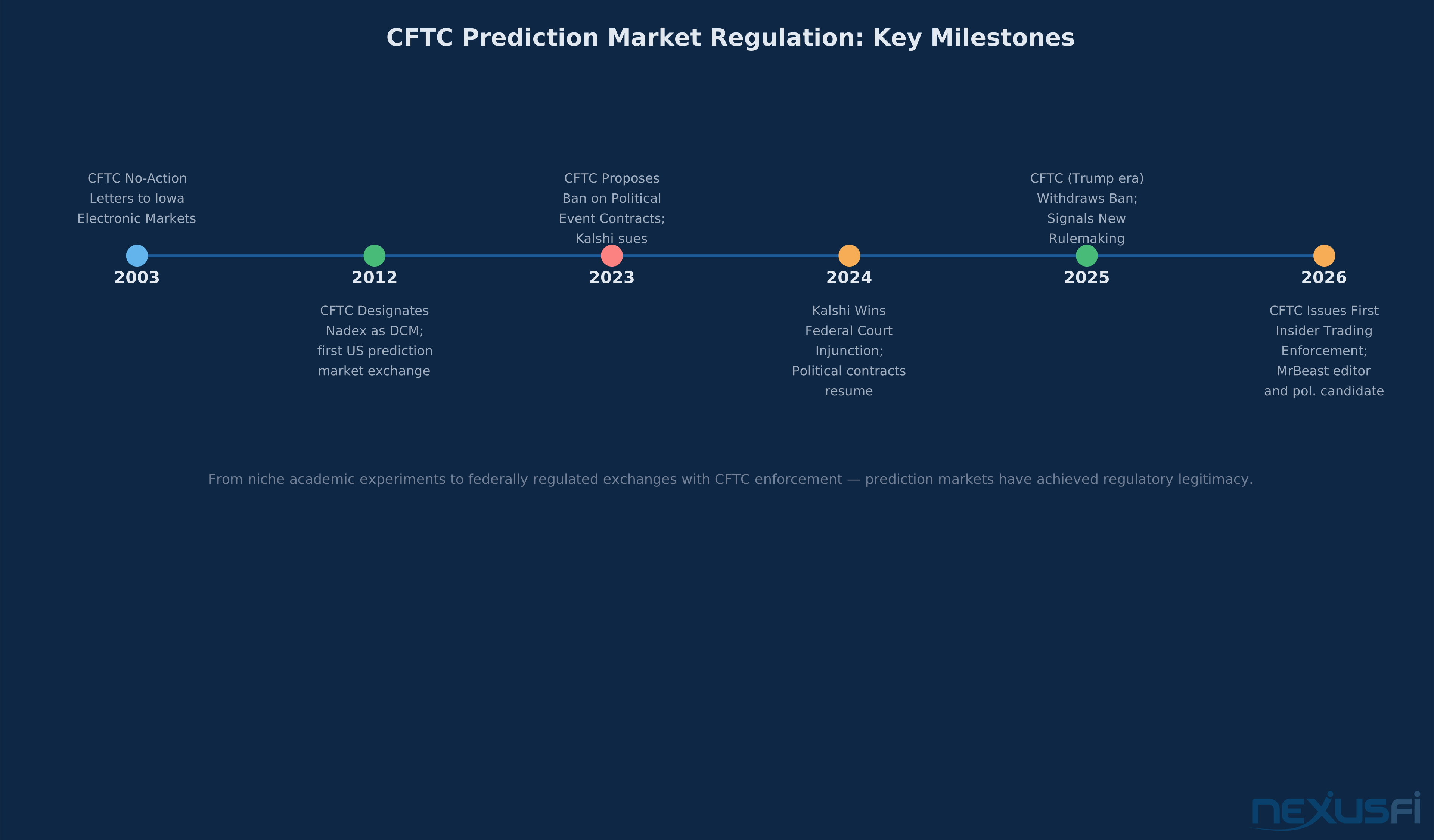
The Commodity Futures Trading Commission (CFTC) is the federal agency that regulates prediction markets in the United States. Understanding CFTC oversight ma...
This article covers what FINRA is and how it regulates broker-dealers, the 23-year-old pattern day trader rule and its 2026 replacement with risk-based margi...
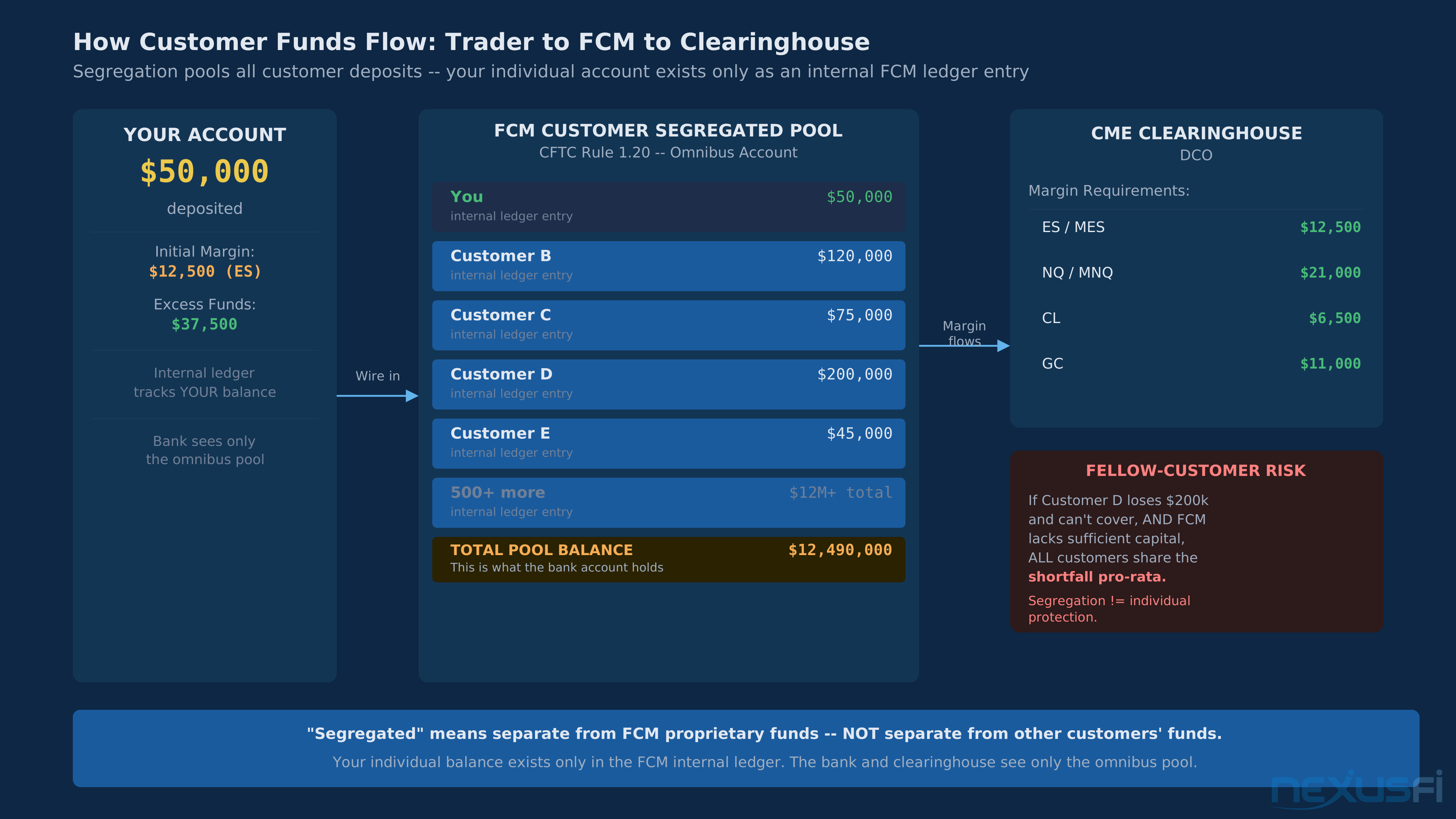
Every futures trader deposits money with a broker. The moment those funds leave your bank account and land at an FCM, a specific set of federal rules kicks i...
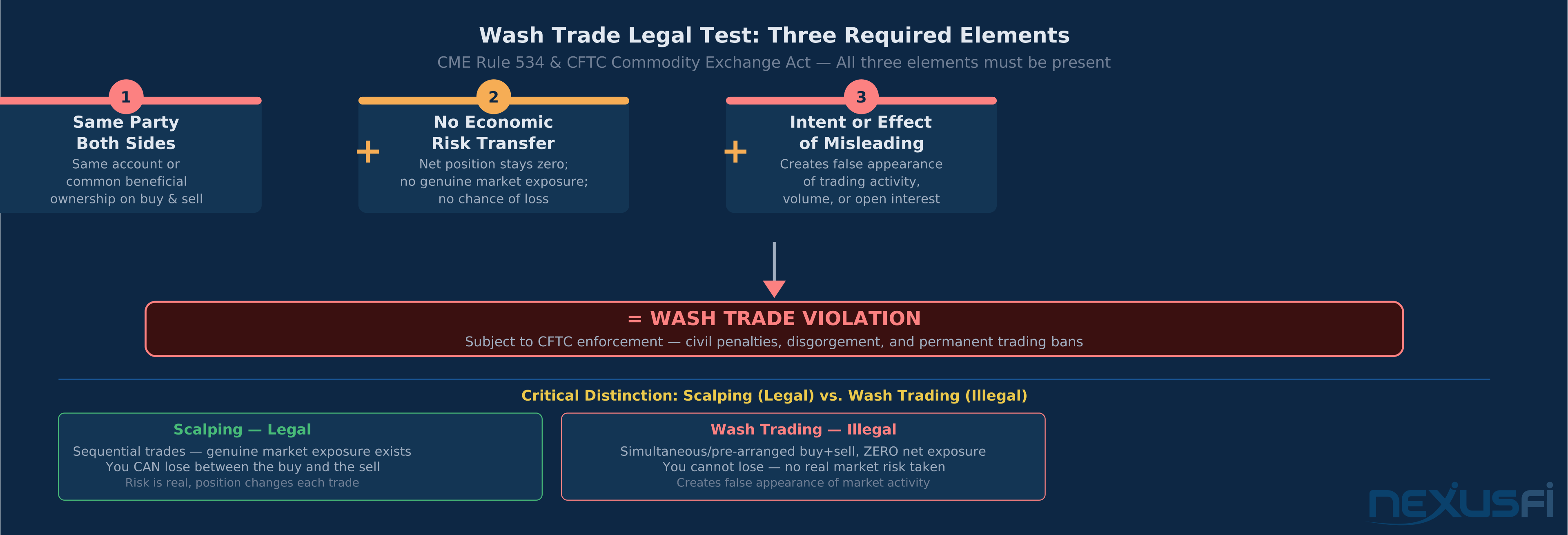
Wash trading is one of the oldest prohibited practices in futures markets, and one of the most misunderstood. The concept sounds simple enough: buying and se...
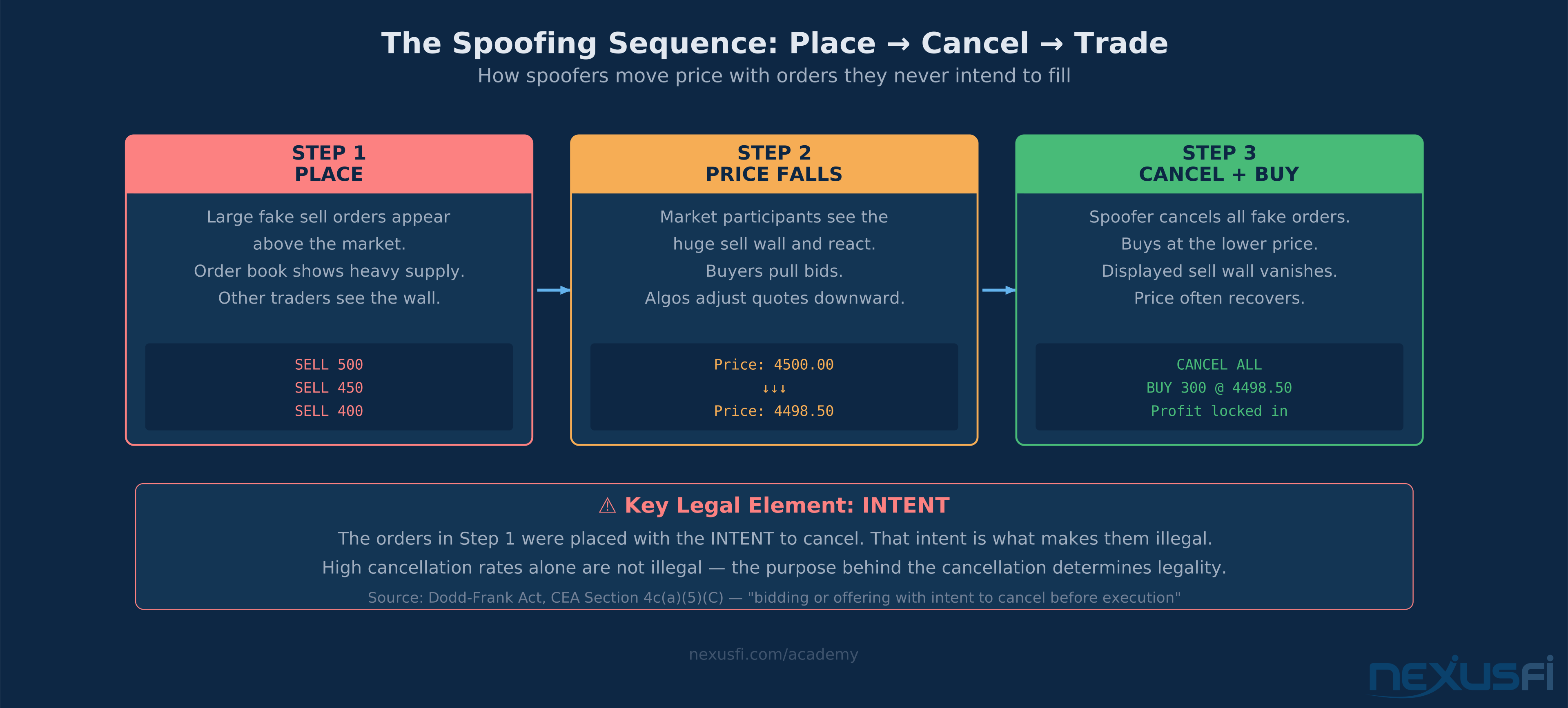
What Is Spoofing? The Legal Definition The Commodity Exchange Act (CEA), as amended by the Dodd-Frank Wall Street Reform and Consumer Protection Act in 2010,...
Prerequisites To get the most from this article, you should have a basic understanding of: - Futures Market Regulation: CFTC and NFA -- Who regulates U.S. fu...
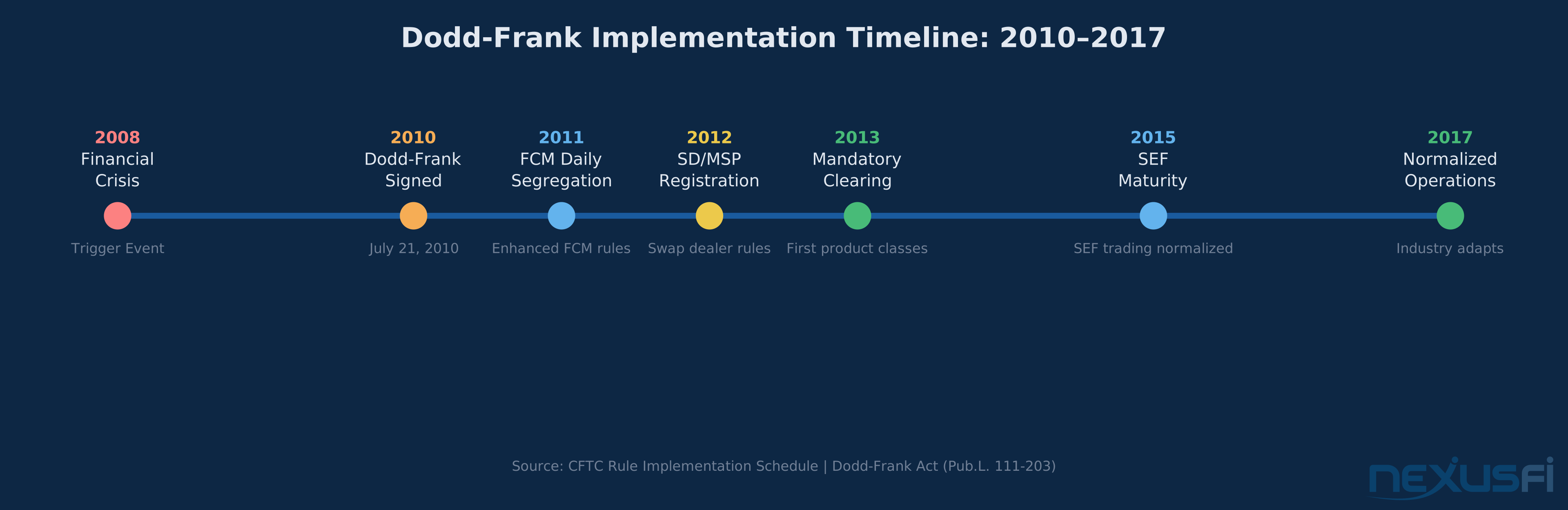
The Dodd-Frank Wall Street Reform and Consumer Protection Act (2010) represents the most sweeping overhaul of American financial regulation since the Great D...
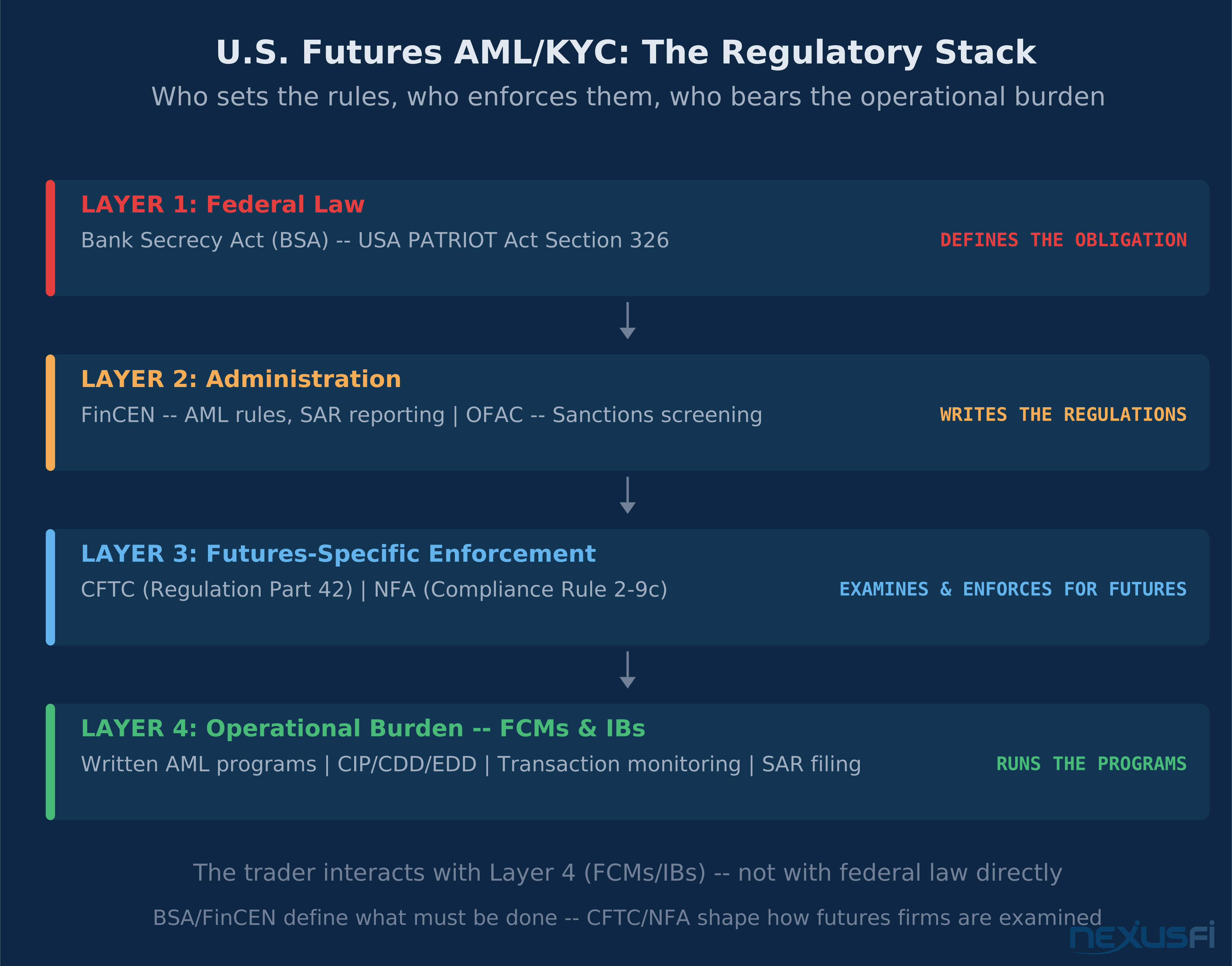
The form you filled out when opening your brokerage account. The source-of-funds questionnaire that appeared when you tried to wire $50,000. The "account und...
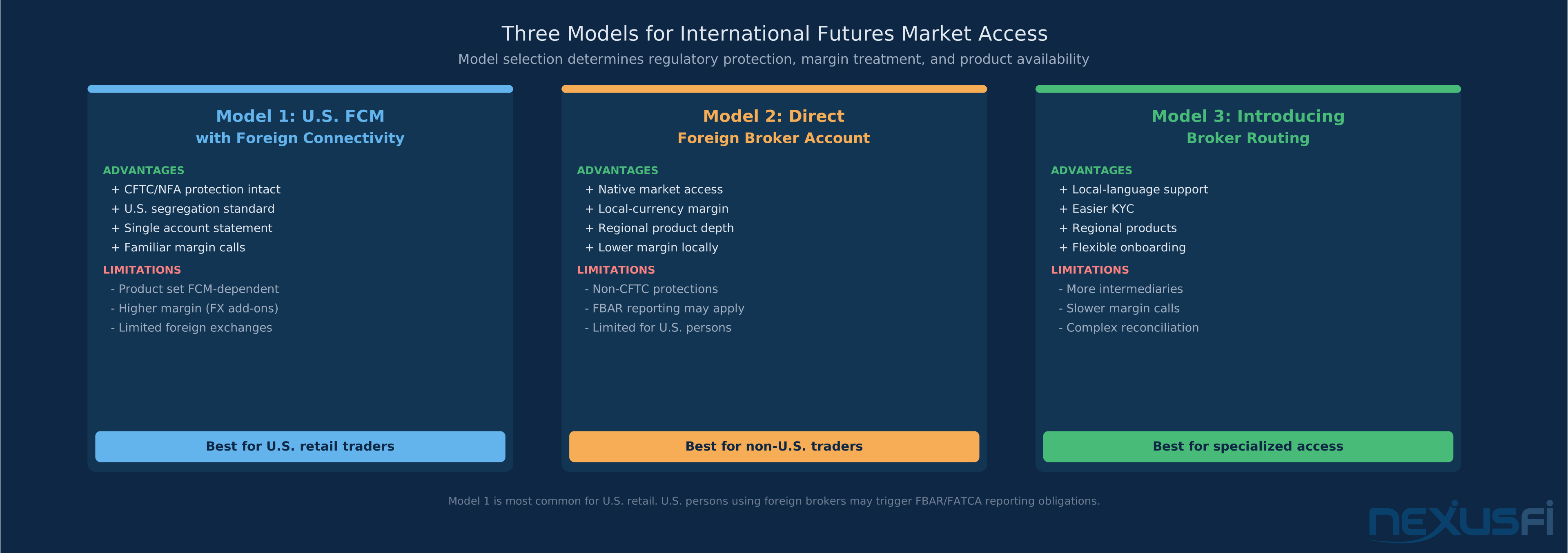
Trading Eurex, ICE London, or the Osaka Exchange from a U.S. account isn't complicated -- but the regulatory plumbing underneath it is more involved than mos...
If you have ever watched unusual order-book behavior -- a wall of bids that vanishes the moment you try to trade against it, or a pattern of trades that look...
Running an algo in futures is fundamentally different from running one in equities. The leverage is higher, the contracts are larger, and the operational ris...
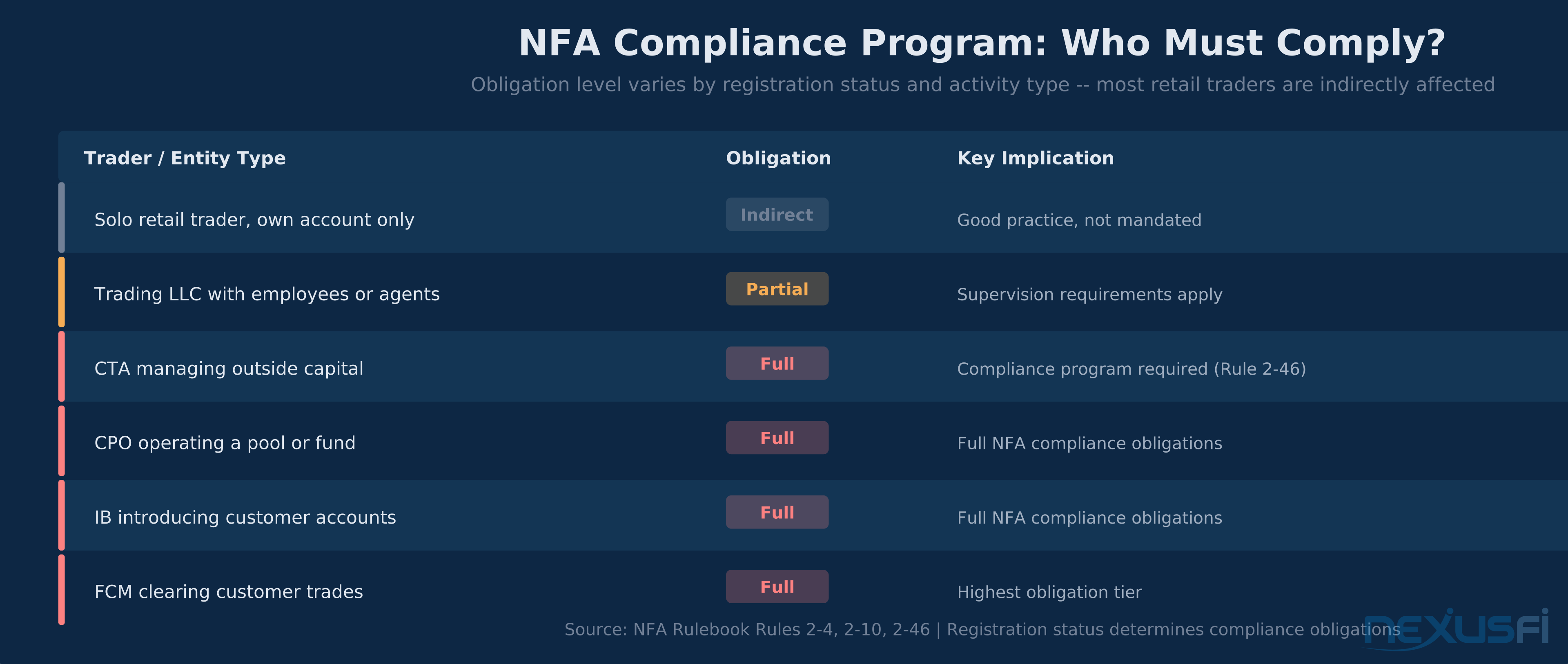
The NFA compliance program framework has two populations: entities that must build and maintain compliance programs, and individuals who are affected by thos...
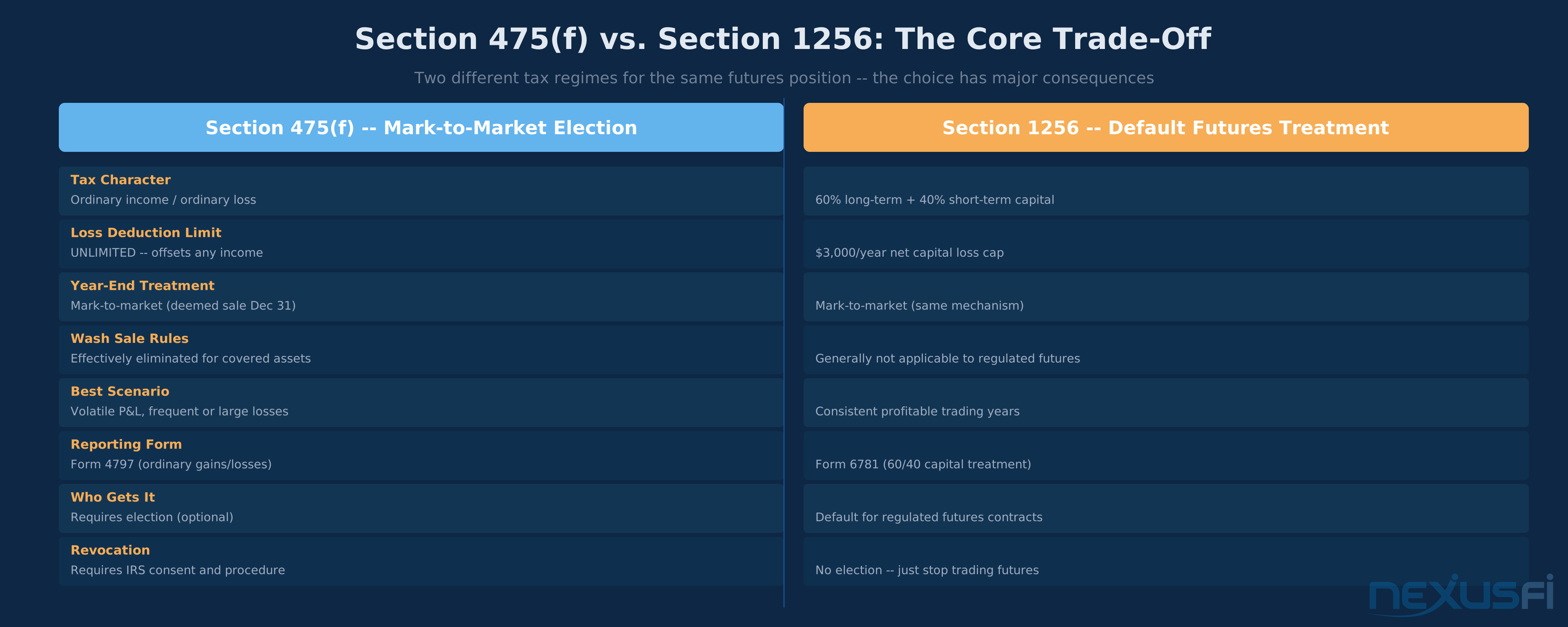
There are two kinds of futures traders when tax season arrives: those who understand Section 475(f) and those who are about to have a very unpleasant convers...
Every profitable futures trader eventually runs into the same problem: the trades went well, but the tax documentation is a mess. Futures trading has genuine...
This article examines the full regulatory stack governing U.S. futures markets -- from the CFTC's federal oversight and exchange self-regulation through the ...
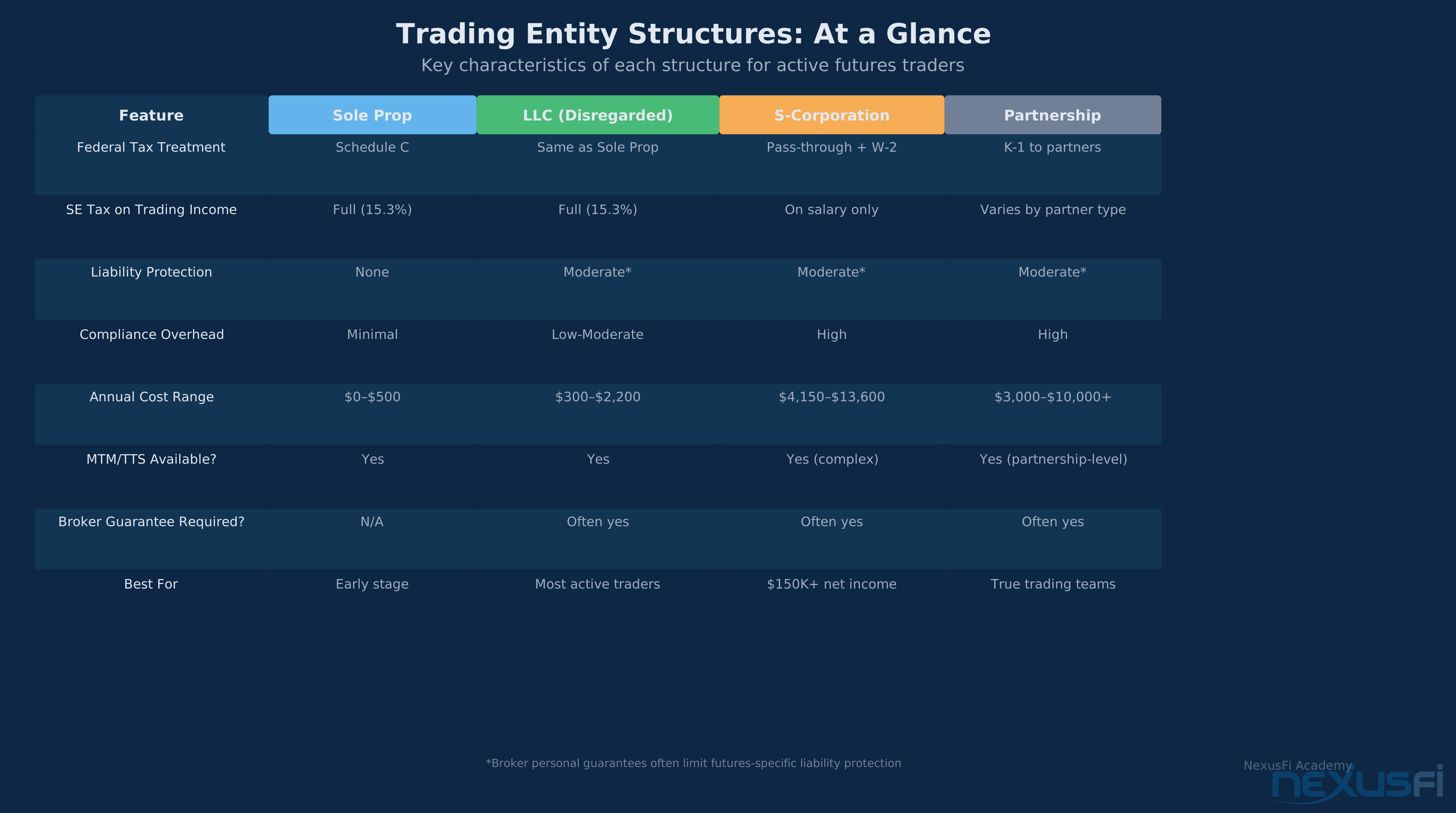
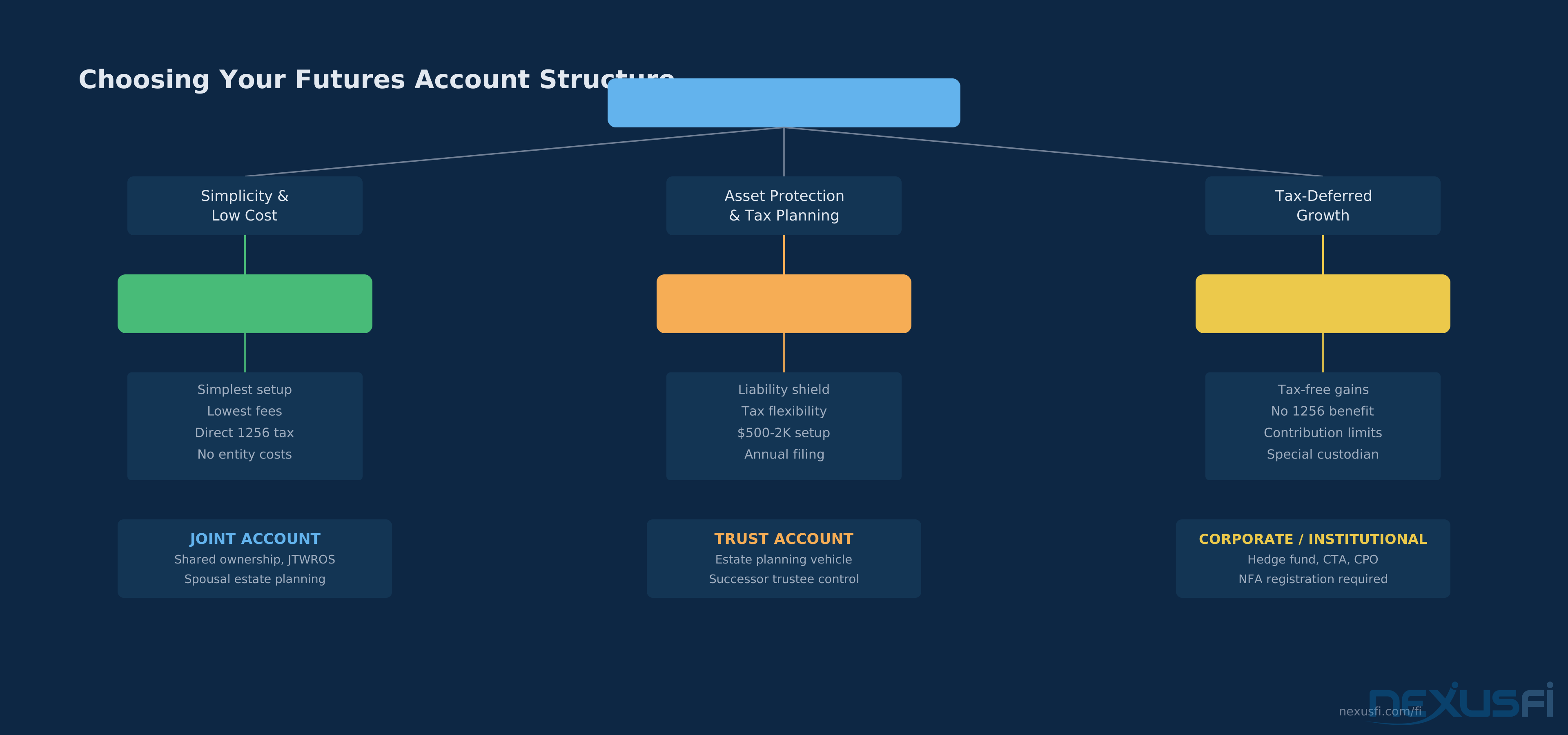
Trading entity structures -- sole proprietorships, LLCs, S-Corporations, and trading partnerships -- affect how futures traders manage liability, taxes, and ...
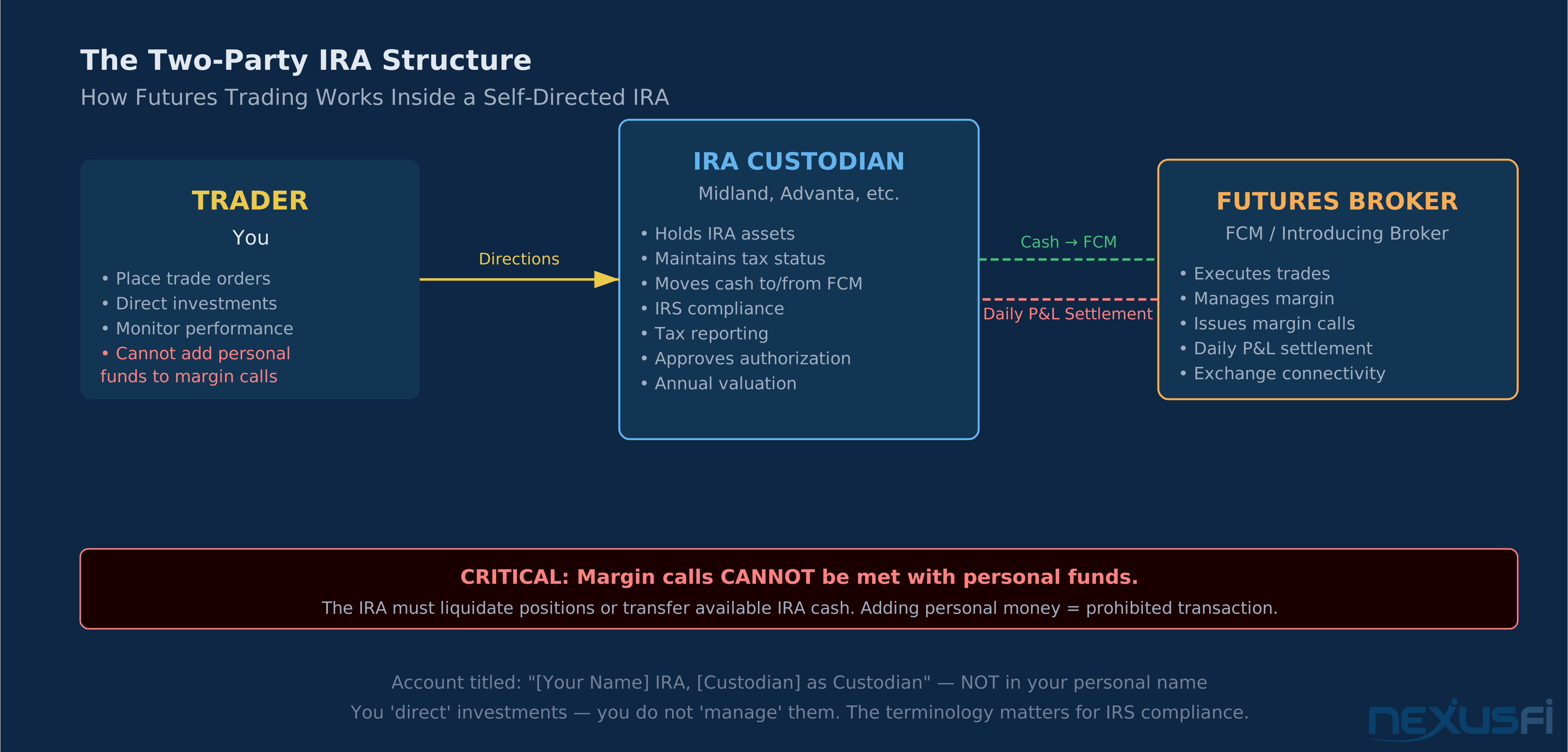
Most futures traders leave the biggest tax advantage in the game completely untouched. A Roth IRA lets you trade ES, NQ, CL -- any futures contract -- and ke...
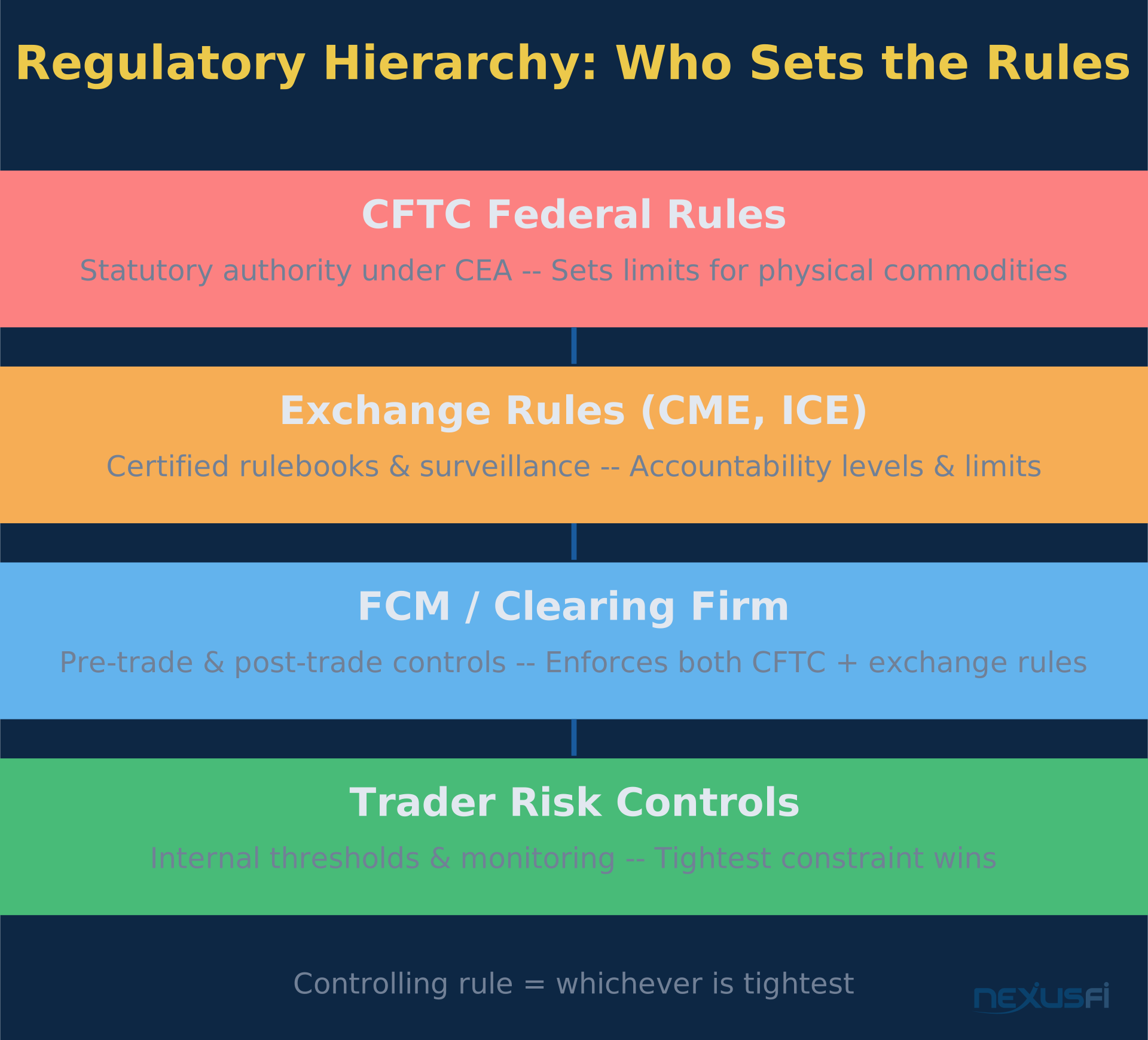
Every futures contract you trade exists inside a regulatory framework designed to prevent any single entity from cornering a market. Position limits cap how ...
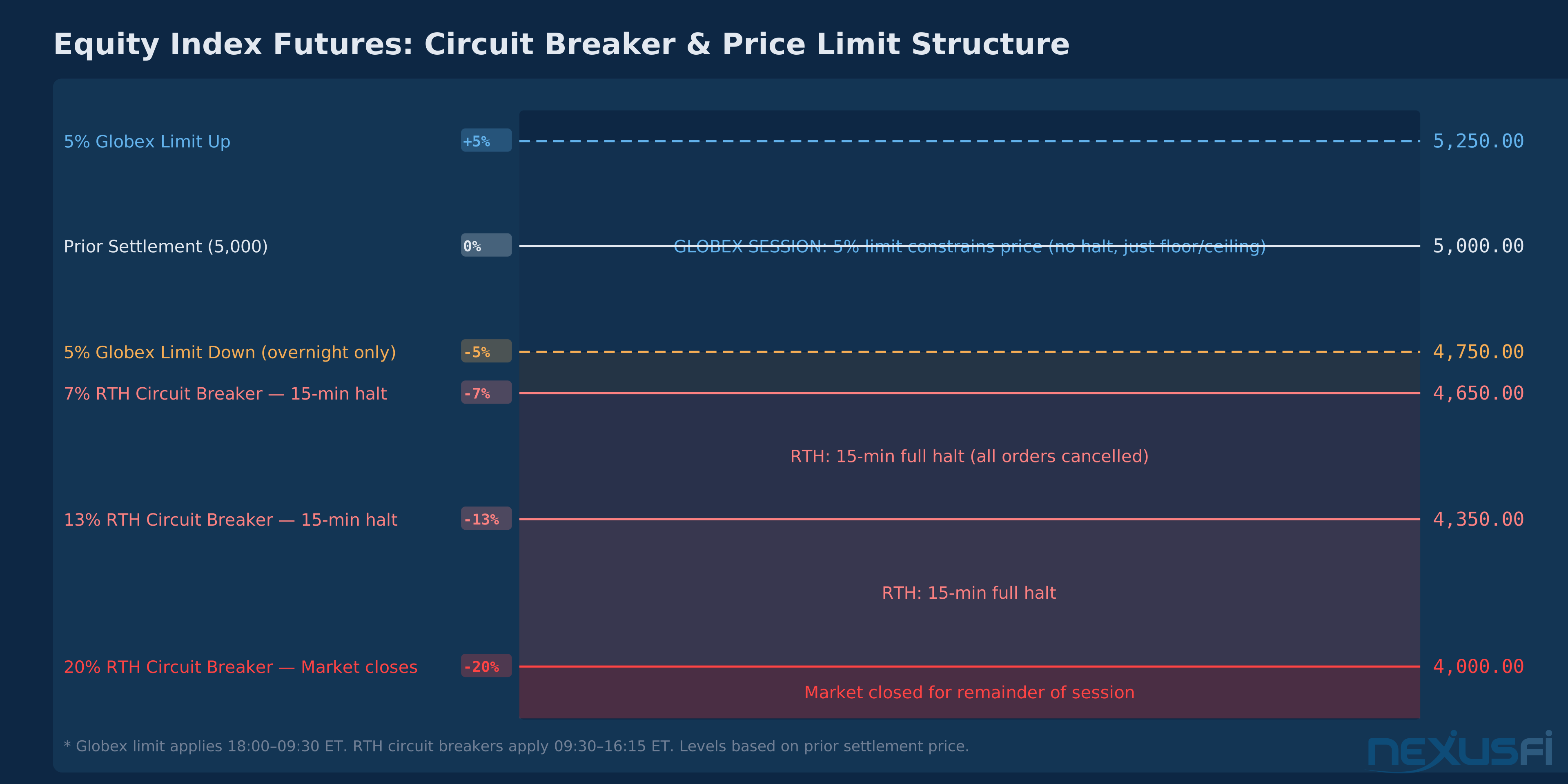
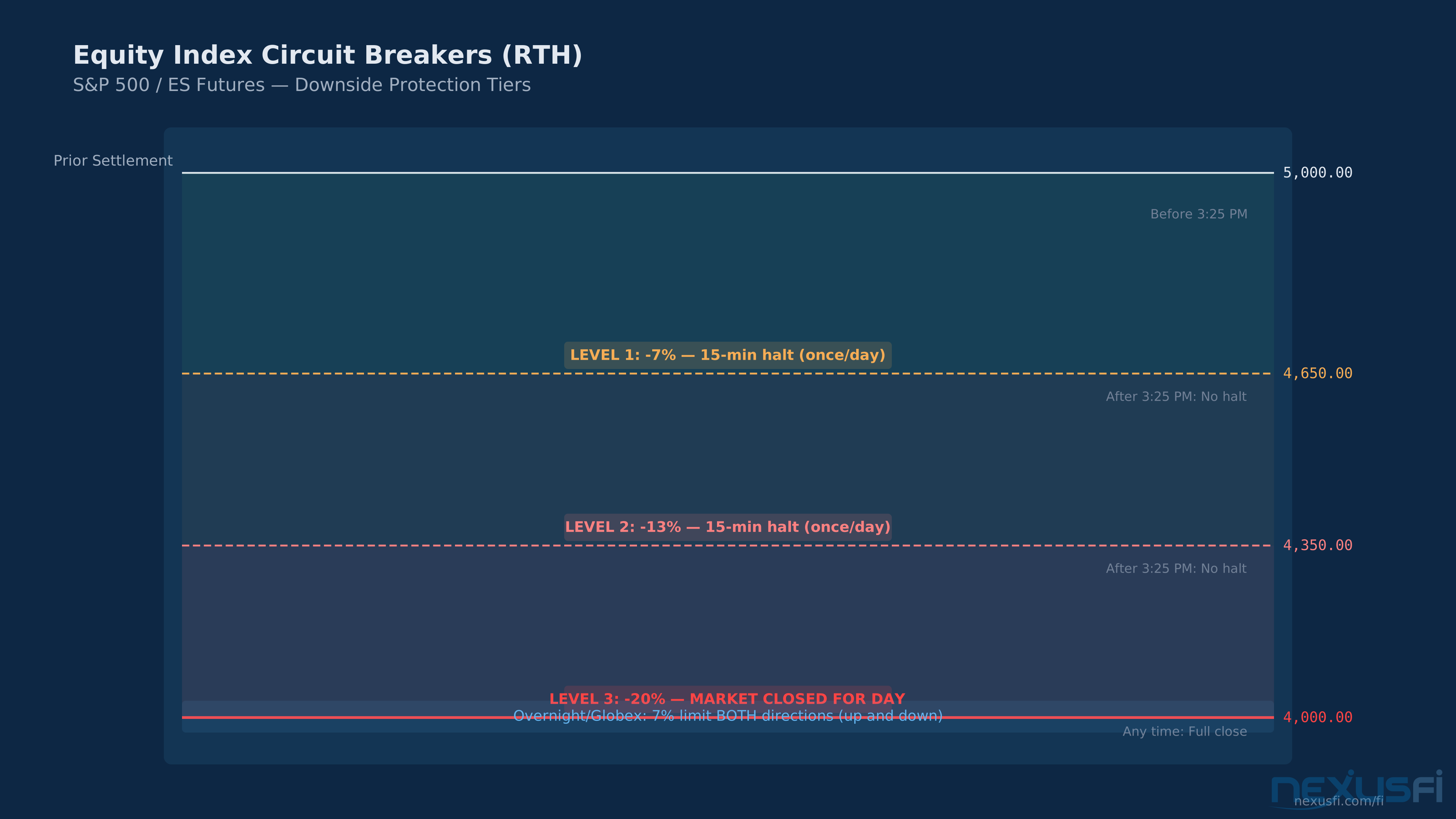
Every futures trader will face a market halt. The question is whether they've prepared for it. When markets move fast enough to trigger circuit breakers or p...
When a futures broker fails you -- unauthorized trades hit your account, a platform failure wipes out your P&L while you wait on hold for an hour, commission...
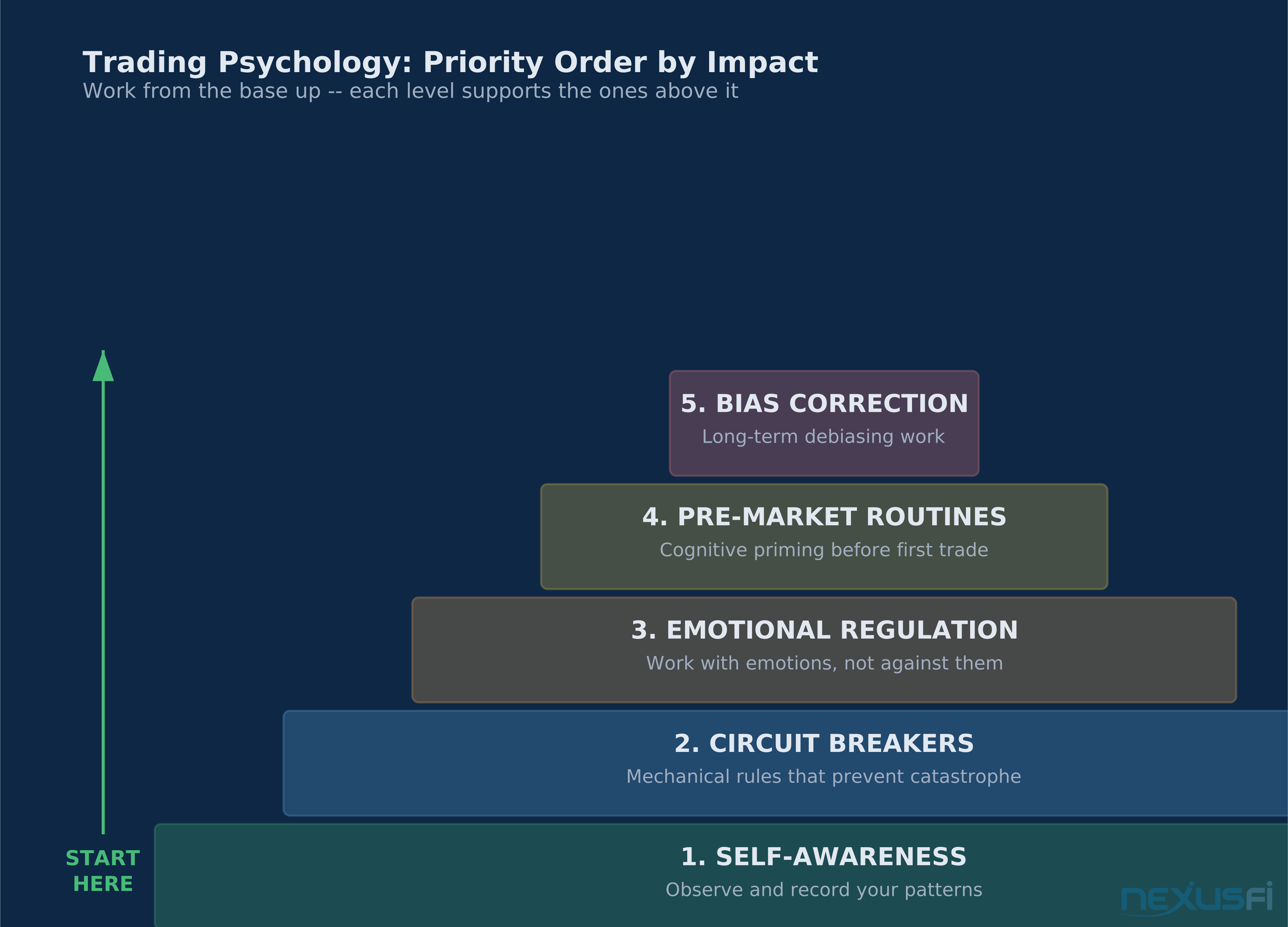
Every futures trader eventually confronts the same brutal realization: knowing what to do and actually doing it are two completely different skills. You can ...
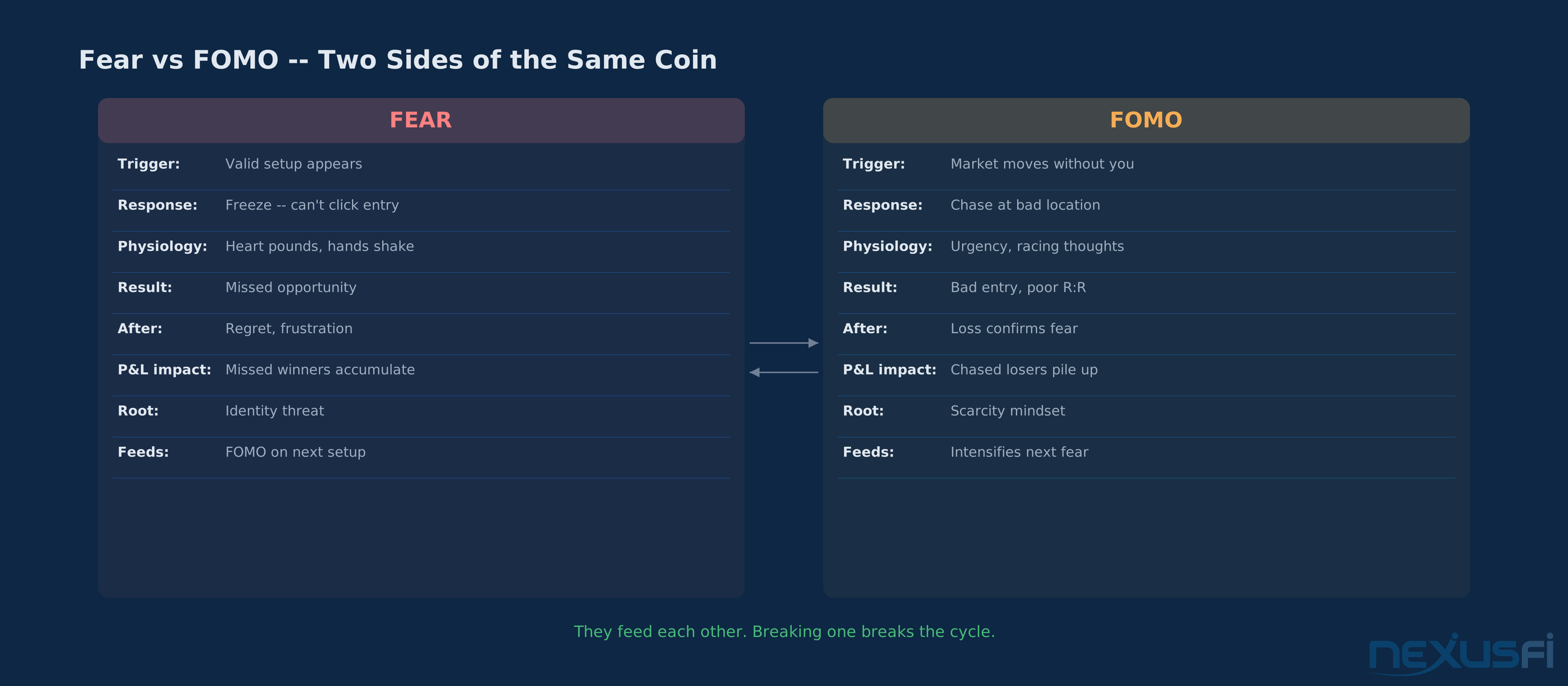
Fear and FOMO are the twin wrecking balls of futures trading. They're not separate problems This cycle burns through accounts faster than any bad strategy. A...
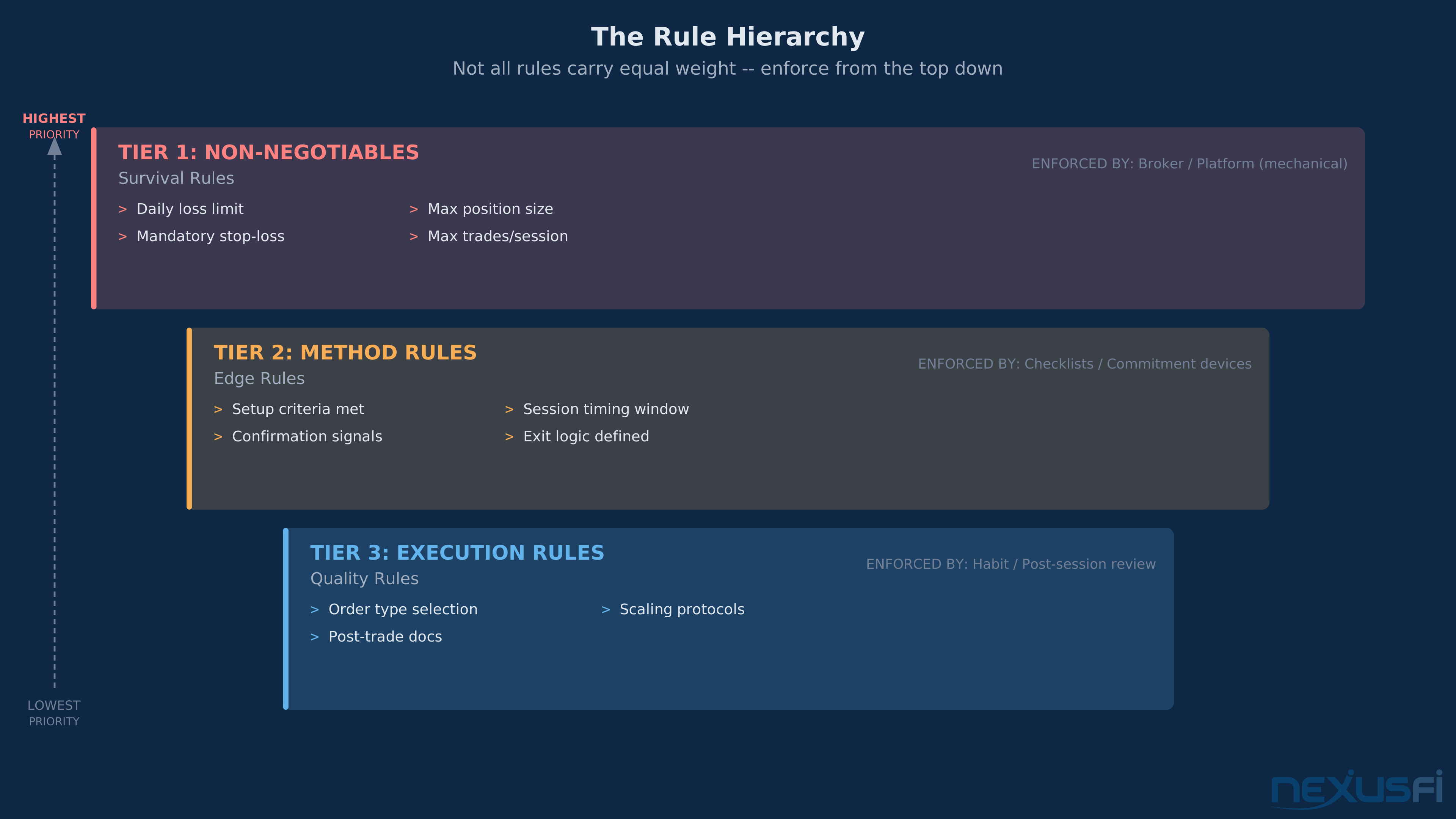
Every futures trader has experienced the moment: you know the rule, you wrote the rule, you've enforced the rule a hundred times -- and today, you break it. ...
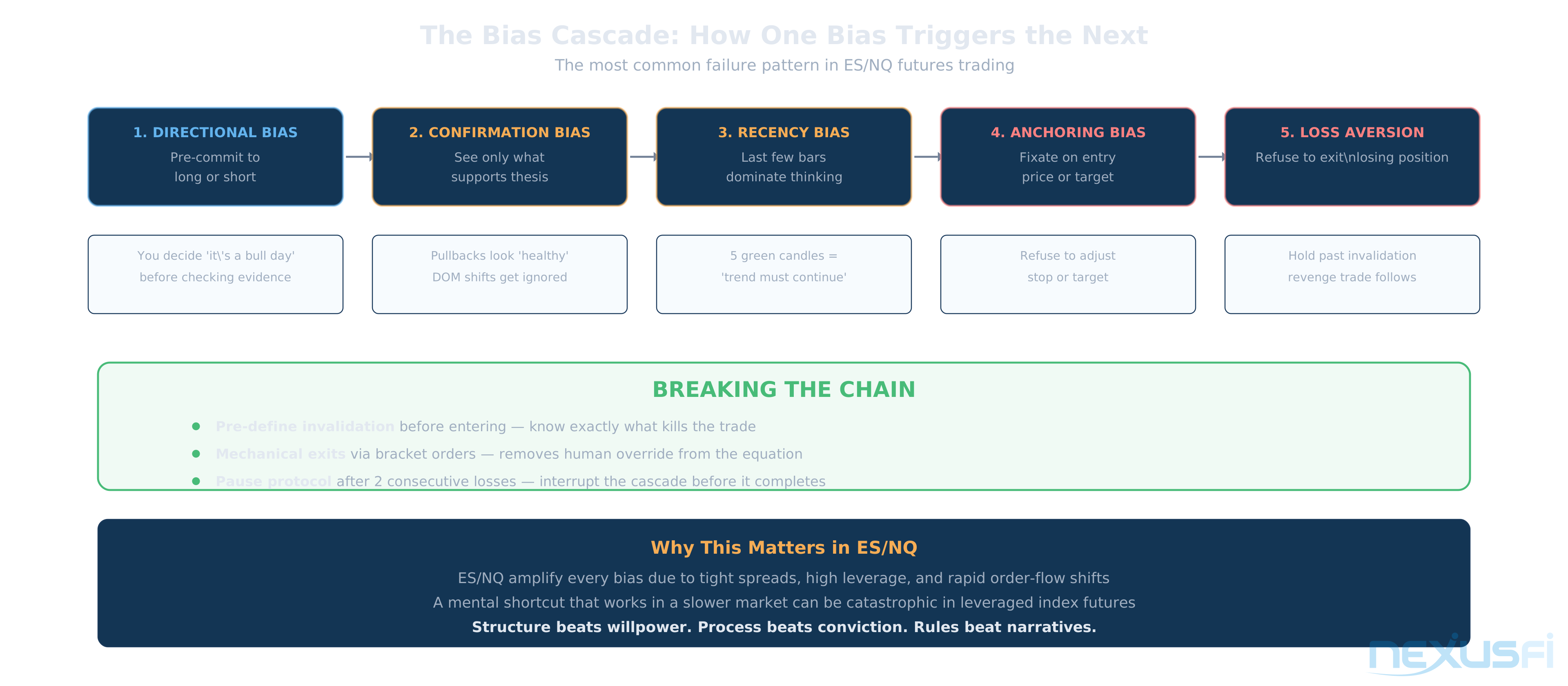
Every trader carries cognitive biases -- mental shortcuts that served humans well for millennia but actively sabotage trading decisions. These aren't charact...
Every futures trader has a charting routine before the open. Levels marked, ATM strategies loaded, economic calendar checked. But how many traders have a men...
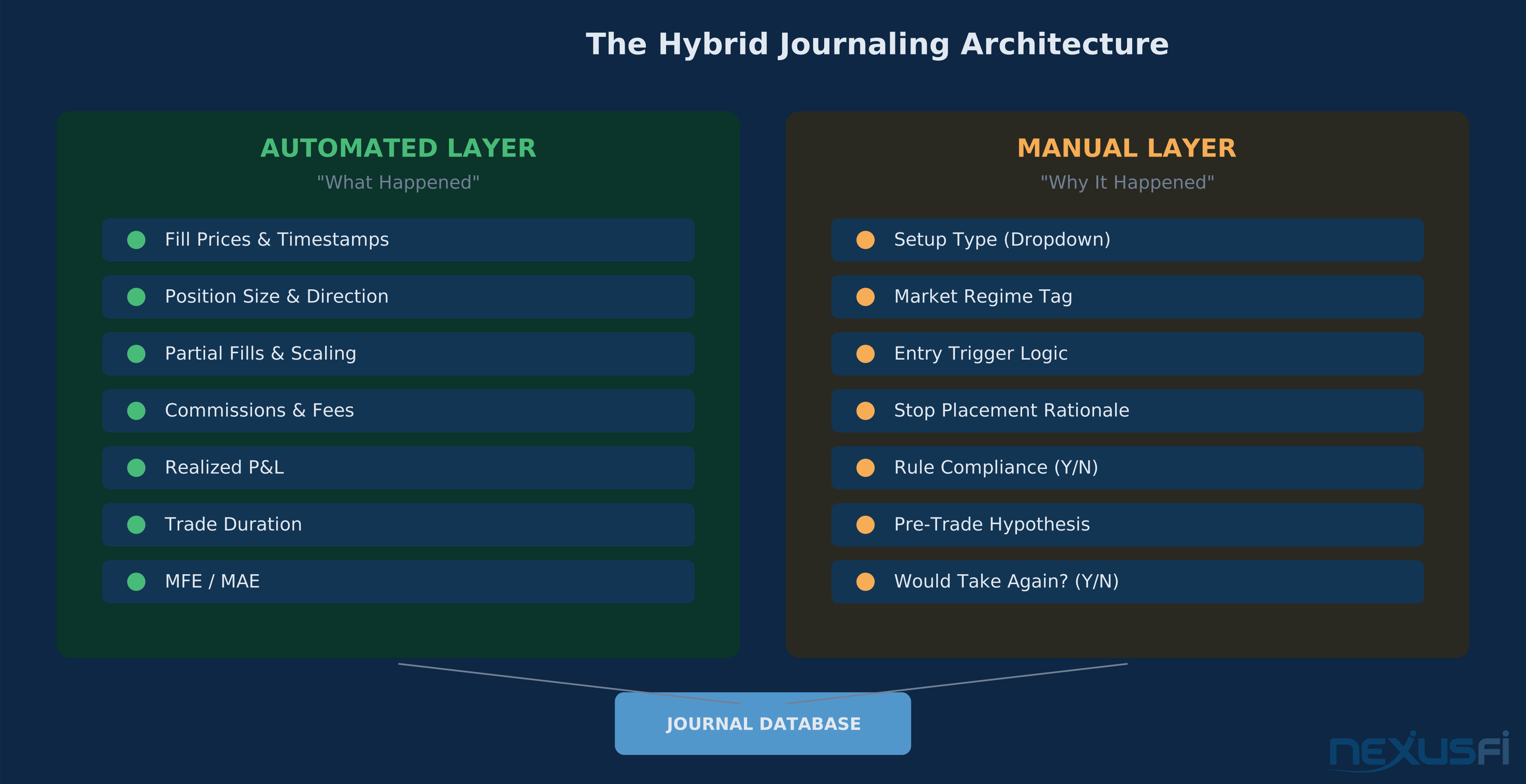
Every experienced trader will tell you the same thing: keep a journal. And almost every developing trader will nod, try it for a week, then quietly stop. The...
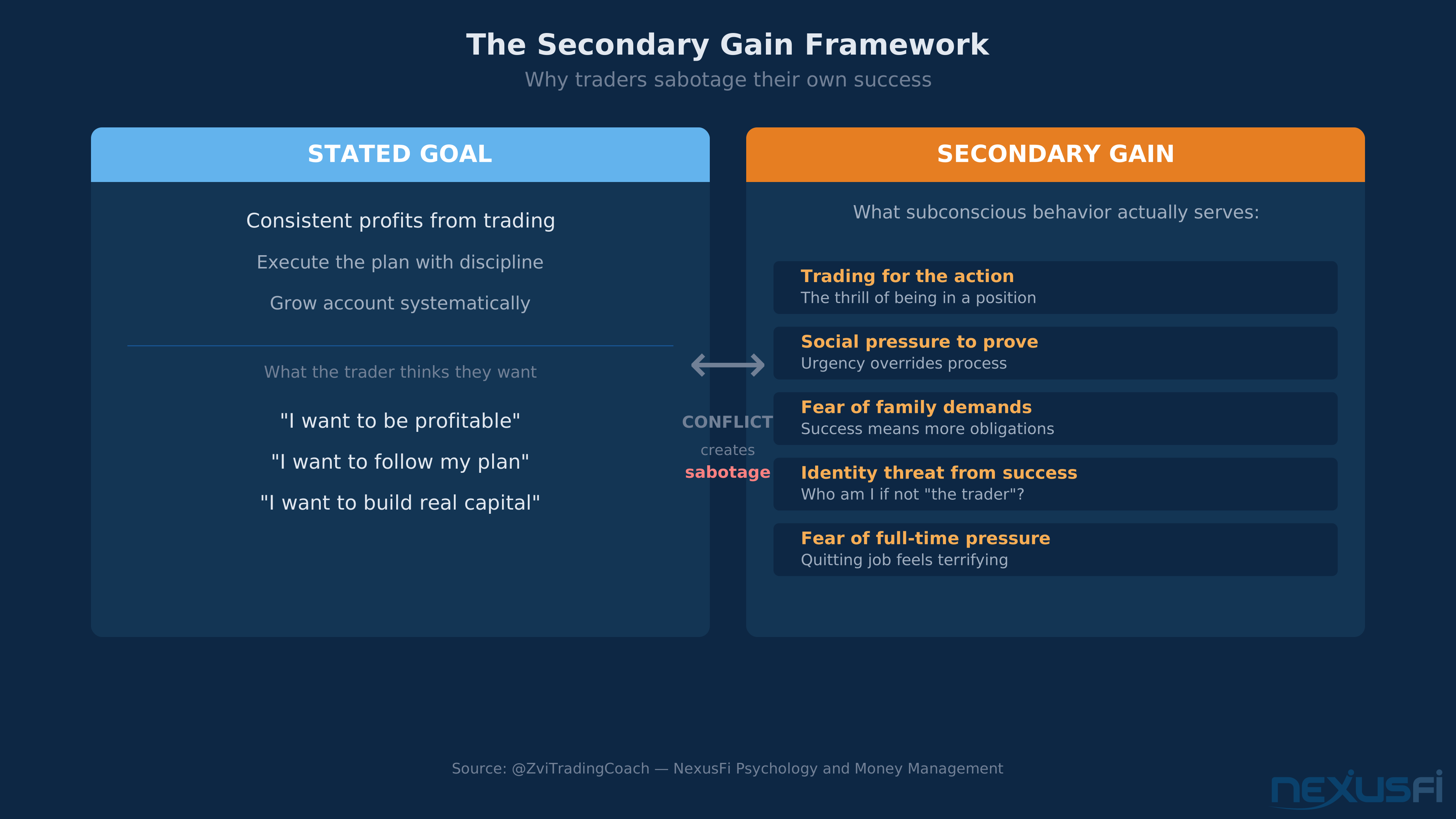
Trading psychology coach @ZviTradingCoach offered one of the most useful reframes on this topic on NexusFi's Psychology and Money Management forum: "Self sab...
Picture an ES trader who walks into the session with a bullish thesis built on overnight globex strength and a Fed speaker he read as dovish. Market opens, r...
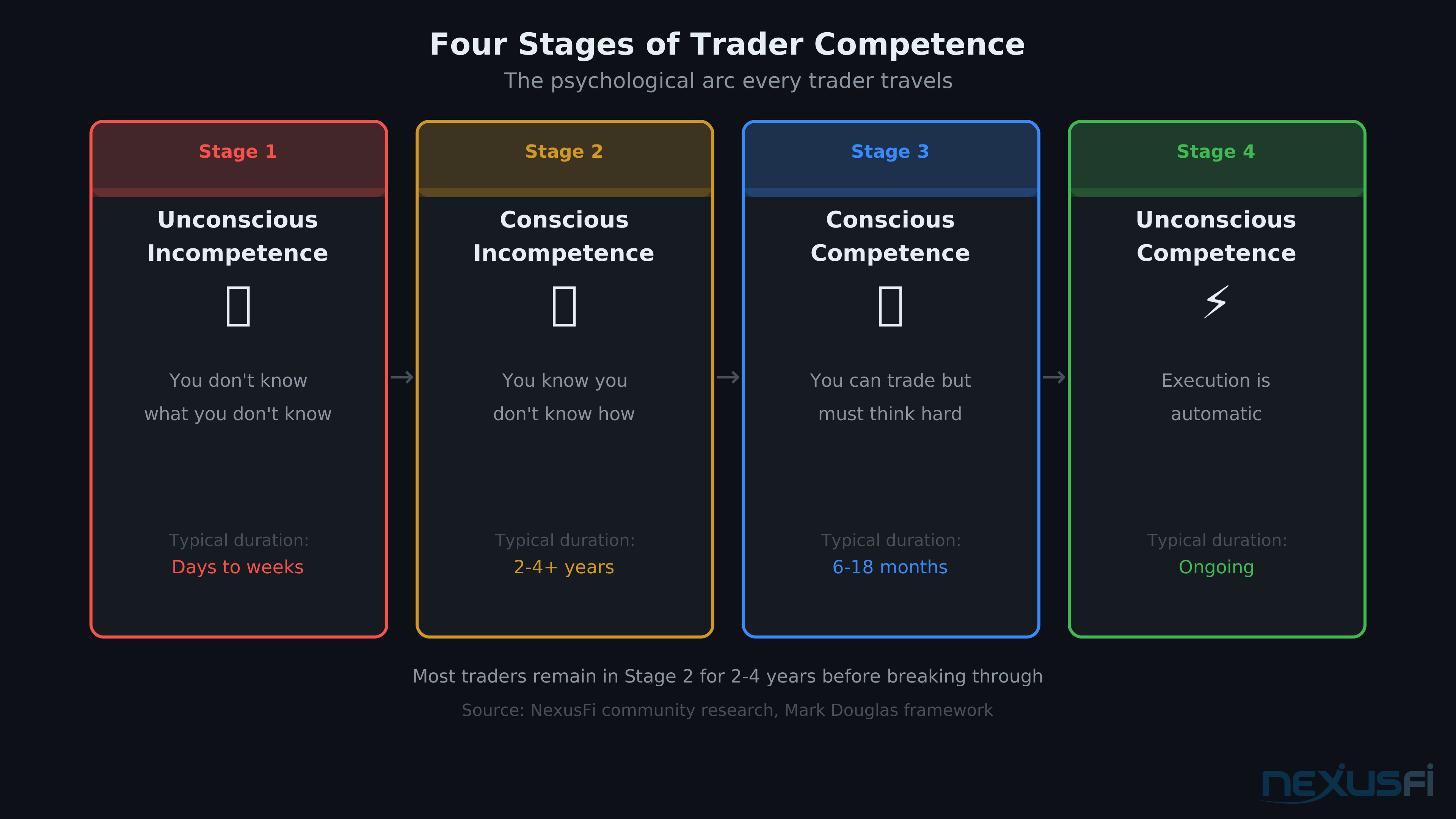
Knowing which stage you are in changes what your next action should be -- not the next system, but the next stage-appropriate behavior. Overview Every trader...
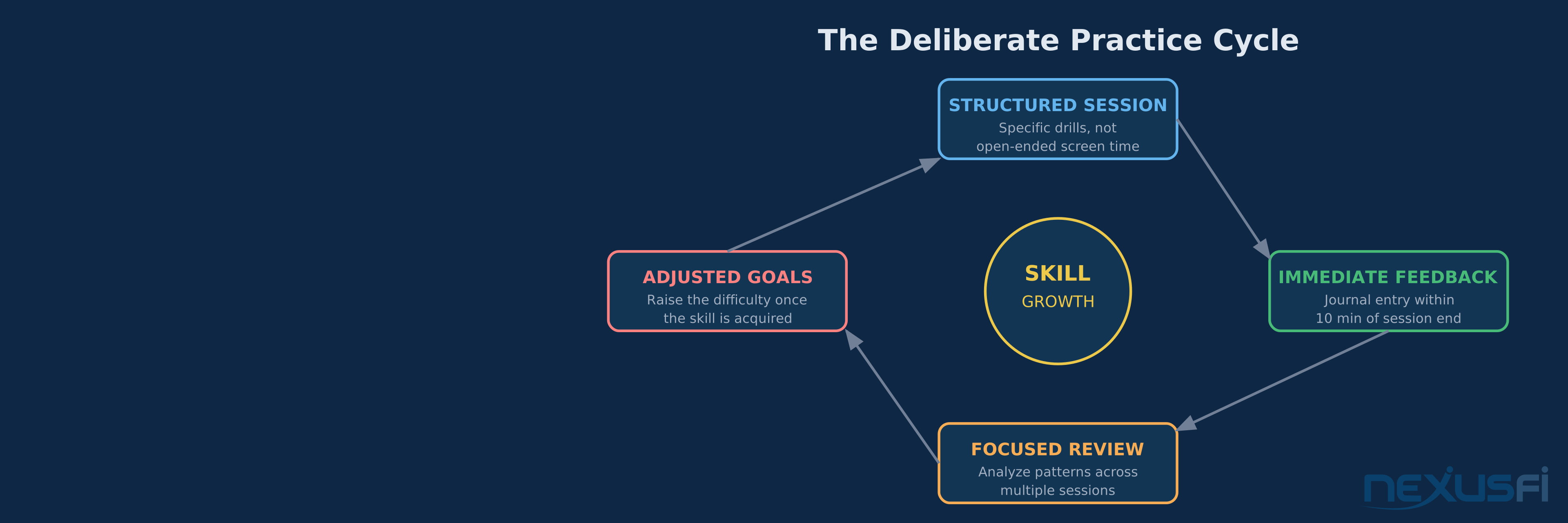
Overview Screen time alone does not build trading skill. Psychologist Anders Ericsson's research shows that structured, feedback-driven practice -- deliberat...
Confirmation bias is the most dangerous psychological trap in futures trading -- not because it's rare, but because it feels like clear thinking when it's ha...
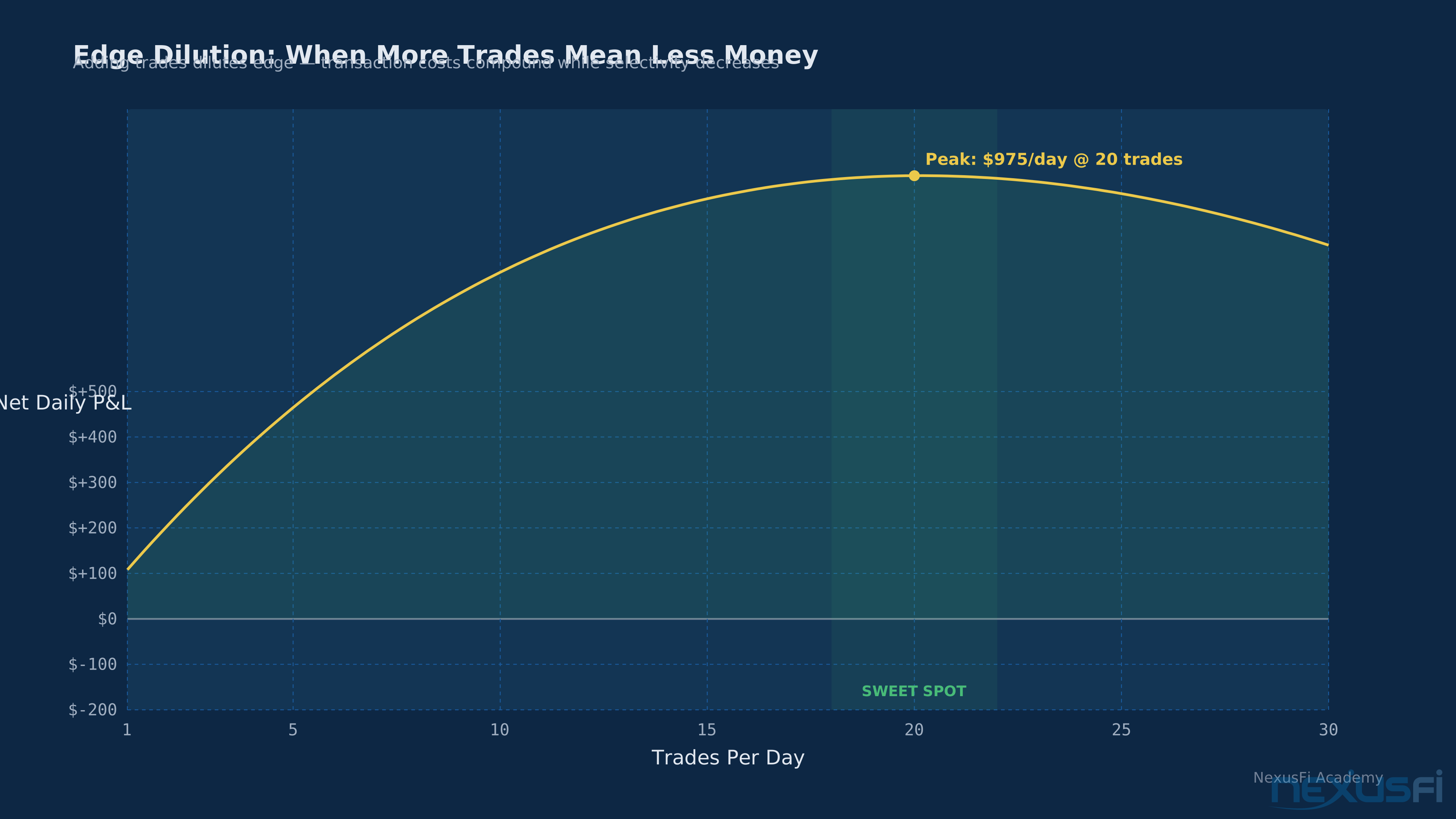
Overview Overtrading is the single most common way futures traders turn a winning method into a losing account. Not bad analysis, not wrong direction -- just...
Thinking in probabilities is the foundational mental shift that separates consistently profitable traders from those who produce occasional gains but cannot ...
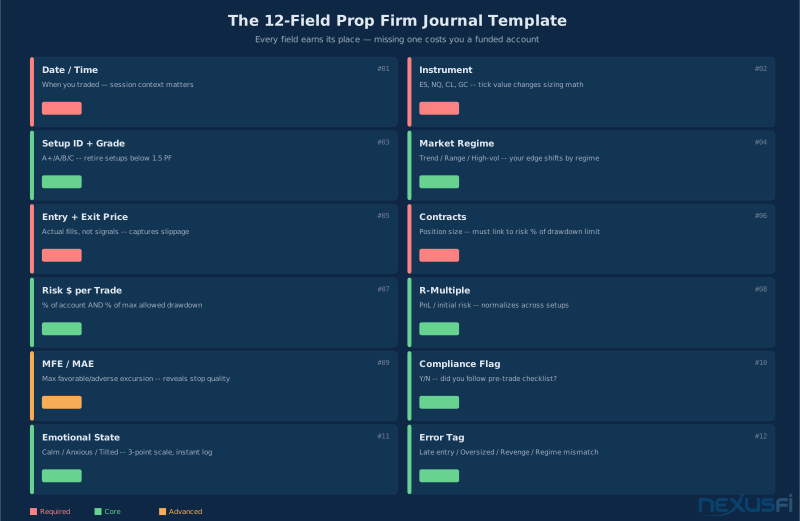
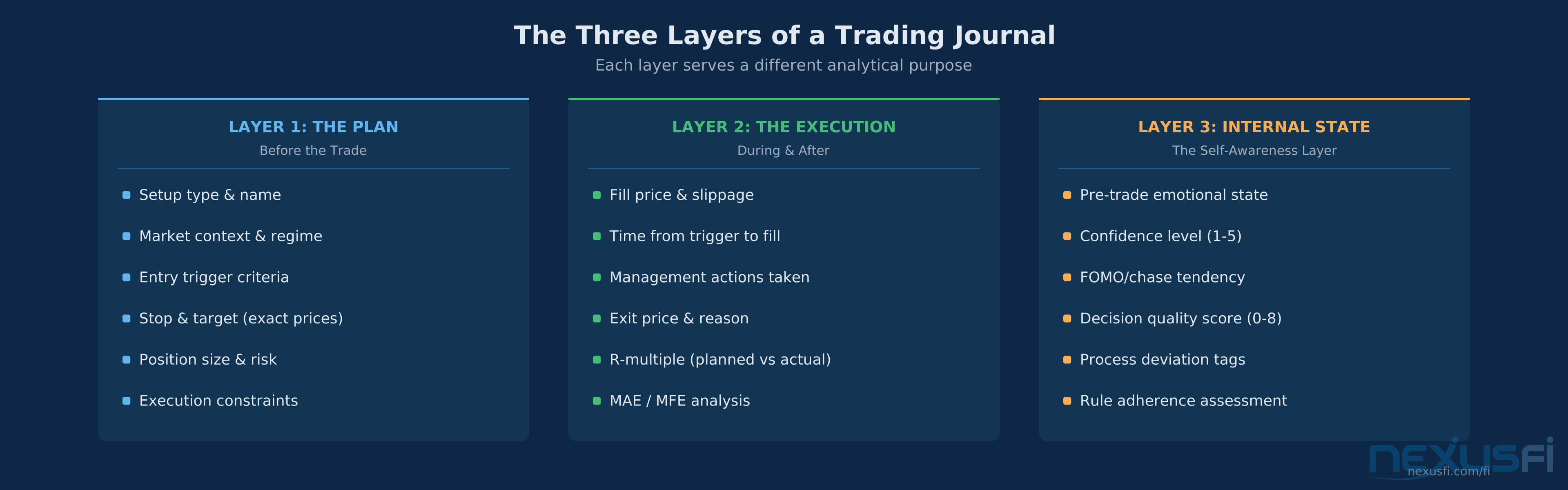
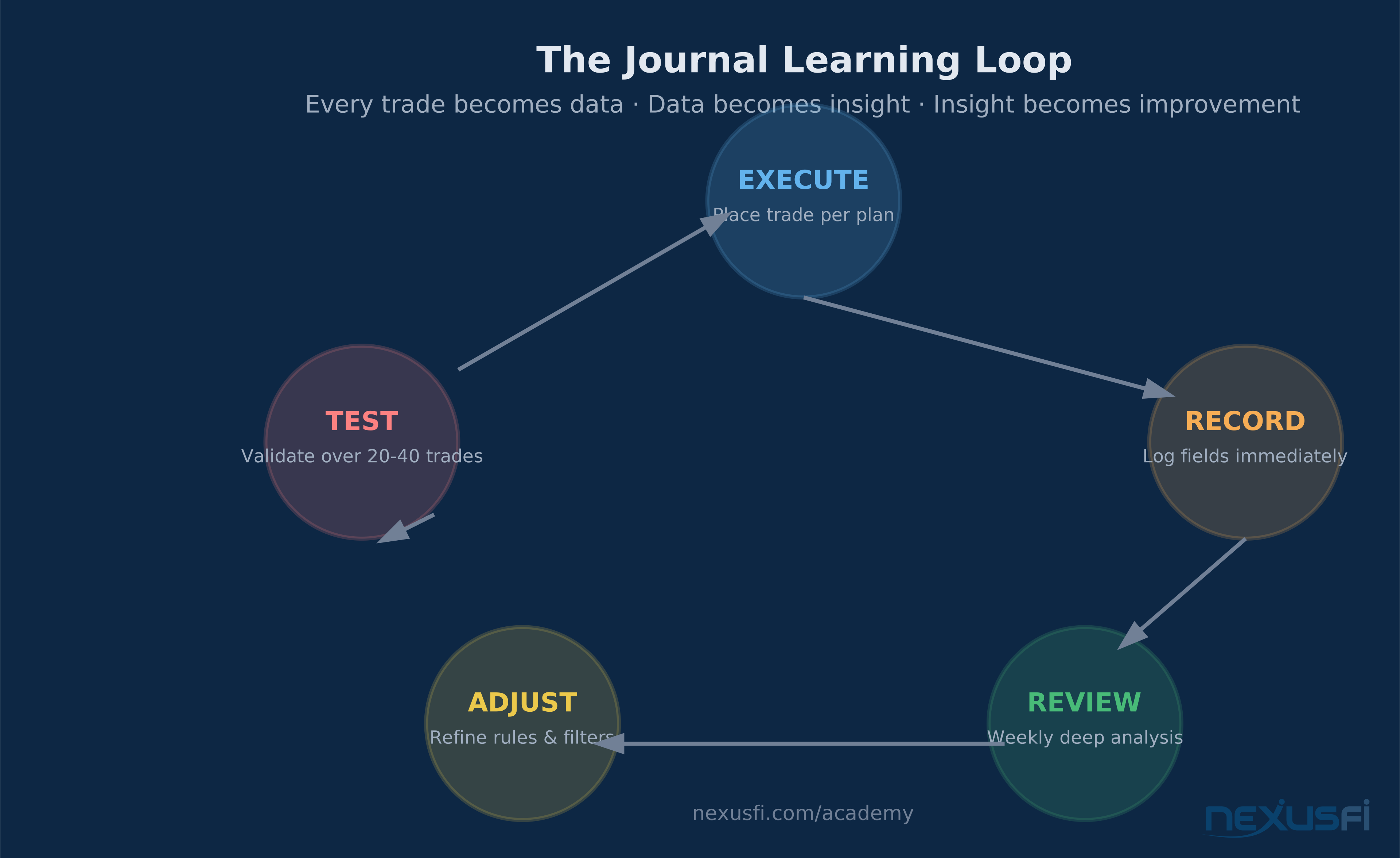
A trading journal is the single highest-leverage tool available to a developing trader. Not a platform. Not an indicator. Not a strategy course. The journal....
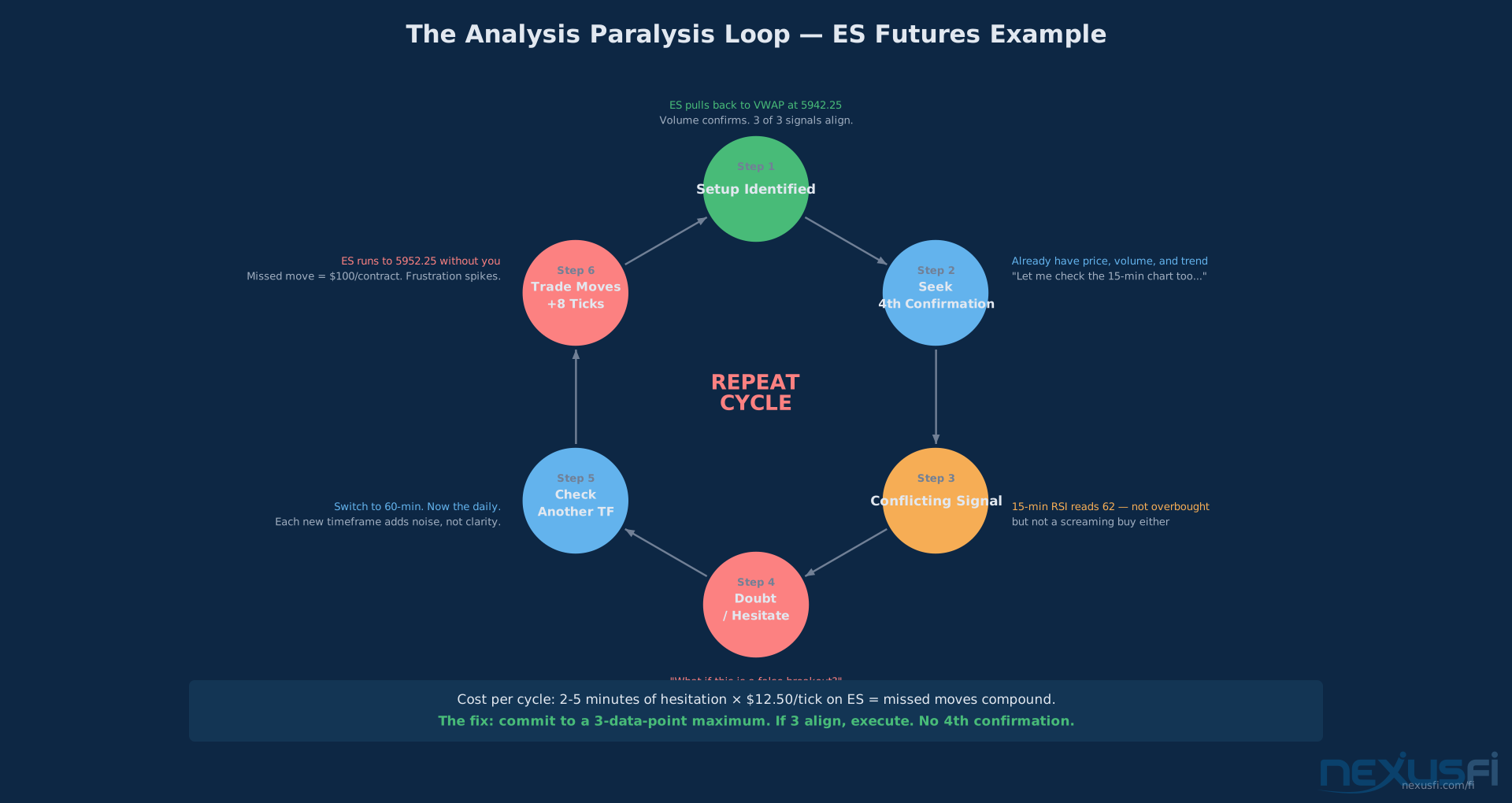
Analysis paralysis is the inability to execute a trade despite having sufficient information to act. It's not about lacking knowledge. Most traders who freez...
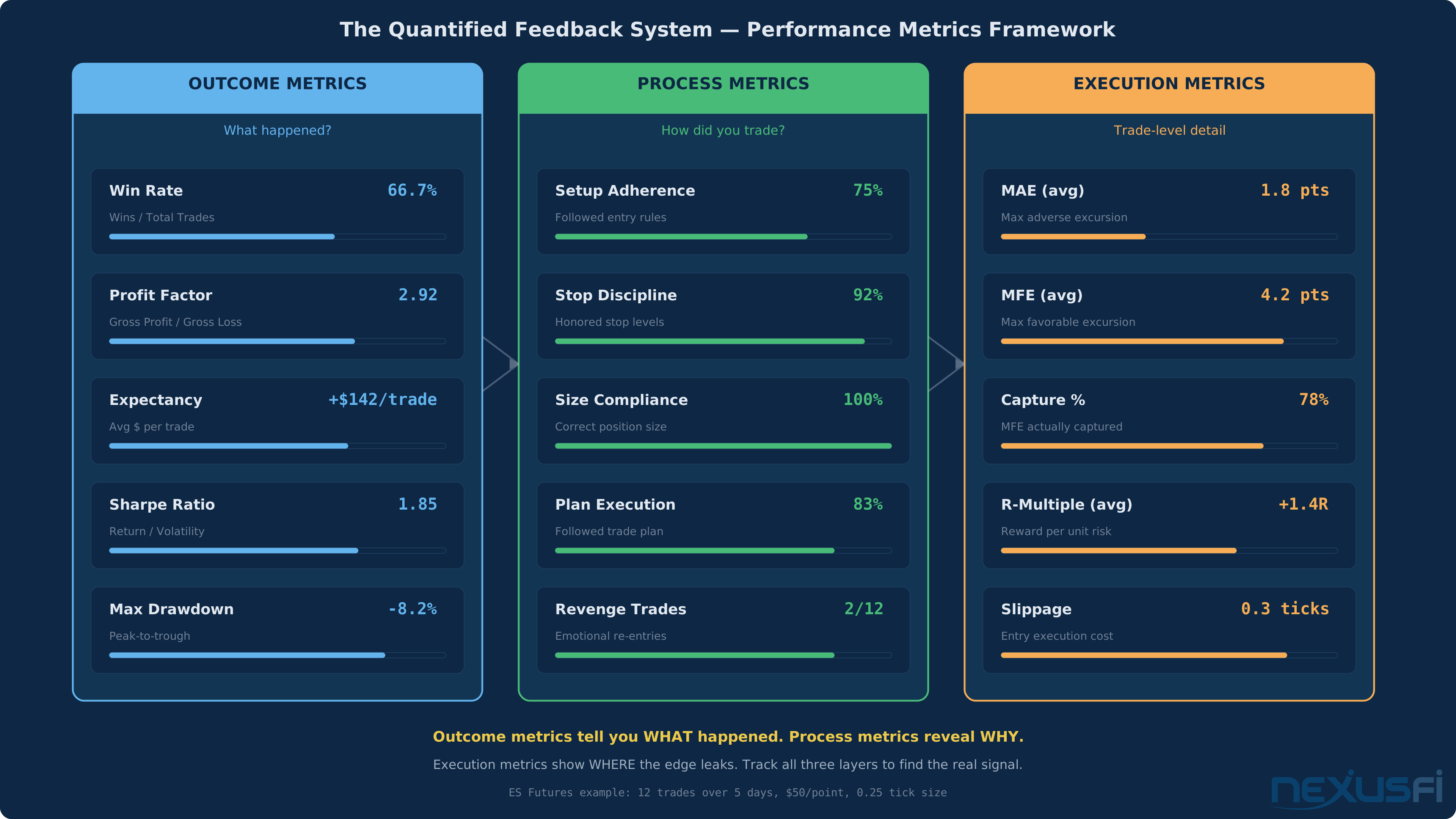
Most traders track the wrong things. They watch P&L tick by tick -- which is the trading equivalent of judging a doctor by how many patients recovered on Tue...
Overview Mark Douglas's Trading in the Zone (2000) identified why profitable trading systems fail in human hands: the problem is psychological, not technical...
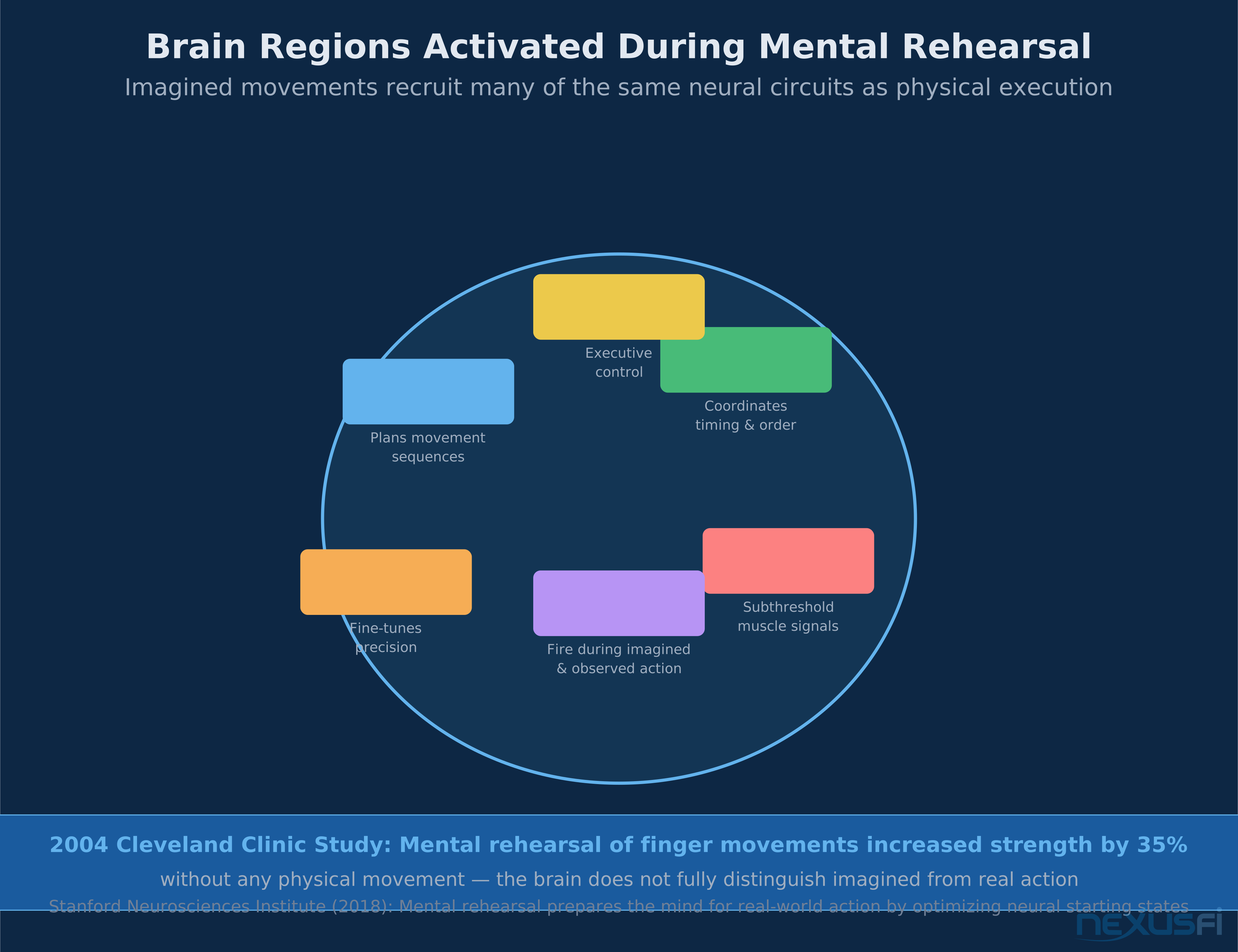
Before every Olympic ski run, the athlete stands at the top of the mountain with eyes closed. To an observer, nothing is happening. Internally, they are exec...
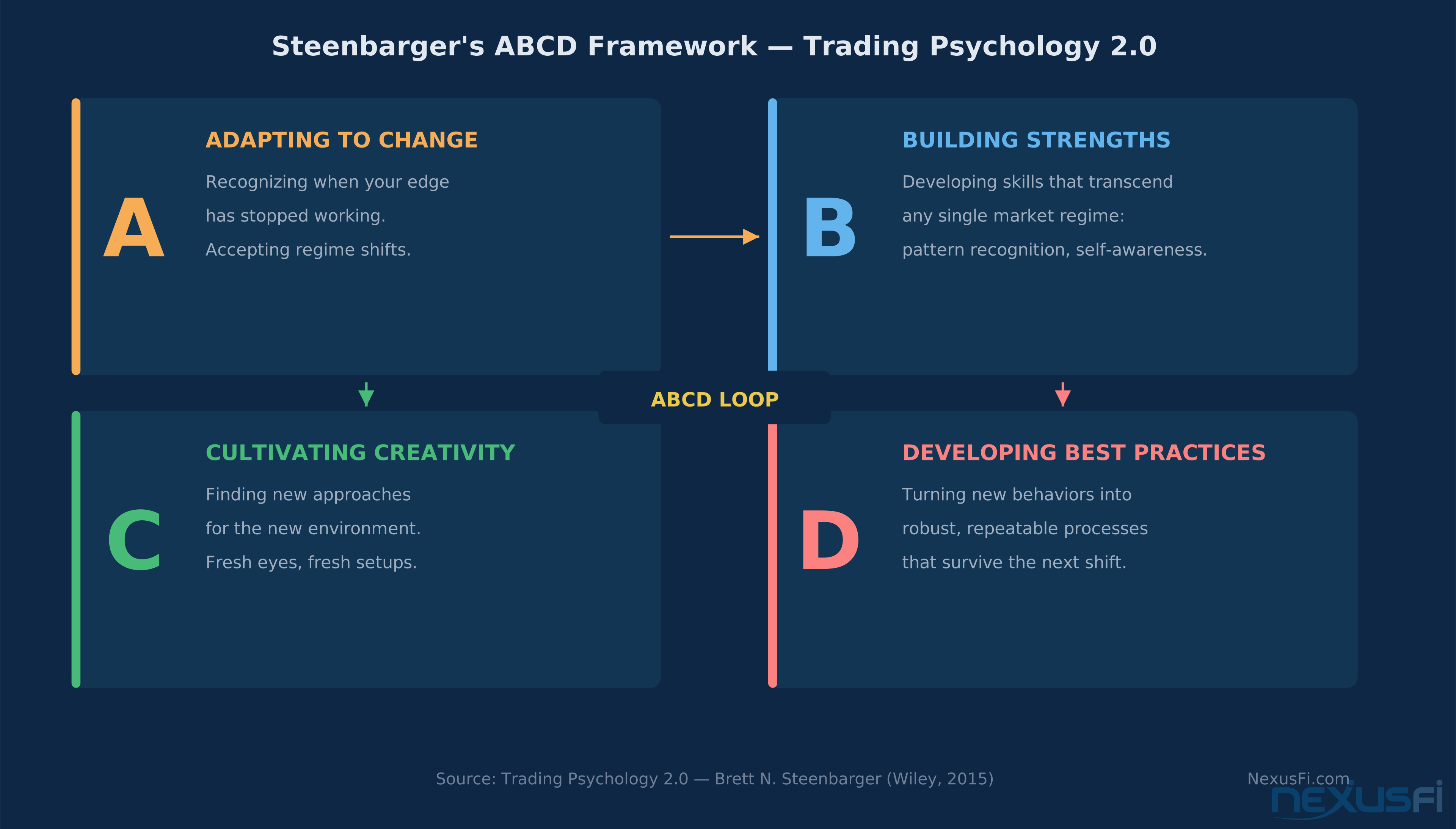
Every trader will eventually face the moment when their approach stops working -- not because of a technical failure, but because the market shifted characte...
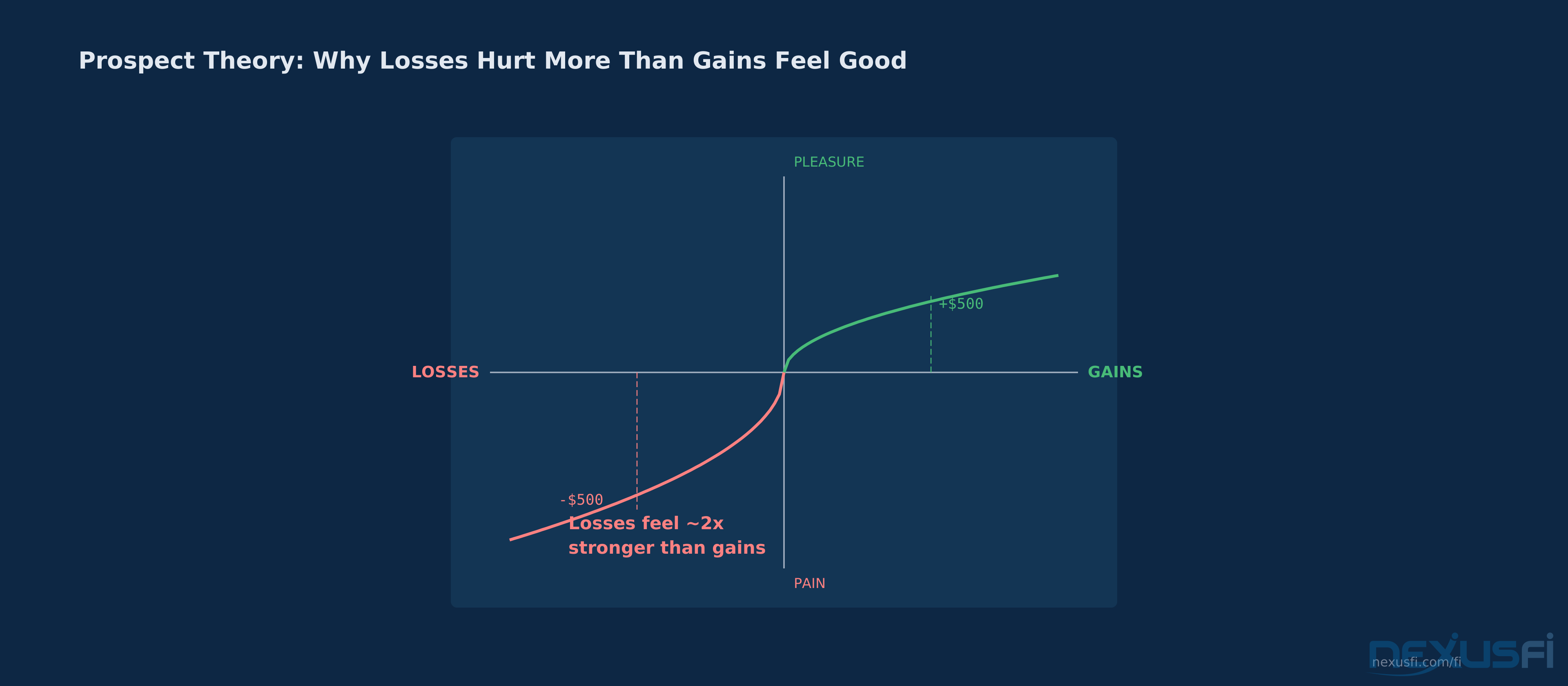
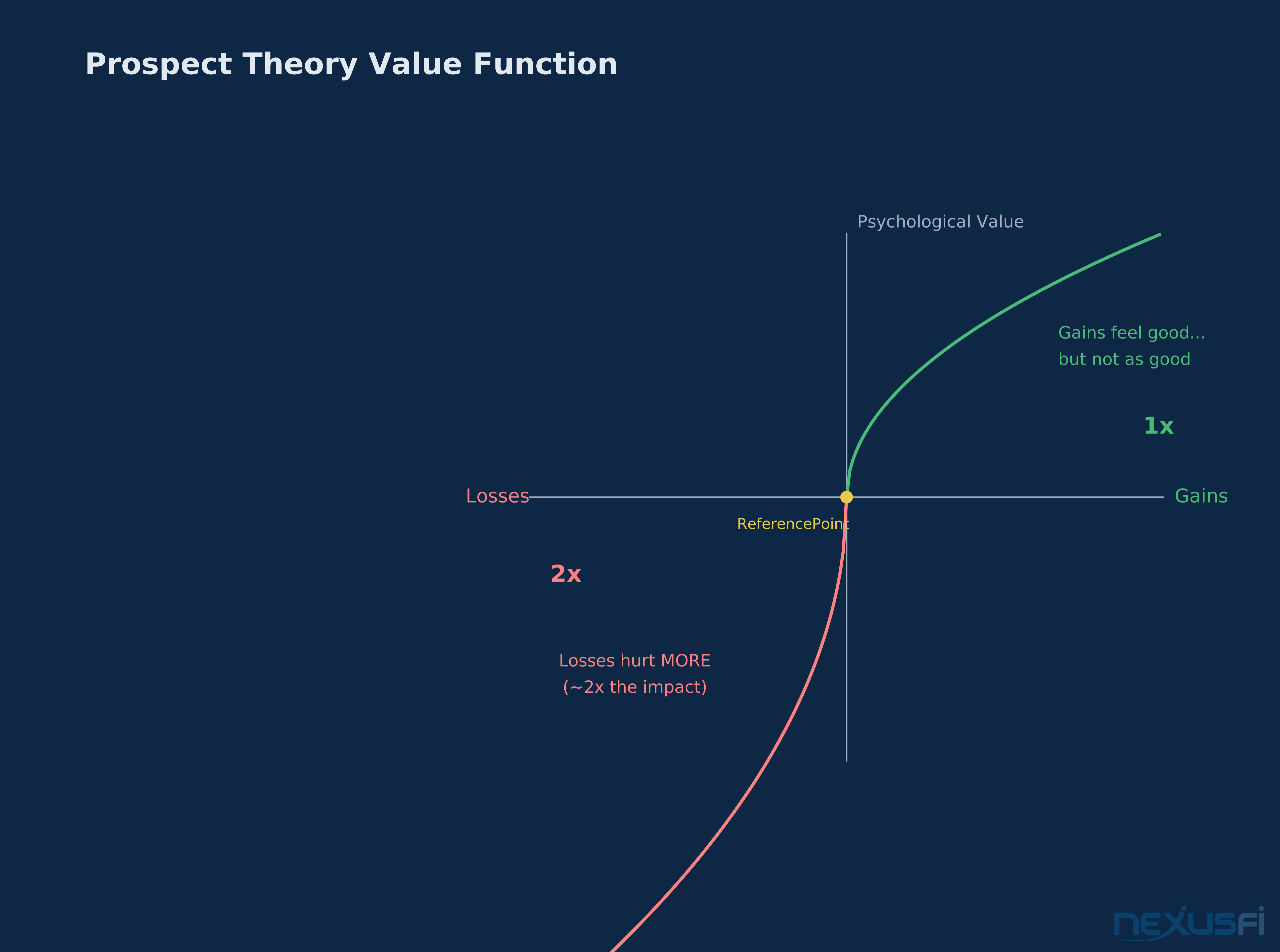
Overview Loss aversion is the single most destructive cognitive bias in trading. Not overconfidence, not recency bias, not FOMO -- loss aversion. It's the re...
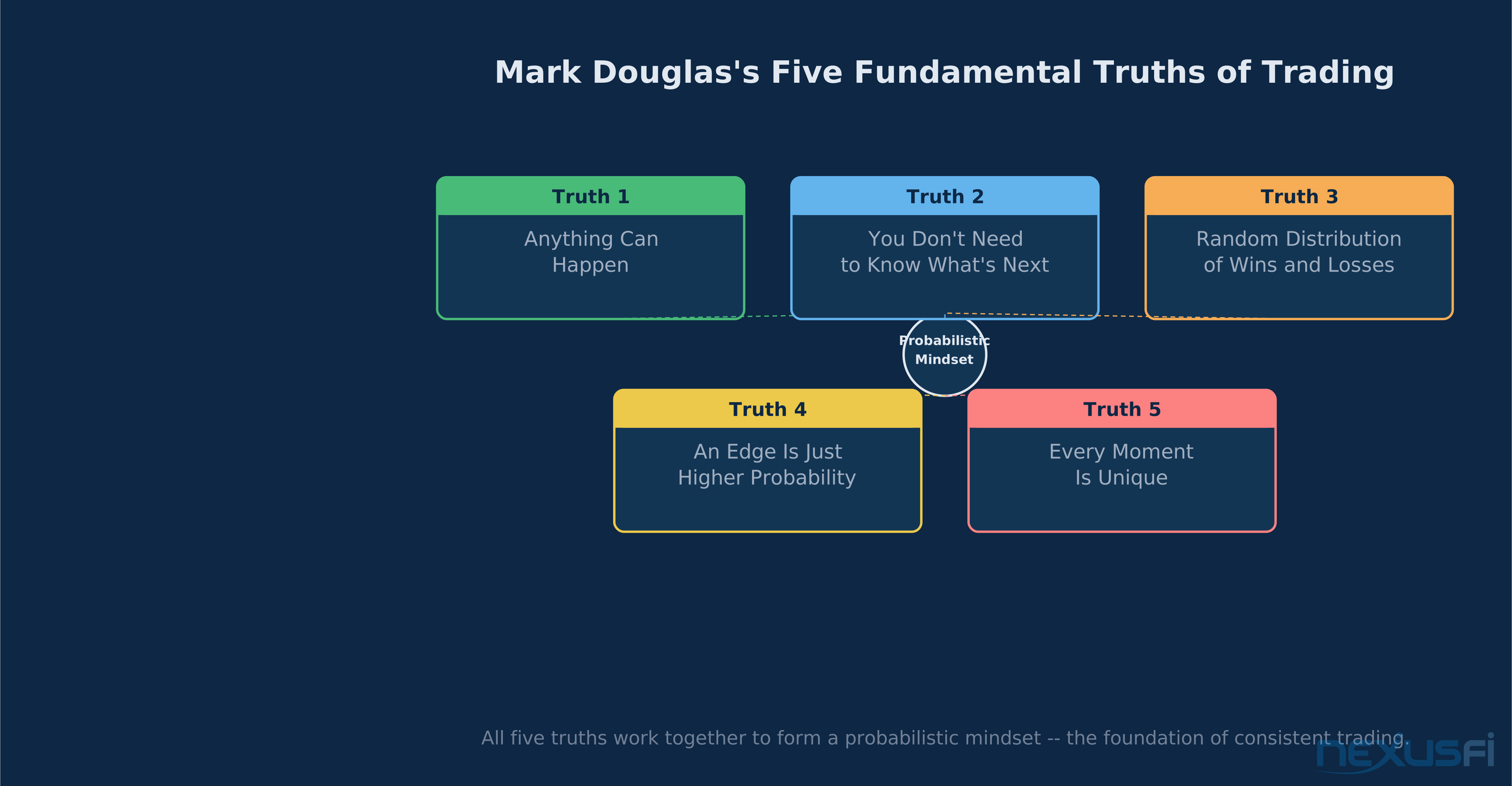
Overview Mark Douglas spent his career answering one question: why do traders with profitable systems still lose money? His answer -- developed across The Di...
Mark Douglas spent decades trying to explain why traders who understand every rule still violate every rule. His conclusion, developed across The Disciplined...
Mark Douglas identified the ego trap as one of the most destructive forces in trading: the fusion of personal self-worth with profit and loss outcomes. When ...
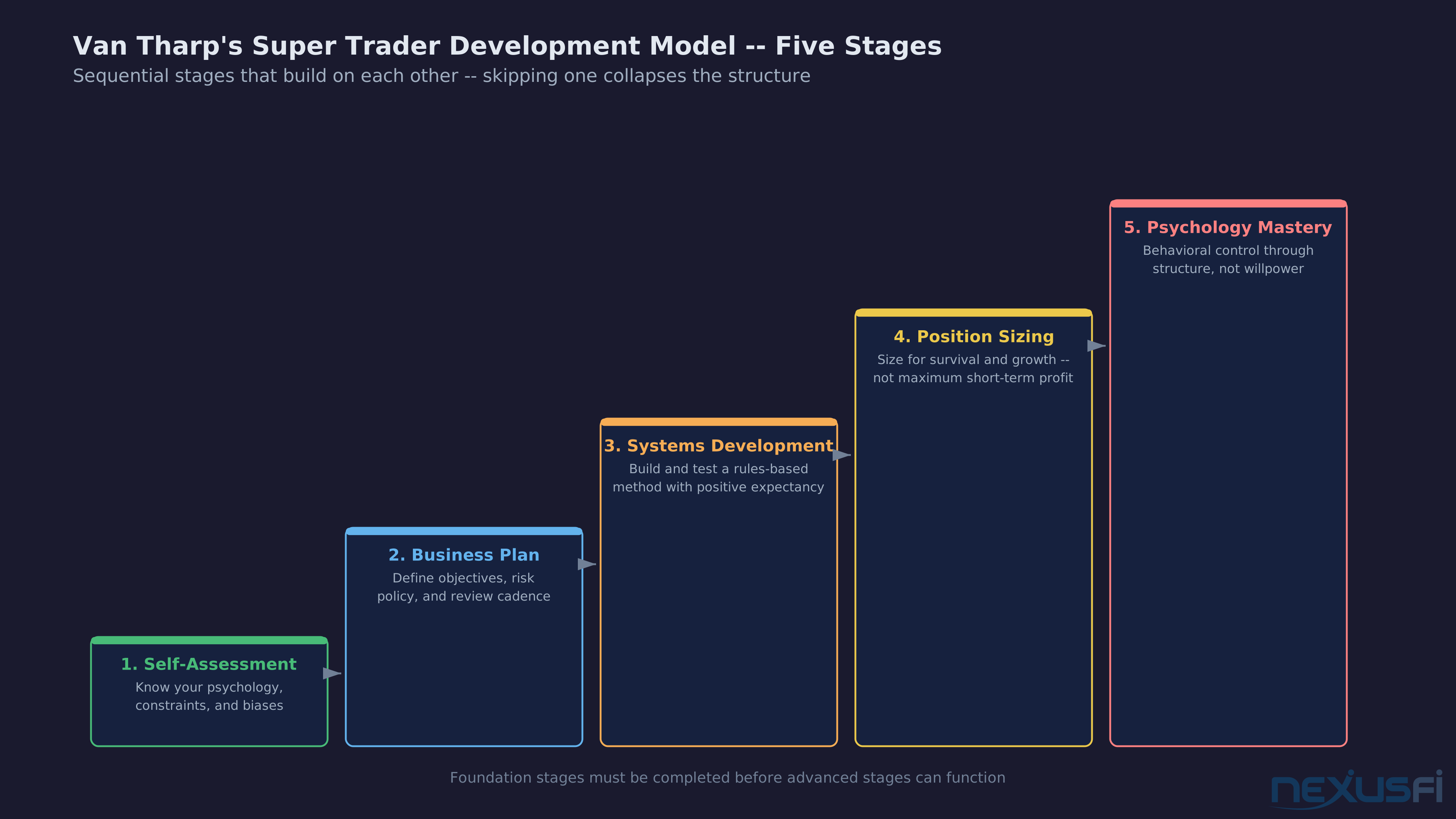
Van Tharp spent decades studying what makes elite traders elite -- and his answer wasn't a better indicator or a secret setup. The Super Trader development m...
Overview Mark Douglas spent decades studying why intelligent, disciplined people consistently lose money trading. His conclusion wasn't about strategy, risk ...
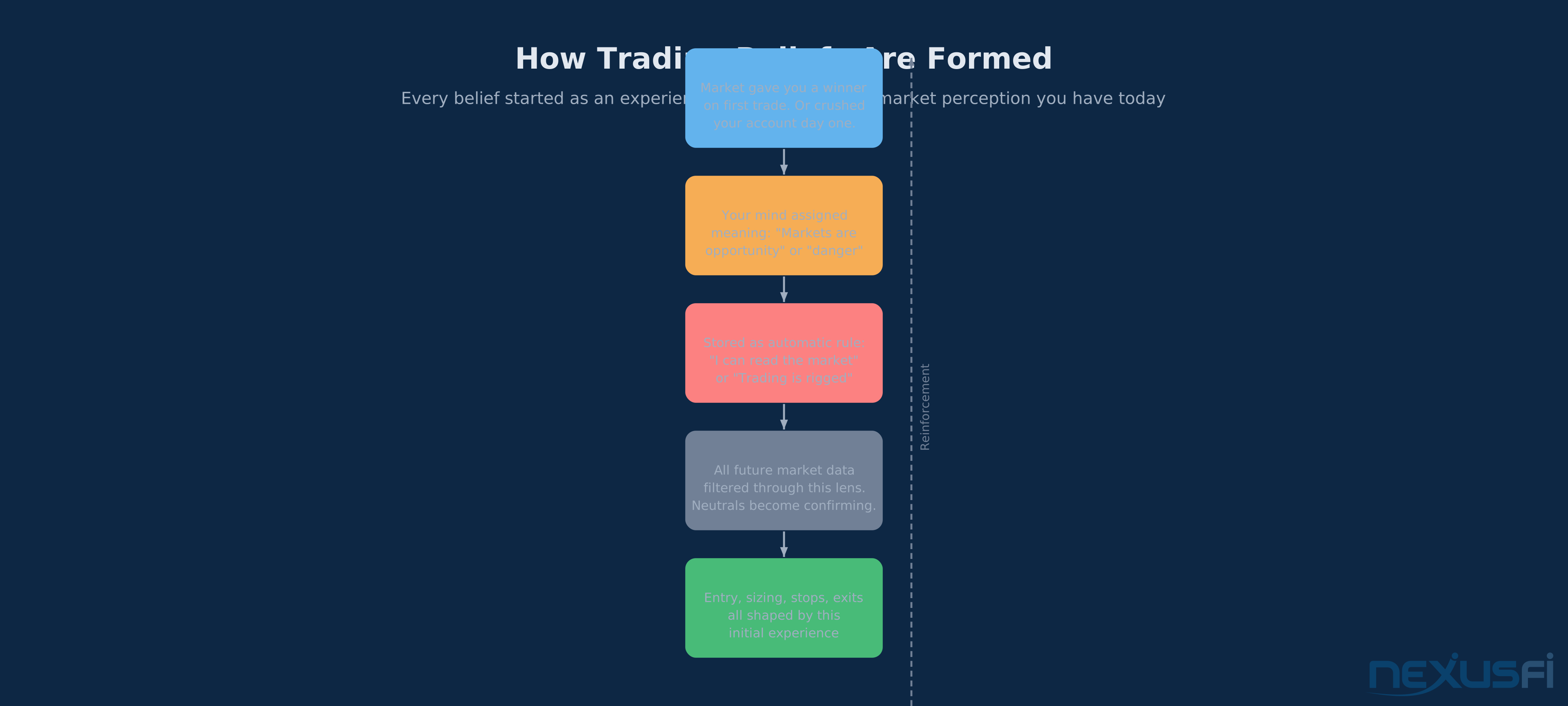
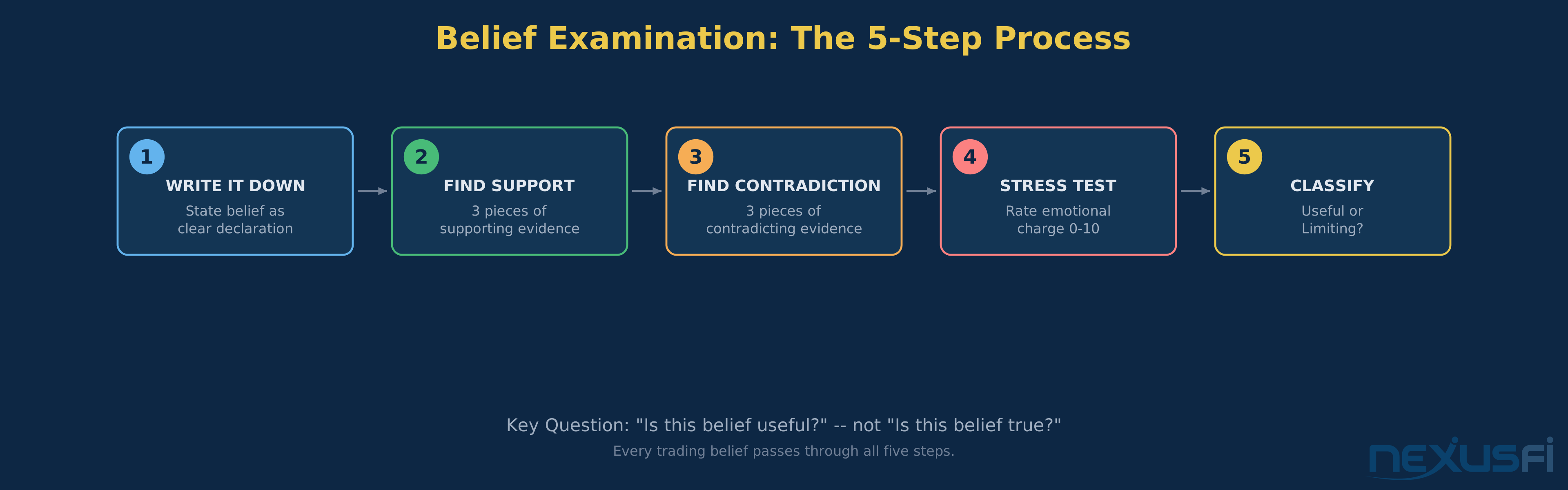
Overview Van Tharp spent decades studying what makes traders profitable, and he kept arriving at the same conclusion: your beliefs about the market and about...
Overview Every trader knows patience matters. Most traders can't do it. The gap between knowing and doing costs more money than bad analysis ever will -- not...
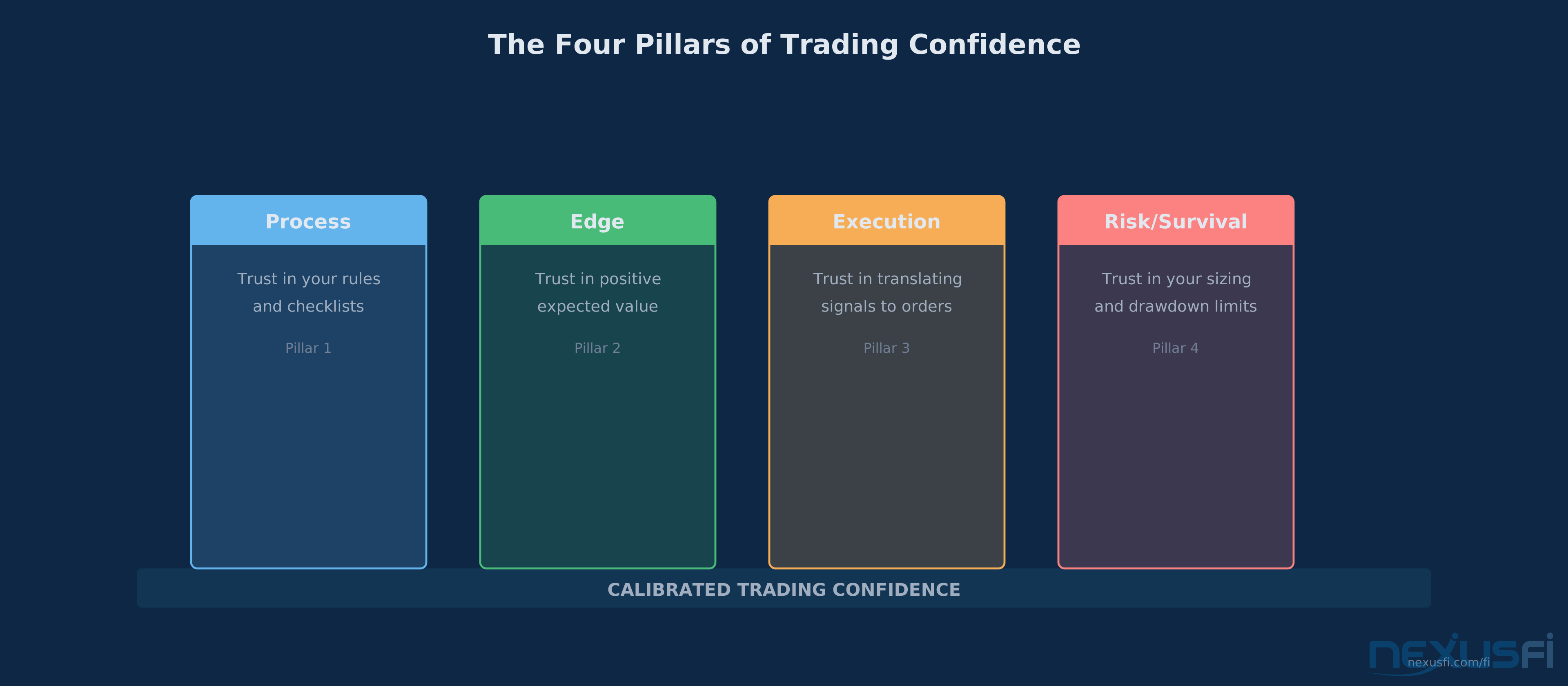
Overview Confidence in futures trading is calibrated trust -- trust in your edge, your execution, and your risk system's ability to keep you in the game long...
Most traders spend years hunting for the perfect setup, the edge that's going to flip the switch. They add indicators, tweak entry rules, paper trade new sys...
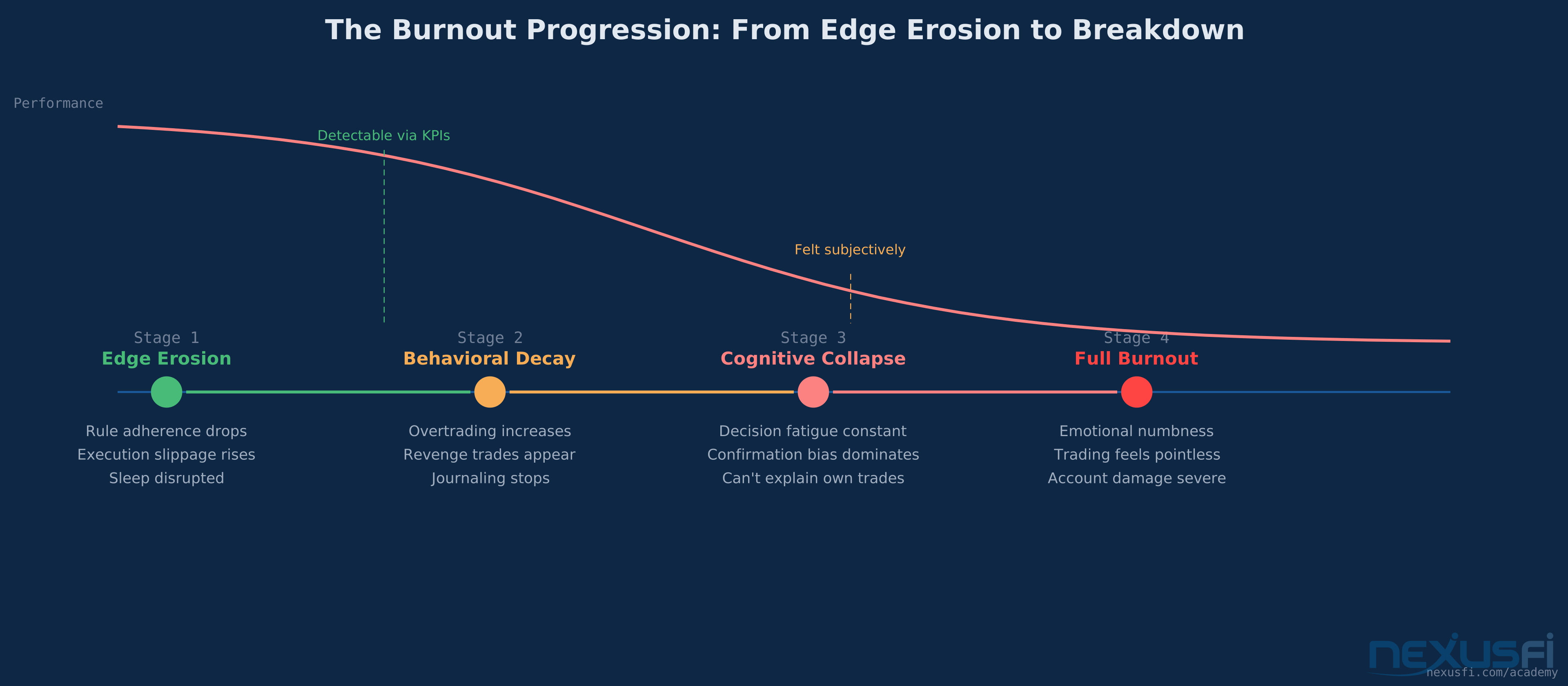
Overview Every futures trader hits a wall. Not the "bad week" kind of wall -- the kind where the screen starts looking like noise, your rules feel meaningles...
Drawdown psychology is the study of how traders interpret, internalize, and respond to adverse P&L trajectories -- particularly under the leverage, daily mar...
You just hit five winners in a row. You're up $2,400 on the week and every setup looks clean. You bump your contracts from two to four. You skip your pre-tra...
Overview Every prop firm hands you a funded account and a rulebook. Most traders fixate on drawdown limits and profit targets -- the numbers that decide whet...
Overview You passed the evaluation. The notification arrives, the funded account is activated, and you're now trading what feels like real money. Here's the ...
Overview You pulled $5,000 from your funded account. Congratulations -- that's real money. Now here's the question nobody thinks to ask until April: how much...
Every prop firm funded account comes with a rulebook. Most traders skim it, focus on the drawdown limits, and assume the rest is fine print. That's a mistake...
Prop firm trading feels like it should be easier than trading your own money. The logic is simple: if you blow a $150,000 funded account, you're out an evalu...
Overview Something shifted in 2025 that most traders missed. Three of the largest US-based funded evaluation firms -- Apex Trader Funding, Topstep, and at le...
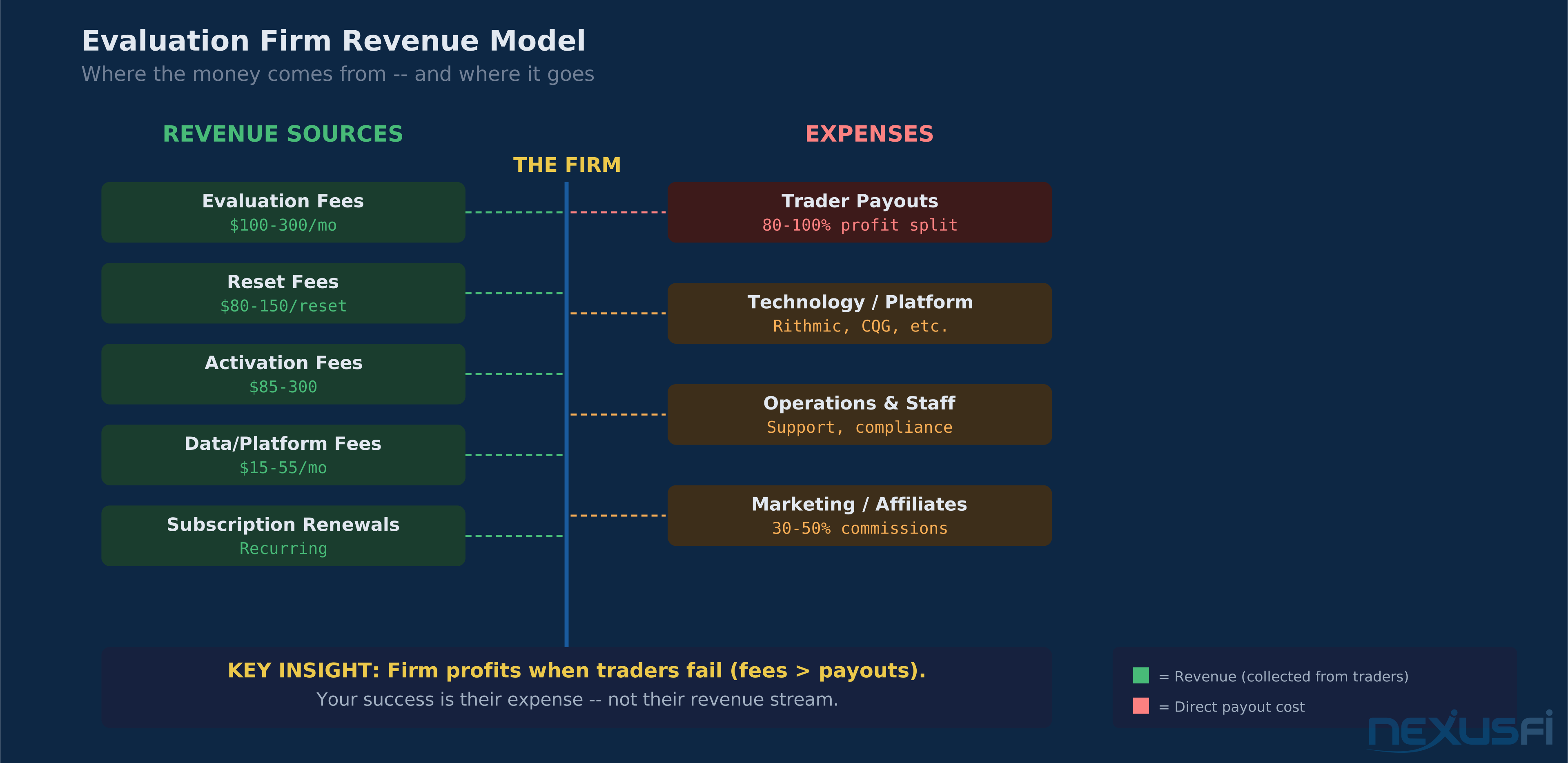
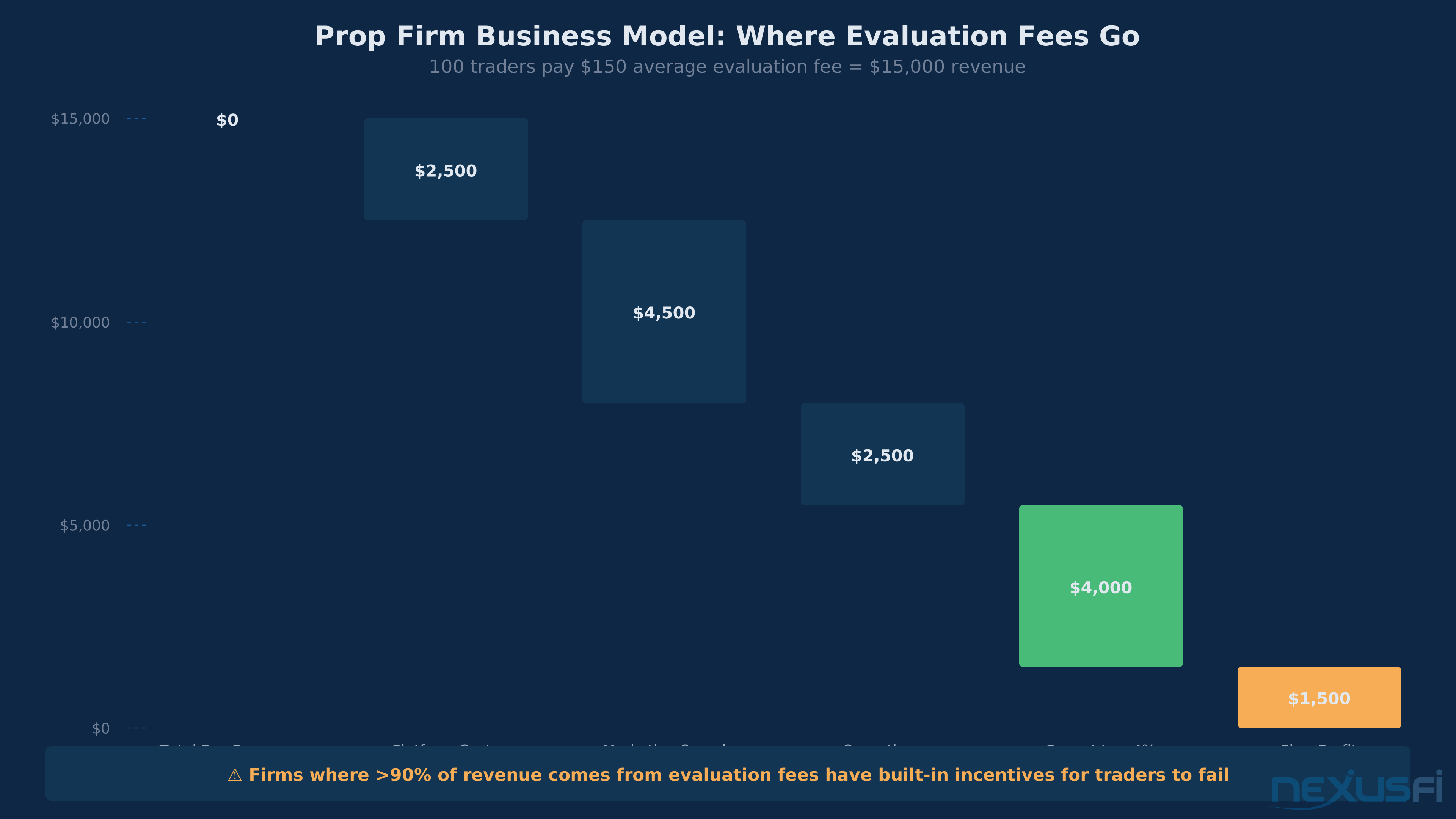
The basic model is straightforward: you pay a monthly evaluation fee ($50-$200/month depending on account size and firm), trade a simulated account under spe...
Daily Loss Limit -- The maximum realized loss permitted on a single trading day. Hit it and your account is typically terminated immediately. On a $50,000 ev...
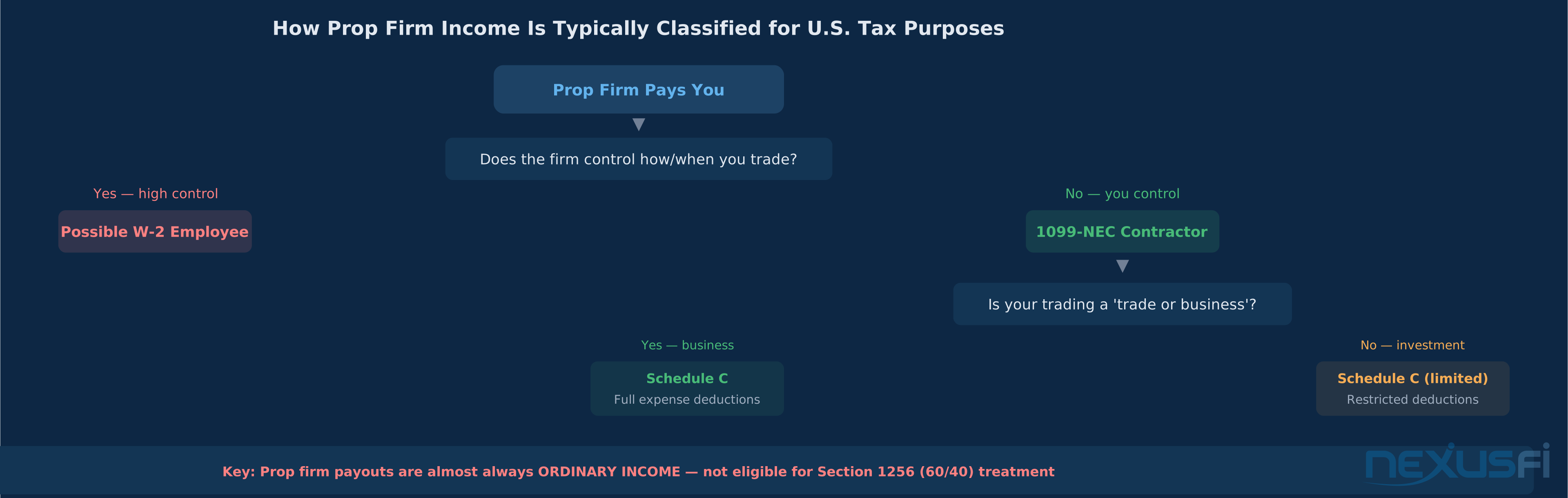
Overview Most prop firm traders discover the same unpleasant truth at tax time: the 60/40 capital gains rule that makes futures trading so tax-efficient does...
The profit split is the percentage of net trading profits paid to the trader after the firm takes its cut. Two models dominate futures prop: Flat splits hold...
Overview Here's the number everyone in the prop firm space knows but nobody wants to hear: roughly 95% of traders fail evaluations [13]. Of the 5% who pass, ...
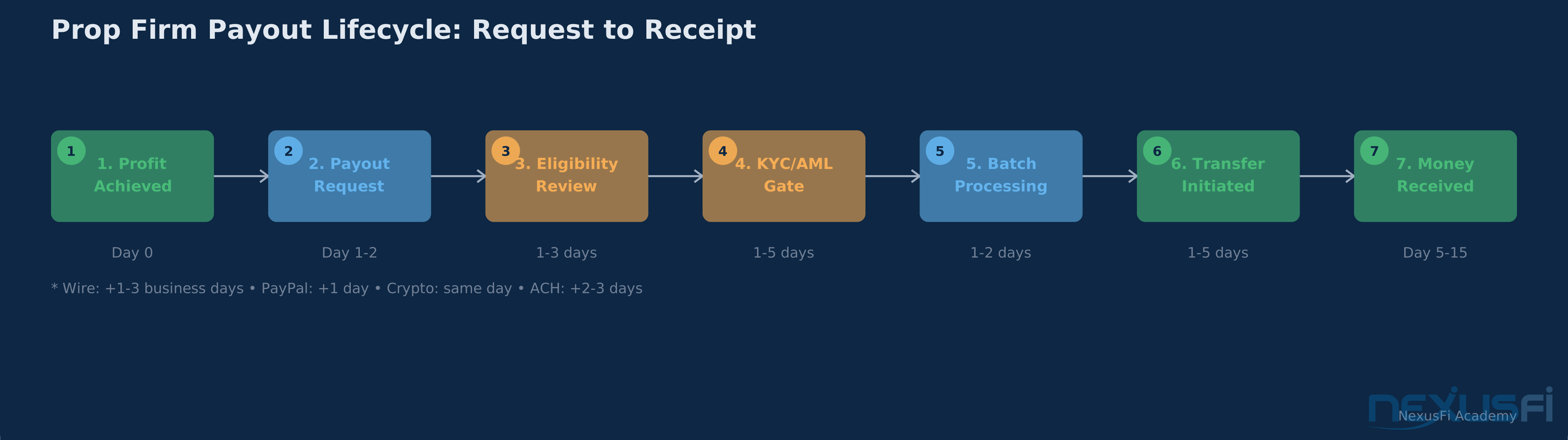
Prop Firm Payout Timing and Withdrawal Mechanics: From Request to Receipt, Everything That Happens Between Most traders who pass their evaluations spend week...
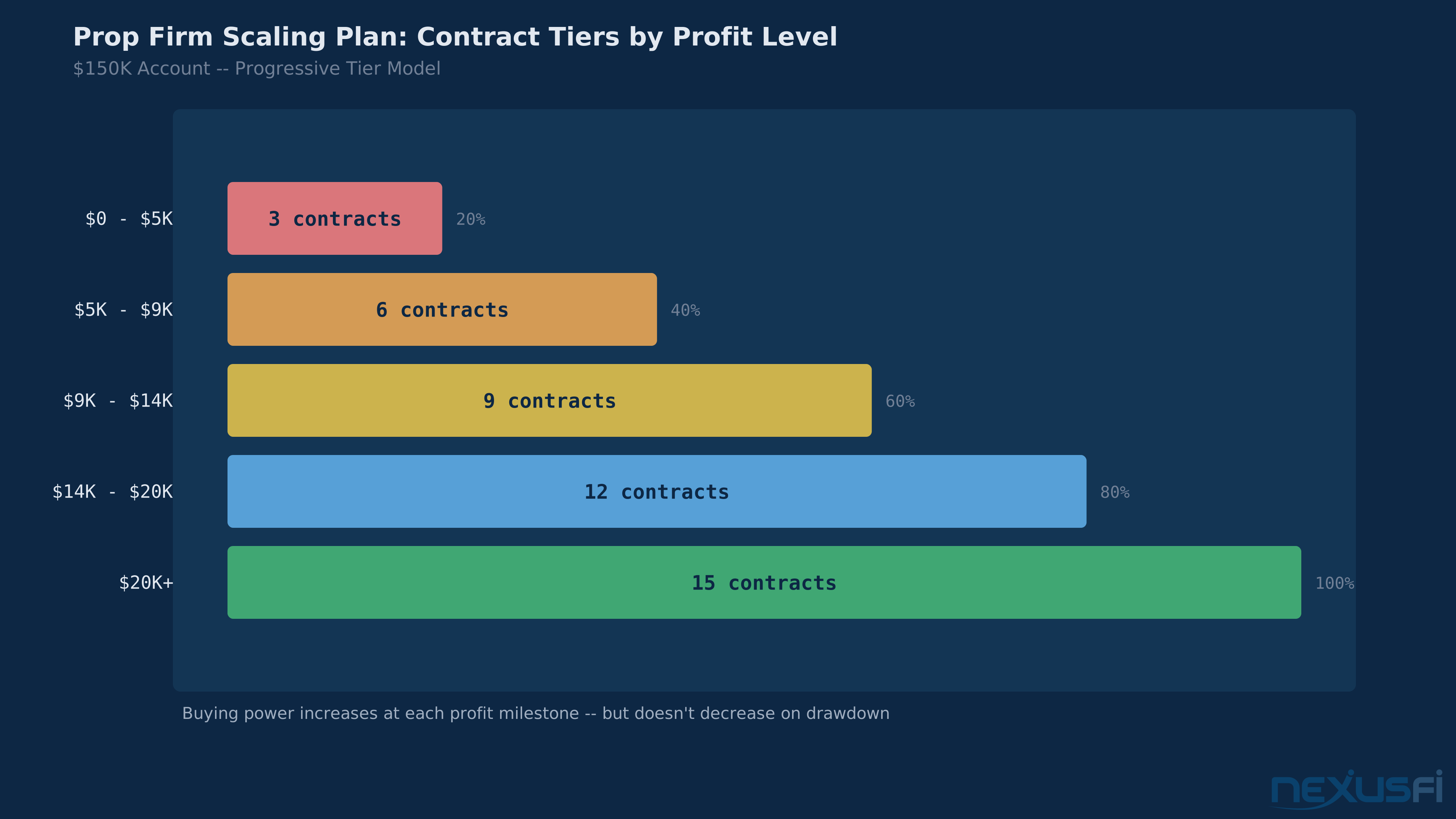
You passed the evaluation. You have a funded account. Now what? The answer for most firms is: you don't get the full buying power you had in the combine. You...
Overview Before you pay a single dollar for an evaluation, you need to understand what you're actually buying. Most "prop firms" in the futures space aren't ...
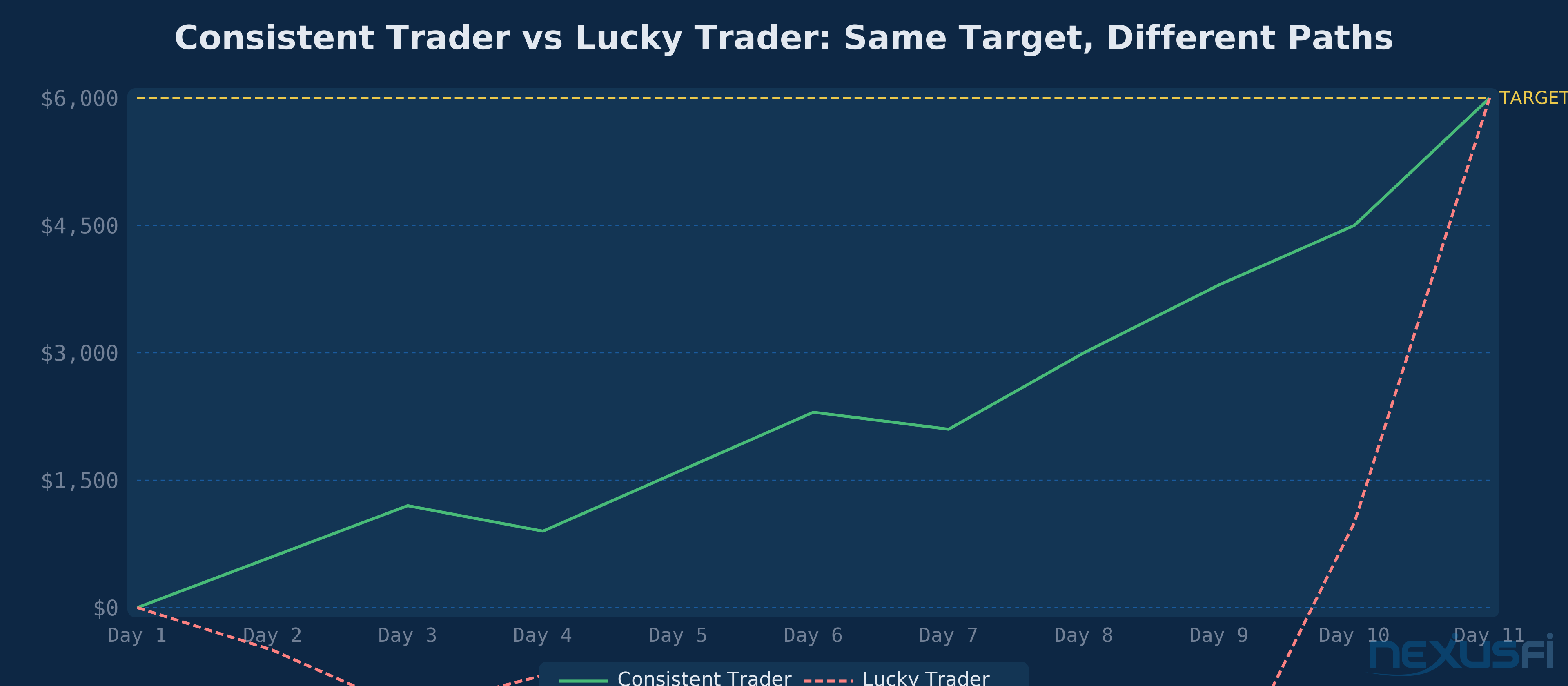
Overview What Consistency Rules Actually Are Every funded evaluation has the obvious rules: hit a profit target, don't exceed maximum drawdown, don't blow pa...
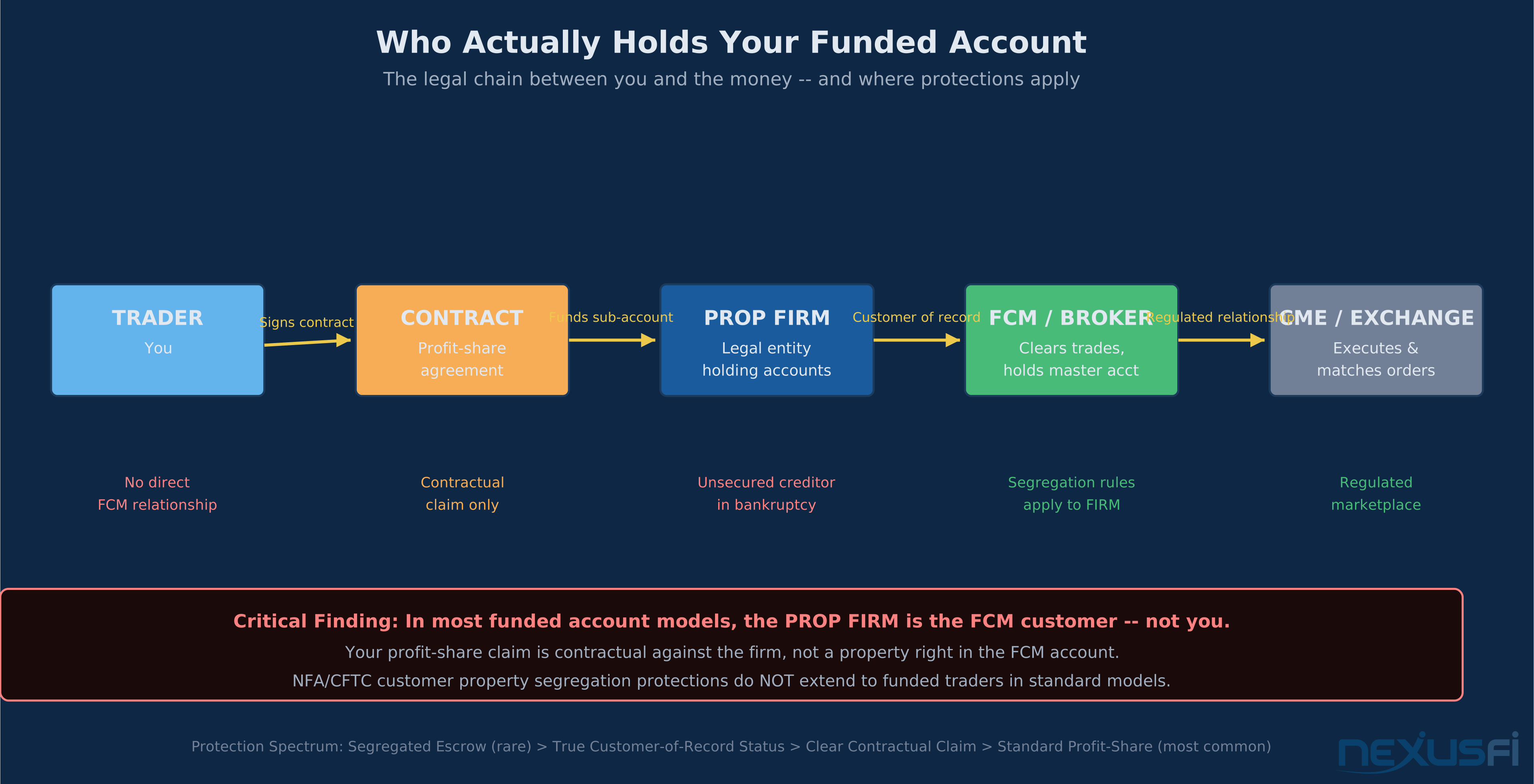
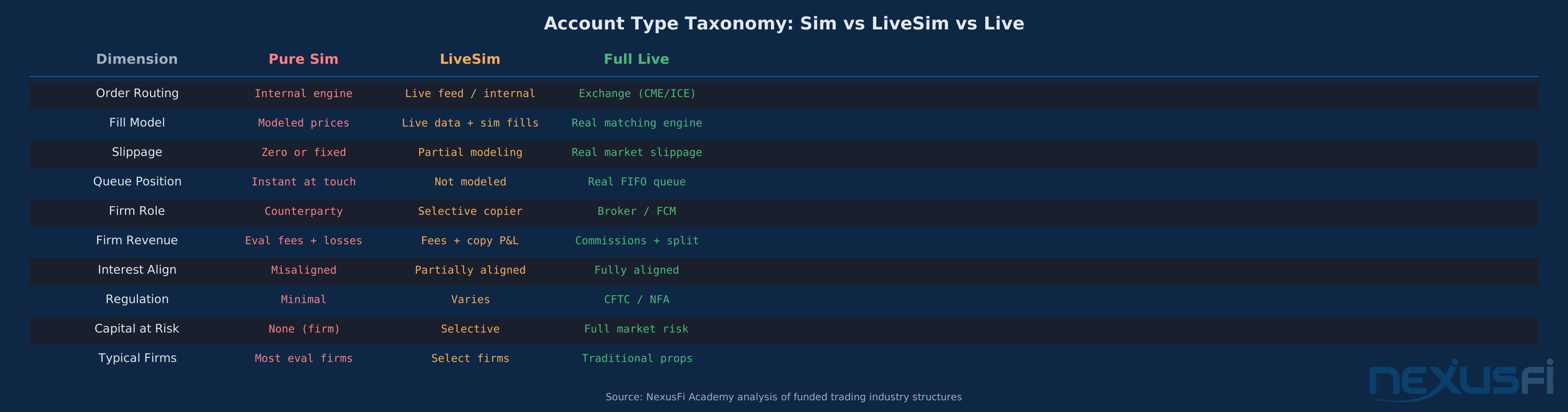
Here's a question that separates informed traders from everyone else: when you pass a prop firm evaluation and get "funded," are your orders hitting the exch...
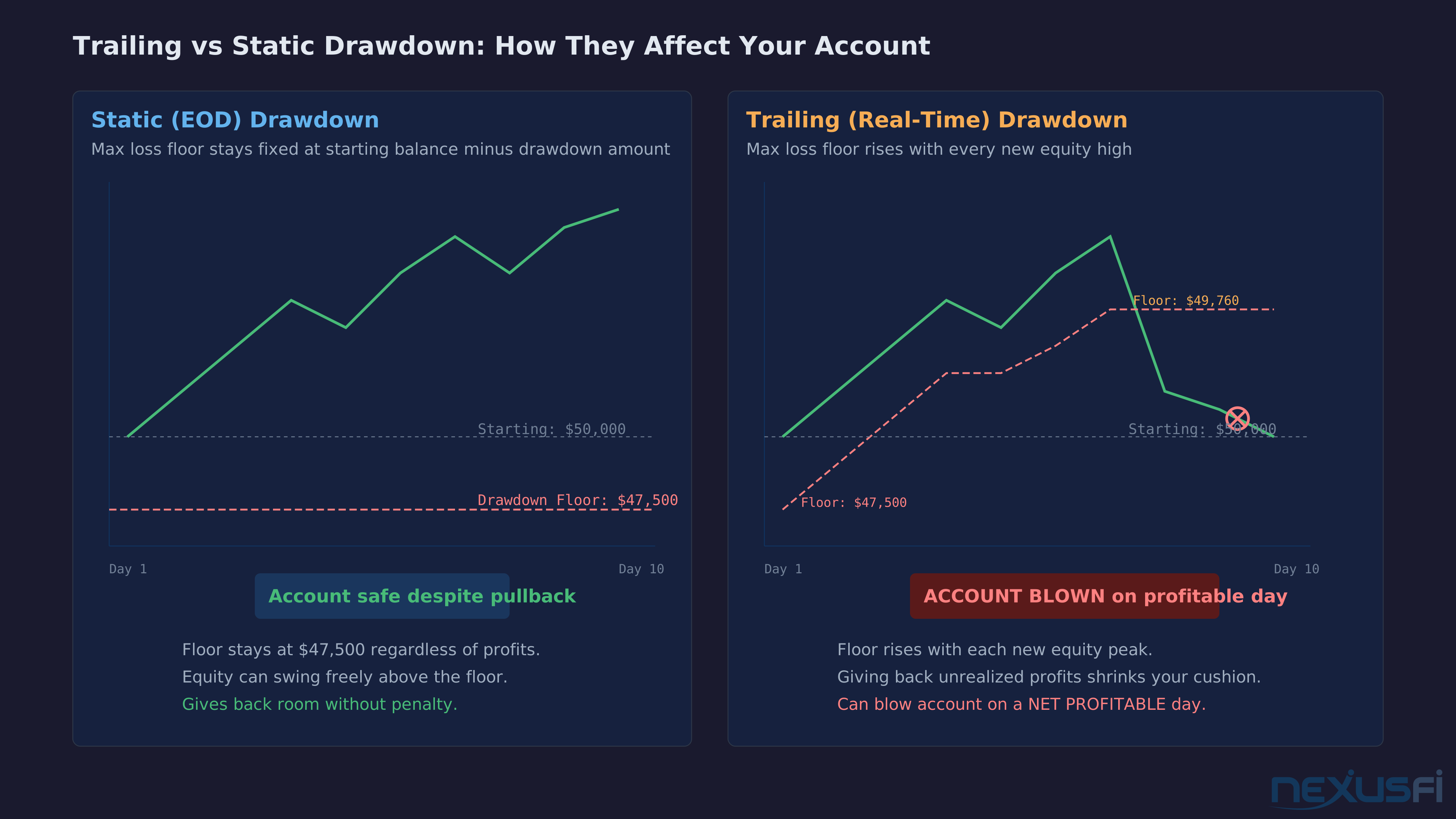
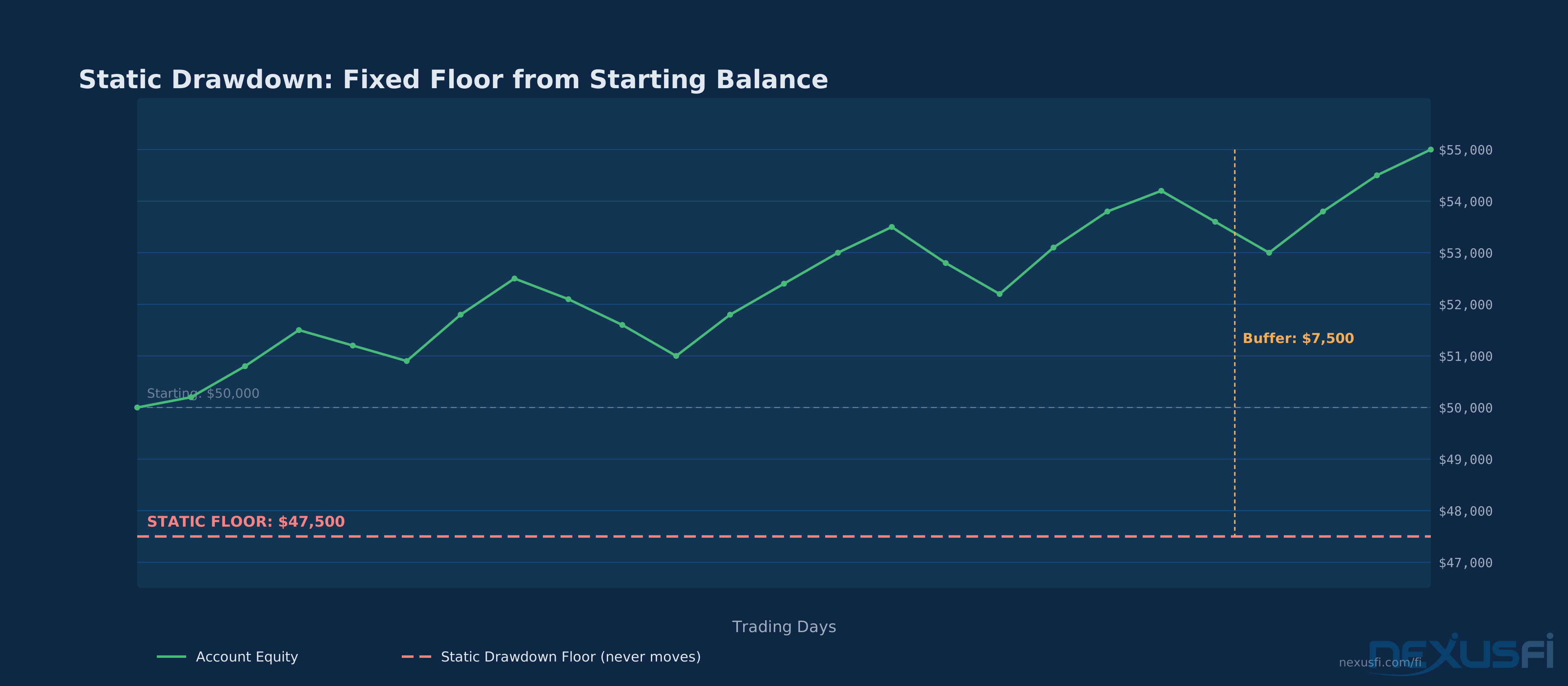
Static drawdown is the simpler model. You start with an account balance -- say $50,000 -- and a maximum loss limit calculated from that starting point. If th...
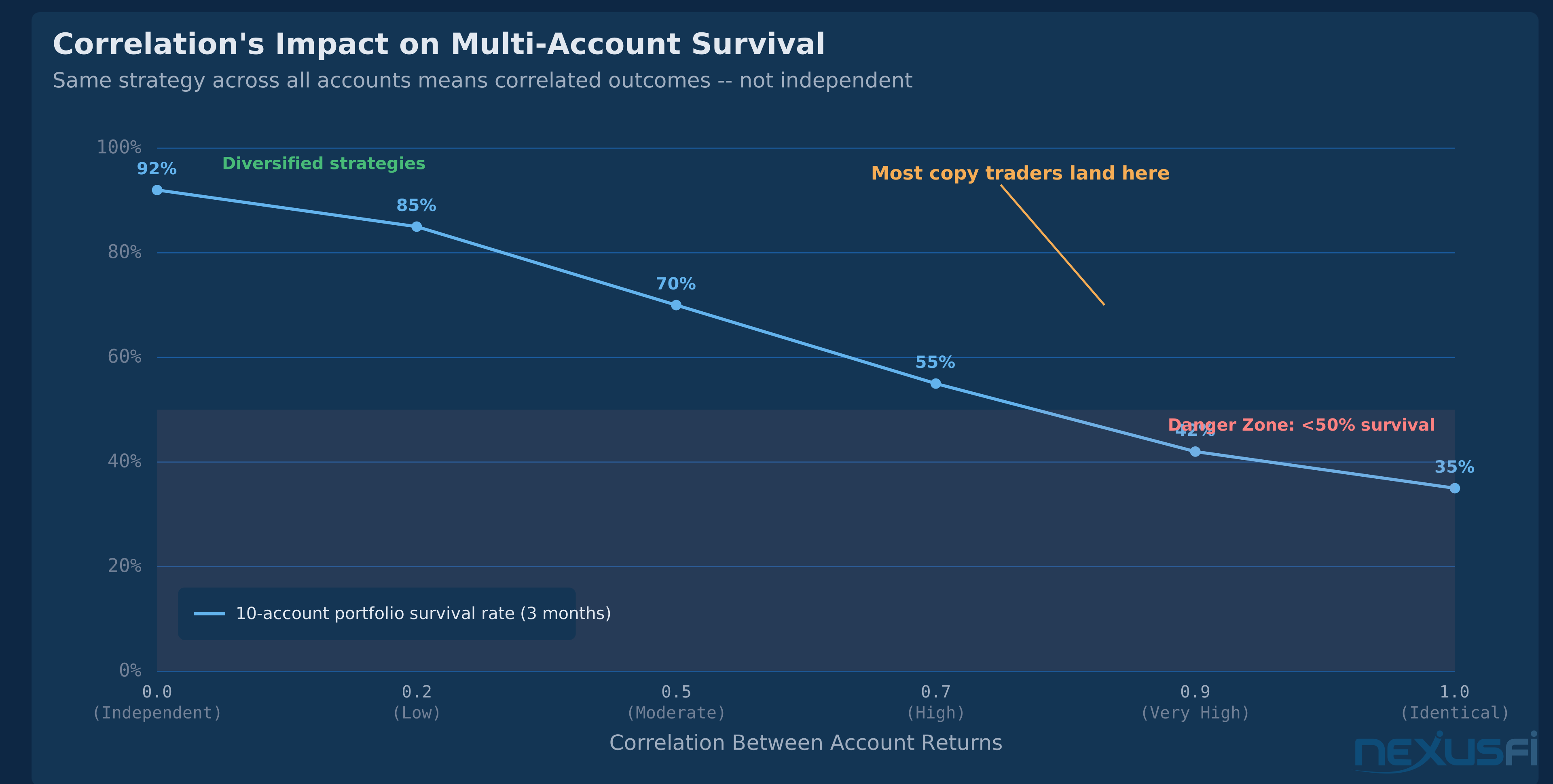
Overview Running multiple funded prop firm accounts isn't a hack -- it's a portfolio management strategy. The logic is straightforward: a single $50K funded ...
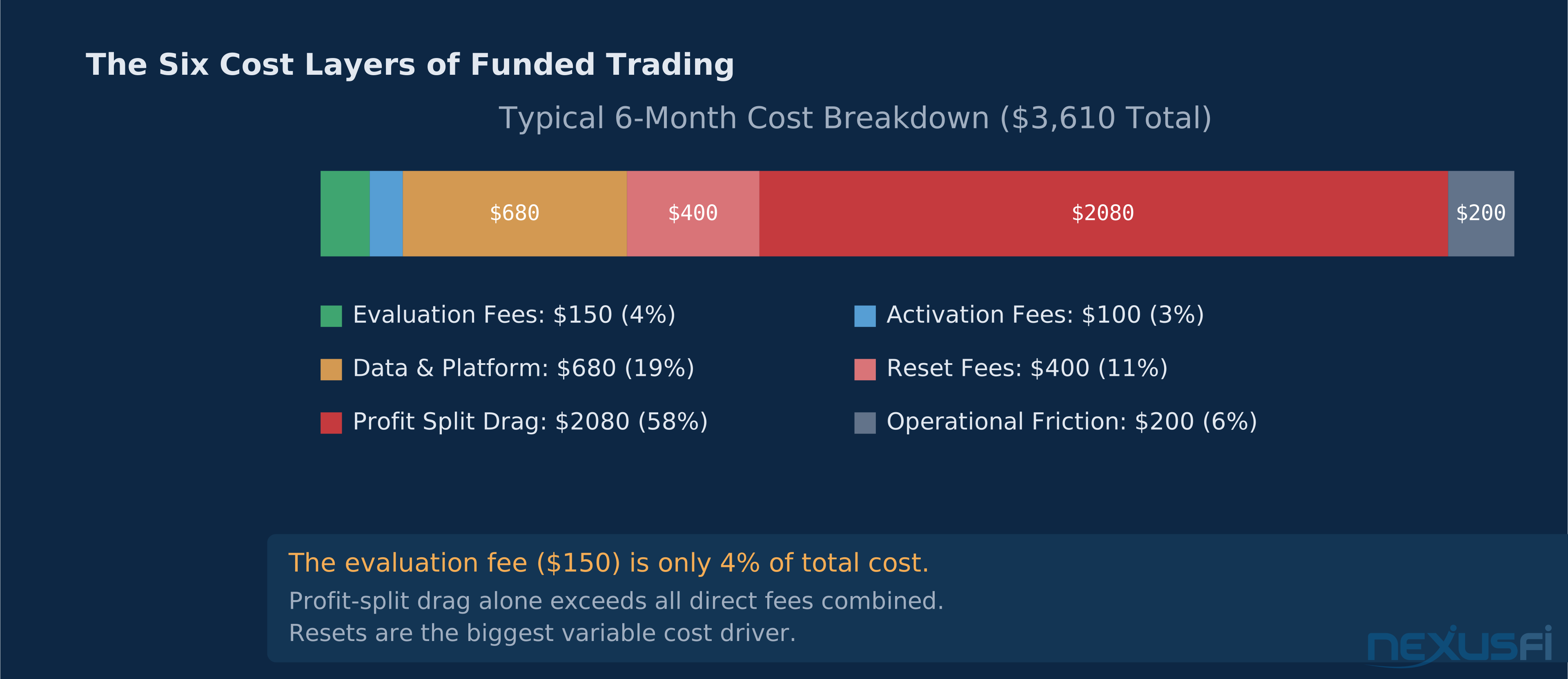
Overview Every prop firm evaluation ad leads with the same pitch: pass our challenge, trade our capital, keep most of the profit. The evaluation fee looks re...
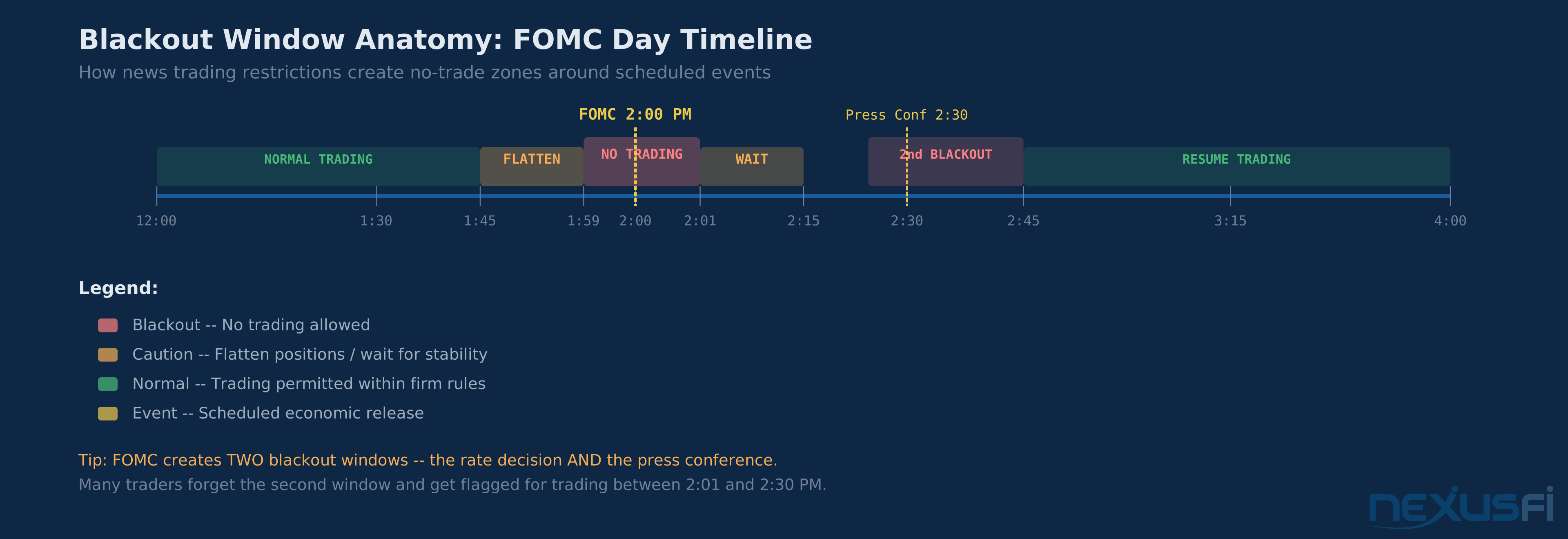
Every prop firm has rules about trading around economic releases. Some firms ban it outright. Others let you trade through anything during the evaluation but...
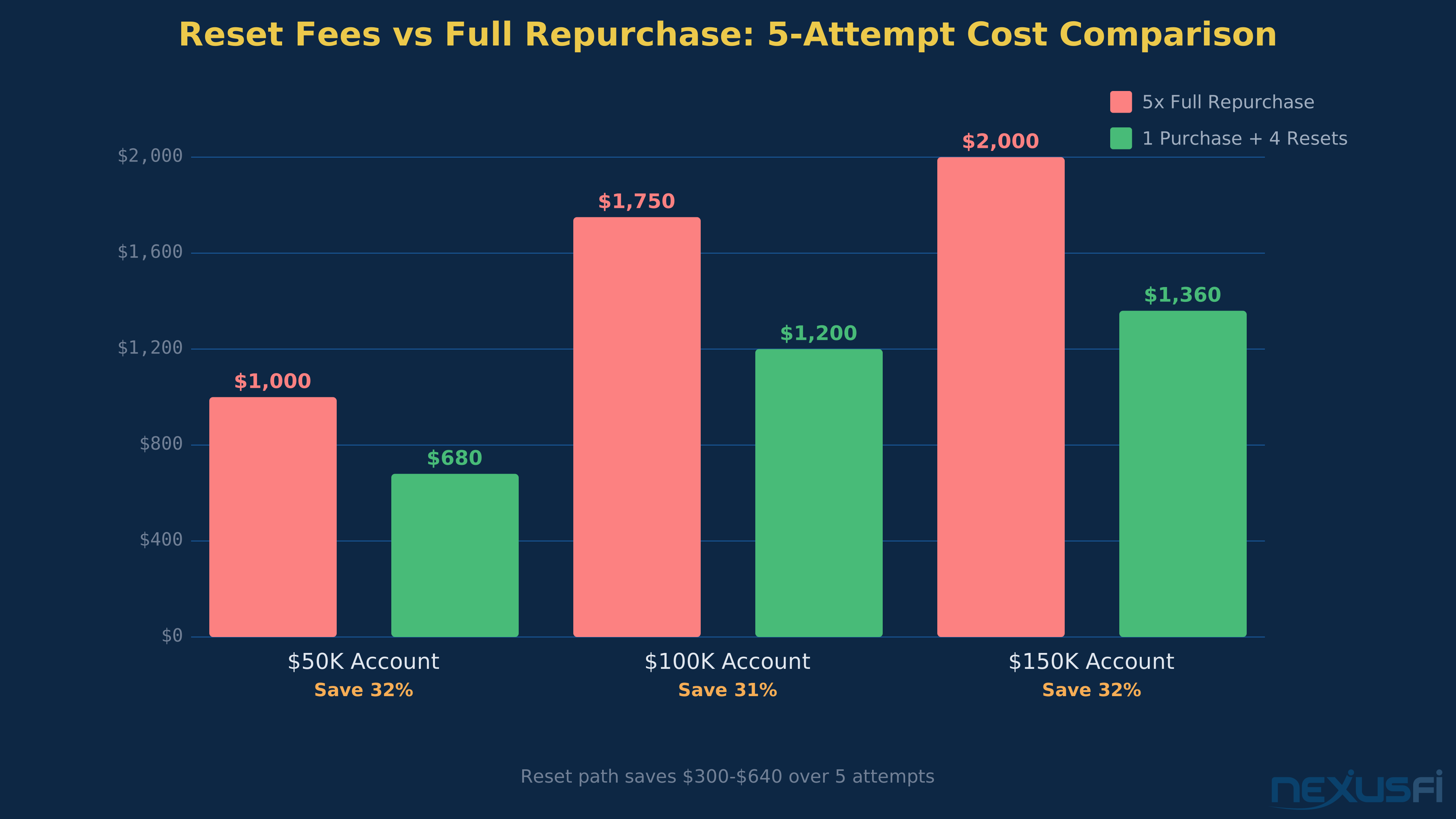
Every trader who takes a prop firm evaluation will eventually fail one. That's not pessimism -- it's math. Even disciplined, profitable traders blow evaluati...
Most funded traders understand the daily loss limit. It's a simple hard stop -- you lose too much today, the account shuts down for the session. What trips t...
Prop firm fraud is not a distant abstraction. In 2023, the Commodity Futures Trading Commission filed fraud charges against one of the largest funded trading...
Position sizing in a prop firm account is not the same problem as position sizing in your personal account. The math is different, the stakes are different, ...
Here's what kills most funded traders: they size like they're trading their own account. They see "$50,000" in the account name and treat it like they have $...
Overview Here's something most traders never think to ask: is the prop firm offering you a "$100,000 funded account" actually regulated? Not as an abstract p...
Most traders who fail prop firm evaluations don't fail because their entries were wrong. They fail because they sized into a trade that was consistent with t...
Overview Automated trading in prop firm evaluations is a different animal than running an EA on your personal account. On your own account, nobody cares if y...
Overview Every funded trader eventually runs into the same question: can I hold this position overnight? The answer depends entirely on which firm you're tra...
A YES/NO event contract is the fundamental unit of prediction market trading. Every contract answers a single binary question: will this specific event occur...
The central insight of prediction market trading: contract prices are probability estimates. A YES contract at $0.72 says the collective intelligence of all ...
Prediction markets are the newest frontier for retail traders in the United States, and Kalshi is the platform leading that frontier. As of 2025, Kalshi oper...
Prediction market order books function like any electronic exchange: buyers and sellers post bids and asks, and when they cross, a trade executes. But the bi...
Economic event contracts are among the highest-quality prediction markets available on Kalshi. Why? Because: 1. Clear data sources: BLS, Federal Reserve, Cen...
Political prediction markets have moved from obscurity to mainstream in a compressed four-year window. What began as niche academic experiments and offshore ...
You spotted a key starter listed as questionable with an ankle sprain. Game winner YES is sitting at 58 cents on Kalshi. You buy 50 contracts. By tip-off, th...
Crypto and technology event contracts represent one of the most active and rapidly evolving categories in prediction markets. Polymarket, as a blockchain-nat...
Price discovery is the process by which markets aggregate information from many participants into a single price that reflects collective probability estimat...
Liquidity is the ability to enter and exit positions at predictable prices without moving the market against yourself. In prediction markets, liquidity deter...
The vast majority of prediction market contracts are binary: a single YES/NO question with a $1.00 payout for the correct side. But a growing category of con...
Resolution criteria are the legal contract you're trading. The title of a prediction market contract is a summary. The resolution criteria are the actual bin...
Every time you buy or sell a prediction market contract, someone is on the other side of that trade. In liquid markets, market makers This article explains m...
Value betting is the practice of identifying contracts where the market's implied probability differs meaningfully from the true probability -- enough to ove...
Most prediction market guides focus on how to evaluate individual contracts This article applies portfolio construction principles to prediction market tradi...
News trading in prediction markets means entering or exiting positions based on new information -- before the market fully incorporates that information into...
Prediction market microstructure is the study of how trades are executed, how prices are formed, and how information flows through event contract markets. Fo...
Most new traders focus entirely on the question "will this event happen?" -- the probability side of prediction market trading. They spend hours studying pol...
Polymarket is the world's largest prediction market by volume, built on an entirely different technical foundation than regulated U.S. platforms like Kalshi....
Every asset class has its own risk profile. Stocks can fall 50%, bonds can default, options can expire worthless. But prediction markets have a characteristi...
Behavioral biases are systematic patterns in human decision-making that deviate from rational probability estimation. In prediction markets, where your edge ...
Kalshi and Polymarket have emerged as the two dominant prediction market platforms as of 2025-2026. They take fundamentally different approaches to the same ...
New traders focus on getting the probability right. Experienced traders focus on getting the probability right and understanding the full cost of being right...
Polymarket is a prediction market that runs on the Polygon blockchain. Unlike Kalshi, which is a CFTC-regulated US exchange, Polymarket uses smart contracts ...
Overview Geopolitical events are the one category where the market can be completely wrong for days before reality forces a correction. Elections have pollin...
Overview Prediction markets have crossed a threshold most futures traders haven't noticed yet. Kalshi is valued at $11 billion. CME's event contracts crossed...
At some point, every serious futures trader asks the same question: how do I get my strategy logic to actually execute orders without me clicking buttons? Th...
Overview TradingView is the world's most widely used retail charting platform -- 90+ million registered users across equities, forex, crypto, and futures. Fo...
When you click buy on the DOM, the trade starts. Everything after that is trade management -- and how you manage it determines whether a technically sound en...
Spread trading in futures -- simultaneously holding long and short positions in related contracts to profit from changes in their price relationship -- is on...
Before evaluating any software, answer four questions. They determine which evaluation criteria matter most for your specific situation. What's your executio...
A backtest validates three things: your signal logic (do these entry/exit conditions fire when you expect?), your risk management mechanics (do stops, target...
Chart Types for Futures Trading: Picking the Right Lens for the Market You're Trading Every chart type is a filter. It decides what you see, what gets hidden...
thinkorswim is TD Ameritrade's (now Schwab's) flagship trading platform -- and it's genuinely impressive for what it is. Multi-asset. Paper trading built in....
Each footprint candle contains a price ladder showing every level traded during the bar's time period. At each price, you see two numbers: bid volume (left) ...
This article covers hotkey design principles, platform-specific mechanics (NinjaTrader, Sierra Chart, Bookmap, TT), and the failure modes that cost real mone...
Pine Script v5 is TradingView's built-in scripting language, designed specifically for creating indicators, strategies, and alert conditions directly inside ...
Every trading platform shows you where price has been. Bookmap shows you where the money is -- right now, in real time, as it moves. That's the core pitch, a...
Jigsaw Daytradr is an order flow trading platform built specifically for futures scalpers and day traders who make decisions based on what's happening in the...
Most traders use market replay wrong. They download a few days of data, hit play at 10x speed, watch candles paint for twenty minutes, and walk away thinking...
Every futures trader eventually faces the same problem: you've got charts, a DOM, time and sales, market internals, a news feed, maybe a heatmap -- and it al...
NinjaScript -- NinjaTrader's scripting layer built on C(.NET 4.8). Indicators and strategies extend base classes and override methods like `OnBarUpdate()` an...
Every hop between the exchange and your screen adds latency and introduces the possibility of data loss or reordering. Before comparing providers, understand...
Every futures trade starts and ends with an order. The order type you choose determines whether you get filled, at what price, and how much slippage you eat....
Running multiple brokerage accounts from a single trading platform is one of those capabilities that sounds straightforward until you're actually doing it. T...
Every futures trader eventually faces the platform question. You start with whatever your broker offers, or whatever you heard about in a forum thread, or wh...
Every futures trader hits the same wall eventually. The 15-minute chart looks great -- price is pulling back into support, structure is intact, momentum is s...
Excel works. Traders have been logging trades in spreadsheets since the 1990s, and some still do. But dedicated journal platforms solve three problems that s...
Every futures trader eventually faces the same problem: you can't watch everything at once. Markets move 23 hours a day across dozens of instruments, and the...
The Time and Sales window is the raw transaction feed of the futures market -- every contract that changes hands, at what price, on which side, in real time....
The analytics toolset you pick for futures options is the difference between knowing your risk and guessing at it. Most futures traders learn this the hard w...
Daily Loss Limit (DLL) -- A platform or broker-enforced cap on how much an account can lose in a single trading session. When the limit is hit, the platform ...
Every chart tells a story, but the variable on the x-axis determines which story you're reading. Time-based charts -- the 1-minute, 5-minute, 15-minute bars ...
Chart drawing tools are analytical overlays you place directly on your chart. Unlike indicators (which calculate automatically from price/volume data), drawi...
The time and sales window is the oldest tool in electronic trading -- the raw, unfiltered record of every executed transaction in real-time. Every print show...
Most futures traders start with one instrument. ES, NQ, CL -- pick one, learn it, live in it. Good advice for beginners. But once you've got a methodology th...
Initial Balance: The First Hour That Defines Your Entire Trading Day The first 60 minutes of regular trading hours (RTH) establish a price range that profess...
You can watch a candlestick close green and have no idea whether buyers or sellers were in control. A 5,000-contract bar tells you volume happened -- not who...
Every futures trade you've ever placed hit the central limit order book -- your buy matched against someone's sell, transparent and anonymous, settled throug...
Futures contracts are legally binding agreements to buy or sell an underlying asset at a specified price on a specified date. That date is the expiration. Un...
The Depth of Market -- universally called the DOM -- is the price ladder that shows you every resting limit order at every visible price level. It's the raw ...
Time & Sales -- the tape -- is the raw, unfiltered record of every transaction that prints in a market. Every contract that changes hands shows up here: pric...
Price action is a lagging record of decisions already made. By the time ES prints a new high or breaks through a support level, the battle between buyers and...
Every futures market runs on a clock, and the transitions between sessions -- overnight Globex to Regular Trading Hours, RTH close to overnight reopen -- are...
The DOM gives you a snapshot. The footprint chart shows you what executed. The order flow heatmap shows you what's been waiting. That's the core distinction....
- Best Bid (BB) -- The highest price at which a limit buy order is resting in the order book. This is what you receive if you sell at market. - Best Ask (BA)...
Overview Every futures market has two lives. There's the regular trading session -- the RTH window where most retail traders operate, where volume is thick a...
Overview The opening range is the high-low envelope of the first few minutes after the regular session opens. In ES and NQ futures, that window is usually 09...
Overview Most traders draw supply and demand zones the same way: find a swing high, shade a box, wait for price to return, buy or sell. It feels right. The z...
Liquidity is the single most important structural feature of any market you trade -- and the one most traders take for granted until the moment it disappears...
Every futures trader eventually confronts the same problem: price is moving, but you cannot tell whether the move is a pullback in a continuing trend or the ...
Point of Control (POC) -- The single price level with the highest traded volume in the profile period; the market's consensus "fairest price" and a gravitati...
Order Matching and Price Priority: How Futures Exchanges Decide Who Gets Filled Every limit order you place enters a queue. Your fill -- or lack of one -- de...
Order blocks are where futures markets store institutional price memory. The concept is straightforward but misapplied constantly: an order block (OB) is the...
Before footprint charts, before DOM ladders, before cumulative delta -- there was the tape. The time and sales stream is the rawest expression of market acti...
Every futures trader stares at a price chart. The ES ticks higher, the NQ breaks above the overnight high, and the question is always the same -- is this mov...
The Value Area is the price range containing 70% of the session's traded volume. It answers the most fundamental question in auction market theory: where did...
When price rips through a zone so fast that virtually no two-way trading occurs, it leaves a scar on the chart. Traders call that scar a fair value gap -- a ...
Three-Month SOFR futures -- ticker SR3 on CME Globex -- are the successor to Eurodollar futures and the benchmark contract for trading short-term U.S. intere...
In August 2024, the yen carry trade -- the most crowded macro position on the planet -- blew up in two weeks. The yen ripped 15% against the dollar as billio...
Binary outcome trading is the simplest form of derivatives trading in existence. You pick an event. You decide if it'll happen or not. You buy a contract. If...
The E-mini S&P 500 -- ticker ES -- is the most actively traded futures contract on the planet. Over 1.5 million contracts change hands on a typical day, repr...
The E-mini Nasdaq-100 -- ticker NQ -- is the second most actively traded equity index futures contract in the world, trailing only ES in volume. On a typical...
Before diving in, here's the shorthand you'll encounter throughout: - GC -- Standard Gold Futures (100 troy oz per contract, COMEX/CME) - MGC -- Micro Gold F...
- ZT -- 2-Year Treasury Note Futures (CME/CBOT) - ZF -- 5-Year Treasury Note Futures (CME/CBOT) - ZN -- 10-Year Treasury Note Futures (CME/CBOT, the benchmar...
Natural gas futures are one of the most actively traded energy contracts on the planet The CME's Henry Hub Natural Gas contract (NG) prices physical delivery...
One USDA report in July can double corn's daily range in sixty seconds. That is the market you are trading when you pull up ZC. The CBOT Corn contract (ZC) p...
Euro FX futures -- ticker 6E -- are the most heavily traded currency futures contract on the planet. Each 6E contract represents 125,000 euros, and on a liqu...
Overview Most futures traders know the Fed matters. Few trade the instrument that actually prices Fed expectations directly. Fed Funds Futures (ZQ) are the m...
Overview The US Dollar Index futures contract -- ticker DX, trading on ICE Futures U.S. -- is the cleanest listed instrument for expressing a directional vie...
The E-mini Russell 2000 The contract trades $50 per index point on CME Globex, with a micro version (M2K) at $5 per point for smaller accounts. RTY doesn't g...
Overview Sugar No. 11 (SB) futures are among the most volatile commodity contracts on the planet. A single cent-per-pound move -- $1,120 per contract -- can ...
Overview The Strategic Petroleum Reserve is 375 million barrels of crude oil sitting in salt caverns along the Gulf Coast -- and every CL trader needs to und...
British Pound futures -- ticker 6B -- are the third most actively traded FX futures contract on CME Globex, behind the euro (6E) and Japanese yen (6J). Each ...
Cocoa futures (CC) -- the benchmark contract on ICE Futures U.S. -- don't trade like most commodity markets. The price of cocoa responds to rainfall in Côte...
Live Cattle futures (LE) aren't crude oil with hooves. That's the first thing to get straight. This is a thin, fundamentally-driven market where four or five...
Overview Micro futures are fractional-sized versions of CME Group's most popular futures contracts, trading at 1/10th the notional value of their E-mini coun...
Overview The DAX futures complex -- traded on Eurex as the FDAX (standard contract) and FDXM (mini contract) -- represents your ticket to one of the world's ...
What Event Contracts Are and Why They Matter Event contracts are derivatives that settle based on whether a specific future event happens or not. Yes or no. ...
The E-mini Dow YM controls $5 per index point. With the DJIA near 42,000, one YM contract represents roughly $210,000 in notional value The Dow is a 30-stock...
The VIX Here's the thing about VIX: you can't trade it directly. The index itself is a calculation, not a security. What you can trade are VIX futures (/VX o...
Silver futures are the benchmark derivatives contract for the world's most volatile precious metal. Traded on COMEX (a division of CME Group), the SI contrac...
The Australian Dollar futures contract -- ticker 6A on CME Globex -- is the futures market's direct access point to one of the world's most interesting curre...
The Loonie is an energy play, a rates story, and a risk-sentiment gauge -- all in one contract. Canada's currency trades like an energy company on a daily ch...
The HG contract is priced in US dollars per pound. The minimum tick is $0.0005 per pound, which translates to $12.50 per tick per contract. A full one-cent m...
The Swiss Franc is not just a currency. It's a regime barometer -- calm in normal markets, explosive in crisis. The "Swissie" does not behave like the Austra...
Bitcoin futures -- ticker BTC on CME, MBT for micro -- are the fastest-growing derivatives contract class of the past decade. CME's crypto suite now averages...
Overview Soybeans are one of the most actively traded agricultural futures contracts in the world What makes soybeans different from corn or wheat is the cru...
In February 2022, wheat traders who were short ZW watched their accounts evaporate as the contract ripped from $7.50 to over $12 in three weeks -- a 60% move...
Most traders approach hardware wrong -- they either overspend chasing benchmarks that don't translate to better fills, or they underspend and then wonder why...
Most traders approach their internet connection the same way they approach their trading platform: by chasing the highest number they can afford. 500 Mbps in...
Overview Your trading setup has five ways to fail -- and only one needs to go wrong. Power drops, internet goes down, your PC crashes, the platform freezes, ...
The "Battlestations" thread on NexusFi has been running since 2012 with over 1,200 replies. Traders post photos of their setups: everything from lean single-...
Overview The trading desk is not aesthetic infrastructure. It is the interface between your decision-making and the market -- and every physical friction poi...
Your trading account is a high-value target. A $50,000 futures account with margin amplification represents hundreds of thousands in potential exposure -- an...
Most futures traders spend thousands on hardware -- fast CPUs, NVMe drives, multiple monitors -- then run their platform on a stock Windows install configure...
Your trading computer, broker, and data feed are only as good as the network connecting them. A slow fill, a missed exit, a platform disconnect during a news...
Overview You left a trade open. You stepped away from your desk. Then the market moved. Every futures trader has been there--that moment when you need to see...
Overview Every futures trader eventually faces the laptop question. You're watching a busy ES session, charts are stuttering, the DOM is a second behind pric...
Overview Most VPN advice for traders gets it backwards. Consumer VPN marketing promises "faster, safer internet" -- and for everyday browsing, some of that h...
Most traders make this decision wrong -- either they spend a weekend watching YouTube build guides and assemble a machine that crashes during the first FOMC ...
Overview Pick any forum thread about trading computer builds and the GPU question comes up fast. Which card? How many monitors can it drive? Do you need a pr...
Overview Drive technology is the most underestimated performance variable in a trading workstation. The bottleneck is not your CPU or RAM -- it is your stora...
Most traders shopping for a new workstation make the same mistake: they assume more cores means better trading. They see a 16-core processor and think it'll ...
Consumer RAM advice usually says "16 GB is plenty." For most applications, that's true. Trading software breaks that assumption in specific ways: Continuous ...
Keltner Channels wrap an exponential moving average (EMA) with volatility bands derived from Average True Range (ATR). The result is a dynamic envelope that ...
Overview The Parabolic SAR (Stop and Reverse) is one of those indicators that does exactly what it says -- it gives you a stop level, and when that stop gets...
Regular volume tells you how many contracts changed hands. Delta tells you who won. Delta is the difference between aggressive buying volume (market orders h...
NYSE TICK ($TICK) The TICK is the number of NYSE stocks trading on an uptick minus those on a downtick at any given moment. It captures short-term sentiment ...
Simple Moving Average (SMA). The arithmetic mean of the last N closes. A 20-period SMA on a 5-minute chart sums the last 20 closes and divides by 20. Every d...
Every trader has seen it -- price pulls back exactly to 61.8%, hesitates, then reverses like someone drew a line in the sand. Fibonacci levels are the framew...
Average True Range (ATR) measures volatility -- nothing more, nothing less. It doesn't tell you direction. It doesn't signal entries. What it does is answer ...
MACD is one of the most widely used indicators in futures trading The raw MACD line captures momentum That dual nature makes MACD simultaneously a trend filt...
Bollinger Bands: The Volatility Envelope Every Futures Trader Needs to Master Bollinger Bands wrap a simple moving average in a volatility envelope -- two ba...
The Stochastic Oscillator answers one question: where did price close relative to its recent range? That's it. No prediction, no magic -- just a normalized m...
Overview StochRSI is a momentum-of-momentum oscillator. It doesn't measure price directly -- it measures where the RSI is relative to its own recent range. T...
Overview ATR buffer prevents chasing entries after HMA slope changes. Enter between the HMA and HMA+0.5×ATR. If price has already run beyond HMA+0.75×ATR, ...
Before using Heikin Ashi effectively, you should understand: - Standard candlestick charts -- how OHLC data is represented and what each bar component means ...
The Exponential Moving Average is the most widely used technical indicator in intraday futures trading -- and it's the one most traders misuse within the fir...
Every futures trader has been there: you catch a clean trend, you're up 20 points on ES, and then a normal pullback takes you out at a 4-point profit. The st...
Every Ichimoku line is a midpoint of a high-low range over a specific lookback period. Not a moving average -- a midpoint. That distinction matters because m...
Overview The Simple Moving Average is the oldest tool in technical analysis and the one most traders understand least. Not because it's complicated -- the ma...
The standard floor pivot calculation uses the prior session's high (H), low (L), and close (C): Central Pivot: PP = (H + L + C) / 3 Resistance Levels: - R1 =...
The Chaikin Money Flow (CMF) indicator answers a question that price alone can't: is volume actively supporting this move, or is the market just drifting? Pr...
Overview Most traders who use VWAP treat it as a single line -- the volume-weighted average price. That's leaving half the information on the table. VWAP sta...
Overview Bill Williams wasn't building another oscillator. When he published Trading Chaos in 1995 and New Trading Dimensions in 1998, he was making a specif...
Overview The Weighted Moving Average sits between the SMA and EMA on the lag-vs-noise spectrum -- and that middle ground is exactly where most discretionary ...
A Fibonacci fan is constructed from a single price swing -- the XA leg, in harmonic terminology -- and produces a series of diagonal lines that radiate from ...
Overview The True Strength Index is one of those indicators most traders have heard of but few have taken the time to properly understand. That's a mistake. ...
Overview ER measures directional efficiency: a trending market with ER=0.82 means 82% of movement was net directional. Choppy markets with ER=0.08 trigger KA...
The center line is a linear equation fitted to the last N closing prices (or HLC3 -- pick one and stay consistent). The fitting algorithm minimizes the sum o...
Overview Most oscillators fail traders the same way -- they conflate trend and cycle. RSI stays oversold for weeks in a bear market. MACD spits out signals t...
The Average Daily Range tells you one thing: how far this instrument typically moves in a single session. Not how far it could move. Not how far you want it ...
Prerequisites Relative Strength Index (RSI) -- ConnorsRSI builds on RSI mechanics; Wilder smoothing and the overbought/oversold framework are assumed knowled...
Donchian Channels are the original breakout indicator -- the tool that launched one of the most famous experiments in trading history and continues to underp...
Overview The TTM Squeeze identifies volatility compression -- the quiet before a directional storm. It works by comparing two volatility measures: Bollinger ...
The Supertrend indicator draws an ATR-scaled trailing stop around price that flips direction when price closes through it. Developed by Olivier Seban in 2009...
Average Directional Index (ADX): A non-directional trend strength oscillator that measures how strongly price is trending, regardless of whether the trend is...
Slope angle is one of those concepts that sounds more complicated than it is. At its core, you're measuring how steep an indicator line is The idea goes back...
On Balance Volume does one thing and does it well: it tells you whether volume is accumulating behind upward price moves or behind downward ones. That's it. ...
The Commodity Channel Index measures how far price has deviated from its own recent average, scaled by mean absolute deviation. That scaling is why CCI behav...
Futures exchange -- a regulated marketplace where standardized derivatives contracts are listed, traded, and cleared. Unlike stock exchanges that match buyer...
Markets never truly close. When the NYSE rings its closing bell at 4:00 PM Eastern, Tokyo is already preparing for its morning session. When Tokyo breaks for...
These are the two numbers that define your margin obligations on every futures position. Initial margin is the amount of cash or eligible collateral you must...
Every time you execute a futures trade, something remarkable happens in the background: the exchange's clearing house steps between you and the person on the...
Every order on CME Globex passes through four distinct states before reaching its final disposition. Understanding these states explains why your platform sh...
Overview Most traders watch the price of the front-month futures contract and call it a day. That works for day trading -- but the moment you hold a position...
Overview Circuit breakers, price limits, and trading halts are the guardrails that prevent futures markets from driving off a cliff during extreme volatility...
The Other Futures Exchange You Need to Know If you trade energy, you trade ICE. The Intercontinental Exchange handles the world's benchmark crude oil contrac...
Overview Most futures traders think of an order as a simple thing: you click buy or sell, pick a price, and the exchange fills you. But the moment you want t...
Event Contracts: The core product on Kalshi. Each contract is a question with a binary outcome: "Will US CPI year-over-year exceed 3% in March?" or "Will the...
Prediction markets are derivative instruments where the underlying asset is the probability of a real-world event occurring. Unlike a futures contract on cru...
Open interest is one of the most widely cited numbers in futures markets -- but most traders interact with only the output, never the machinery that produces...
Japan Exchange Group runs the biggest derivatives market in Asia. The Osaka Exchange (OSE) -- JPX's futures and options arm -- trades over 400 million contra...
Overview Every futures trade has a price tag beyond the market move itself -- and most traders have no idea what they're actually paying. The commission your...
What Makes a Futures Contract Every futures contract you trade -- the ES, CL, ZB, MES, or any other instrument -- is a product. Someone designed it. An excha...
Every futures exchange operates a matching engine -- software that takes incoming orders and determines how they pair with resting orders in the book. When y...
Settlement Price: The official price assigned to a futures contract at the end of each trading day. This is NOT the last price traded. It's a calculated valu...
Every weekday morning, financial media quotes a "fair value" number for S&P 500 futures before the cash market opens. CNBC's futures reporters cite it. Bloom...
On July 2, 2015, CME Group closed most of its open outcry futures trading pits in Chicago and New York. Equity index futures pits had already shuttered on Ju...
Every order you send hits a matching engine somewhere. The question is how far away you are from it -- and that distance shapes every fill you get. Exchange ...
Every futures contract specifies its settlement method in the contract specifications, and this single detail determines how you manage expiration. Cash-sett...
Overview Order Types in Futures Trading: What You're Actually Sending to the Exchange You'd think order types would be boring infrastructure -- the mechanica...
Get your tick value wrong on CL and a 50-tick move you expected to be $500 is actually $5,000 -- a 10x error that can blow an account in a single trade. Mix ...
Most retail futures traders treat the Globex session as background noise -- something that happens while they're asleep and cleans itself up by 9:30 AM ET. T...
Every time you hit buy or sell, someone takes the other side. Not some abstract "market" -- a real entity with a specific economic motivation that determines...
Options on futures are a different beast from equity options. Not incrementally different -- fundamentally different. The underlying isn't a stock that gets ...
Price banding and market protection mechanisms are the exchange-level systems that prevent futures orders from executing at extreme, erroneous prices. On CME...
Flash crashes aren't theoretical. On May 6, 2010, the E-mini S&P 500 fell nearly 100 points in five minutes, then recovered most of that loss over the next 2...
Every time you submit a market order or trigger a stop in futures, the exchange runs it through a layer of automated checks you never see. CME Globex price b...
Alternative Data Satellite Imagery Sentiment Analysis Options Flow Weather Data Shipping and Freight Data @tigertrader | Spoo-nalysis ES e-mini futures S&...
The first decision is what resolution your data needs to be. This isn't just a storage question -- it directly determines what your backtest can and cannot m...
Limit Order Book (LOB): The exchange's live record of all resting buy and sell orders at every price level. The LOB is the full state of the market's unmatch...
Every chart you've ever looked at started as tick data. Every candlestick, every volume bar, every range bar Tick data is the atomic unit of market informati...
Every futures trader eventually hits this question: do I need Level 2 data, or is Level 1 enough? The answer isn't "L2 is better." It's "L2 is different -- a...
Overview Every price tick on your chart, every update in the DOM, every trade on your time and sales -- all of it travels through a data feed before it reach...
Overview You're watching ES tick. It's 8:29 AM, one minute before the NFP number. Your DOM shows thin liquidity. Your hands are on the keyboard. And then -- ...
Equities have one price series per stock. Futures have dozens of contract months per instrument, each with its own price, volume, and open interest trajector...
Overview Your 200-day moving average just spiked 500 points overnight. Your backtested strategy shows a support level at ES 3200 Welcome to continuous contra...
Every chart you've ever looked at is a summary. Bars, candles, volume histograms -- they're all compressions of something more granular. Time and Sales is th...
Commissions get all the attention. Every broker comparison article leads with per-contract costs, and traders shop basis points like their life depends on it...
Market replay is one of the most powerful practice tools in futures trading -- and one of the most misunderstood. Most traders think of it as "playback." Hit...
Open interest is the total number of outstanding futures contracts that have not been offset, delivered, or settled. Every contract in existence requires one...
Seasonality is a recurring tendency for a futures contract's price, spread, or volatility to move in a particular direction during a specific calendar window...
Every futures trader trusts their data. Price bars render on the screen, indicators update, signals fire Data quality isn't a "nice to have" data engineering...
Volatility data is the market's pricing of uncertainty -- and every futures trader needs to understand it, not just options traders. Most traders focus on pr...
Every significant move in futures markets has an intermarket fingerprint. Learning to read it means the difference between trading with the flow and getting ...
Commodity futures are the most fundamental-data-driven asset class in the markets. Full stop. Stock traders argue about whether earnings matter or whether pr...
Most futures traders treat implied volatility (IV) data as something for options traders -- a box they'll open someday when they graduate from just trading t...
Every open futures position is repriced every single trading day. Not at the last traded price. Not at some arbitrary close. At the official settlement price...
News Analytics and NLP Data Feeds for Futures Trading: The Intelligence Layer Behind Event-Driven Strategies Every futures market has a data hierarchy. Price...
The regulated crypto futures market -- primarily CME Group with ICE participation -- generates data that professional futures traders should understand for t...
Every week, the U.S. Treasury sells hundreds of billions of dollars of debt to fund the federal government. These auctions -- 2-year notes on Monday, 10-year...
- Market Internals: Aggregate statistics measuring the behavior of individual stocks across an exchange, used to gauge broad market participation and convict...
Overview Crypto isn't another futures market wearing different clothes. It's a completely different animal -- 24/7 trading, 80%+ drawdowns that are considere...
Every futures trader who touches crypto eventually runs into the same question: where do you park value between trades? The answer, almost universally, is st...
Overview Meme coins are the most honest instruments in crypto. They don't pretend to be anything other than what they are: pure speculation dressed as a joke...
Privacy coins are a category of cryptocurrency designed to hide transaction details that would otherwise be visible on a transparent public blockchain. Where...
Overview Every Bitcoin transaction is permanently recorded on a public ledger. That ledger -- the blockchain -- is an open book. If you know how to read it, ...
Overview Governance tokens are the steering wheels of decentralized protocols. They give holders the right to vote on how a protocol operates -- which parame...
Crypto derivatives give traders leveraged exposure to digital assets without holding the underlying tokens -- but they work differently enough from tradition...
Overview Every trade you make in crypto is, at its core, a bet on supply and demand. Not supply and demand of the abstract "market forces" variety -- the act...
Every four years, give or take, the Bitcoin network automatically cuts its block reward in half. This is the halving -- a protocol-embedded supply shock buil...
Ethereum is the second-largest cryptocurrency by market cap, but that framing undersells what it actually is. Bitcoin is digital gold -- a store of value wit...
XRP is one of the most polarizing assets in crypto. It has passionate defenders who believe it will transform cross-border payments, vocal critics who questi...
Overview Solana is the fastest Layer-1 blockchain in production, built for one purpose: throughput. Four-hundred millisecond block times, sub-cent transactio...
Overview BNB is the native token of the Binance ecosystem -- the world's largest cryptocurrency exchange by trading volume. What started as a simple fee-disc...
Overview Dogecoin launched on December 6, 2013 as a joke. Two engineers -- Billy Markus from IBM and Jackson Palmer from Adobe -- built it in two days using ...
Overview Polkadot isn't just another Layer-1 blockchain competing for DeFi TVL. It's an interoperability protocol -- a Layer-0 designed to connect blockchain...
Overview Avalanche launched its mainnet in September 2020. In 14 months, AVAX went from $4 to $147. Then it gave back 90% in the crypto winter. In 2024, it r...
Overview TON started as a Telegram project, got killed by the SEC, came back from the dead as a community-run chain, and has quietly become one of the most i...
Overview Shiba Inu (SHIB) started as a meme. It was explicitly marketed as the "Dogecoin killer" -- launched anonymously in August 2020 by a developer known ...
Polygon started as an Ethereum sidechain fix for a specific problem: Ethereum gas fees were destroying the user experience for anyone doing more than a handf...
Overview Charlie Lee created Litecoin on October 7, 2011, describing it as "the silver to Bitcoin's gold." He was a Google engineer who'd been studying Bitco...
Overview TRON launched in 2017 with an ambitious pitch: decentralize the internet's content layer. Today, the content platform angle is largely forgotten. Wh...
Stellar is the payments network that nobody outside fintech circles talks about -- until it quietly shows up distributing humanitarian aid to a million refug...
Overview Cosmos isn't trying to be the one blockchain to rule them all. The entire design philosophy runs the opposite direction. Cosmos is an interoperabili...
Bitcoin is the original cryptocurrency -- the asset that defined digital scarcity, invented the blockchain, and launched an entirely new financial paradigm. ...
Overview Cardano (ADA) is one of the most debated assets in crypto. On one side: a blockchain built with peer-reviewed academic research, formal verification...
Funding rates are the most misunderstood cost in crypto trading. Every time you hold a perpetual futures position through an 8-hour settlement window, you ei...
Ethereum mainnet's gas fees have cost traders real money. During the 2021 DeFi boom, a single swap on Uniswap cost $50-200 in gas. Arbitrage that was profita...
Most futures traders treat Uniswap as something that lives in a different universe -- a DeFi protocol for crypto natives, not serious traders. That's a mista...
Overview On May 4, 2026, CME Group added Sui (SUI) to its regulated cryptocurrency futures suite. First block trades were executed between FalconX and G-20 G...
Overview January 11, 2024 was the day the Bitcoin market permanently changed. The SEC approved 11 spot Bitcoin ETFs, and within 12 months, those funds had ac...
The Point of Control is the price level where the most volume traded within a profile window. It's the statistical mode of the volume distribution -- the sin...
HVNs and LVNs are the peaks and valleys in a Volume Profile distribution. Where volume piled up, you have a High Volume Node -- the market found acceptance t...
Single prints are price levels where the profile shows minimal volume -- one or two TPOs with almost no time spent there. They appear during fast directional...
Every trading session leaves a volume footprint. Profile shape is the visual summary of that footprint -- and the starting point for determining whether to f...
A poor high or poor low is a session extreme that lacks clean auction completion. The market pushed to that level but didn't finish the job -- there's no sha...
The 80% Rule is one of the most widely cited setups in Market Profile and Volume Profile trading. The premise is straightforward: if the market opens outside...
Every Volume Profile decision starts with one question: is this market balanced or imbalanced? The answer determines whether you fade the edges or follow the...
Every price move in the futures market boils down to one question: is this activity initiative or responsive? Initiative activity drives price into new terri...
A failed auction is an acceptance failure. Price extends beyond a reference level This isn't just a wick on a candle chart. A wick tells you price touched a ...
Overview Every serious futures trader eventually notices that price doesn't move randomly. It moves in waves. A 20-day swing low followed by a rally, then an...
Price-Time Priority: Most futures exchanges (CME, ICE, Eurex) match orders using price-time priority -- best price first, then earliest entry time at that pr...
Overview The developing value area (DVA) is the real-time version of the concept every volume profile trader knows: the zone where 70% of the session's volum...
The bid-ask spread is the difference between the highest price a buyer is willing to pay (the bid) and the lowest price a seller is willing to accept (the of...
Understanding how Renko bars are built matters more than most chart tutorials admit, because the construction method creates properties -- and limitations --...
Futures margin is not a loan. That's the single most important thing to understand before reading another word. If you're coming from equities, unlearn every...
Every futures position gets repriced at the end of every trading day. The exchange doesn't care what you paid -- it cares what the contract is worth right no...
Overview Contango: deferred futures trade above nearby -- rolling a long position costs money as you sell cheap expiring contracts and buy expensive deferred...
Open interest (OI) is the total number of outstanding futures contracts that haven't been closed, offset, or settled. Every open contract represents one long...
Point and Figure (P&F) charts are one of the oldest analytical tools in trading -- predating candlestick charts by decades -- yet they remain actively used b...
Overview Fibonacci levels are one of the most widely used tools in technical analysis -- not because of any mystical relationship between mathematics and mar...
Renko charts and range bars are two of the most useful -- and most misunderstood -- charting methods available to futures traders. Both eliminate the time ax...
A futures contract is a standardized, legally binding agreement to buy or sell a specific quantity of an underlying asset at a predetermined price on a set f...
Overview What Filling the Gap Actually Means The market gaps up 15 points overnight. Every instinct says fade it -- most of the time, that instinct is right....
Volume tells you what traded. Relative Volume tells you how much compared to what's normal. That distinction is the difference between a breakout you can tru...
Volatility is the meta-variable of trading. Not the chart pattern, not the indicator, not the setup -- the volatility regime you're operating in determines w...
Most people who try to learn futures trading fail. Not because they lack intelligence, discipline, or work ethic -- but because they follow the wrong learnin...
Every trader who looks at index futures eventually asks the same question: why bother with ES when SPY exists? Why trade NQ when QQQ is right there, commissi...
Most futures traders never think about position limits -- until the day their broker calls and says their order was rejected, or the CFTC sends a letter aski...
Every futures trader deposits margin and assumes their broker will return it on demand. That assumption rests on a regulatory architecture most traders never...
Two events reshaped how serious futures traders think about brokers: MF Global in October 2011 and PFGBest in July 2012. In both cases, customer funds -- fun...
If you've traded equities before moving to futures, payment for order flow is probably already on your radar. Zero-commission equity brokers have been taking...
Something went wrong with your broker. Maybe a trade executed that you never authorized. Maybe the platform crashed during a volatile session and you ate the...
Your futures account has zero SIPC protection. That's not a technicality A regulatory framework does exist This article covers the actual mechanics of how yo...
Trading futures inside an IRA is possible. It's not common, not simple, and not for everyone — but it's legitimate and, for the right trader, it can be a p...
No broker is best for everyone. This statement is obvious in theory but gets ignored constantly in practice. Traders ask "what's the best futures broker?" in...
An individual futures account is opened in your personal name, tied to your Social Security Number. Every major futures broker offers this as the standard op...
Every futures trader starts somewhere, and for most, that somewhere is a simulator. Paper trading -- executing trades in a simulated environment with no real...
Overview Every futures trader who wants to automate eventually hits the same wall: your broker says "we have API access" and hands you a documentation link. ...
Opening a futures account is the gatekeeper moment between wanting to trade futures and actually trading them. Most traders underestimate it. They think it's...
Most traders treat broker funding as an afterthought. You open the account, wire the initial deposit, and forget about it until you need margin or want to pu...
Your platform just went dark. It could be 9:31 AM with a position open, volatility spiking, and your order entry screen frozen. Or it could be quieter -- a d...
The securities industry built ACAT in the 1980s specifically to standardize account transfers. FINRA Rule 11870 mandates that the receiving firm initiate the...
Every futures trader clicks buy or sell and watches their P&L move. But between that click and the cash hitting your account, there's a massive piece of fina...
Every futures trader will either experience a margin call or come close enough to feel the adrenaline. The mechanics are straightforward -- your account equi...
Here's what trips up even experienced futures traders: the margin number you see on your platform isn't what the exchange requires. It's what your broker dec...
When you pay $3.70 round-turn to trade one ES contract, you might assume that money goes to your broker. It doesn't. That $3.70 is a stack of fees flowing to...
You're long 10 ES contracts and short 5 ZN contracts as a risk-off hedge. The standalone margin on those positions? Roughly $140,000. The margin your clearin...
Every dollar you deposit into a futures trading account flows into something called the customer segregated fund. It doesn't sit in a private vault earmarked...
Every time you click "Buy" on a futures order, your broker runs a battery of checks faster than you can blink. Most traders never think about this infrastruc...
Every futures trader knows the drill: you want to put on a trade, you check the margin requirement, and you fund accordingly. Most traders stop there. That's...
Every futures contract has an expiration date. That's not a quirk -- it's fundamental to how futures markets work. For manual traders, rolling is an annual c...
Order flow provides what price indicators cannot -- real-time visibility into who is aggressive, where liquidity concentrates, and whether the market is abso...
The most common mistake in strategy evaluation is anchoring on one number. A system with a Sharpe Ratio of 2.0 sounds excellent -- until you discover it achi...
Statistical arbitrage is the systematic exploitation of temporary pricing inefficiencies between related instruments. In futures markets, where multiple cont...
Overview You built a strategy. Backtested it over two years of ES data. Sharpe ratio of 1.9, profit factor of 1.6, maximum drawdown of 8.2%. Every metric you...
Before this makes sense, you should understand how automated systems place orders and what determines fill quality: - Automated Order Execution: Getting Fill...
Overview It's 2:00 PM on an FOMC day. Your algo just hit its daily loss limit with 14 long ES contracts open. The kill switch fires. Rithmic sends a market o...
Every algo trader's career has the same inflection point -- the moment they realize a beautiful backtest and a profitable strategy aren't the same thing. The...
Overview Walk-forward analysis (WFA) is the single most reliable method for determining whether an optimized trading strategy will hold up in live markets. I...
Gated Deployment Pipeline: A staged process where each phase must pass specific criteria before advancing to the next -- backtest, walk-forward, Monte Carlo,...
Algorithmic trading in futures is the automation of trading decisions -- when to trade, what size, how to execute, and how to manage risk -- using software t...
Optimization Curve fitting Parameter stability region Walk-forward optimization (WFO) Degrees of freedom Optimization bias The Optimization Trap @kevinkdog |...
The single biggest killer of automated futures strategies isn't bad math or poor code -- it's deploying a trend-following system in a mean-reverting market, ...
Five development environments dominate futures automation. Each one comes with a platform, an ecosystem, and a set of tradeoffs you'll live with for years. E...
Before choosing an API, understand the stack your orders travel through. Your code generates a trading signal and constructs an order. That order goes to an ...
Overview You've done the hard work. The signal fires. Your system says buy -- now. What happens in the next 50 milliseconds determines whether that edge you ...
Every automated futures trader has the same nightmare: a strategy goes haywire at 2 AM, the order loop fires off 50 contracts in 3 seconds, and by the time a...
Overview Transaction Cost Analysis (TCA) is the discipline of measuring what automated futures strategies actually pay to execute trades versus what they exp...
You built a trend-following strategy for ES. It has 11 parameters: entry threshold, exit threshold, stop distance, profit target, trend filter lookback, vola...
Machine learning in futures trading sits at a strange intersection This isn't an ML primer. If you need to learn what a random forest is, start there first. ...
Before diving in, here are the terms you need to know: Strategy portfolio Risk/return stream Diversification axes @Fat Tails | Risk of Ruin | https://nexusfi...
Overview Trading Bot Monitoring and System Health: Keeping Your Automated Strategy Alive When You're Not Watching Here's the uncomfortable truth about automa...
Think of your market data infrastructure as a pipeline with five stages, each adding value and each capable of introducing errors: Ingestion -- Raw data arri...
High-frequency trading isn't coming for your futures account. It's already there. On a typical day in the ES, HFT firms account for an estimated 50--70% of a...
Most traders spend 80% of their time on entry signals and 20% on everything else. Professional automated systems invert that ratio. The edge in automated fut...
Execution algorithms are the machinery that turns your trading decision into a filled order -- and how that machinery works determines whether you keep your ...
MetroTrade is a NexusFi sponsor. View their full company profile, current pricing, Elite member offers, and community reviews. View MetroTrade in the Directo...
The SuperDOM combines six functional zones into a single workspace: the bid ladder (resting buy orders), the price ladder (current market depth), the ask lad...
Overview You're sitting with a MacBook Pro or a Mac mini, you want to trade ES futures, and the internet keeps telling you contradictory things. Some say it'...
Your trading setup has a latency problem you can't fix from home. Residential internet adds 50-150ms round-trip between your order entry and CME Globex. A co...
Overview When a broker advertises $0.49 per contract, that number might be the commission portion only. Add $0.09 exchange fee, $0.02 NFA fee, $0.10 clearing...
The NinjaTrader Strategy Analyzer is the most powerful backtesting environment available to retail futures traders -- and one of the most commonly misused. M...
Overview Reinforcement learning is the third pillar of machine learning, sitting alongside supervised and unsupervised approaches -- and it maps onto trading...
Your TradingView watchlist panel has the potential to be one of your most powerful trading tools -- or it can be a cluttered list of symbols you scroll throu...
Every funded trading program eventually presents you with the same fork in the road: pay $150-$300 to attempt a challenge evaluation, or pay $700-$2,000 to s...
Interactive Brokers is the institutional-grade brokerage that retail futures traders either love for its economics or hate for its complexity. Founded in 197...
Overview Every trader has been there. You set your stop just below a key level -- the textbook placement -- and price dips exactly there, takes you out, then...
Before comparing brokers, you need to understand what you're comparing. The word "broker" gets thrown around loosely in futures, but there are distinct roles...
Overview TRIN -- short for the Short-Term Trading Index, also known as the Arms Index after its creator Richard Arms Jr. -- is one of the most powerful and m...
DeFi is financial infrastructure that runs on code instead of companies. No broker, no exchange, no bank -- just smart contracts executing predefined rules o...
Overview You upgraded NinjaTrader 8, restored a backup, and now nothing compiles. The NinjaScript Editor spits out CS0101 errors, indicators that worked yest...
NinjaTrader isn't just a charting package with some execution bolted on. It's a full trading workstation -- charting, order execution, strategy development, ...
Overview Most futures traders know about support and resistance. But the best-performing ES and NQ traders understand a different kind of level -- one that's...
Options on futures give you something the underlying contract can't -- defined risk with unlimited reward, or steady income from premium decay. They're the o...
Eurex is where European derivatives liquidity lives. If you trade futures and you've never looked beyond CME and ICE, you're missing the exchange that runs E...
The Exchange That Runs the Futures World CME Group is where the money trades. Four exchanges The ES, NQ, CL, GC, ZB, ZC, 6E This article covers what a future...
Cboe Global Markets is the exchange that invented listed options and built the VIX -- the single most-watched number in risk management. Founded in 1973 as t...
Options and futures on the same underlying are linked through arbitrage, hedging, and dealer risk management. When a market maker sells a call option, they t...
Key Factors Every futures trader has a relationship with an FCM -- a Futures Commission Merchant. Some traders also have an Introducing Broker sitting betwee...
Overview Every tick on your ES chart is a vote from one future. The NYSE Advance-Decline Line — $ADD — shows you the whole election. While you're watchin...